

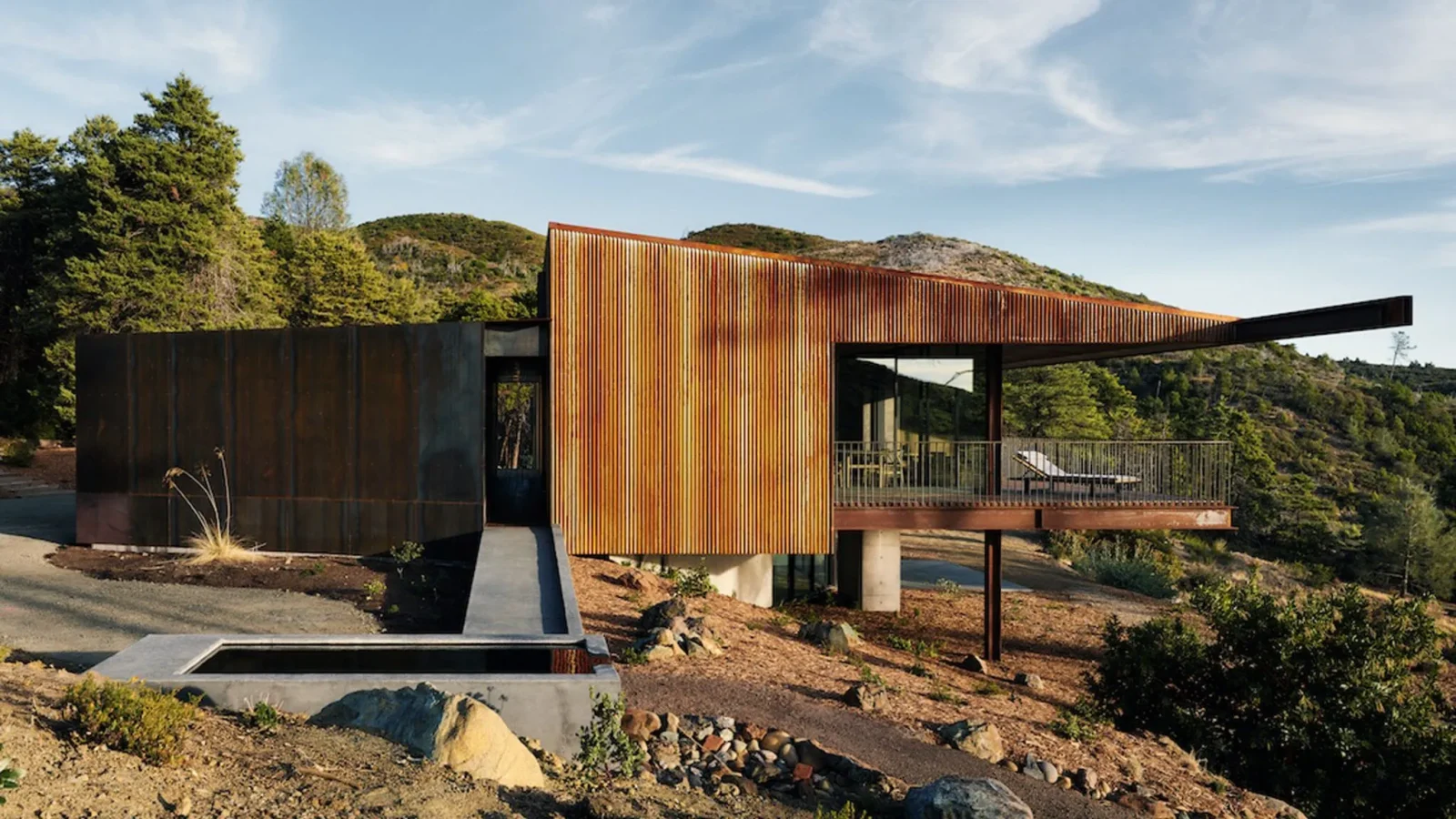
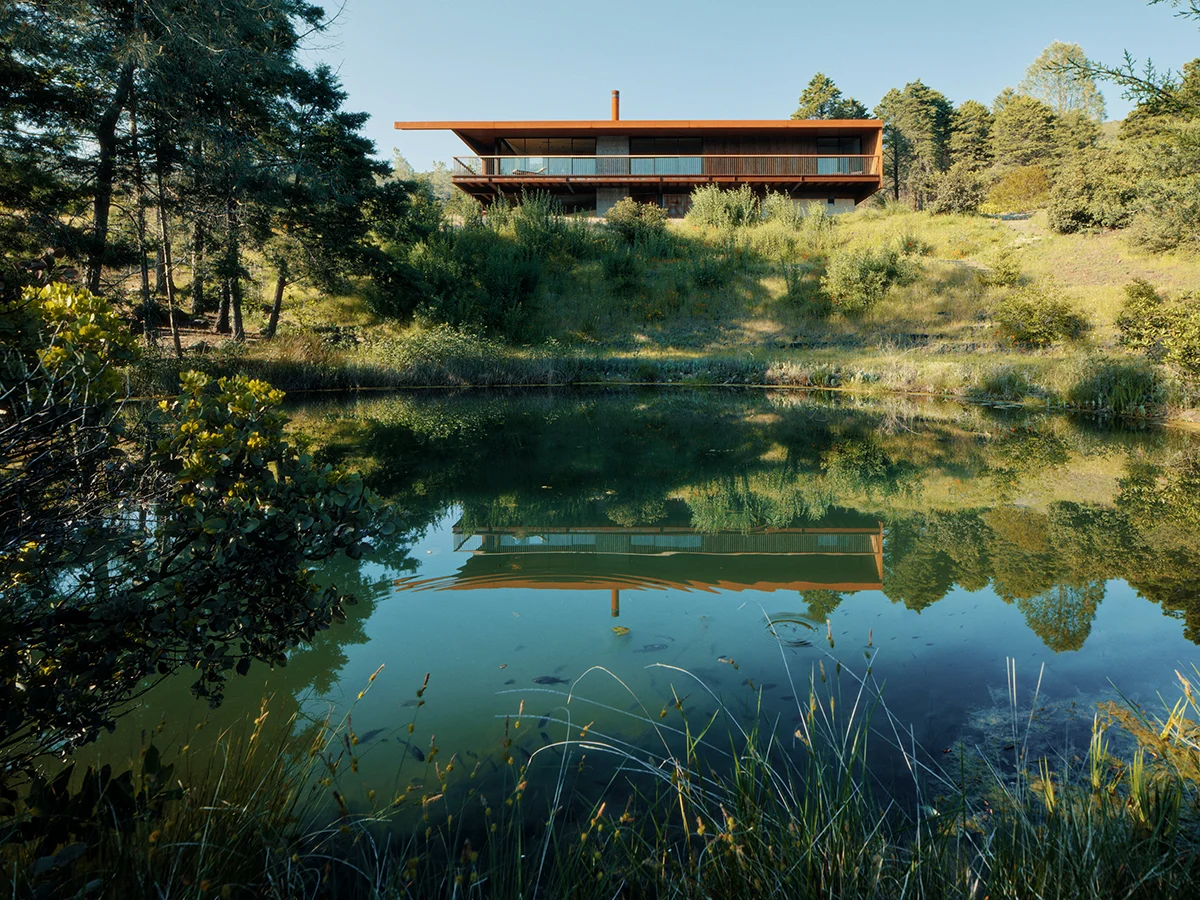
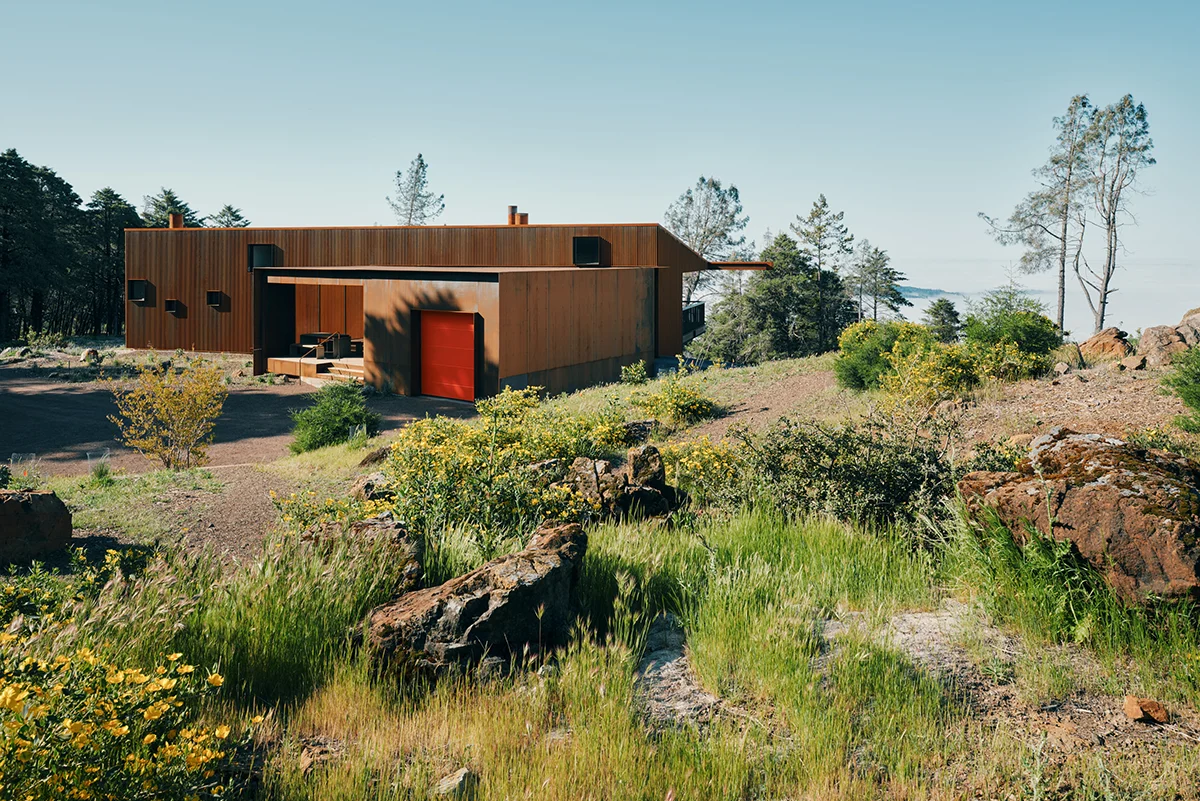
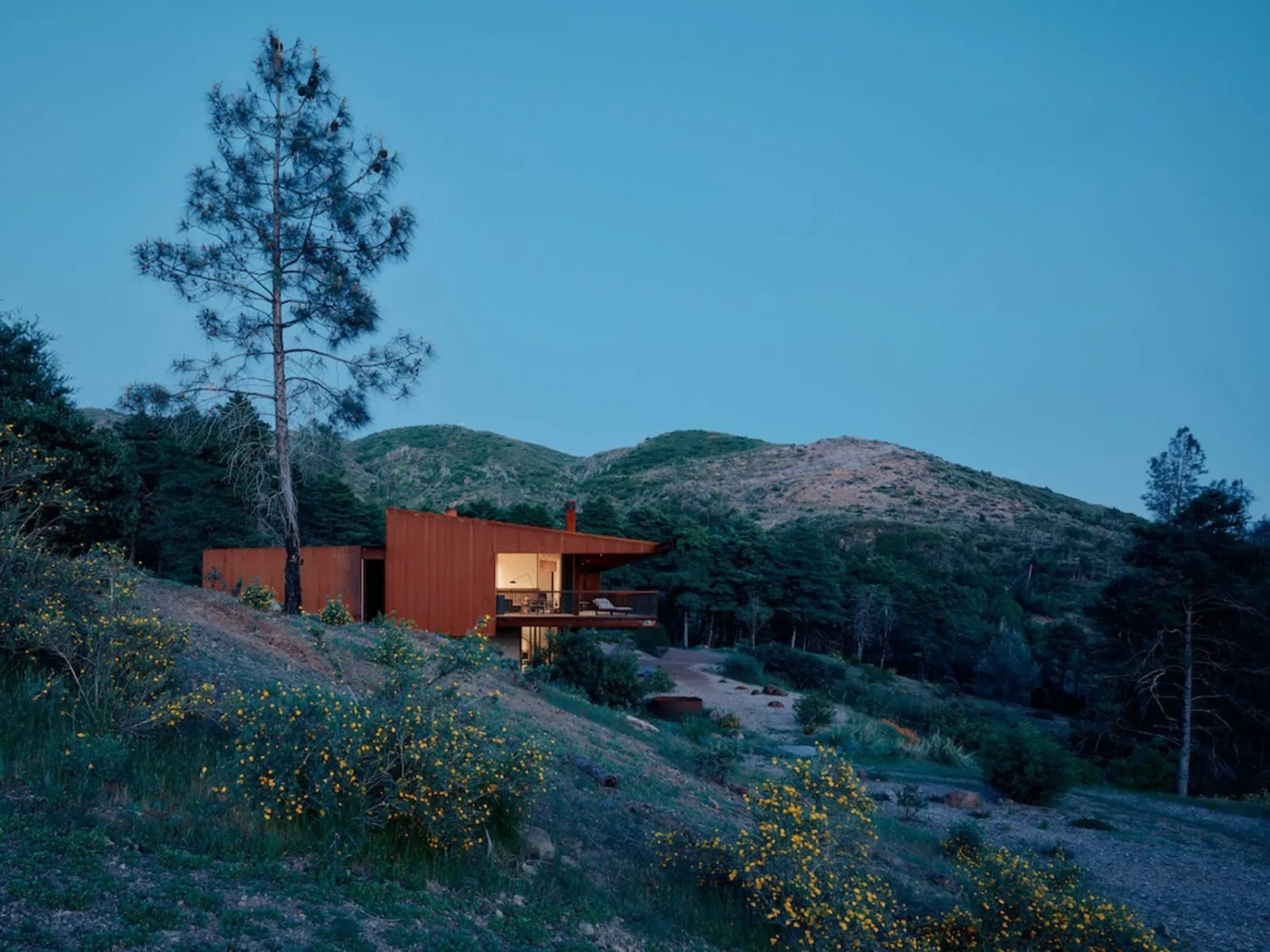
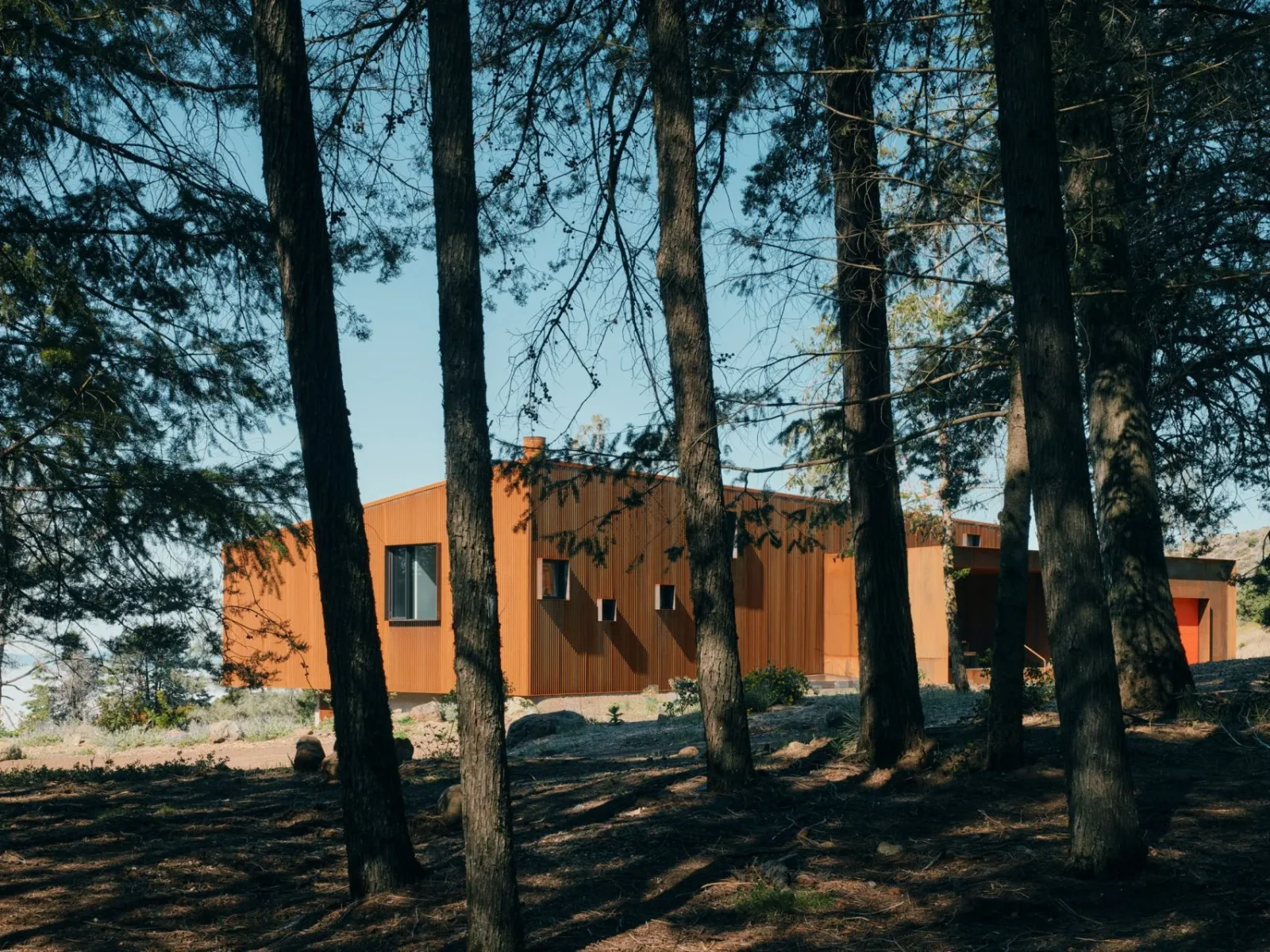
California’s wildfire-prone landscapes continue to face recurring devastation, with recent fires across the state reinforcing the urgency for resilient design strategies. Set deep in the rugged hills north-east of Healdsburg, this rebuilt off-grid home by Faulkner Architects emerges from loss with clarity and purpose. After the 2019 Kincade Fire erased the original structure, the new design responds with a focus on resilience, accessibility, and a deeper connection to its fragile terrain, shaping a future-ready way of living in the wild.
Rebuilding After Fire: A Landscape-Driven Approach
Remotely accessed via a former stagecoach road in Healdsburg, California, the site carries history and vulnerability. The 2019 Kincade Fire destroyed the original off-grid house, prompting a rethinking of how to live within such a fragile ecosystem.
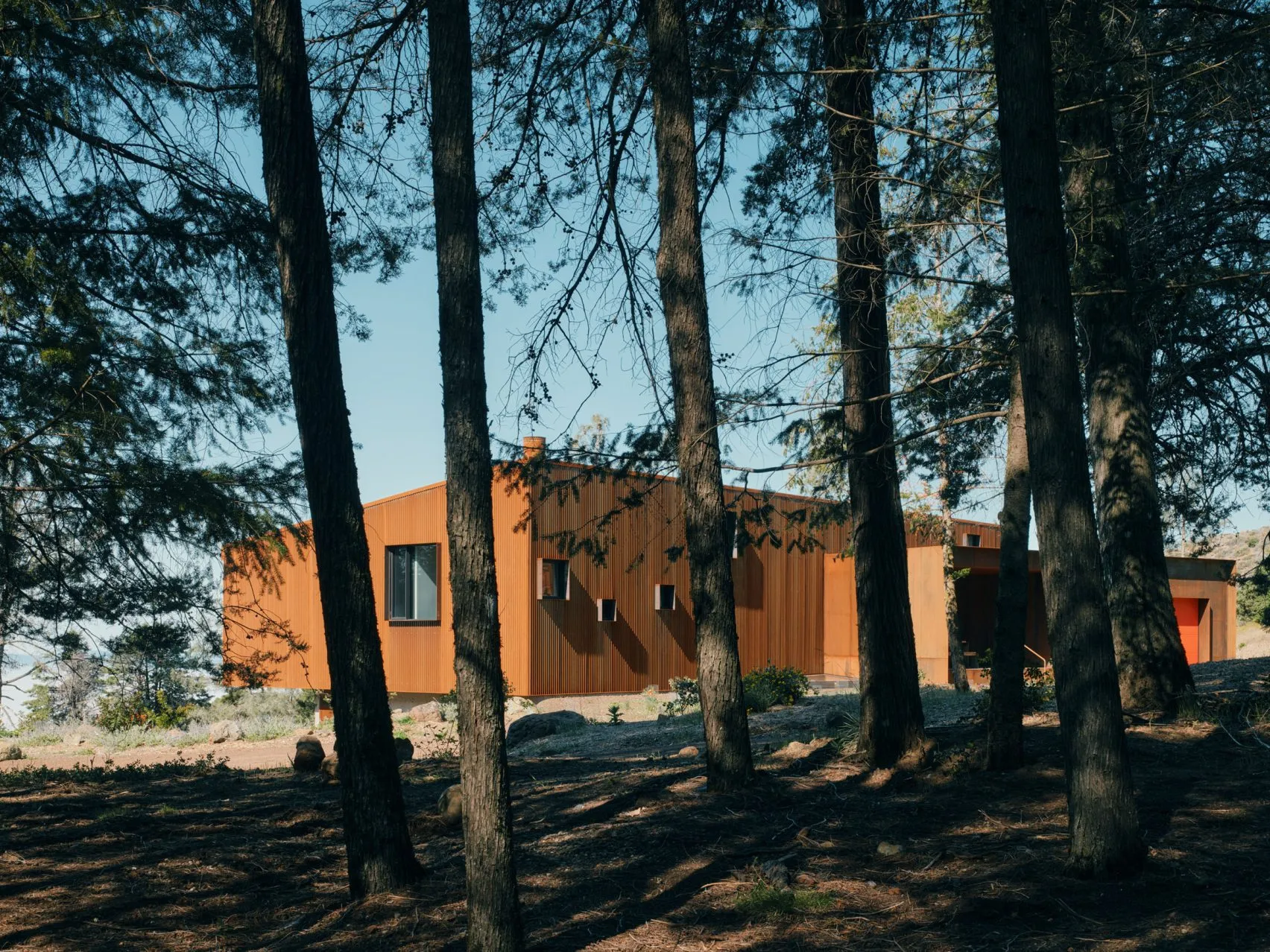
Inspired by the resourcefulness of the nearby historic Pine Flat community, once a thriving boomtown during the 1870s quicksilver rush, the clients embraced a lifestyle rooted in self-sufficiency and respect for the land.
The new structure designed by Faulkner Architects reuses nearly 90% of the existing foundation and walls, preserving embodied energy while minimizing excavation. A simple rectangular shed form now rests within the older angular footprint, extending beyond it in moments that create a sculptural entry step and a glazed light well. Half-buried into the hillside, the retained base contrasts with the elevated protective structure above, quietly aligning with the natural ridgeline.
Wildfire Resilience & California-Specific Strategies
Designed for longevity in a high-risk fire zone, the house integrates multiple wildfire-resilient strategies tailored to California’s climate. A fire-resistant outer shell, robust materials, sliding ember screens, and exterior sprinklers above decks work together to reduce ignition risks.
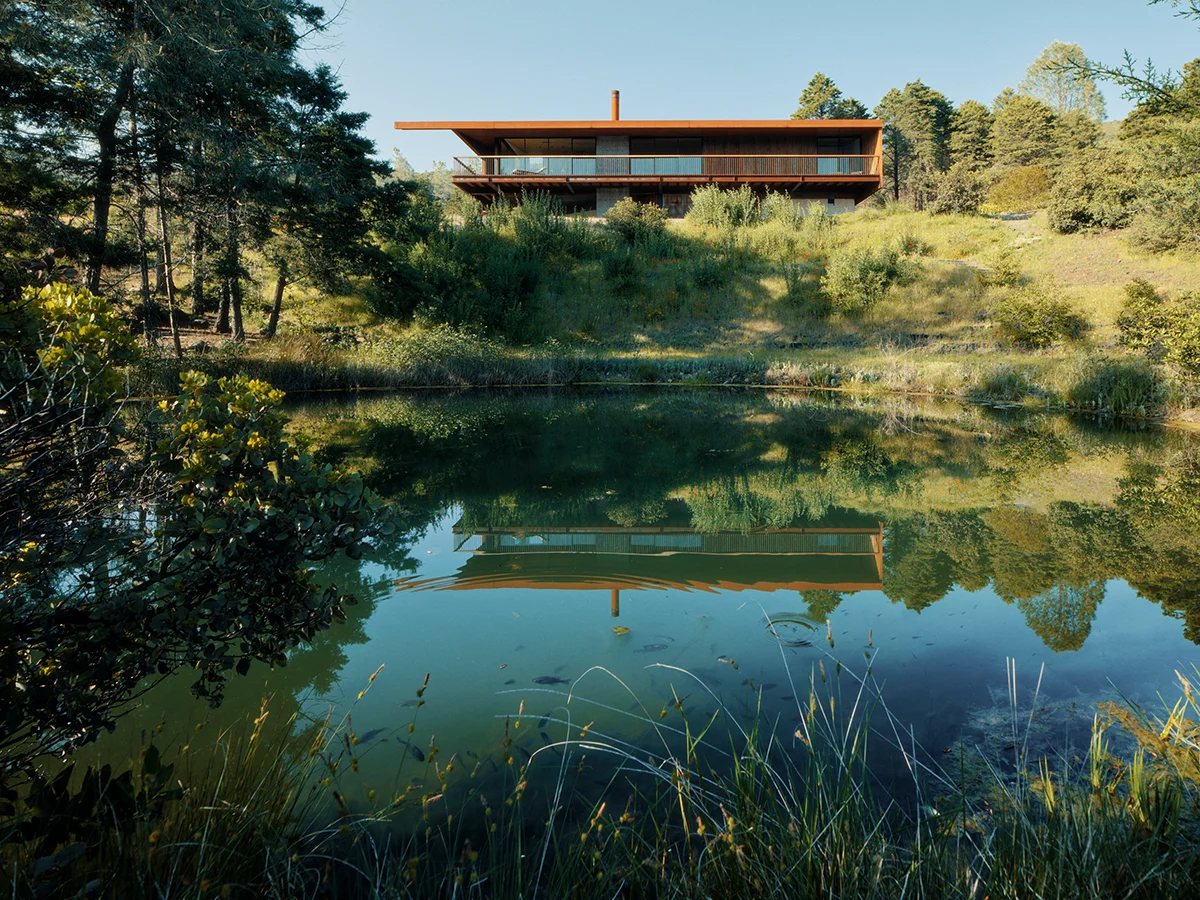
Water management plays a critical role. The home captures 100% of stormwater on-site, channeling runoff through a cantilevered gutter into a steel basin, then into a vegetated bioretention system before reaching a retention pond. This pond doubles as a backup firefighting resource.
Spring-fed wells supply all domestic water needs, including dedicated storage for fire protection systems. A Pelton wheel harnesses flowing water for supplementary hydroelectric power, feeding into a concrete basin that remains continuously refreshed, serving functional and experiential purposes.
The upgraded solar PV system, paired with new batteries and inverters, ensures energy independence, reinforcing the home’s passive survivability during emergencies.
Accessibility, Longevity & Living Off-Grid
As the clients plan for aging in place, accessibility is seamlessly integrated into the design. The home includes an entry ramp, wheelchair-friendly circulation, and a pre-framed provision for a future elevator. Importantly, the primary bedroom sits on the same level as the kitchen, dining, and living areas, ensuring ease of movement over time.
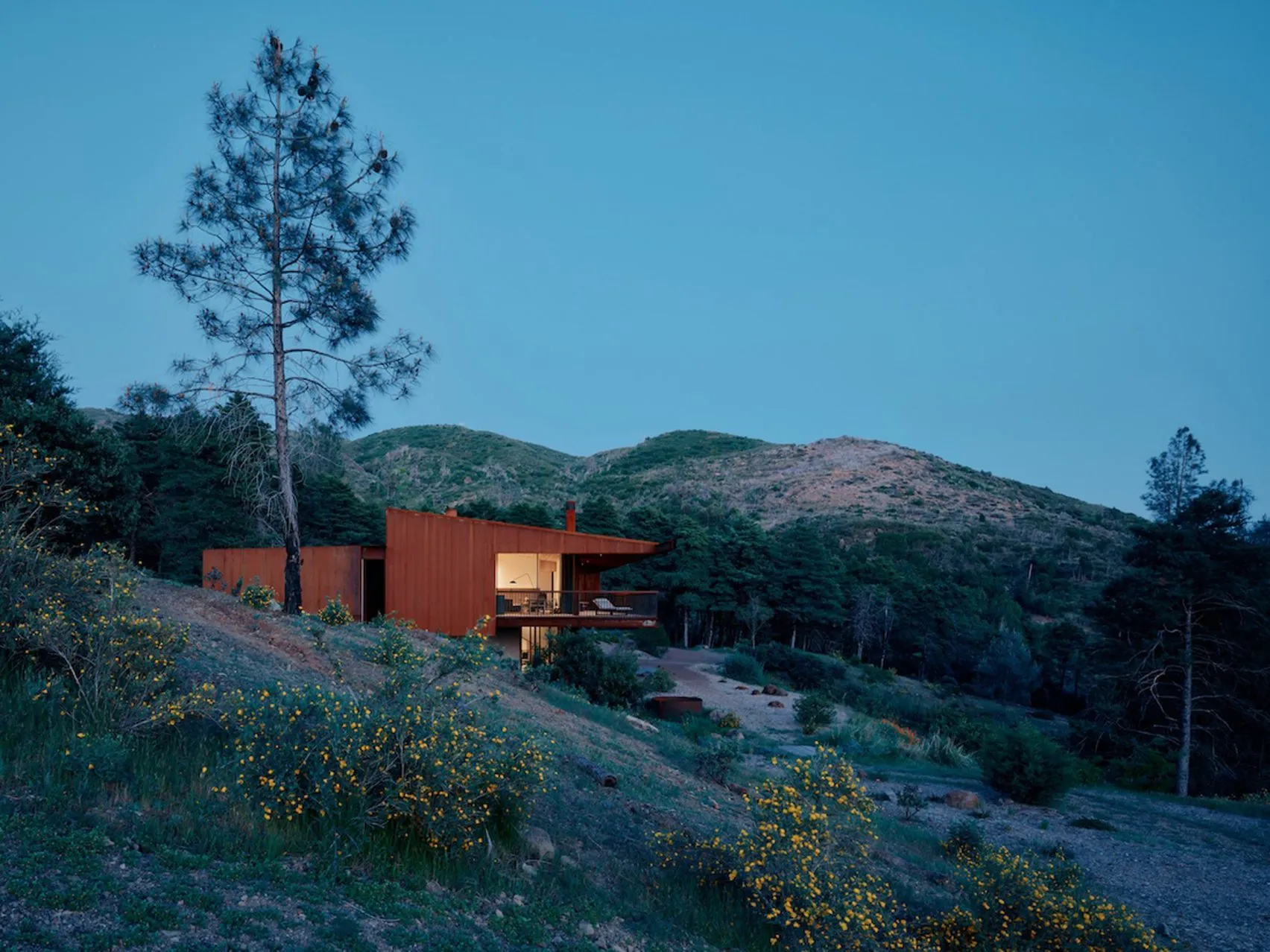
Inside, a new concrete chimney anchors the home structurally and thermally, acting as heat storage for an EPA-certified wood stove. Meanwhile, an artesian water basin creates a poetic connection to the site’s natural spring, blending utility with sensory experience.
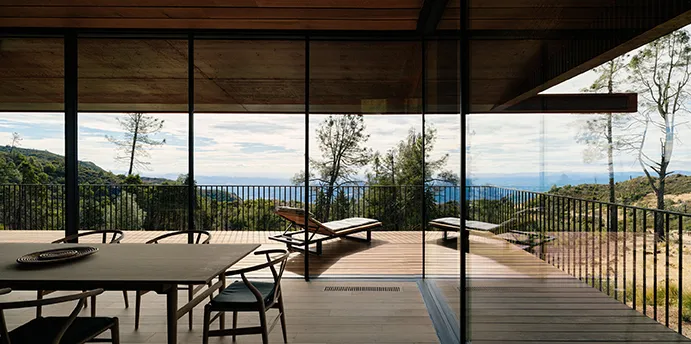
The house operates entirely off-grid, supported by solar energy, water harvesting, hydroelectric supplementation, and a repaired septic system for wastewater treatment.
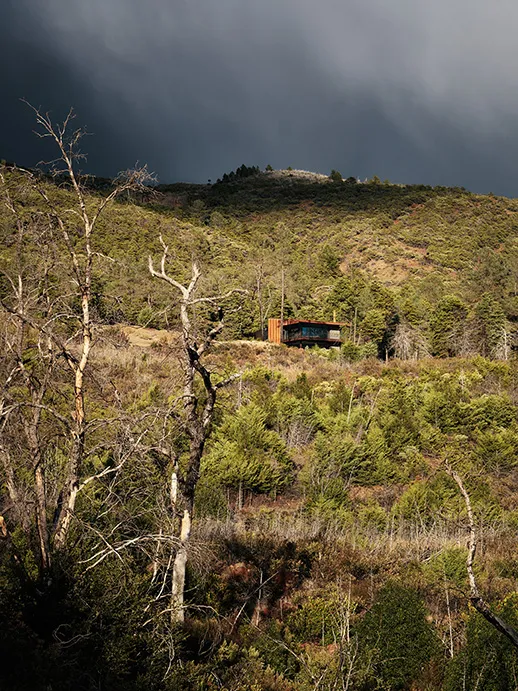
This project moves beyond aesthetics to become a tool for survival, adaptation, and thoughtful living. It stands as a fine example of how architecture in California’s wildfire-prone landscapes must evolve by prioritizing resilience, resource efficiency, and human needs. As development continues to expand into vulnerable terrains, such strategies are essential for building a future that can endure.
Project Credit: Faulkner Architects.
Photography: Joe Fletcher
Explore Courses
.jpg "Architecture Diagram Mastery: Concept to Portfolio")
.jpg%202.jpg "Building Performance with Forma & Opossum")
.jpg "Ondrej Chybik - Rethinking Architecture")