


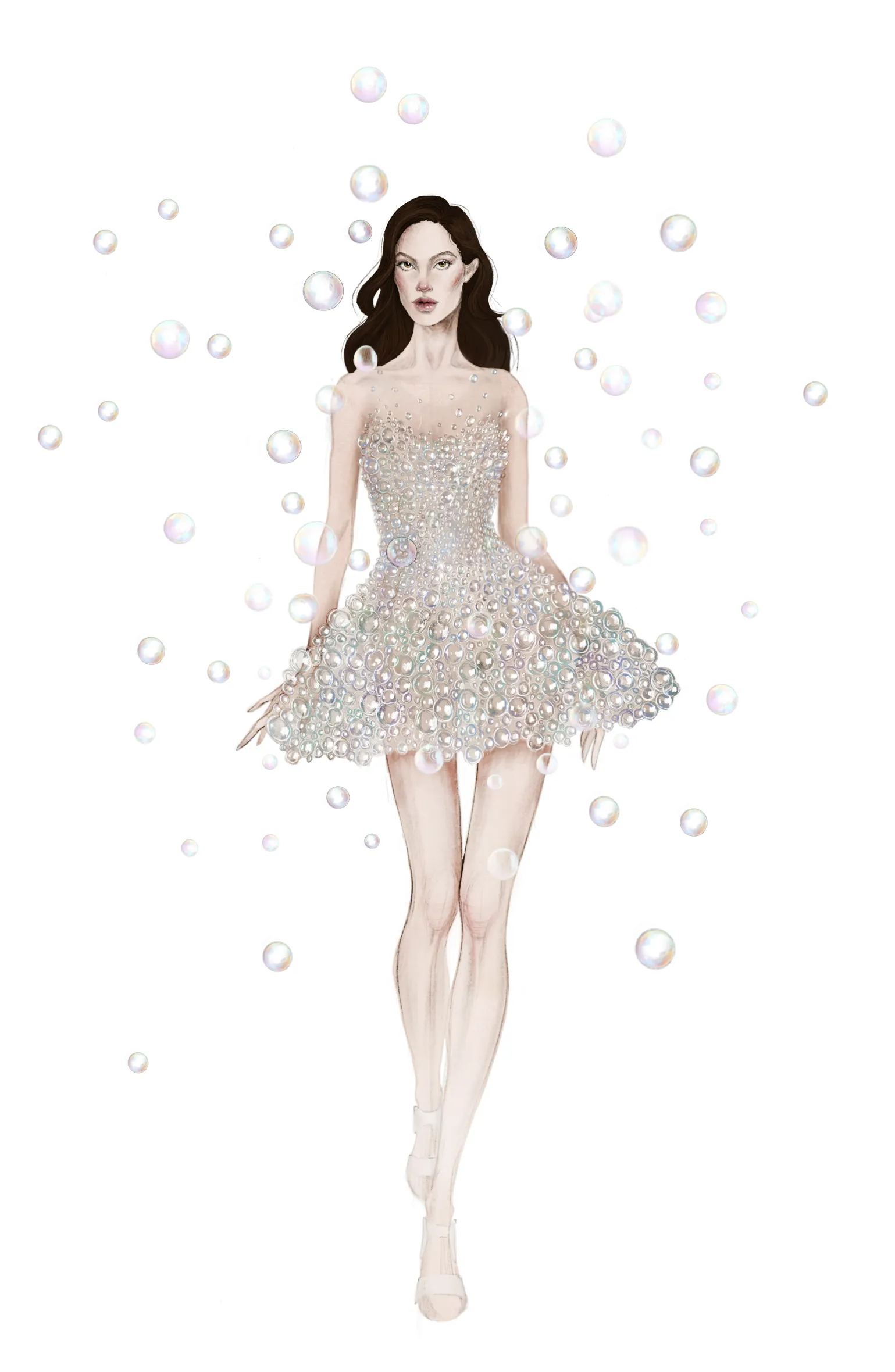
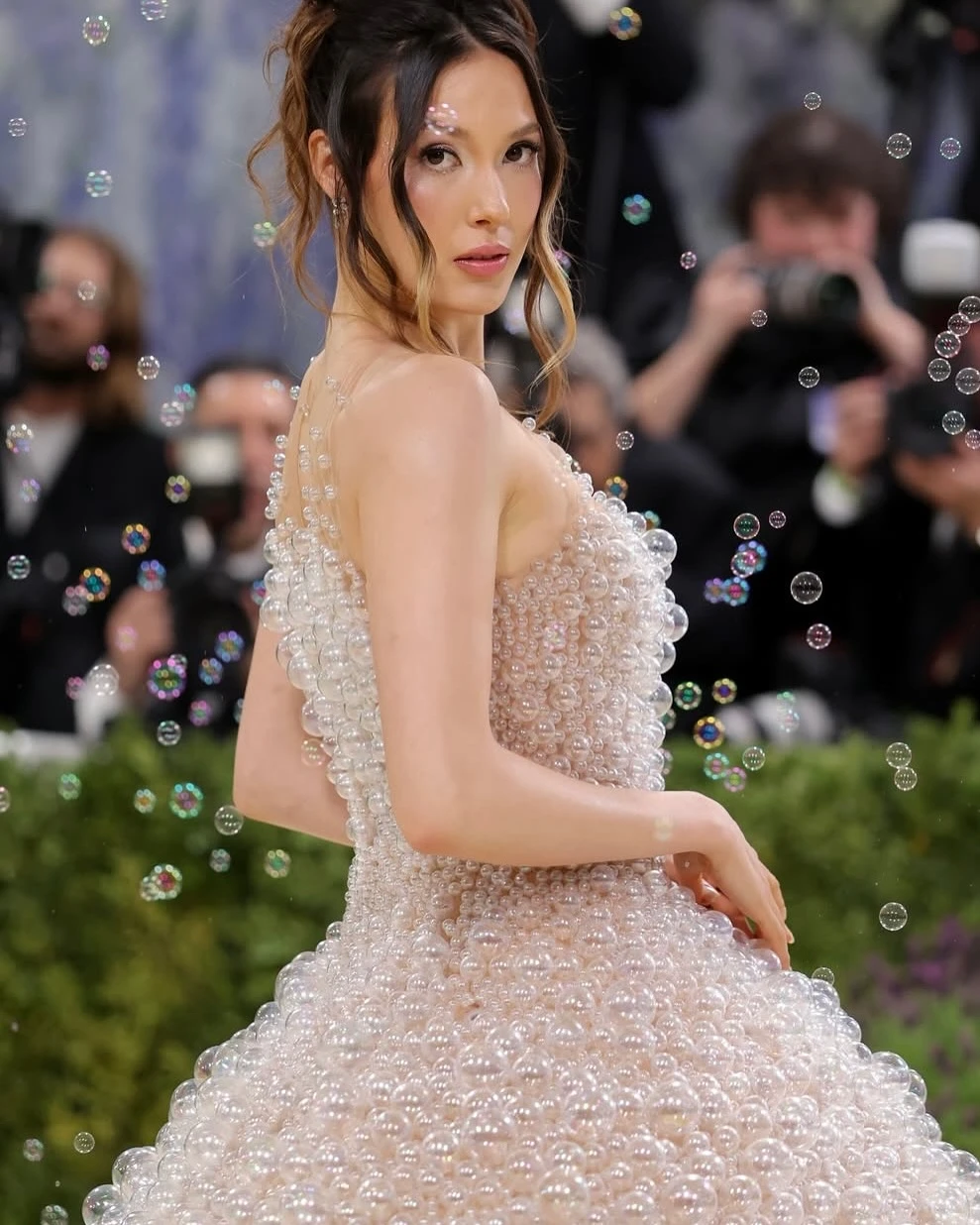

Eileen Gu’s “Airo” bubble dress at the 2026 Met Gala sits within a lineage of experimental fashion that treats garments as systems. One of the clearest reference points is Iris van Herpen, a designer widely known for merging couture with science, technology, and architectural thinking.
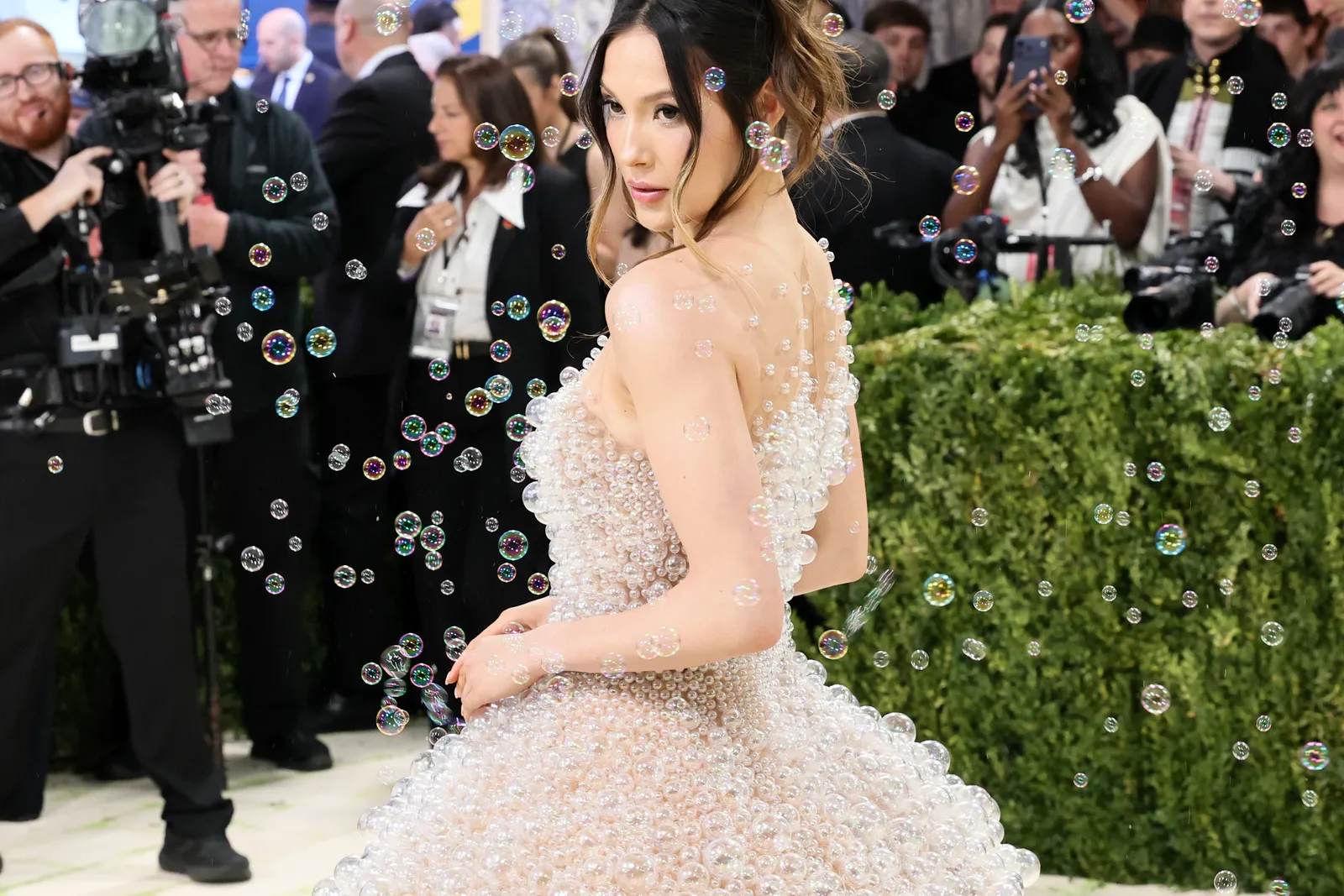
The “Airo” dress, developed in collaboration with experimental studio A.A. Murakami, pushed beyond couture into the realm of responsive architecture and kinetic installation. The designers approached it as a living system that evolves in real time.
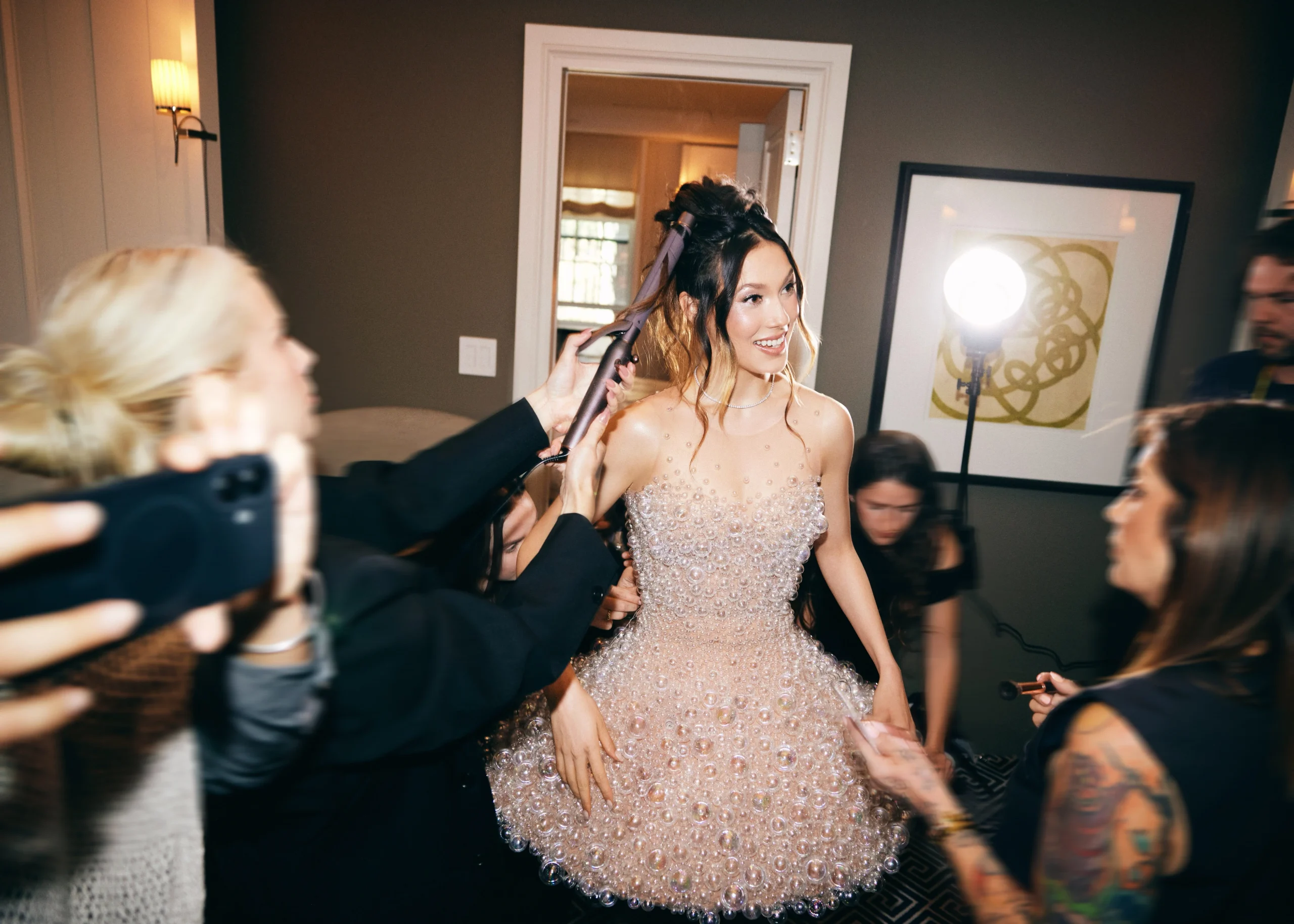
Atomic-Inspired Responsive Fashion in Eileen Gu’s Airo Bubble Dress
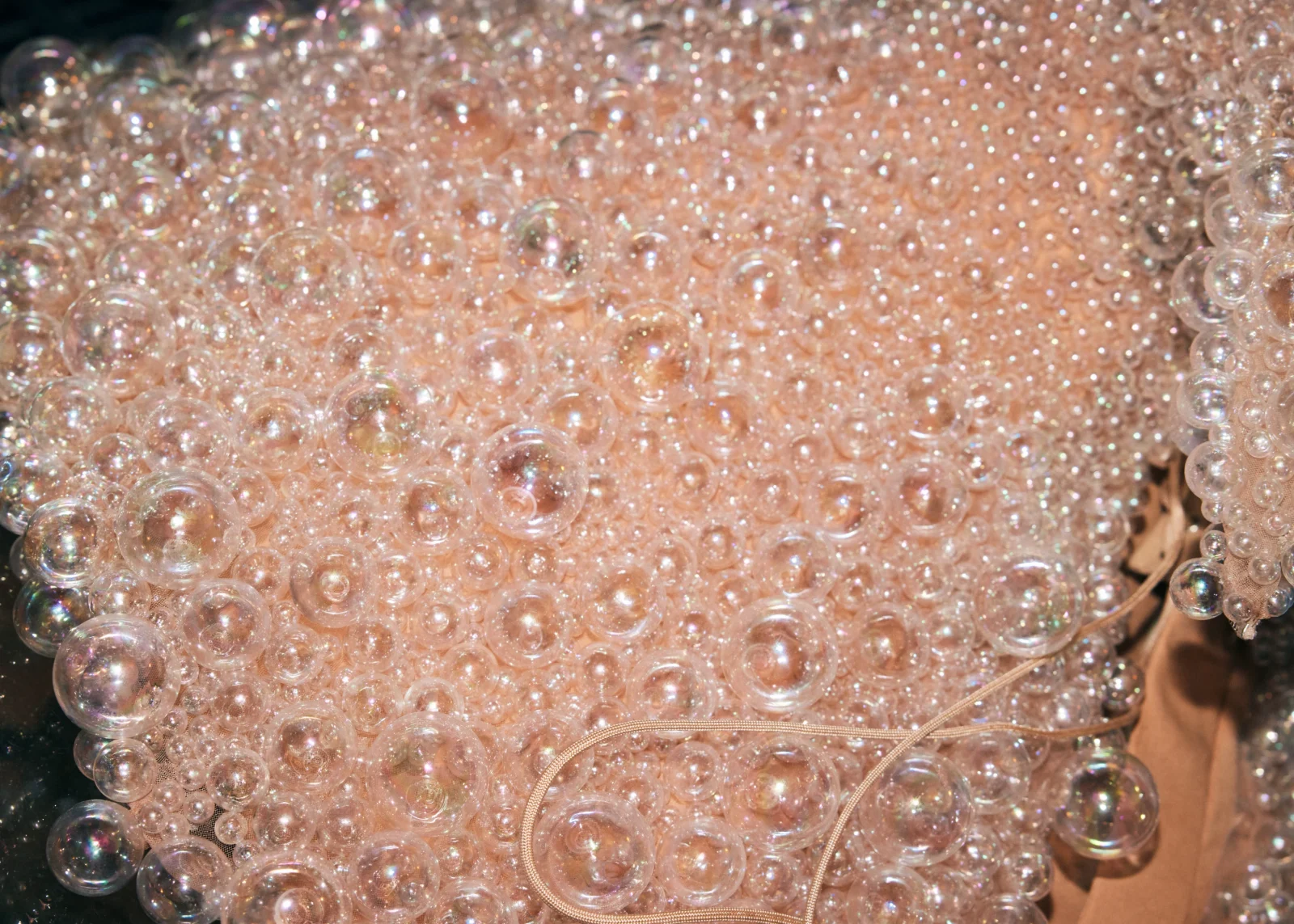
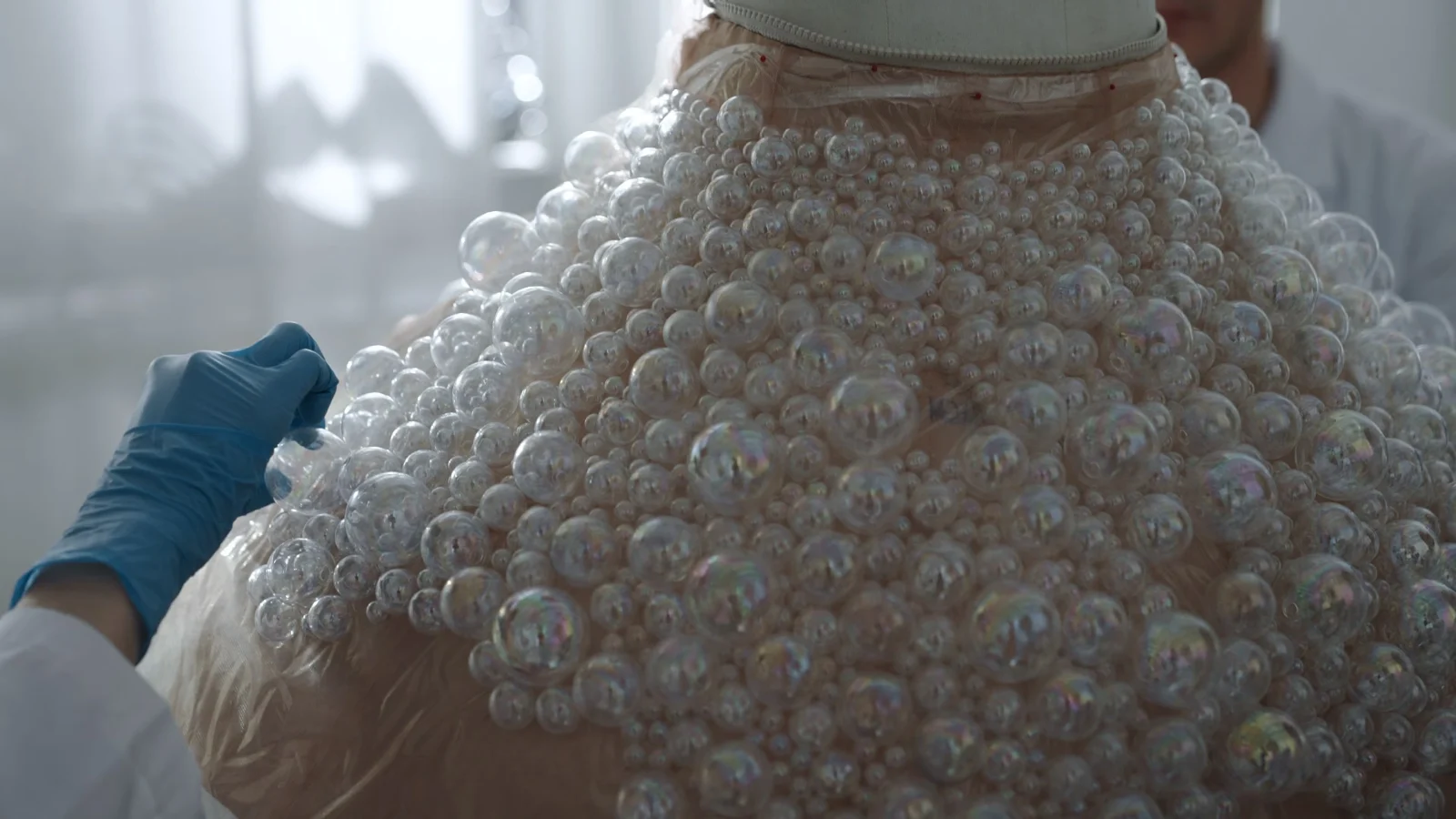
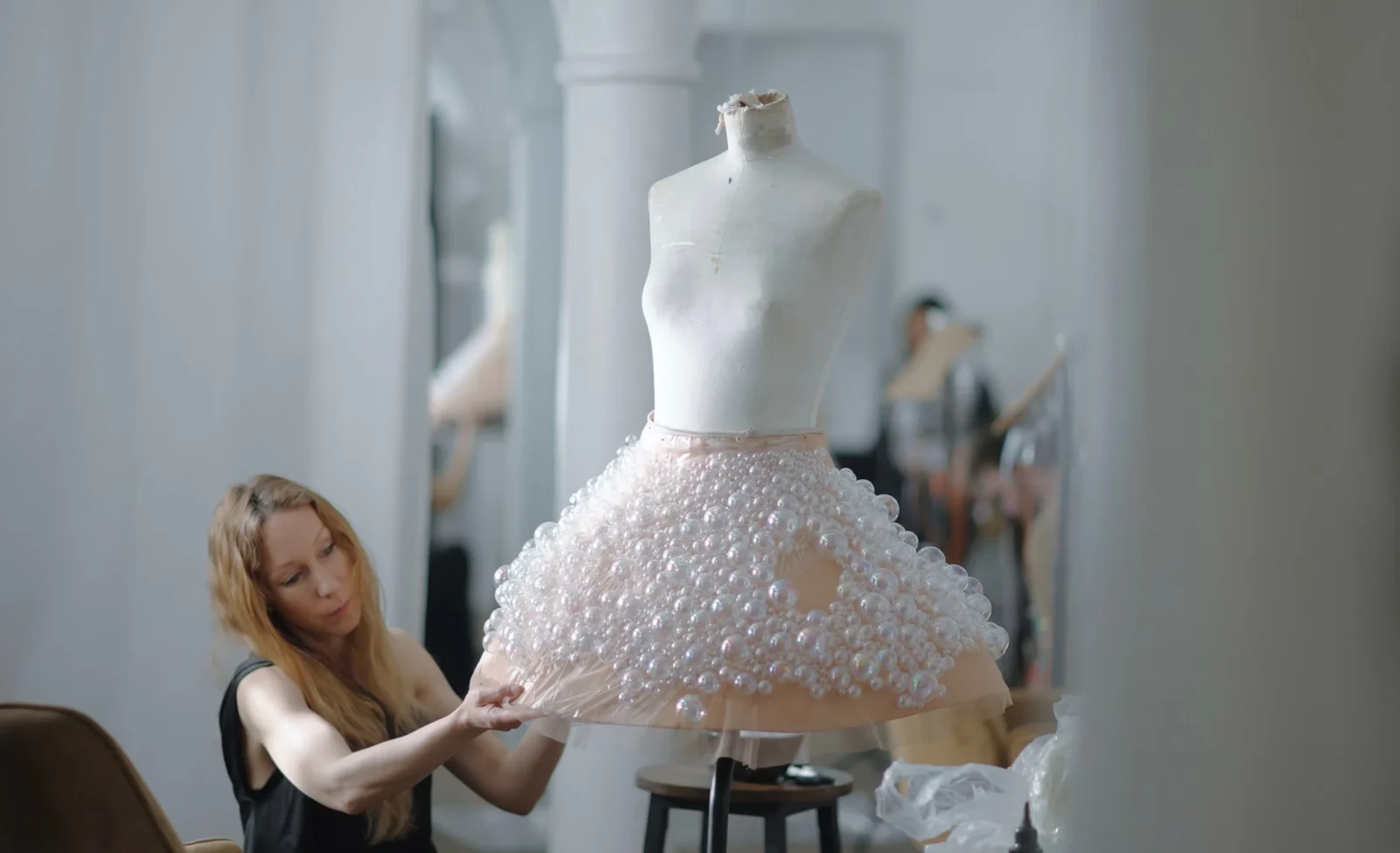
The concept draws directly from this year’s theme: the atomic structure of the human body. Matter is mostly empty space, and the dress makes that invisible idea visible. It constructs presence through absence. 15,000 iridescent glass bubbles form a fragile shell around the body, but even that shell is temporary. As the bubbles detach and float away, the garment gradually dissolves, leaving less behind with every passing second. It’s a timed transformation.
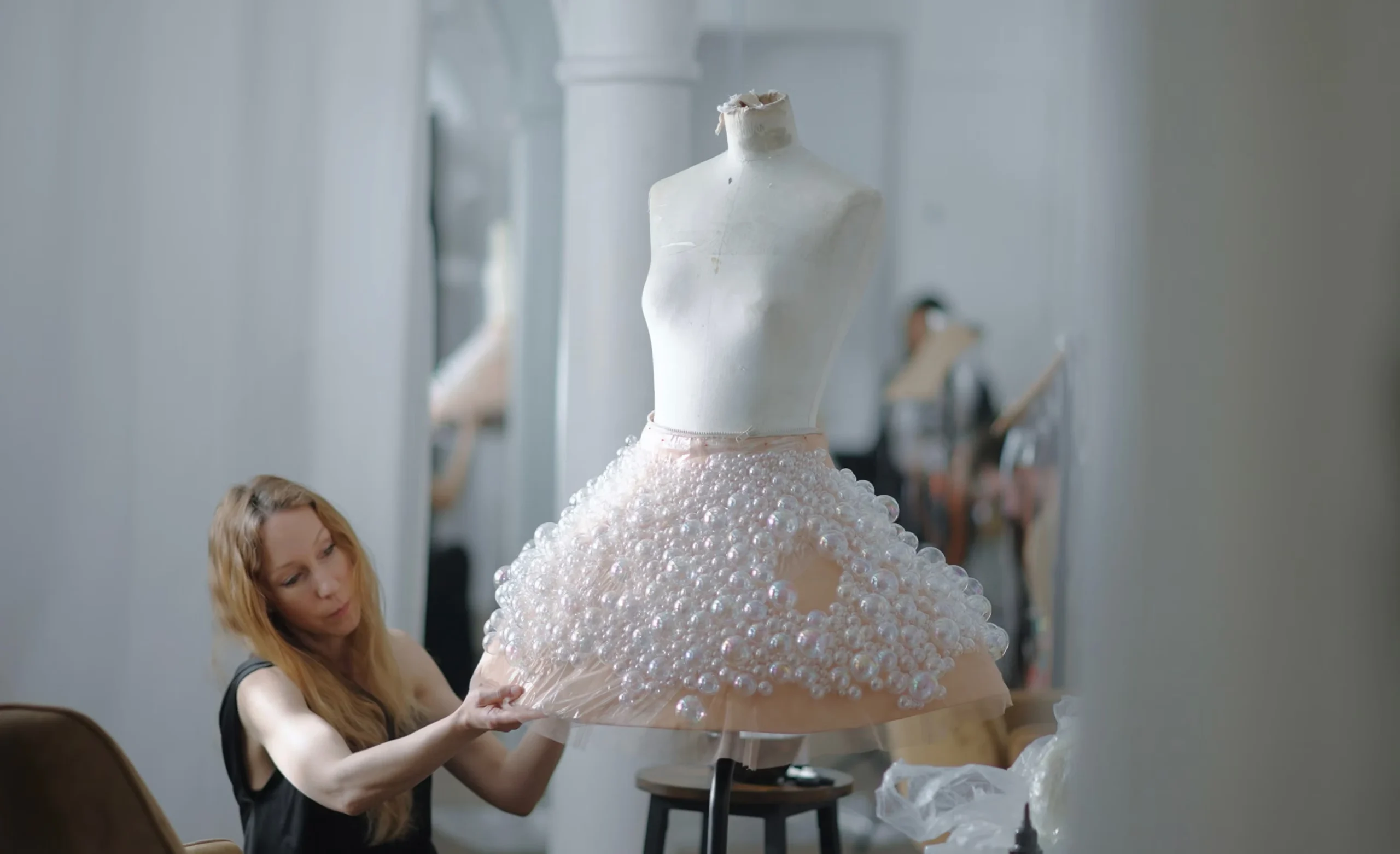
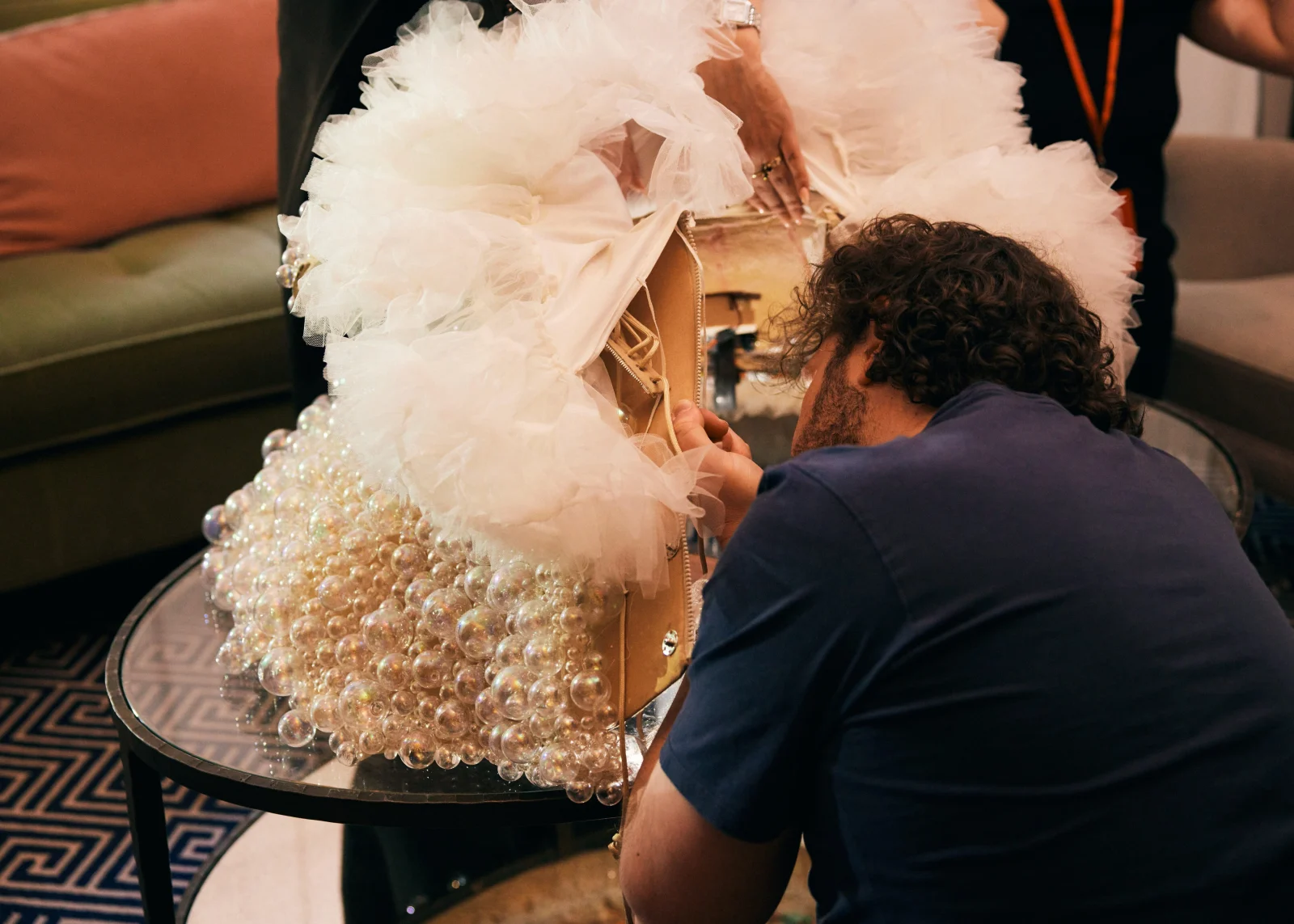
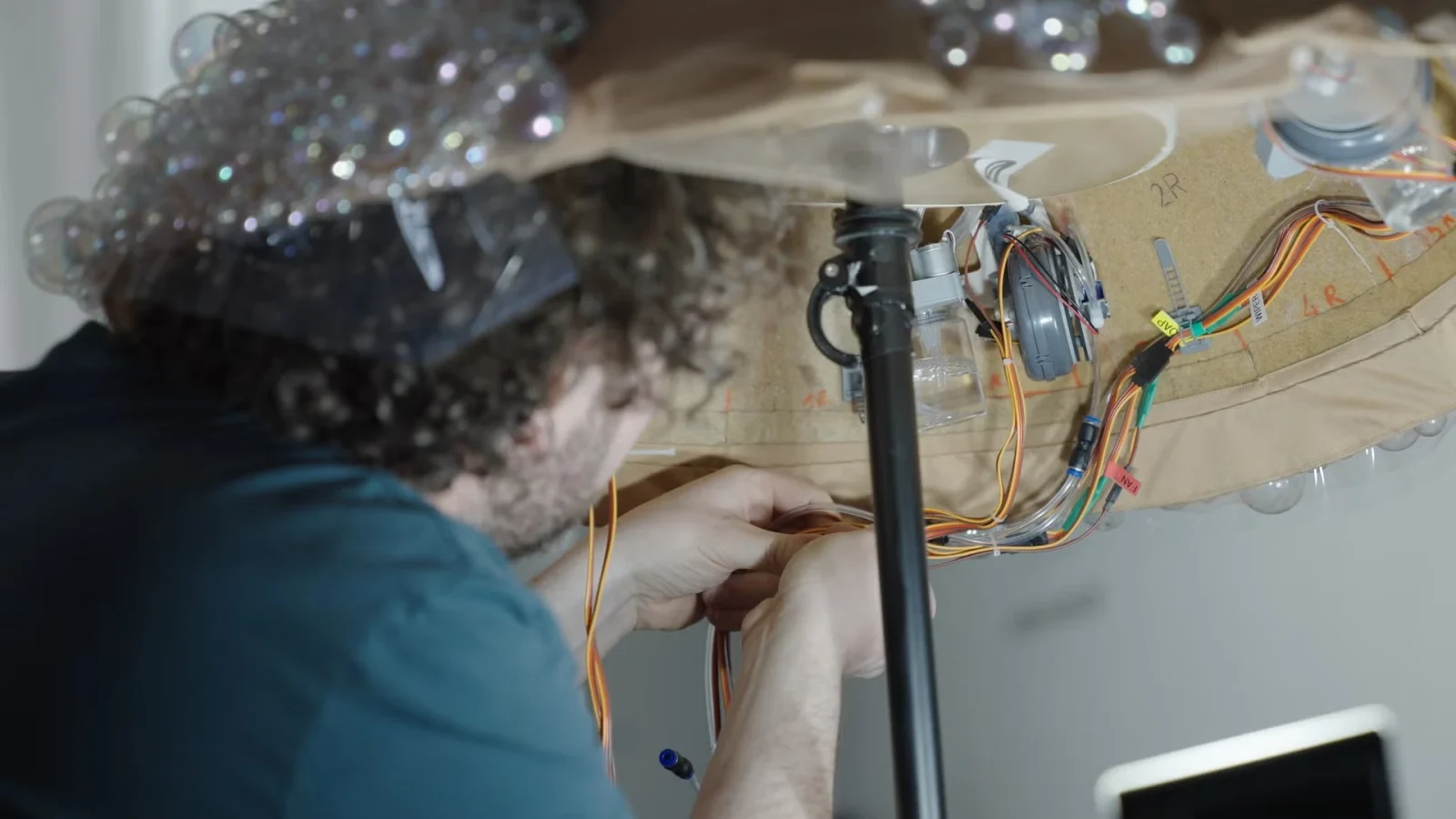
From a design perspective, hidden microprocessors control the release of pressurized gas, triggering sequences of bubble formation and detachment. This system is calibrated with precision, similar to how responsive building skins adjust to light, heat, or movement. The result is a garment that performs. It reacts, evolves, and ultimately disappears.
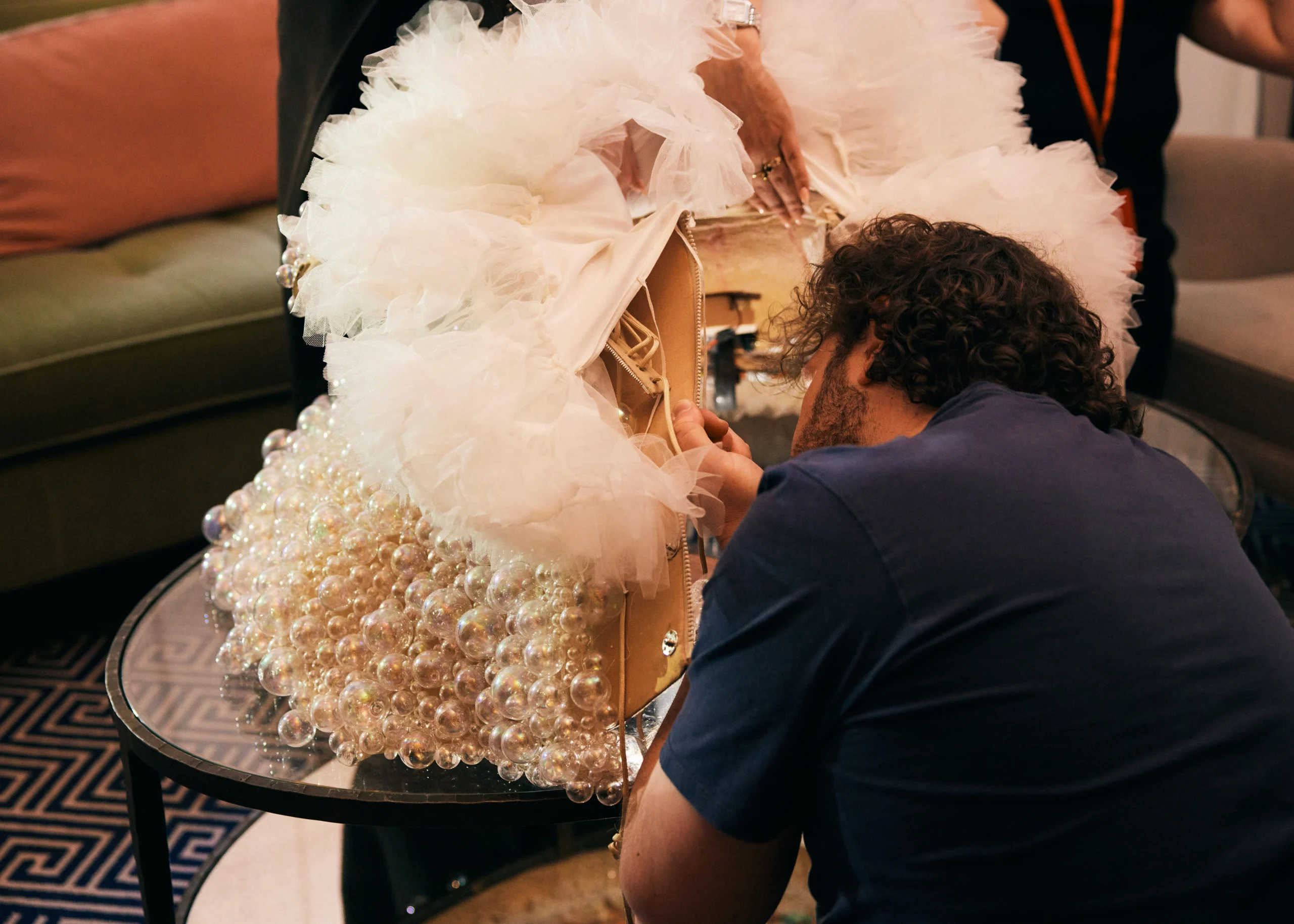
The 15,000 hand-formed glass bubbles are individually bonded using UV light, creating a delicate yet controlled structure. Glass, typically associated with permanence and rigidity, is reimagined here as something fleeting. Once released, each bubble becomes part of the surrounding space, turning the wearer into the center of a temporary atmospheric installation. The boundary between body and environment blurs.
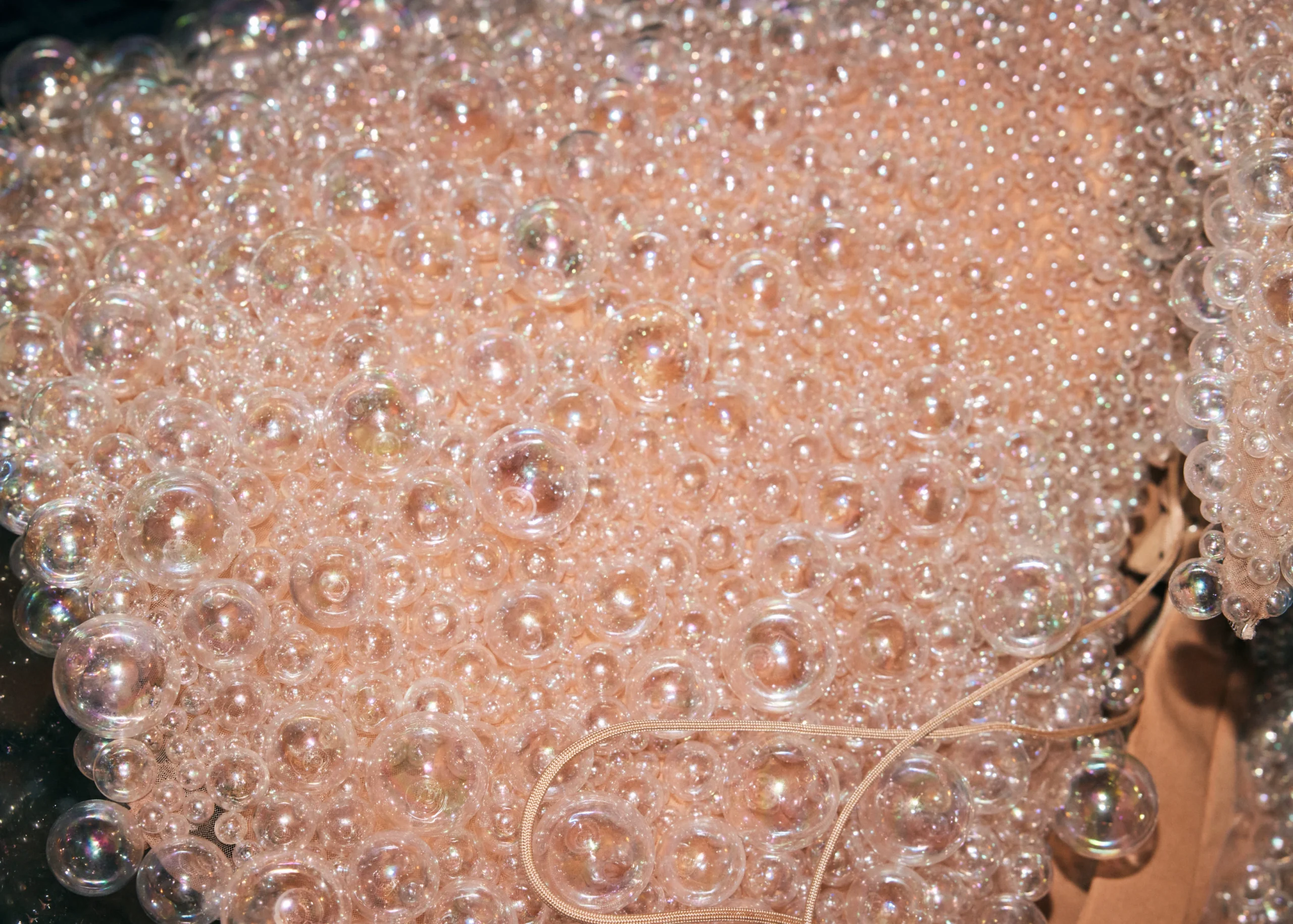
There’s also a strong architectural narrative in how the dress occupies space. As bubbles drift away, they extend the garment outward, creating a shifting perimeter. The dress doesn’t end at the body; it expands into the air, redefining silhouette as something dynamic and dispersed. It’s closer to an event than an object.
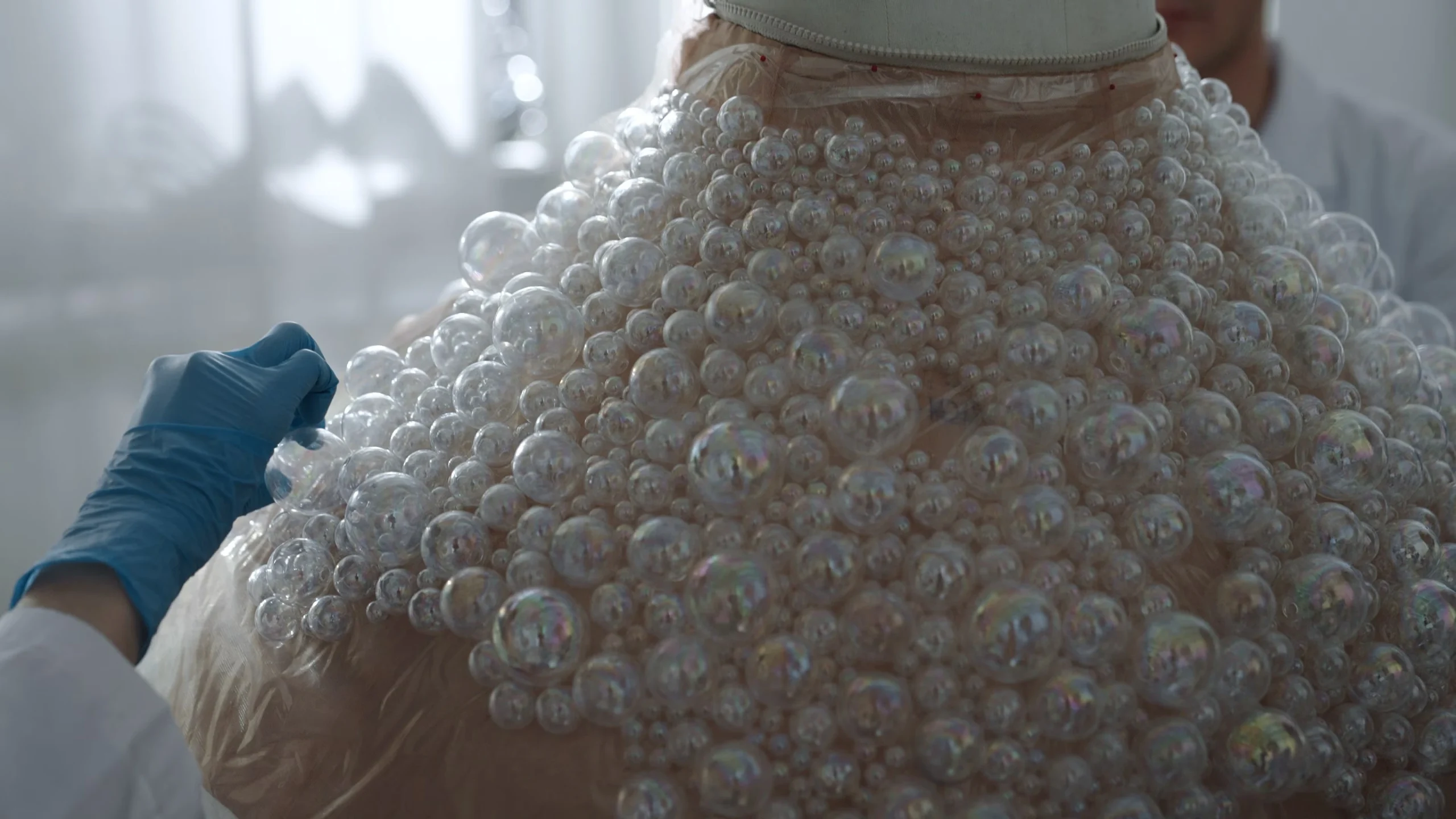
The integration of embedded systems reflects a growing convergence between fashion and computational design. The “Airo” dress uses a dedicated digital interface to choreograph its behavior, echoing parametric design processes used in contemporary architecture. Timing, spacing, and release patterns are all programmed, allowing the designers to control form and experience.
Ultimately, the dress challenges the idea of permanence in design. The gradual disappearance of the garment mirrors the transient nature of matter itself, aligning concept, material, and performance into a single cohesive idea.
Explore Courses
.jpg "Ondrej Chybik - Rethinking Architecture")