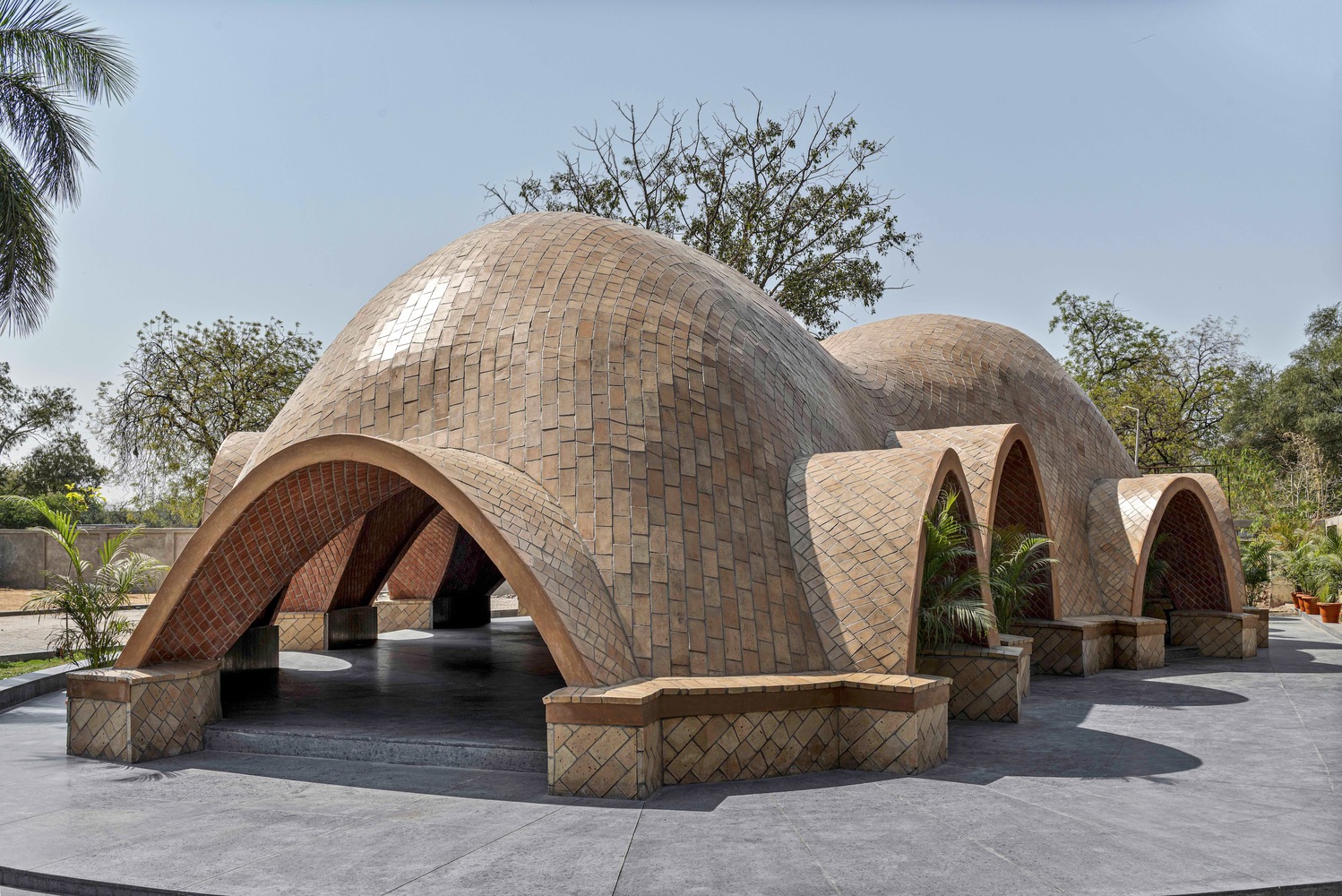





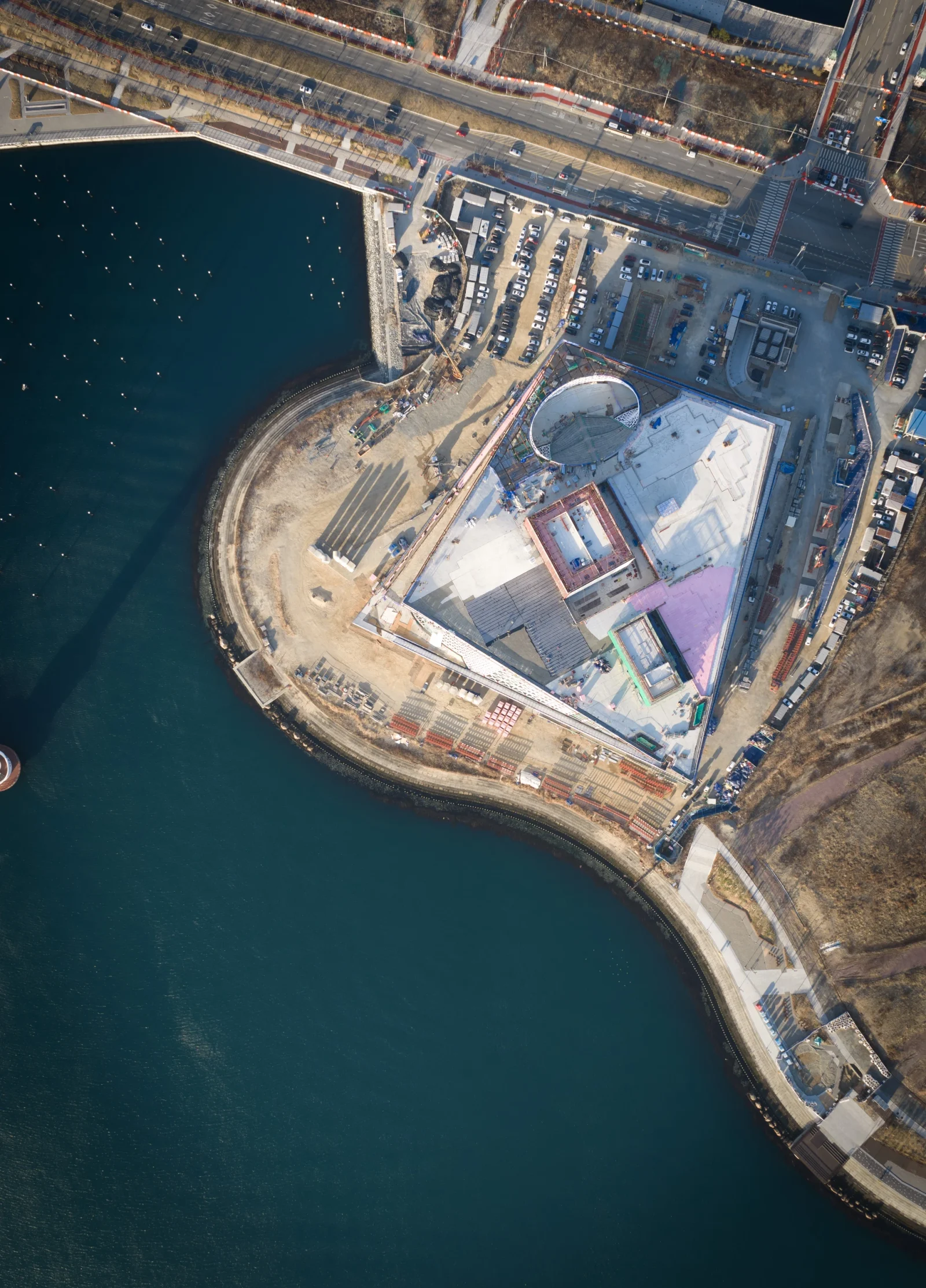
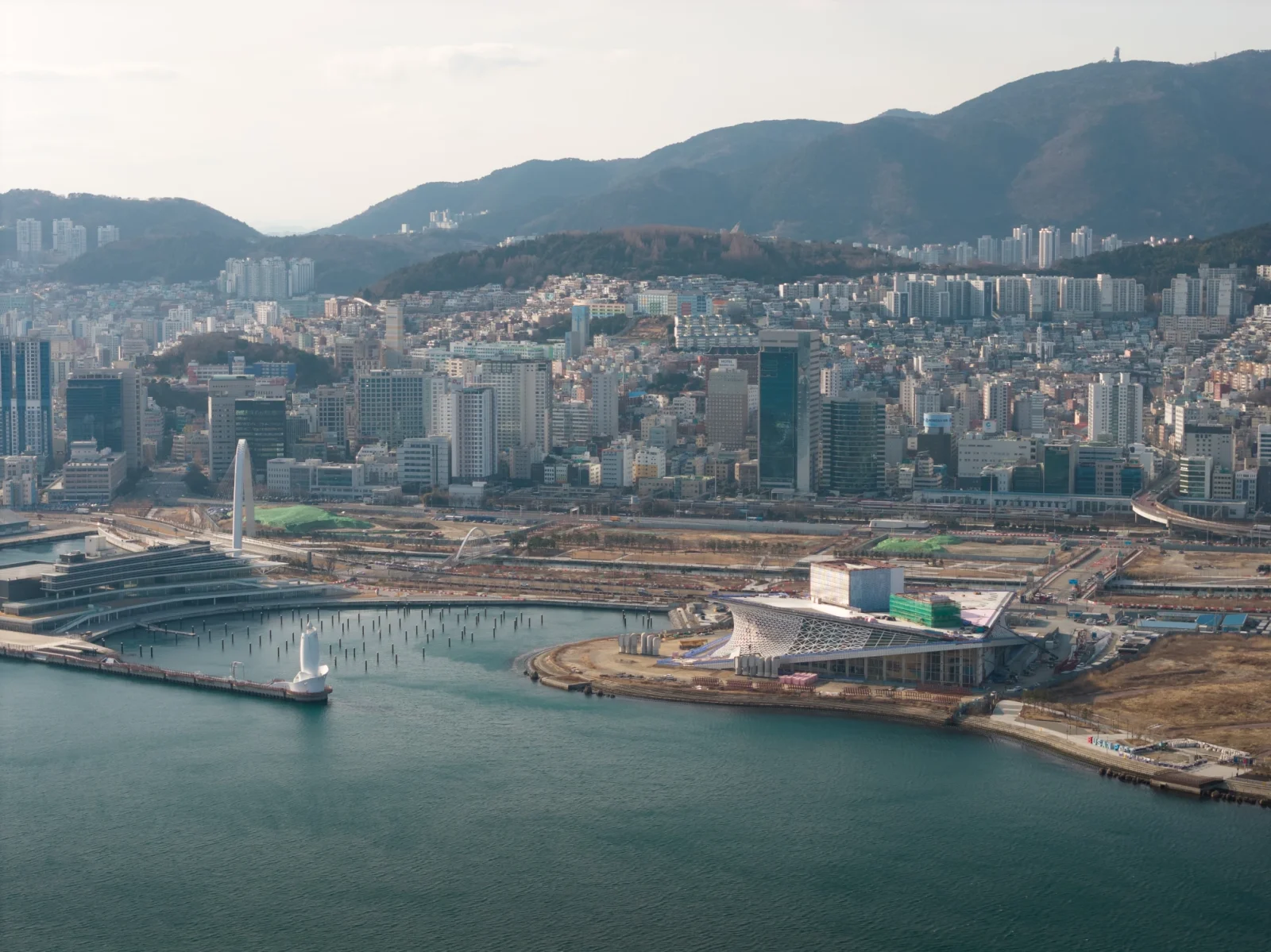
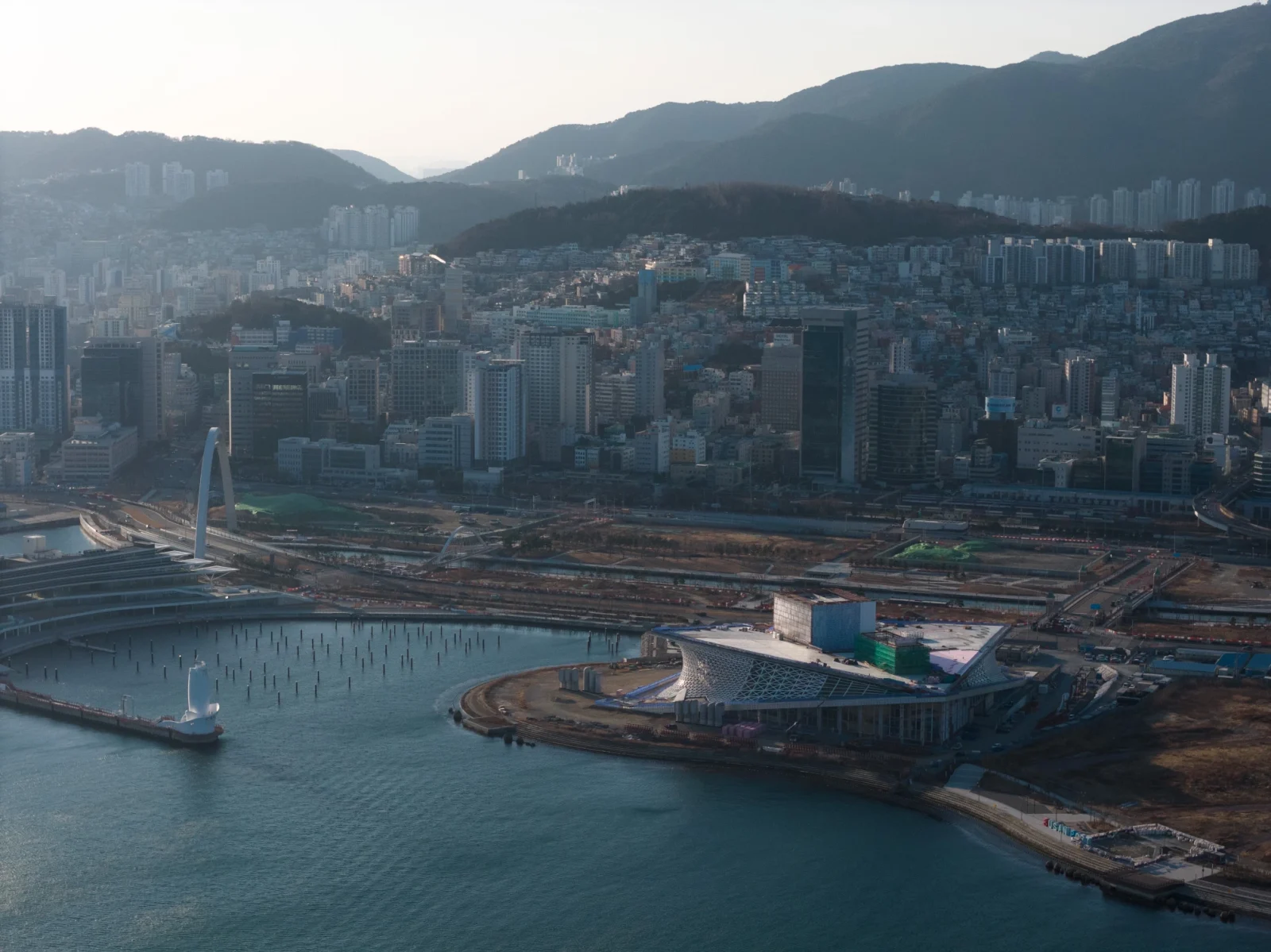
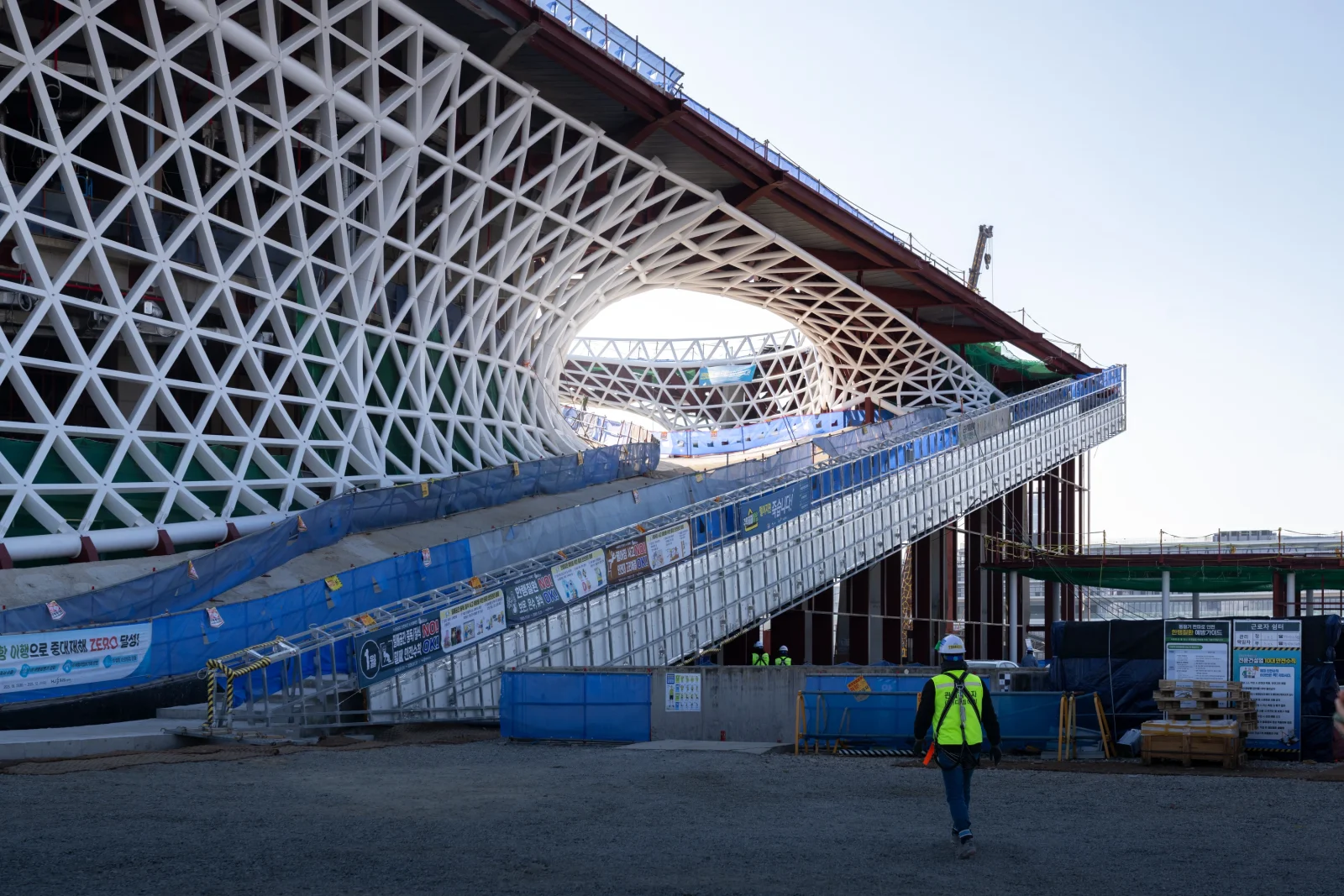
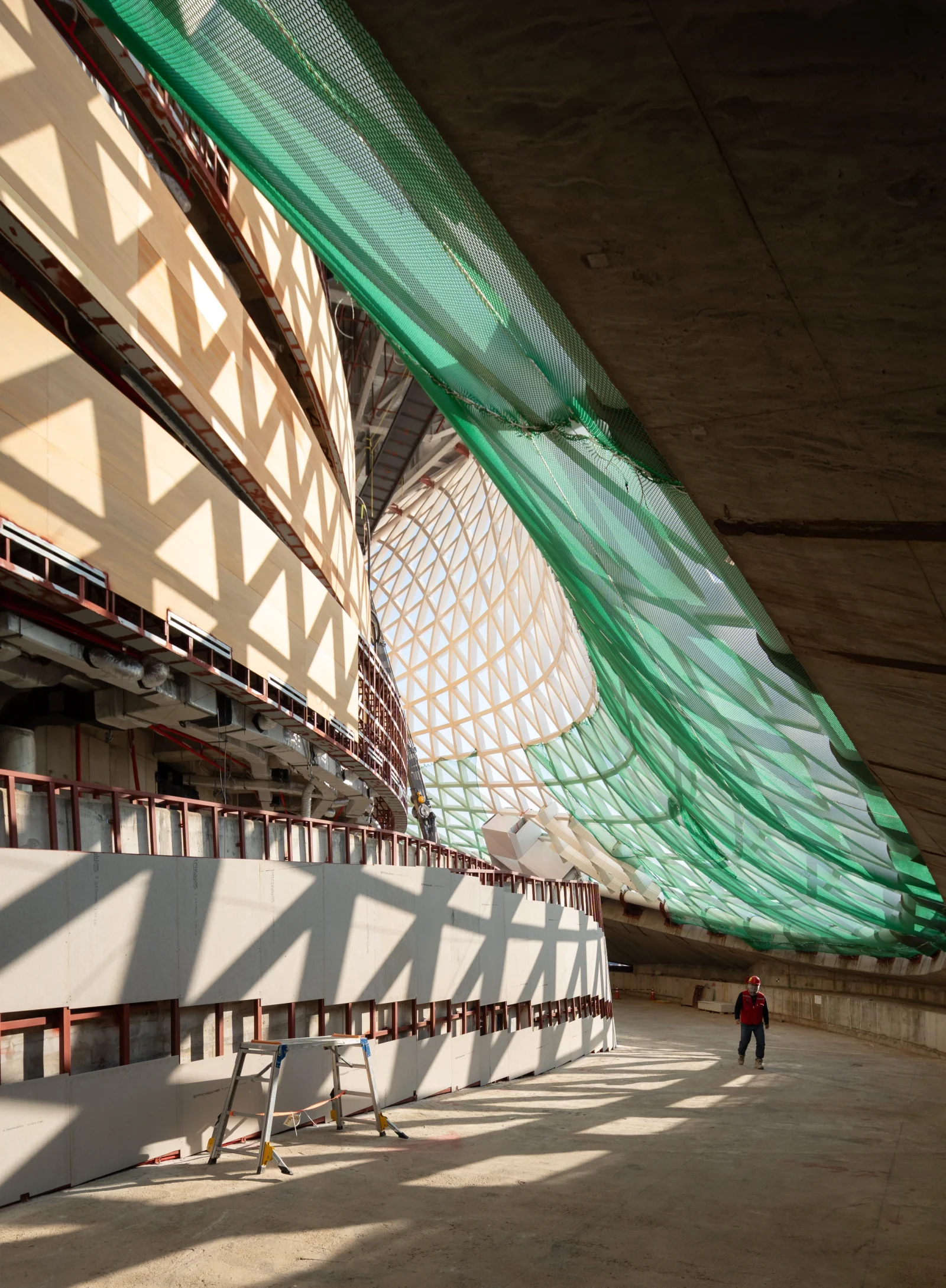
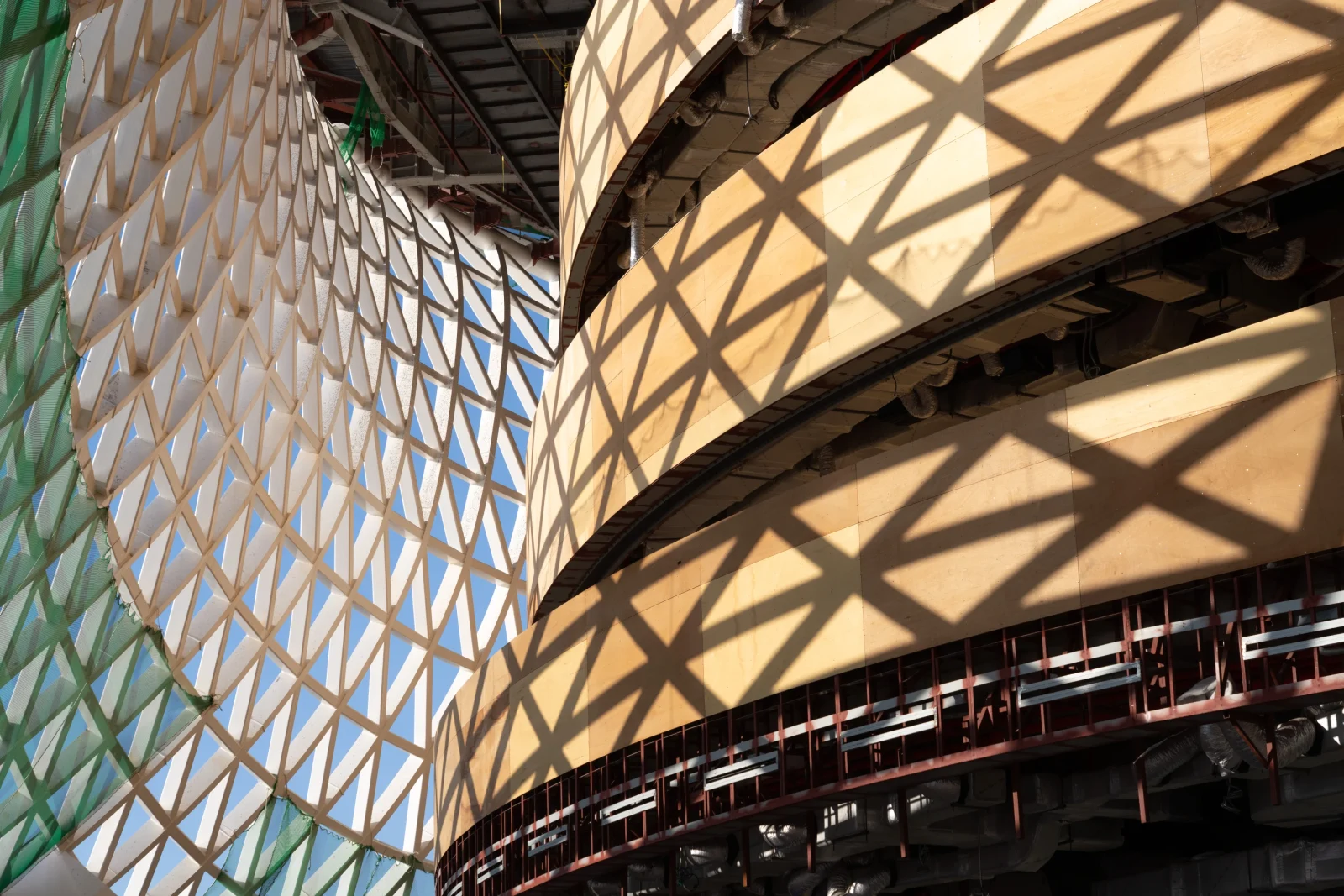
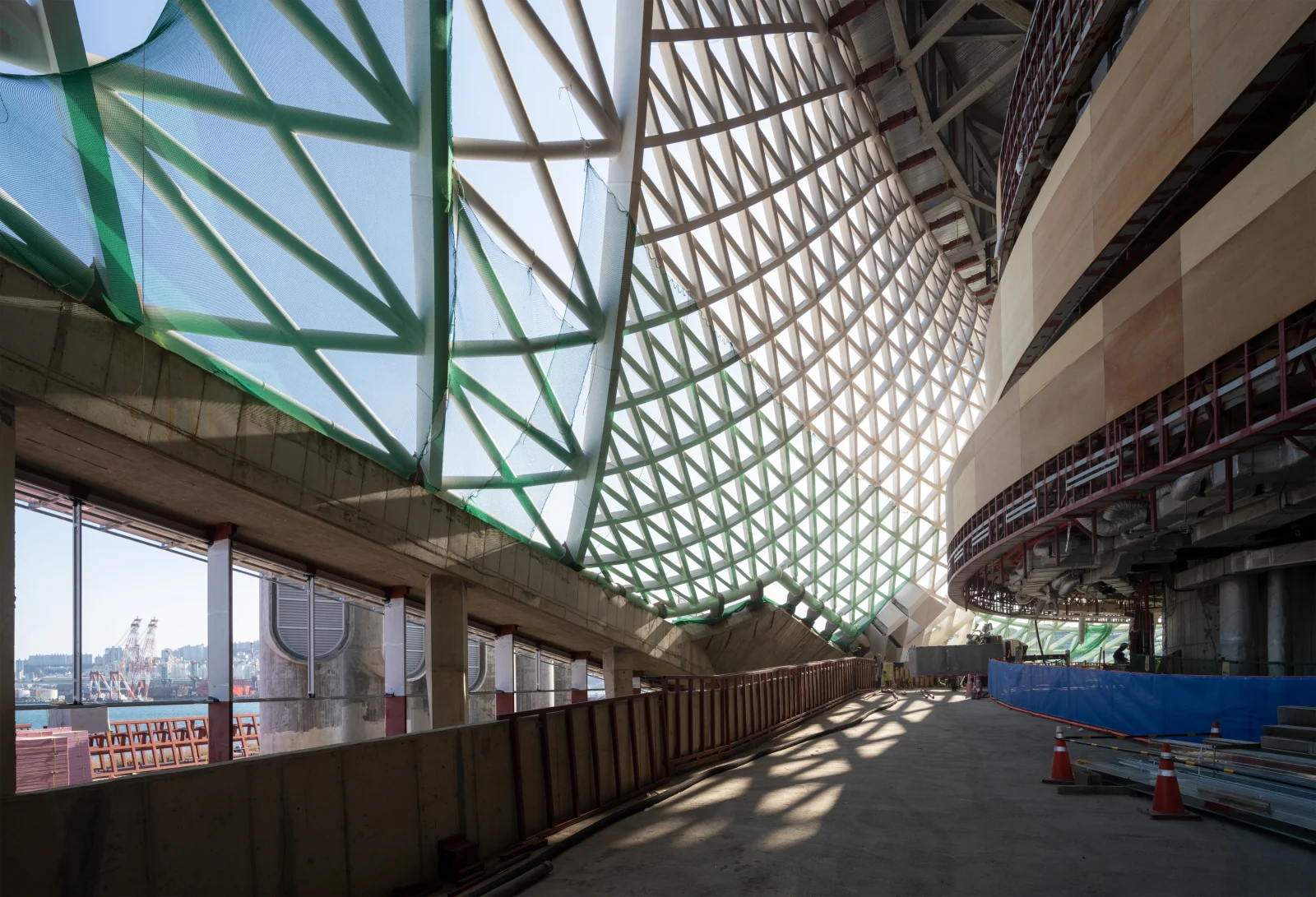
Designed by Snøhetta following an international competition win in 2012, the Busan Opera House is taking shape as a major new cultural institution for South Korea’s second-largest city. Created as an alternative to the opera house, the project positions performance architecture as an open civic space, intended for daily use as much as for formal events. Scheduled for completion in late 2026 and opening in 2027, the building is set to become a key public destination along Busan’s redeveloping North Port.
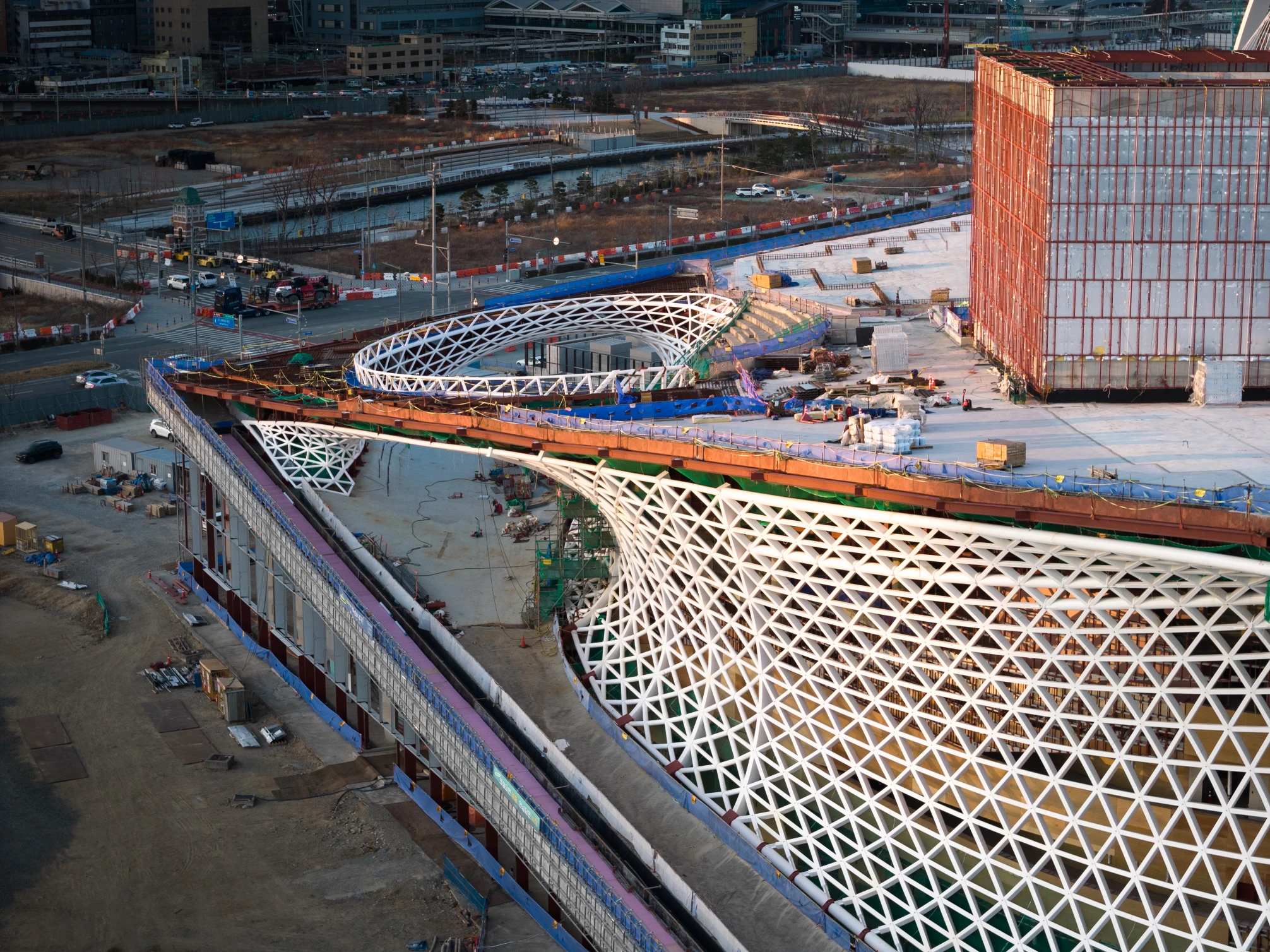
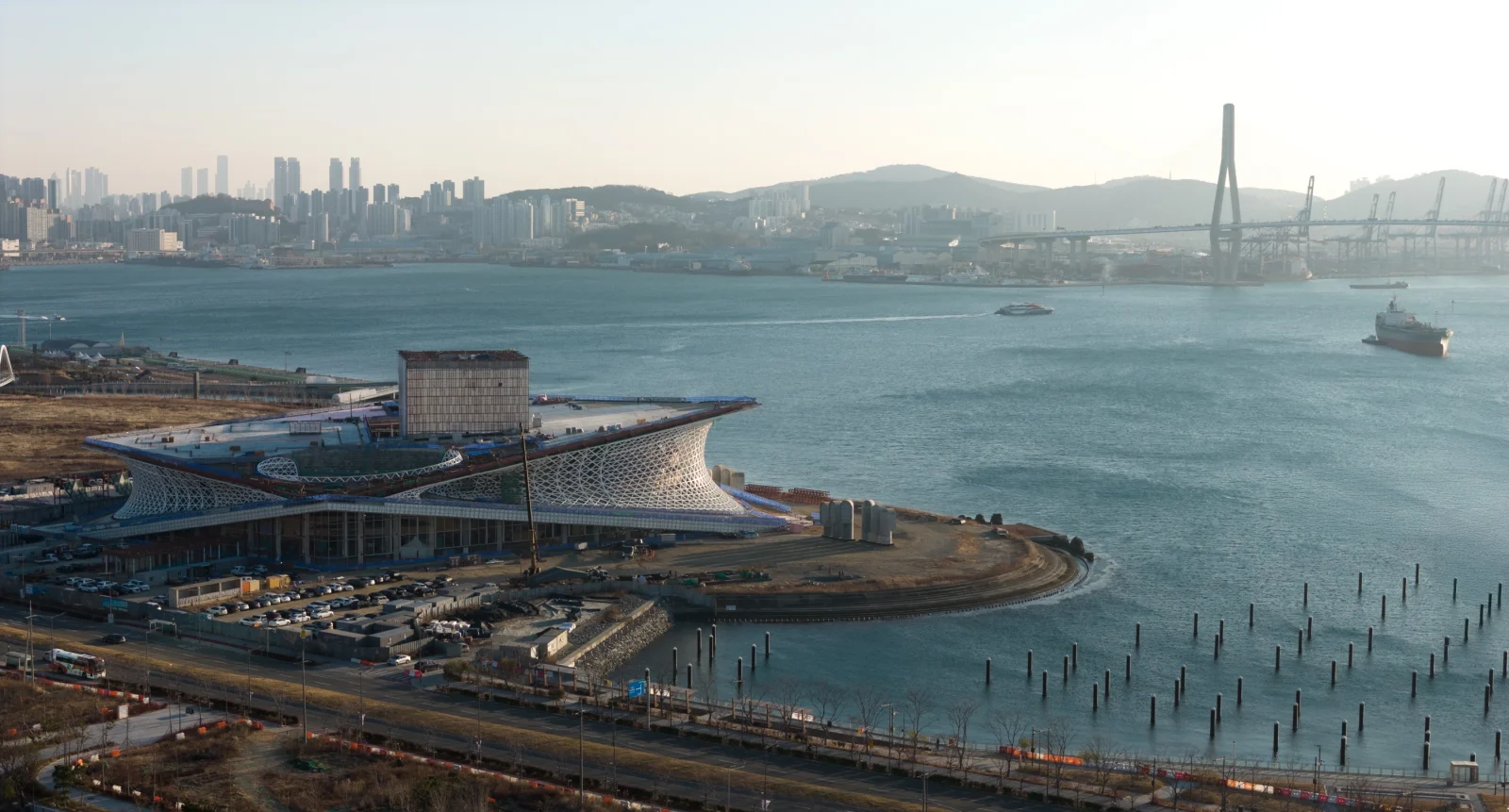
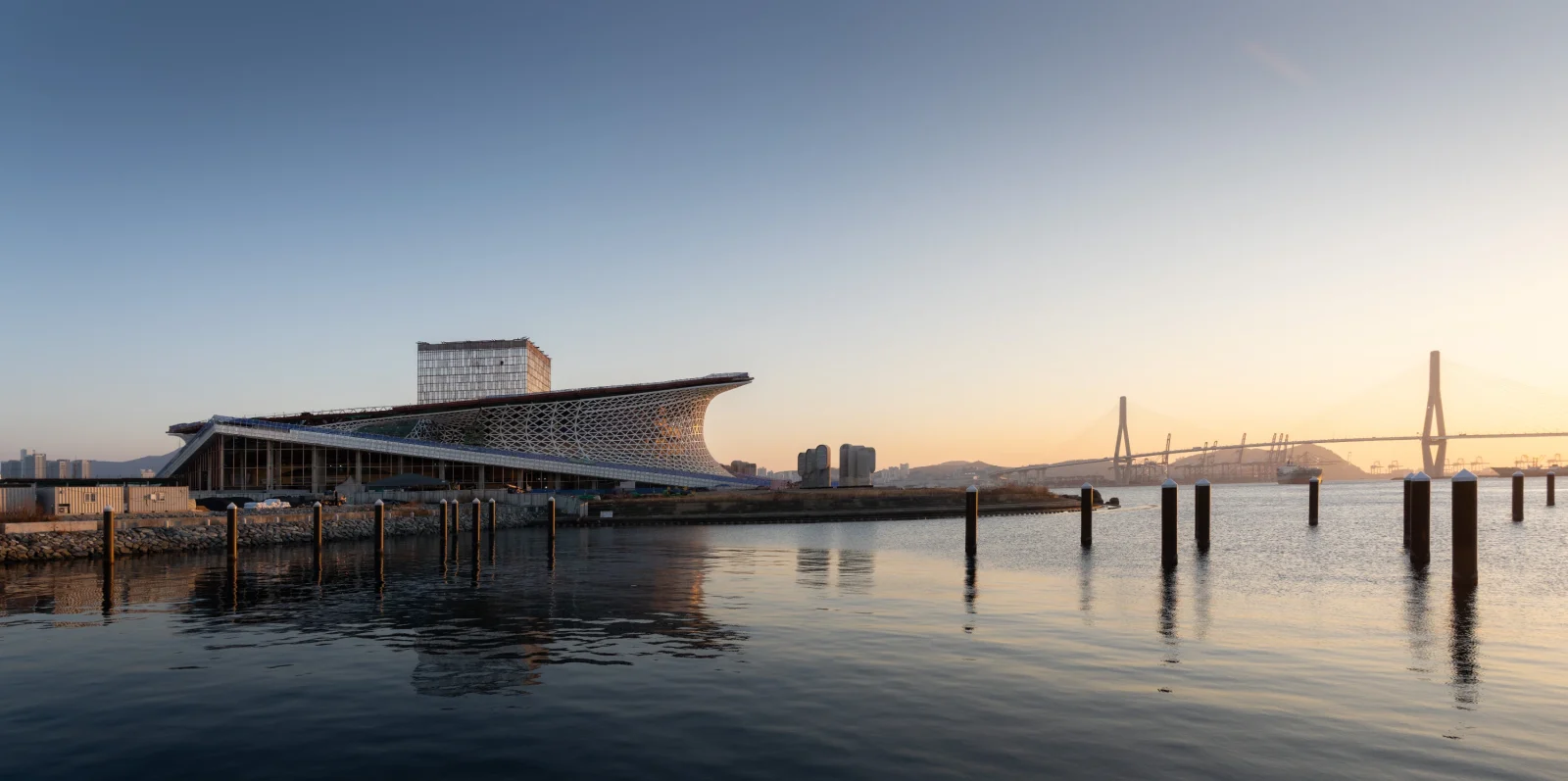
Located on reclaimed land along the waterfront, the opera house anchors the transformation of a historically industrial area into a public cultural district. The project reflects an emphasis on accessibility and shared urban space, with entrances from both the city and the sea, a publicly accessible rooftop, and integrated public plazas. With a total floor area of 48,000 square meters, the building accommodates a 1,800-seat grand auditorium, a 300-seat multipurpose theater, rehearsal facilities, and extensive public areas.
Architecture Shaped by City, Sea, and Landscape
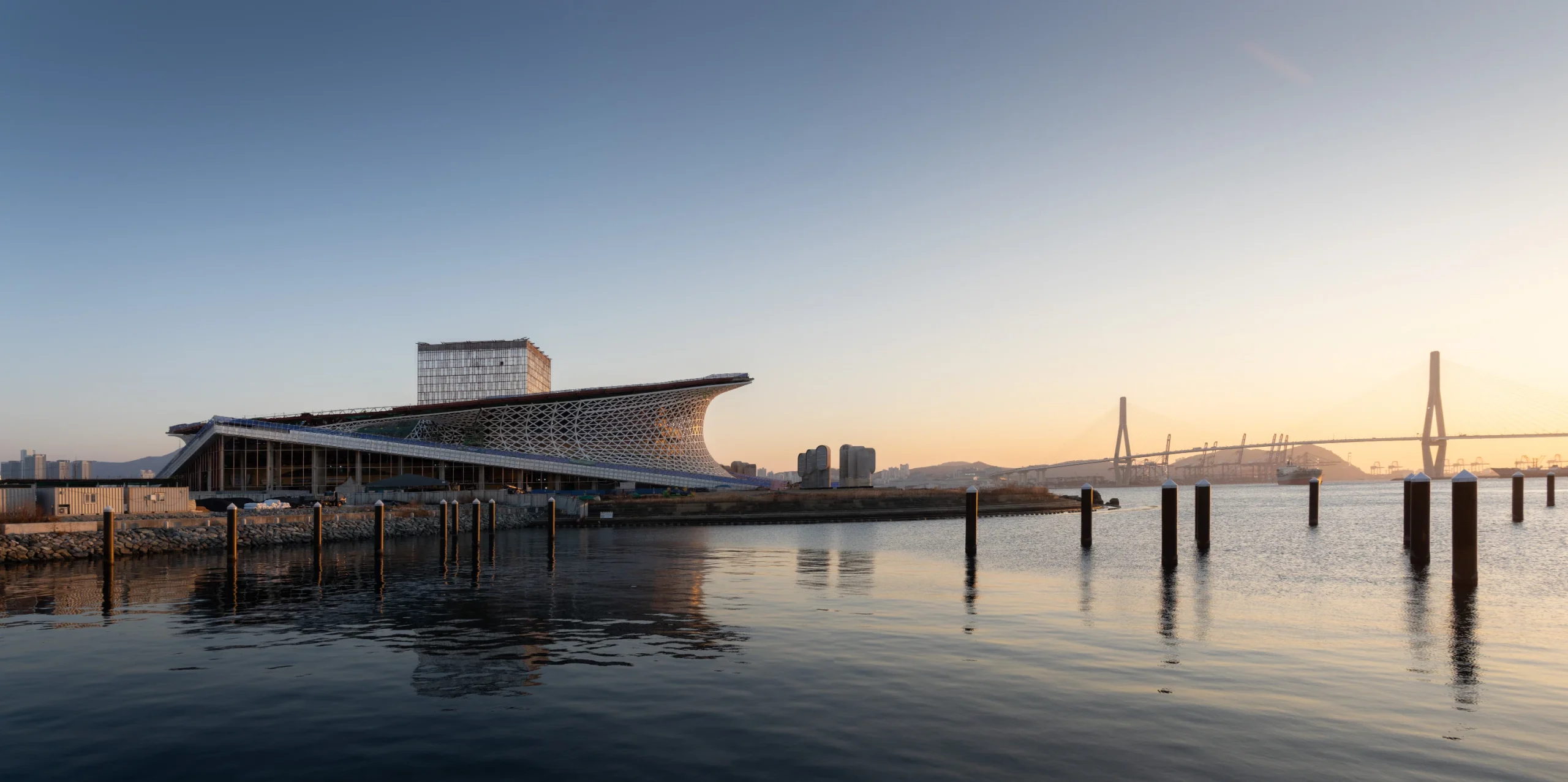
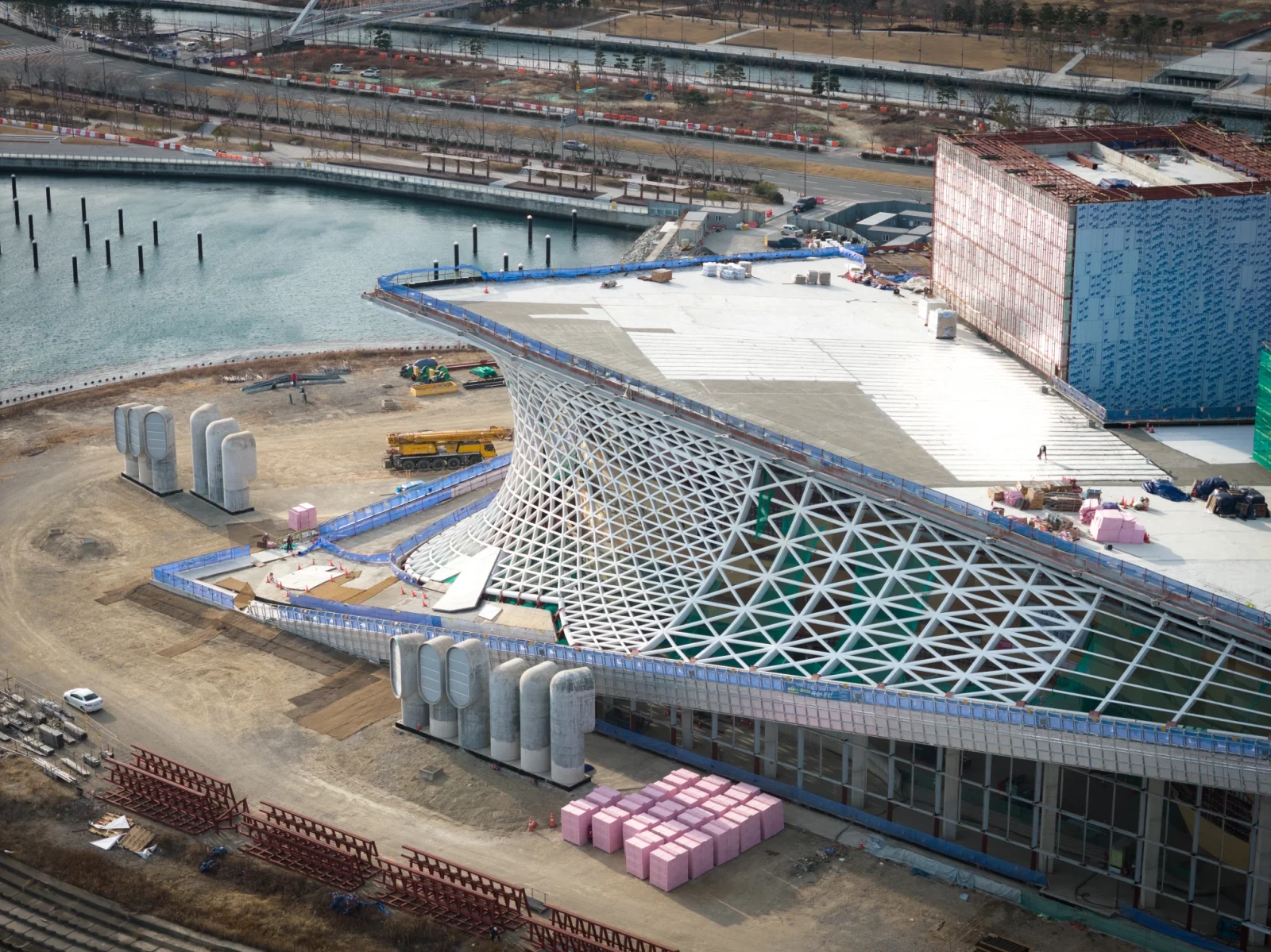
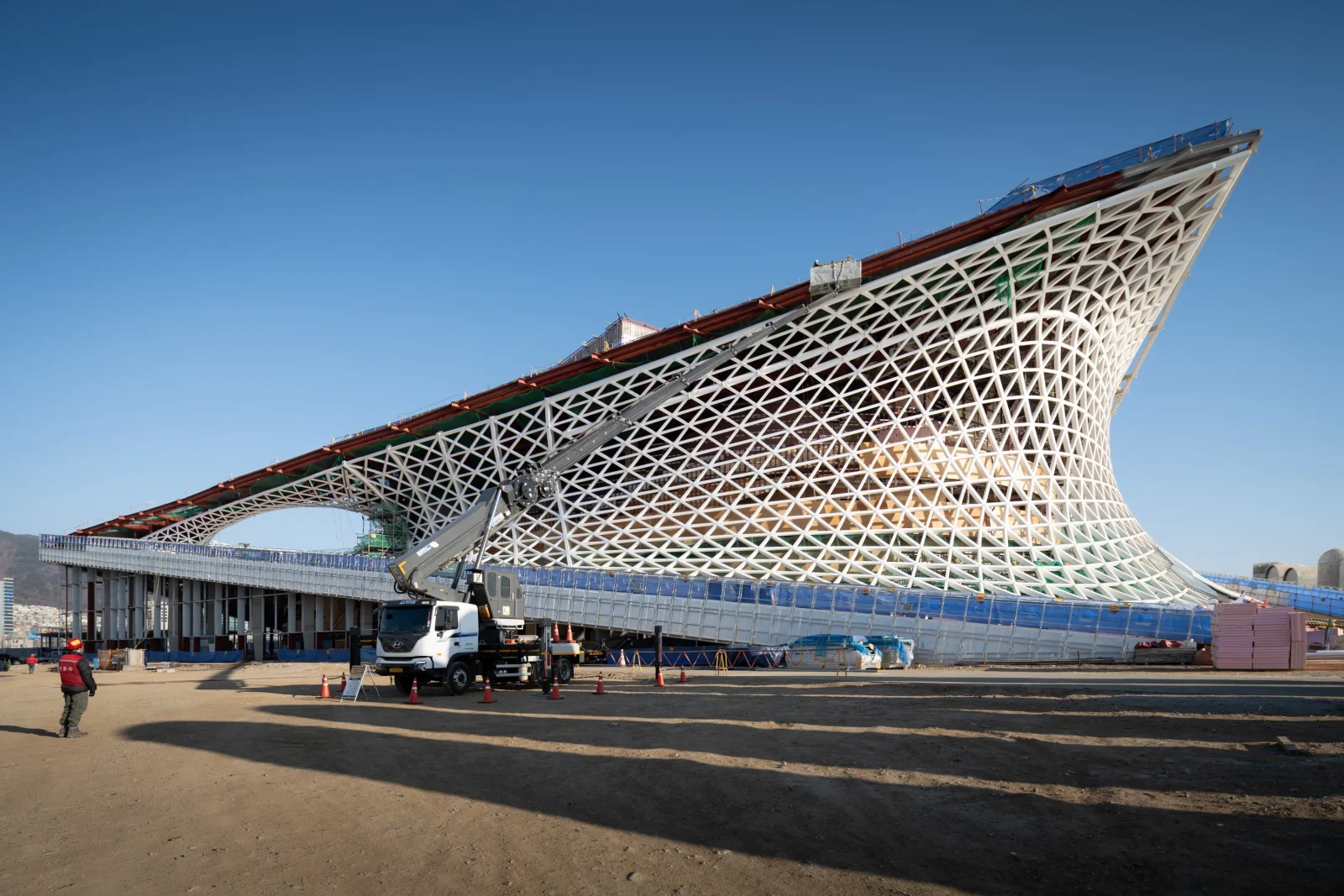
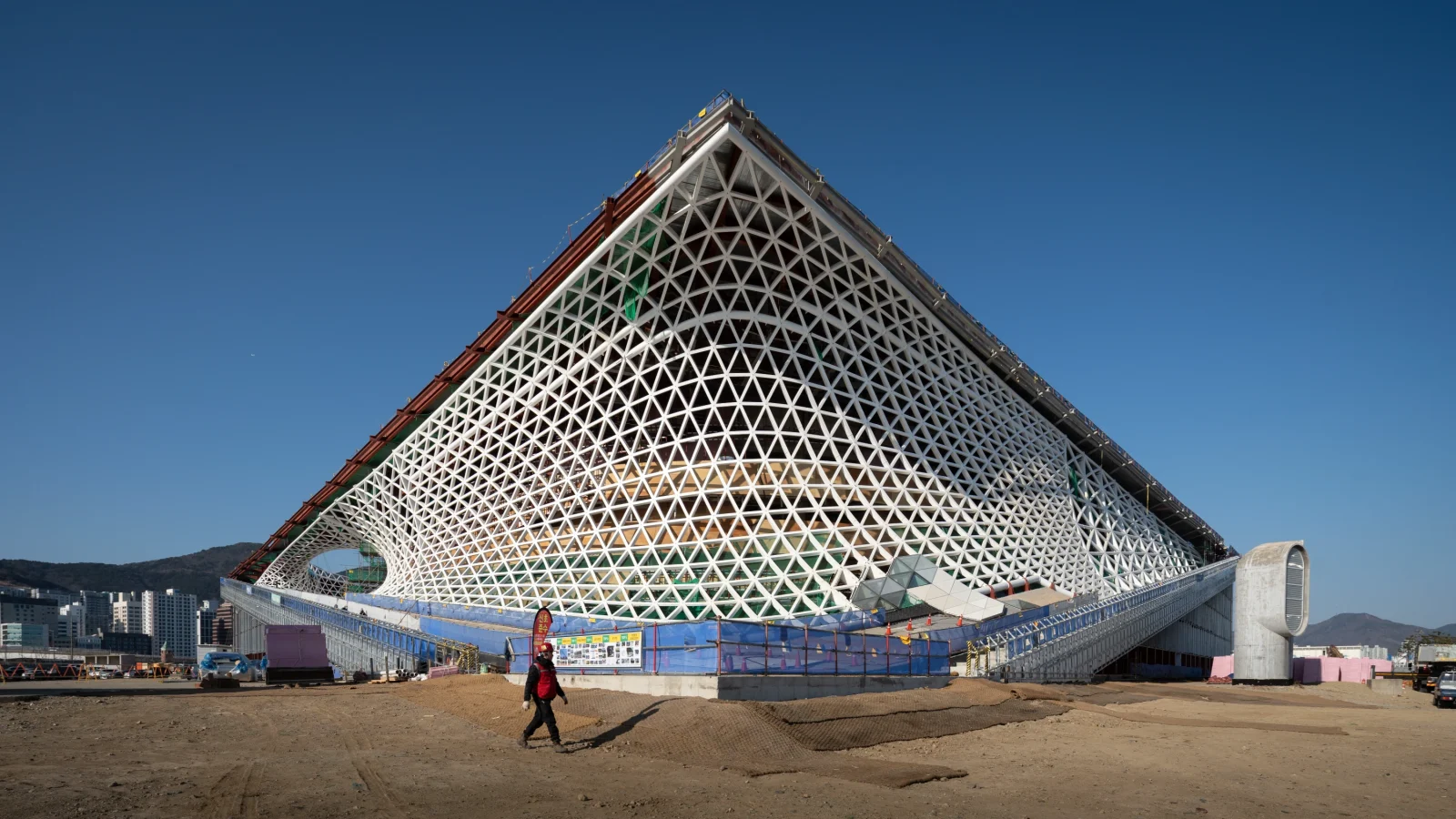
Two continuous, opposing curves define the building’s form. A lower plane arches across the ground, connecting the urban fabric to the waterfront, while an upper surface opens upward toward the sky. The opera house is formed within the tension between these planes, where land meets water and city meets landscape.
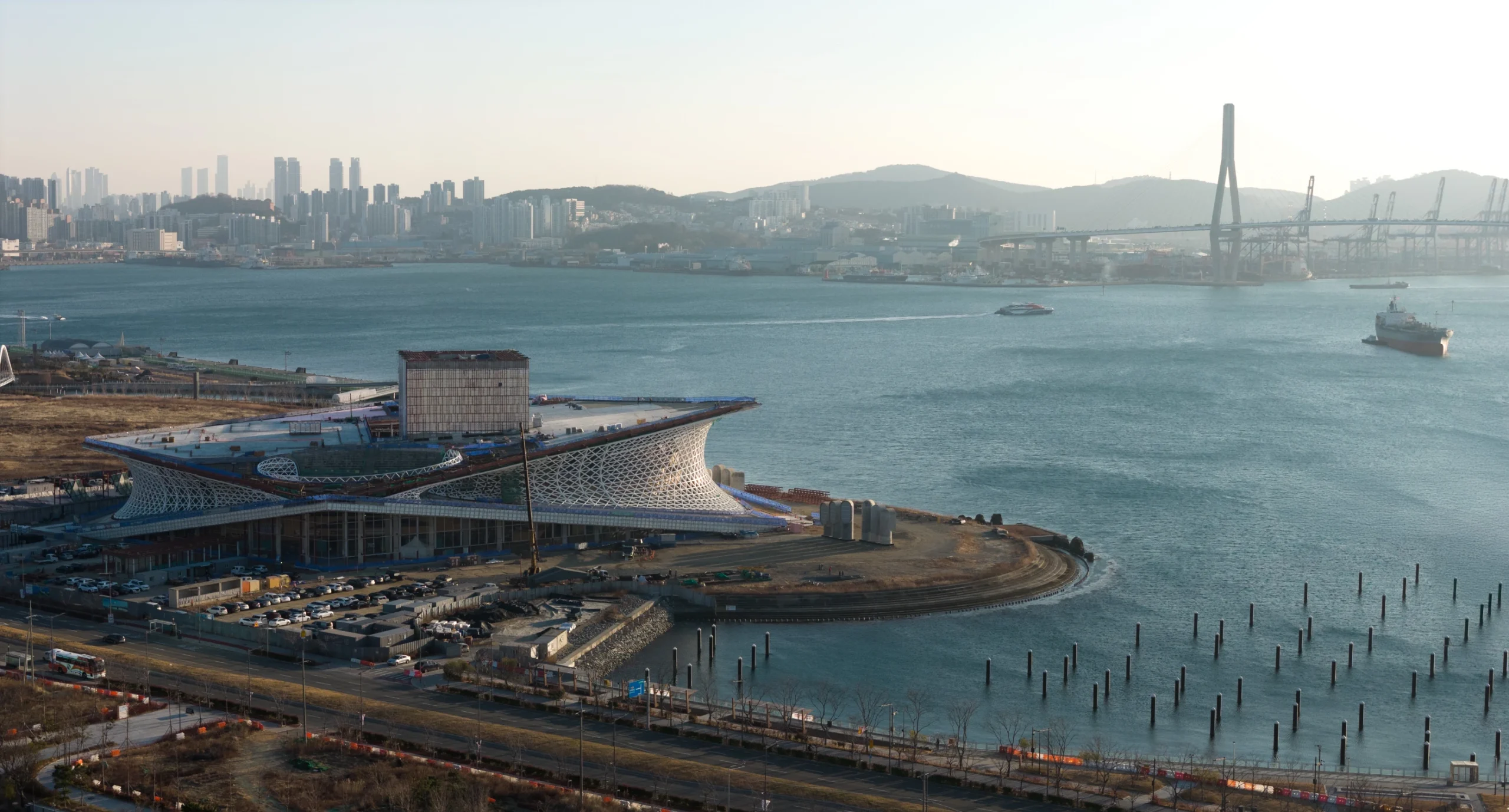
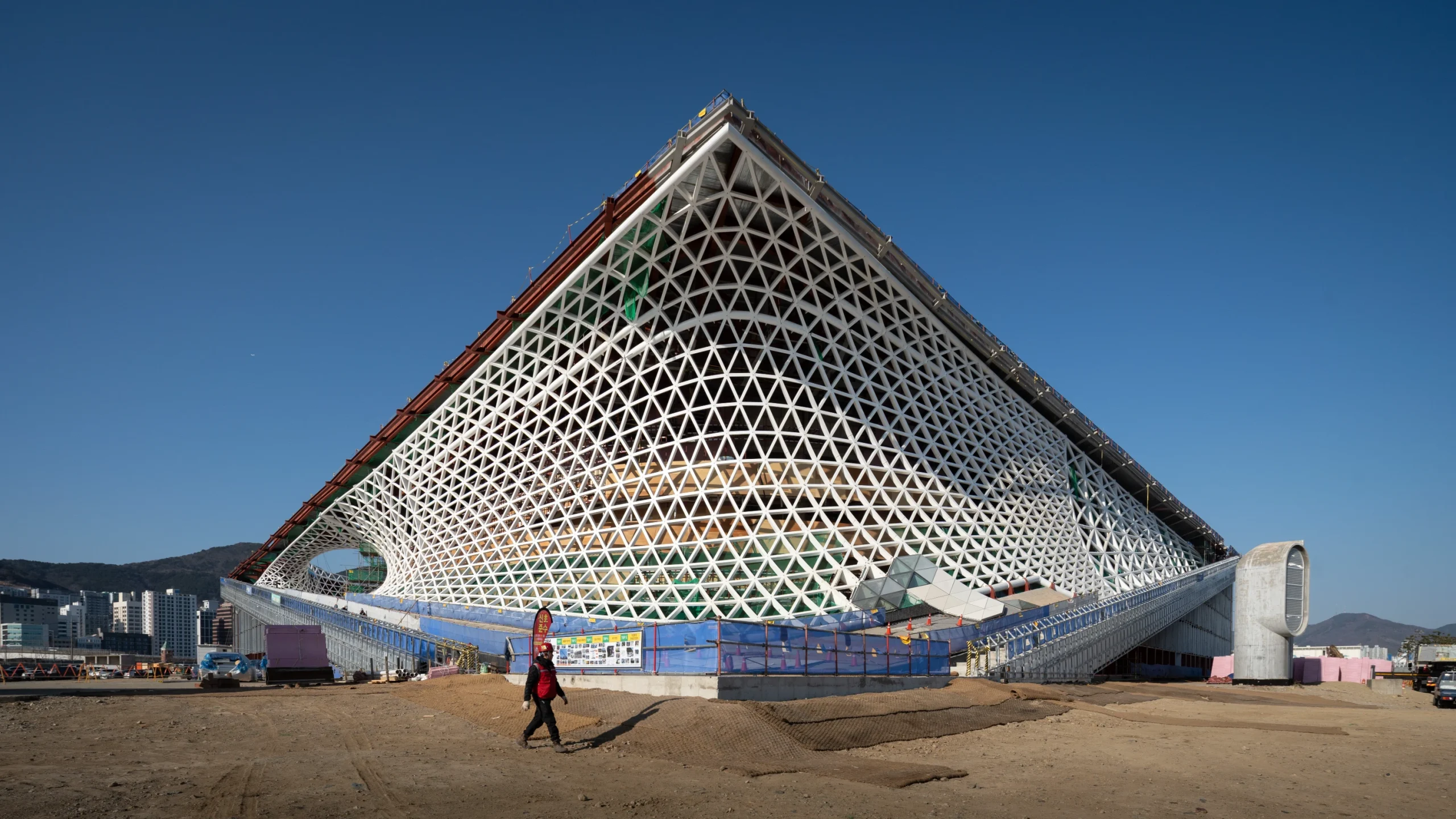
Each of the four corners extends toward the sea, reinforcing the visual and physical connection to Busan’s maritime edge. Two diagonally opposing corners are lifted to create primary entrances—one facing the city and one oriented toward the waterfront. These entrances are linked by a public promenade that wraps around the building and continues into the surrounding plaza. The upper plane lifts along the opposite diagonal, accommodating the internal program while simultaneously descending toward the city and rising toward the sea and sky.
Public Spaces and Performance at the Core
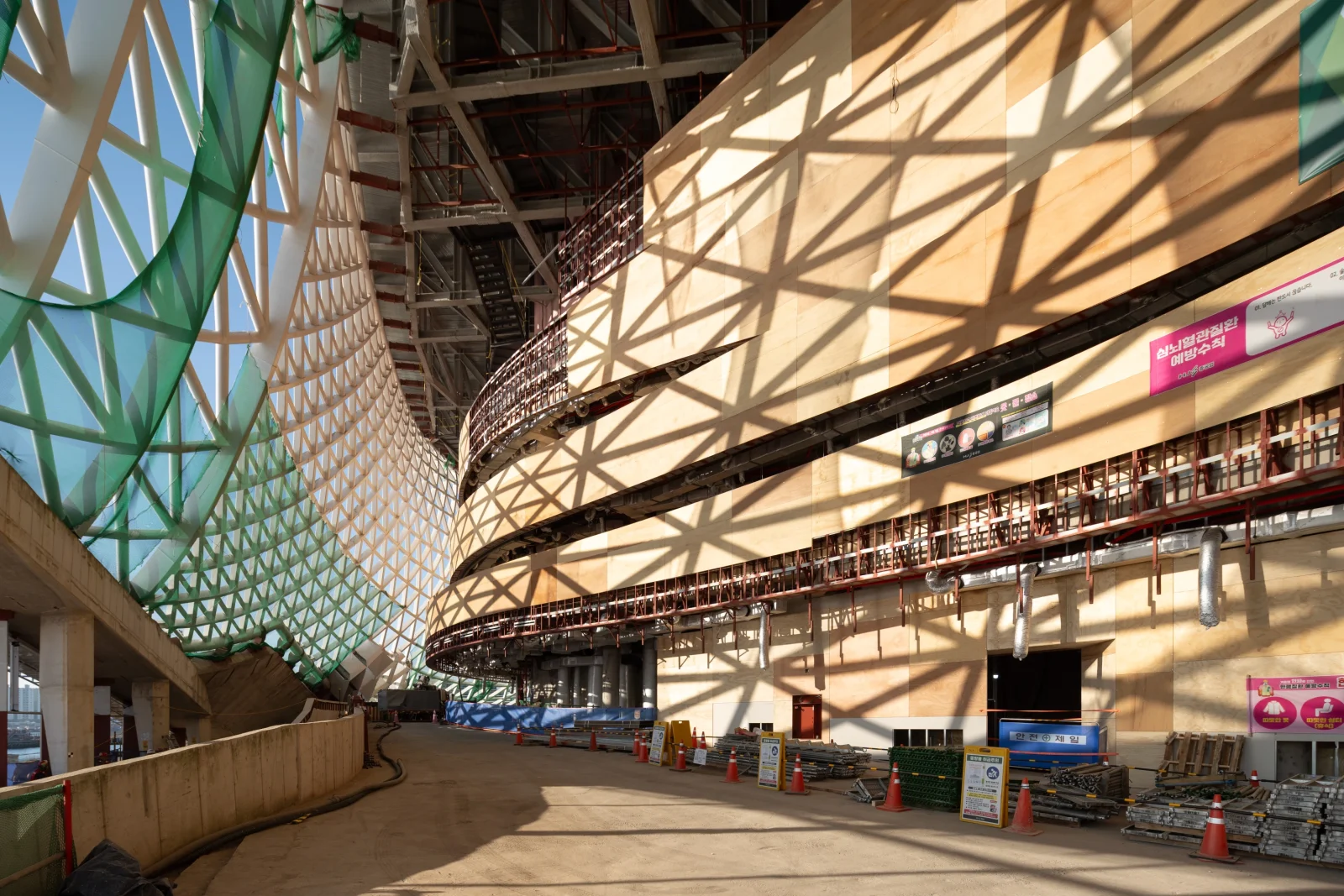
At ground level, the opera house functions as a permeable civic space. The main foyer wraps around two sides of the building, orienting interior spaces toward the sea and softening the boundary between inside and outside. This level houses the primary front-of-house areas, including the main foyer, restaurant, and public access to the parterre.
The opera hall sits at the center of the building and is designed as an acoustically precise performance space. Solid cherry wood panels shape the interior, supporting the resonance, warmth, and clarity required for operatic performance.
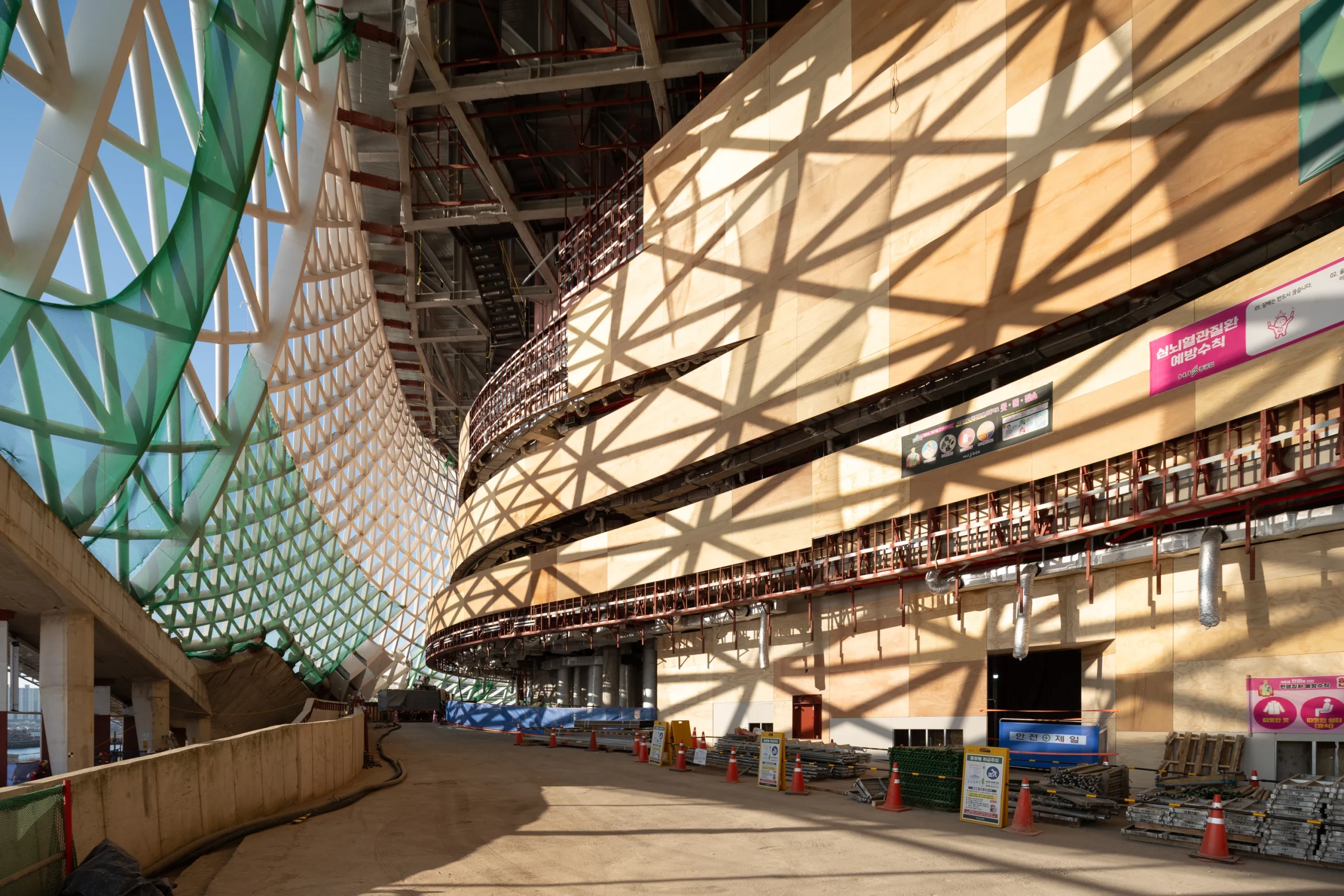
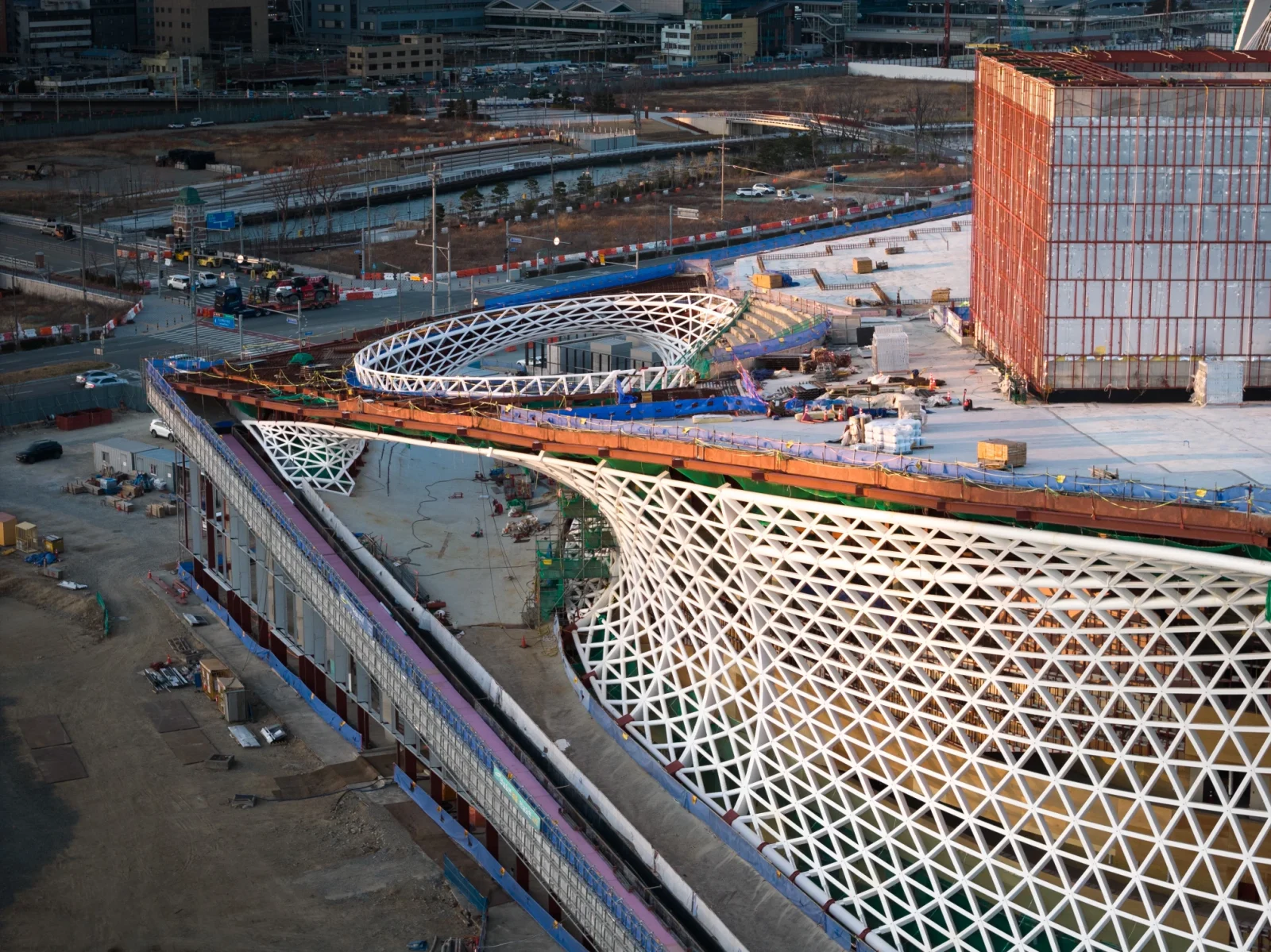
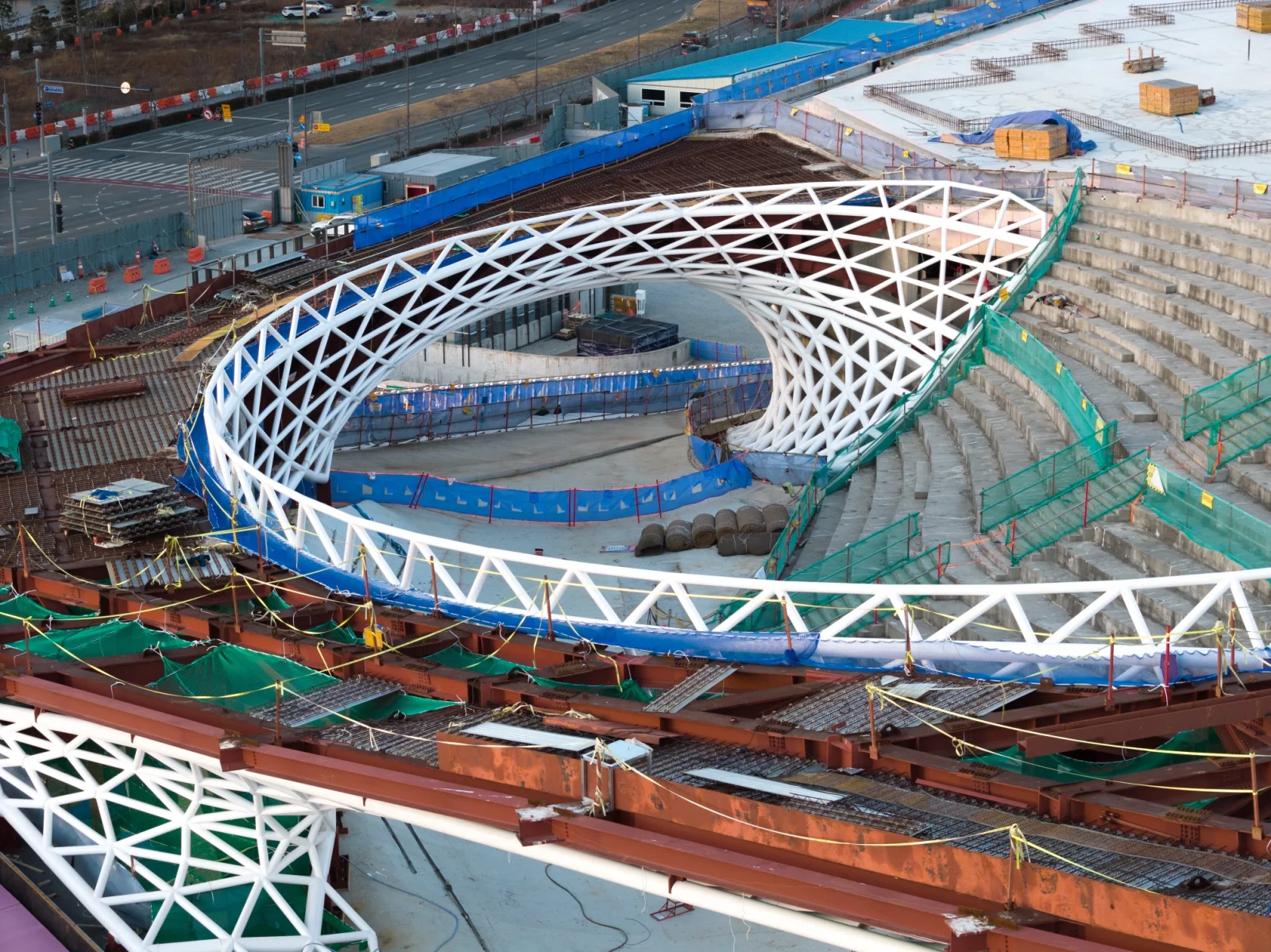
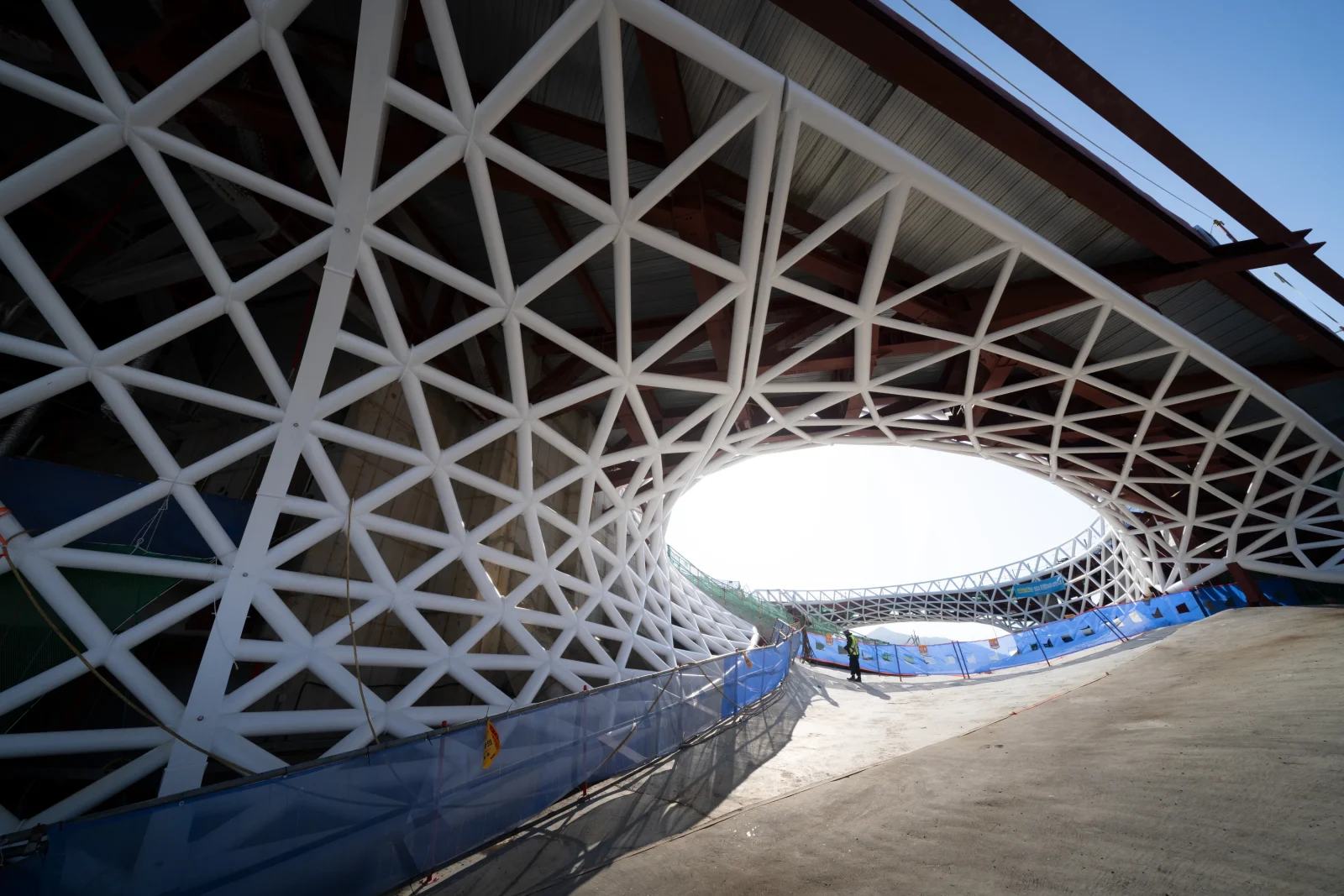
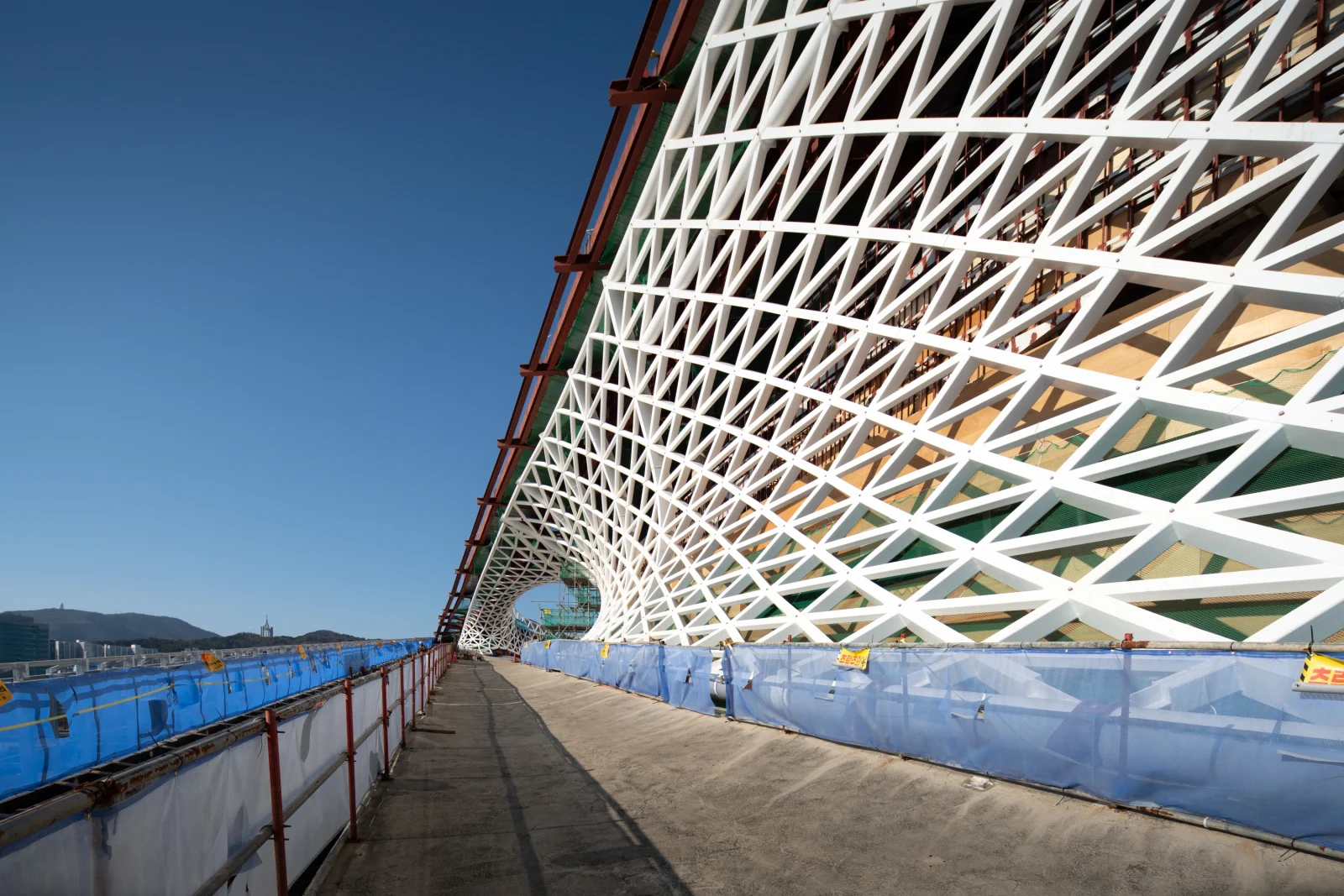
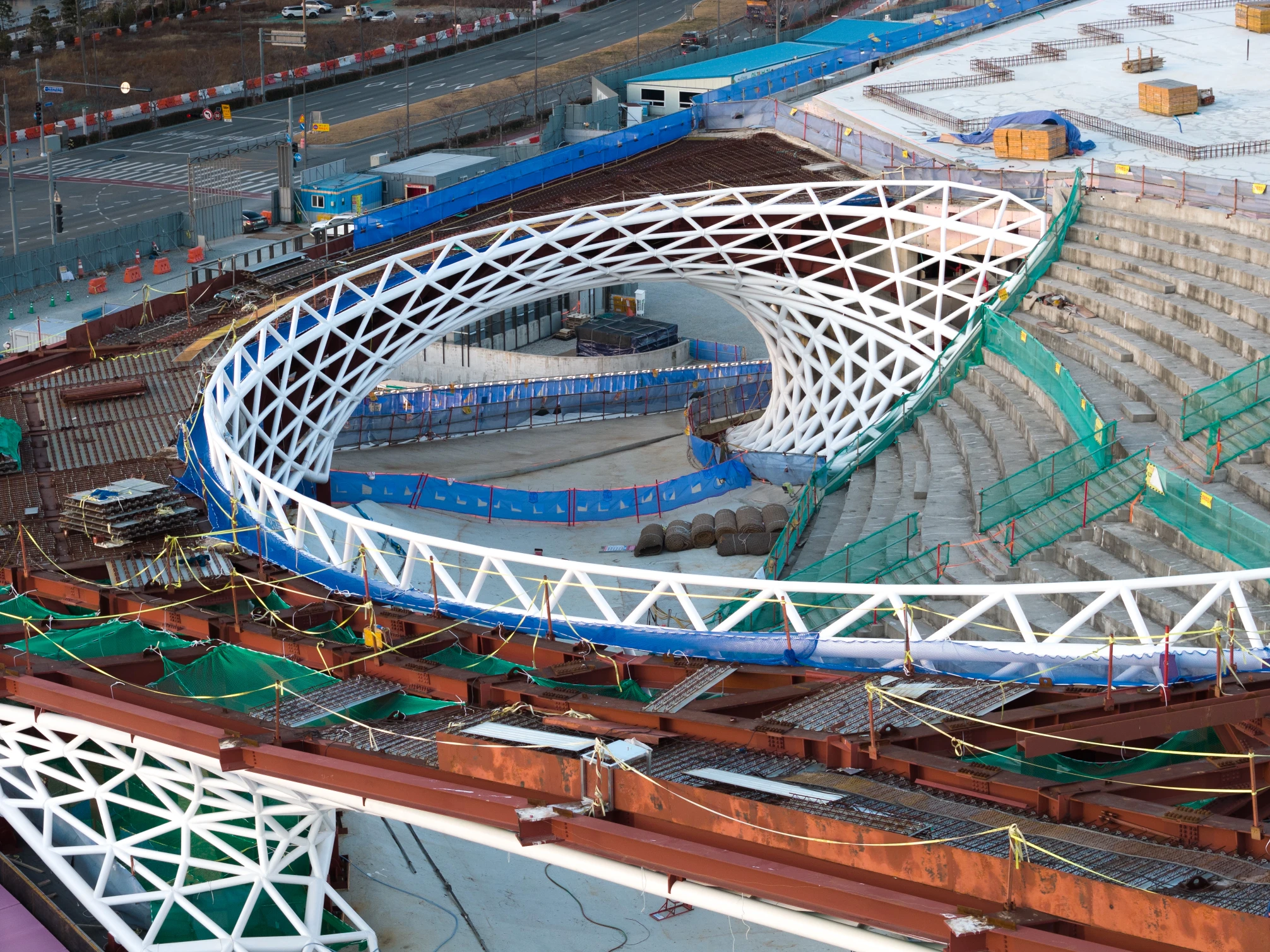
Visitors are guided upward through a gently sloping route that passes an oculus and leads to the rooftop. This elevated public landscape returns the building’s footprint to the city as a walkable surface. In contrast to the activity below, the rooftop offers a quieter space for reflection, with uninterrupted views of the surrounding mountains and ocean.
Construction Progress
Construction has advanced significantly in recent months. With the primary structure and façade framework completed, work is now focused on façade installation, interior finishes, and landscape development.
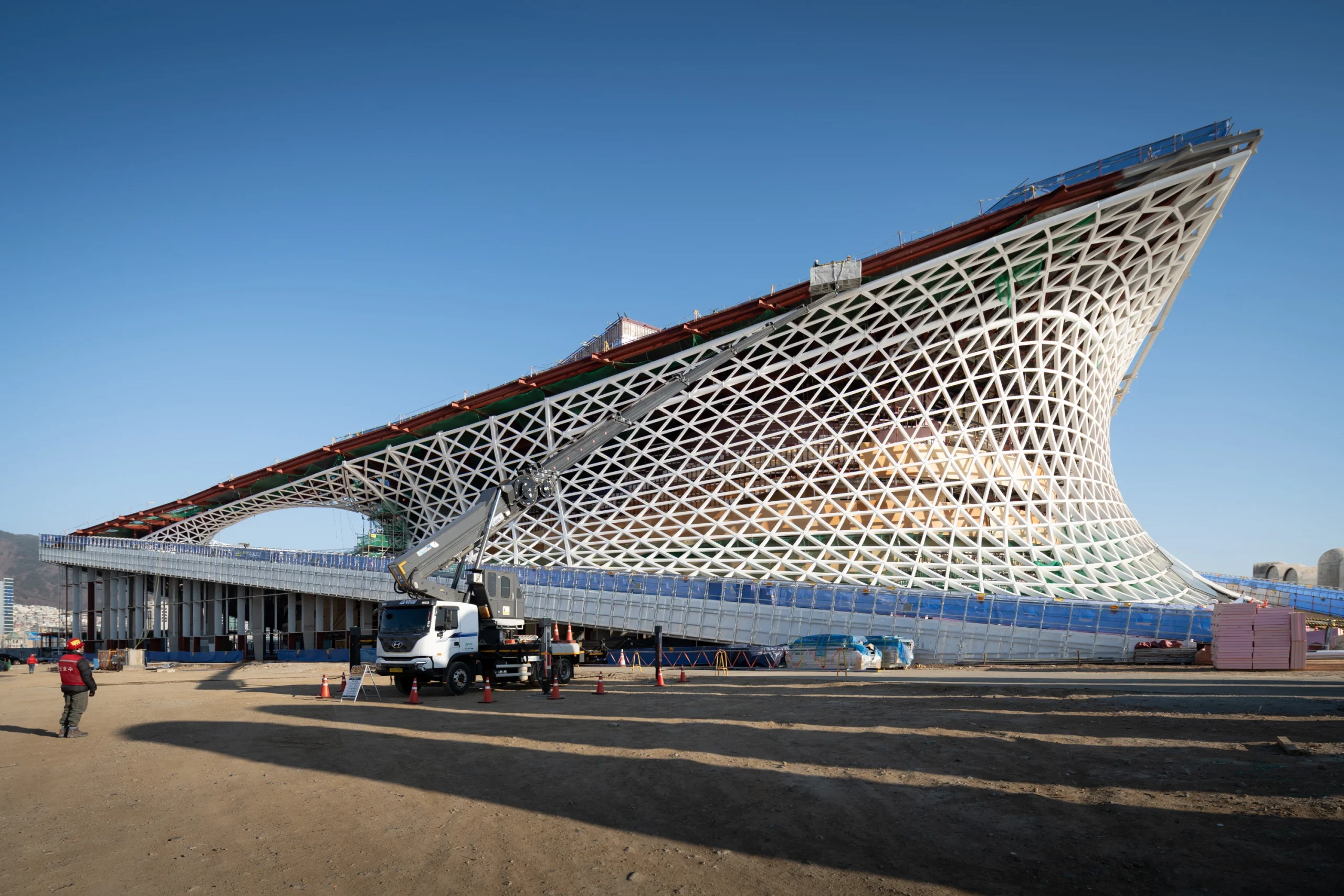
A soft, flowing exterior skin spans the two public planes and encloses the public functions. This envelope balances transparency and protection while visually connecting the ground level and rooftop in a continuous architectural motion.
Busan Opera House Project Details
Project: Busan Opera House
Location: Busan, South Korea
Architect: Snøhetta
Collaborator: Ilshin Architects
Client: Busan Metropolitan City Government
Size: 48,000 sqm
Status: Under Construction
Timeline: 2012–2026 (Completion), Opening in 2027
Photography: StudioSZ Photo | Justin Szeremeta
Explore Courses
.jpg "Ondrej Chybik - Rethinking Architecture")