

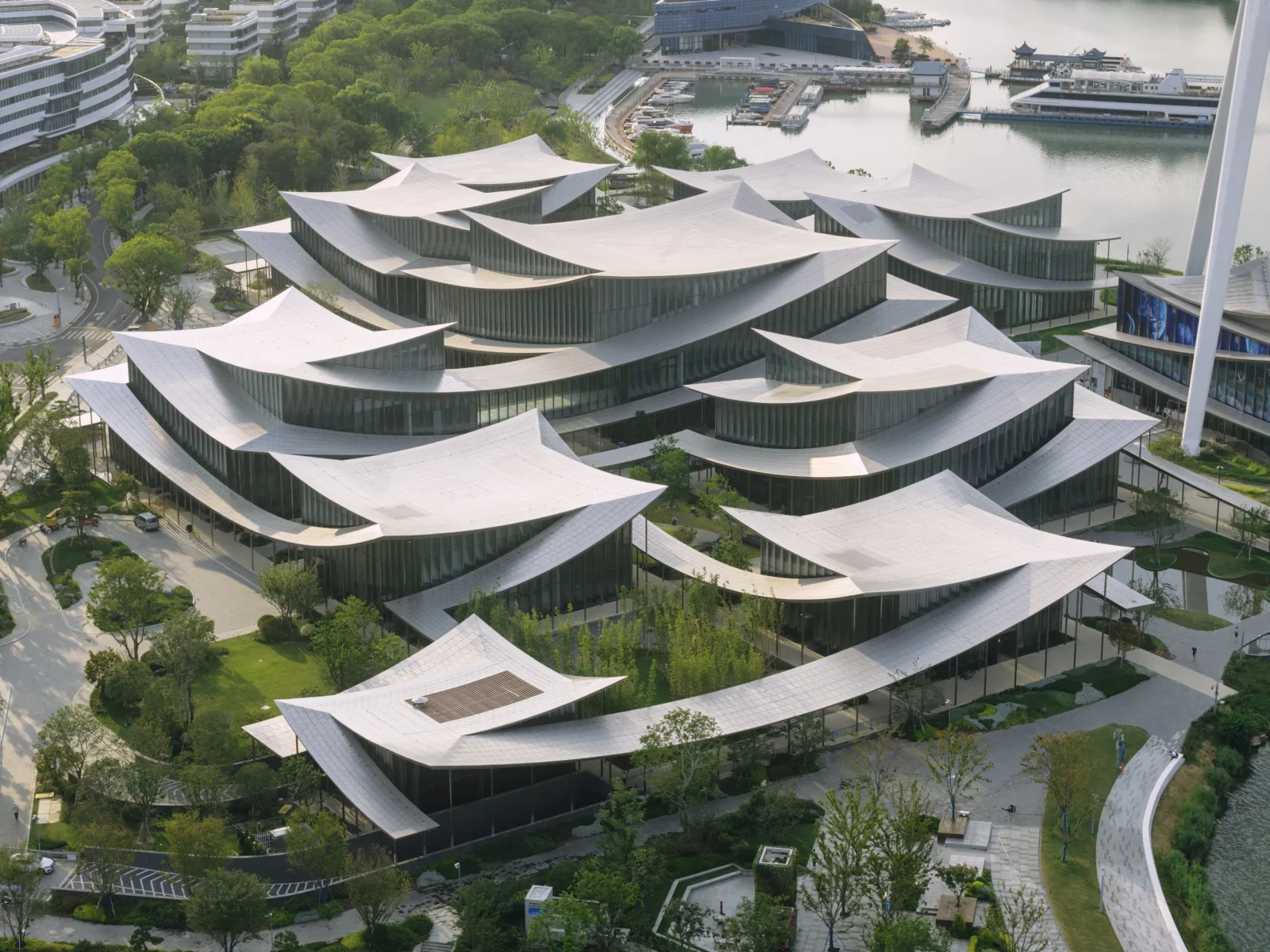
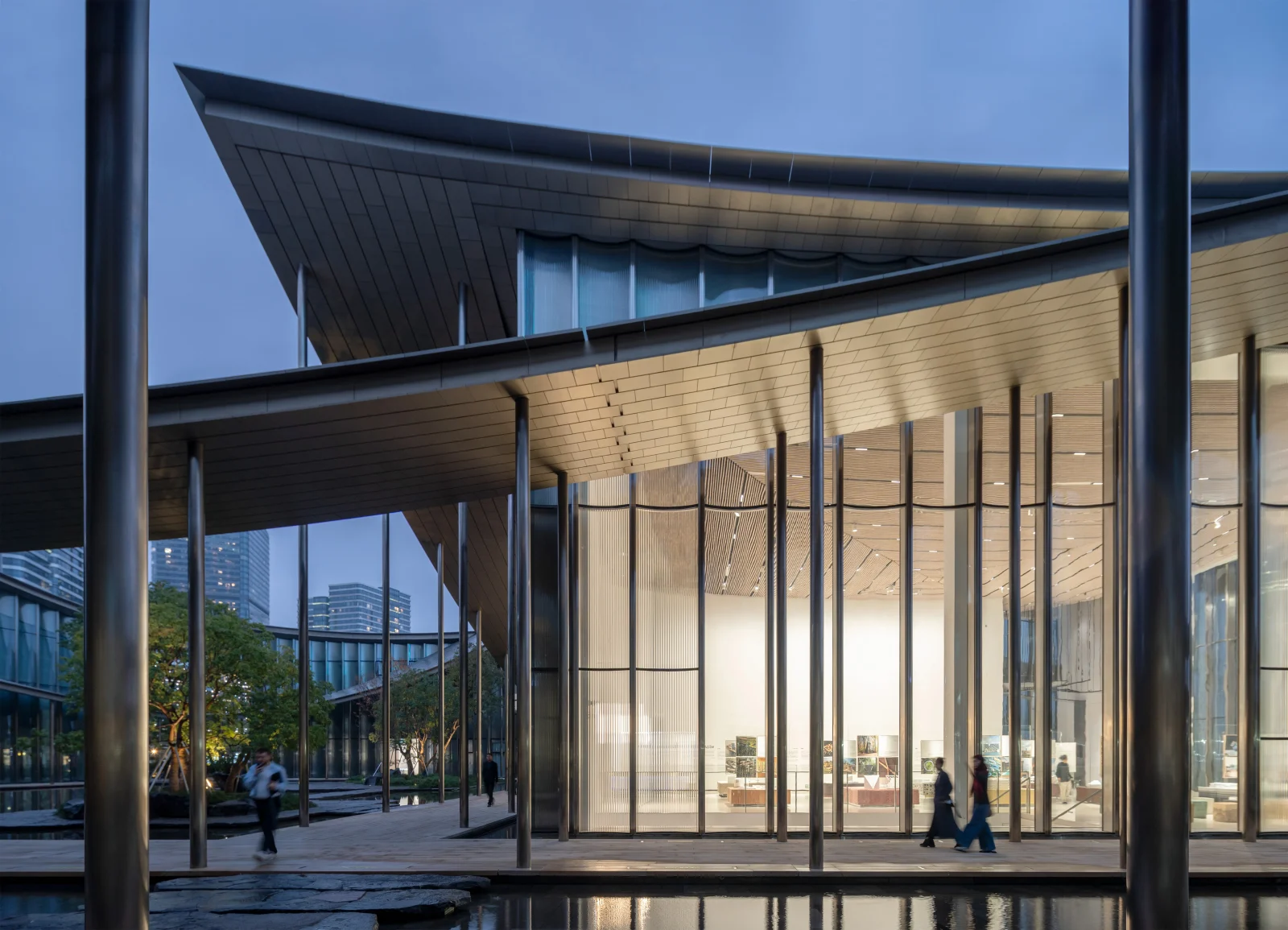
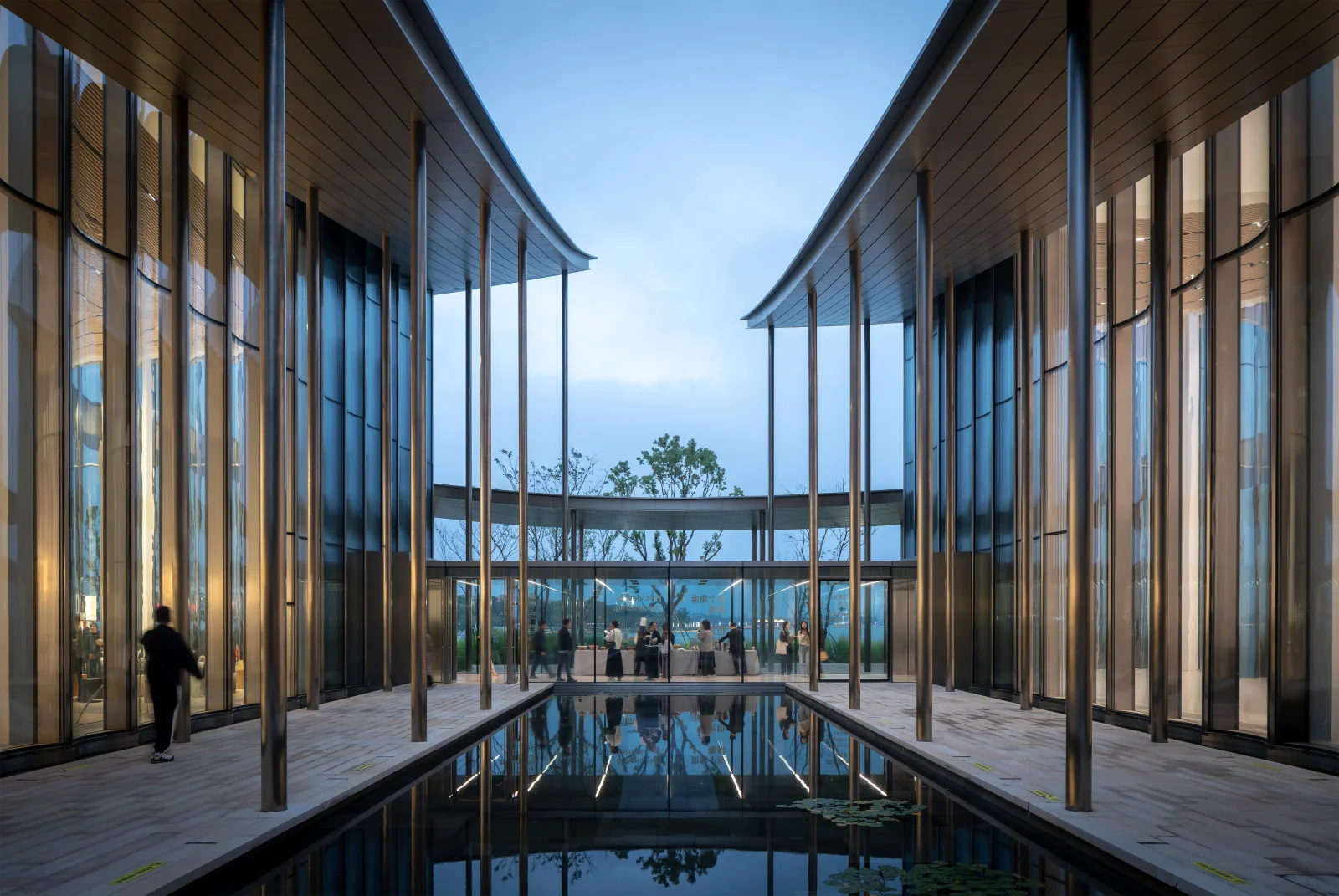
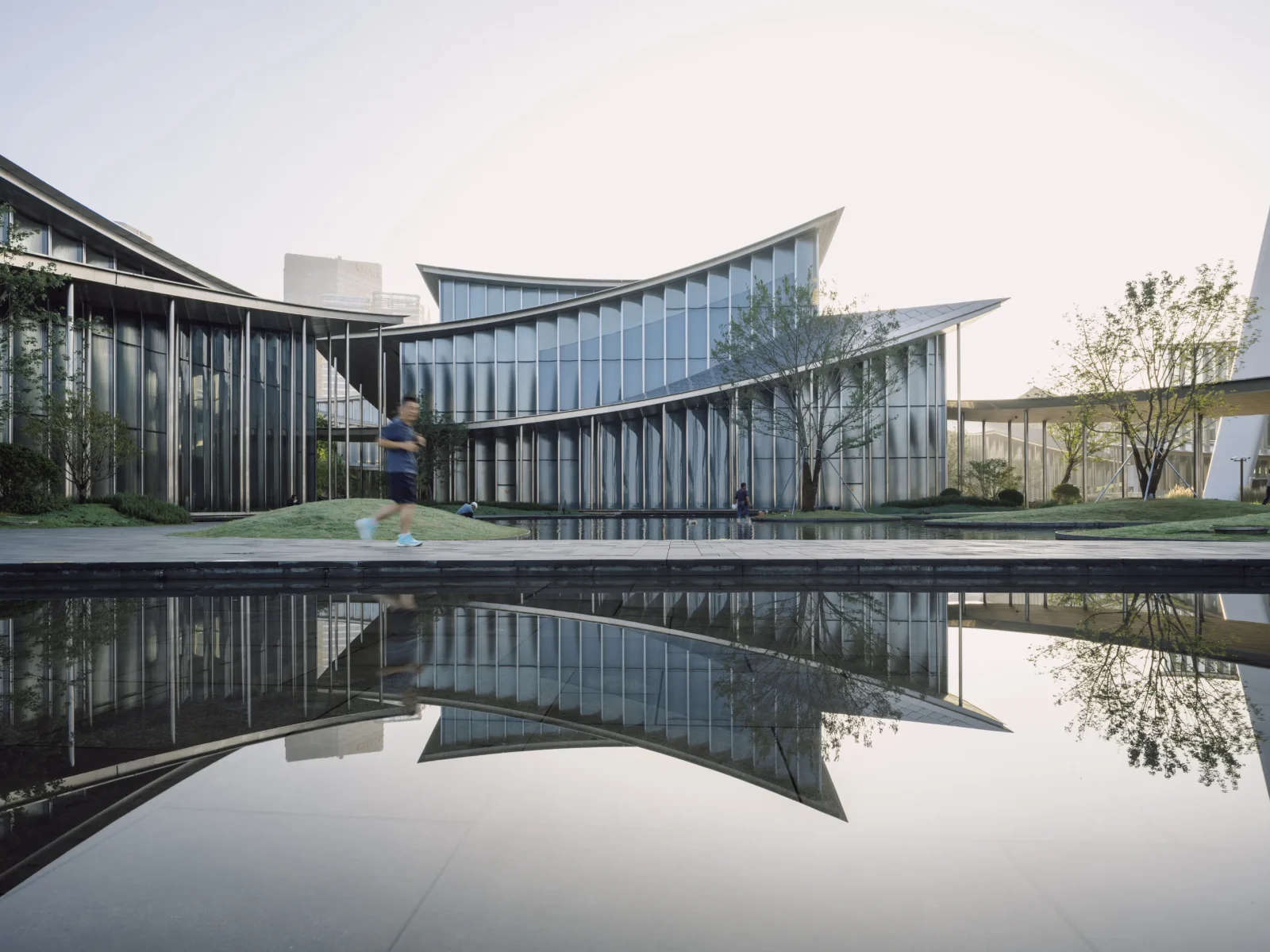
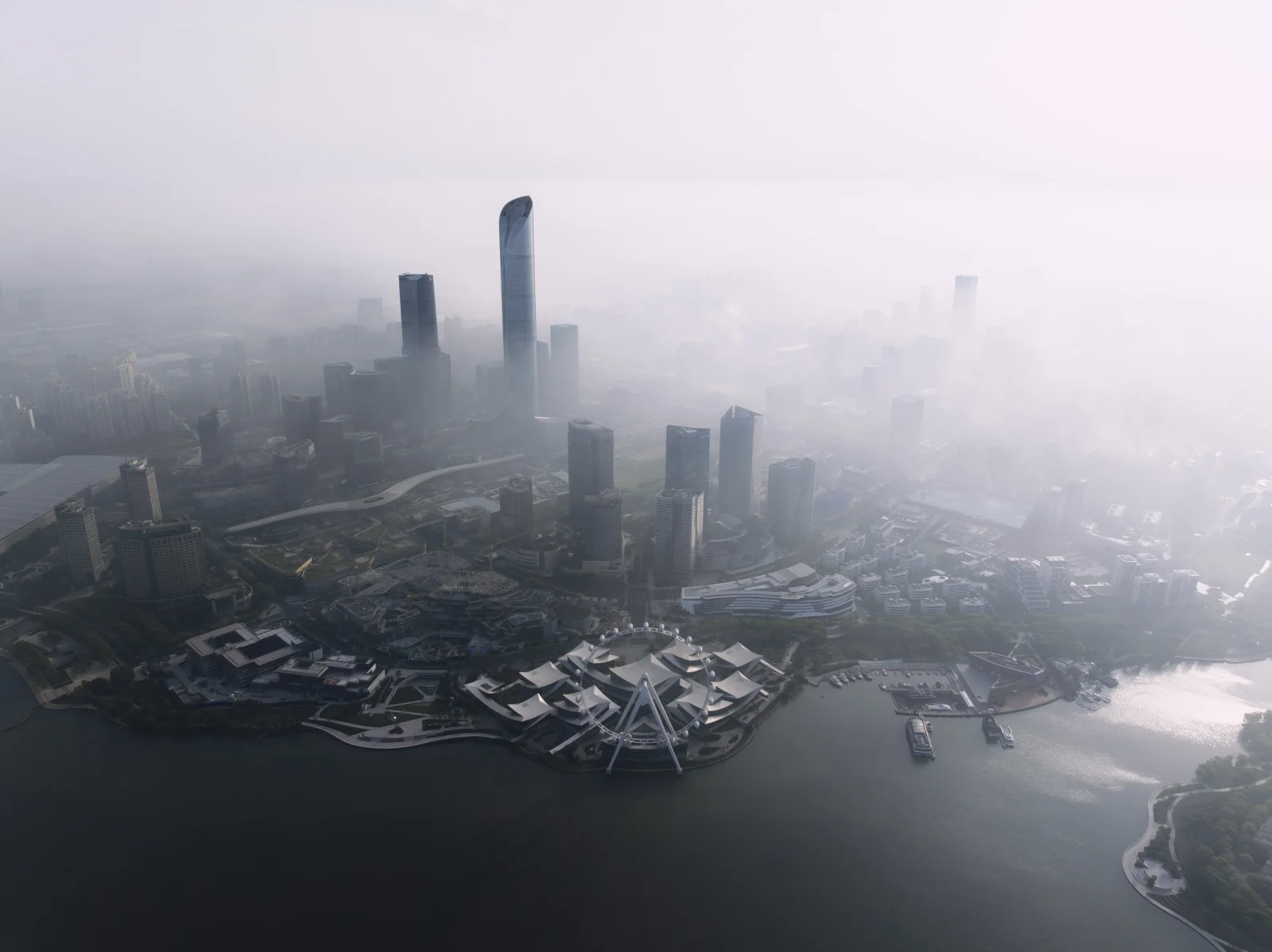
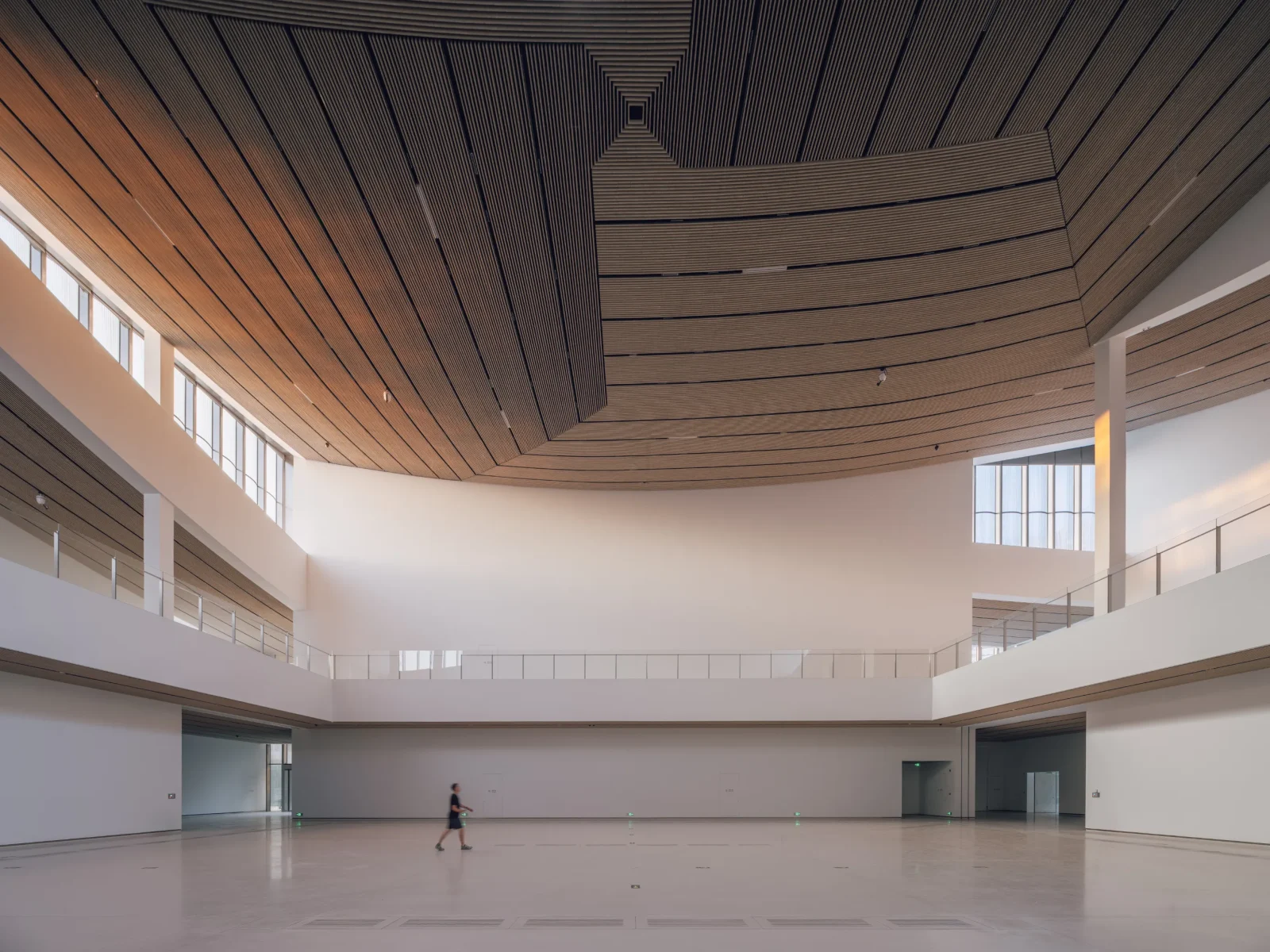
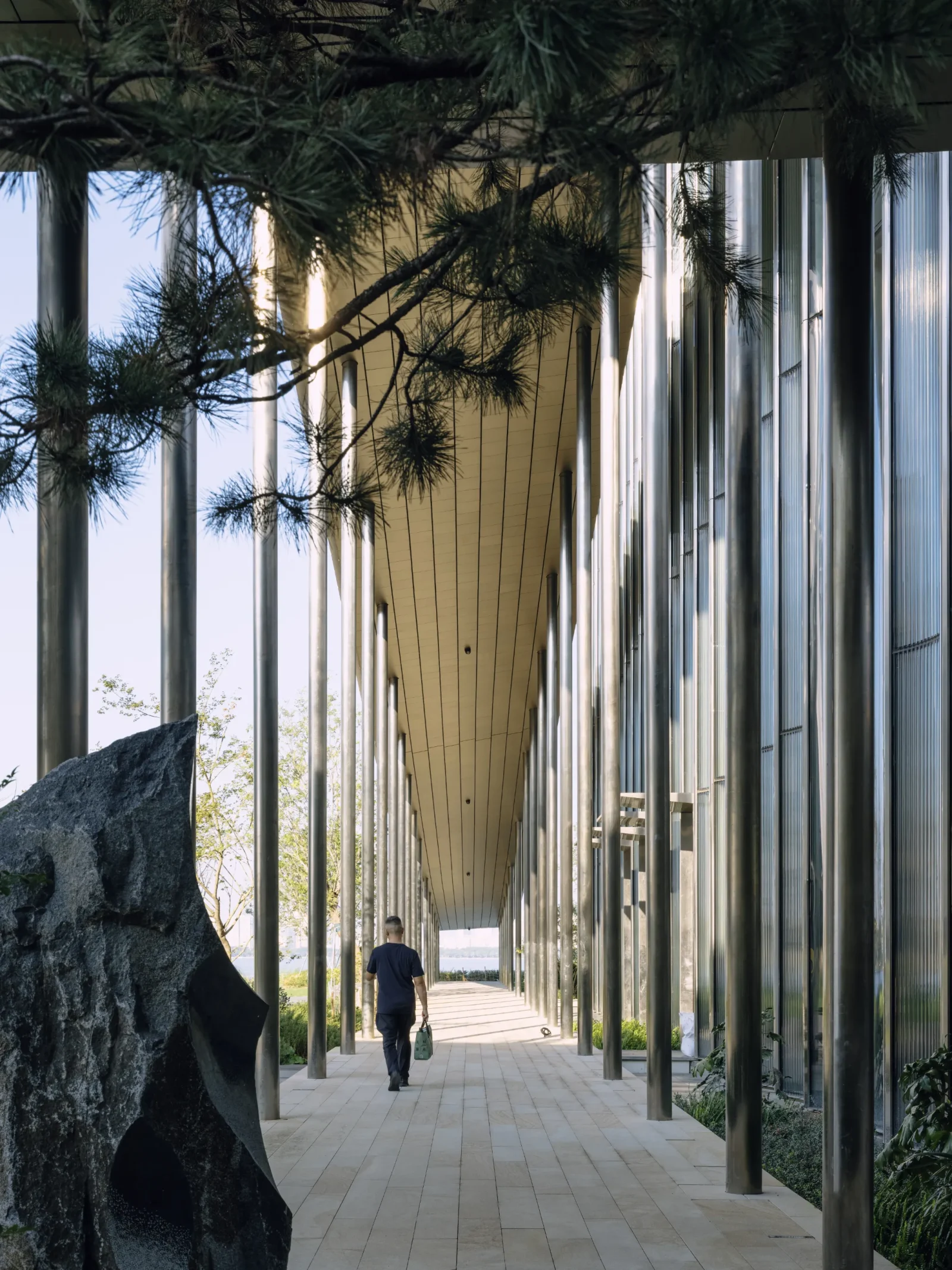
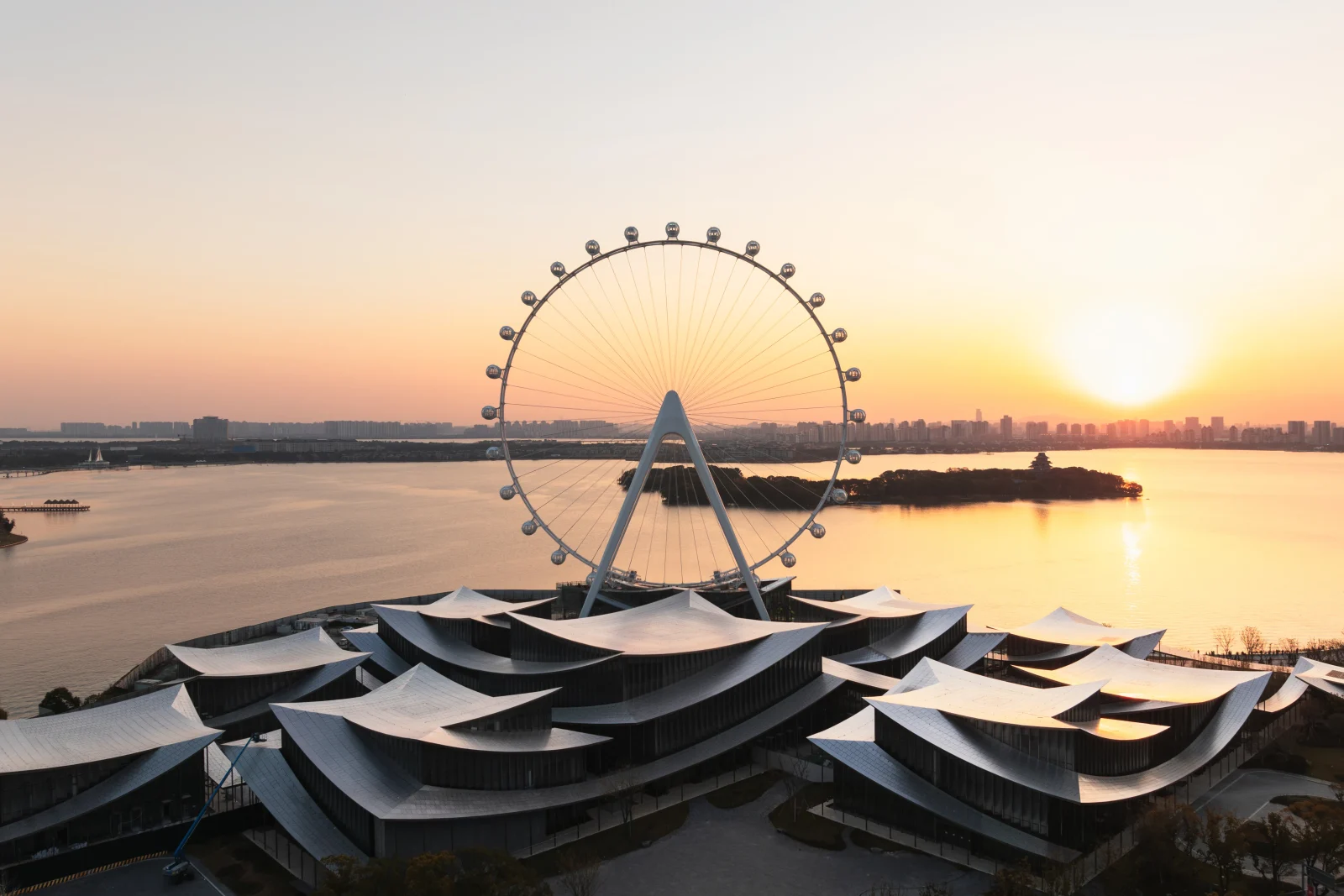
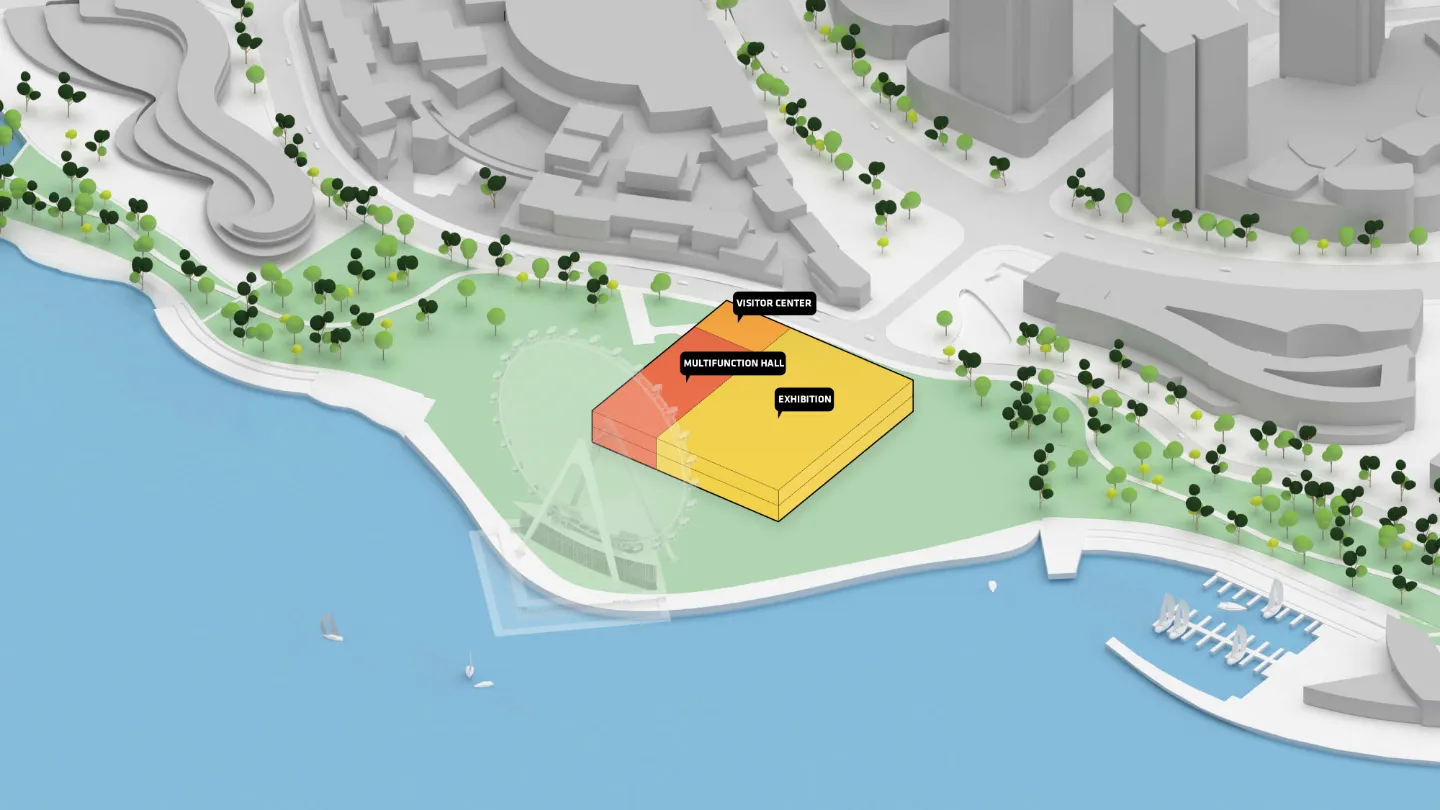
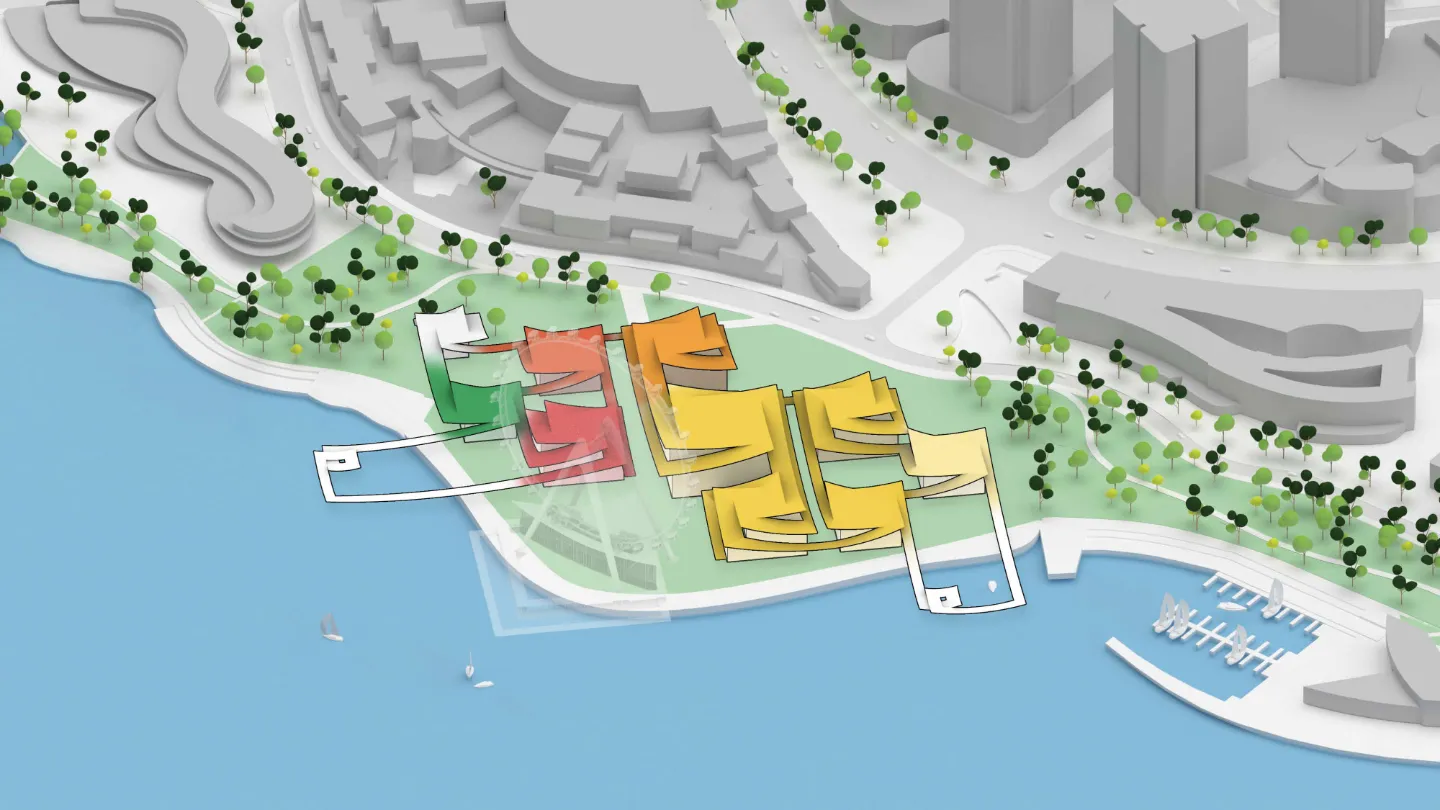
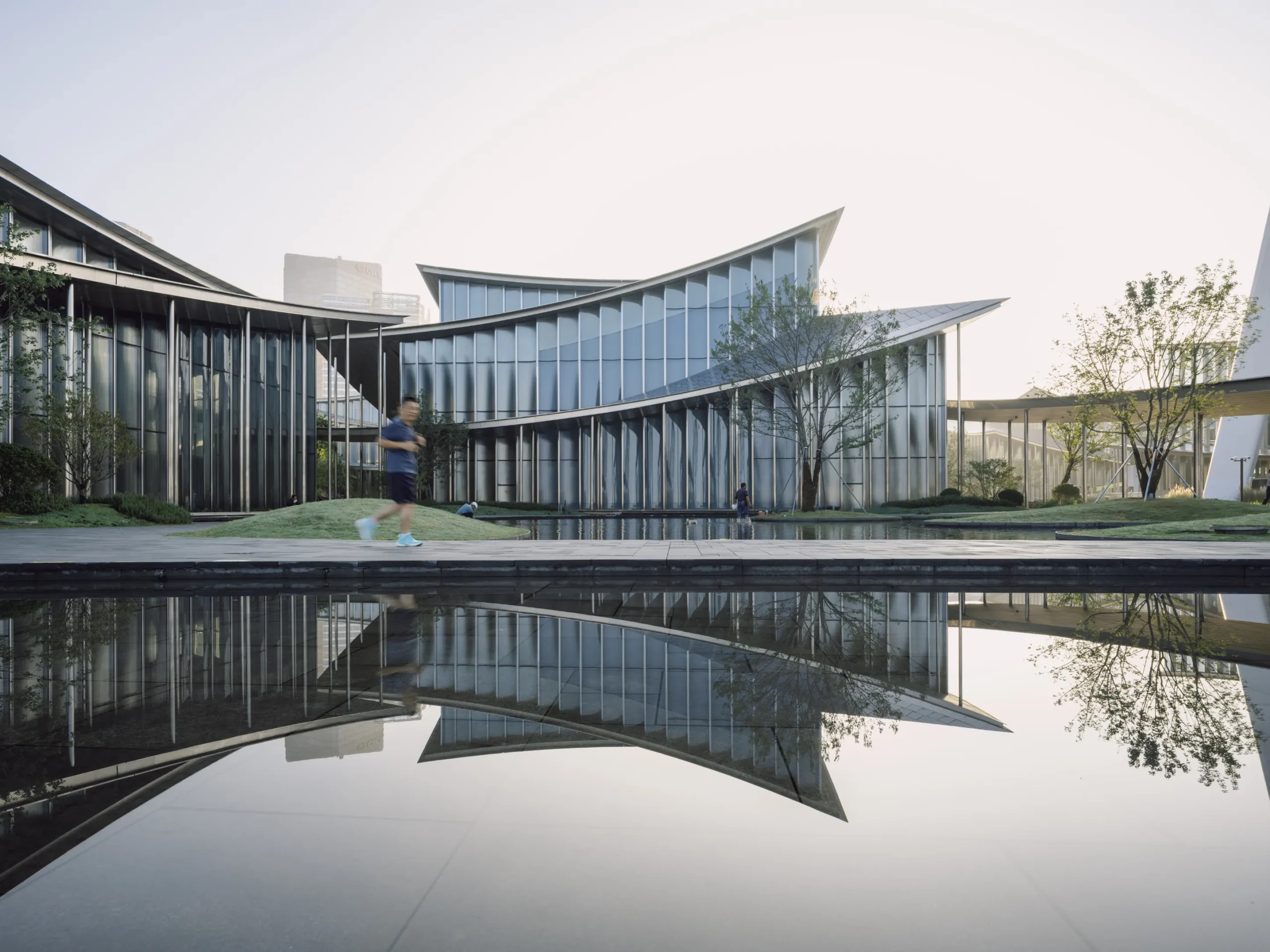
The Suzhou Museum of Contemporary Art (Suzhou MoCA), designed by BIG, is nearing completion and will soon open its doors to the public for its inaugural exhibition, Materialism. Designed as a village of 12 pavilions under a ribbon-like roof, the 60,000-square-meter museum reinterprets the timeless garden architecture of Suzhou, blending art, nature, and urban culture into one harmonious design.
A New Landmark on Jinji Lake
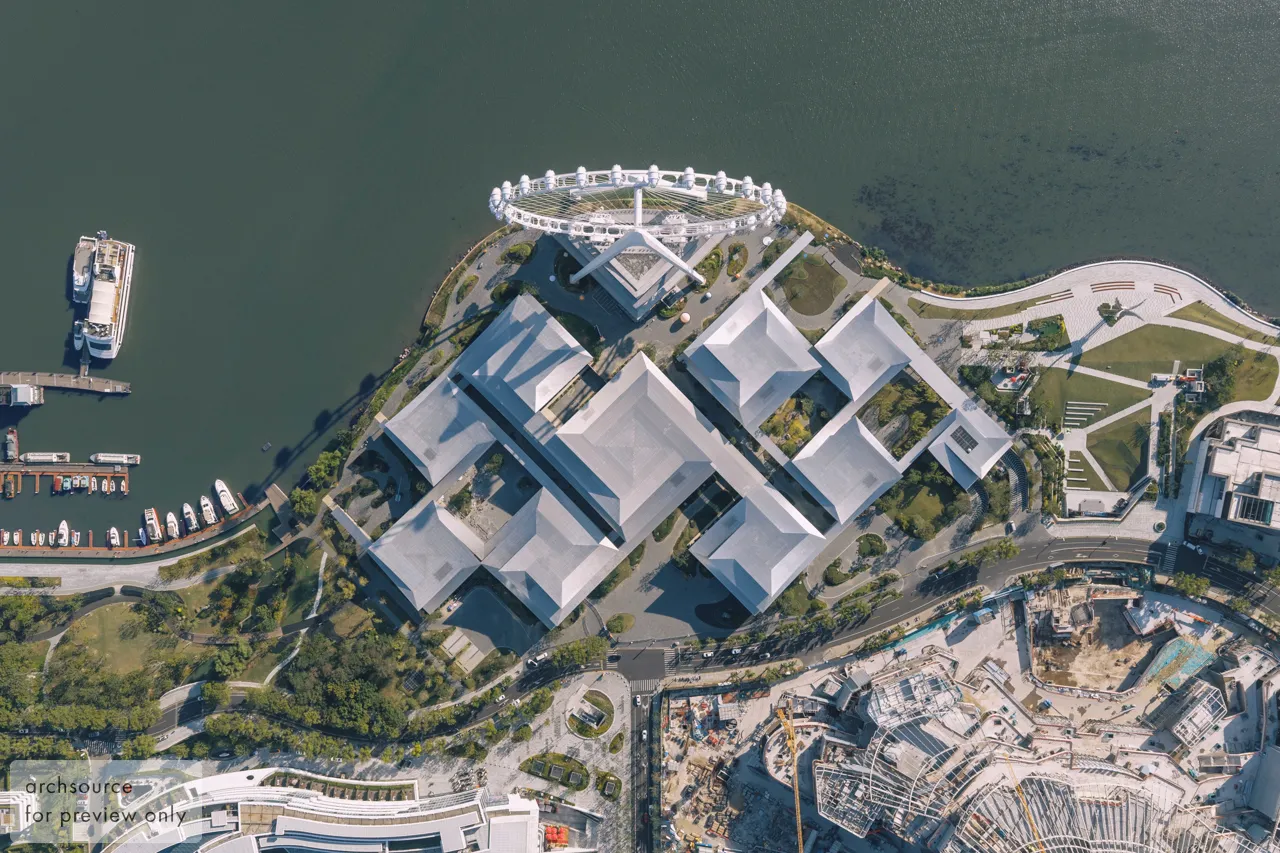
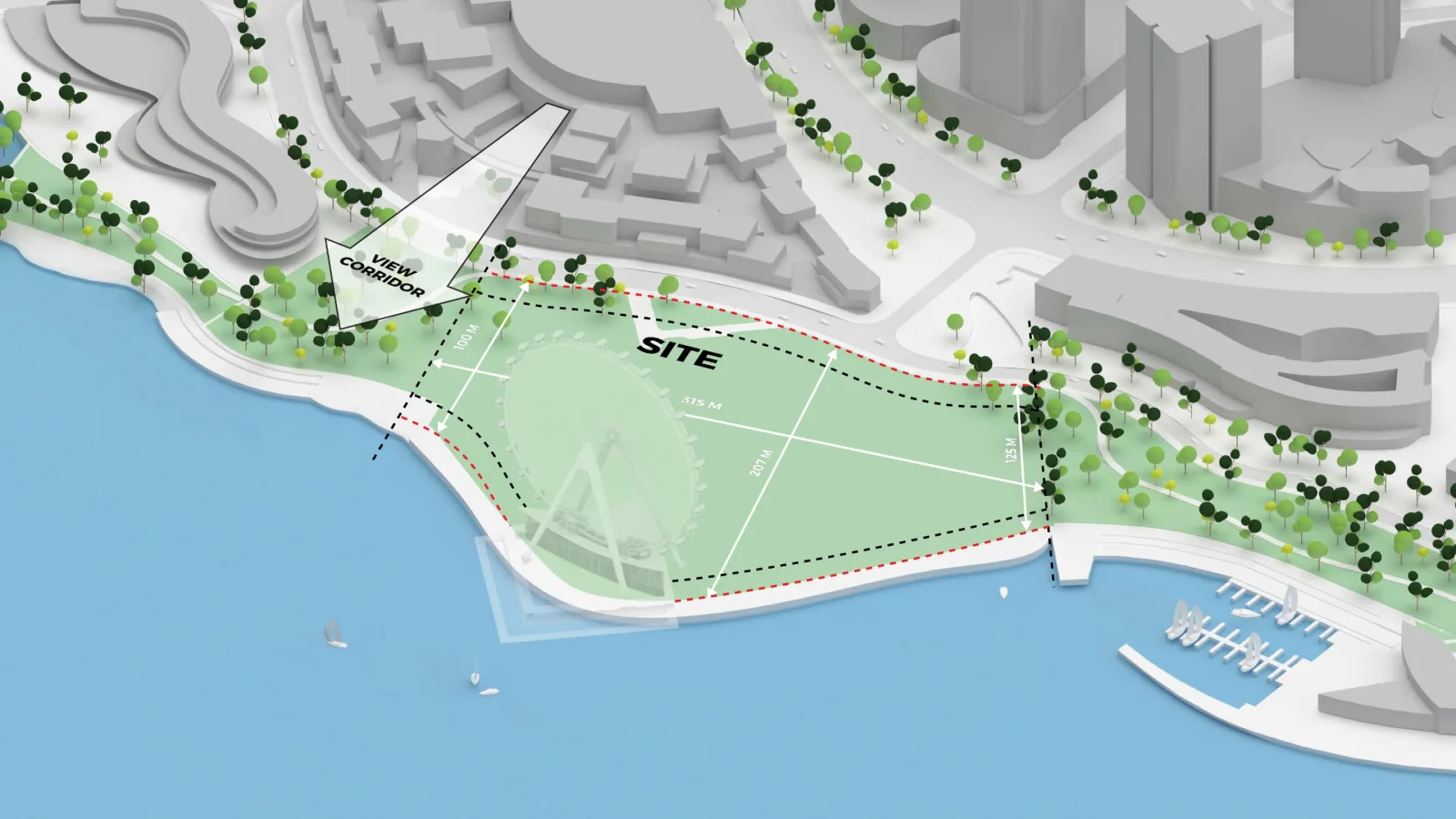
Commissioned by Suzhou Harmony Development Group and designed by BIG in collaboration with ARTS Group and Front Inc., Suzhou MoCA is located along the Jinji Lake waterfront, serving as a new cultural venue for contemporary art, design, and public life in China. The museum is slated for its official public opening in 2026.
A ribbon-roofed structure inspired by Suzhou’s classical gardens
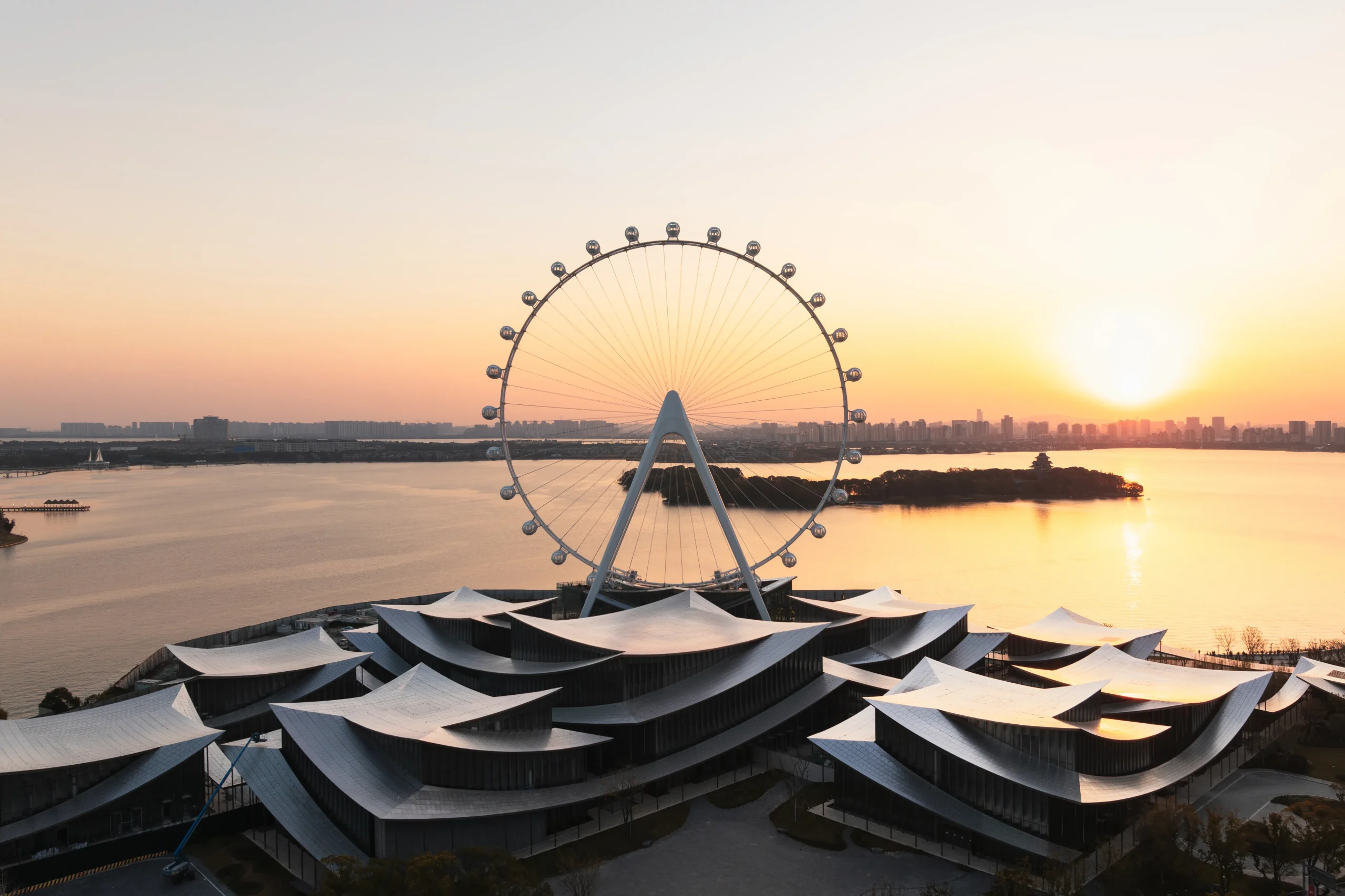
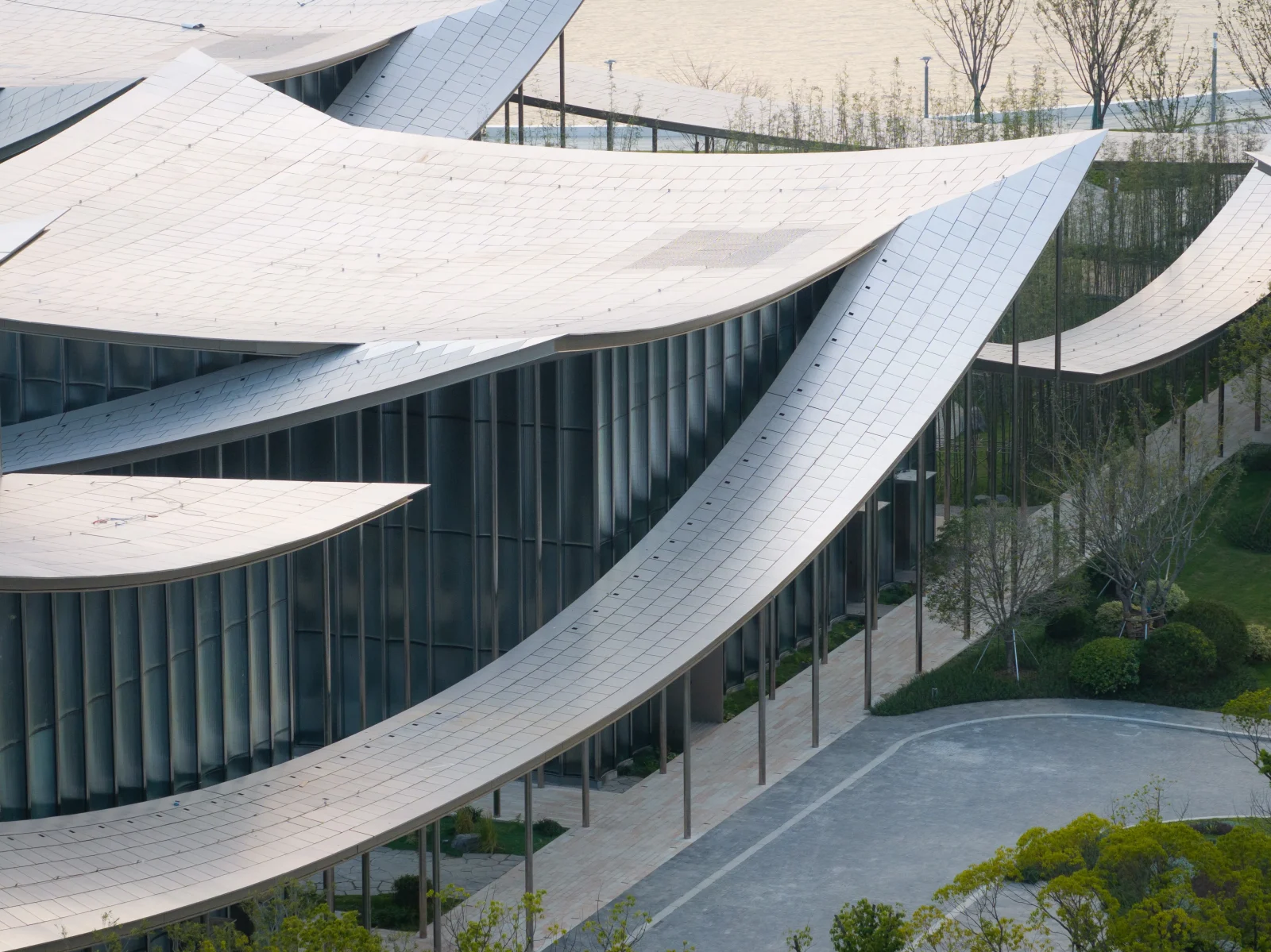
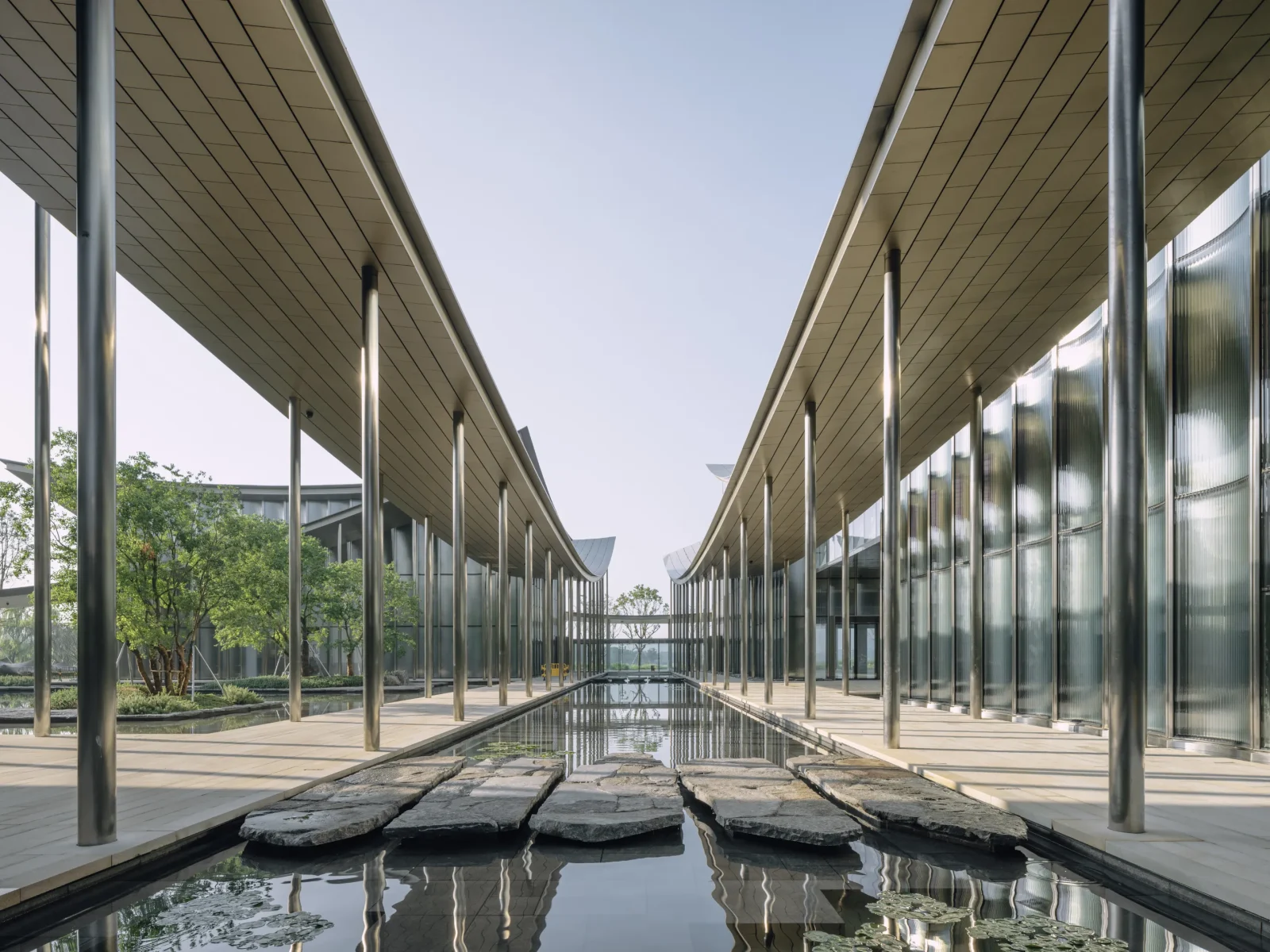
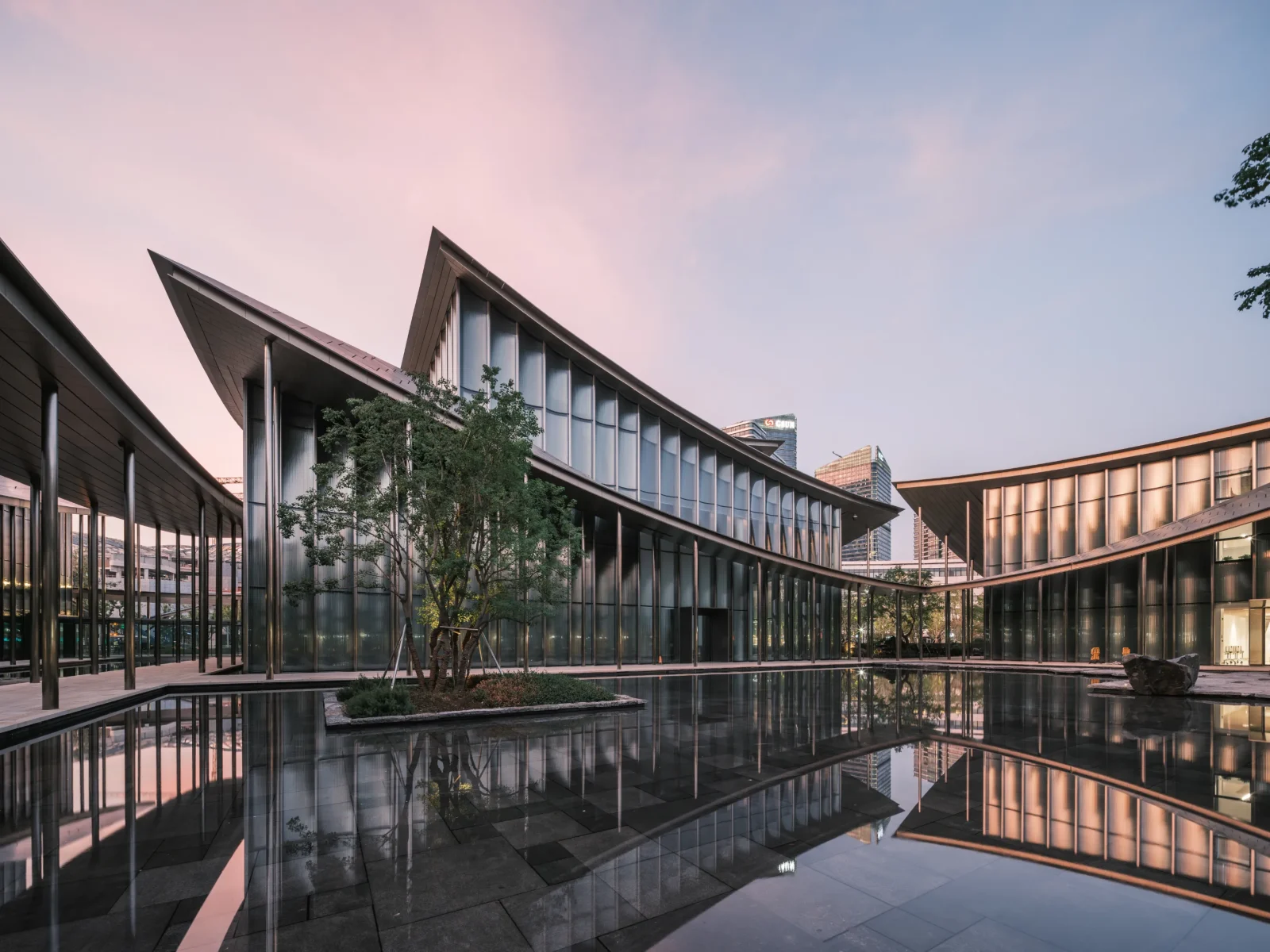
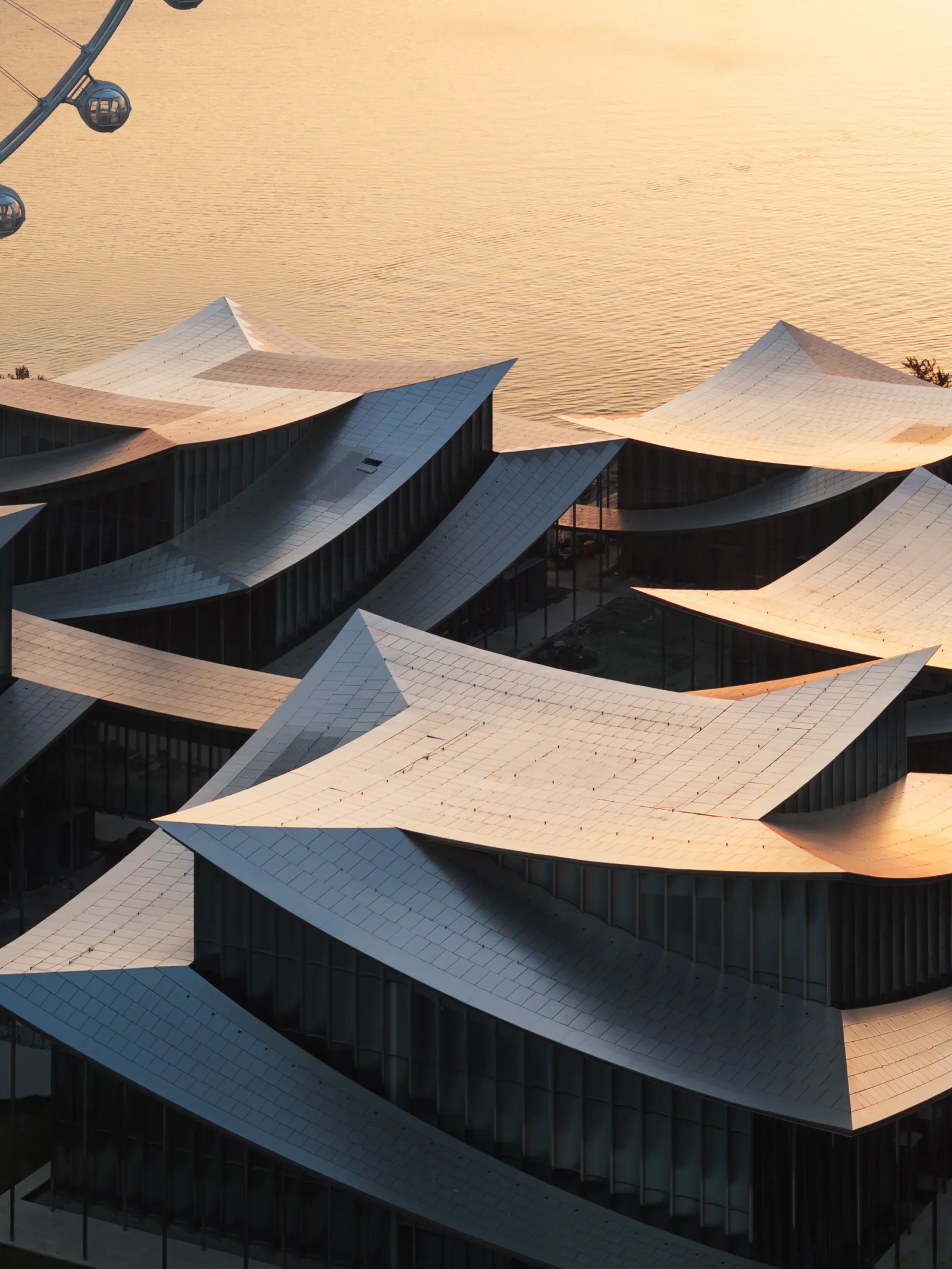
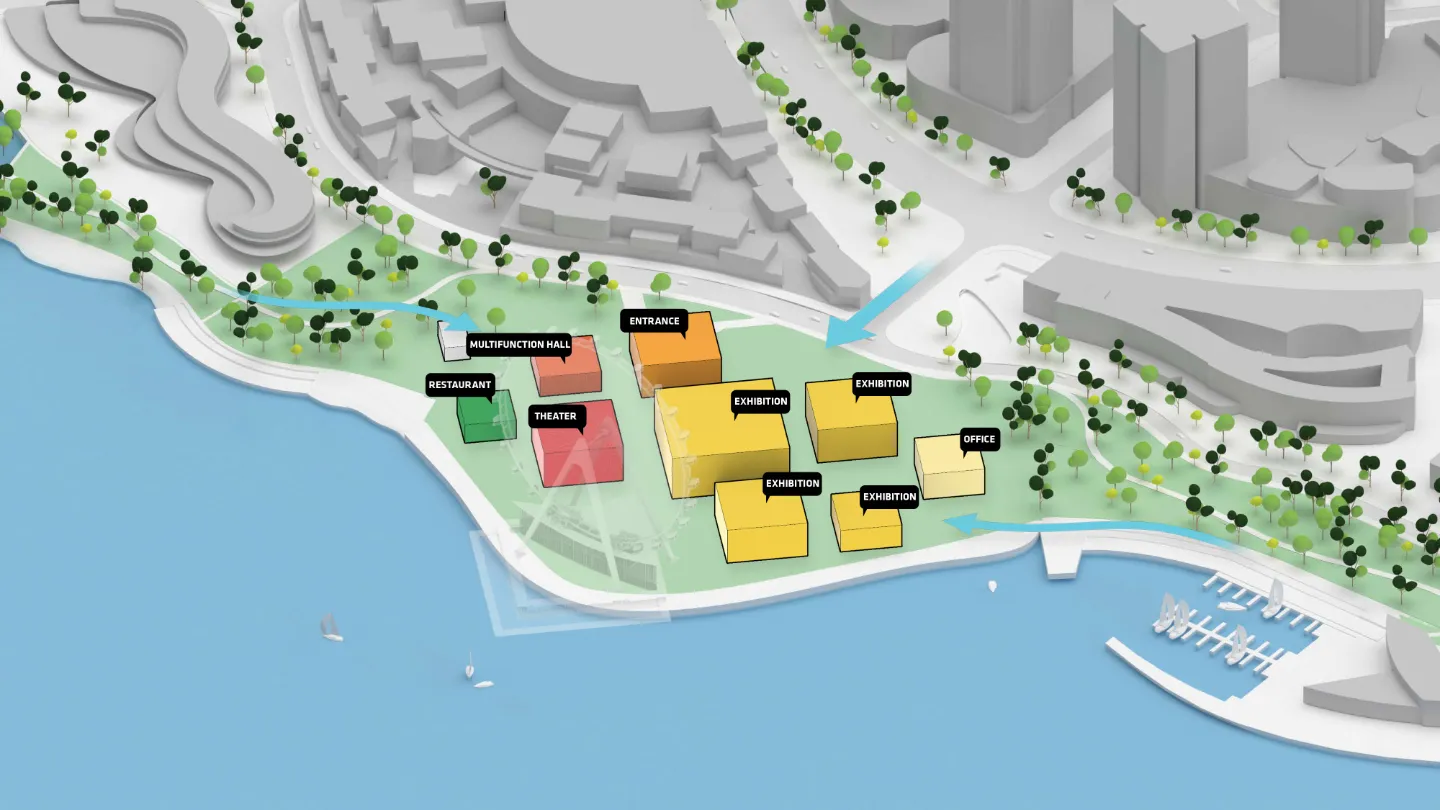
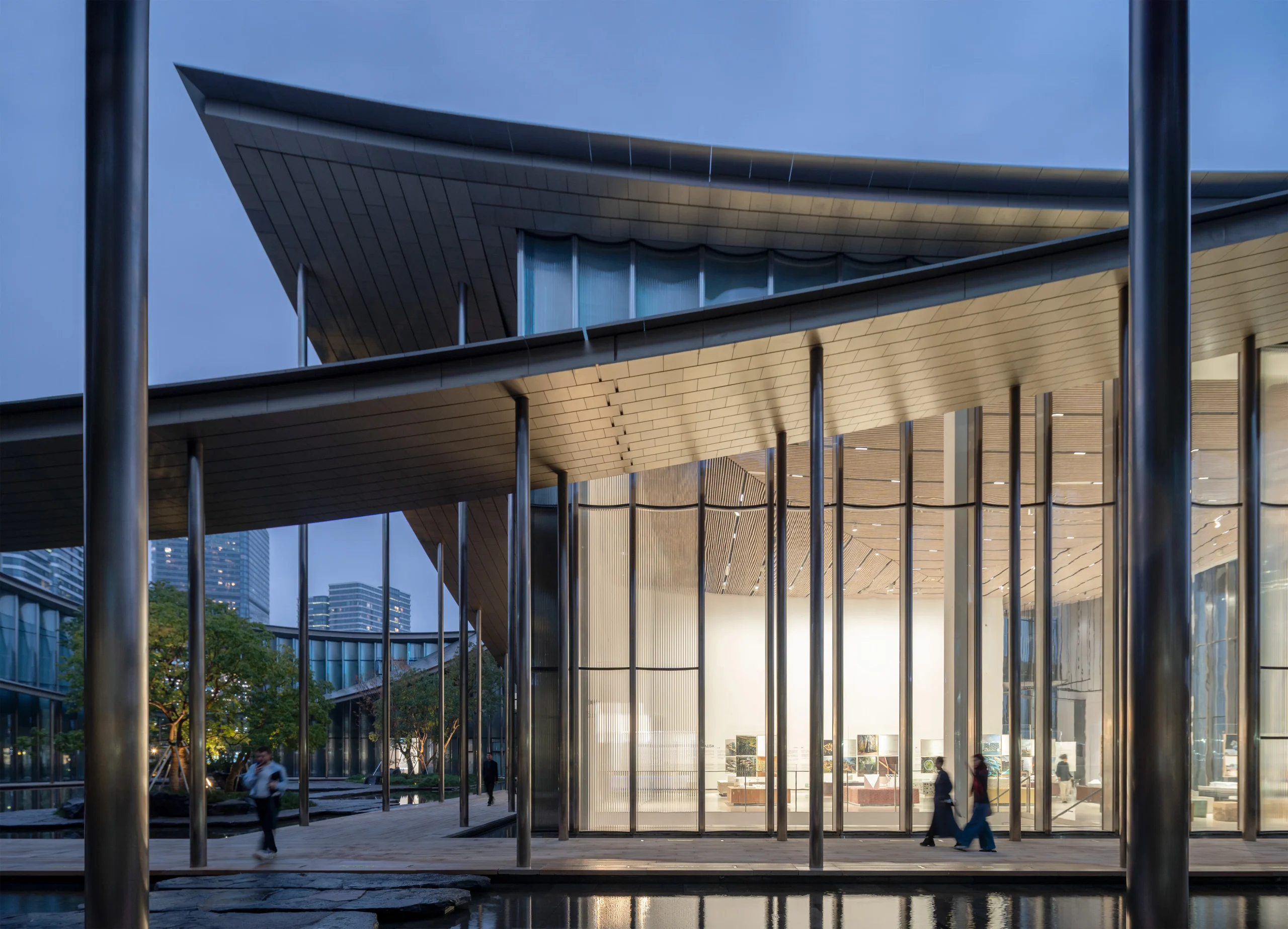
The museum’s architecture draws inspiration from Suzhou’s world-famous classical gardens by reimagining the traditional ‘lang’ 廊—a long, covered corridor that meanders through nature. Ten interconnected pavilions are unified under a flowing, continuous roof whose gentle curves echo the silhouette of traditional tiled eaves. Two additional pavilions will be constructed next year, extending gracefully over Jinji Lake and connecting to the main structure via covered walkways.
Architecture That Blurs Nature and Structure
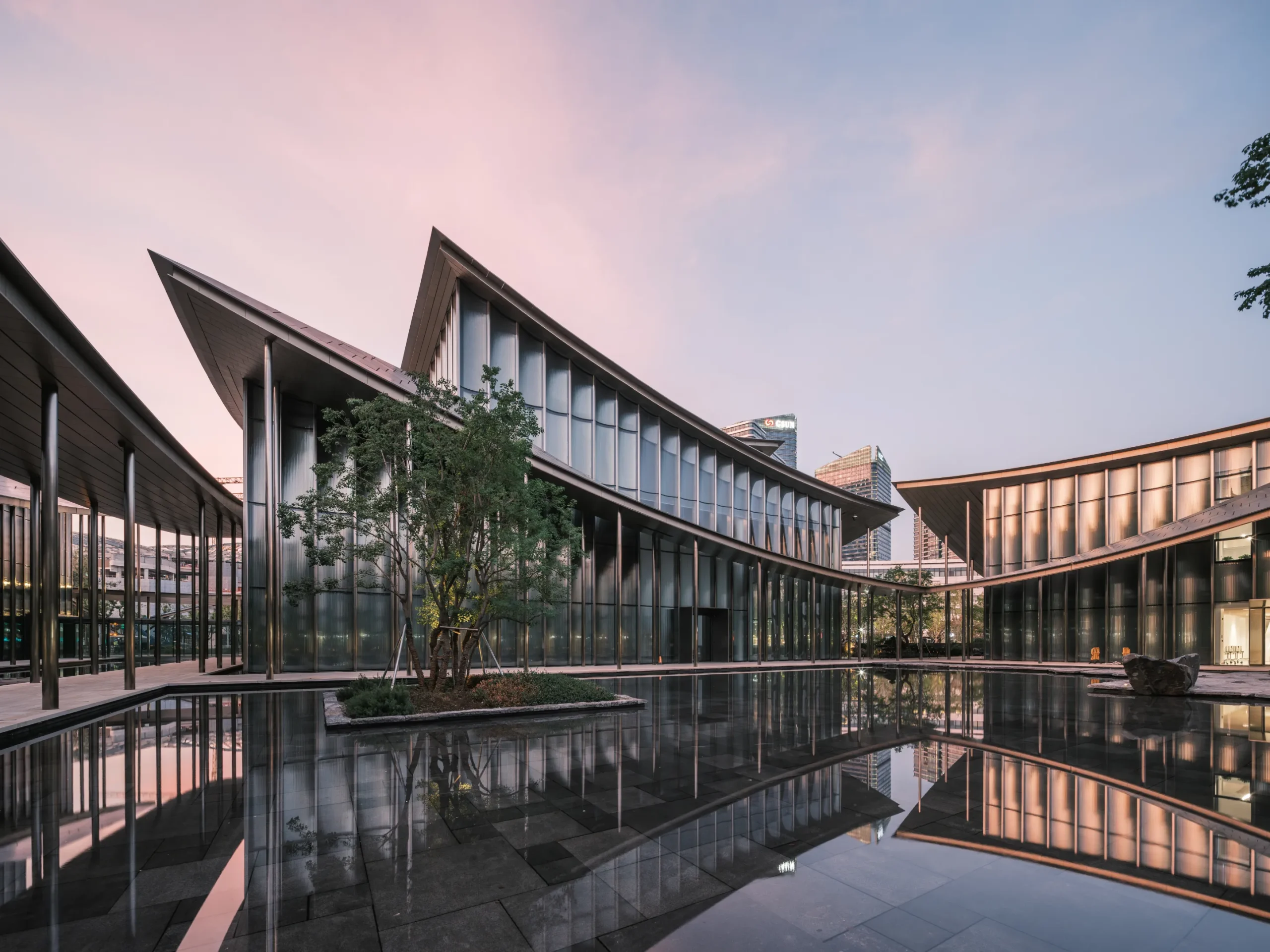
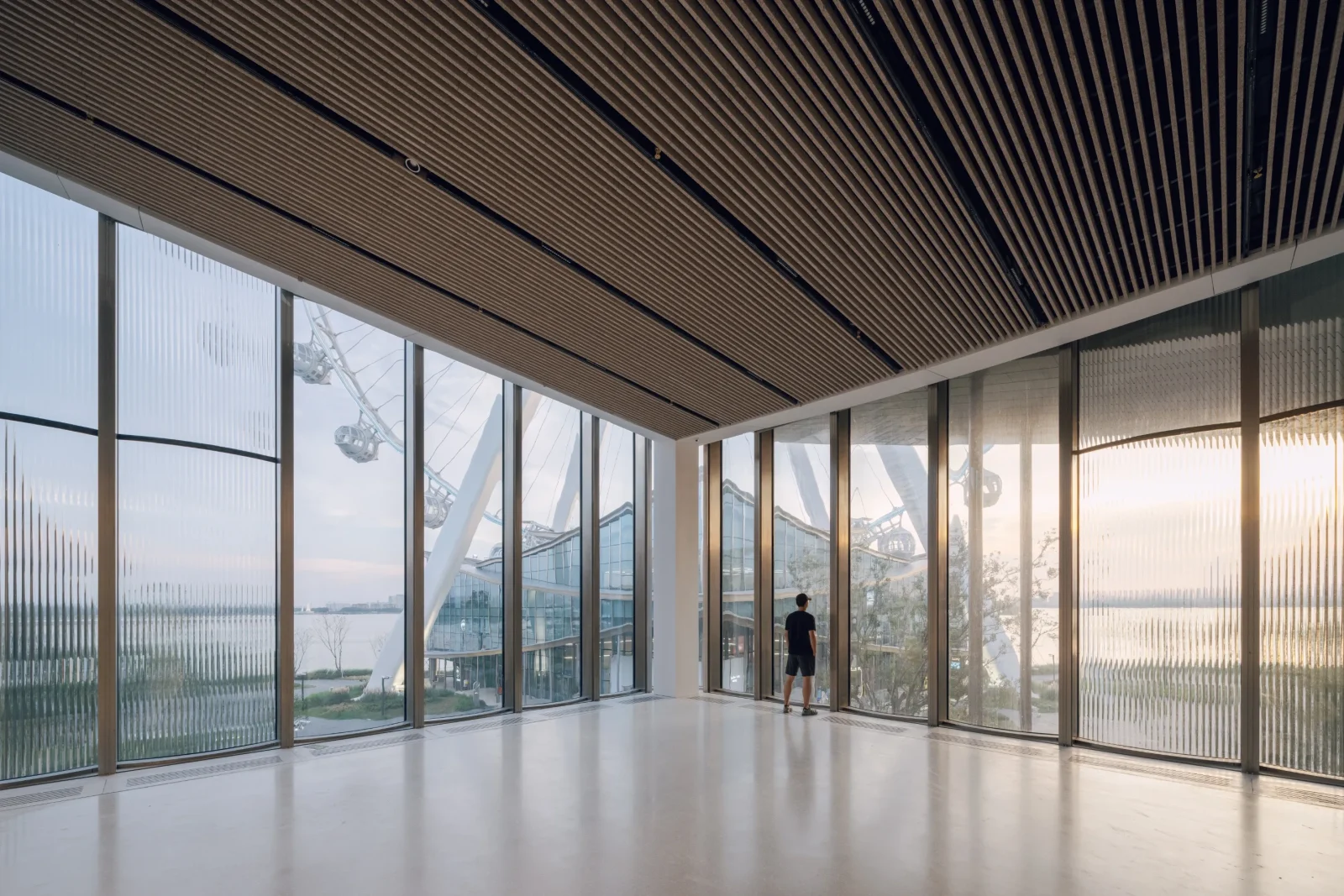
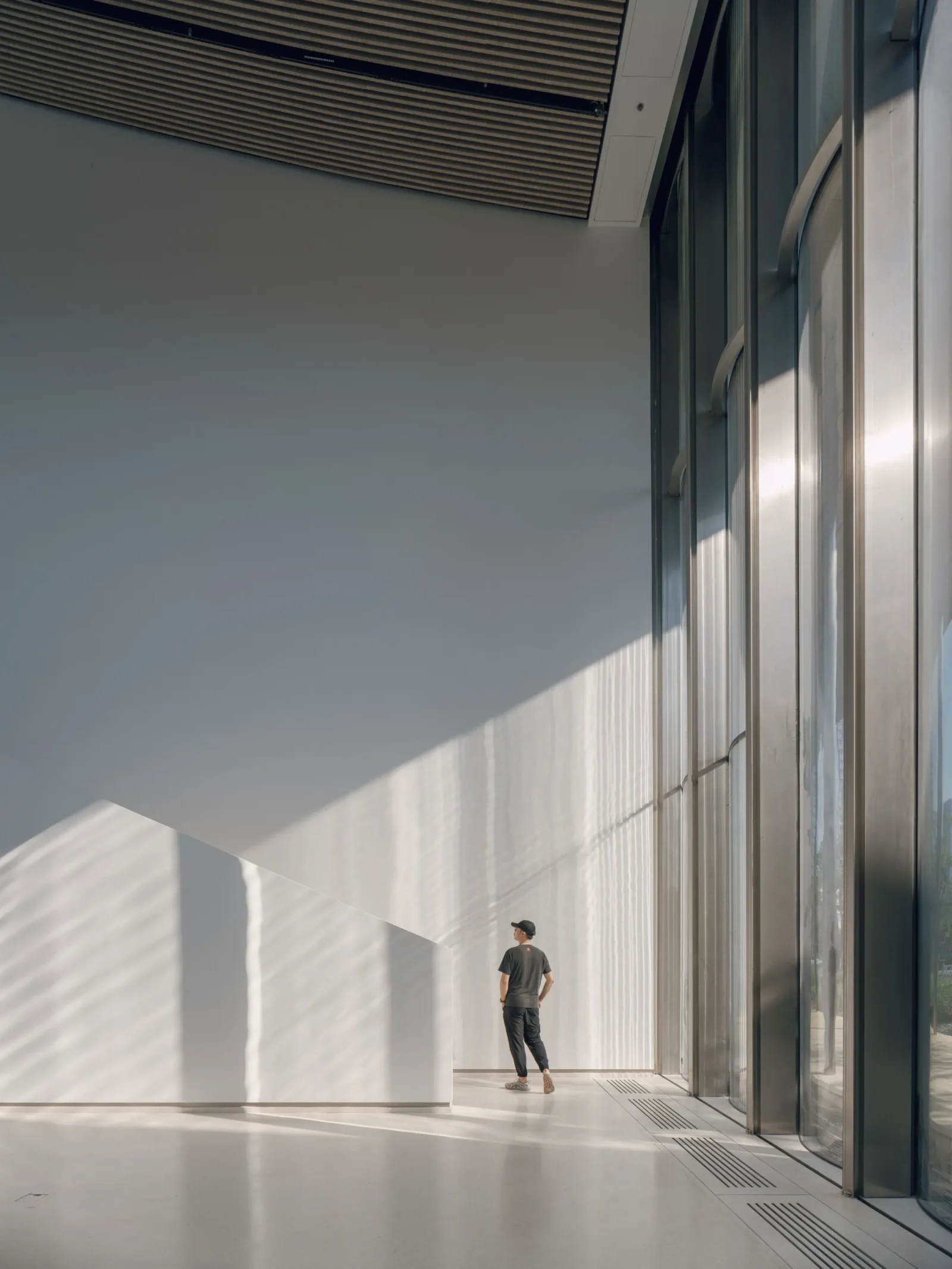
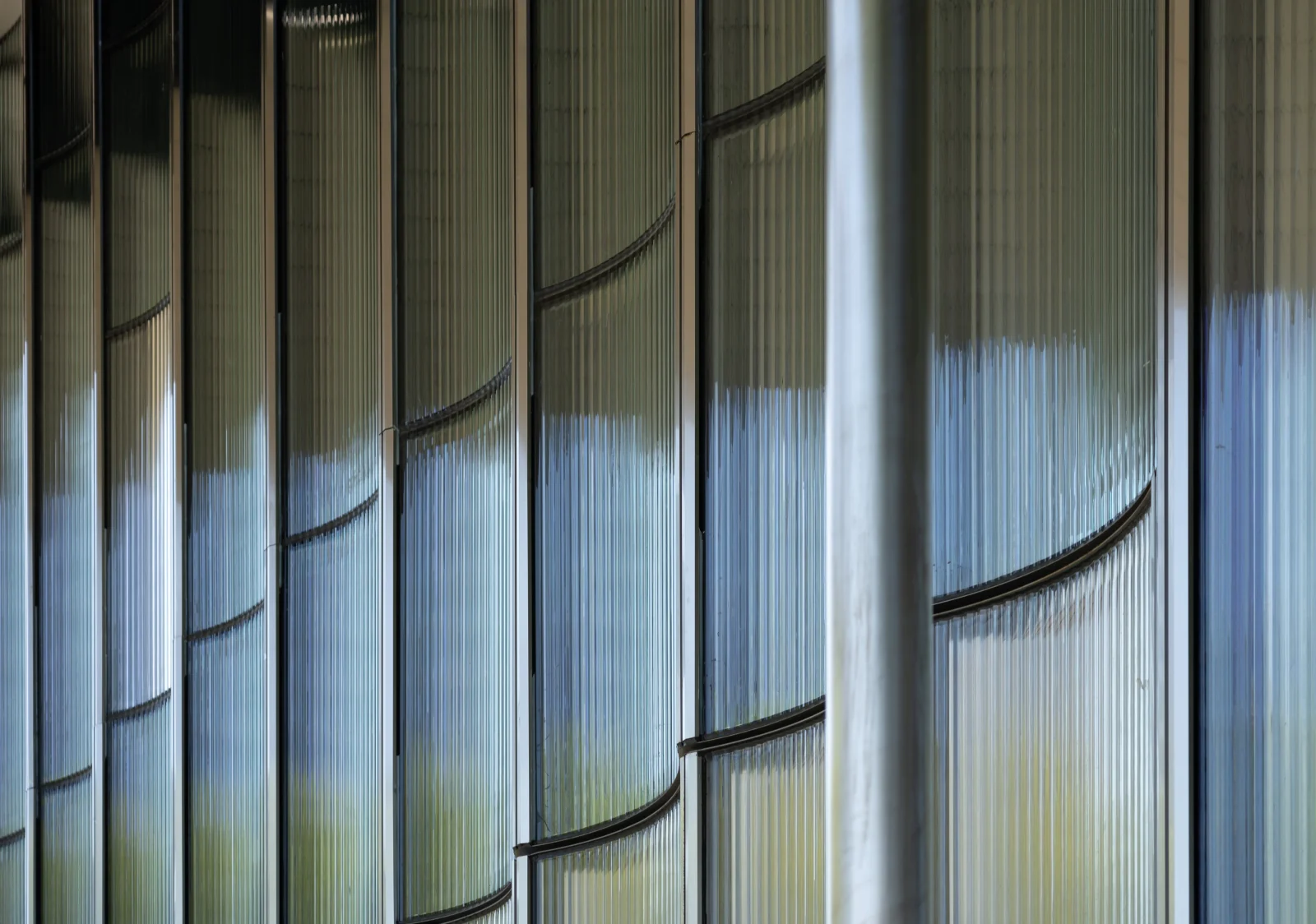
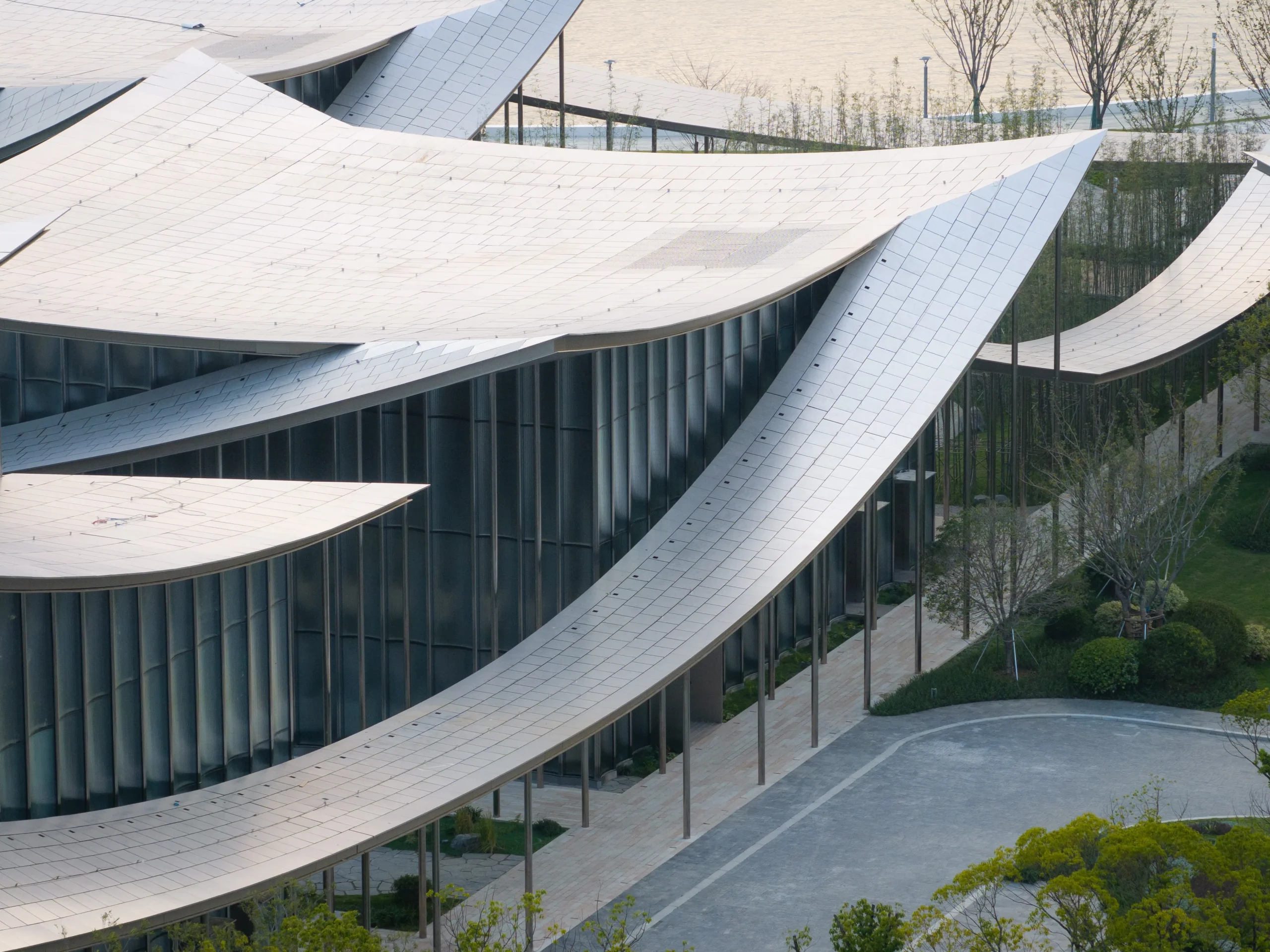
Clad in curved glass and warm-toned stainless steel, the museum’s façades mirror the surrounding sky, water, and gardens, creating a seamless transition between the built and natural environments. The pavilions are linked by bridges and tunnels, both above and below ground, ensuring flexible visitor circulation for varying exhibitions and seasons.
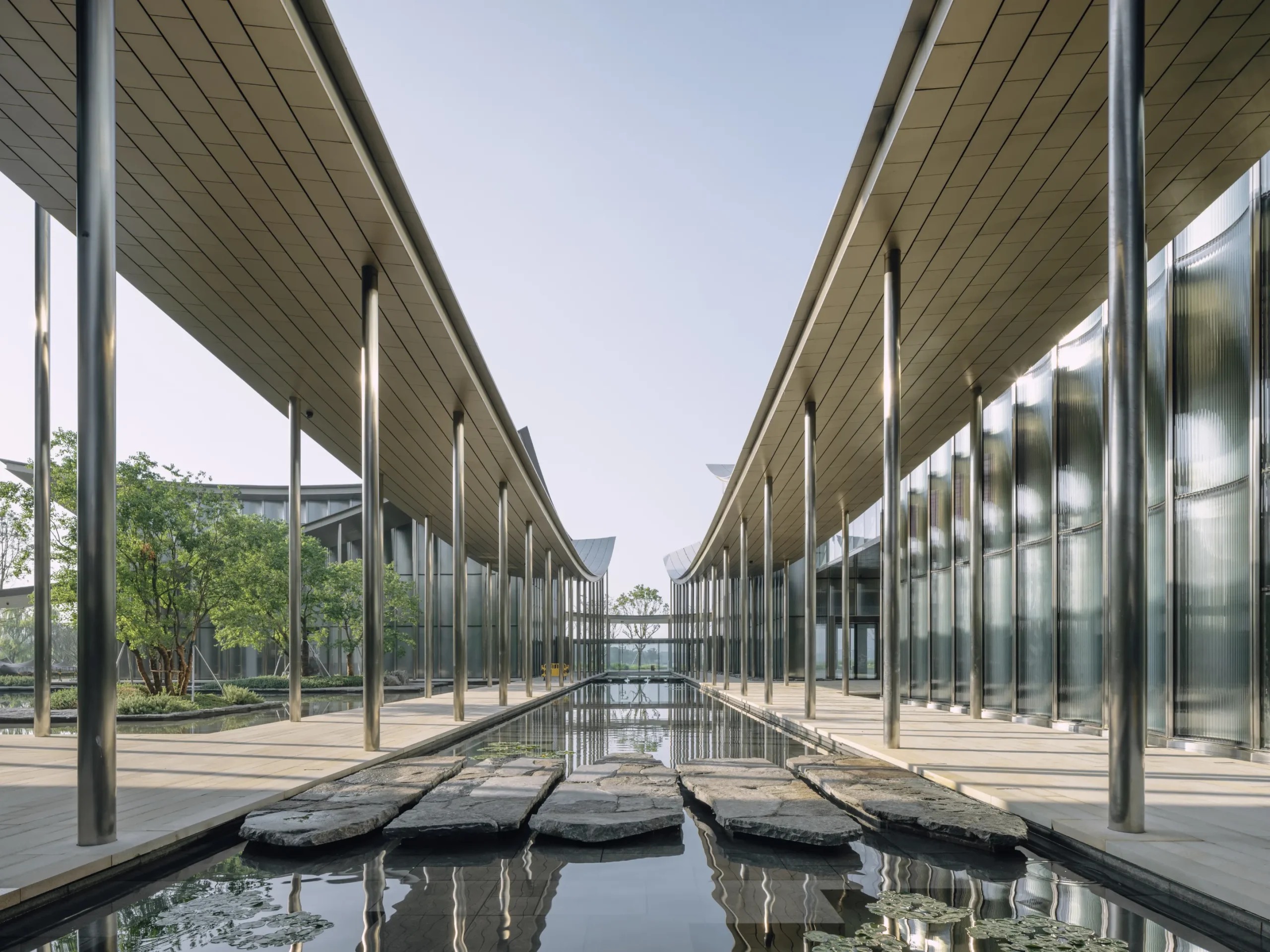
Visitor Experience and Spatial Flow
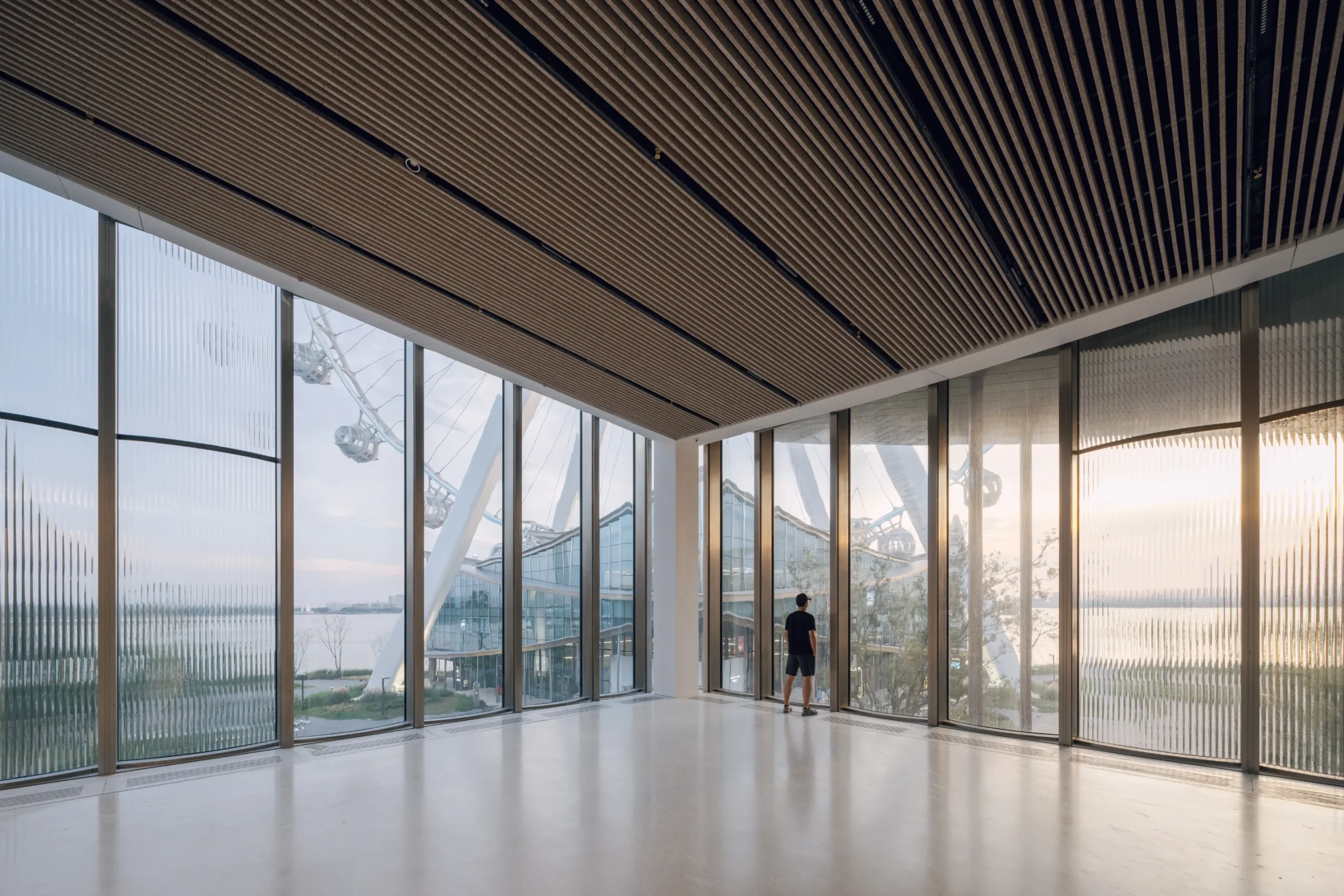
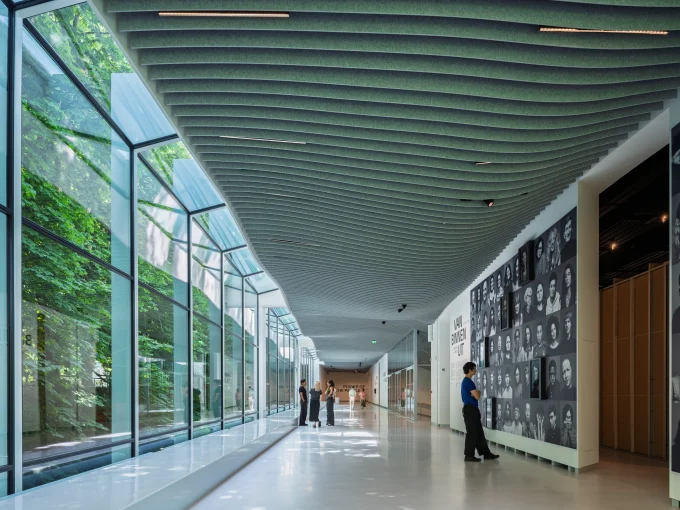
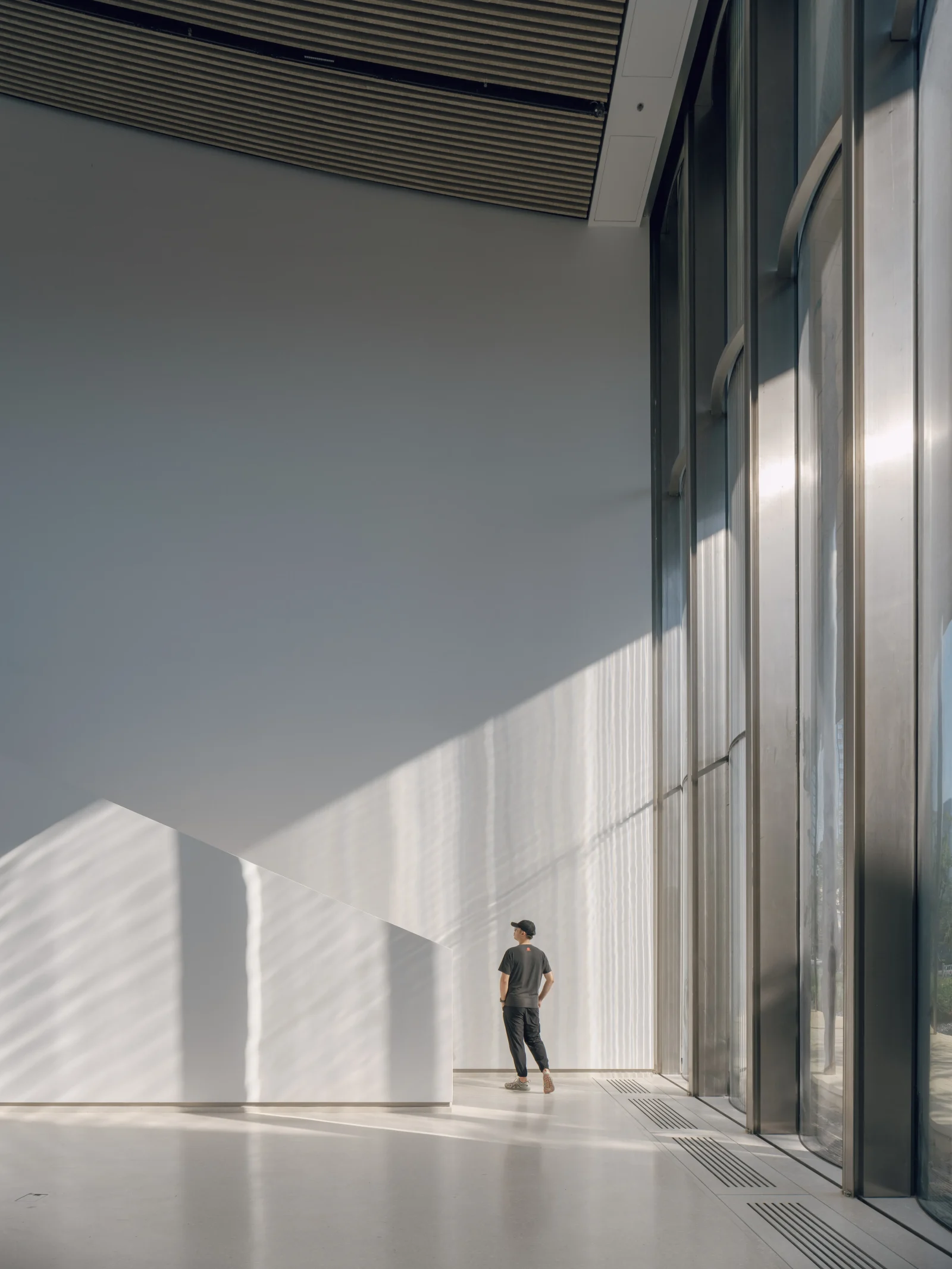
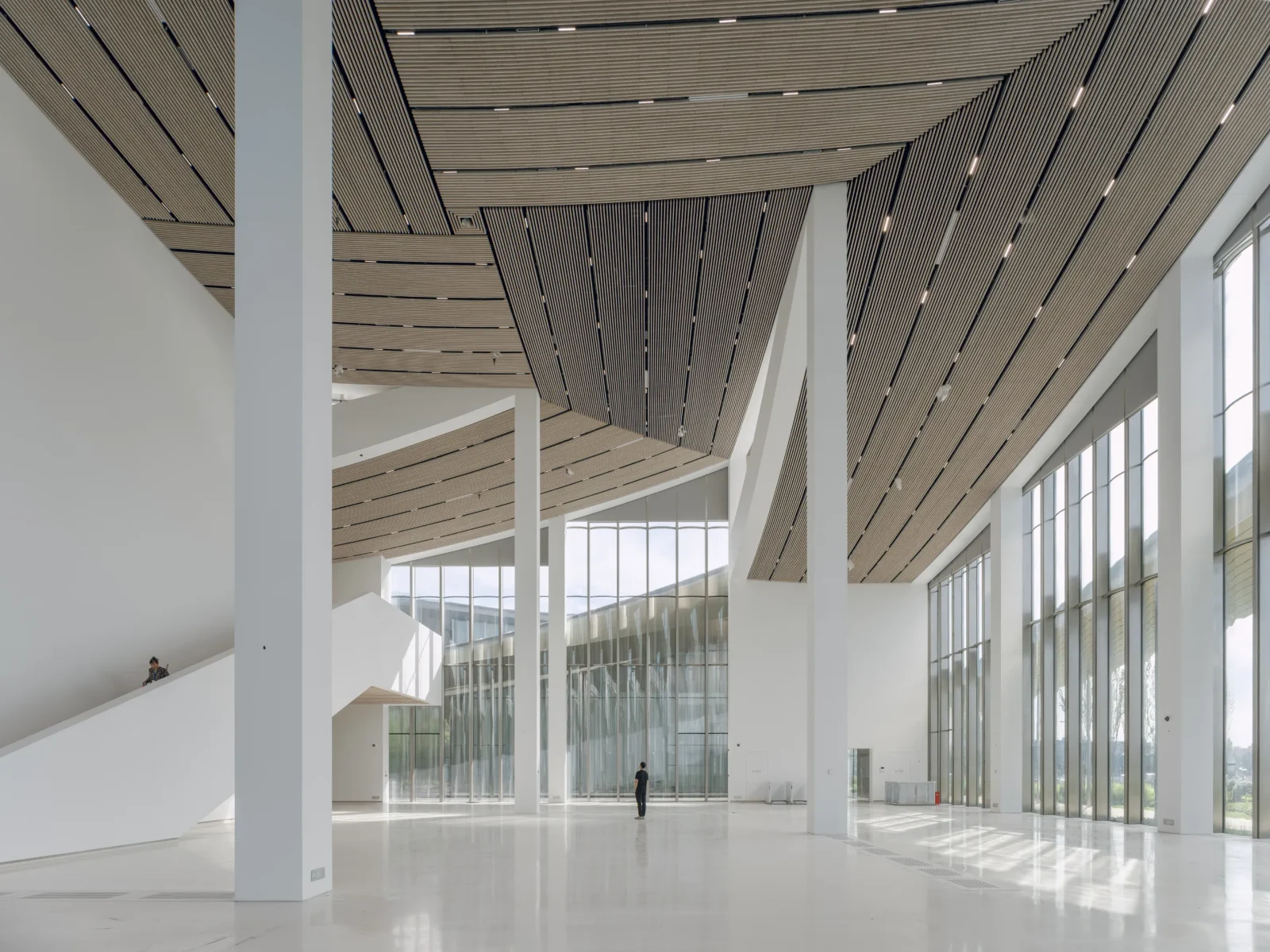
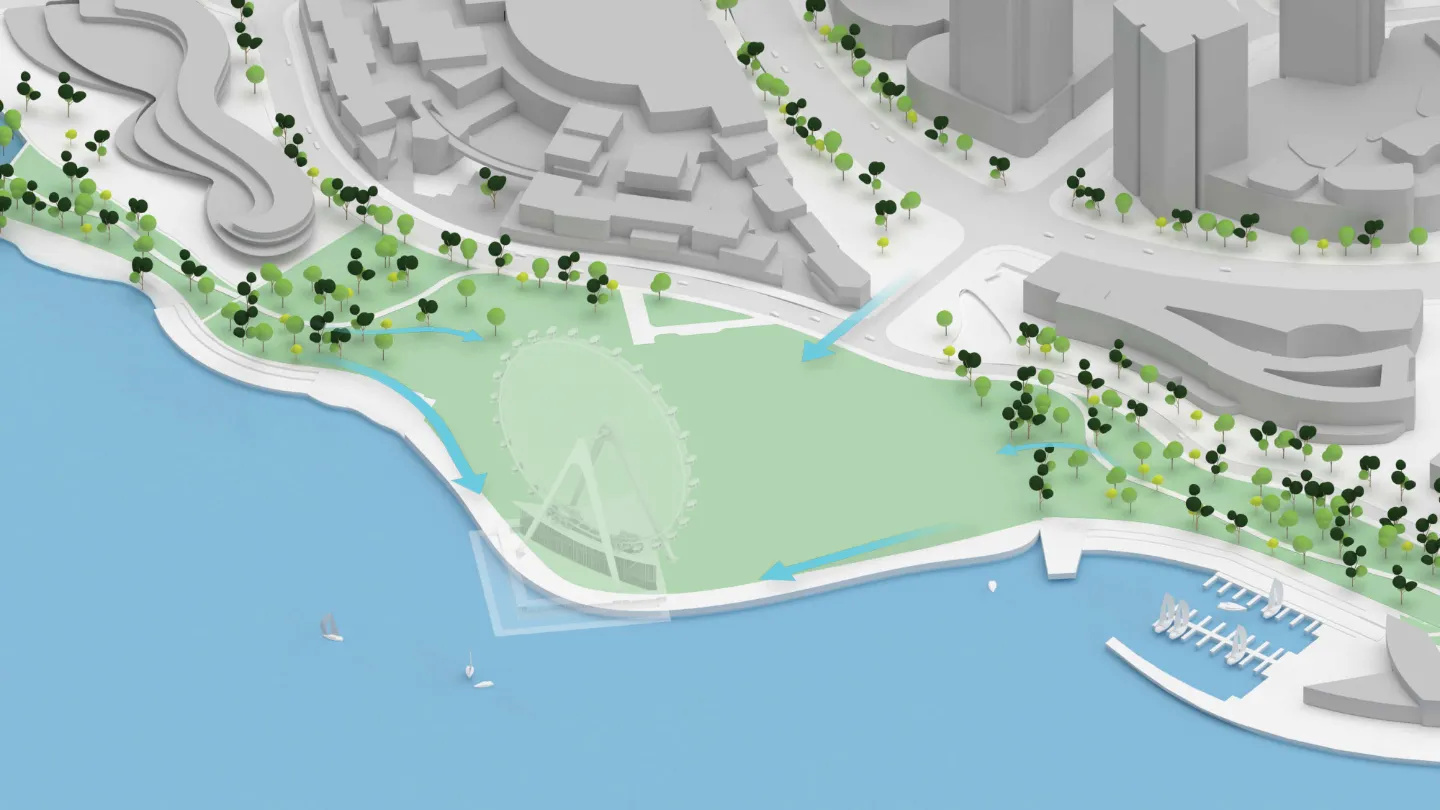
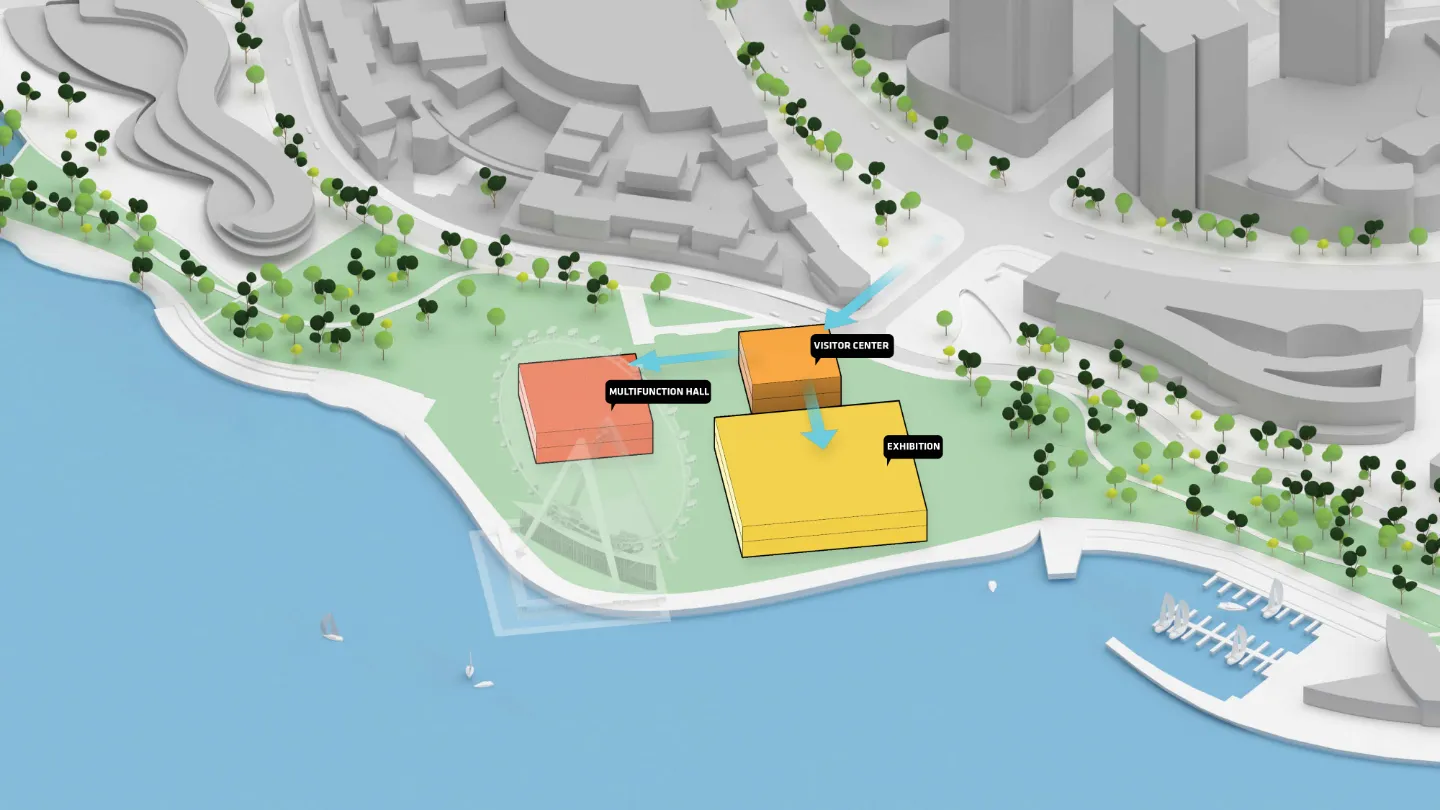
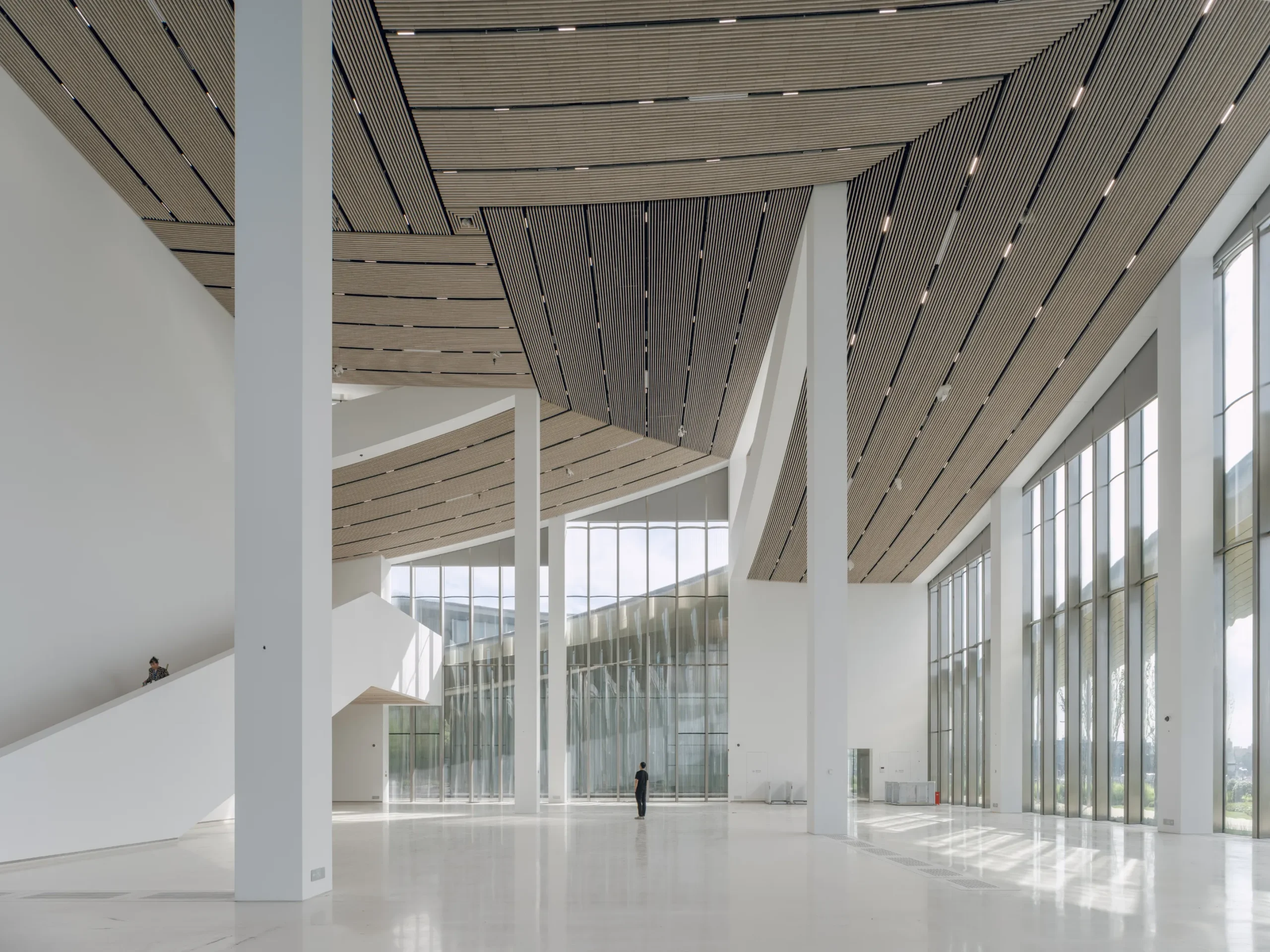
The museum welcomes guests with a spacious public plaza leading to the visitor center. From there, pathways extend into Jinji Lake, offering scenic views that can also be enjoyed from the nearby Suzhou Ferris Wheel. Inside, natural light filters through clerestories and skylights, animating the galleries with a shifting play of shadow, reflection, and transparency.
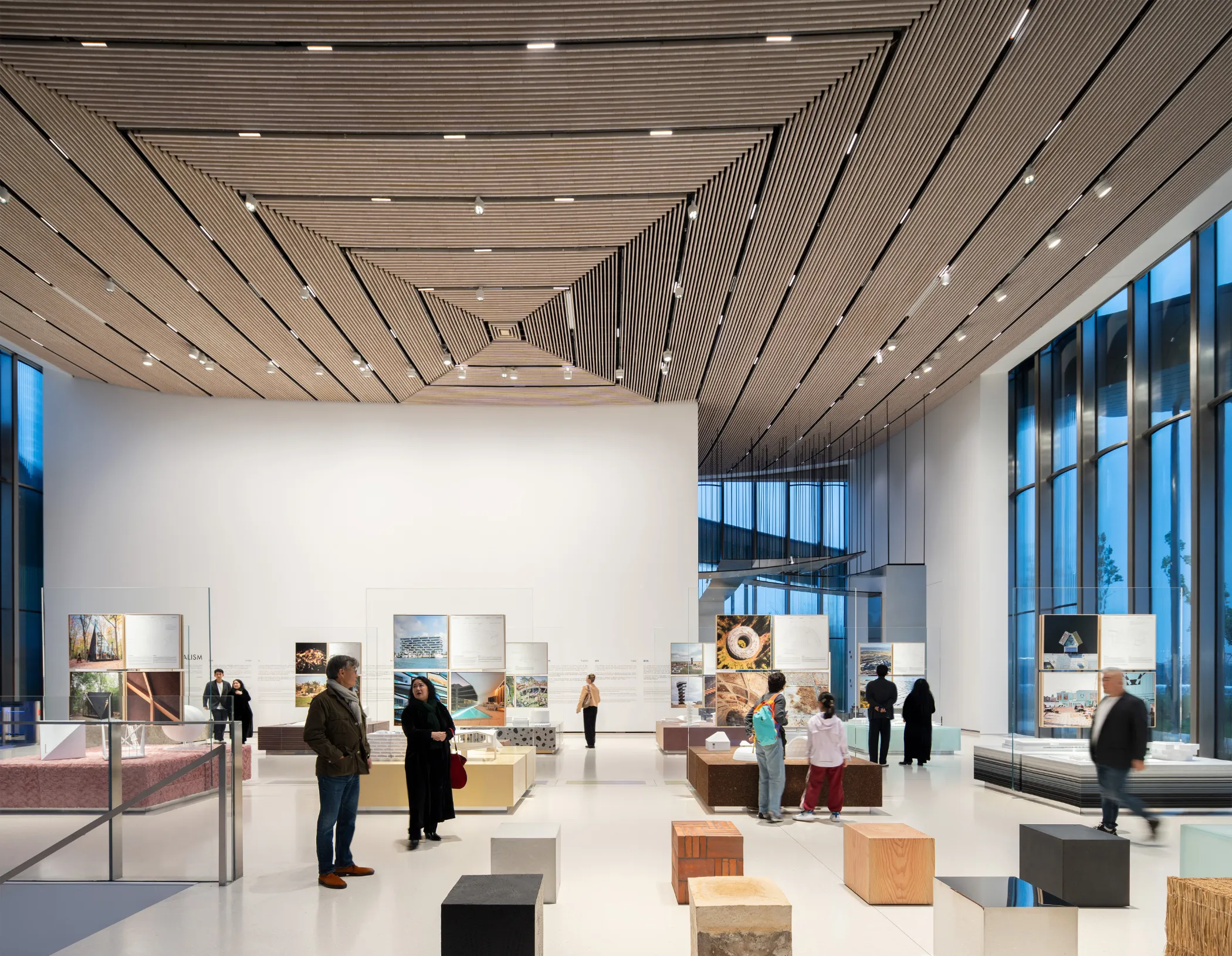
Four primary pavilions house the main gallery experience, while others feature a multifunctional hall, theater, restaurant, and grand entrance atrium. The circulation path meanders naturally, echoing the rhythm of Suzhou’s classical garden promenades.
Landscape Design and Sustainability
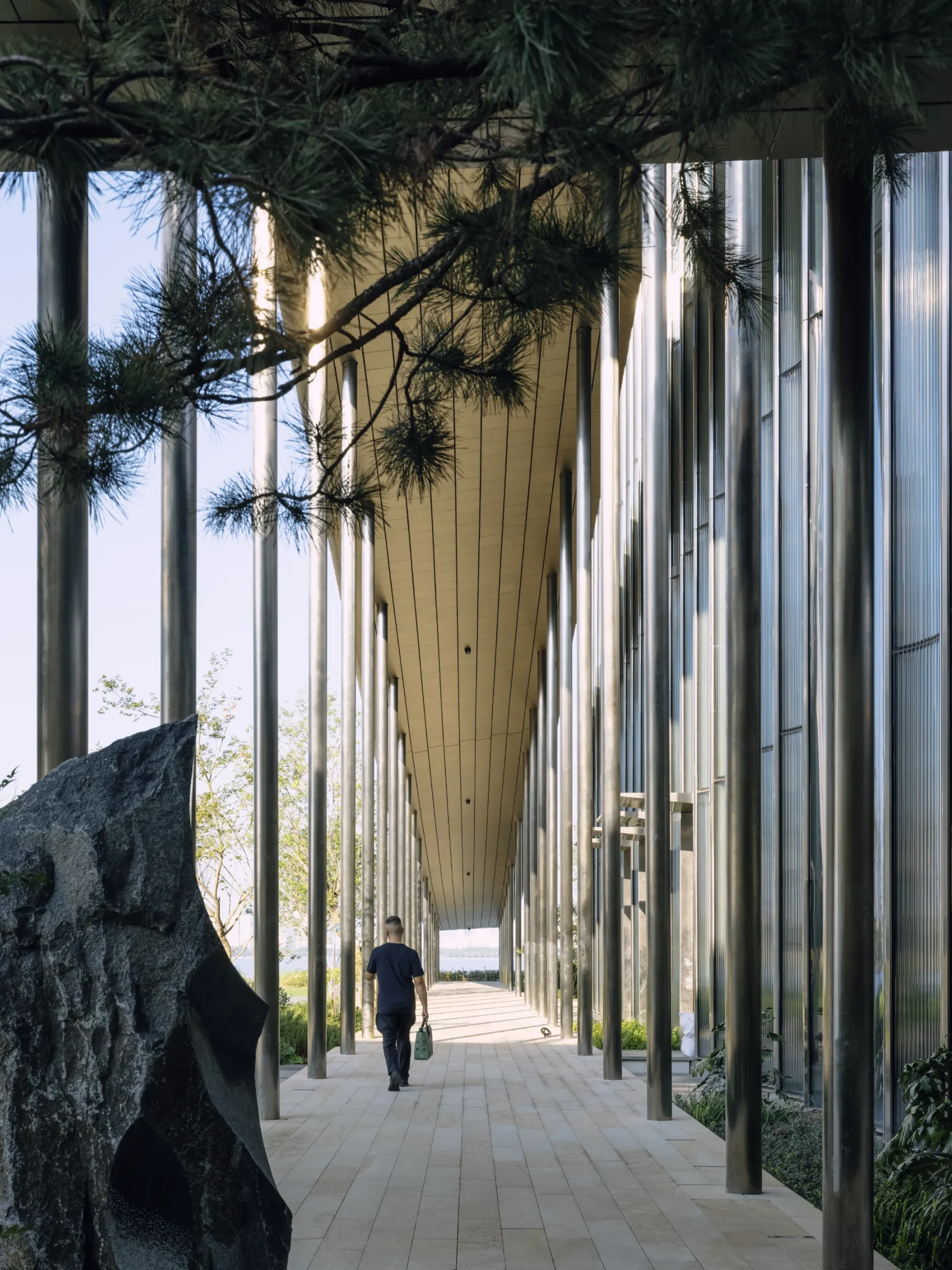
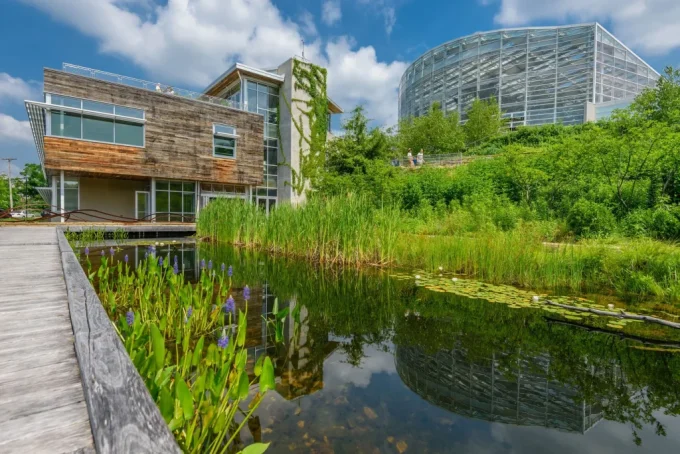
The museum’s landscape extends the city’s public realm to the Jinji Lake shoreline, forming a continuum of hardscape plazas, garden courtyards, and aquatic plantings. This design embodies a symbolic transition from museum to land to water, uniting nature and culture.
Suzhou MoCA targets China’s GBEL 2-Star Green Building Certification, integrating passive shading, natural ventilation, and locally sourced materials to minimize environmental impact.
Materialism: A Journey Through the Substance of Architecture
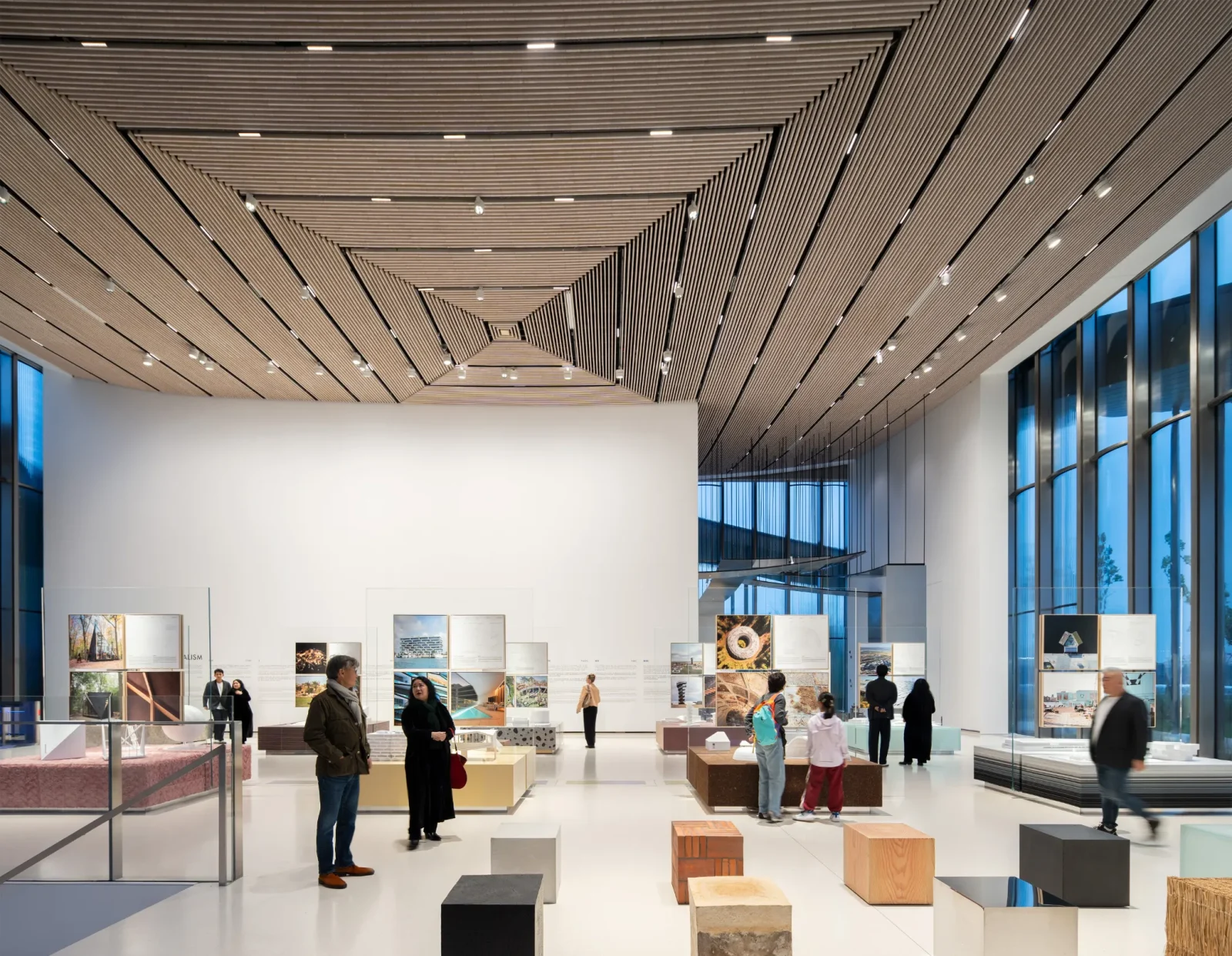
The opening exhibition, Materialism, curated by BIG, expands on Bjarke Ingels’ year-long guest editorship for Domus magazine, where each issue explored a different material. The exhibition takes visitors on a “material odyssey, from stone to recyclate,” revealing how diverse substances shape architecture.
Featuring large-scale models of over 20 BIG projects, including the Danish Maritime Museum, Google Bay View, and The Plus, the exhibition immerses visitors in the tactile, visual, and spatial dimensions of BIG’s material-driven design ethos.
Even the seating and signage within the exhibition are crafted from the very materials showcased, creating a multi-sensory journey through texture, color, and form.
A Global Addition to BIG’s Cultural Portfolio
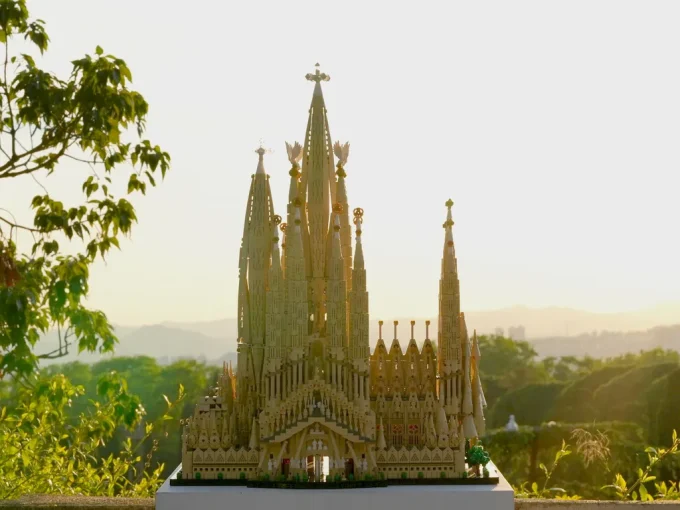
Suzhou MoCA joins BIG’s growing list of acclaimed cultural projects, such as The Twist in Norway, the Musée Atelier Audemars Piguet in Switzerland, and the LEGO House Museum in Denmark. Materialism continues the studio’s legacy of innovative exhibitions, following Yes Is More (2009), Hot to Cold (2015), and Formgiving (2019).
The Materialism exhibition will open to the public in the coming months, ahead of the museum’s grand opening in 2026.
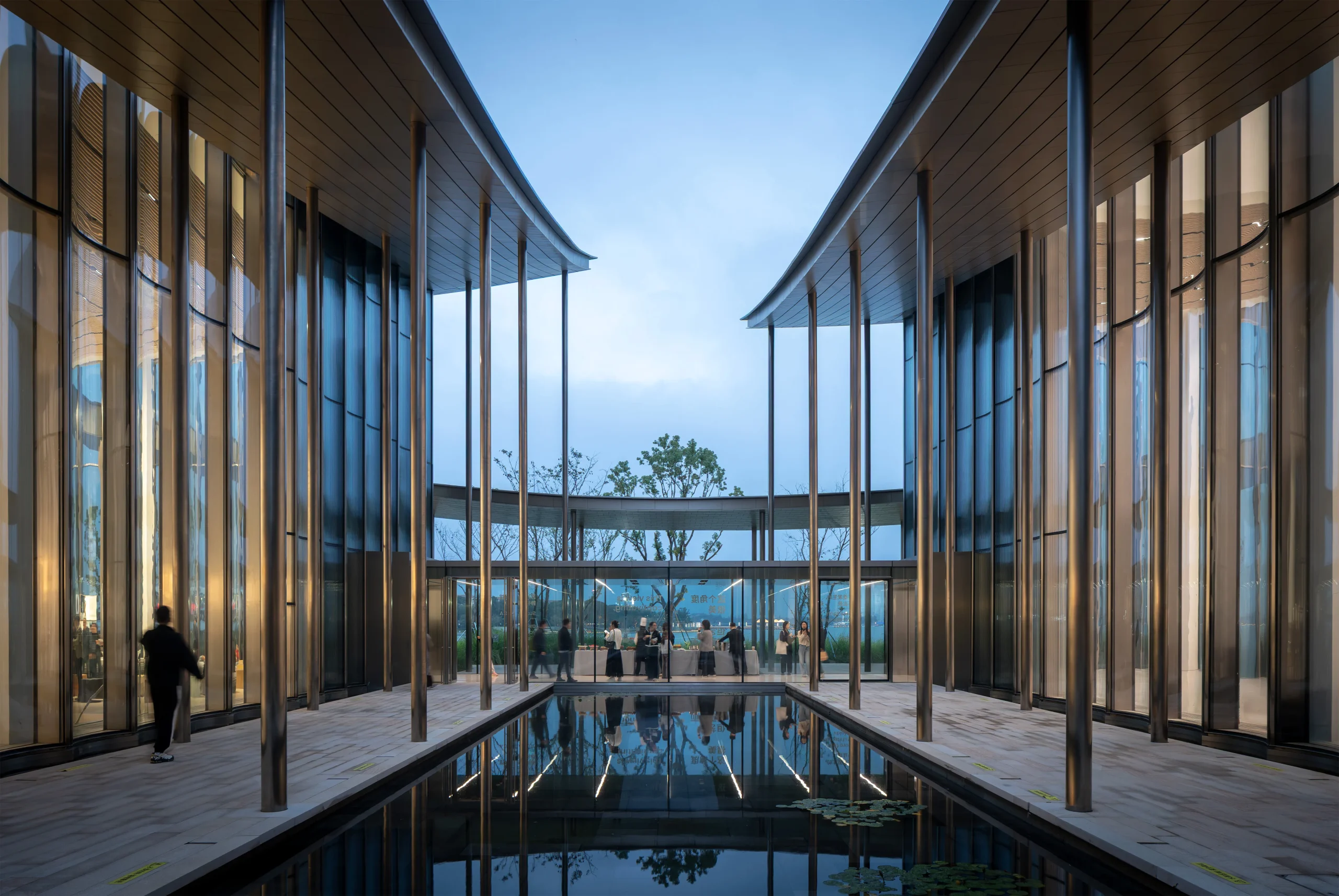
Suzhou Museum of Contemporary Art Project Details
Name: Suzhou Museum of Contemporary Art (Suzhou MoCA)
Location: Suzhou, Jiangsu, China
Architect: Bjarke Ingels Group (BIG)
Client: Suzhou Harmony Development Group Co., Ltd.
Partners-in-Charge: Bjarke Ingels, Catherine Huang
Collaborators: ARTS Group Co. Ltd, Front Inc., Shanghai Shuishi Landscape Design Co. Ltd, Rdesign International Lighting
Size: 60,000 m²
Photography: Ye Jianyuan and Justin Szeremeta
Explore Courses
.jpg "Ondrej Chybik - Rethinking Architecture")