



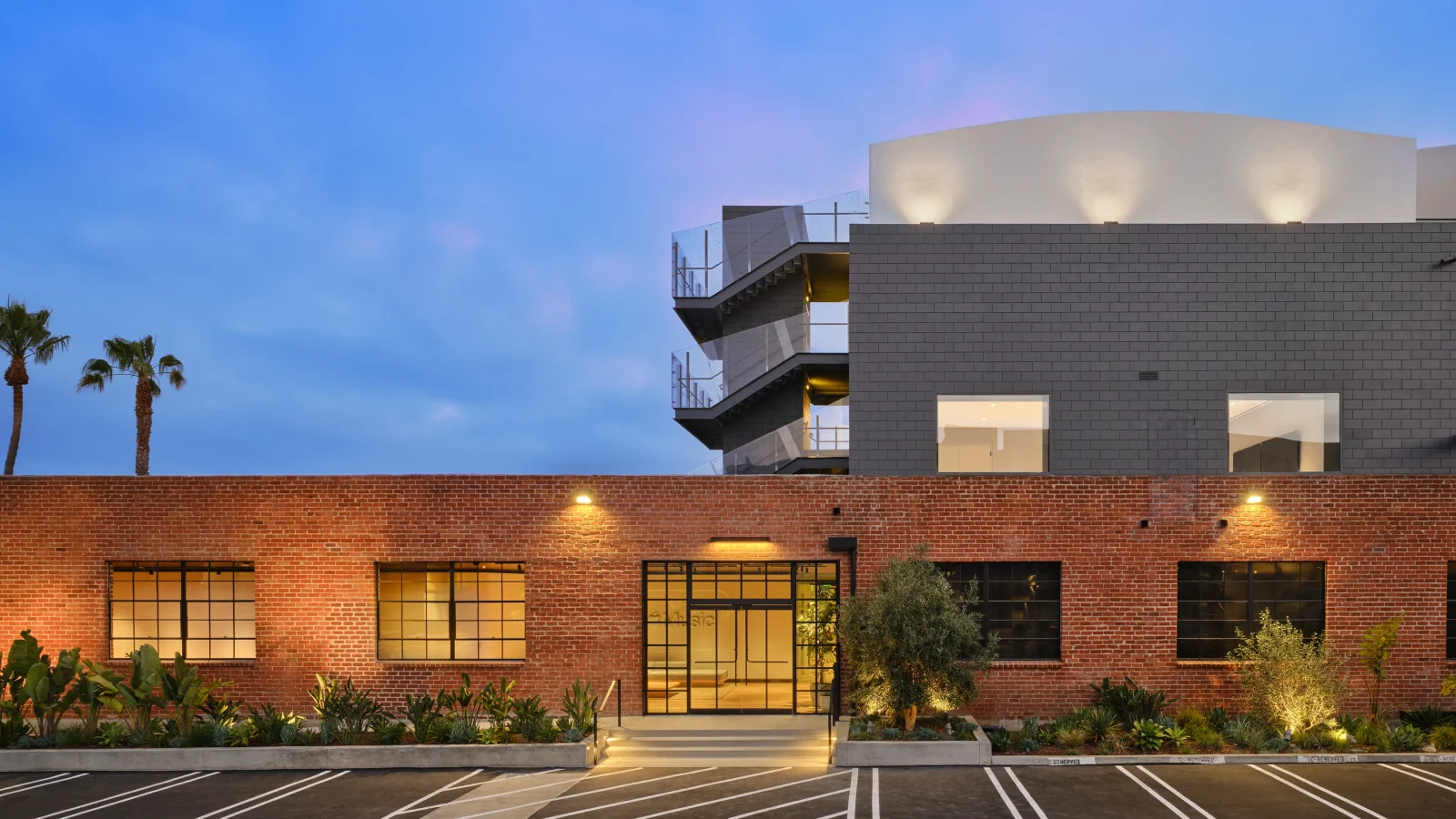

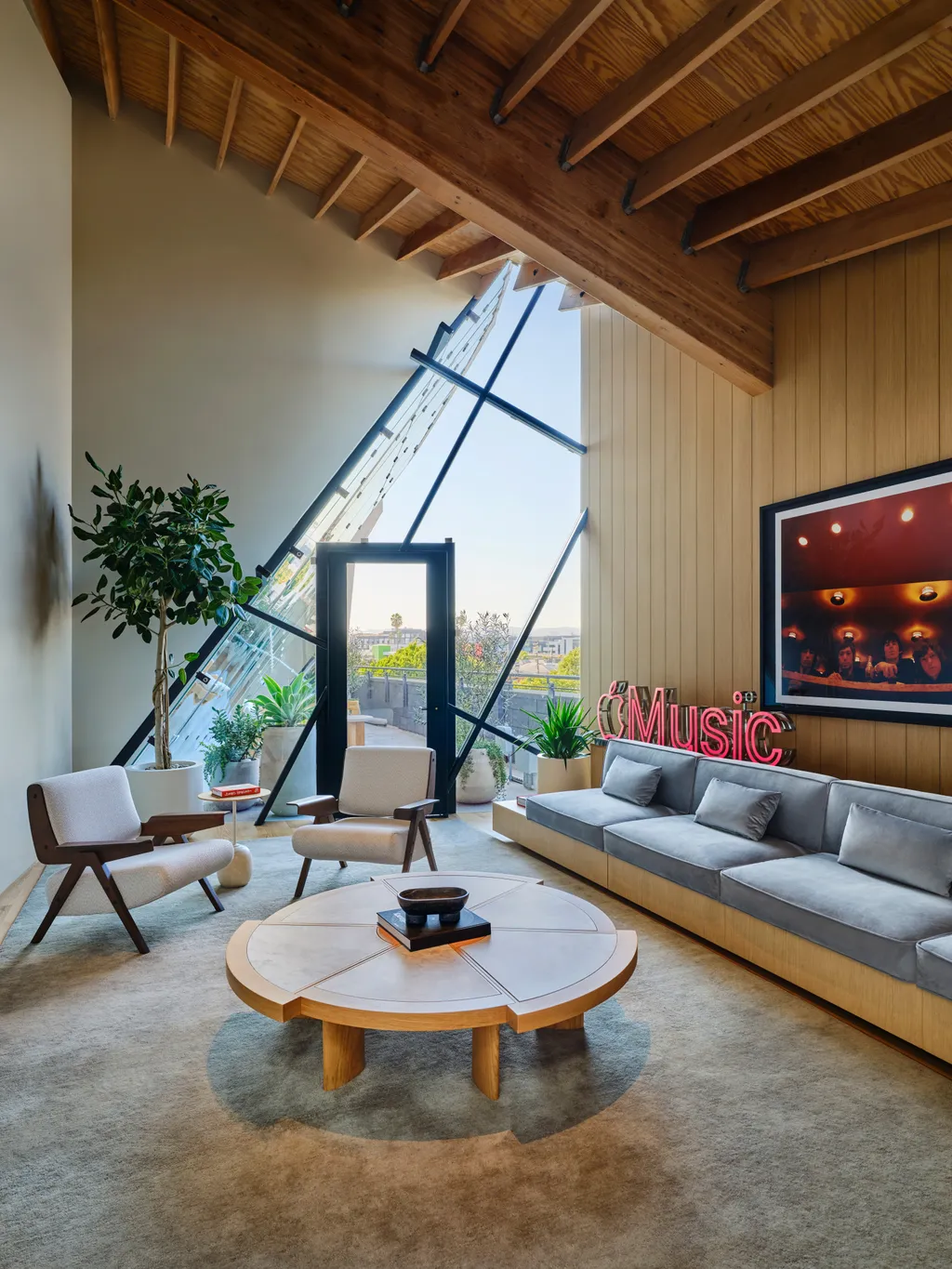
Apple Music Studio in Los Angeles is a full-scale creative campus built to mark a decade of Apple Music and to redefine how music is produced, performed, and shared. Opened in 2025, the facility spans over 15,000 square feet across three floors, combining broadcast, production, and live-event infrastructure in one cohesive environment.
Located in Culver City, a growing hub for entertainment and media companies, the project is within a broader cultural ecosystem that includes major studios and streaming platforms.
A New Kind of Music Campus in Los Angeles
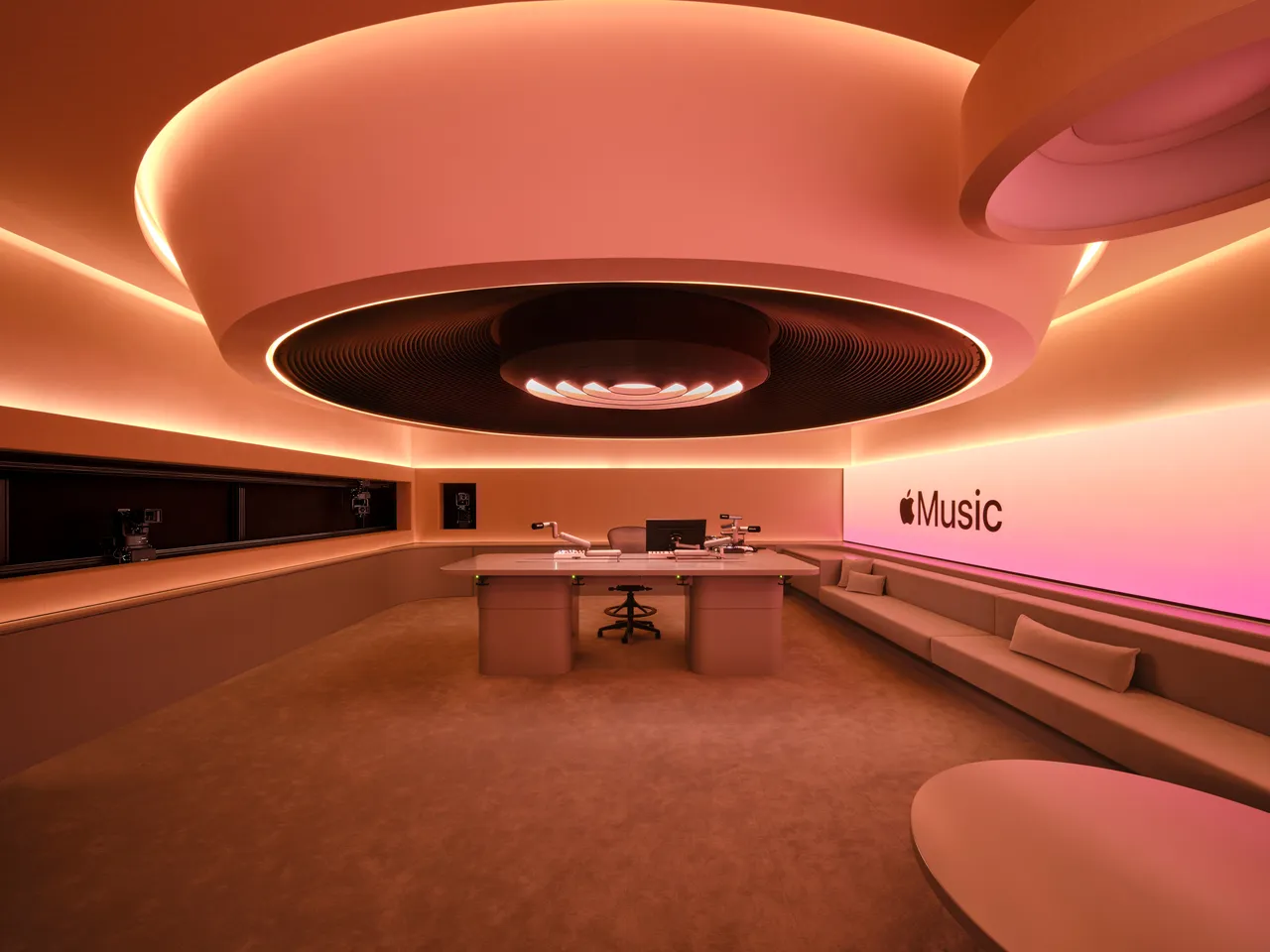
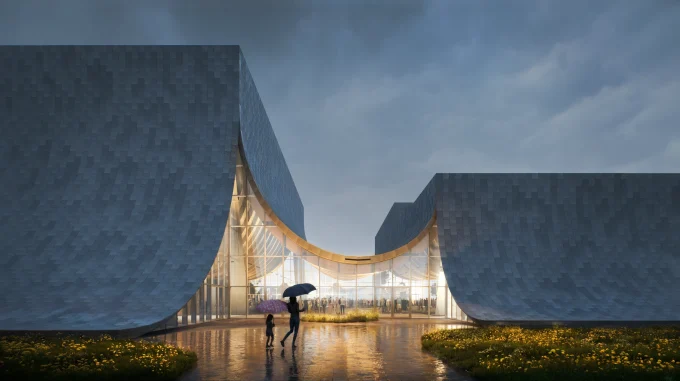
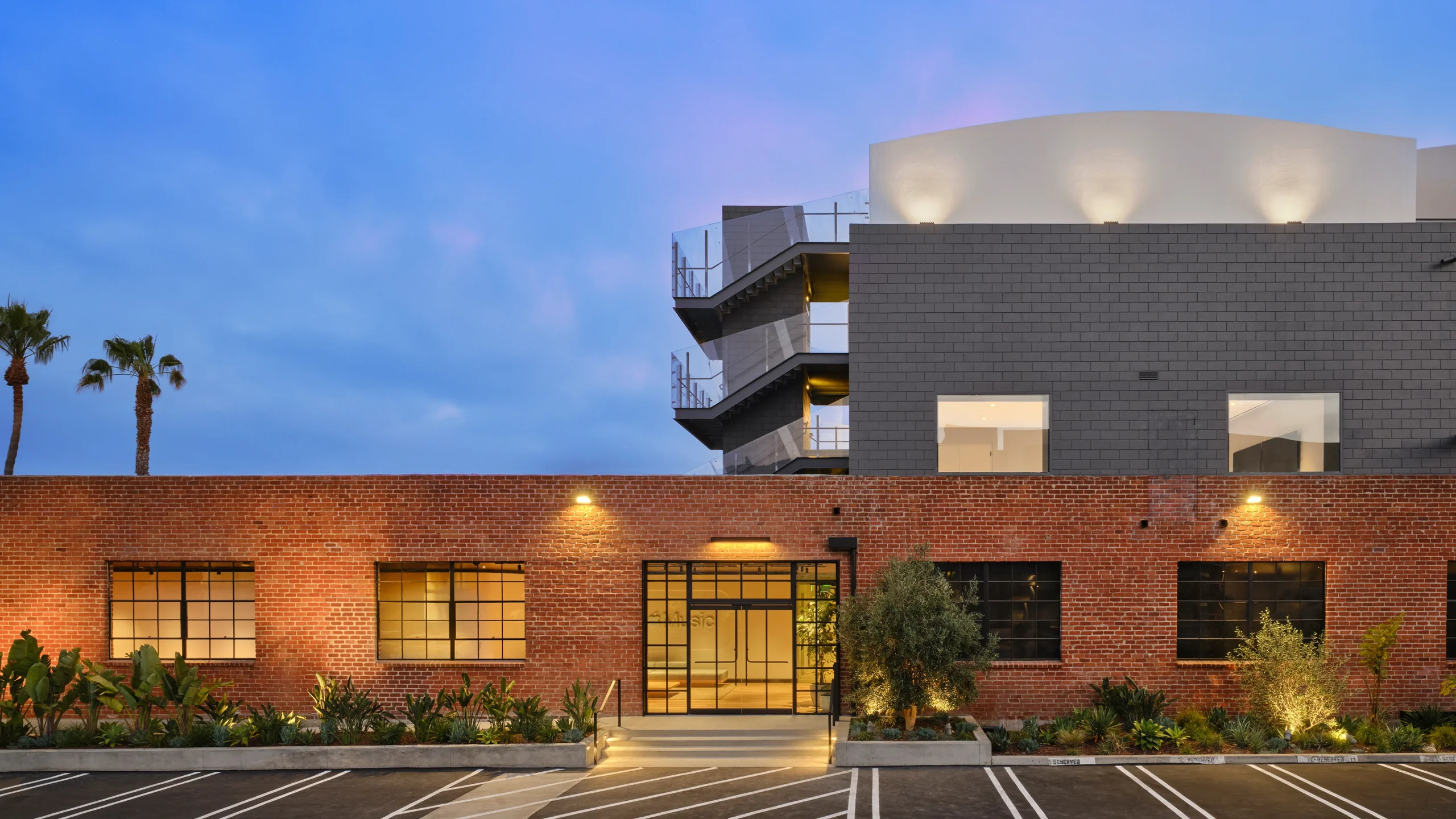
Architect Eric Owen Moss, renowned for his experimental and sculptural forms in Los Angeles architecture, designed the building to accommodate the studio. The structure reflects a deliberate design choice to make the building itself part of the creative process. Its architectural language aligns with Moss’s signature approach, bold, unconventional, and expressive, setting the tone before one even steps inside.
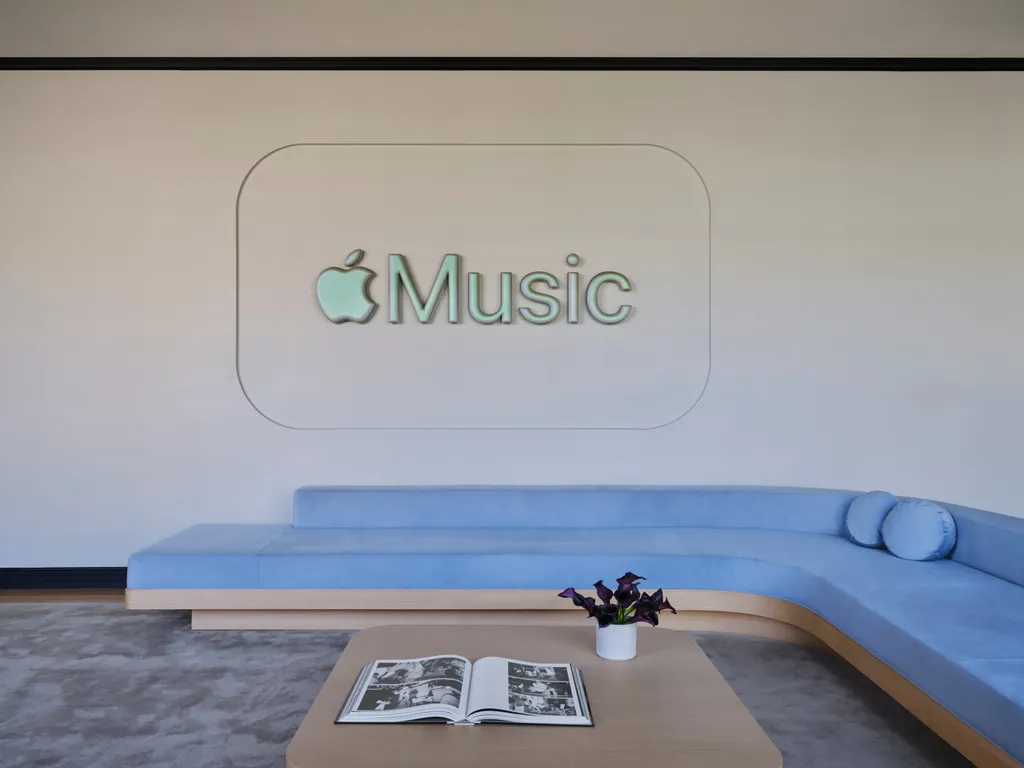
The layout supports fluid movement between spaces. Circulation areas connect studios, performance zones, and social spaces, reinforcing the idea of a “working campus” rather than isolated rooms.
Inside Apple Music Studio
The design shifts toward flexibility and immersion. Every space is planned to support multiple creative formats without conflict.
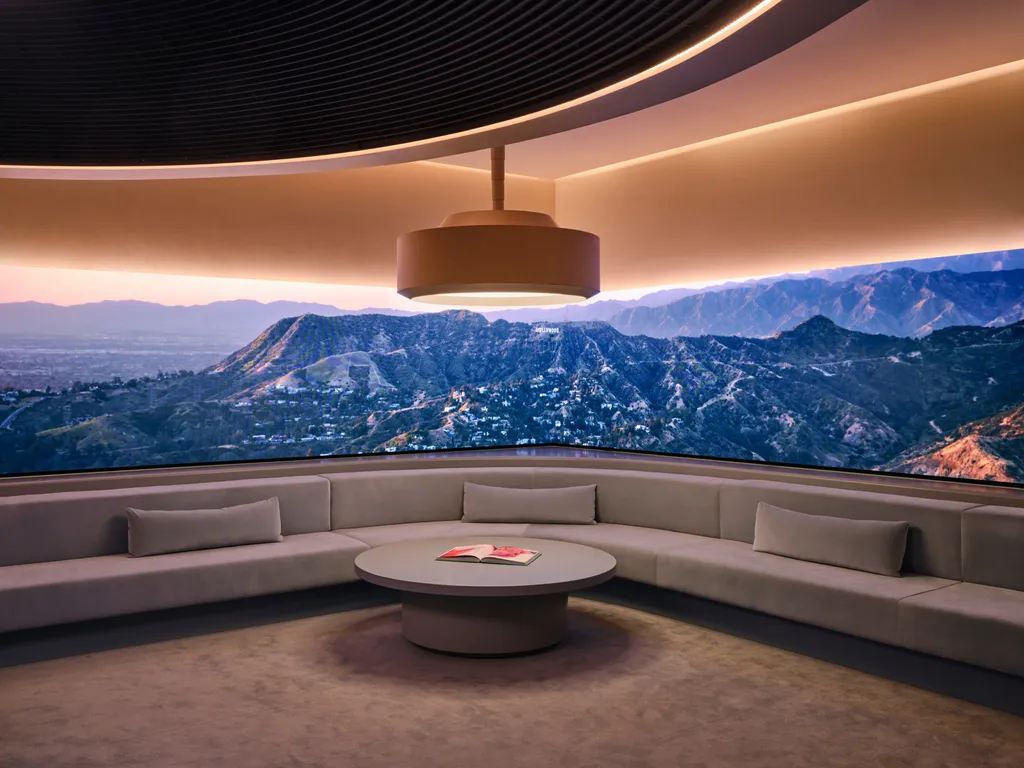
The studio brings together a designed mix of spaces that support every stage of music creation and distribution under one roof. It includes two advanced radio studios built for live interviews, performances, and broadcasts, along with a 4,000-square-foot soundstage that can host concerts, fan events, and filmed productions.
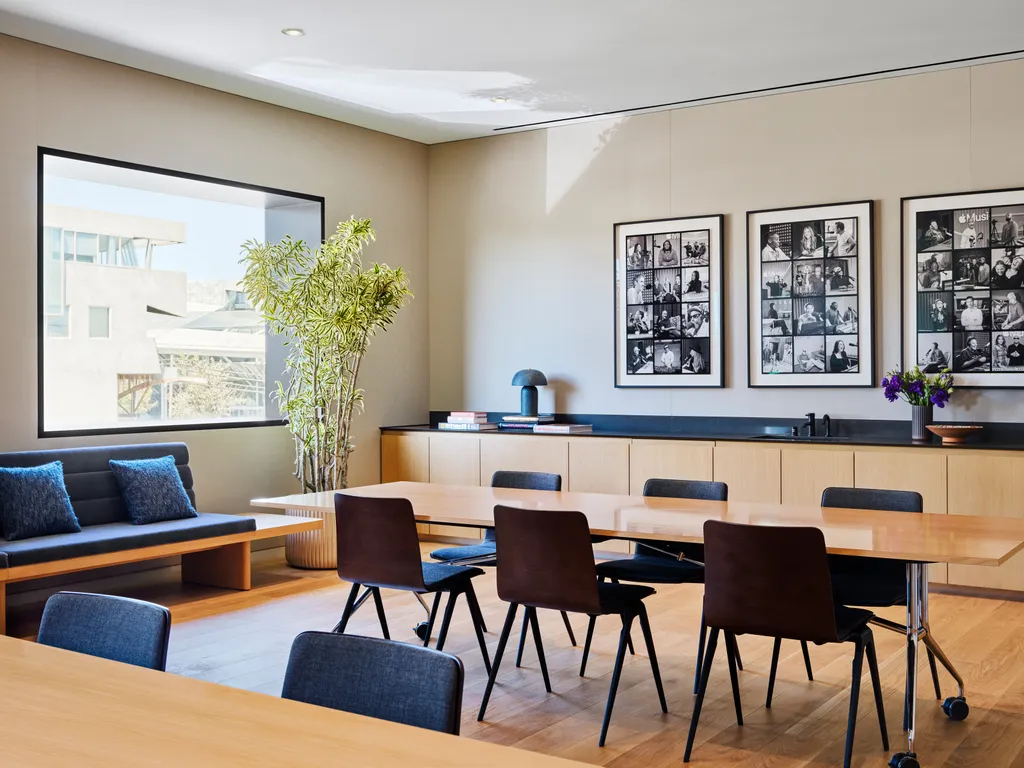
A dedicated Spatial Audio mixing room is equipped with high-end multi-channel speaker systems to support immersive sound design, while isolation booths provide quiet, focused environments for songwriting, podcasting, and recording. The facility also features edit suites and social media labs designed for real-time content production. Together, these spaces allow artists to move seamlessly from recording to broadcasting to live performance without leaving the building, effectively removing the barriers between different stages of production.
Spatial Audio and Embedded Technology
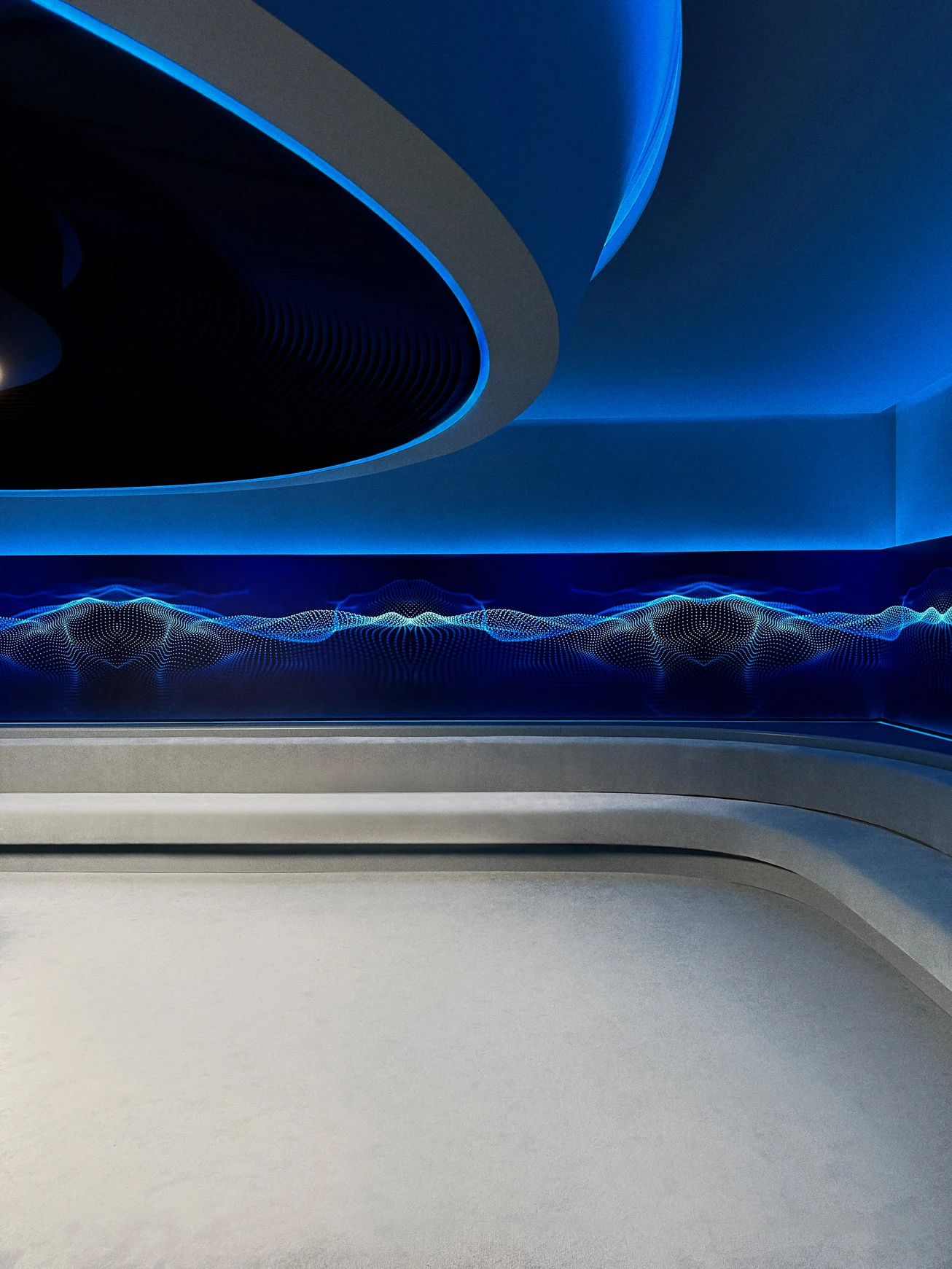
The studio deeply integrates technology while maintaining a visually restrained aesthetic. The studio emphasizes Spatial Audio as a core design, with dedicated rooms built specifically for immersive sound mixing.
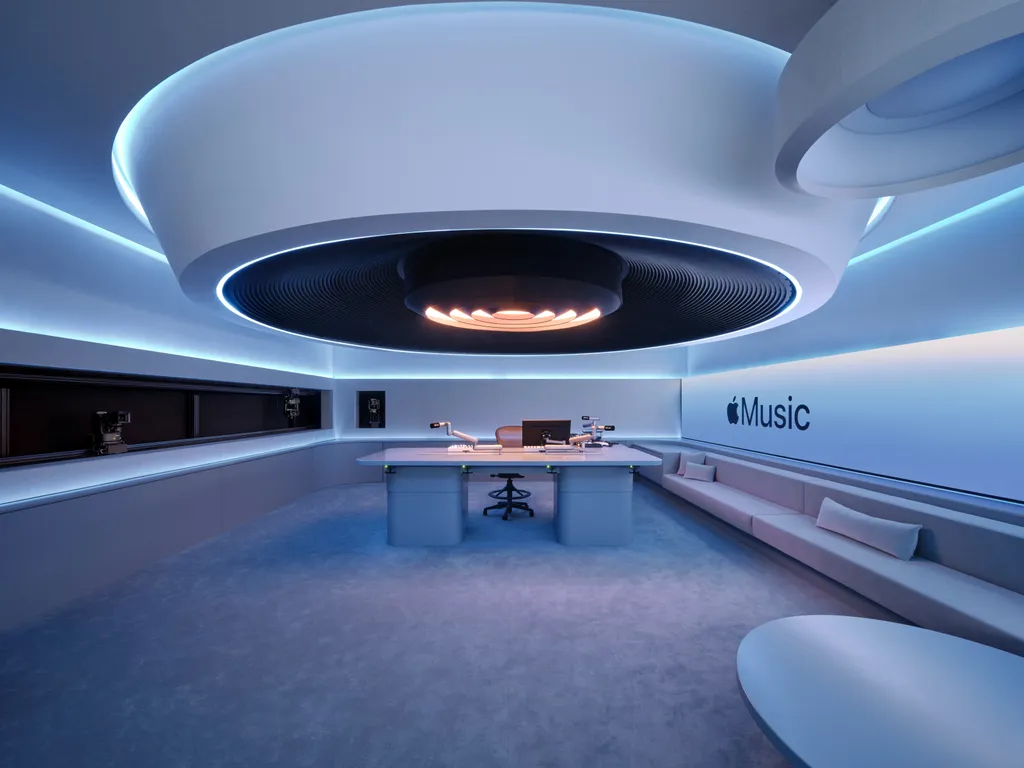
Cameras and production systems are discreetly embedded into the architecture. This allows performances and interviews to be captured without intrusive setups, maintaining a natural atmosphere for artists.
The result is a hybrid space where content can be created, edited, and distributed in near real time.
Gallery-Like Circulation and Cultural Memory
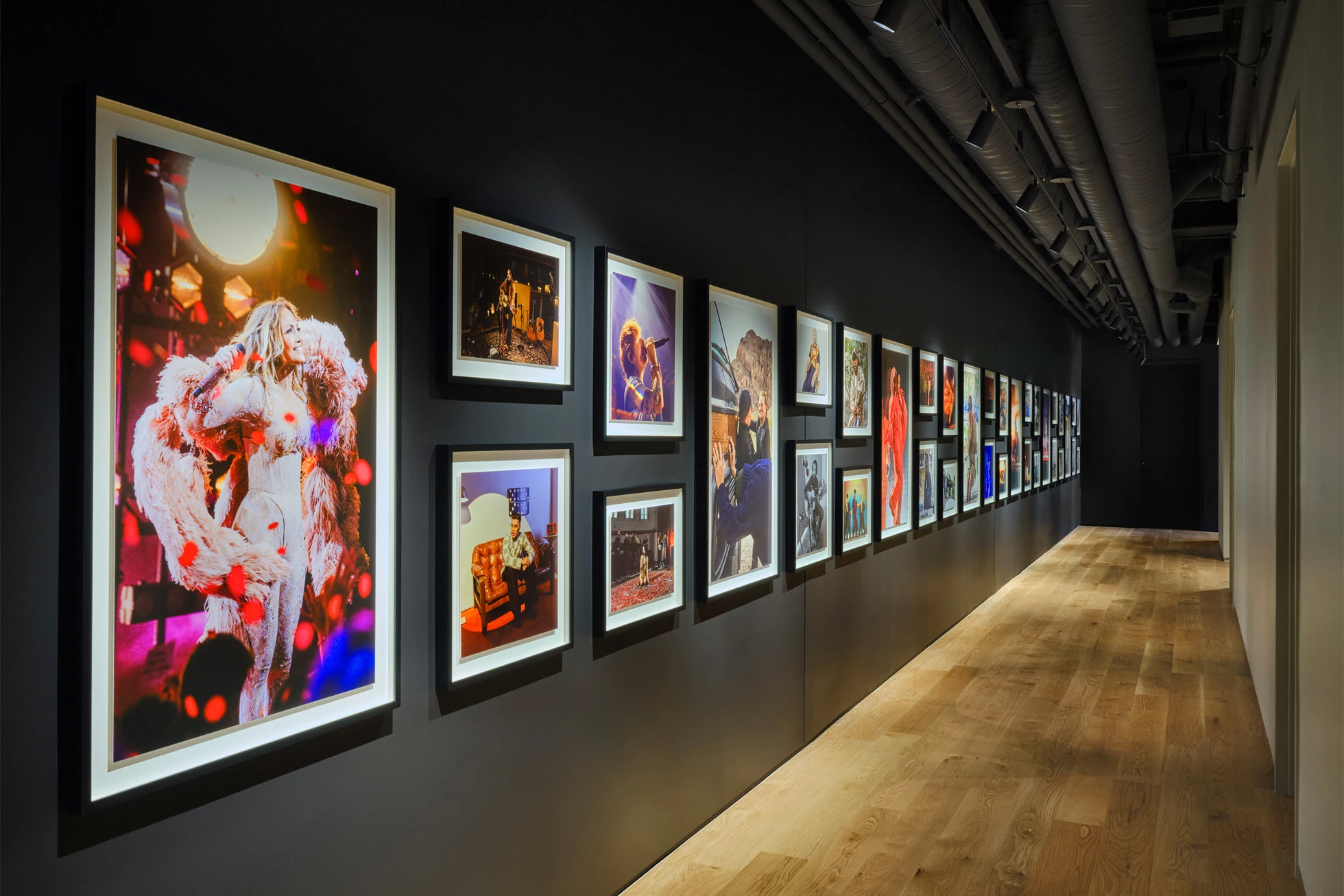
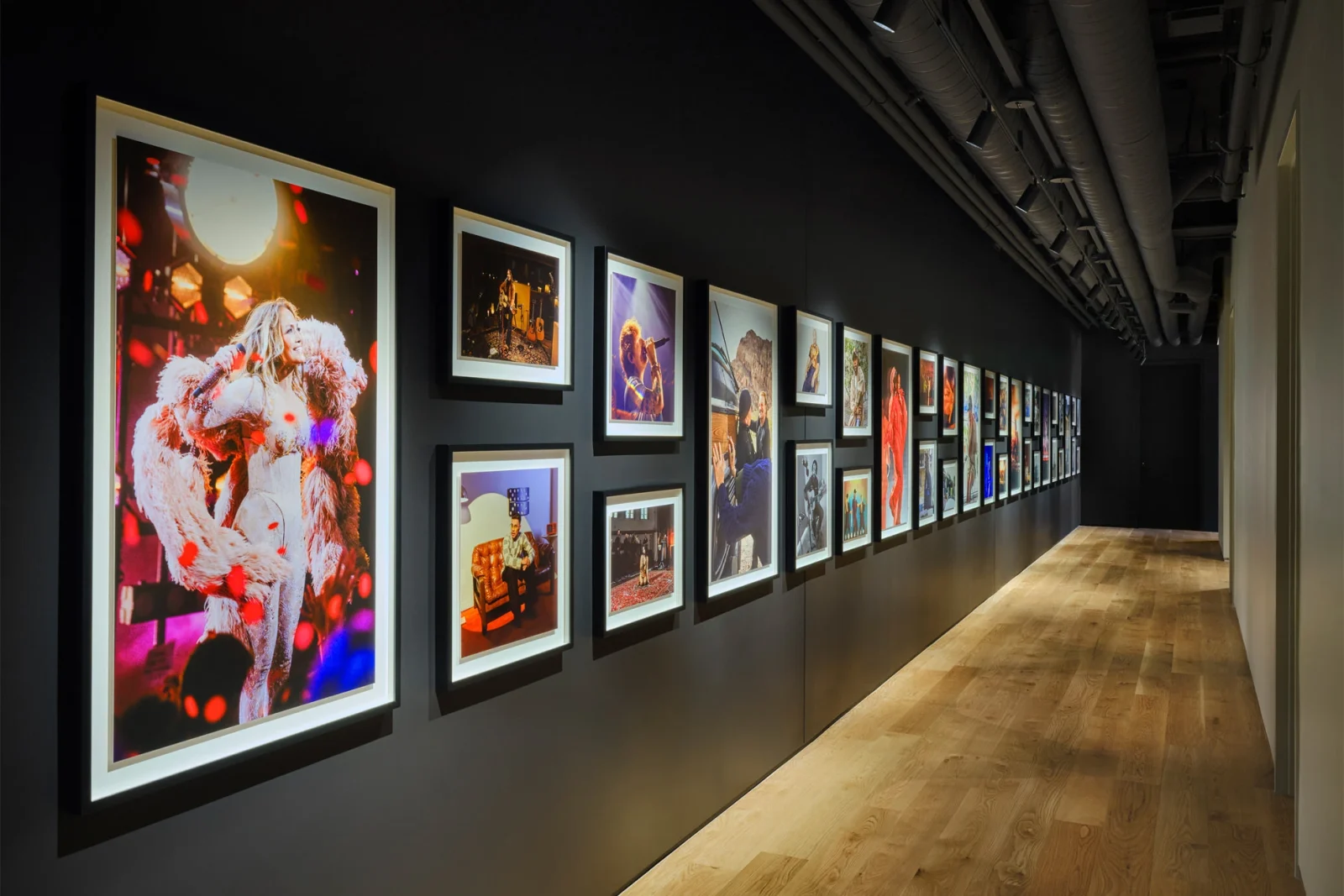
One of the more distinctive interior elements of the studio is its use of corridor spaces as curated galleries, preferably simple passageways. Areas such as the A-List Corridor and the Archive Corridor are designed to showcase artwork, photography, and visual records drawn from Apple Music’s history and its collaborations with artists. This approach turns transitional spaces into meaningful visual experiences, allowing the building itself to reflect the platform’s cultural journey while artists and visitors move through it.
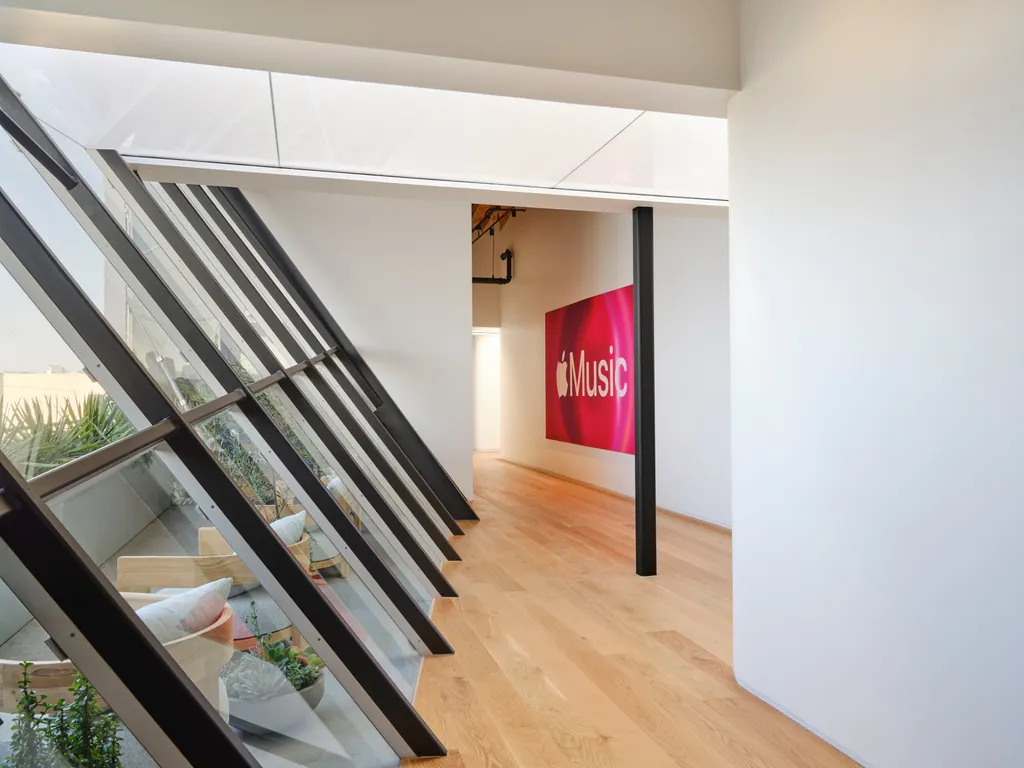
In the lobby, installations such as Katherine Gray’s glass artwork introduce a shifting palette of light and color, setting a tone that blends art with technology.
Architectural Identity: A Distinctive Creative Shell
Apple’s internal design of the project has two clear priorities: intuitive use and high-performance output. The studio reflects this thinking, designing spaces to seamlessly transition between radio, live performance, and digital content production.
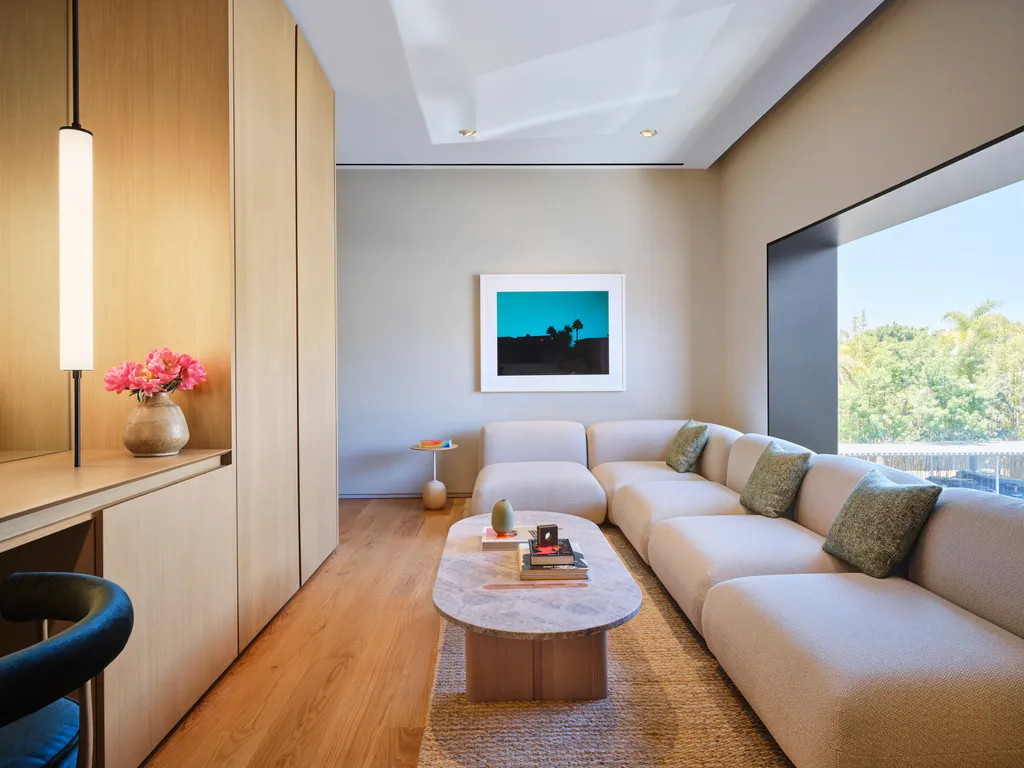
The interiors are kept deliberately minimal, reducing visual clutter so that attention stays on the artist and the creative process. Technology is seamlessly integrated into the environment, supporting the work without overwhelming it. The studio encourages openness and collaboration, creating a more fluid and connected creative atmosphere.
Since opening, the studio has already hosted major artists, live shows, and album events, signaling its role as a cultural venue as much as a production facility. The soundstage, in particular, bridges the gap between studio and stage, allowing Apple Music to produce performances that are both intimate and broadcast-ready.
Apple has indicated plans or existing hubs in cities like New York, Tokyo, Berlin, Paris, and Nashville. This positions the LA facility as both a local production space and a central node in a global content ecosystem.
Image credit: Apple
Explore Courses
.jpg "Ondrej Chybik - Rethinking Architecture")