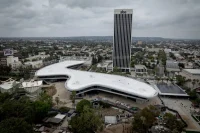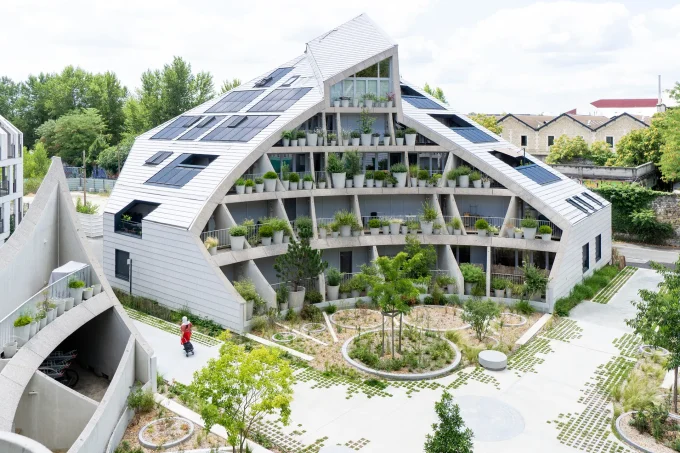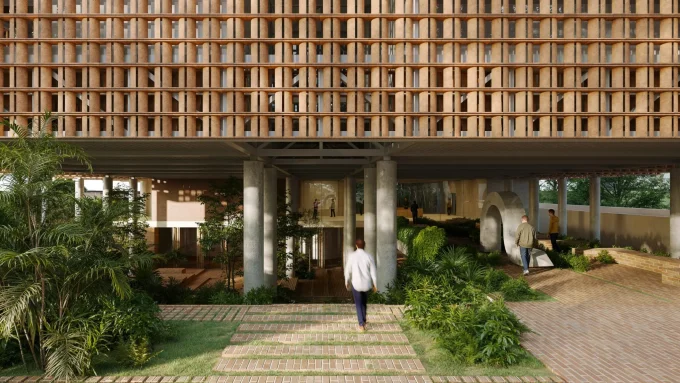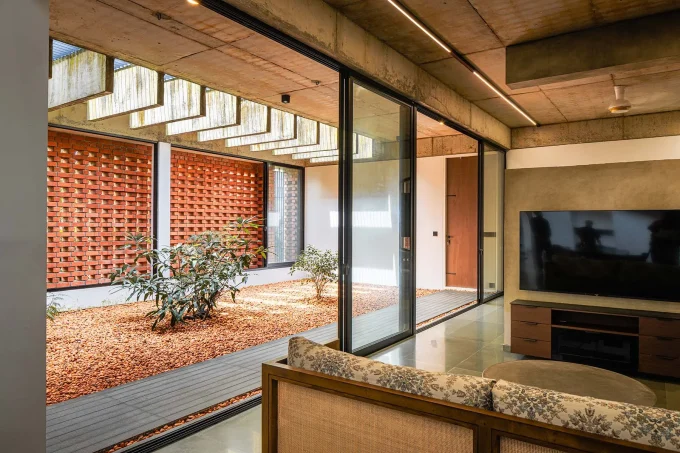




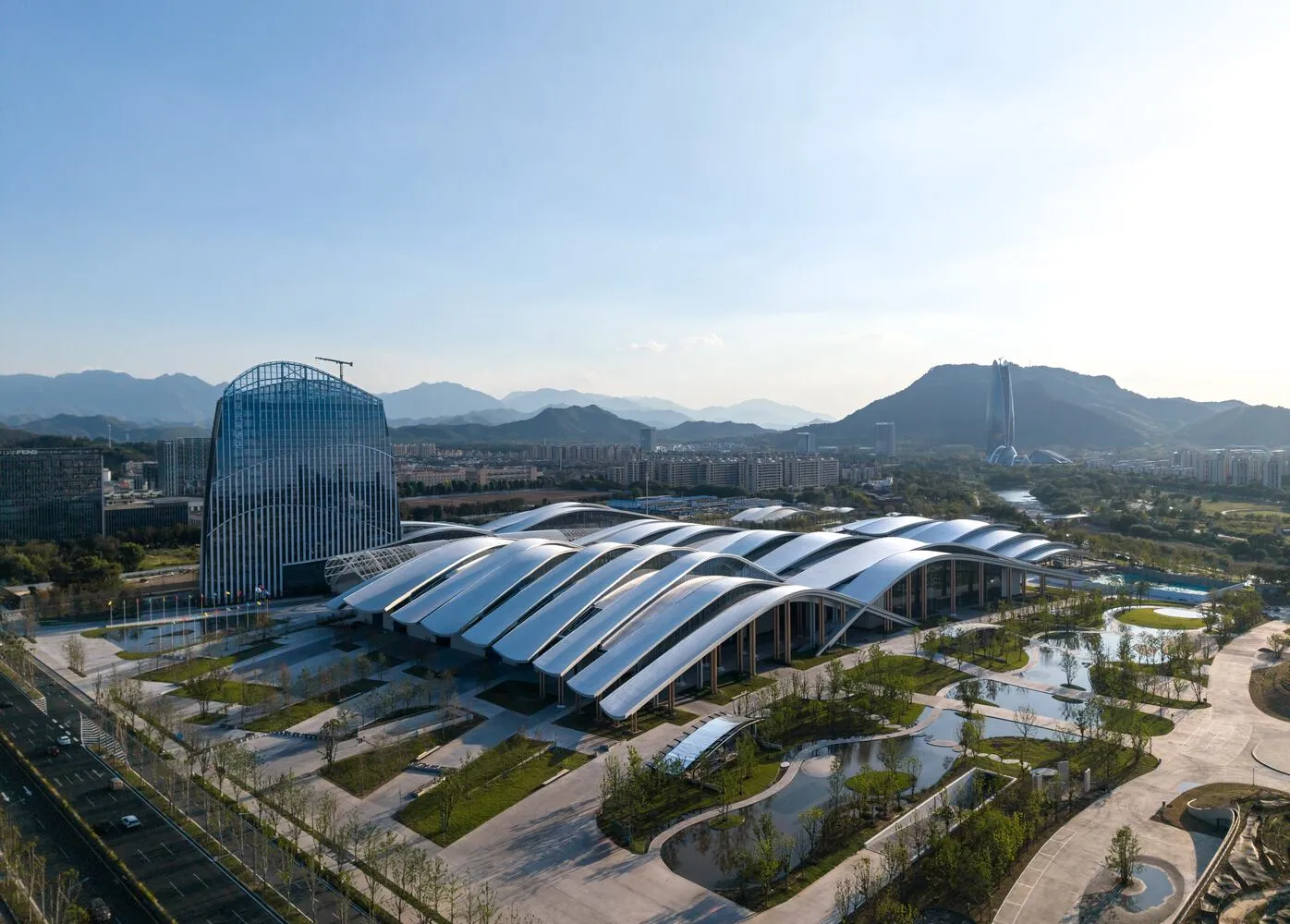
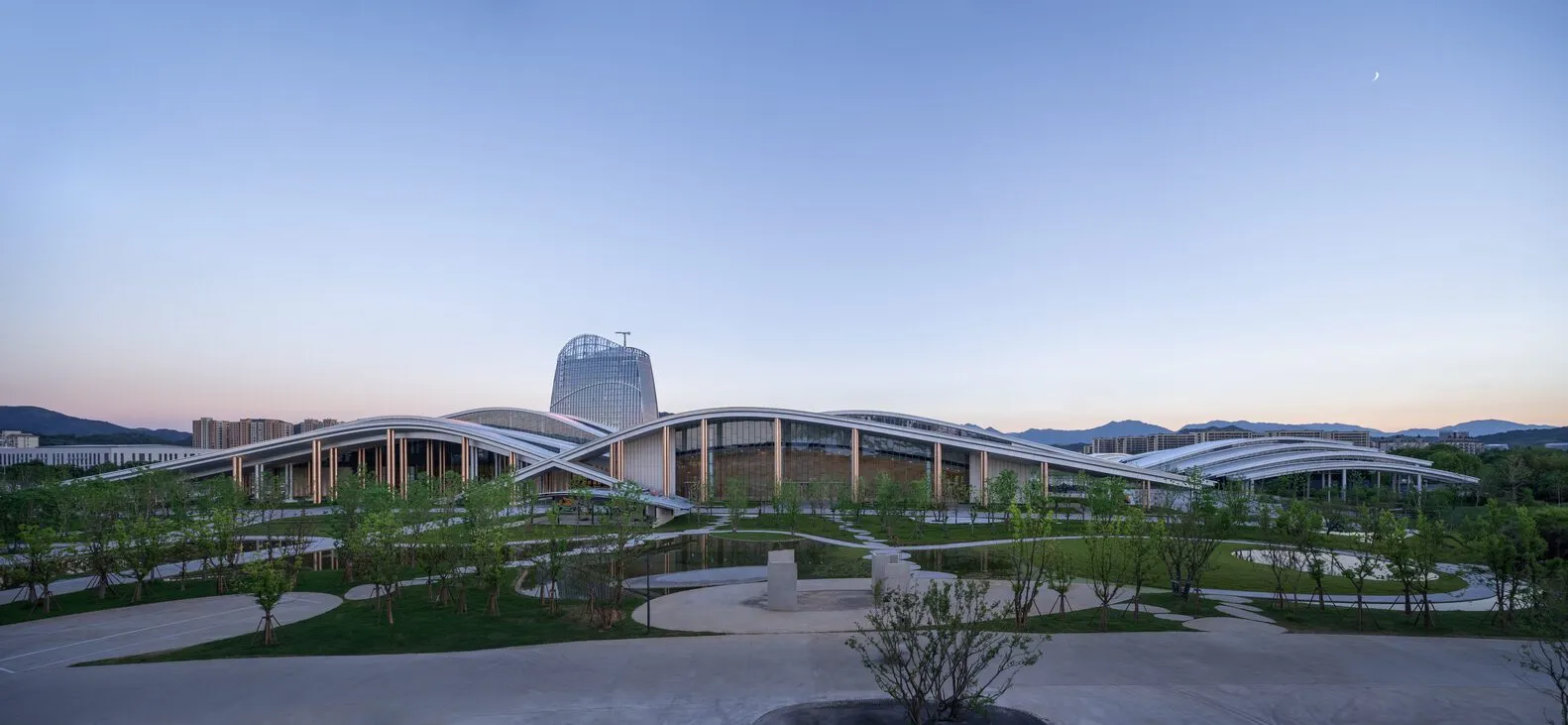
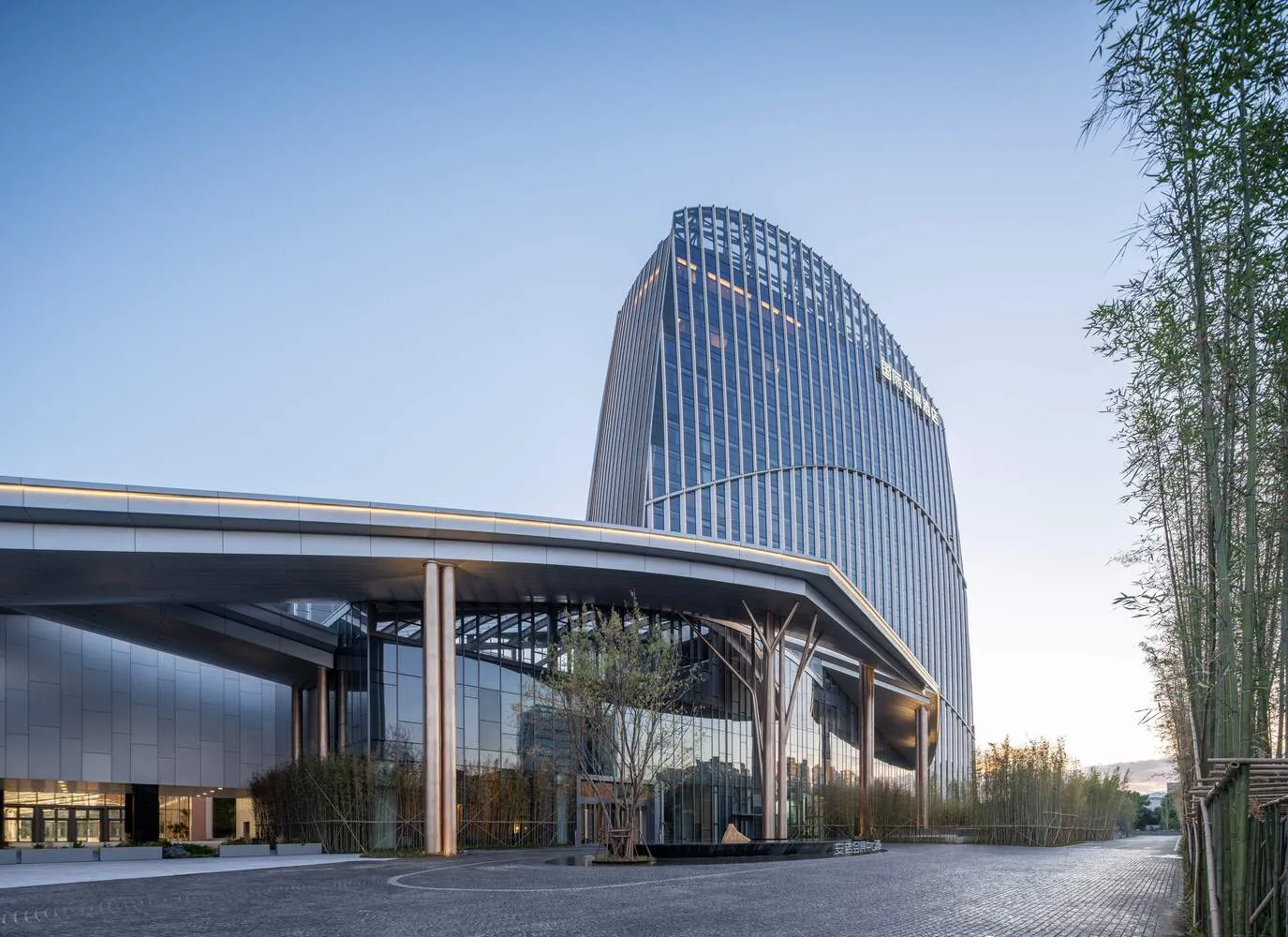
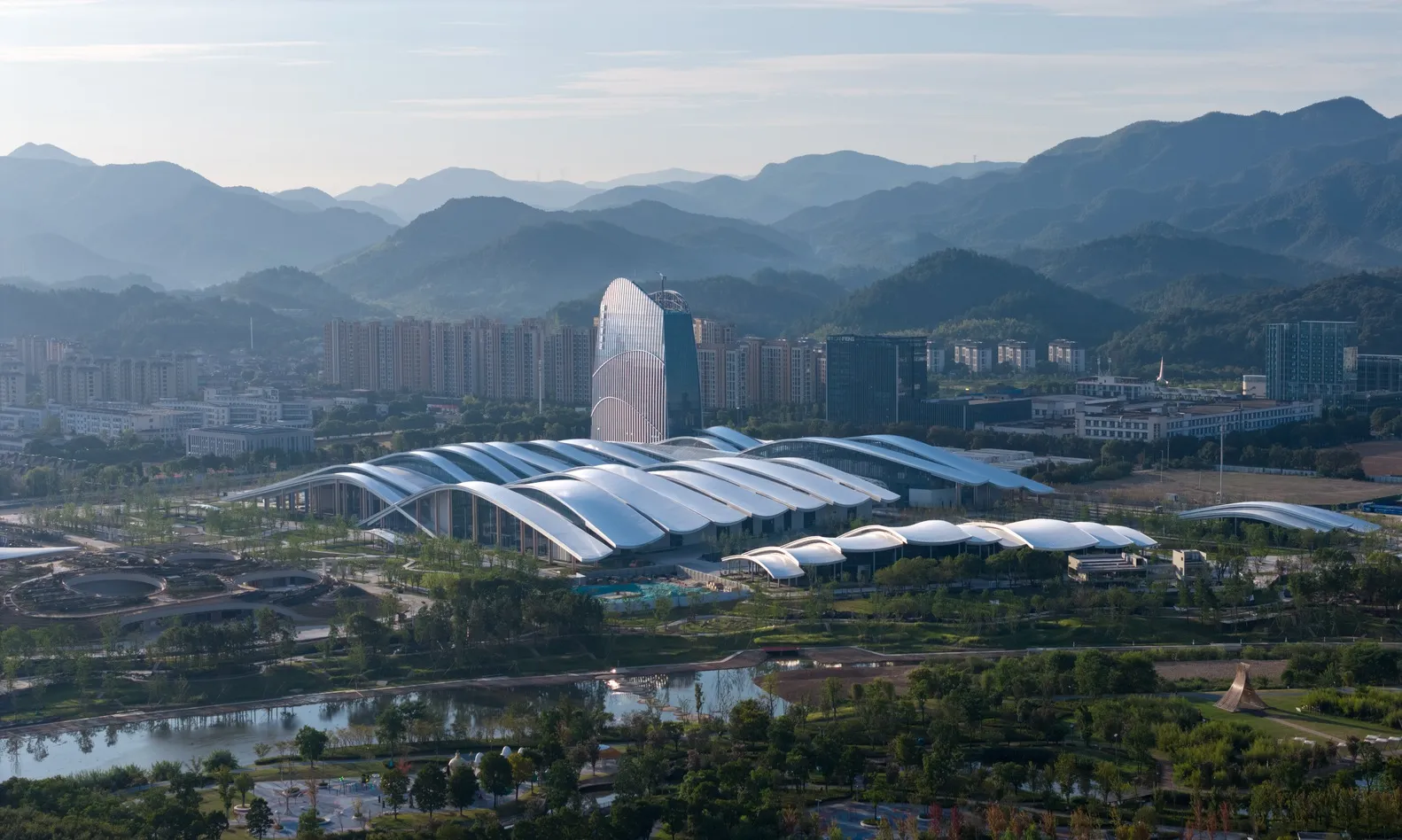
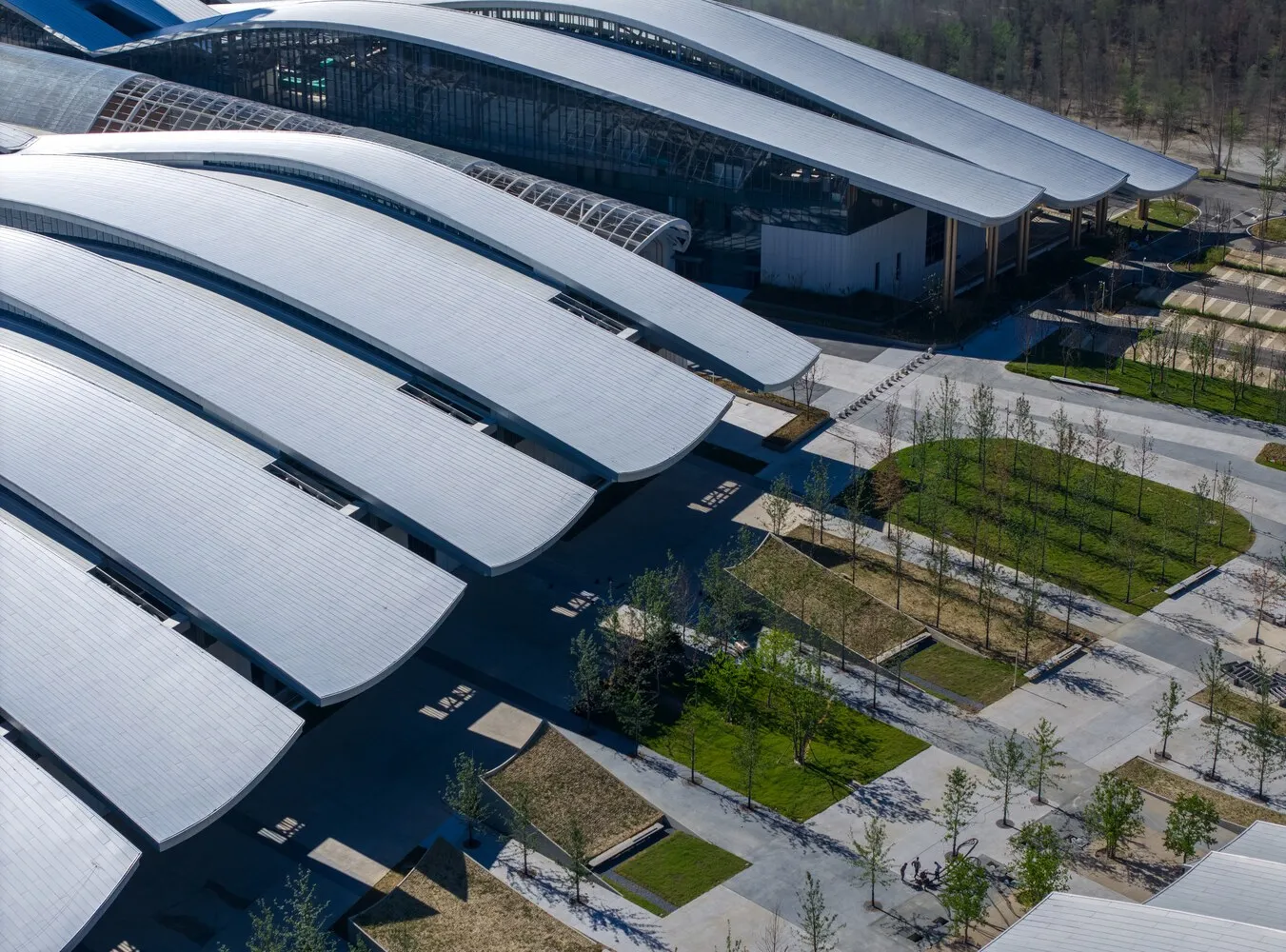
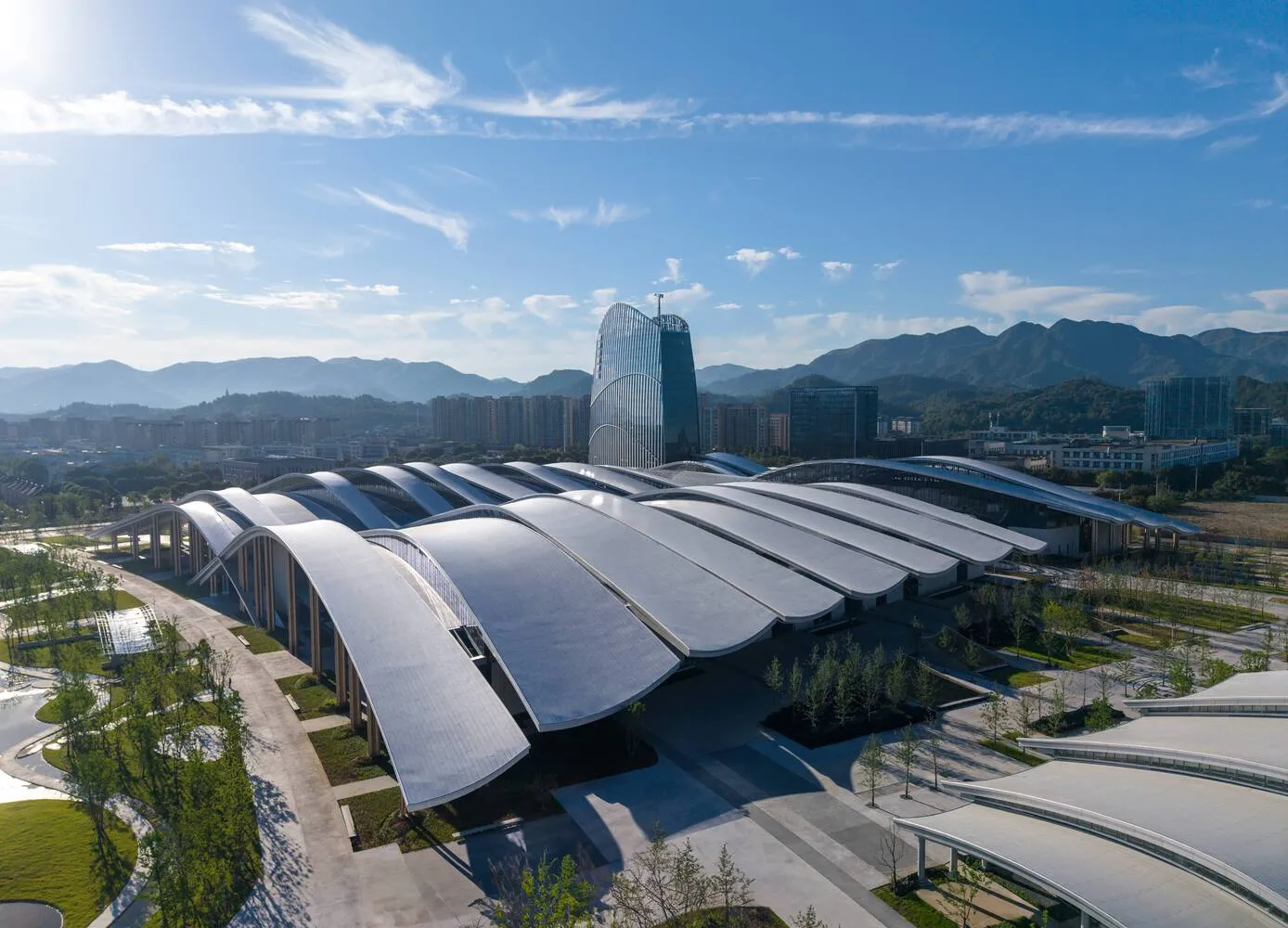
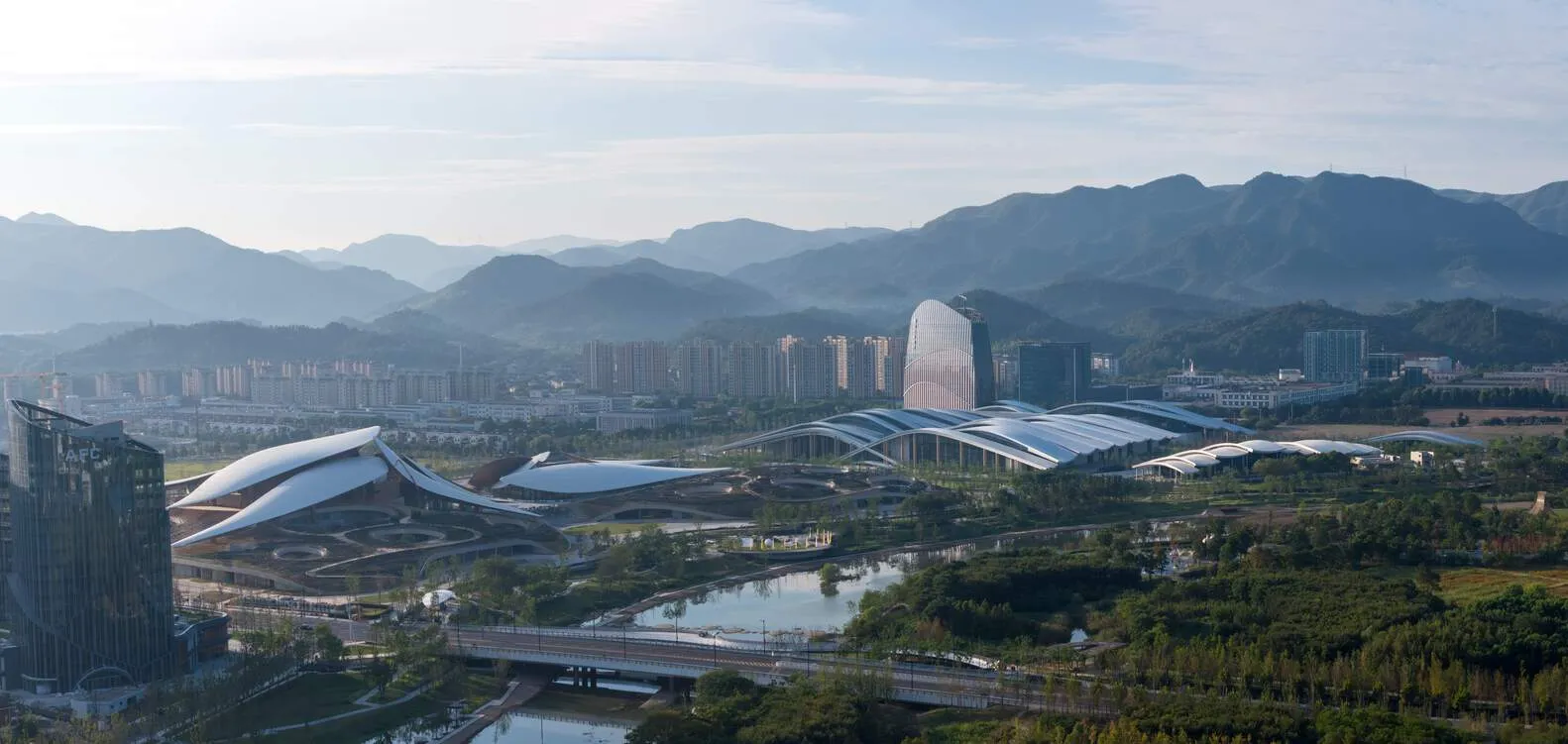
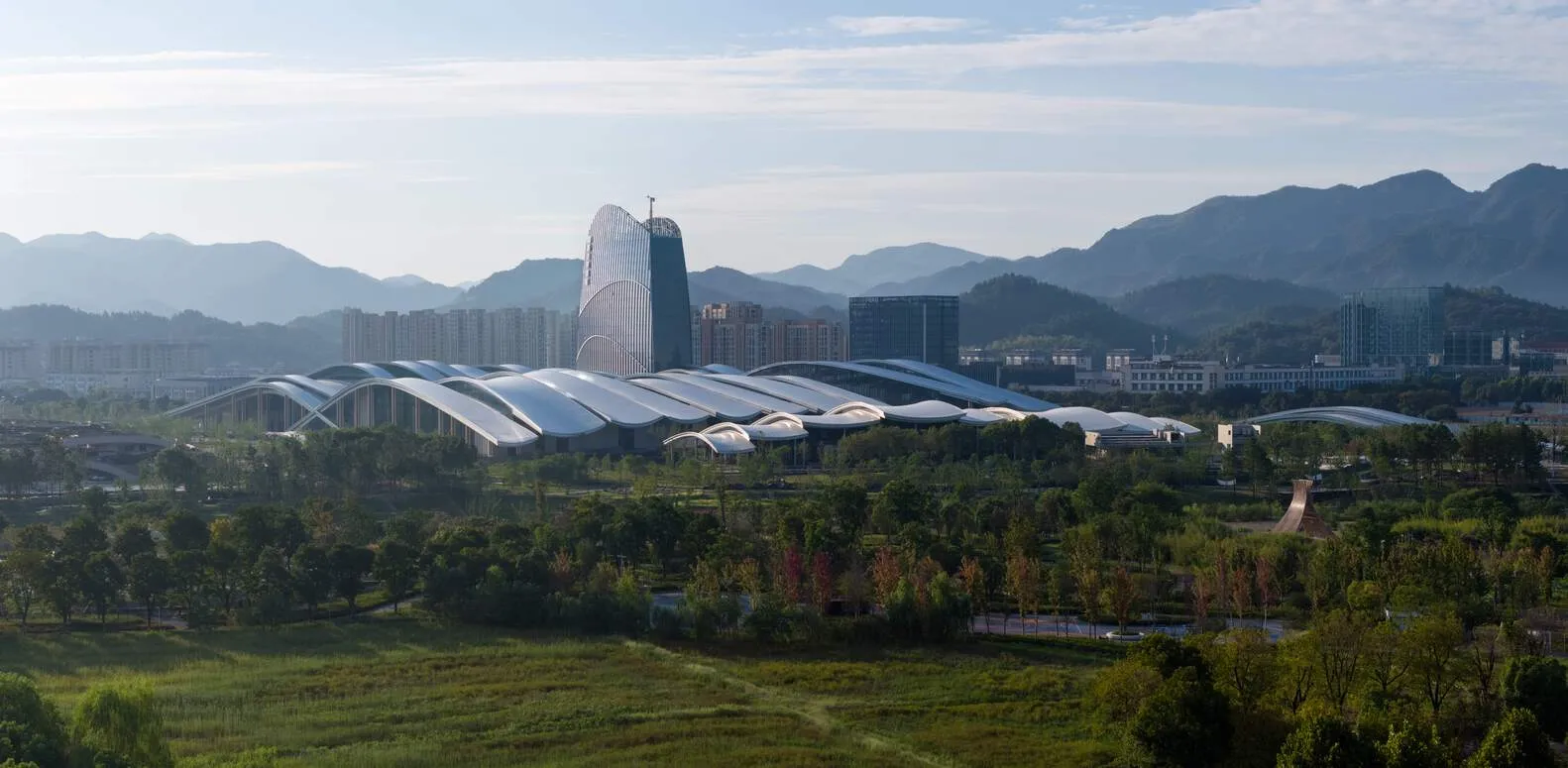
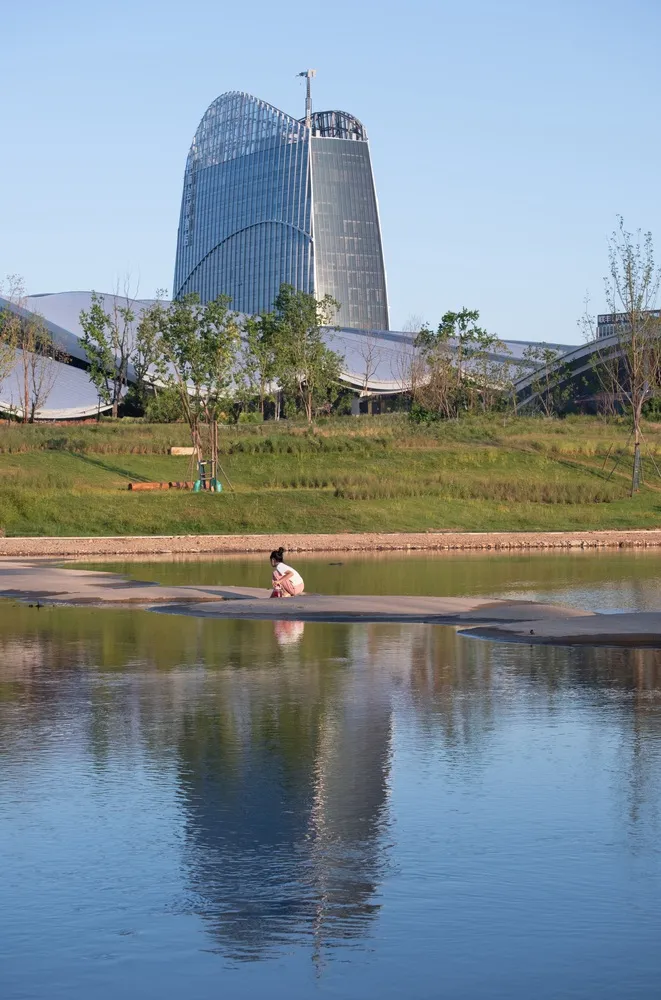
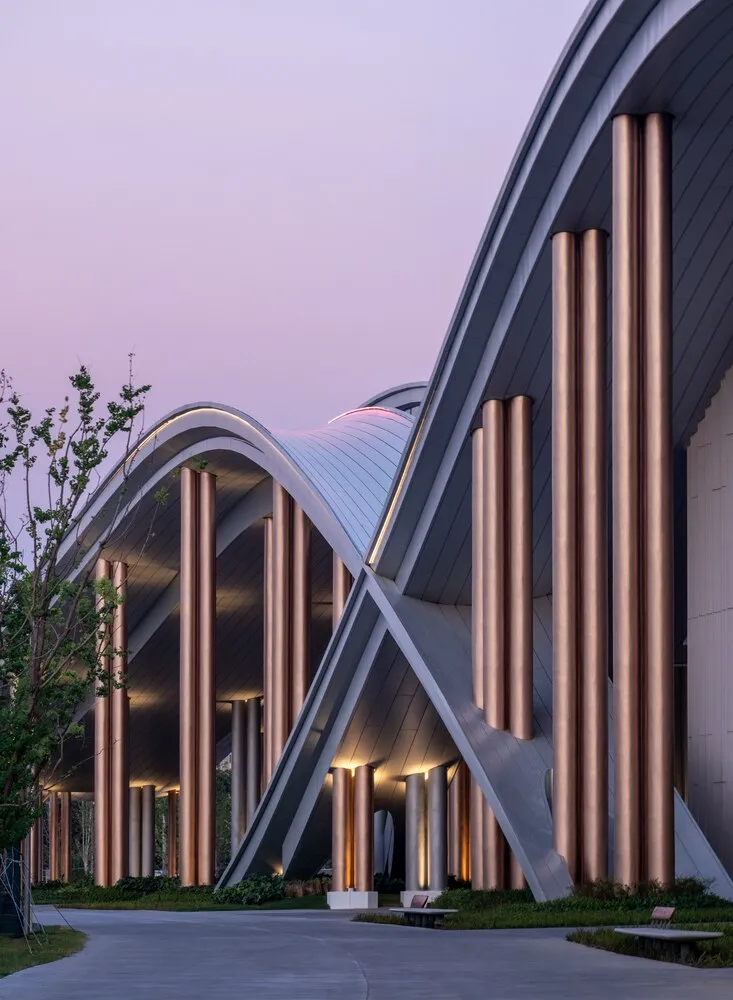
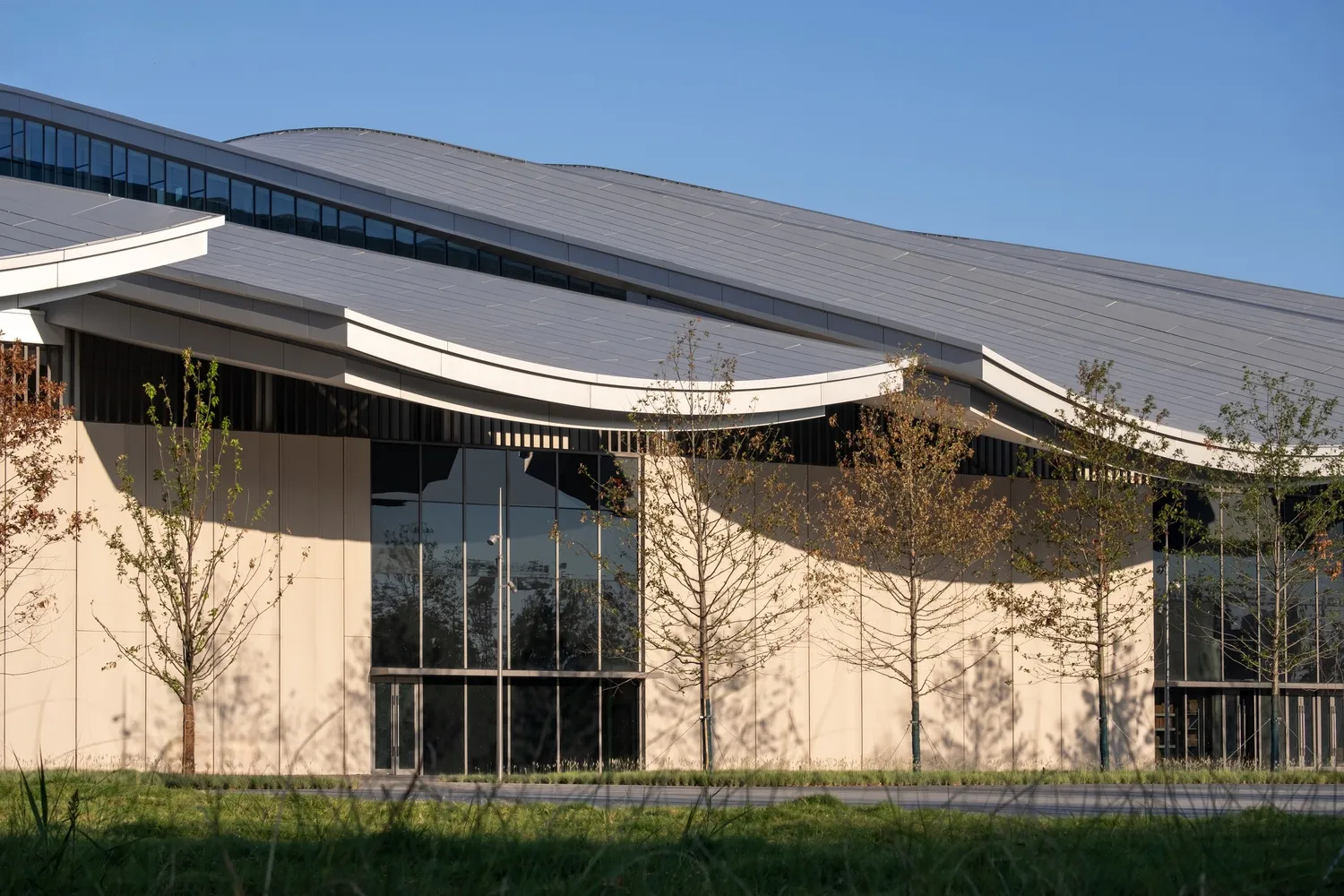
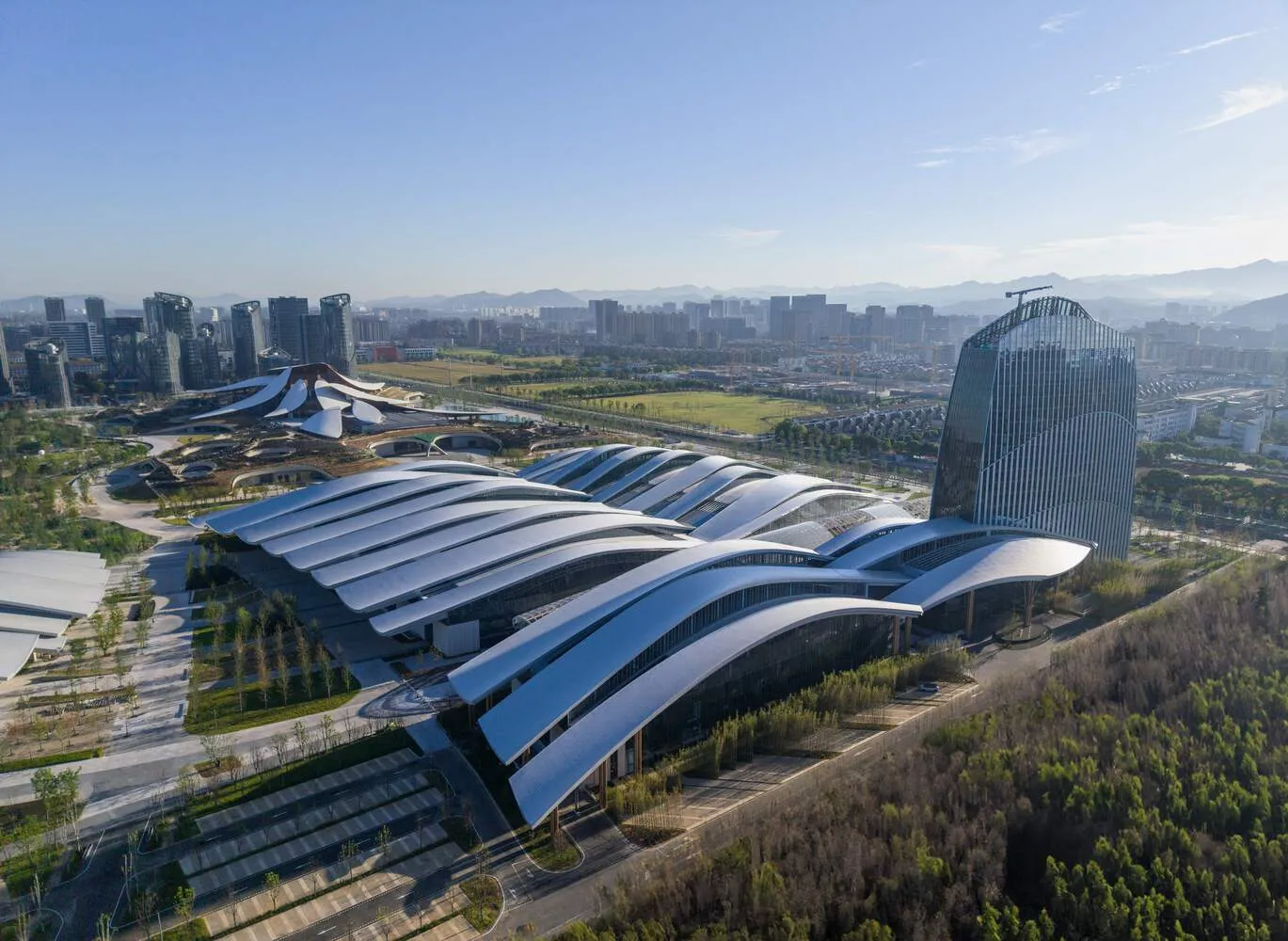
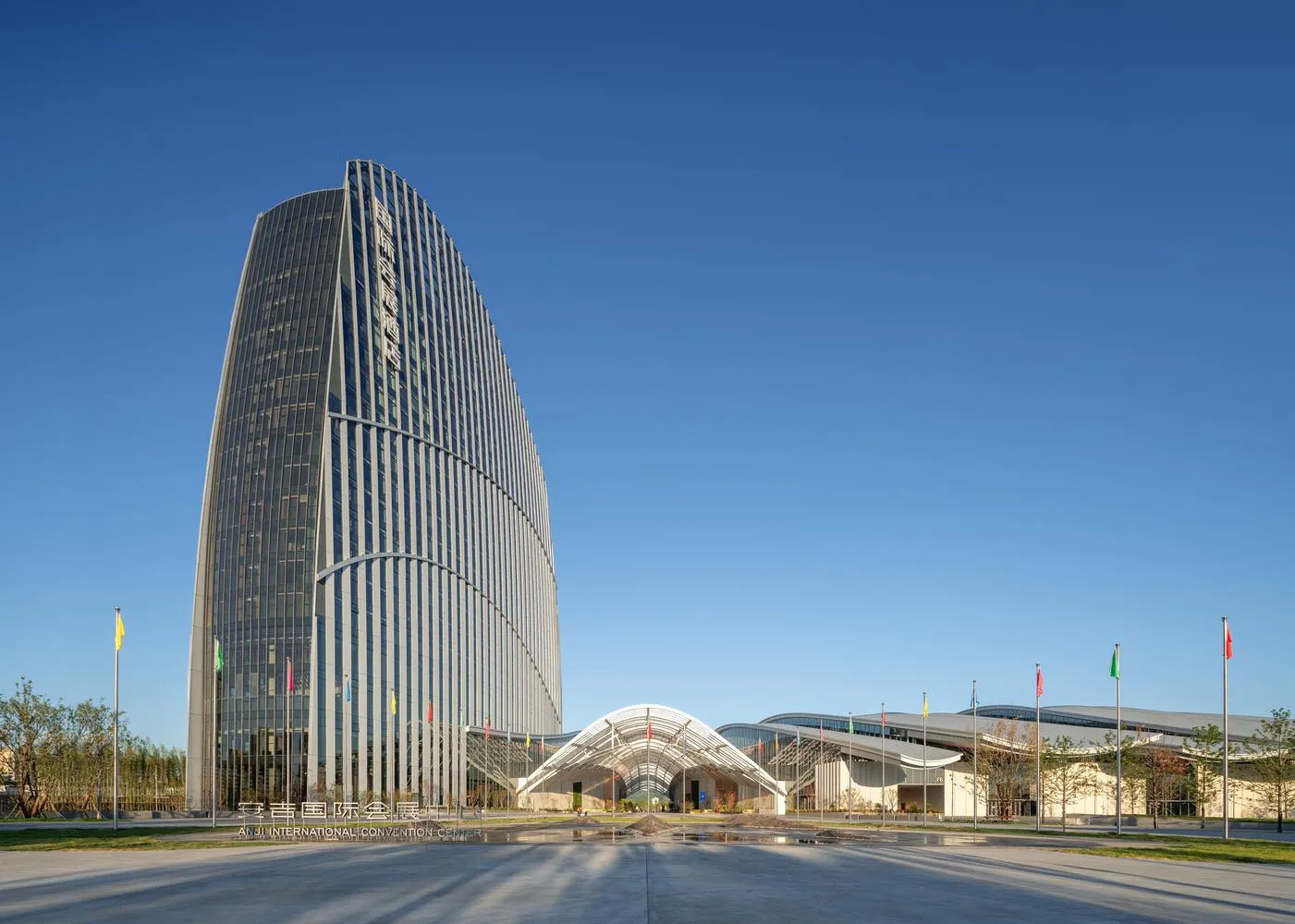
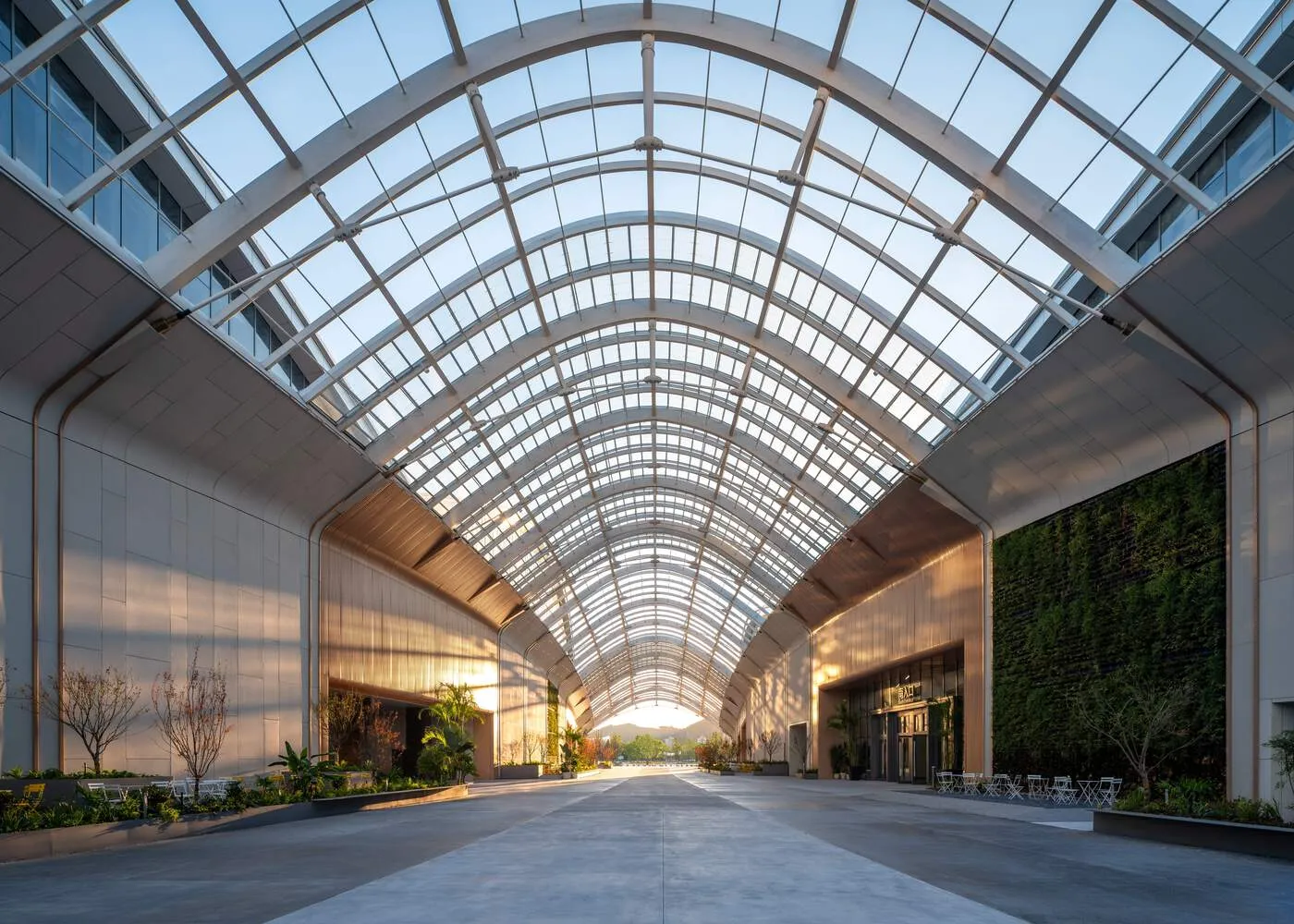
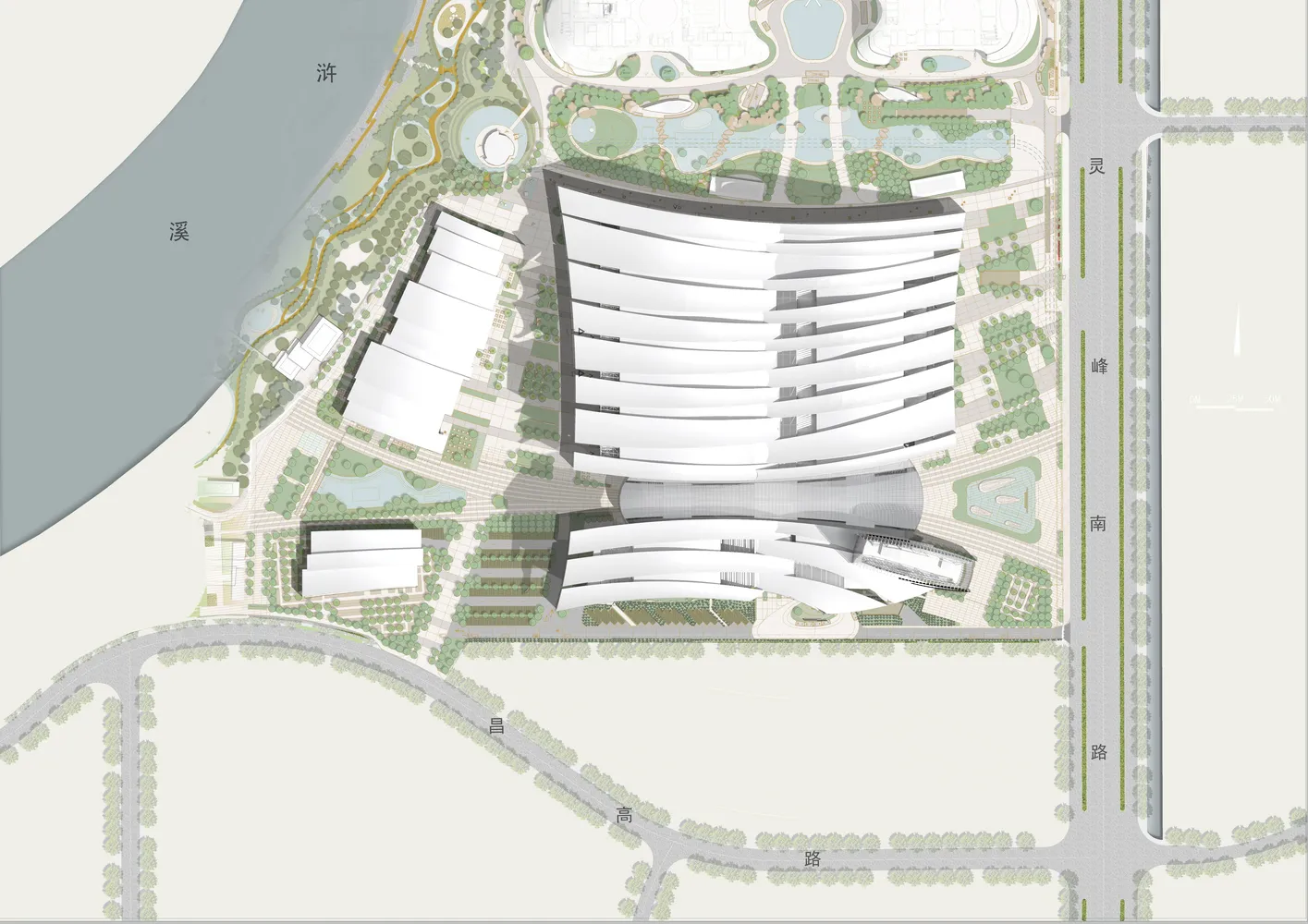
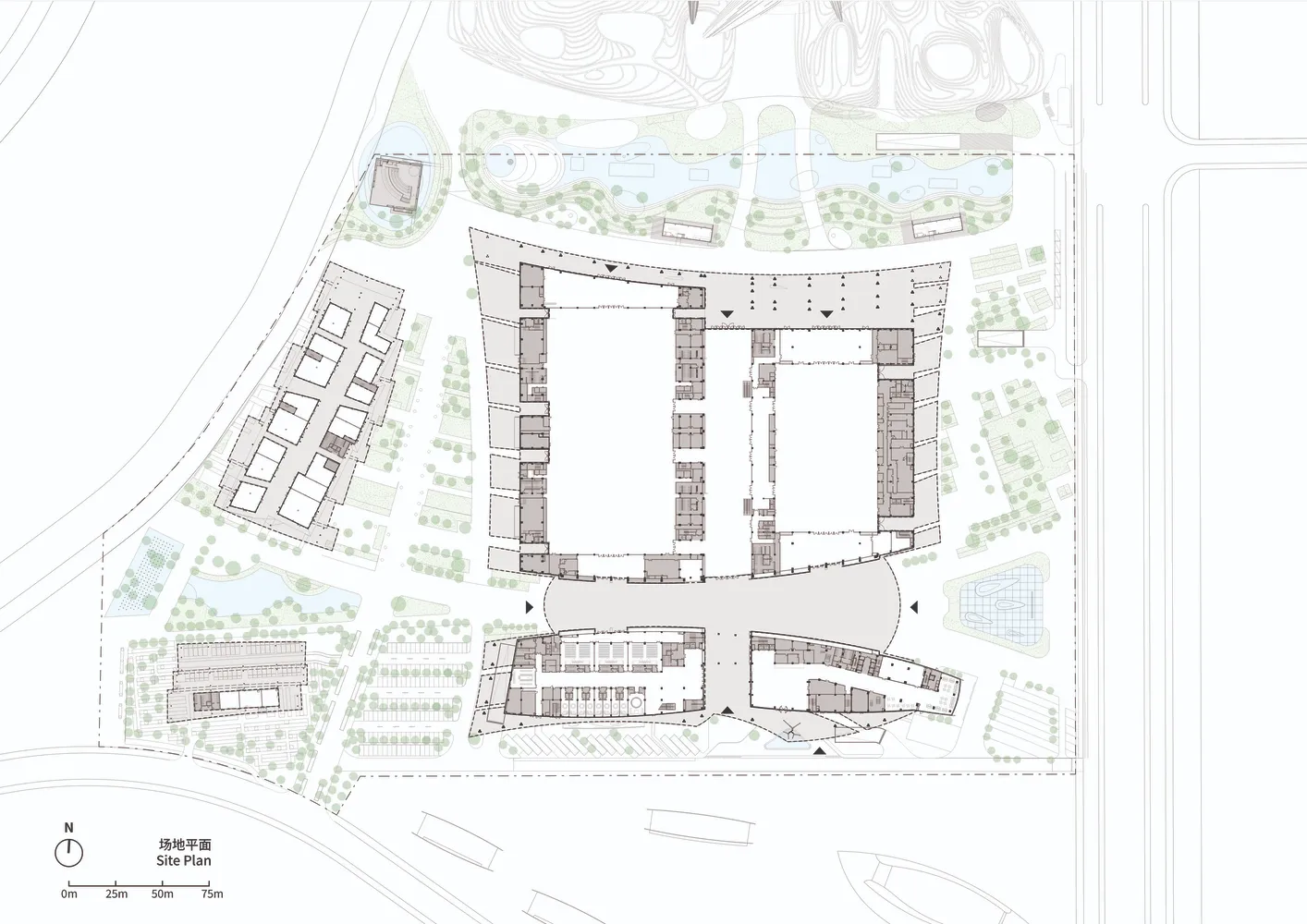
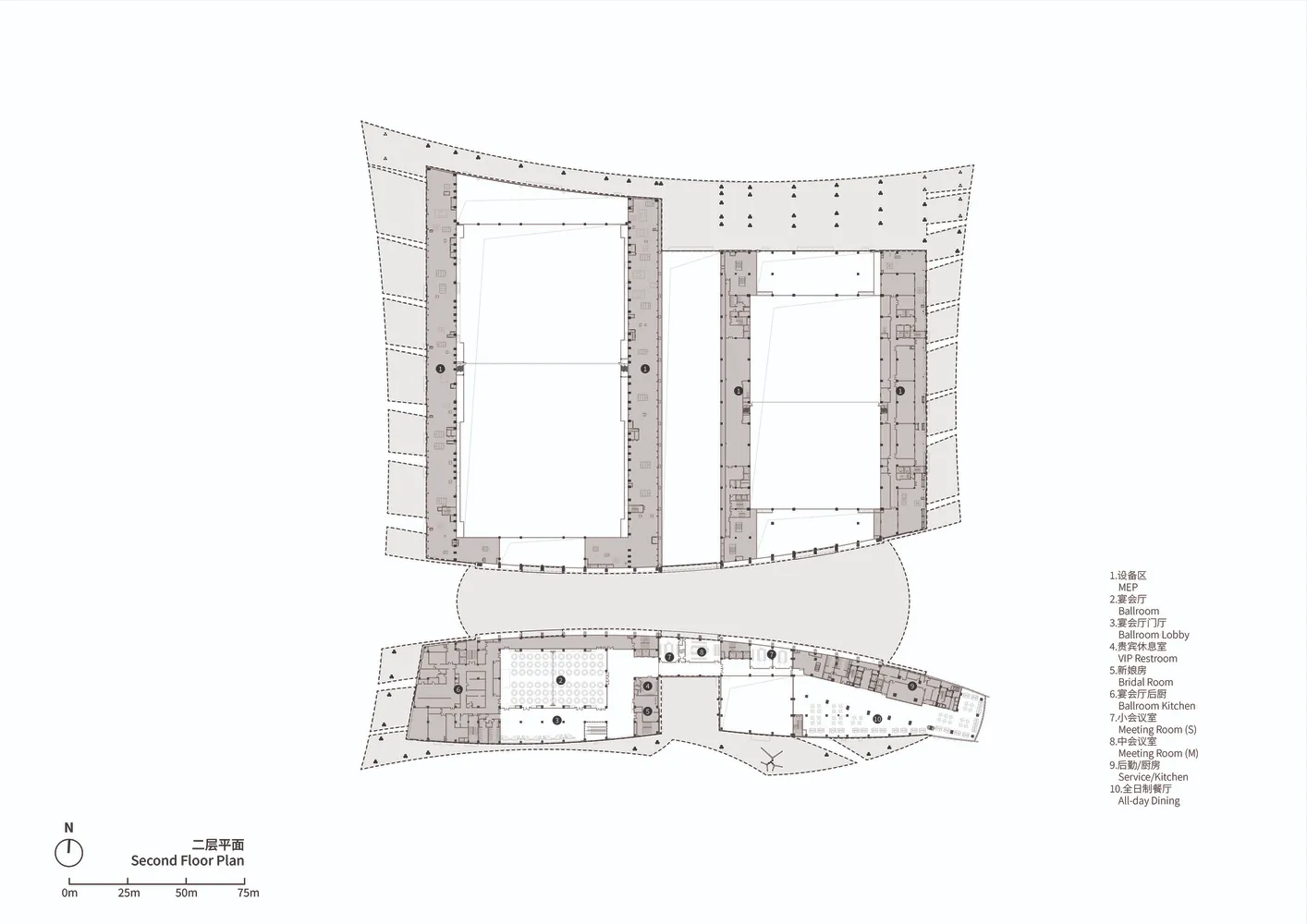
Set against the mountainous backdrop of Anji, Zhejiang province, the Anji International Convention and Exhibition Centre emerges as a sculptural intervention on a once-industrial site. Designed by FRI and TUS Design, the cross-shaped complex references the folds of surrounding hills and the area’s identity as China’s “Bamboo Hometown.” Its sweeping roofline and open courtyards invite daylight and natural ventilation into multifunctional public spaces, blending environmental sensitivity with regional character.
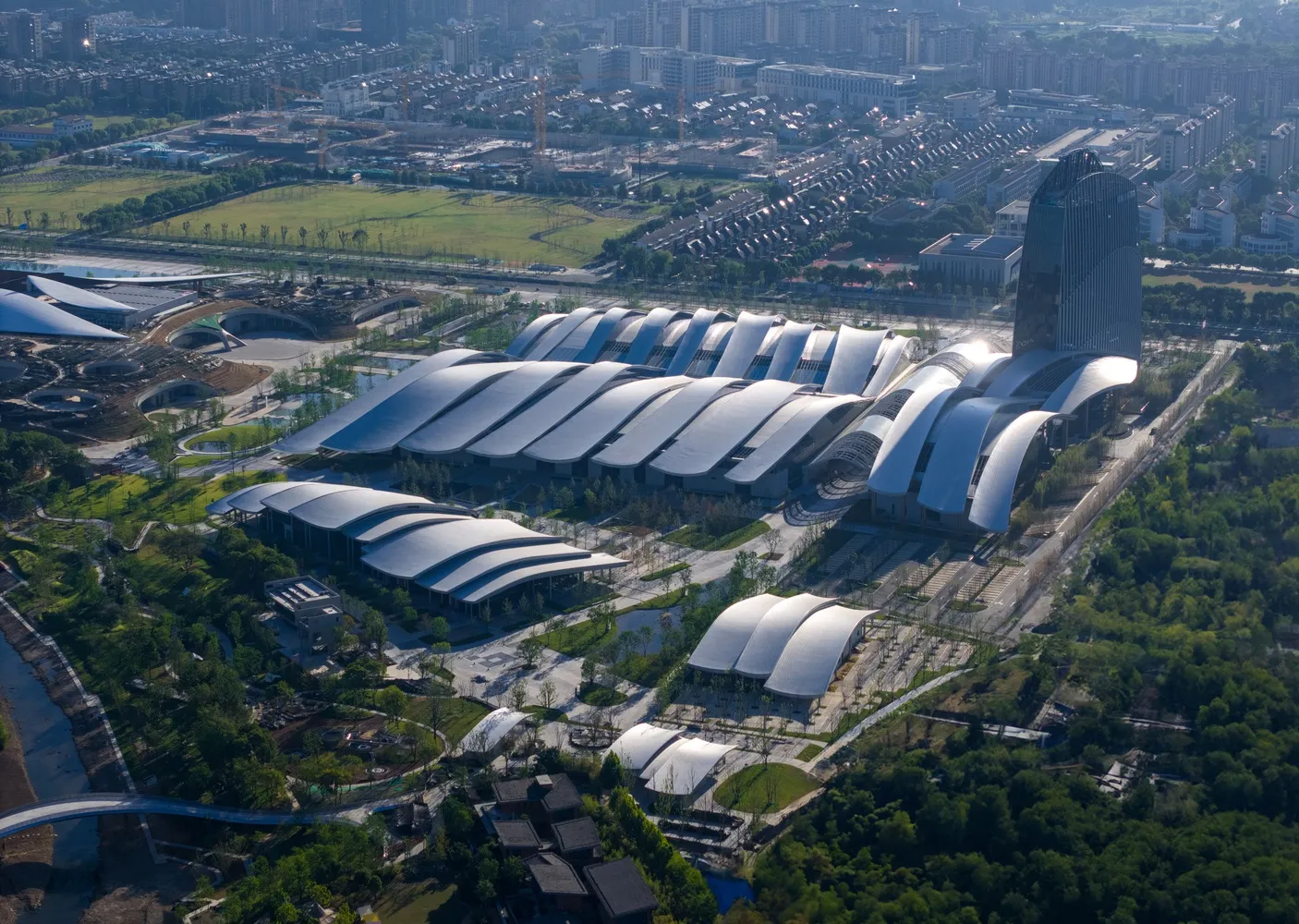
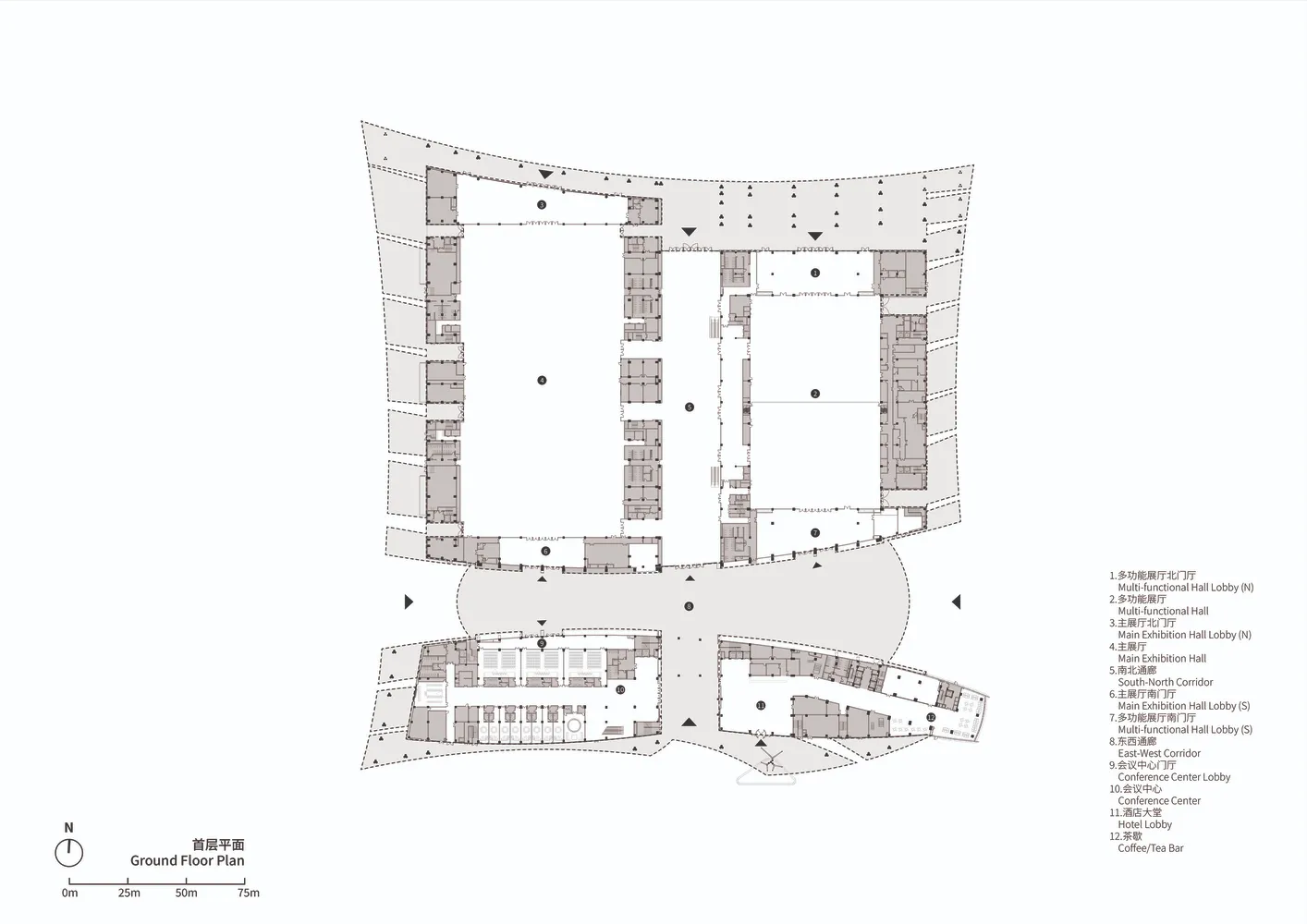
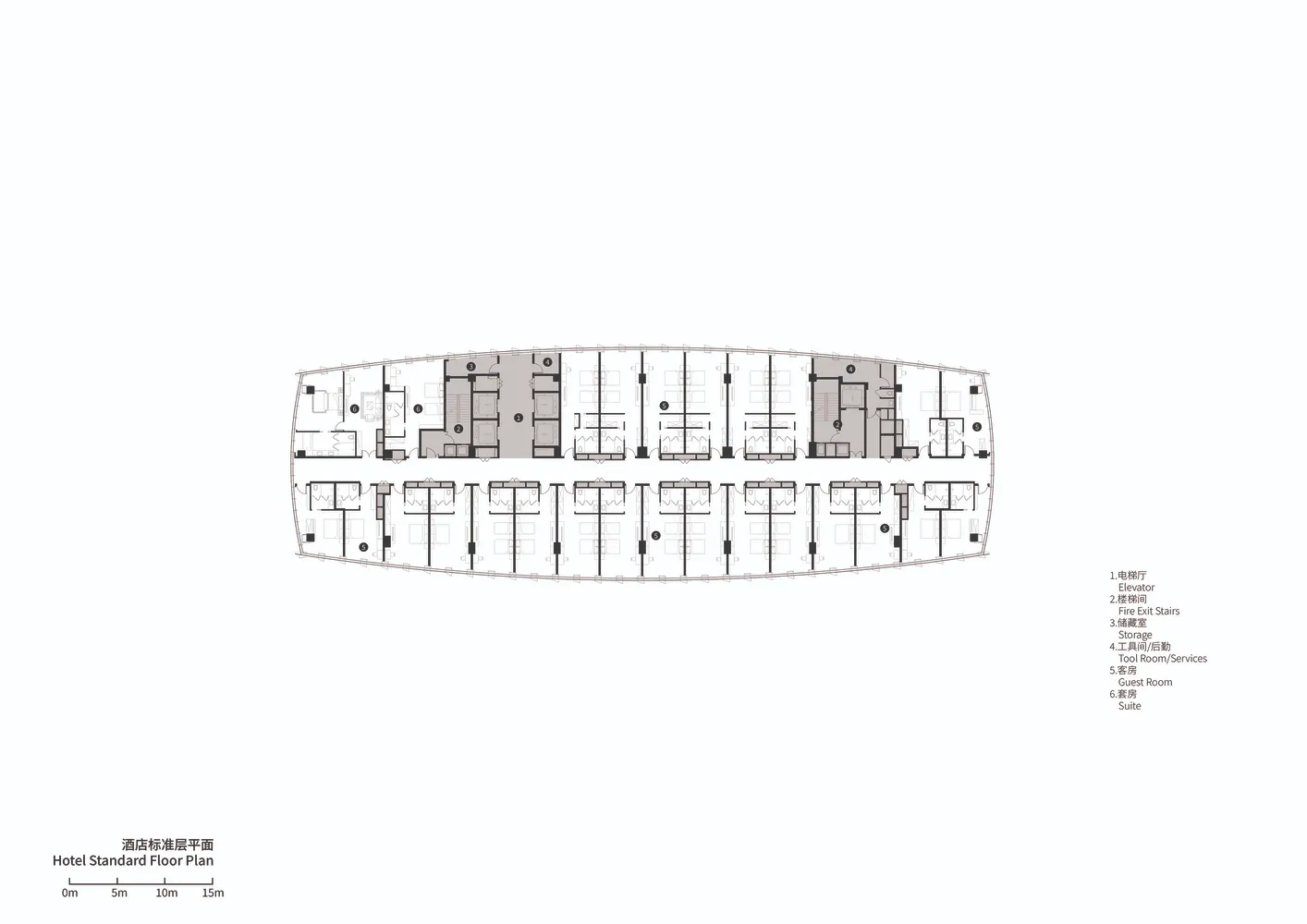
The convention centre spans an area of 170,000 square metres, including 10,000 square metres of exhibition hall for more than 500 booths, 5,000 square metres of multifunctional halls, a hotel, commercial facilities, and emergency response spaces. The centre’s design is deeply rooted in sustainability and energy-efficient design strategies.
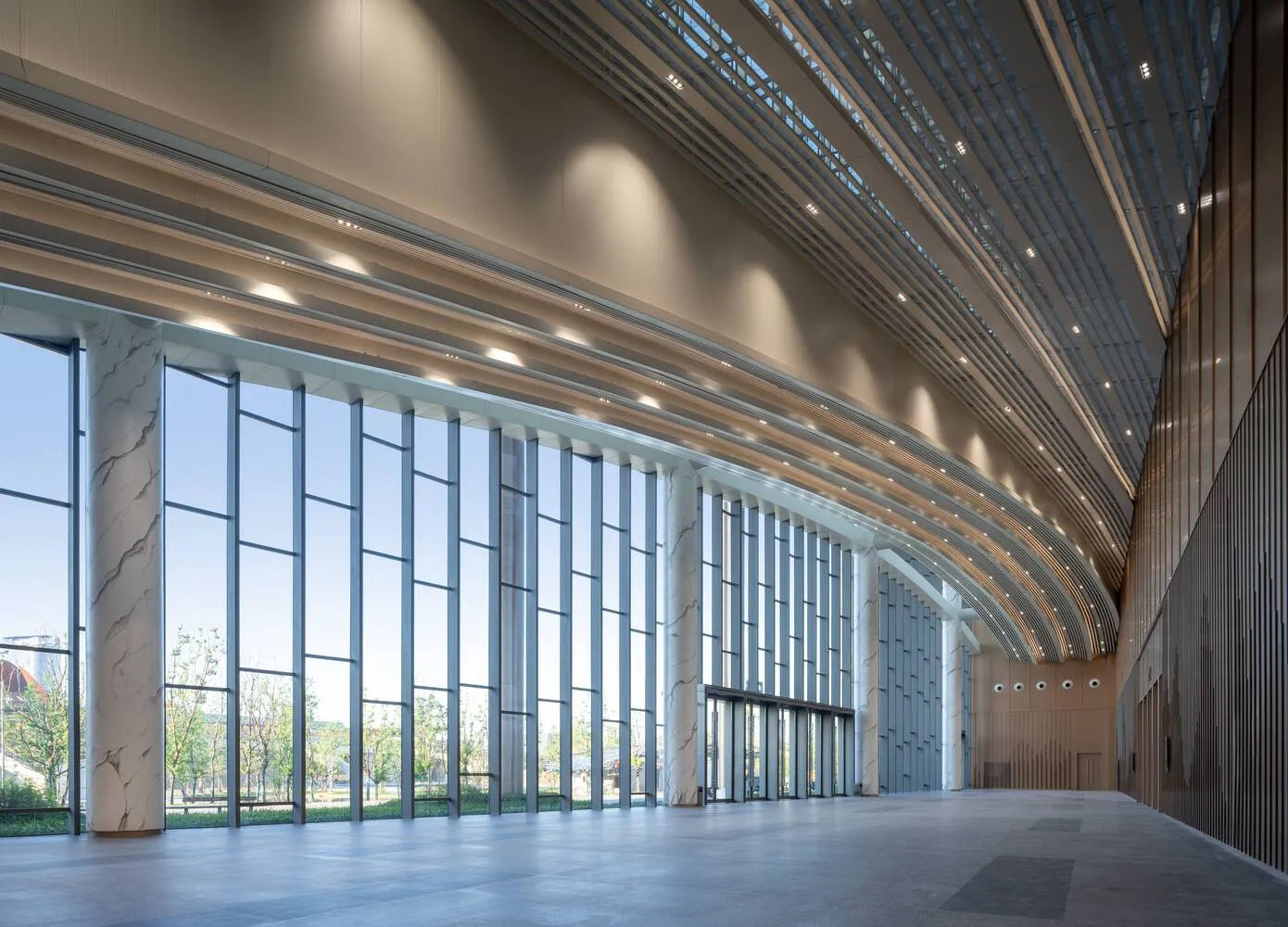
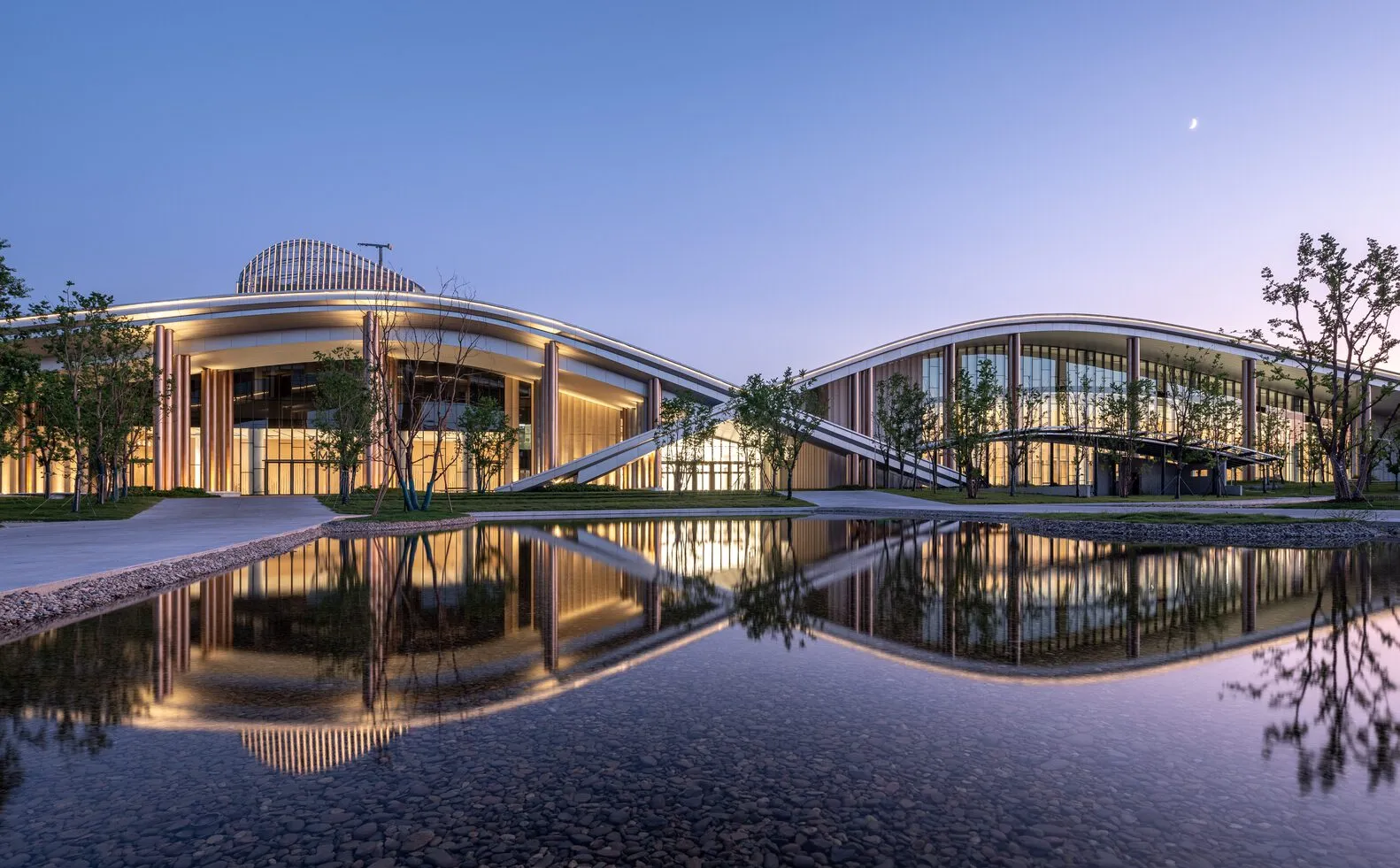
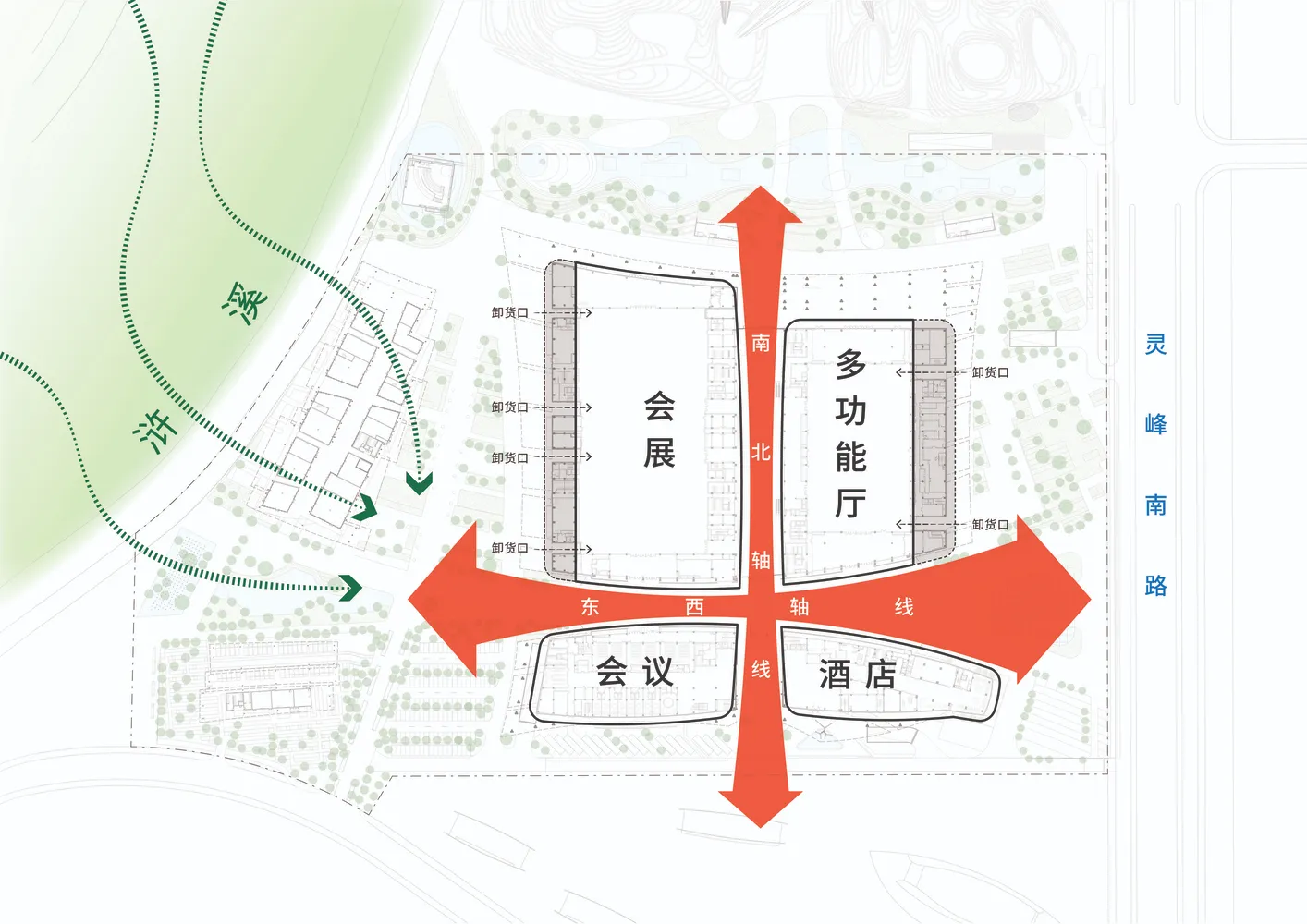
The building adopts a striking, bold cross-shaped plan, placing its main public spaces at the heart while the auxiliary functions flow around the edges. Beneath the sweeping, rhythmic roof form, the event halls open with generous glazed walls that fill the interiors with daylight and serene panoramic views. Two major axes connect four major urban spaces, linking the cultural and arts centre to the business district and connecting Lingfeng South Road to the lush waterfront along the Huxi River, creating a civic community hub that is rooted and gracefully connected.
Design Concept
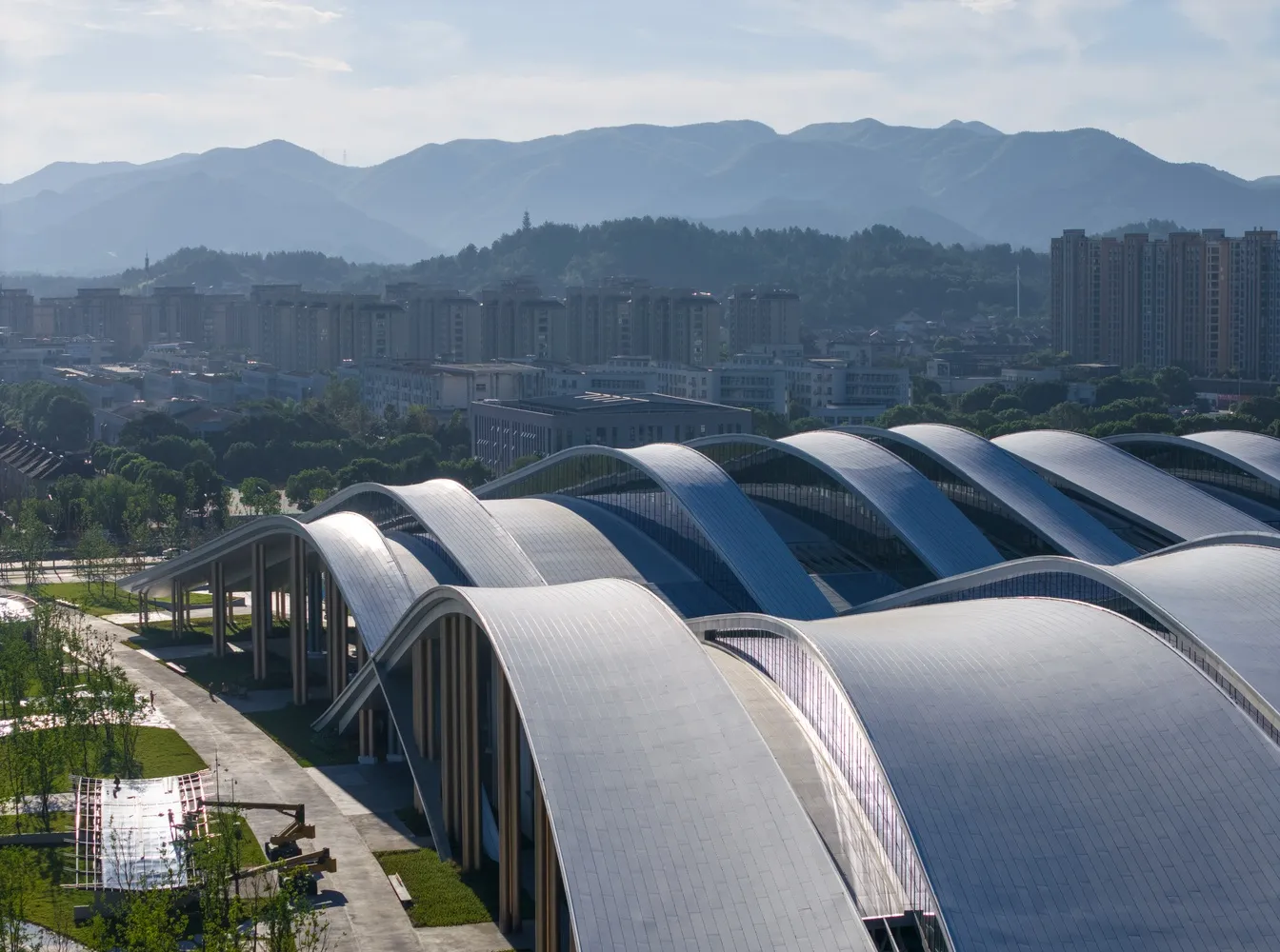
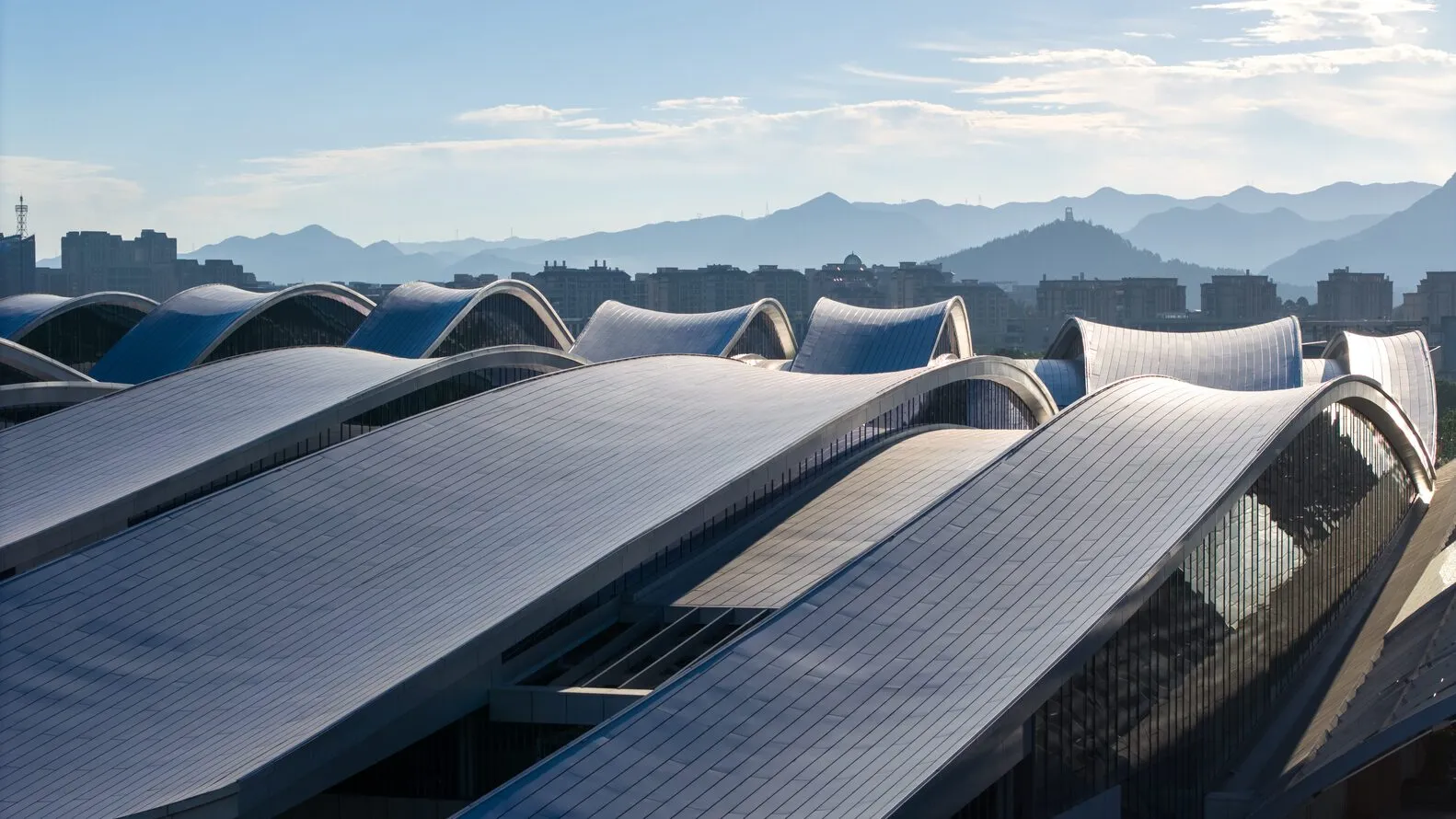
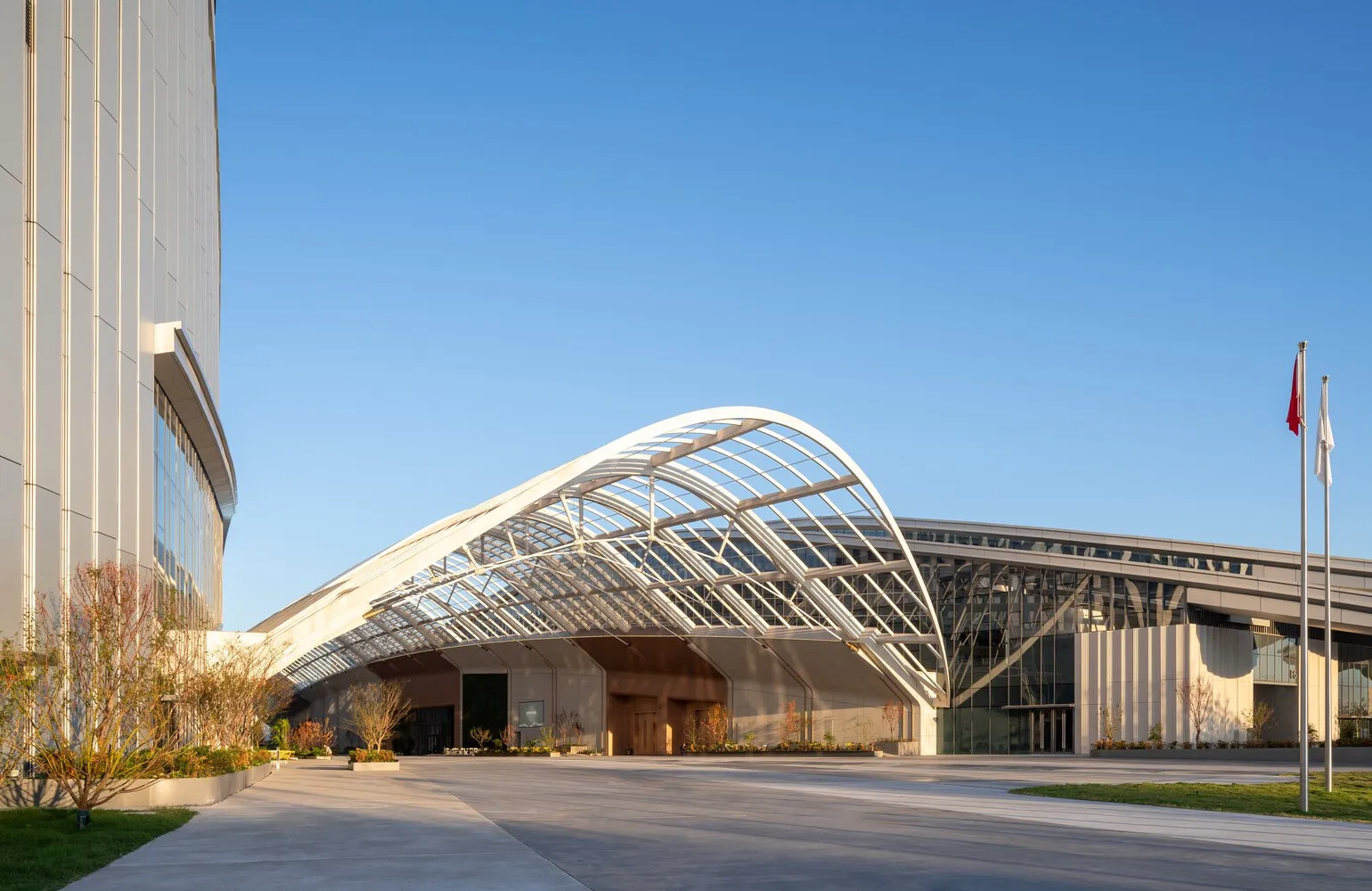
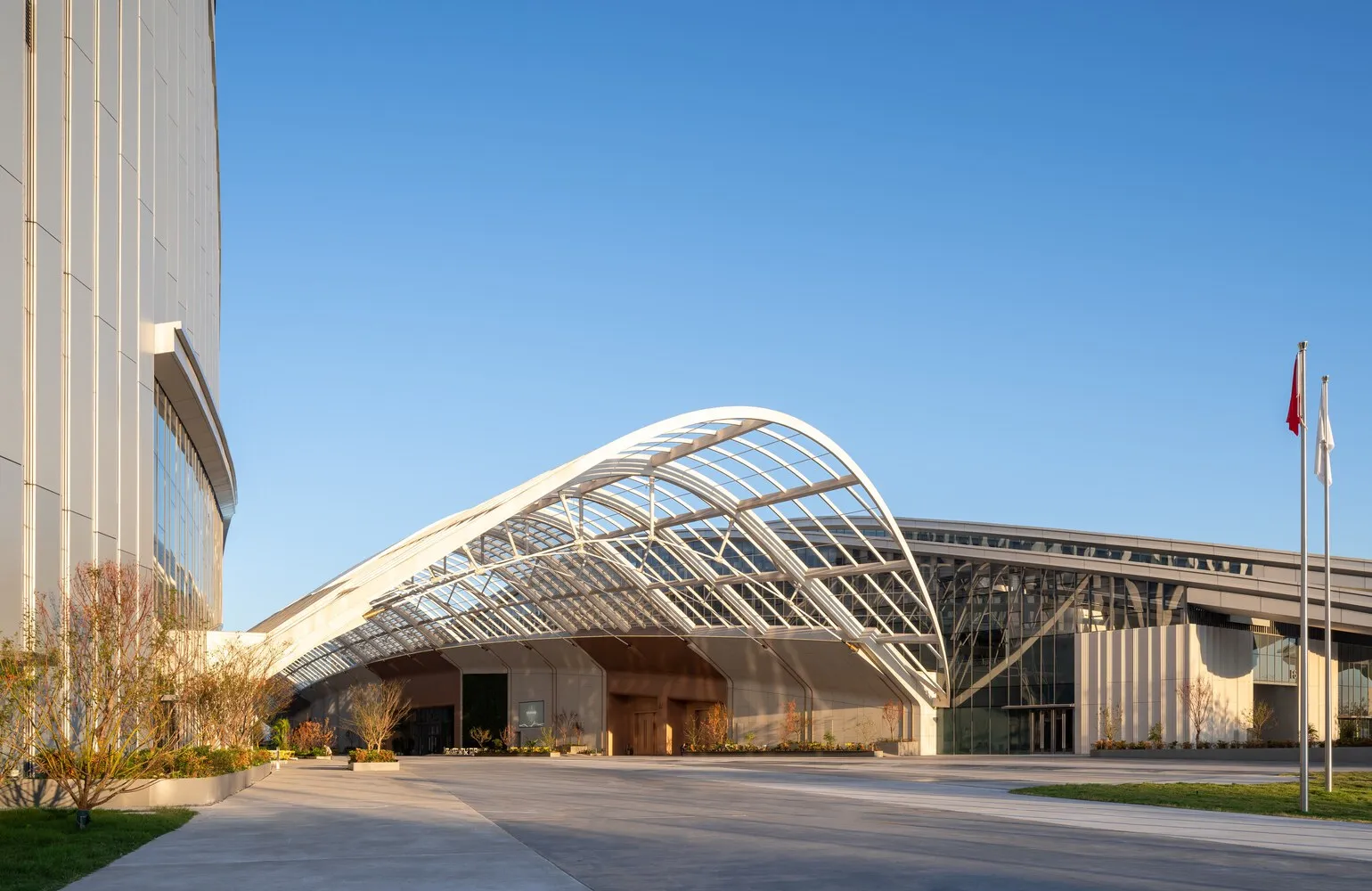
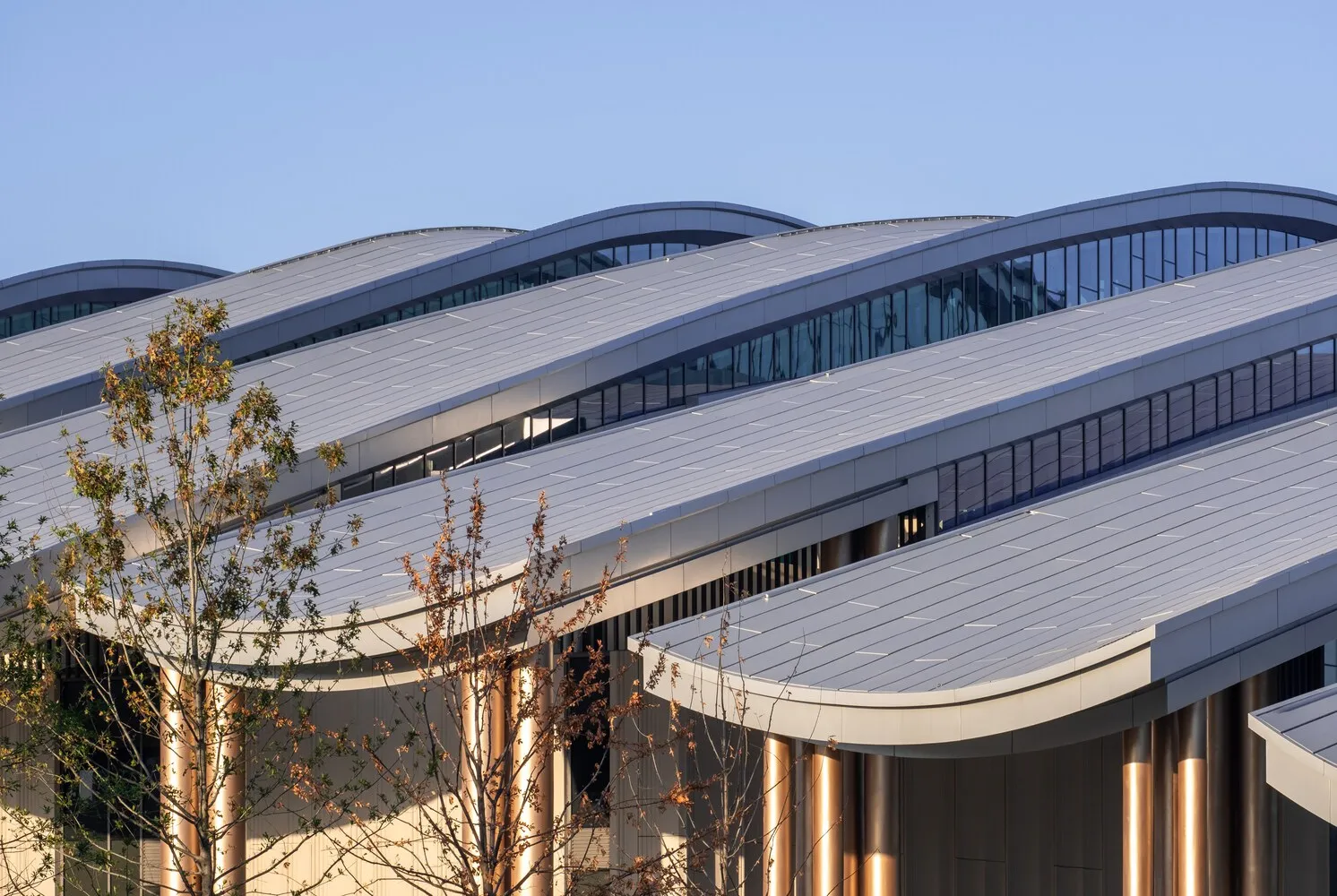
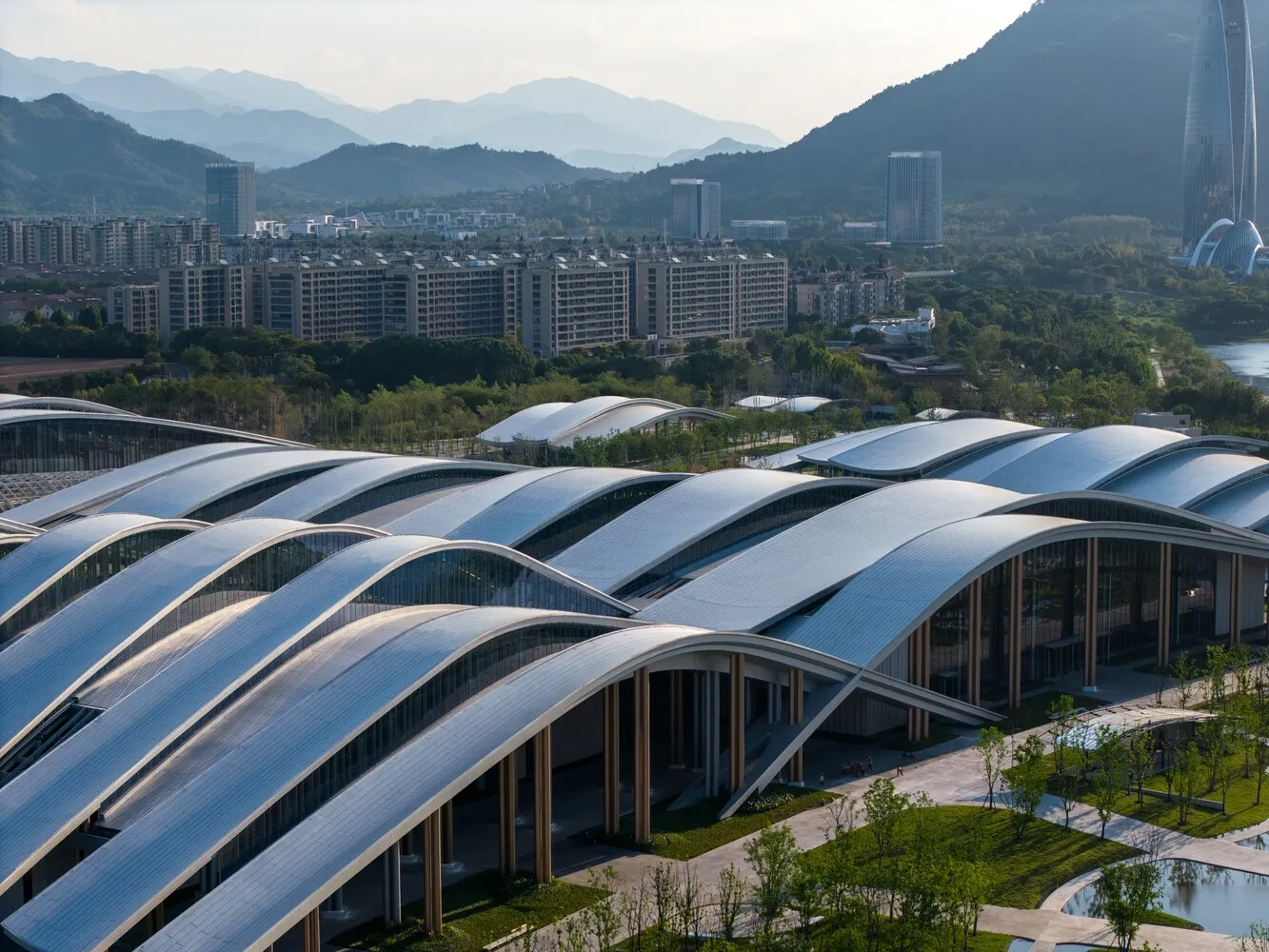
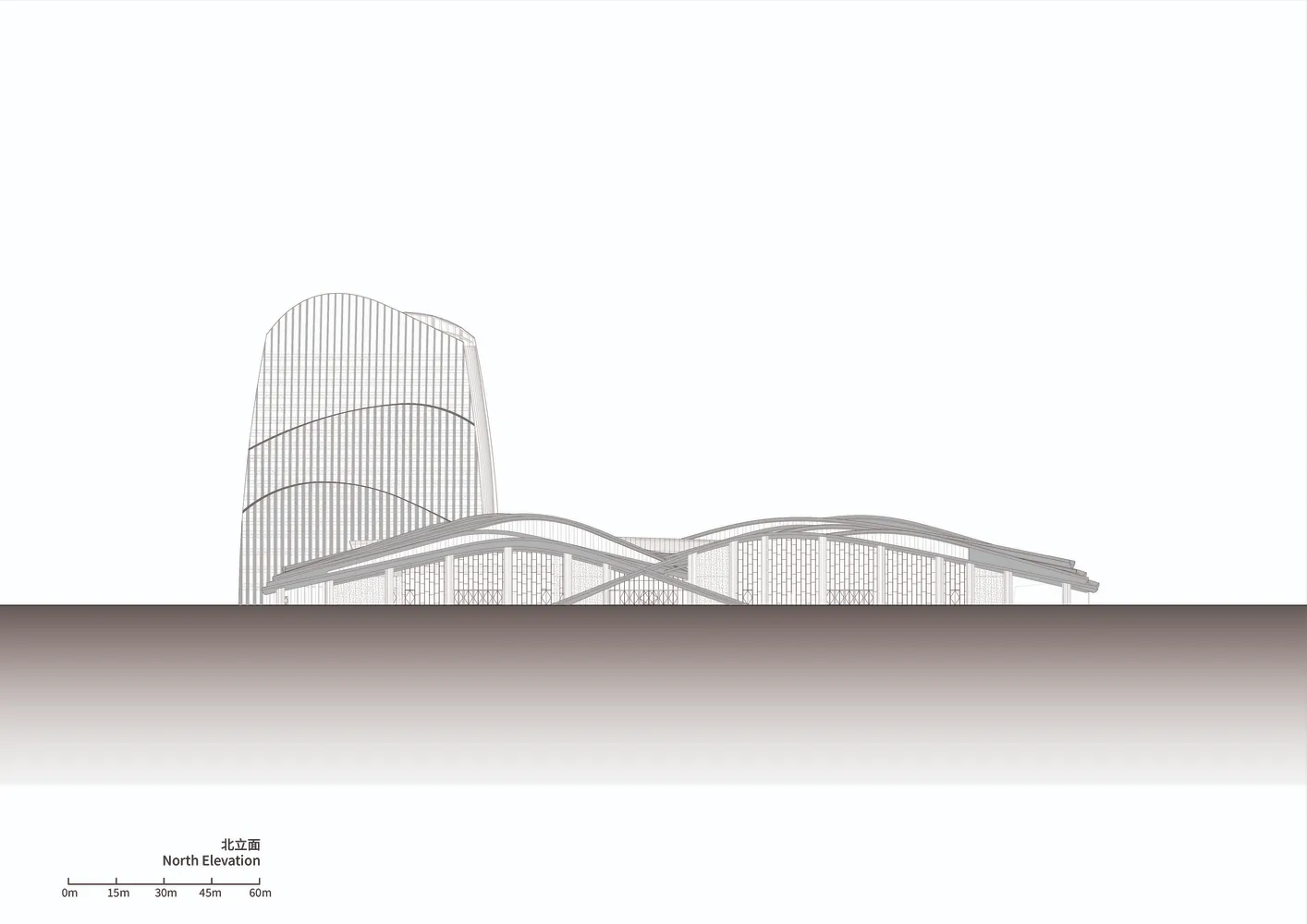
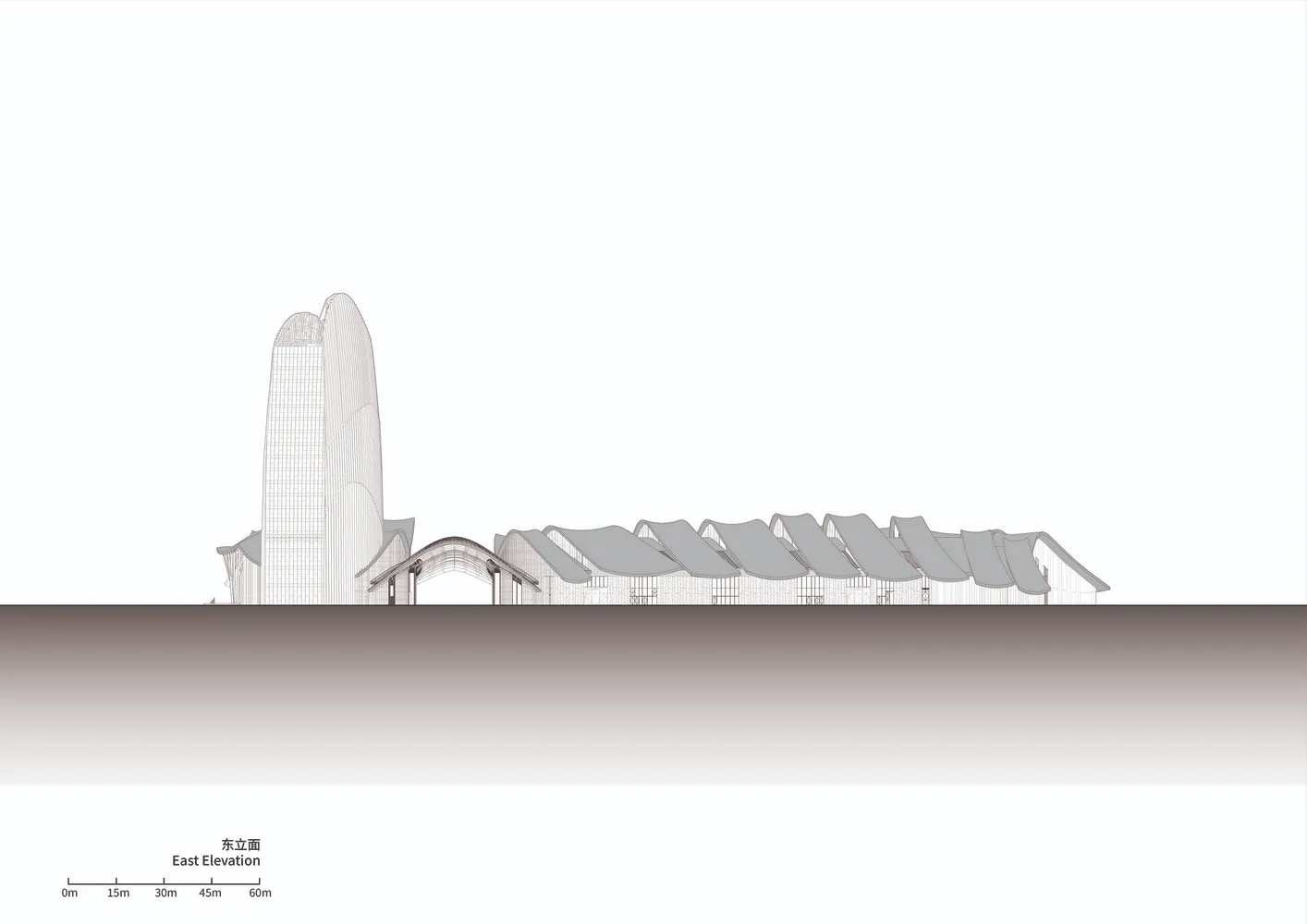
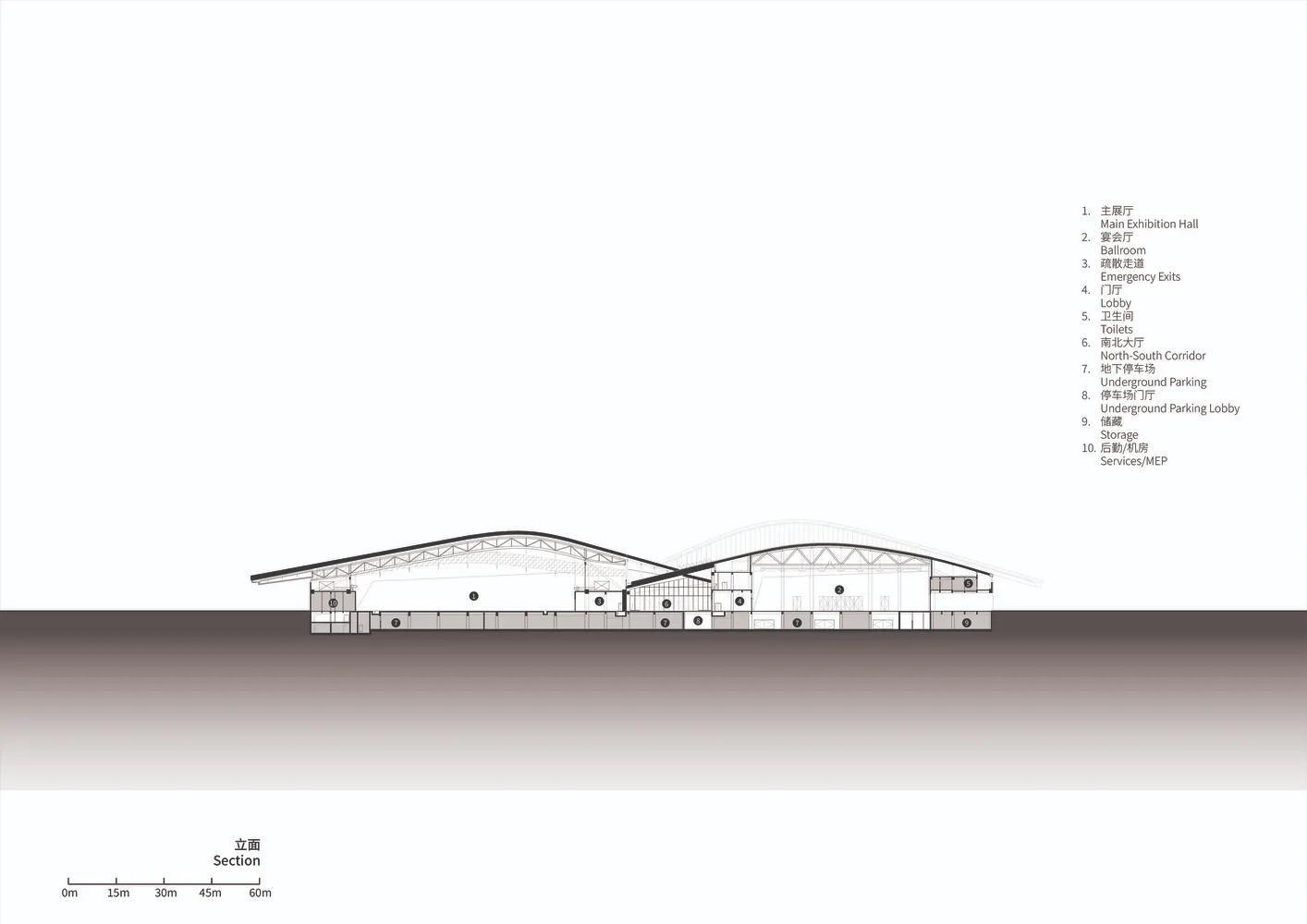
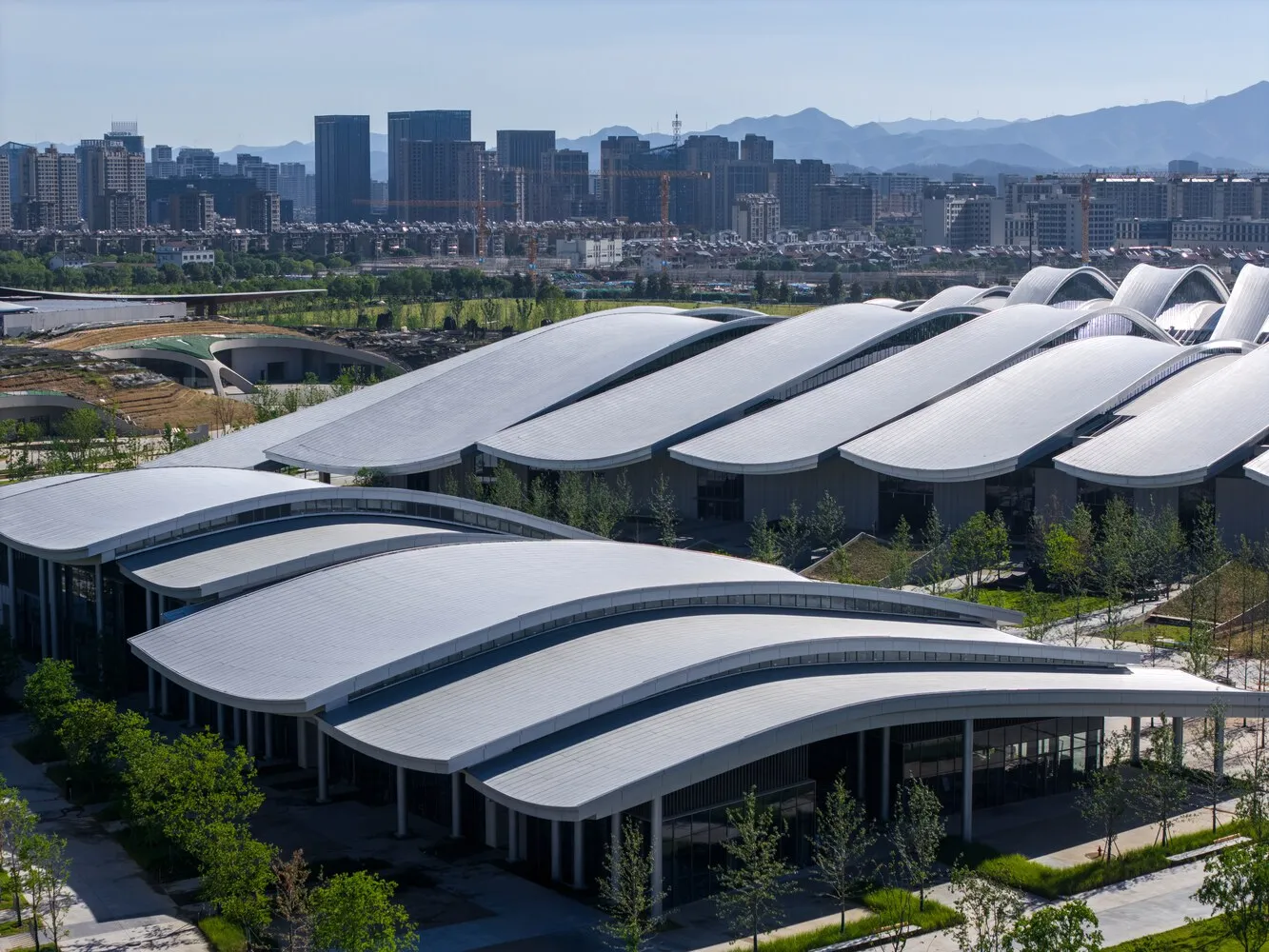
The roof’s naturally elegant silhouette is inspired by the concept of “Two Mountains Converging into a Valley,” where two architectural masses meet like mountain ranges folding into a sculpted valley. Two flanking structures rising and dipping rhythmically echo the continuous mountain ridges. The highly tensioned curved structure resembles delicately split bamboo strips woven into place, an homage to Anji’s landscape and craftsmanship.
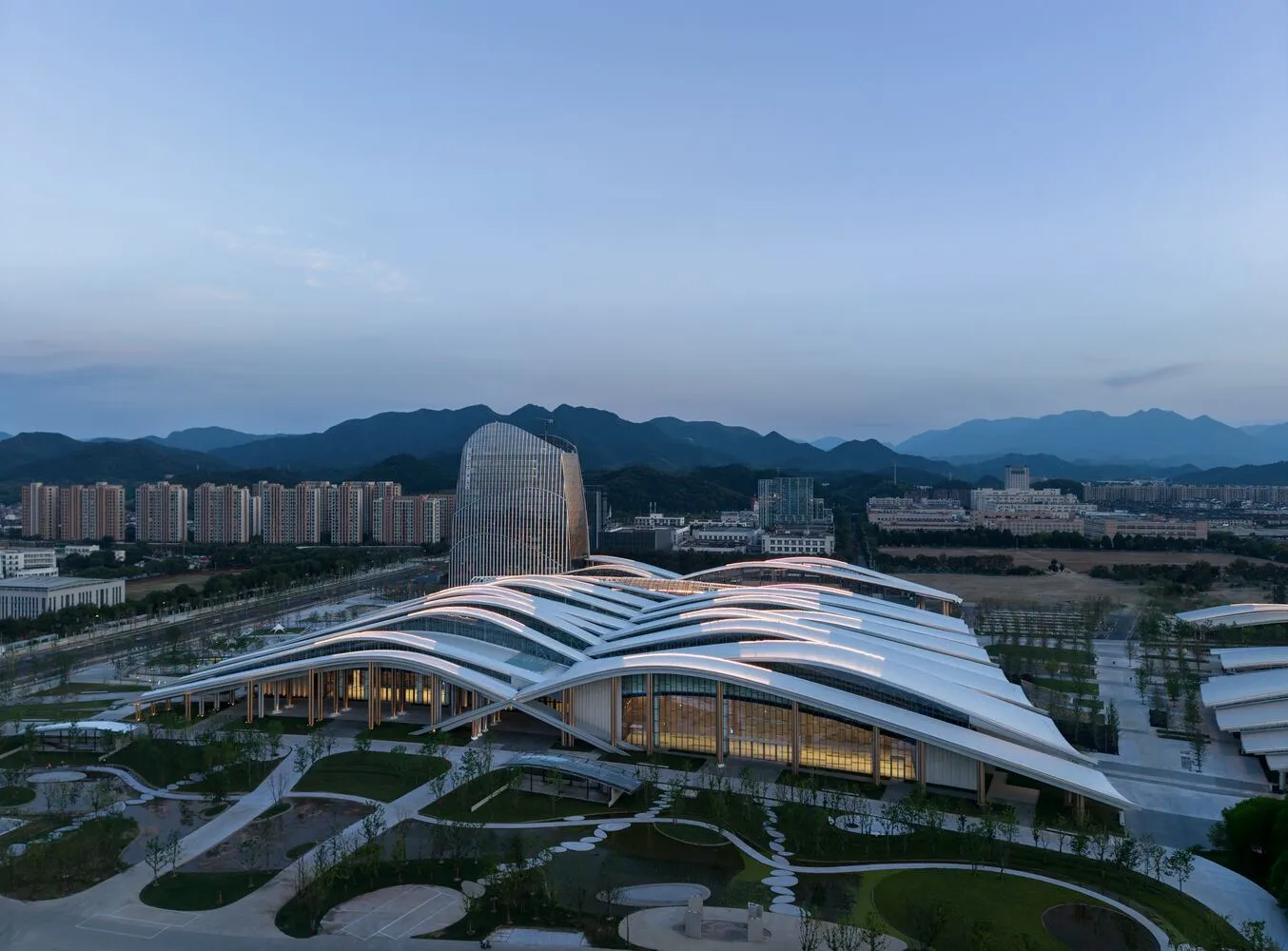
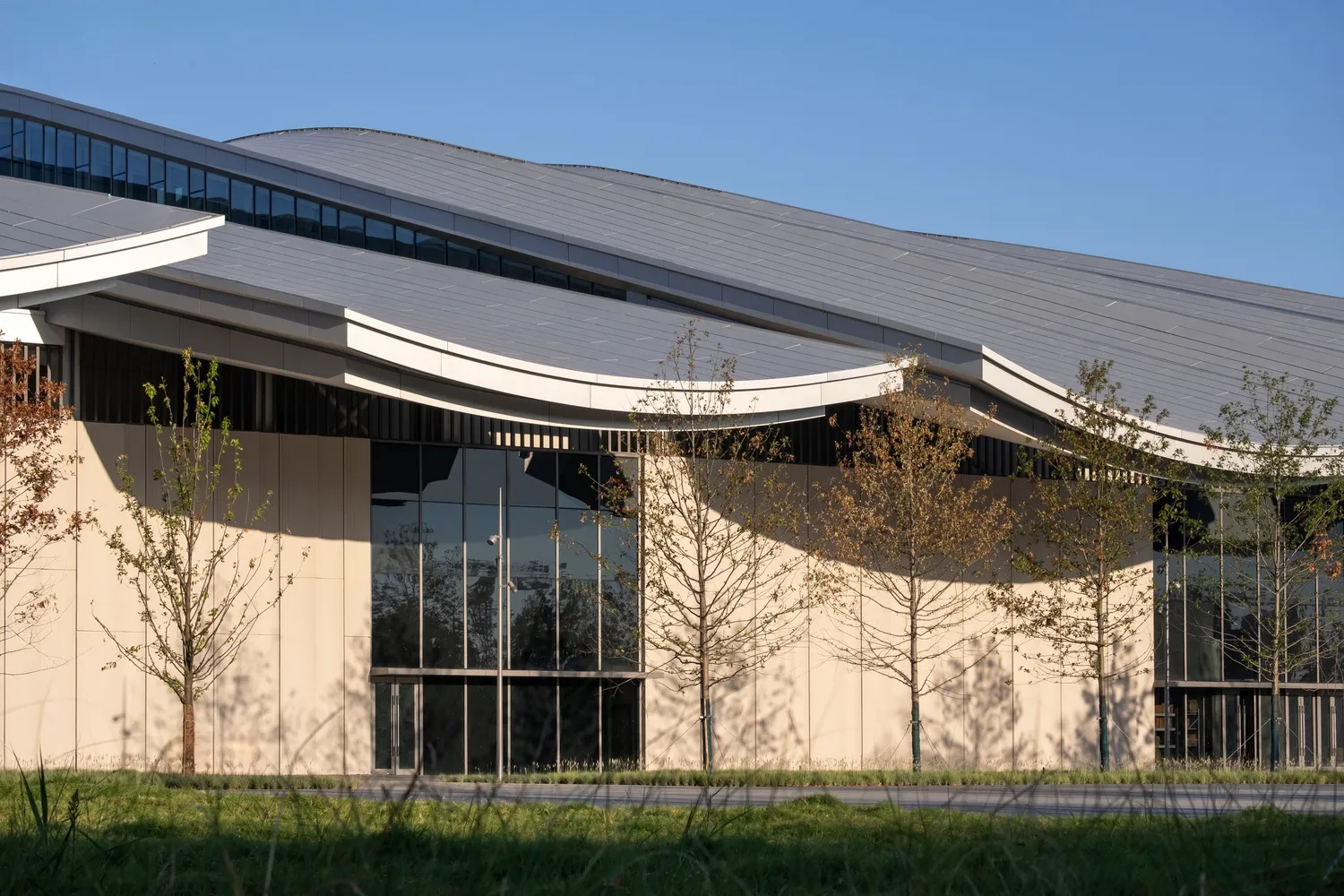
Sustainability is integrated as the core design strategy, utilising passive design strategies to create architecture that is energy efficient and sensitive to Anji’s urban environmental context. Passive design strategies include maximising natural daylight within the interiors and deep overhangs that provide self-shading for the seamless outdoor spaces.
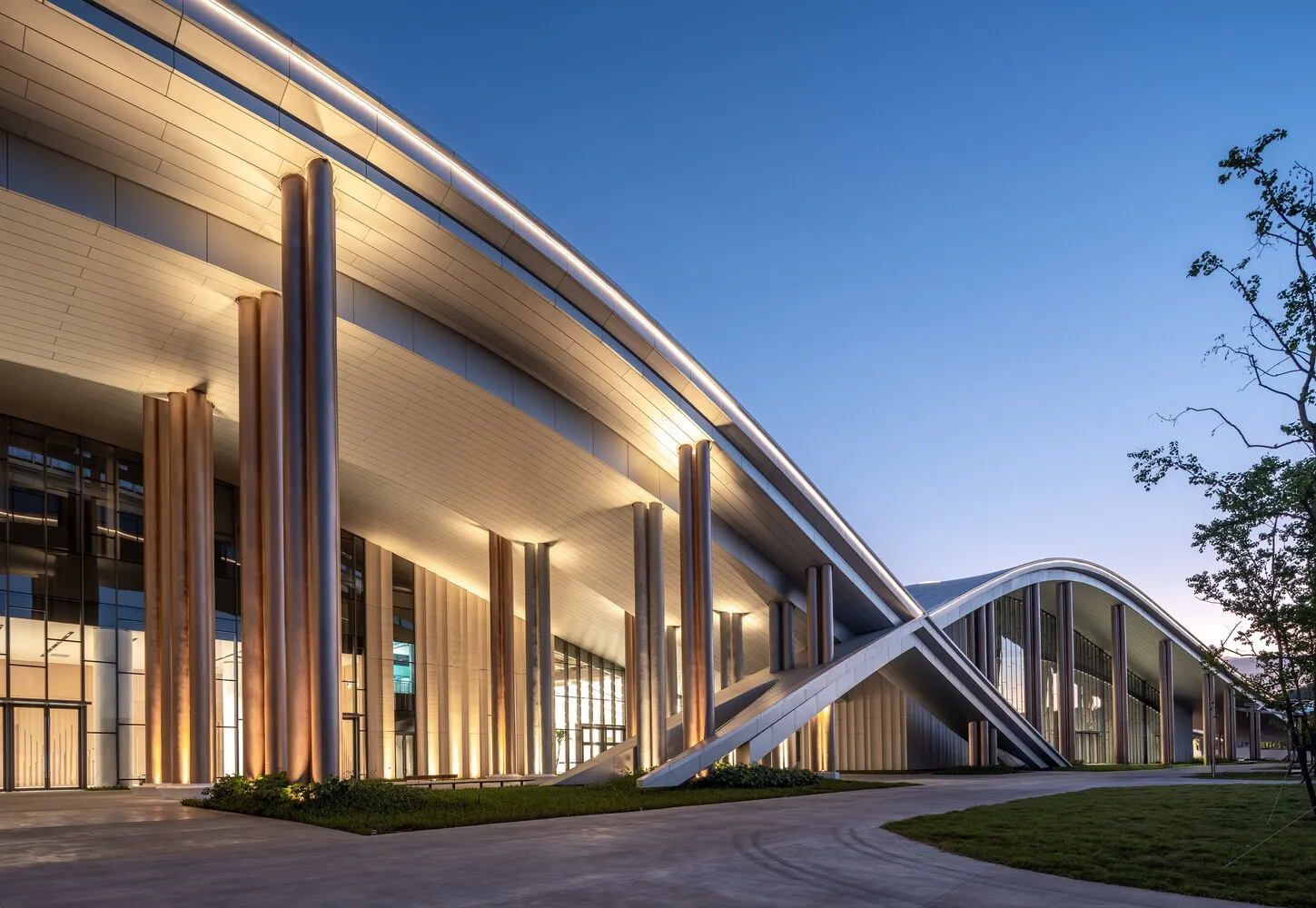
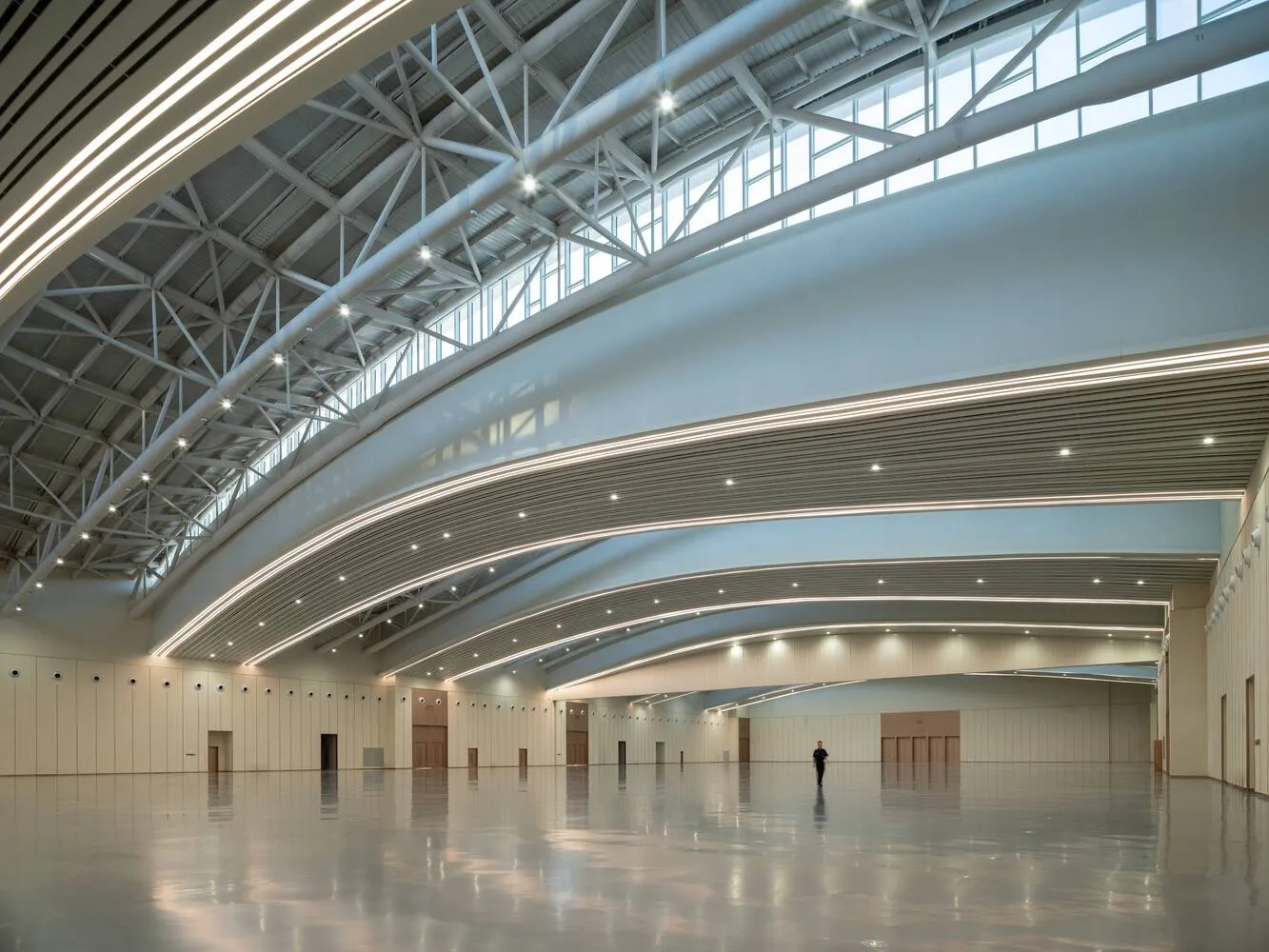
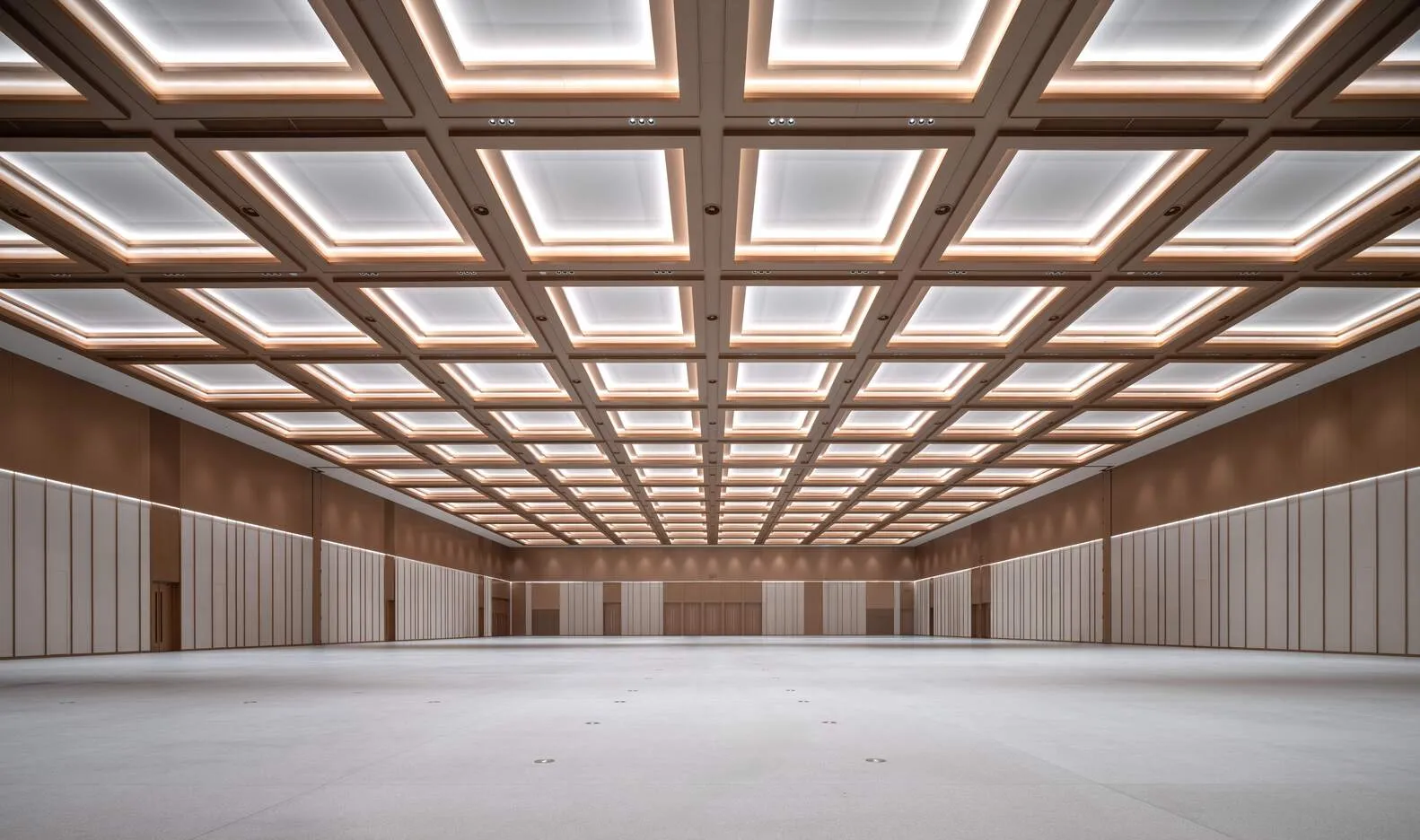
A unique and robust structural design strategy, from lightweight structural forms to curved steel roof forms sitting on the main hall, creates a sensitive relationship within Anji’s context. The interiors are composed of flexible partitions up to 11.3 metres in support, creating adaptable and flexible internal layouts. The interior is a striking combination of modern transparency with warm, elegant designs reflecting Anji’s ecological identity.
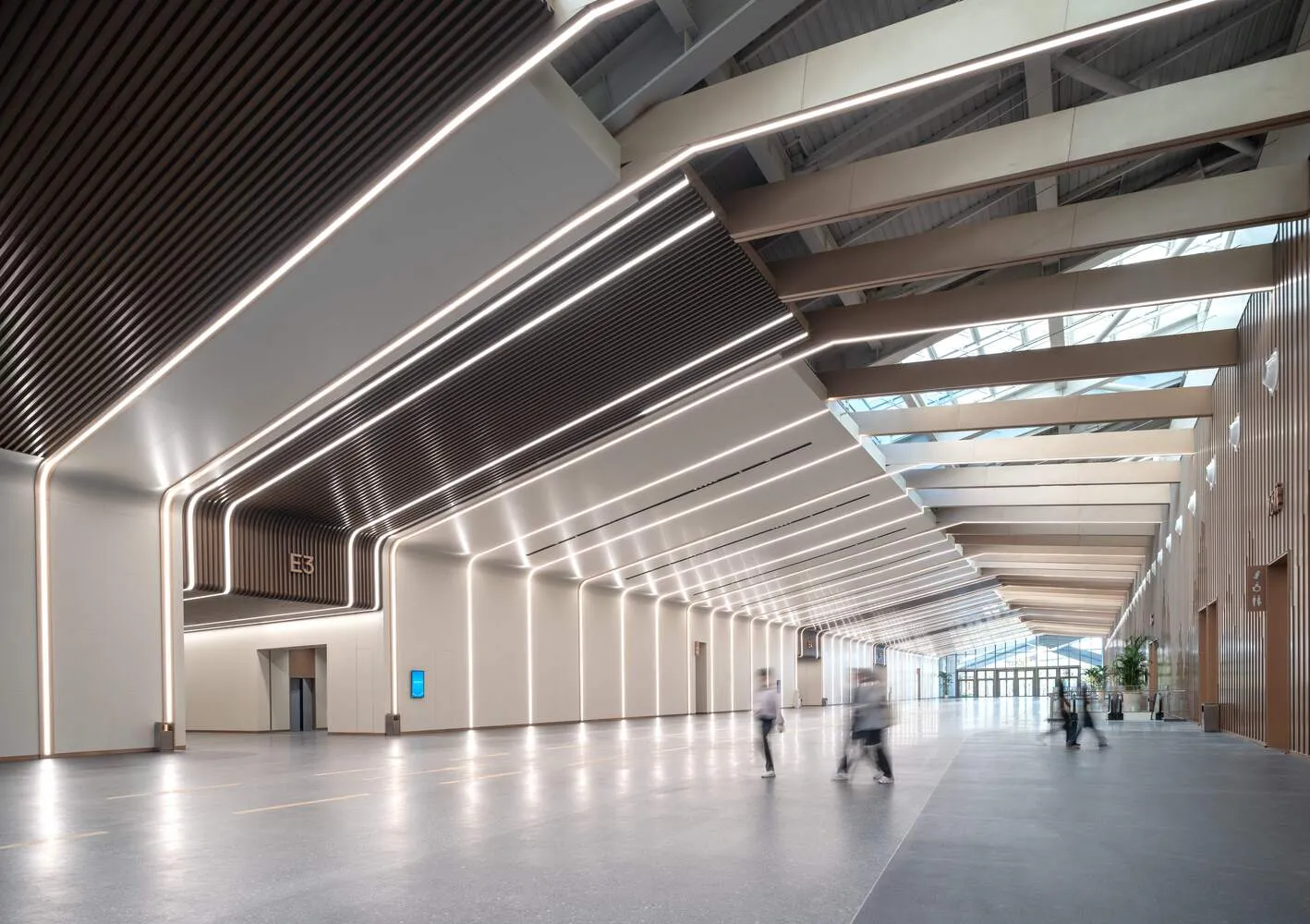
The interior spaces, including halls, feature column-free spaces achieved through long-span truss structures. The flowing roof form with varying heights helps create clerestory windows, allowing natural daylight through the interiors. The architectural details incorporate materials such as aluminium panels and UHPC, creating a dynamic play of light and shadow that echoes the textures of bent bamboo strips.
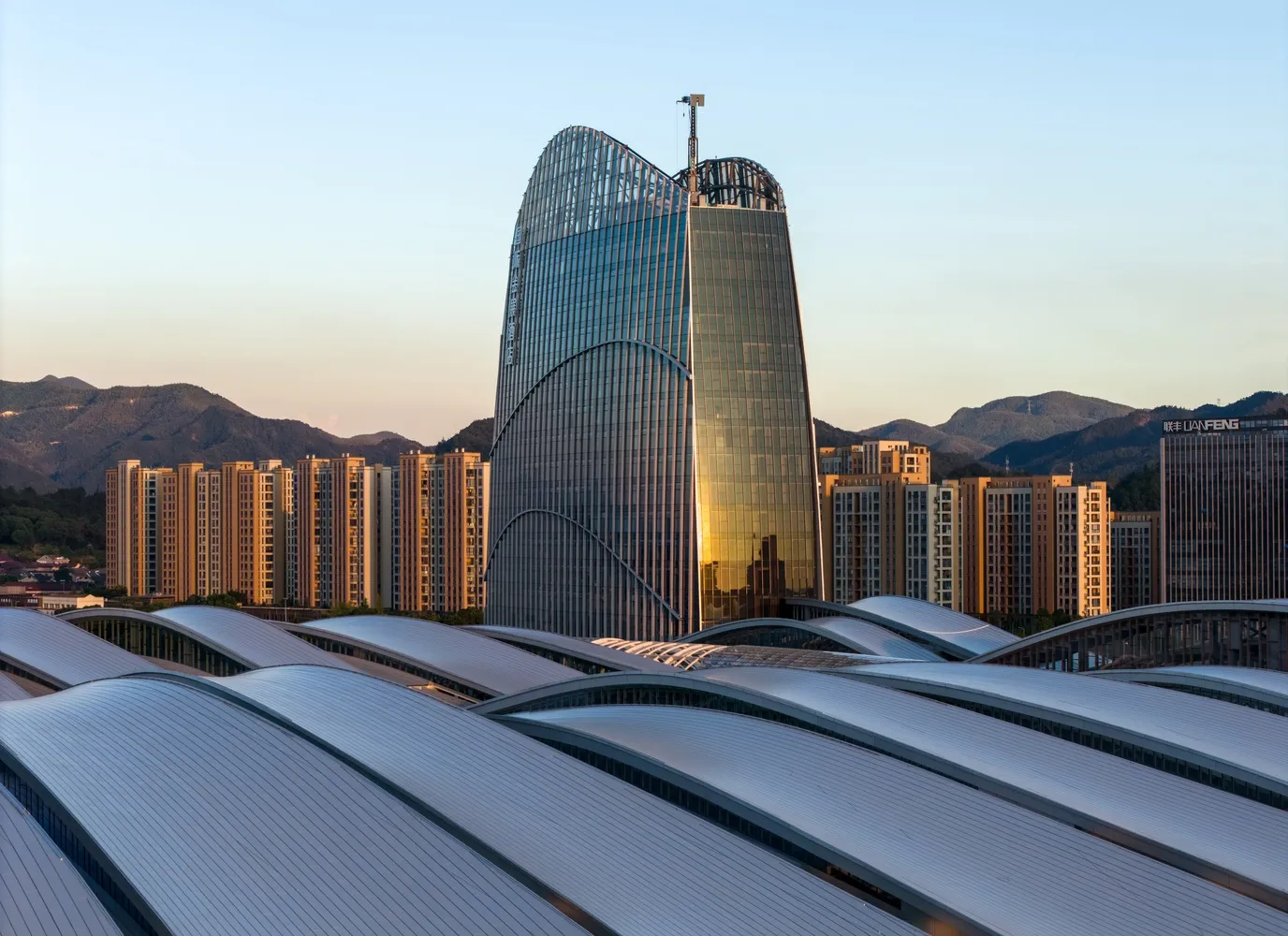
Anji International Convention and Exhibition Centre
Project name: Anji International Convention and Exhibition Centre
Location: Huzhou, China
Architect: International Frederic Rolland Architecture and Tus Design
Year: 2025
Photography: © 3000 images
Explore Courses
.jpg "Ondrej Chybik - Rethinking Architecture")