







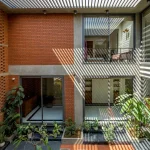
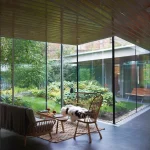
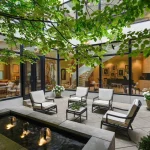
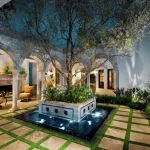
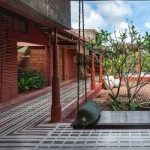

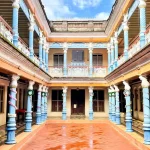

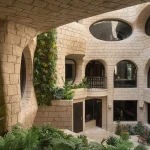
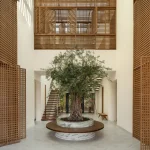
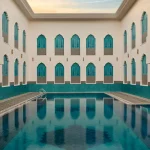
There is a peculiar irony in the way we build today: as our cities grow denser, our homes grow thinner, compressed between glass, sealed from air, and distanced from the very elements that once defined habitation. In this tightening condition, the courtyard returns not as nostalgia but as necessity, where it is less a memory of the past and more a precise spatial correction or an incision into built mass that restores balance between body, climate, and dwelling.
Physics of the Central Void
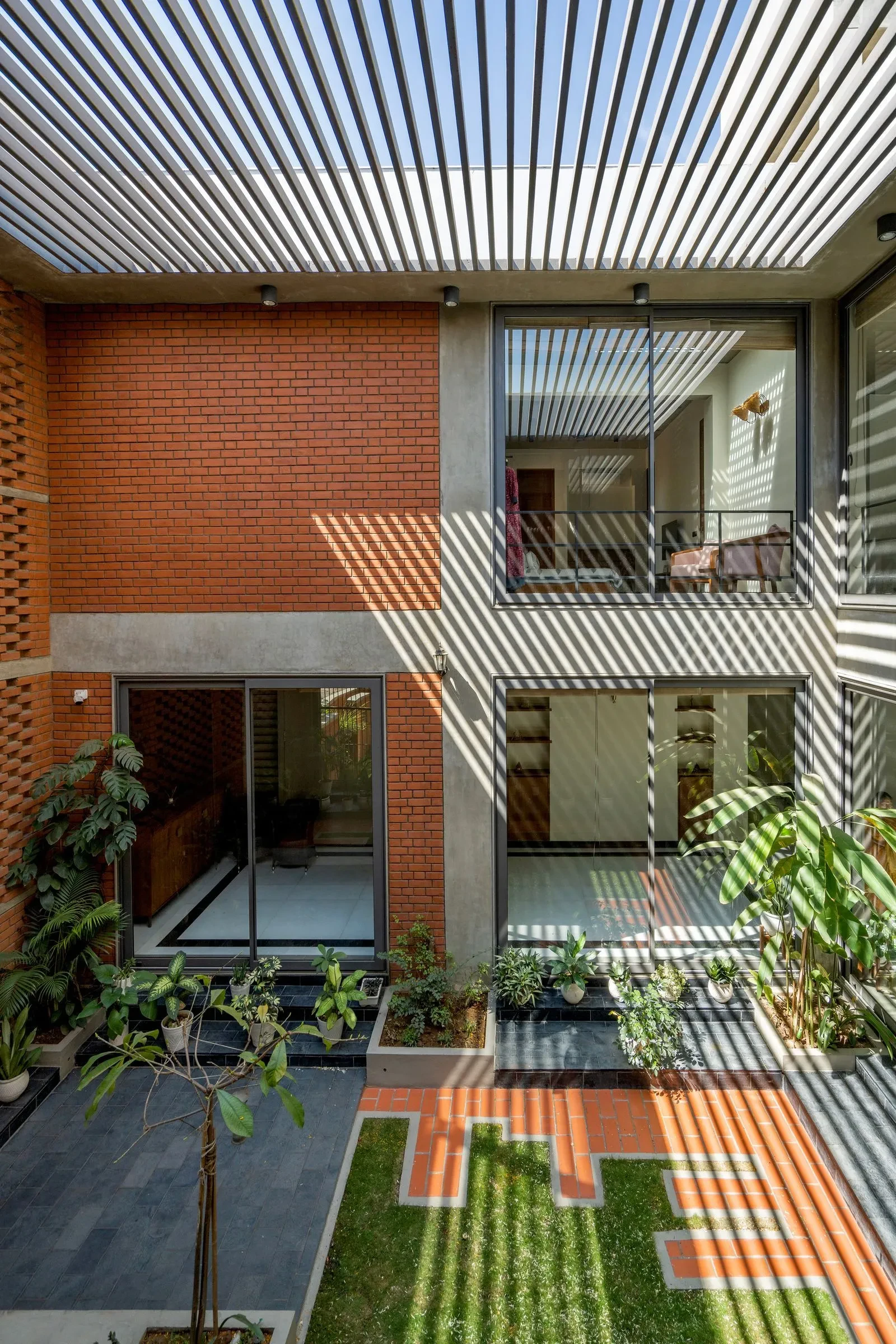
The primary function of the courtyard in hot, arid climates is to act as a thermal regulator. Unlike modern glass-clad structures that rely on mechanical HVAC systems to counteract solar gain, the courtyard house utilizes a series of passive cooling cycles that leverage the physics of convection, irradiation, and thermal mass. The effectiveness of these cycles depends on the geometry of the space, particularly the ratio of the courtyard’s height to its width, and on the material properties of the surrounding walls.
At night, it gathers cool air, allowing it to settle into the surrounding rooms. The masonry, brick, stone, and earth absorb this drop in temperature, storing it like memory. By morning, the house is preconditioned, not by machines, but by time.
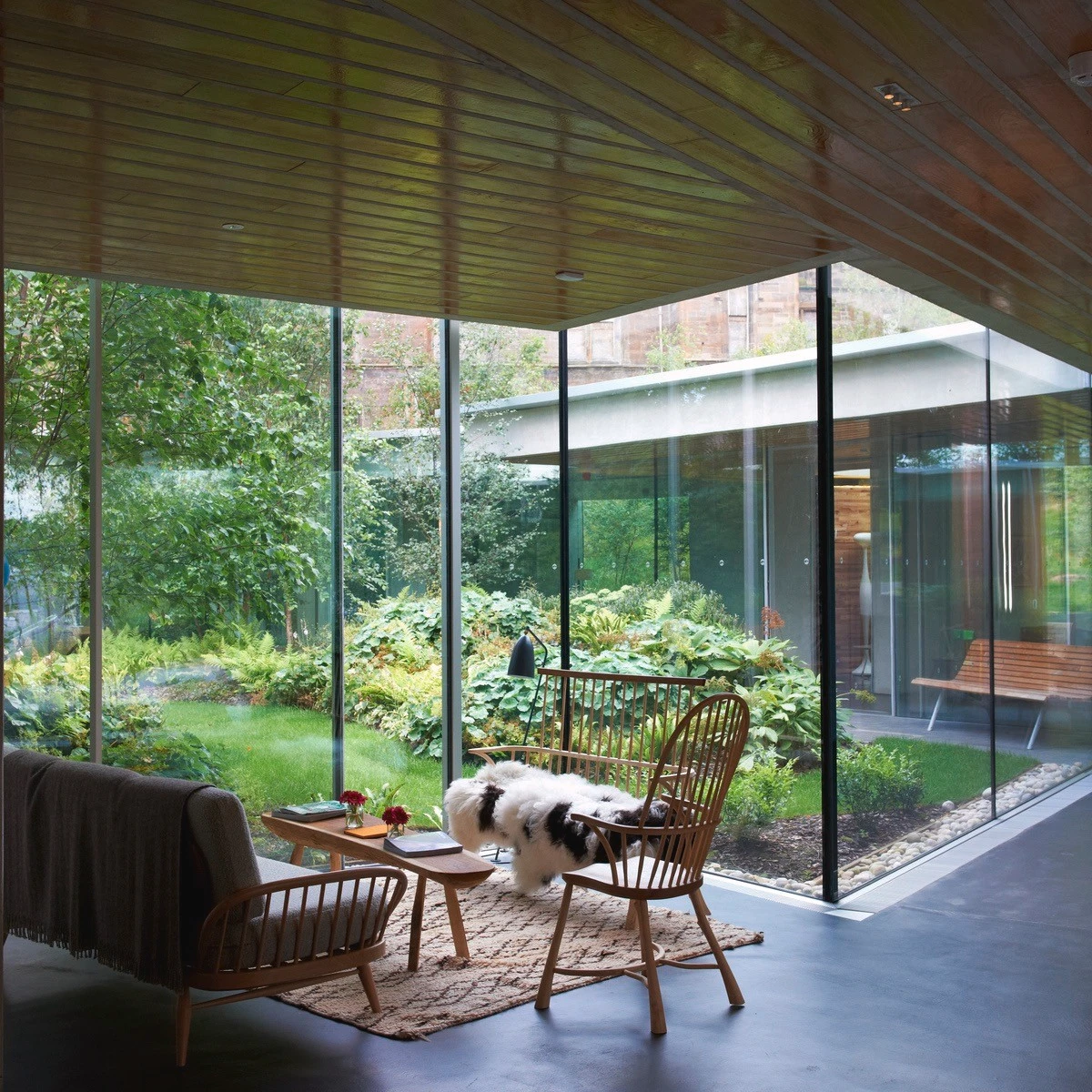
By noon, as the sun penetrates the central void, the stored coolness begins to shift. Warm air rises, escaping through the open top, drawing in cooler air from shaded interiors. This continuous convection, the stack effect, creates movement, offering relief even in still climates.
By late afternoon, when external walls are saturated with heat, the interior remains buffered. The thickness of traditional construction delays the transfer of heat; what arrives inside does so only after the outside has begun to cool. This temporal lag is not incidental but is designed as anticipation.
Typologies of Living: India’s Courtyard Intelligence
Nowhere is this spatial intelligence more deeply embedded than in the Indian subcontinent, where courtyard houses evolved not as stylistic expressions but as living systems, responsive to climate, culture, and collective life.
The Haveli: The Urban Mansion of the North
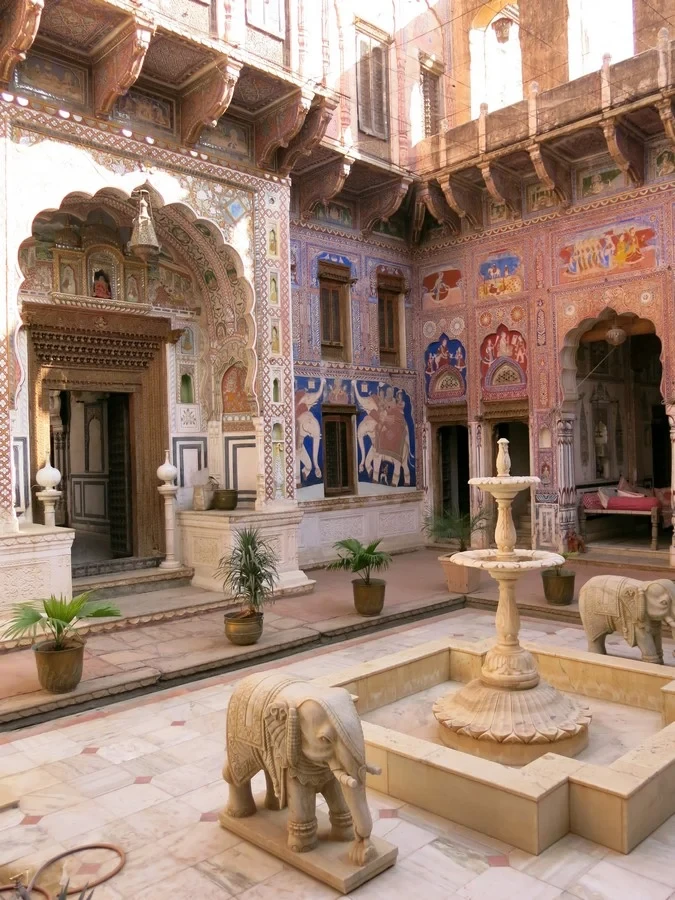
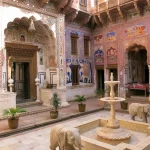
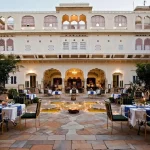
The haveli tradition, prevalent in Rajasthan, Gujarat, and parts of the Indo-Gangetic plain, reached its zenith under Mughal and Rajput patronage. These mansions were characterized by their introverted nature, with thick sandstone or brick walls shielding the interior from the dust and heat of the street. The haveli typically utilized a dual-courtyard system to manage both social privacy and climatic comfort.
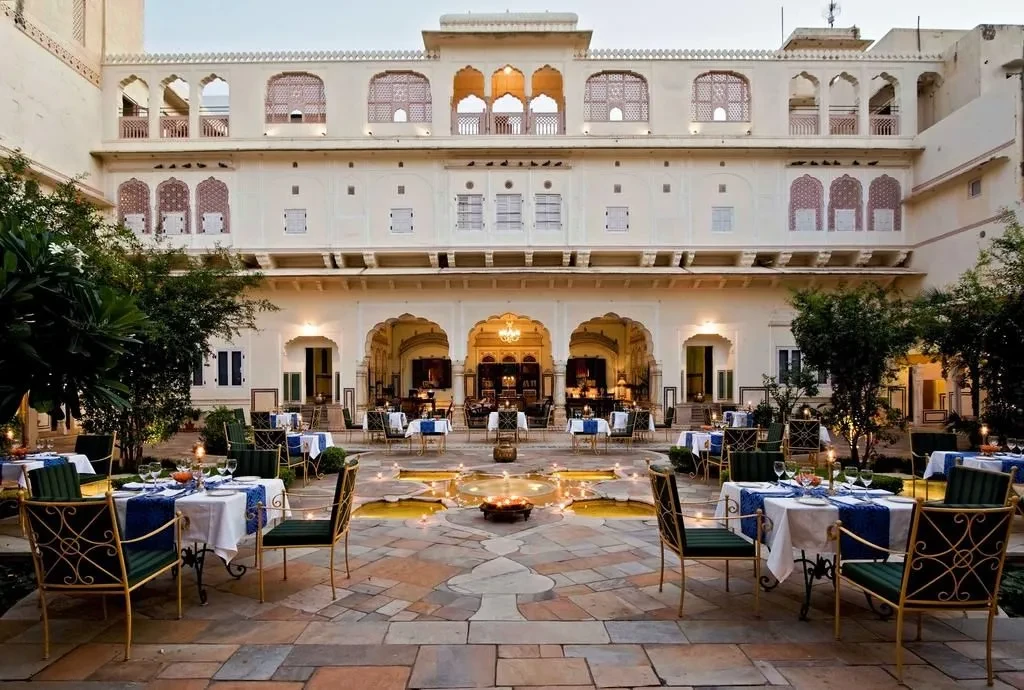
The outer courtyard was a semi-public space where male members of the household conducted business and received guests. In contrast, the inner courtyard was the private heart of the home, reserved for women and family life. This spatial segregation allowed women to participate in outdoor activities such as drying spices, pounding grain, or socializing, while adhering to the social norms of seclusion. Architecturally, the haveli employed jharokhas and jali screens to allow for the passage of air while blocking direct sunlight and providing visual privacy.
The Wada: The Maratha Institutional Residence
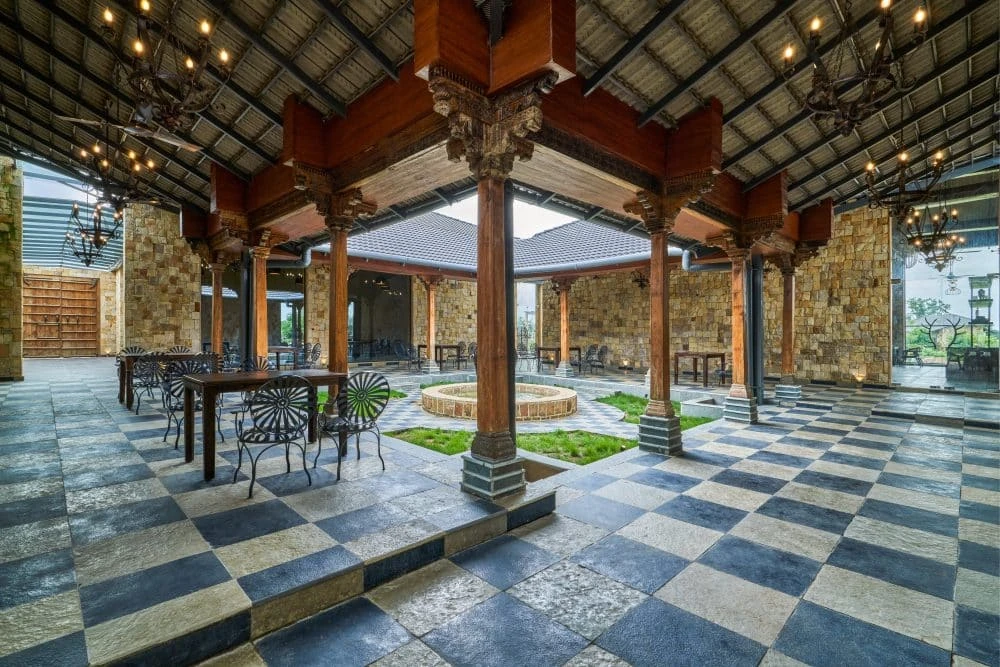
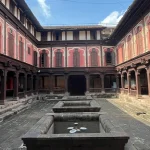
In the Deccan region of Maharashtra, the wada emerged as the predominant residential typology between the 18th and 19th centuries. Wadas were multi-story structures organized around one or more central courtyards. The planning of a wada exemplifies spatial hierarchy and functional zoning.
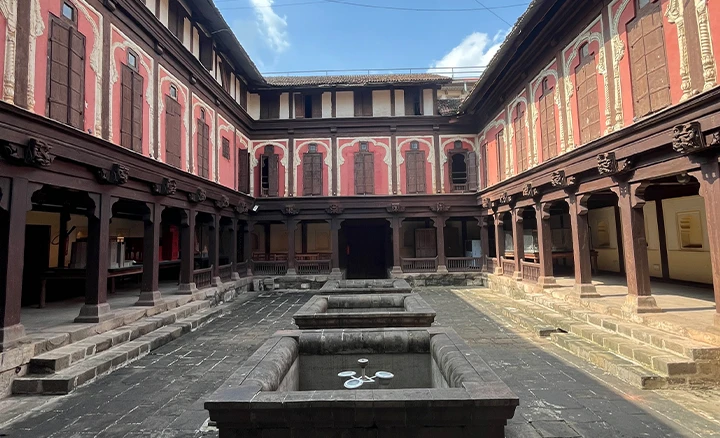
A typical large wada, such as those found in Pune or Kolhapur, featured three successive courtyards. The first was public, housing the guard room and kacheri office. The second was the private residence, containing the middle hall and the prayer room. The third was dedicated to service functions, such as the cowshed and water wells. The use of timber for the primary structural frame and stone for the plinth provided an earthquake-resistant structure that also maintained high thermal mass.
The Nalukettu: The Ecological Homage of Kerala
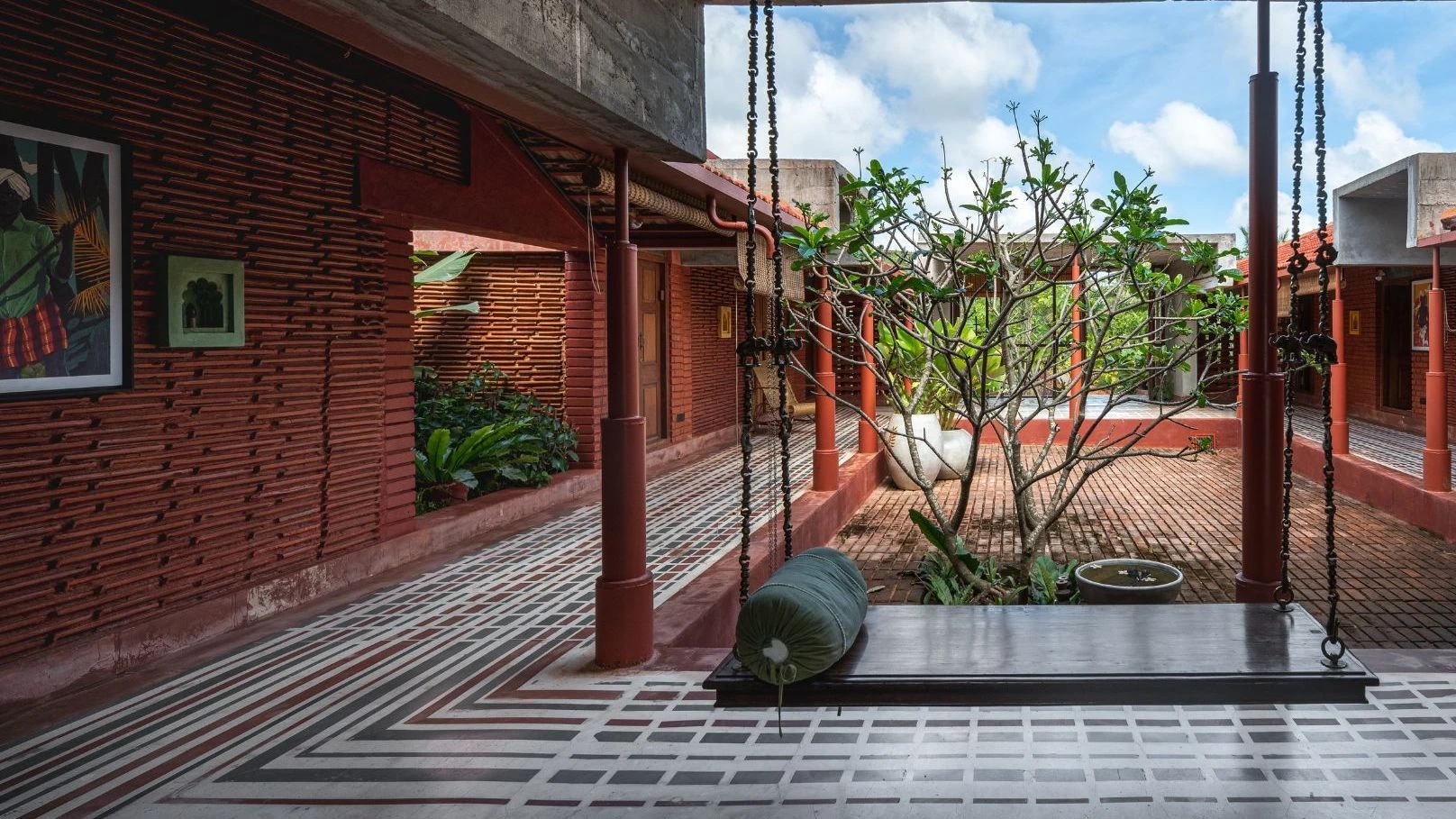
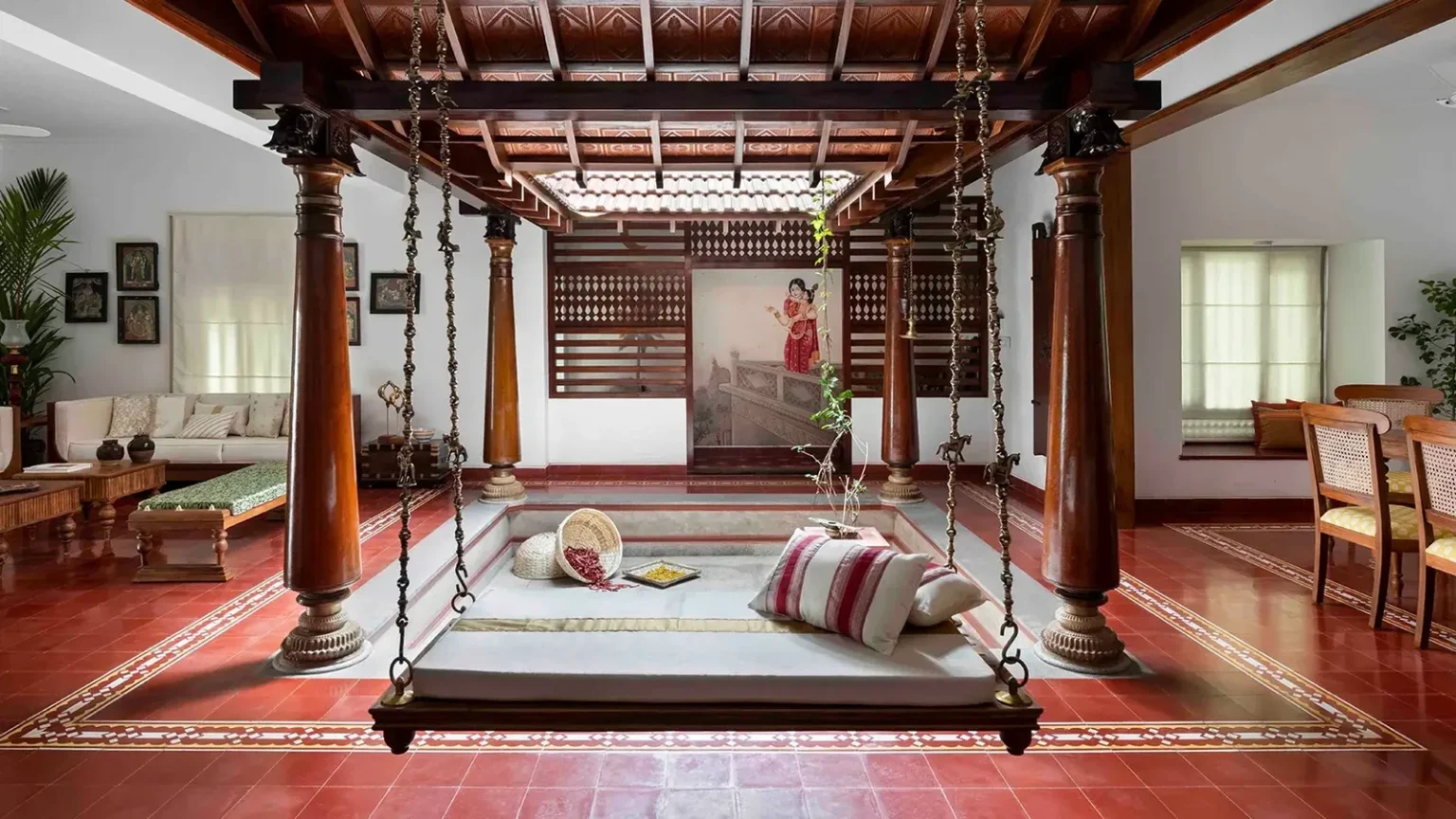
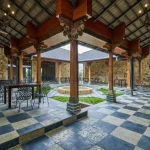
The Nalukettu of Kerala represents a unique convergence of ecological sustainability and the Vastu Shastra philosophy. These homes, built for the joint families, were designed to thrive in the humid, high-rainfall climate of the Malabar Coast. The central sunken courtyard was essential for managing the heavy monsoon rains; the pitched tiled roofs with deep eaves directed water into the central court, where it was often collected in a tank or drained away through a sophisticated system of stone channels.
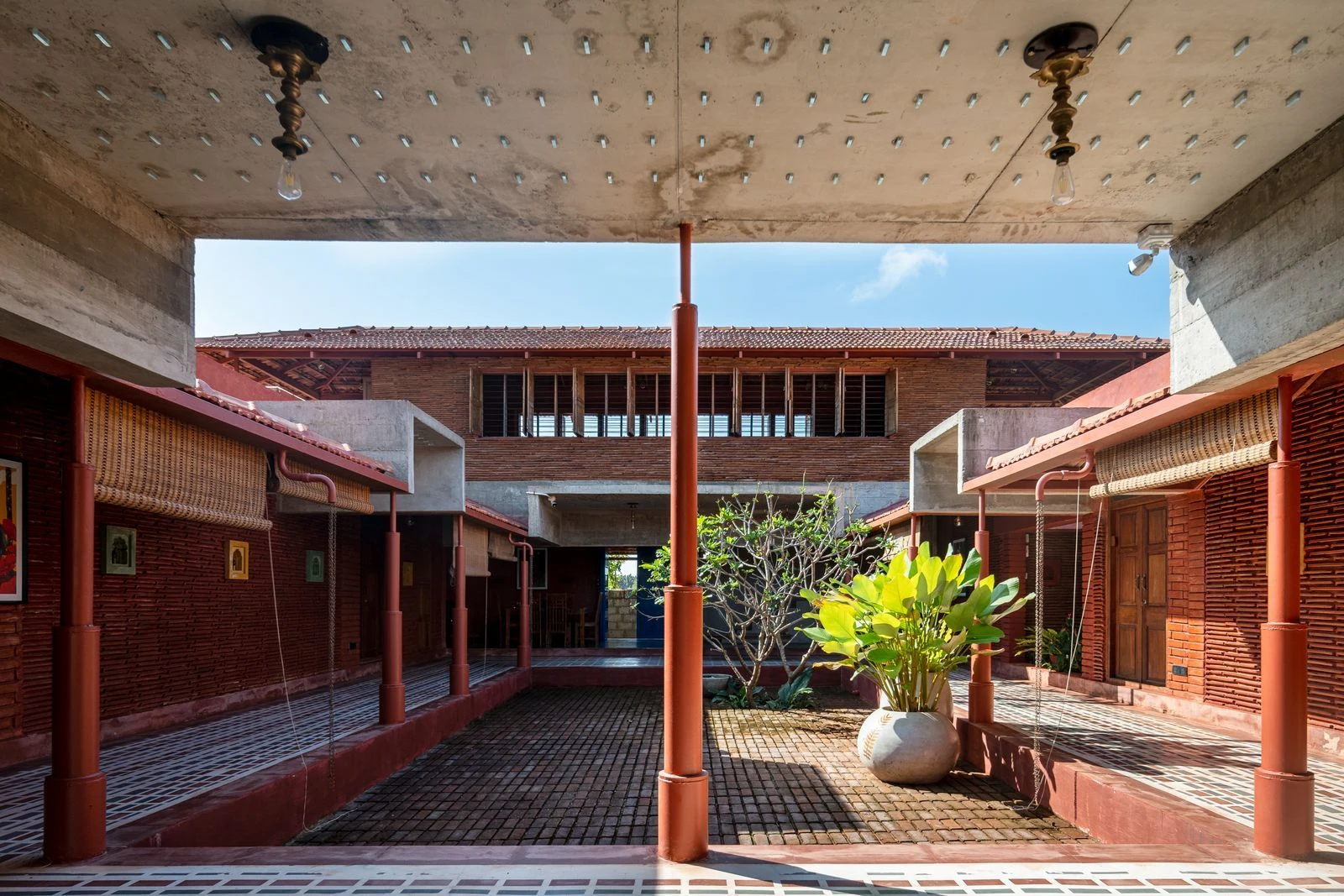
The arrangement ensured that every part of the house received cross-ventilation, which is critical in a humid climate to prevent the growth of mold and to provide physiological cooling through evaporation.
The Chettinad Mansion: Global Trade and Vernacular Fusion
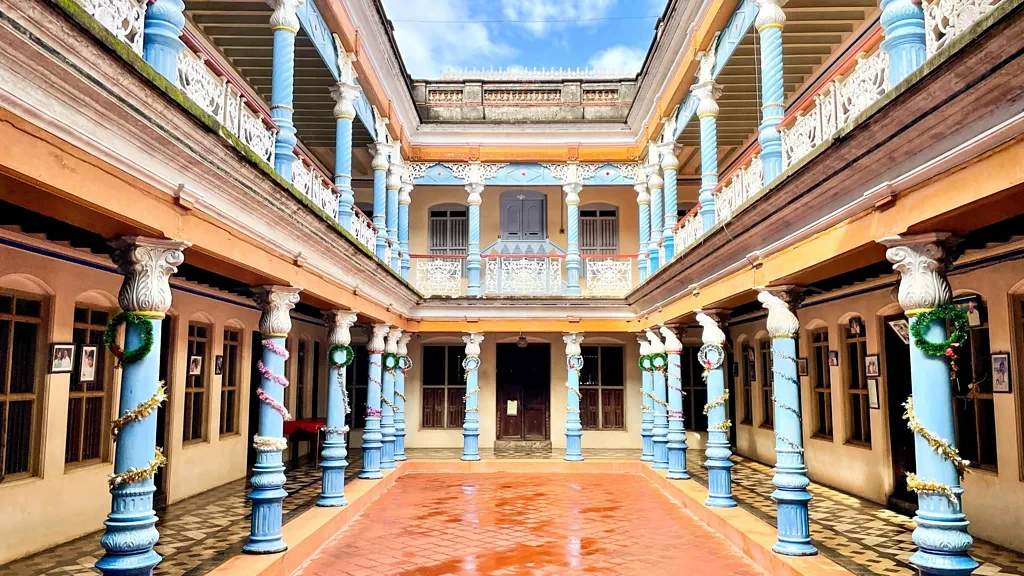
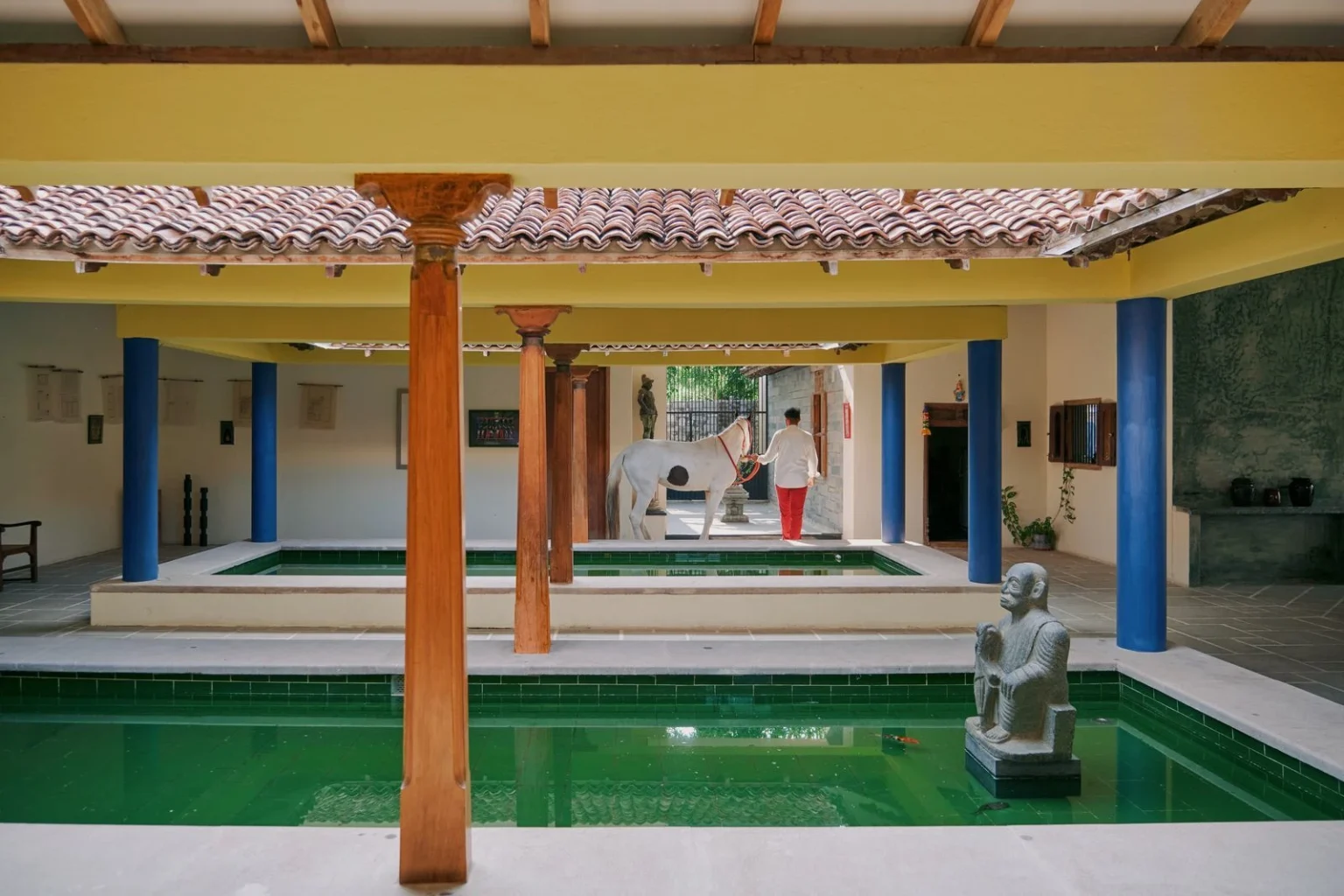
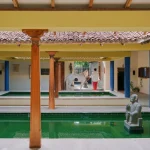
The mansions of the Chettiar community in Tamil Nadu are perhaps the most opulent examples of courtyard architecture in India. Built with wealth amassed from Southeast Asian trade, these palatial homes combined local Tamil traditions with materials imported from across the globe: Burma teak for pillars, Belgian chandeliers, Italian marble, and Spanish tiles.
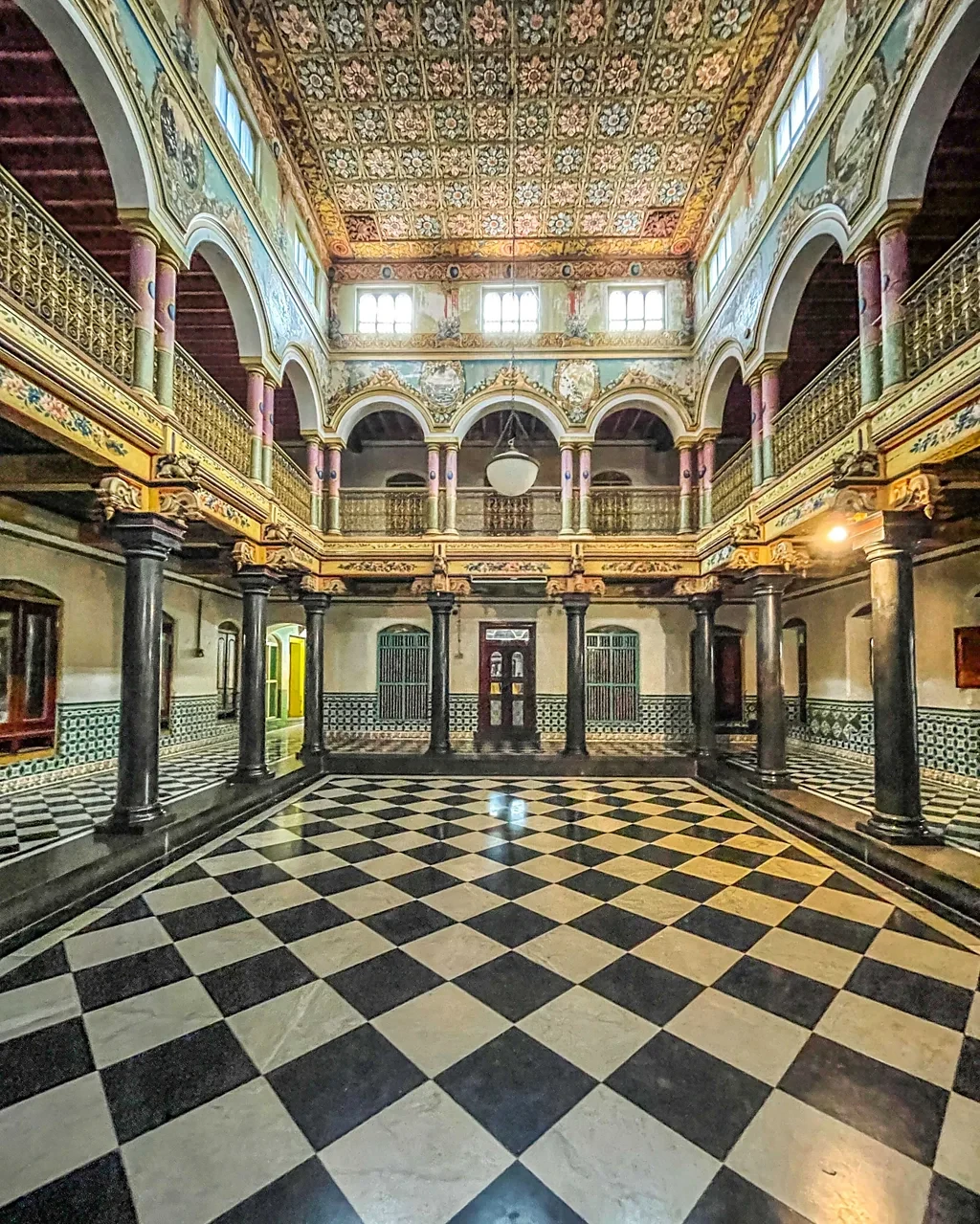
The Chettinad house is organized along a strong longitudinal axis, often featuring a series of two to four courtyards. The first courtyard served as the ceremonial center for weddings and religious rituals. The walls were finished with a unique lime plaster that was polished with egg whites to a mirror-like shine, reflecting the light from the open courtyard into the deep rooms.
Biophilic Design and the Psychology of Enclosure
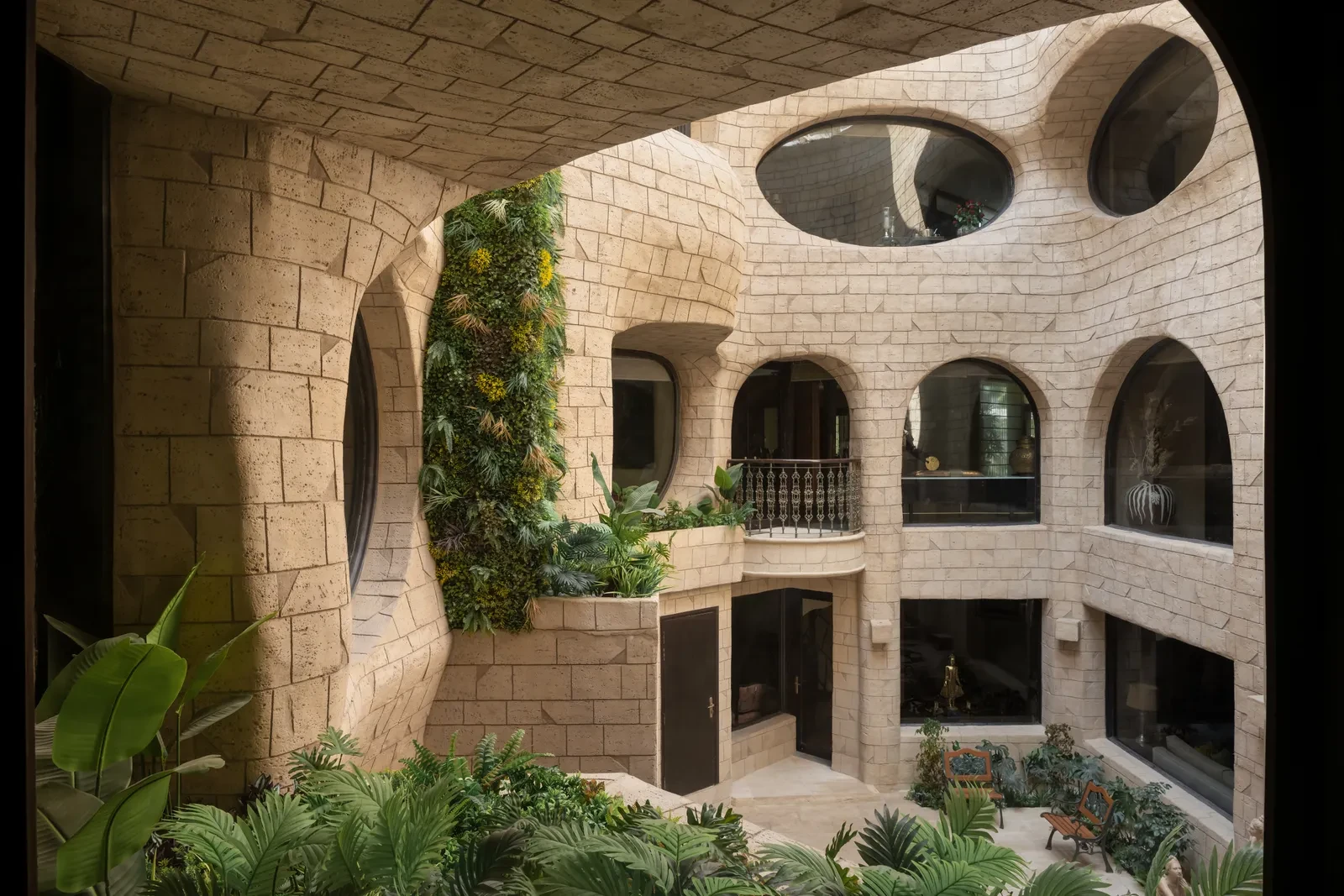
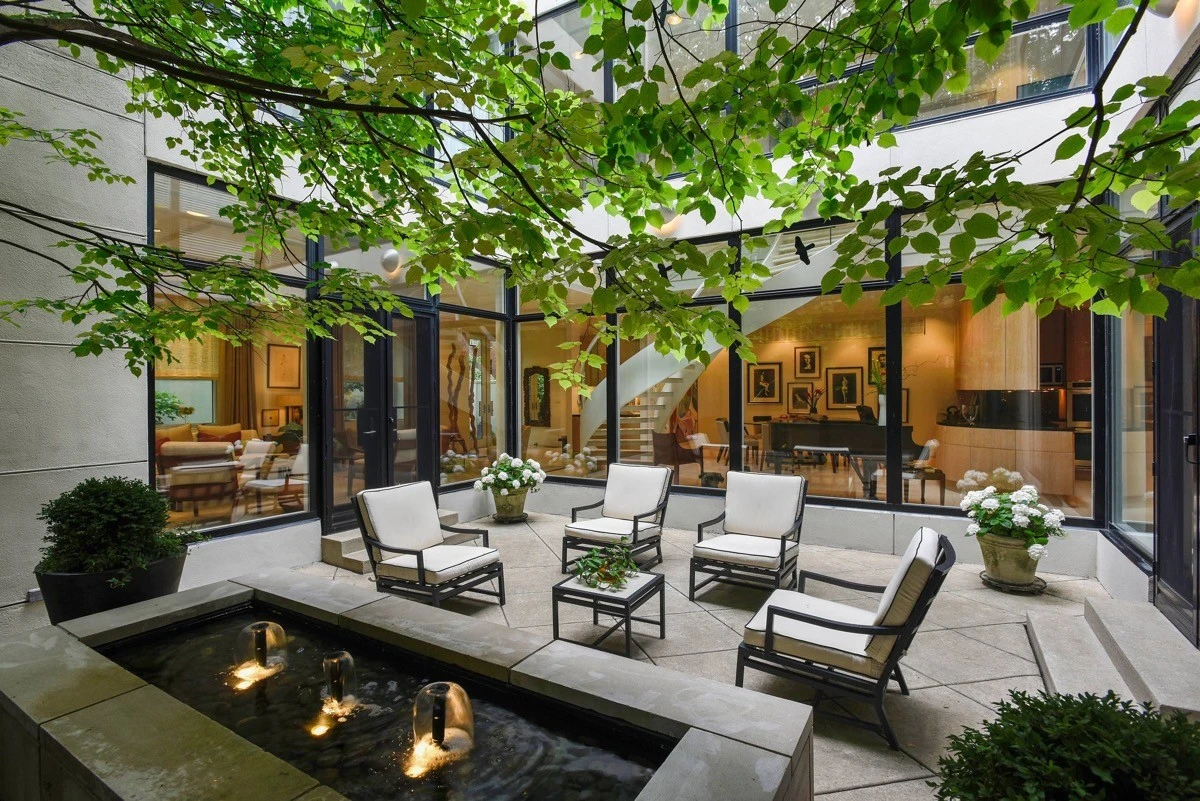
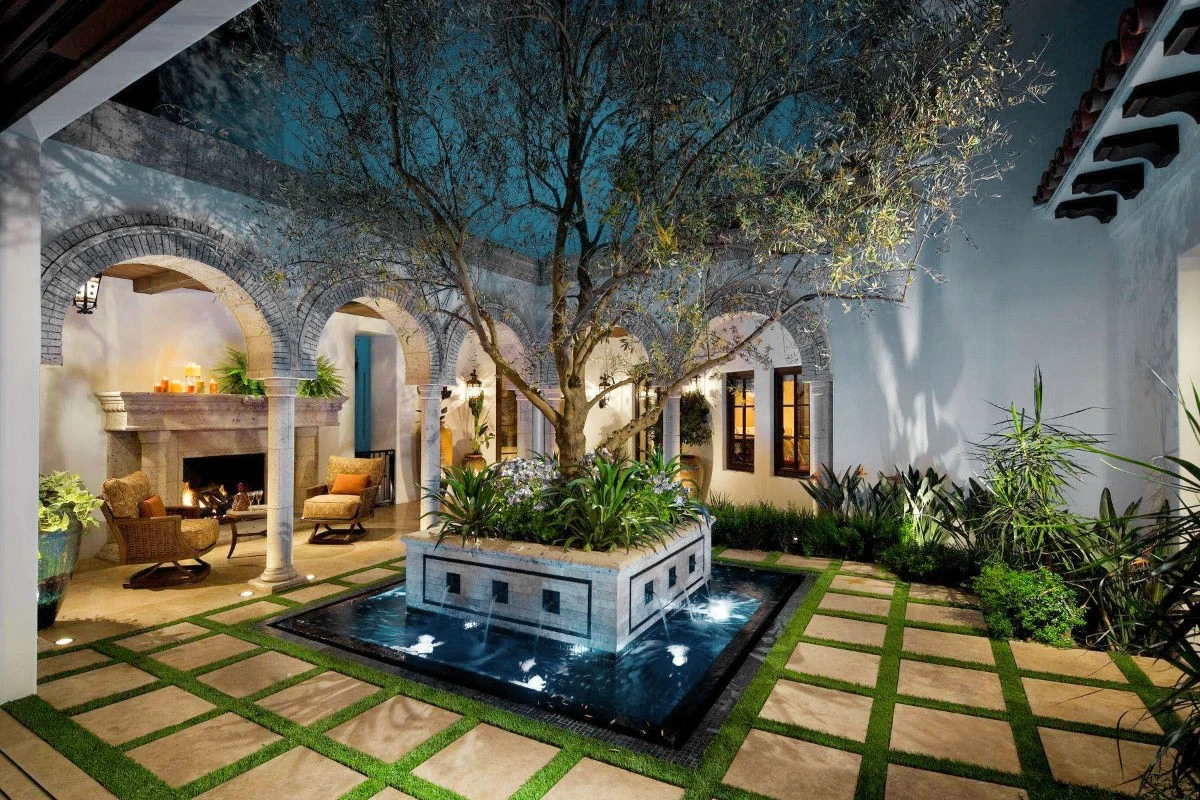
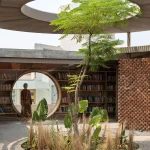
What makes the courtyard endure is not only its environmental performance, but its emotional resonance. In cities defined by speed and isolation, the courtyard offers a different tempo, one that allows for pause. It introduces nature not as spectacle but as presence: a tree casting shadows, a fragment of sky, the quiet sound of water. These are not decorative insertions but cognitive anchors. The human mind, fatigued by constant stimuli, recalibrates in such spaces. Attention softens, stress recedes, and a sense of belonging begins to take shape.
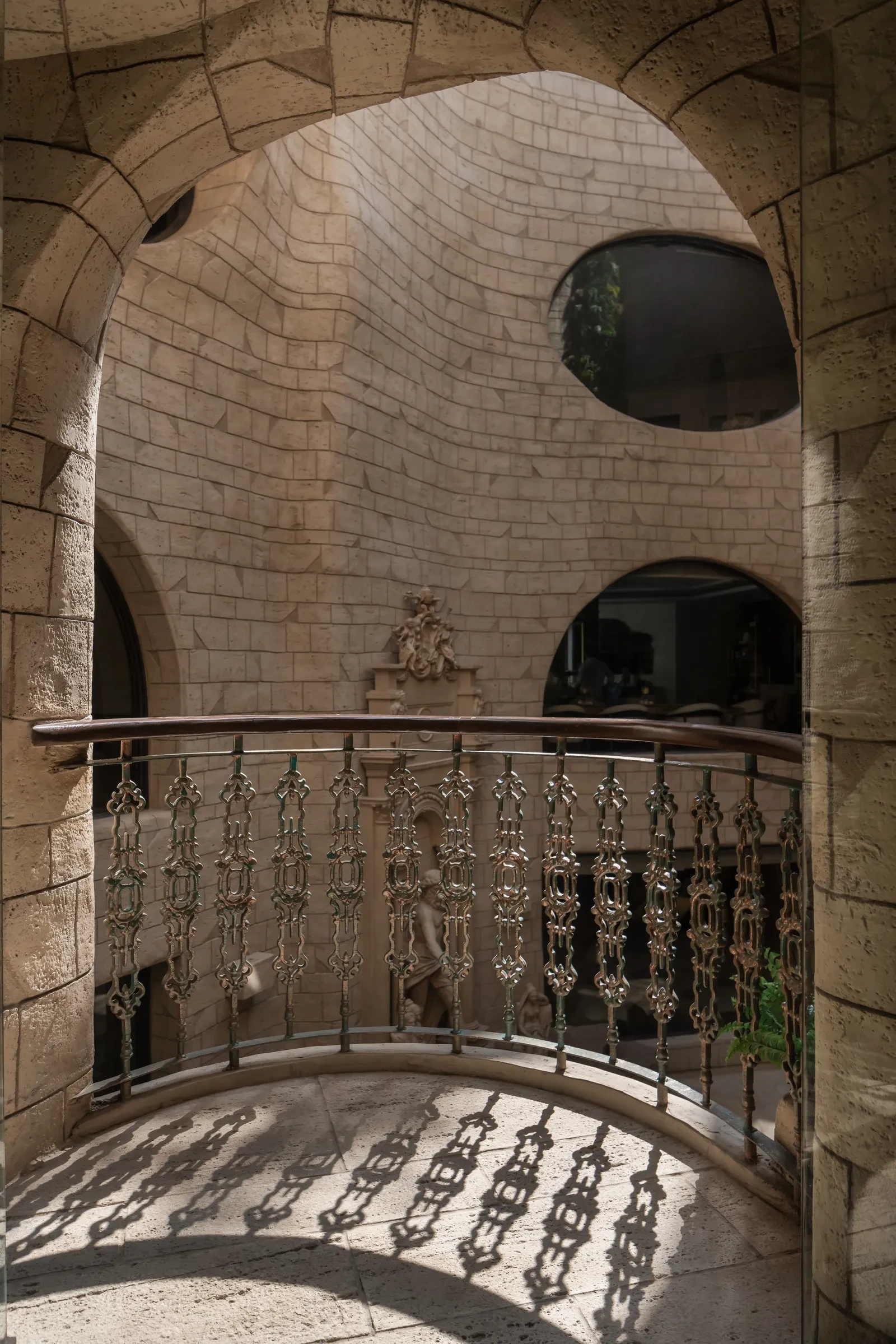
The courtyard also redefines social proximity. It creates a shared center without demanding interaction, allowing life to be observed, overheard, and gently participated in. For children, it is a safe ground; for the elderly, a place of continuity. In an age where community is often reduced to adjacency, the courtyard restores it as an experience.
Modern psychological theories, such as Attention Restoration Theory (ART) and Stress Recovery Theory (SRT), suggest that viewing natural elements like greenery, moving water, and the open sky can significantly reduce mental fatigue. In an environment dominated by glass, steel, and artificial noise, a courtyard provides a sensory oasis.
Contemporary Reinterpretations by Modern Masters
What is striking today is not the replication of courtyard forms, but their reinterpretation, how contemporary architects return to the logic of the void without imitating its image.
Charles Correa: The Open-to-Sky Space
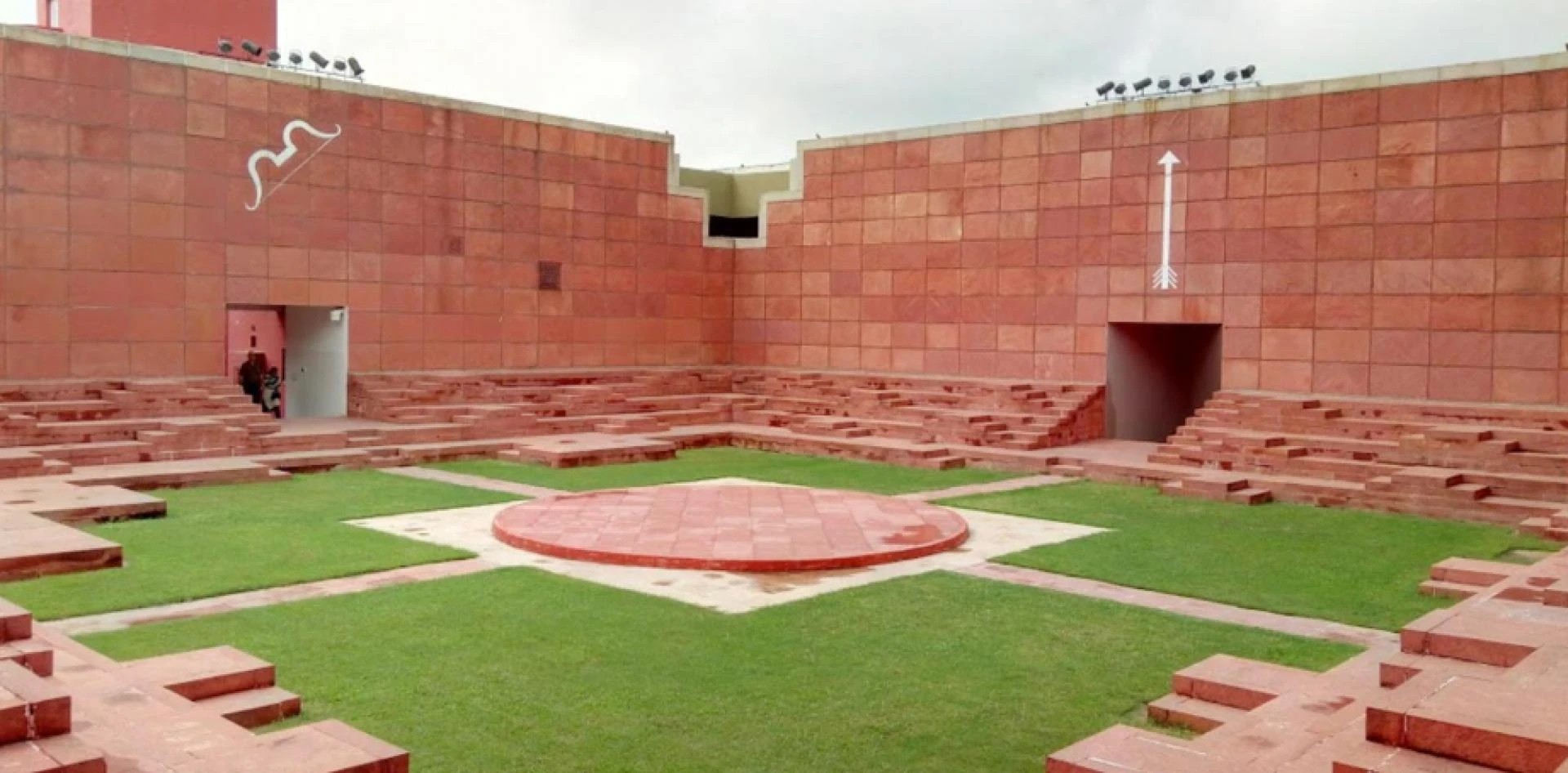
Charles Correa, often referred to as the Father of Modern Indian Architecture, made the open-to-sky space a central tenet of his philosophy. For Correa, the courtyard was not just a climatic tool but a ritualistic one, reflecting the Indian relationship with the elements.
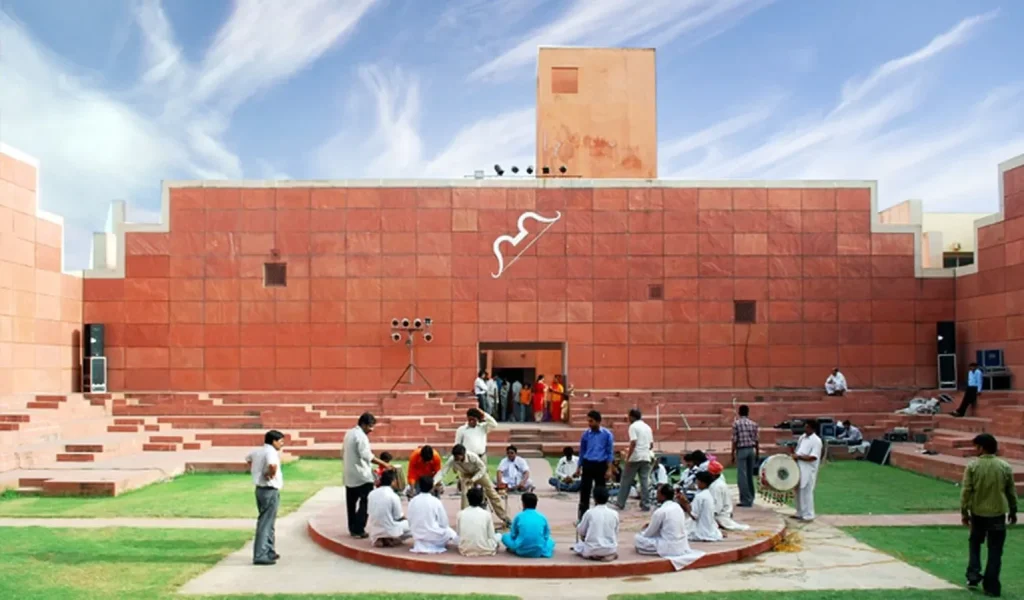
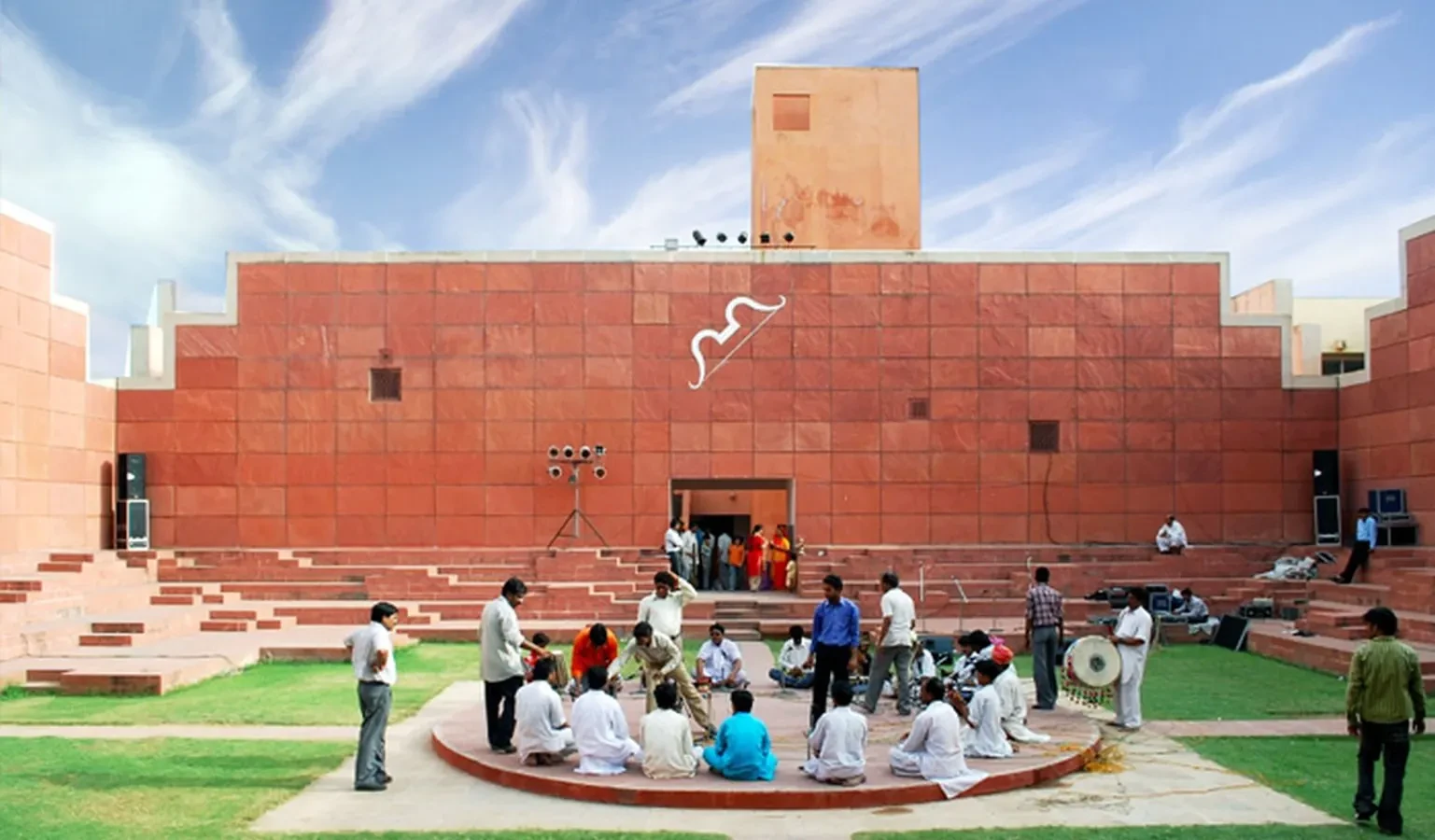
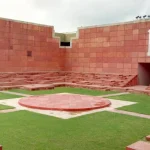
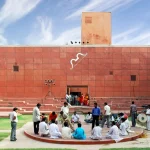
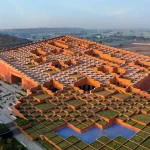
In projects like the Jawahar Kala Kendra in Jaipur, Correa used the celestial geometry of the nine planets to organize a series of courtyards that each serve a different functional and symbolic purpose. His work demonstrated that the courtyard could be scaled to monumental proportions while maintaining human centricity.
B.V. Doshi: Contextual Harmony and Low-Cost Innovation
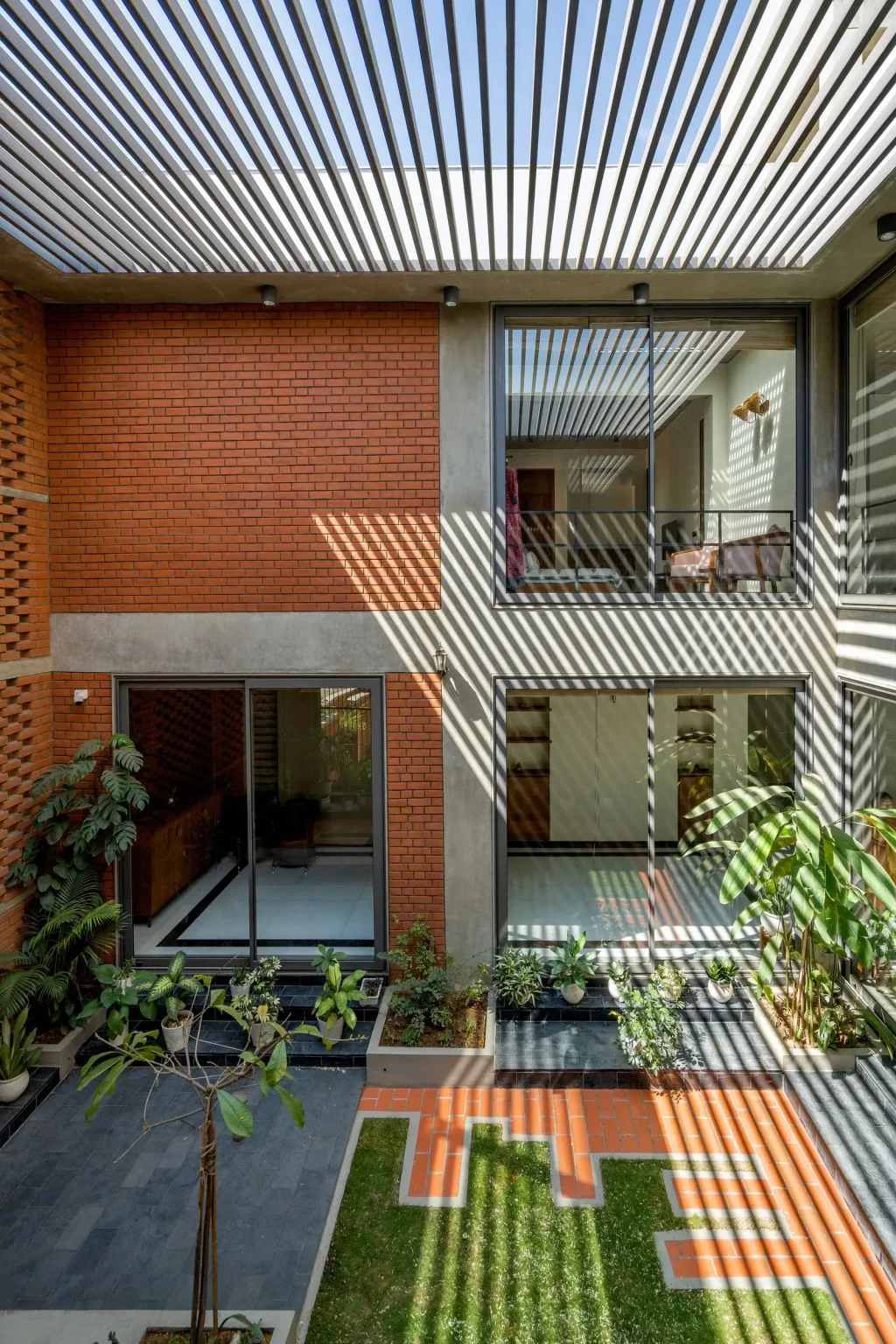
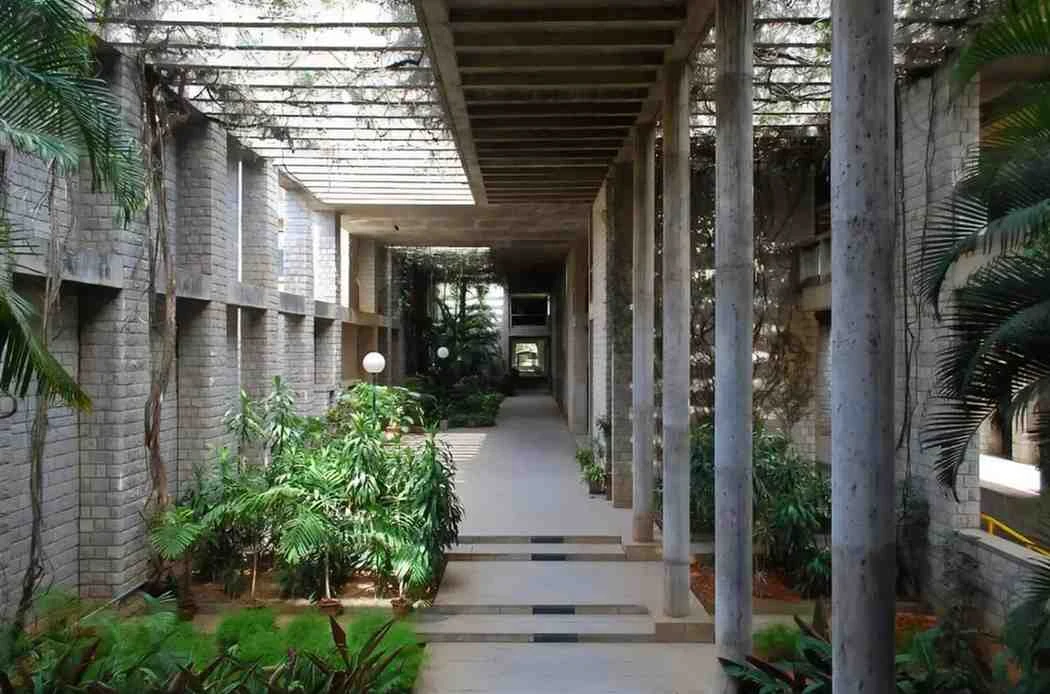
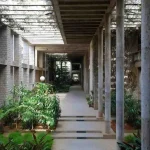
Balkrishna Doshi, a Pritzker Prize laureate, integrated courtyard logic into large-scale institutional projects. The Indian Institute of Management (IIM) Bangalore is a seminal example of modular courtyard-centric clusters. Doshi used a system of pergolas and internal voids to create a porous environment where the distinction between indoors and outdoors is blurred.
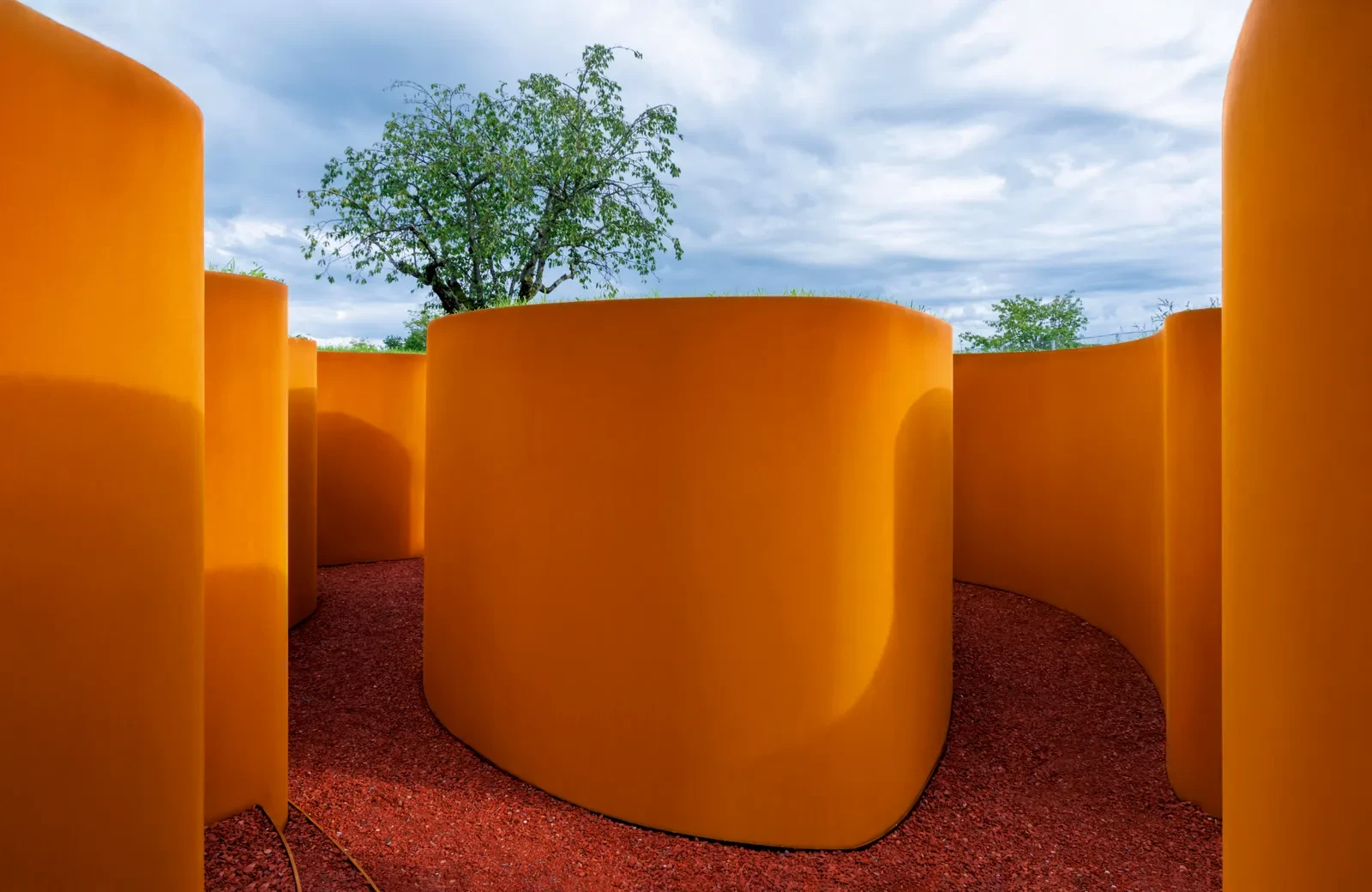
This approach facilitated natural cooling and provided numerous informal learning spaces, proving that the courtyard is an effective strategy for managing the thermal load of large, high-occupancy buildings.
Sanjay Puri: The Modern Monolith
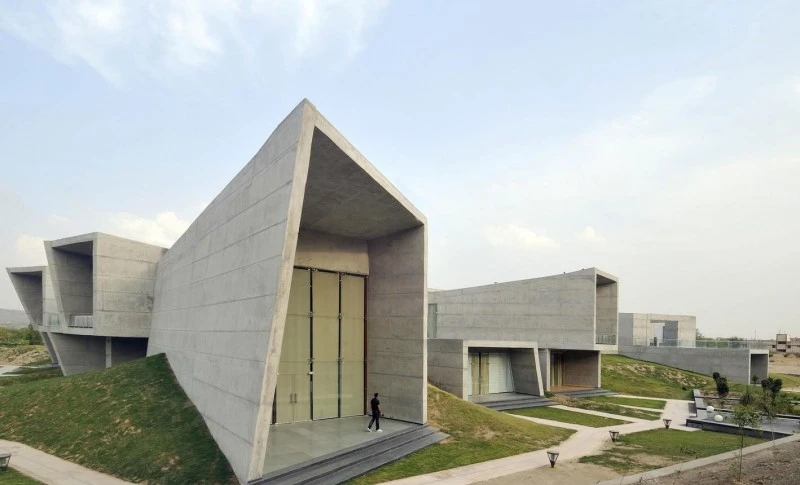
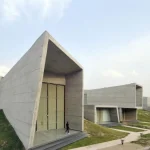
Sanjay Puri’s Courtyard House in Rajasthan provides a contemporary response to the extreme desert heat of Beawar. The design utilizes bold, angular geometries and deep overhangs to shield the interior from the sun.
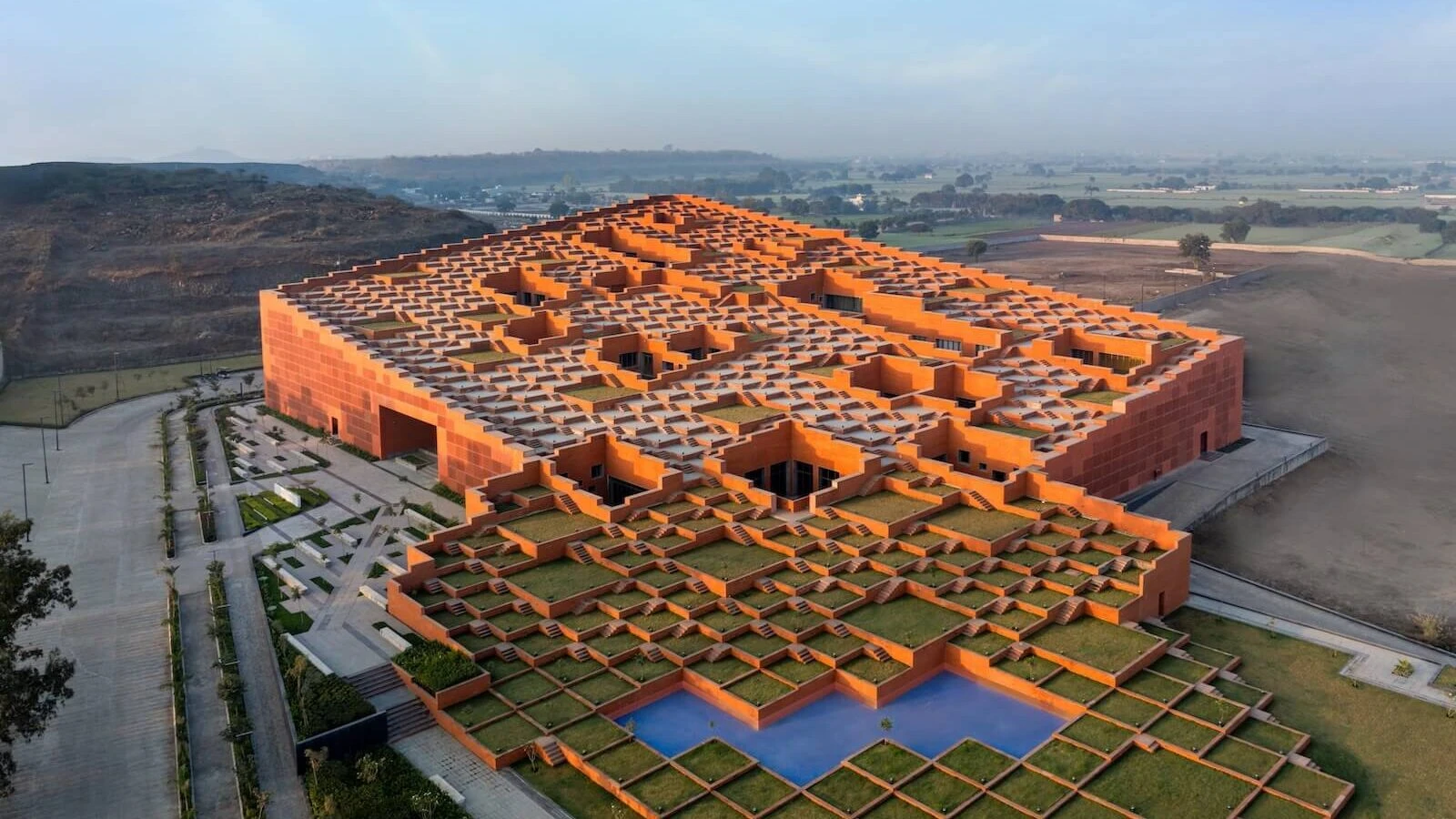
A central landscaped courtyard acts as the climatic heart of the residence, while earth berms are used to partially bury the structure, leveraging the ground’s thermal stability. This project exemplifies how traditional haveli principles of shade, insulation, and ventilation can be translated into a modern concrete form that is iconic and energy-efficient.
Rahul Mehrotra: Ephemeral Urbanism and Social Equity
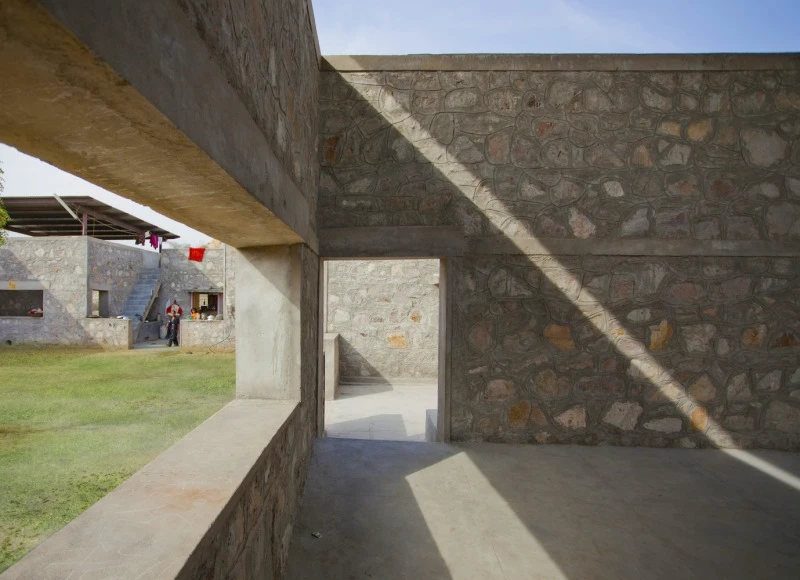
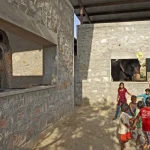
In the Hathigaon (Elephant Village) project near Jaipur, Rahul Mehrotra of RMA Architects used the courtyard to address the needs of an underprivileged community of mahouts and their elephants. The site, a former sand quarry, was first re-landscaped to include water bodies for rainwater harvesting.
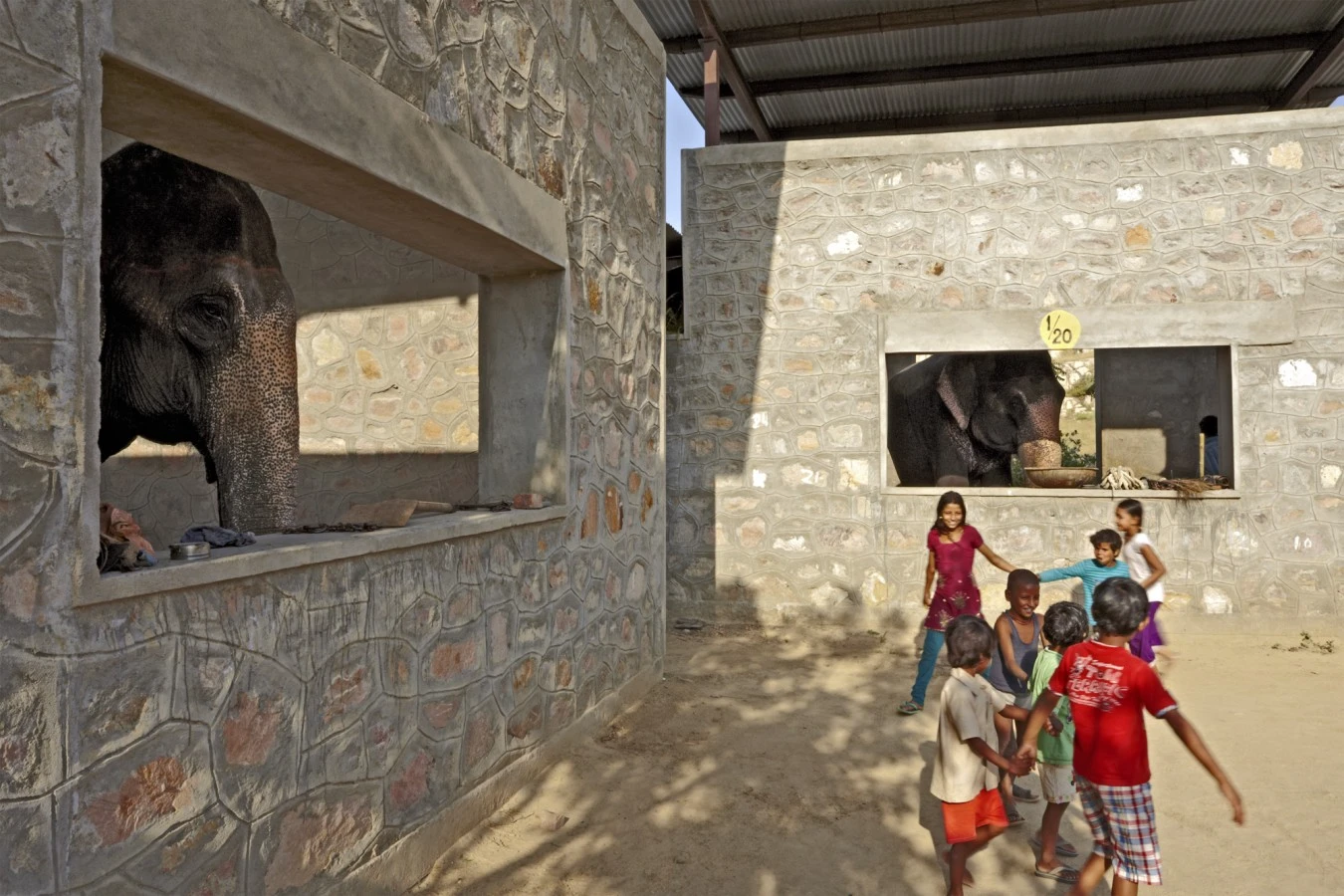
The mahout housing was organized into clusters of four dwellings around small, private courtyards. These courtyards act as an extension of the small living spaces, providing a place for cooking, washing, and social interaction. This project demonstrates that the courtyard is not a luxury feature but a vital tool for achieving social equity and environmental restoration in low-income housing.
Integrating the Void into the Smart City
By carving a void out of the built mass, architects create a microclimatic lung that facilitates thermodynamic equilibrium while fostering a unique sense of domestic sanctuary. The enduring relevance of this form is particularly evident in the Indian subcontinent, where the vernacular wisdom is being systematically re-engineered to meet the demands of the twenty-first century.
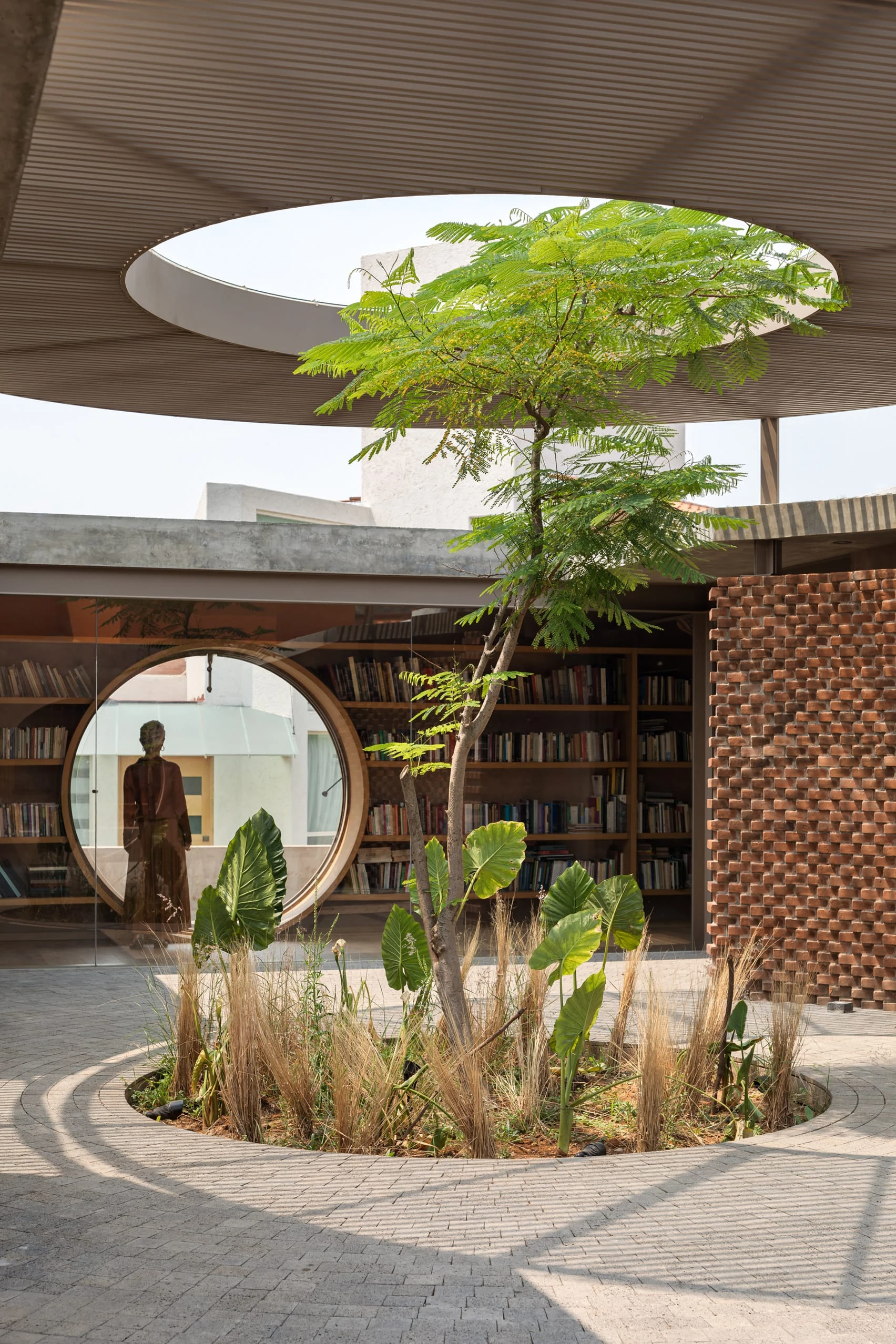
These structures were never merely aesthetic choices but were metabolic systems designed to manage heat, regulate social interactions, and provide a secure environment for multi-generational living.