


Courtyard design has always revolved around active public and private spaces that shape how we interact, gather, and experience the built environment.
Across time and cultures, the courtyard has shifted from a symbol of control and power to a tool for social connection and cultural storytelling. Whether embedded in historic palaces, community-driven architecture, curated museum interiors, vernacular and modern homes, these spaces blur the boundary between inside and outside while responding to climate, context, and human behavior.
Courtyards also operate as cultural registers, reflecting the values and social structures of their time. Their scale, accessibility, and degree of openness shift based on who they serve right from exclusive royal enclosures to inclusive civic platforms. This transformation reveals a broader architectural shift in which space is no longer designed solely to represent authority but to enable participation and shared experience. As cities grow denser and public life becomes more fragmented, the courtyard re-emerges as a critical spatial device or one that reconnects people to place, climate, and each other through a carefully framed yet open environment.
Courtyard Designed as Spatial Framework
The courtyard design operates as a primary ordering system within public architecture, structuring movement, hierarchy, and spatial experience. They function as geometric anchors that organize built mass around a central void, establishing clarity in circulation while framing views, thresholds, and axes. Their presence allows architecture to unfold as a spatial sequence, where compression and release, as well as light and shadow, shape perception. In this sense, the courtyard is not an absence but a generative core around which architecture is articulated and experienced.
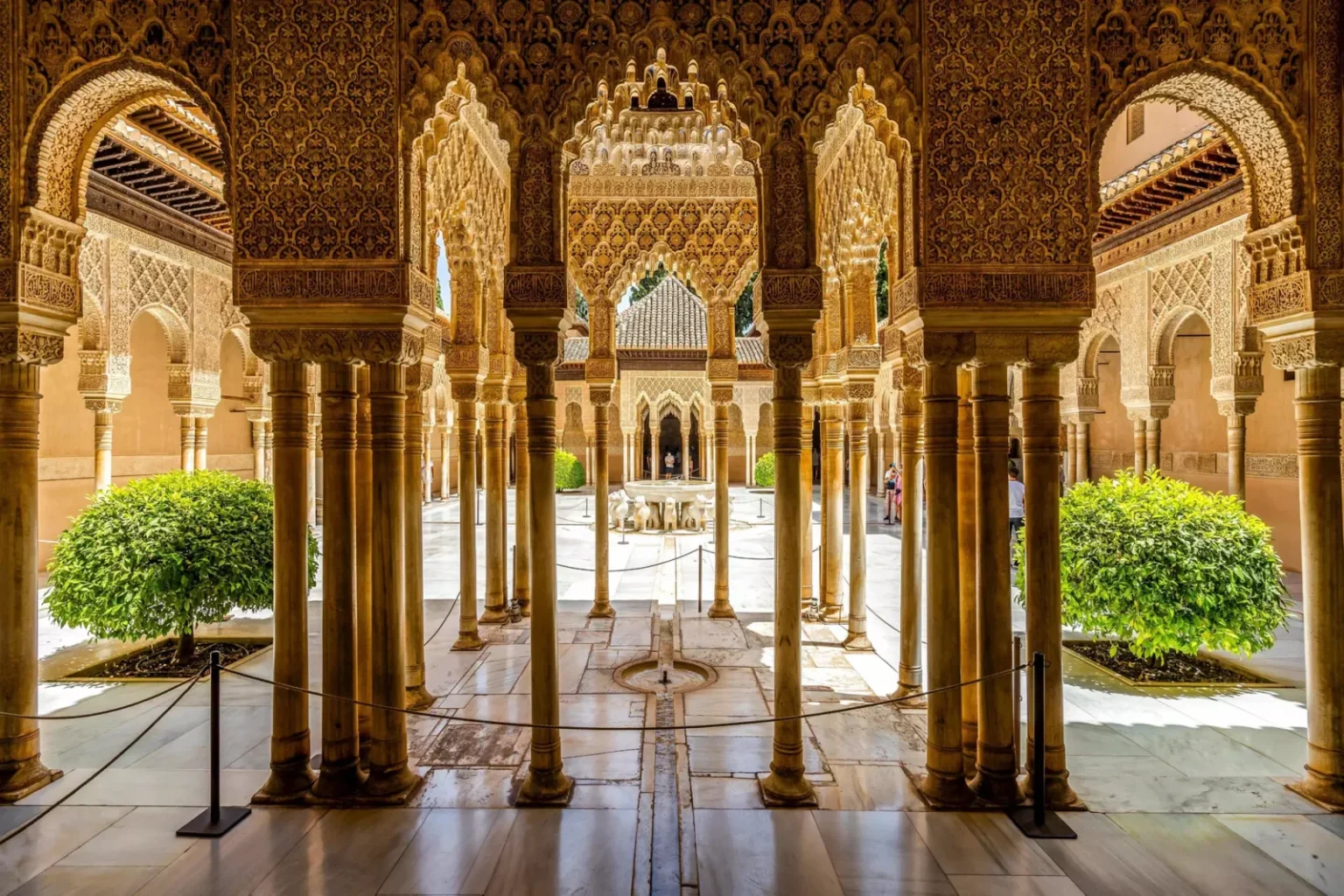
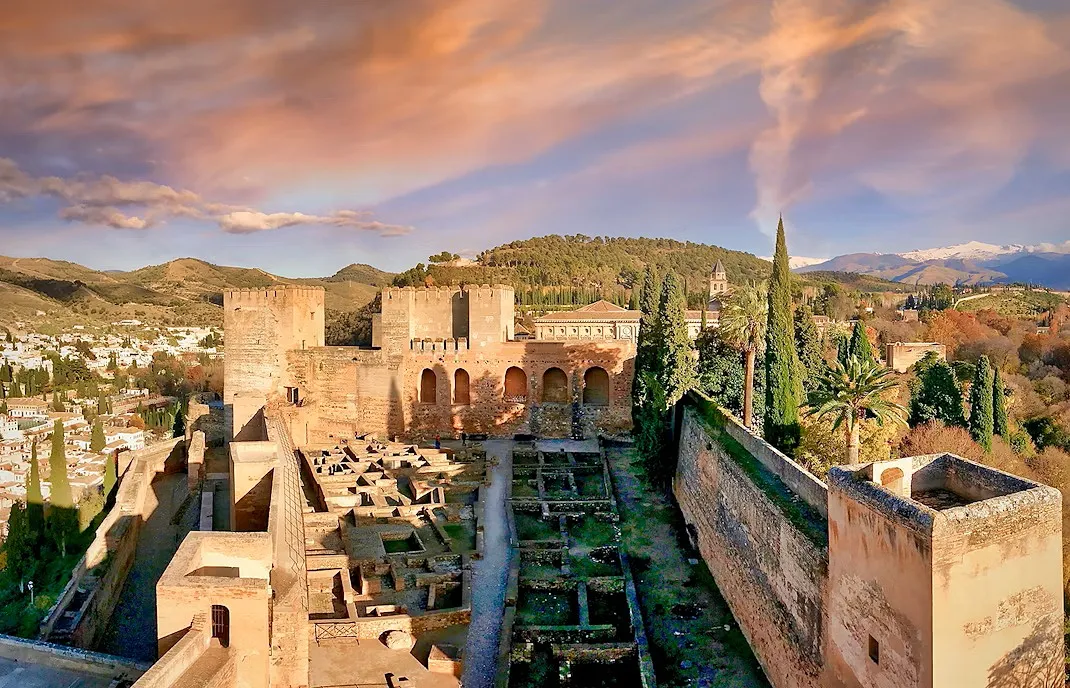
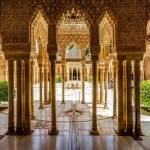
This spatial logic is exemplified in the Alhambra, where courtyards define the architectural narrative. Each courtyard is proportioned with precision, integrating water, arcades, and ornament to choreograph movement and visual progression.
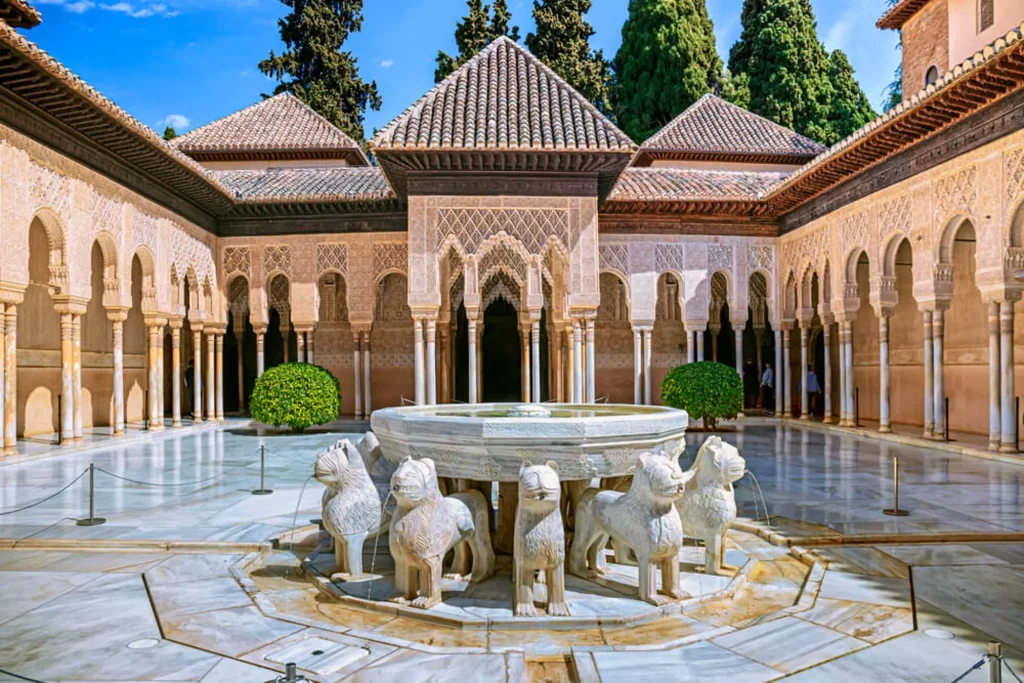
The Court of the Lions and the Court of the Myrtles use geometry and landscape to operate as a unified system, transforming circulation into a layered spatial experience deeply rooted in cultural symbolism and climatic response.
Courtyards as Climatic Mediators
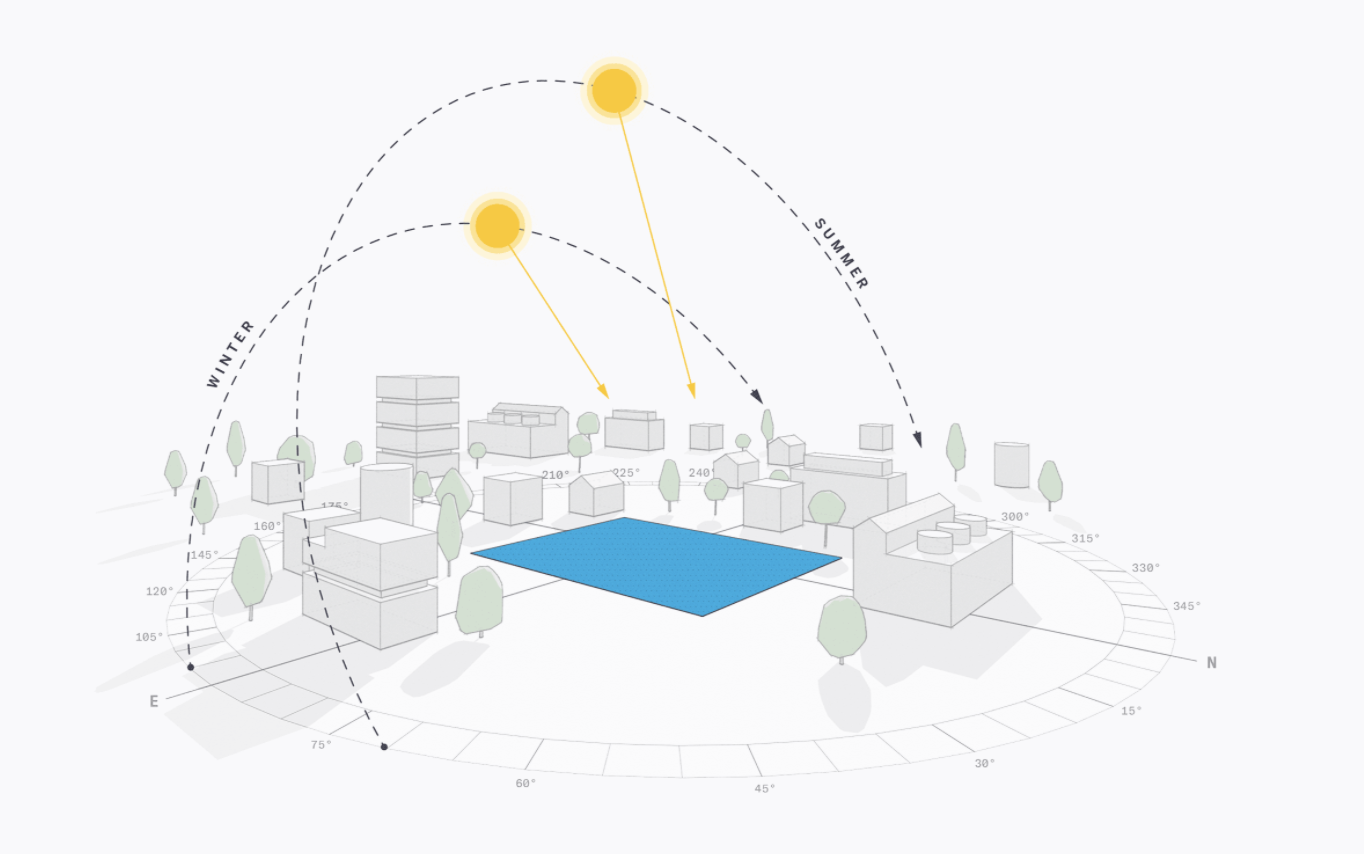
Courtyards function as passive environmental systems that regulate microclimates within public architecture. Through calibrated proportions and orientation, they facilitate airflow, diffuse daylight, and generate shaded environments that enhance thermal comfort. The integration of vegetation and water elements further stabilizes microclimatic conditions, enabling these spaces to remain usable across varying environmental contexts. This performance is not supplementary but intrinsic, positioning the courtyard as a key component in the environmental logic of architecture.
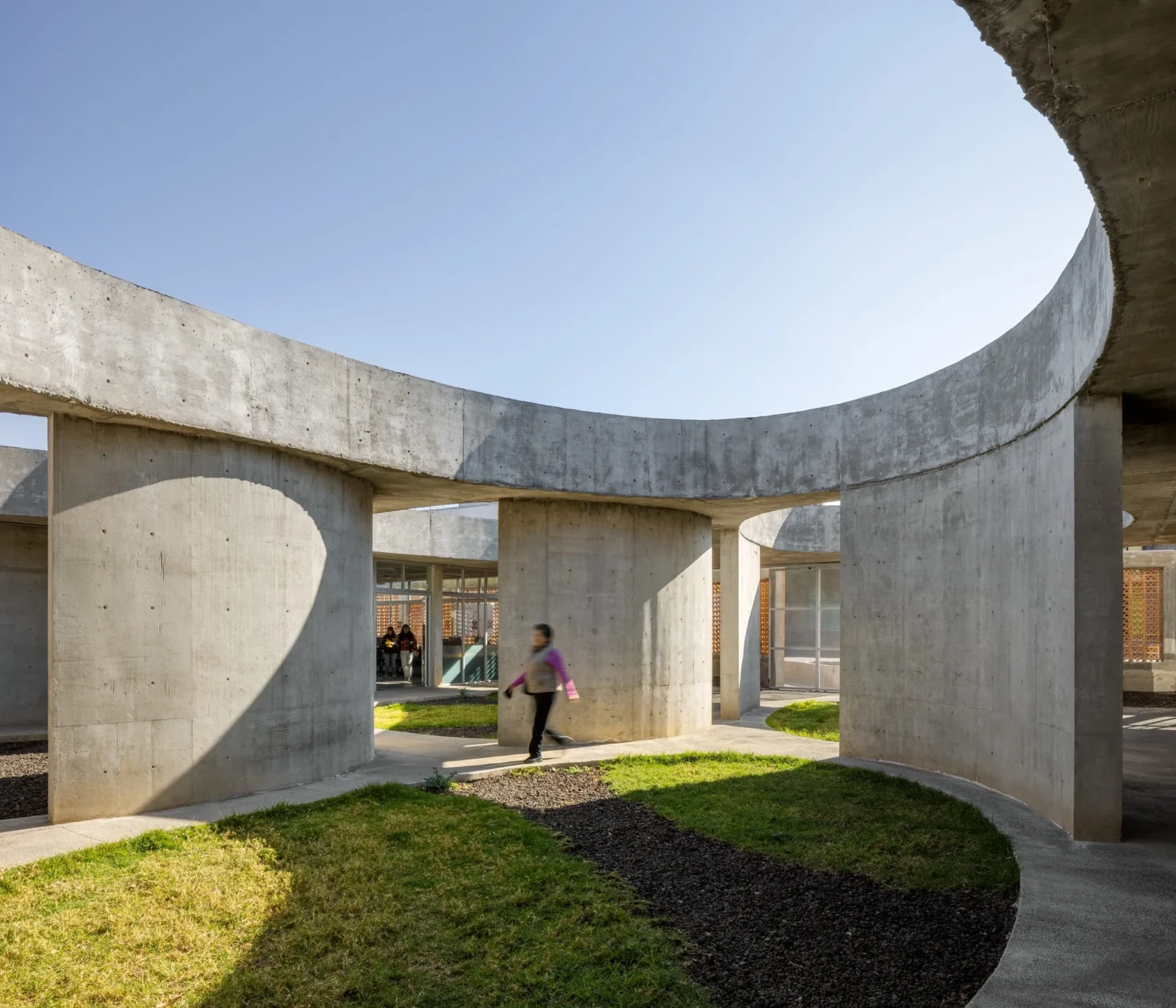
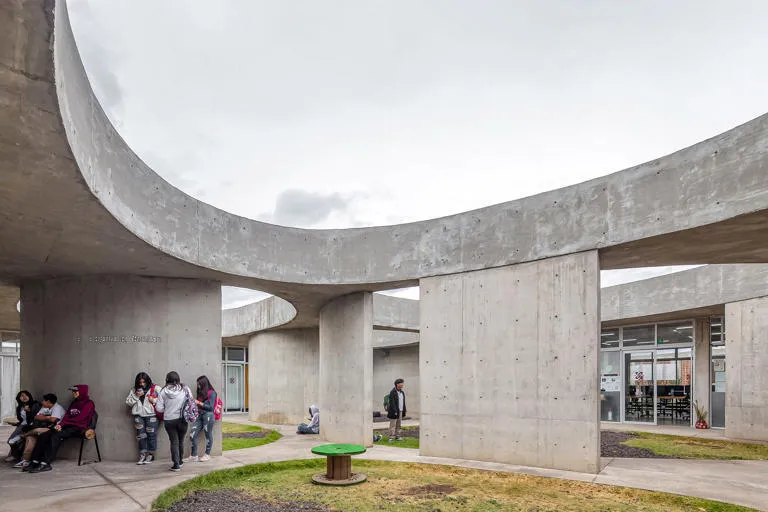
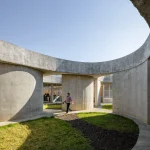
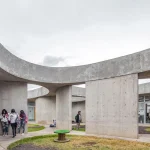
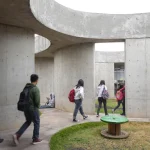
At Iztapalapa PILARES, Terracotta Concrete Community Center by Fernanda Canales, this principle is within a dense urban fabric. The project distributes multiple courtyards across the built mass, creating porous spatial pockets that allow natural ventilation and daylight to penetrate deep into the program.
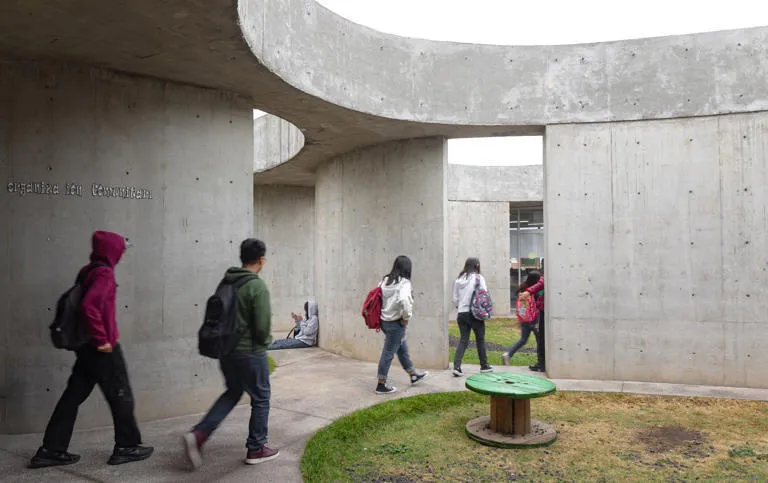
These open-air voids reduce reliance on mechanical systems while establishing shaded, adaptable environments that support community interaction, learning, and everyday activity.
Courtyards as Experiential Interiors
Courtyards blur the boundary between interior and exterior, transforming public architecture into an immersive spatial condition. They operate as interior landscapes that are controlled yet open environments where light, material, and vegetation interact continuously. Within this framework, courtyards introduce moments of pause and visual relief, while maintaining spatial continuity across the built form. This duality allows architecture to simultaneously convey expansiveness and intimacy.
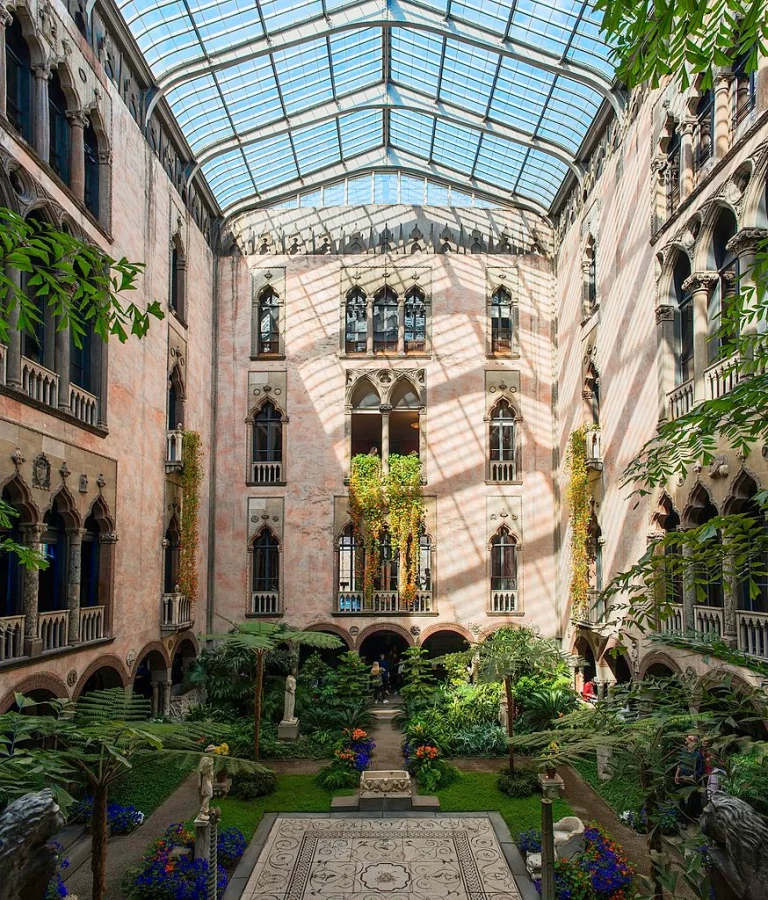
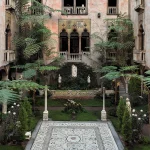
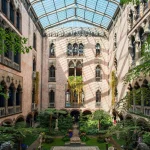
The Isabella Stewart Gardner Museum is designed across this approach through its central courtyard. Enclosed beneath a glass canopy, the courtyard serves as the spatial and atmospheric core of the museum, maintaining visual connections with surrounding galleries.
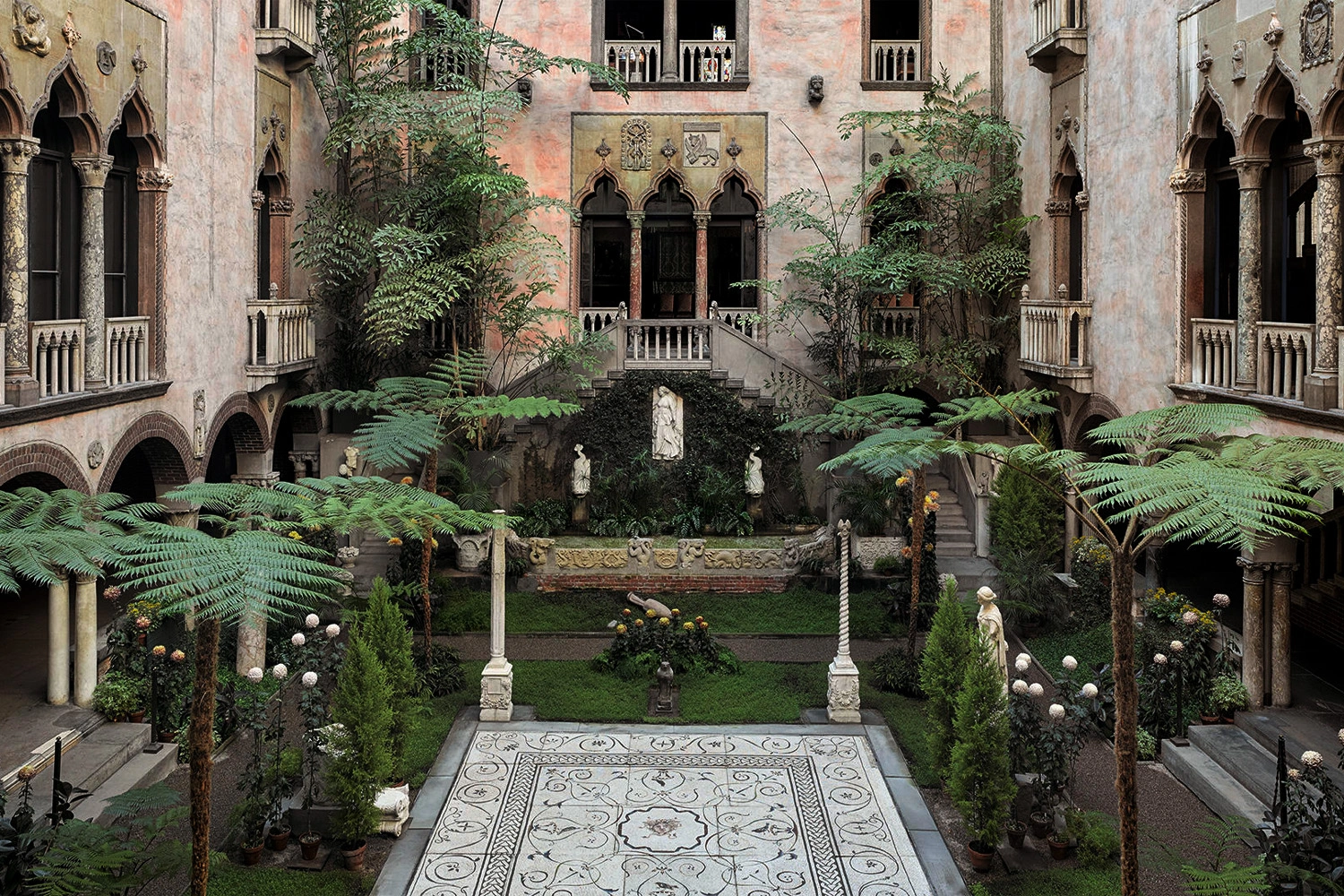
Layered planting, sculptural elements, and filtered light construct a living interior landscape that retains the qualities of an open garden while remaining fully integrated within the architectural envelope.
Courtyards continue to evolve, yet their fundamental role remains consistent as connective spatial devices. From the controlled geometries of historic complexes, community-oriented configurations, and immersive cultural interiors, they adapt to shifting architectural and social paradigms. By balancing openness and enclosure, privacy and community, and nature with built form, courtyards remain resilient frameworks that shape public life while quietly influencing how space is used, experienced, and shared.