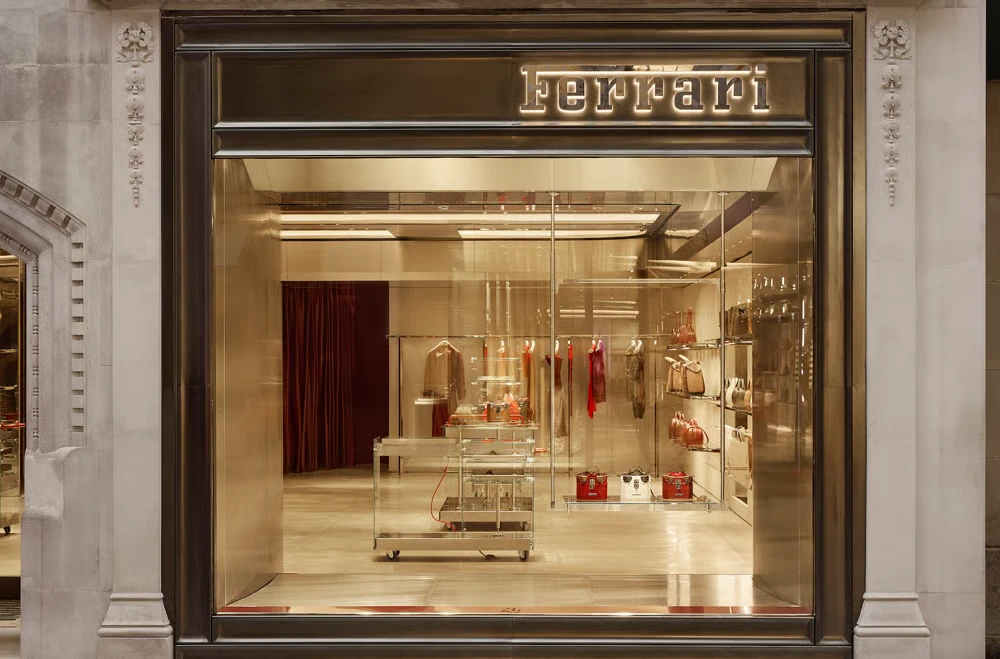














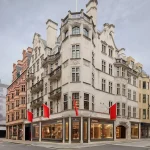










The Ferrari flagship store at 48–50 Old Bond Street in London, inside a Grade II-listed Queen Anne-style building, dates back to the early 1900s. The exterior has been carefully preserved, with its Portland stone façade and regular window pattern left largely intact. From the street, it still reads as part of Mayfair’s historic architectural structure that integrates into the luxury retail strip that defines this part of London.
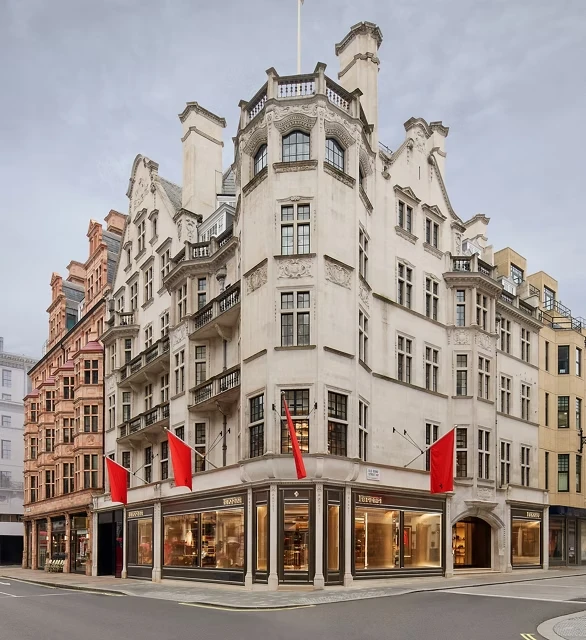
Despite the heritage shell, the renovation inside shifts the building into a contemporary retail and exhibition space.
Interior concept: “Officina” translated into retail space
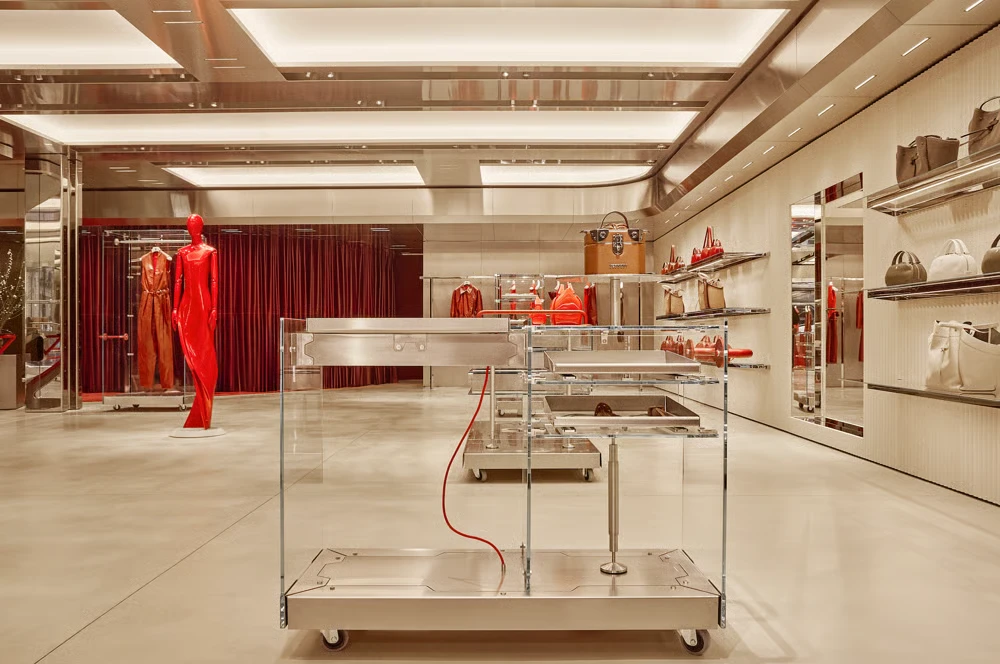
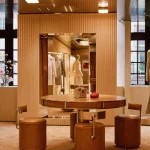
The 850-square-meter interior is designed as a spatial interpretation of Ferrari’s “Officina” idea, treating the store less as a shop and more as a curated environment.
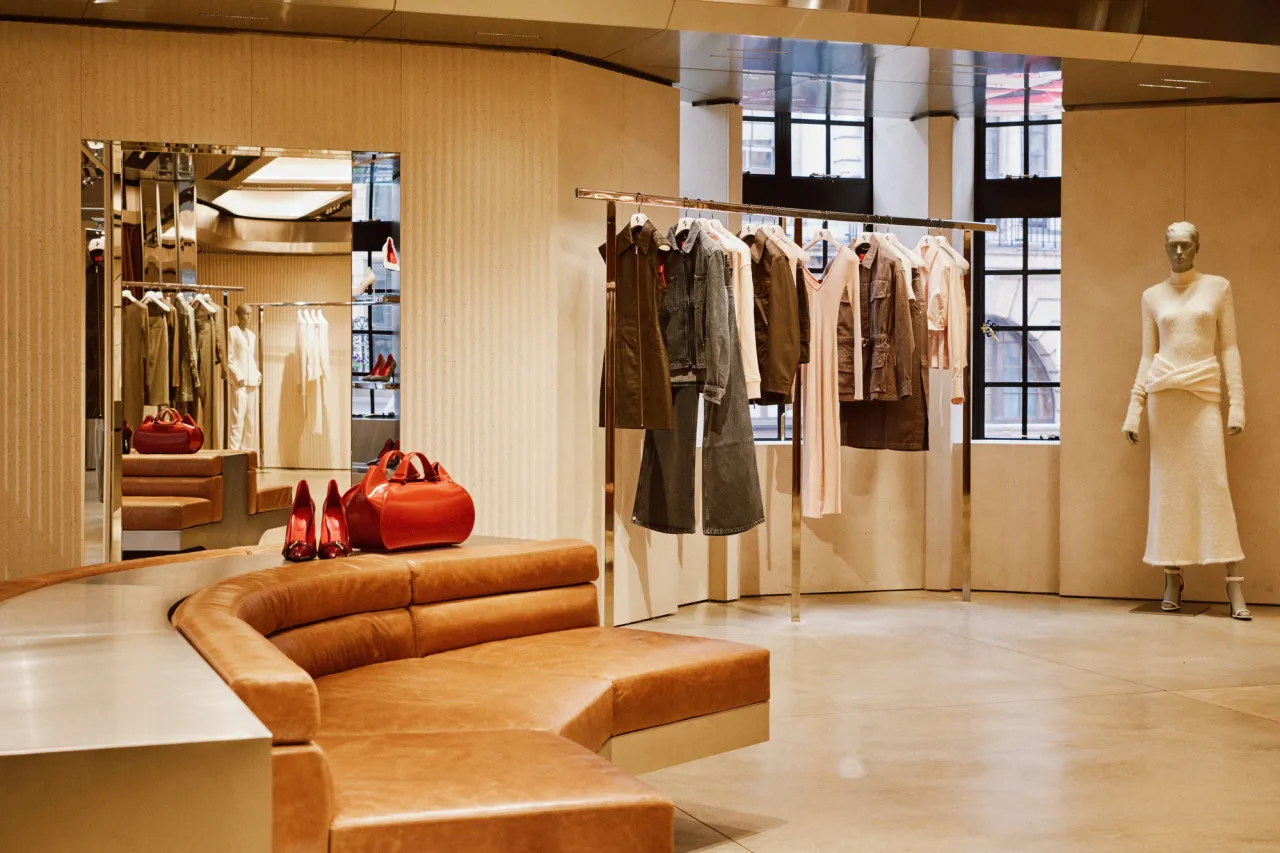
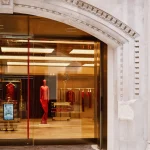
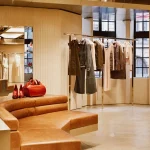
Large floor-to-ceiling glazing at ground level opens the space visually to the street, creating a gallery-like transparency. Inside, the structure is intentionally exposed and simplified, with the building’s columns and proportions made visible.
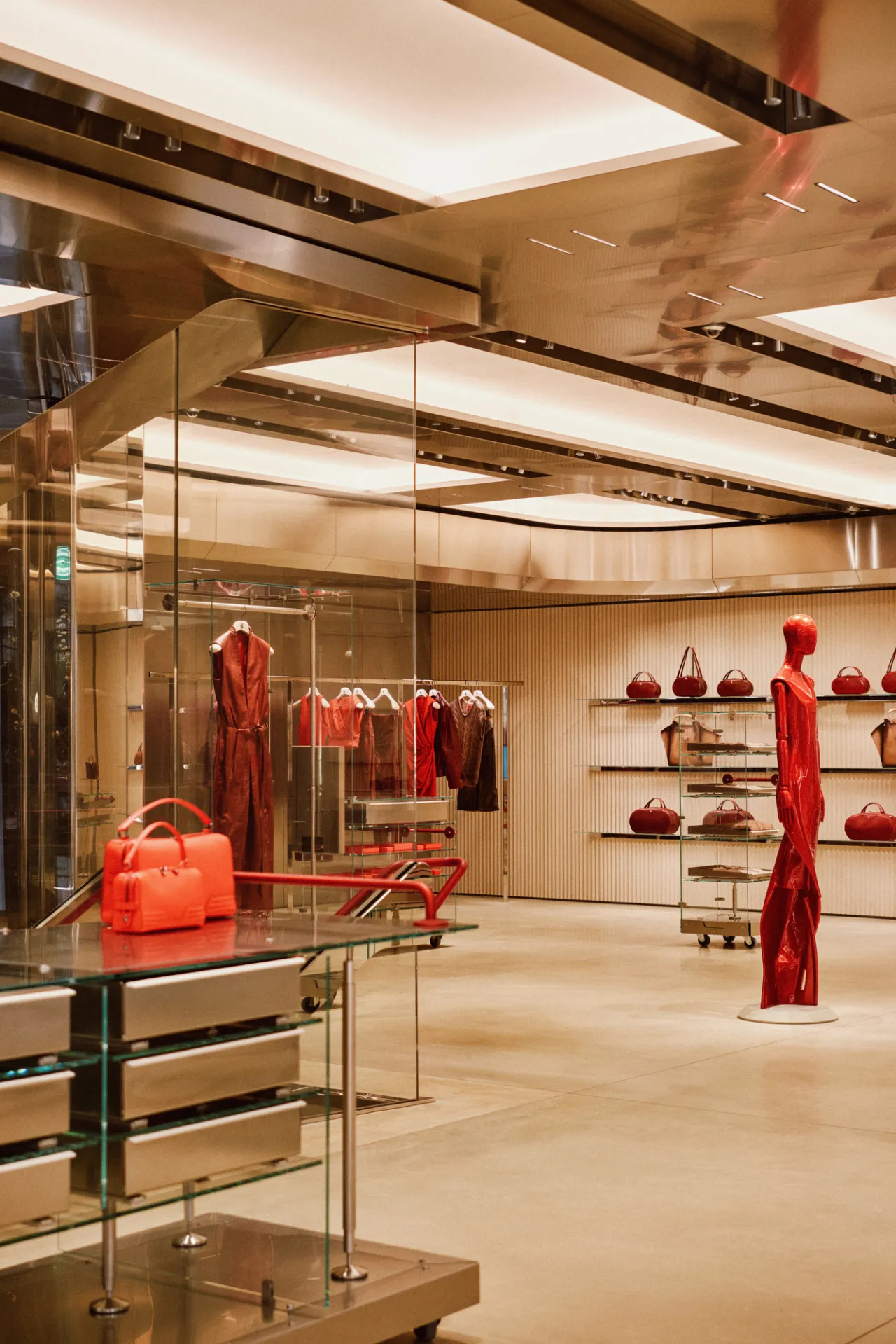
A continuous stainless-steel perimeter element runs through the space, acting as a visual and material boundary between the historic exterior and the modern interior language.
Materials and design language
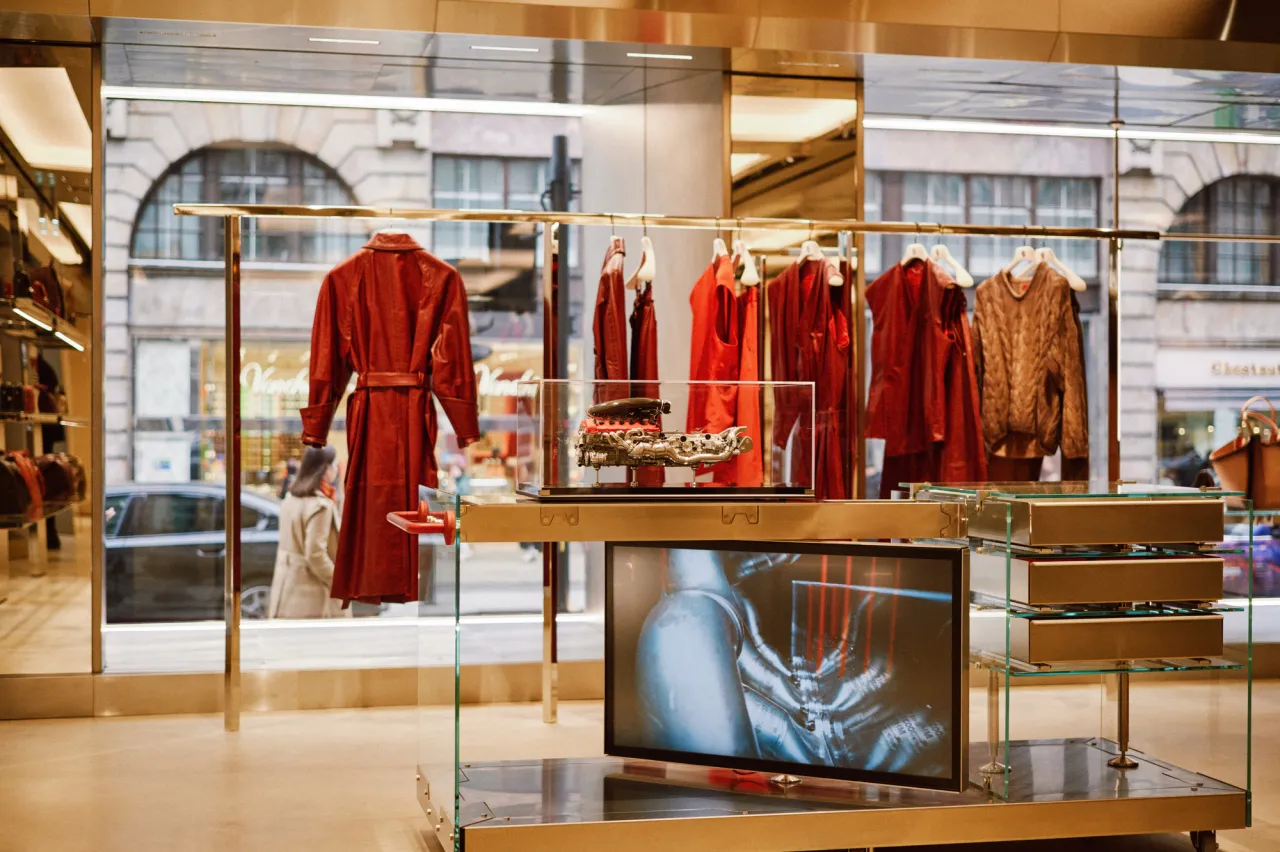
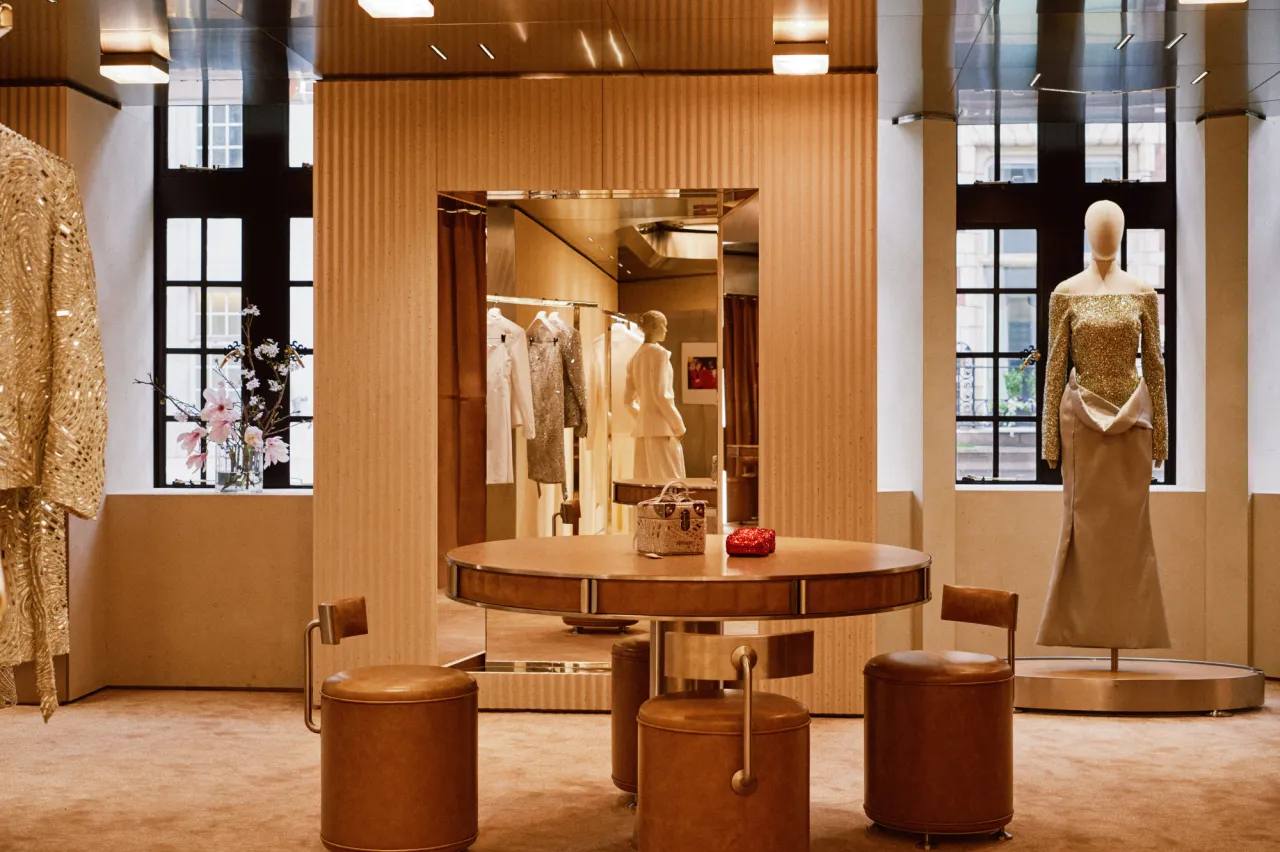
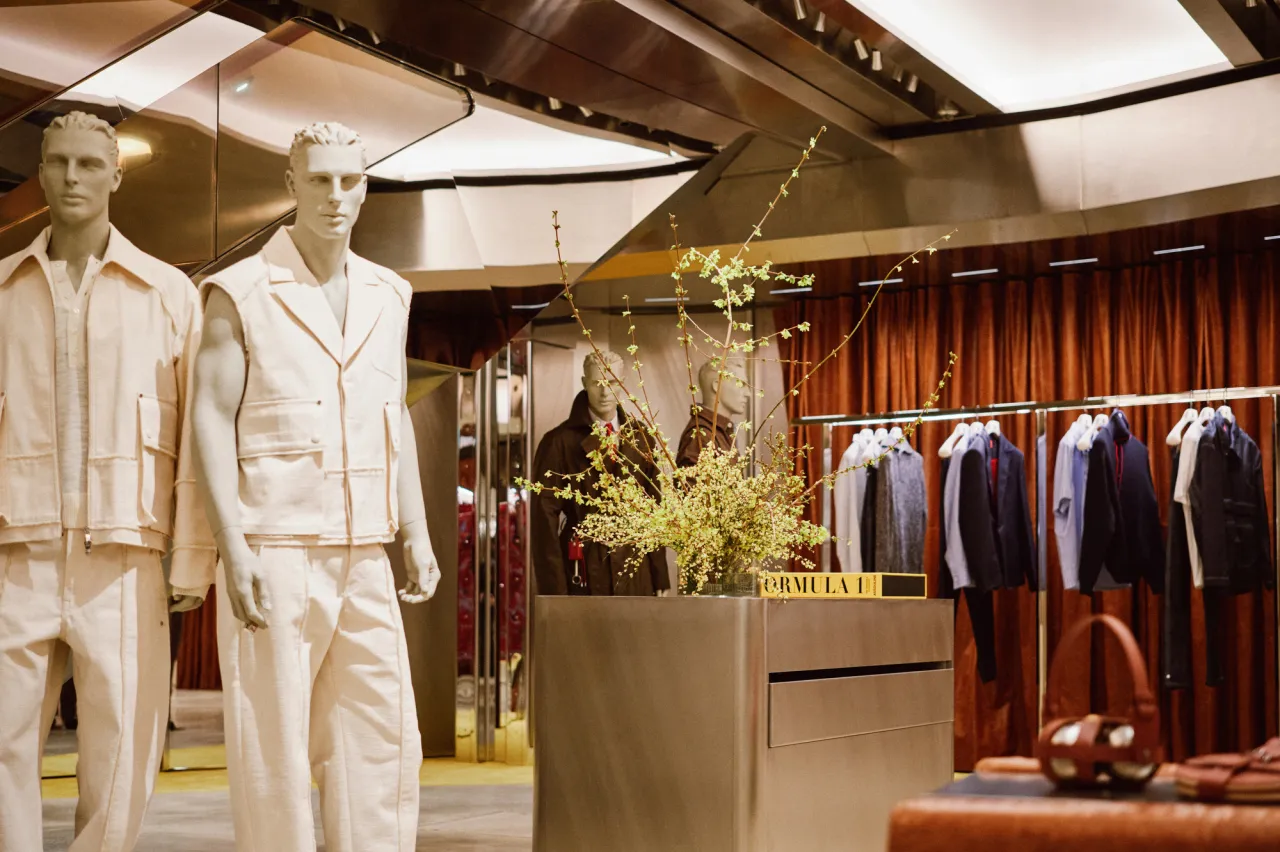
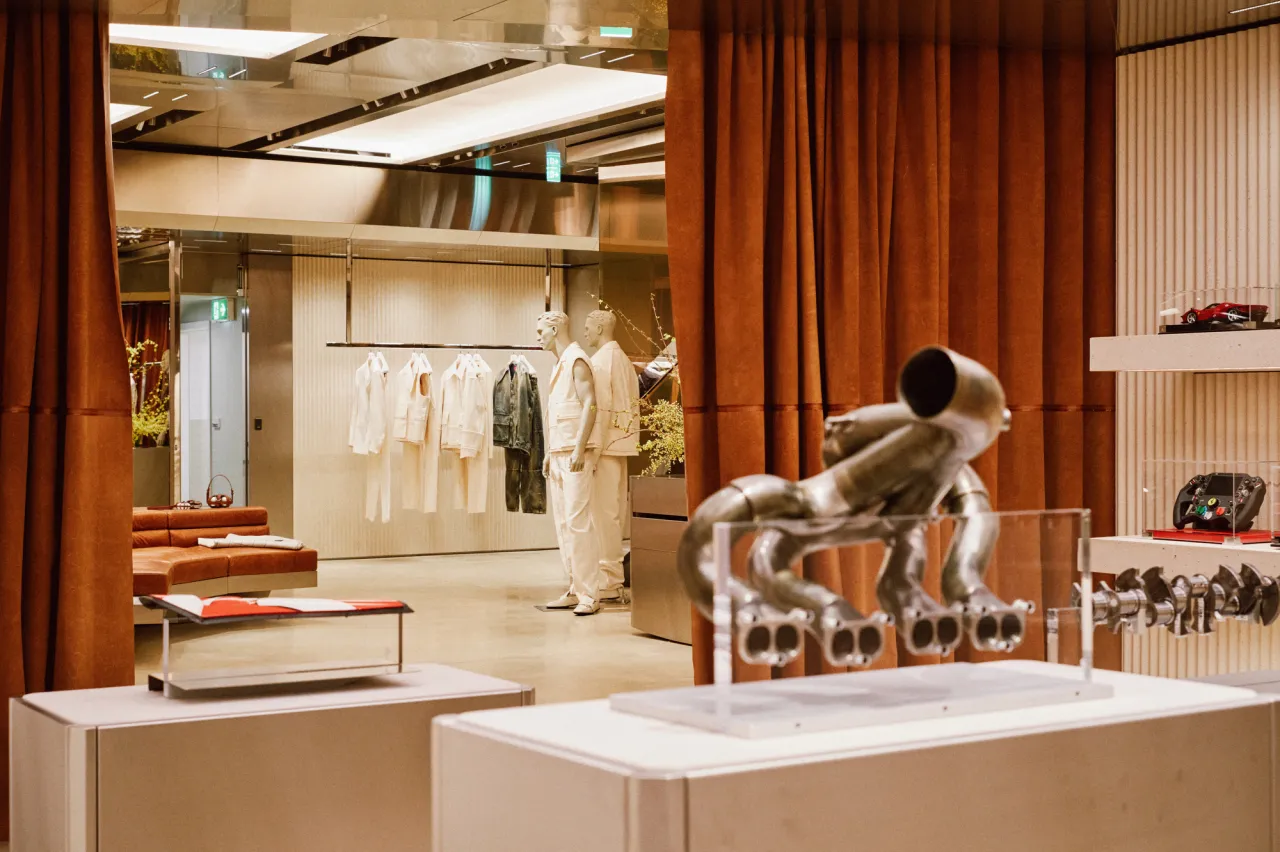
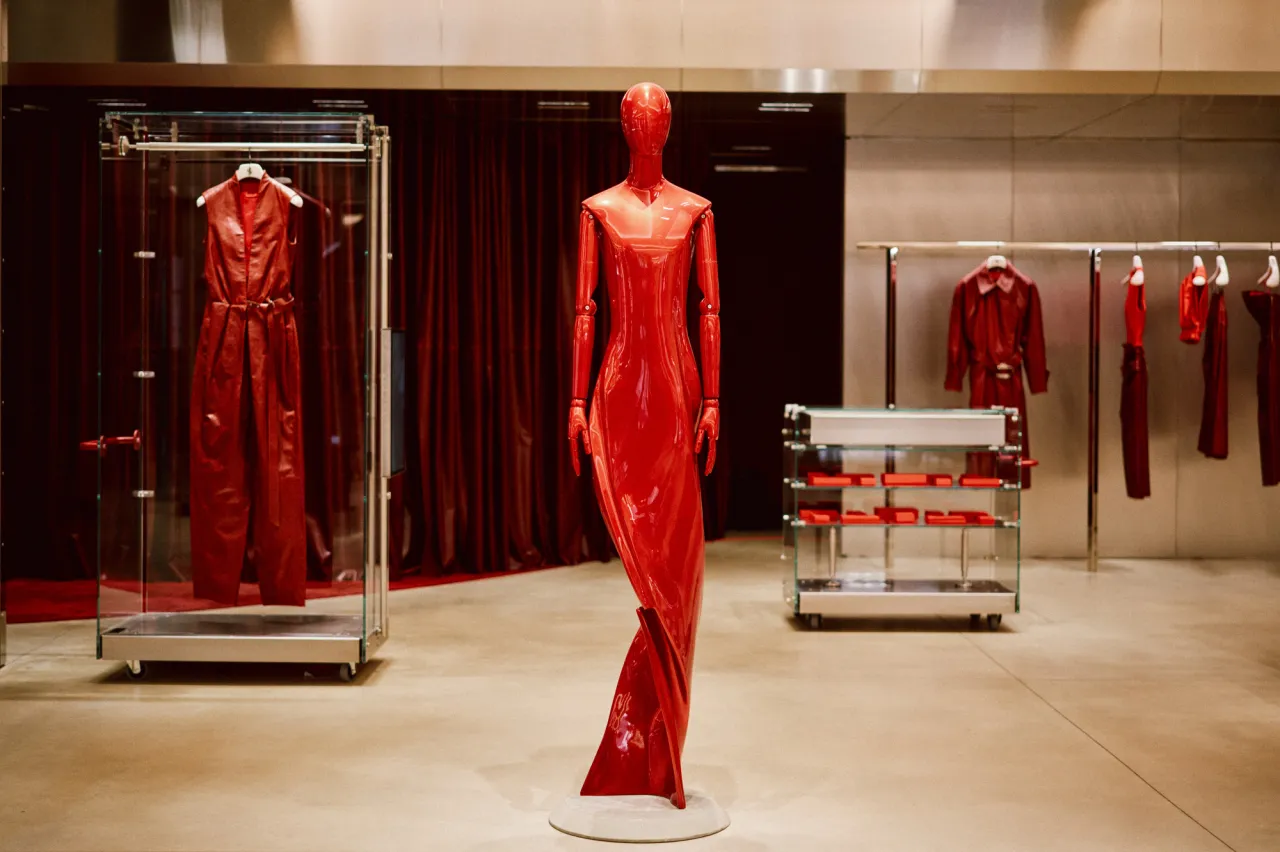
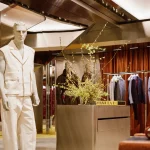
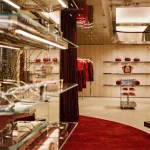
The design relies on a restrained industrial palette. Concrete flooring sets a neutral base, while stainless steel, glass, and aluminum define display systems and vitrines. The focus is on precision and structure. Display fixtures are treated like engineered components, echoing automotive detailing. Subtle red accents appear throughout, referencing Ferrari’s signature color without dominating the environment.
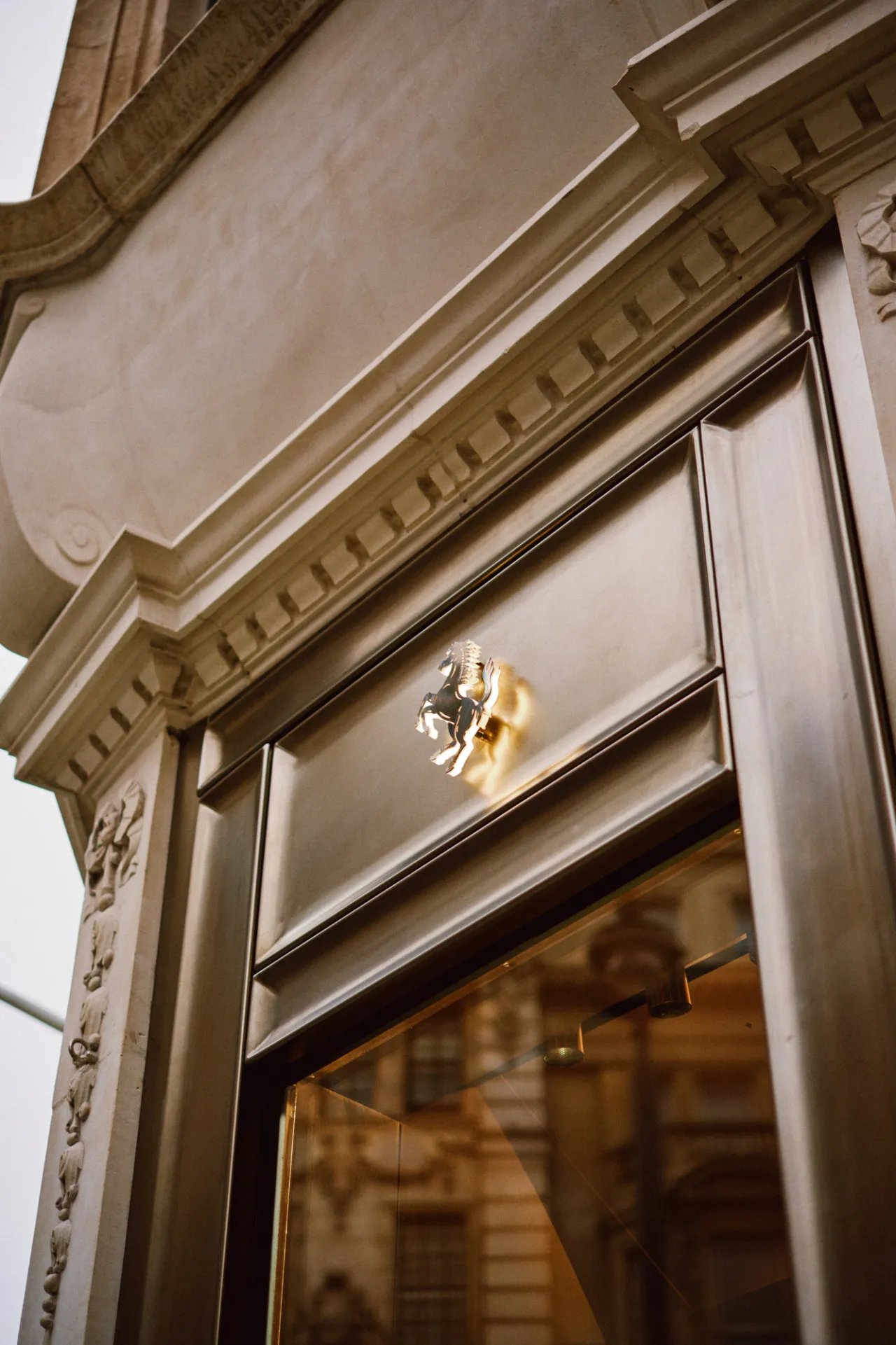
The result is a controlled contrast between cold industrial surfaces and finished display elements, with softer material touches in select areas.
Three-level spatial structure
The store is organized across three distinct levels, each with a specific function.
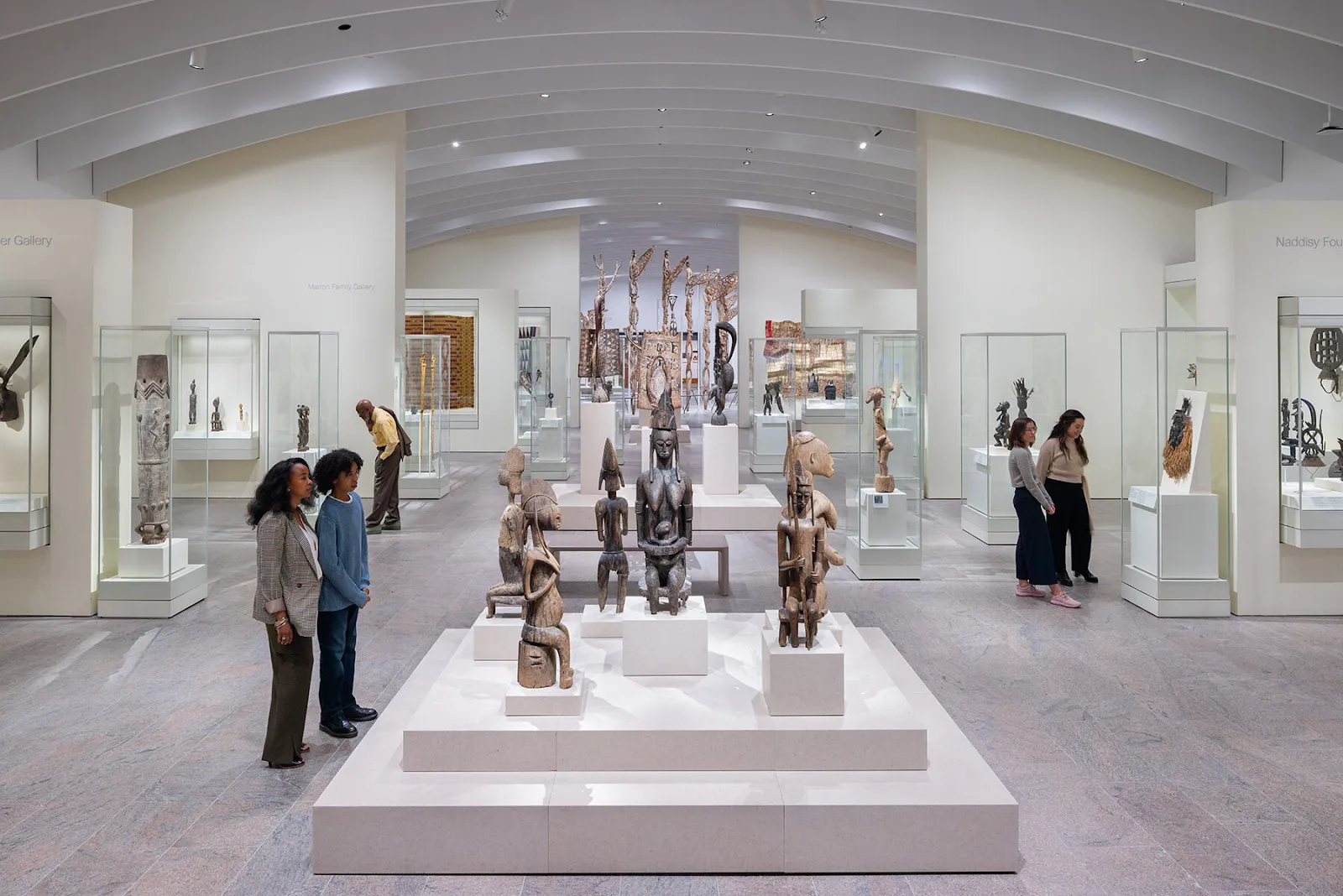
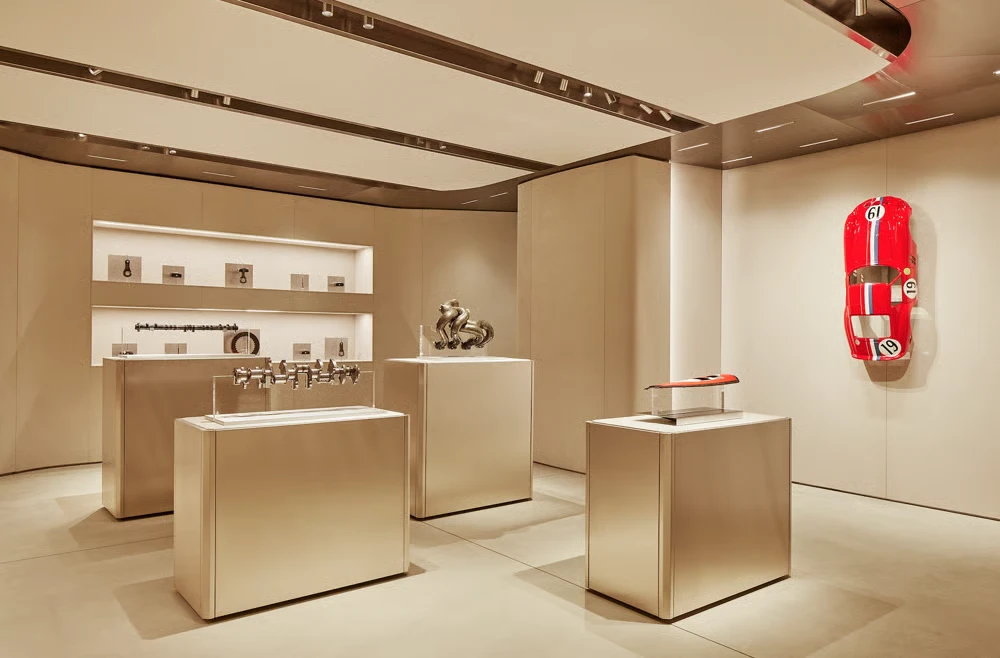
- The basement level, known as the Caveau, is dedicated to rare components and collectible objects sourced from Ferrari’s headquarters in Maranello. It feels archival in presentation, closer to a curated display than a conventional retail floor, giving the space a quiet, museum-like tone.
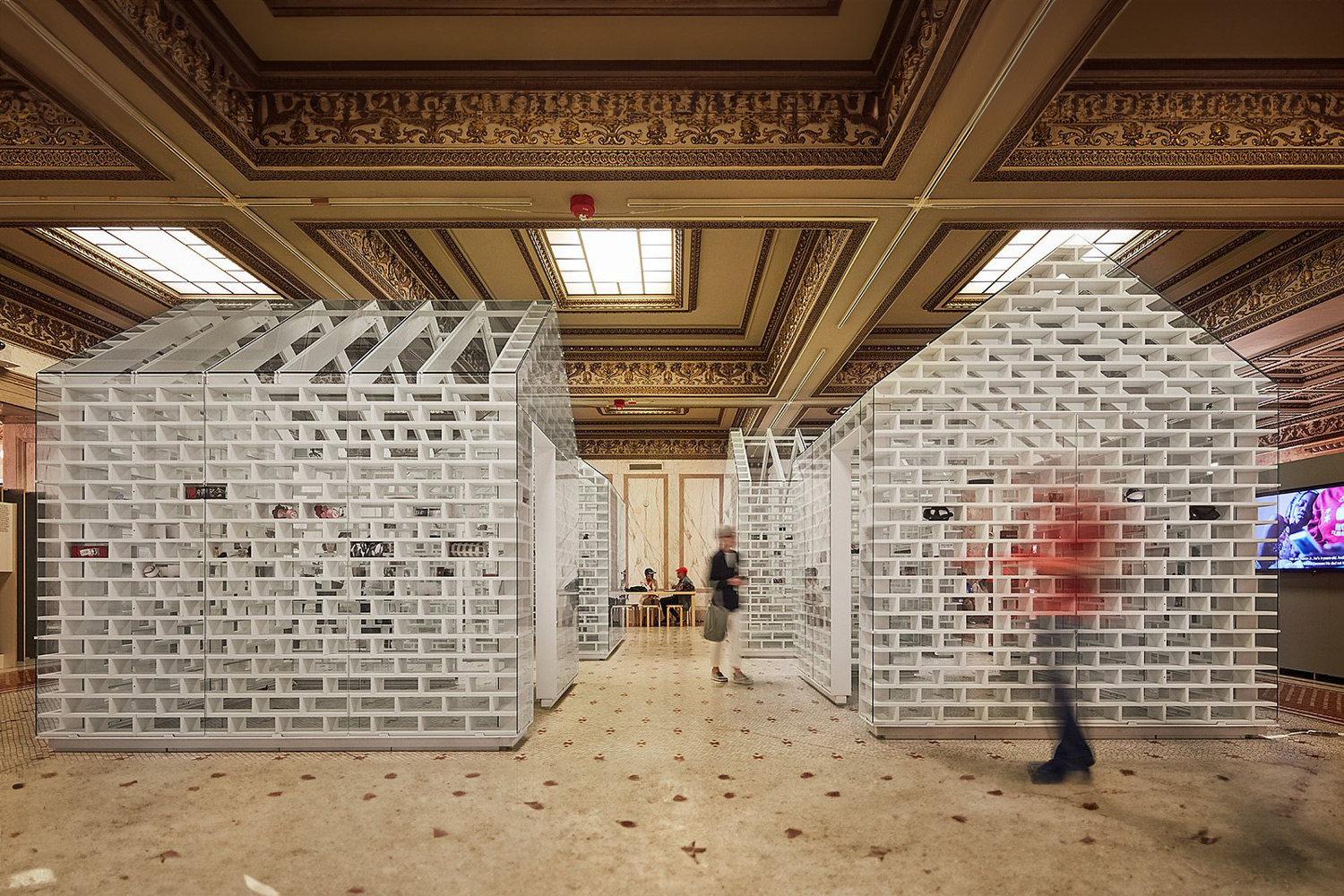
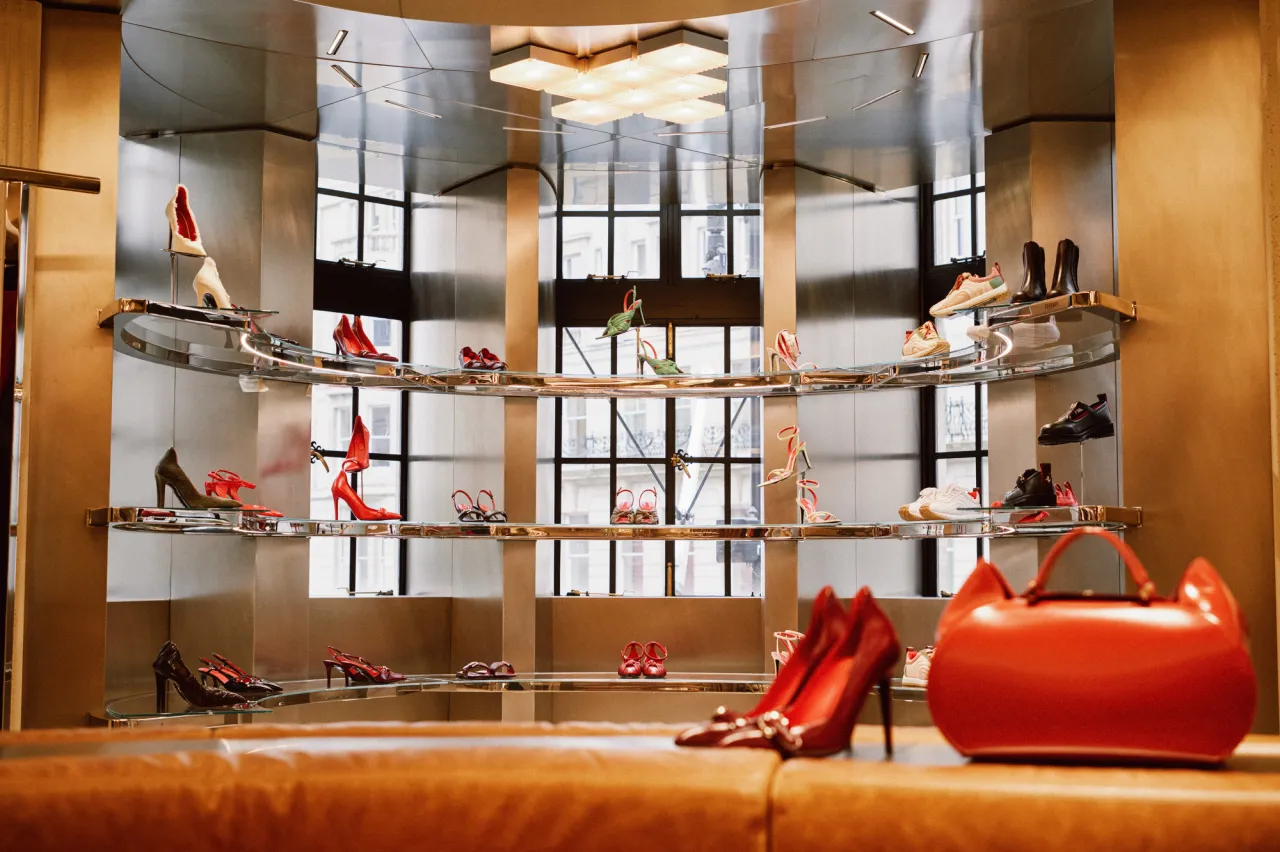
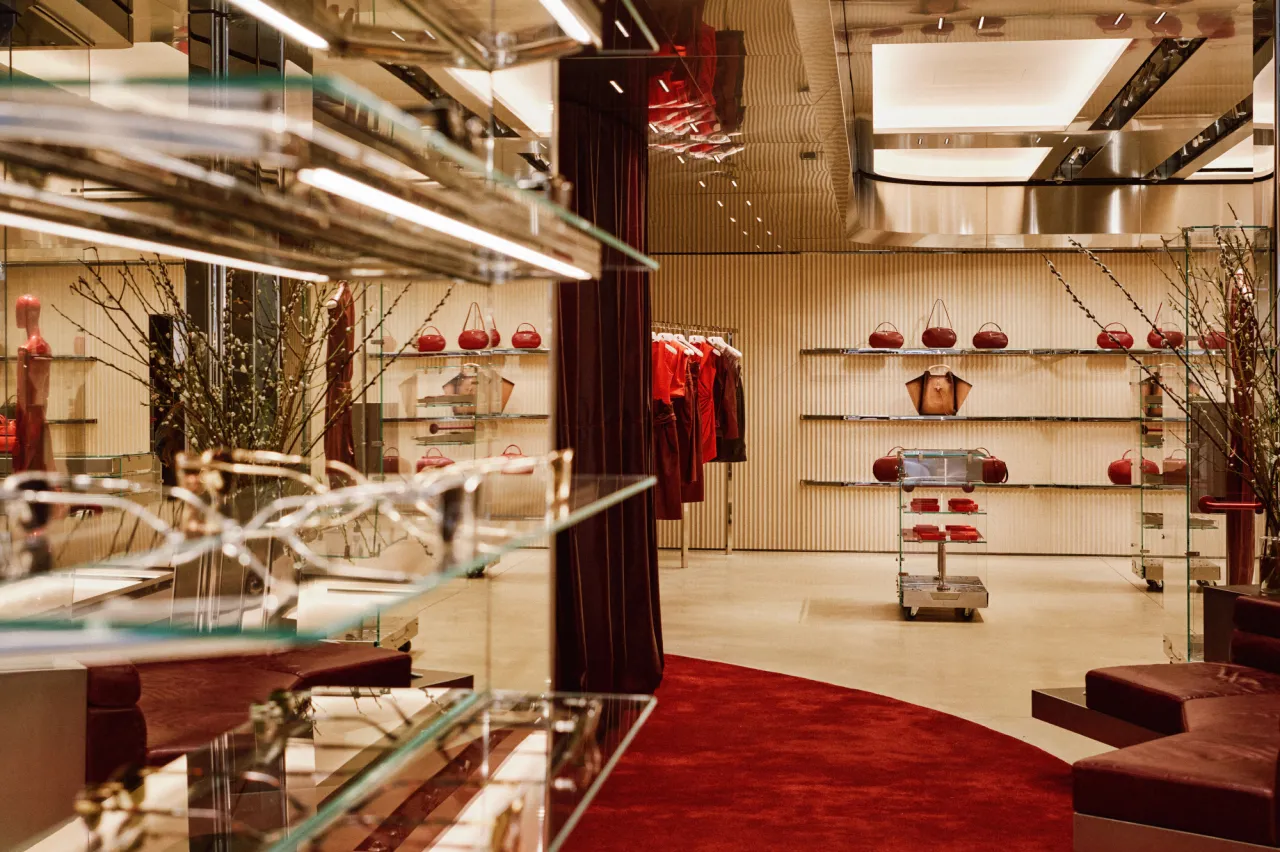
- The middle level brings together ready-to-wear fashion, accessories, footwear, eyewear, and lifestyle objects. Items are spaced with intent, treated as individual pieces rather than dense stock, reinforcing a gallery-like reading of the collection.
- The upper floor is home to the Tailor Made atelier. Reserved for private client appointments, it focuses on bespoke garments and customization. The environment becomes more enclosed and subdued, with seating arranged to support conversation and privacy.
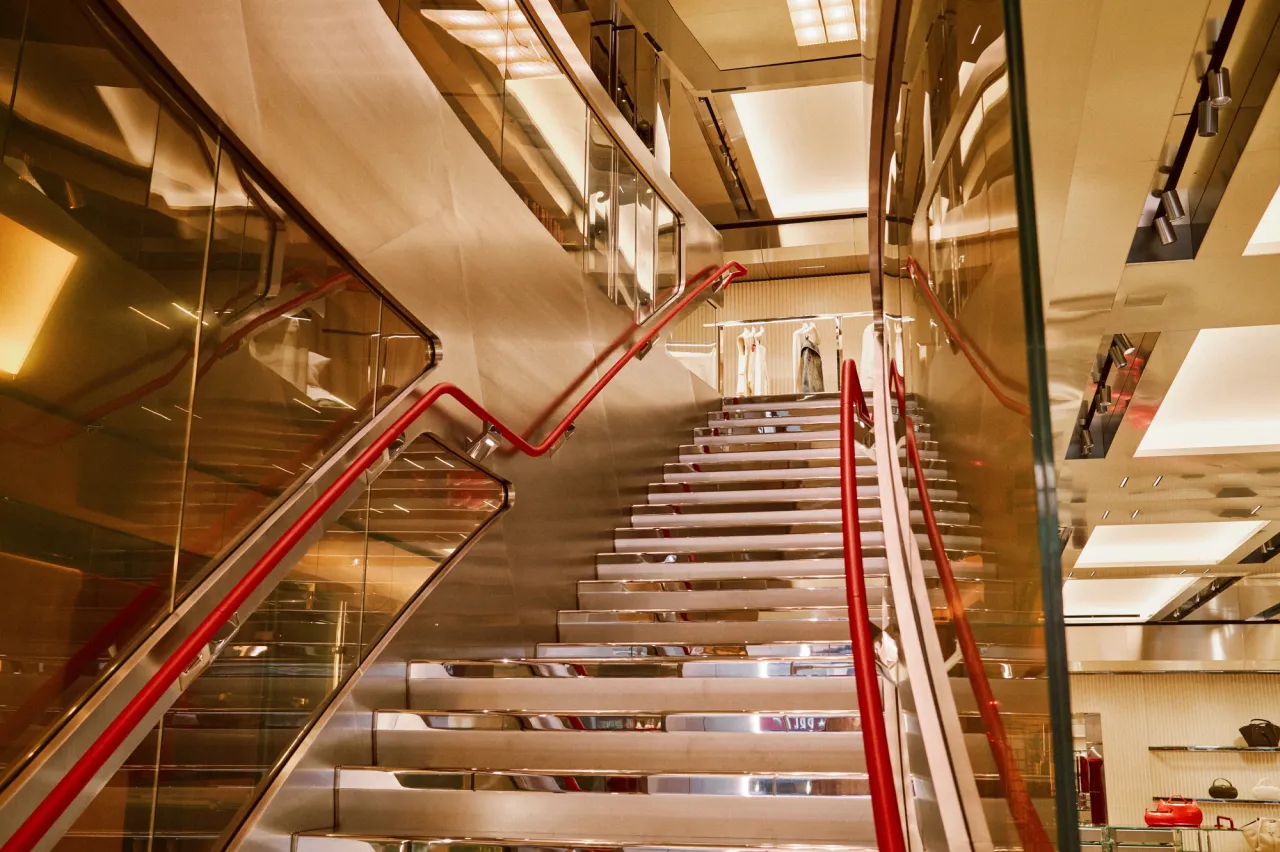
Store design was developed under Ferrari Style creative direction with architectural input from Berlin-based Gonzalez Haase AAS and Milan studio Formafantasma. Their collaboration blends exhibition-style thinking with the practical demands of retail.
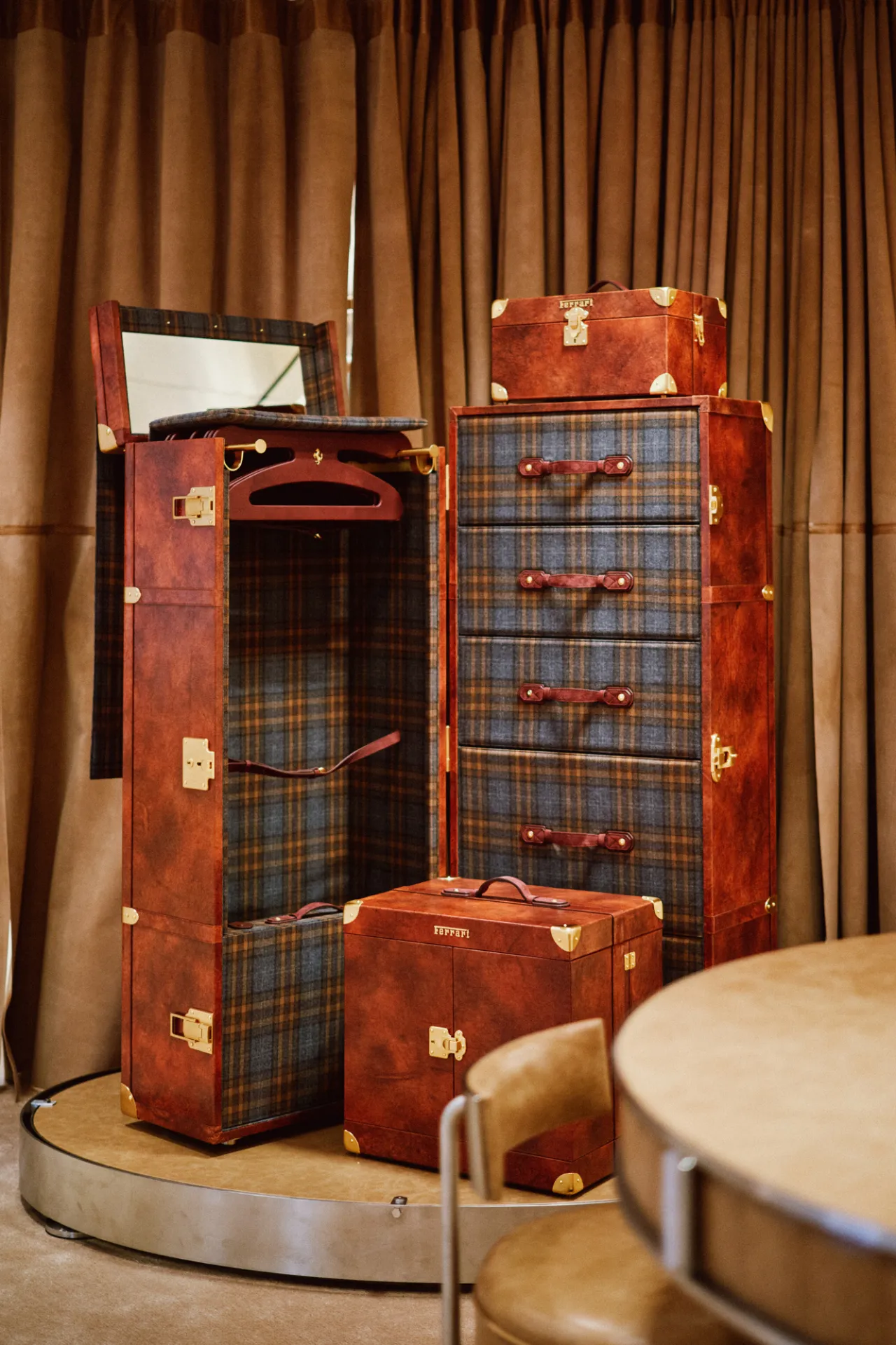
The store was developed under Ferrari Style creative direction with architectural input from Berlin-based Gonzalez Haase AAS and Milan-based Formafantasma. The collaboration shapes a space that borrows from exhibition design language while still functioning as a retail environment.
A London-focused flagship strategy
The London opening is part of Ferrari’s broader lifestyle retail expansion, joining a small group of international flagship locations. Bond Street provides a fitting setting, given its long association with luxury retail and its proximity to established fashion and design houses.
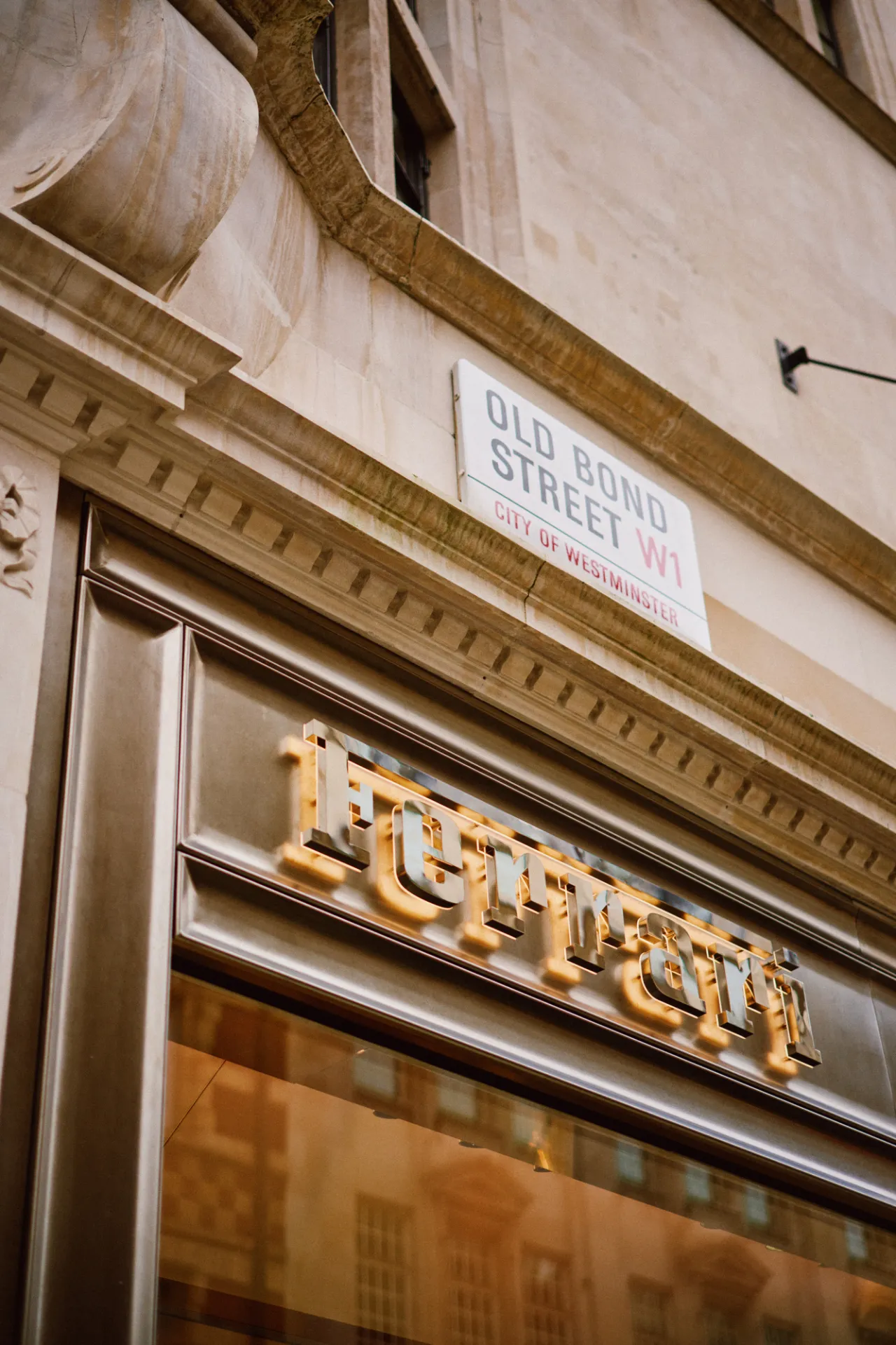
The store positions Ferrari’s lifestyle collections in a space that combines automotive precision with contemporary design, making shopping a curated architectural experience.
Credit: Ferrari