







Iraqi-born British architect Zaha Hadid, whose deconstructivist approach revolutionized architecture, redefined 21st-century architecture. Transforming ideas about what can be achieved with concrete, steel, and glass, Hadid combined optimism for the future and a keen eye for innovation with advanced design, material, and construction innovations. Known as the “Queen of Curves,” the Pritzker Prize–winning architect challenged the rigidity of traditional architectural forms through her groundbreaking parametric designs of flowing lines, dynamic angles, and interwoven planes.
On March 31, 2016, Zaha Hadid passed away, leaving behind her dazzling architectural works and ideas that continue to inspire architects around the world. Adopting a futuristic architecture characterized by curved facades and sharp angles, Hadid took the world’s strongest materials and designed structures that appear soft and robust.
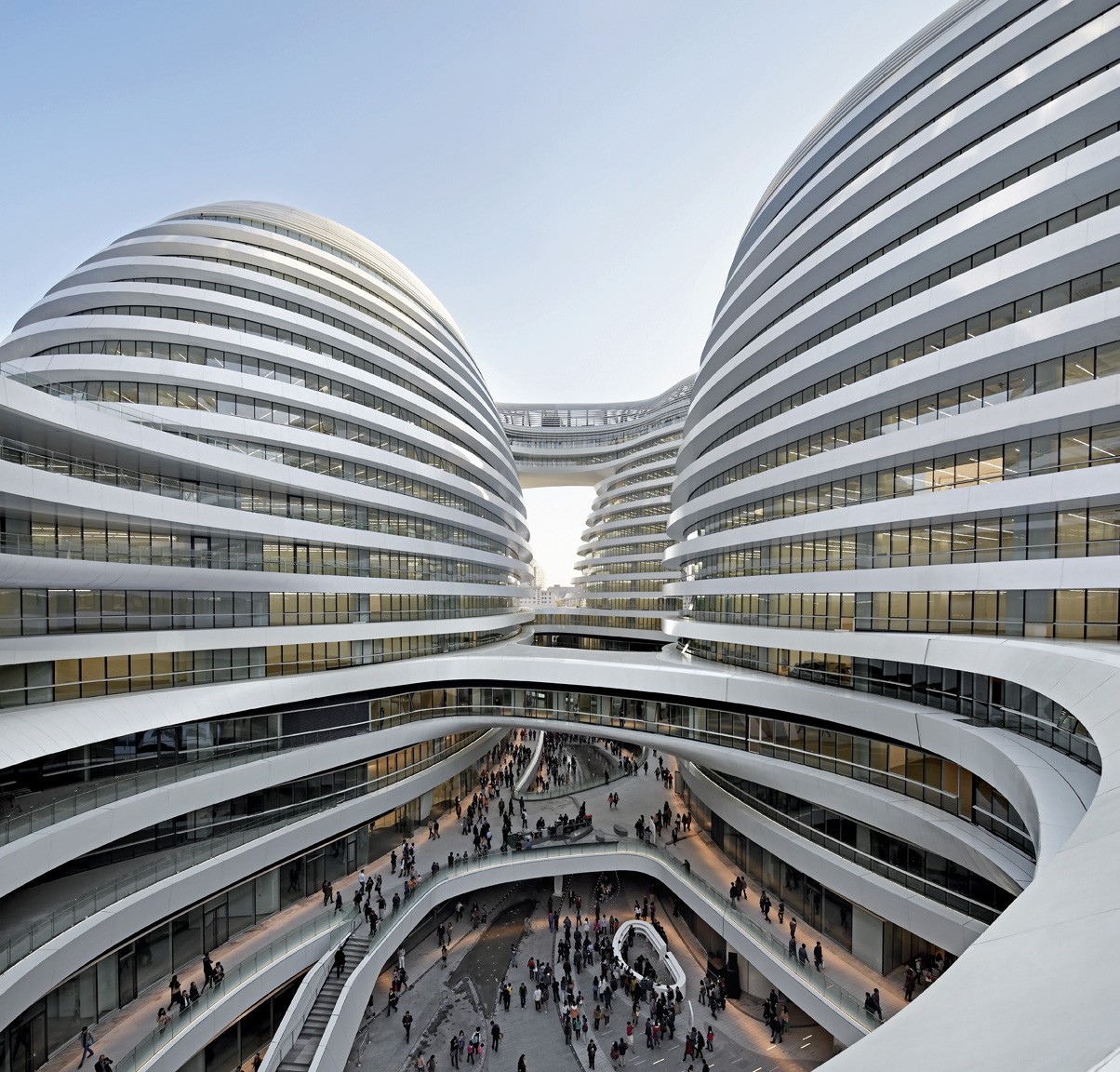
Zaha Hadid, who revolutionized architecture with designs such as the Vitra Fire Station, the Heydar Aliyev Center, the MAXXI Museum, and the Galaxy SOHO, also designed numerous unrealized projects. Although these projects were not built due to criticism or financial concerns, they serve as a guide for exploring Hadid’s architectural perspective, and she continues to influence the future with her visionary designs.
On Zaha Hadid’s birthday, we explore 10 of her unrealized projects that, despite never being built, still shape the future of architecture. Happy birthday, Zaha Hadid. Thank you for everything you have contributed to the world of architecture.
1. The Peak Leisure Club
Location: Hong Kong, China
Year: 1982
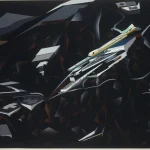
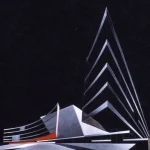
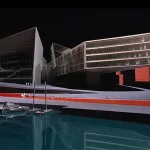
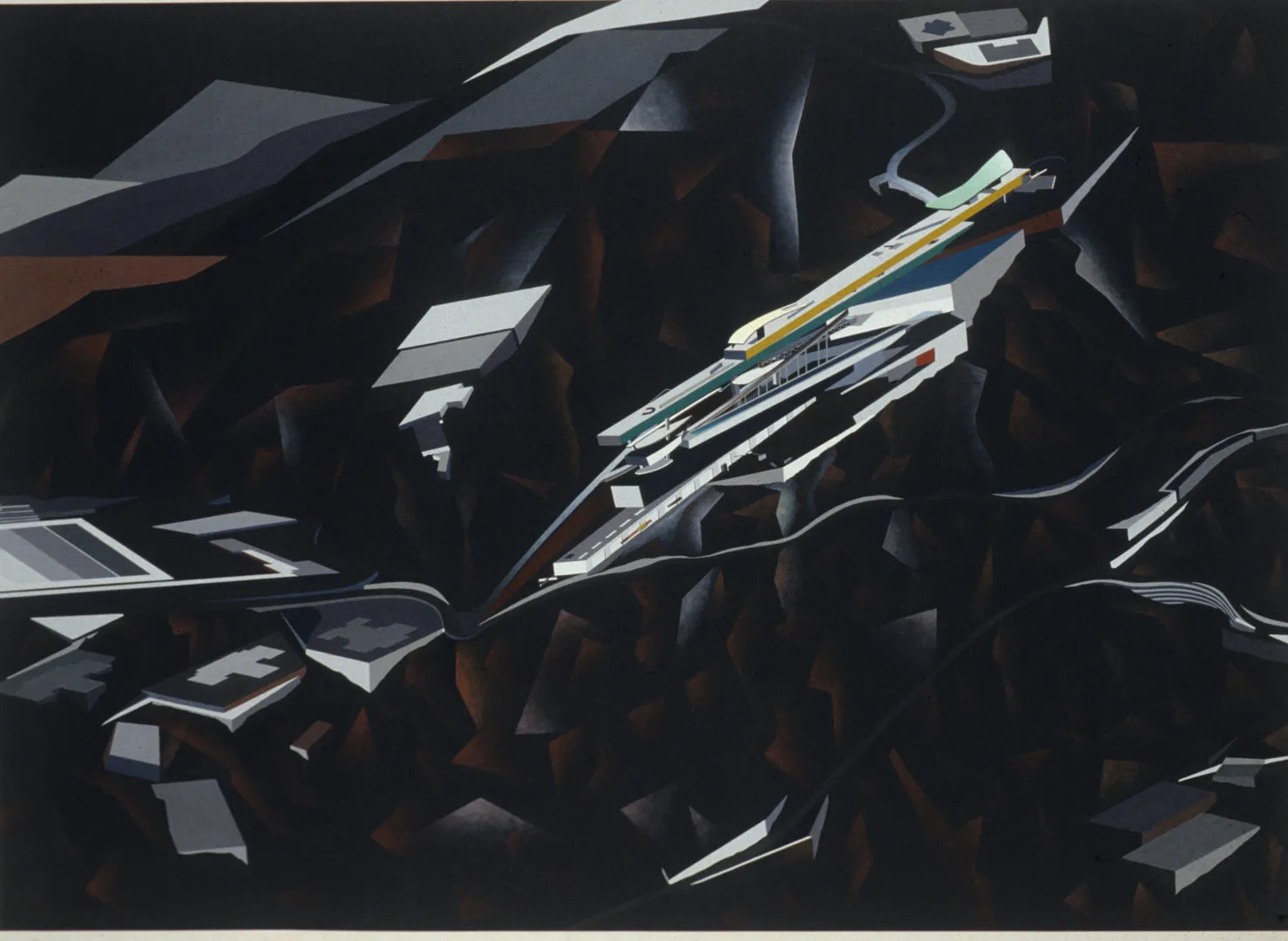
Zaha Hadid, who won the competition for a new private club to be located in the Kowloon Hills, proposed a horizontal skyscraper composed of different layers to create a new artificial topography. She designed these layers as large cantilevered beams that rise from the ground and appear to float above the site. The forms seem to defy gravity, suspended and gliding through the air.
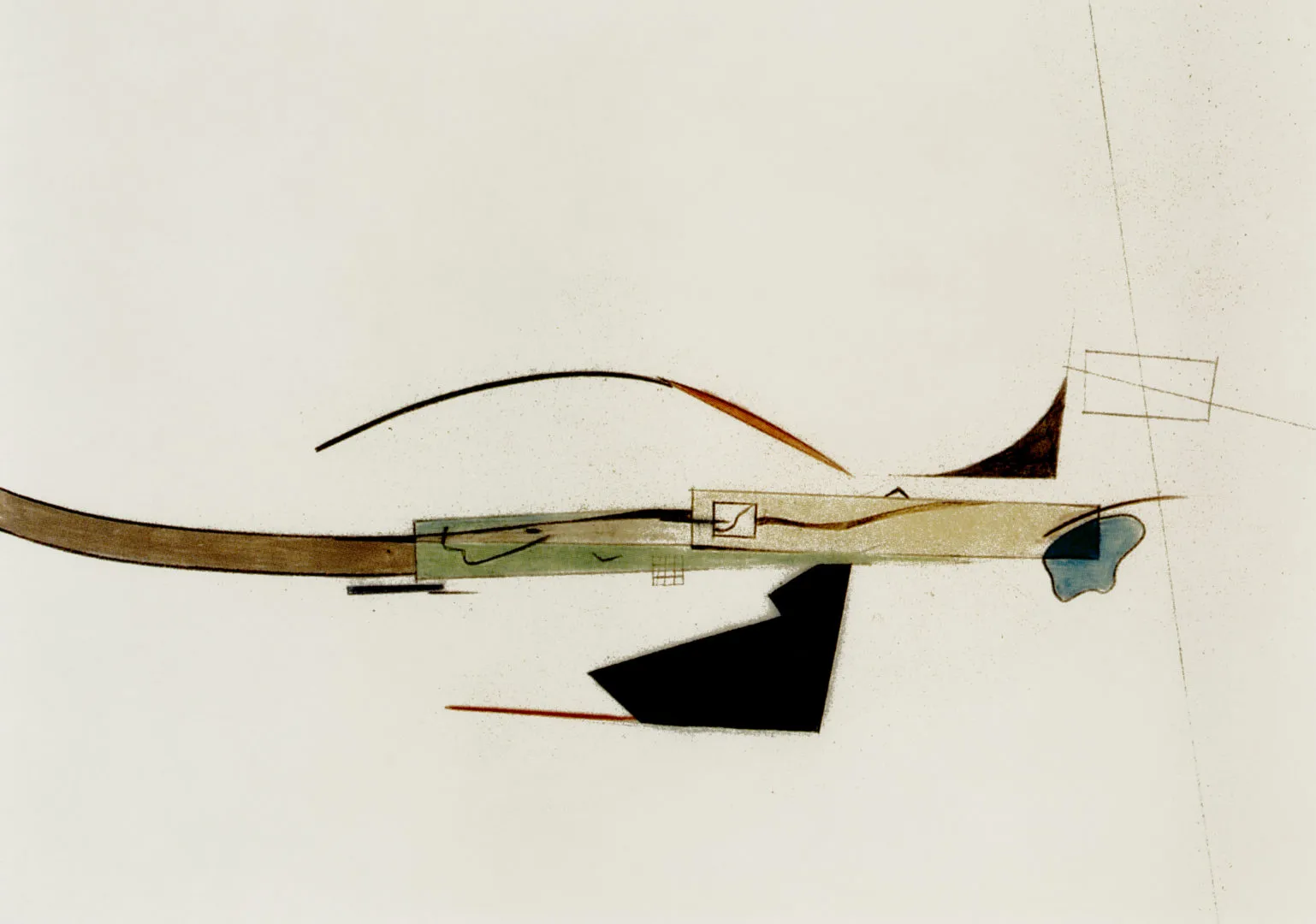
The Peak Leisure Club, which revives the Suprematism El Lissitzky proposed as a starting point for his career during the Russian Avant-Garde, takes shape through the overlapping of different horizontal layers, where programs fit into the design and the project takes shape. Underneath these structural beams, Hadid designed striking spaces for leisure activities, including a swimming pool and other dynamic social areas.
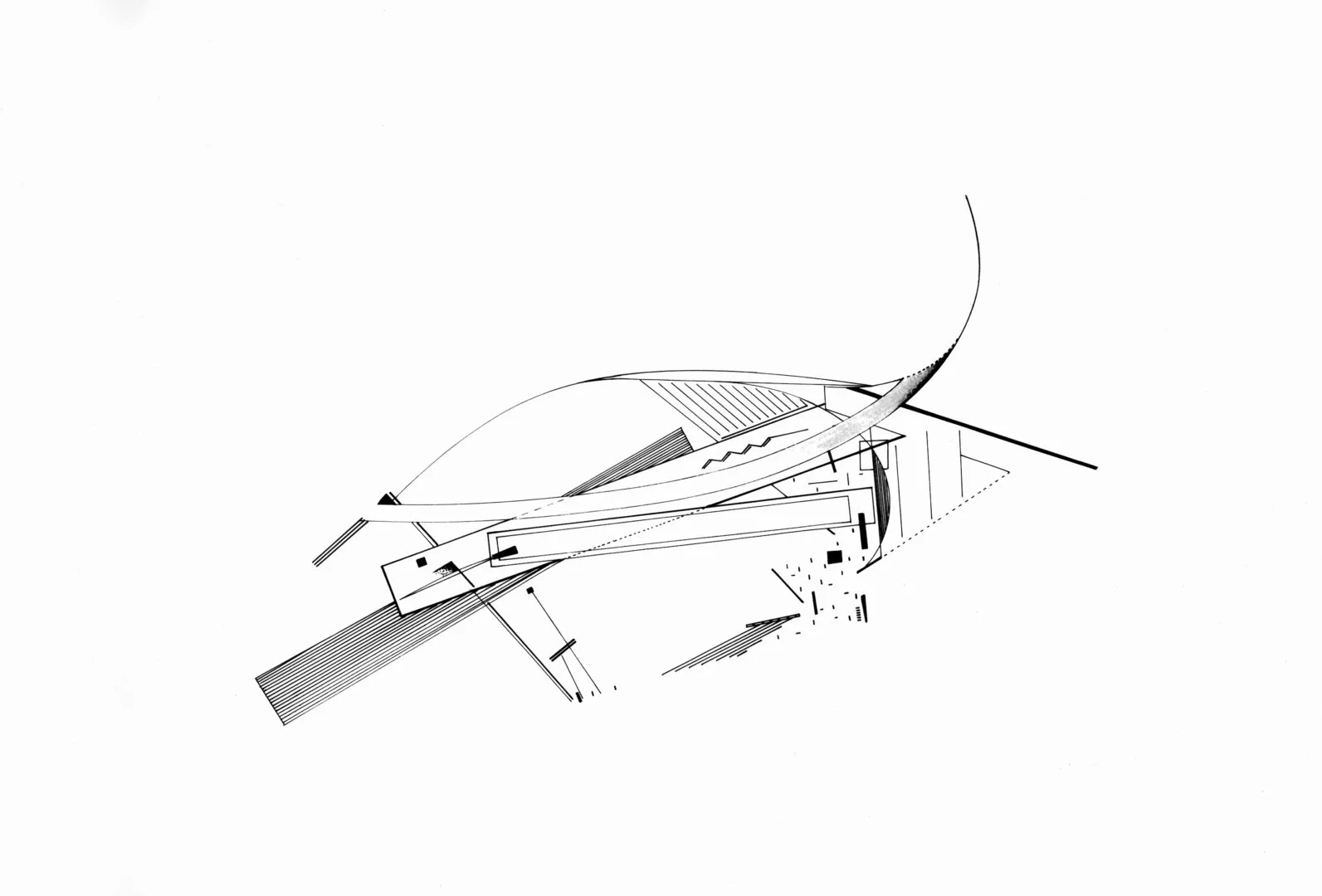
Zaha Hadid’s project, The Peak, which she describes as a “man-made geology” and transforms hilltops by constructing artificial cliffs using excavated rock, was never built. However, Hadid’s project, which explores the potential for dynamism and distortion by superimposing sharp planar elements and creating multiple perspectives, represents a turning point in her exploration of formal design as a tool.
2. Cardiff Bay Opera House
Location: Cardiff, Wales
Location: 1994-1995
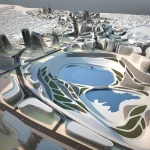
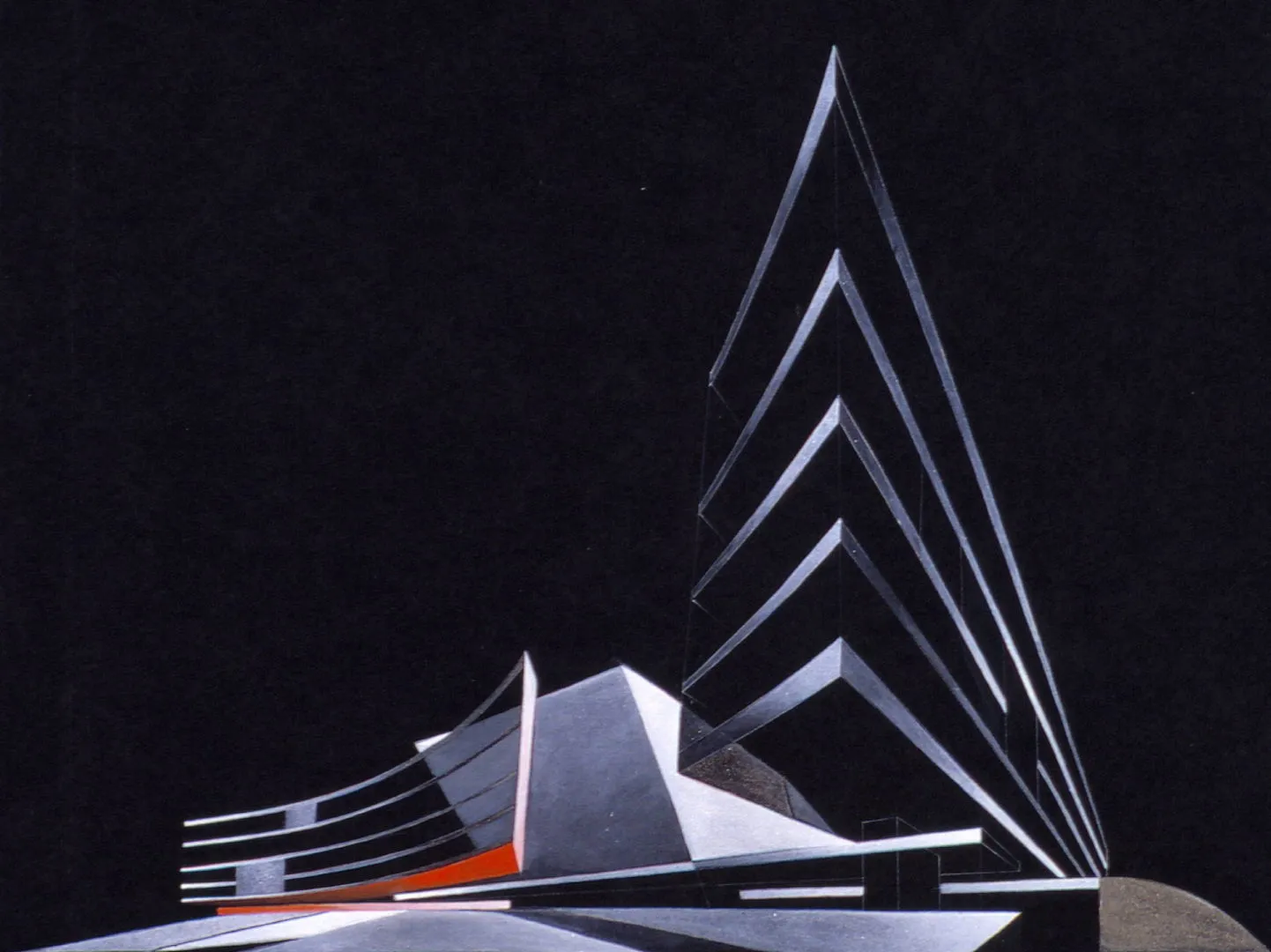
Zaha Hadid won the competition from 268 international firms to design an opera house, designed by the Cardiff Opera House Foundation, to revitalize the area and become a landmark. Despite Hadid’s adaptations and collaborations throughout the project, the Zaha Hadid-designed Cardiff Bay Opera House faced criticism but was never funded by the Millennium Commission and was never built. Nevertheless, Hadid’s unique concept, which she described as an “inverted necklace,” continues to influence architecture today.
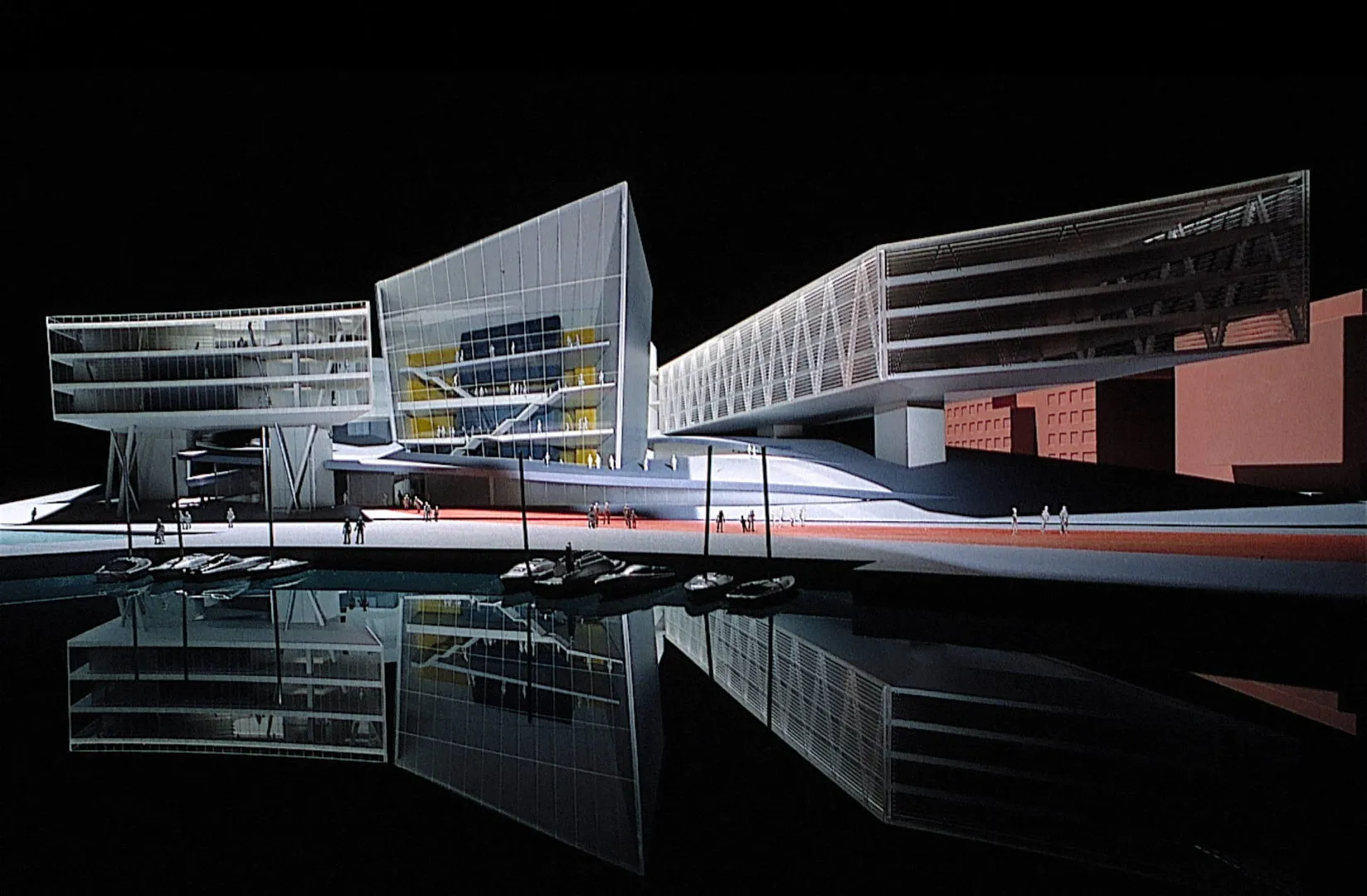
The design of the Cardiff Bay Opera House combined two typically opposing paradigms in modern architecture: the monument and the space. It featured a central glass volume housing the main performance hall, wrapped by another glass enclosure that shaped the Oval Basin Plaza and formed a striking symbolic presence along the waterfront.
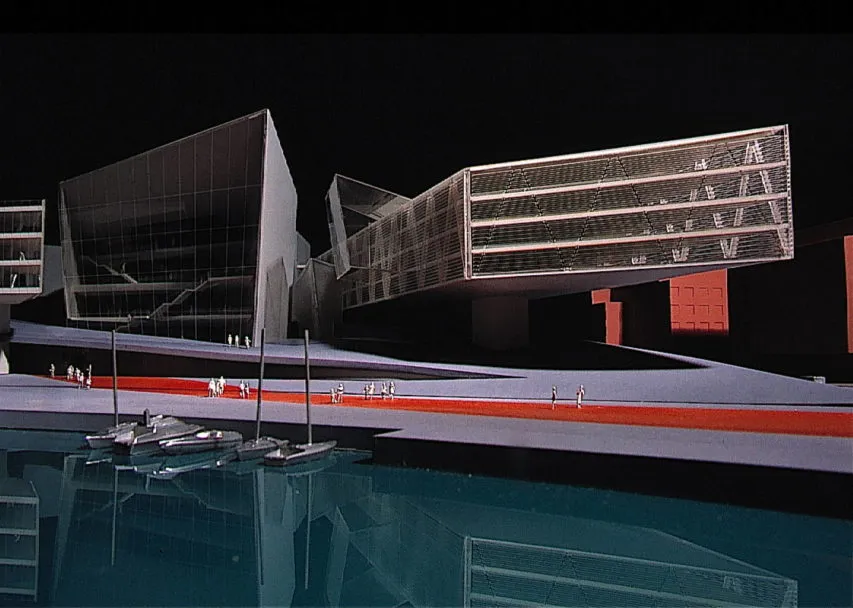
Seamlessly blending public space with private space through spatial hierarchy and layout, the Cardiff Bay Opera House featured futuristic, fragmented forms that challenged the user’s perception of form and space. For the auditorium, Hadid envisioned movable walls capable of adjusting acoustics to accommodate both musical theatre and opera performances, ensuring optimal sound quality and flexibility within the dynamic architectural environment.
3. New National Stadium
Location: Tokyo, Japan
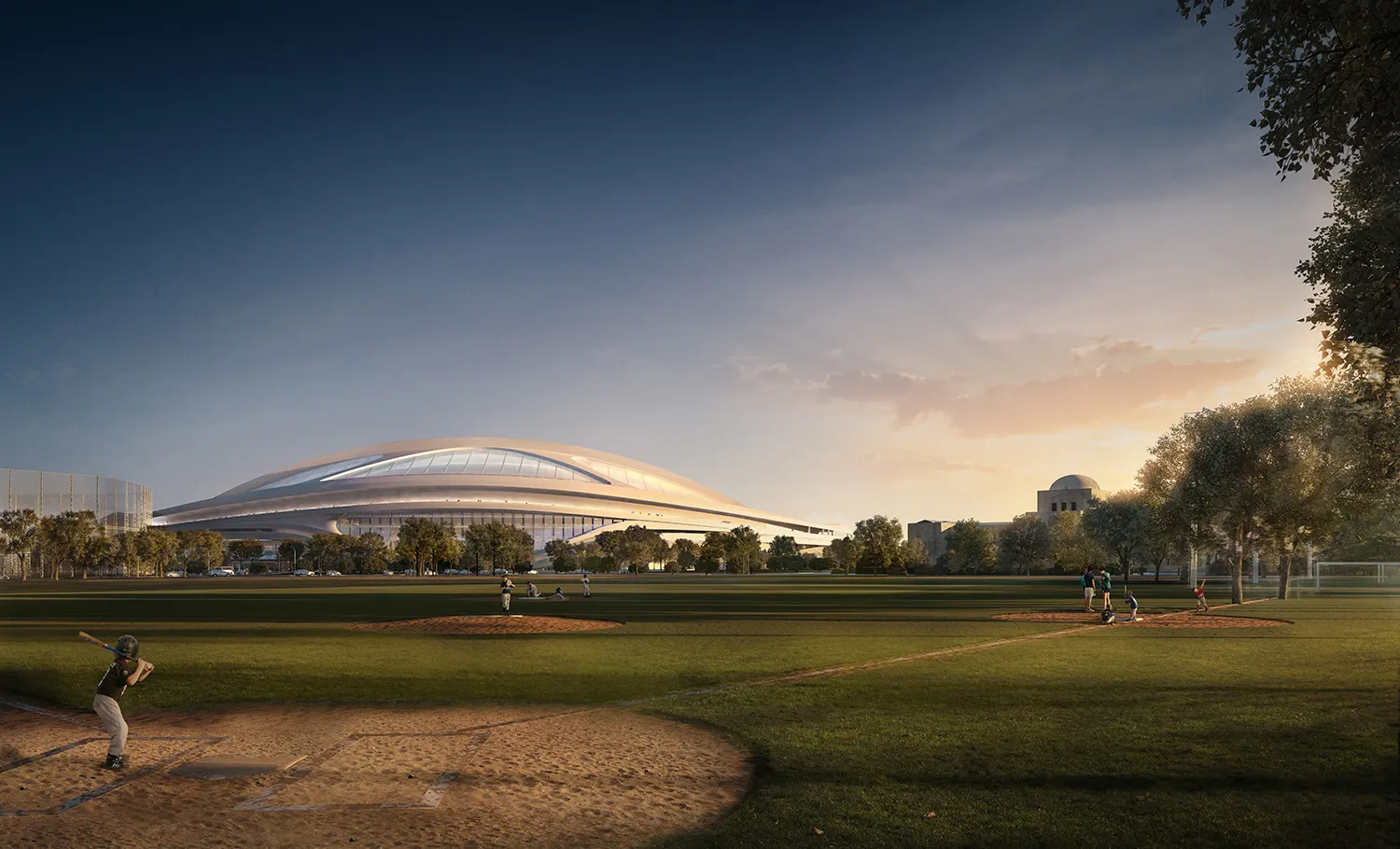
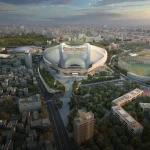
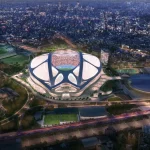
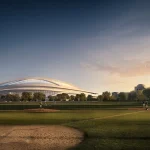
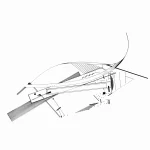
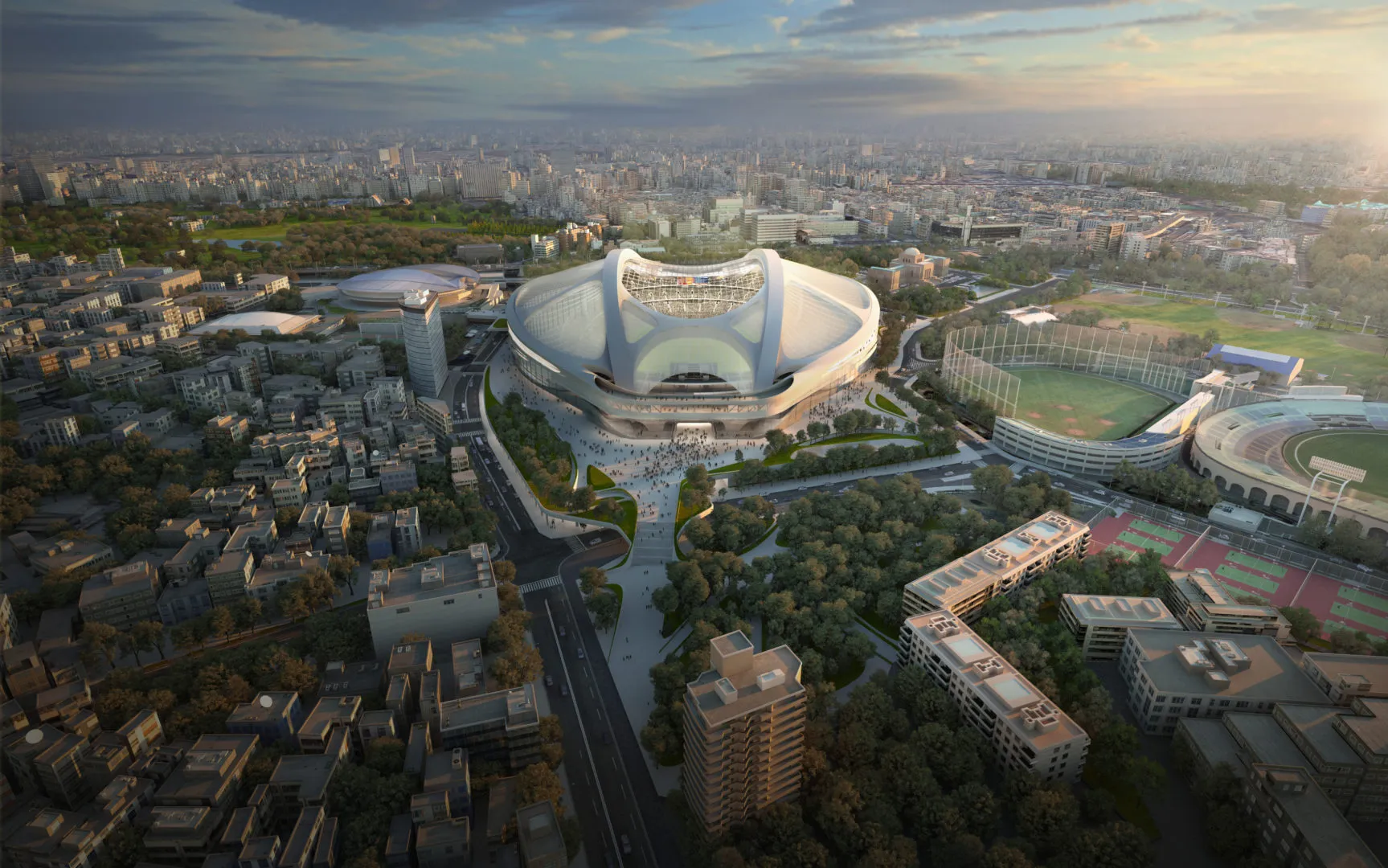
Designed by Zaha Hadid to host the Tokyo 2020 Olympic and Paralympic Games, the New National Stadium is an integral part of the city’s fabric. This urban connection strengthens and regulates the movement of people from different directions. The stadium consists of a combination of efficient, long-span structural ribs connected by a system of lightweight, translucent membranes. The stadium’s interior gains a definable identity with its robust roof structure, which contrasts with the lightness of the translucent membrane tensile structures.
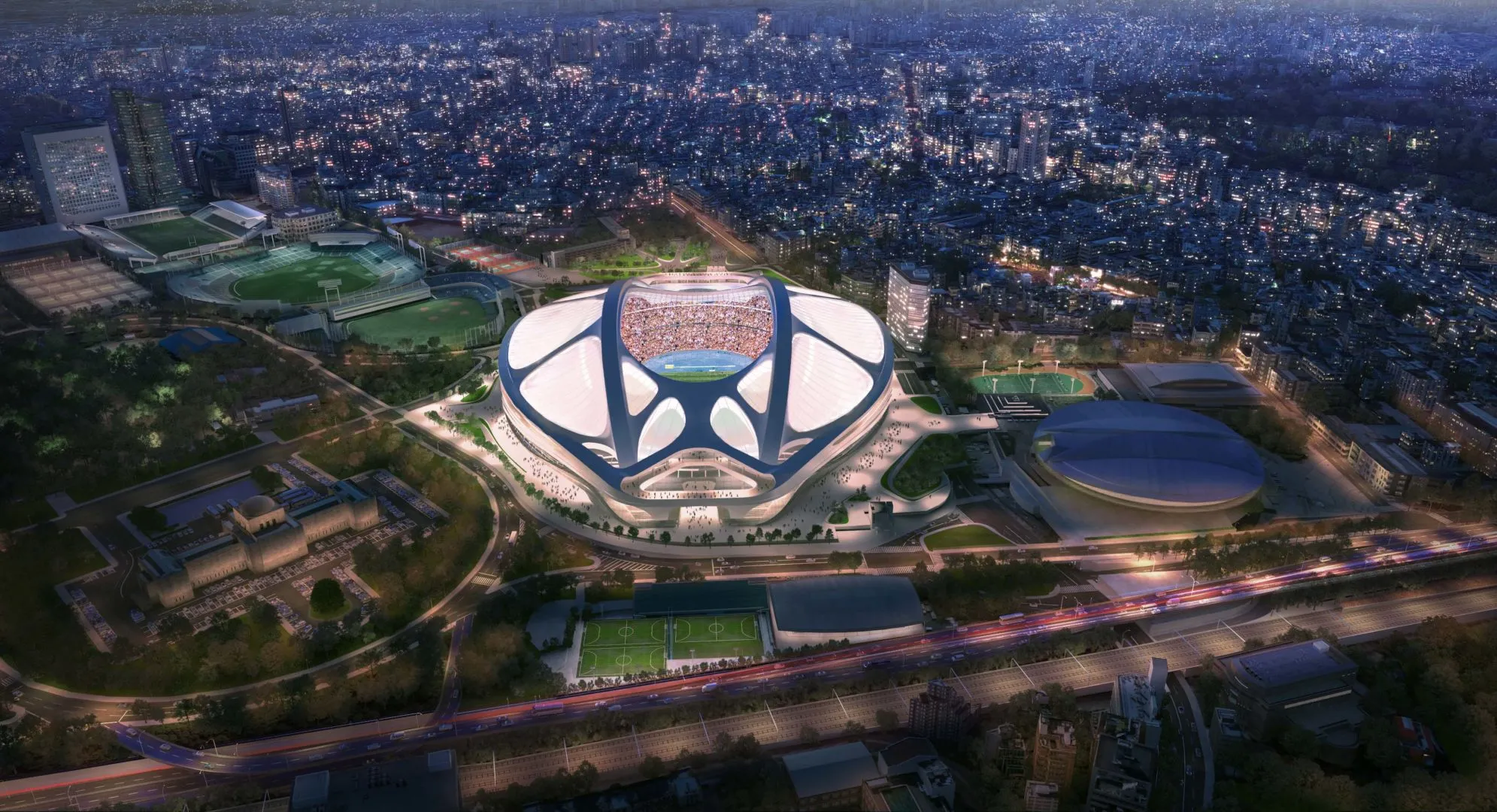
With a capacity of 80,000 spectators, the New National Stadium featured adaptable seating arrangements that allowed the venue to remain compact and versatile. To integrate the stadium into Tokyo’s urban context, Hadid incorporated landscape elements and green spaces, enriching the surrounding public areas and creating a seamless connection between the building and its environment.
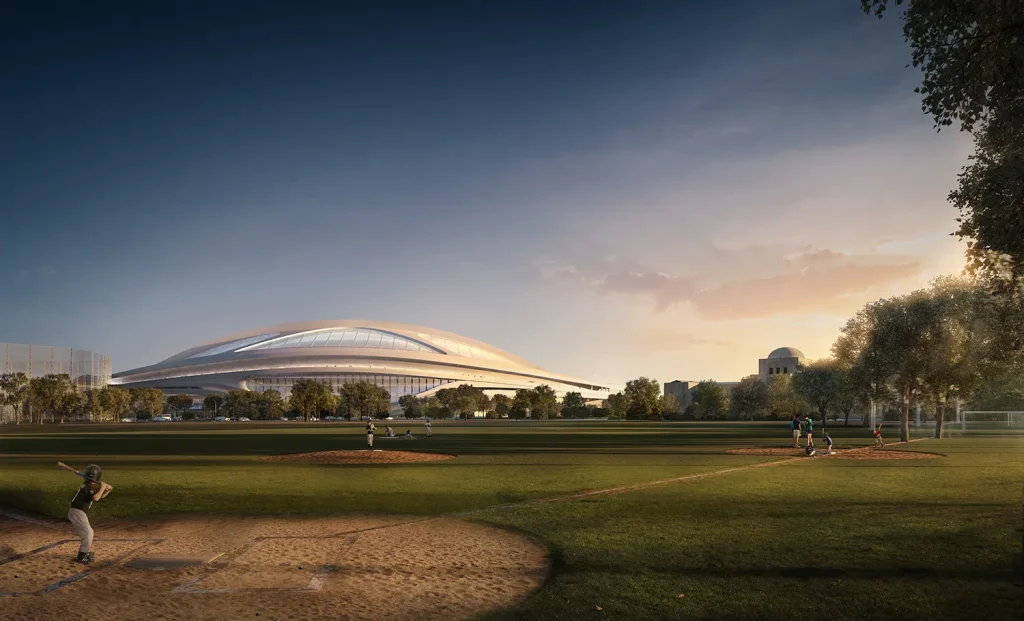
Criticized by local architects and facing high costs and practicality concerns, Zaha Hadid’s New National Stadium remained an unrealized project. However, by incorporating cutting-edge technology for both construction and operation, the project symbolizes Japan’s innovative spirit and continues to inspire the future.
4. Grand Buildings, Trafalgar Square
Location: London, United Kingdom
Year: 1985
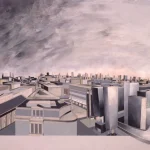
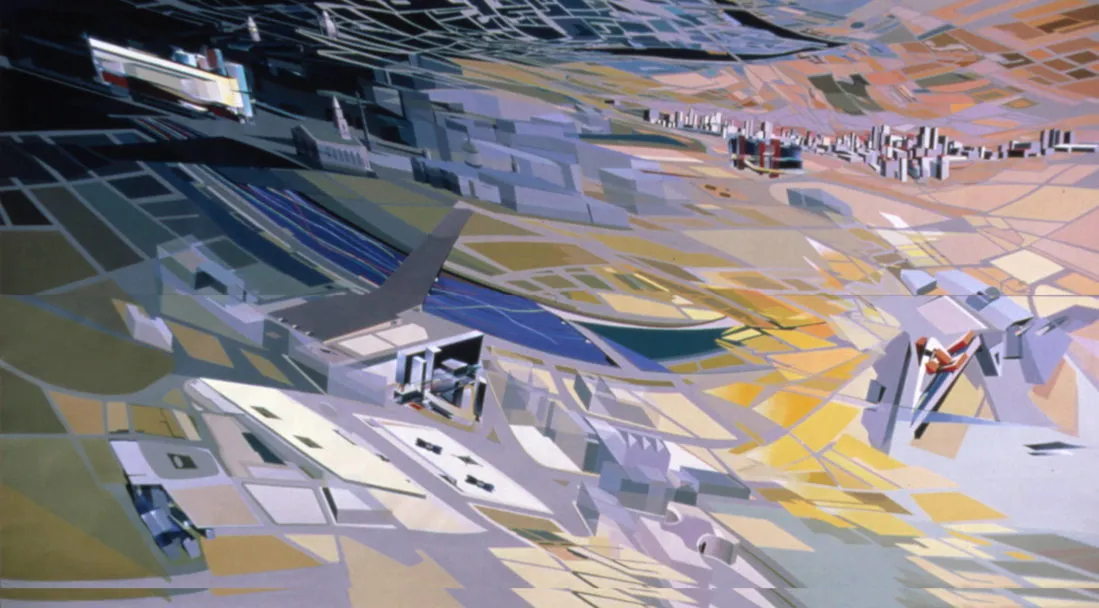
One of Zaha Hadid’s most remarkable yet unrealized projects that continues to influence the future is the Grand Buildings, Trafalgar Square. Through her proposal to redesign London’s most iconic square, Hadid celebrated the dynamic potential of urban landscapes.
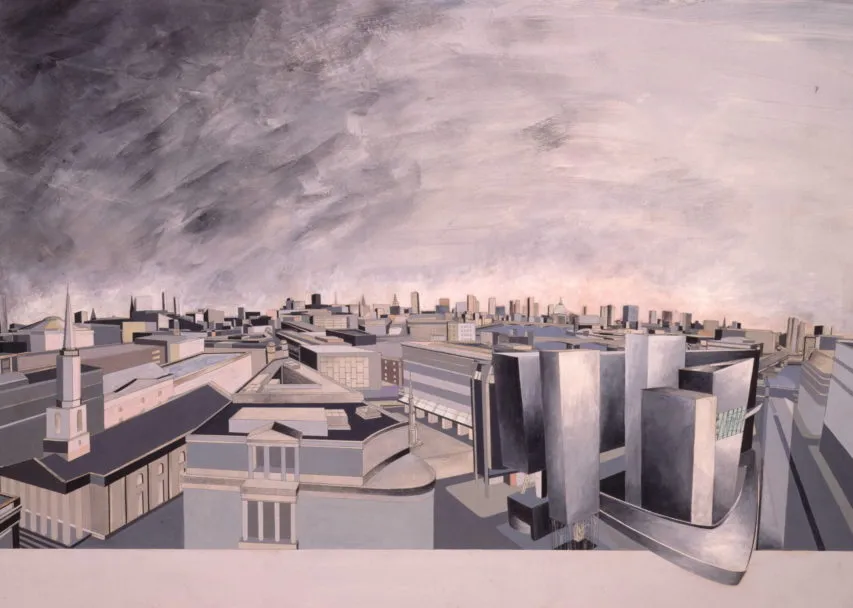
In this project, which explored what Trafalgar Square could look like if current planning restrictions were lifted, Zaha Hadid proposed a curved podium and viewing platforms, flanked by a series of towers with penthouses and underground lobbies that would transform the area. A retail zone would wrap around the site’s perimeter, gradually rising toward a shared rooftop terrace overlooking the traffic below while enclosing the public square. This proposal aimed to extend the public space to improve the quality of city life.
5. Stone Towers
Location: Cairo, Egypt
Year: 2009
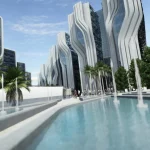
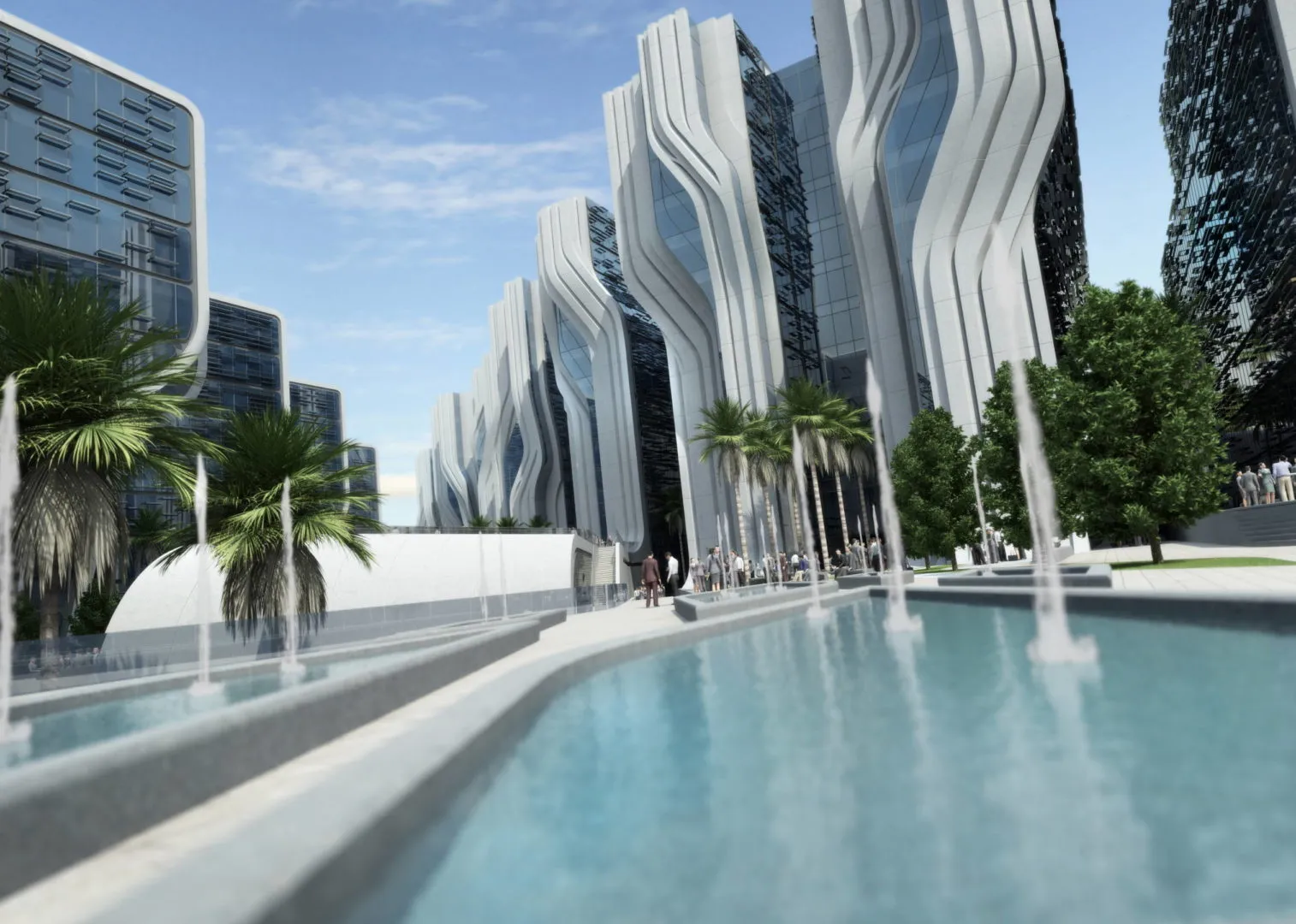
Zaha Hadid’s contemporary reinterpretation of ancient stone architecture, Stone Towers, is a 525,000-square-meter complex offering office and retail opportunities to the rapidly growing Cairo district. Designed for the Rooya Group, the project remains in the conceptual phase, but its unique design continues to serve as a model for contemporary architecture.
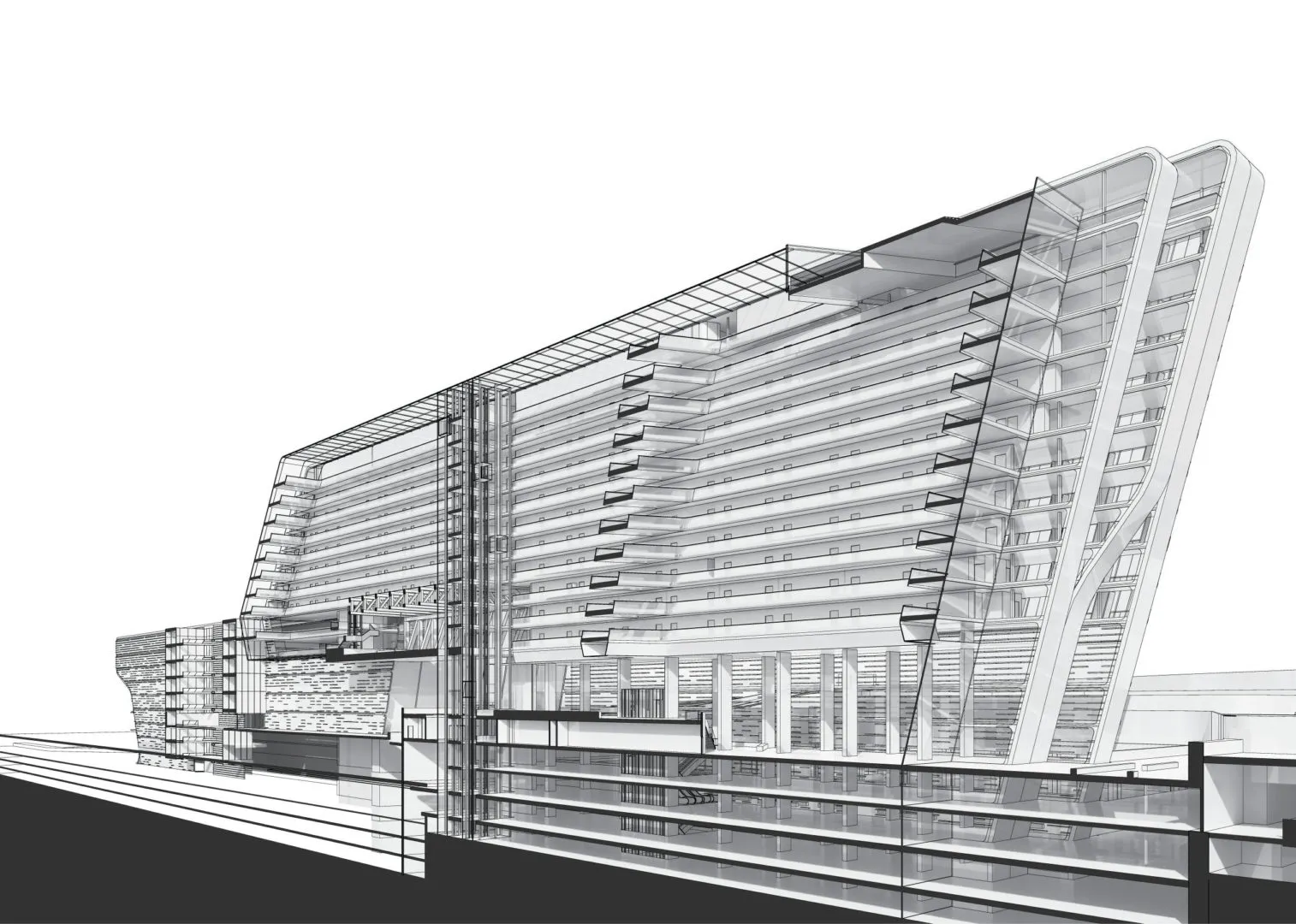
The Stone Towers project also includes a five-star business hotel with serviced apartments, retail stores with food and beverage facilities, sunken landscaped gardens, and a public square called “Delta.” Designed between the ring road and the residential area, Stone Towers’ design eschews the monolithic repetition of static building masses. The North Edge Buildings consist of taller structures articulated through a series of ripples, while the South Edge Buildings are composed of lower, softer “ribbons,” all unified by the Delta, which connects these key components.
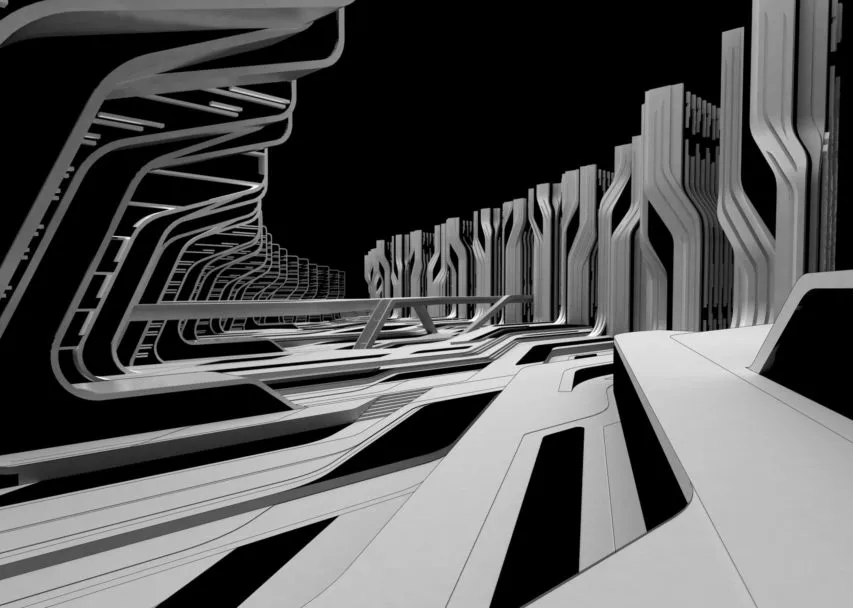
The facades on the north and south sides are composed of alternating protrusions, recesses, and voids to enhance the deep shadow lines that emphasize the curves of each building and enliven the project throughout the day. The architecture of the Stone Towers follows the geometric rhythm of similar, intertwined yet individually differentiated building forms, creating a cohesive composition.
6. Chartes Expo
Location: Chartes, France
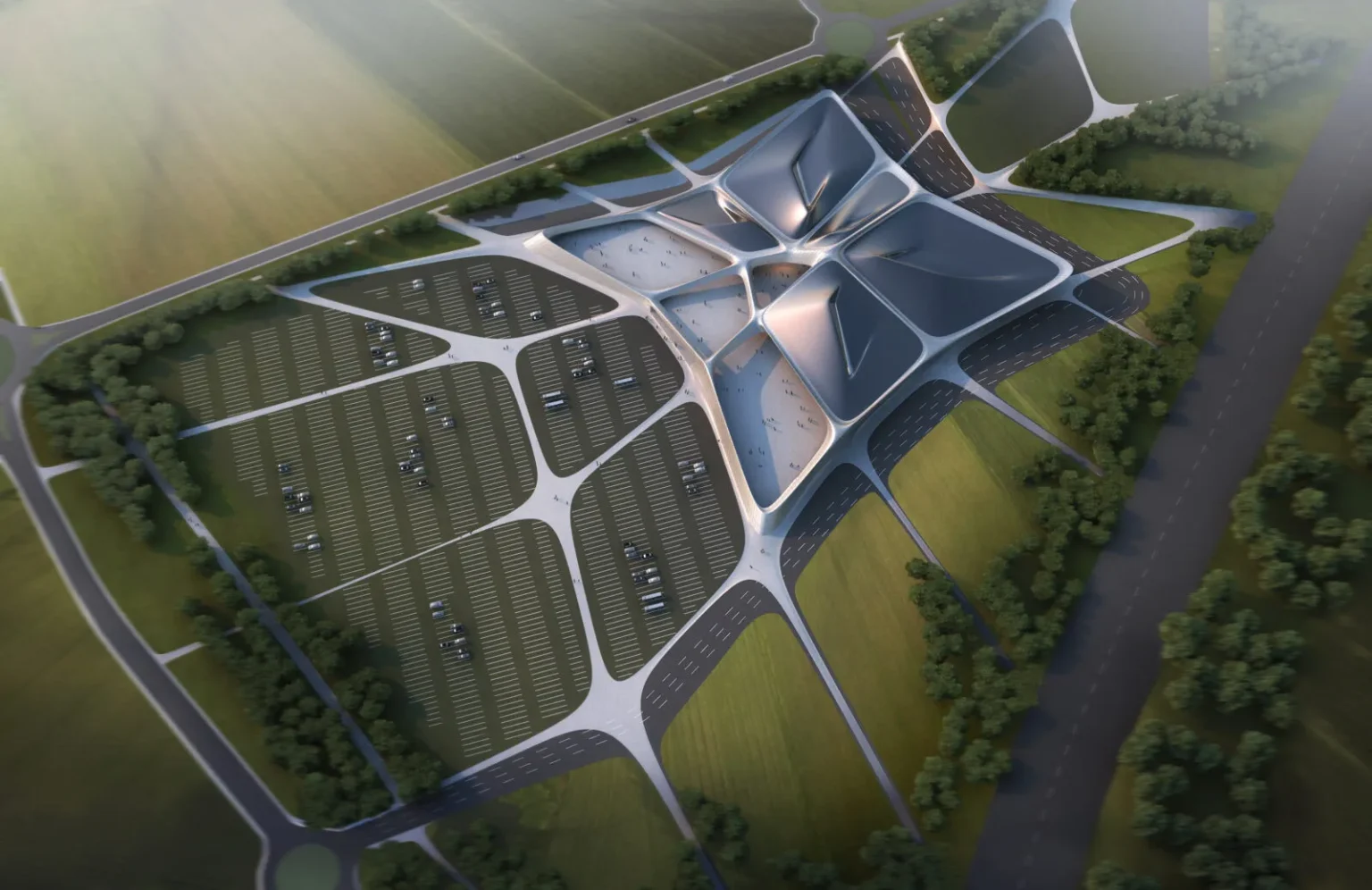
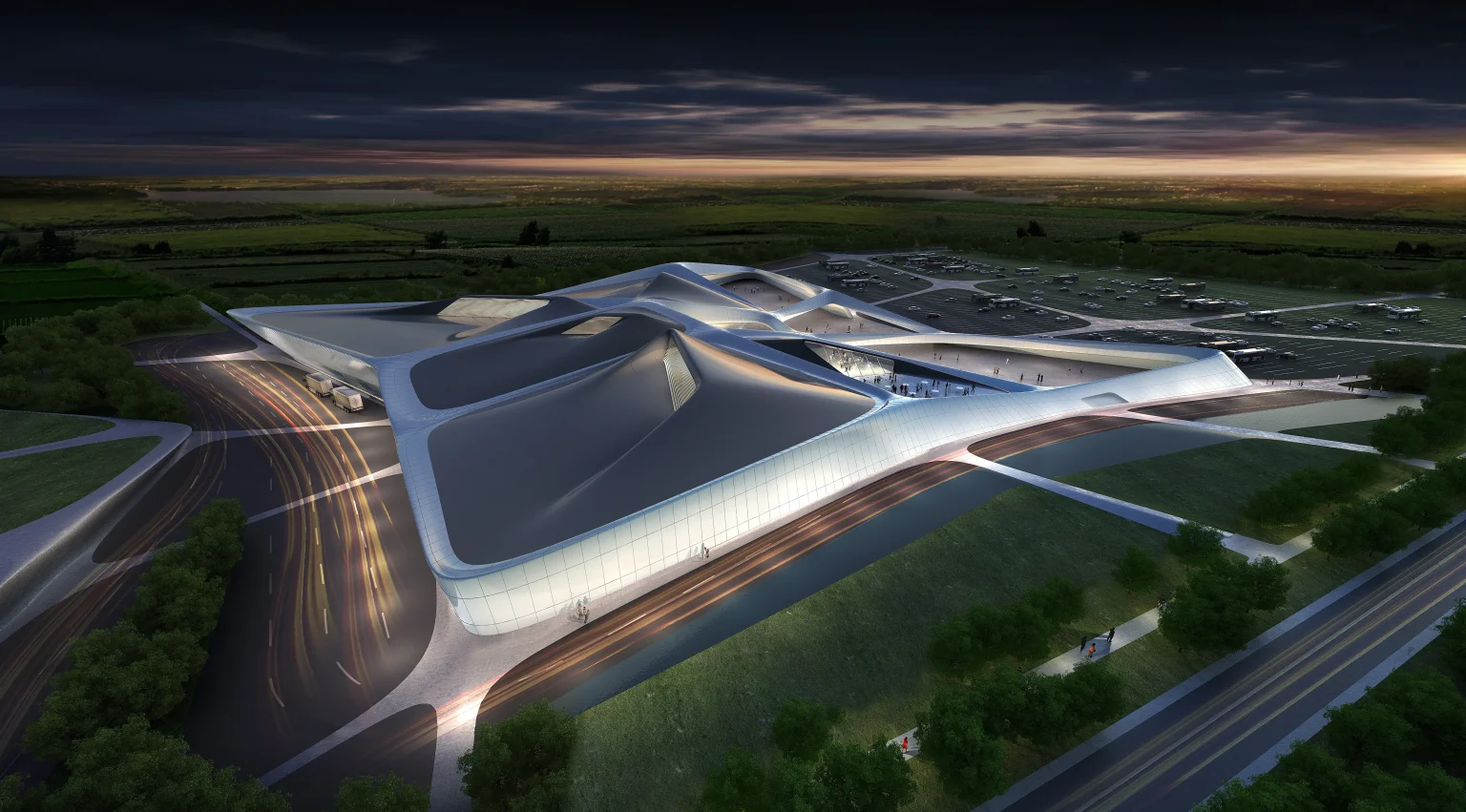
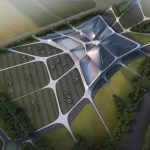
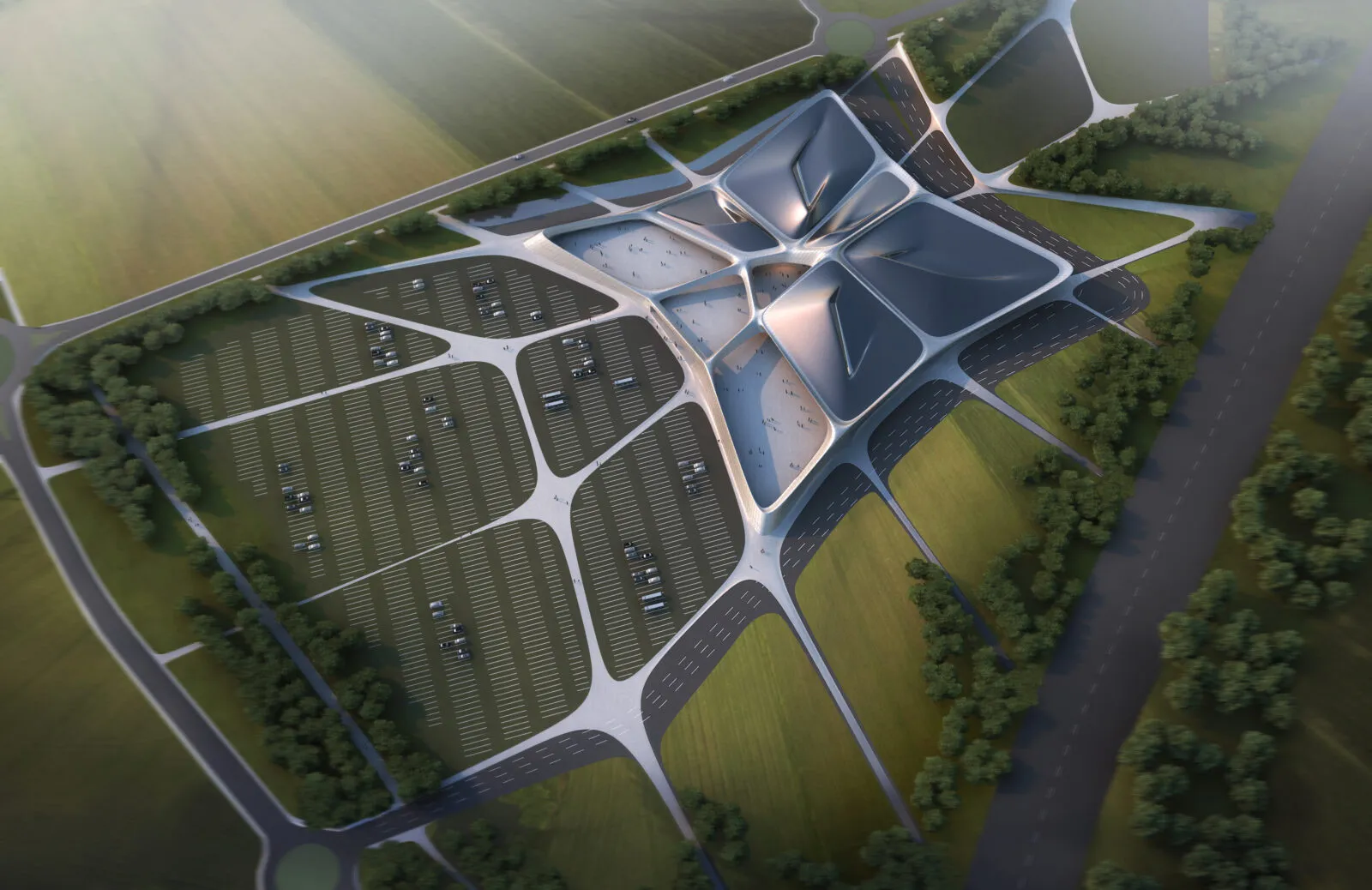
Inspired by the agricultural fabric of the Beauce Plateau, Zaha Hadid’s exhibition center, Chartes Expo, features a star-shaped plan extending into the landscape with its distinctive, fluid, digital style. Harmonious with the surrounding landscape, Chartes Expo also offers a structure that adapts to various functions through the flexible distribution of rooms and the spatial arrangement.
With approximately 12,500 m² of indoor space and 4,700 m² of open-air exhibition area, Chartres Expo was intended to host numerous events with ease. Its panoramic terrace offered a privileged view of the city’s famous Gothic Cathedral, creating a dialogue between contemporary and historical architecture.
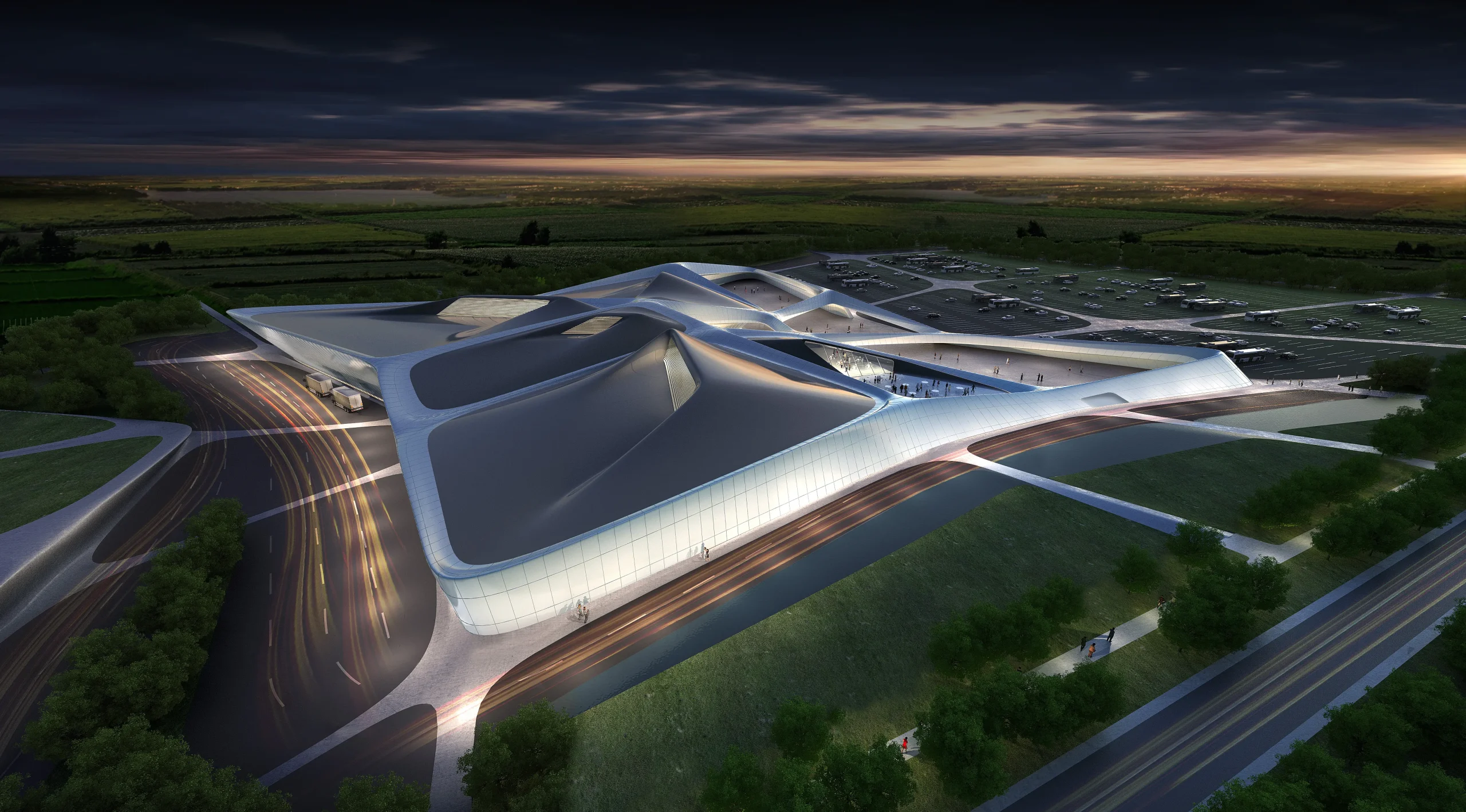
Although construction was planned to begin in 2013, the project was never realized due to harsh criticism and budget concerns. However, its organic and fluid design, far from the typical rectangular exhibition hall form, and its connection with the environment continue to say a lot about Zaha Hadid’s architecture.
7. Kartal Pendik Masterplan
Location: İstanbul, Türkiye
Year: 2006
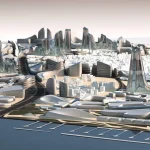
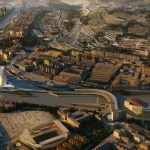
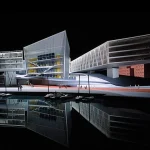
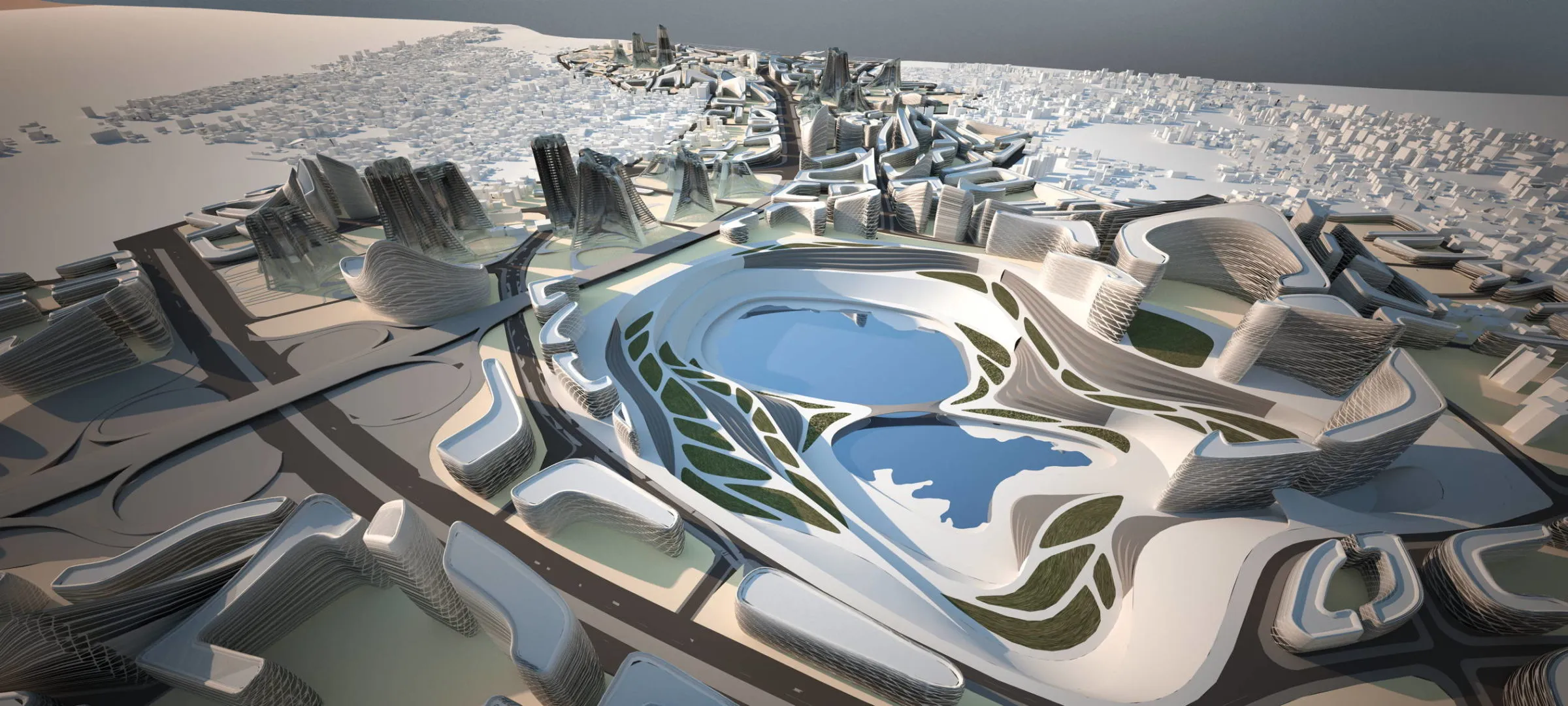
Although Zaha Hadid’s Kartal Pendik Masterplan won the 2006 competition organized by the Istanbul Metropolitan Municipality’s Metropolitan Planning and Urban Design Center (İMP), the project remained unrealized. Designed with a city-within-a-city concept, Zaha Hadid’s masterplan proposes a new commercial center, high-end residential spaces, concert halls, and theater halls for cultural activities, and a marina along the Kartal-Pendik line.
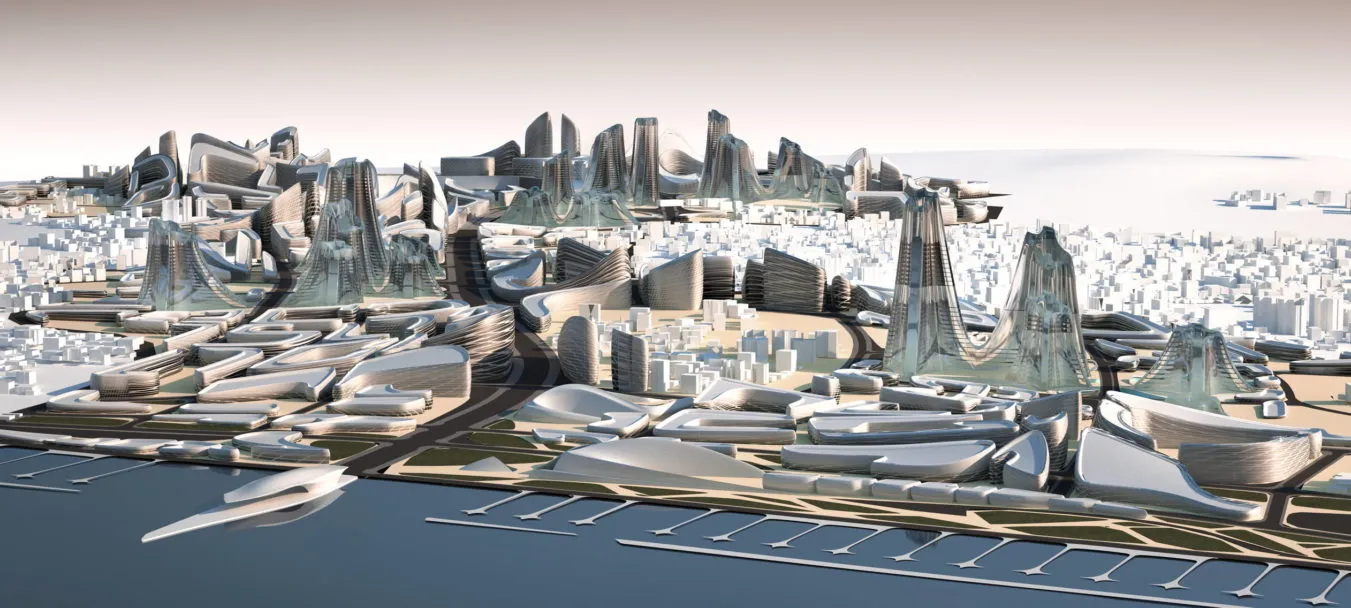
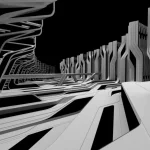
Major transportation networks, including the ring roads connecting Asia and Europe, were a key parameter for Zaha Hadid’s Kartal-Pendik Masterplan. Thus, the project is shaped by the integration of specific vertical connections attached to a long horizontal central axis running east-west. Building typologies along this main axis serve different functions: some areas feature tall towers surrounded by open, spacious layouts, while other zones have higher density, with structures separated only by narrow streets. In selected regions, Hadid removed buildings entirely to create parks and open plazas.
8. Beethoven Concert Hall
Location: Bonn, Germany
Year: 2009
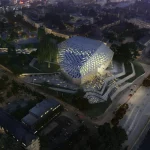
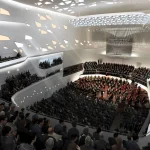
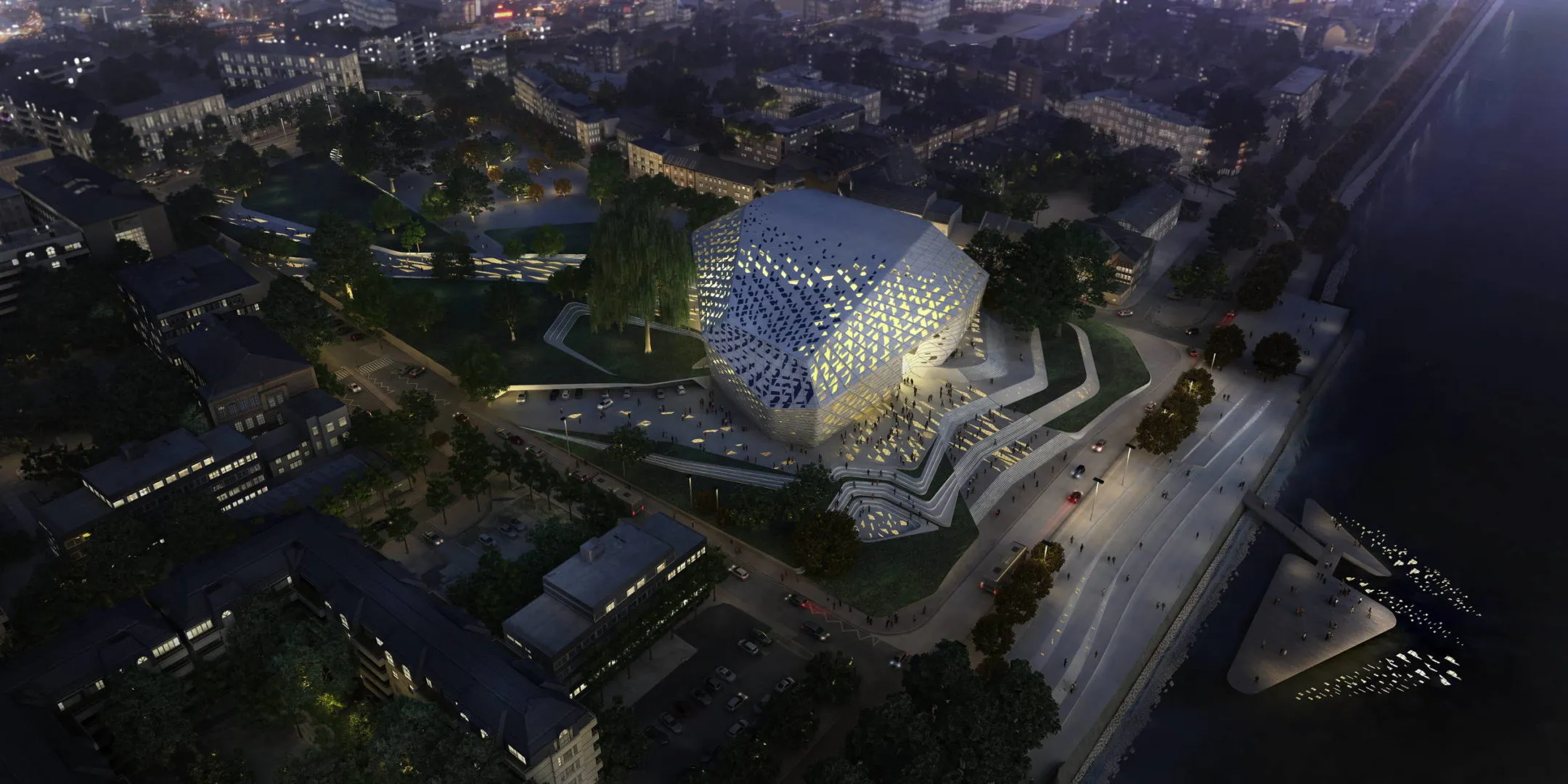
Although Zaha Hadid’s urban design concept for the Beethoven Concert Hall was never realized, it continues to influence contemporary architecture in its treatment of the relationship between city and architecture. The concert hall, connecting the city to the banks of the Rhine River, rises like a beacon of light. The building’s glass façade, located on the riverbank, reveals the magnificent staircase that leads the audience to the main concert hall.
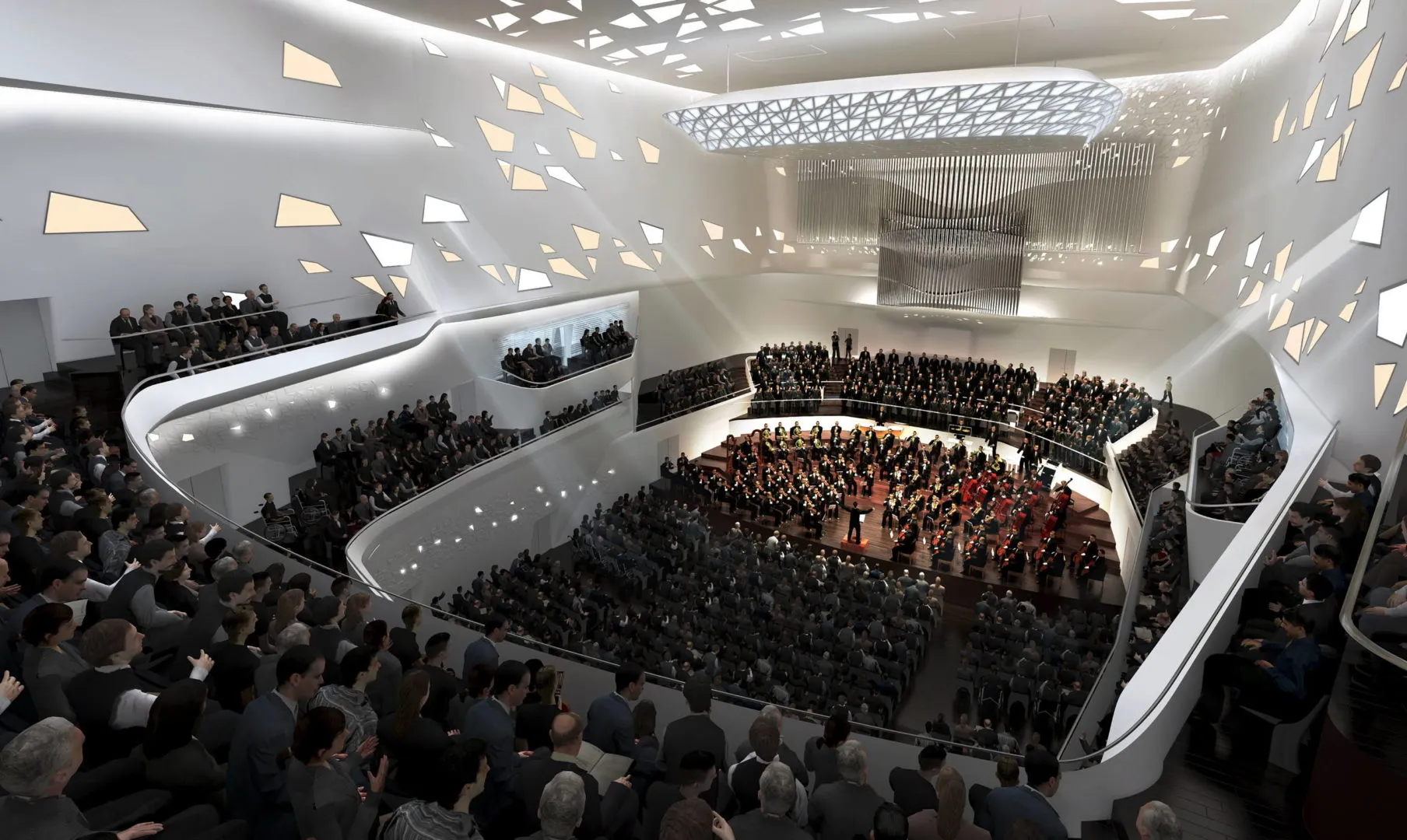
Emphasizing the continuity between the river and the city, the curvilinear shell form opens and closes, creating a continuous dialogue between interior and exterior spaces. The Beethoven Concert Hall, composed of concrete and glass panels, floods the volume with daylight, providing natural illumination. The floors provide viewing platforms and open performance spaces both inside and out, while the majestic staircase leading from the Rhine River to the elevated building mass provides open-air event space.
9. BBK Bank Headquarters
Location: Bibao, Spain
Year: 2010
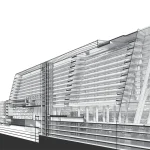
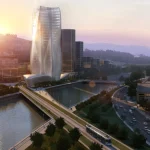
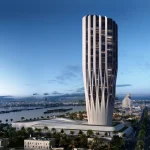
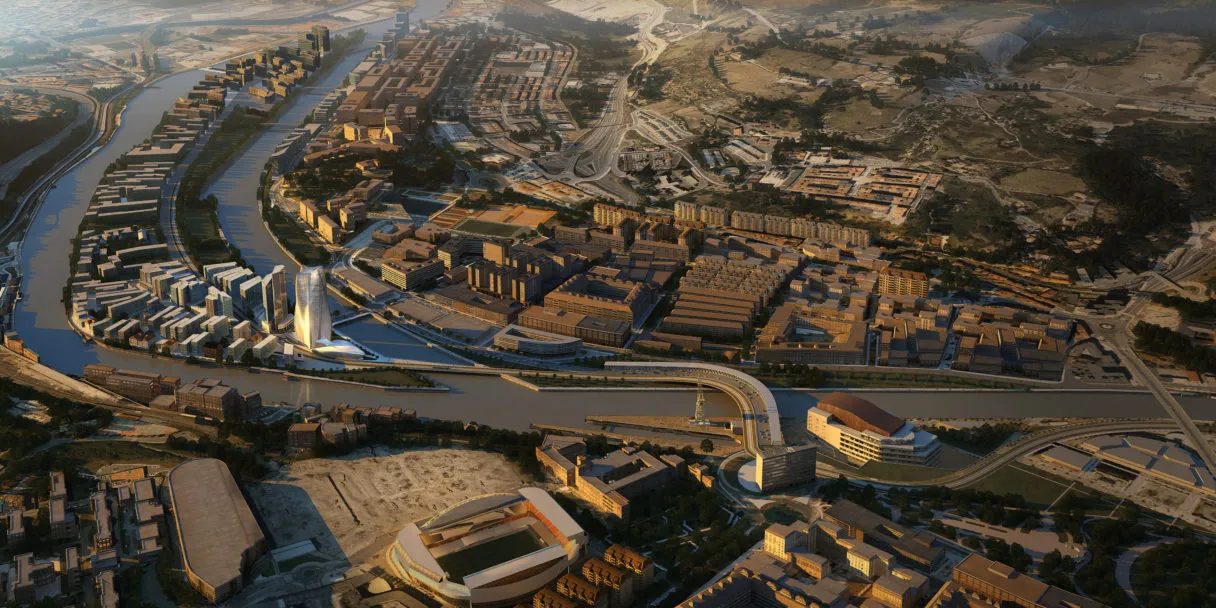
Zaha Hadid’s design for the Bilbao Bizkaia Kutxa (BBK) Headquarters was conceived for a prominent site overlooking central Bilbao, the river, and the Abandoibarra area, home to the Guggenheim Museum, offering expansive views. The headquarters is brightly illuminated, allowing for as much natural light as possible, with sunlight reflecting off the curtain wall façade.
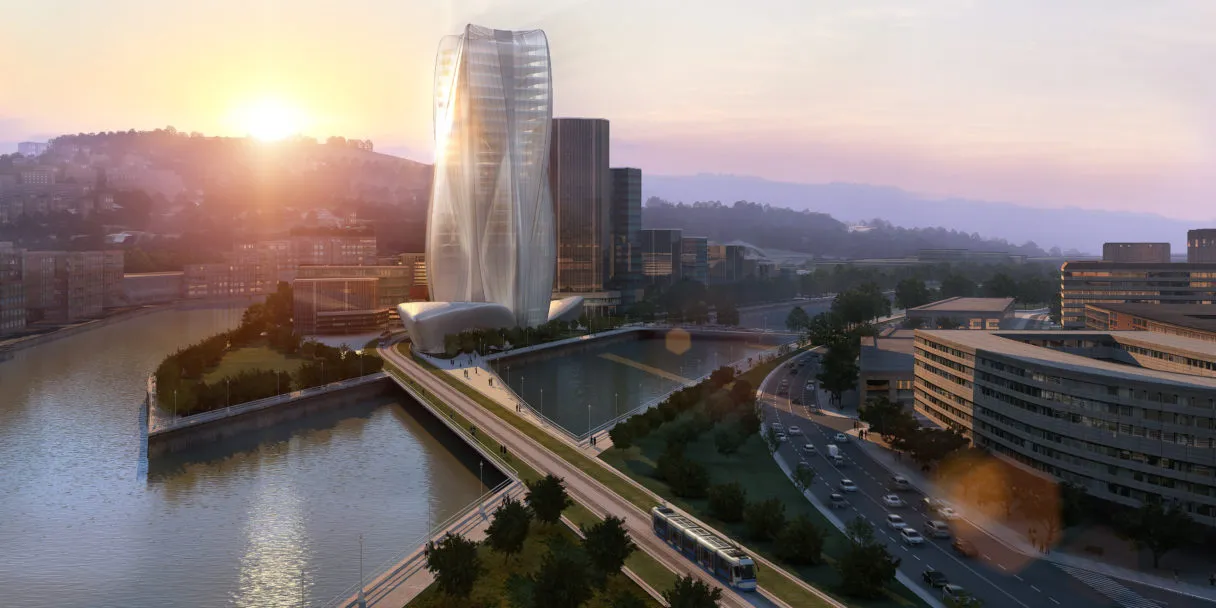
Designed as a 22-story tower, it features a petal-shaped podium at its base, a projection formed by two overlapping stars at a 45-degree angle. The podium was designed to sit naturally at the base of the tower, becoming a visually integral part of the headquarters. The structural exoskeleton offers a distinctive appearance depending on viewing angles and eliminates the need for interior columns. The BBK Bank Headquarters houses offices, meeting rooms, event spaces, and a 25,000 m² auditorium.
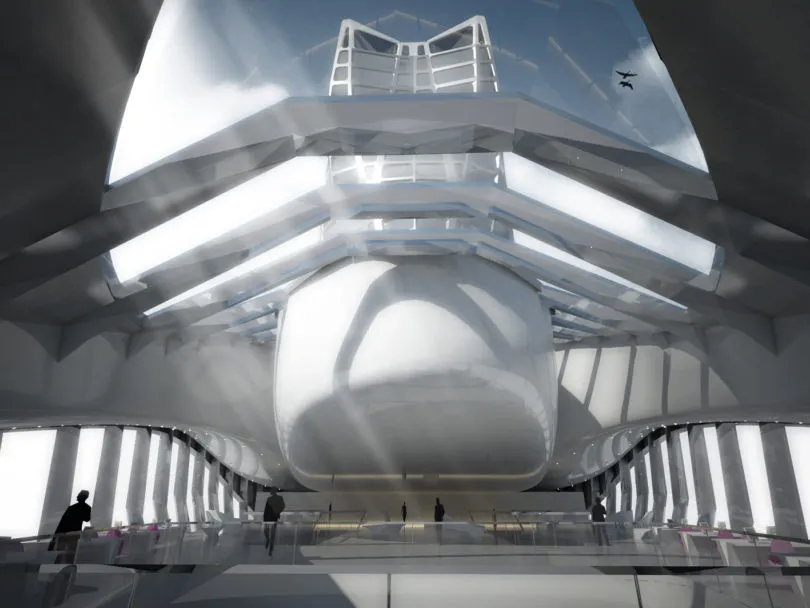
Despite defining a powerful sculptural expression for Bibao and BBK, Zaha Hadid’s headquarters building remained in the design phase. Despite its unrealized nature, this structure, with its visionary approach, continues to inform Zaha Hadid’s architectural style and inspire the future.
10. Central Bank of Iraq
Location: Baghdad, Iraq
Year: 2012
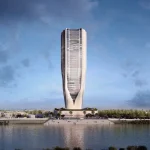
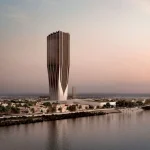
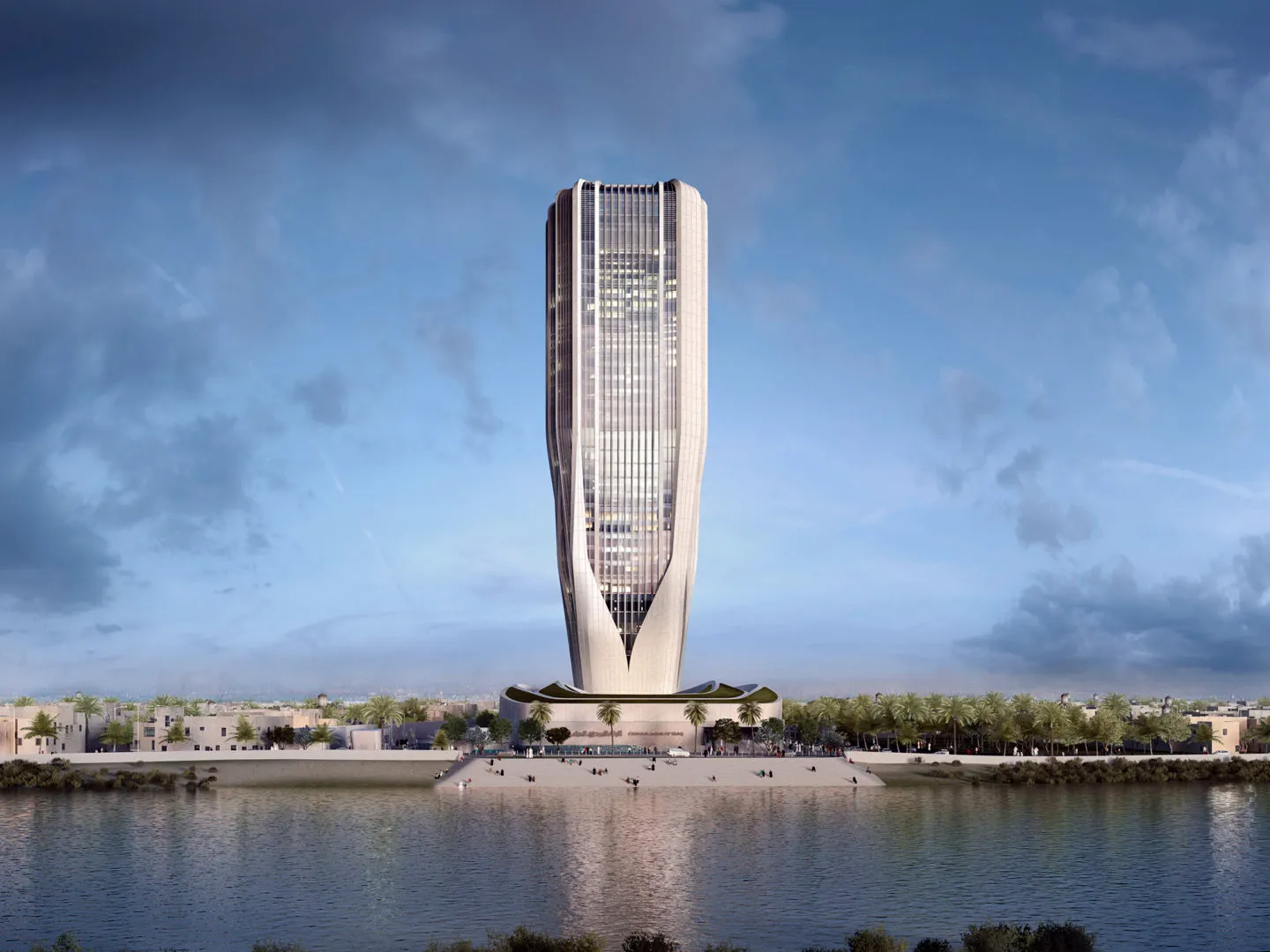
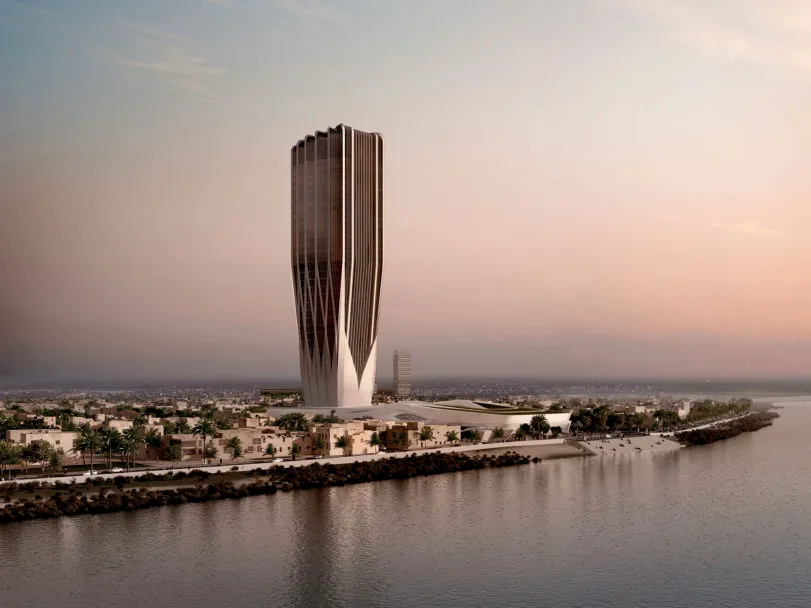
Although never realized, the Central Bank of Iraq project perfectly exemplifies Zaha Hadid’s language of curves and dynamic forms. The structure, planned to be built on the sloping banks of the Tigris River, is designed to be 170 meters high. Addressing the core values of the Central Bank of Iraq, the structure focuses on themes of strength, stability, and sustainability.
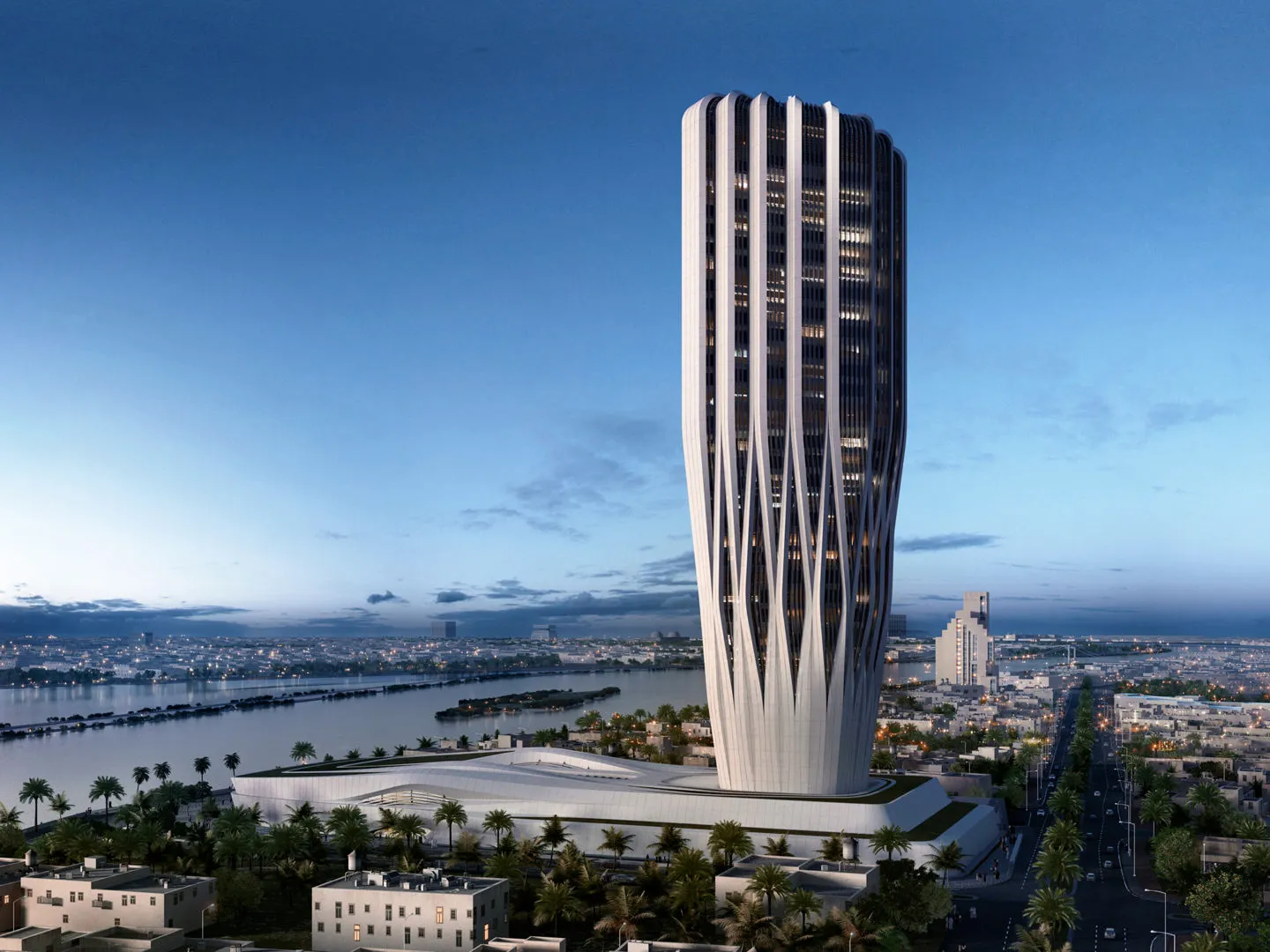
The central structure features a distinct twisted exterior frame and consists of a reinforced concrete building with a narrow base that widens toward the middle and tapers again toward the top. Set back from the river, the tower rises from a broad podium that spans an entire city block, integrating the structure into its urban context. Zaha Hadid designed the façade to mimic the light reflected from the Tigris River waves, framing it with a dynamic exoskeleton featuring undulating patterns of open and closed elements. This façade not only creates striking visual effects but also shades the glass surfaces, producing varied light and shadow within the interior spaces.
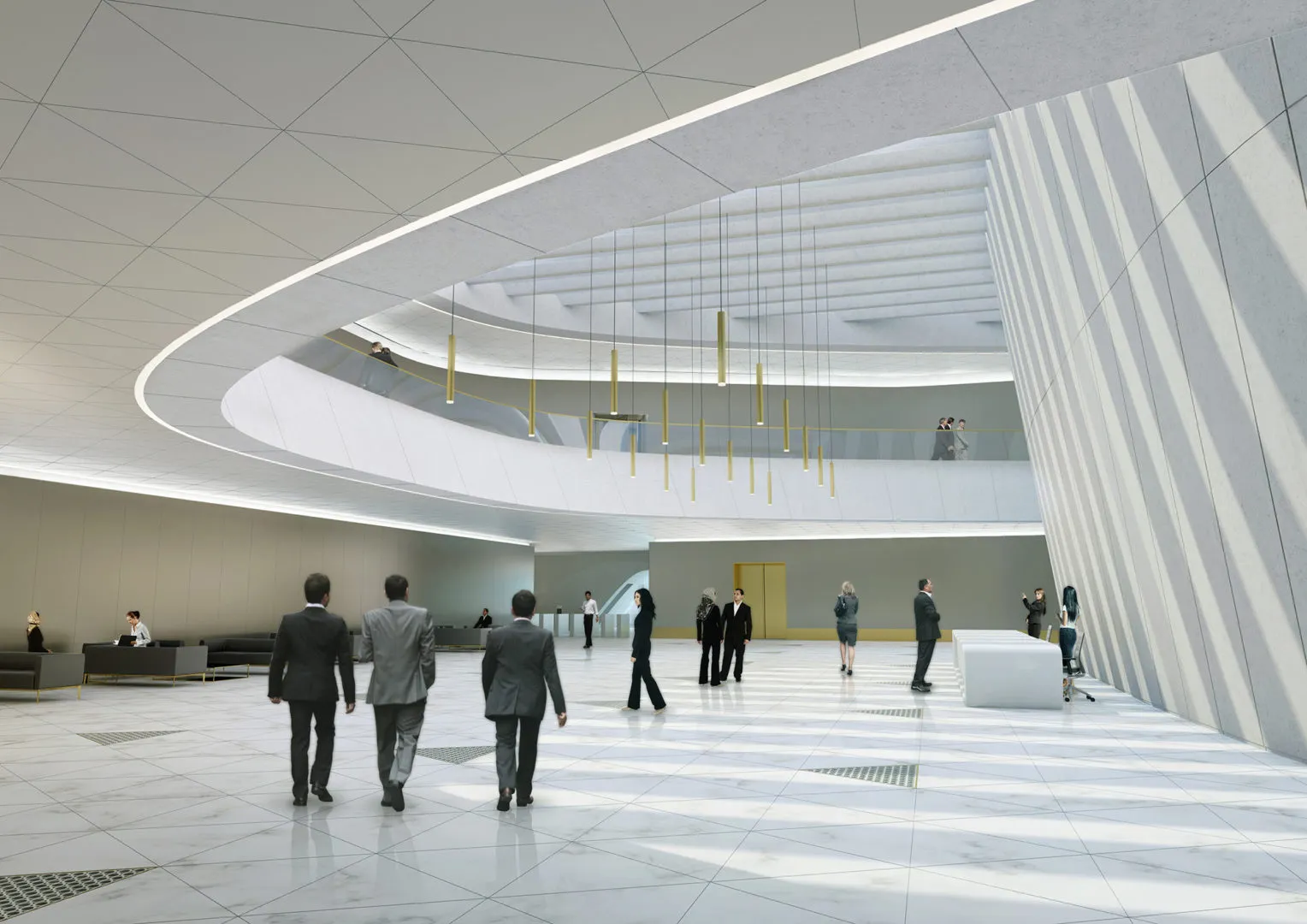
Zaha Hadid’s vision for the Central Bank of Iraq headquarters blends Baghdad’s rich heritage and, despite being an unrealized project, remains an inspiration for the future.