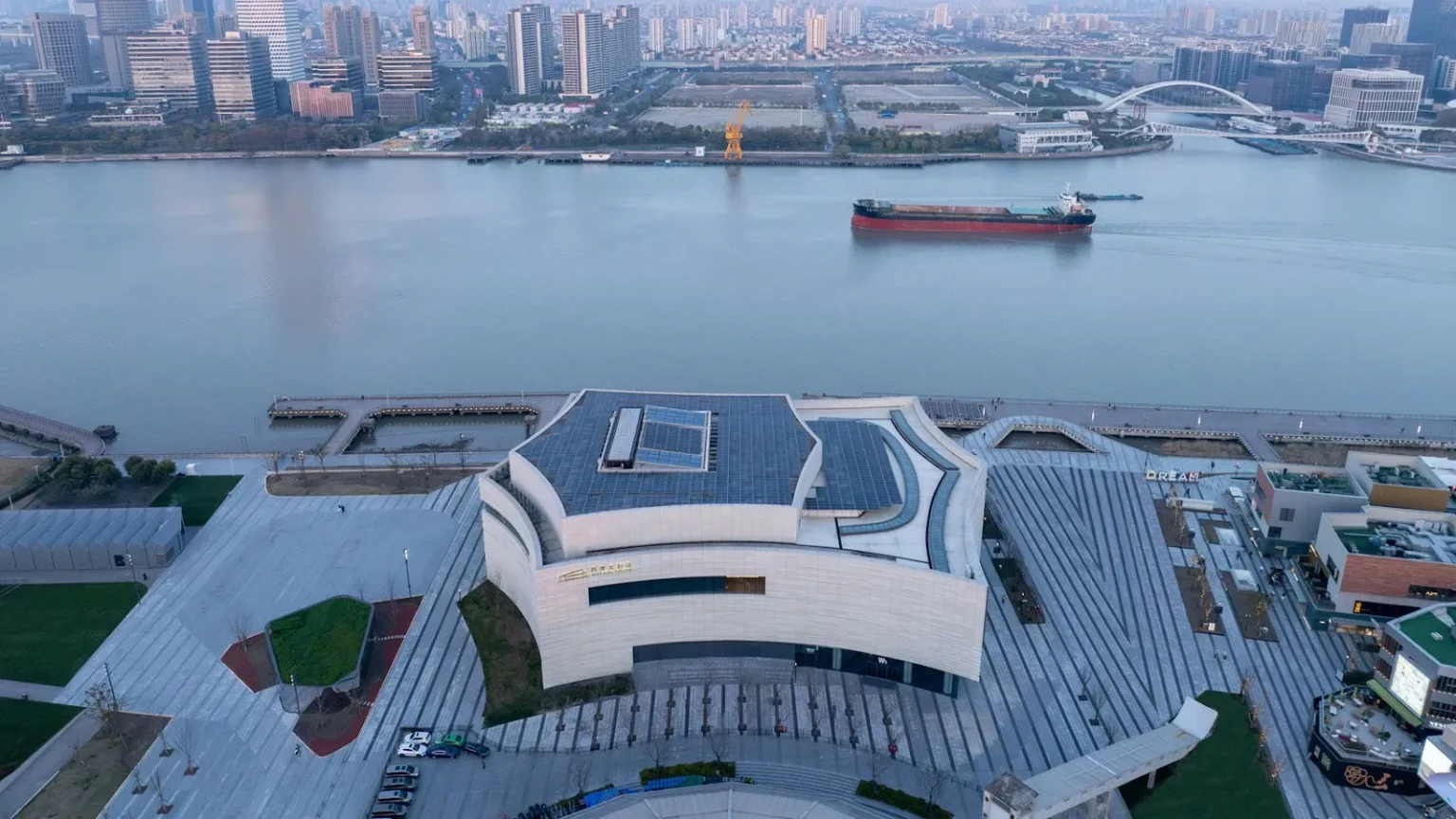
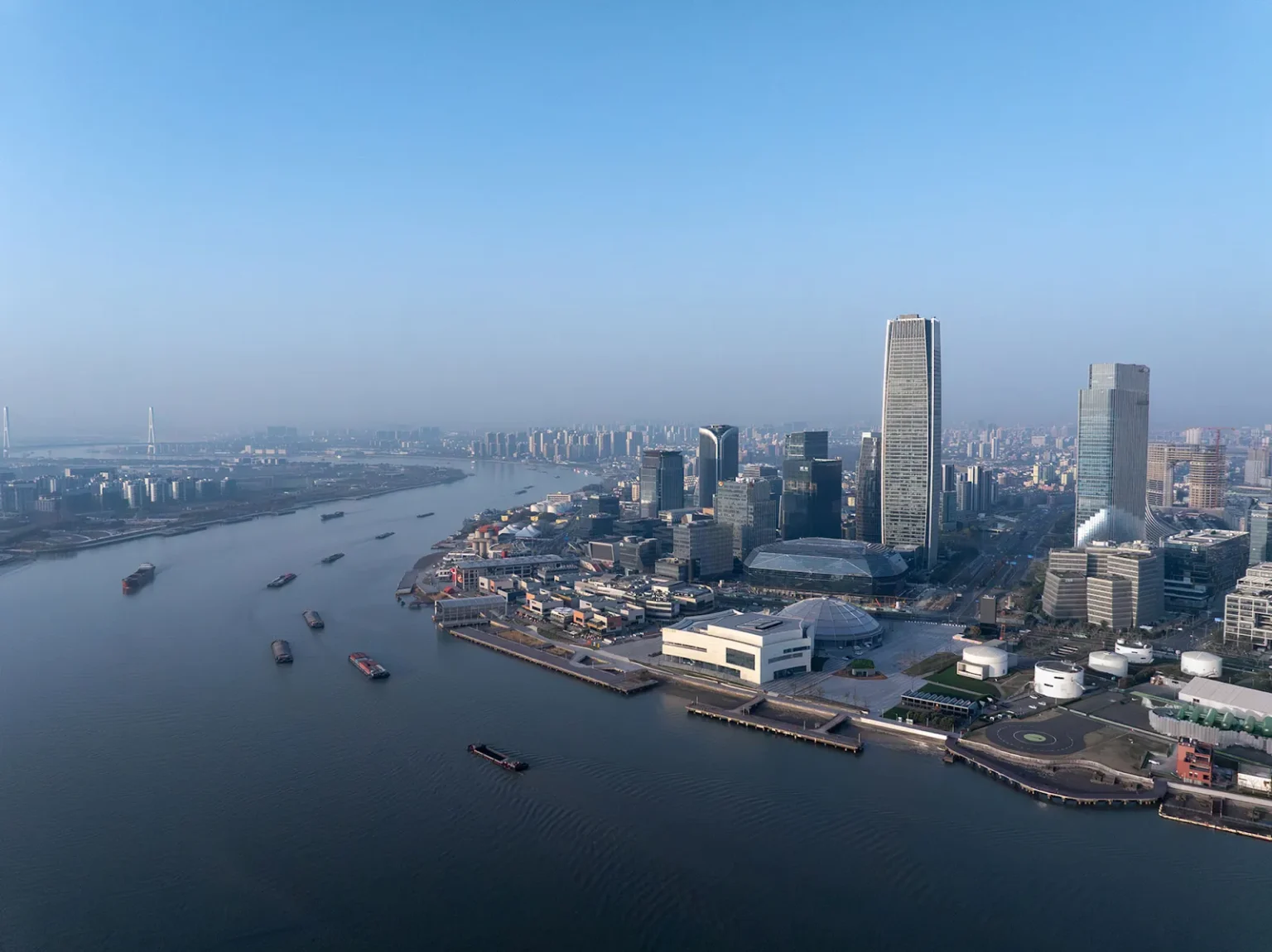
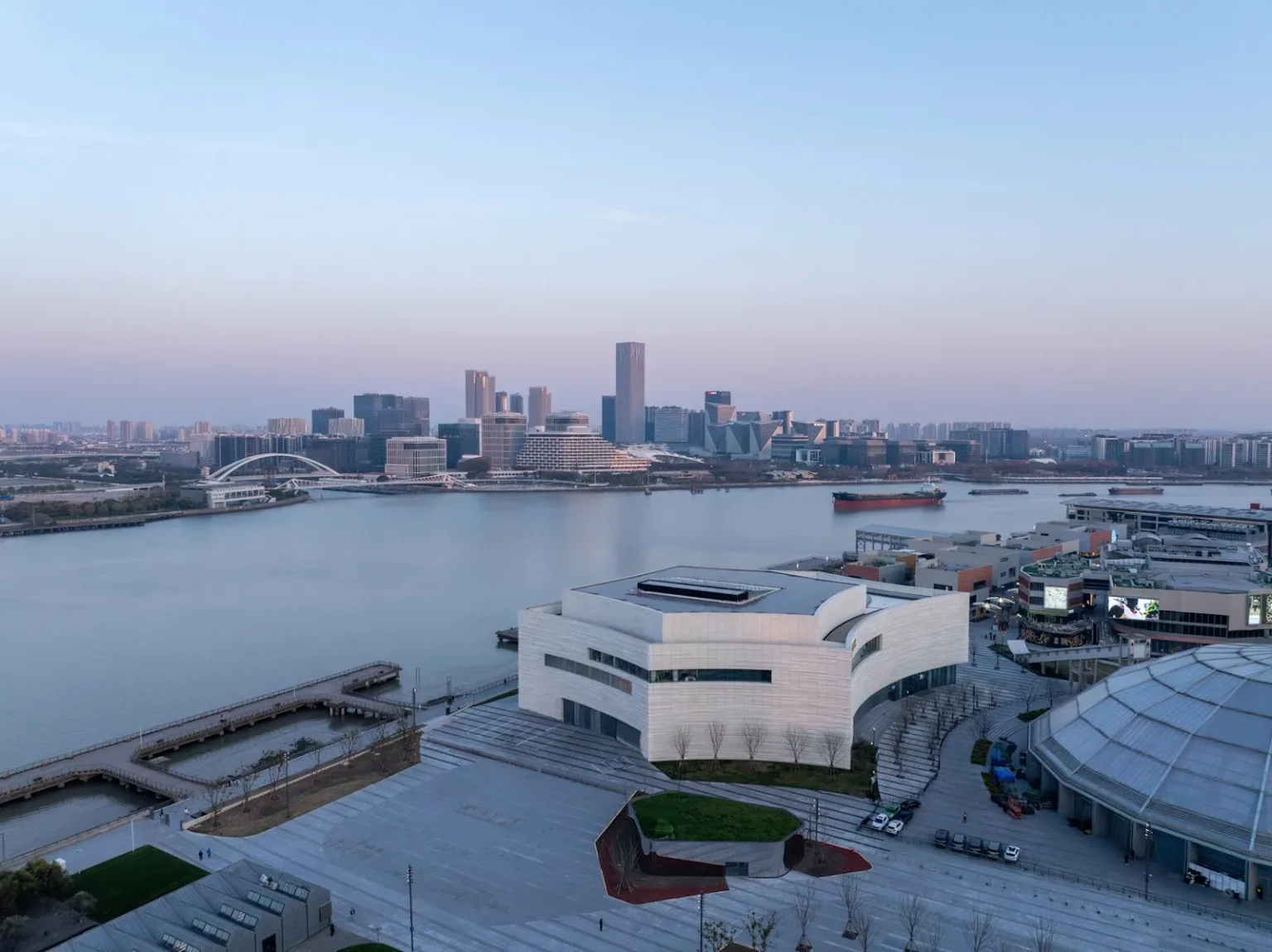
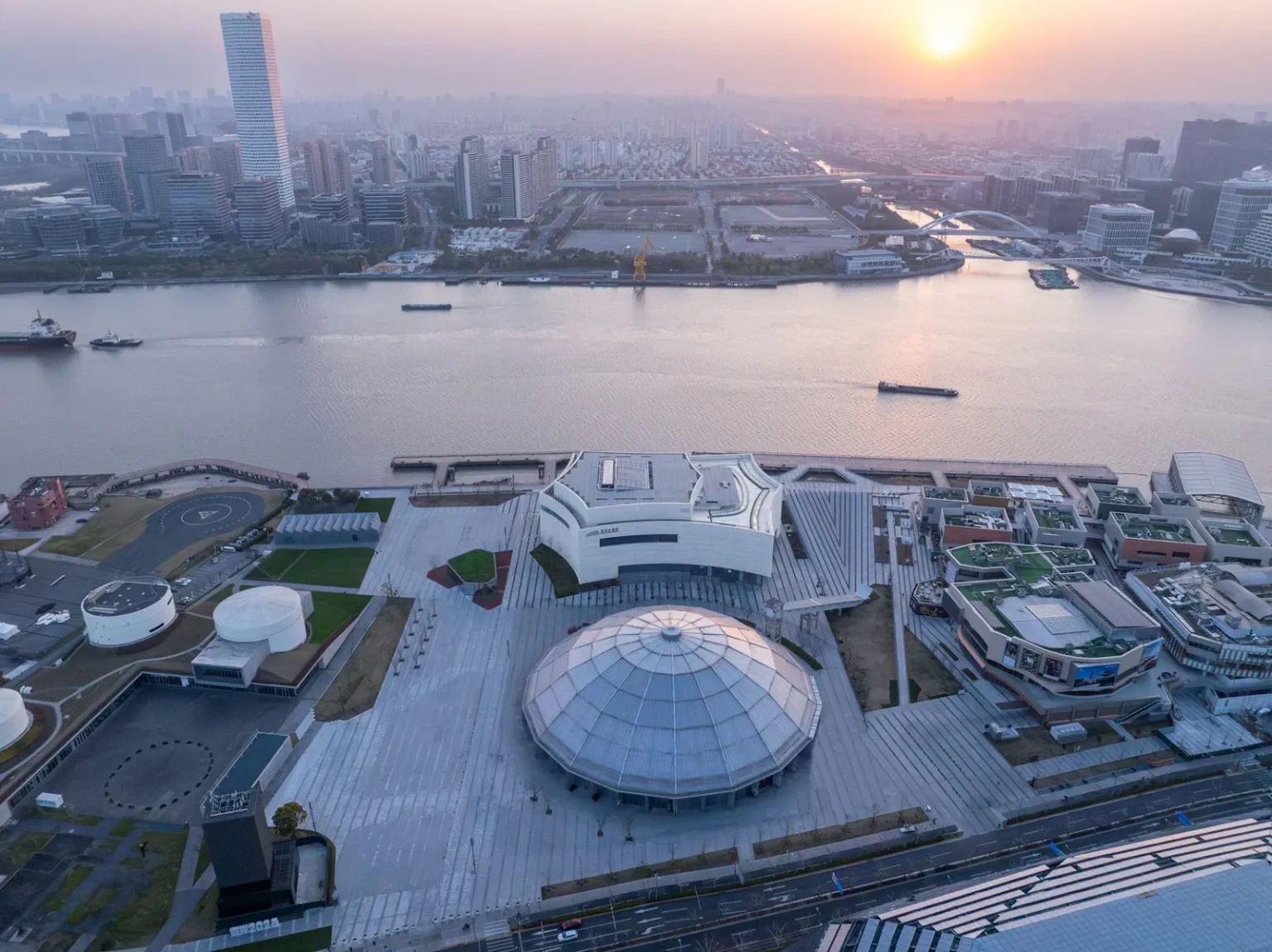
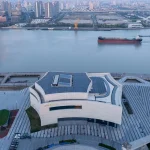
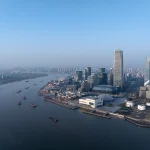
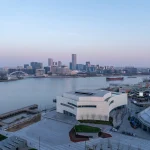
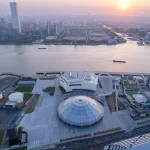
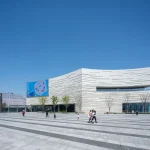
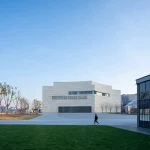
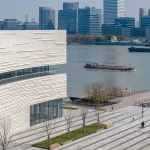
Along the banks of the Huangpu River in Shanghai’s thriving West Bund cultural corridor, the West Bund Grand Theatre, designed by Schmidt Hammer Lassen (SHL) in collaboration with Arcplus Institute of Shanghai, stands as a sculptural icon where performance, architecture, and civic life converge. Completed in 2024, the theatre is a destination for the arts & an open invitation to the public, integrated into one of China’s cultural redevelopments.
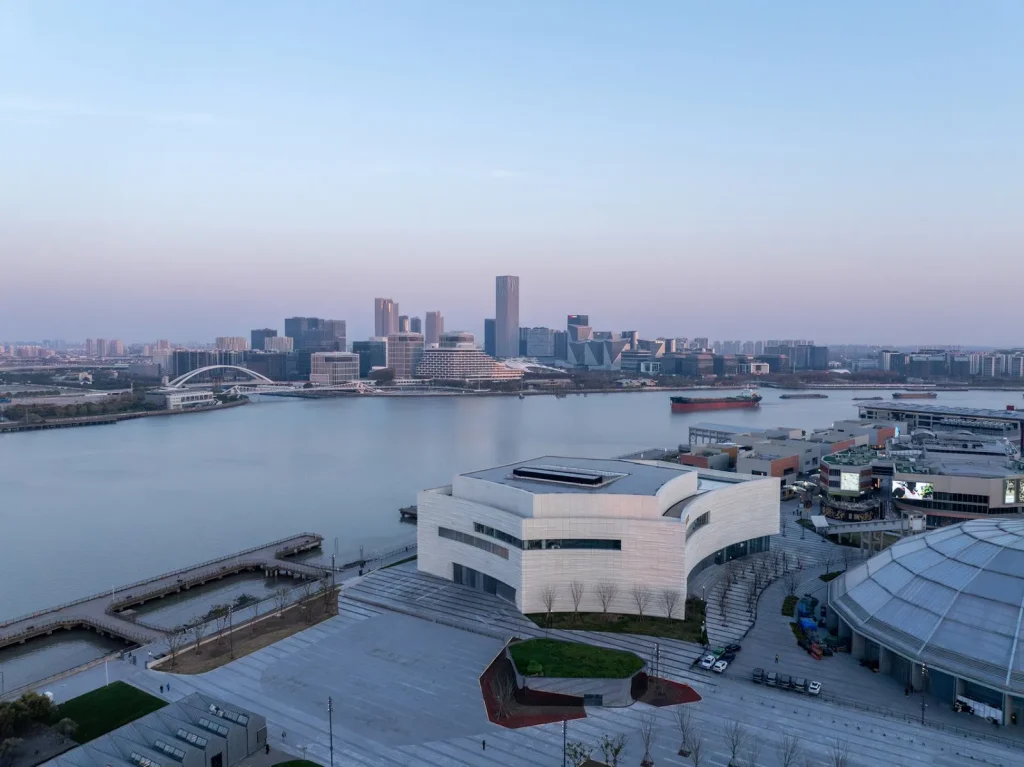
The theatre is a key component of the West Bund redevelopment, a 9.4-square-kilometre transformation of former industrial lands into a dynamic arts and cultural precinct. Its location, previously home to a cement factory, is emblematic of the broader vision bridging Shanghai’s industrial legacy with contemporary civic engagement.
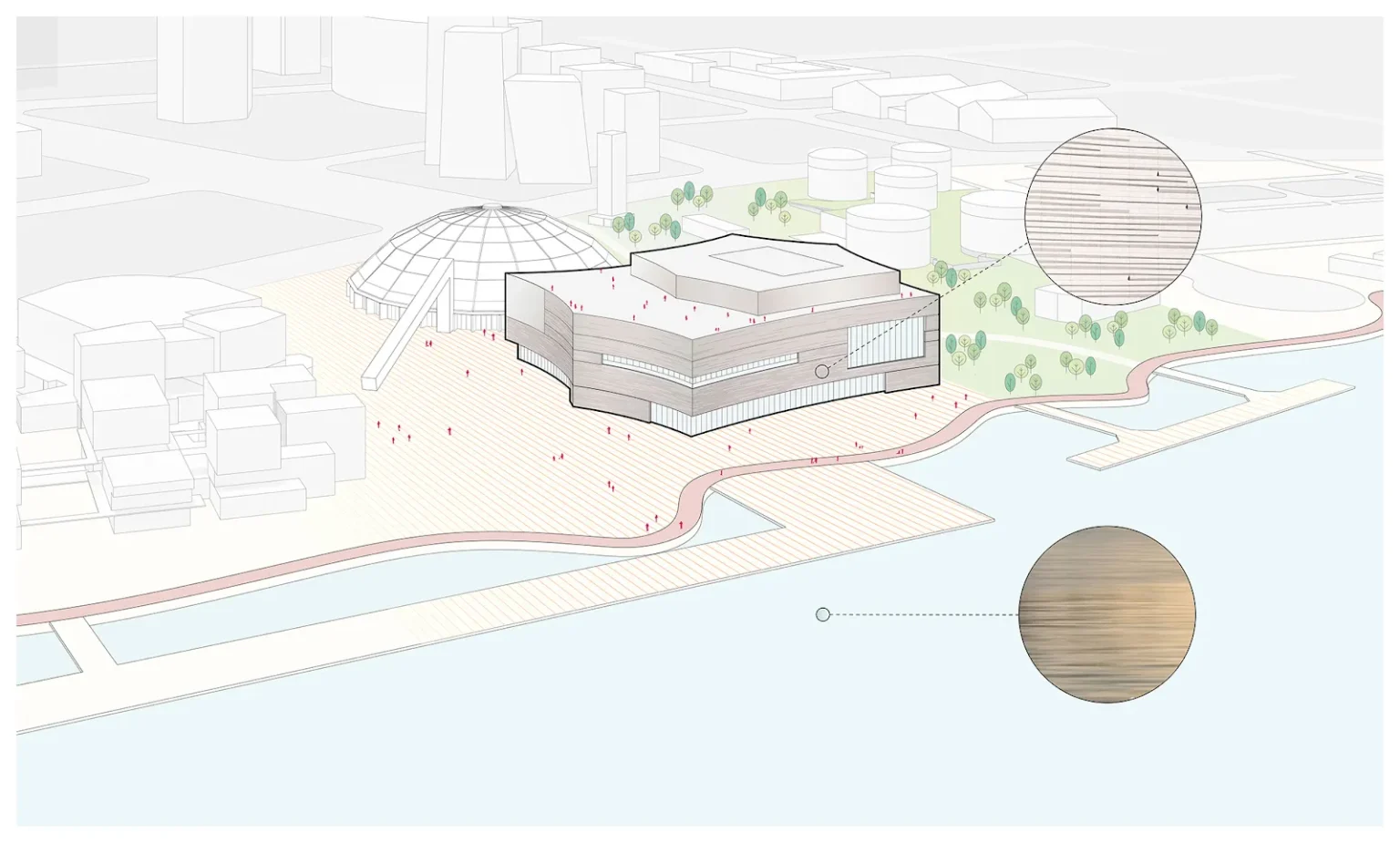
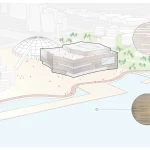
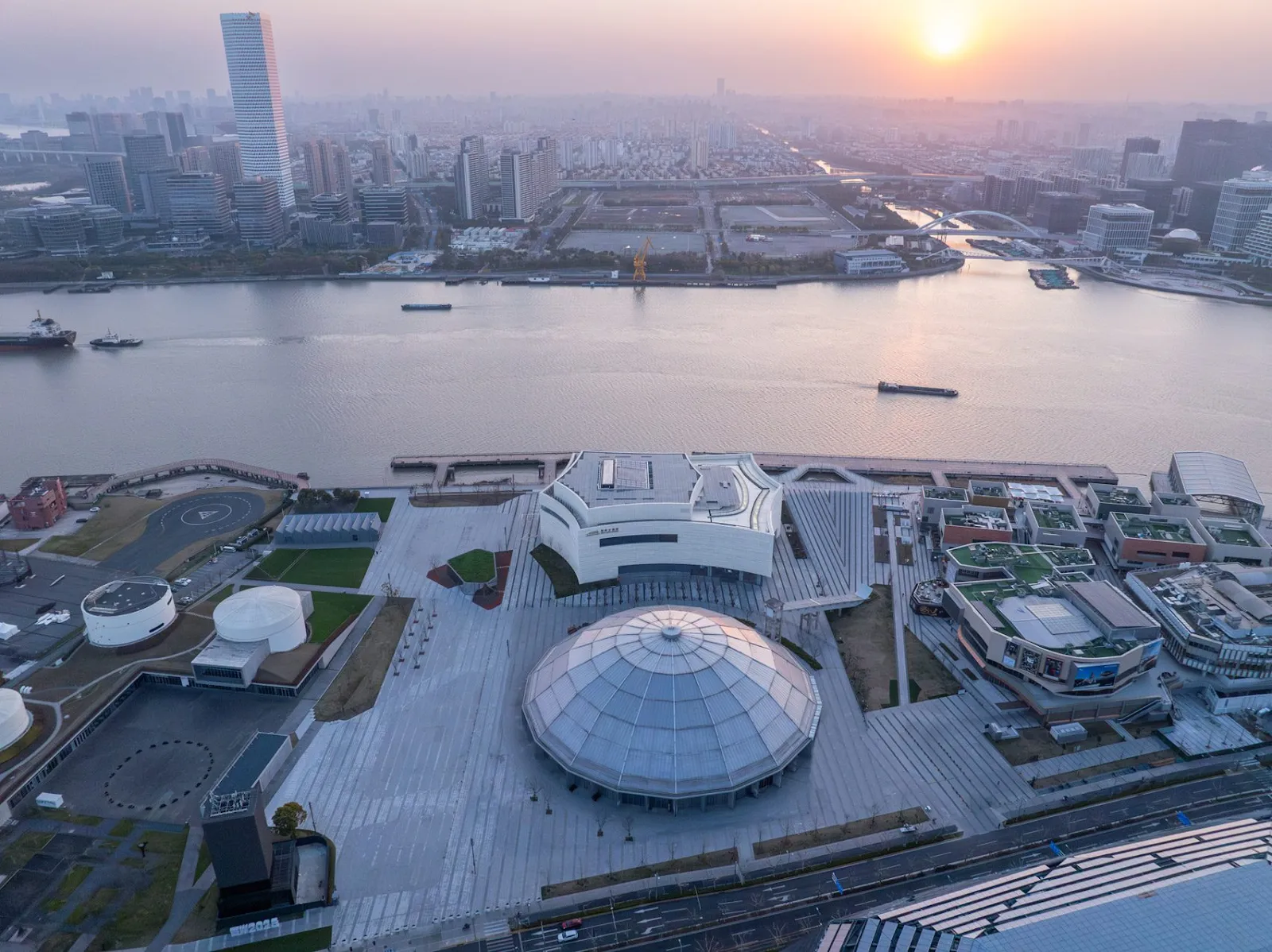
Facing the Huangpu River and situated near the existing Dome Art Center, the Grand Theatre acts as a cultural and architectural anchor to the broader vision of a world-class urban waterfront, comparable to global benchmarks like London’s South Bank or Paris’s Left Bank.
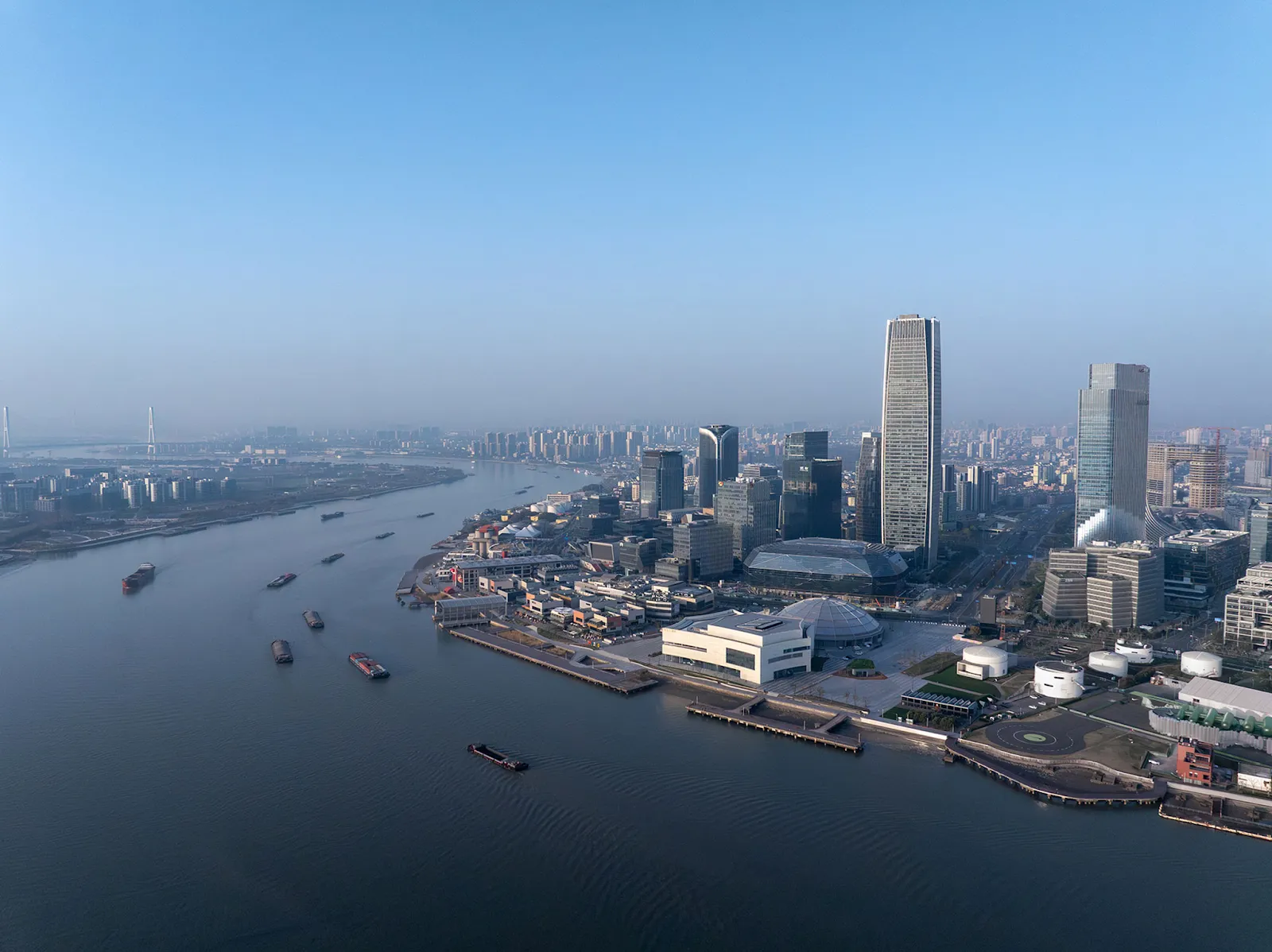
Industry That Welcomes the City
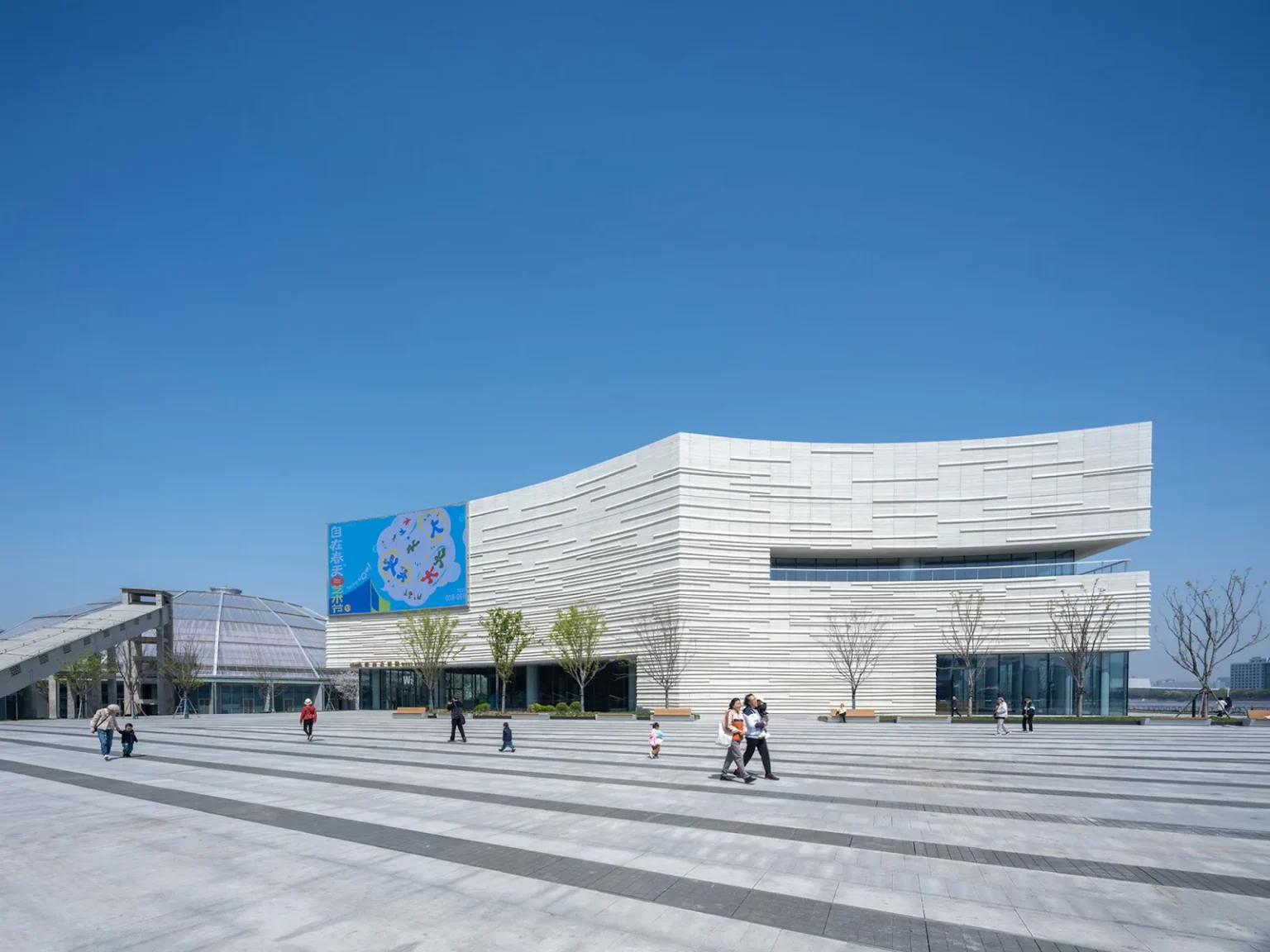
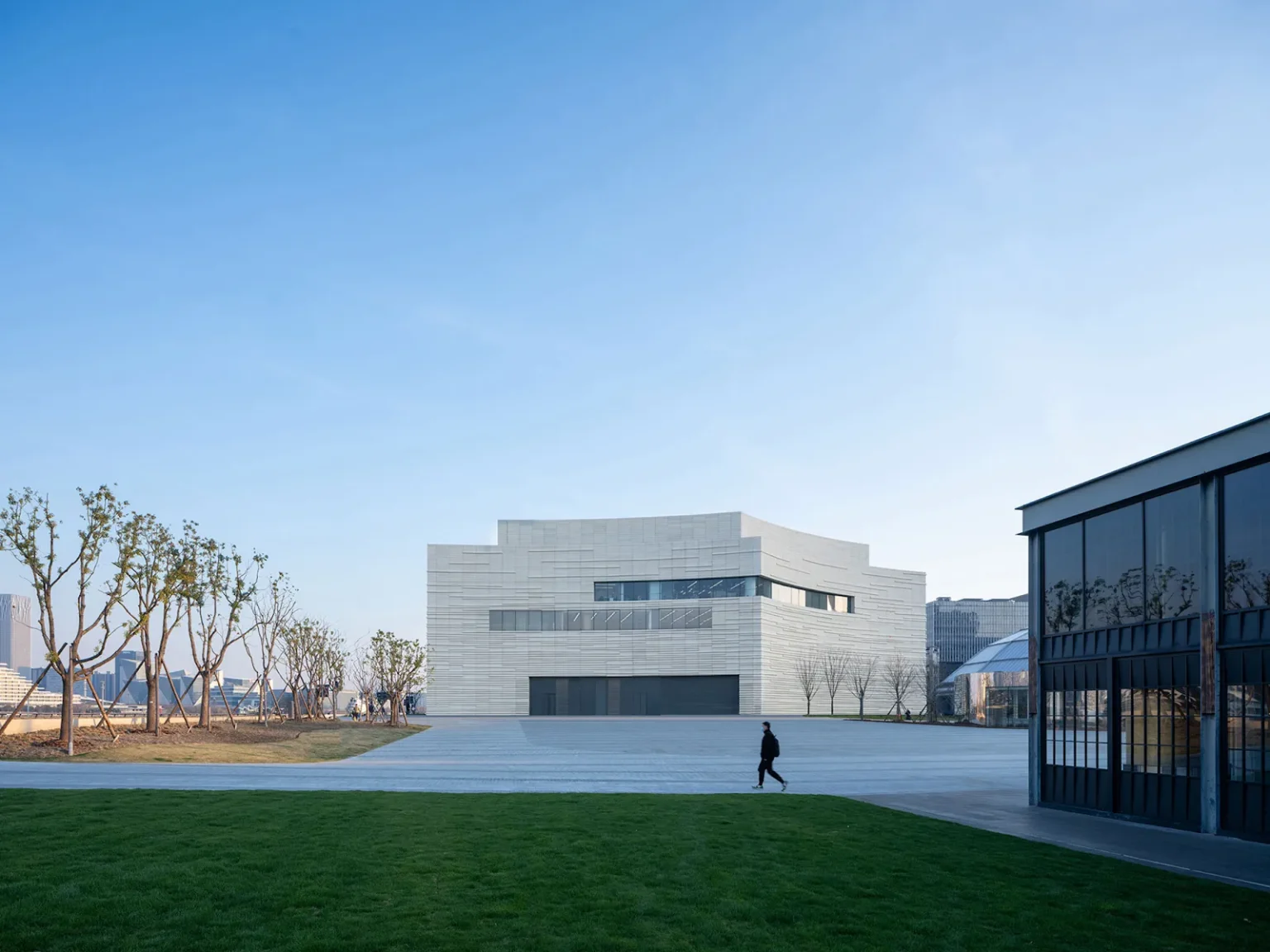
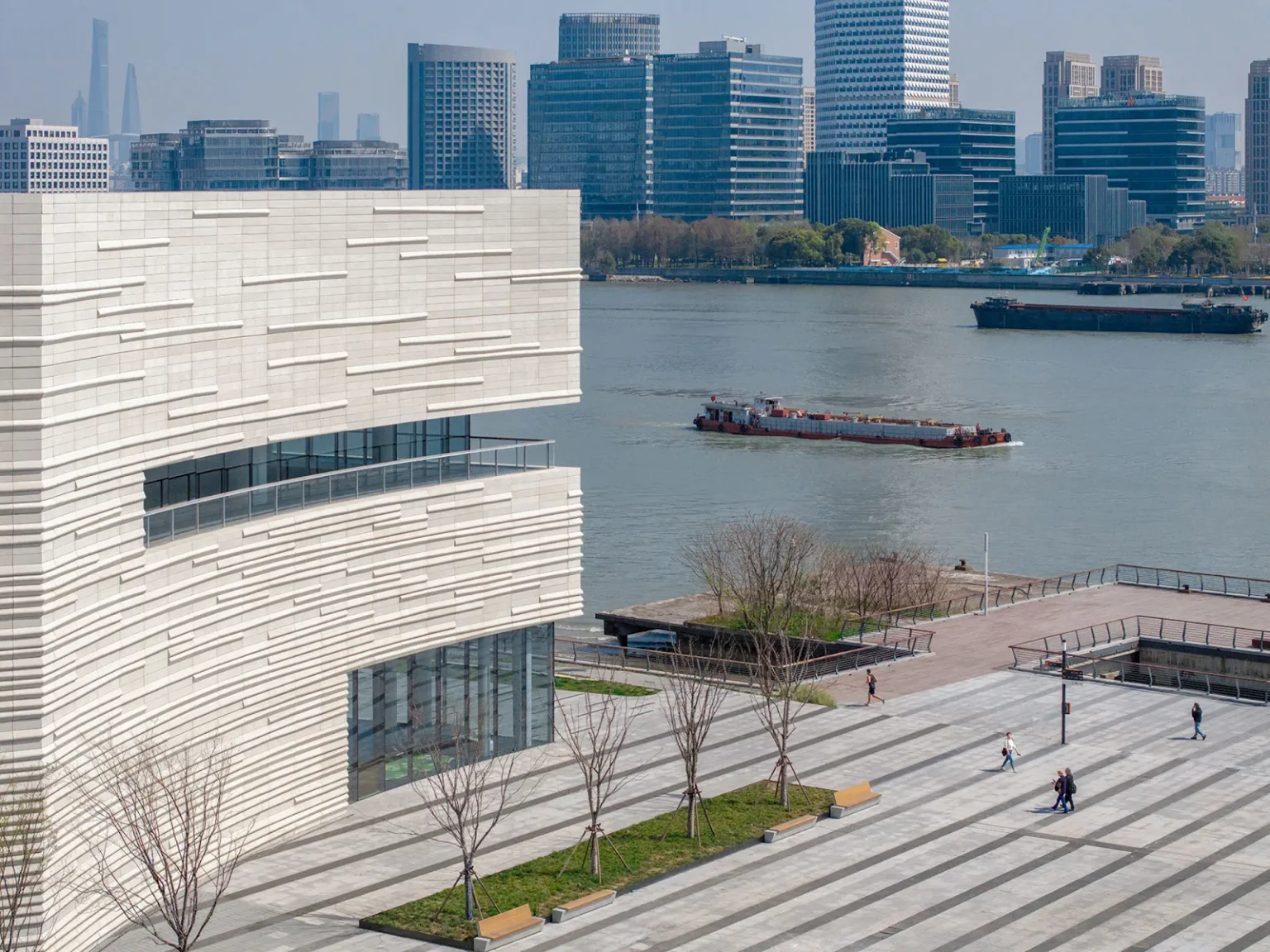
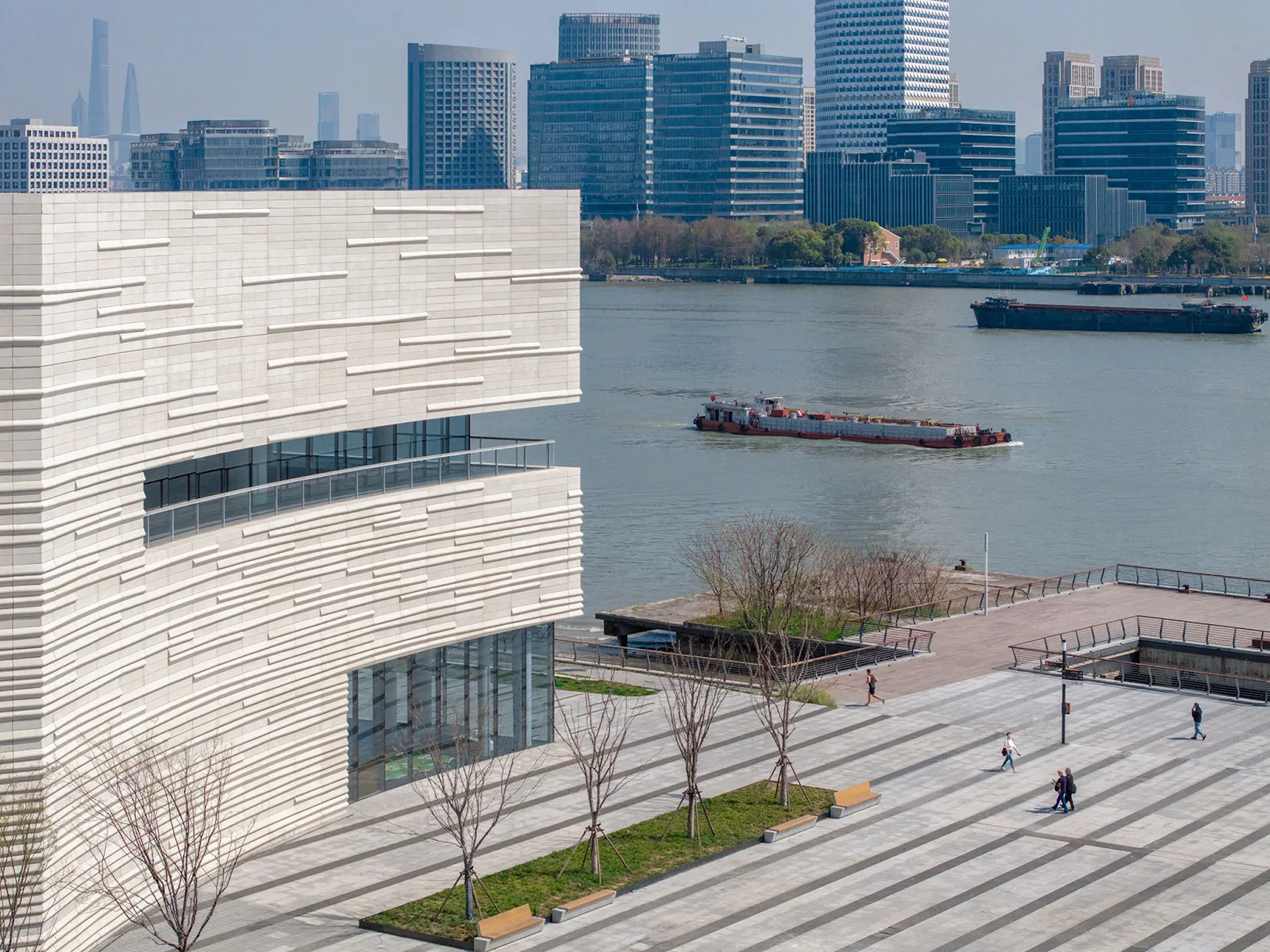
Drawing inspiration from the fluidity of water and the tectonics of industrial architecture, the theatre’s form features layered, curving volumes clad in over 12,000 square meters of white glass-fibre-reinforced concrete (GRC). These elements are carefully shaped into horizontal striations, evoking ripples on the river’s surface while also referencing the concrete legacy of the site’s industrial past.
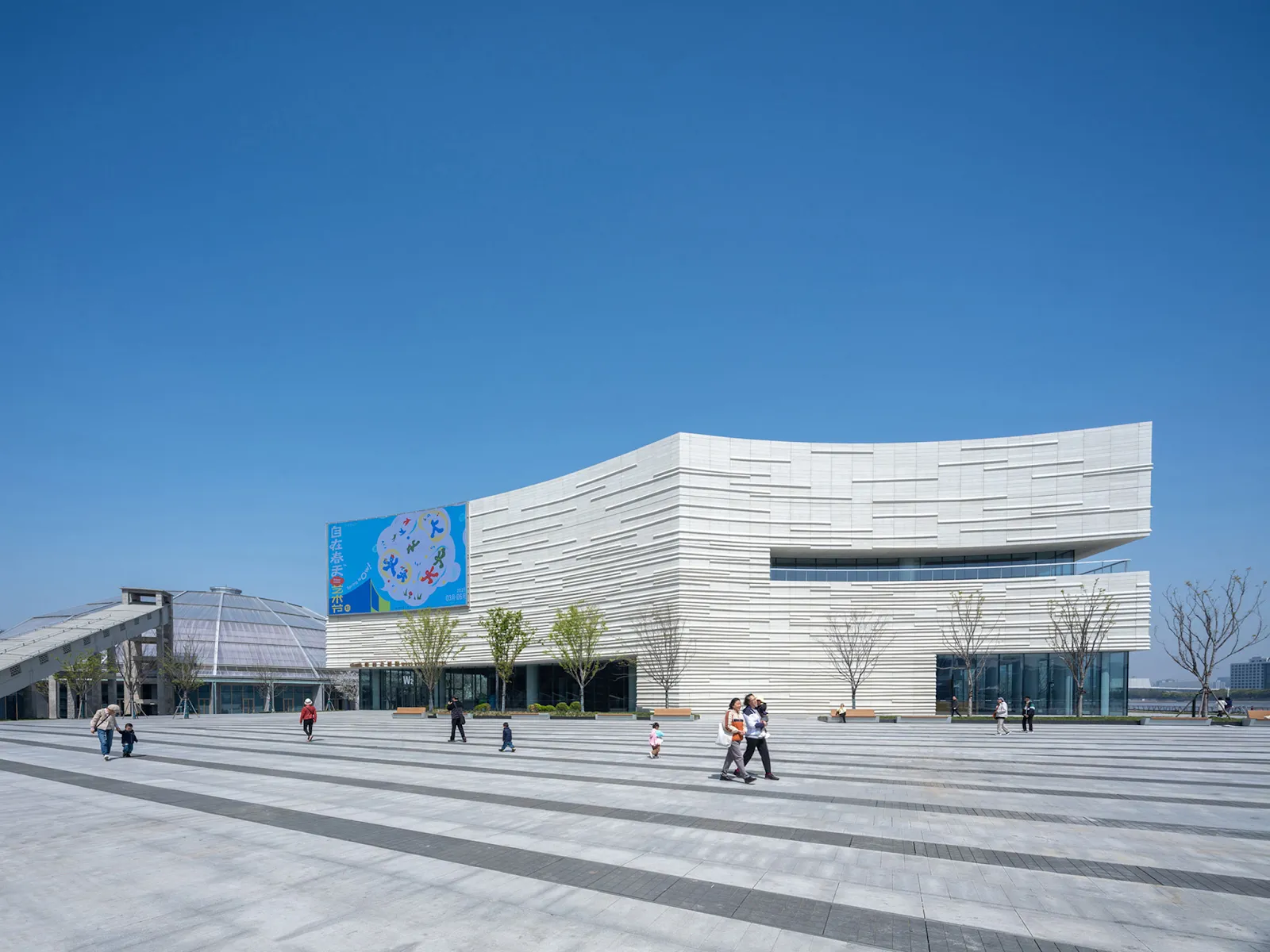
Each panel, approximately 1.8 x 3 meters and just 20 mm thick, was custom-designed, totaling more than 12,000 individually crafted pieces produced using Aalborg White cement for a seamless, luminous finish.
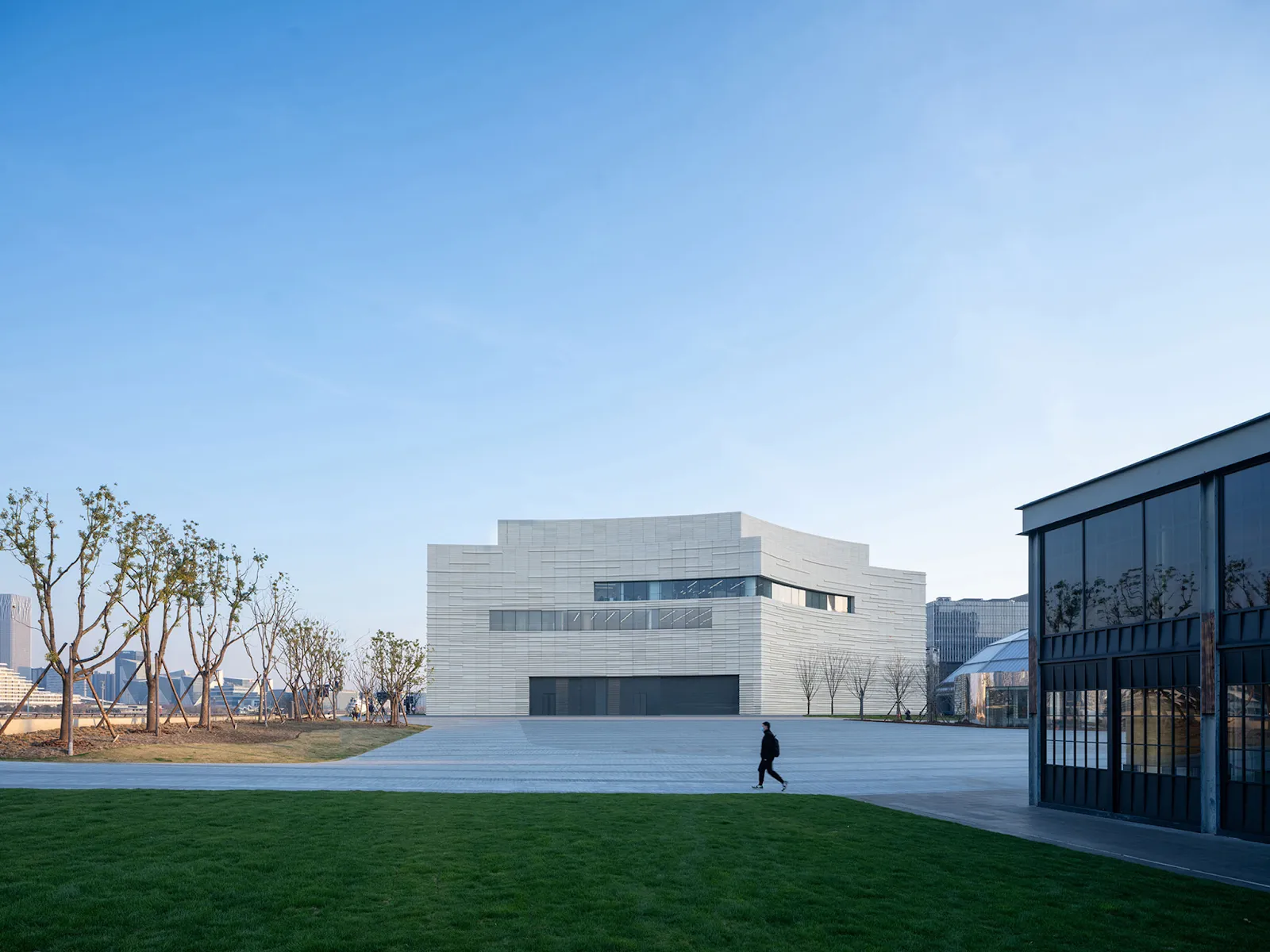
The structure’s dynamic facade softens its monumental presence and resonates with the circular geometry of the neighboring West Bund Dome, creating a subtle yin-yang relationship between the two cultural buildings. The overall composition reflects SHL‘s ongoing interest in civic buildings that embrace the city while offering tactile, emotionally resonant materiality.
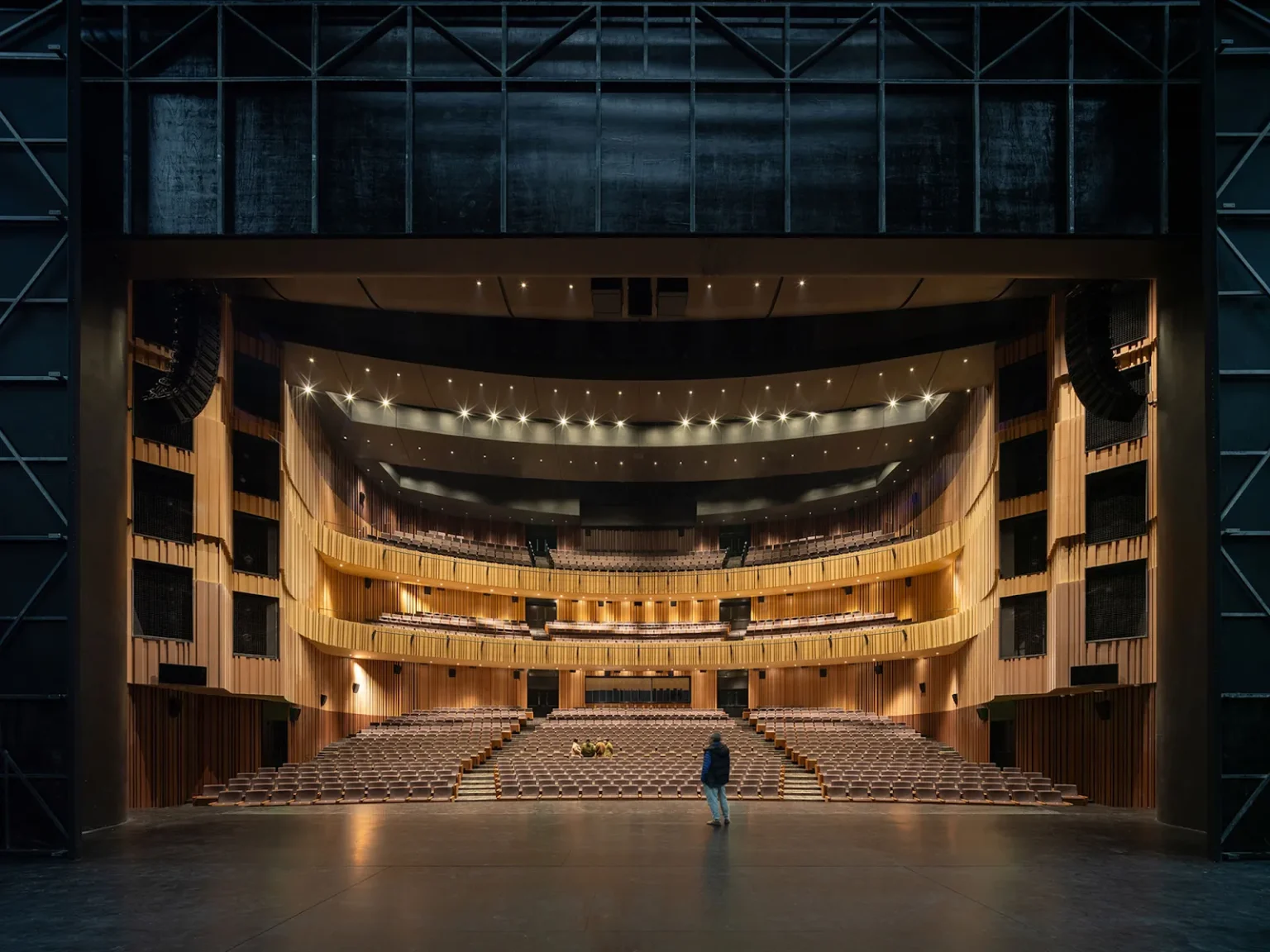
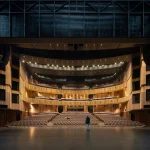
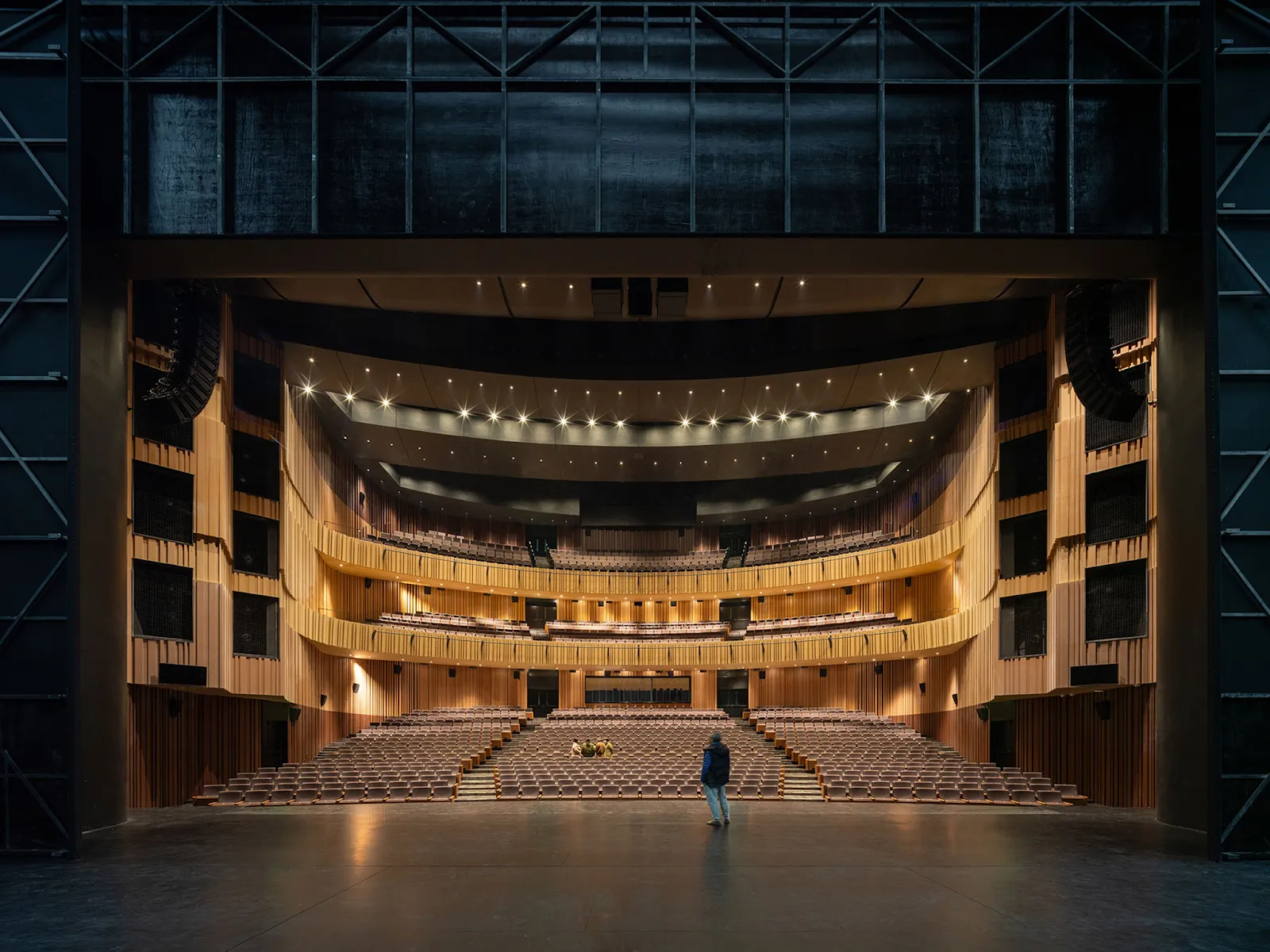
Inside, the West Bund Grand Theatre houses a 1,600-seat main auditorium designed for world-class musical and theatrical performances, along with a 200-seat black box space intended for experimental programming and smaller-scale events.
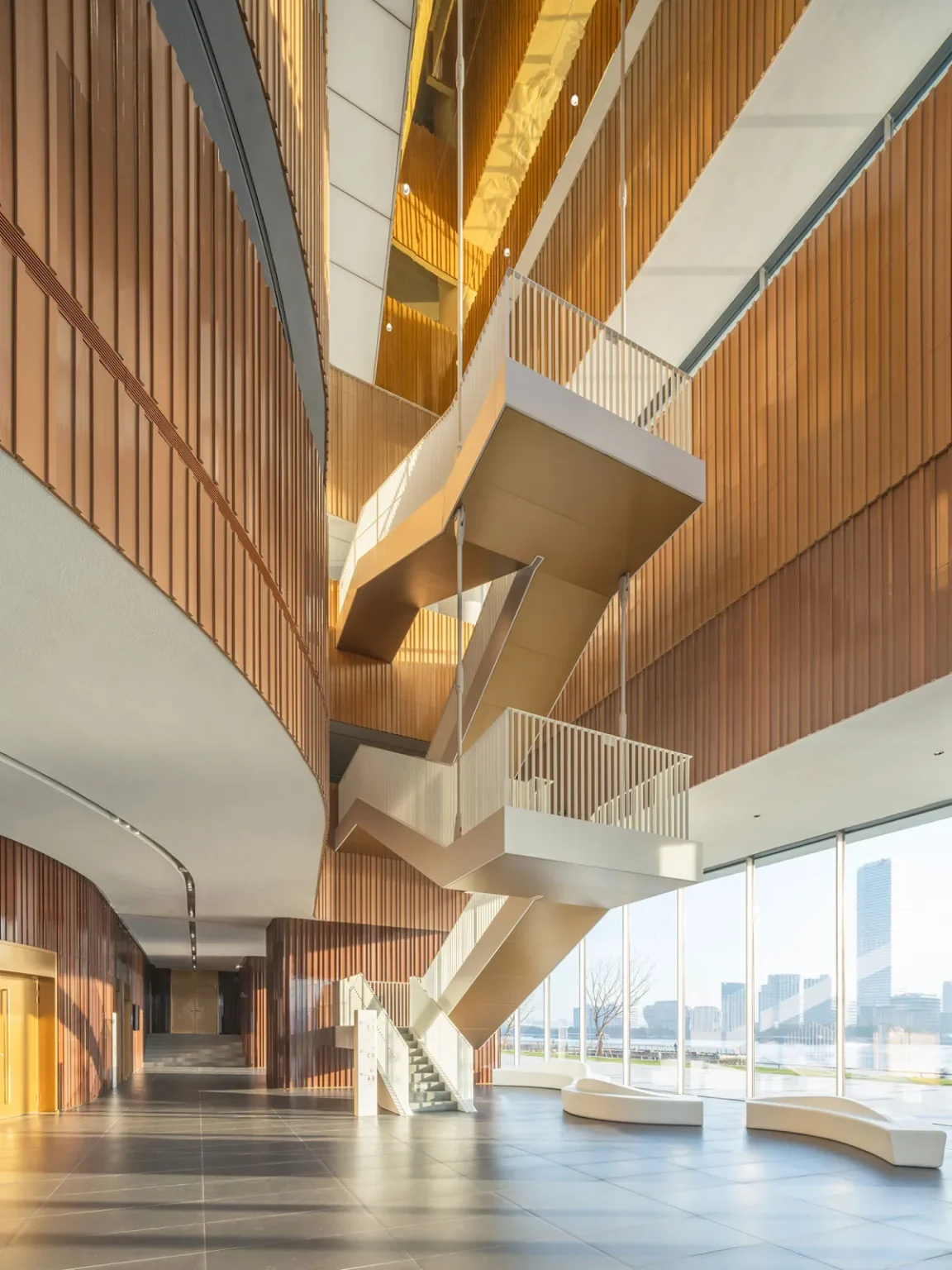
However, what sets this project apart is its openness to the public. The ground-floor lobby, wrapped in glass on three sides, creates a continuous visual and spatial connection to the riverside promenade, landscaped by Field Operations and TIANHUA.
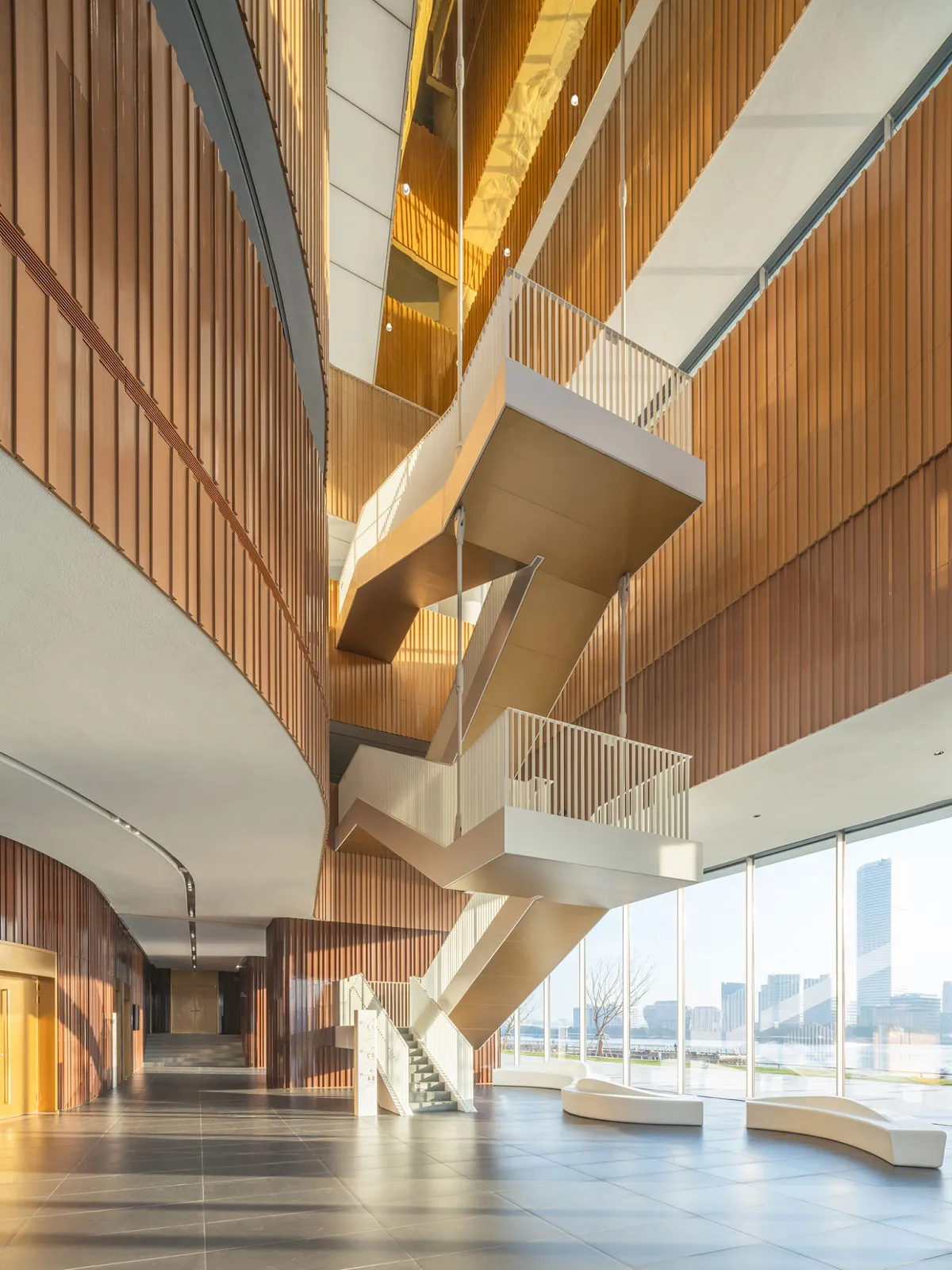
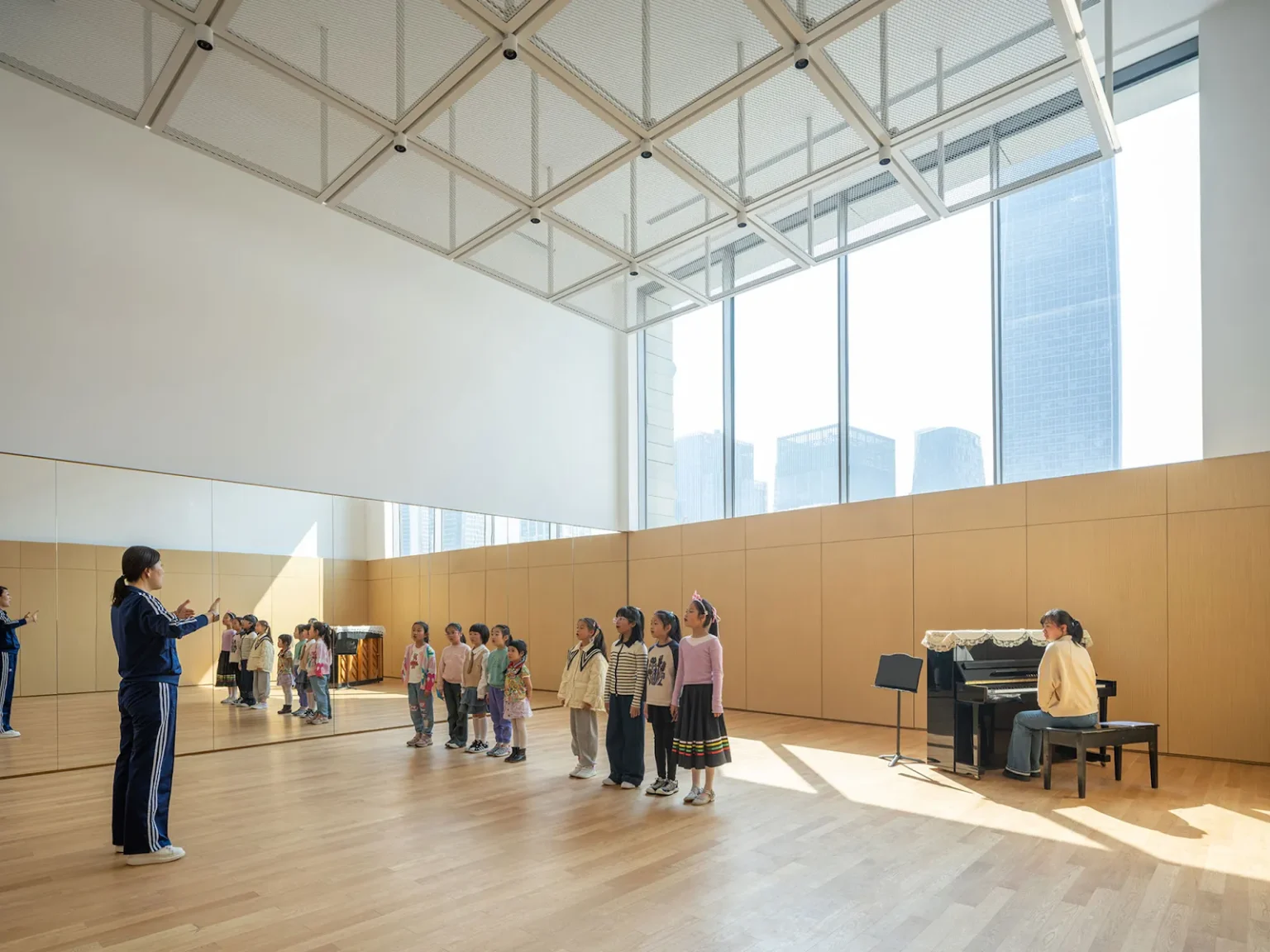
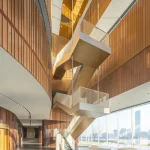
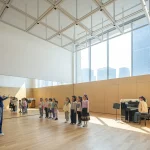
Materially, the interiors shift to a warm terracotta tone with ceramic cladding, while overhead, a golden reflective ceiling mirrors both light and movement, symbolically echoing the flowing water outside and the activity within. The theatre includes a café, restaurant, music classrooms, and even spaces for informal gatherings like open mics and dance sessions, programs that make the space feel more like a public square than a closed auditorium.
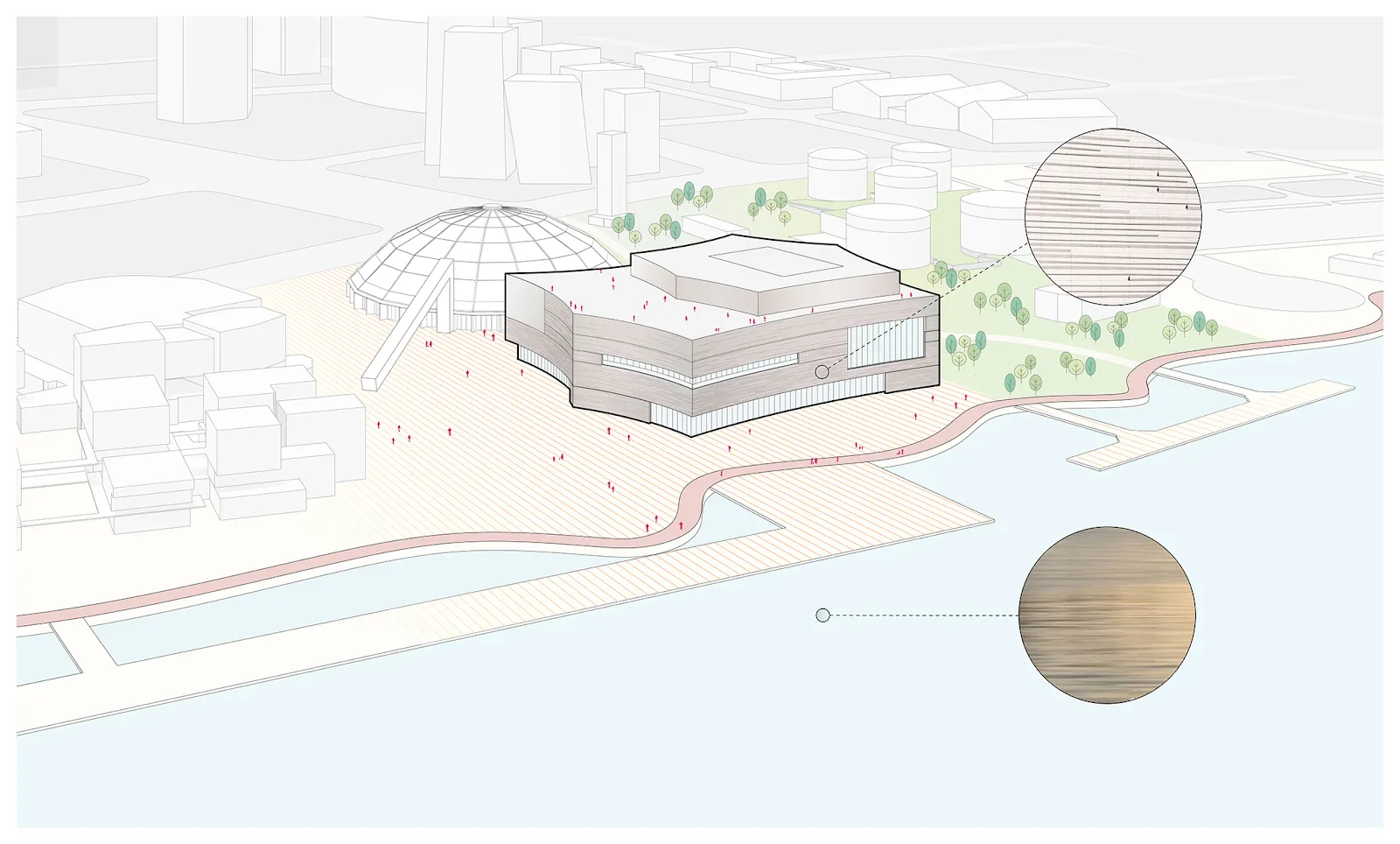
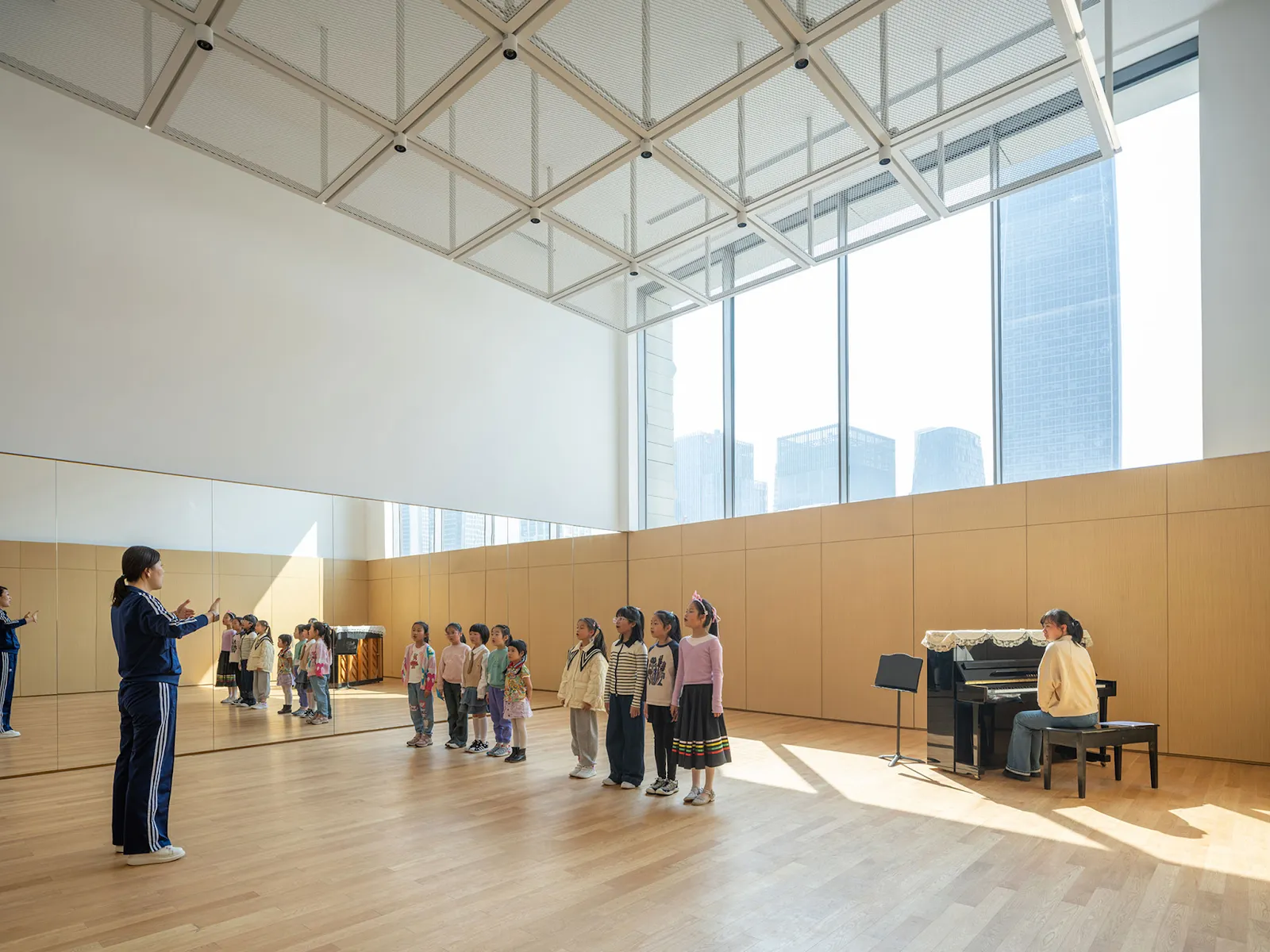
The theatre’s role extends beyond performance. Terraces and rooftop platforms offer panoramic river views, becoming gathering spots even for those not attending a show. Inclusive programming, ranging from children’s choirs and music lessons to subsidized events for seniors, reflects the project’s commitment to civic life.
West Bund Grand Theatre Project Details
Location: West Bund, Shanghai, China
Project Name: West Bund Grand Theatre
Architect: Schmidt Hammer Lassen (SHL)
Collaborating Architect: Arcplus Institute of Shanghai
Contractor: Shanghai Construction Group
Client: West Bund Group
Gross Floor Area: Approx. 23,177 m²
Auditorium Capacity: Main – 1,600 seats; Black box – 200 seats
Facade Material: White GRC (Glass-Fibre-Reinforced Concrete)
Image Credit: RawVision Studio