




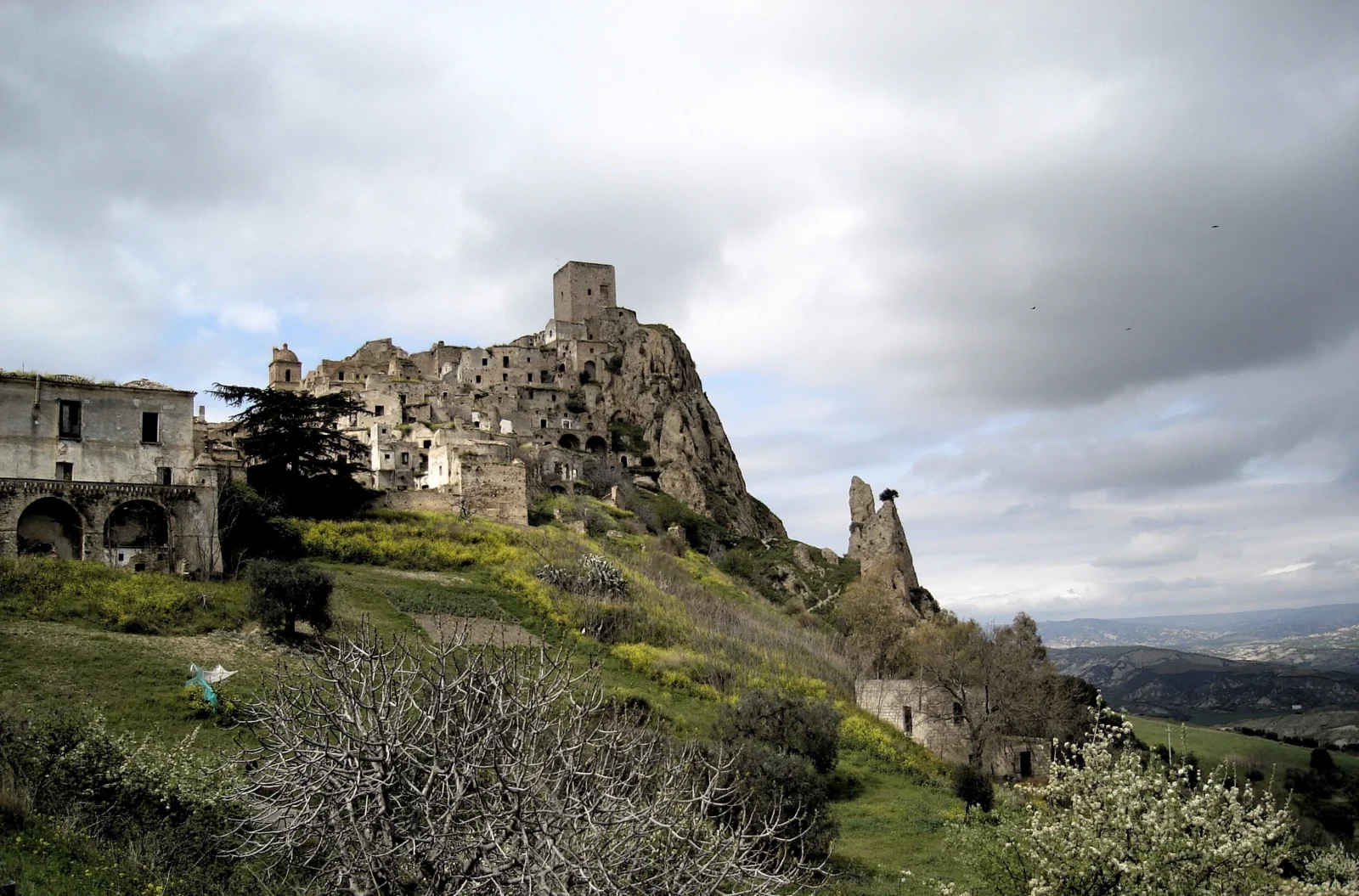
What would the city you live in look like if it were completely abandoned one day? Around the world, many places were once filled with lively crowds and the fast pace of daily life, yet now stand deserted. Known as “ghost towns,” these former settlements were abandoned by their residents for many reasons, including natural and man-made disasters, changing economic conditions, and political turmoil. For years, no trace of civilization has been found in these cities, which have now fallen into decay. Despite periodically attracting explorers due to their desolate and mystical atmosphere, these cities have remained lifeless for years.
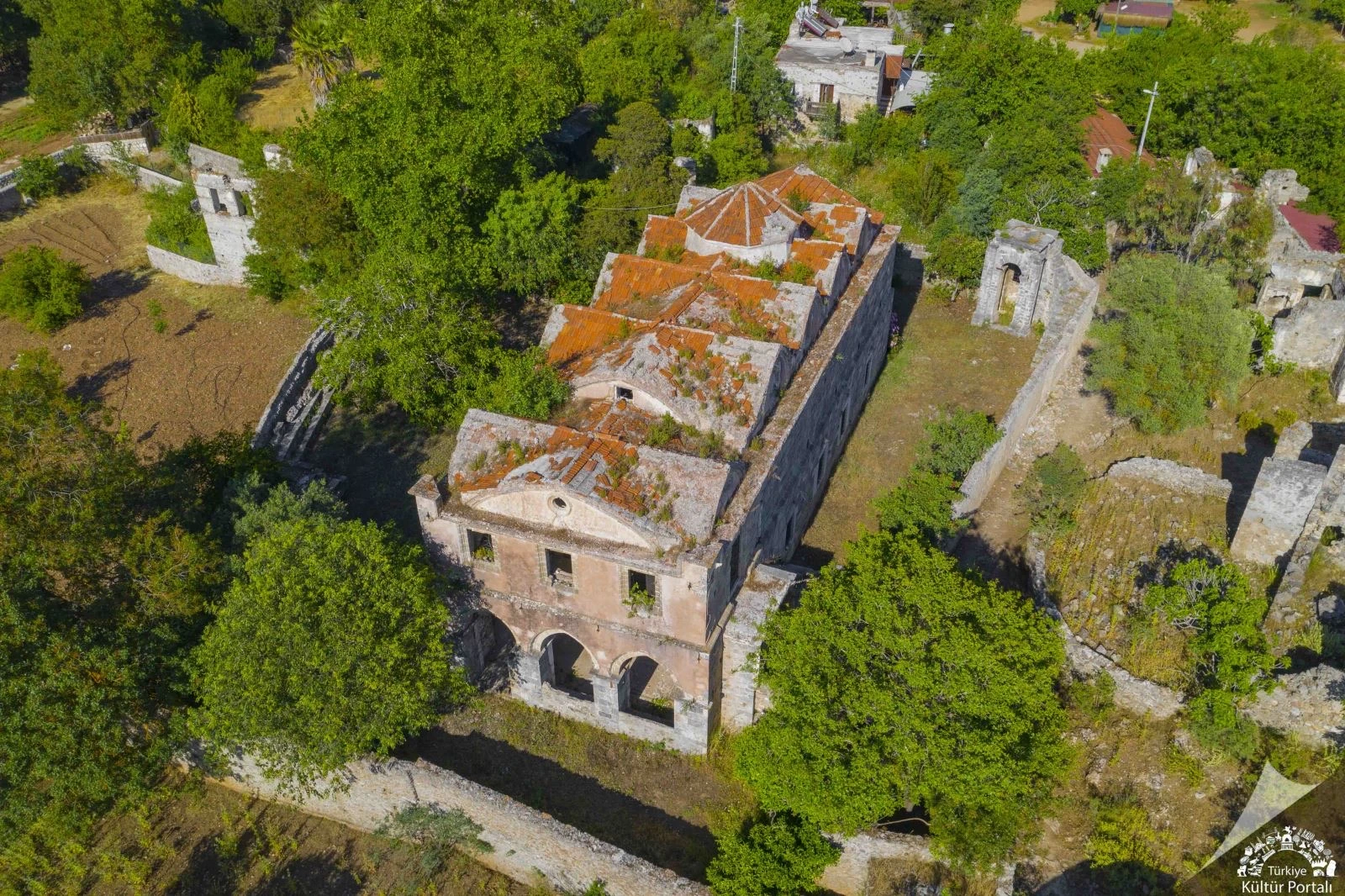
In this article, we examine 10 abandoned megacities and their untold stories:
1- Pripyat, Ukraine
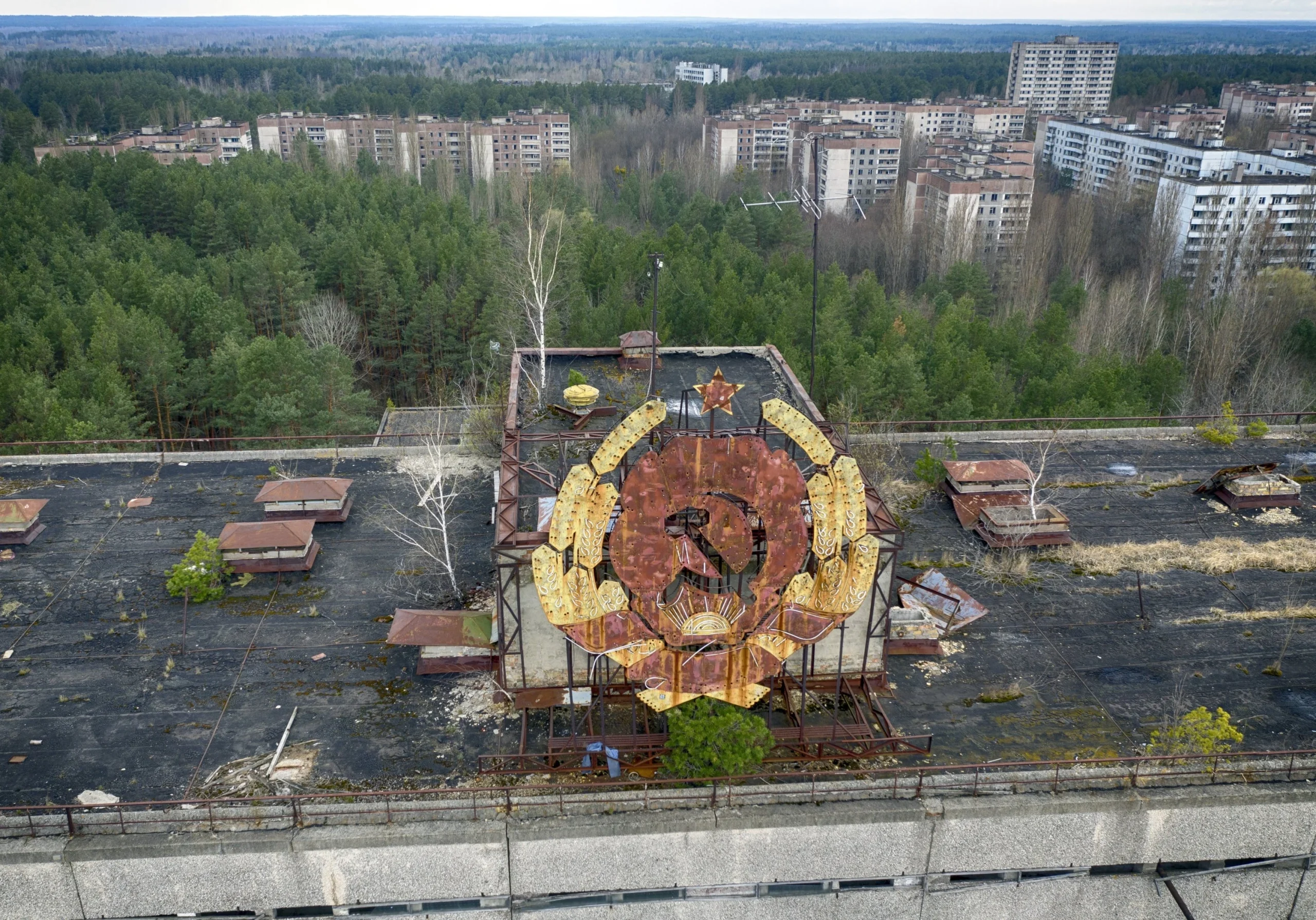
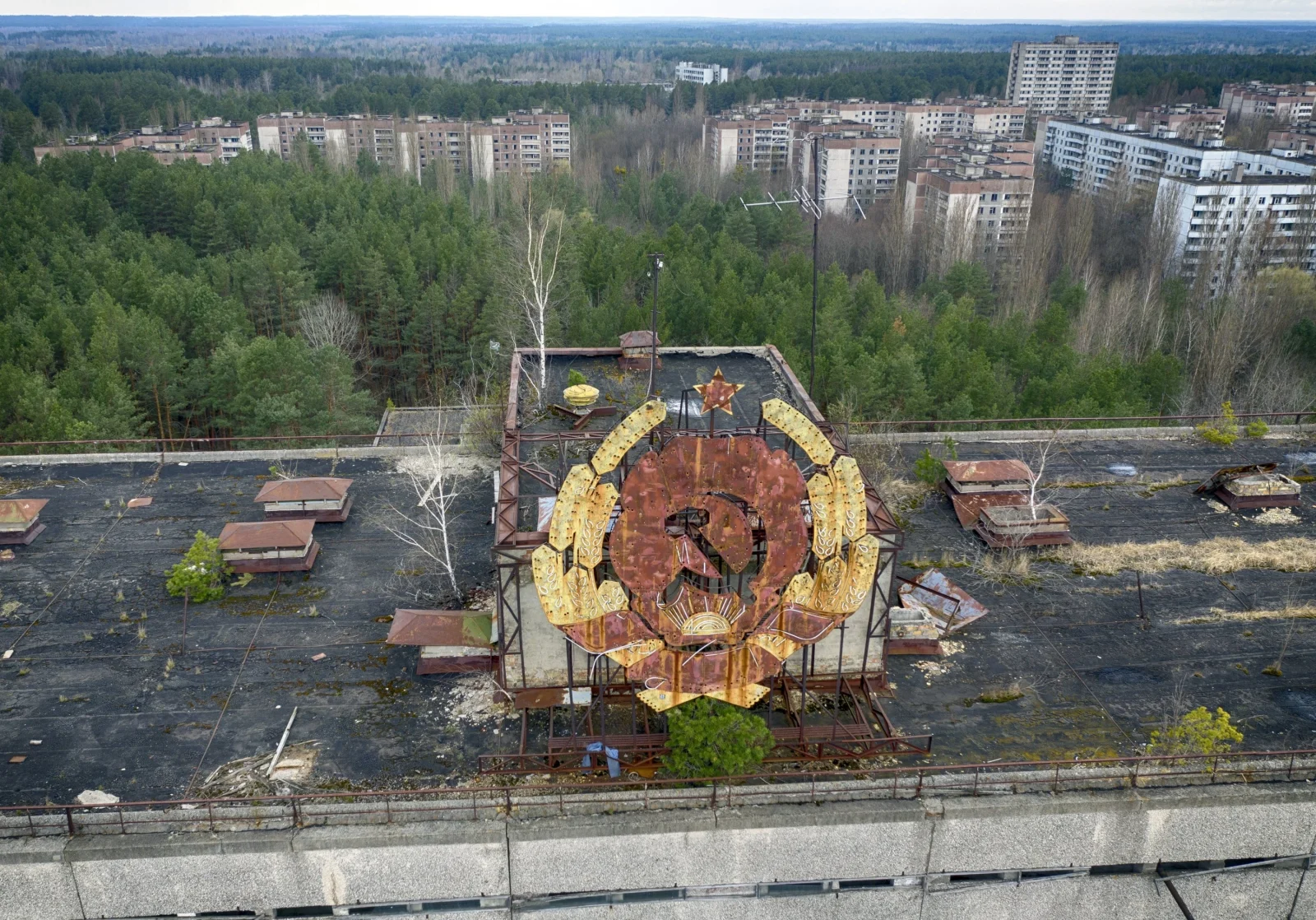
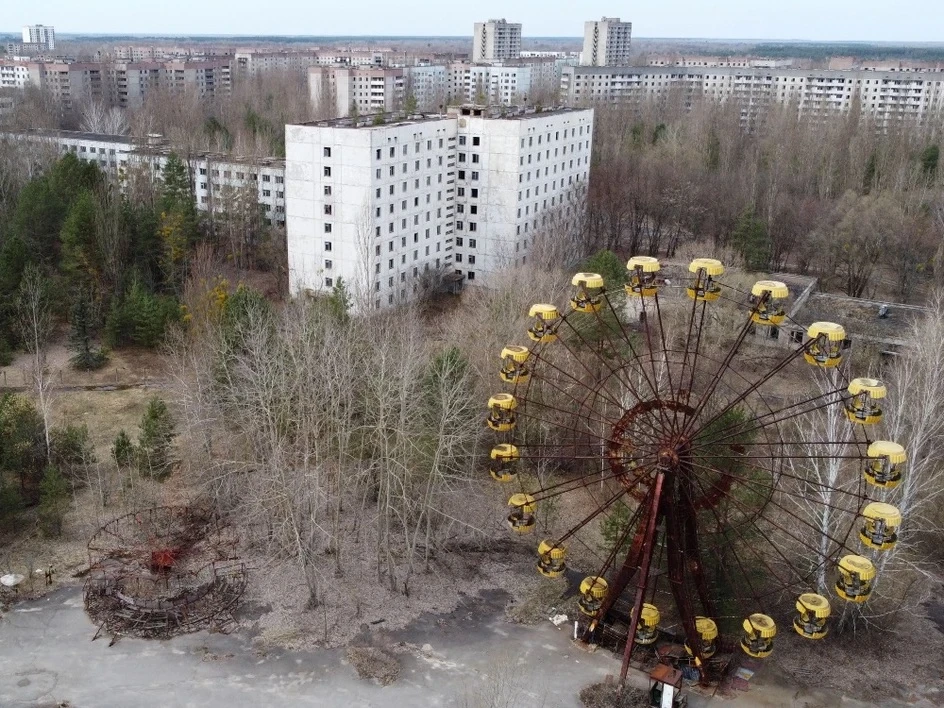
Pripyat, built specifically as a “nuclear city” to house workers employed at a nearby nuclear power plant in northern Ukraine, was a peaceful town of 49,000 people with over 13,000 apartments, a school for 5,000 children, two dozen shops and cafes, a cinema, a gymnasium, a cultural center, various factories, and a hospital. In 1986, a malfunction in the fourth reactor of the Chornobyl disaster caused a catastrophic nuclear explosion whose effects would remain for decades. As toxic radiation rapidly spread through Pripyat, the city was evacuated within just 30 hours through massive convoys of buses stretching for kilometers.
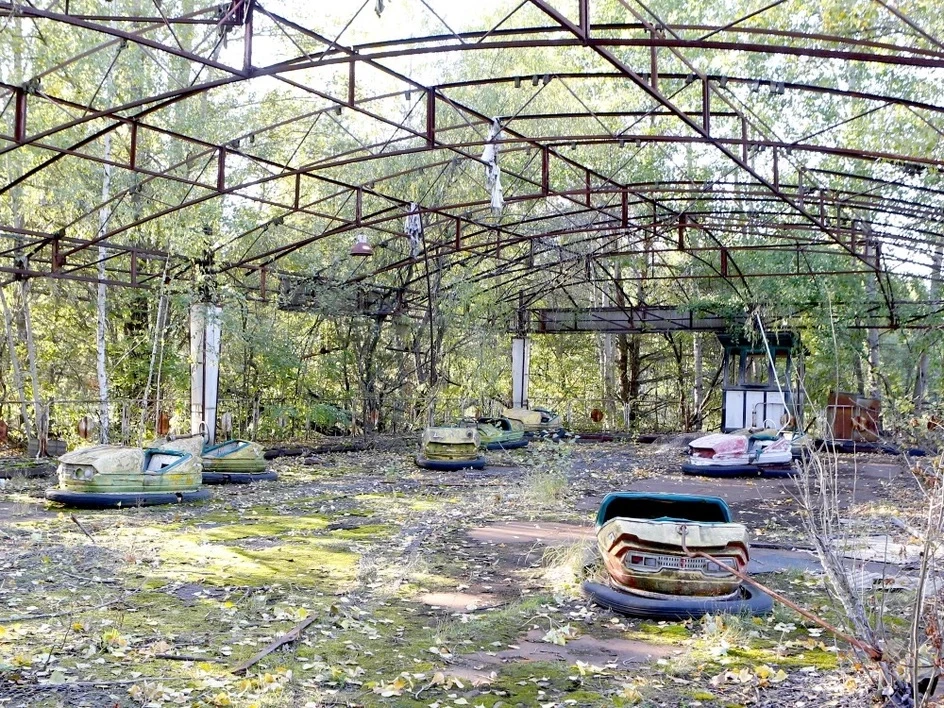
After the explosion, the abandoned nuclear facilities in the ghost city were buried under tons of steel and concrete. Due to the disaster’s devastating impact, nearly 2.5 million hectares of fertile agricultural land became unusable. The Chornobyl disaster, whose devastating effects lingered for years, transformed Pripyat into a ghost town, leaving behind ruined houses, desolate streets, and radiation masks scattered throughout the area.
2- Craco, Italy
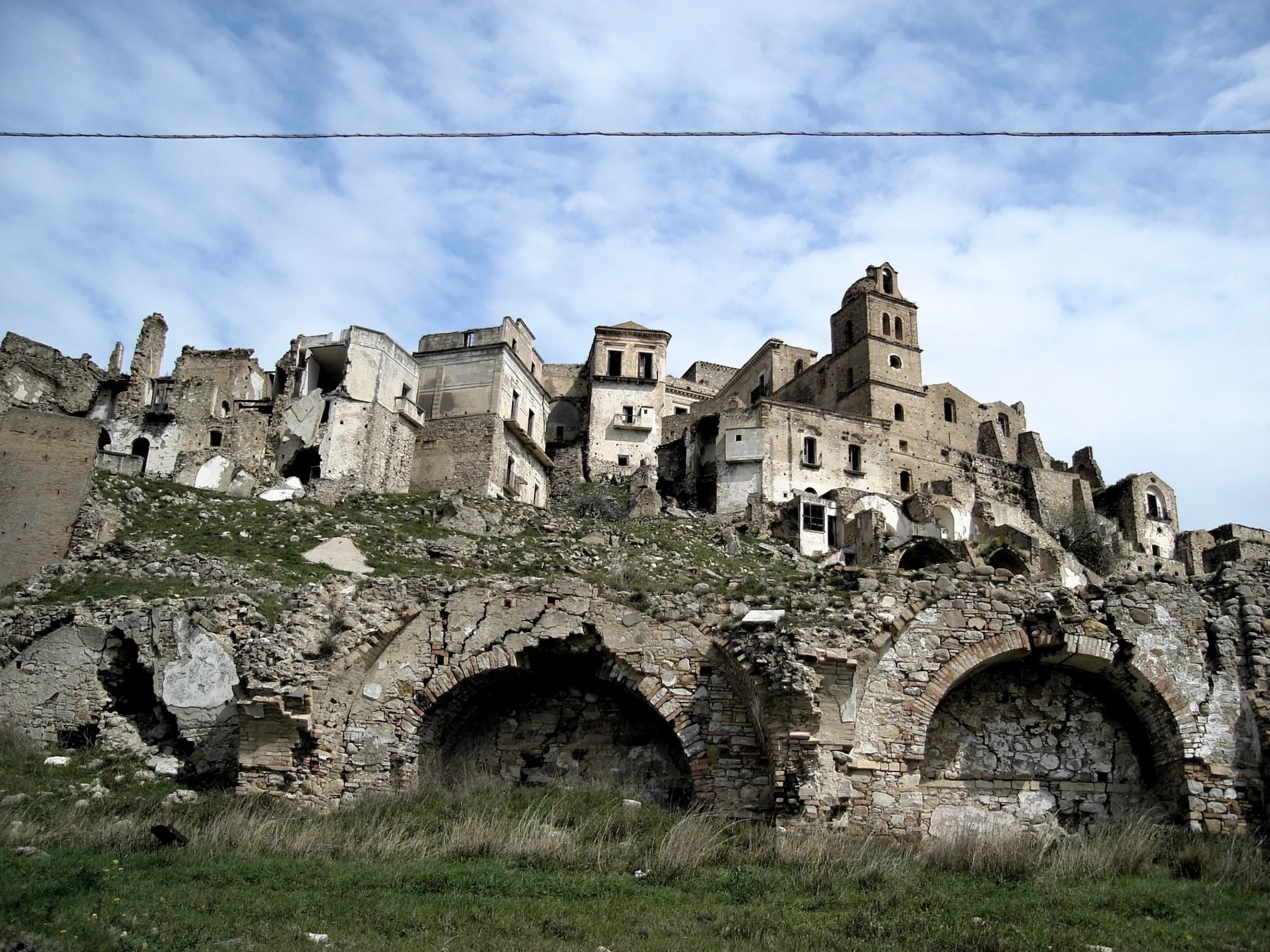
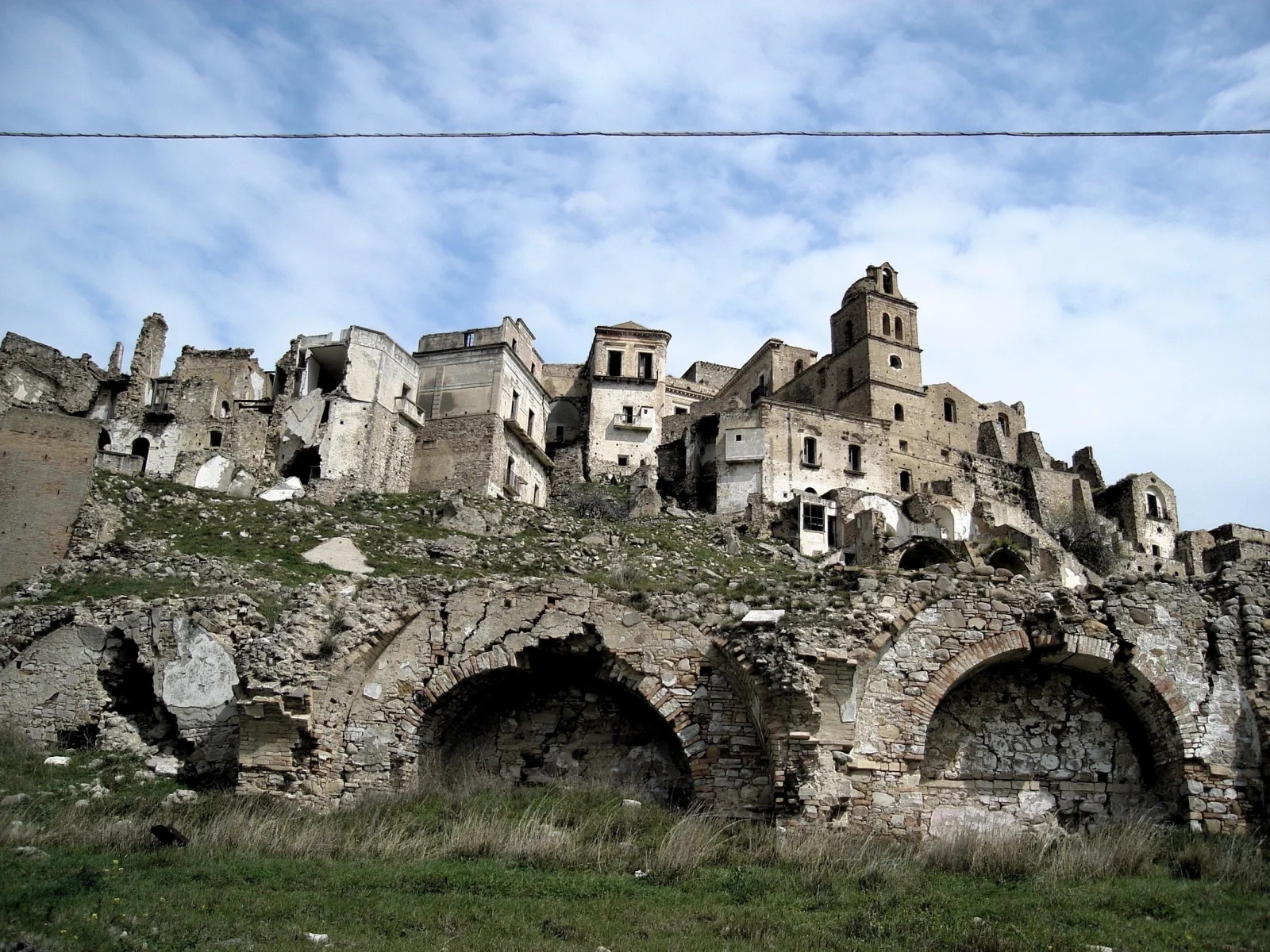
Built on top of a hill in southern Italy, Craco was once a town of around 2,000 people who made their living from olive oil and wheat production. Thought to have been settled by the Greeks around the 6th century BC, the ancient city survived numerous migrations due to plague, wars, and poor agricultural conditions. In the 1950s, a major landslide occurred, believed to have been caused by faulty water infrastructure and excavation work carried out during the previous decade. Combined with frequent earthquakes, these conditions made Craco increasingly dangerous to live in.
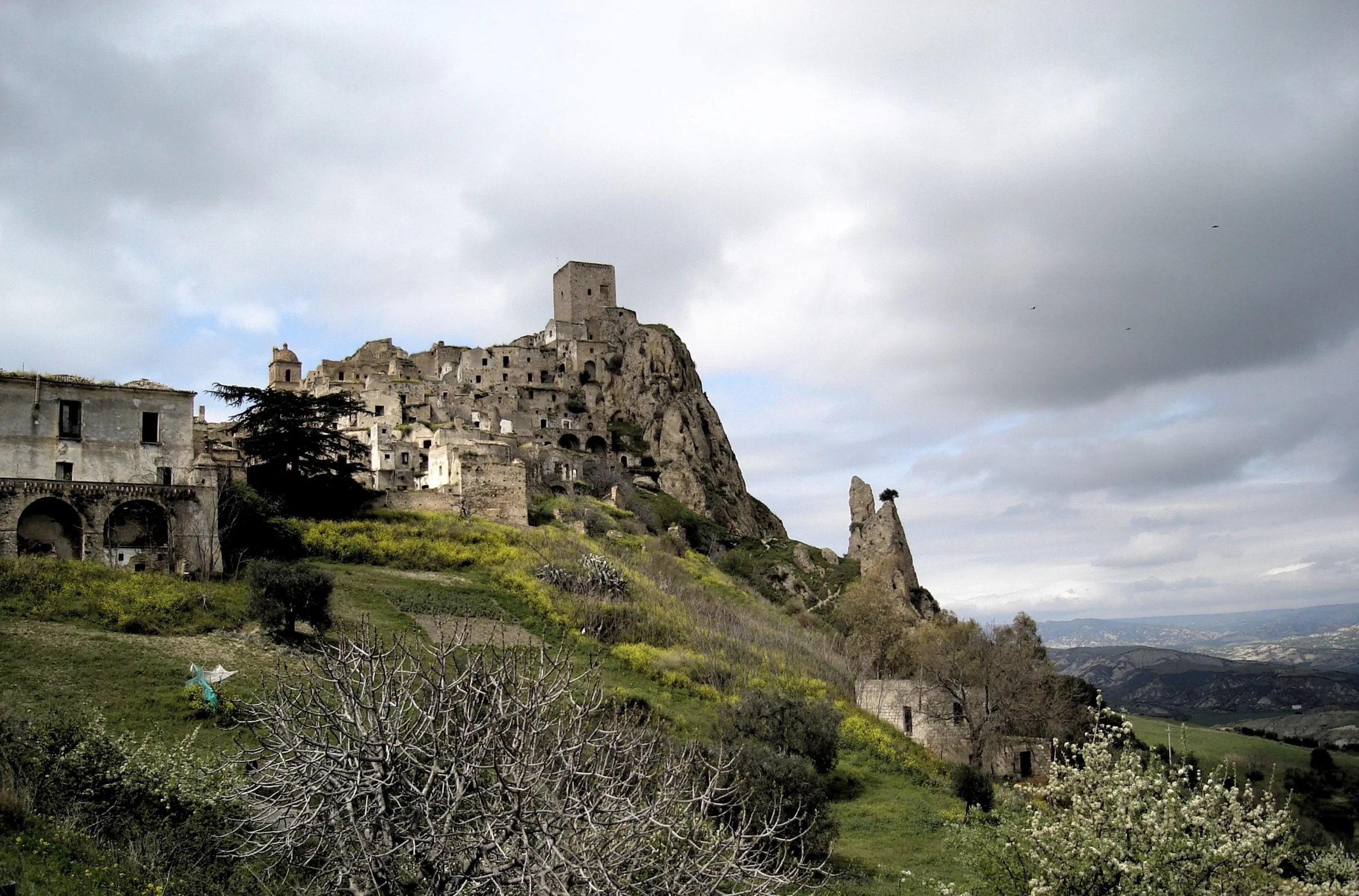
In the 1950s, a major landslide occurred, believed to have been caused by faulty water infrastructure and excavation work carried out during the previous decade. Combined with frequent earthquakes, these conditions made Craco increasingly dangerous to live in.
Craco, which has been used as a filming location for many important films such as Quantum of Solace (2008), was included in the World Monuments Fund’s monitoring and conservation list in 2010. Known worldwide and accessible through guided tours, Craco attracts tourists with its ancient tombs dating back to the 8th century and its steep, undulating valleys.
3- Hashima Island, Japan
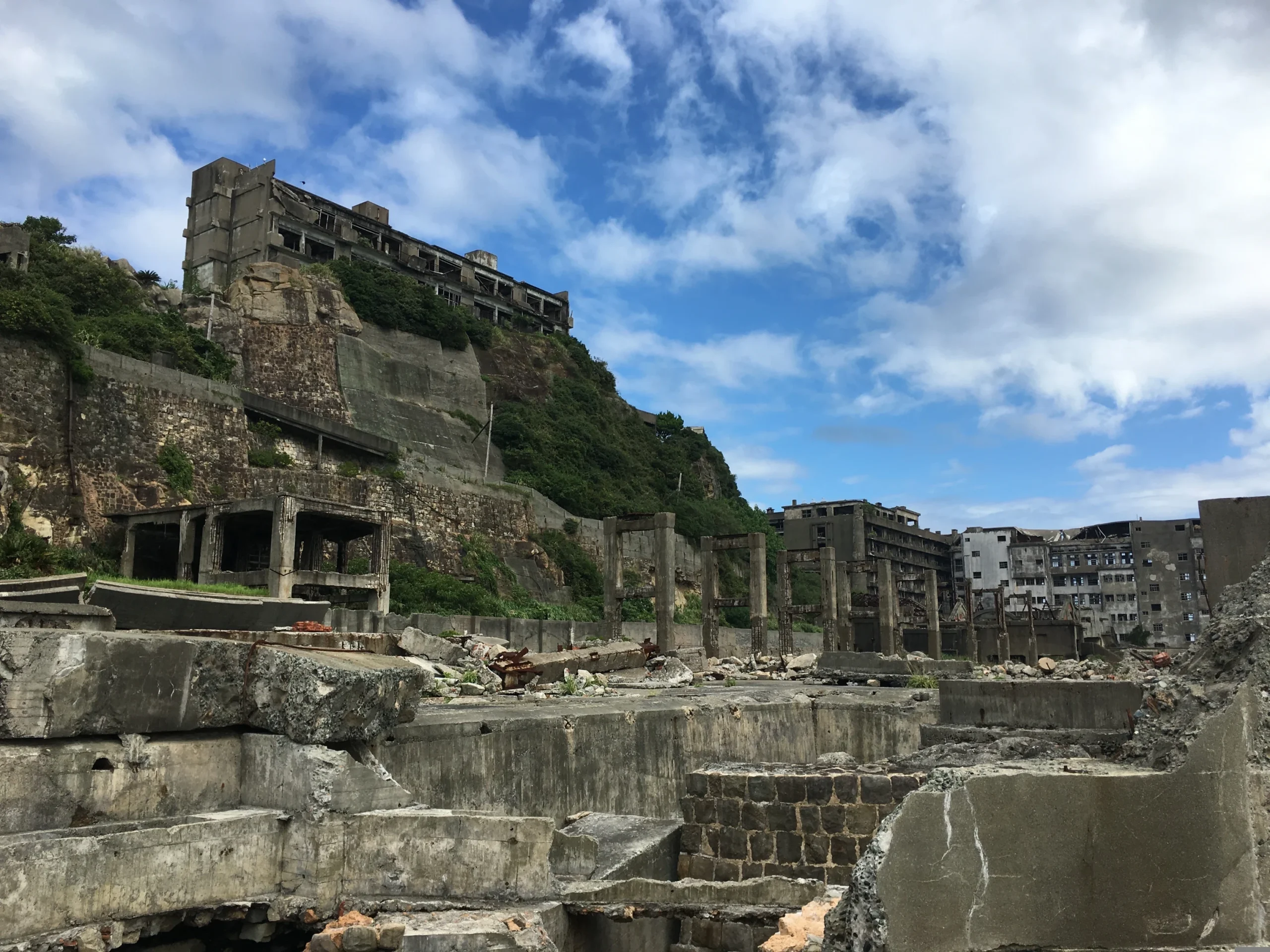
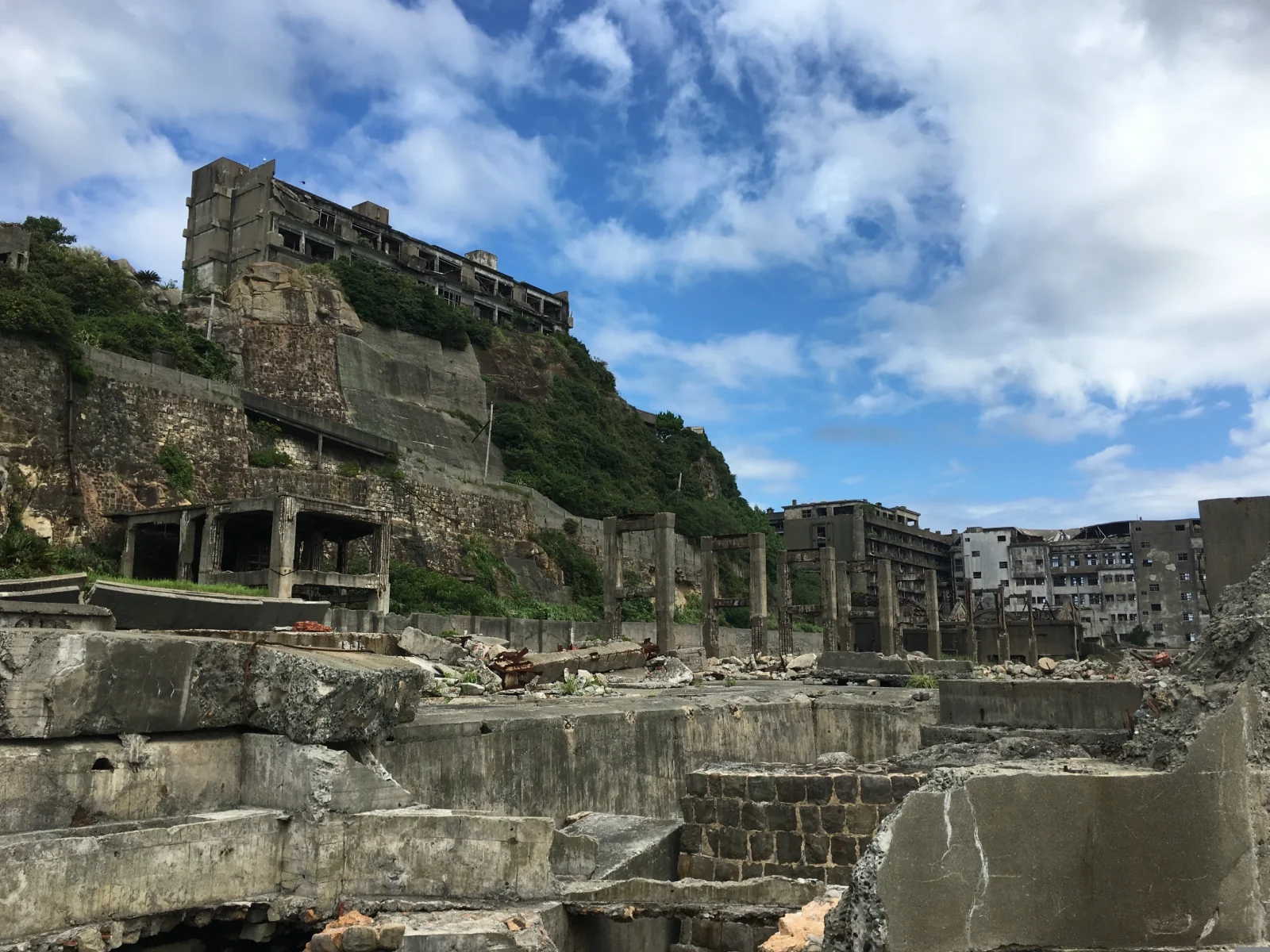
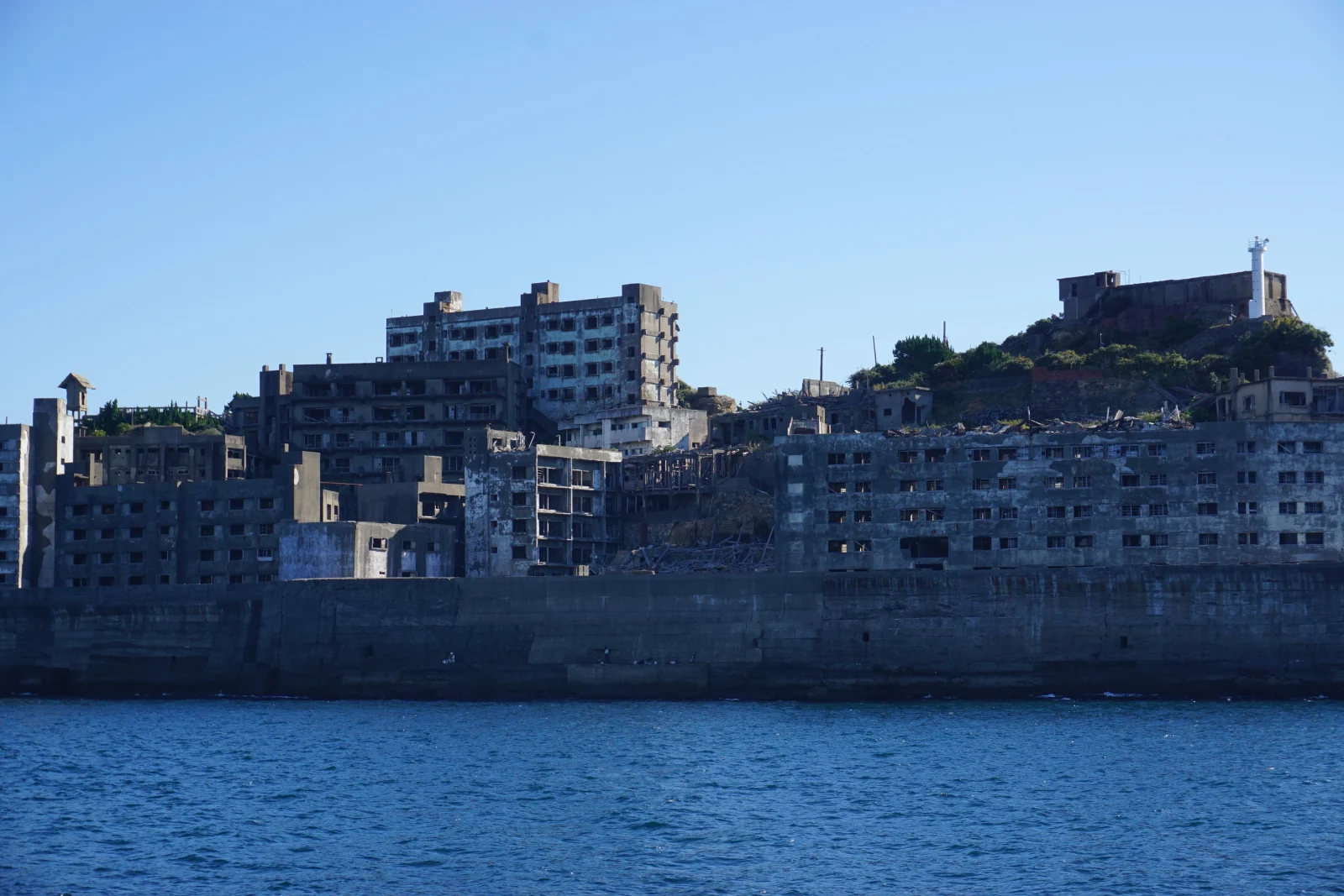
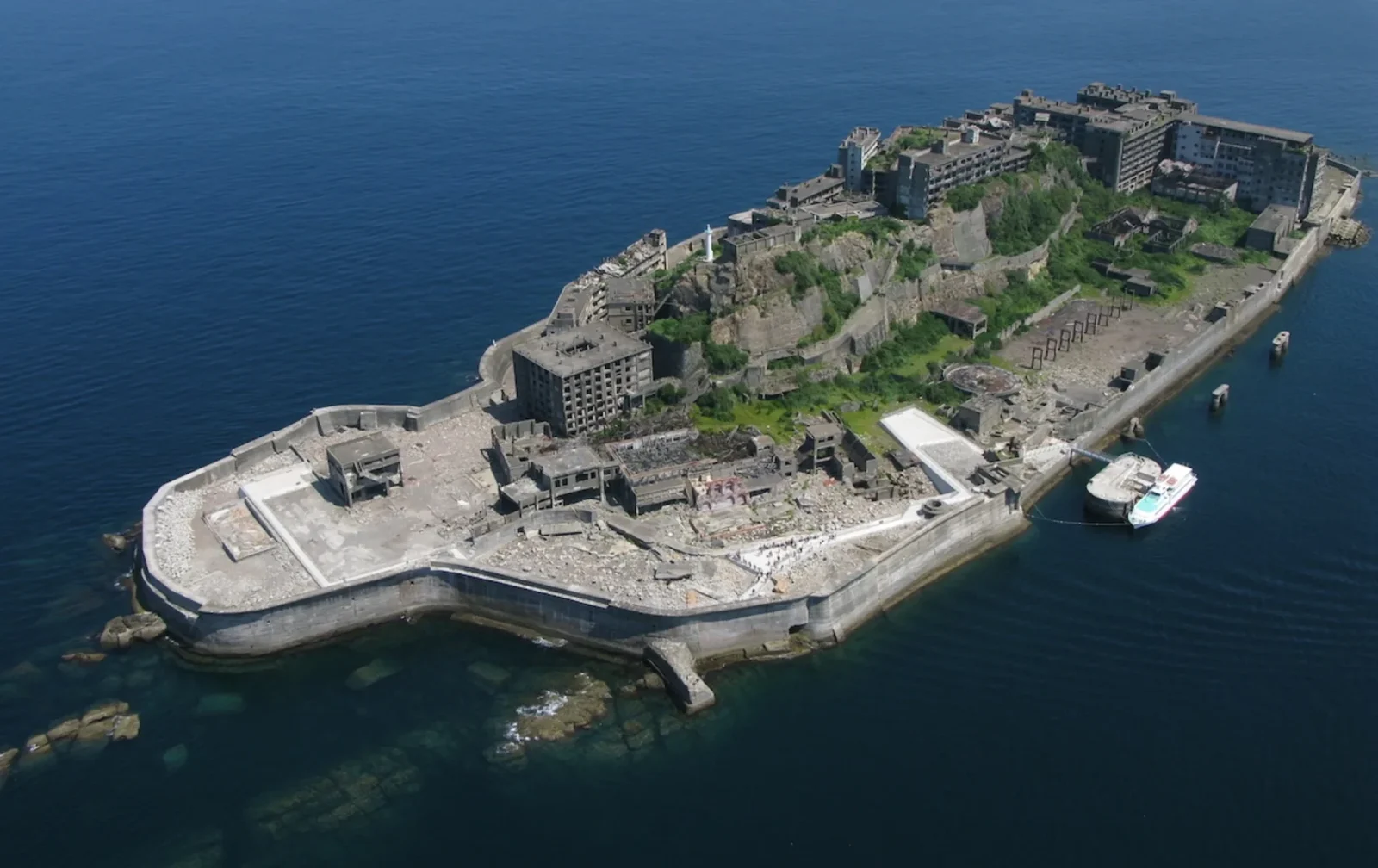
Located off the coast of Nagasaki in southwestern Japan, Hashima Island is one of the largest abandoned cities today. Once home to over 5,000 people, the island was developed in the 1880s by Mitsubishi as a national coal mining center due to its rich coal deposits. With mine shafts reaching depths of up to 660 meters, the island quickly grew as large numbers of workers arrived, becoming one of the most densely populated places of its time. The island boasted magnificent buildings, large hospitals, shopping centers, and social facilities, giving it a highly developed appearance.
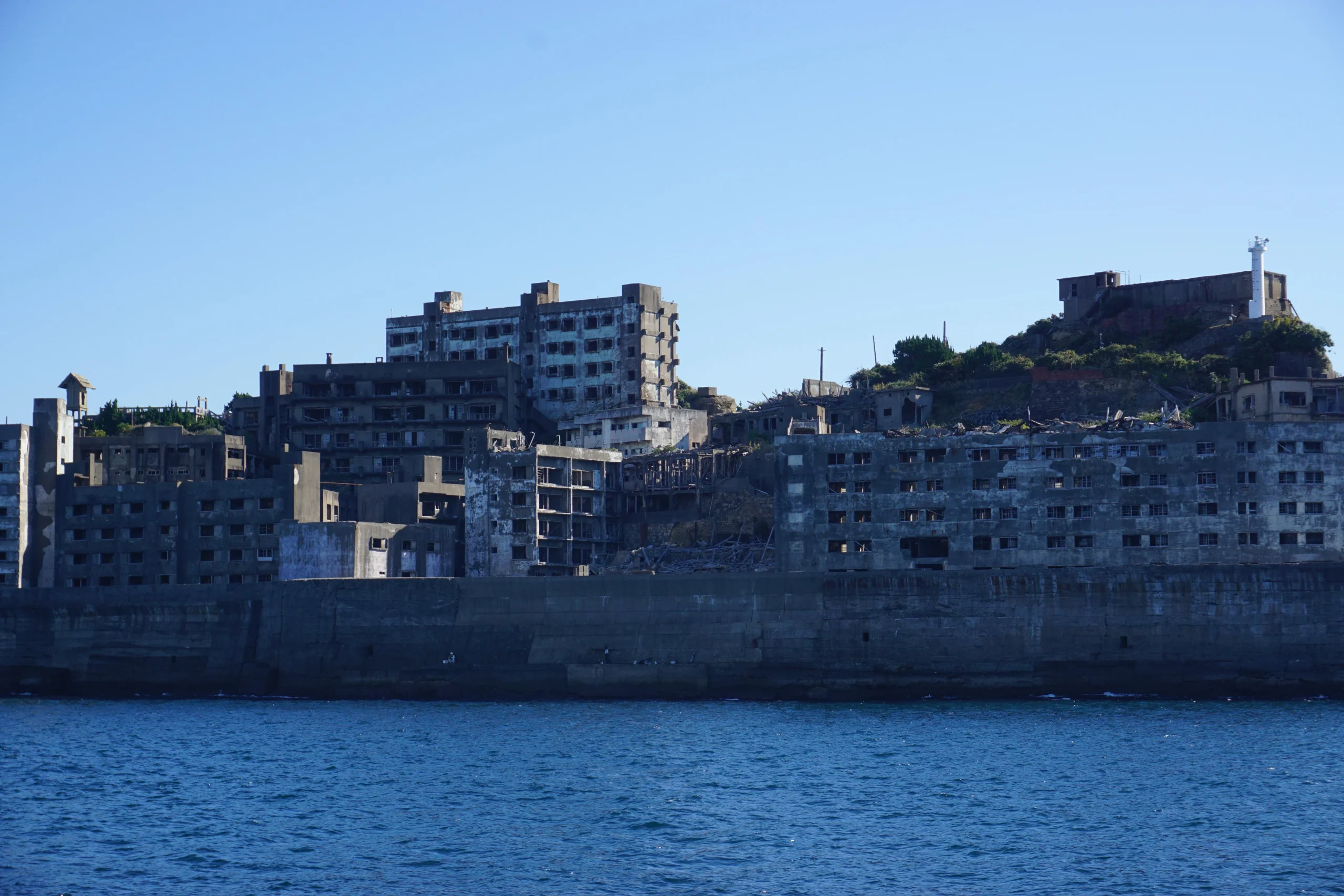
However, as global economic conditions changed and coal was gradually replaced by oil, the mines on Hashima Island were eventually closed. With the loss of their sole source of livelihood, the people began to leave the island, and by 1975, Hashima Island had become a complete ghost town. Included in the UNESCO World Heritage List in 2015, the island can now be visited through organized tours. With decaying, partially collapsed buildings and plants growing among the concrete, Hashima Island offers visitors a truly desolate, ghostly experience.
4- Kolmanskop, Namibia
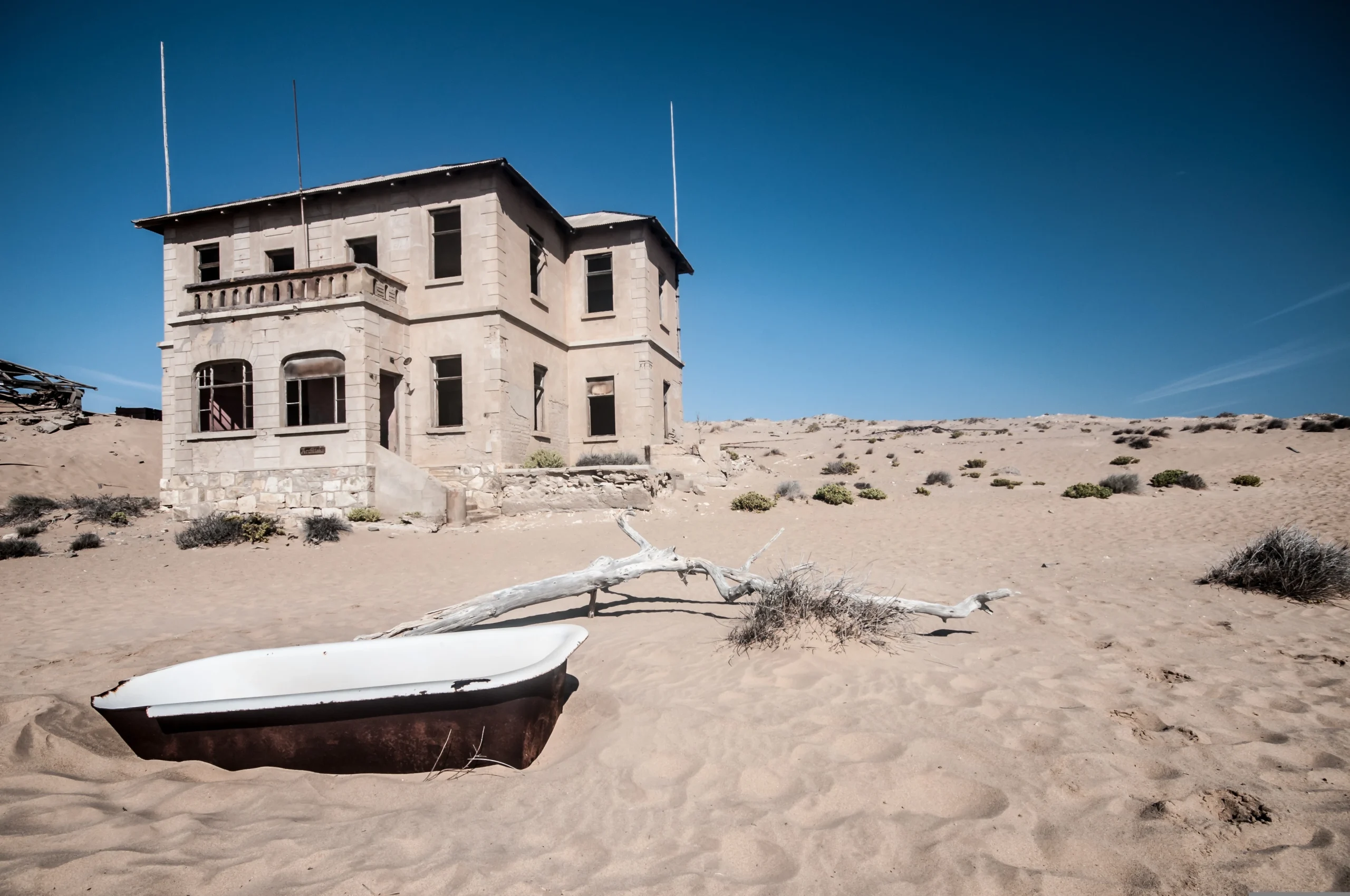
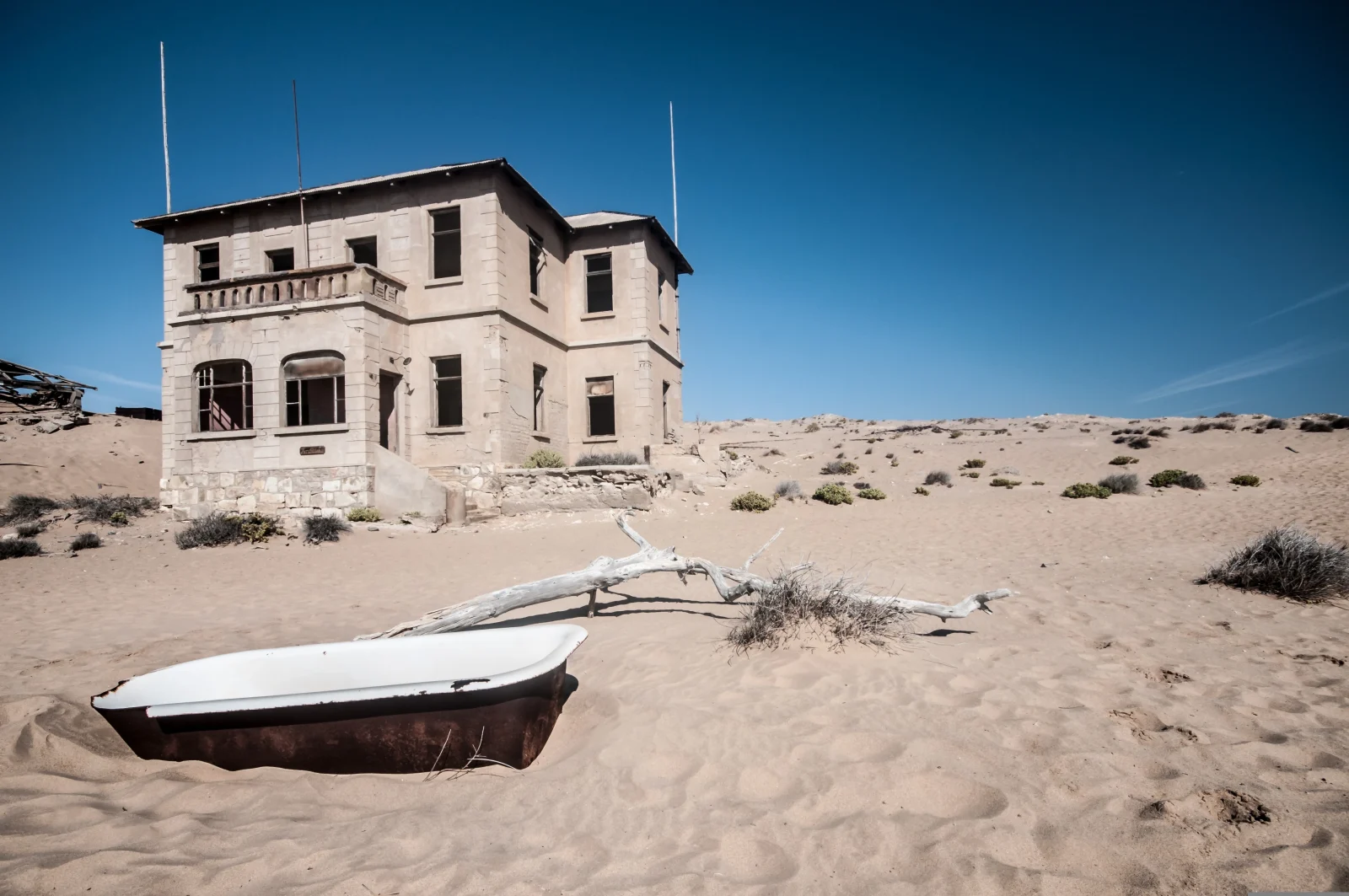
Located in the desert of southwestern Namibia, Kolmanskop was founded in 1908 after a railway worker, Zacharias Lewala, discovered diamonds among the sand. By 1912, Kolmanskop had become a wealthy, luxurious town, boasting electricity, an ice factory, a hospital, and impressive stone houses.
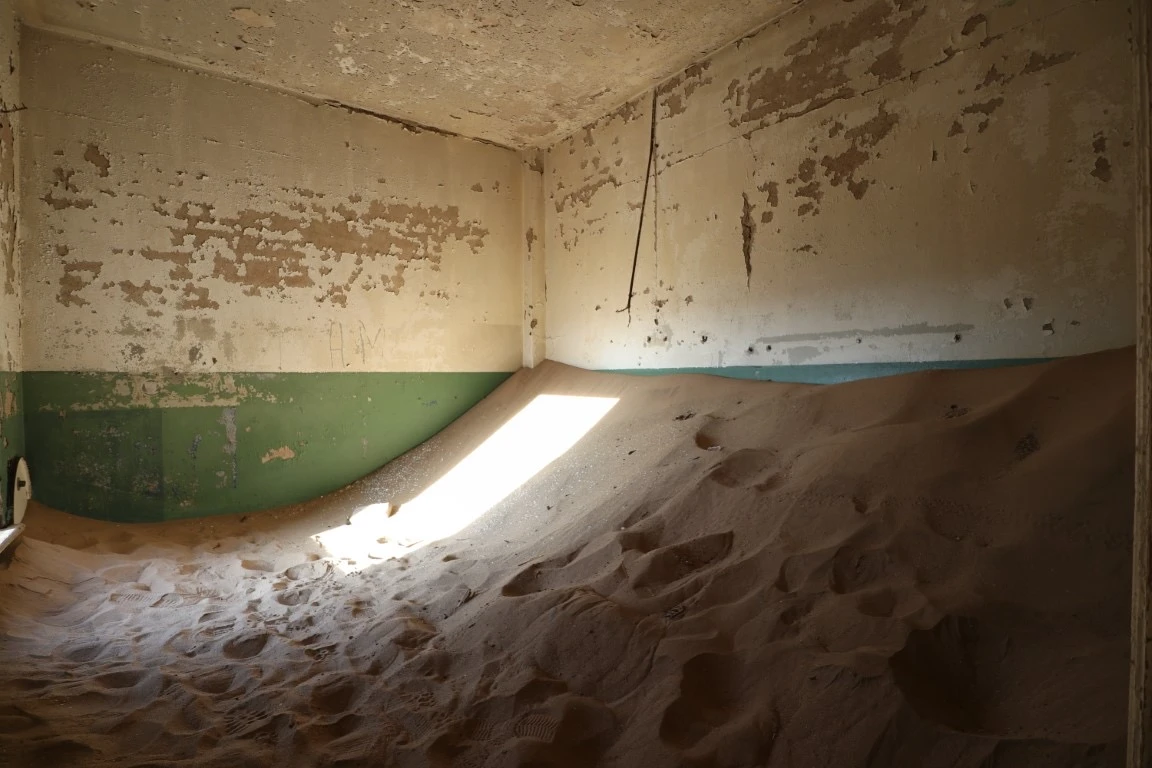
As a result of World War I, reducing global demand for diamonds and depleting diamond resources, settled populations began searching for new places to migrate to. In 1928, the discovery of more diamond reserves in Ornajemund in the south of the country caused people to leave Kolmanskop and settle in that area. By 1956, the town had completely turned into a ghost settlement.
From the 1980s onward, various restoration efforts opened the site to tourism. Today, although it is a popular tourist destination, dunes are slowly reclaiming the abandoned houses and empty streets, creating a surreal landscape where nature is steadily burying the remains of the past.
5- Detroit, USA
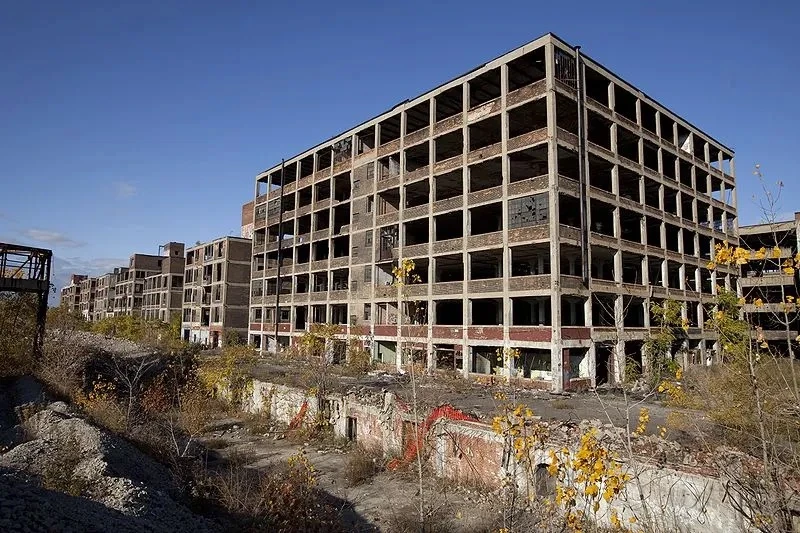
Founded in 1701 as a French colonial town by explorer Antoine de la Mothe Cadillac, Detroit is located in the state of Michigan, USA. Almost destroyed by a fire in 1805, the city was rebuilt and continued to serve as the capital of the Michigan Territory in 1815. Known as the Paris of the West, Detroit was a wealthy city with many magnificent boulevards and beautiful mansions along its grand streets. The establishment of Ford Motor Company in 1903 fueled Detroit’s economy, making it the 4th largest automobile industry in the USA by 1920.

With large sports centers, cultural venues, huge theaters, and shopping malls, Detroit grew increasingly crowded each year, offering luxurious living opportunities. However, in the 1970s, the decline of the American automotive industry marked the beginning of the city’s downturn. As factories declined and suburbanization increased, many residents gradually moved away from the city center.
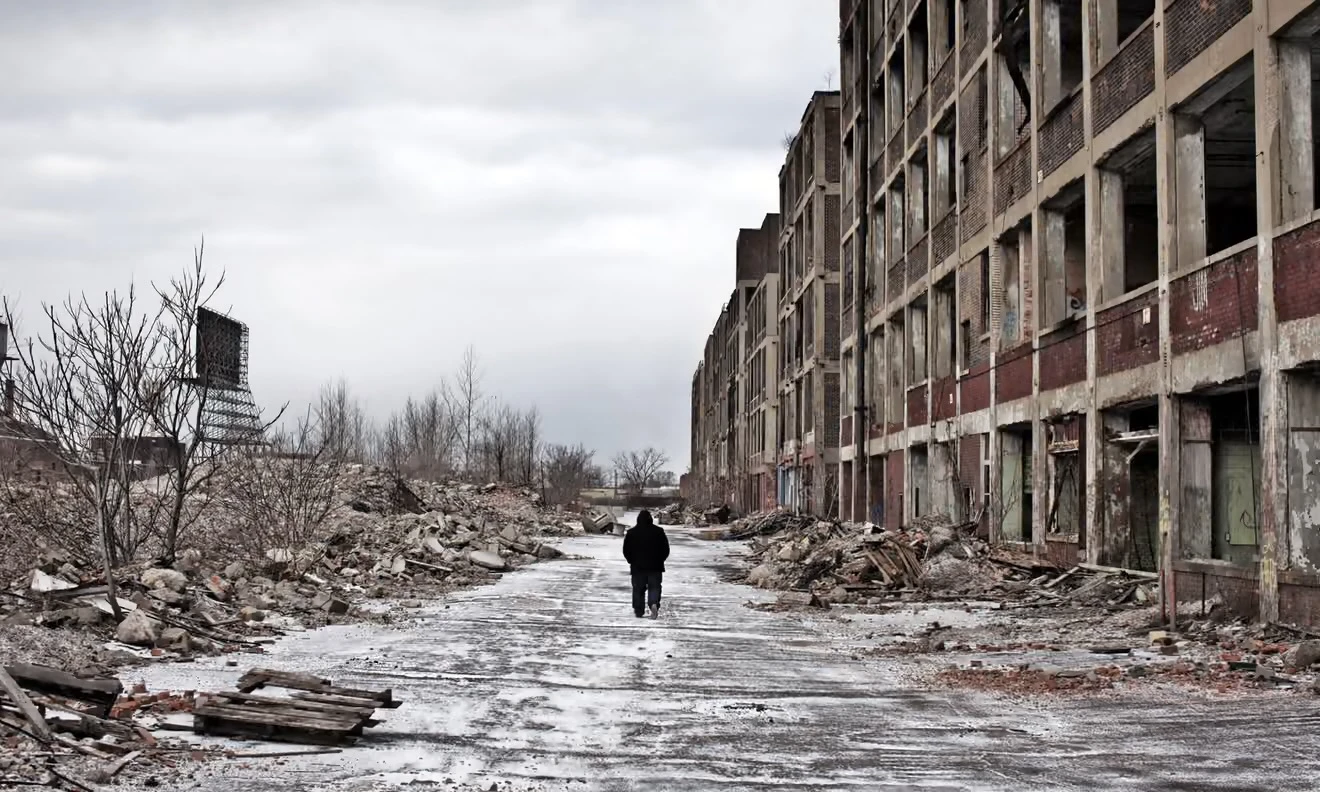
The economic crisis of 2008, which caused the bankruptcy of automotive companies that had boosted the country’s economy, further intensified the exodus. Rising crime rates also made the city less safe, leading to further migration. Over time, Detroit became increasingly abandoned and is often described as a “ghost city.” Today, despite ongoing urban renewal projects, Detroit is filled with neglected and abandoned homes, a result of unemployment and poverty.
6- Balestrino, Italy
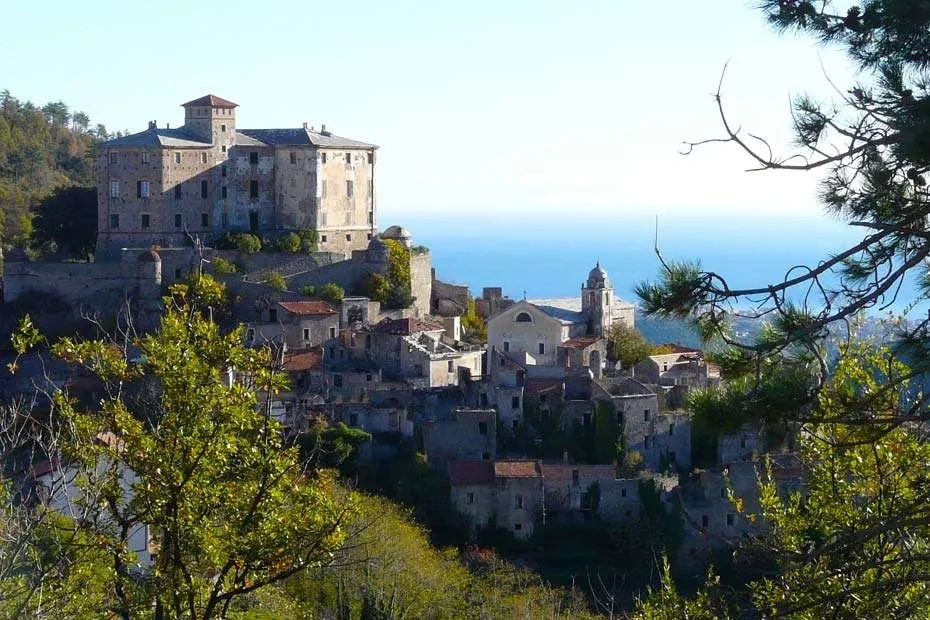
Balestrino, a city in Italy that once had a population of around 1000, is located approximately 70 km southeast of Genoa in the Liguria region. Founded in the 11th century by the Monastery of San Pietro dei Benedettini, the town is known for churches such as Saint George and Saint Andrew, which reflect the Gothic architectural style of the 12th century. Surrounded by olive groves for centuries, Balestrino gradually grew into a thriving settlement.
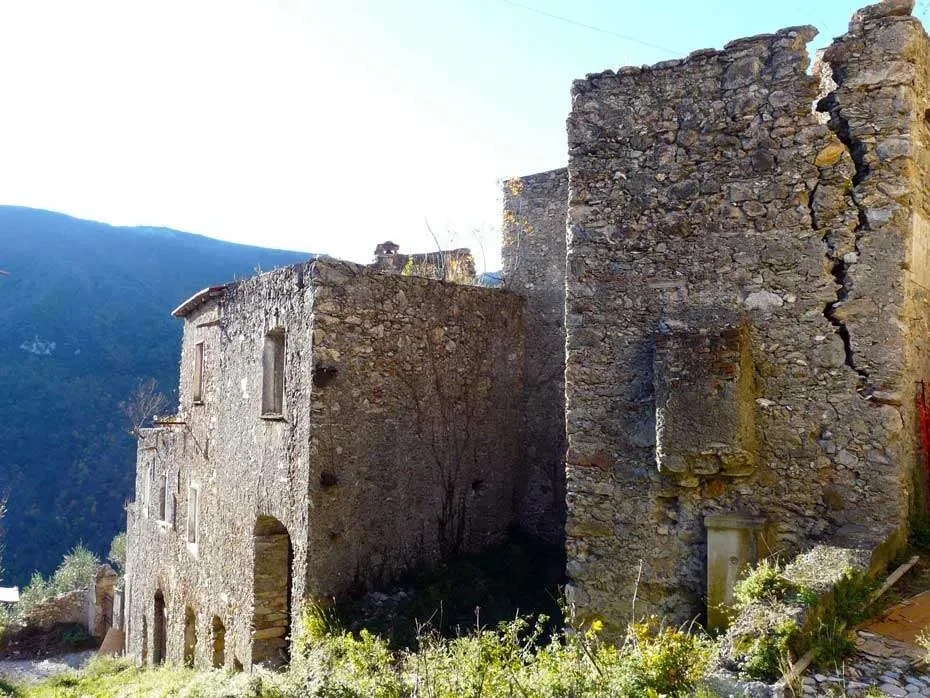
On February 23, 1887, a powerful 6.7 magnitude earthquake caused widespread destruction throughout Liguria. Damage to buildings in Balestrino and geographical instability led to a decrease in the population. By 1953, only 400 people remained, and authorities decided that the area was no longer safe for its inhabitants. The entire population was relocated to a newly constructed settlement lower down the mountain. Today, a ghost town, Balestrino’s old town, overlooks the new town and is closed to tourists due to instability.
7- Pyramiden, Norway
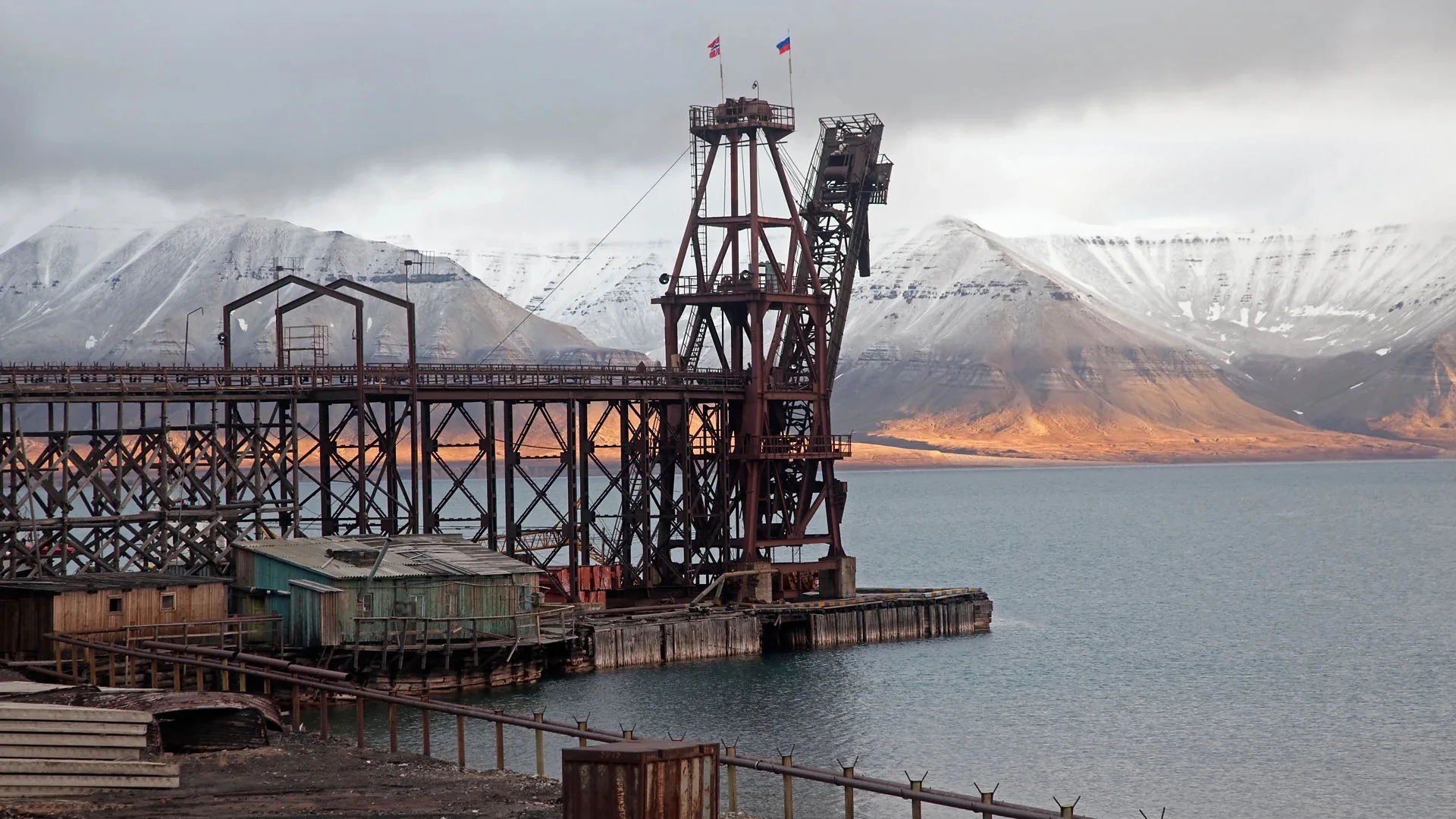
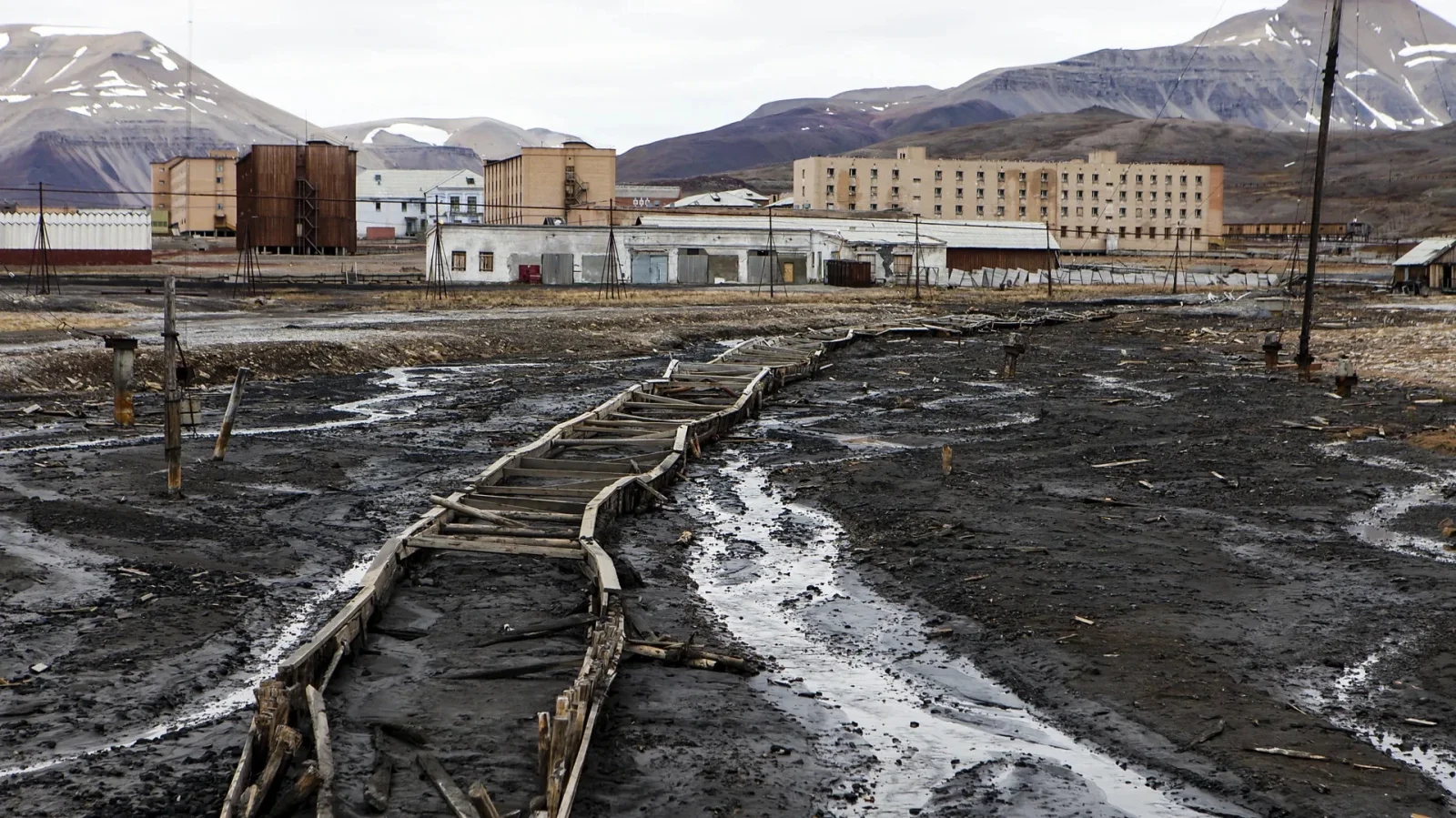
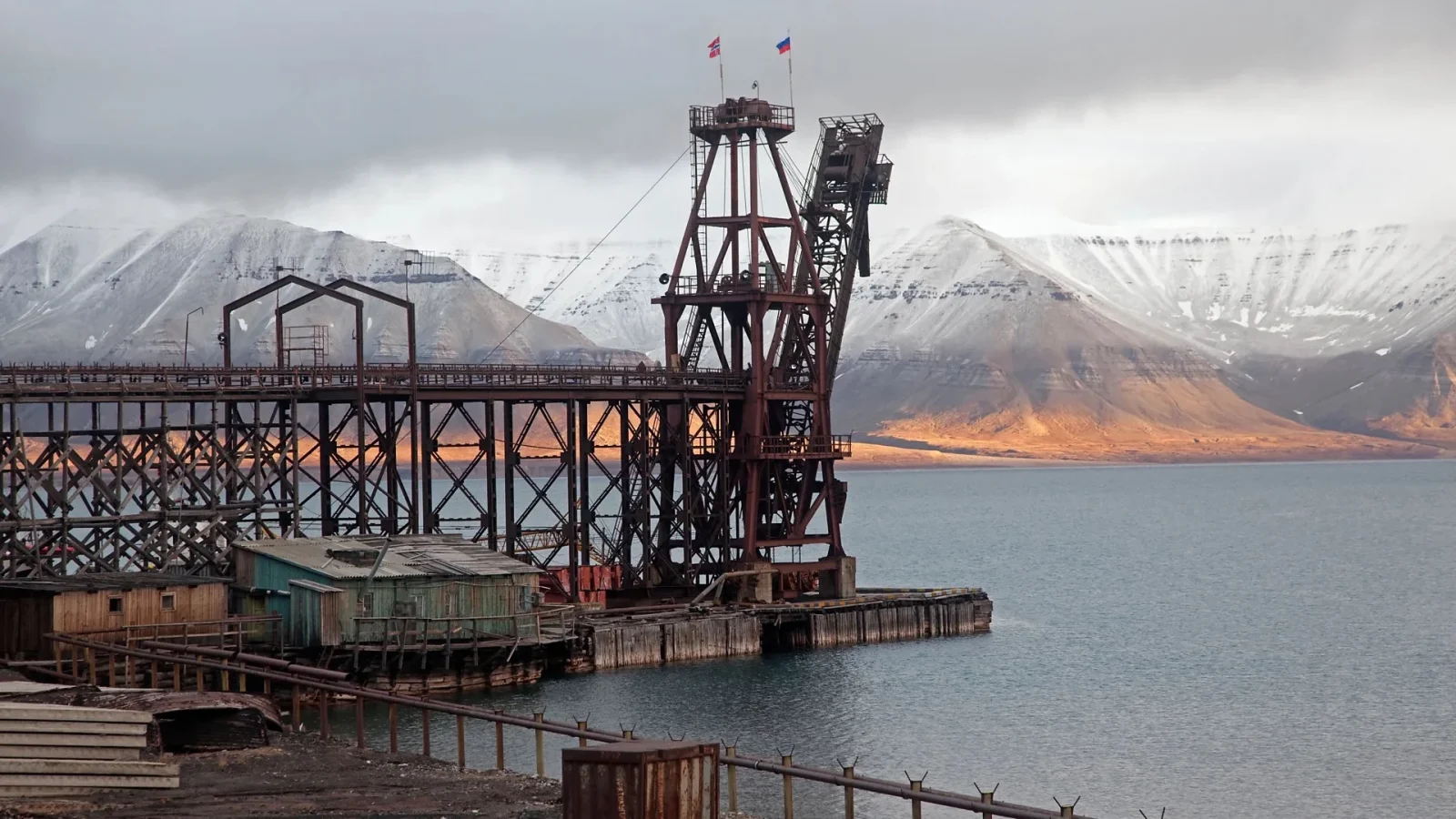
Founded in 1902 by a mining community, the Norwegian settlement of Pyramiden is considered one of the world’s most remote and coldest ghost towns, located in an isolated region of the Arctic. The city, which takes its name from the pyramid-shaped mountain rising above the settlement, is a former coal mining town. During its peak in the 1950s, more than 2,500 workers lived in Pyramiden, enduring harsh Arctic winters marked by freezing winds, long periods without sunlight, and complete isolation from the outside world.
Accordingly, the thriving town had amenities such as a theatre, library, a cultural center with an art and music studio, sports complexes, and a 24-hour canteen.
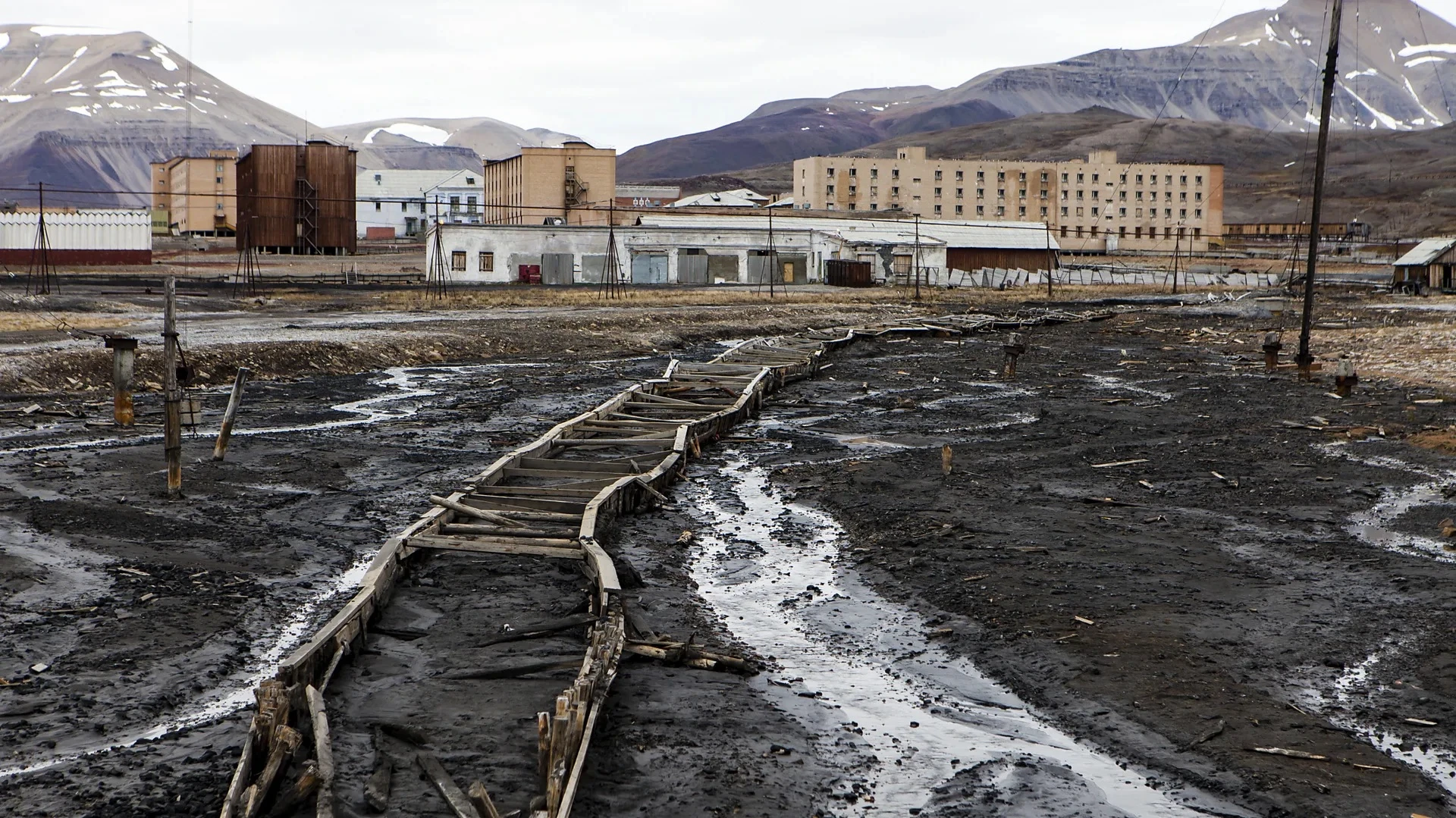
In the 1990s, the poor quality of the extracted coal caused the mines to become increasingly unprofitable. A major turning point came in late 1996, when a charter plane operated by the Russian mining company Arktikugol crashed near the settlement. After the tragedy, schools were closed, families began to leave, children returned home, and coal production gradually came to an end.
With the closure of the last coal mine on the site in 1998, the last resident left the town on October 10, and Pyramiden became a ghost town. Carrying the nostalgic atmosphere of the Soviet era, the abandoned settlement has since become a habitat for Arctic foxes and wildlife.
8- Humberstone, Chile
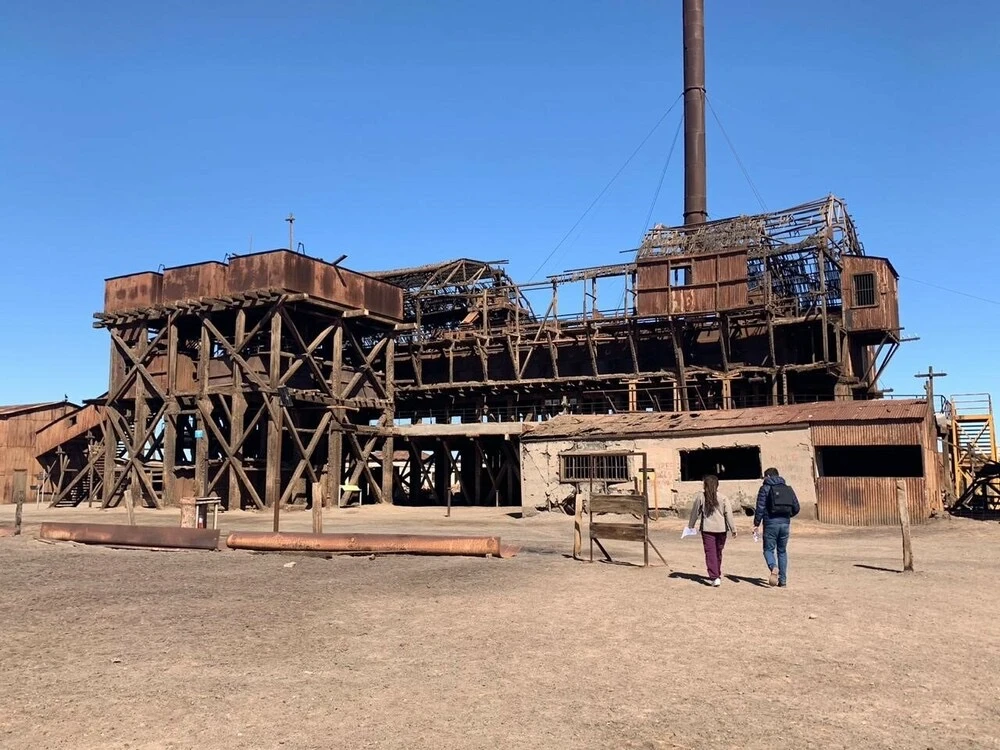
Humberstone, an old mining town located in the Atacama Desert, close to Chile’s borders with Peru and Bolivia, takes its name from James Humberstone, a British engineer who emigrated to South America in 1875. Originally founded in 1872 under the name La Palma, the settlement was once home to around 3,500 residents at its peak. The town prospered through the extraction of saltpeter, a nitrate-rich mineral found in the desert and widely used in fertilizer production. During the period from 1930 to 1940, nitrate ore was produced intensively in Humberstone.
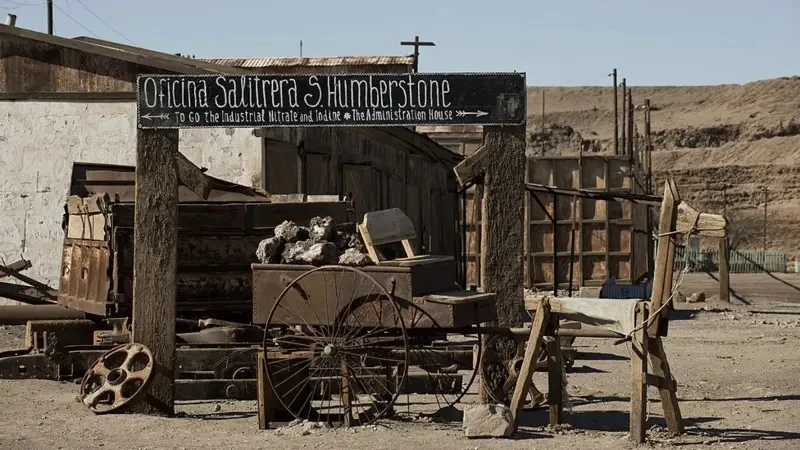
Over time, however, the global demand for nitrate declined, leading to the gradual loss of Humberstone’s economic importance. The town, which had a significant decrease in population until 1960, was completely abandoned with the closure of the nitrate plant. Humberstone, which was declared a UNESCO World Heritage Site in 2005, is now dominated by empty streets, abandoned factories, schools, theater halls, and ruined workers’ houses.
9- Kayakoy, Türkiye
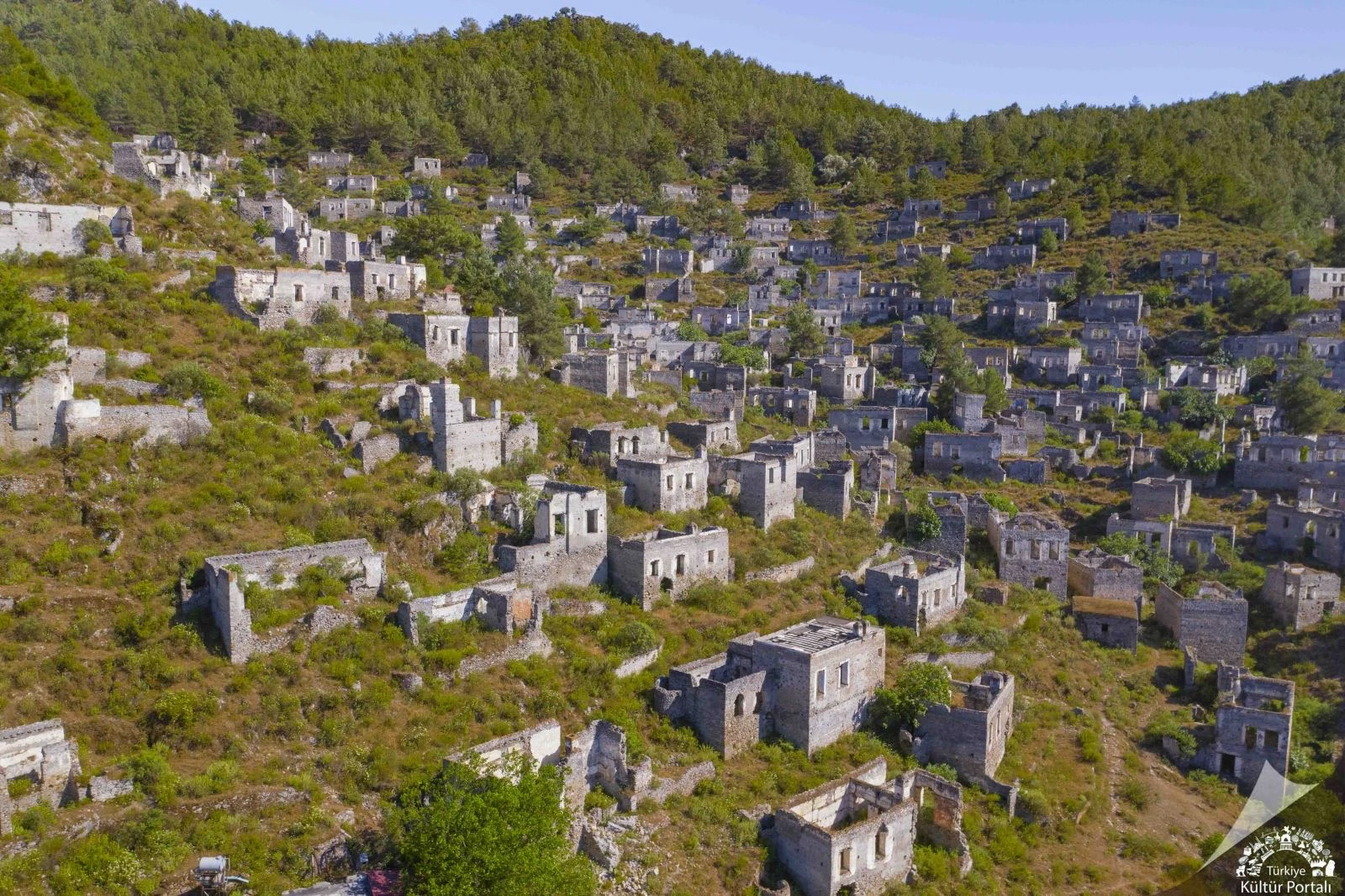
Originally founded as the ancient settlement of Lebessos, Kayaköy is a ghost town located about 8 kilometers from Fethiye. Founded by Greeks from the Dodecanese Islands in the 18th century, approximately 10,000 Turks and Greeks have lived together in a friendly manner for years. As a result of the population exchange that started between Greece and Türkiye in 1923, Greeks left the city and settled in Greece.
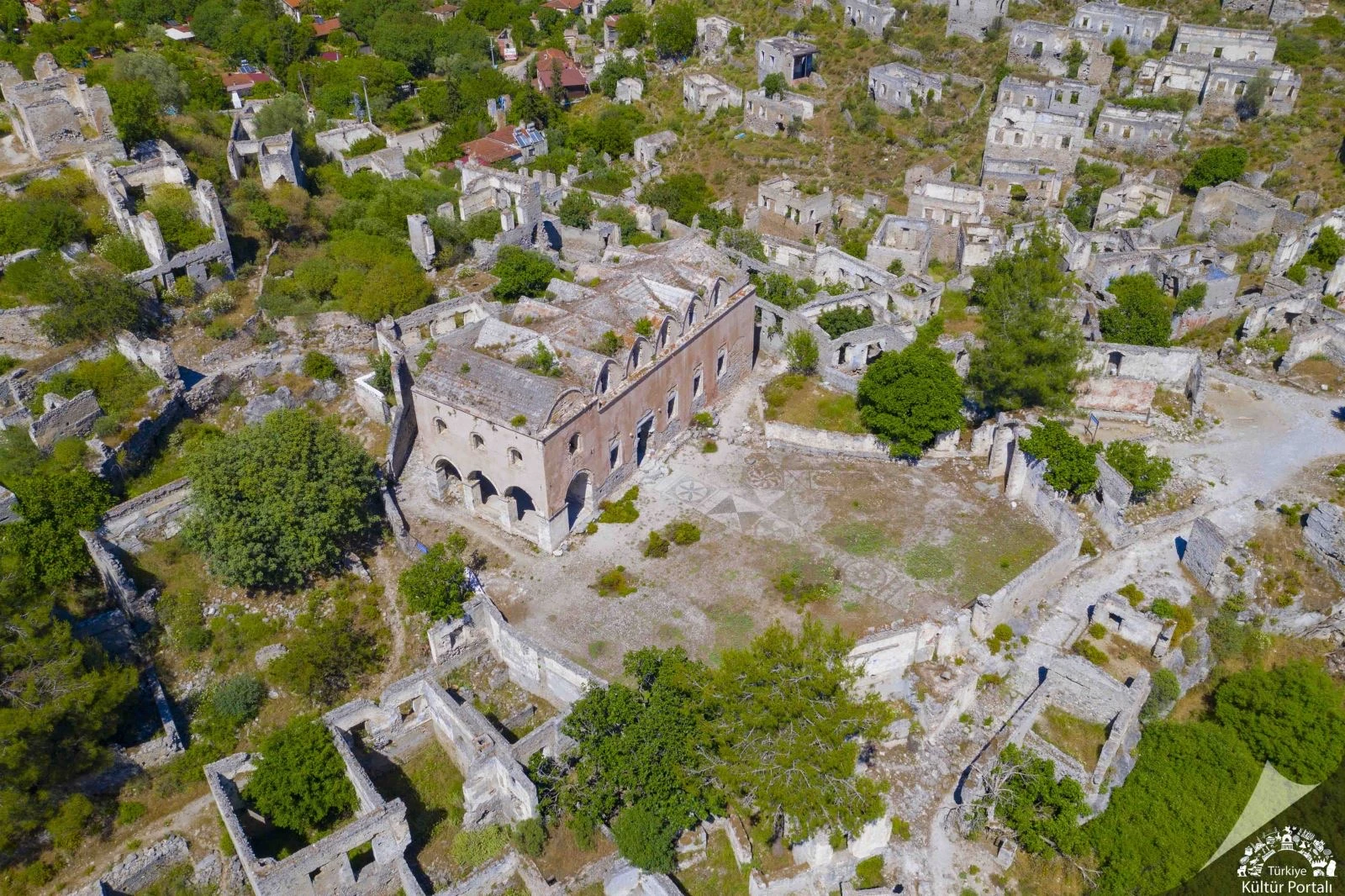
The abandoned Greek houses, built across the rugged hillside terrain, were never fully occupied by the Turkish population. Instead, many Turkish residents chose to settle in flatter and more fertile agricultural areas, leaving Kayaköy deserted. A major earthquake that occurred in 1957 caused serious damage to the buildings of this abandoned town. Today, located along the famous Lycian Way hiking route, Kayaköy attracts visitors with its sloping streets, abandoned stone Greek houses, and the Upper Church overlooking the hillside settlement.
10- Aghdam, Azerbaijan
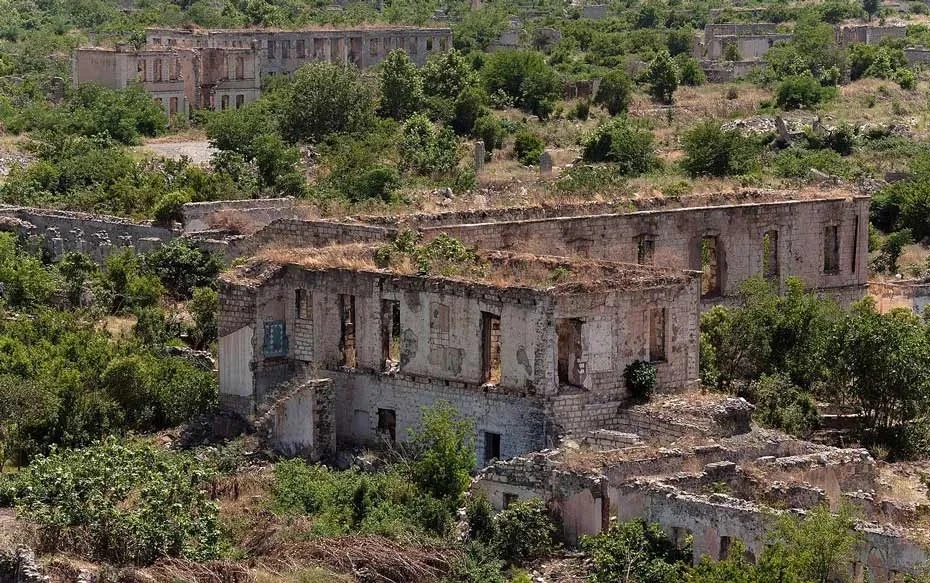
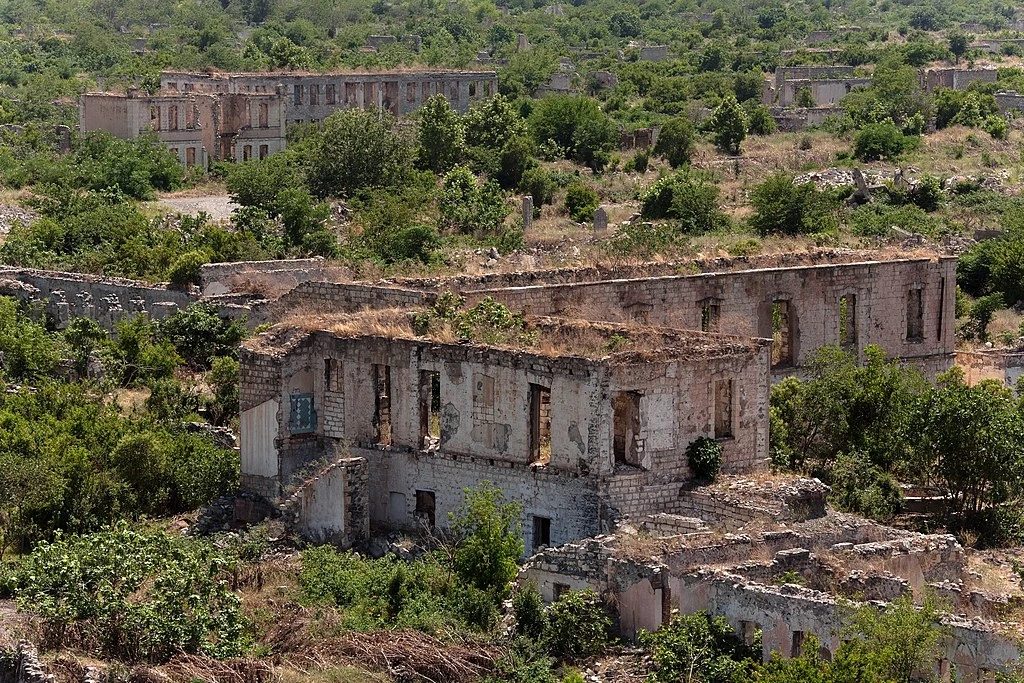
A striking example of how war can destroy an entire city, Aghdam is located in southwestern Azerbaijan. Once home to nearly 100,000 people, the city was completely abandoned during the violent conflict between Armenia and Azerbaijan in the summer of 1993. Agdam became a ghost town as a result of the forced migration of the local people who were under the occupation of the armed forces of the Nagorno-Karabakh Republic during the war.
After residents left, much of the city was deliberately destroyed and burned to prevent Azerbaijan from re-establishing control over the area. The only structure left half intact compared to the roofless ruins of the rest of the city’s buildings is a mosque with two intricate brick minarets.
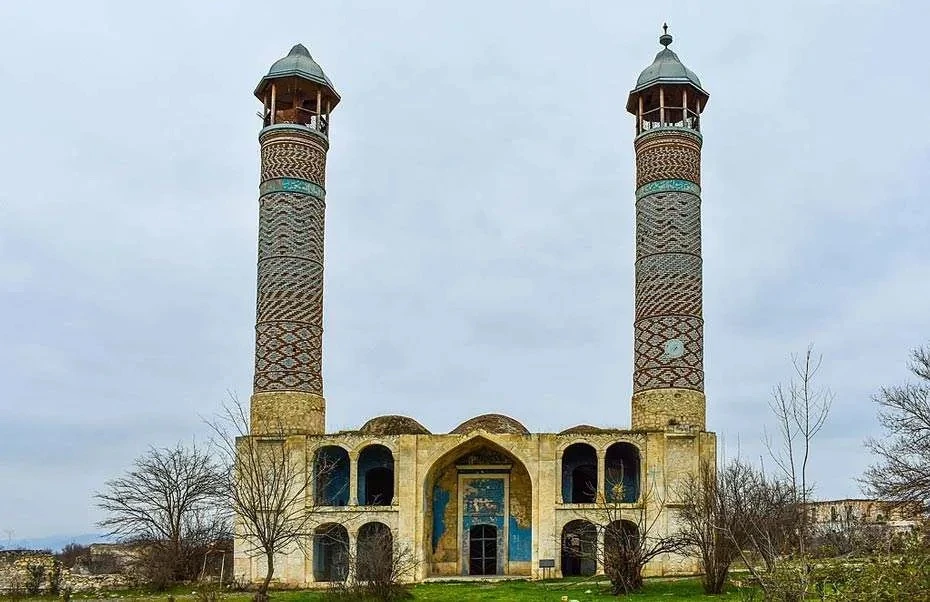
In September 2020, Azerbaijan regained control of Aghdam following a military offensive. Although reconstruction efforts have continued in the region since then, Aghdam is still largely empty and an abandoned city bearing the traces of.
Once home to hundreds of people, bustling towns and vibrant metropolises across the world have now fallen into an eerie silence. From disasters to wars to crises, from the middle of the desert to the green forests, many cities have been abandoned by their inhabitants and remain as ghost cities today. Offering a glimpse into the past through their remaining ruins, these abandoned cities reveal the traces of time and the inevitability of decay.
Explore Courses

.jpg "Ondrej Chybik - Rethinking Architecture")