

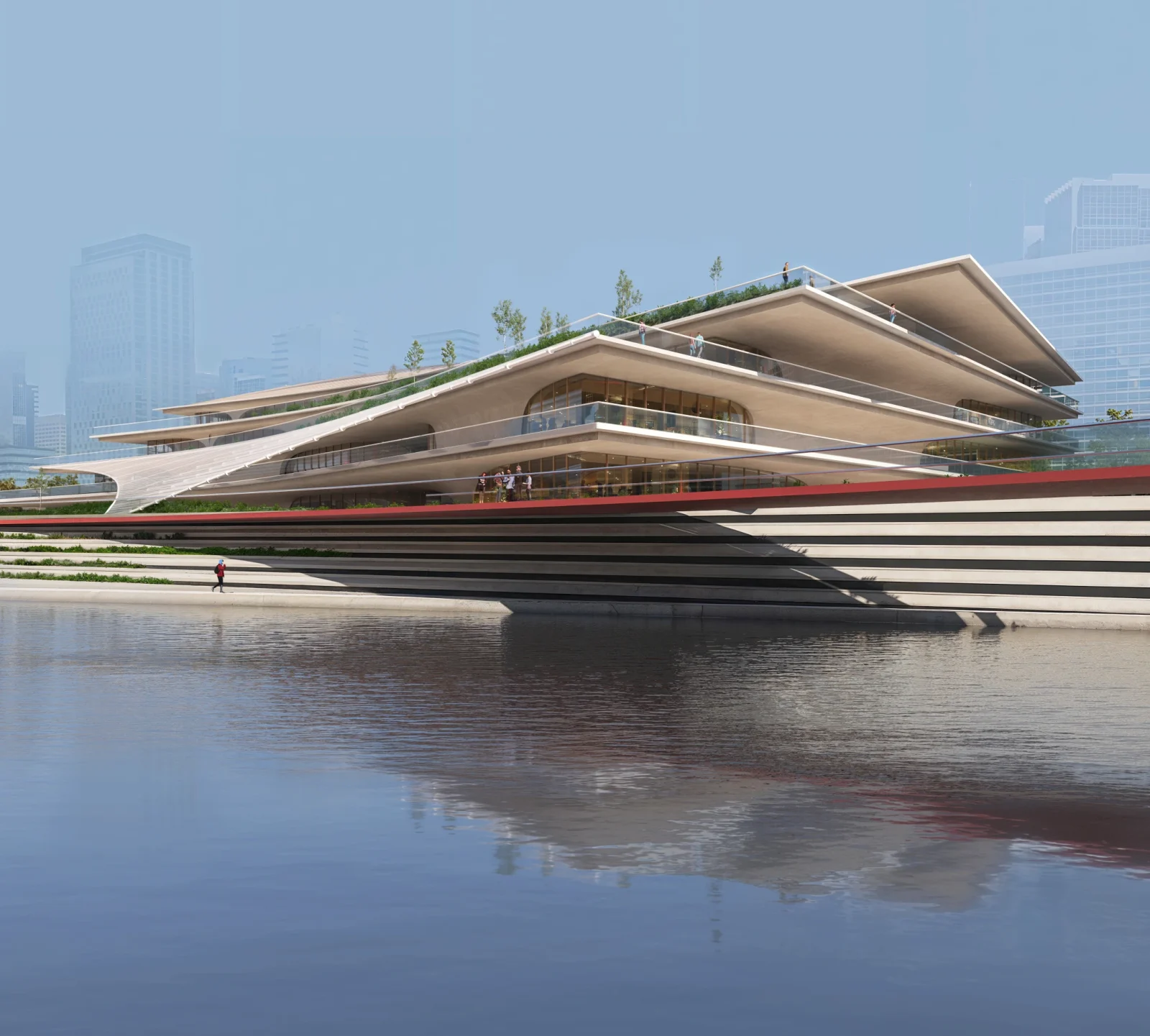
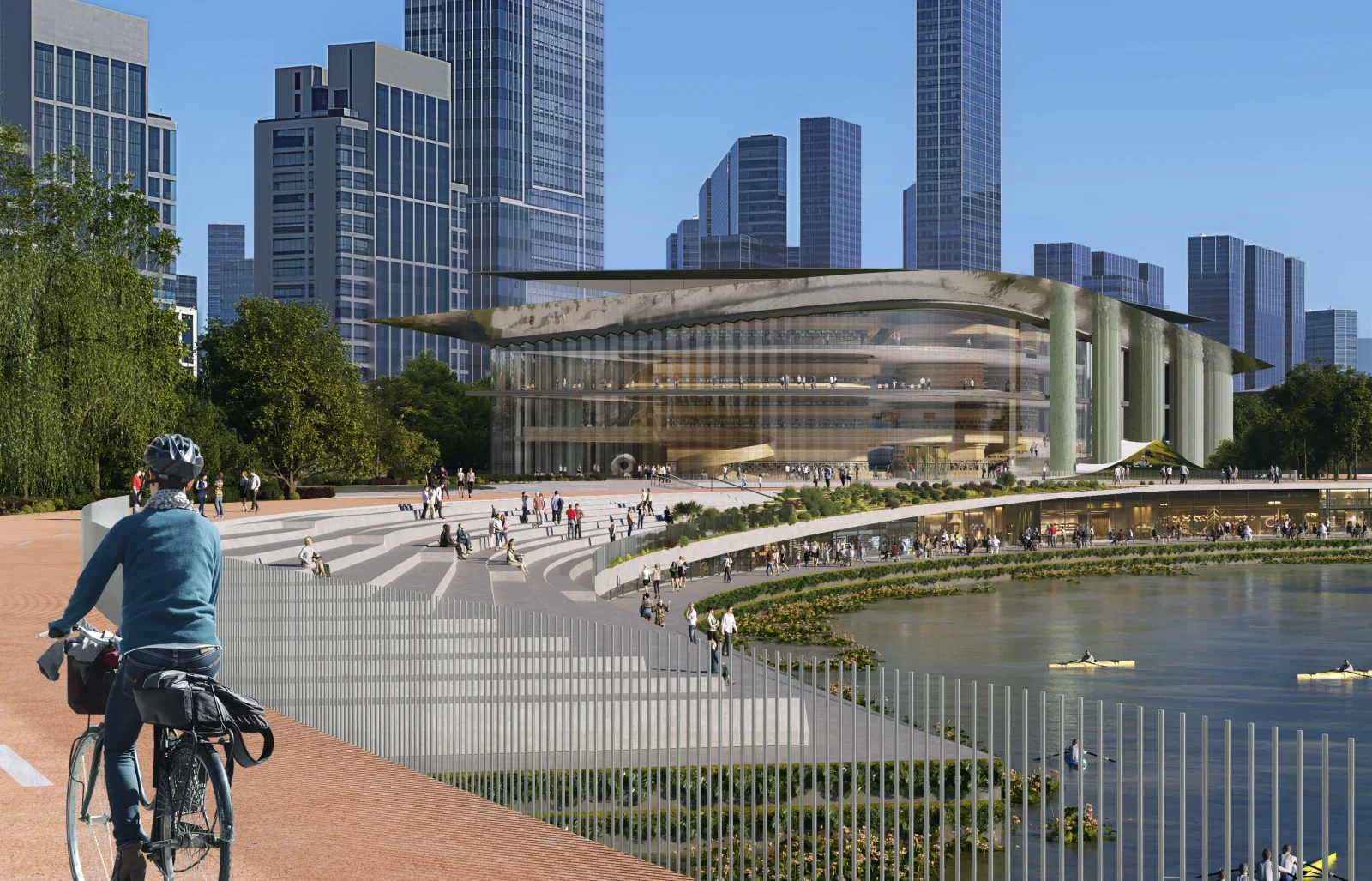
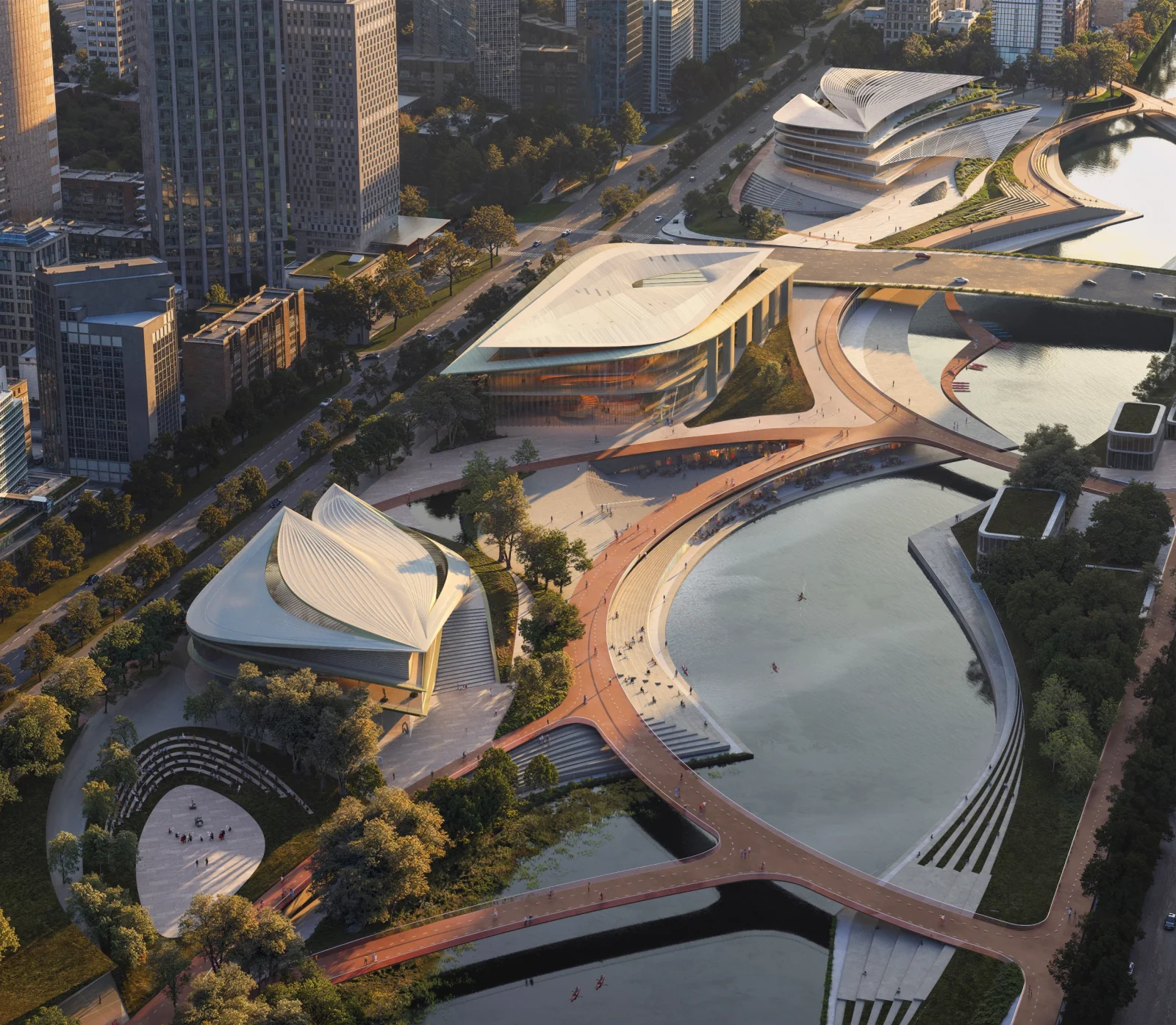
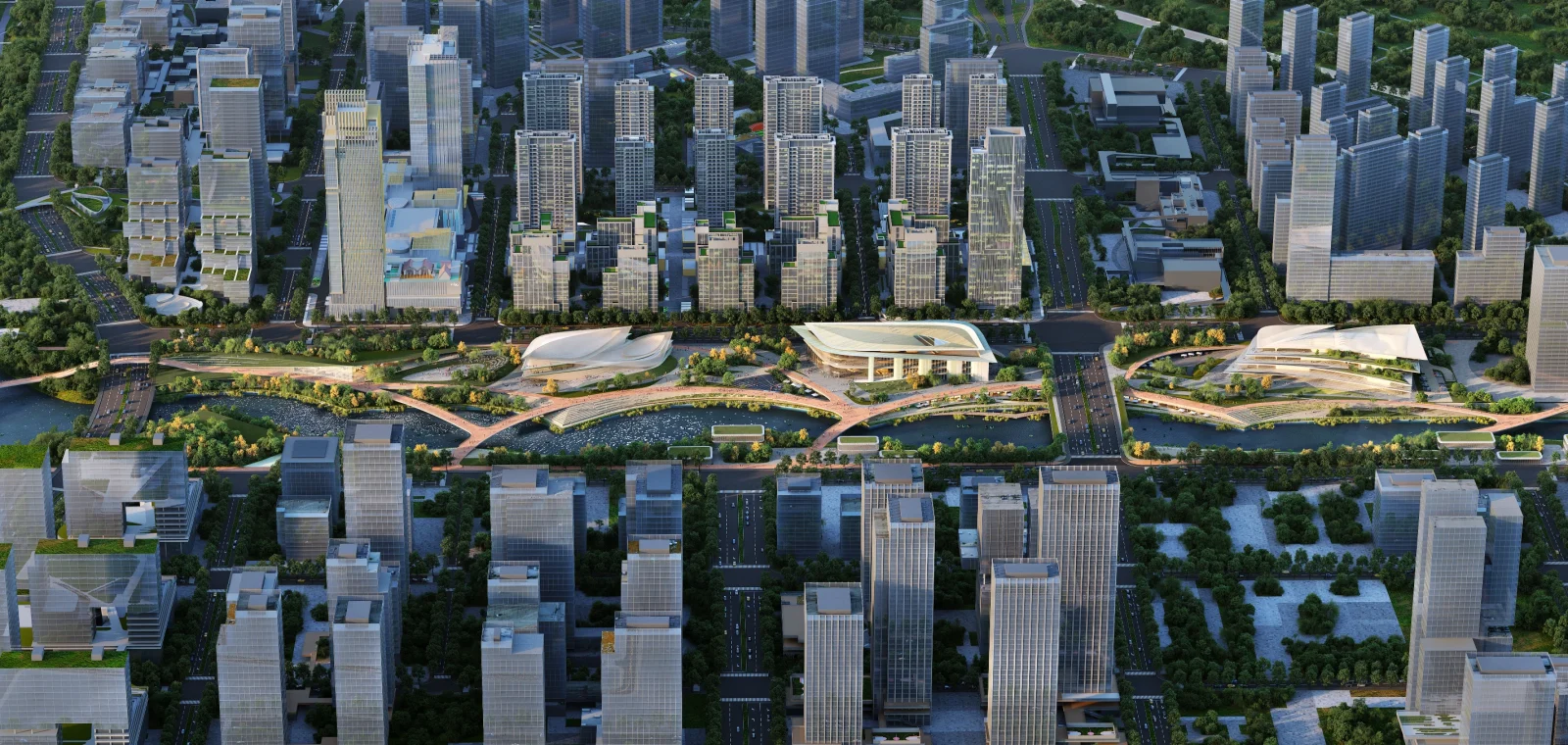
Zaha Hadid Architects (ZHA) has revealed a design for the Qiantang Bay Central Water Axis, a major urban regeneration project on the Zhedong Canal in Xiaoshan District, Hangzhou, China. The concept repurposes a former industrial zone into an expansive public realm woven along the canal’s edge. The strategy is fundamentally urban and ecological, a sequence of landscaped parklands, terraces, gardens, plazas, promenades, and performance spaces that create a continuous green corridor through the city.
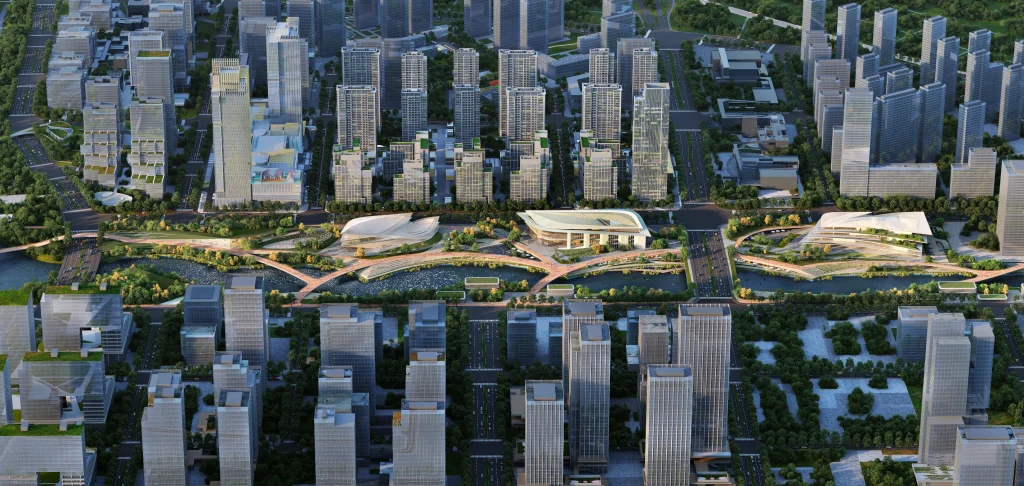
ZHA’s Central Water Axis in Hangzhou
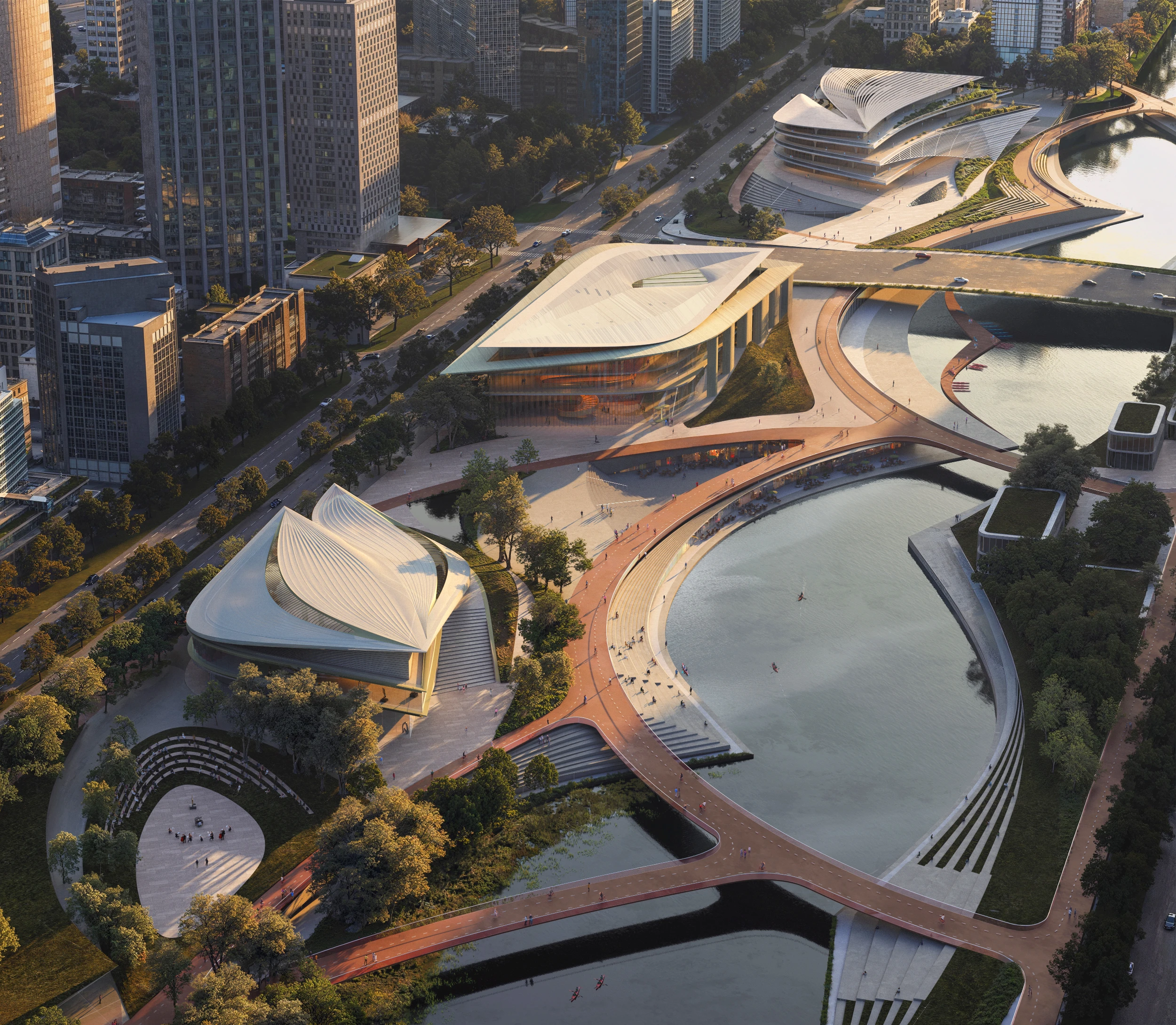
At the core of the plan is the canal itself, framed as a waterway and an organizing axis for people and programs. Cultural and educational buildings align with the water, oriented to key views and circulation flows, while anchoring the public realm with architectural moments designed to enrich daily life. A network of bridges and connected pathways stitches both sides of the canal into the surrounding urban fabric, reinforcing connectivity and accessibility at multiple scales.
The design threads into Hangzhou’s sponge city infrastructure, a strategy developed to mitigate flooding. Permeable surfaces, planted swales, and water-retention landscape features manage stormwater and enhance resilience, reinforcing the project’s integration of performance-driven urban design with environmental responsibility.
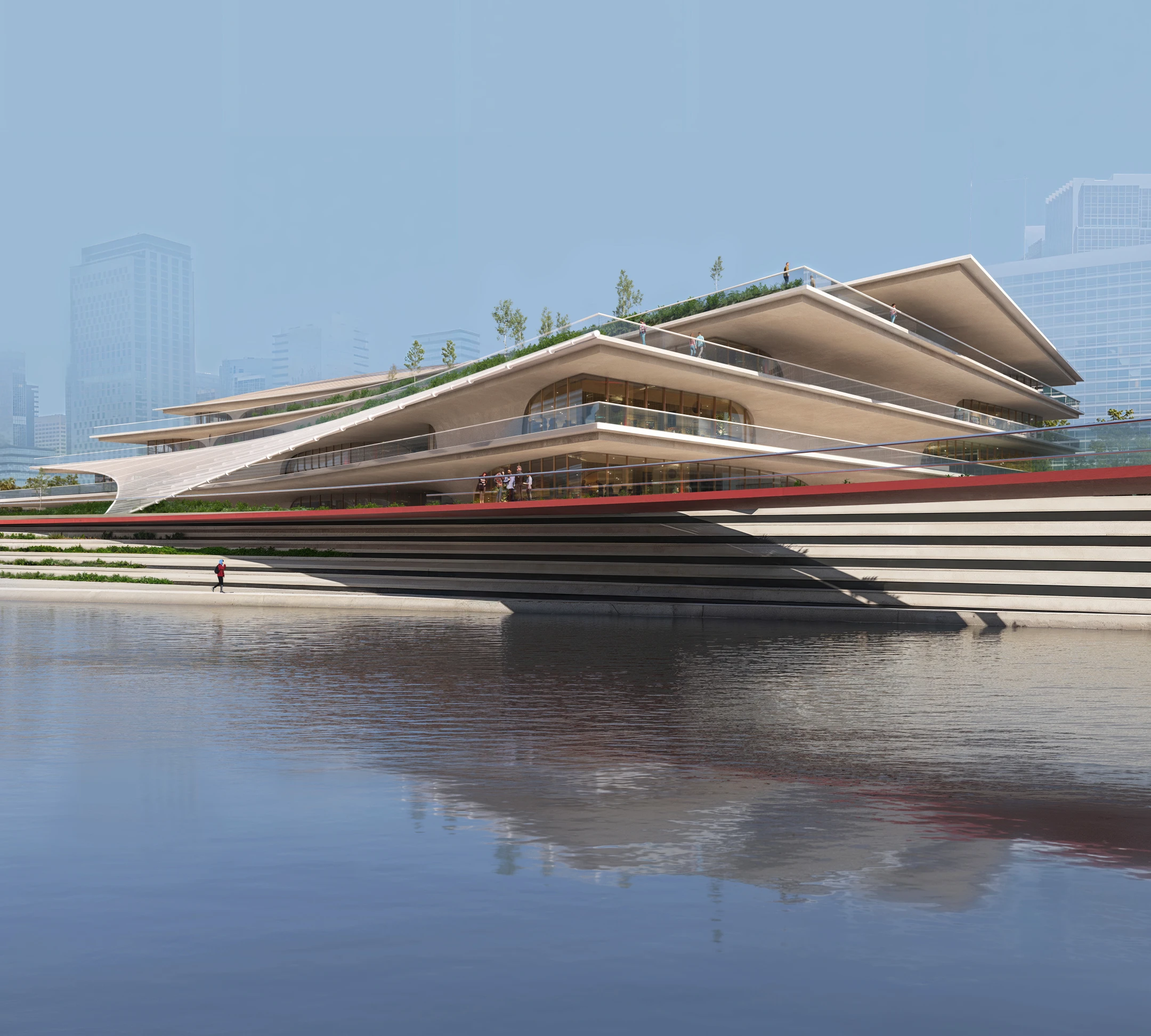
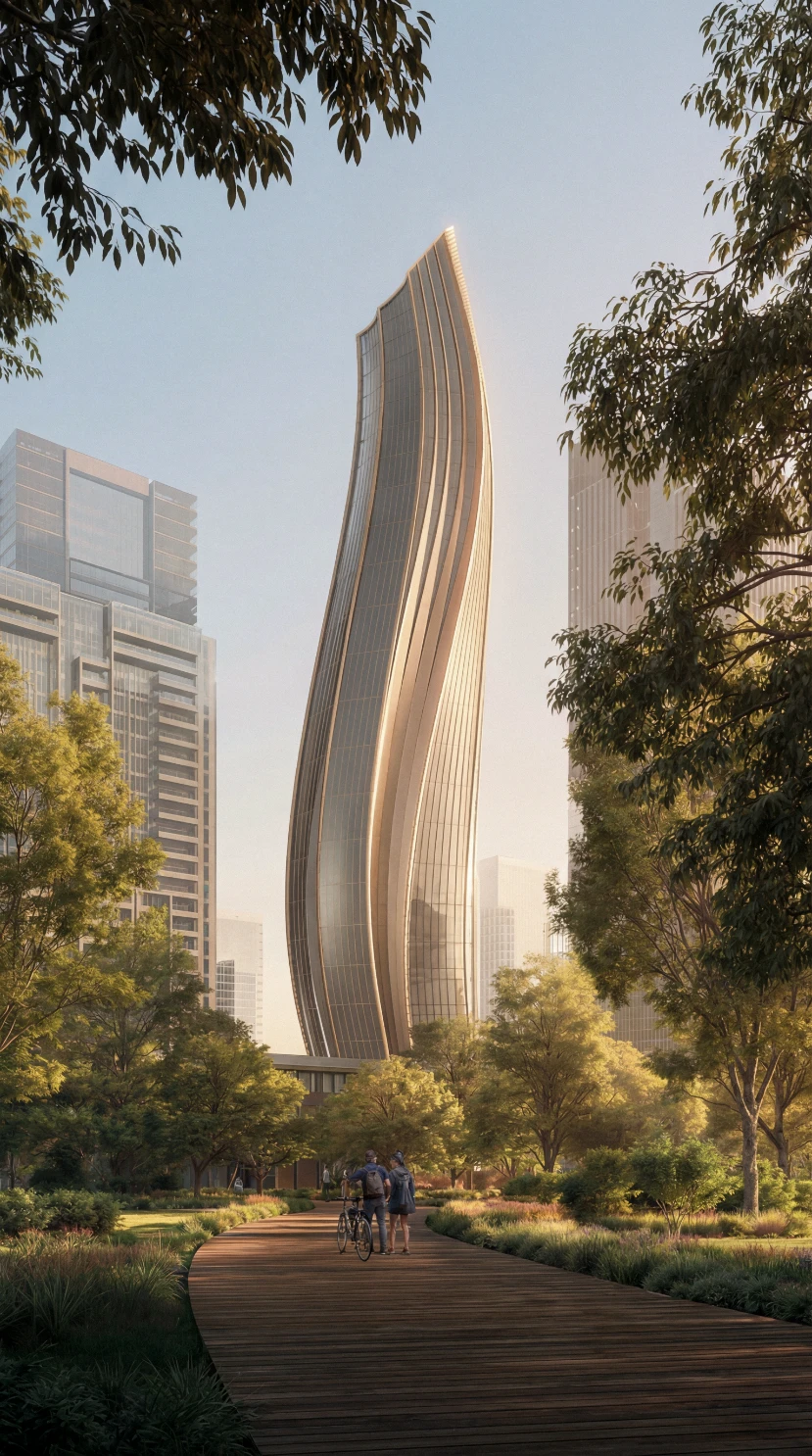
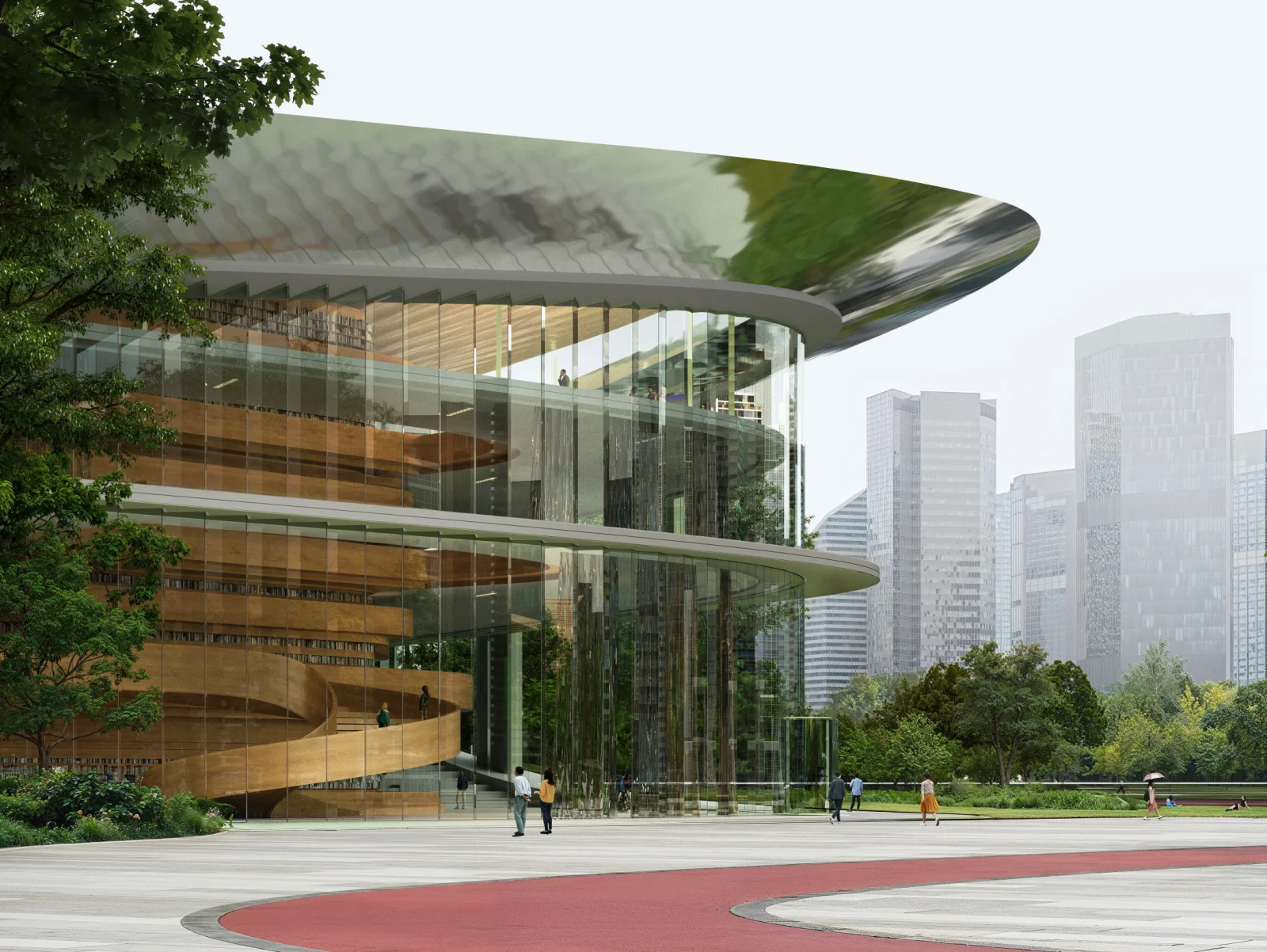
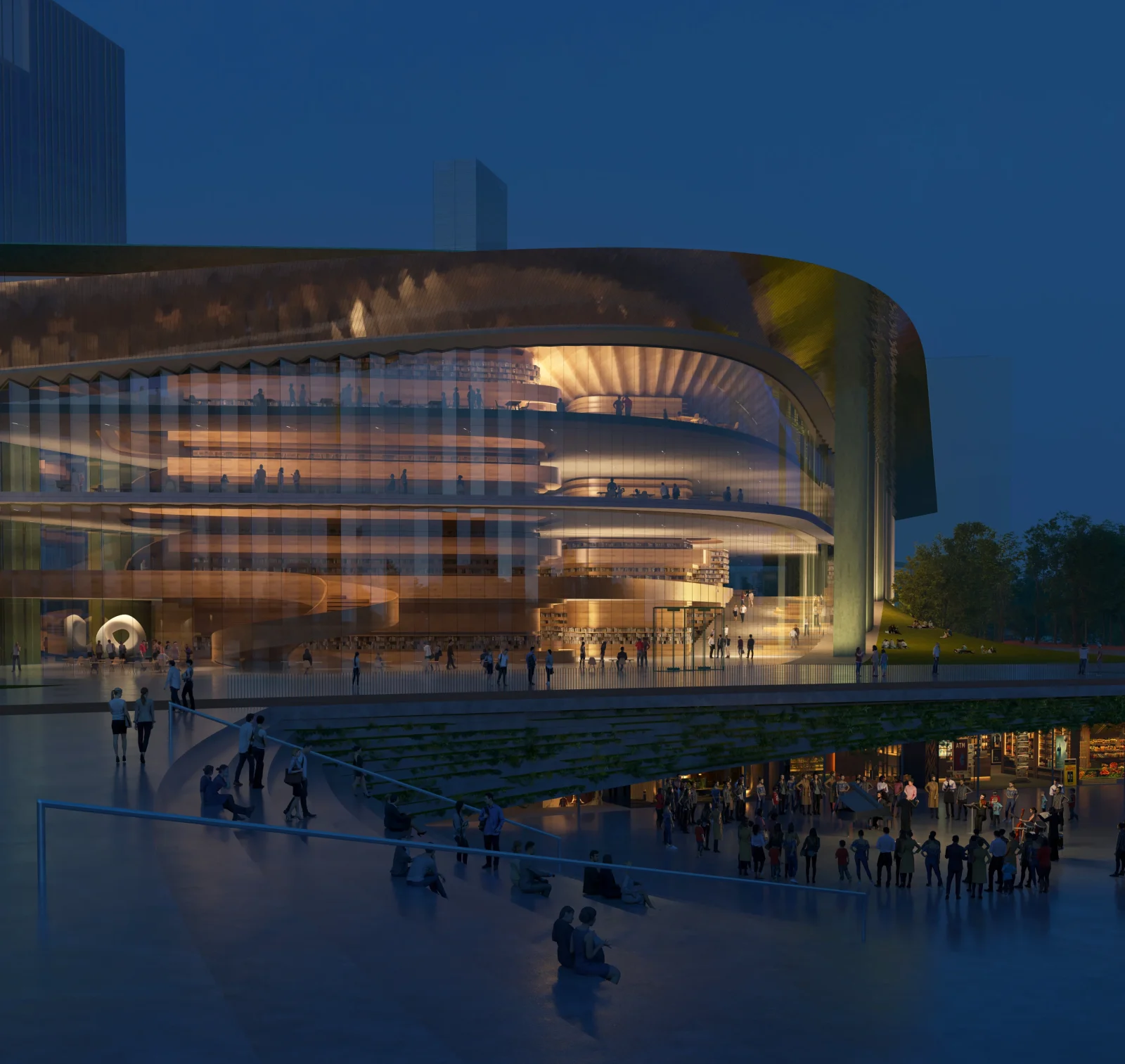
Two primary cultural buildings define the architectural character of the district. The library emerges as a sculptural landmark along the canal. Its defining feature is a sequence of inhabitable architectural columns that function as both structural elements and spatial organizers. These vertical elements are conceived as “stones of knowledge,” housing extensive collections, archives, reading rooms, and community spaces.
The façade draws on the region’s 5,000-year history of jade artistry, using precision-crafted masonry tiles that reflect the tonal qualities of this local stone. Folded glass components modulate natural light, allowing it to penetrate deep into interior spaces and create luminous, glare-controlled environments that are optimized for reading, study, and reflection.
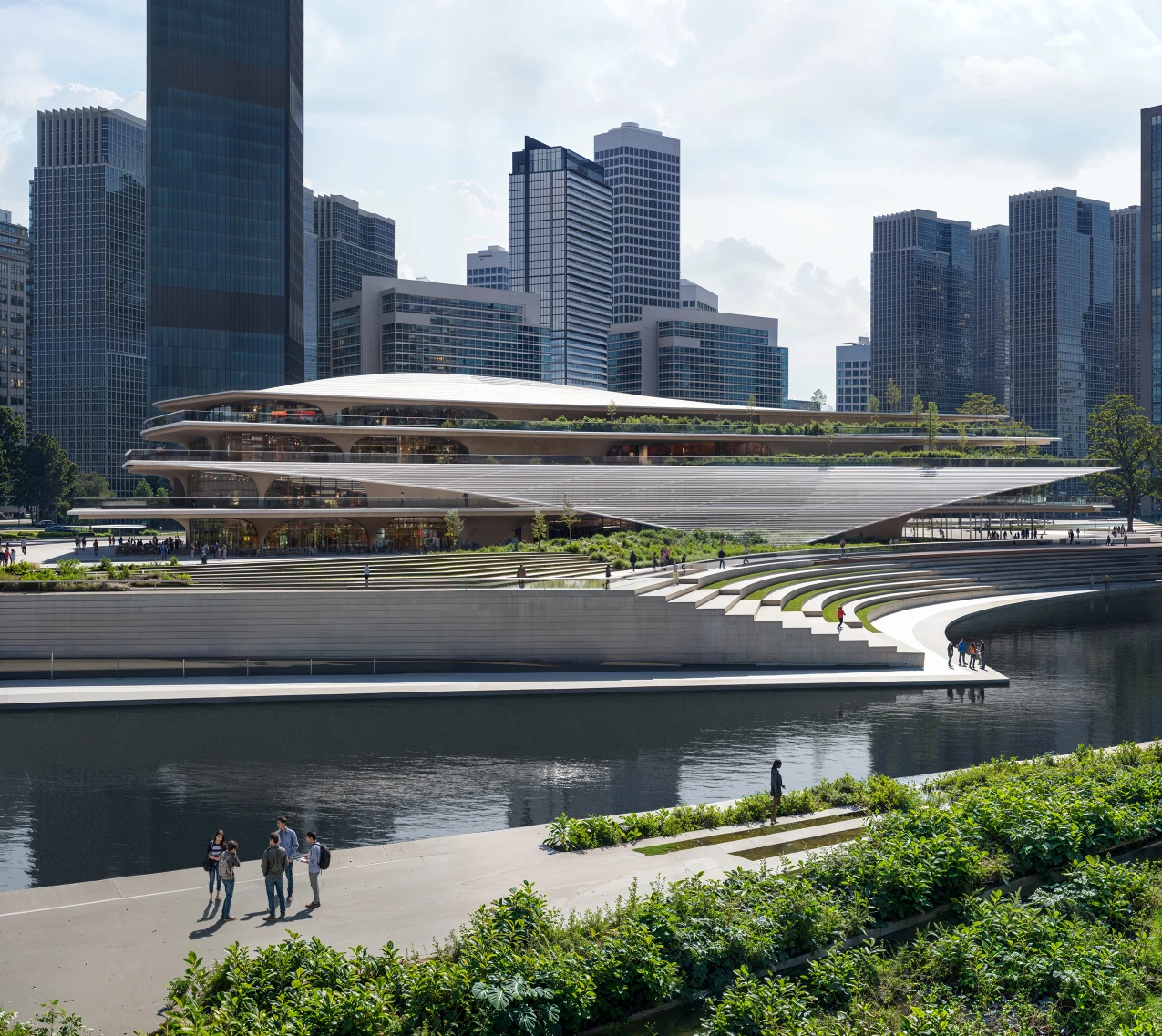
Complementing the library, the International Youth Centre is configured to support exchange, collaboration, and events. Its geometric composition responds to its waterfront site with a system of interconnected interior spaces, auditoriums, studios, seminar rooms, exhibition areas, and performance facilities that negotiate formal clarity and programmatic flexibility. Canal-facing terraces extend the interior program outward, creating thresholds for gatherings and social activity that blur the line between building and landscape.
Response to Context and Climate
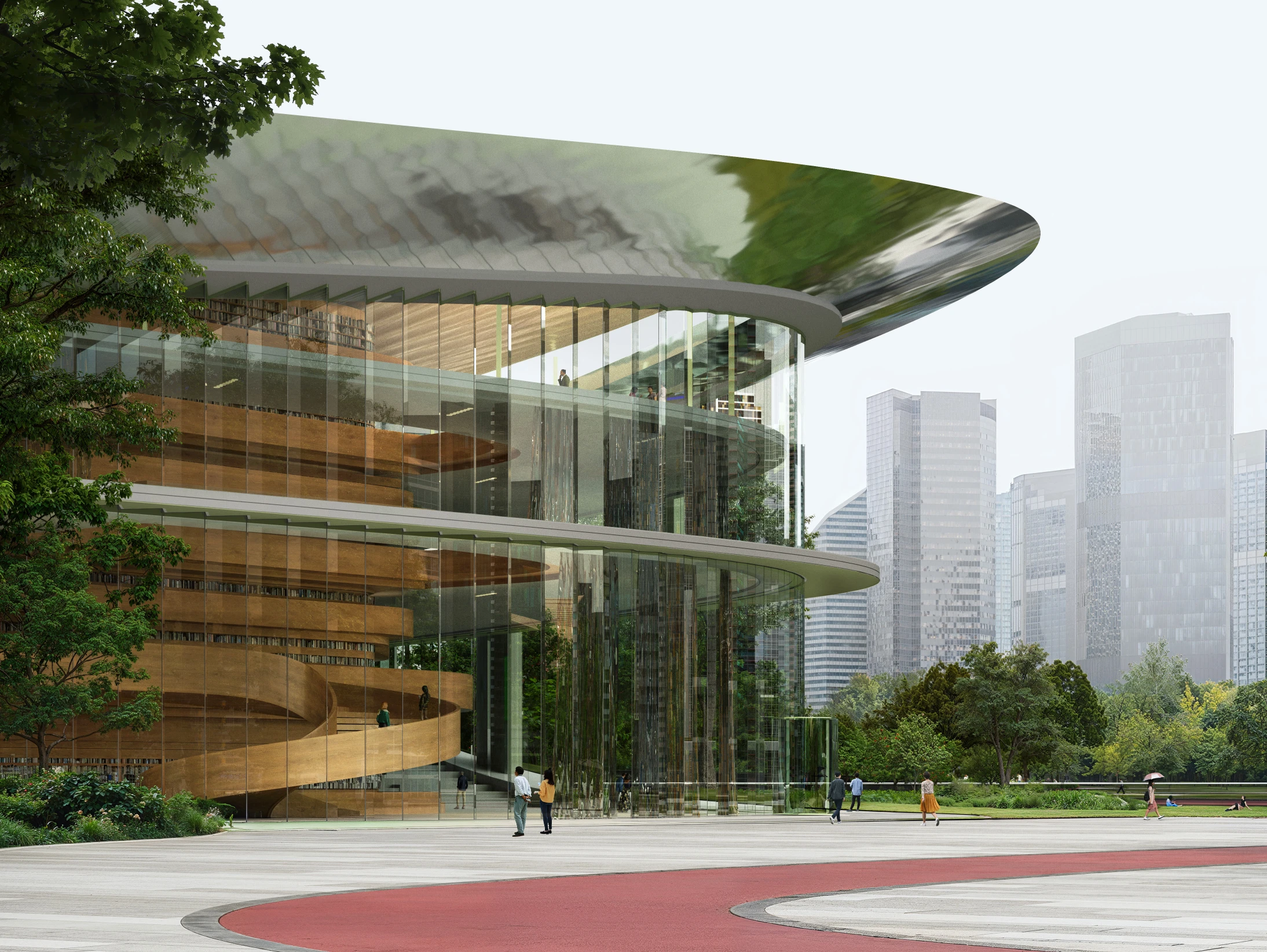
The architectural forms and spatial organizations respond to the local terrain, seasonal solar patterns, and desired circulation routes. Each building and landscape element is positioned to harness natural light, frame vistas, and encourage public engagement along the water’s edge.
Energy-efficient systems and on-site power generation are integrated alongside ecological landscape strategies. The overall approach is holistic, with site planning, building form, material choice, and infrastructure all being coordinated to enhance environmental performance and support long-term ecological health.
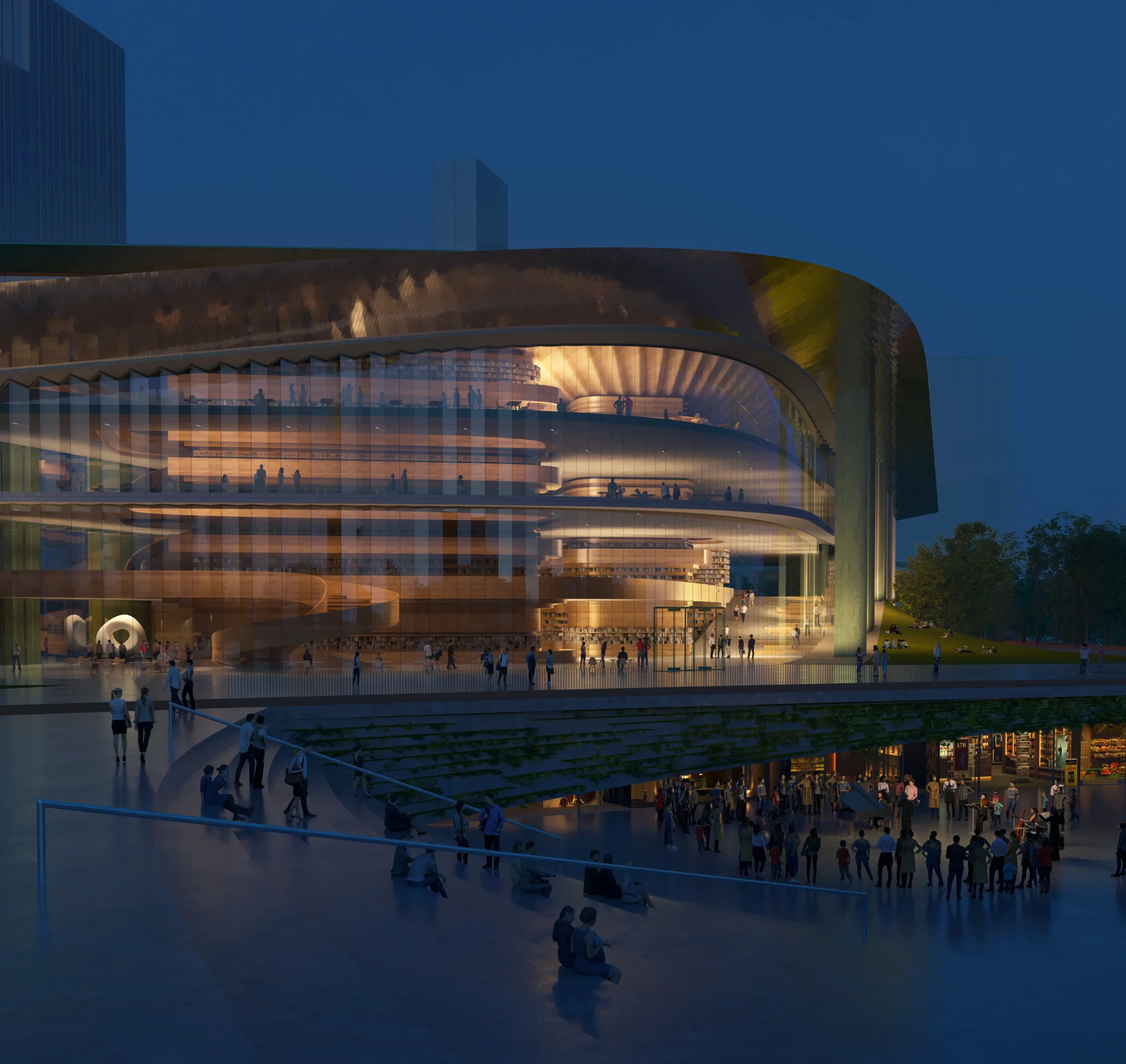
The Qiantang Bay Central Water Axis positions architecture as a catalyst for urban transformation. By incorporating civic infrastructure, cultural programs, and landscape systems along the historic canal, Zaha Hadid Architects’ proposal aims to redefine the waterfront as a vibrant public realm. This project demonstrates a nuanced understanding of a place where architectural gesture, environmental strategy, and program converge to shape new public life in Hangzhou.
Render by Atchain
Explore Courses
.jpg "Ondrej Chybik - Rethinking Architecture")