

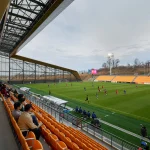
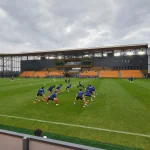
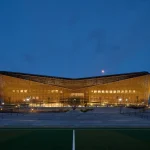
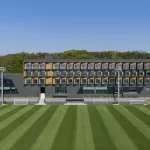
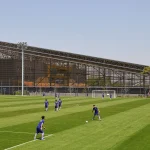
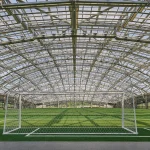
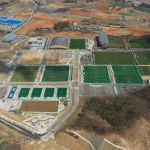
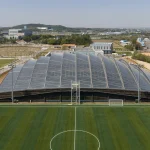
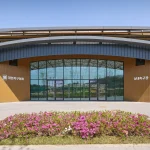
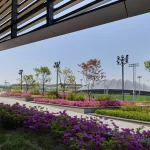
The completion of Korean Football Park marks a significant moment for football infrastructure in South Korea. Designed by UNStudio for the Korea Football Association (KFA), the expansive campus in Cheonan brings together elite training facilities, athlete accommodation, recovery spaces, administrative functions and public amenities within a single masterplan. Spread across more than 450,000 square meters, the project has been conceived as a long-term base for national teams while also creating a destination that welcomes supporters, young athletes and the wider community.
Located approximately an hour from Seoul, the campus supports men’s, women’s, and youth football programs while creating spaces that allow visitors to engage with the sport beyond match days.
“The completed campus gives Korean football a strong architectural brand identity while also creating the conditions for long-term growth. It supports athletes with focused spaces for training and rest, and it gives supporters and visitors a meaningful connection to the wider story of the game,” said Ben van Berkel, Founder and Principal Architect of UNStudio.
A Campus Organized Around Football and Public Life
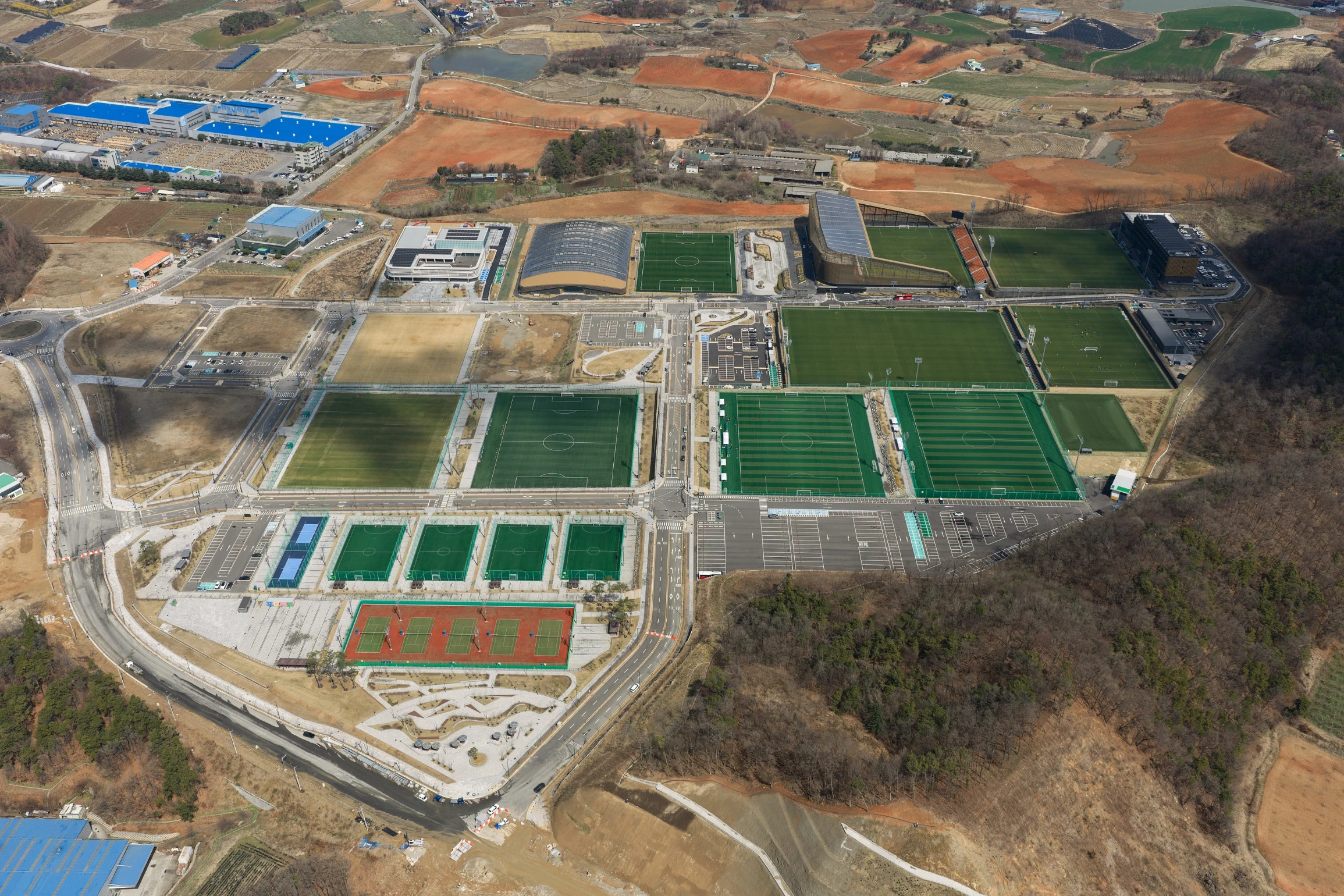
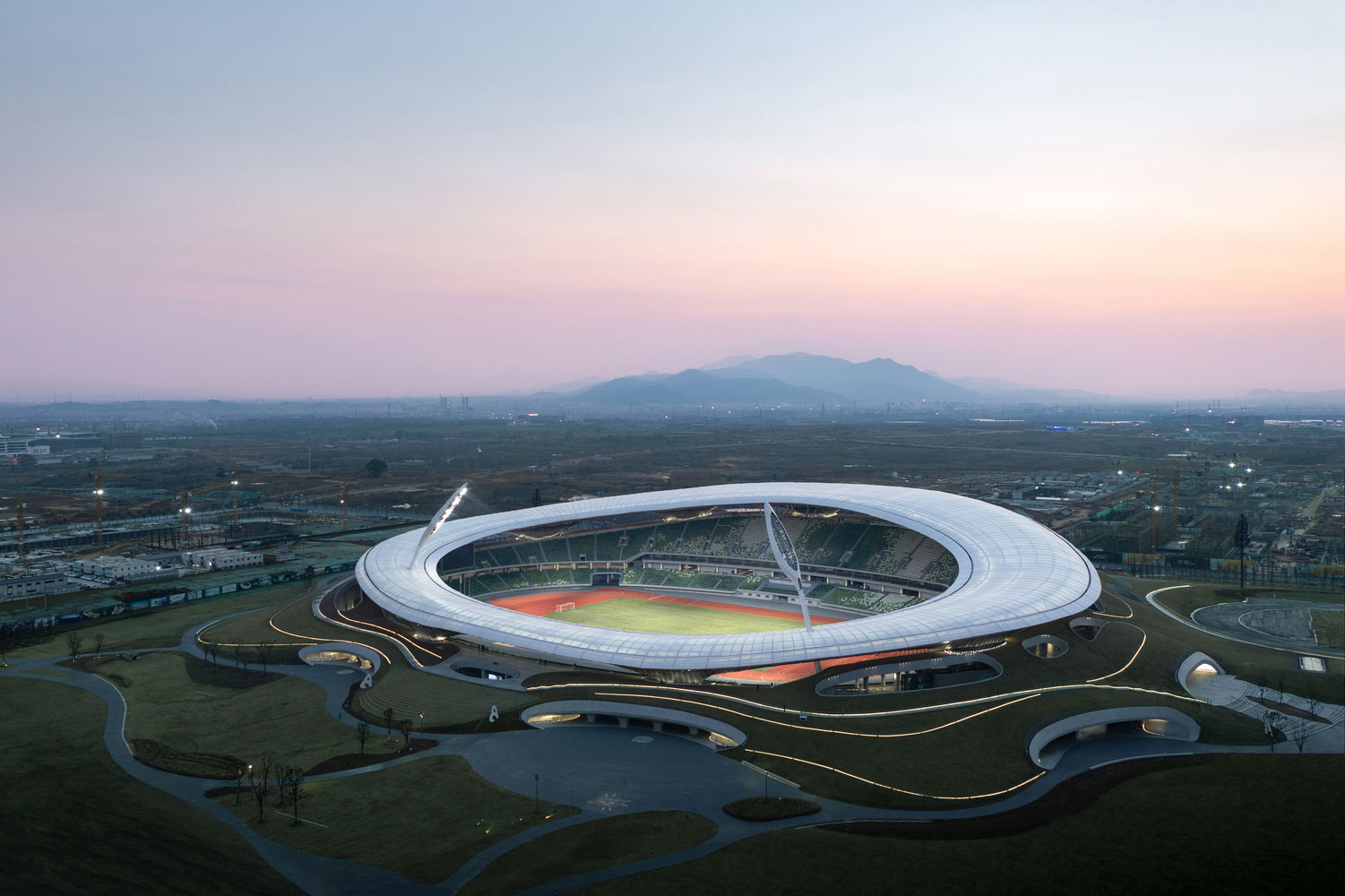
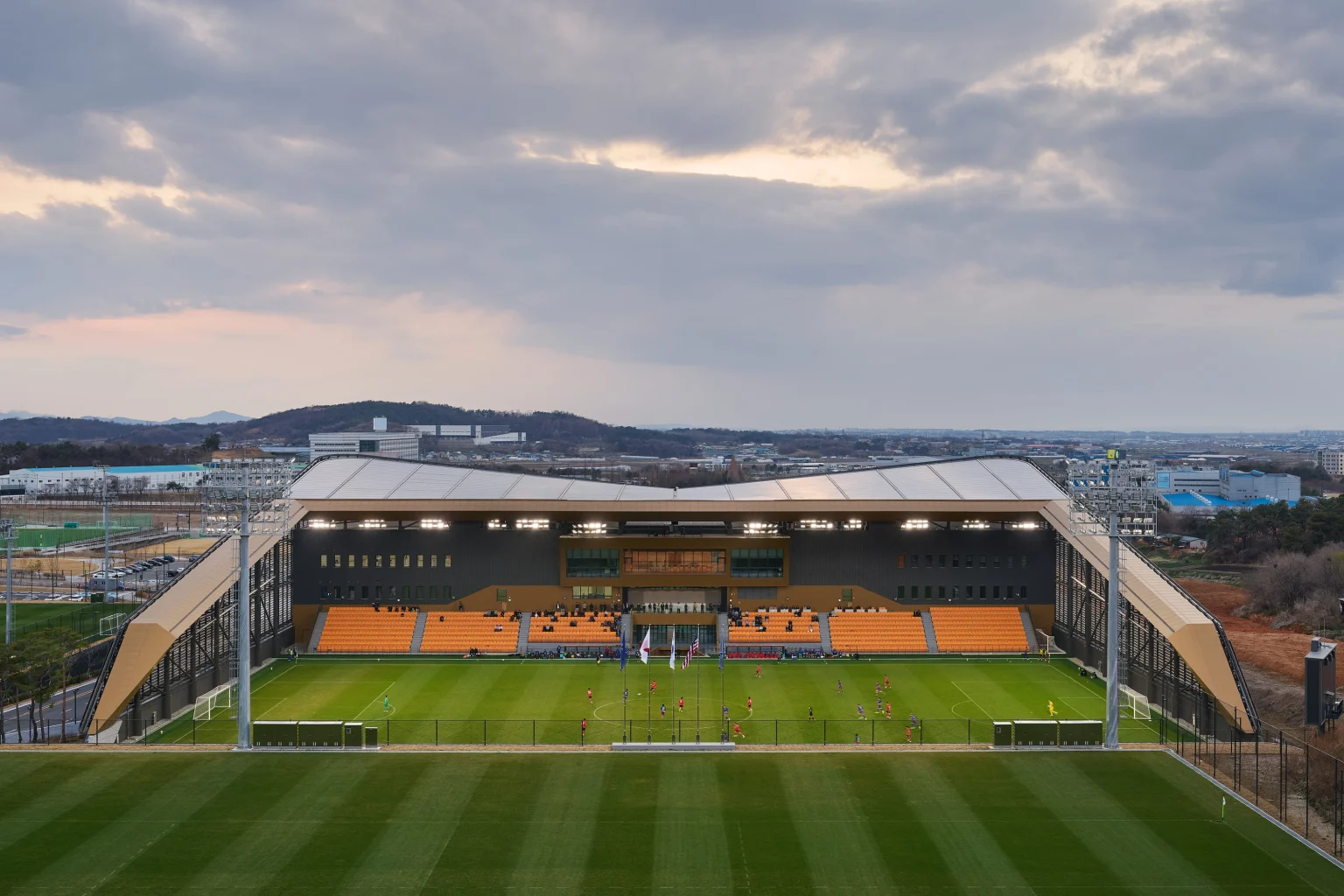
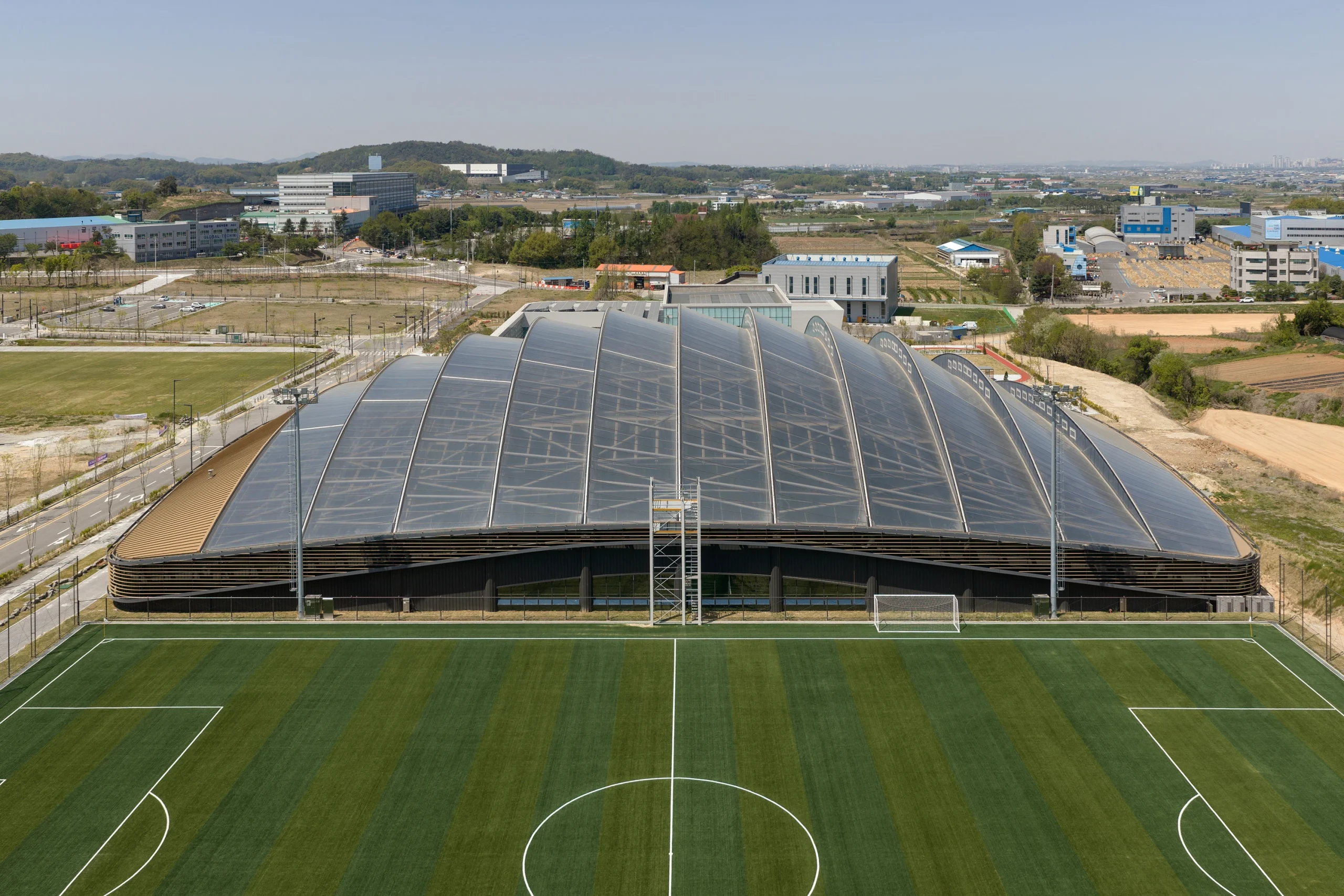
At the centre of the Korean Football Park is a public plaza that acts as the project’s primary gathering space. Around it stand three major components: the indoor stadium, the outdoor stadium integrated with the KFA headquarters, and a football museum planned for a future phase. Together, these elements create a clear civic heart for the development, encouraging interaction between professional sports and public life.
UNStudio reorganized the site’s circulation, sports fields, and building placement to establish a more coherent arrival sequence and stronger visual identity. The result is a campus where visitors can easily navigate between public destinations and the more private areas reserved for athletes and staff.
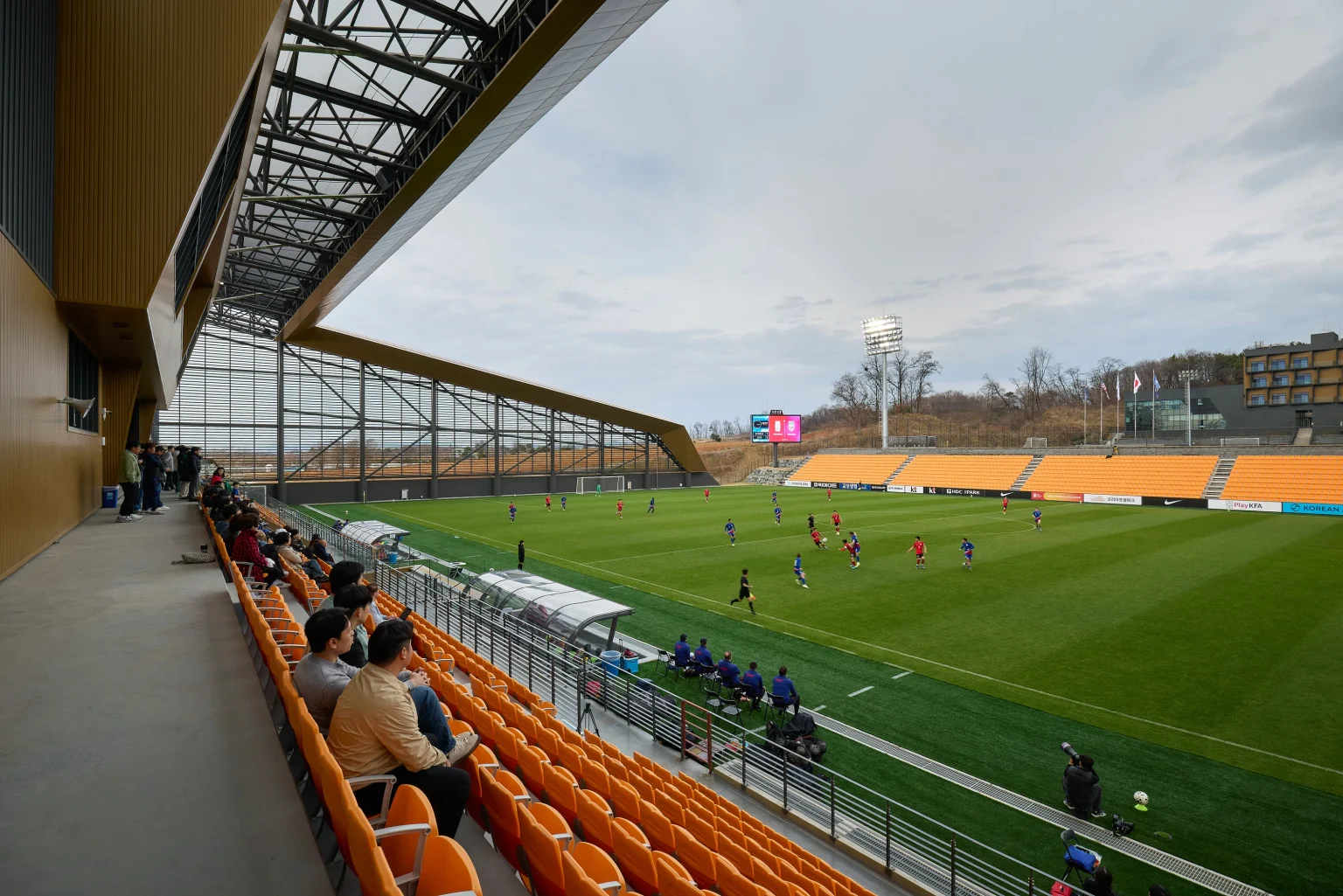
A notable planning decision was the integration of the KFA headquarters with the outdoor stadium. By bringing administrators, coaches, sports scientists, and players closer together, the design supports faster communication and closer collaboration. Training activities remain visible from key parts of the complex, reinforcing the connection between management and performance.
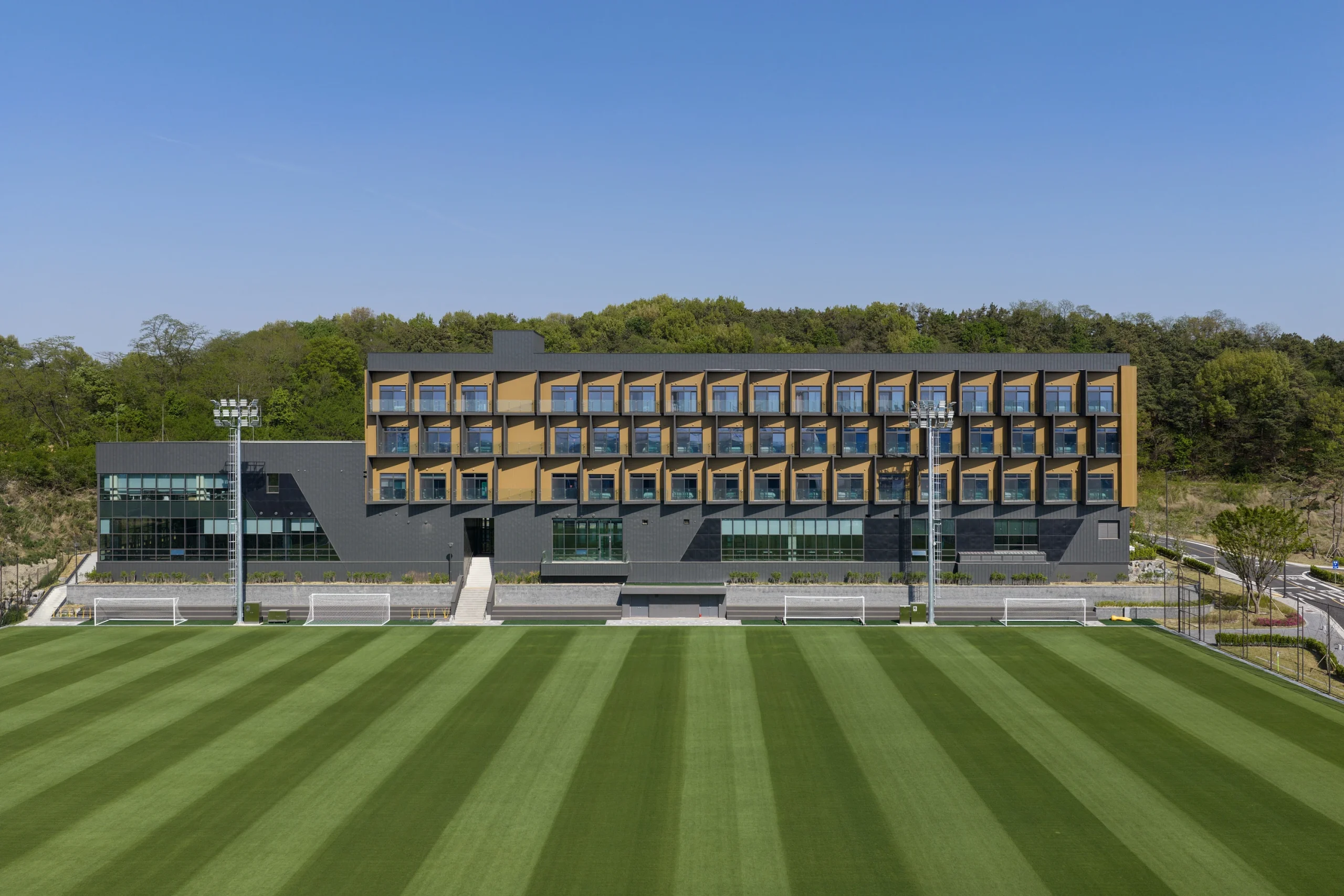
The masterplan also responds directly to the site’s natural topography. Set within a mountainous landscape, the campus uses terraced levels to accommodate football fields and buildings while guiding movement across the site. This landscape-driven approach gives the project a distinctive character and establishes a strong relationship between architecture and its surroundings.
Built with Input from Stadium and Sports Science Experts
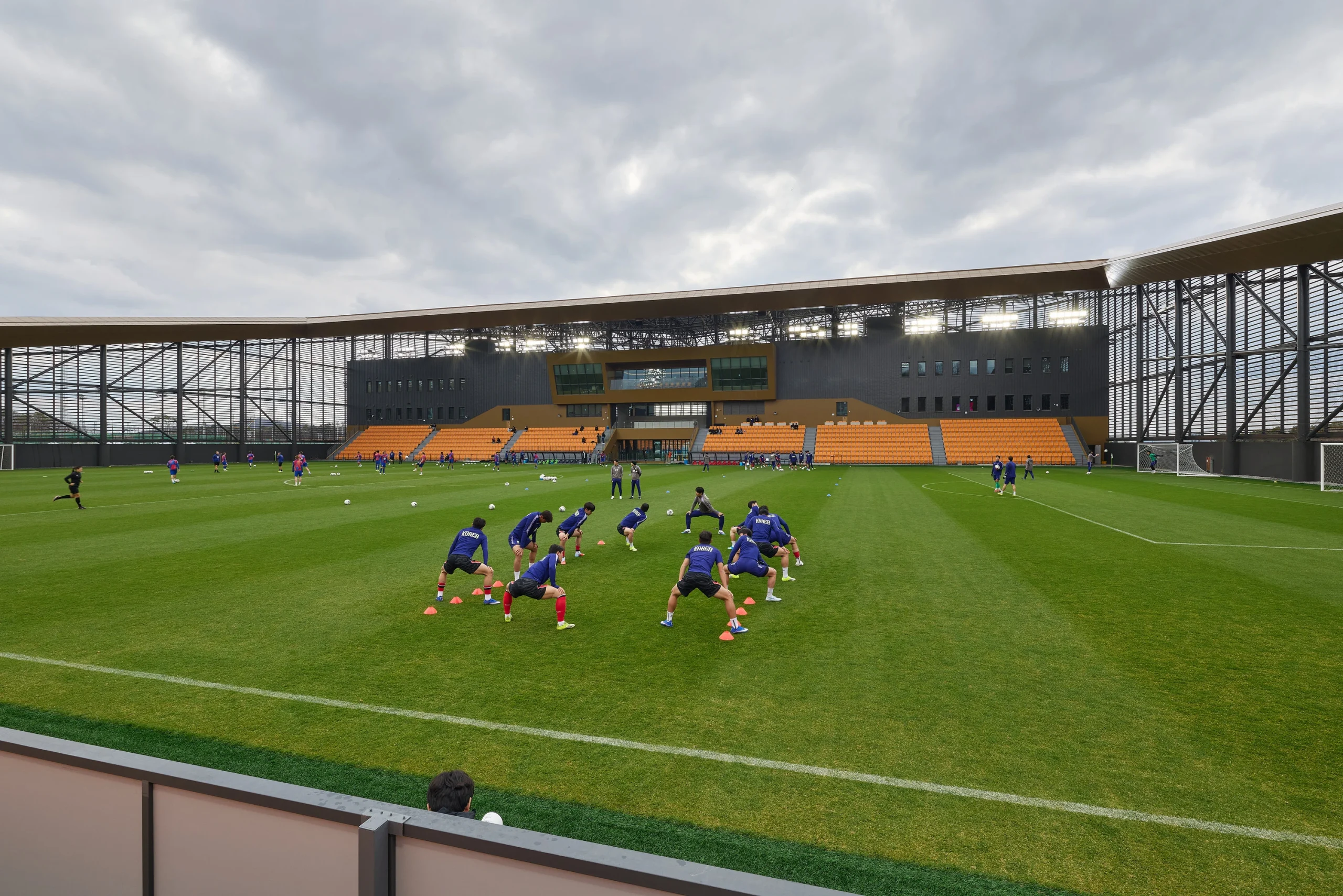
The Korean Football Park emerged through extensive collaboration between UNStudio and specialists in stadium operations, sports science, and venue management. During the design process, the architectural team worked closely with experts from the Johan Cruijff ArenA in Amsterdam, drawing on their experience in training environments, logistics, and operational planning.
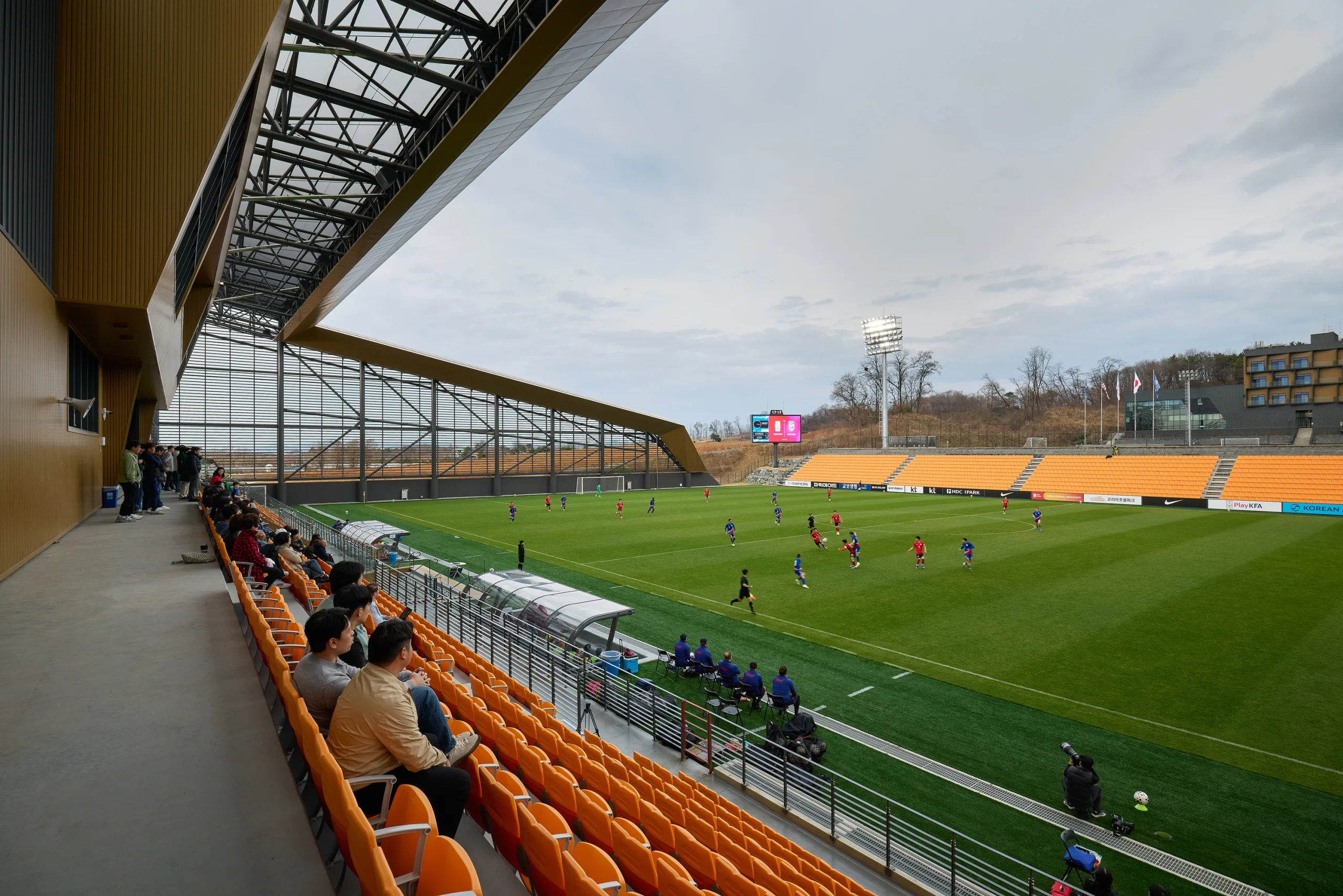
These exchanges influenced key aspects of the masterplan, including security zoning, media operations, public access strategies and future adaptability. The goal was to create a campus capable of evolving alongside changes in coaching methods, technology, and sporting requirements.
Former Johan Cruijff ArenA CEO Henk Markerink highlighted the importance of carefully structuring movement through the complex, explaining that visitors transition gradually from public spaces such as the fan zone and museum towards increasingly private areas dedicated to players and staff.
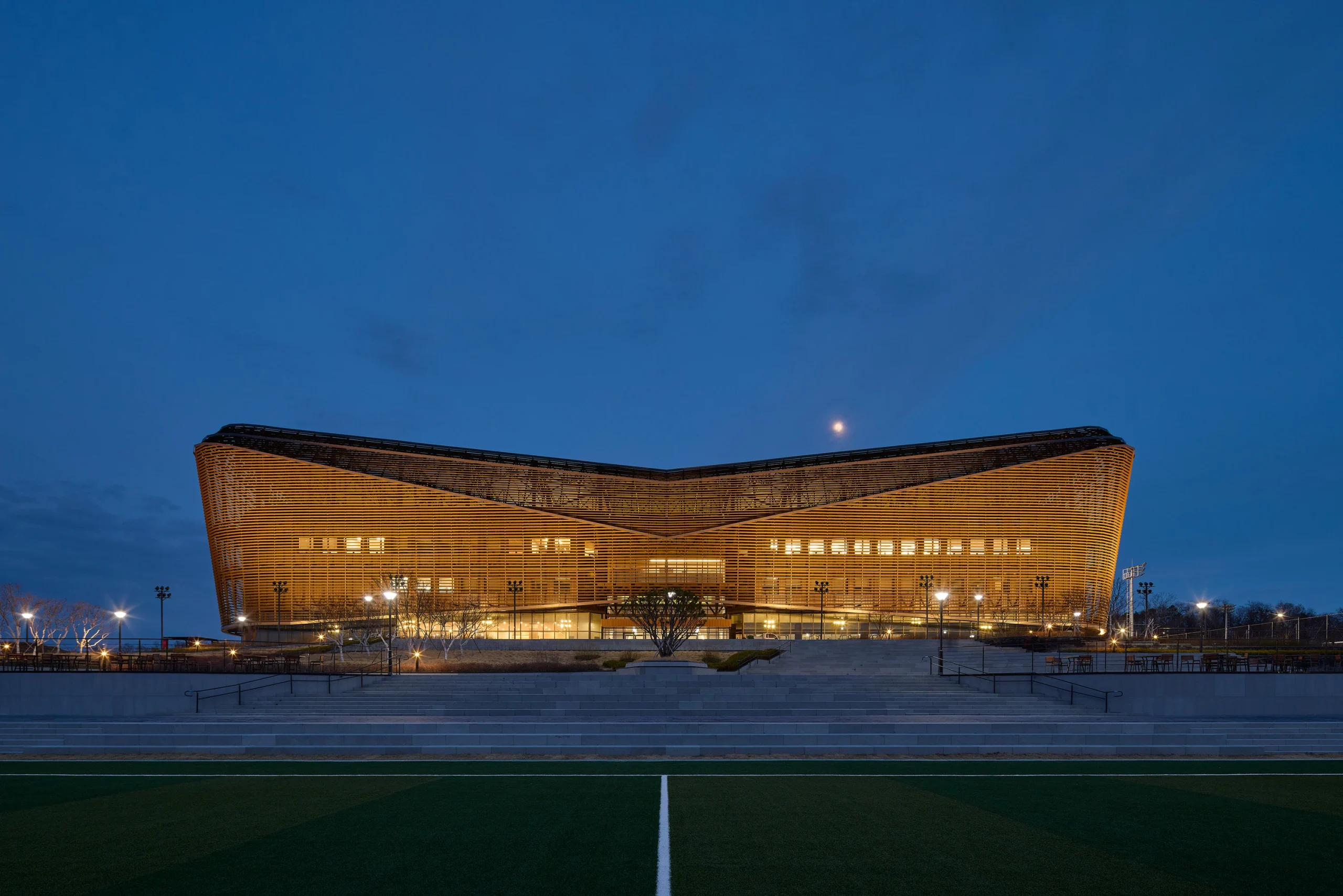
This collaborative approach helped balance architectural endeavor with the practical realities of running a modern football campus.
Designed Around Performance, Recovery, and Long-Term Development
The Korean Football Park reflects the growing understanding that athletic performance depends on much more than training alone. Recovery, healthcare, mental wellbeing, and data-driven analysis have all been embedded into the campus design.
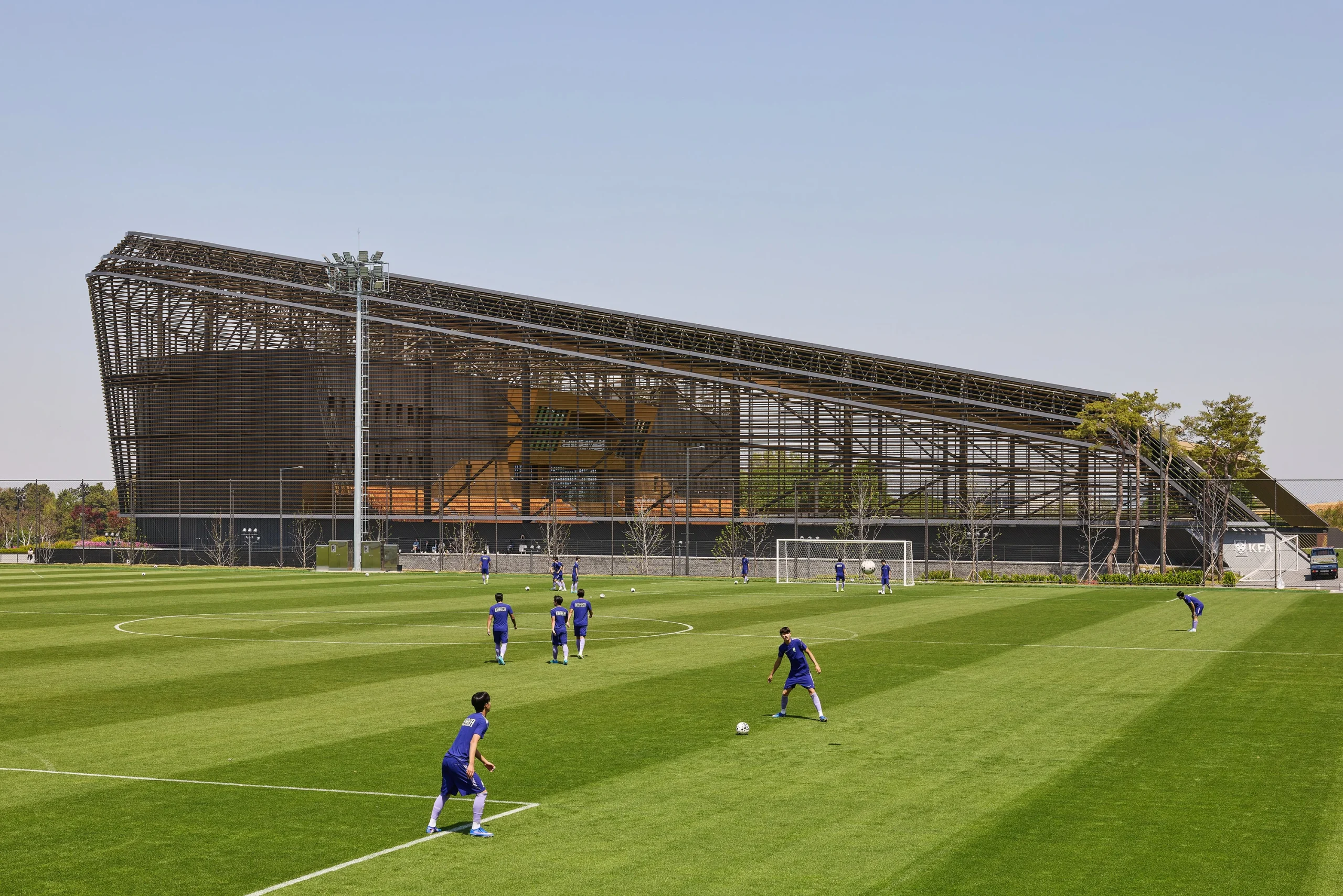
The development includes 11 football pitches, an indoor arena, an outdoor stadium, fitness centers, healthcare facilities, treatment areas, retail spaces, youth accommodation, a women’s training camp, and hospitality facilities, including a hotel and spa. These programs allow the campus to remain active throughout the year rather than operating solely during national team training periods.
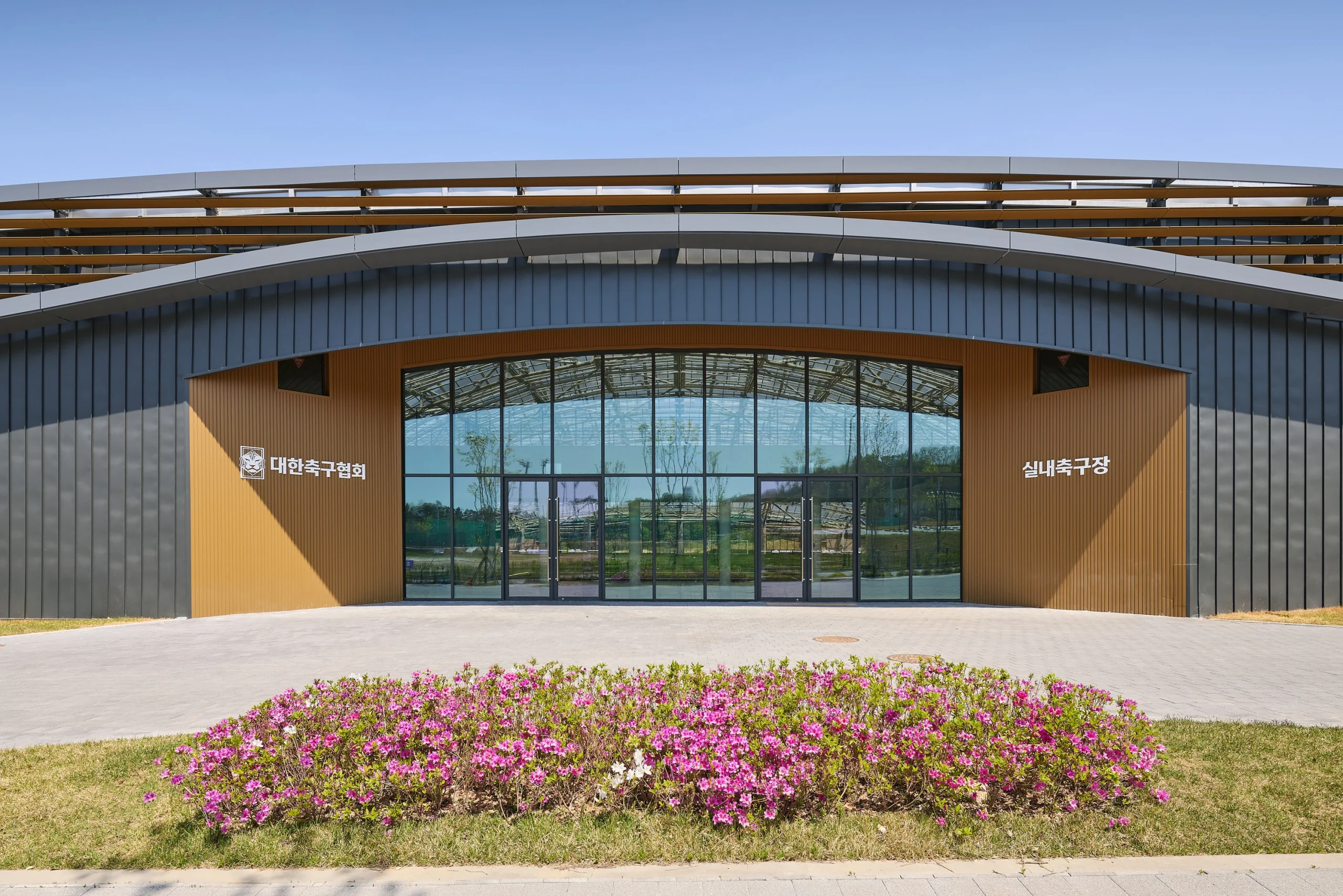
The proximity of training spaces to rehabilitation and medical facilities supports efficient athlete care. At the same time, accommodation areas have been positioned to provide privacy and quiet without disconnecting players from the wider campus environment. Natural materials, landscaped areas, and views of the surrounding terrain contribute to an atmosphere focused on concentration and recovery.
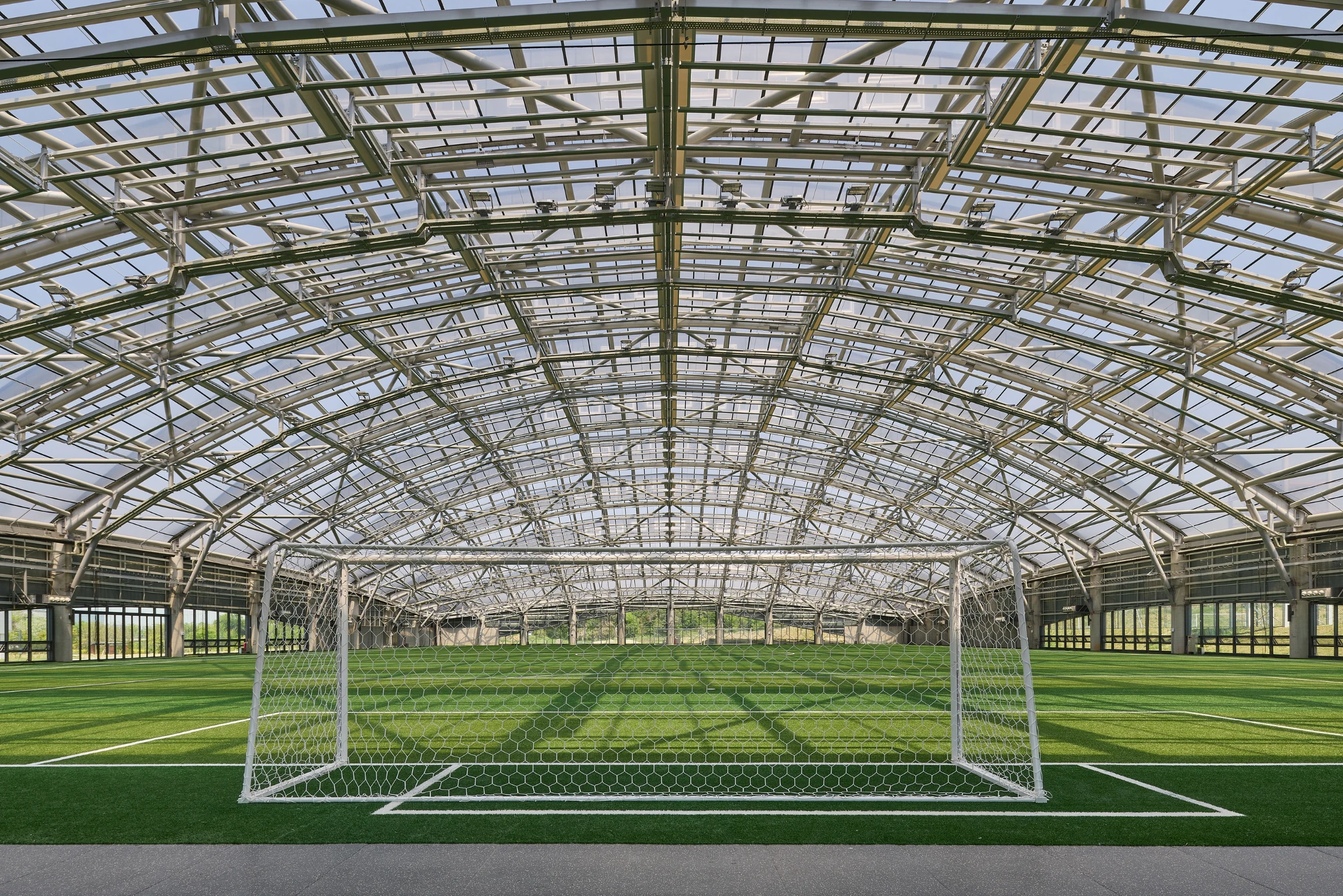
Technology infrastructure has also been integrated throughout the project. Systems supporting performance monitoring, data analysis and future technological upgrades have been incorporated into the design, ensuring that the Korean Football Park can adapt as sports science continues to evolve.
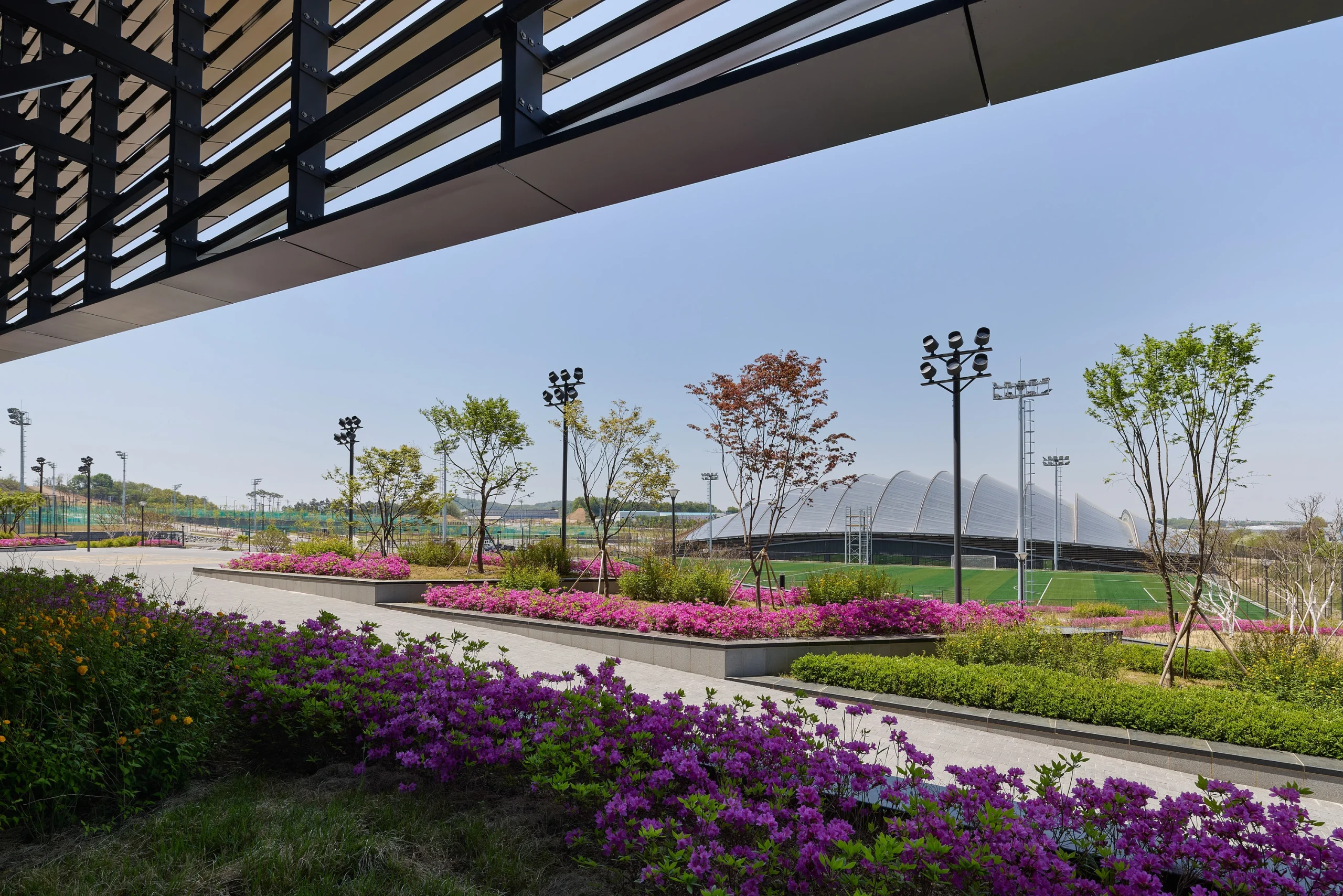
As football facilities increasingly serve multiple roles as training centers, community destinations and organizational headquarters, the Korean Football Park offers a model that combines these functions within a single, cohesive environment. Grounded in the landscape of Cheonan and shaped through collaboration across disciplines, the campus provides South Korean football with a permanent residence designed to support players, institutions and supporters for decades to come.
Korean Football Park Project Details
Project: Korean Football Park
Location: Cheonan
Client: Korea Football Association (KFA)
Architect: UNStudio
Site Area: 450,427 sq m
UNStudio Team: Ben van Berkel, Gerard Loozekoot, Maurizio Papa, Harlen Miller, Crystal Tang, Alistair Williams, Francesco Balducci, Kayla Manuel, Liva Sadovska, Luigi Olivieri, Martijn Dahrs, Rebekah Tien, Suhan Na, Yangkenan Li, Yonghyun Jeong and Zirong Zhao.
Advisors: Johan Cruijff ArenA – Stadium Logistics and Sports Science Team (Henk Markerink, Sander van Stiphout, Max Reckers)
Photography: Rohspace.