

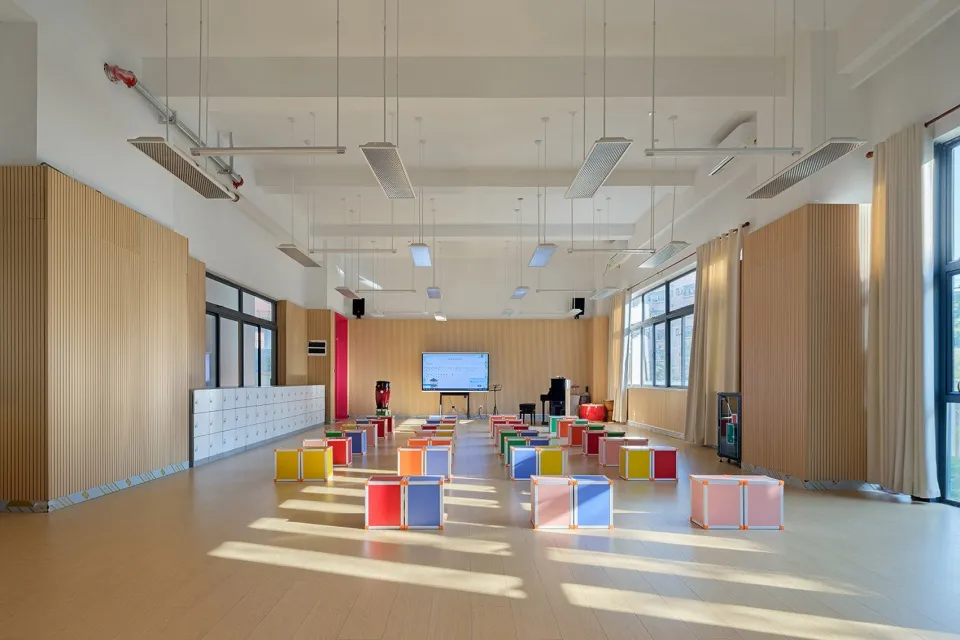
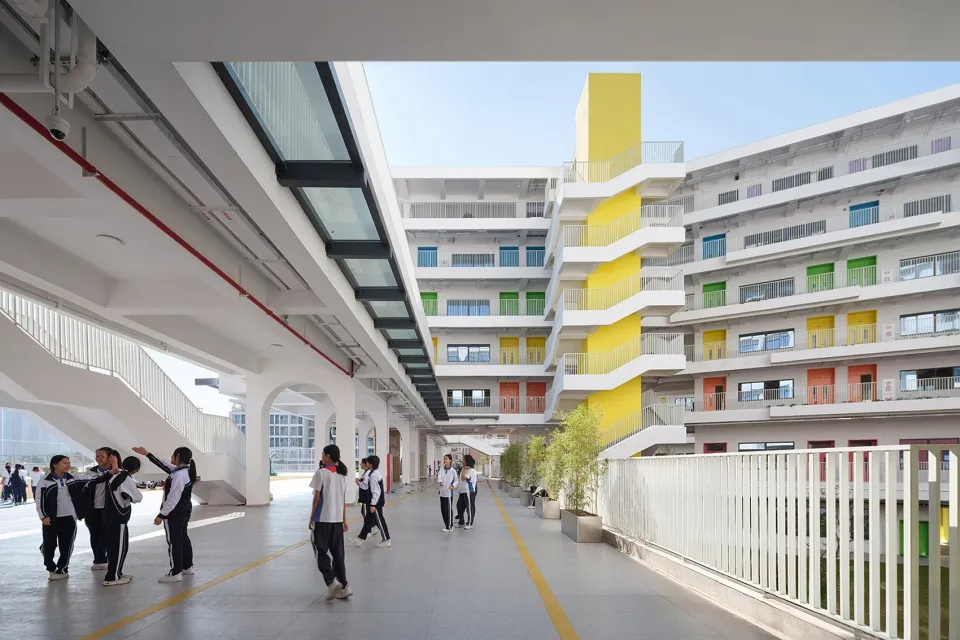
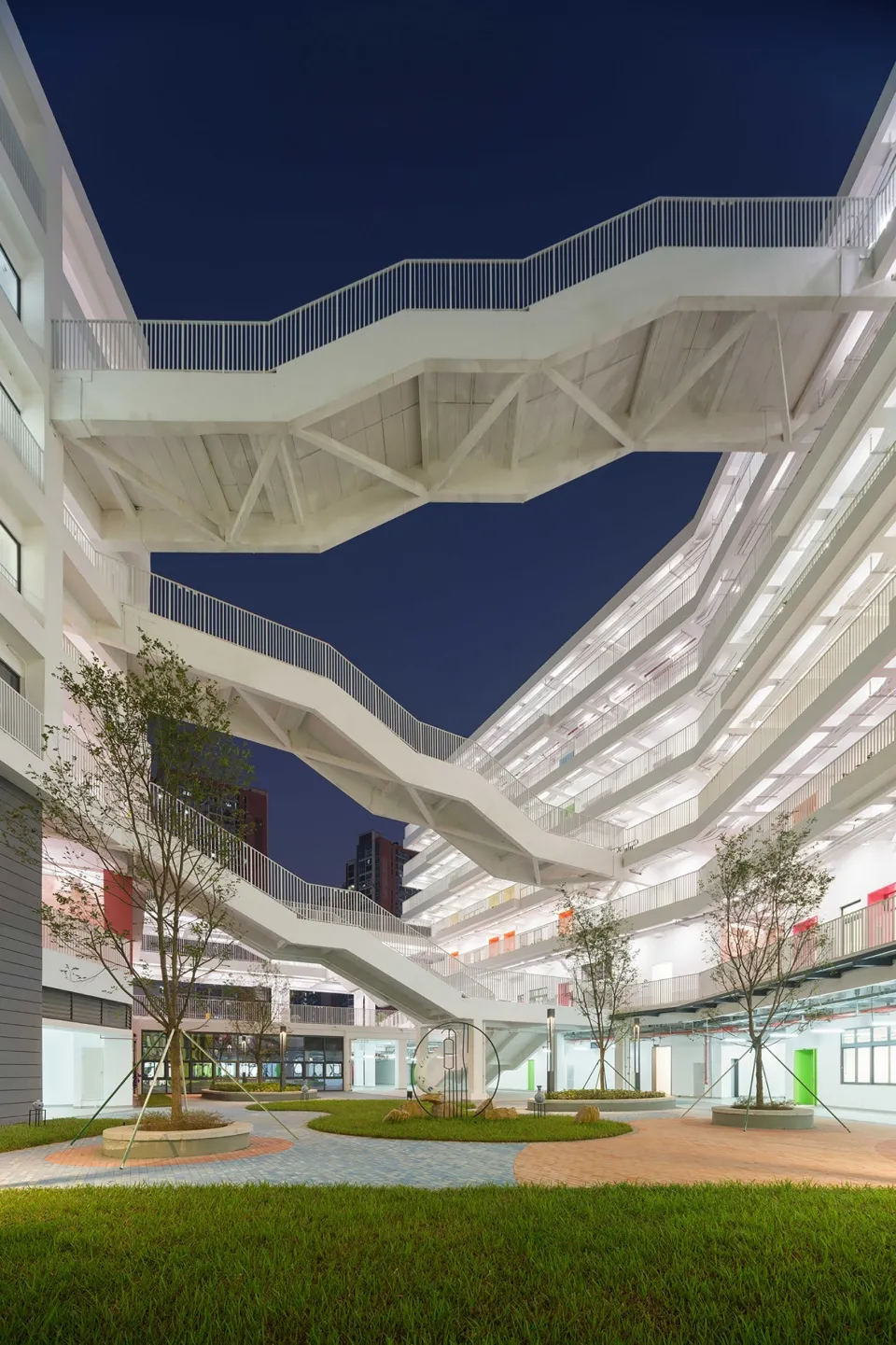
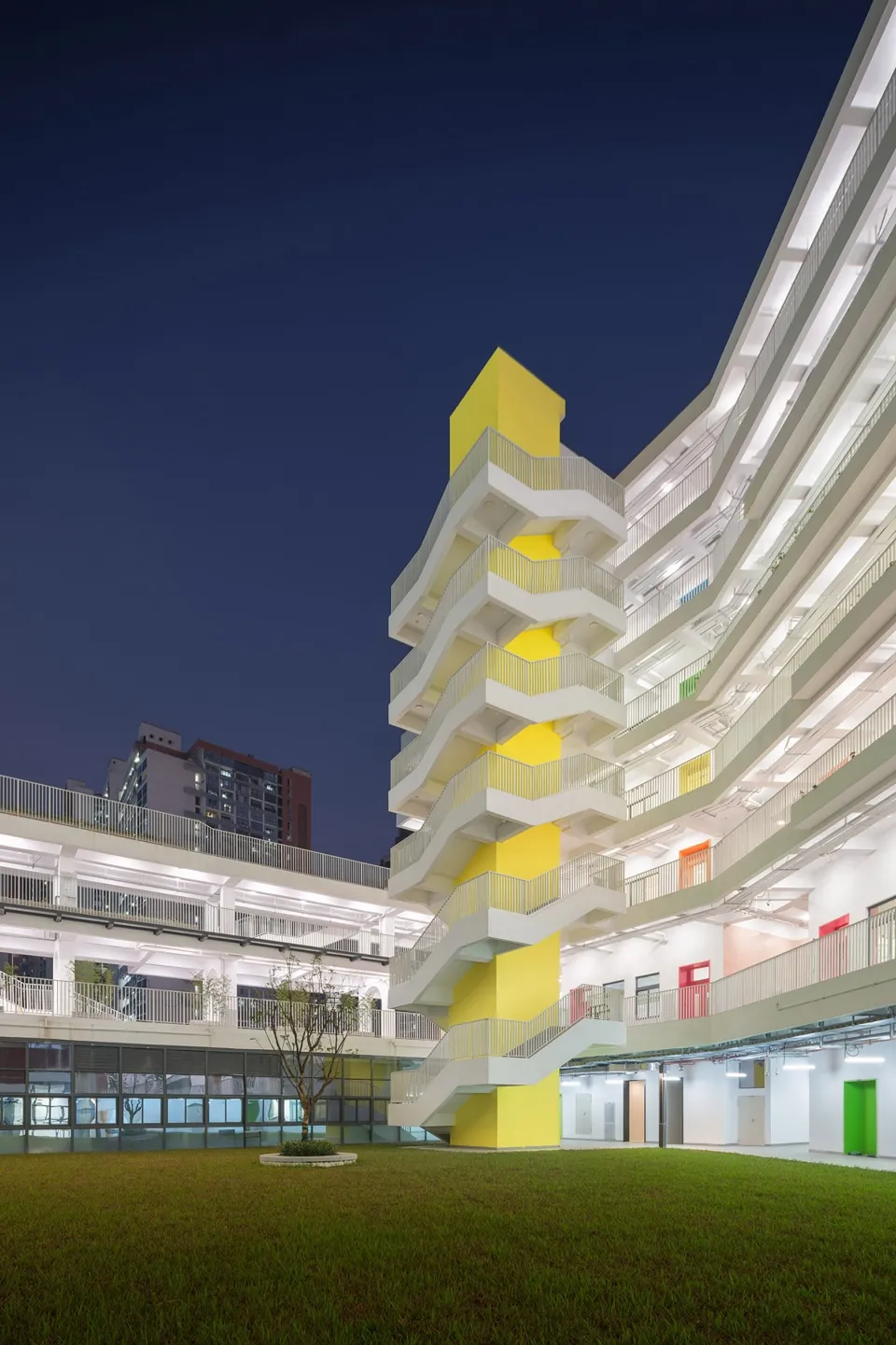
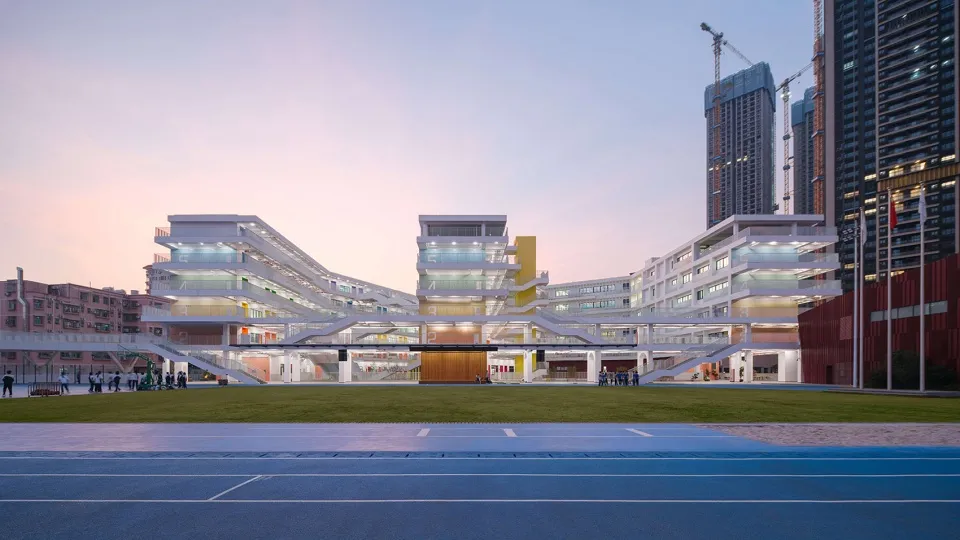
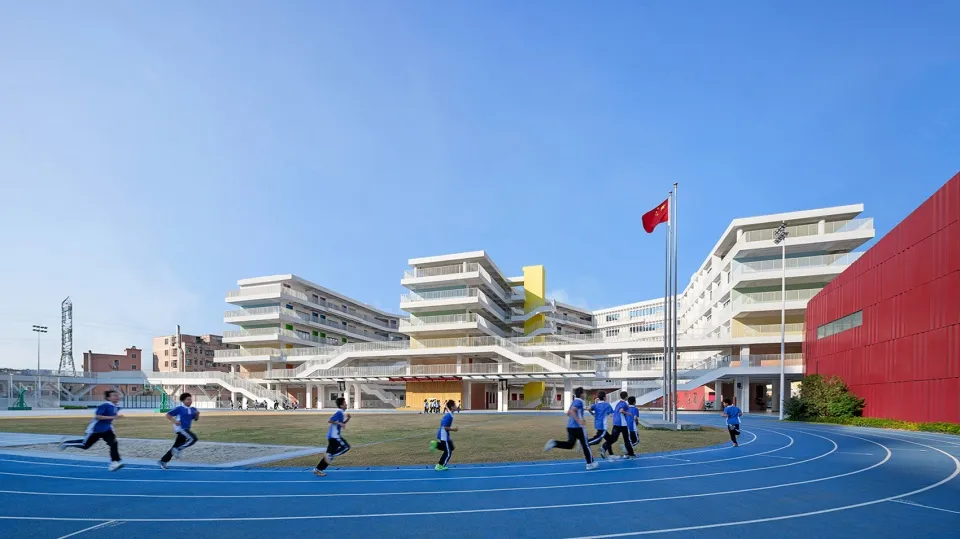
Located within Shenzhen’s rapidly regenerating Longhua District, the Fucheng Campus of Shenzhen Longhua Foreign Languages School transforms the idea of the contemporary urban school into a dynamic and interconnected educational environment. Designed by Z&Z STUDIO, the nine-year campus carefully responds to its dense urban village context through layered green spaces, flexible learning zones, and community-oriented planning. Accommodating 2,520 students across primary and middle school levels, the project combines architecture, landscape, and public accessibility into a cohesive campus experience shaped by light, movement, and interaction.
Urban Regeneration Shapes a Community-Centered Campus
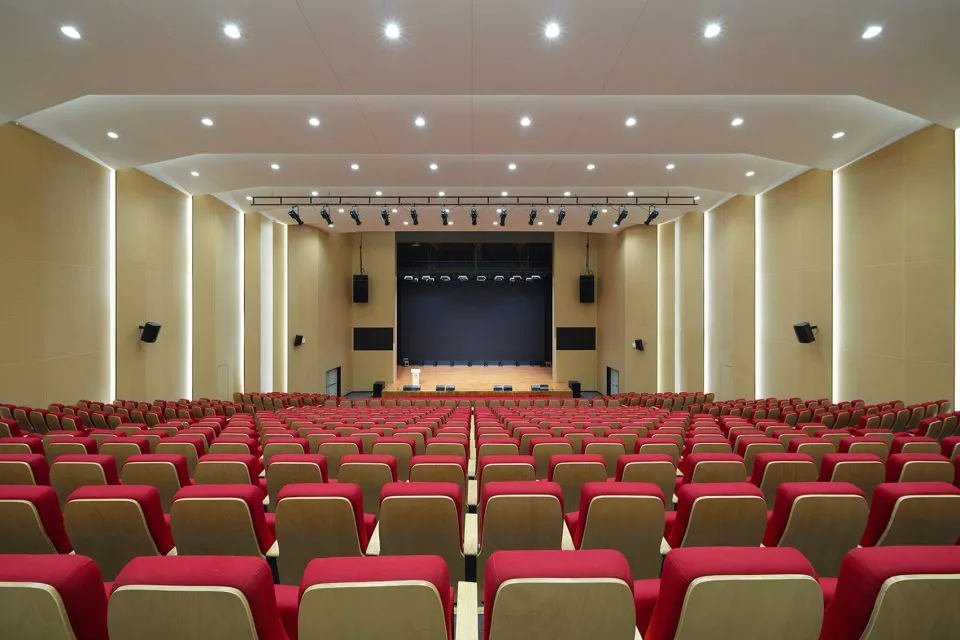
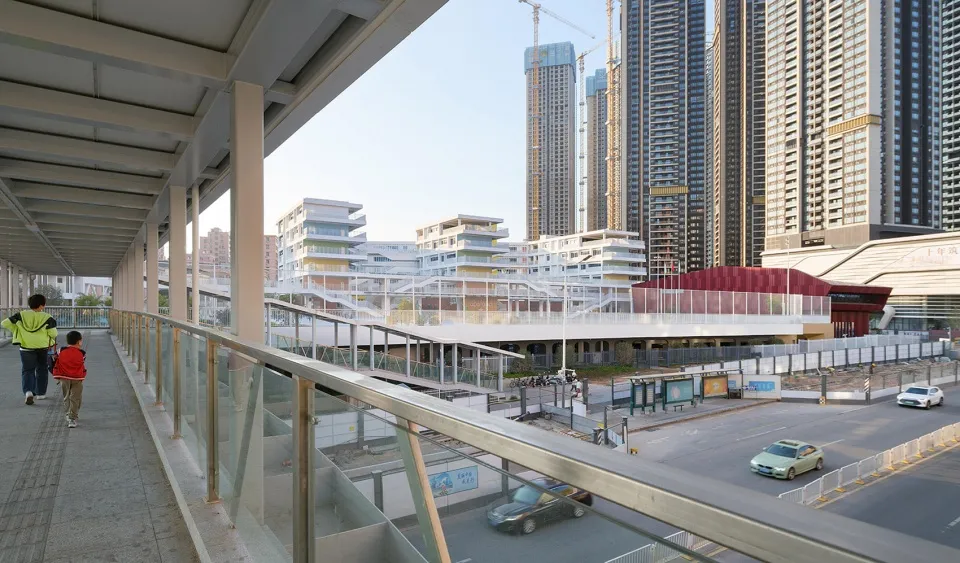
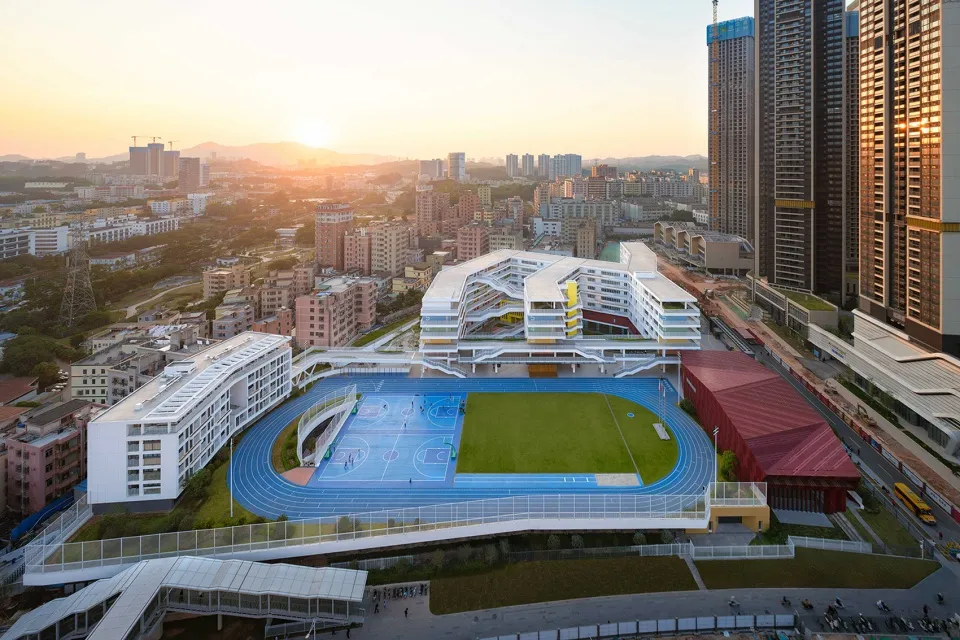
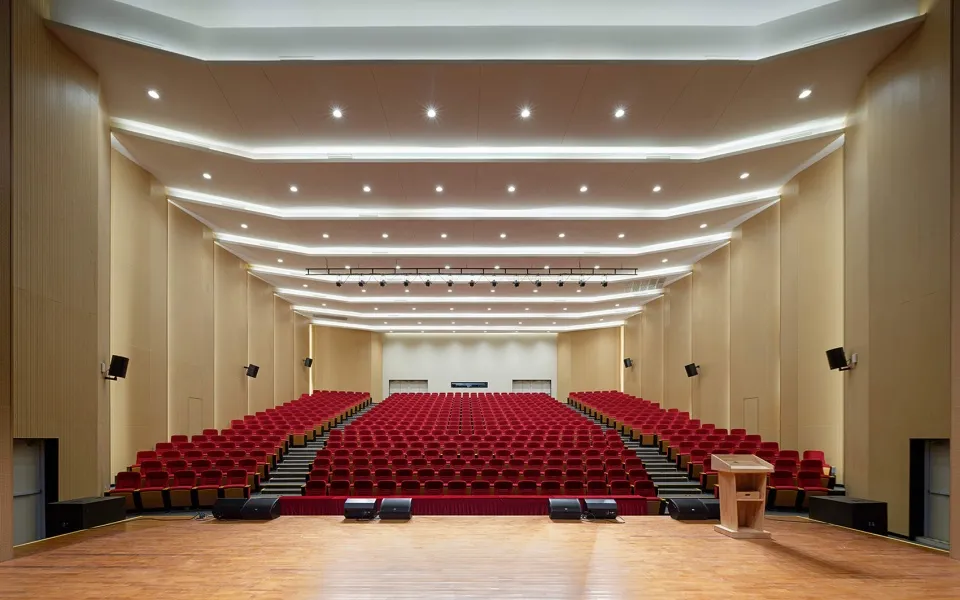
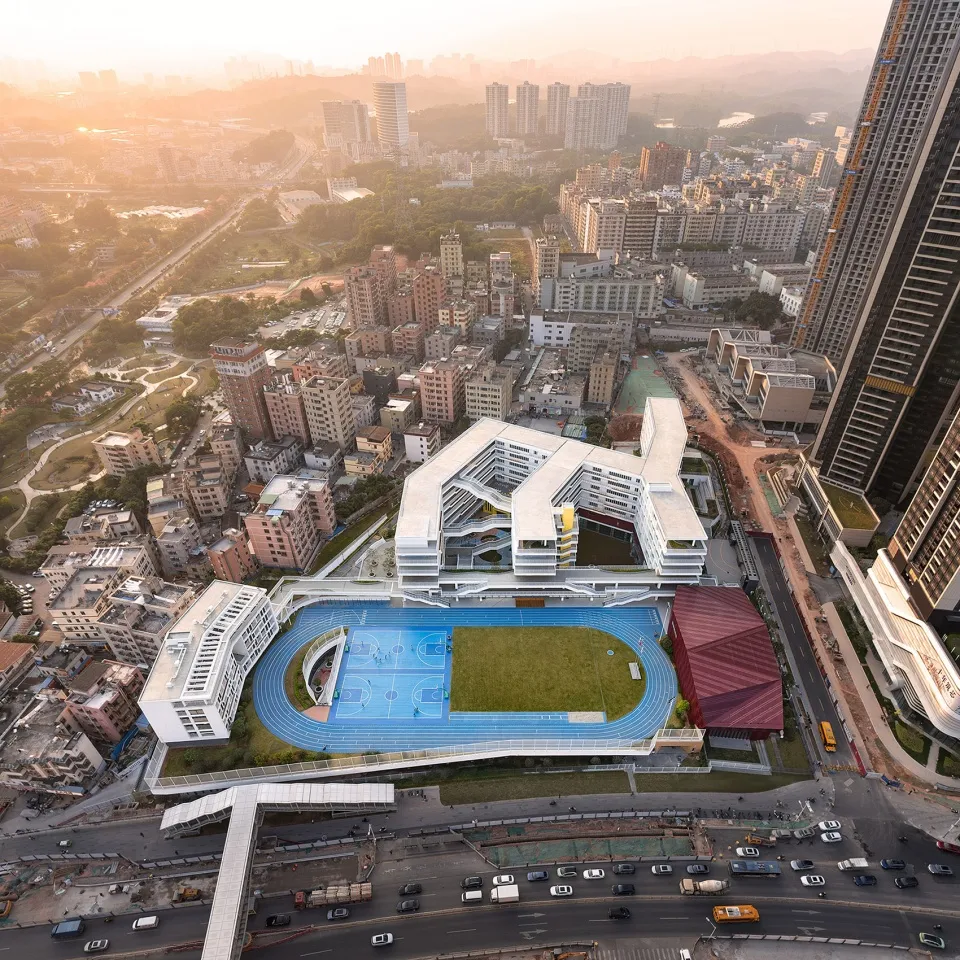
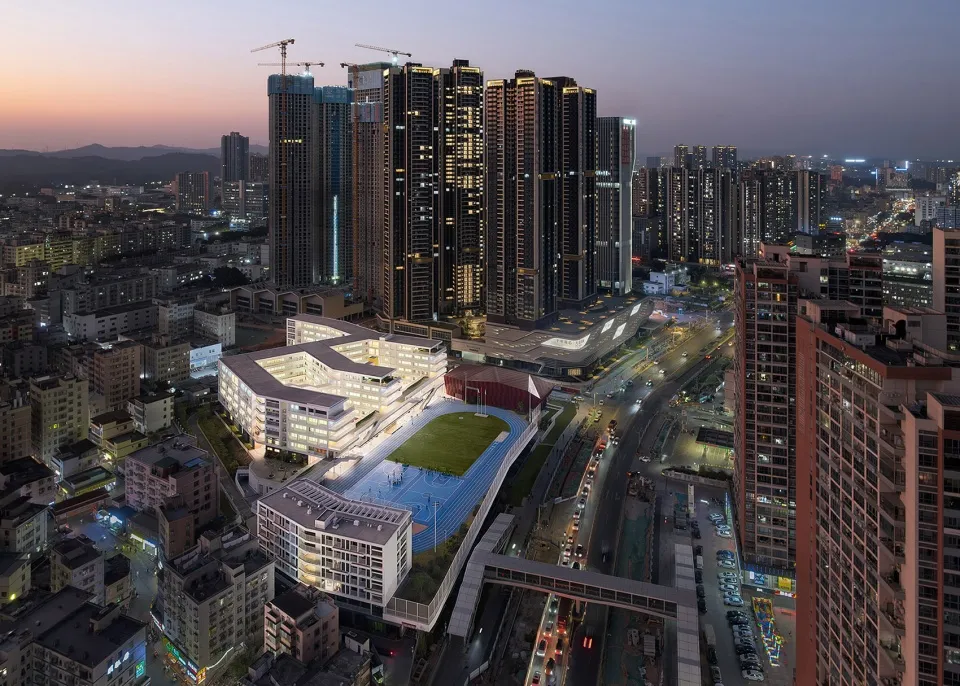
Situated within a high-density neighborhood, the Shenzhen Longhua Foreign Languages School acts as an educational institution and a civic anchor. The design strategically responds to its surroundings by placing the teaching areas along the quieter western edge of the site, closer to the residential communities the school serves. Meanwhile, public-facing facilities such as the gymnasium, lecture hall, and sports spaces are positioned along the northern and eastern streets, allowing the campus to remain active beyond school hours through community use on weekends and holidays.
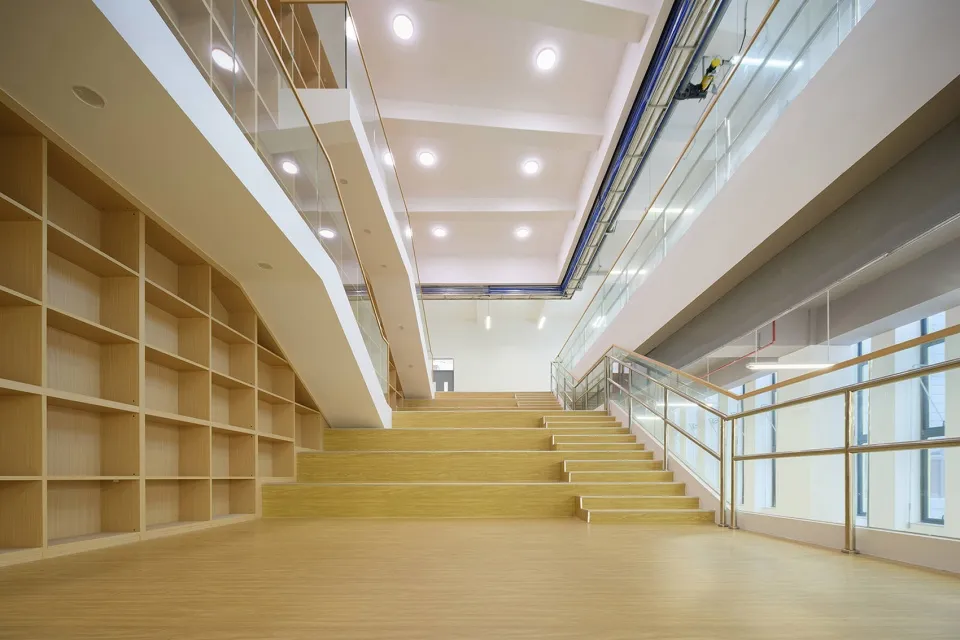
To minimize noise from Guanlan Avenue, the sports field is elevated along the eastern side, creating a protective urban buffer while maximizing spatial efficiency across the compact site.
A Green Main Axis Connects Learning and Social Interaction
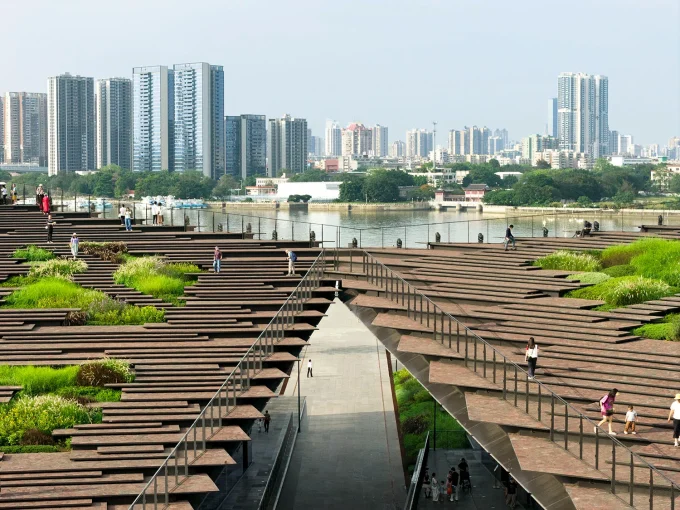
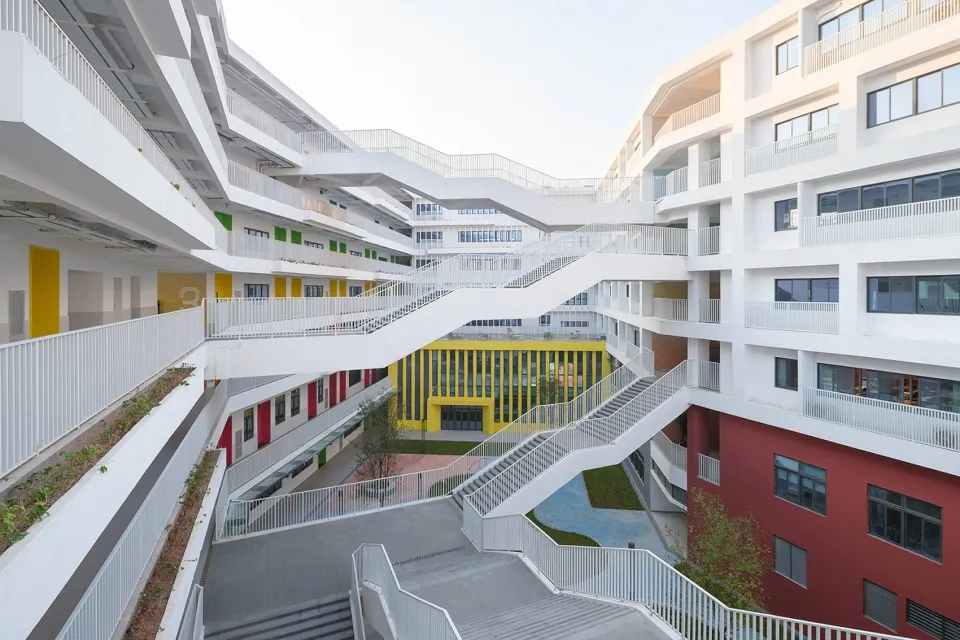
At the heart of the Shenzhen Longhua Foreign Languages School campus is a continuous green spine that organizes movement, interaction, and outdoor activity. Three north-south-oriented classroom buildings are designed in a folded arrangement to maximize natural ventilation and daylight, while specialized classrooms act as connectors between the academic blocks.
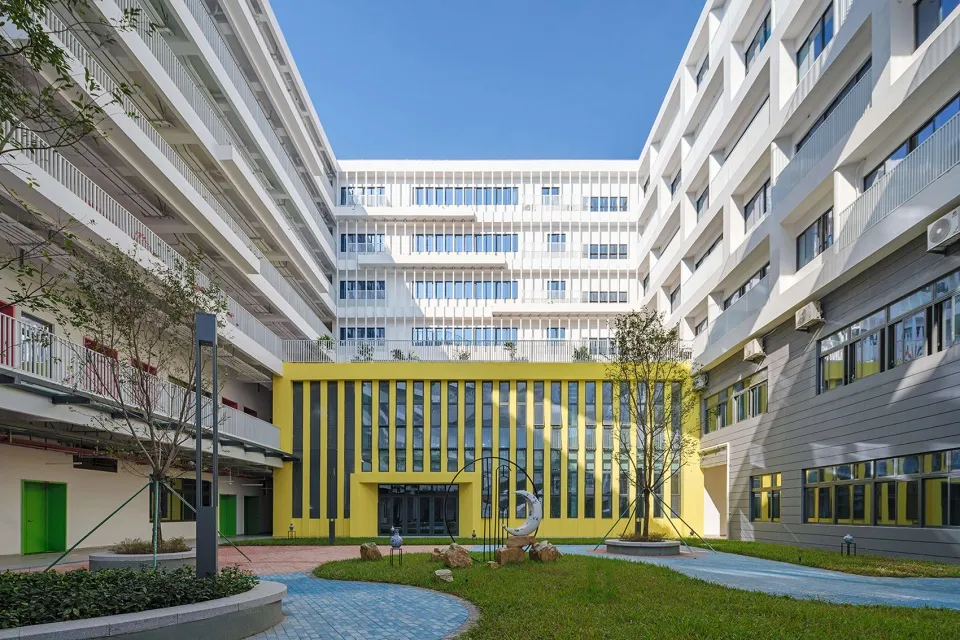
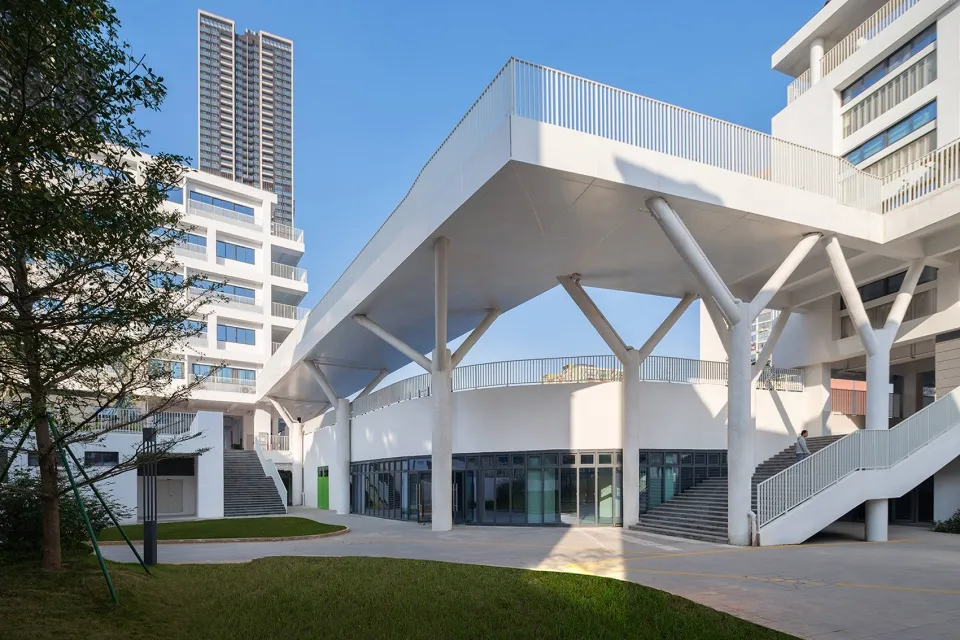
Covered corridors link the campus together, creating an interconnected circulation network that encourages spontaneous interaction between students and teachers. Recessed terraces, outdoor platforms, and open activity spaces are layered throughout the design, transforming circulation into an extension of the learning environment.
Seasonal Courtyards Bring Nature Into a Dense Urban Setting
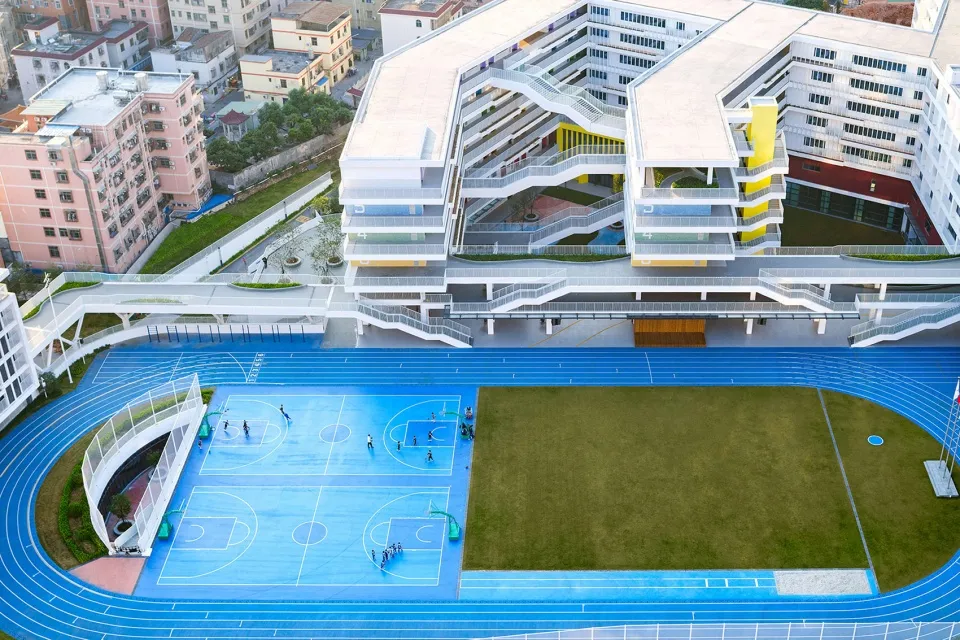
Surrounded by tightly packed urban fabric, the Shenzhen Longhua Foreign Languages School campus compensates for limited outward views by turning inward toward landscaped courtyards inspired by the four seasons. Arranged sequentially from north to south, the Spring, Summer, Autumn, and Winter courtyards introduce changing atmospheres and greenery into the center of the school.
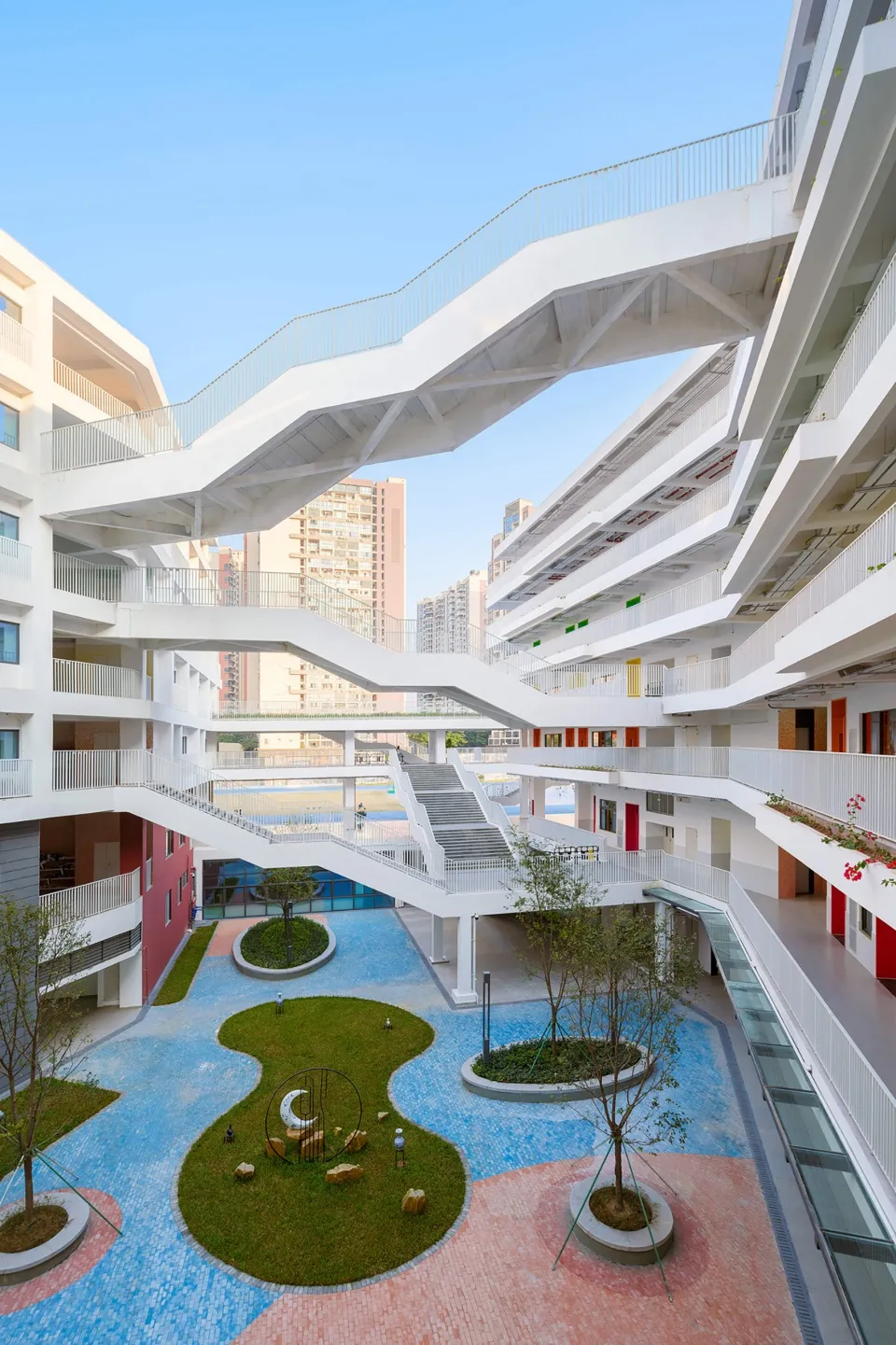
These spaces not only improve daylight and ventilation but also create calm social environments where students can gather, study, and interact with nature. The integration of terraces, planted setbacks, and elevated green spaces further reinforces the project’s vision of a healthy and environmentally responsive educational campus.
Layered Architecture Creates a Vibrant Urban Landmark
The Shenzhen Longhua Foreign Languages School campus architecture combines simplicity with a strong civic identity. Horizontal façades and terraced forms define the teaching blocks, while stepped elevations on the eastern side open panoramic views across the city. The project’s most striking feature is the bold red lecture hall positioned along the northern frontage.
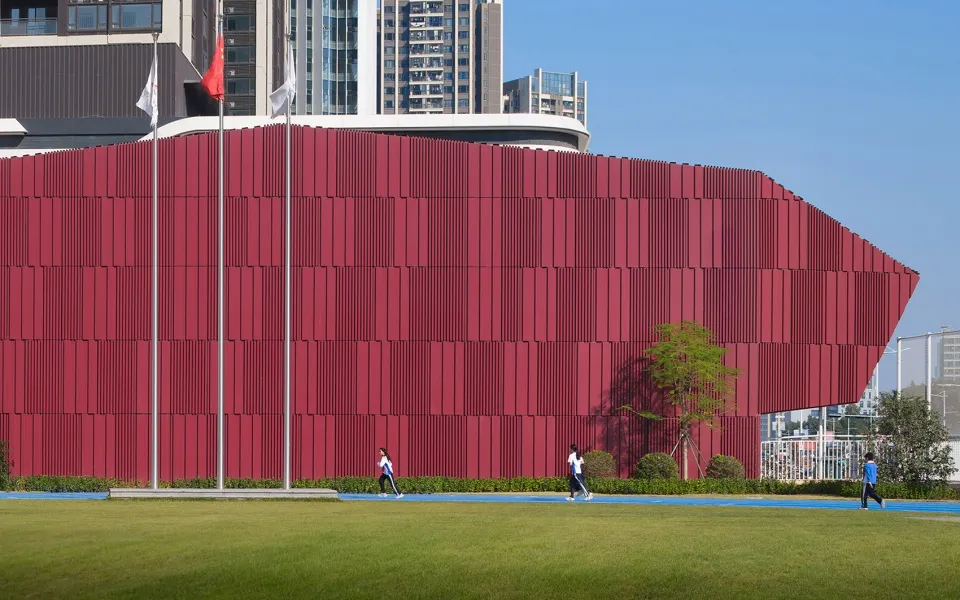
Inspired by diamond-cut geometry, the sculptural volume stands out within the surrounding urban landscape, transforming the school into a recognizable landmark within Longhua District’s regeneration corridor. Through its layered planning, green integration, and interconnected public spaces, the campus presents a contemporary vision for future-focused educational design in dense cities.
Image Credit: Tianpei Zeng
Explore Courses
.jpg "Ondrej Chybik - Rethinking Architecture")