






Minarets are one of the most recognizable features of Islamic architecture. Rising beside mosques across cities and landscapes, these towers were originally built so the call to prayer could be heard from a distance. Over time, however, minarets evolved into symbols of faith, political power, artistic identity, and regional craftsmanship.
As Islam spread across the Middle East, North Africa, Central Asia, and South Asia, every dynasty developed its own interpretation of the minaret. Some were square and fortress-like, while others became tall, slender, spiral, or richly decorated with tiles and carvings. The evolution of minarets reflects how Islamic architecture adapted to different cultures, climates, materials, and local traditions over centuries.
The Early Foundations: Umayyad Minarets
The earliest minarets emerged during the Umayyad Caliphate in the 7th and 8th centuries. Before dedicated towers existed, the call to prayer was delivered from rooftops or elevated platforms. As Islamic cities grew larger, mosques began incorporating permanent towers into their design. Early Umayyad minarets were simple, solid, and heavily influenced by Roman and Byzantine watchtowers; most followed square forms with strong vertical massing and no decorative detailing.
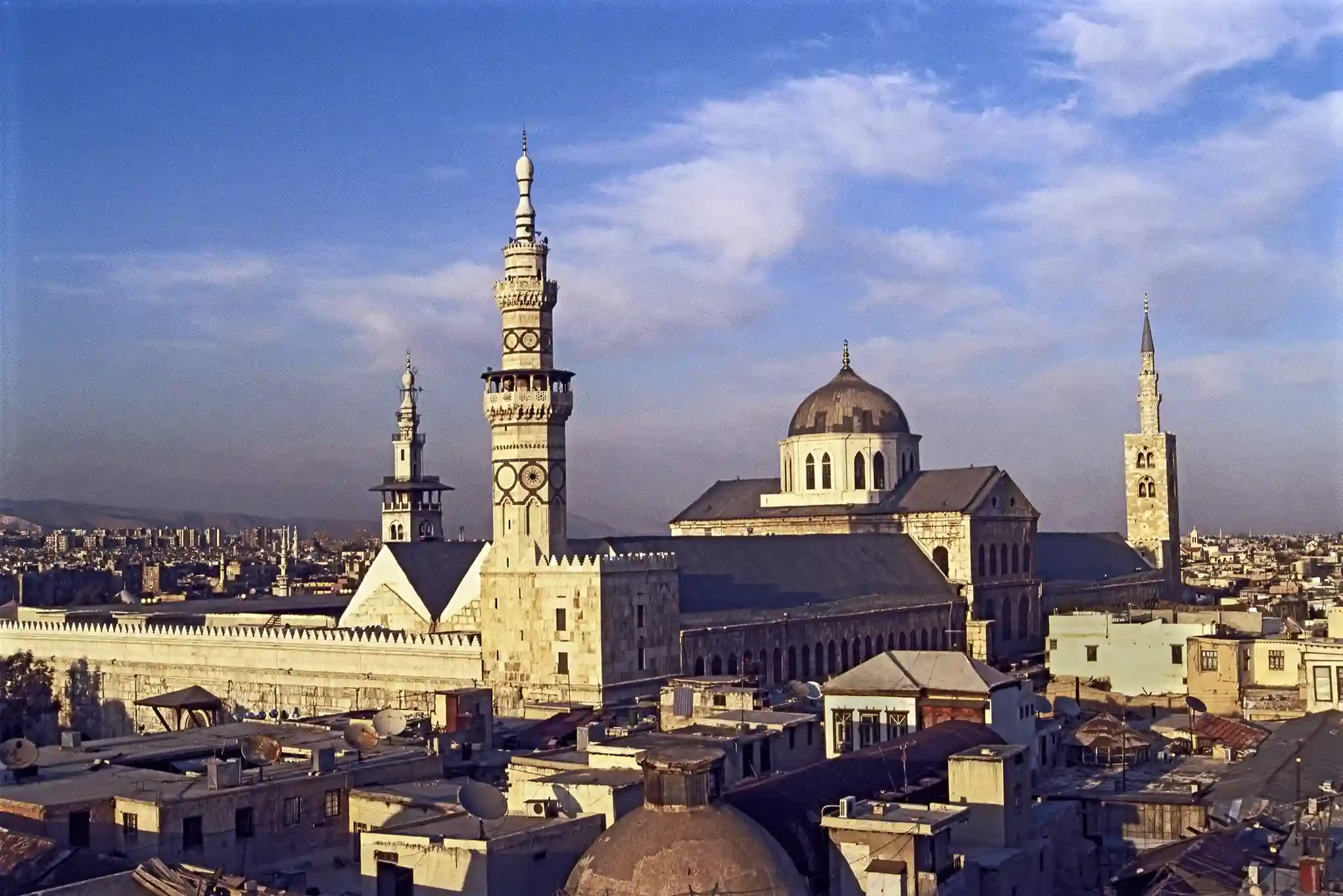
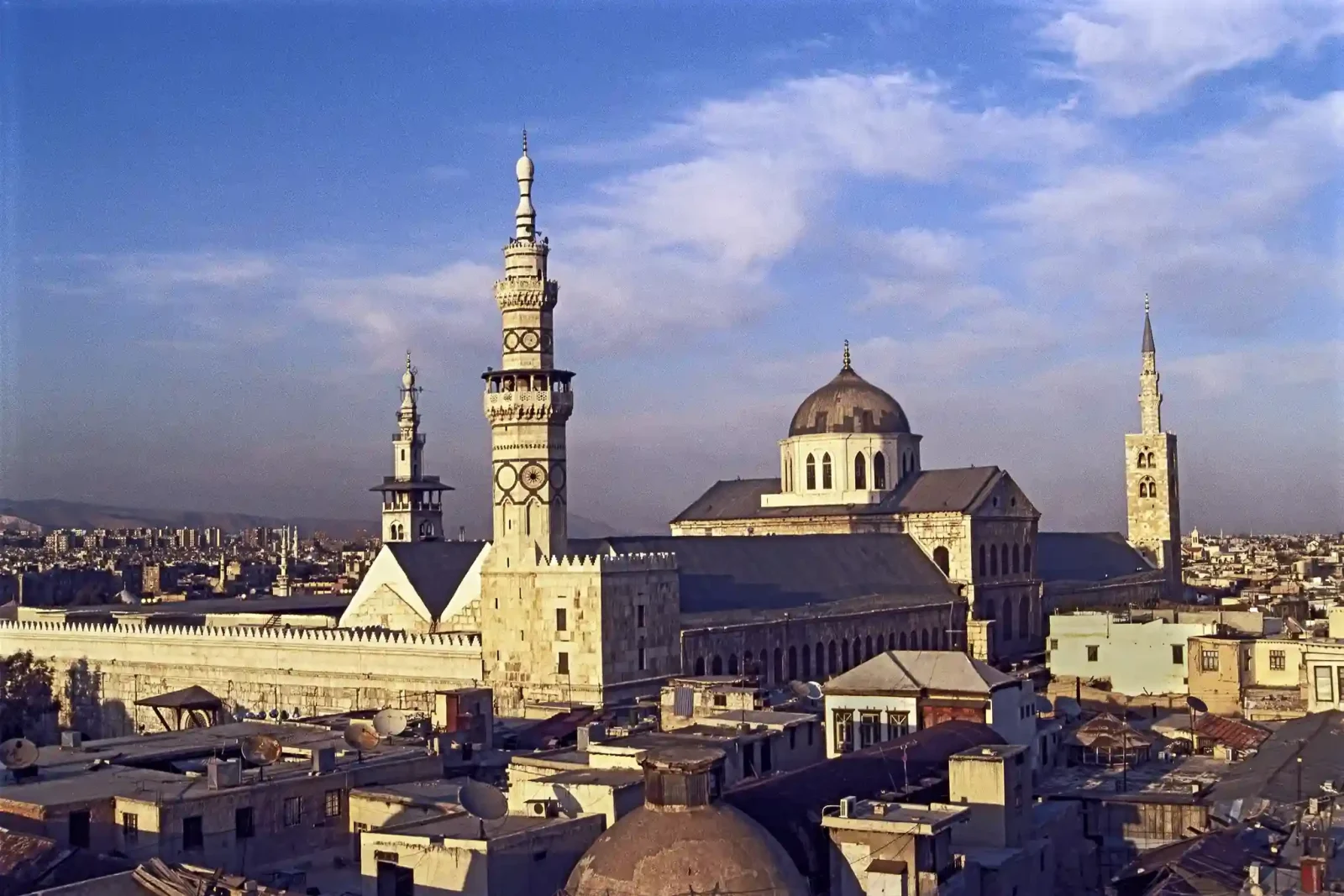
One of the earliest and most influential examples can be seen in the Great Mosque of Damascus. Built on the site of a former Roman temple and later a Byzantine church, its minarets borrowed heavily from existing Roman tower forms. The mosque became an important model for later Islamic architecture, especially in the way the minaret was visually integrated into the larger mosque complex and urban skyline.
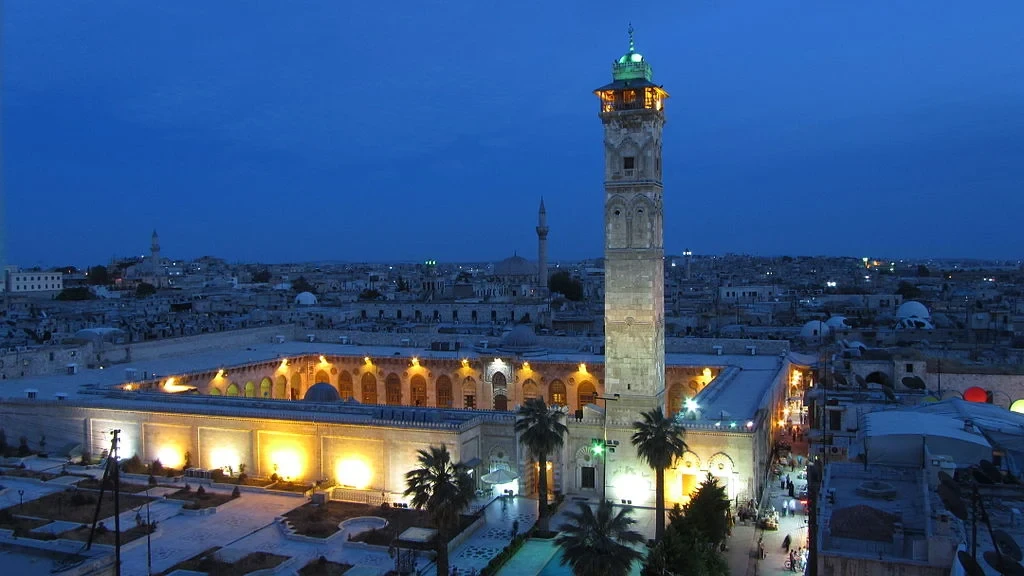
A similar architectural language appeared in the Great Mosque of Aleppo, where the square tower form continued to dominate. Although later restorations and additions modified parts of the structure over time, the mosque reflected the Umayyad preference for strong geometry and restrained ornamentation. The minaret acted primarily as a civic and religious marker visible across the city. Together, these early Umayyad examples established the foundation for future minaret design across the Islamic world.
Abbasid Innovation and the Spiral Minaret
During the Abbasid period, Islamic architecture became larger and more experimental. Minarets evolved beyond simple square towers and began taking on more monumental forms. As the Abbasids established new political and cultural centers in Iraq, architecture became an important expression of imperial power and scale.
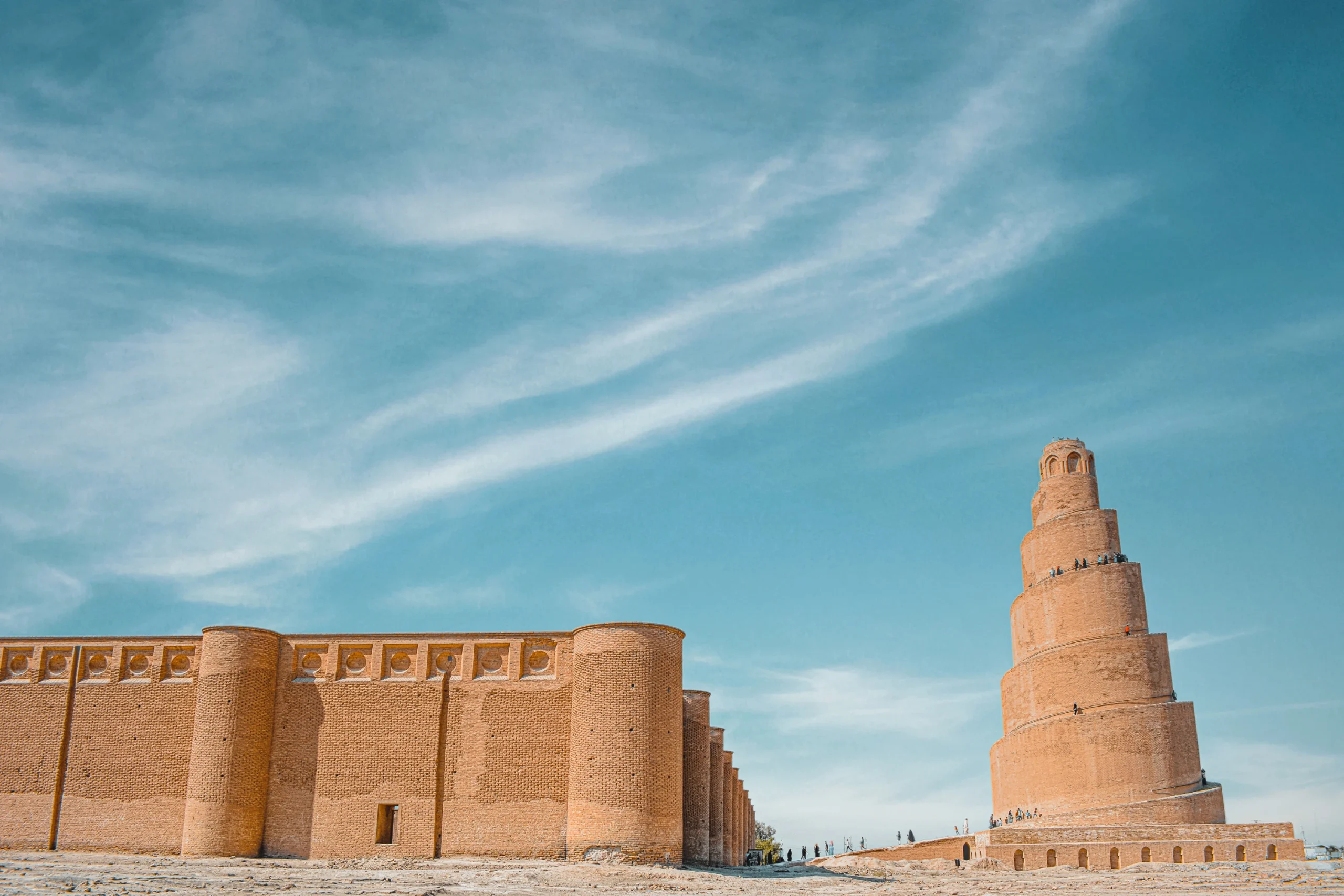
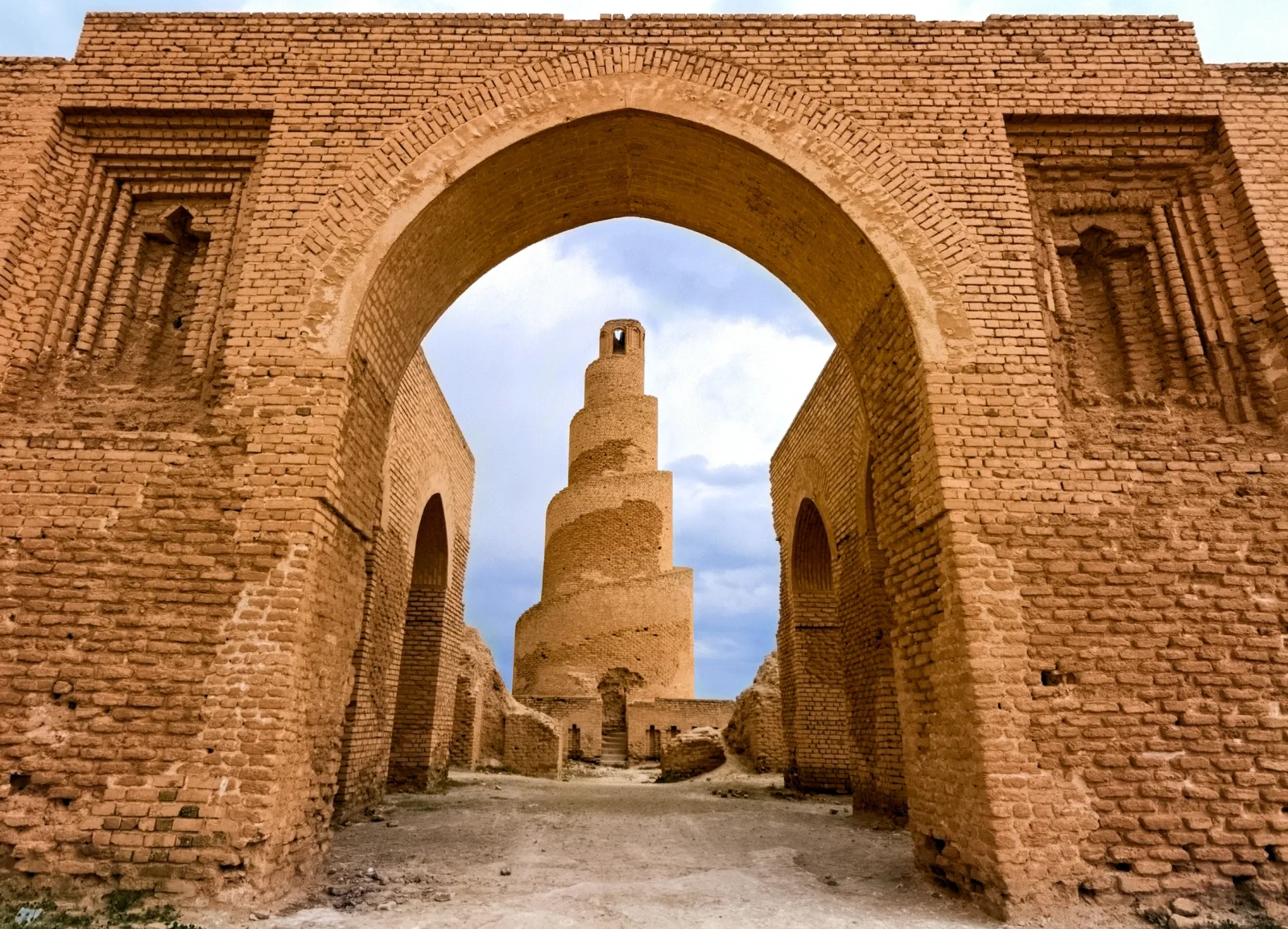
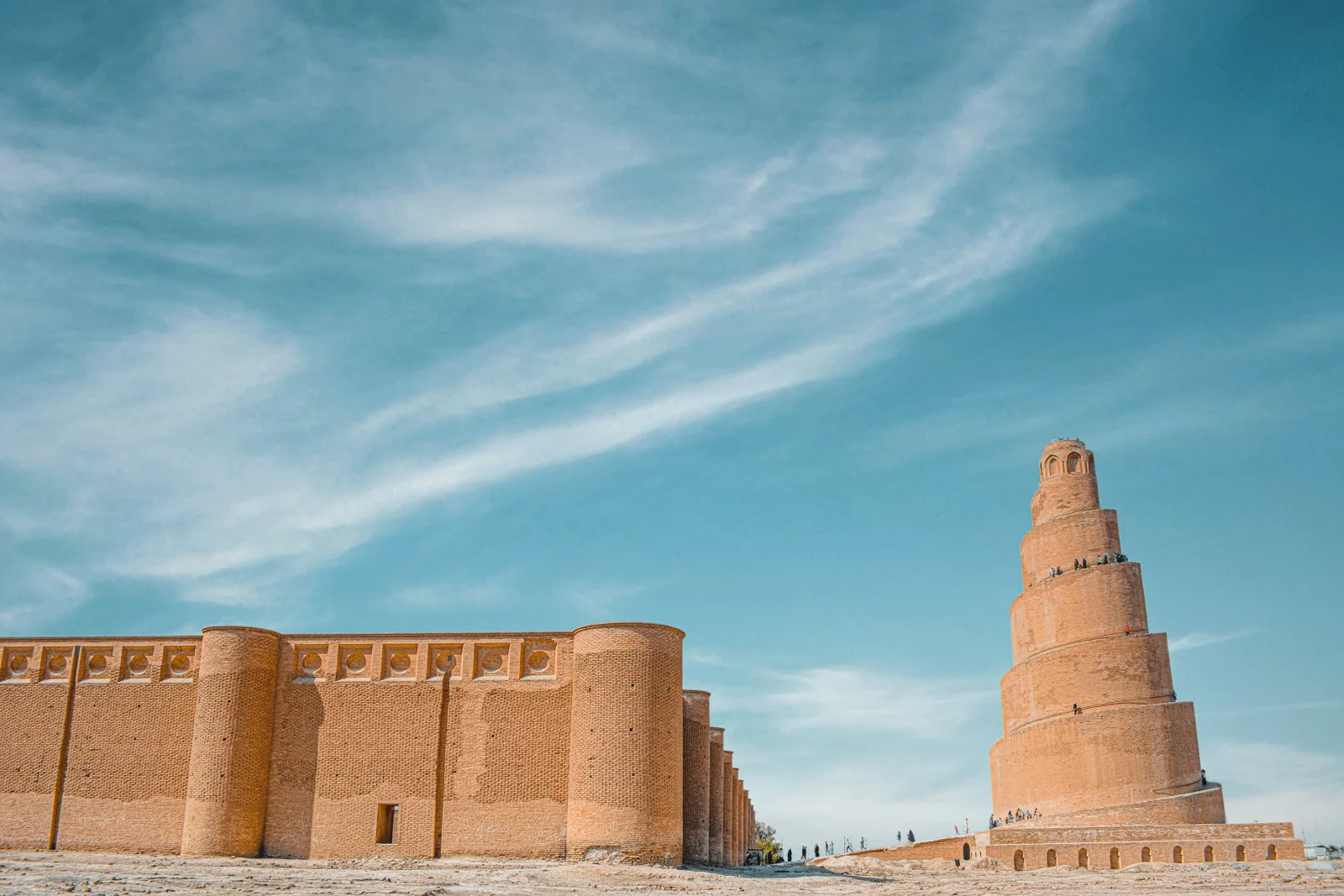
The Great Mosque of Samarra, built in the 9th century under Caliph al-Mutawakkil, was once among the largest in the Islamic world. Its extraordinary feature remains the Malwiya Tower, a massive spiral minaret rising approximately 52 meters high. Unlike earlier square towers, the structure consists of a cylindrical core wrapped by a spiraling external ramp that gradually ascends to the top. The form strongly resembles ancient Mesopotamian ziggurats, reflecting how Abbasid architects drew inspiration from the architectural traditions of the region.
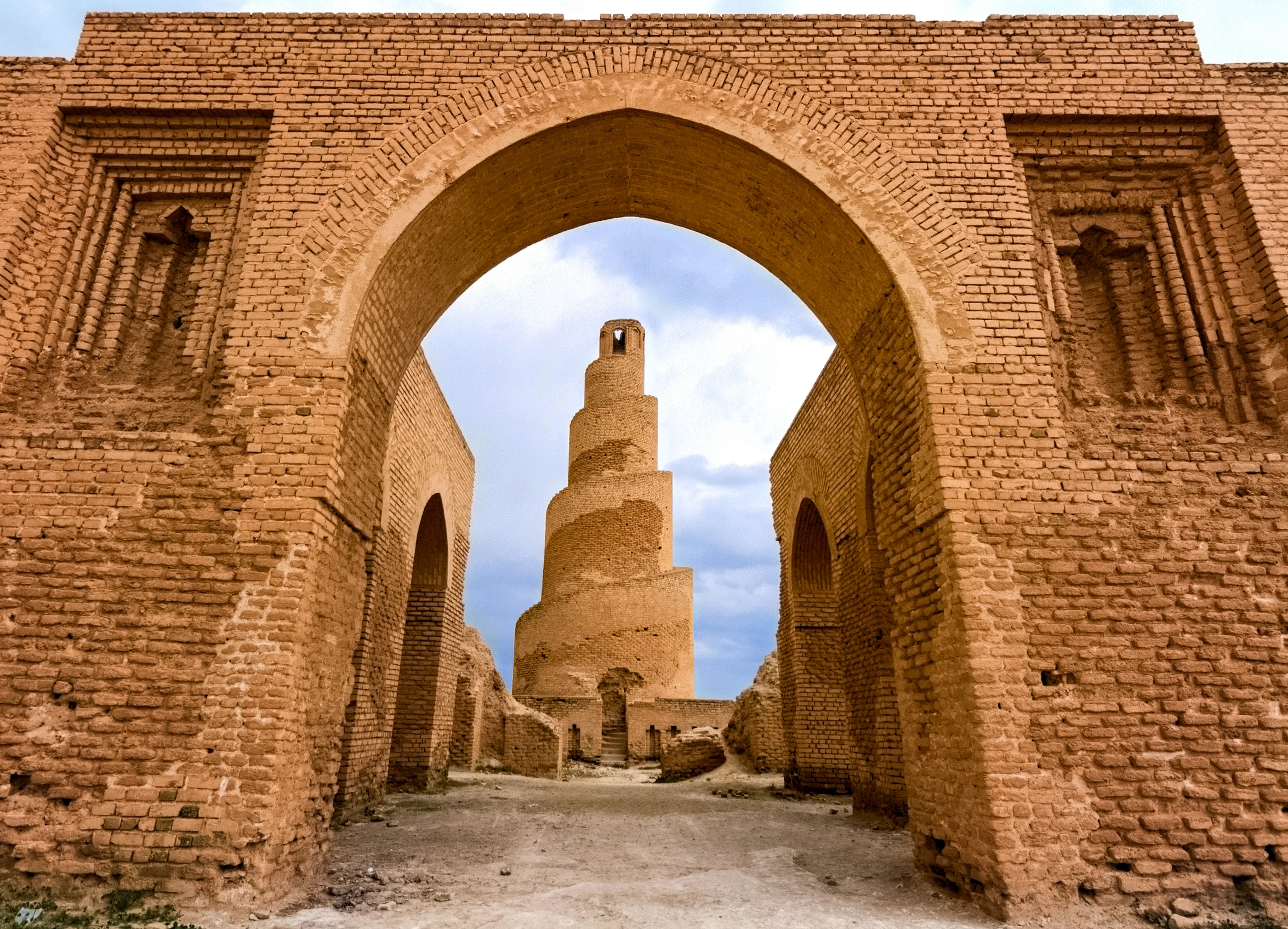
Another important example is the Abu Dulaf Mosque, located north of the main city. Built during the same period, the mosque also featured a spiral minaret inspired by the Malwiya Tower, though on a smaller scale. The structure continued the Abbasid preference for monumental brick construction, geometric elements, and strong visual presence. The Abbasid period marked a major turning point in the evolution of minarets when Islamic architecture began experimenting with new forms, massive scales, and regional influences.
The Square Towers of Al-Andalus
As Islamic architecture spread westward into Spain and North Africa, minarets began developing a distinct regional identity. In Al-Andalus and the Maghreb, towers became more geometric, solid, and fortress-like in appearance. Unlike the cylindrical or spiral minarets common in the eastern Islamic world, Andalusian minarets were typically square in plan and emphasized balanced proportions, decorative arches, and patterned facades.

An early example of this style appeared in the Great Mosque of Córdoba. Originally constructed during the Umayyad rule of Al-Andalus, the mosque became an important architectural monument in Islamic Spain. Its minaret followed a strong square composition that was drawn from both North African and local Iberian influences. Although the original tower was later enclosed within a Renaissance bell tower after the Reconquista, its structural core still survives within the cathedral complex today.
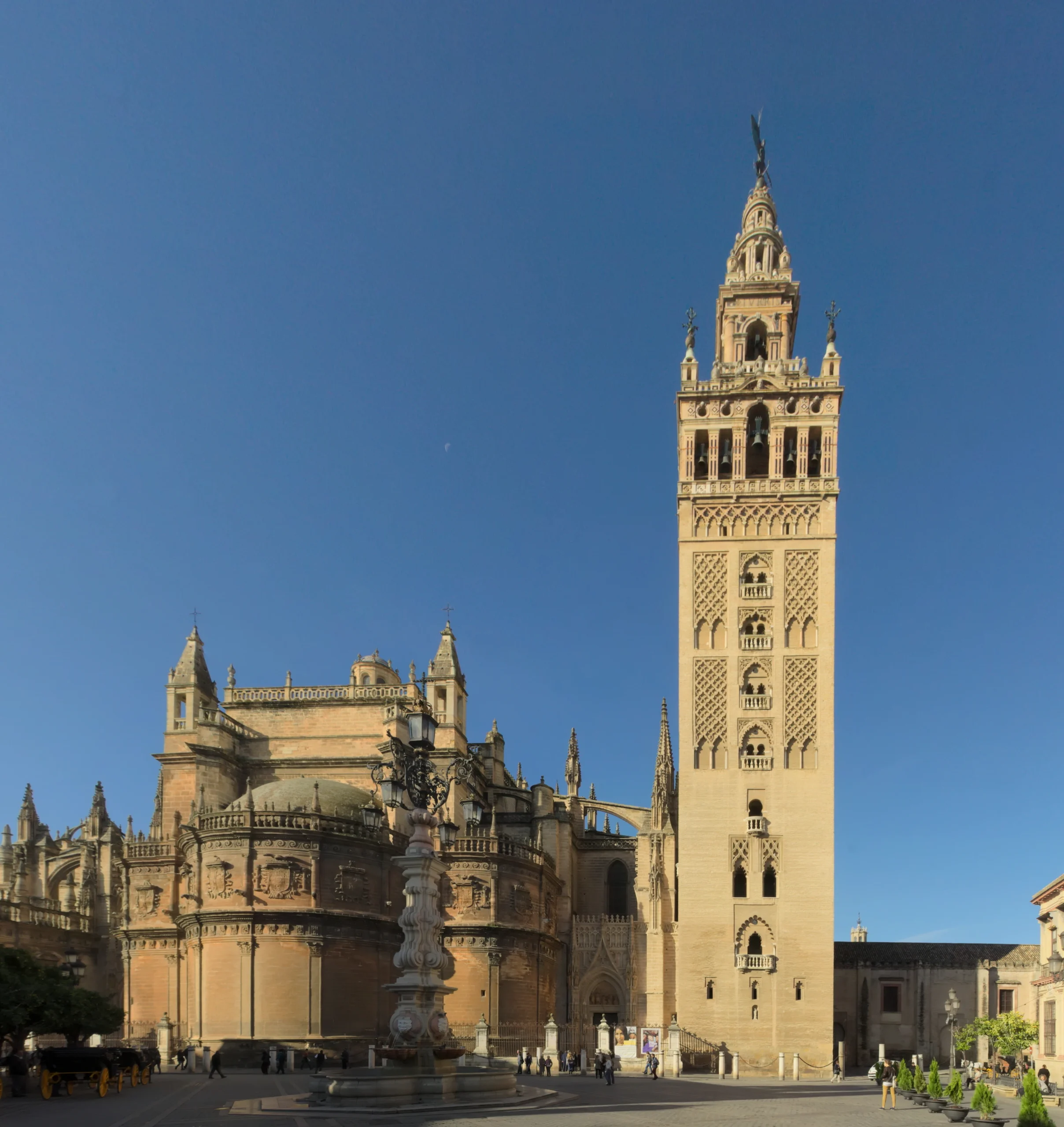
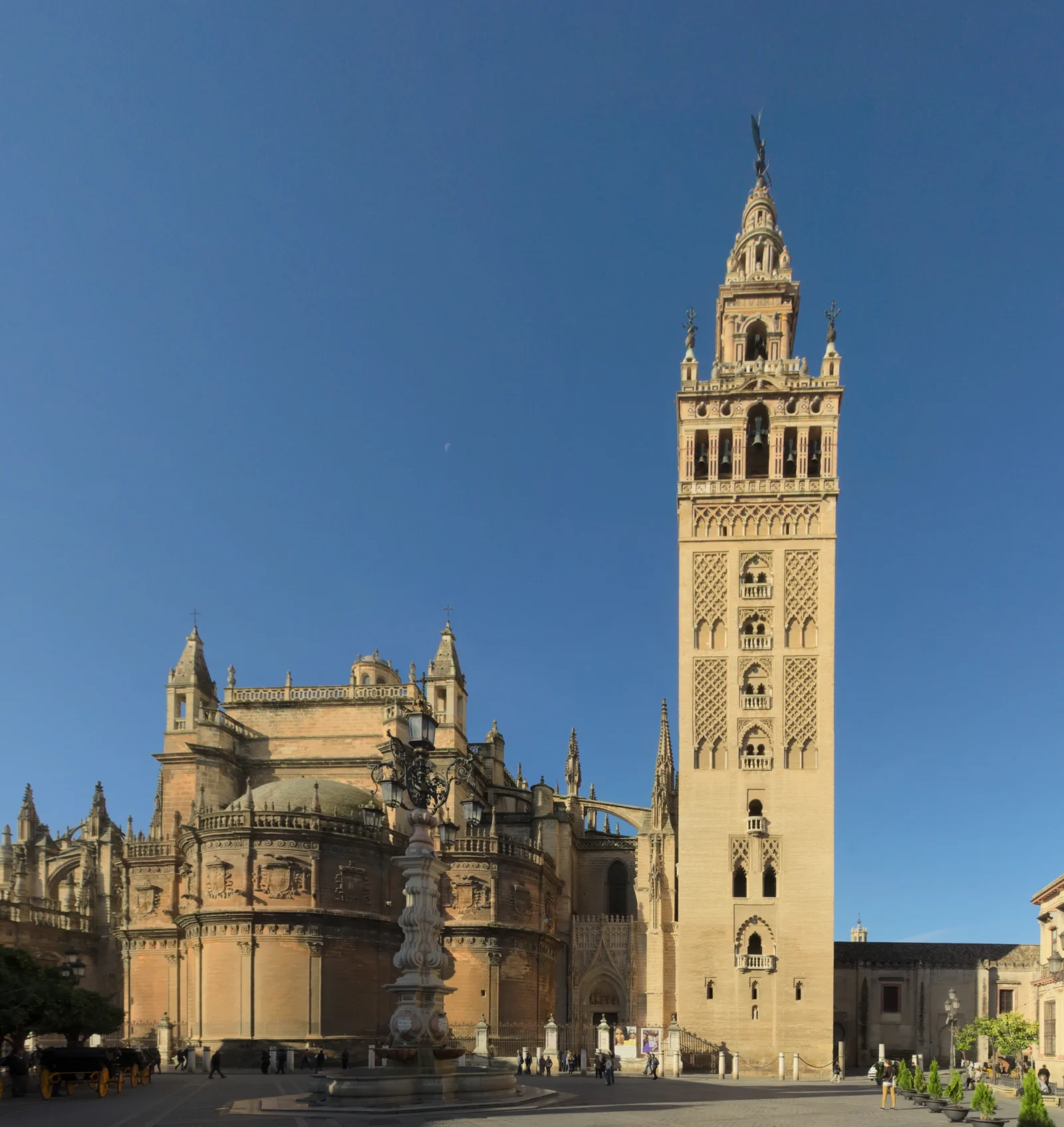
The square minaret form reached greater monumentality during the Almohad dynasty, particularly through the Giralda at the Great Mosque of Seville. Built in the 12th century as the minaret of Seville’s main mosque, its facade featured horseshoe arches, patterned brickwork, and rhythmic window openings. Unlike narrow staircases found in many earlier minarets, the Giralda was designed with internal ramps wide enough for riders on horseback to ascend, highlighting the engineering ambitions of Almohad architecture. After the Christian reconquest of Seville, the structure was converted into a cathedral bell tower, though much of the original Islamic design remains intact.
Seljuk Minarets and Decorative Brickwork
The Seljuk Empire introduced major architectural innovations between the 11th and 13th centuries across Persia, Anatolia, and Central Asia. During this period, minarets became taller, slimmer, and far more decorative than earlier Islamic tower forms. While previous dynasties focused mainly on monumentality and structure, the Seljuks transformed the minaret into an artistic element within mosque architecture.
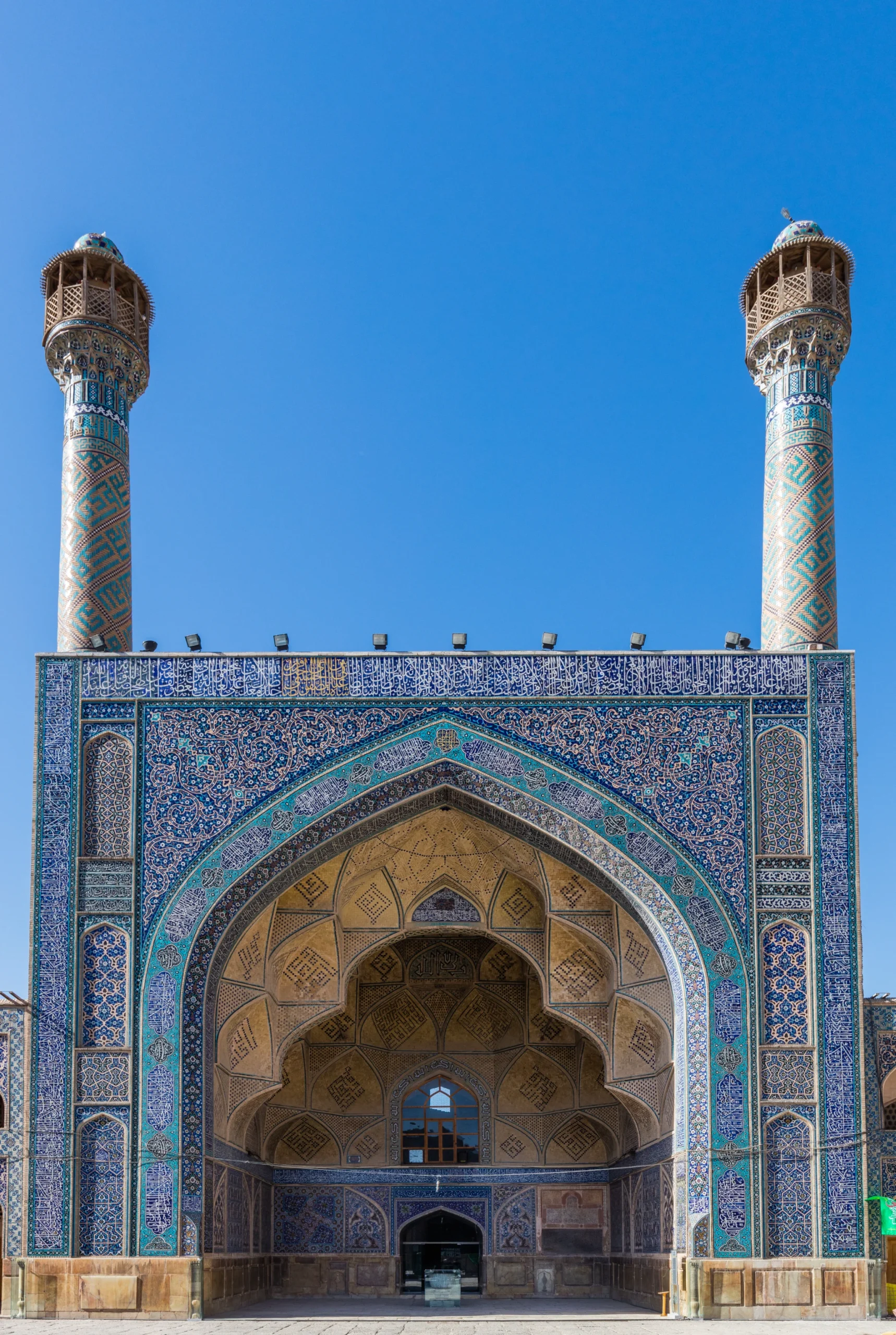
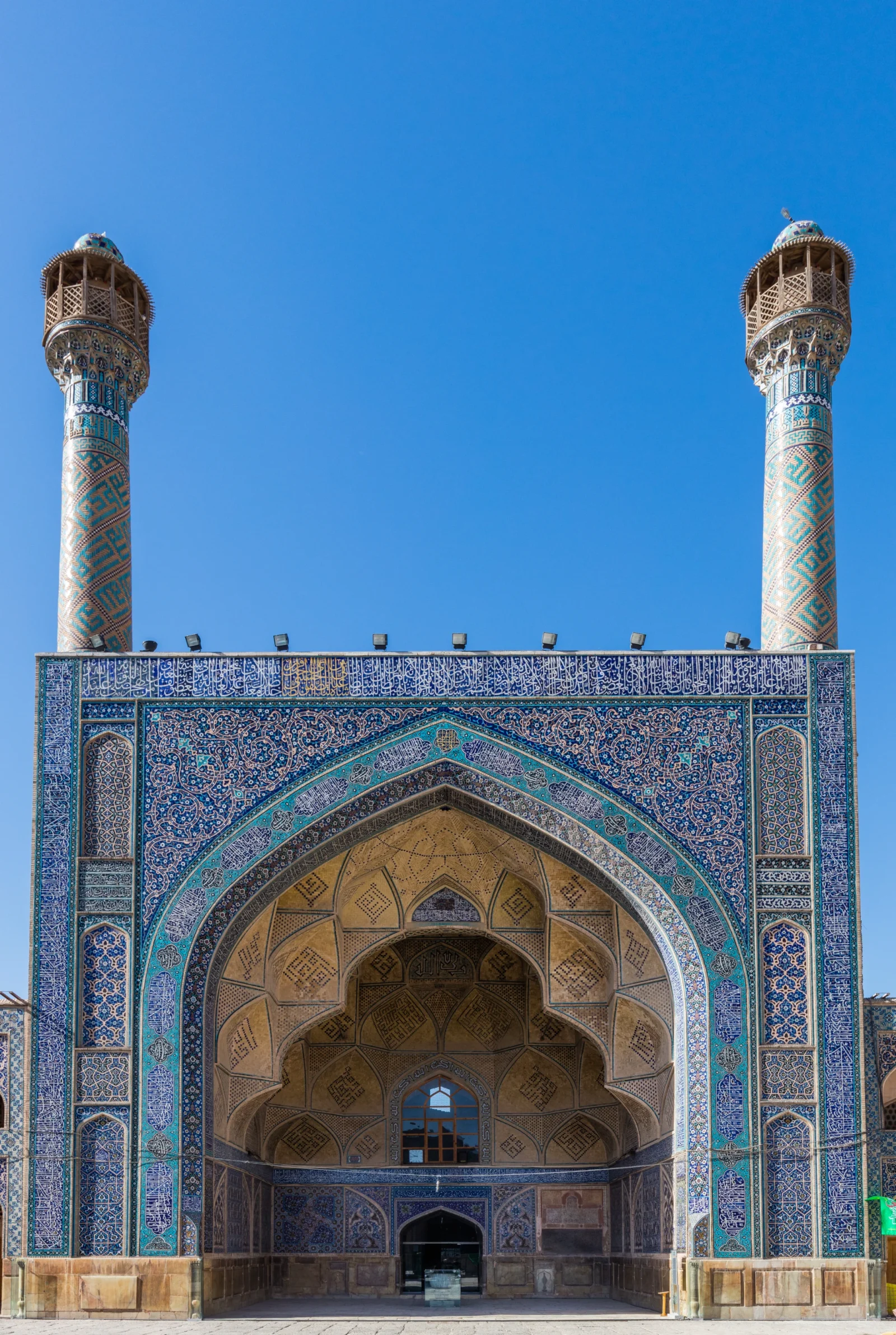
One of the defining characteristics of Seljuk architecture was the creative use of brick. This evolution can be seen in the Jame’ Mosque of Isfahan. The mosque features cylindrical brick minarets decorated with geometric patterns, Kufic inscriptions, and detailed brick ornamentation. The towers emphasized verticality that differed from the heavier forms of earlier periods. The mosque itself also became a major architectural model for later Islamic structures across Persia and Central Asia.
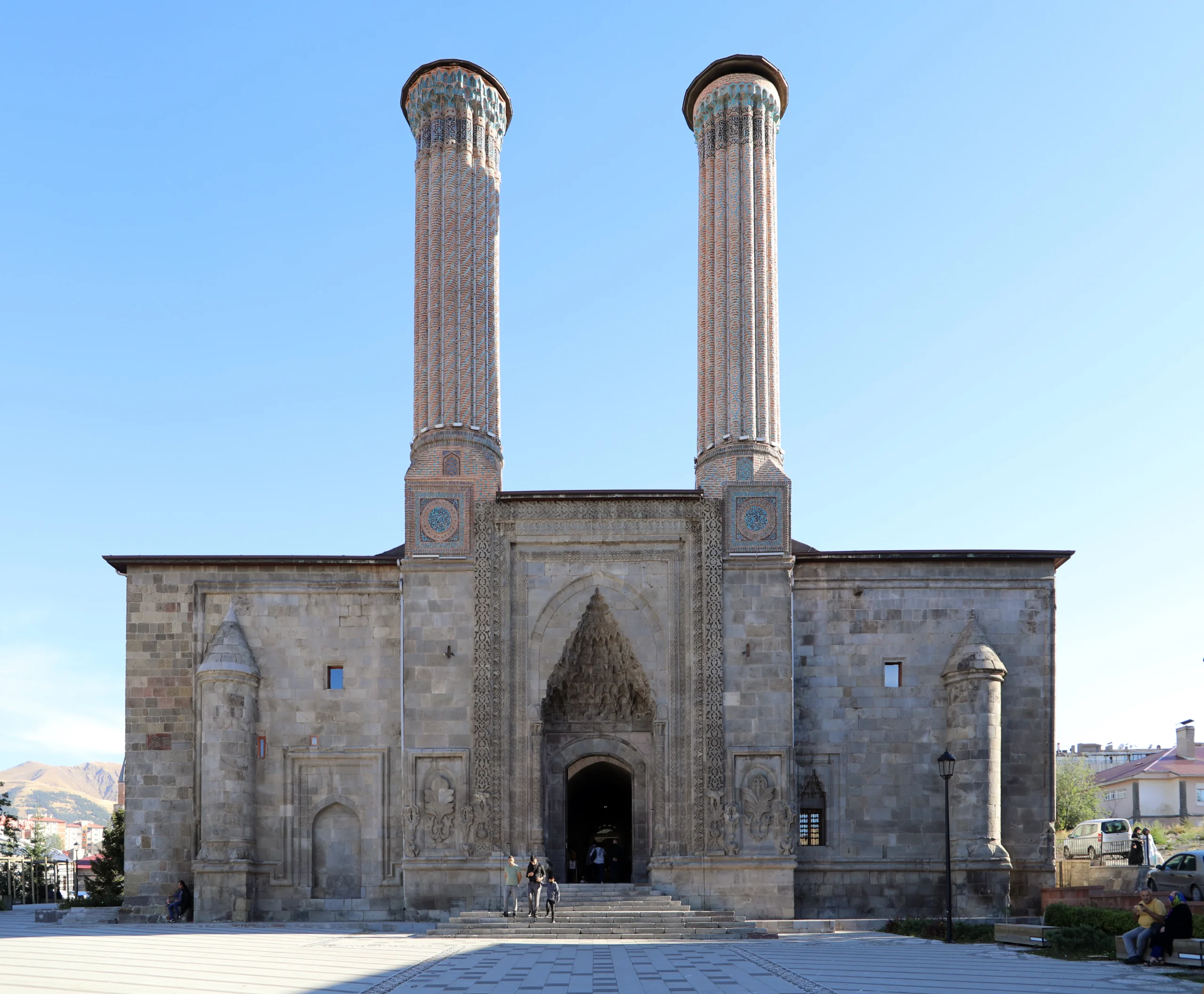
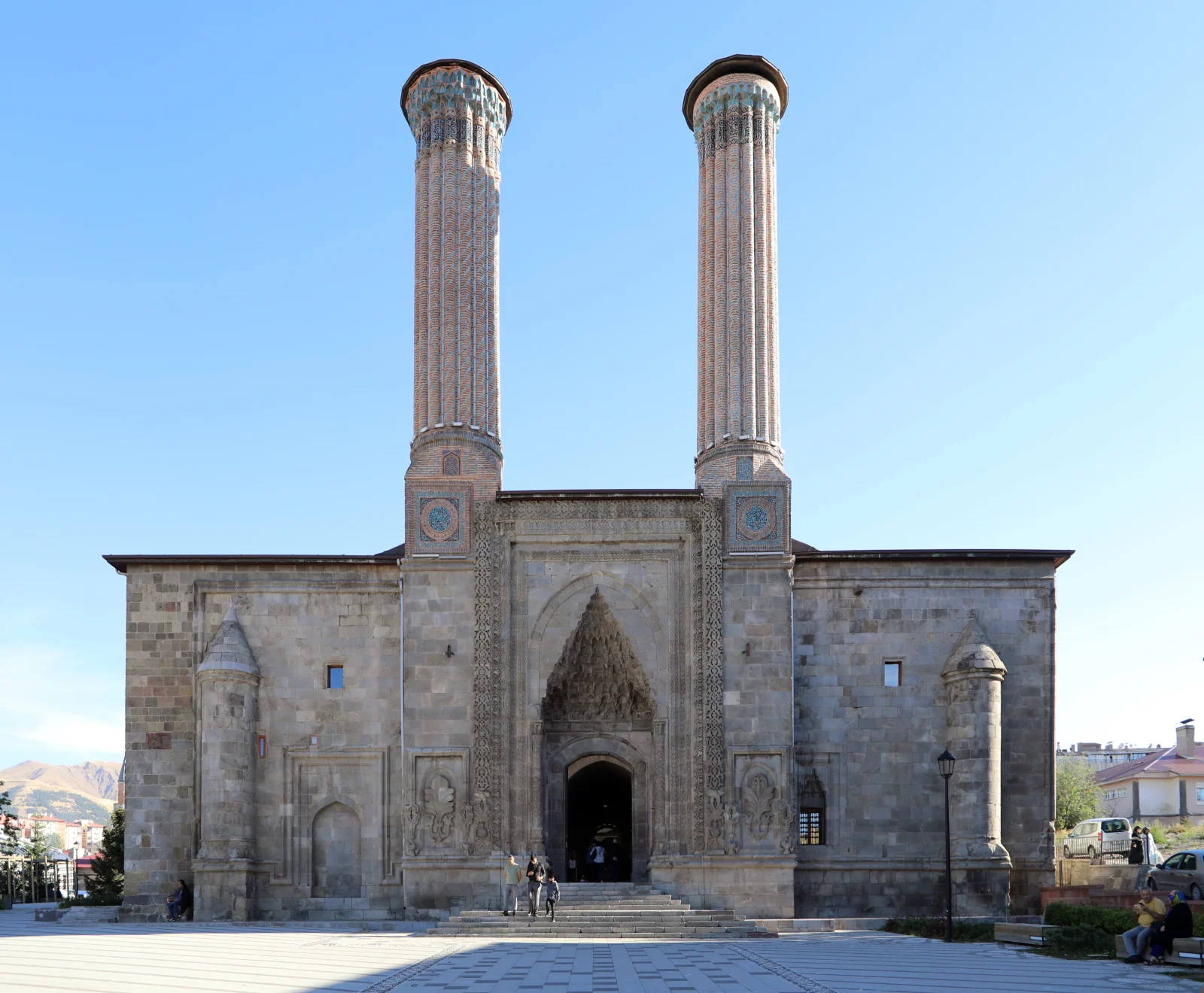
In Anatolia, the Seljuks further developed the relationship between minarets and monumental facades. Structures such as the Çifte Minareli Medrese integrated twin minarets directly into the entrance portal, creating vertical compositions that framed the building. The richly carved stone surfaces combined with tall brick towers showcased the complexity of Seljuk architectural design. During this period, turquoise tiles, carved brickwork, muqarnas detailing, and geometric ornamentation became common across Islamic architecture.
Mamluk Minarets and Complex Silhouettes
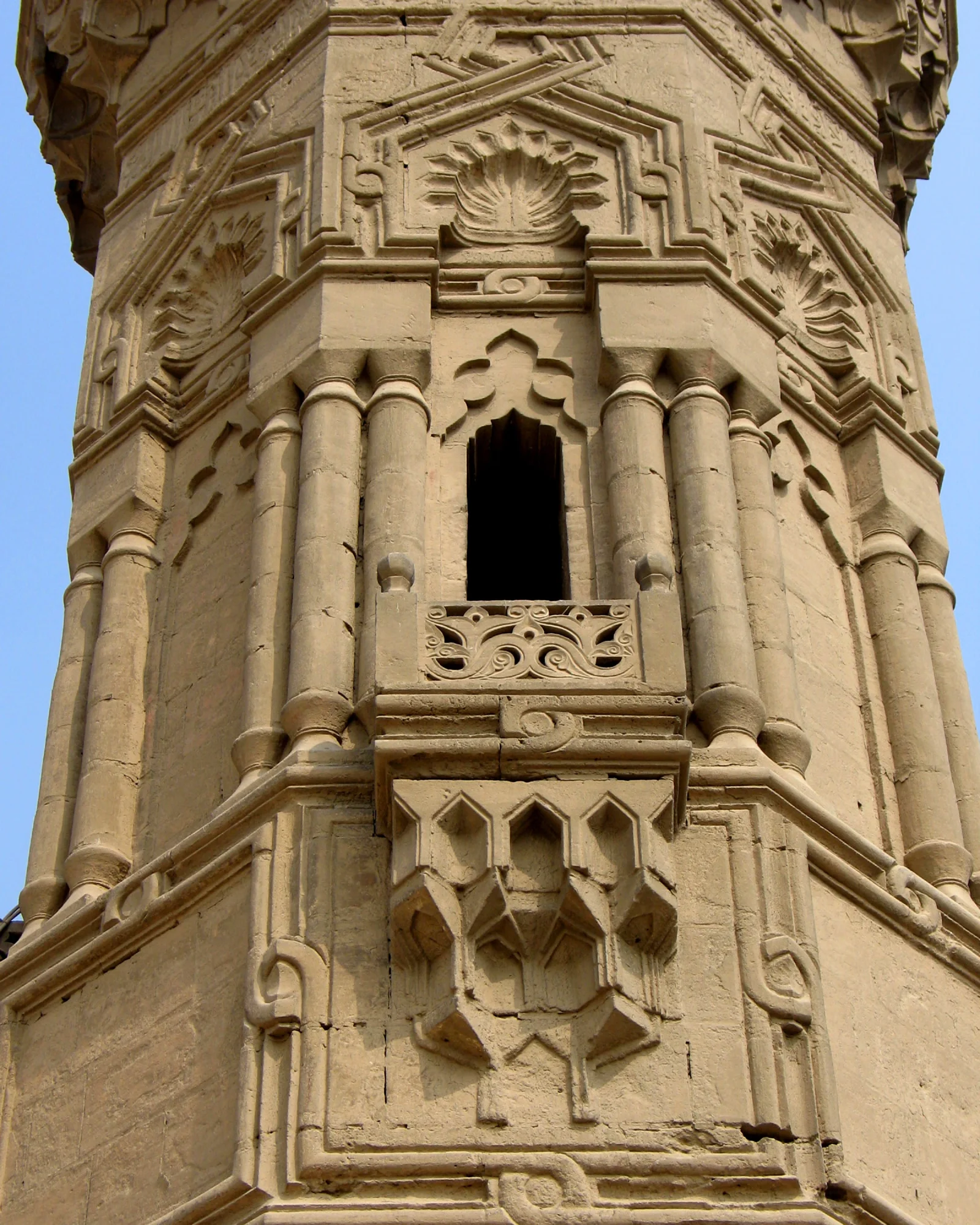
The Mamluk dynasty in Egypt and the eastern Mediterranean developed visually intricate minarets in Islamic architecture. Unlike earlier dynasties that followed a single tower form, Mamluk architects experimented with highly decorative compositions. Minarets became sculptural, with many towers changing shape as they rose upward and transitioning from square bases to octagonal middle sections and finally cylindrical or bulb-like crowns.
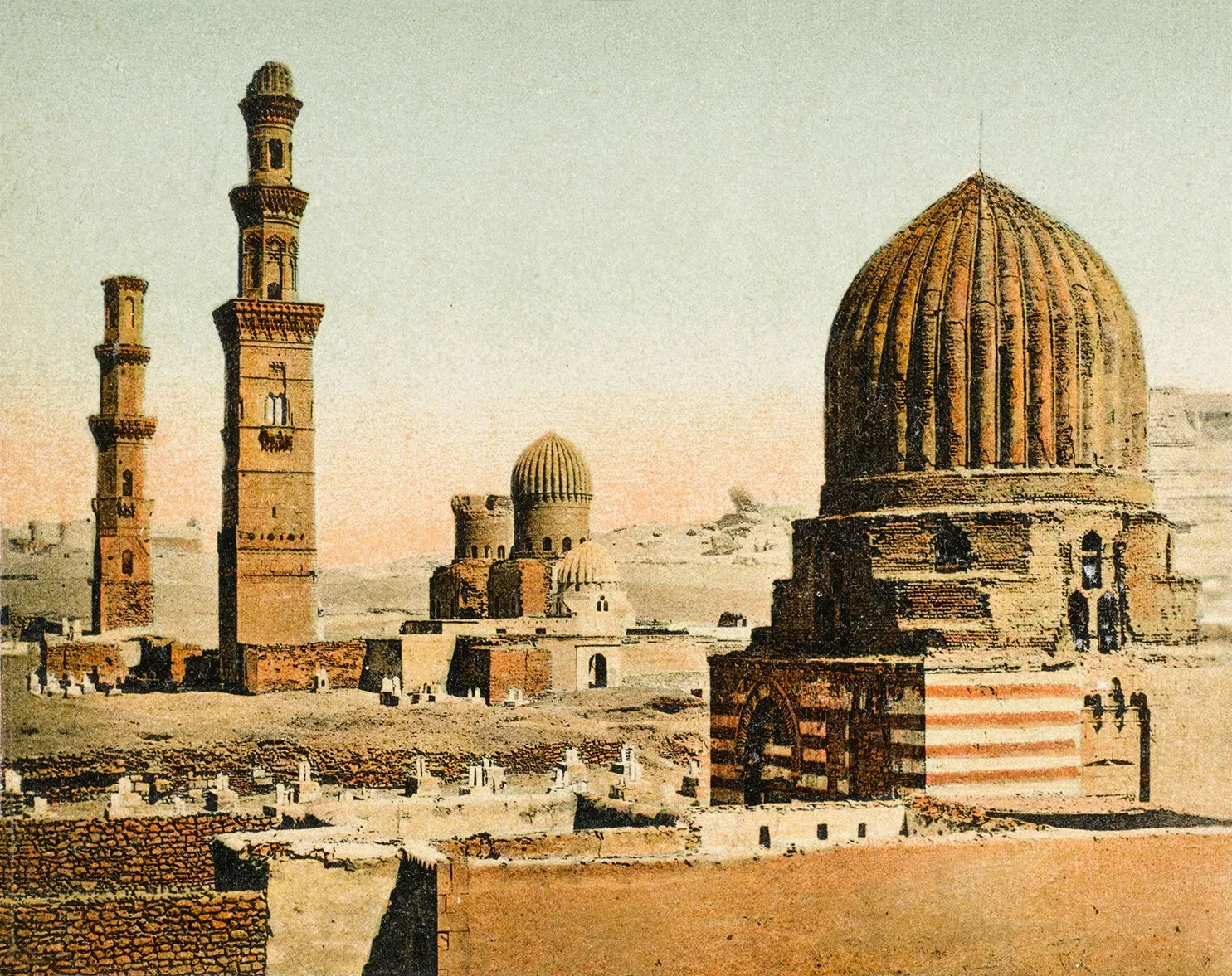
During the Mamluk period, Cairo emerged as a great architectural capital of the Islamic world. Its skyline became filled with richly carved minarets rising above mosques, madrasas, mausoleums, and markets. These towers became symbols of political authority, wealth, and artistic prestige. The architectural identity of medieval Cairo was also shaped by monuments such as the Al-Azhar Mosque and the Mosque of al-Nasir Muhammad.
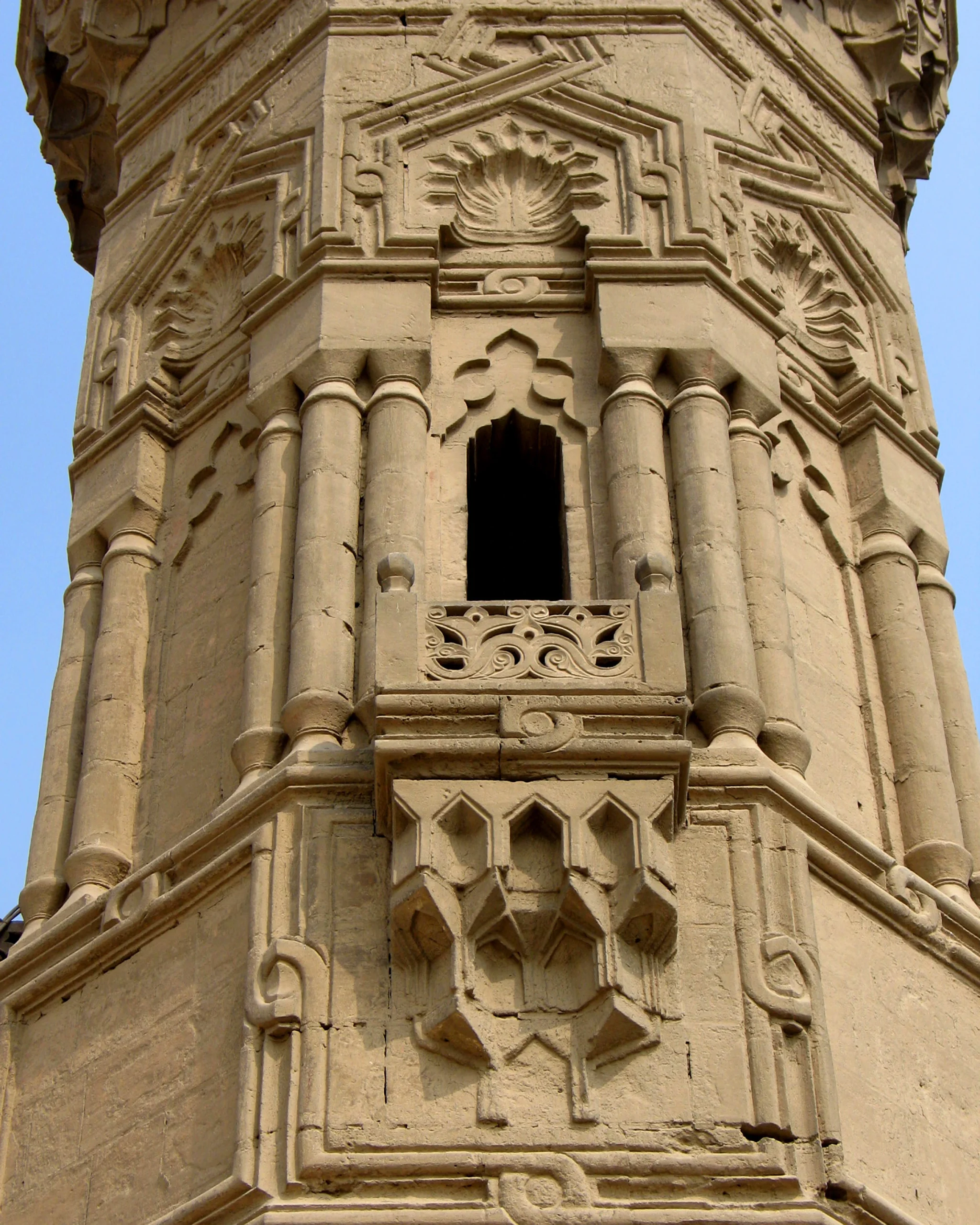
Another example is the Mosque of Qaitbay, celebrated for having one of the finest minarets in Mamluk architecture. Unlike the heavier forms of earlier Islamic towers, the Qaitbay minaret displays exceptional refinement through stone carving, ornamental balconies, and proportions. The intricate detailing demonstrates the high level of craftsmanship achieved during the later Mamluk period.
Timurid Minarets and Monumentality
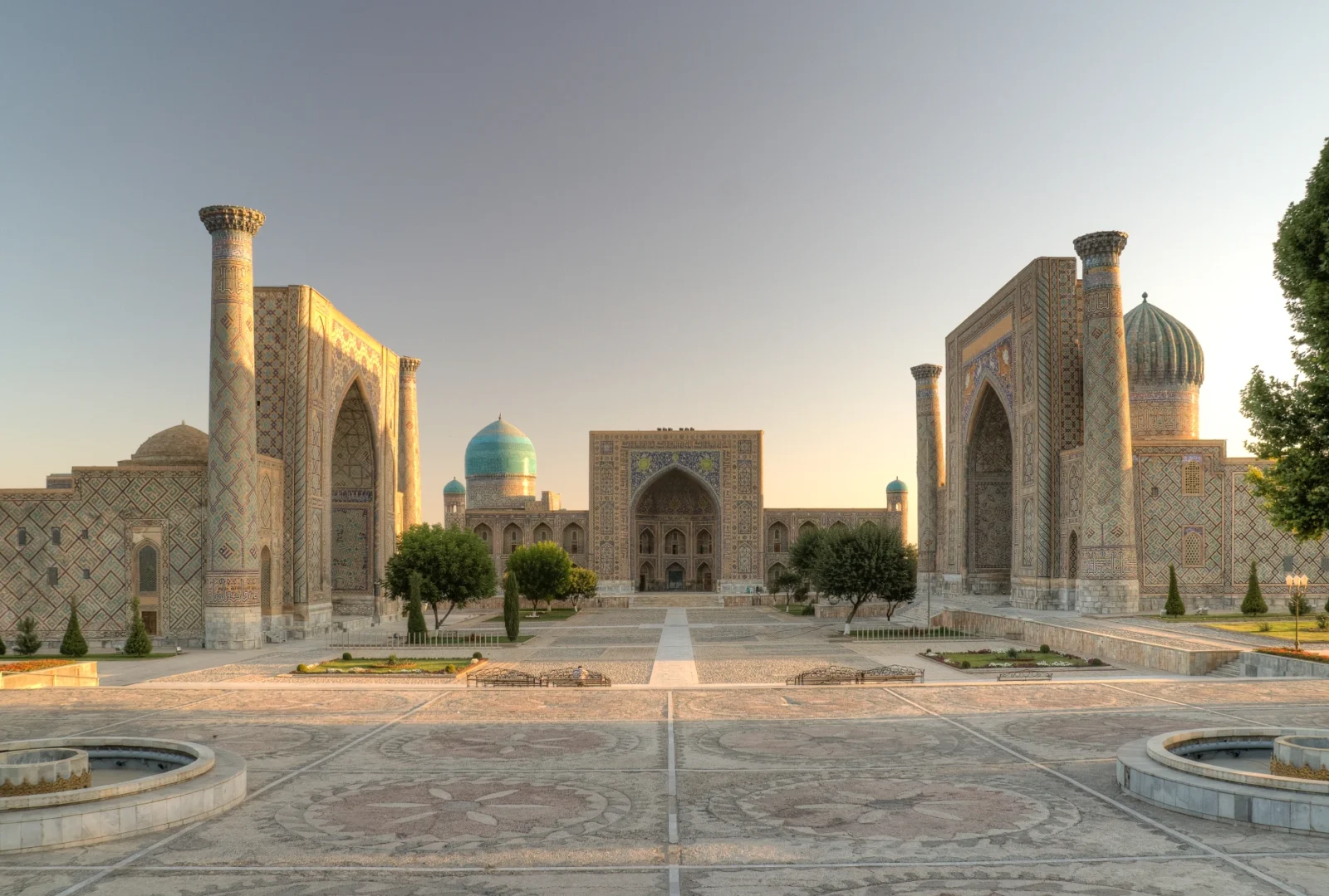
The Timurid Empire brought Islamic architecture into a new era of scale, color, and symmetry during the 14th and 15th centuries. Under the Timurids, architecture became grand and ceremonial, with minarets evolving into monumental vertical elements. Unlike the more restrained forms of earlier periods, Timurid minarets emphasized height and richly decorated surfaces.
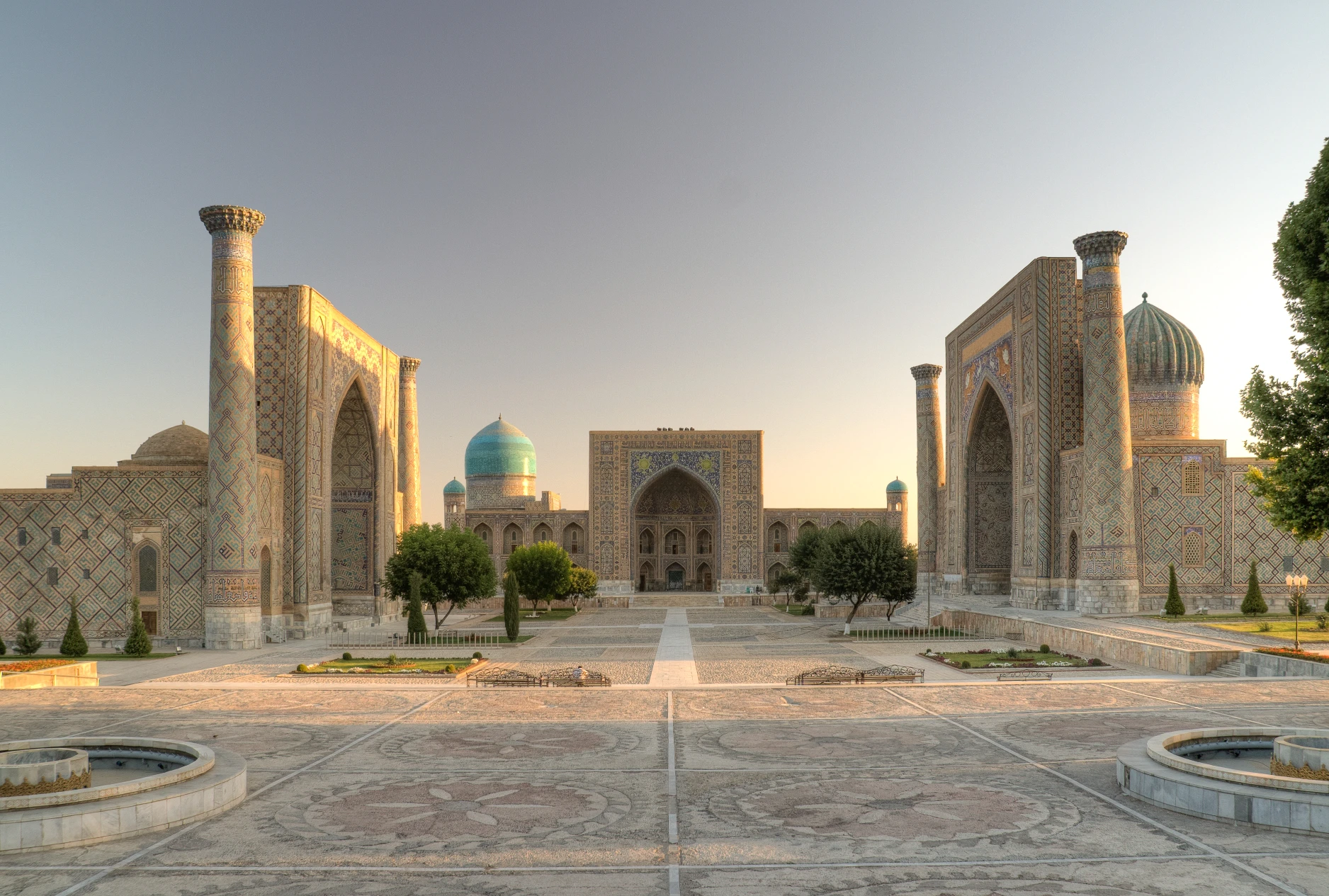
The Registan demonstrated how minarets became integral parts of larger urban compositions. Surrounded by monumental madrasas, the square featured towering facades and minarets that framed public space with symmetry. Timurids used blue and turquoise glazed tiles: minarets were covered in geometric patterns, calligraphy, and mosaic tilework that reflected sunlight and added color to the skyline.
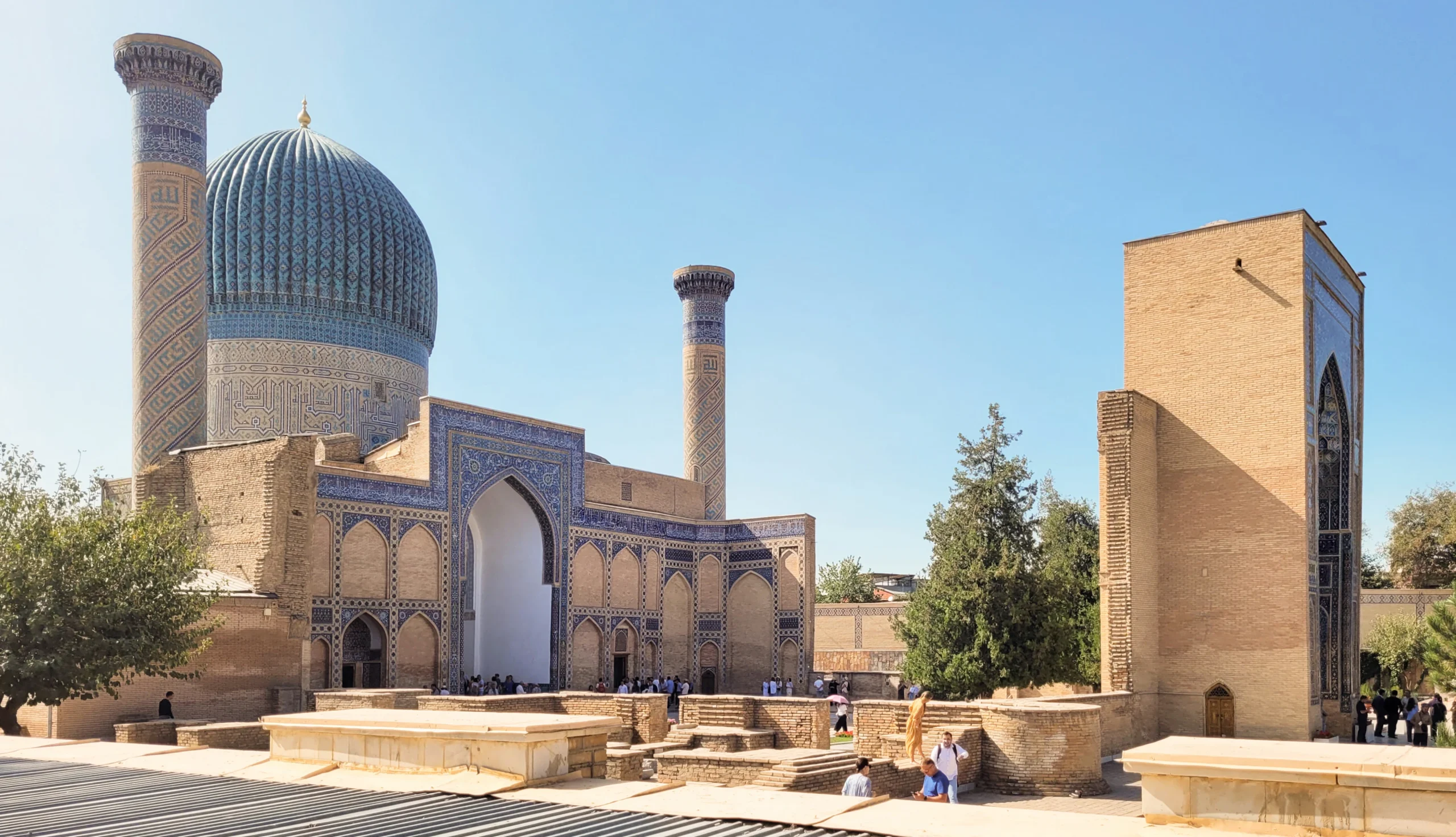
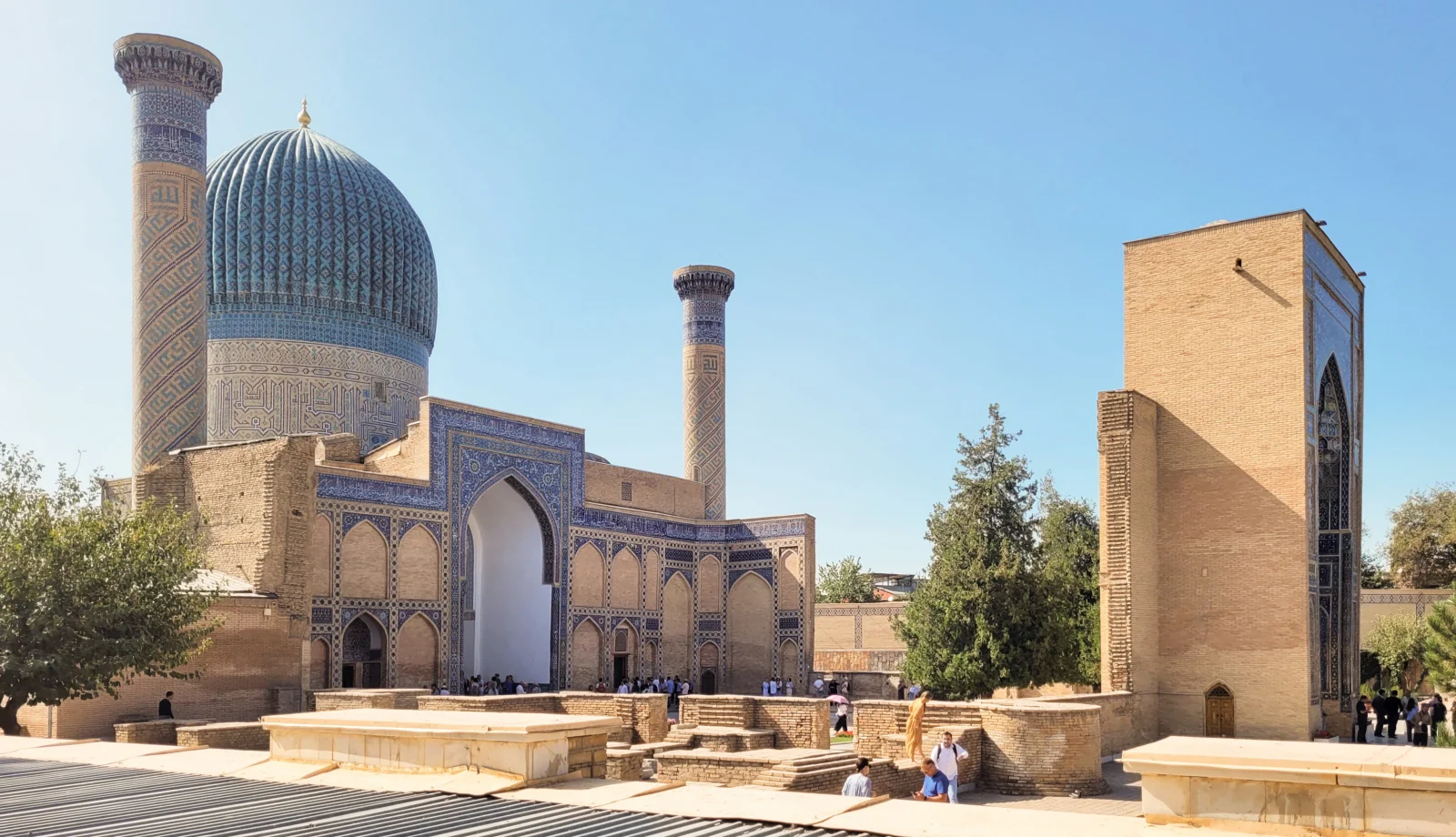
Gur-e-Amir, the mausoleum of Timur himself, is best known for its ribbed blue dome. Its decorative surfaces, tile mosaics, and proportioned forms influenced later Islamic architecture, particularly the Mughal Empire in South Asia.
Ottoman Minarets and the Pencil Silhouette
As the Ottoman Empire expanded after the conquest of Constantinople in 1453, architects began developing a new architectural language that combined Islamic traditions with the spatial influence of Byzantine architecture. Ottoman minarets became tall, slender, and sharply pointed, described as pencil-shaped silhouettes.
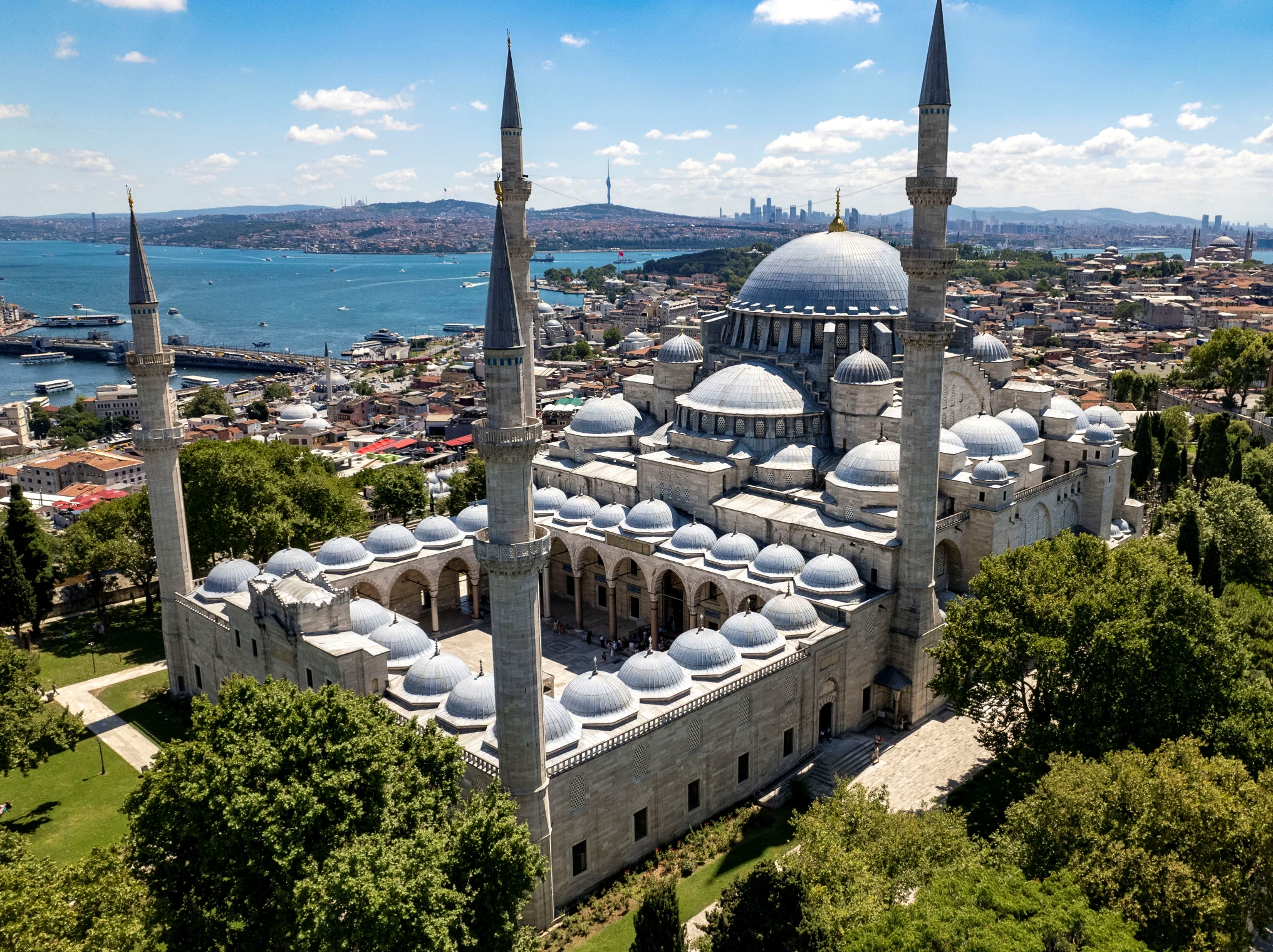
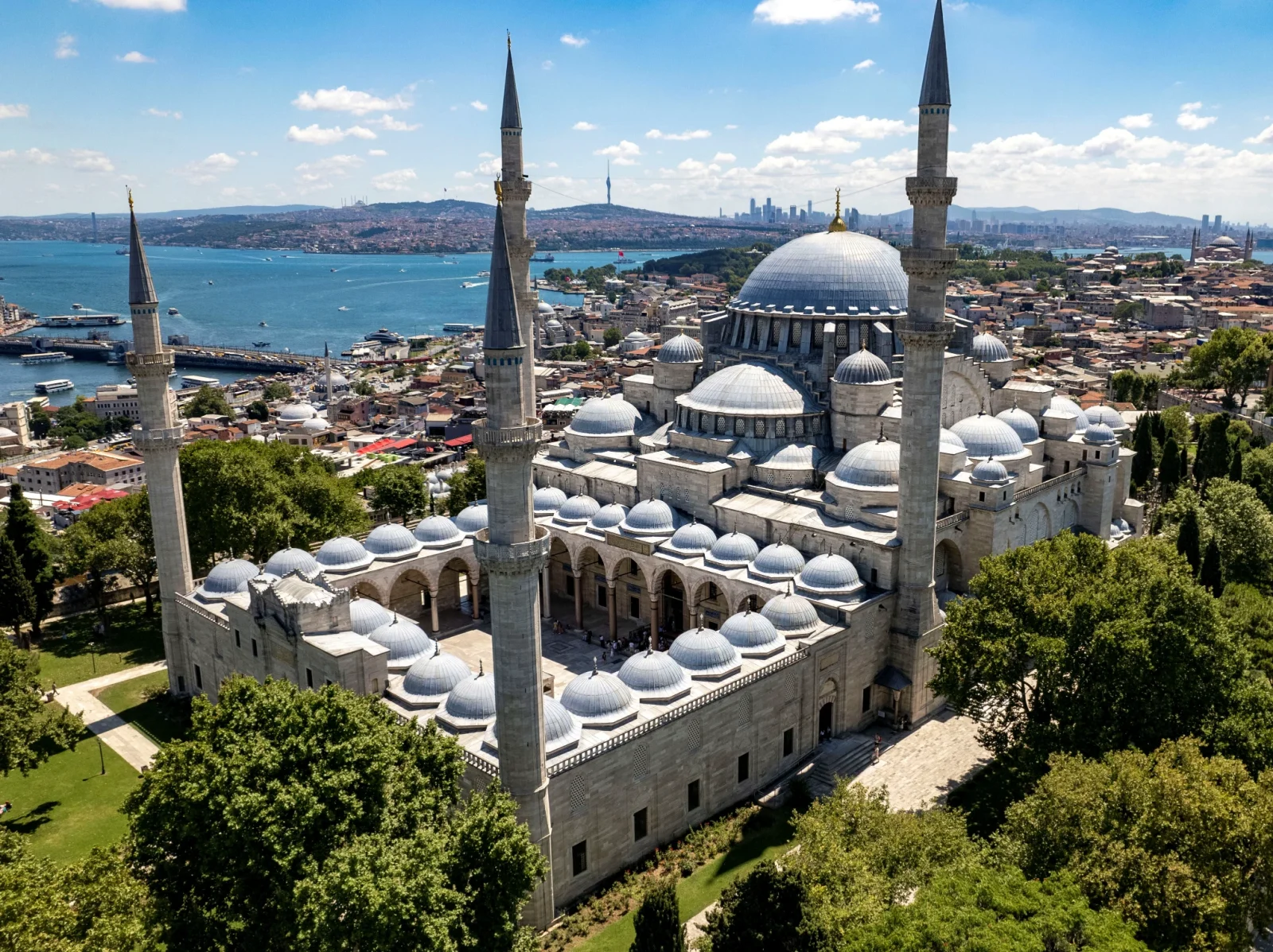
Süleymaniye Mosque, designed by the renowned Ottoman architect Mimar Sinan in the 16th century, flanked by tall and slender minarets, frames the massive central dome. Rather than overpowering the structure, the minarets work together with the cascading domes to create a unified architectural composition visible from across Istanbul.
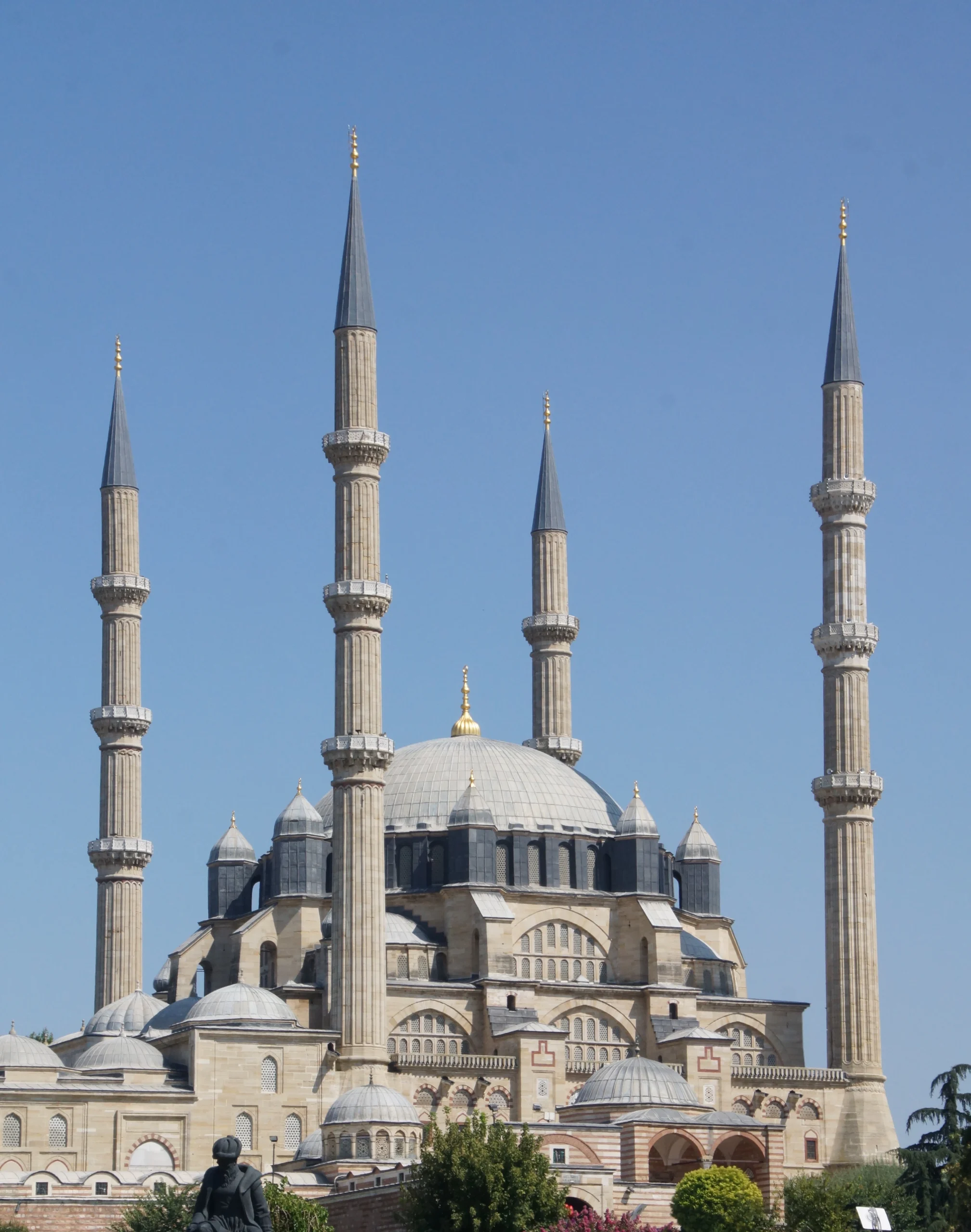
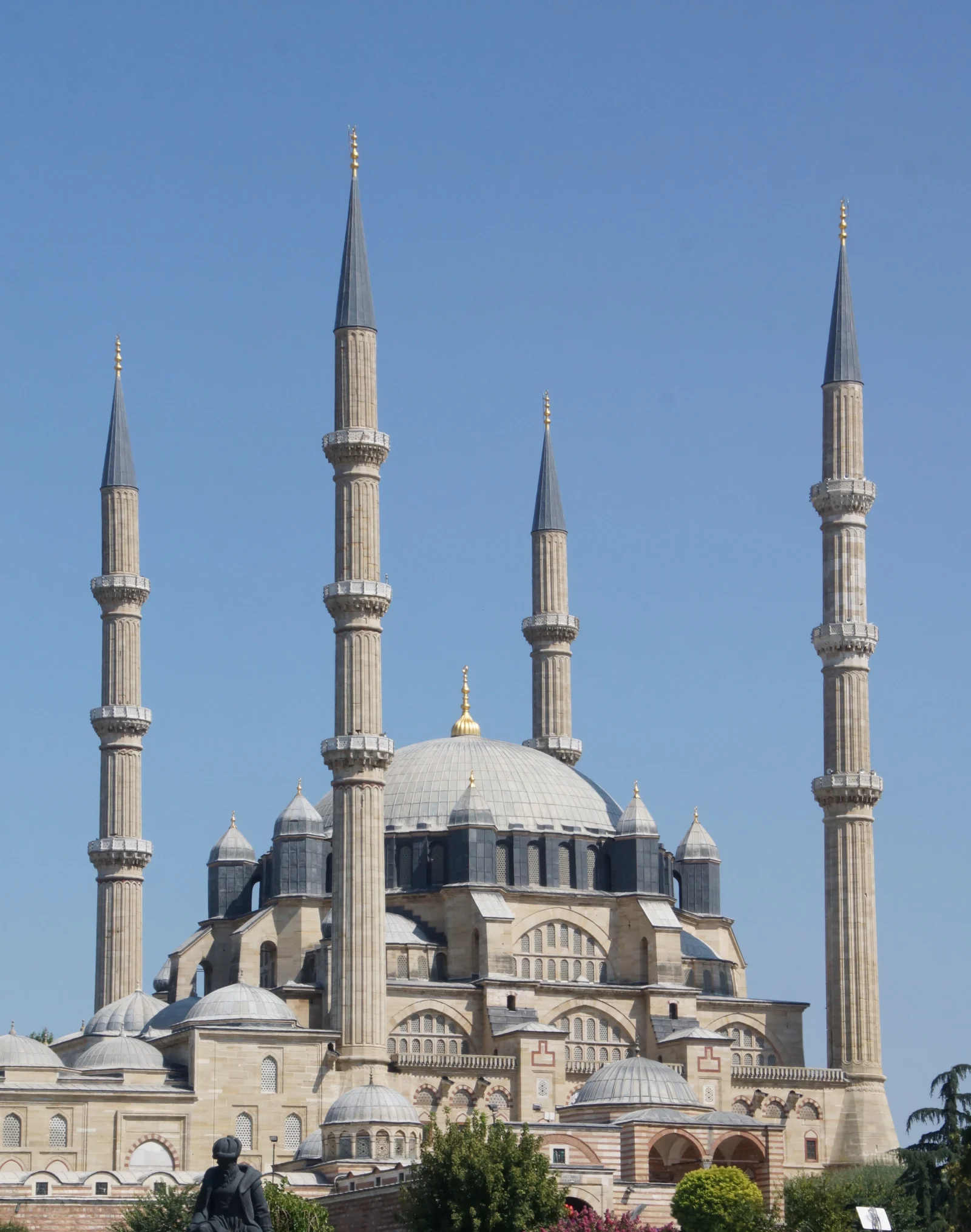
This architectural language reached its peak in the Selimiye Mosque, considered Mimar Sinan’s greatest masterpiece. The mosque’s four towering minarets stand at the corners of the structure, creating an extraordinary sense of balance and monumentality. Their extreme slenderness and height demonstrated the engineering confidence of Ottoman architects.
Safavid Minarets and Persian Ornamentation
Safavid architecture in Iran emphasized decorative beauty, urban planning, and proportions. Unlike the dramatic verticality of Ottoman minarets or the massive forms of Timurid architecture, Safavid towers focused more on visual harmony, symmetry, and decorative richness. Towers were often covered with floral motifs, geometric patterns, and flowing calligraphy created using blue, turquoise, yellow, and white glazed tiles.
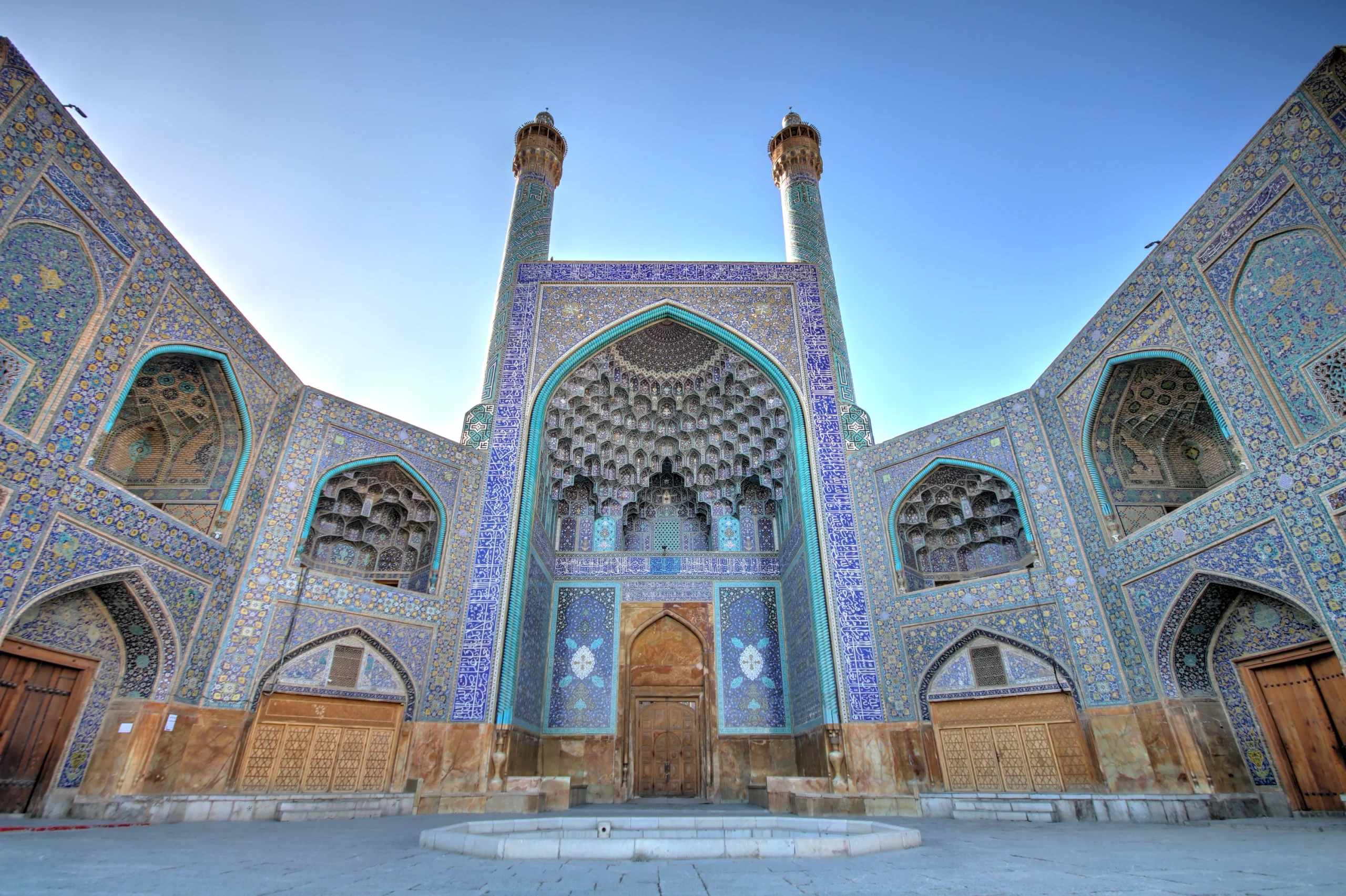
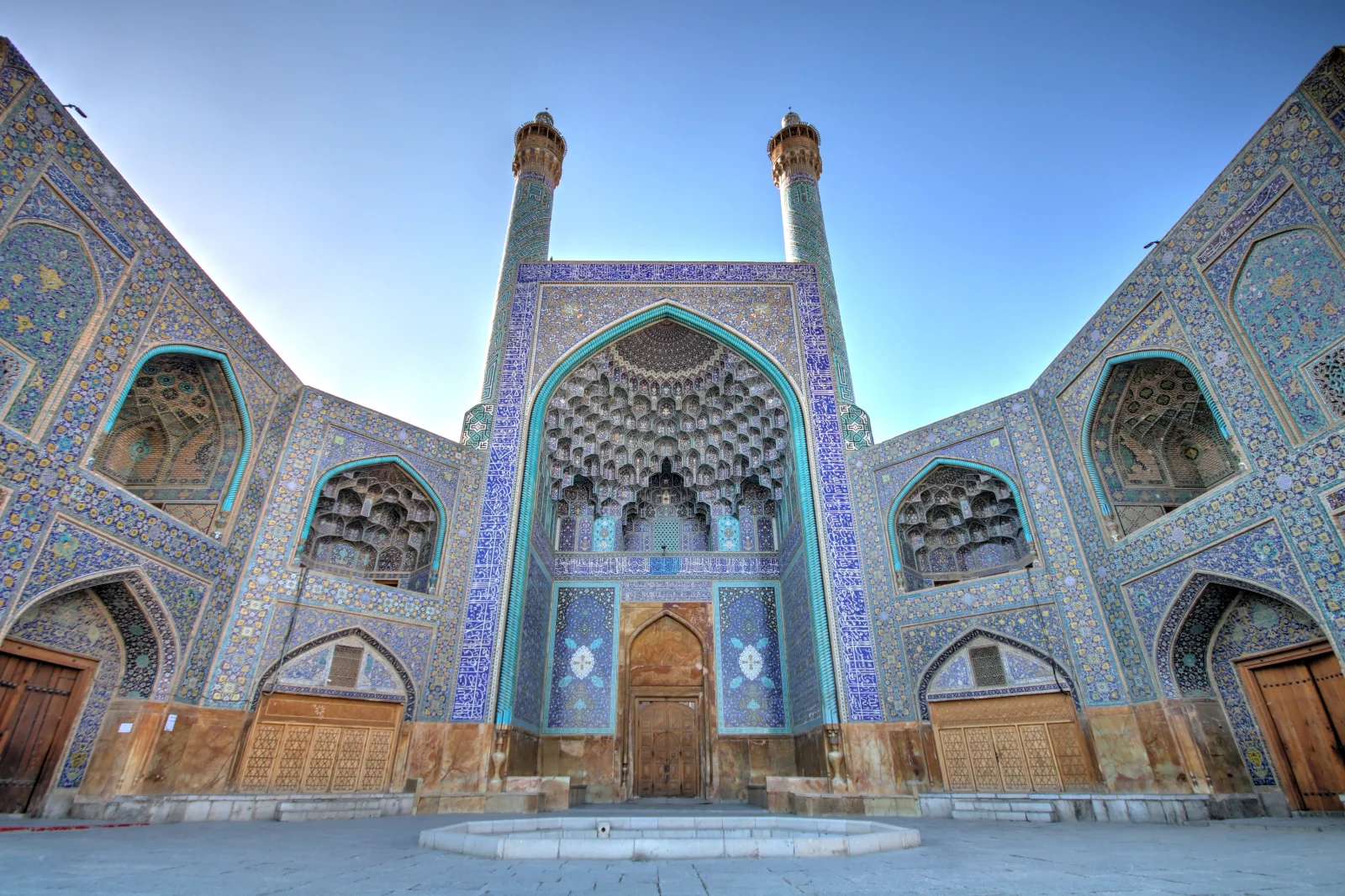
The Shah Mosque, also known as the Imam Mosque, is located within the grand Naqsh-e Jahan Square in Isfahan. Its tall minarets frame monumental iwans and domes covered in intricate tilework, creating a balanced visual composition. The mosque demonstrated how Safavid architects integrated religious architecture into larger civic and urban spaces.
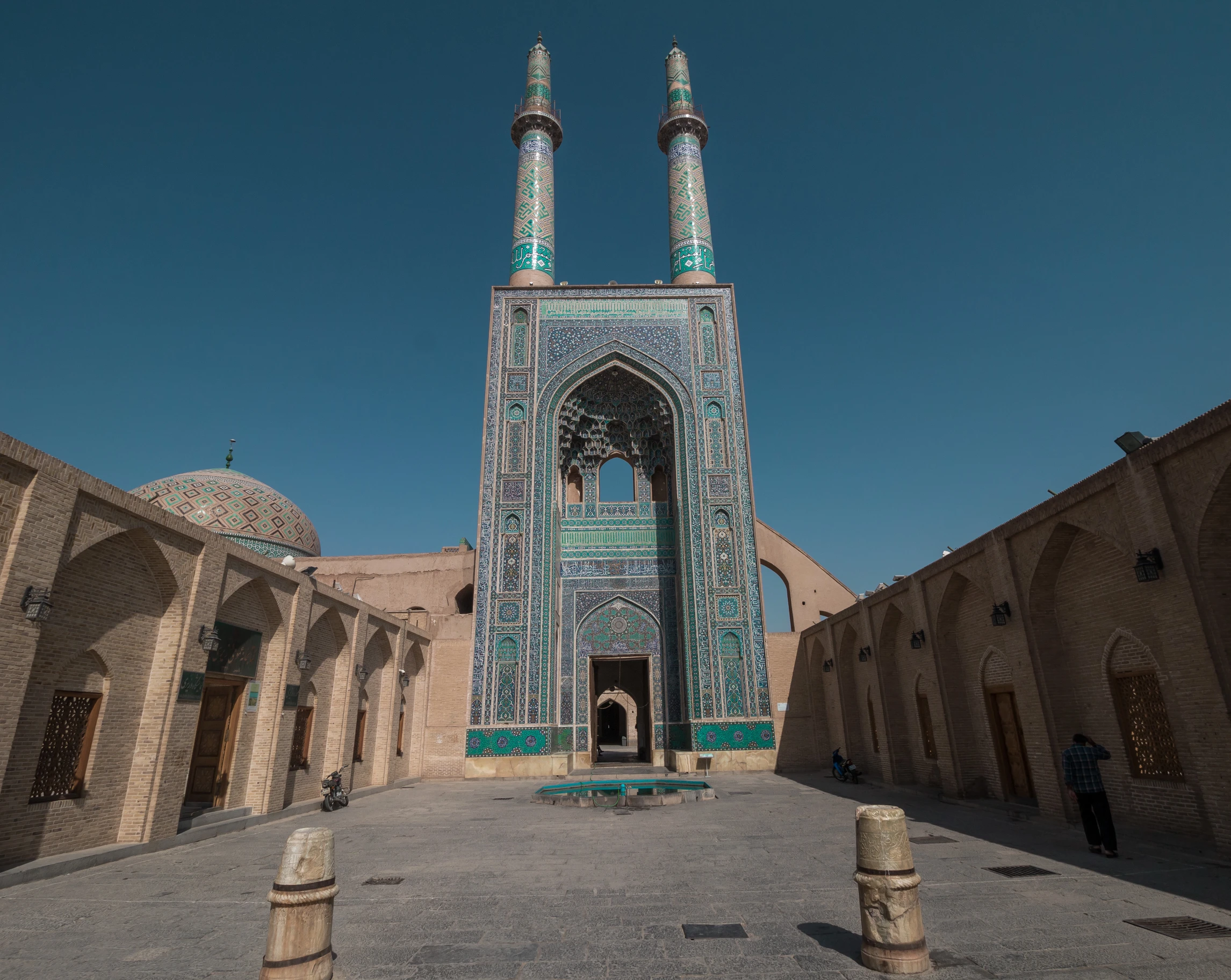
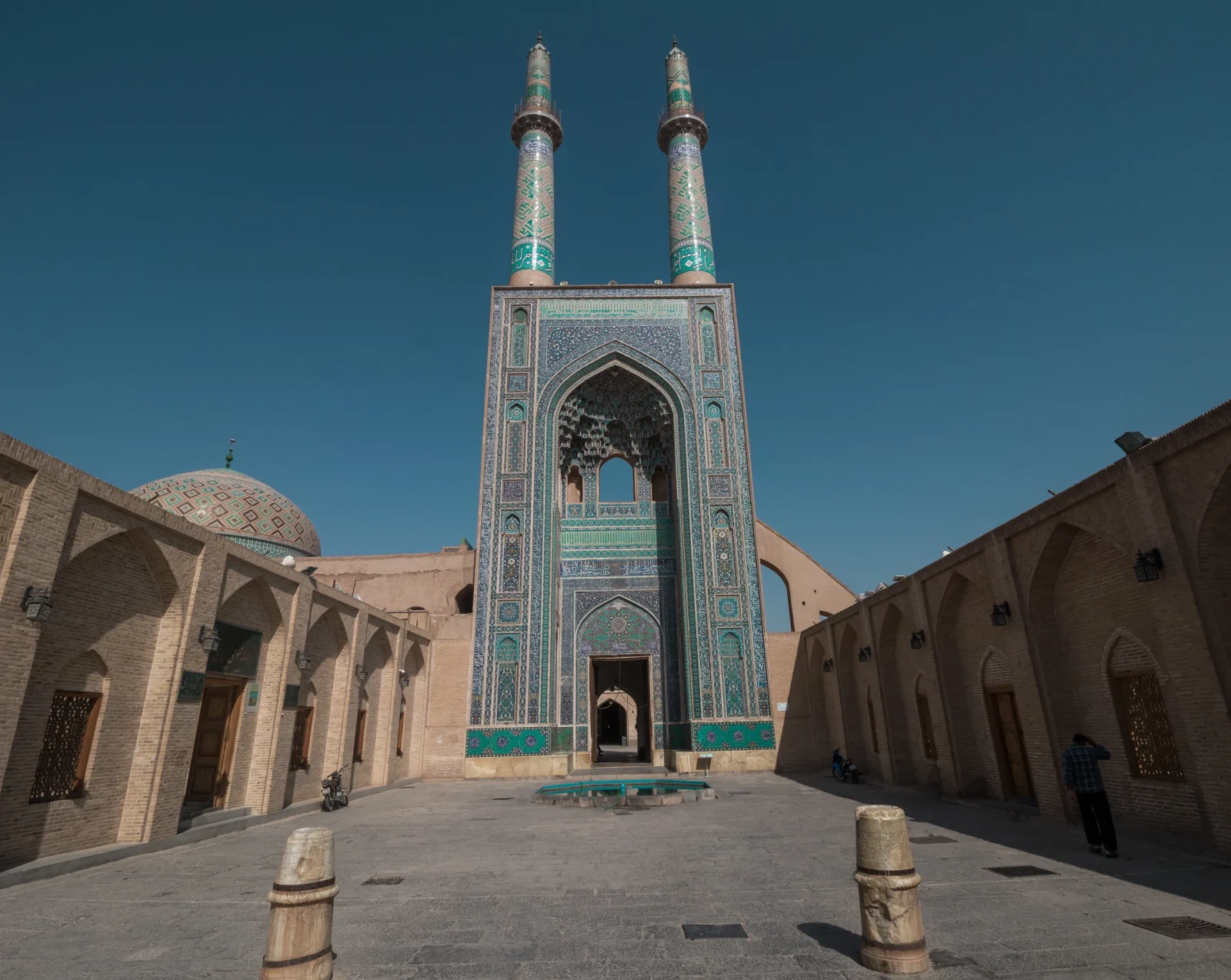
The Jameh Mosque of Yazd demonstrated the continued importance of tall symmetrical minarets within Persian Islamic architecture. Its soaring twin towers covered in vivid blue tiles dominate the desert skyline of Yazd and are the tallest historic minarets in Iran.
Mughal Minarets and Imperial Symmetry
The Mughal Empire combined Persian, Timurid, and Indian architectural traditions to create some of the most refined monuments in South Asia. Mughal minarets became important parts of symmetrical architectural compositions. Unlike earlier Islamic traditions, where minarets were often attached directly to mosque walls, Mughal architects used them to frame gardens, gateways, courtyards, and mausoleums.

The most famous example is the Taj Mahal, Agra, built during the reign of Emperor Shah Jahan in the 17th century. Four marble minarets stand at the corners of the mausoleum platform, framing the central tomb with symmetry. Slightly tilted outward for structural safety, the minarets create visual balance within the larger charbagh garden layout. Unlike earlier mosque minarets that mainly emphasized religious function, the Taj Mahal’s towers became integral parts of the monument’s overall composition.
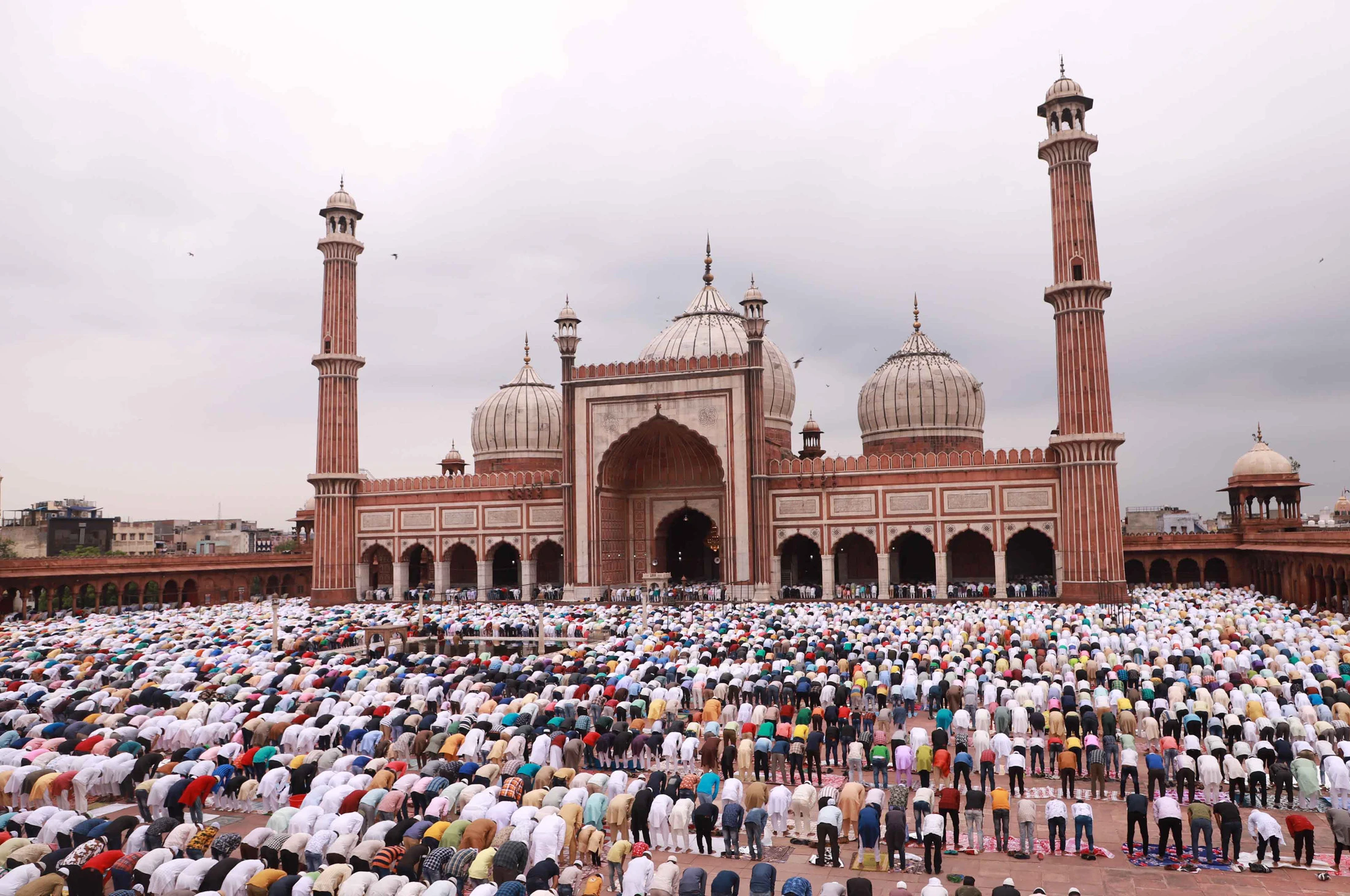
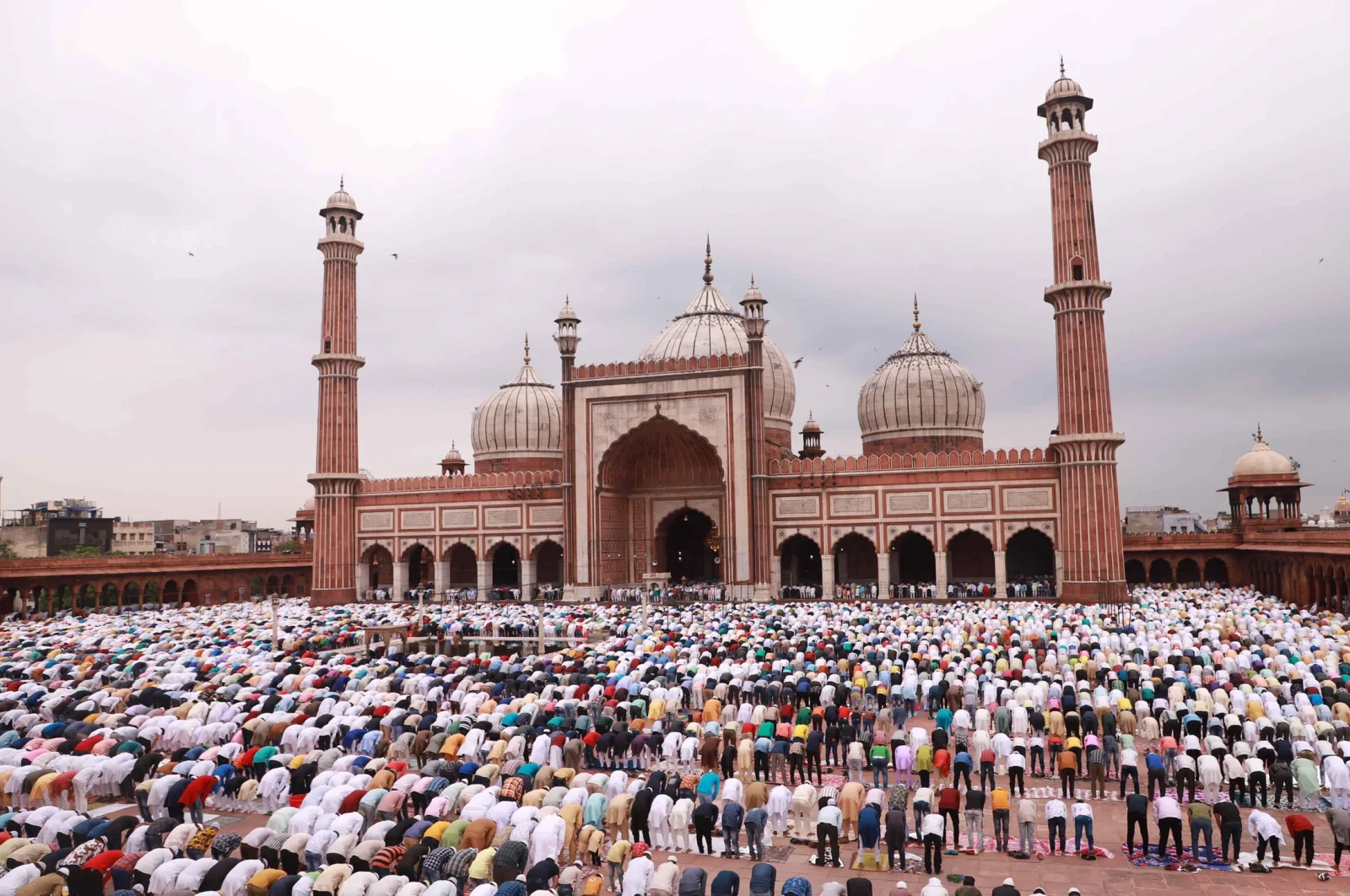
This architectural language also appeared in the Jama Masjid, one of the largest congregational mosques in India. Its tall minarets, constructed from red sandstone and white marble, frame the massive courtyard and domed prayer hall. The mosque’s elevated position further enhances the prominence of its towers within the historic skyline of Old Delhi.
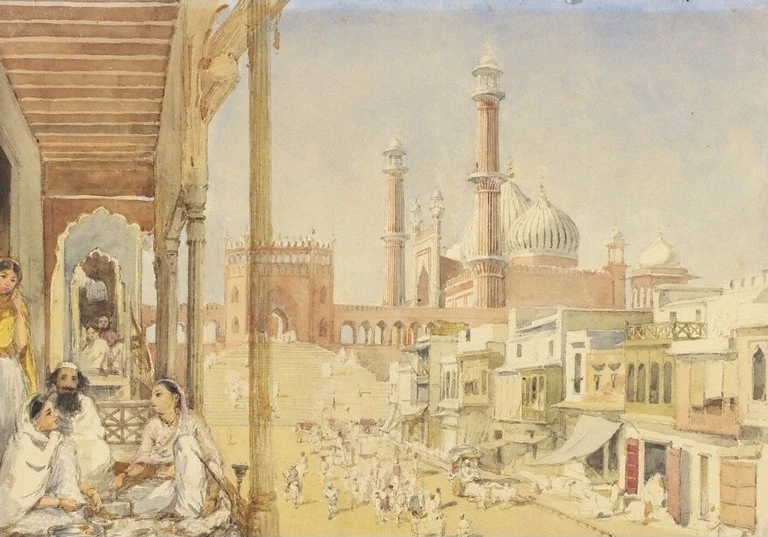
The evolution of minarets across Islamic architecture reflects the incredible diversity of Islamic architecture itself. Some focused on geometry and monumentality, while others emphasized decorative detail, height, symmetry, or skyline composition.
Today, minarets continue to evolve within contemporary Islamic architecture. Modern architects often reinterpret traditional forms using new materials and modern engineering techniques while still preserving their cultural significance.
Explore Courses
.jpg "Architecture Diagram Mastery: Concept to Portfolio")
.jpg%202.jpg "Building Performance with Forma & Opossum")

.jpg "Ondrej Chybik - Rethinking Architecture")