


Across North American cities, architects are facing a shared challenge. Office buildings sit partially vacant. Housing demand continues to rise. Carbon reduction targets tighten while construction costs remain high. As a result, adaptive reuse is no longer an abstract ambition. Rather, it is becoming a core architectural skill.
Ling Sha’s work sits within these conditions, where reuse, housing demand, and technical constraints shape day-to-day architectural practice.
Sha is a technical designer at Gensler’s Denver office, where she has spent over five years contributing to mixed-use developments, office-to-residential conversions, data centers, and large-scale infrastructure projects. She describes her work as operating “at the intersection of parametric design, adaptive reuse, and urban development,” areas that now sit at the center of many cities’ most pressing architectural questions.
For architects and students seeking to understand how reuse, housing research, and parametric workflows function inside professional practice, Sha’s career offers a grounded and instructive reference.
Why Adaptive Reuse Defines the Moment
Adaptive reuse has shifted from a specialized market to a mainstream necessity. Economic restructuring, sustainability targets, and changing work patterns have made existing buildings central to future urban growth. The World Economic Forum calls adaptive reuse a way to extend building lifecycles while reducing embodied carbon and supporting inclusive development.
Sha has a long-term focus on “addressing the housing crisis while strengthening urban resiliency through infrastructure and adaptive reuse.” Her work consistently links architectural decision-making to broader urban systems rather than treating buildings as isolated objects.
For many architects, the difficulty lies less in understanding the importance of reuse than in executing it within existing buildings, regulatory frameworks, and project constraints. Sha’s education and early influences provided a framework for engaging precisely with these kinds of systemic and spatial challenges.
Education Shaped by Systems and Landscape
Ling Sha holds a Master of Architecture from Rice University and a Bachelor of Engineering in Landscape Architecture from South China University of Technology. This interdisciplinary education supports a systems-based approach to architecture, particularly in projects where buildings intersect with infrastructure, public space, and environmental performance.
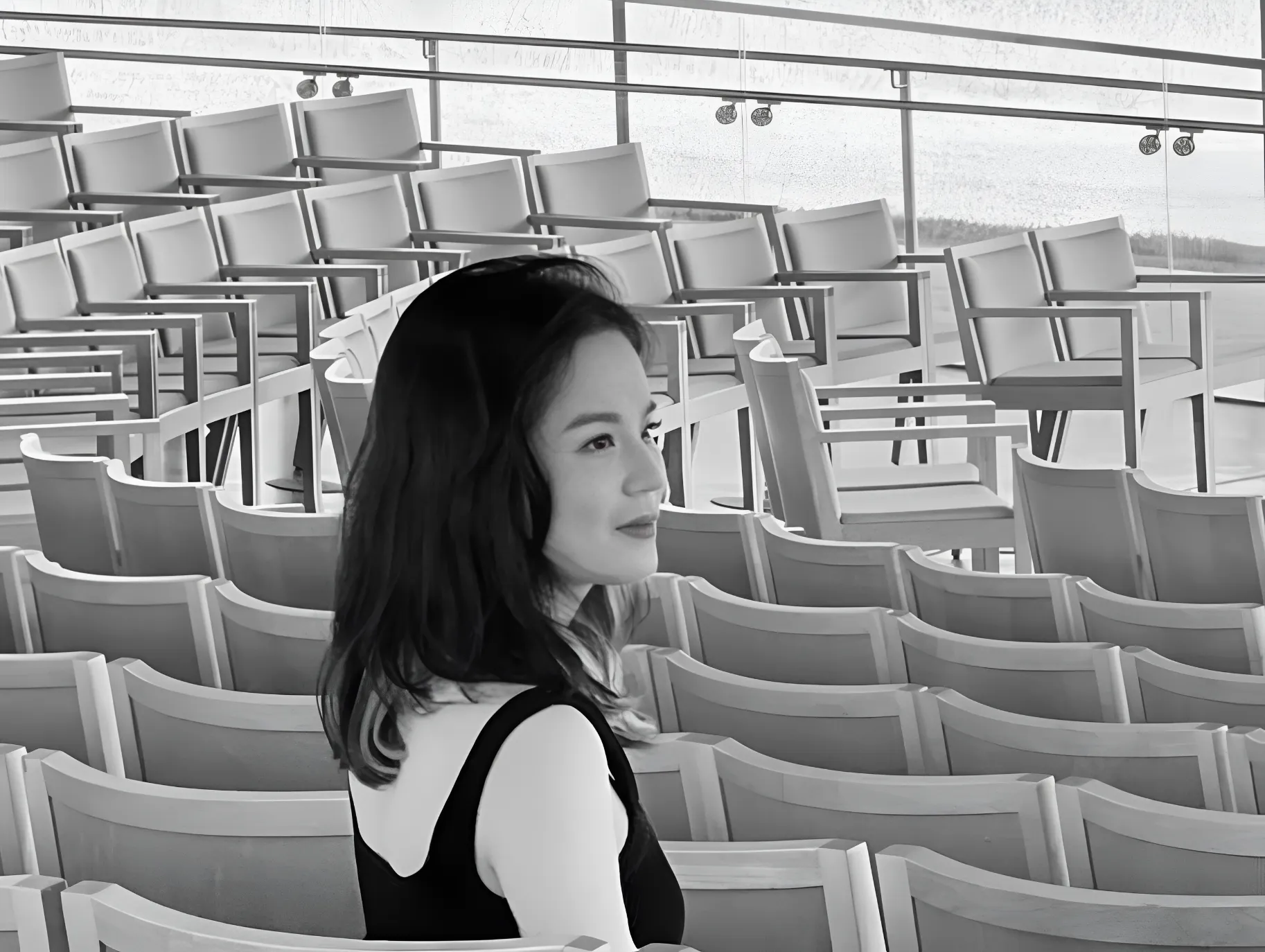
She traces her design sensibility to early exposure to traditional Chinese gardens, where spatial sequencing shapes social interaction and movement. That influence appears in her work as sustained attention to transitions, thresholds, and collective experience rather than formal expression alone.
Technical Design at Gensler Denver
At Gensler’s Denver office, Sha works primarily across design development, construction documentation, and construction administration. In adaptive reuse projects, these phases are often where constraints tied to existing structure, code compliance, and constructability are resolved, making them critical to overall project viability.
She emphasizes early coordination and structured workflows, describing a process that “prioritizes early problem definition and efficient decision-making.” This approach reflects the realities of compressed schedules and complex consultant coordination, particularly on reuse and infrastructure projects.
Architects navigating similar environments can draw several lessons from this approach:
- Define non-negotiable constraints early, including cores, egress, and structural grids
- Integrate consultant feedback during early studies rather than as late corrections
- Use feasibility analysis as a design tool rather than a limiting factor
These strategies are especially relevant in office-to-residential conversions, where unknown existing conditions often drive design and cost outcomes.
Office-To-Residential Reuse in Denver
Among Sha’s professional projects is the Petroleum Building in downtown Denver, an office-to-residential conversion planned to deliver 178 rental apartments. The project received financial support from the Denver Downtown Development Authority, reflecting growing institutional confidence in reuse-led housing solutions.
Projects of this type are shaped by a recurring set of architectural constraints. Deep floor plates often limit daylight penetration, existing cores rarely align with residential unit planning, and envelope upgrades are typically required to meet residential performance standards.
Sha’s involvement in core-and-shell planning and exterior strategies addressed these conditions directly. By working at the intersection of structural constraints, envelope performance, and residential layout logic, her role reflects how technical decisions at this stage often determine whether office-to-residential conversions remain feasible from both design and cost perspectives.
Luminous Re-Weave and Material Reuse
Adaptive reuse also appears in Sha’s work at a smaller scale. Luminous Re-weave, a collaborative installation with Yucheng Tang, was exhibited at Dutch Design Week 2025.
The installation repurposes discarded textiles into modular, stackable lighting elements, using a repeatable system that allows components to be assembled in different configurations.
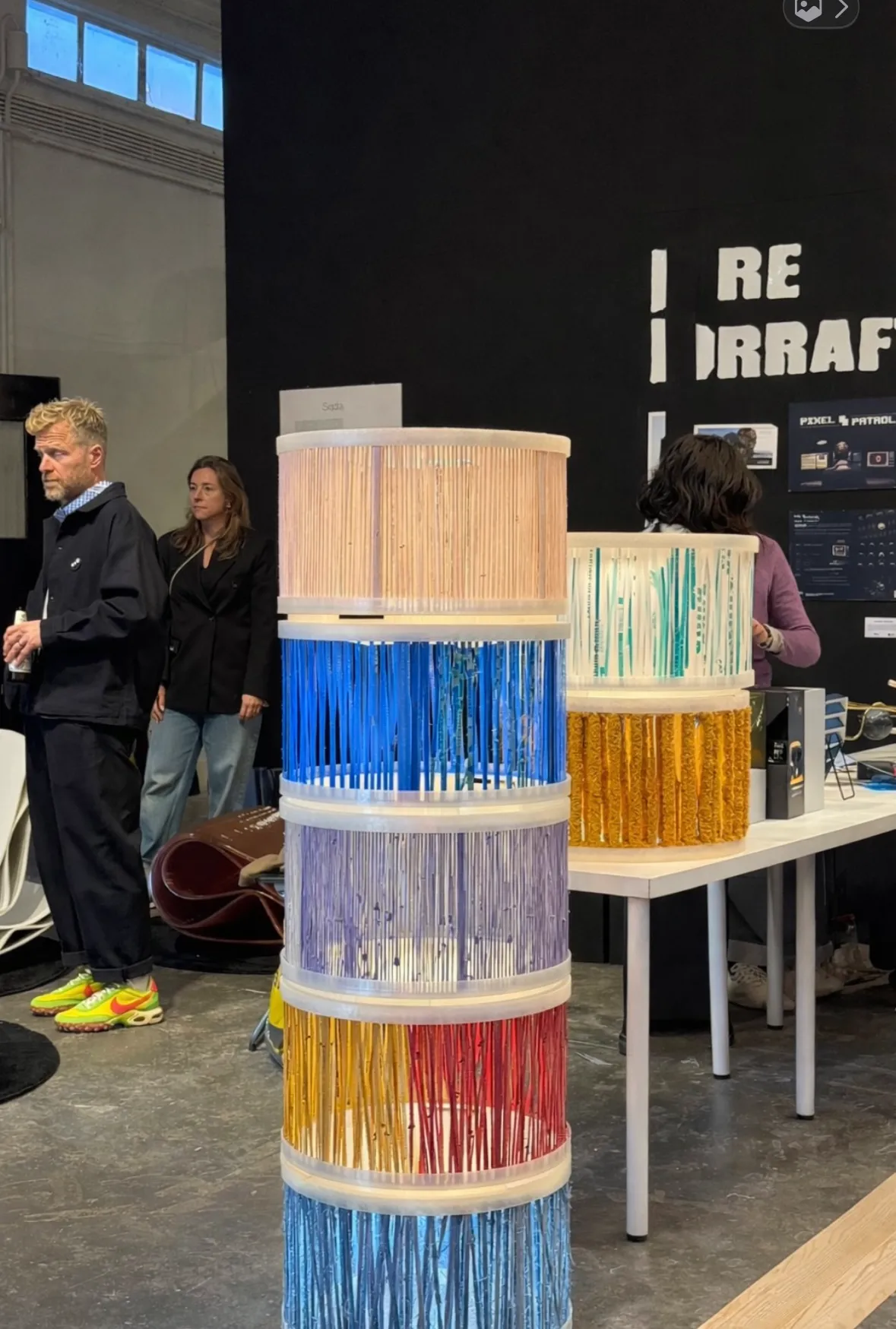
For architects, the project is instructive less as an object than as a method. At a smaller scale, it demonstrates how reuse-driven design principles operate in practice through specific decisions about system structure, material limits, and variation:
- Modularity supports long-term adaptability
- Material constraints shape geometry and assembly
- Parametric logic enables variation without uniformity
These same principles reappear in Sha’s housing research, where modularity and adaptability are applied at the scale of collective living rather than individual objects.
Parts to Whole and Housing Research
Sha’s housing research project, Parts to Whole, explores co-living models in Midtown Houston, addressing affordability and diverse household structures. The project challenges conventional family-based residential typologies through shared spaces and adaptable units.
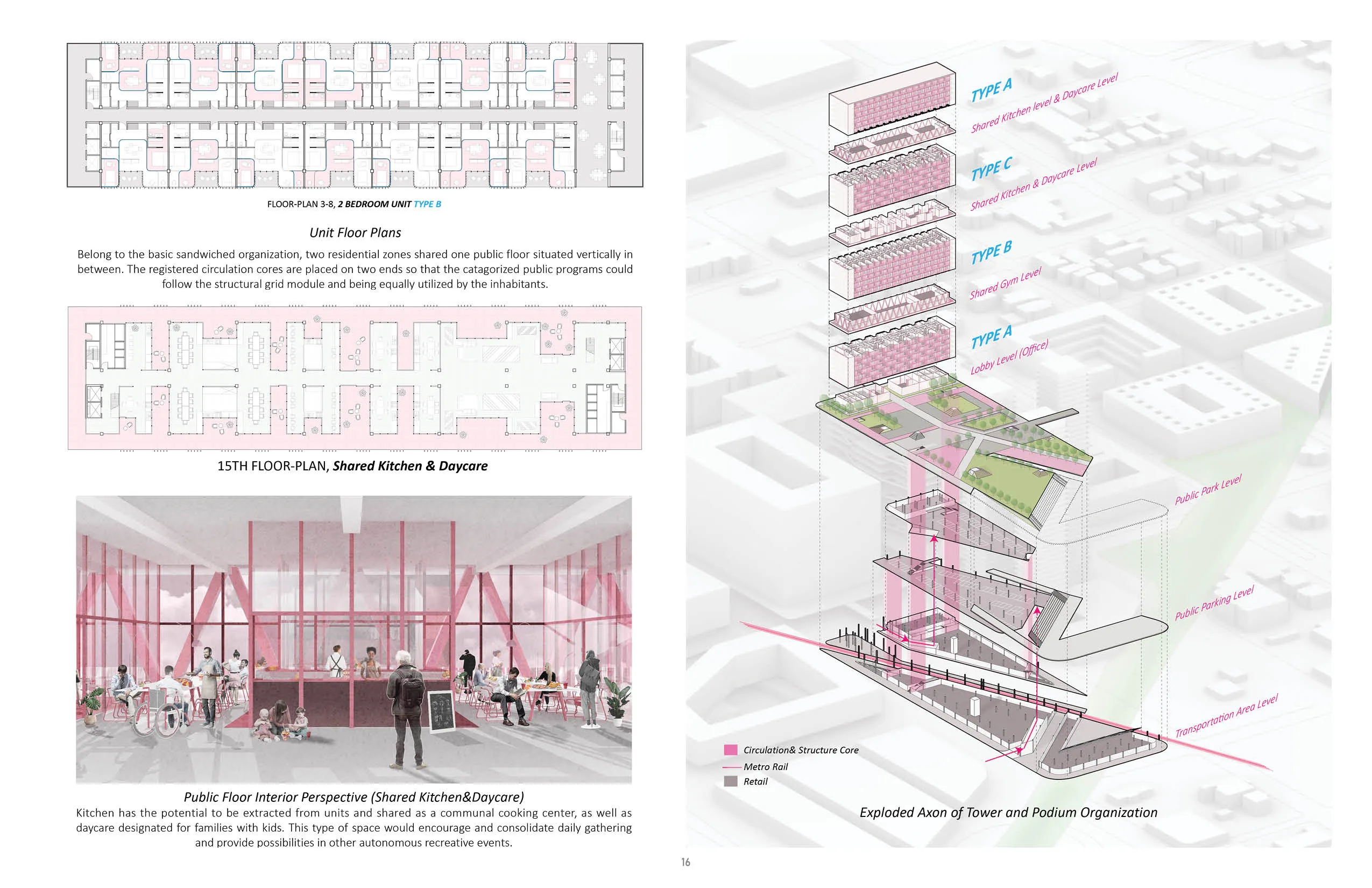
Parts to Whole received a Silver award at the London Design Awards under Architectural Design and Low-Cost Housing. The project has also been recognized by the New York Architectural Design Awards.
For architects working on housing, the project offers a clear example of how social intent can be translated into spatial systems rather than abstract statements.
Teaching, Review, and Professional Contribution
Beyond practice and research, Sha contributes to architectural education. She has served as a studio juror at the University of Colorado Denver College of Architecture and Planning and co-taught a studio focused on small-scale housing strategies within existing neighborhoods.
Through professional practice and academic engagement, Sha focuses on adaptable reuse and housing strategies intended to support resilient urban infrastructure and future architectural practice across U.S. cities.
Readers interested in adaptive reuse as an emerging mode of contemporary practice may find additional context in 10 Impressive Adaptive Reuse Projects on Parametric Architecture.
Working Within Existing Conditions
Taken together, Sha’s work reflects a mode of contemporary architectural practice shaped less by formal gesture than by careful negotiation with existing conditions. Across reuse, housing, and technical delivery, her projects demonstrate how constraints increasingly define architectural responsibility in cities today. To learn more about Ling Sha’s work, visit her portfolio at https://shaling.me/.
Explore Courses
.jpg%202.jpg "Building Performance with Forma & Opossum")
.jpg "Ondrej Chybik - Rethinking Architecture")