





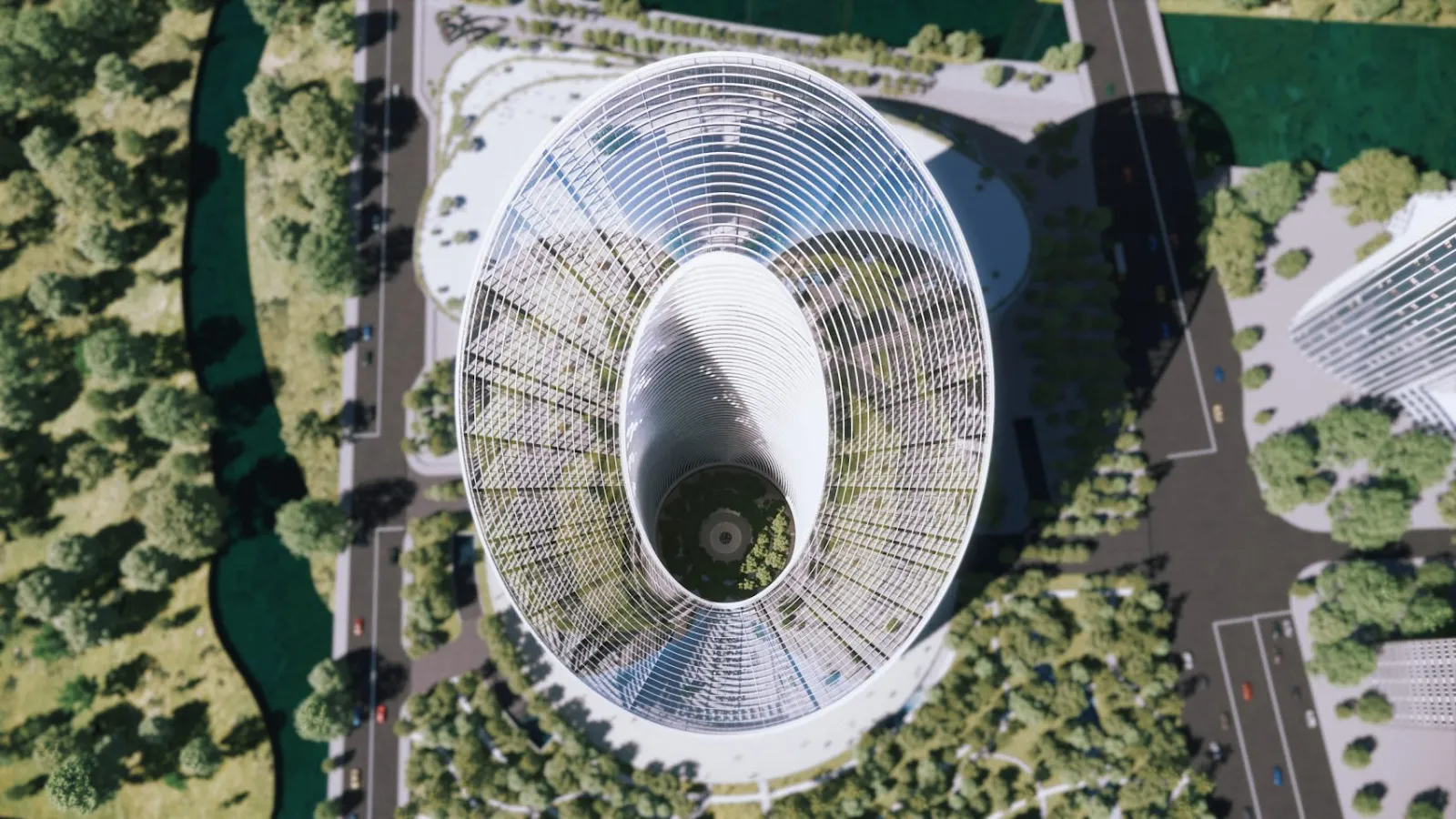
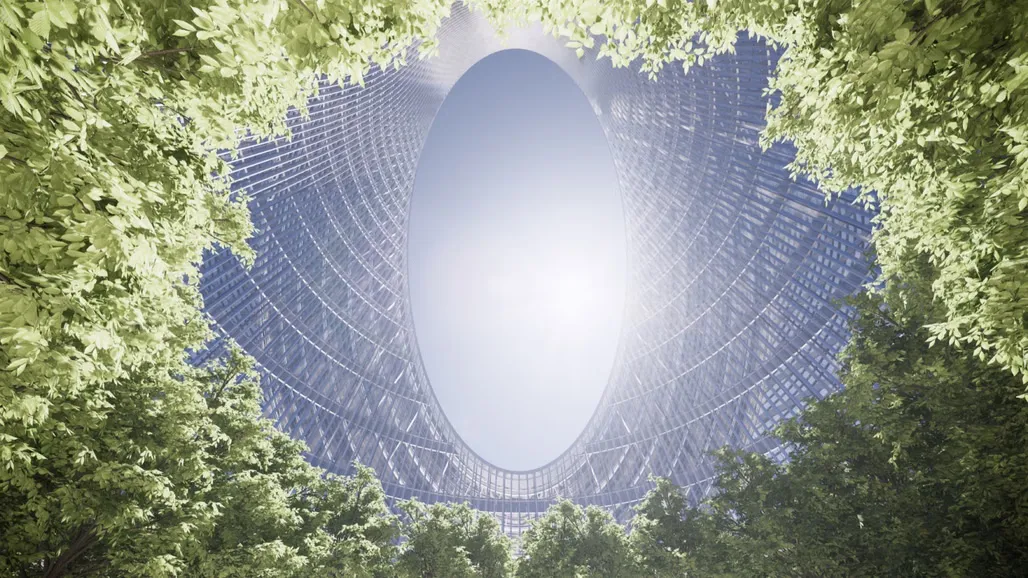
OPPO, one of China’s largest smartphone manufacturers, is developing a new research and development headquarters in Hangzhou’s Future Sci-Tech City. The project, called the O-Tower, has been designed by the Bjarke Ingels Group (BIG) and is widely referred to as the “infinity loop” skyscraper due to its unique ring-shaped design.
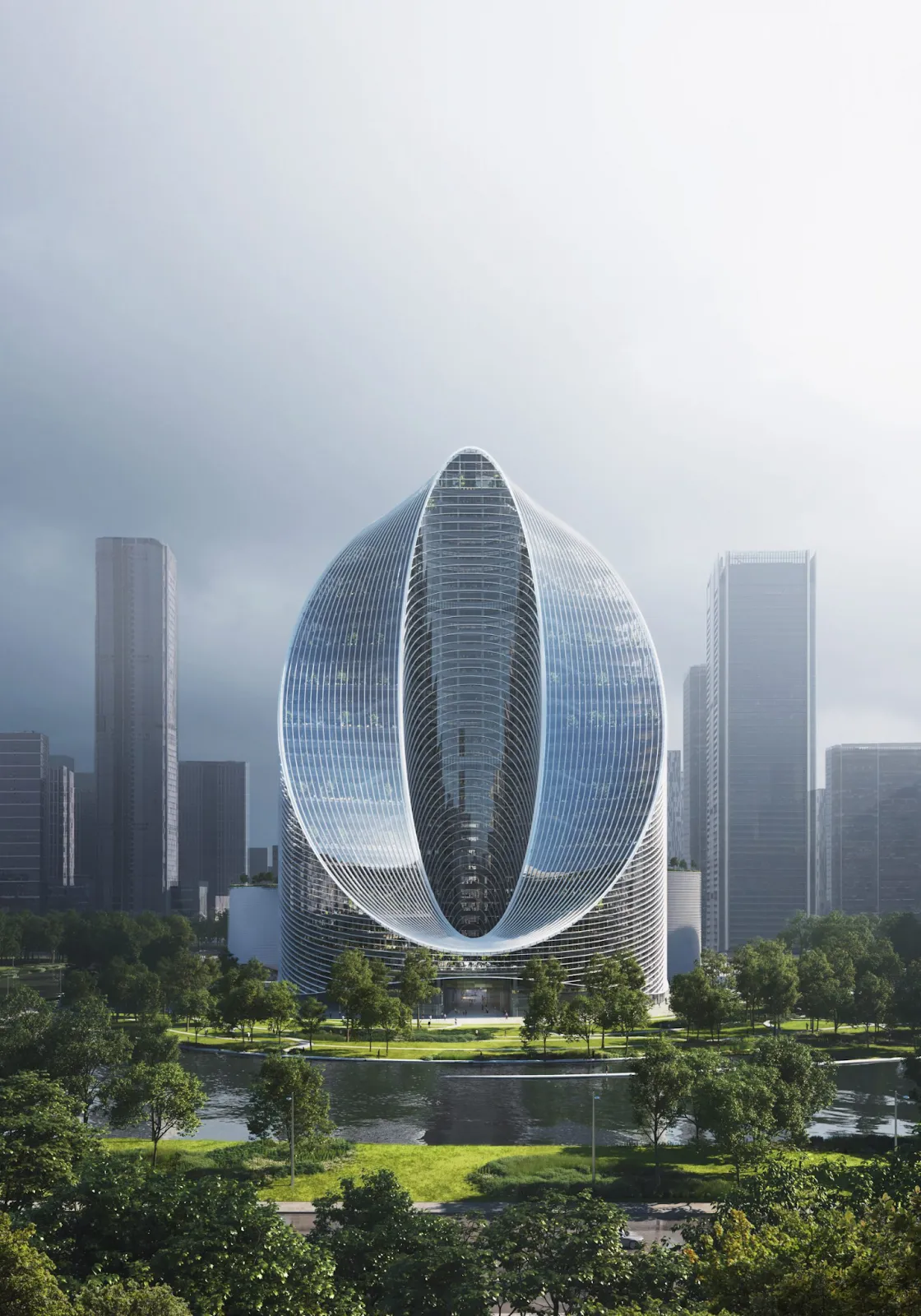
Architectural Concept of OPPO’s O-Tower: The Infinity Loop Skyscraper
The O-Tower is shaped as a continuous loop, directly referencing the infinity symbol. BIG’s design approach emphasizes both functionality and symbolism, presenting the building as a landmark that represents OPPO’s commitment to continuous innovation. Its location places it between the urban cityscape, a large park of around 10,000 m², and a natural lake, giving the tower a strong connection to its surrounding environment.
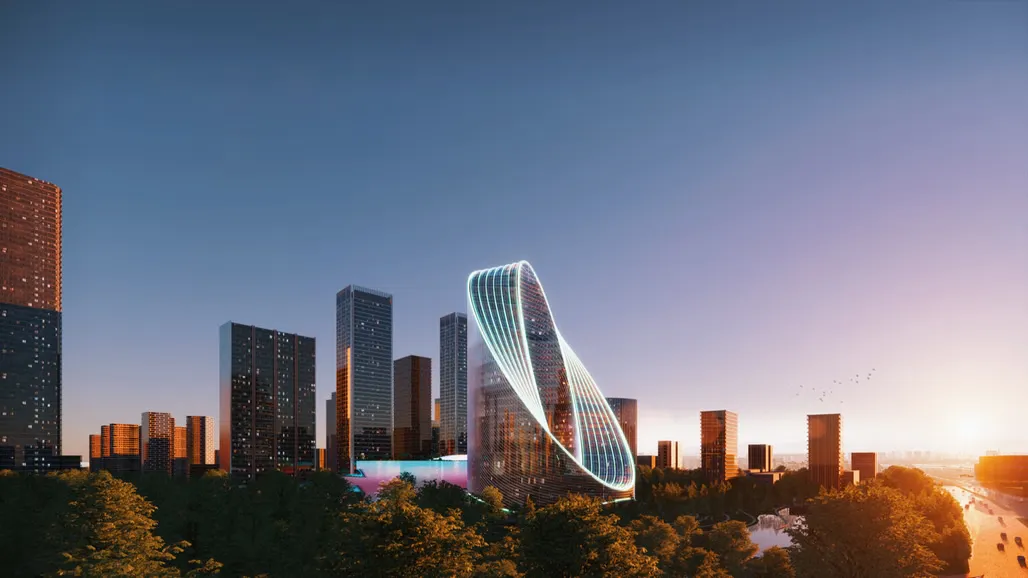
Design Strategy: Balancing Function and Well-Being
One of the main design goals was to balance deep floorplates needed for technology-driven research with the need for natural light and outdoor views. The circular layout addresses this by creating thinner, curved office sections that allow daylight to reach workspaces efficiently.
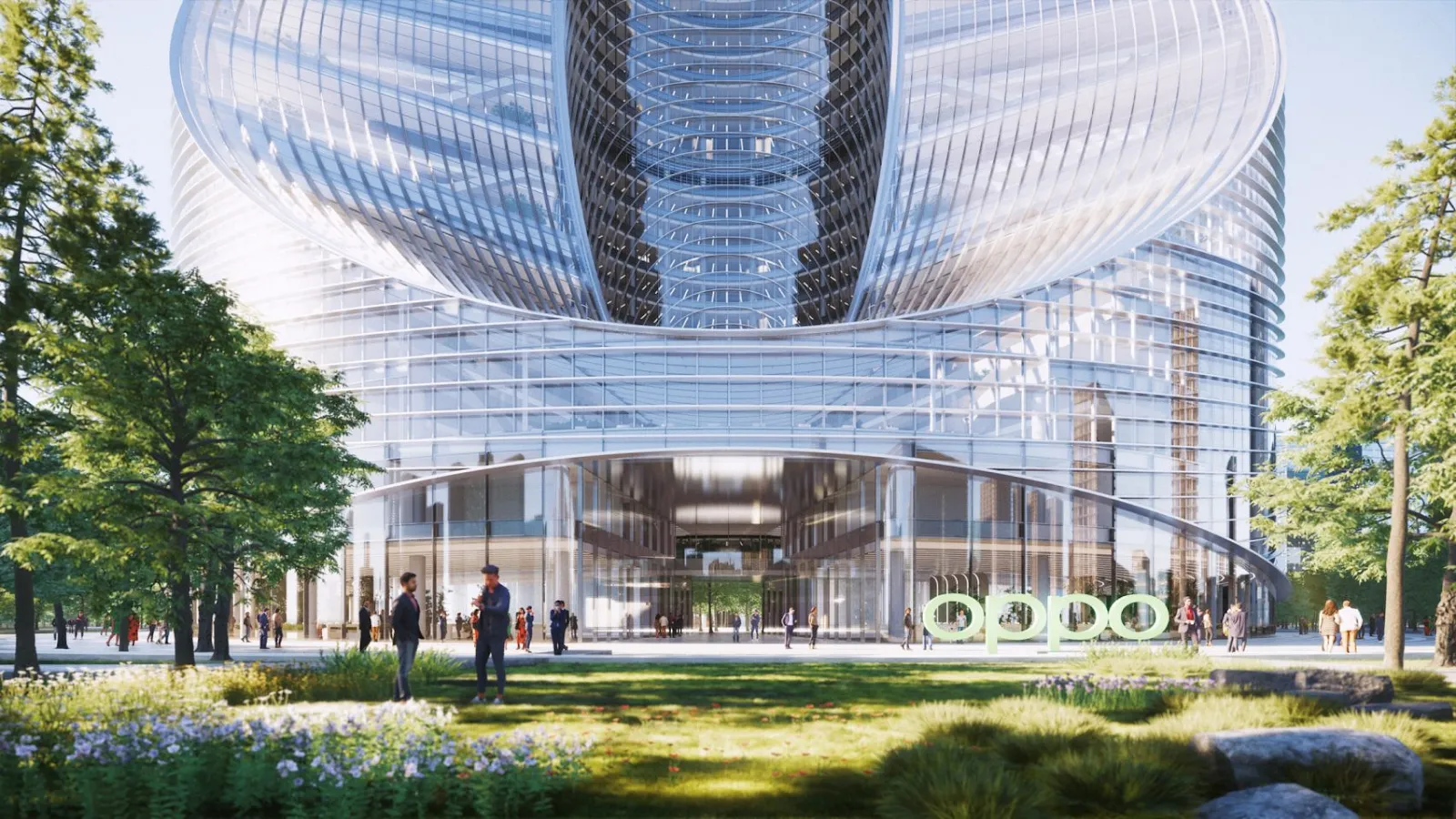
The southern edge of the building is pressed down toward the ground. This move reduces solar heat exposure and provides shaded areas inside the tower. The façade uses adaptive louvers that adjust to the sun’s position throughout the day. This feature reduces glare, light pollution, and energy usage, while lowering the building’s thermal load by up to 52%.
Central Courtyard and Social Spaces
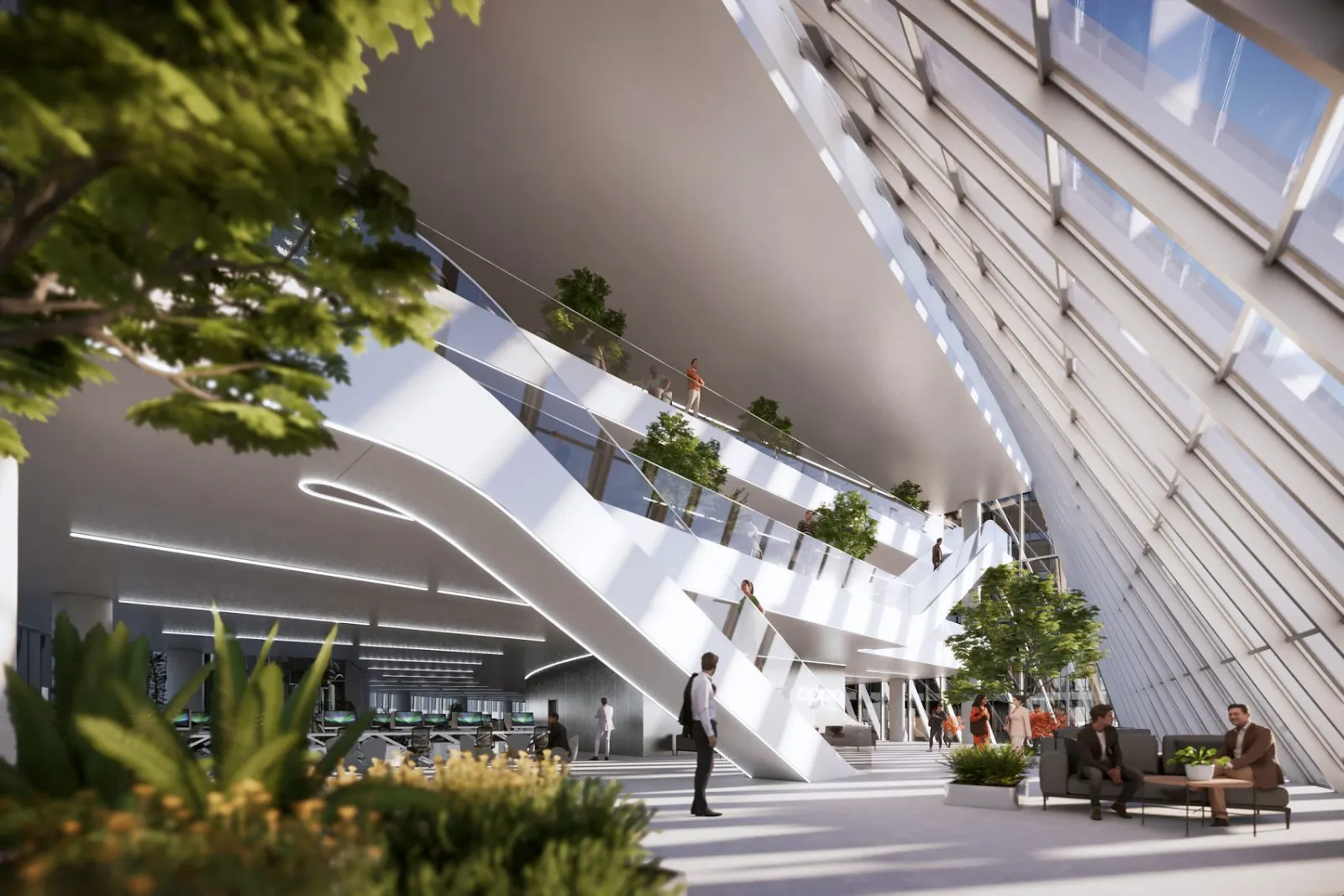
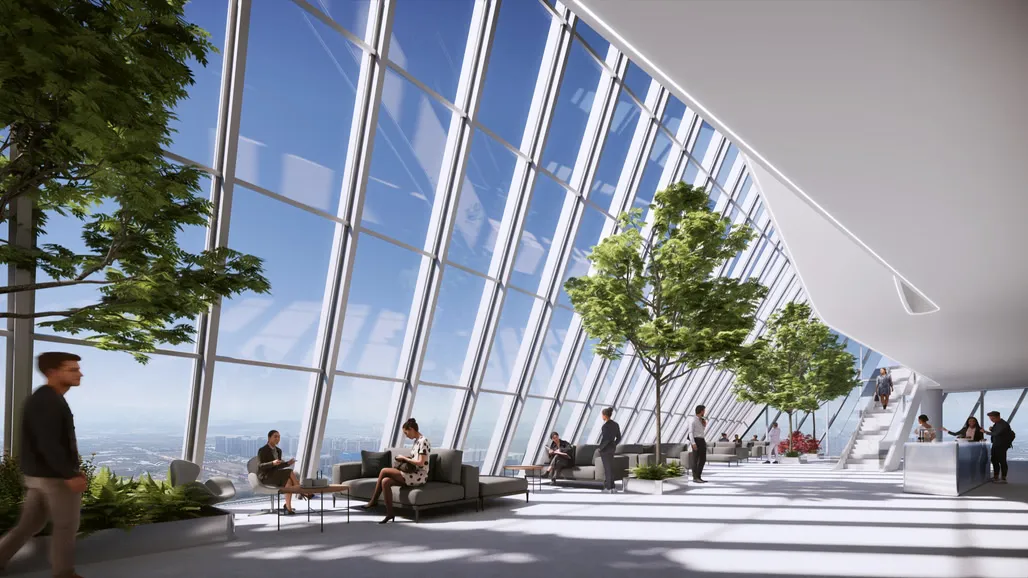
At the center of the loop, the design introduces a large courtyard that serves as an open-air gathering space. This courtyard connects to the building through triple-height voids and landscaped terraces. These spaces create opportunities for informal meetings, relaxation, and social interaction, making the courtyard an essential part of the building’s internal and external identity.
Public Access and Mixed Functions
The lower levels of the O-Tower are designed for public and semi-public use. The first three floors will include exhibition areas, conference halls, workshop spaces, and incubator programs. This setup supports OPPO’s research while also creating opportunities for public engagement and collaboration.
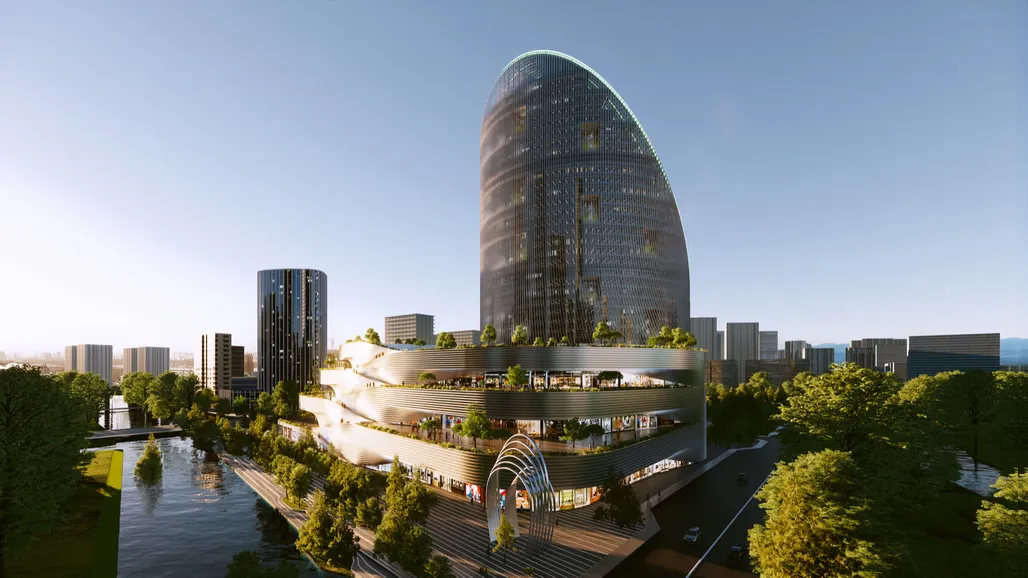
The upper levels are dedicated to research and office spaces, gradually transitioning to administrative functions and executive offices. Facilities such as VIP lounges and a canteen are placed on higher levels, offering views of the park and surrounding wetlands.
Sustainability Approach
BIG has described the project as pursuing sustainability in multiple dimensions: economic, ecological, and social. The building’s compact loop form reduces energy use, while the self-shading façade improves occupant comfort and efficiency. The integration of the public park, the central courtyard, and the building’s open ground level strengthens its social sustainability by connecting the project with the wider community.
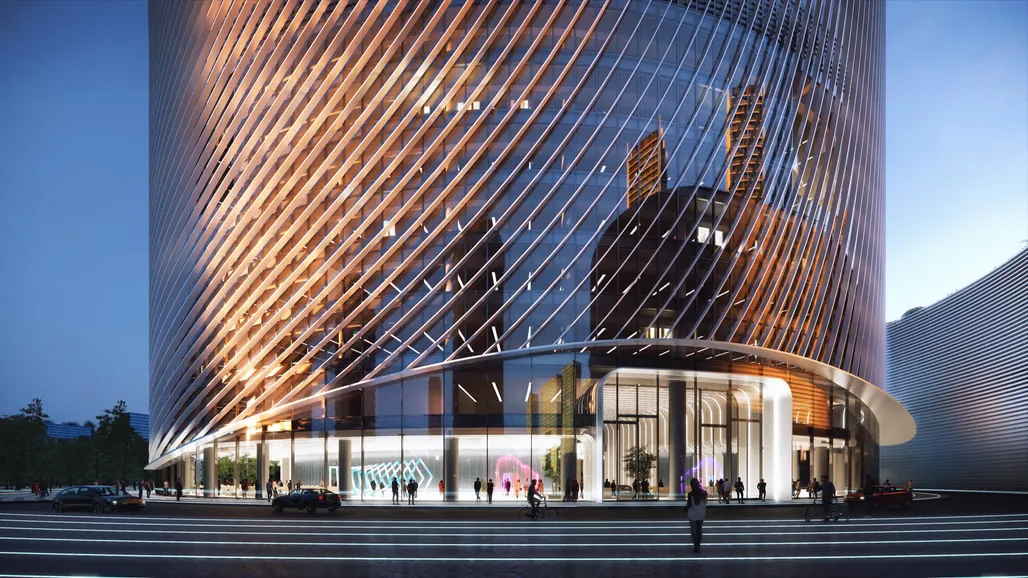
The O-Tower is a corporate headquarters designed as a strategic urban landmark for Hangzhou’s Future Sci-Tech City. Its architectural form delivers practical benefits in terms of energy efficiency, daylight access, and occupant well-being, while its lower-level facilities and public integration support collaboration and outreach.

OPPO O-Tower Project Details
Project Name: O-Tower (Infinity Loop Headquarters)
Location: Hangzhou, China – Future Sci-Tech City
Client: OPPO
Architect: Bjarke Ingels Group (BIG)
Office Space: ~161,330 m²
Retail Space: ~68,000 m²
Image Credit: BIG
Explore Courses

.jpg2.jpg "Carlo Ratti - Rethinking Architecture")
.jpg "Architecture Diagram Mastery: Concept to Portfolio")
.jpg%202.jpg "Building Performance with Forma & Opossum")