




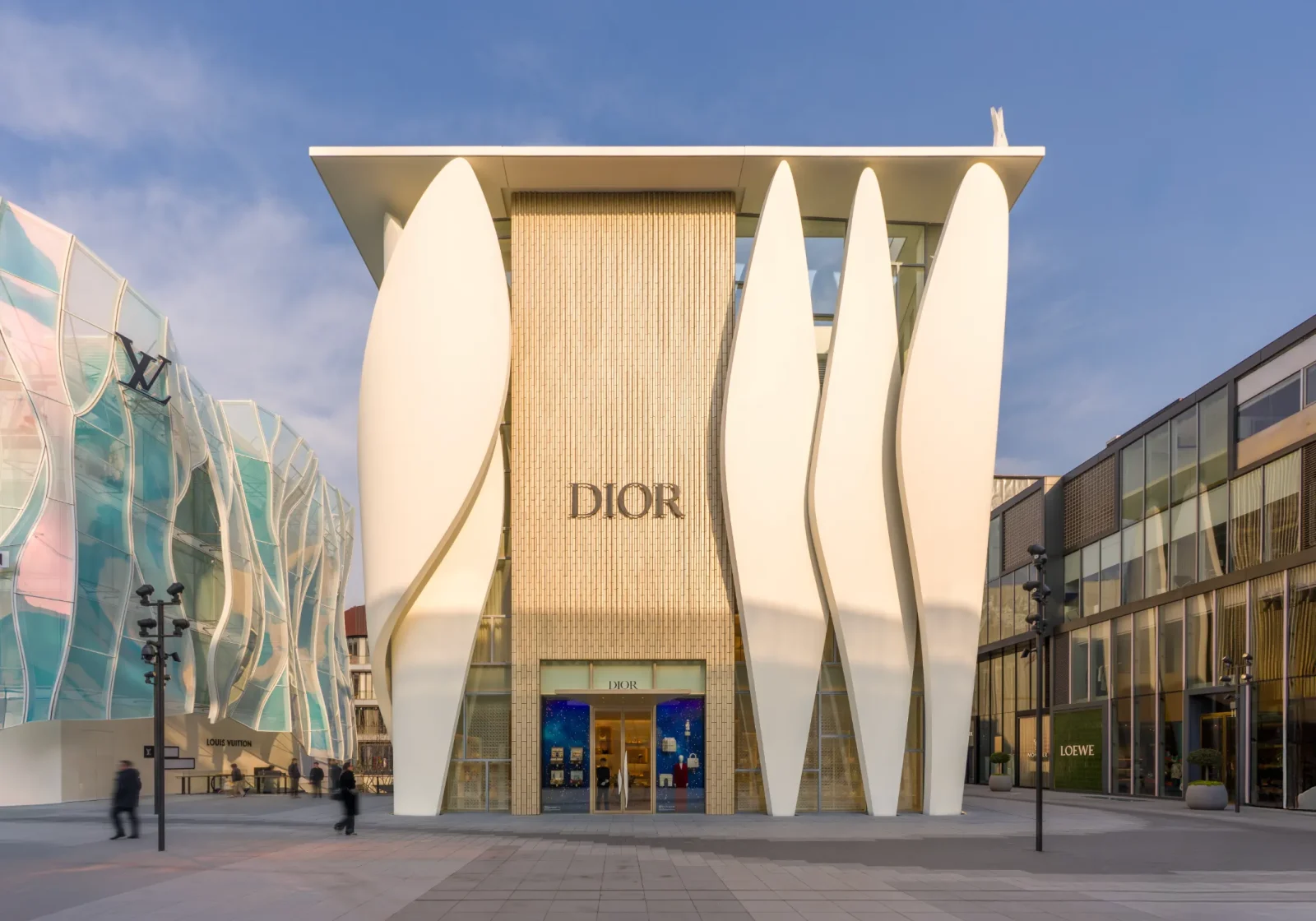
House of Dior, a luxury brand, unveils its new flagship store designed by the Pritzker Prize-winning French architect Christian de Portzamparc. Conceptualized at the intersection of high fashion and monumental architecture, the Beijing structure represents the culmination of a decade-long architectural evolution that began with the Maison Dior in Seoul in 2015 and continued with the Geneva flagship in 2024.
Christian de Portzamparc’s Dior Style
The House of Dior Beijing, located in the Sanlitun district, translates the ethereal gestures of haute couture into a permanent urban language. Across diverse projects dedicated to Dior, de Portzamparc has developed a methodology that utilizes the petal as the metaphor to evoke the fluidity, movement, and structural precision of the brand’s atelier. Through collaboration on a shared vision of luxury as an immersive cultural experience, Christian de Portzamparc and the LVMH Group, which owns the House of Dior, have created a dialogue of prismatic forms that define Dior’s aesthetic identity.
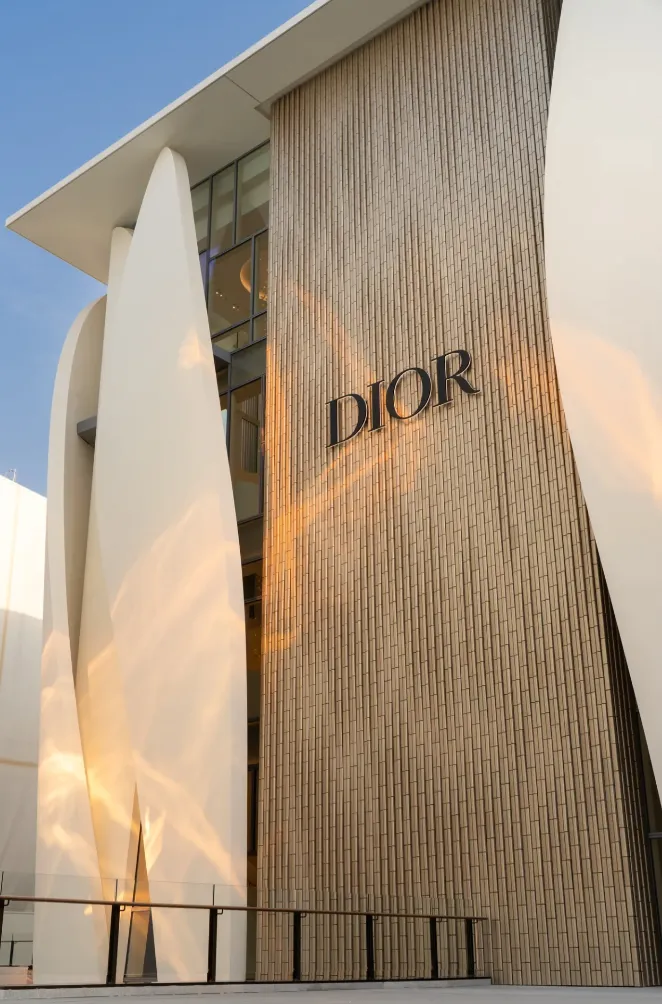
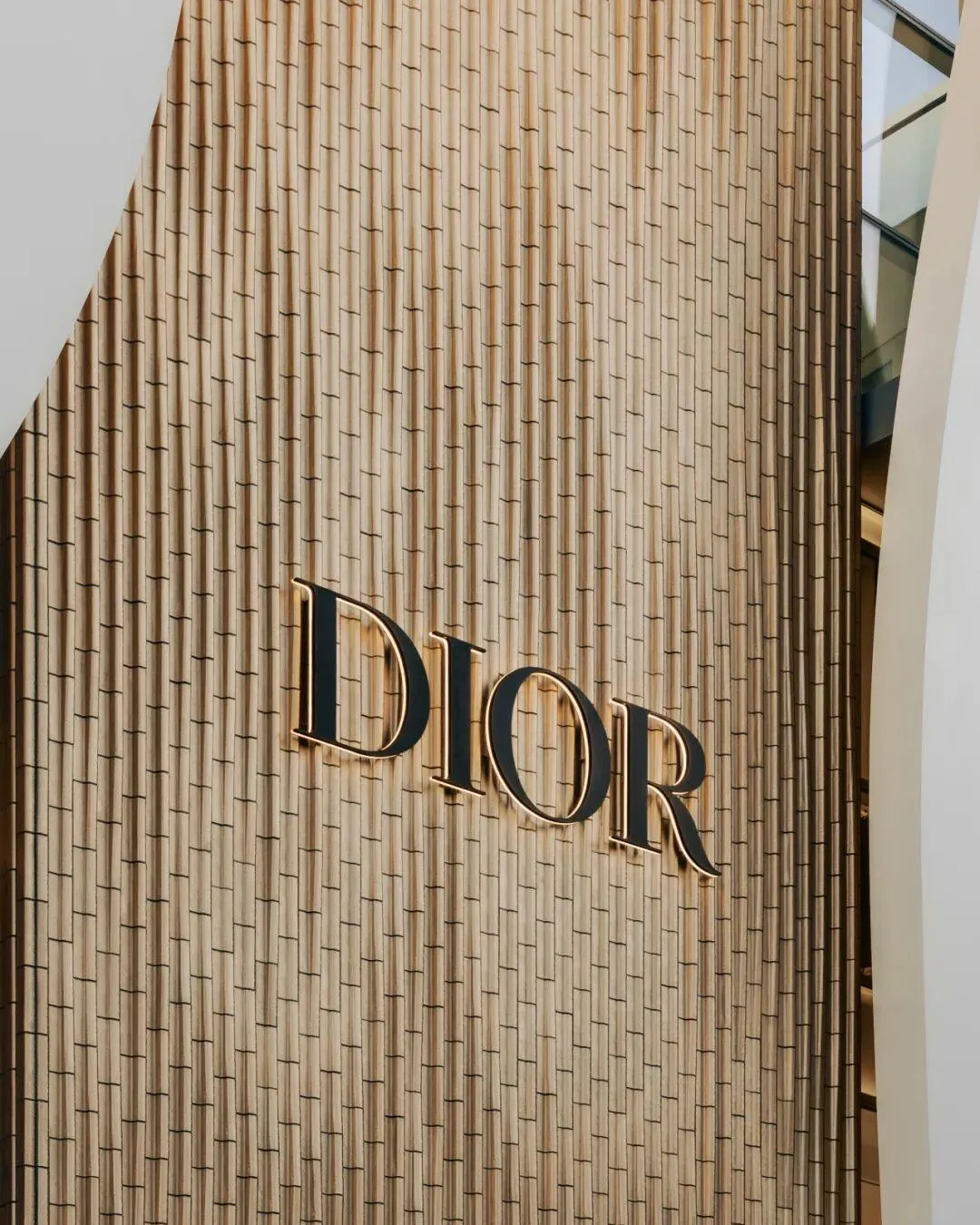
Inaugurated in December 2025, the freestanding structure is exposed on all four sides within Kengo Kuma’s development. The building features fourteen gigantic white resin petals, each uniquely shaped and reaching up to 65 feet in height. The challenging part of the design was achieved through the visual balance. The architect employs resin shells with soaring panels of handcrafted golden glass tiles, allowing shadows to breathe and animate the facade.
Facade Design and Material Innovation
Drawing inspiration from traditional Chinese culture, where golden hues were once reserved for imperial royalty, the use of gold glass tiles echoes nobility. It simultaneously reflects a modern design language, blending Persian elegance with Chinese heritage. During the day, the neighboring facade of the Louis Vuitton flagship casts its hues across Dior’s glass-and-resin structure.
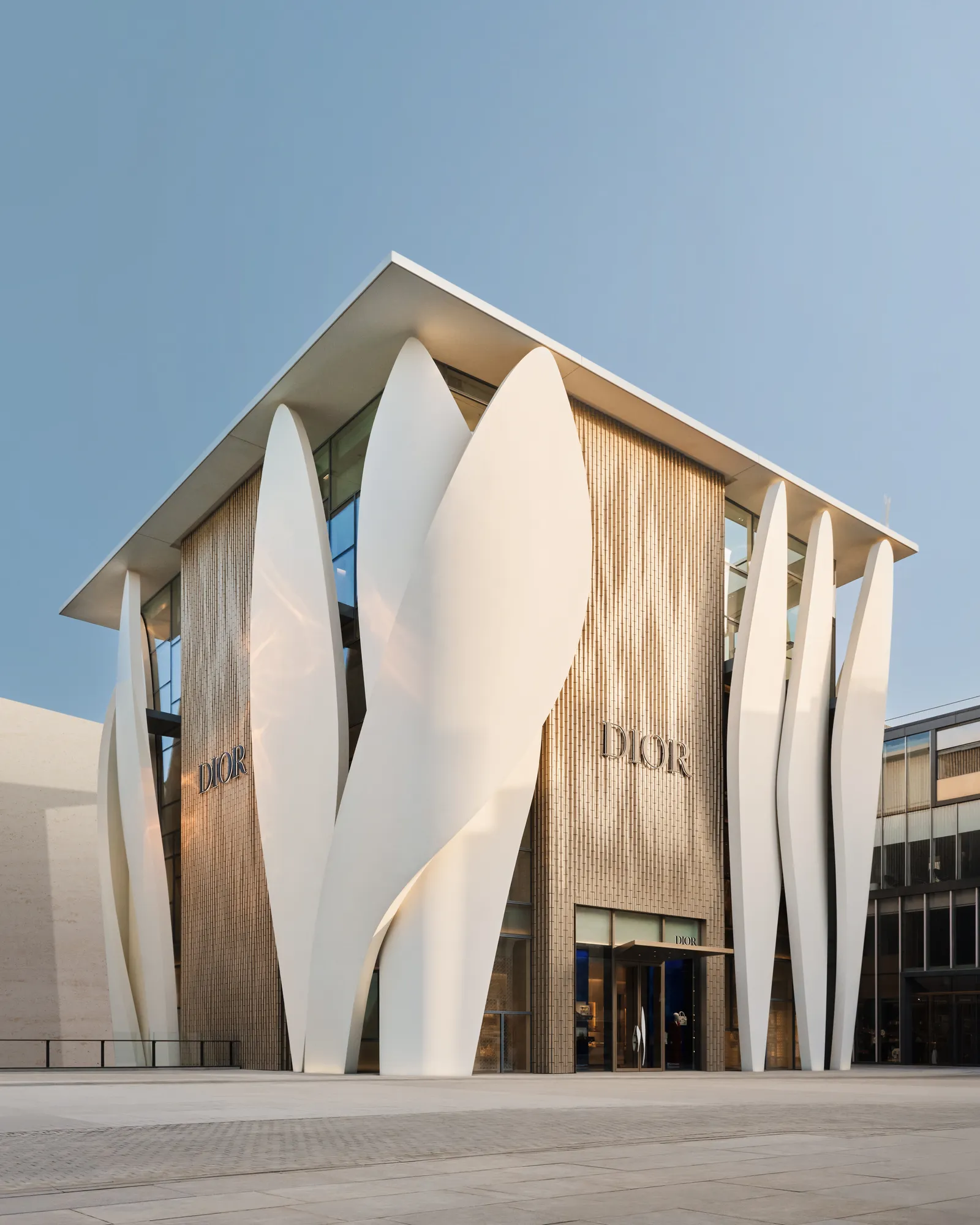
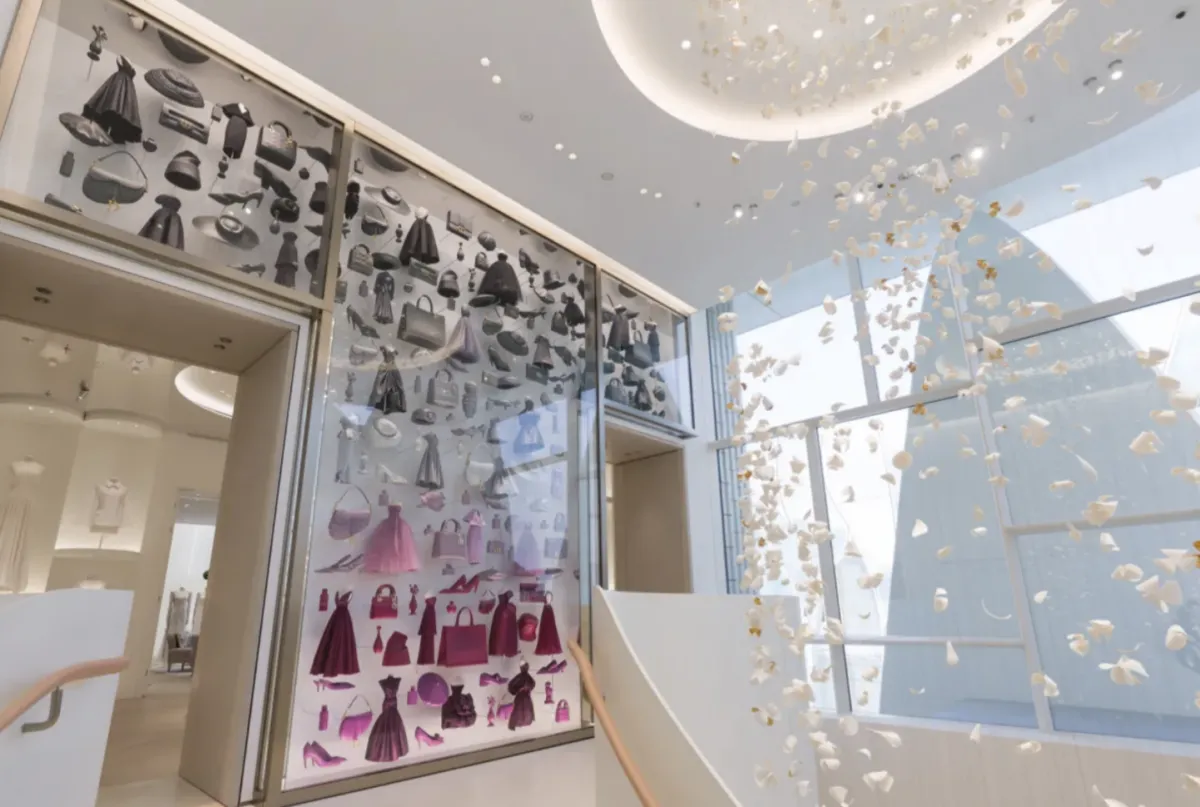
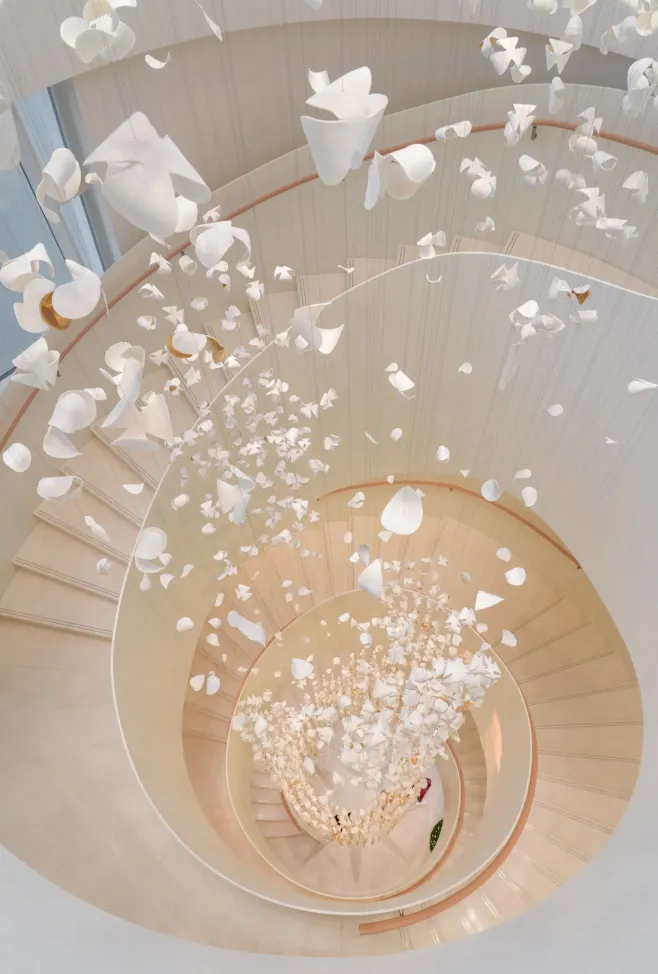
The construction process of the fourteen massive petals required an eighteen-month manufacturing cycle. Through collaboration with a local manufacturer, the entire execution ensured efficiency and the precise transportation of the 65-foot-tall hulls. Spanning five floors, the interior highlights the dramatic white spiral staircase that guides visitors through the spatial language of Dior’s aesthetic experience.
Spatial narrative of spaces
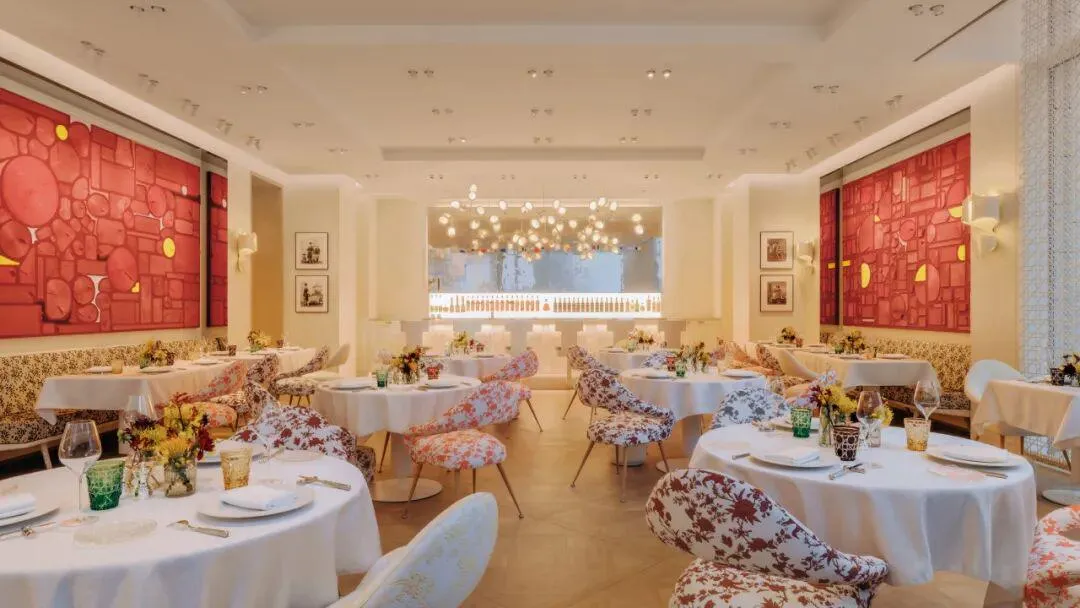
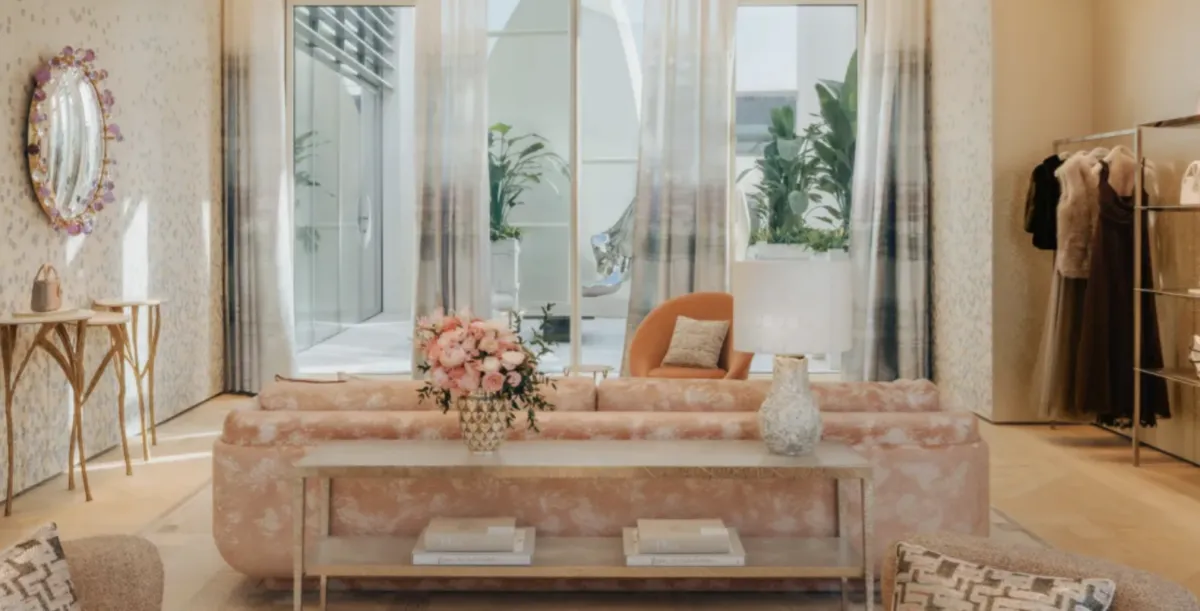
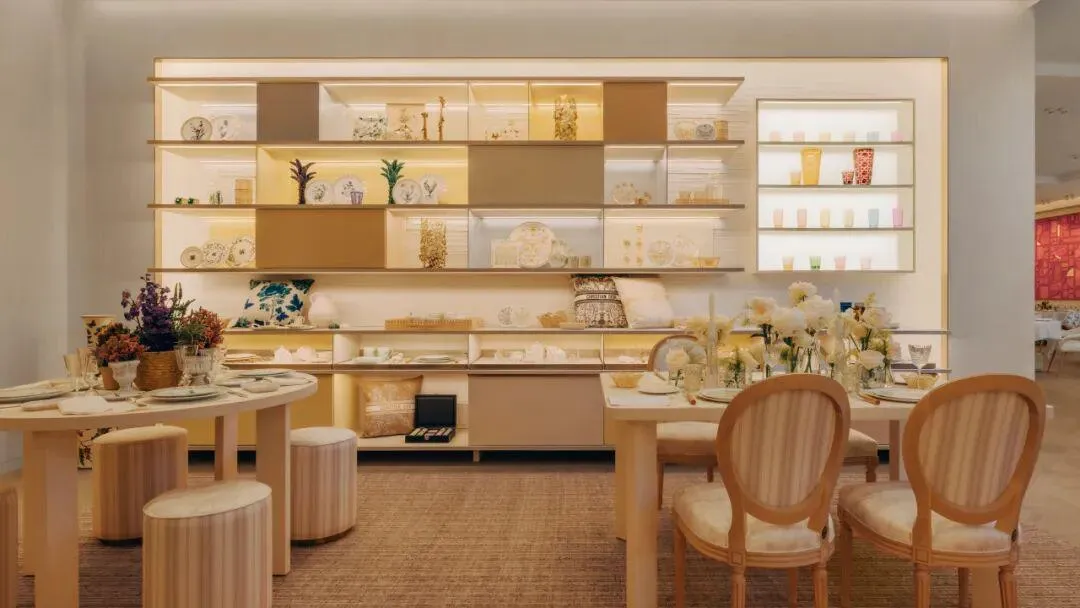
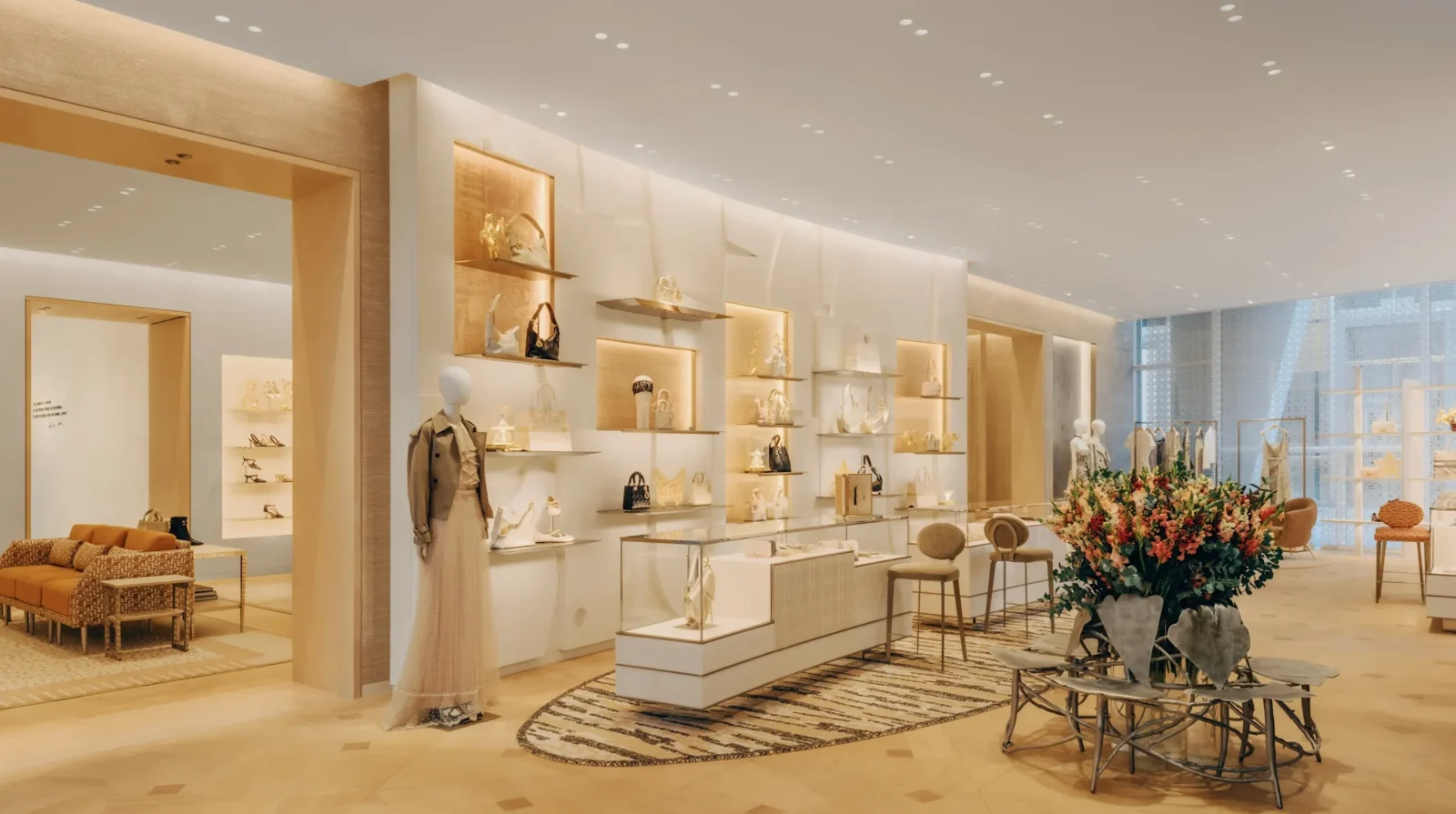
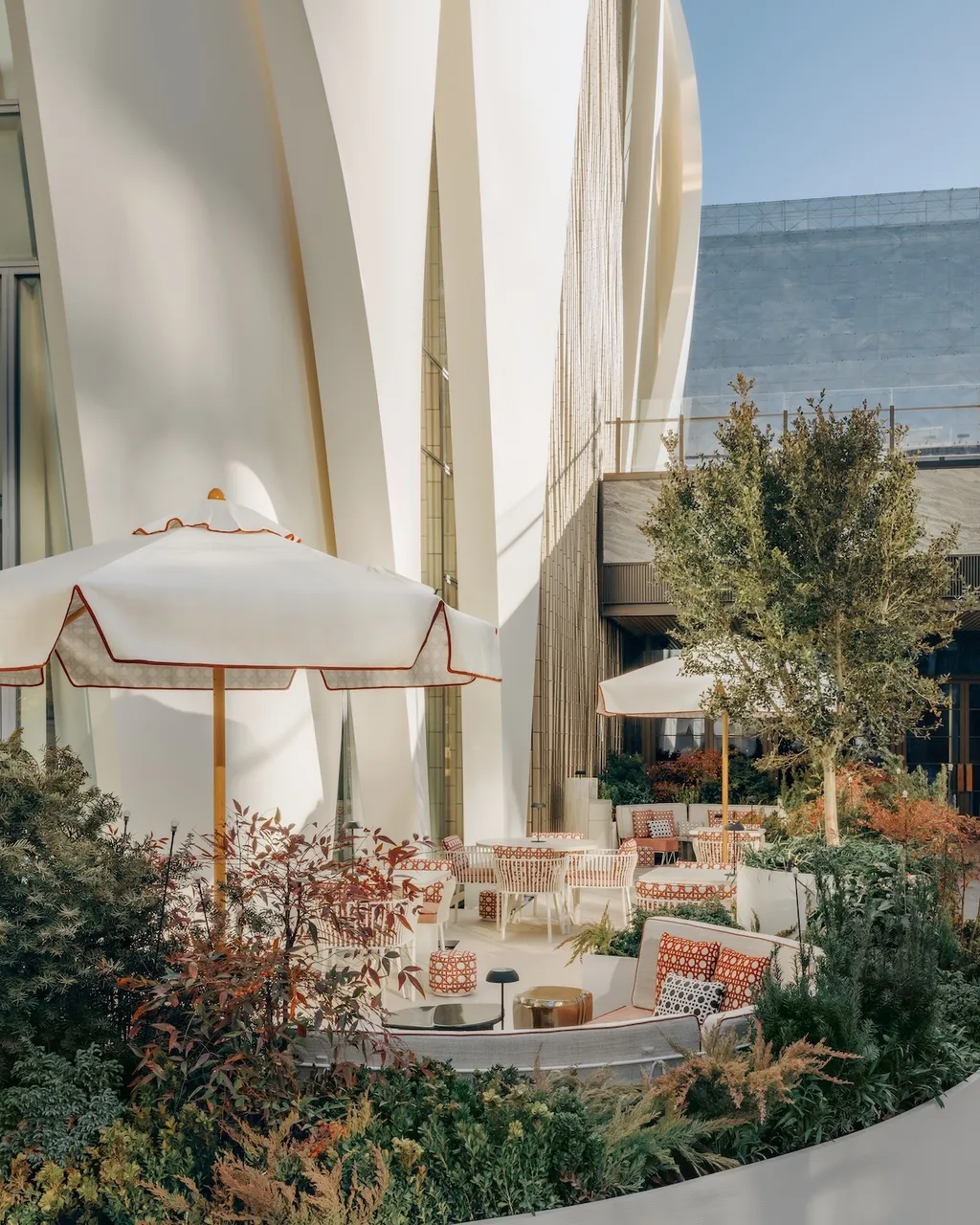
The ground-garden level includes China’s first Monsieur Dior restaurant, enriched with commissioned artwork, including ceremonial red-themed pieces by Chinese artist Hong Hao. The first-floor spatial layout features women’s handbags, footwear, and accessories, with shop windows displaying suitcases transformed into scenes from dreamlike trips to Paris.
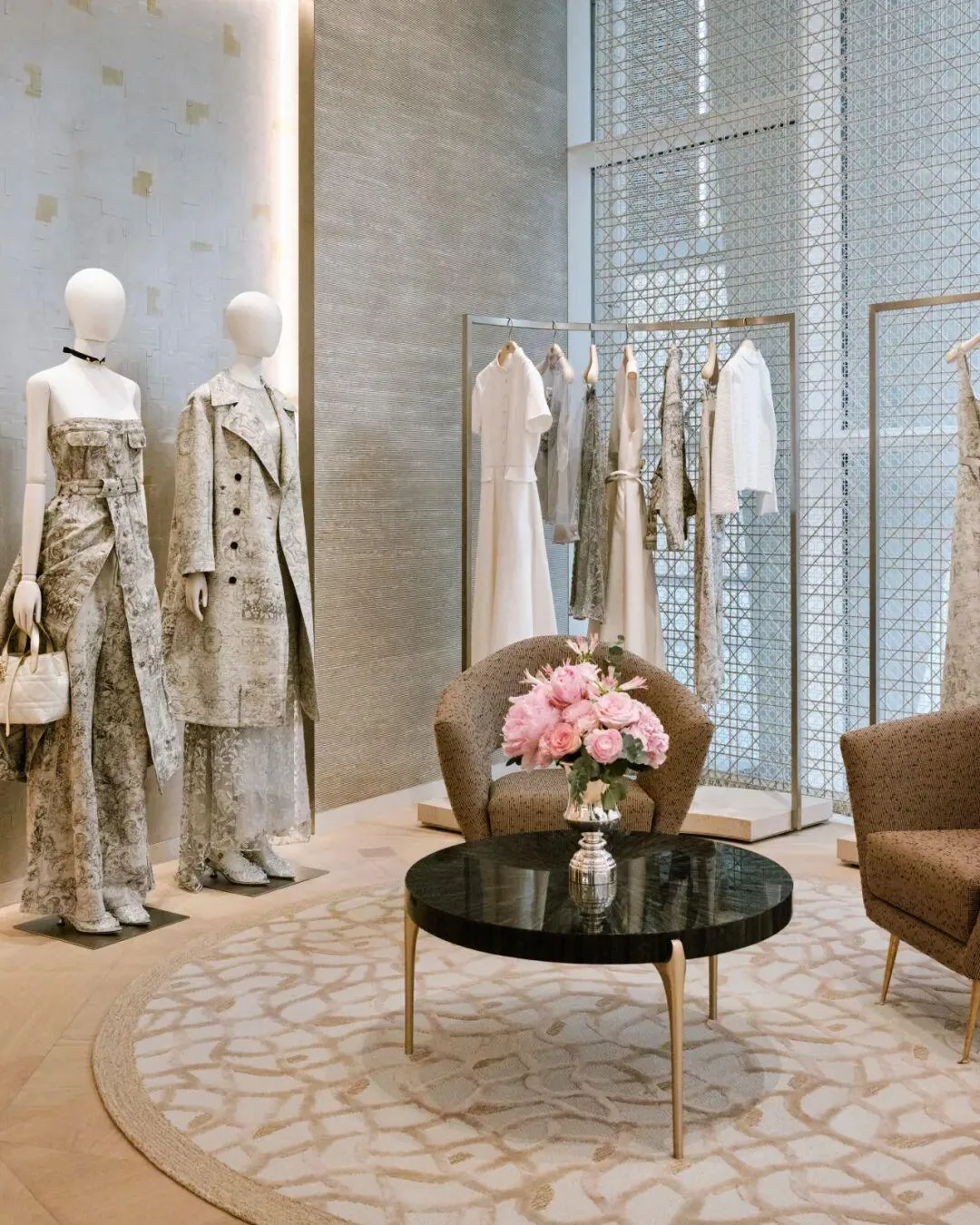
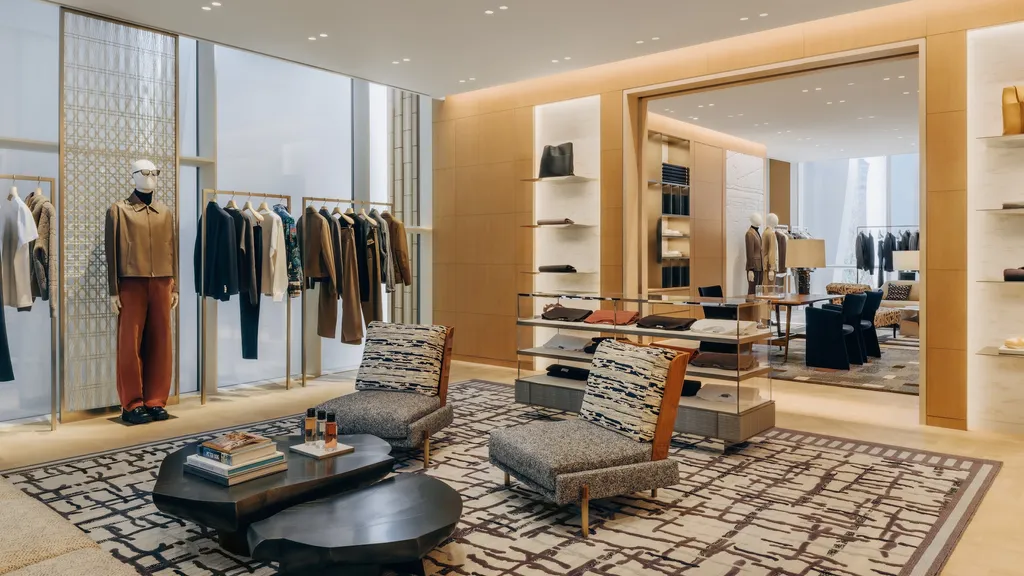
The second floor houses women’s ready-to-wear, jewelry, and the Dior Fragrance house. The walls are adorned with handcrafted picture frames that shimmer with a gold sheen, while the floors feature a French parquet and a reinterpreted classic canage pattern. The third level is dedicated to the men’s universe, timepieces, and the Dior Maison collection. The walls feature unique mother-of-pearl surfaces that shimmer with iridescent luminosity.
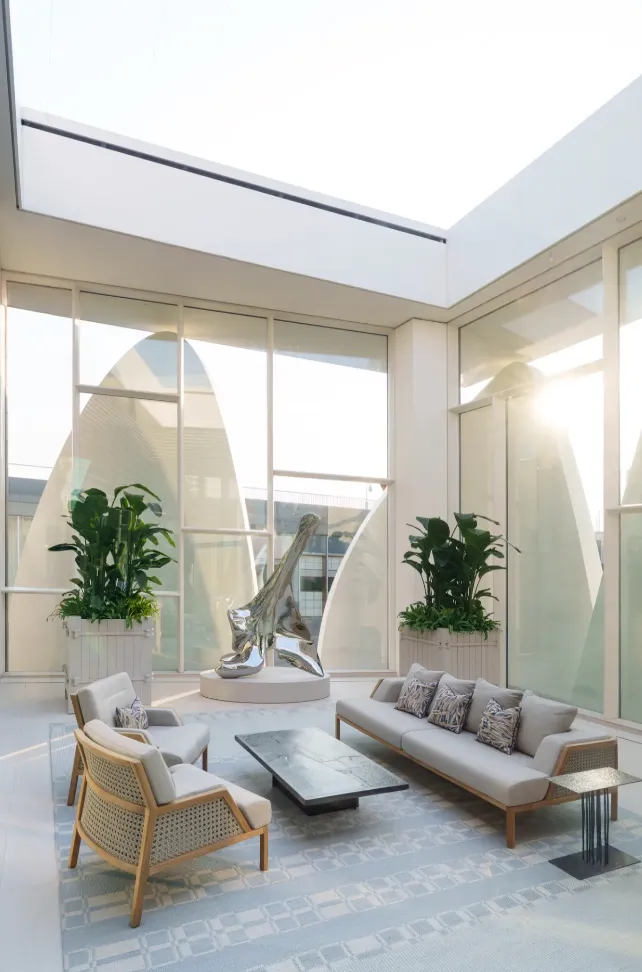
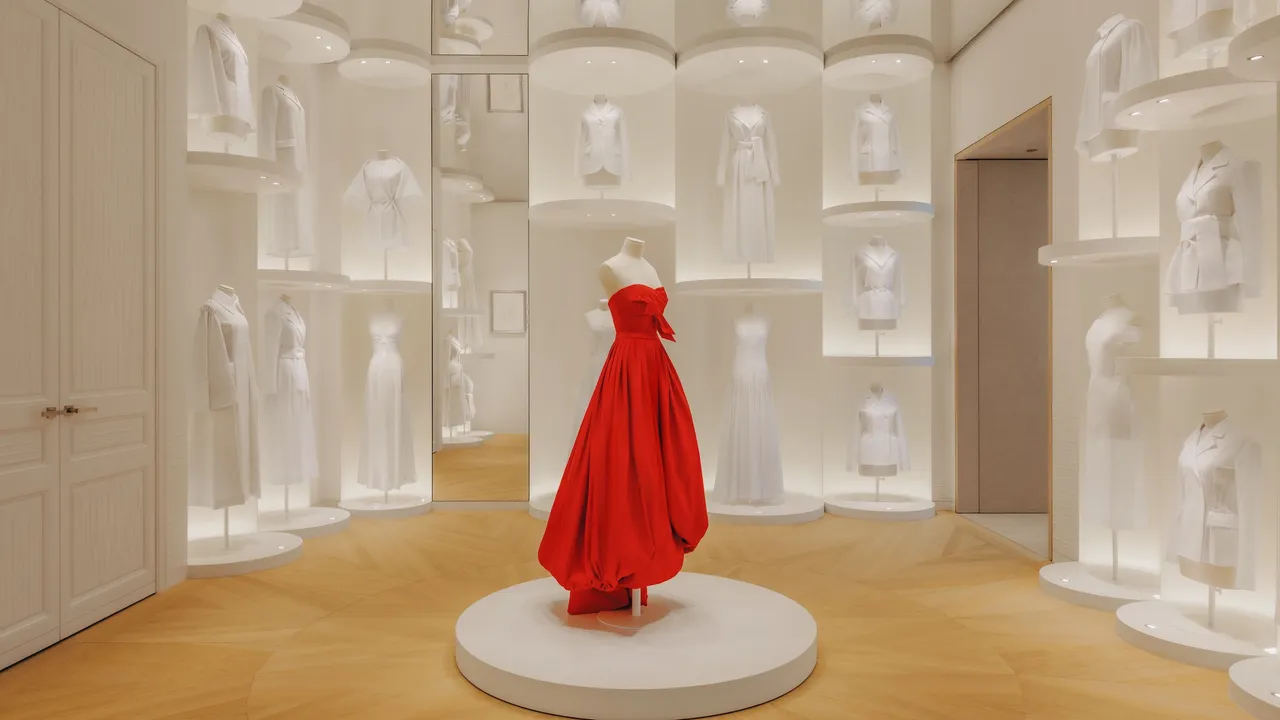
The top floor features a conceptual space designed by the architecture studio OMA (Office for Metropolitan Architecture), led by partner Shohei Shigematsu, occupied by white toiled mannequins that exemplify the savoir-faire of the Dior workshops, with a dramatic red ball gown serving as a focal point.
Synthesis of Art and Architecture
De Portzamparc’s fashion-inspired design translates the gesture of couture into architectural, sculptural form. Through the integration of gold glass tiles and handmade bricks, the House of Dior’s petal facade embraces imperfection and handcrafted qualities, echoing the petites mains of the couture workshop. Together, these elements offer a multidimensional experience that goes beyond traditional luxury shopping.
House of Dior Beijing Flagship Project Details
Location: Sanlitun District, Beijing, China
Architect: Christian de Portzamparc
Client/Brand: Dior (LVMH Group)
Photo Credit: © Agent Pay & Yumeng Zhu
Explore Courses
.jpg%202.jpg "Building Performance with Forma & Opossum")
.jpg "Ondrej Chybik - Rethinking Architecture")