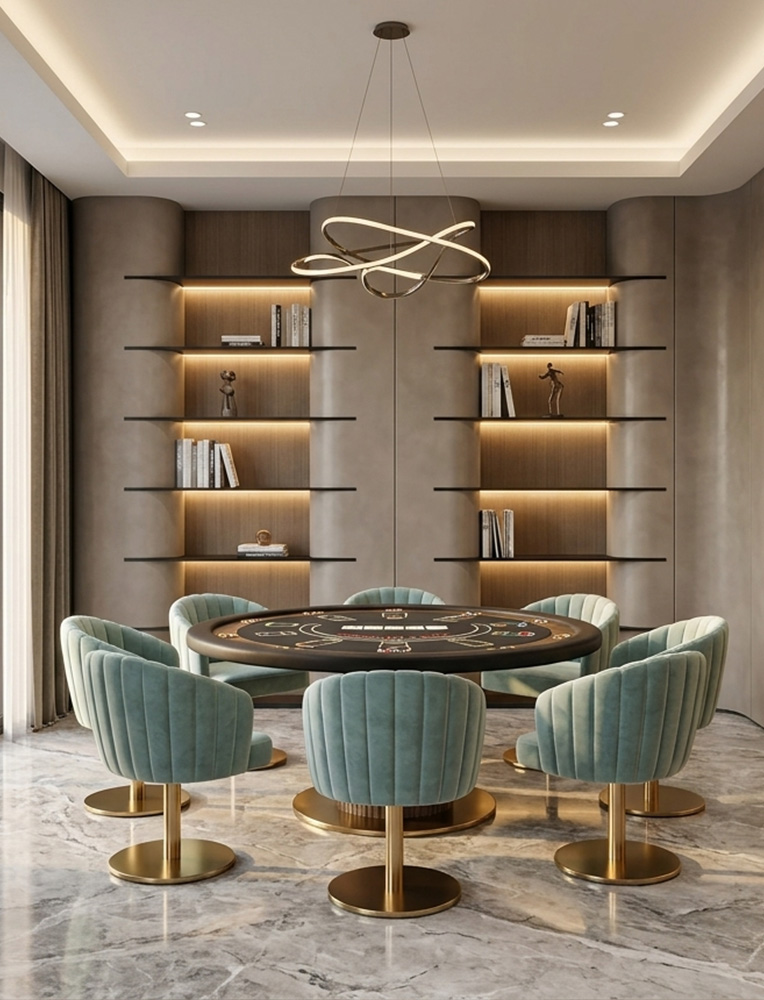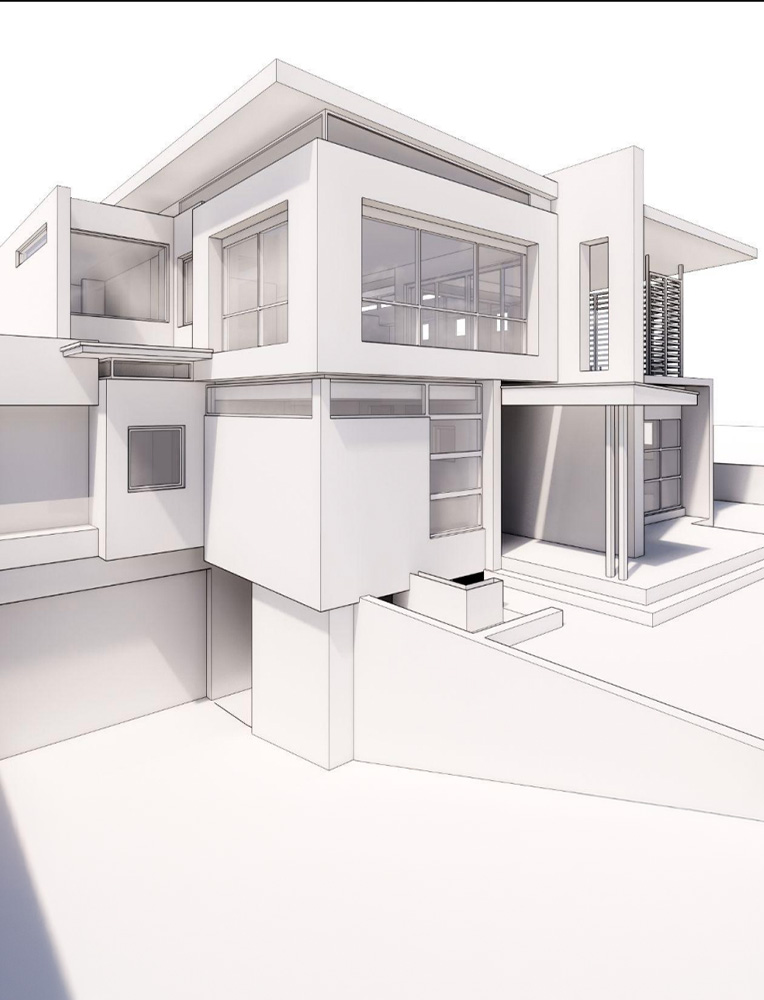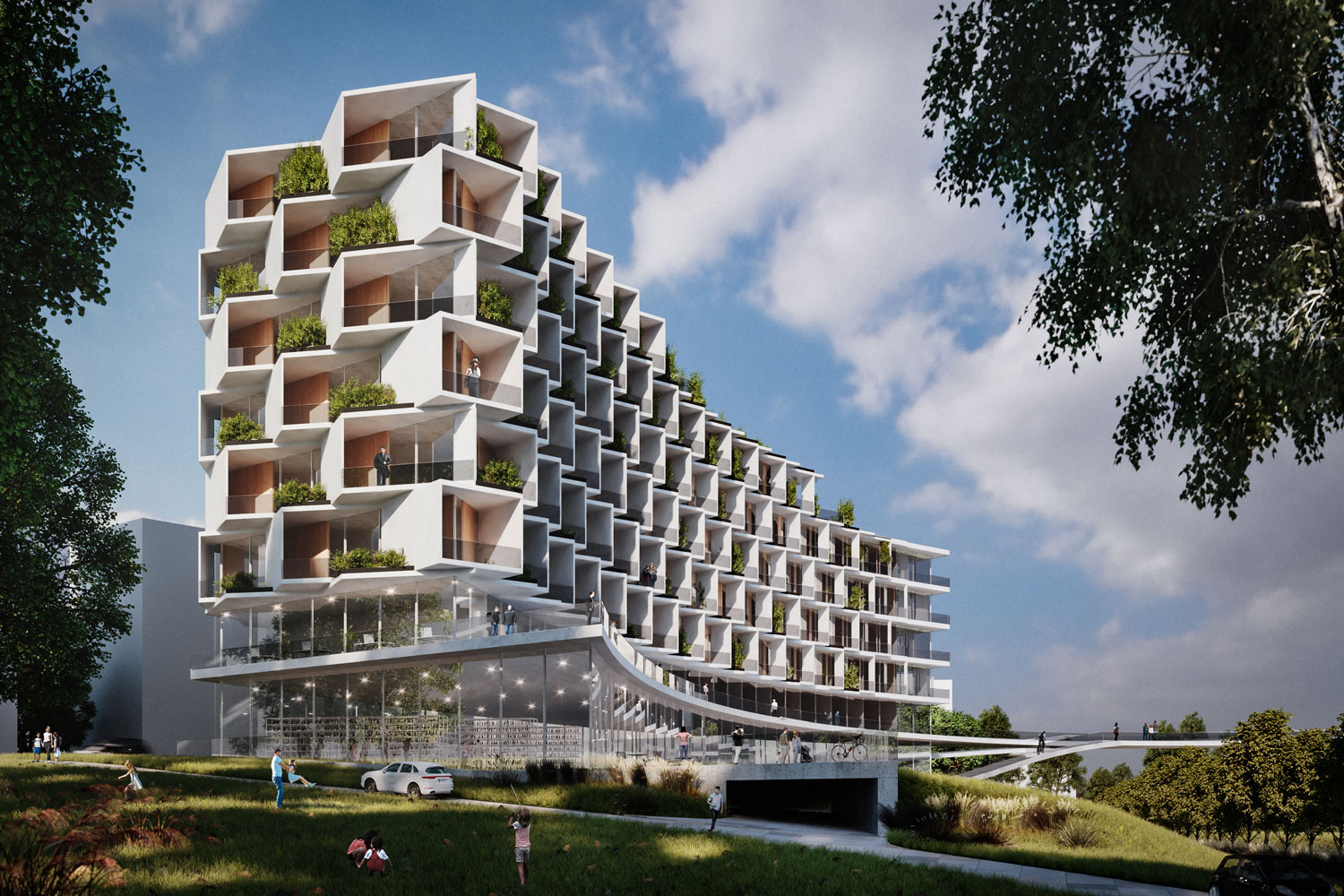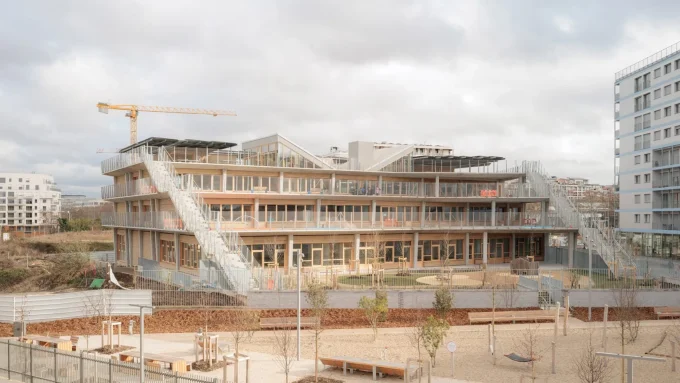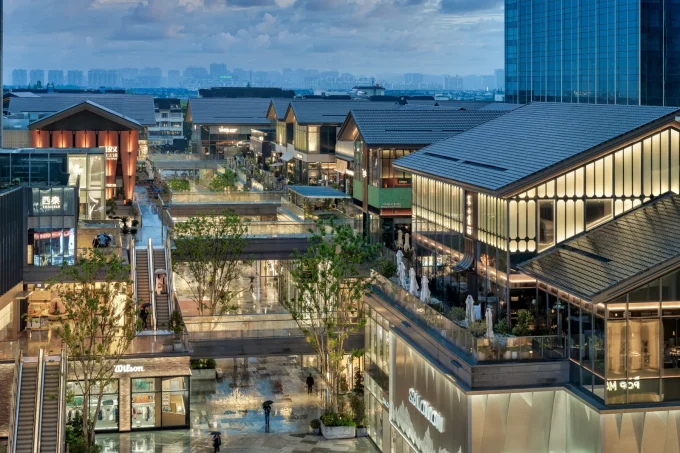



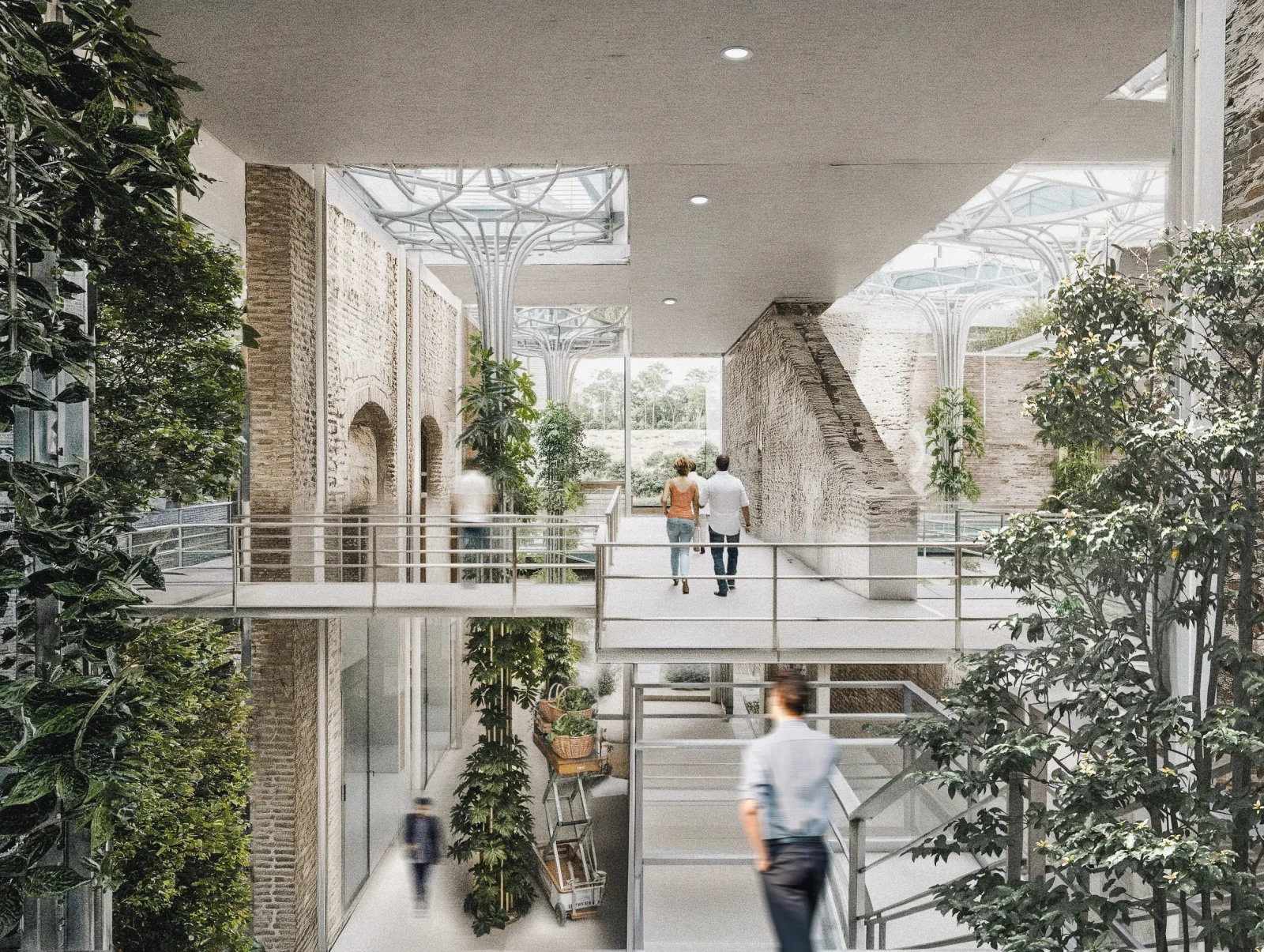
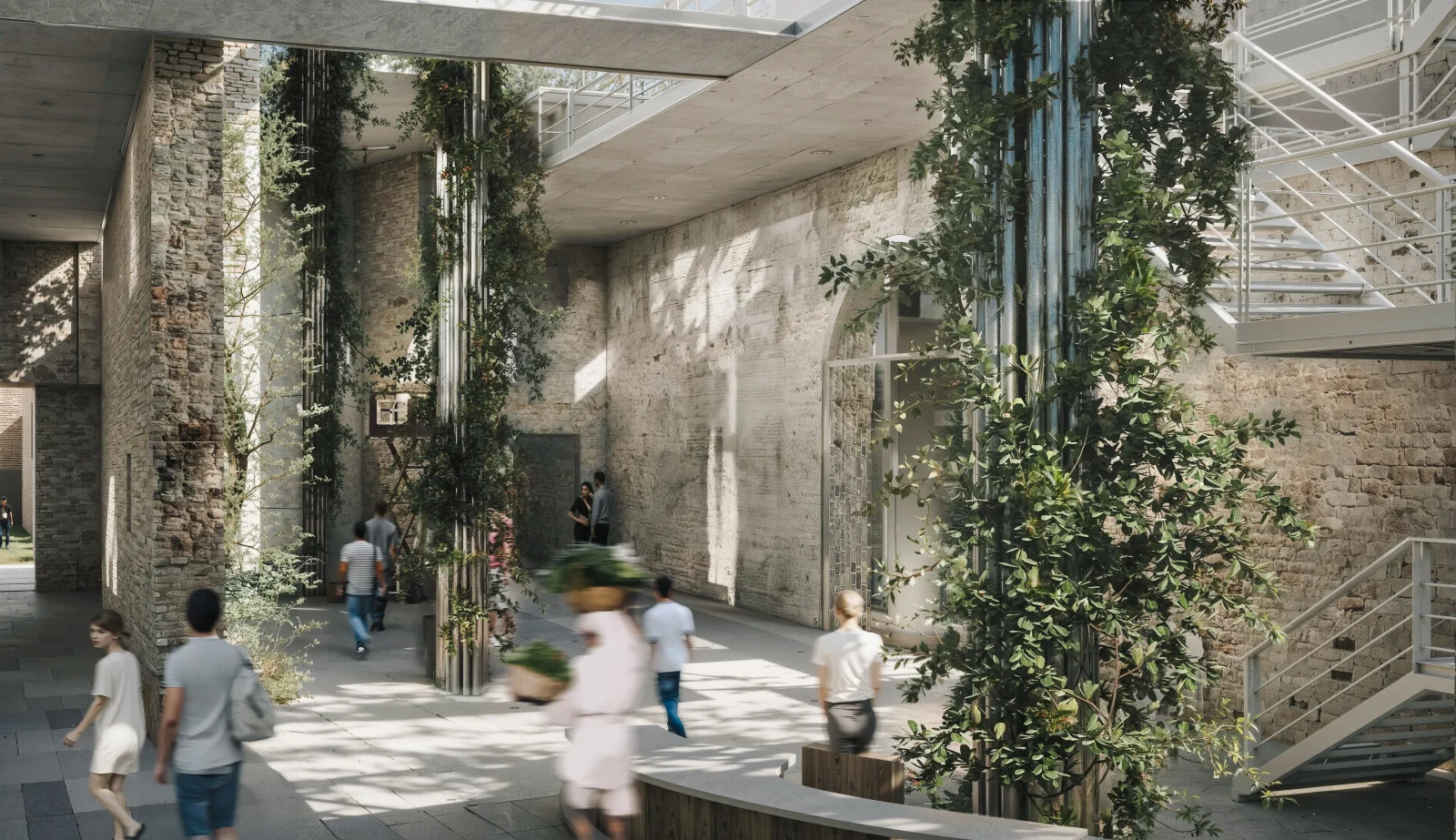
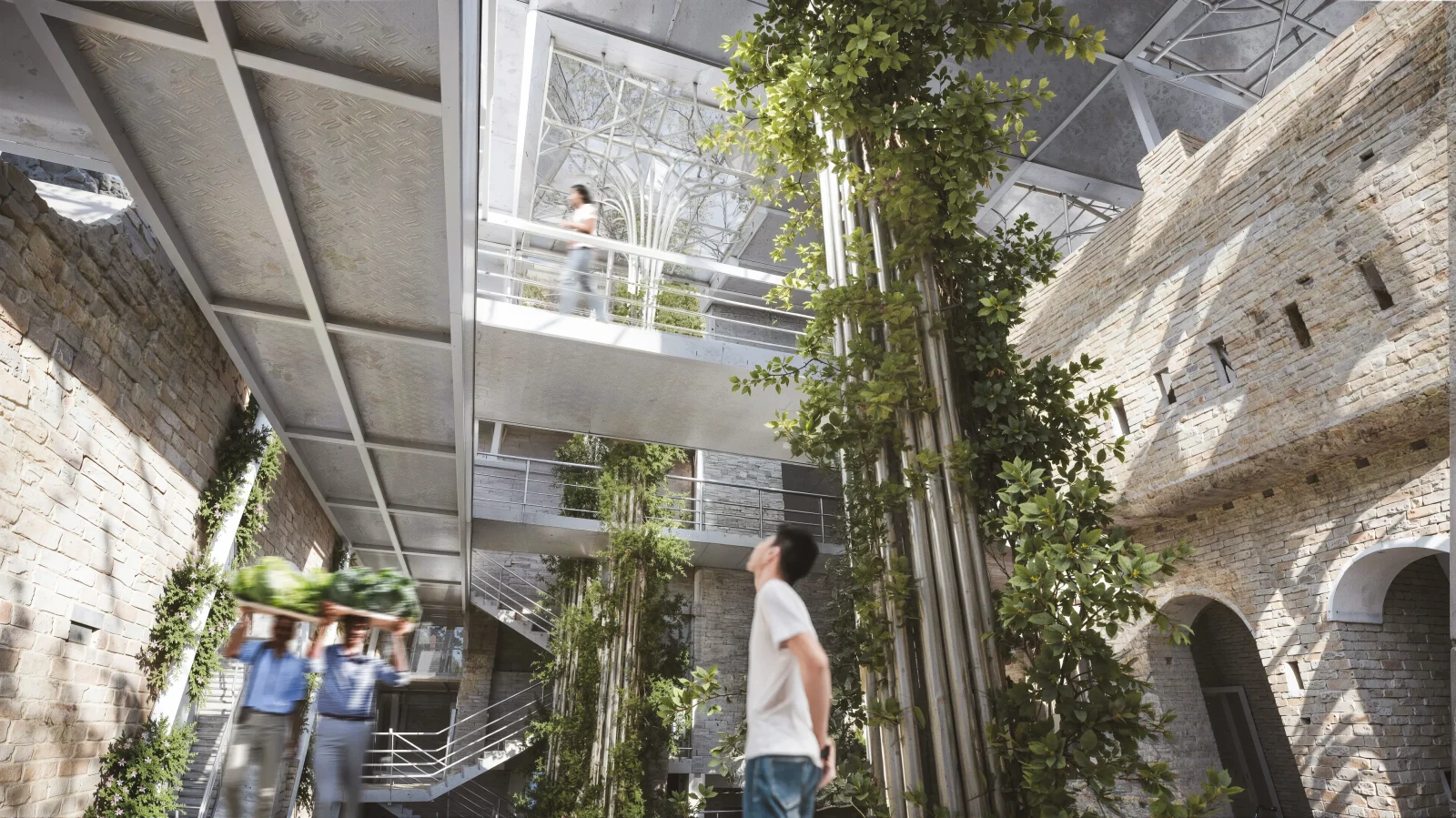
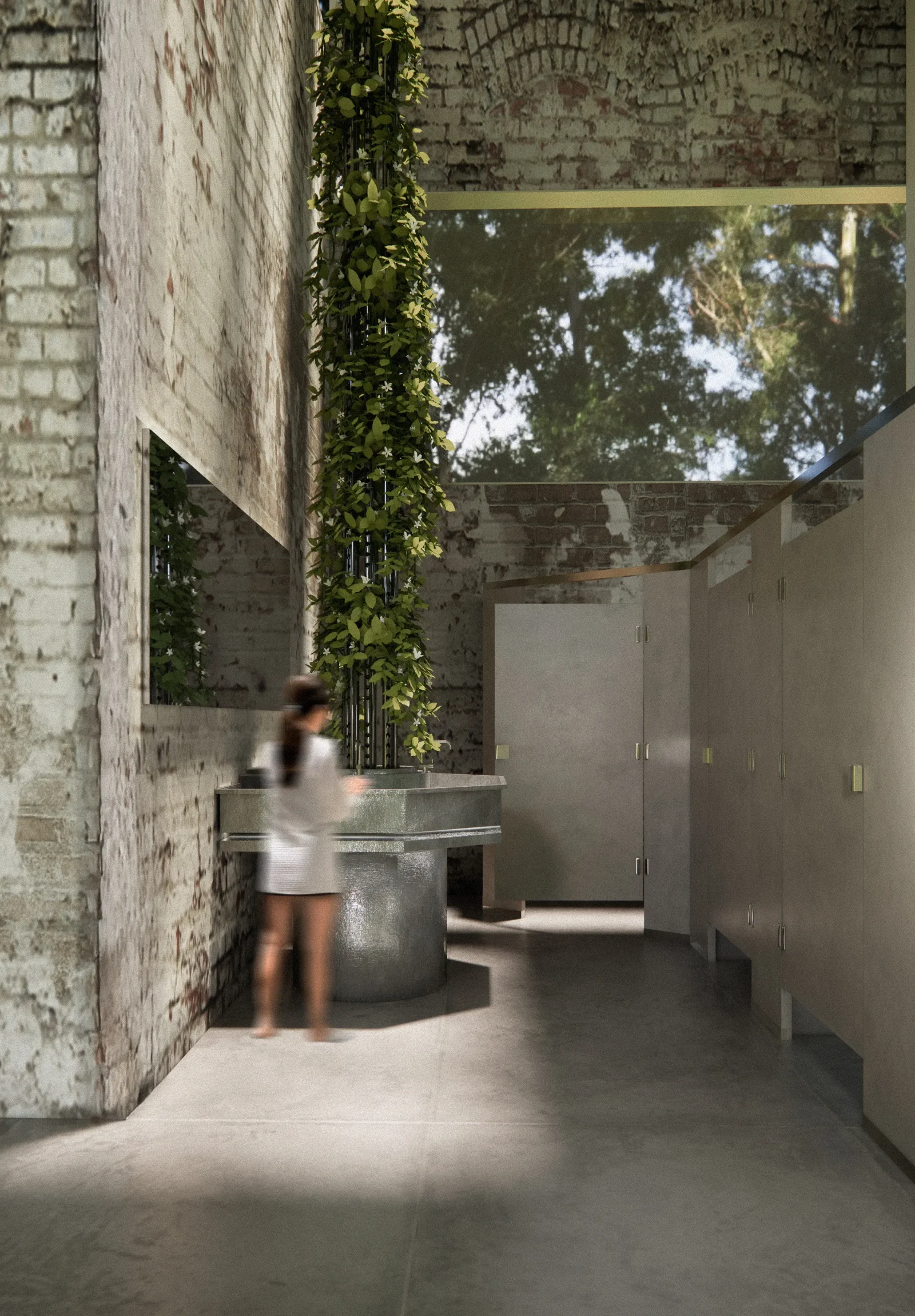
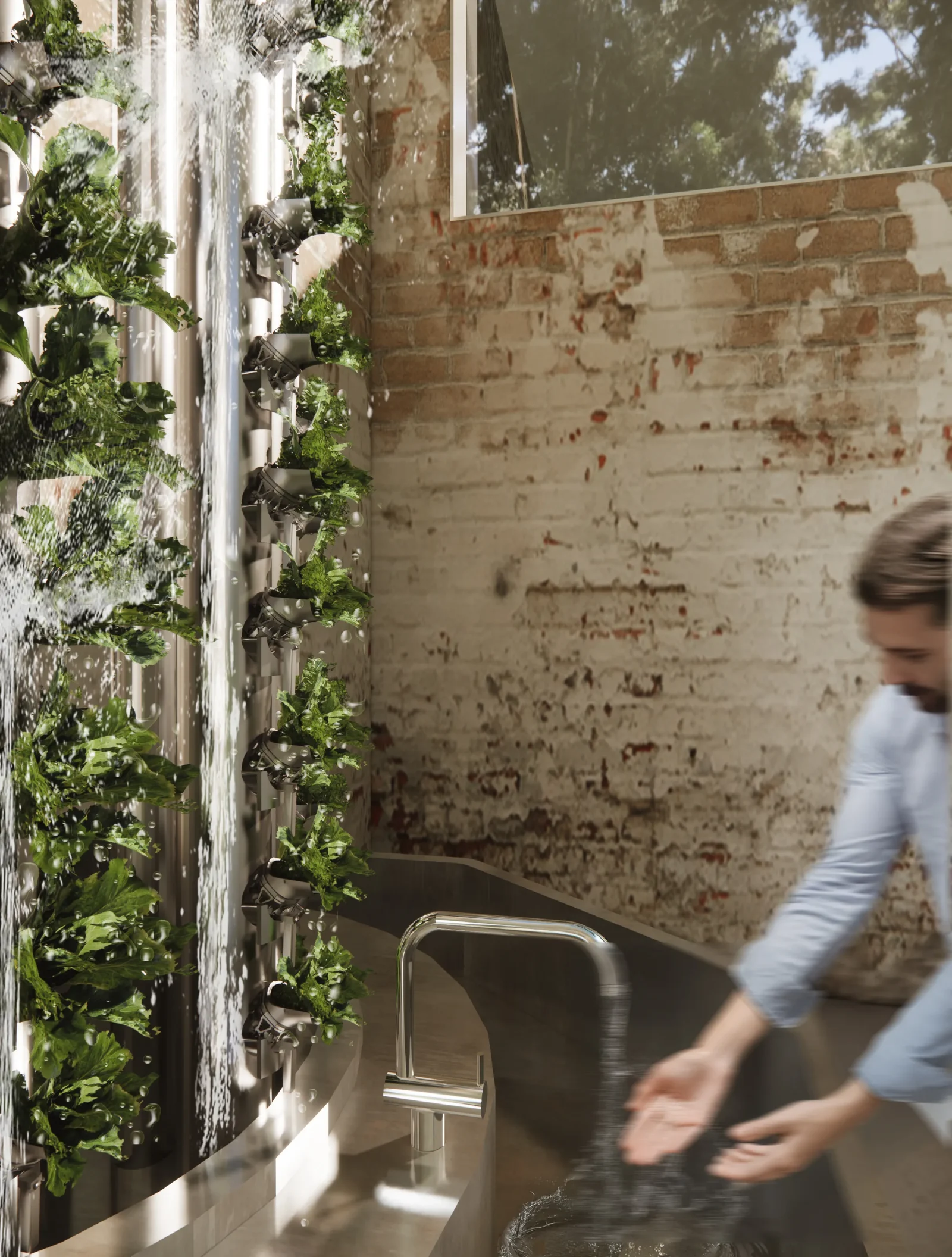
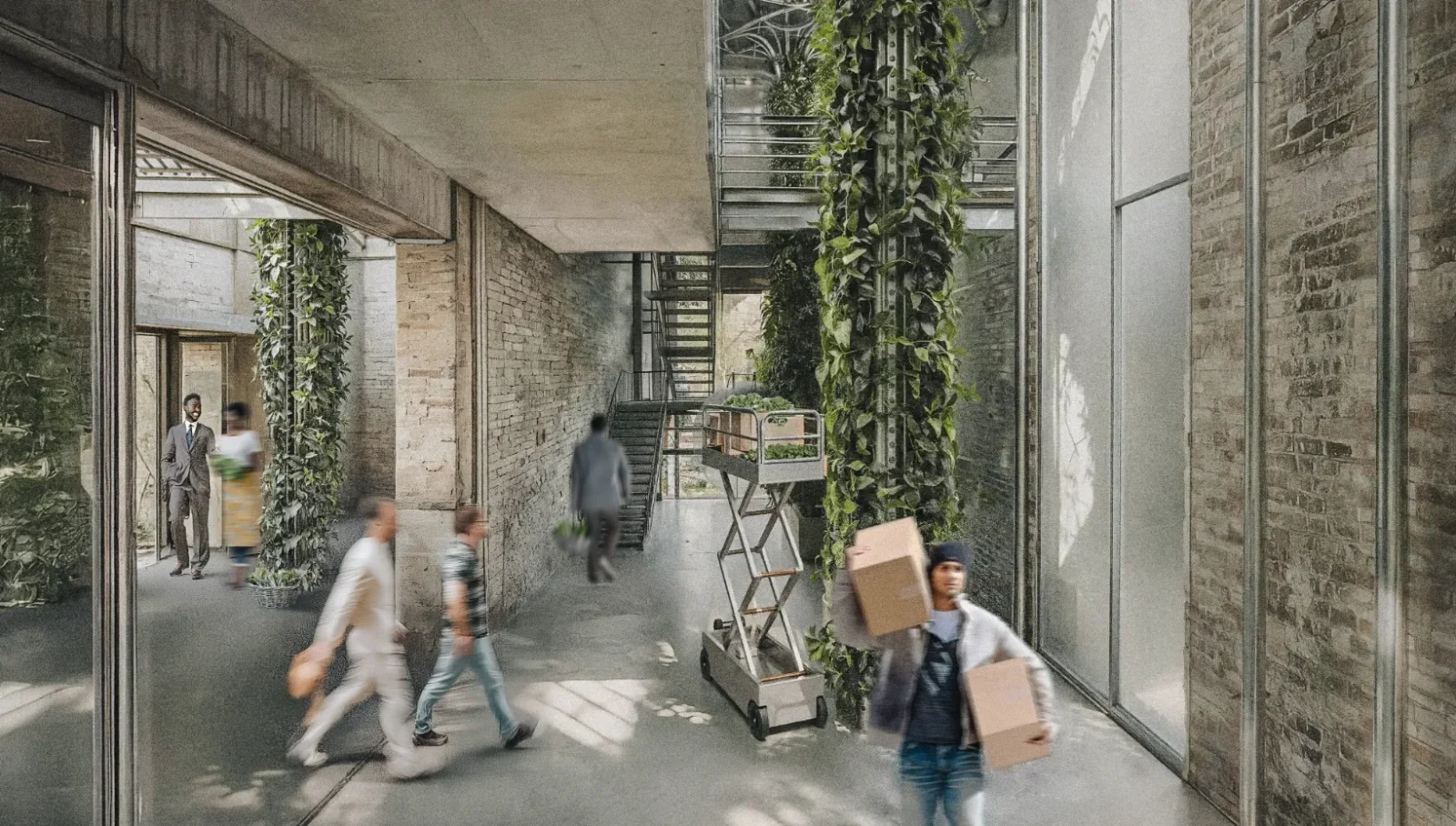
Future Farm is a conceptual architectural proposal that explores how agriculture can be redefined as an essential component of urban infrastructure rather than a remote, isolated activity. The project responds to increasing pressures on global food systems, climate instability, and urban density by proposing a modular vertical farming architecture that integrates food production, water circulation, and communal life into a single spatial framework.
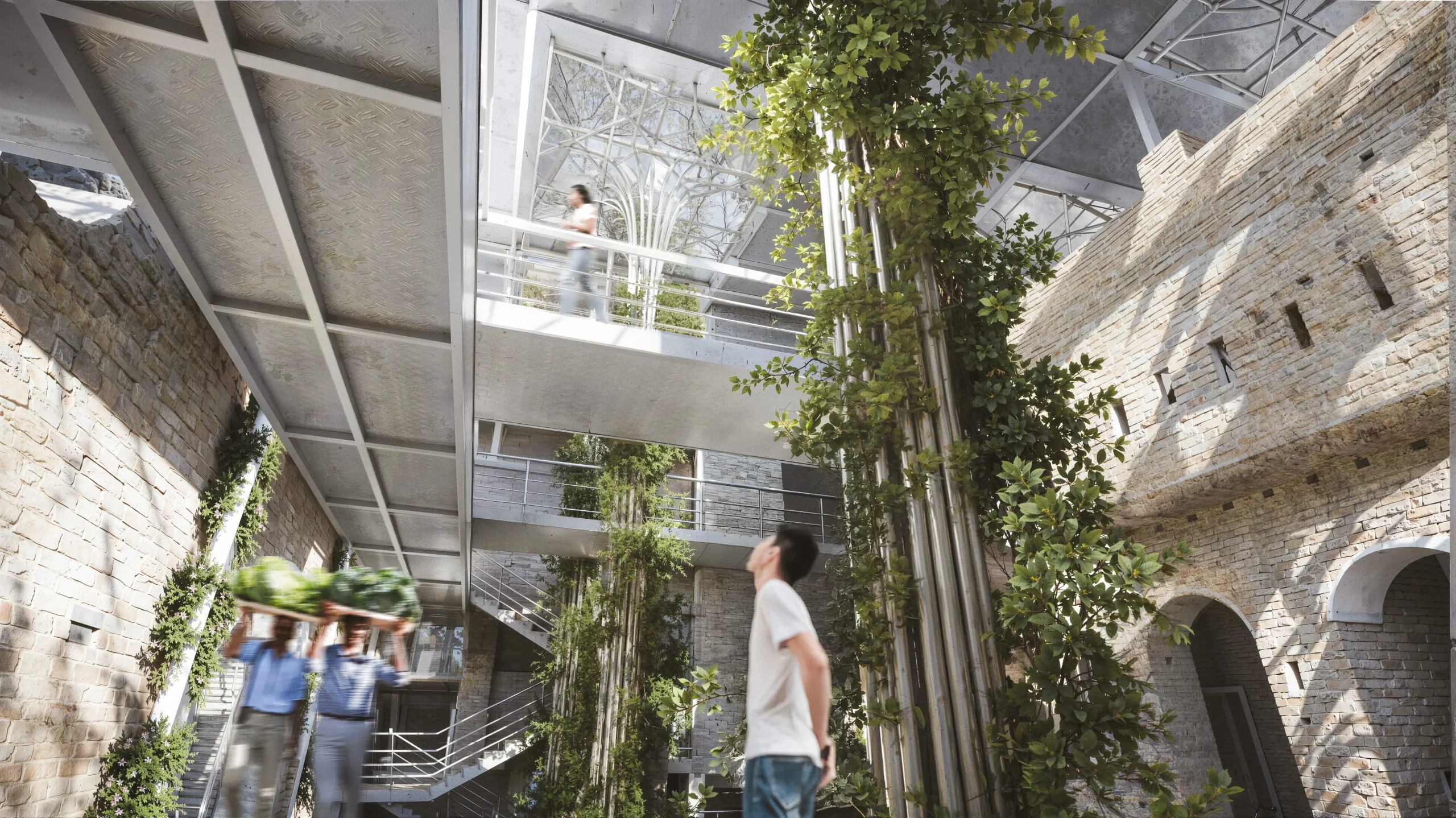
At its core, Future Farm is conceived as a hydro-ecological system. Water is not treated as a hidden technical service, but as a visible and organizing architectural element. Rainwater collection, greywater recycling, filtration, and irrigation are designed as a continuous closed-loop cycle that directly shapes spatial arrangement and circulation. This water-driven logic informs both the vertical organization of farming modules and the horizontal relationship between productive, communal, and educational spaces.
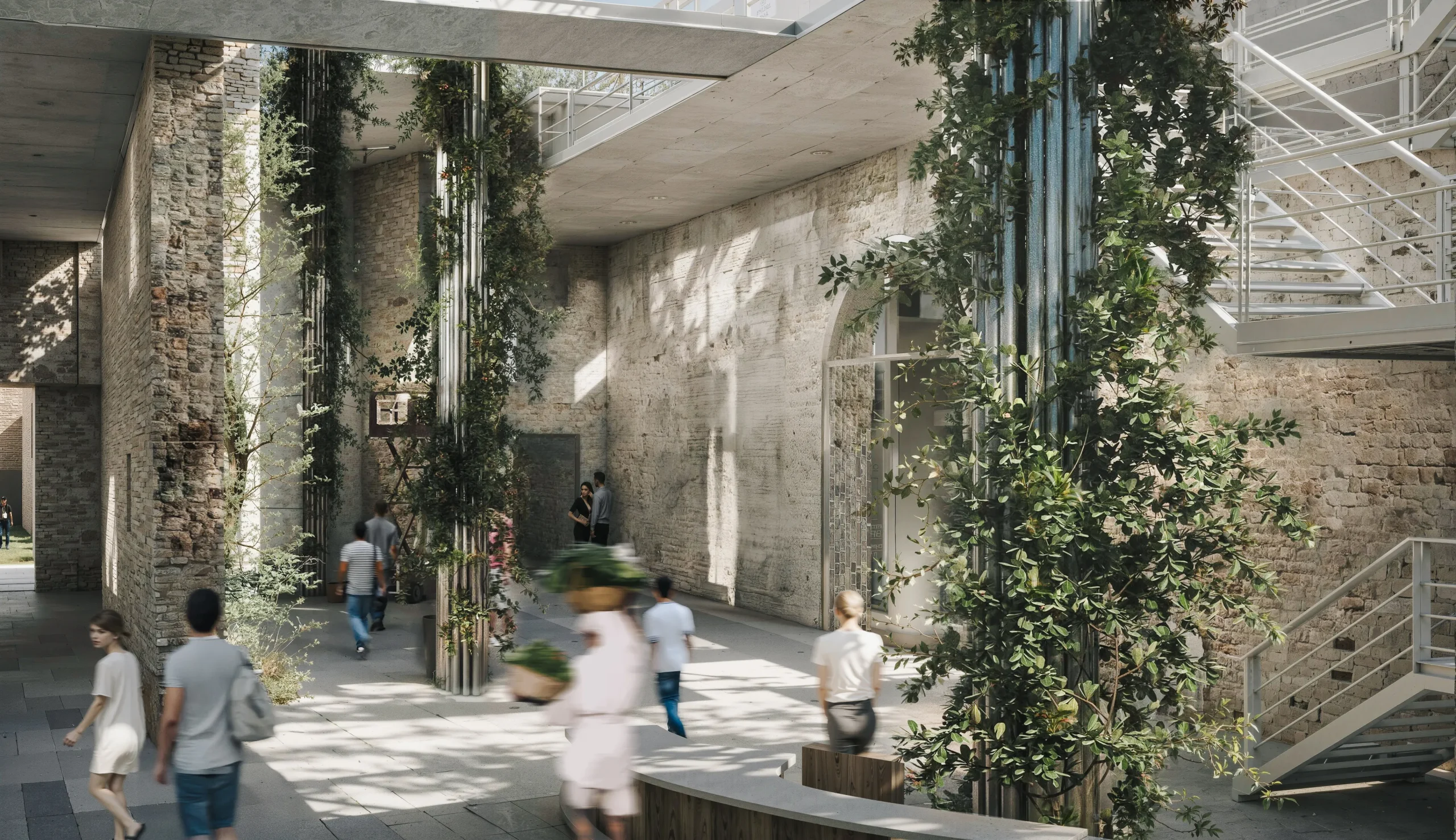
The architectural structure is composed of modular units that can be adapted to different urban contexts. Each module accommodates hydroponic growing systems, allowing crops to be cultivated efficiently with minimal soil and reduced water consumption. These farming units are interwoven with shared kitchens, public greenhouses, and learning spaces, encouraging residents to engage directly with food production processes as part of everyday life. By blurring the boundary between agricultural infrastructure and social space, the project proposes farming as a collective urban activity rather than an industrial background process.
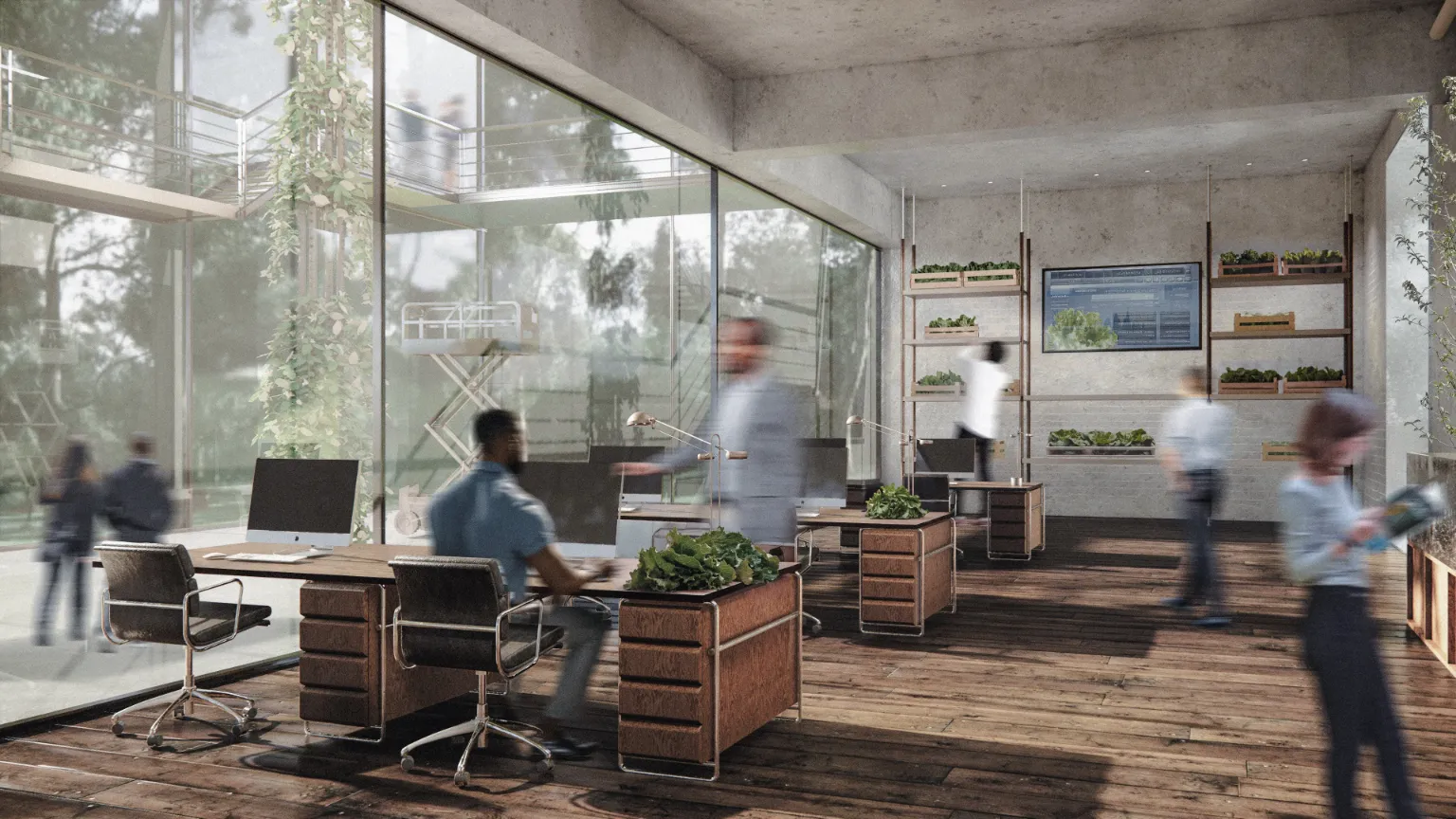
Parametric design methods are employed to optimize spatial efficiency, environmental performance, and adaptability. The modular framework allows the system to expand, contract, or reconfigure over time in response to changing population needs, climatic conditions, or technological advancements. This flexibility positions the architecture not as a fixed object, but as an evolving system capable of long-term resilience.
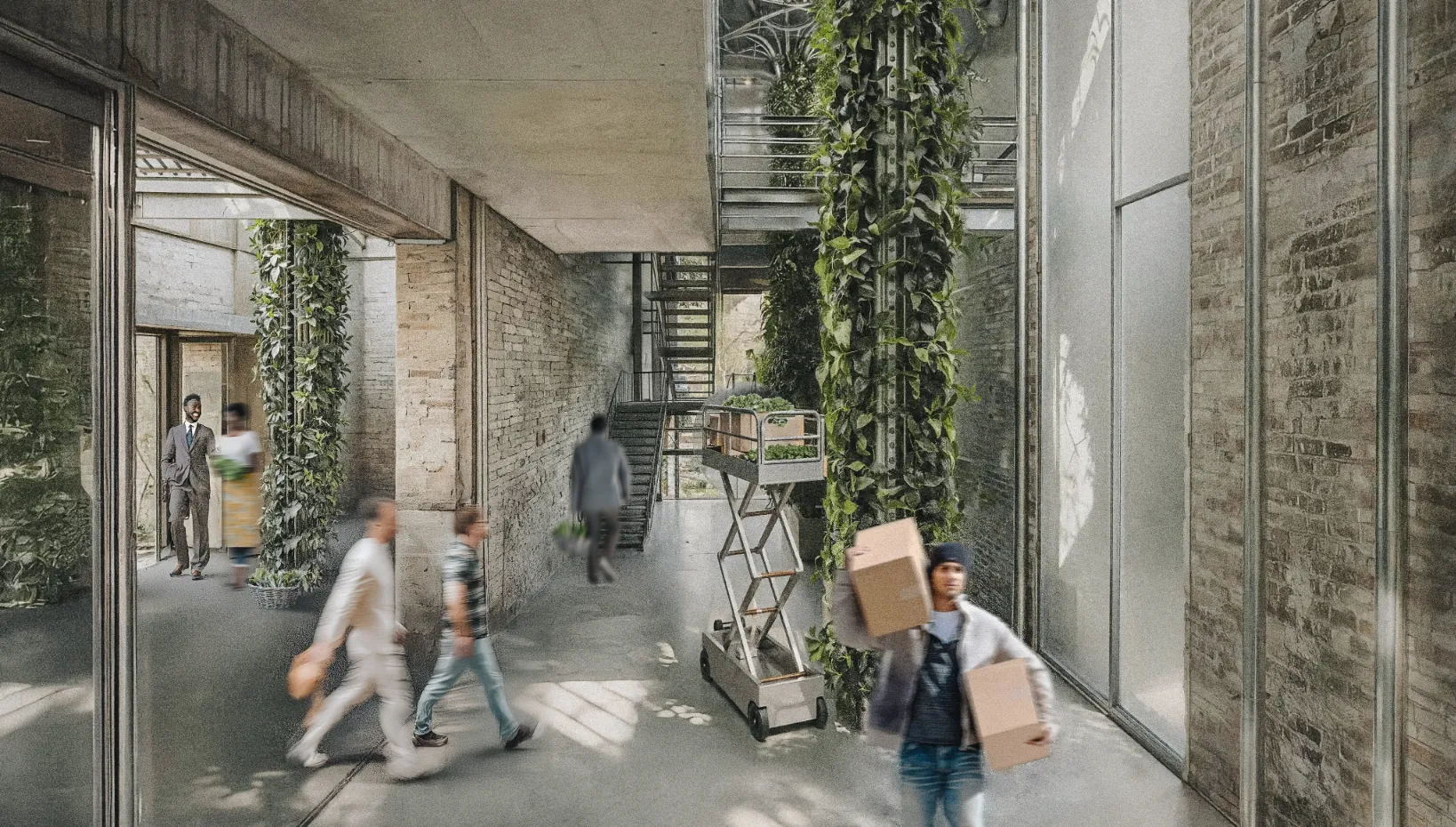
Material choices emphasize lightness, reversibility, and sustainability. Prefabricated steel frames support modular assembly and disassembly, while translucent panels allow controlled daylight penetration into growing areas. The use of recycled and reusable materials reinforces the project’s commitment to circular design principles. Hydroponic components are designed as plug-in systems, enabling maintenance or technological upgrades without disrupting the overall architectural structure.
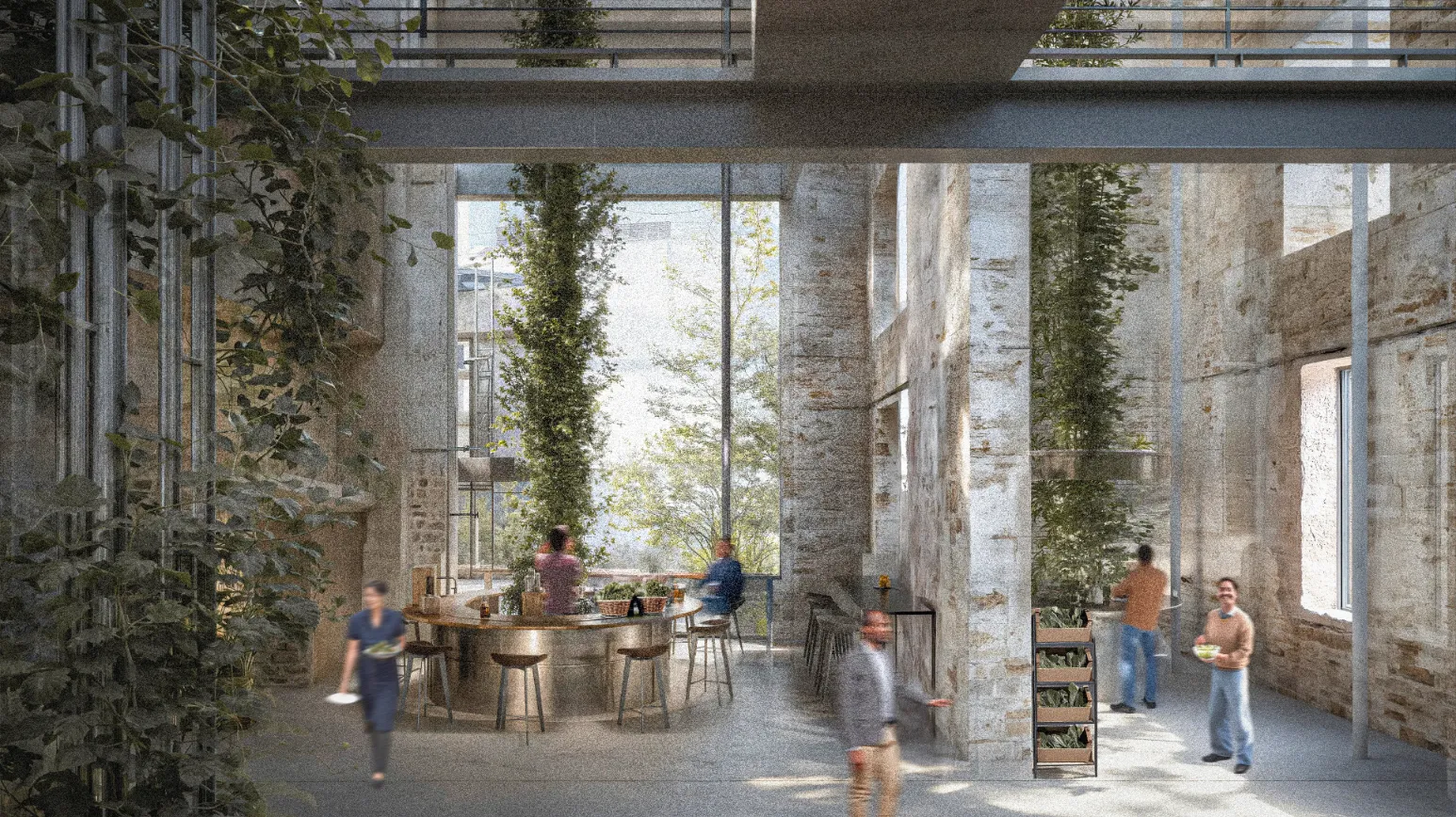
Beyond its environmental ambitions, Future Farm also addresses social sustainability. By integrating food production into daily spatial experience, the project aims to reconnect urban residents with ecological cycles that are often invisible in contemporary cities. The architecture functions simultaneously as infrastructure, workplace, educational environment, and communal space, fostering awareness of resource consumption and shared responsibility.
Future Farm proposes a shift in how architecture engages with food systems, suggesting that future cities can actively participate in ecological production rather than merely consuming its outputs. Through the integration of parametric design, modular construction, and closed-loop environmental systems, the project presents agriculture as a new form of urban public infrastructure, one that is productive, adaptable, and deeply embedded within the architectural fabric of the city.
Future Farm Project Details:
Project Name: Future Farm: Architecture as Hydro-Ecological Infrastructure
Project Location: London, UK
Architecture Firm: Q.D Spatial Practice
Architect: Qing Duan
Website: https://www.qingduan.uk/
Project Year: 2023-2025
Built/Unbuilt: Unbuilt
Built Area: Approx. 8,000–12,000 sqm (modular, expandable system)
Software Used: Rhinoceros3D, Grasshopper3D, Autodesk AutoCAD, Vray, Enscape, AI / Midjourney / Dalle
Explore Courses
.jpg2.jpg "Carlo Ratti - Rethinking Architecture")
.jpg "Architecture Diagram Mastery: Concept to Portfolio")
.jpg%202.jpg "Building Performance with Forma & Opossum")