















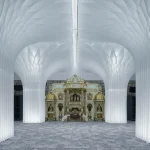


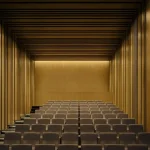


Japanese firm Kengo Kuma and Associates (KKAA), whose portfolio is characterized by a sensitive integration of natural materials and innovative structural forms, designed the world’s first audio museum dedicated exclusively to the medium of sound and the history of audio reproduction technology. Audeum in Seoul, South Korea, is a multi-sensory design that challenges the ocularcentric dominance of Western museology.
World’s First Audio Museum

Located in the Seocho-gu district, against the backdrop of the Cheonggye Mountains, the structure exemplifies architectural and acoustic engineering that incorporates light, wind, fragrance, and tactile materiality. The Audeum museum was founded in June 2024 by Michael Chung (Chung Mong-jin), Chairman of KCC Corporation, as a profound tribute to his father, the late honorary chairman Chung Sang-yung.
The Exterior Envelope of Aluminum Pipes

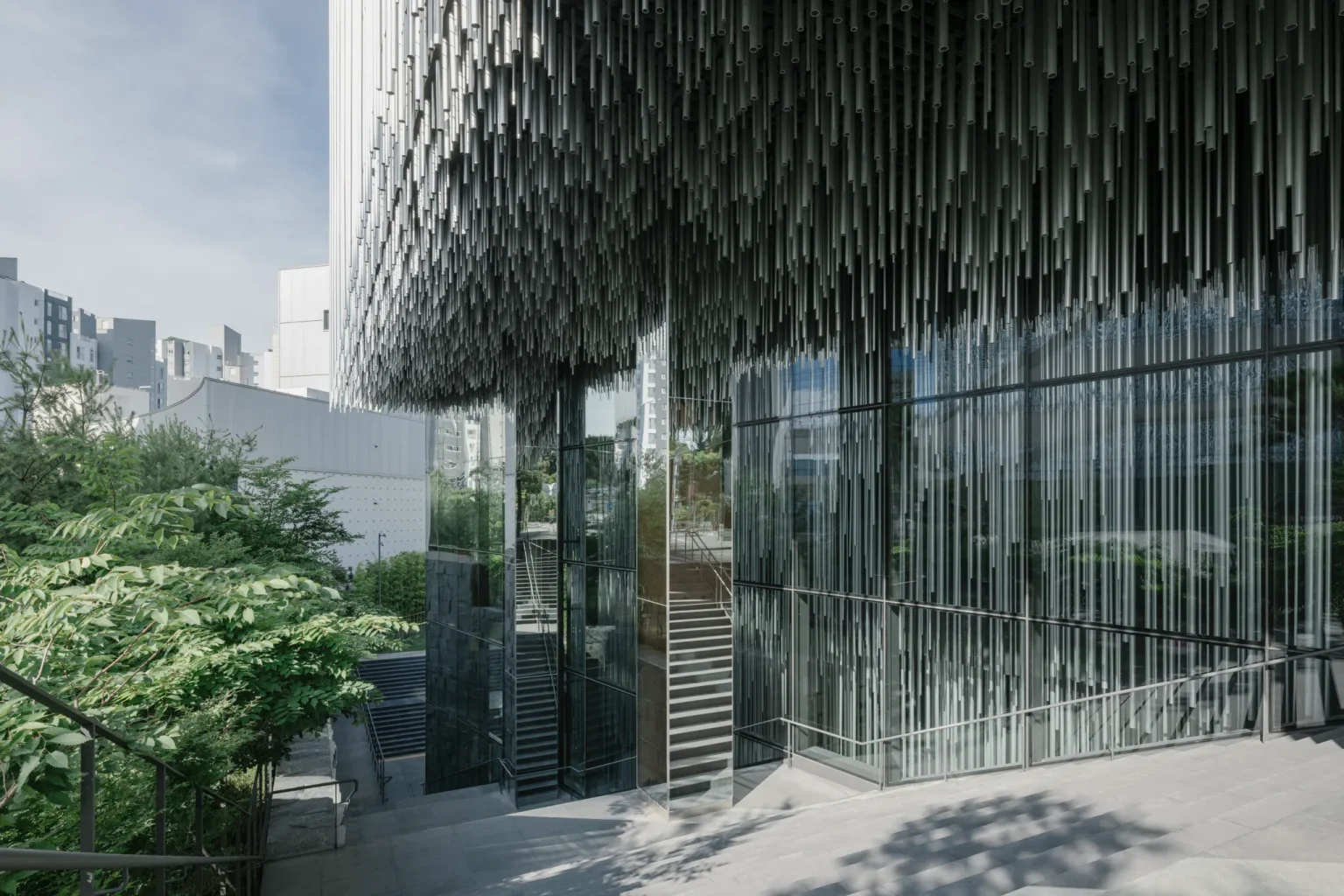
The architectural language of the building evolved not as a mere container for exhibits but as a mediator between the human body and the object, emphasizing sensory experience. Its most striking feature is the exterior envelope, crafted from approximately 20,000 vertical, overlapping aluminum pipes. These pipes are intentionally varied in length and arranged in a state of natural disorder, designed to harmonize with the randomness of the urban environment and the organic patterns of nature.

Spanning 11,009 square meters, the structure comprises five floors above ground and five floors below. It creates a dynamic interplay of light and shadow, evoking komorebi, the Japanese term for sunlight filtering through a dense woodland canopy. The choice of aluminum goes beyond aesthetics, serving as a transitional medium that engages visitors’ senses and enhances the auditory experience within.
At street level, the pipes are elevated to reveal a glass facade and a sunken valley entrance, allowing visitors to enter the sanctuary of sound, shielded from the city’s acoustic clutter. Through the collaboration of Michael Chung, Kengo Kuma, and Kenya Hara, sound has been elevated to its rightful status as a central pillar of human history and cultural heritage.
The Wood Drape and Acoustic Physics
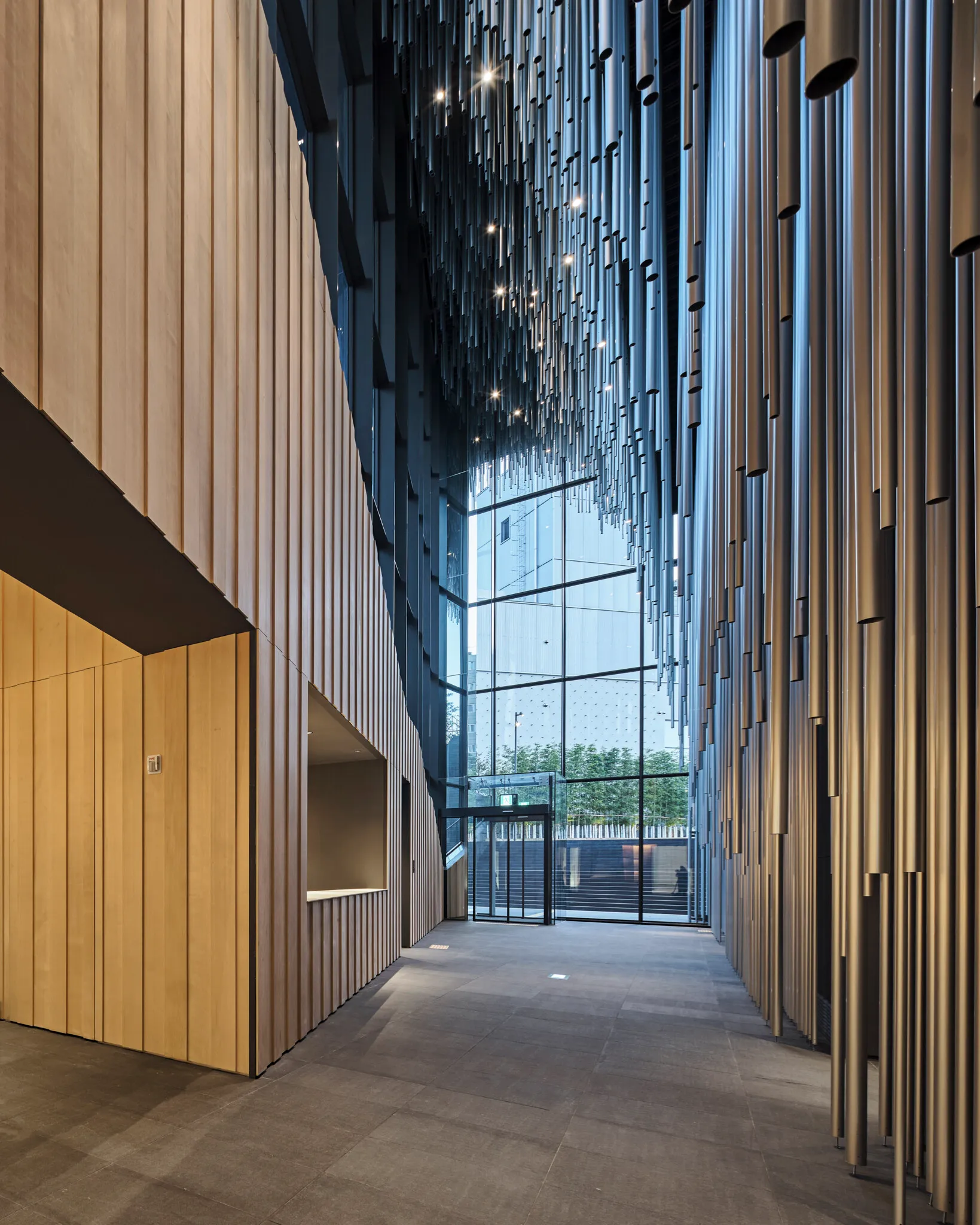
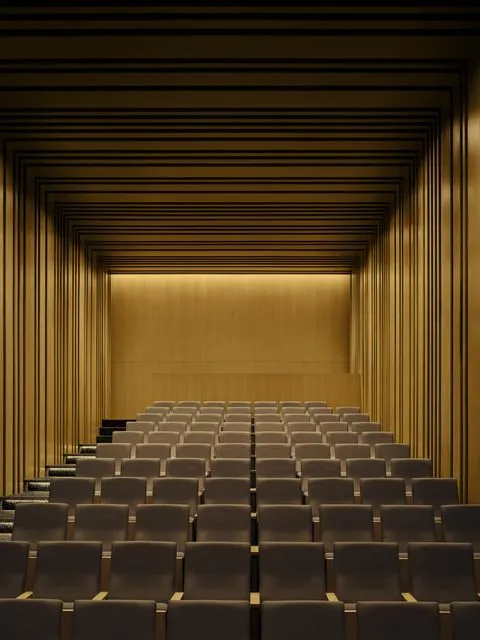
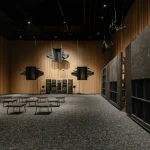
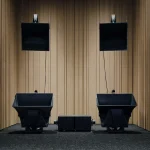
The interiors employ the wood drape technique, utilizing Alaskan cypress to finish the exhibition rooms and public spaces. The softness and texture of the wood function as both a visual and acoustic treatment. The materiality is supported by the structural engineering framework provided by Kozo Keikaku Engineering and NI Steel.
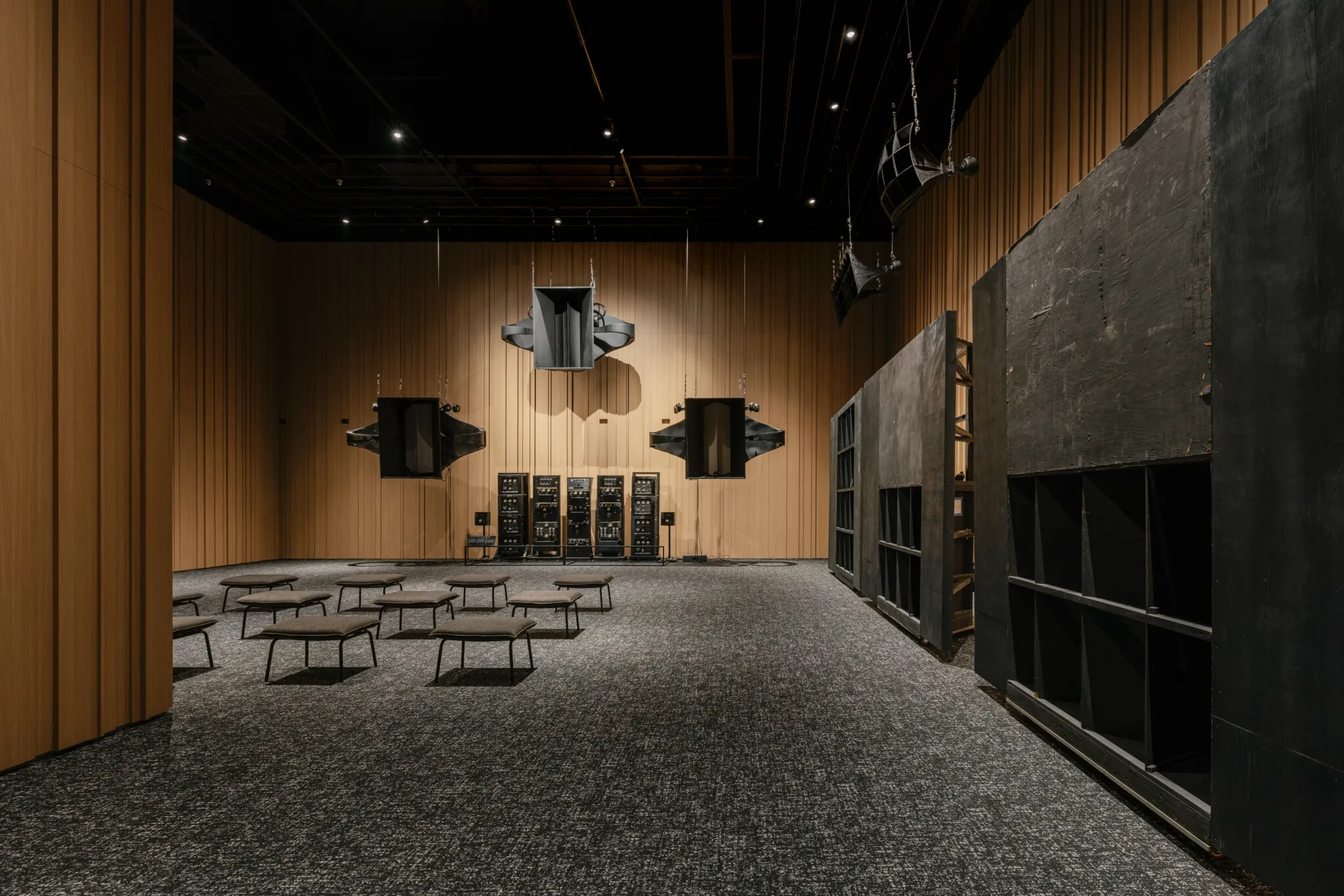
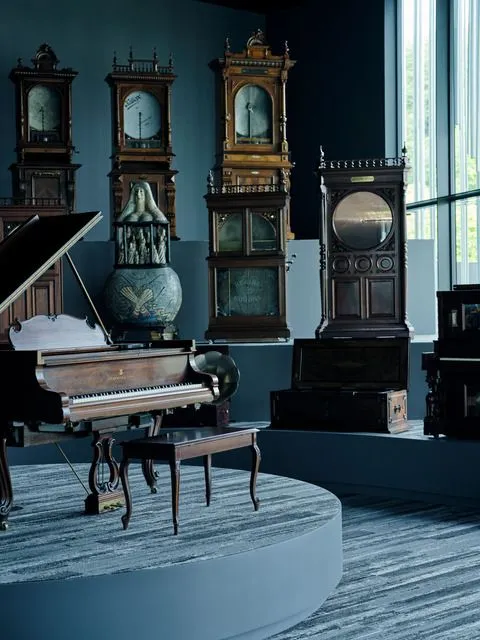
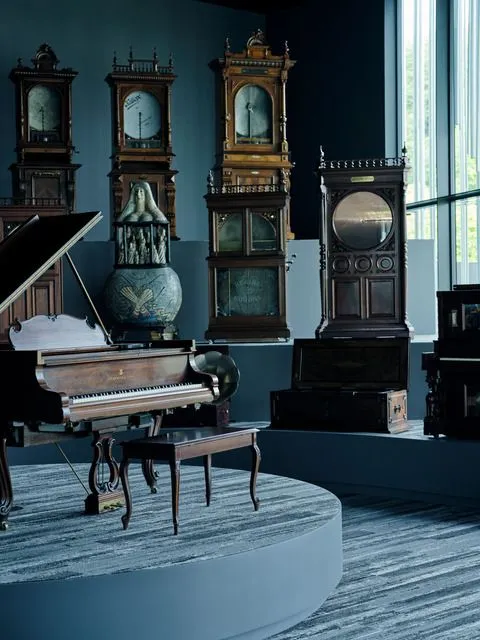
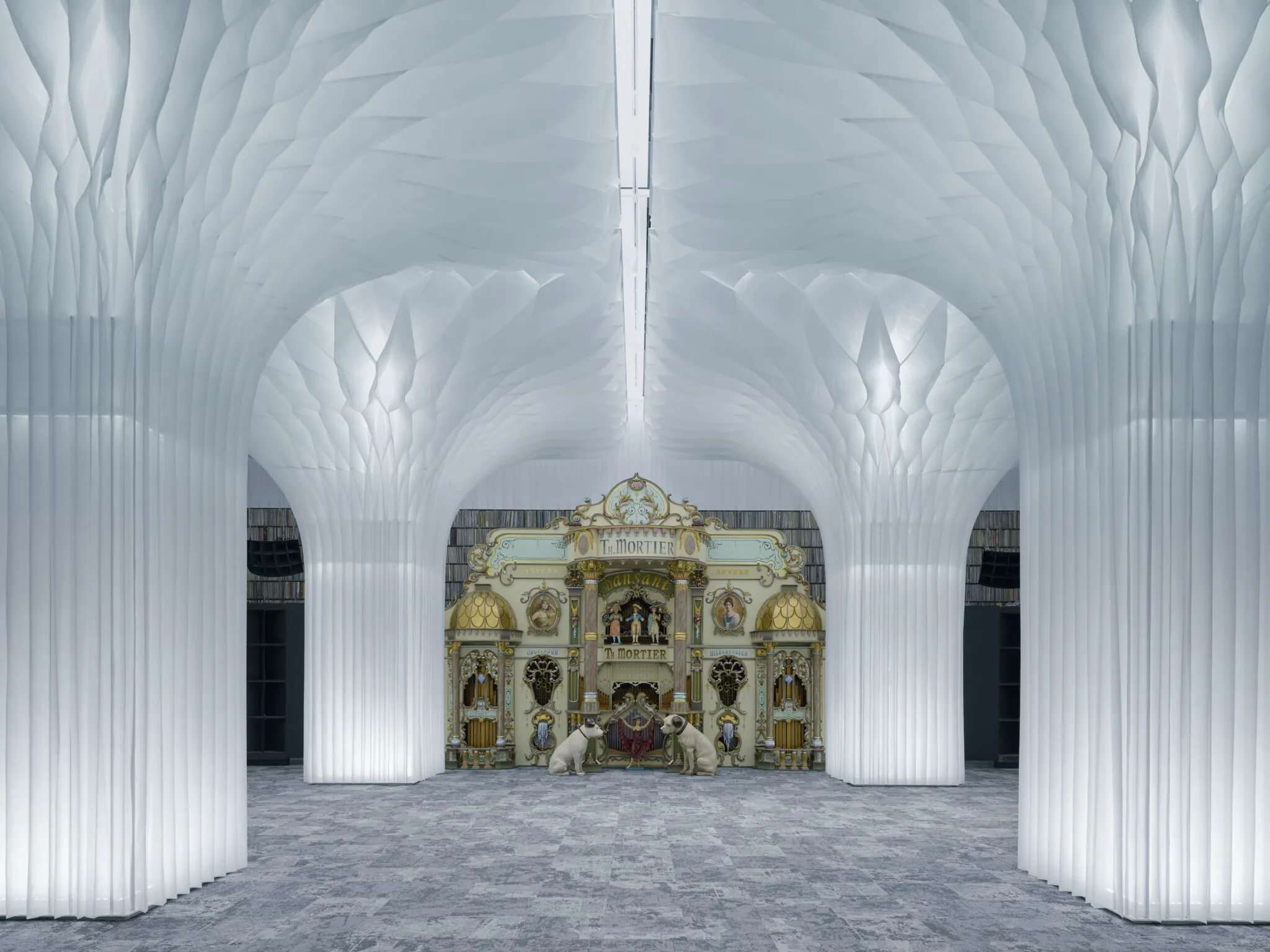
The museum houses a collection of sound reproduction equipment that chronicles the evolution of audio engineering from the late 19th century through the mid-20th-century golden age. It includes original cylinder phonographs and ornate wooden gramophones, illustrating the transition from mechanical to acoustic amplification. Complementing the hardware is an extensive archive of approximately 120,000 vinyl records and numerous rare recordings.

The collection also features historical broadcasting machines, radios, and unique objects such as a music box that integrates an entire band into a single unit.
Audeum Museum Project Details
Architects: Kengo Kuma and Associates (KKAA)
Design Team: Sungyeon Won, Hiroyo Yamamoto (CG), Shoki An (3D), Yi Ji, Yuzuru Kamiya (Model), Masafumi Yukimoto, Yuya Mori, Jeongwon Kim, Sayaka Shimizu (Model)
Construction: KCC Corporation
Structure: Kozo Keikaku Engineering, NI Steel
Illumination: LPA – Lighting Planners Associates
Others: Nippon Design Center
Photo Credits: ©︎ Lee Namsun, Lee Yongbaek, Taiki Fukao