

Engineered wood, a modern building material rooted in the learnings of the past, has redefined the construction and building industry in designing sustainable and eco-friendly built forms. An alternative to the 20th-century steel and concrete, it is durable, versatile, and blends natural warmth with cutting-edge technology. Known as mass timber, it is transforming the structure of residential and commercial architecture. As we enter a new era of innovation, the sustainable and ecologically friendly built form focuses on elegant and powerful solutions for modern skyscrapers, public spaces, and retail shops.
What is engineered wood?
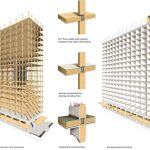
Engineered wood is created by binding layers of veneers, strands, particles, or fibers of wood together with adhesives, optimizing their strength, stability, and performance. It allows building larger, robust spaces and more intricate structures while maintaining lighter, more flexible frameworks. A diverse collection of products, including Cross-Laminated Timber (CLT), Laminated Veneer Lumber (LVL), and Glued Laminated Timber (Glulam), is used in the market to design high-rise construction and add an organic element to modern spaces.
Let’s delve into 10 inspiring structures constructed with engineered wood as a structural material that enhance eco-conscious architecture, energy-efficient homes, and sustainable skyscrapers.
1. Puukuokka Housing Block
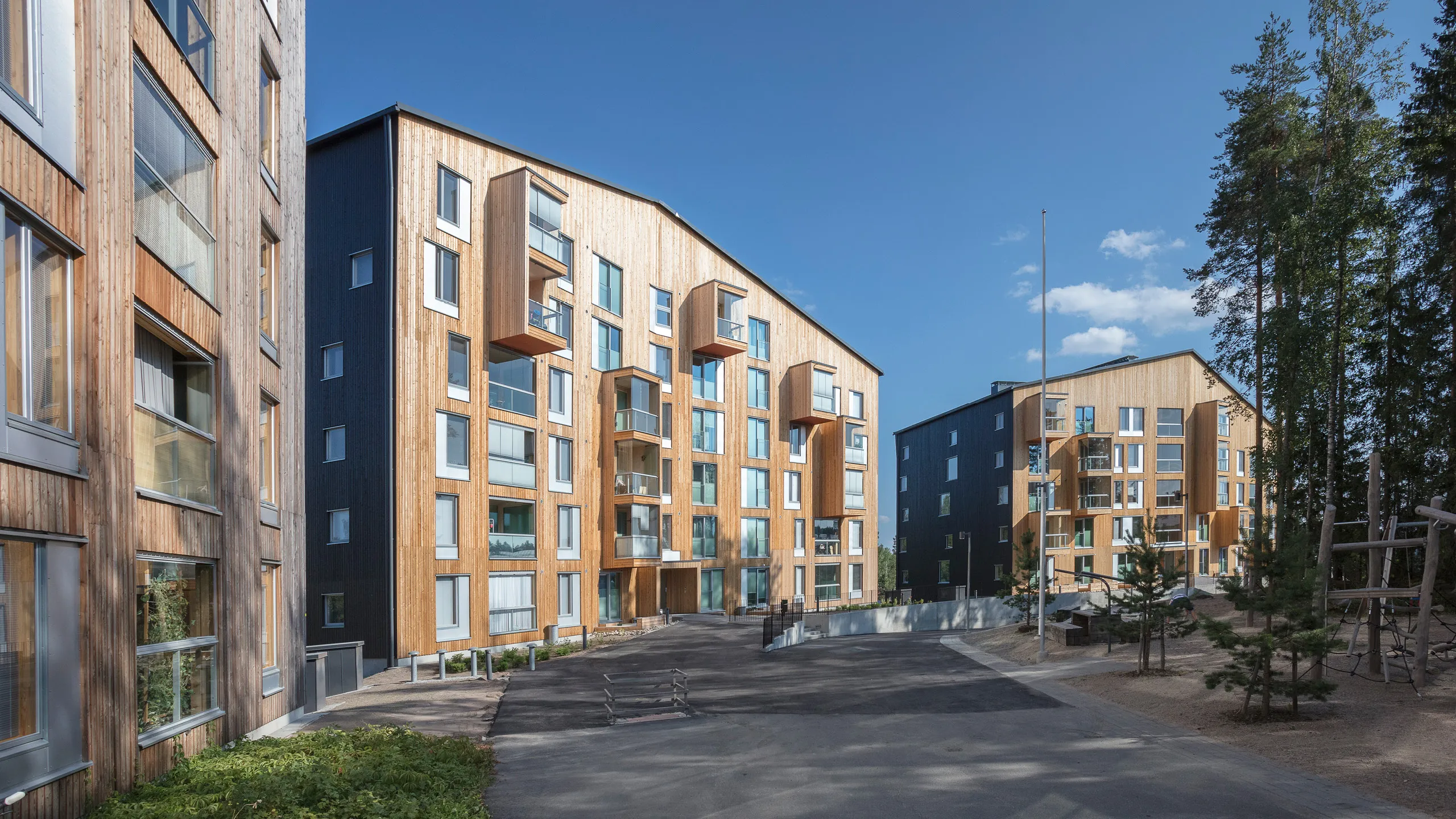
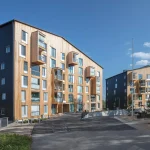
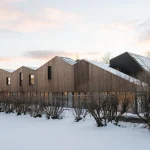
Architectural firm OOPEAA designed a groundbreaking, award-winning residential project that showcases the beauty of wood-framed construction, reflecting sustainable urban living. Located in Jyväskylä, Finland, the art of engineered wood resulted in affordable and high-quality innovative construction for a single-family home, evolving into a multi-unit dwelling.
Each apartment was designed with a modular construction technique composed of prefabricated panels. Two modules, one for the living areas and bedroom, and the other for the kitchen, bathroom, and foyer, offer a larger space. Crafted from cross-laminated timber (CLT), the facade highlights the inviting warmth of the wood, and the interiors focus on comfort. The use of timber enhances the air quality and reduces waste and environmental impact.
2. The Smile Installation
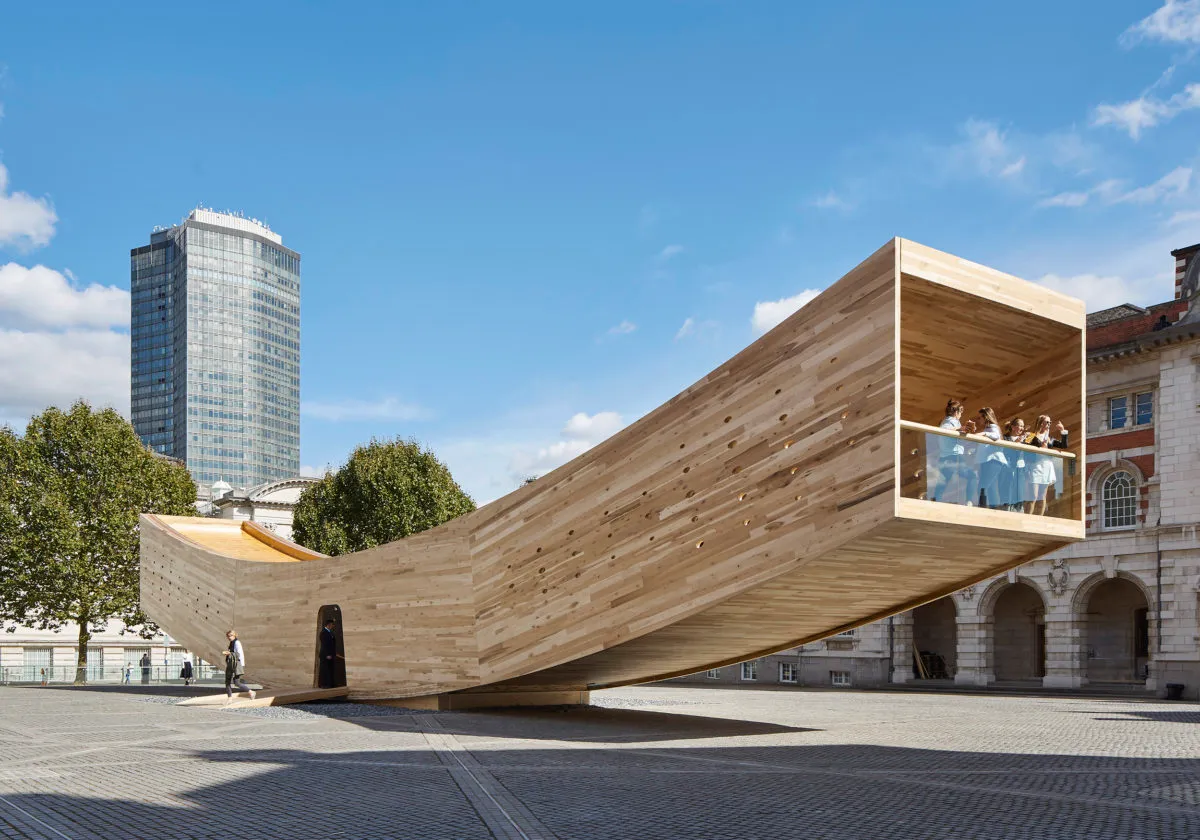
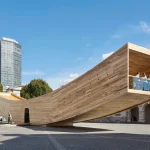
Crafted from American tulipwood, this playful installation illustrates hardwood cross‑laminated timber (CLT), 12 panels composed of a 34 m long, 3.5 m high, and 4.5 m wide mega curved tube. Alison Brooks Architects, in collaboration with the American Hardwood Export Council (AHEC) and Arup, designed a sensory installation at the London Design Festival 2016. Providing structural and sensory potential of hardwood CLT, the structure showcases a cantilevered viewing platform from a single fulcrum in a playful manner that is hollow above the ground, creating a poetic journey for the visitors to witness the texture, beauty, and light cast by timber.
3. The Albina Yard
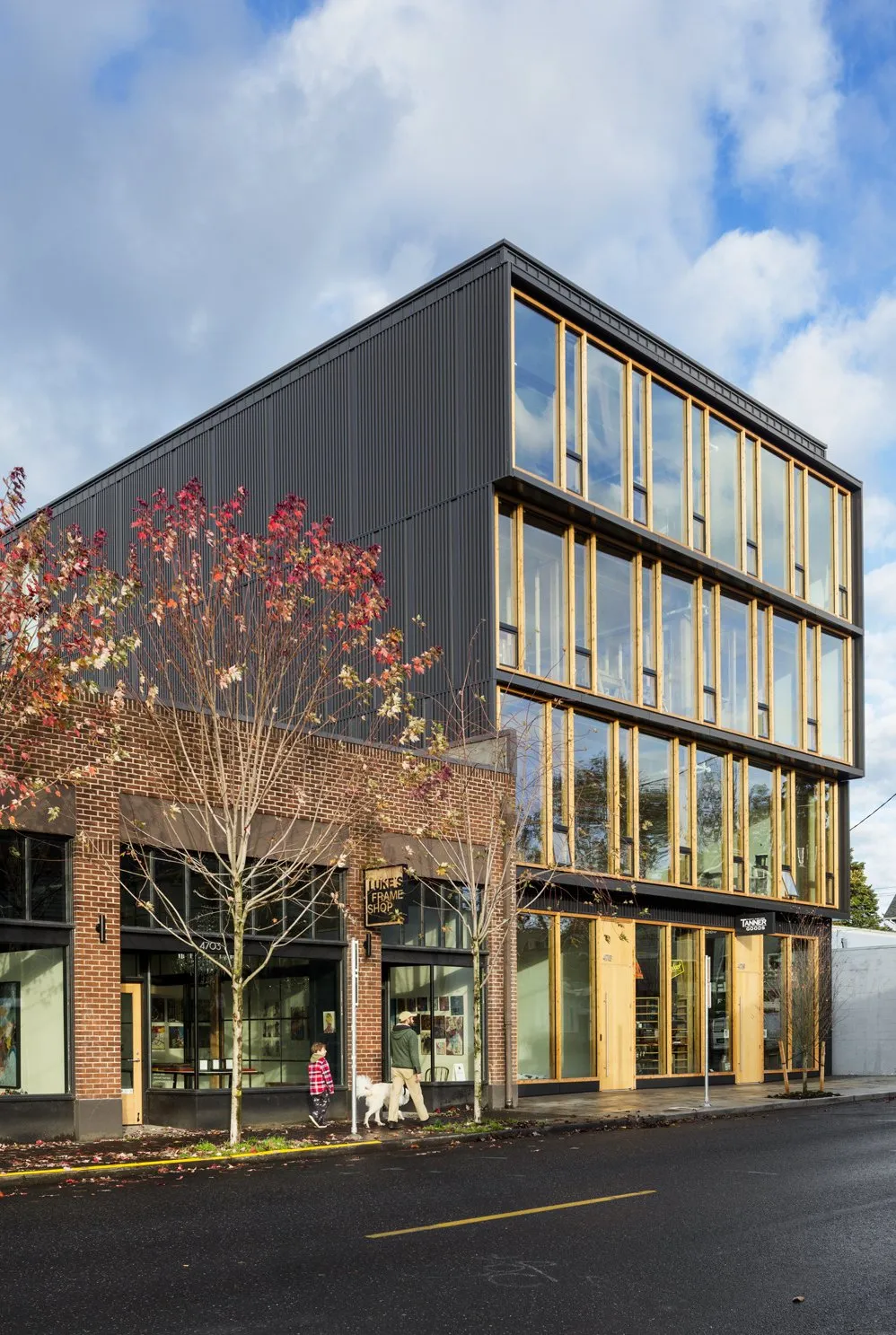
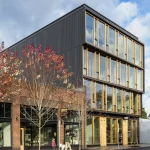
A four-storey commercial building designed by LEVER Architecture in Portland, Oregon, becomes the first building in the U.S. to employ a structural system composed entirely of domestically fabricated Cross-Laminated Timber (CLT). Crafted from three-ply CLT panels, the form embraced the building material, expressing simplicity and dynamic spaces. The design features 16,000 ft² of efficient spaces with abundant natural light in the interiors, composed of a private courtyard and collaborative working areas.
With precision and intricate details, the columns and beams are prefabricated off-site to 1/8‑inch tolerances using CNC technology. The exterior combines corrugated metal and glass, while the Douglas fir glulam frame remains exposed, extending into a structural timber window wall system.
4. Moholt Timber Towers
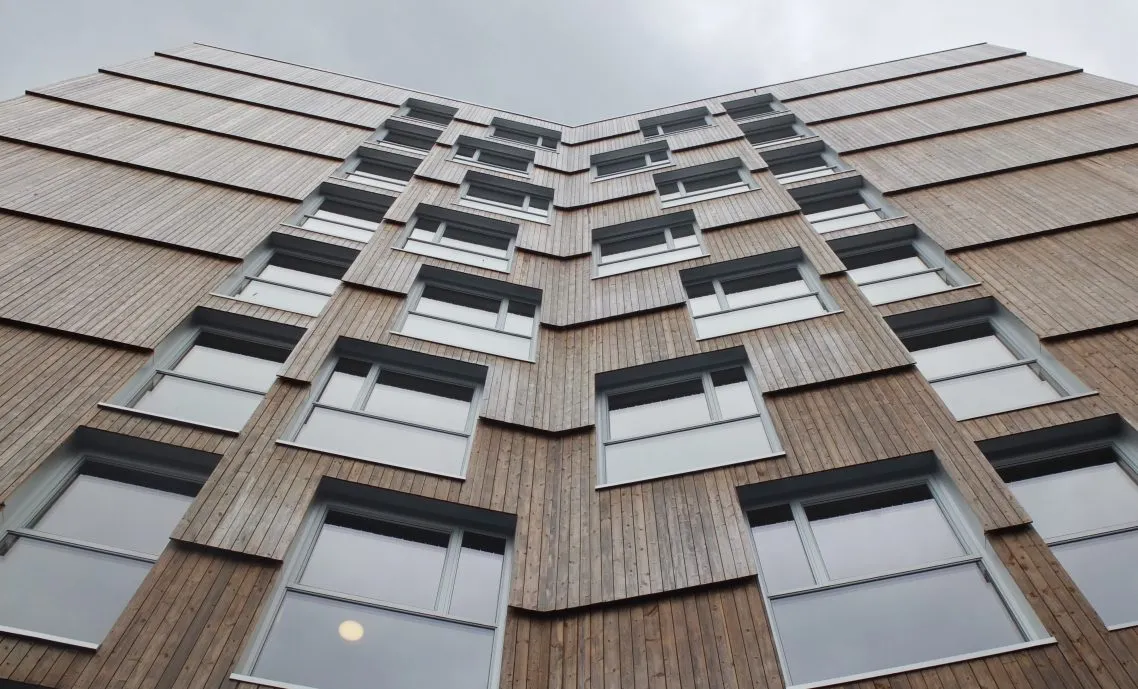
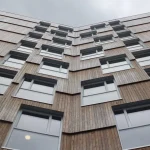
Designed by MDH Arkitekter, this nine-storey structure in Trondheim, Norway, showcases mass timber construction. Using Cross-Laminated Timber (CLT) as its primary structural material, the project enhances environmental performance, reduces CO₂, and creates a vibrant space for the student village. The form took the shape of a Y-shaped volume that consists of a kindergarten, a library, a grocery store, and various sports facilities, fostering a sense of community and urbanity. The facades are clad with Kebony-treated pine wood panels and coated with fire-protective stain and employ robust passive-house energy systems strategies.
5. Nordtvet Farm Kindergarten
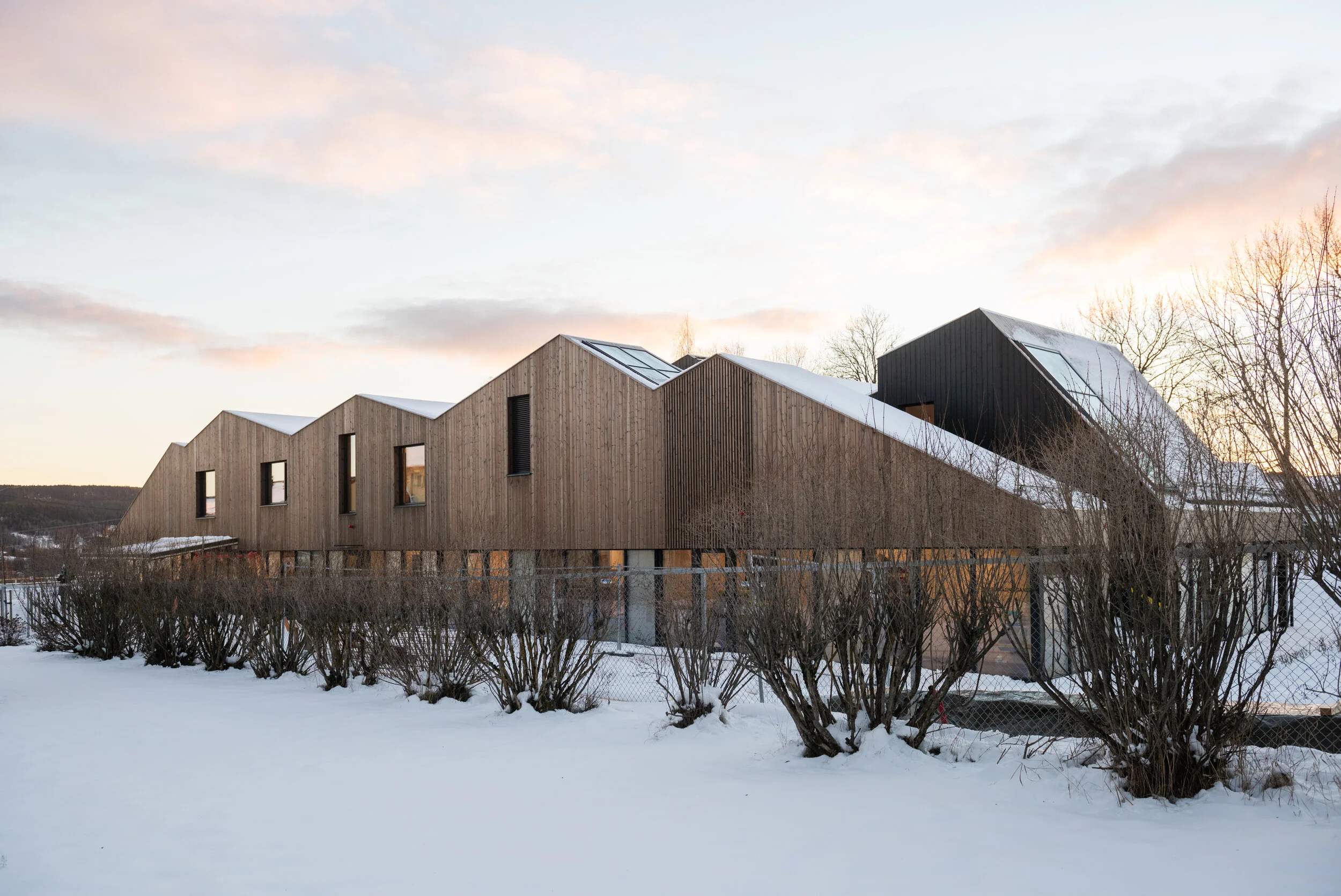
The childcare facility, designed by MORFEUS arkitekter in Oslo, Norway, invites children and the community to create a dialogue and foster community engagement, blending indoor and outdoor spaces. A sustainable construction with 3D pre-cut fabrication created a robust, comfortable indoor environment. The load-bearing CLT system supports both structure and interior walls, while Norwegian Ore-pine clads the external facades. Embracing the Reggio Emilia’s third teacher philosophy, the design formed a pedagogical, sensory-rich environment with a glazed facade, playful gabled roof with rooftop play zones, and asphalt‑free outdoor areas, reinforcing its commitment to learning, community, and ecological integrity.
6. Brock Commons Tallwood House
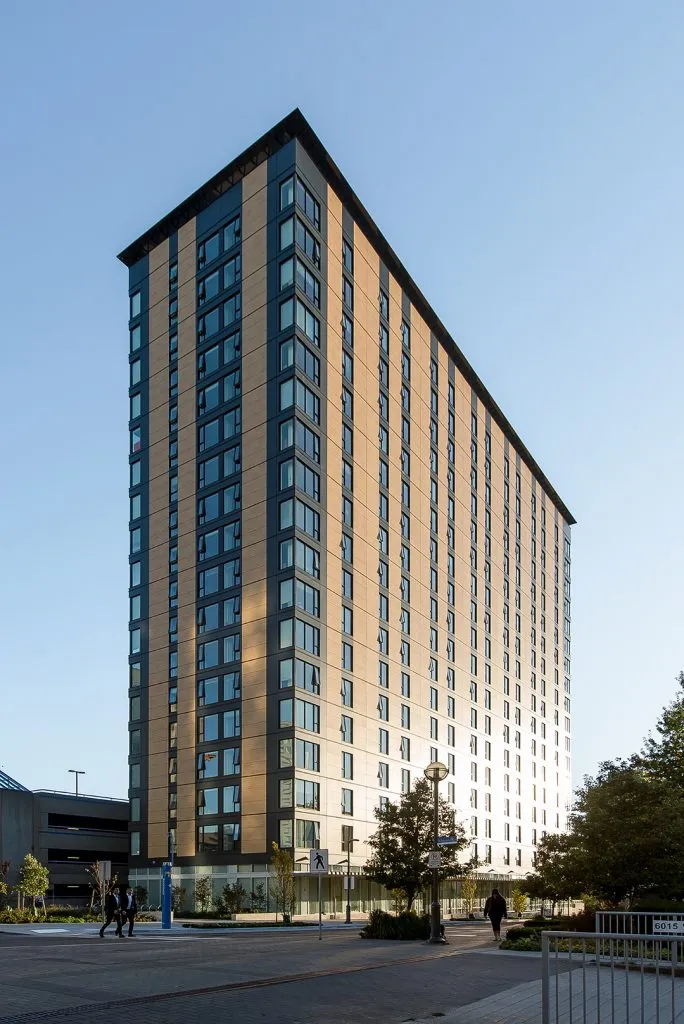
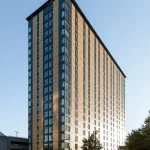
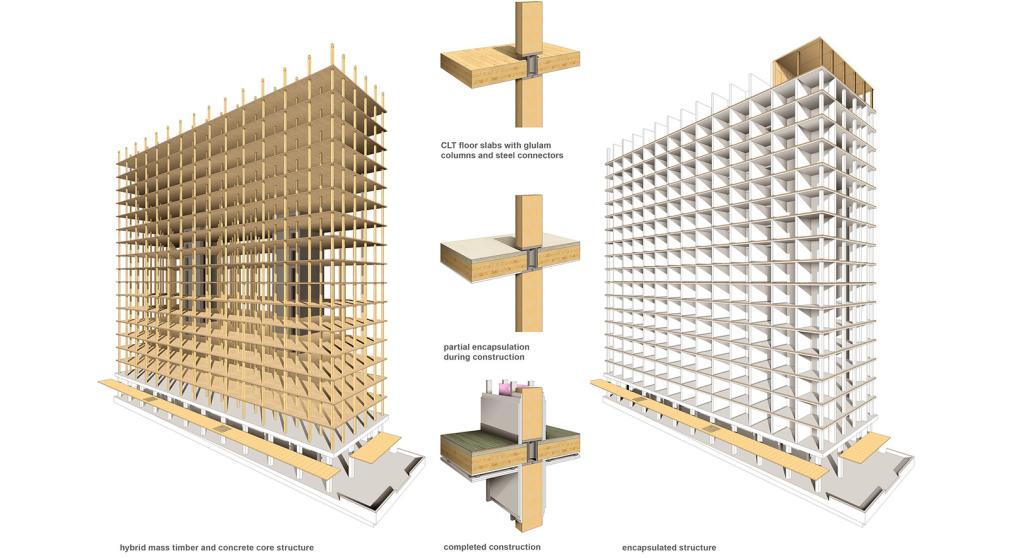
Located in Vancouver, Canada, Brock Commons Tallwood House becomes the world’s tallest contemporary mass timber hybrid building, composed of an 18‑storey student residence at UBC’s Point Grey campus. It consists of 272 studios, 33 four-bedroom units, and a social gathering space. Acton Ostry Architects Inc. envisioned a structure that was deeply rooted in sustainability, simplicity, and environmental responsiveness. The team encountered challenges with the hybrid timber structure, and its complexity resulted in the floors being made of Cross-Laminated Timber (CLT) panels, which are supported by glue-laminated timber (glulam) and parallel strand lumber (PSL) columns.
7. HoHo Wien
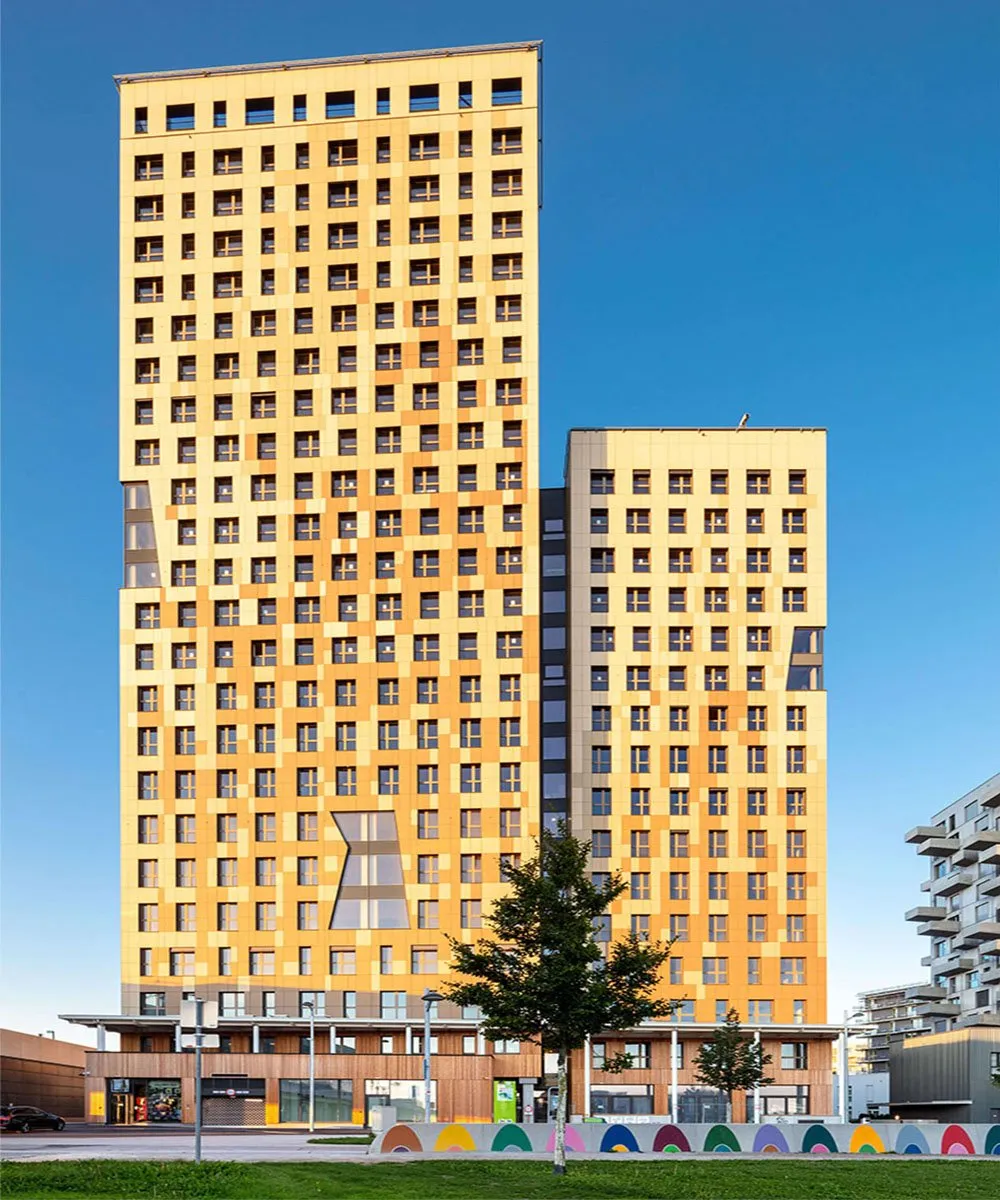
A pioneer of modern construction, HoHo Wien, located in Vienna, Austria, is the world’s tallest hybrid timber building, reflecting the use of sustainable building materials for urban skyscrapers. RLP Rüdiger Lainer + Partner Architekten designed a structure that reflects the timber as an efficient and sustainable alternative to steel and concrete construction.
The building’s predominantly wooden structure results in significantly lower CO2 emissions compared to a conventional concrete building. A 24-storey building was inspired by tree bark, evoking the natural aesthetic and flexible interior with movable partitions and adaptivity over time. The 82-meter mixed-use development incorporates offices, retail shops, cultural space, residences, and wellness zones, blending diverse functions into one roof.
8. T3 Building in Minneapolis
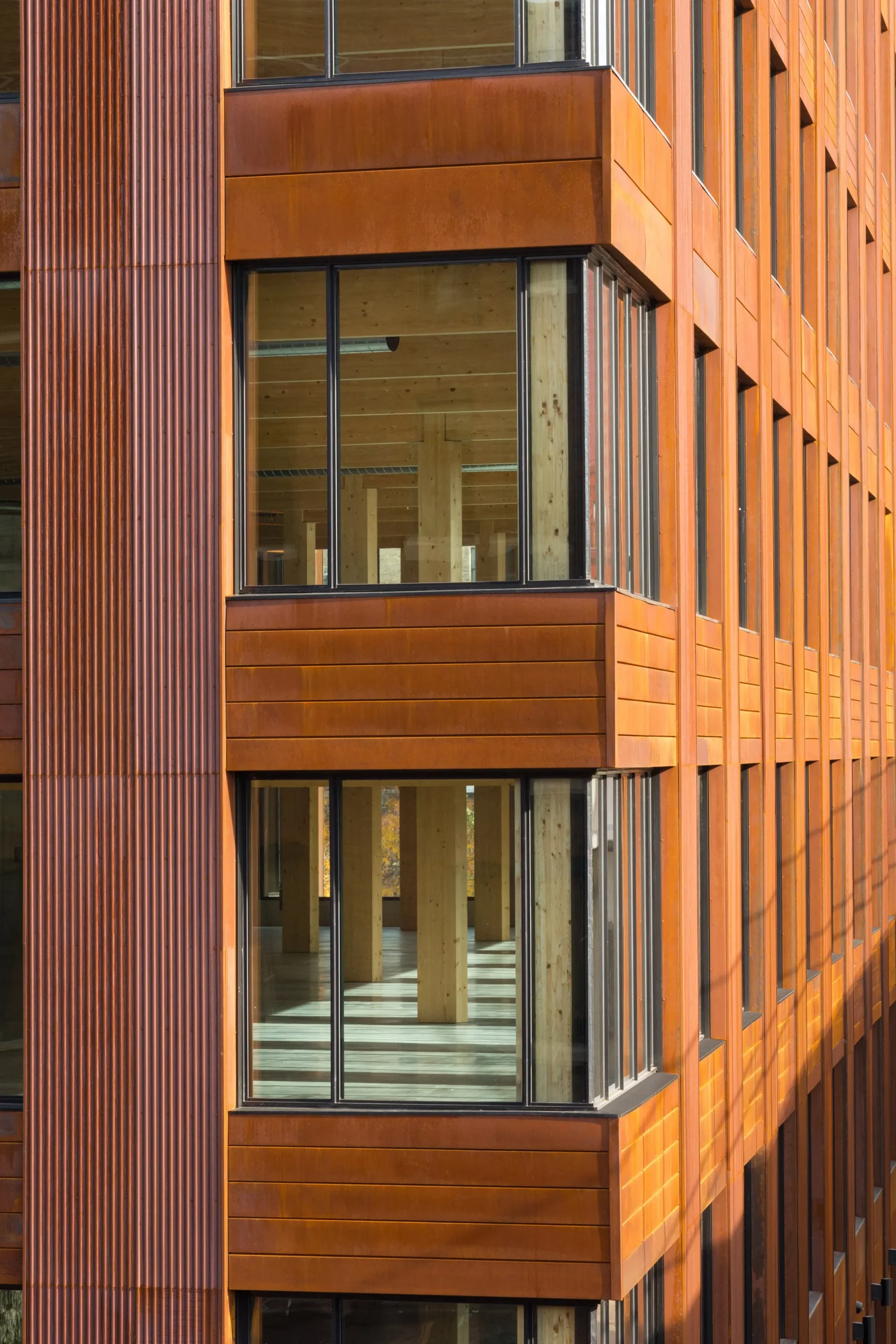
Designed in collaboration between Michael Green Architecture (MGA) as the design architect and DLR Group, this project stands as a living prototype for modern sustainable office space. As the name suggests, T3, composed of timber, technology, and transit, evolved with these elements as its core philosophy.
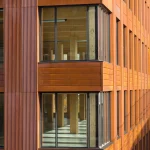
To craft a creative office space, the design aims to provide comfort and a warm and inviting environment with exposed wood as a key design element. To resonate with the surroundings, the form and facade were framed with weathering steel (Corten steel). The interior adopts the open plan layout, maximizing natural light, high ceilings, and exposed timber construction.
9. HAUT
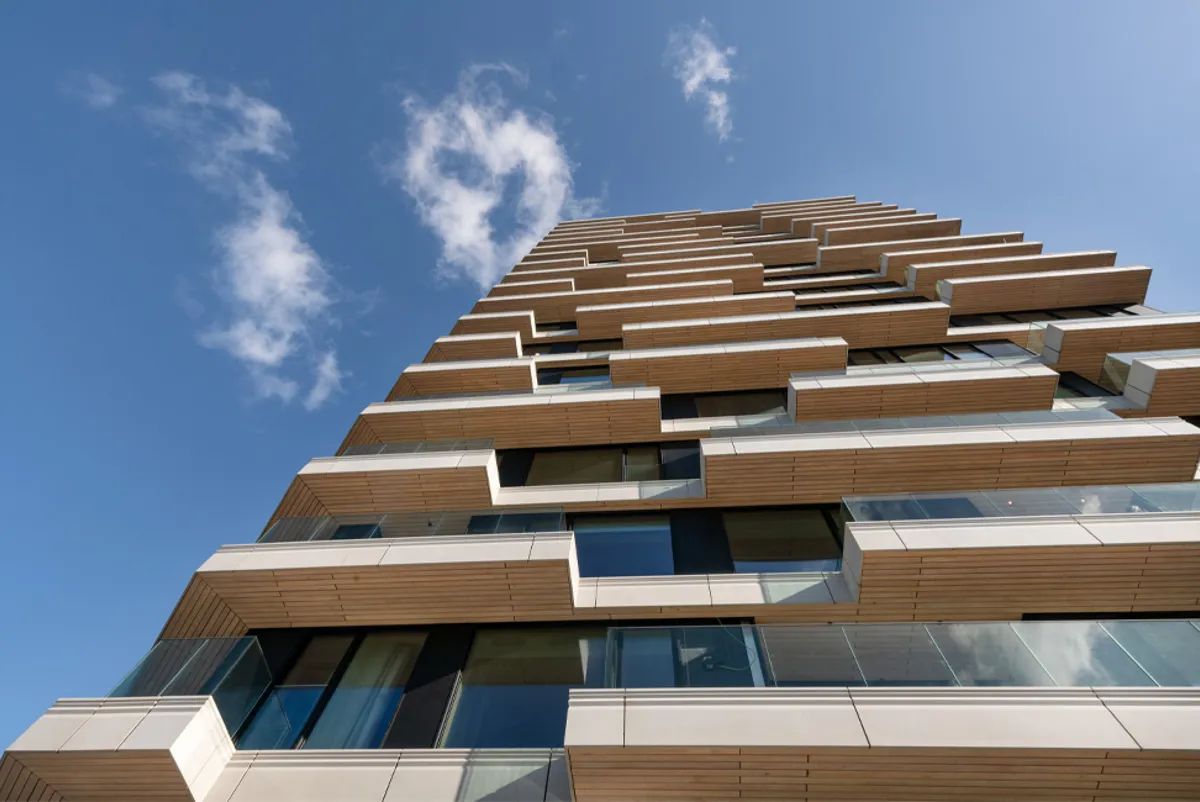
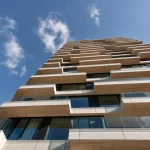
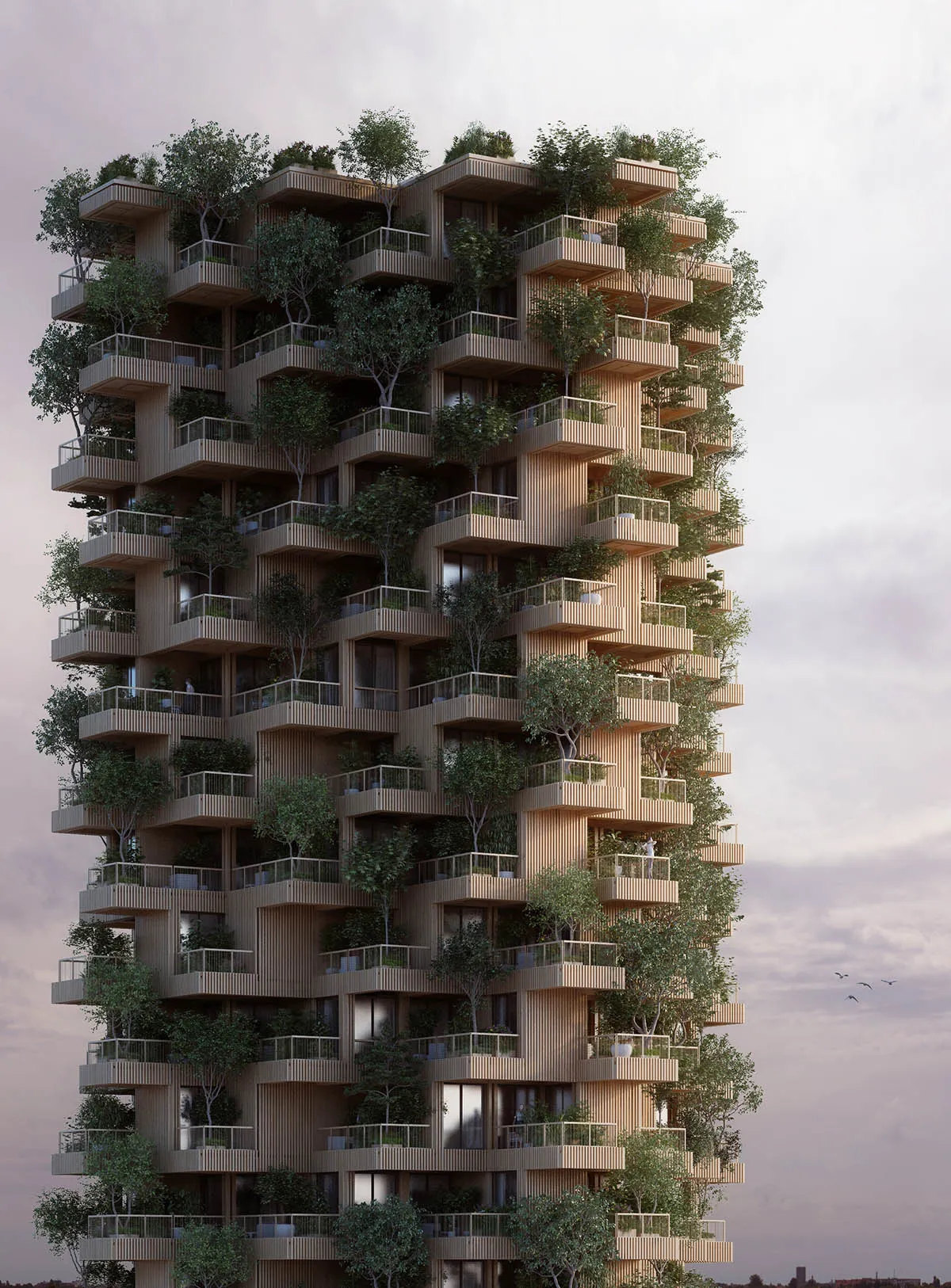
Team V Architecture, in collaboration with Arup and timber specialist Brüninghoff, is handling the CLT prefab-designed hybrid residential building in Amsterdam, Netherlands. 73 meters tall with 21 floors, it comprises apartments, commercial spaces, and shared amenities. Inspired by French haute couture and Dutch hout (wood), the names illustrate captivating timber construction. The distinctive design element stands as the balcony with its irregular pattern, full-height glazing, and light-grey banding, along with wooden ceiling projections at sharp corners, resulting in a striking, expressive form. This project embraces Amsterdam’s climate neutrality goal by 2050.
10. Sara Cultural Centre
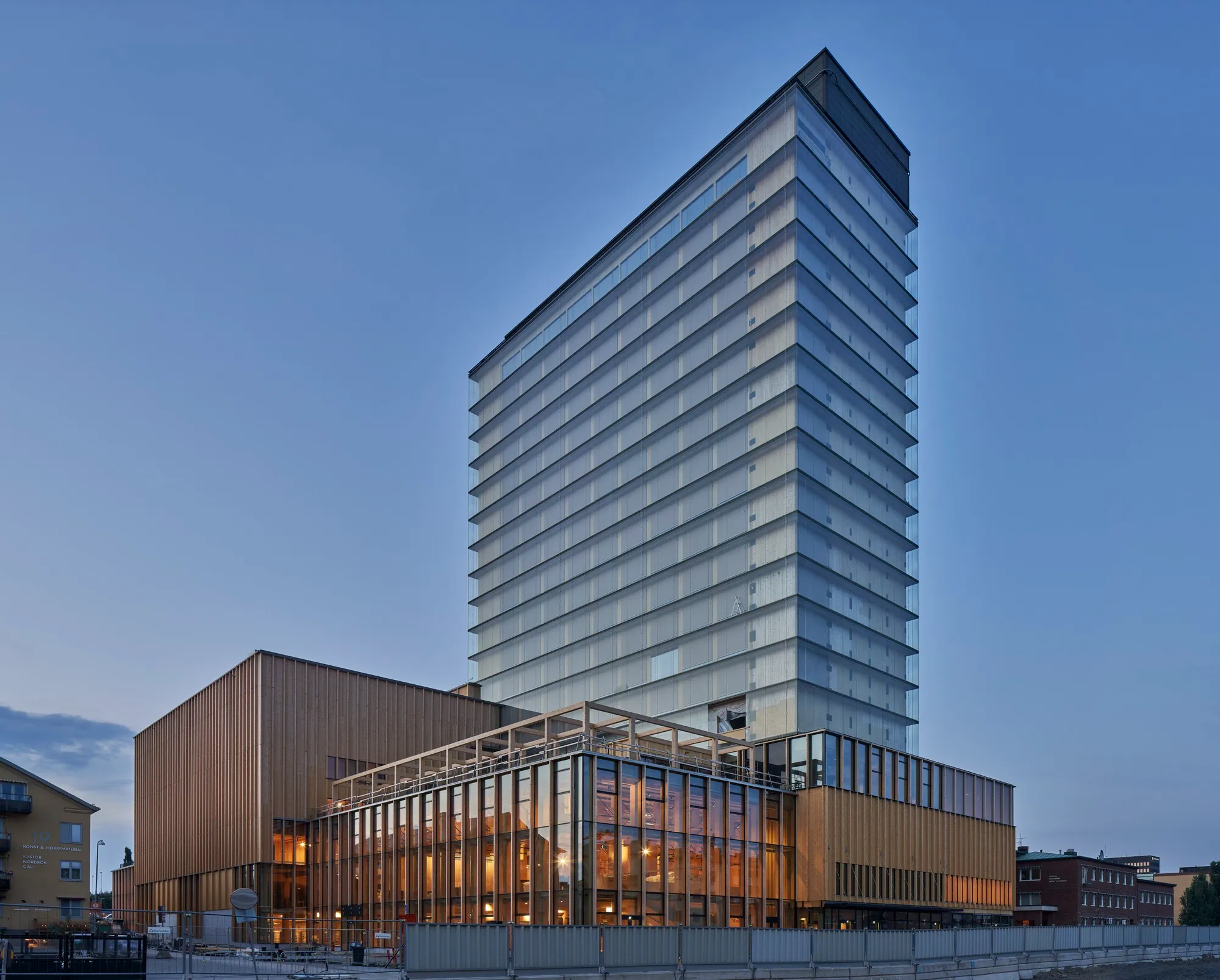
White Arkitekter designed a cultural center in Skellefteå, Sweden, a city with a rich tradition of timber construction. The project represents the locally sourced wood and the exposed timber structure that blends traditional material with modern sensibilities. A center for community was envisioned with a sustainable ethos, not just as carbon-neutral but carbon-negative over its lifecycle.
The design aims for accessibility and inclusivity, with spaces open and flexible, encouraging interaction and gathering. Towering 20 stories, the hotel’s architecture combines a mixed-use complex with a low-rise cultural center. It is a statement to the new generation of high-rise buildings, integrating art, a community hub, and a powerful statement of environmental responsibility all at once.