



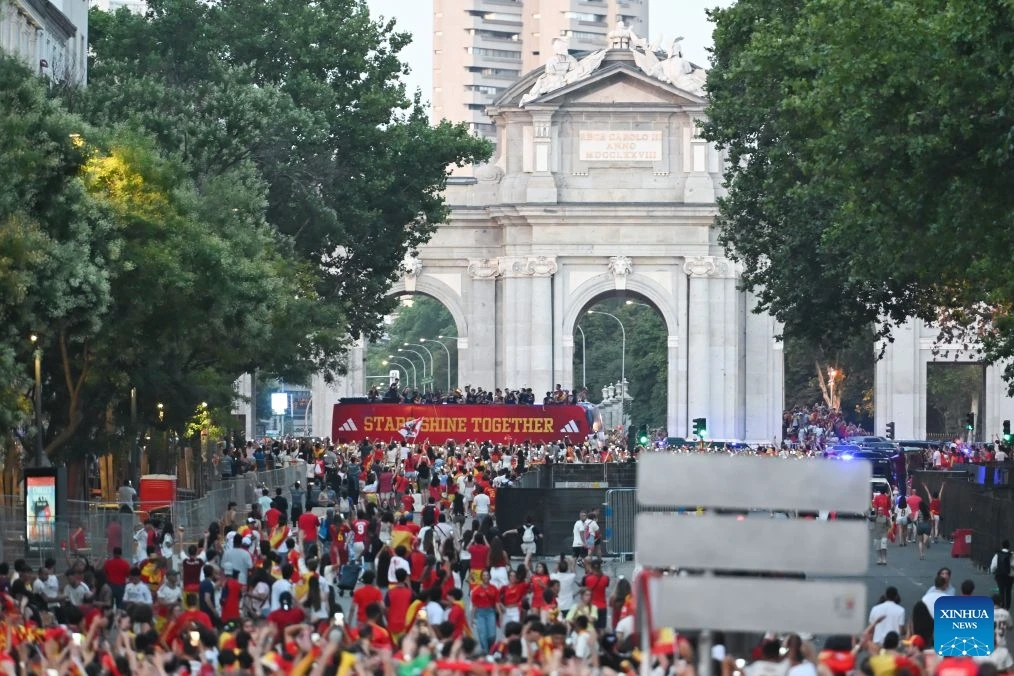


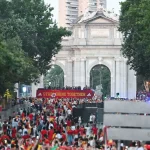
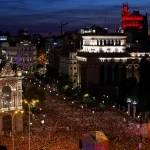
Spain is having its moment. On July 19, 2026, the national team beat Argentina 1-0 in extra time to win its second World Cup title, and the country has spent the days since watching that win replayed on every screen and celebrated in every plaza from Madrid to Barcelona. For architects and designers, the timing is a good excuse to look past the football and back at what has made Spain a reference point for built environments for over two thousand years.
This guide covers ten cities where Spanish architecture was never a single tradition. Roman engineering, Islamic craftsmanship, Christian Gothic, Renaissance, and 20th-century design have each left their mark, often on the same street or even the same building.
1. Barcelona
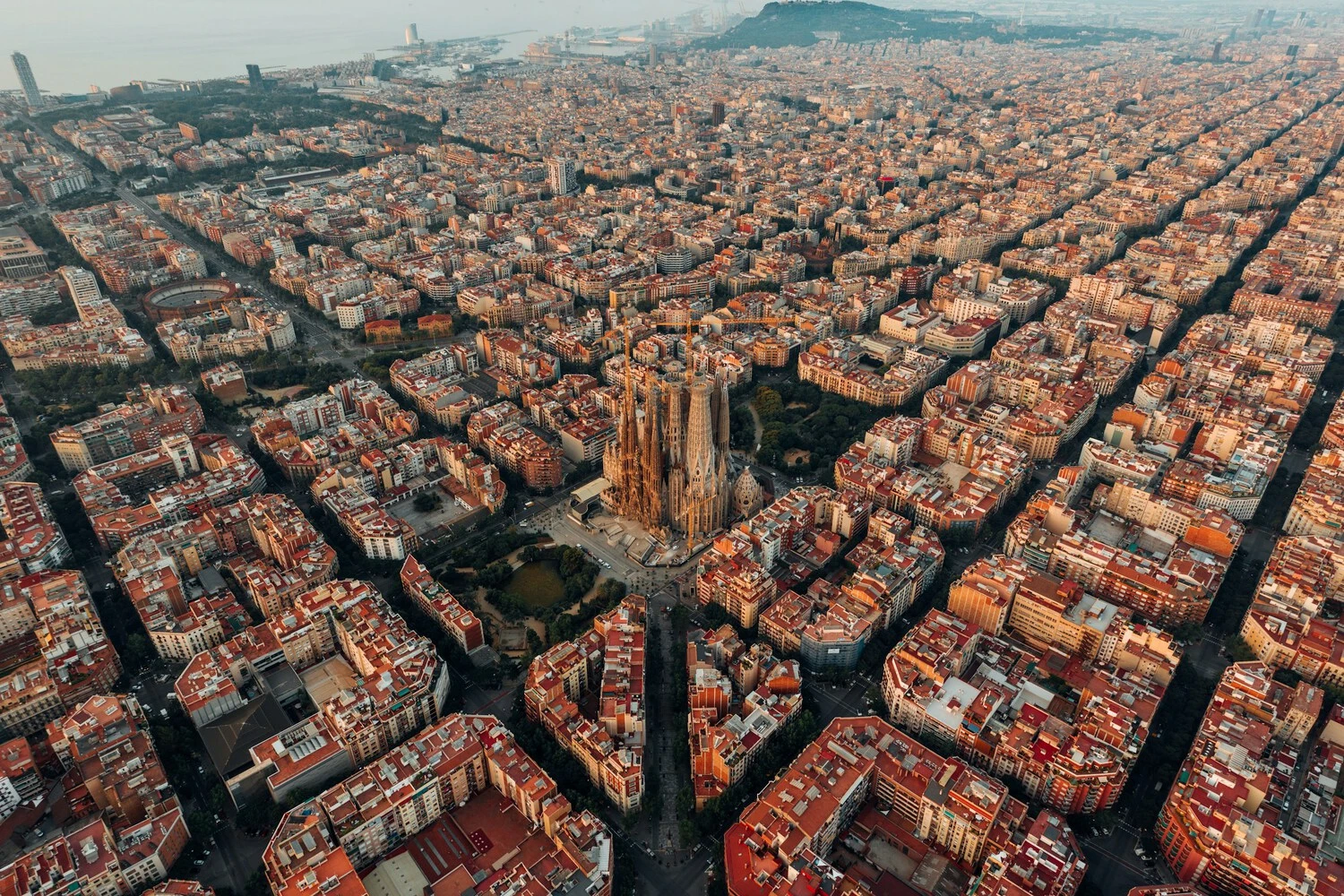
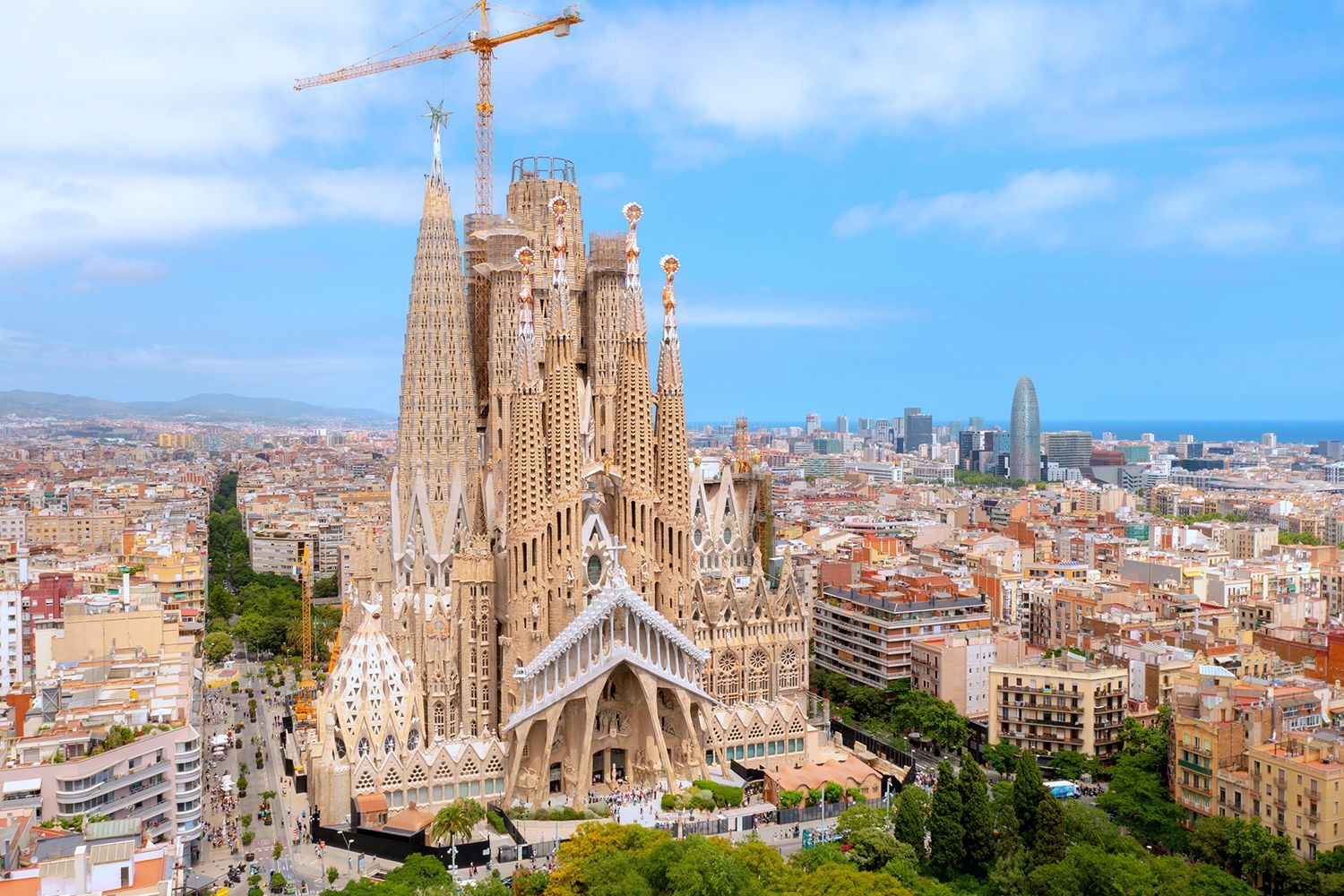
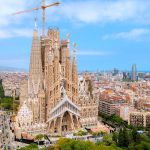
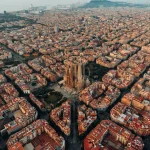
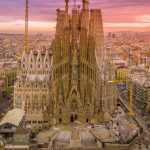
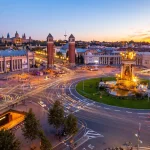
Barcelona is a city shaped by one architectural movement: Modernisme, Catalonia’s version of Art Nouveau, which defined the city’s expansion in the late 19th and early 20th centuries, and Antoni Gaudí remains its most recognized figure. The Sagrada Família, recently completed structurally, is the city’s defining landmark, alongside Casa Batlló and Casa Milà (La Pedrera), both built along Passeig de Gràcia. These buildings owe as much to the Eixample, Ildefons Cerdà’s 19th-century grid plan, as they do to individual architects. The grid’s octagonal blocks, wide diagonal avenues, and consistent building heights gave Modernisme architects a disciplined framework to work within, which is part of why the district reads as a coherent whole.
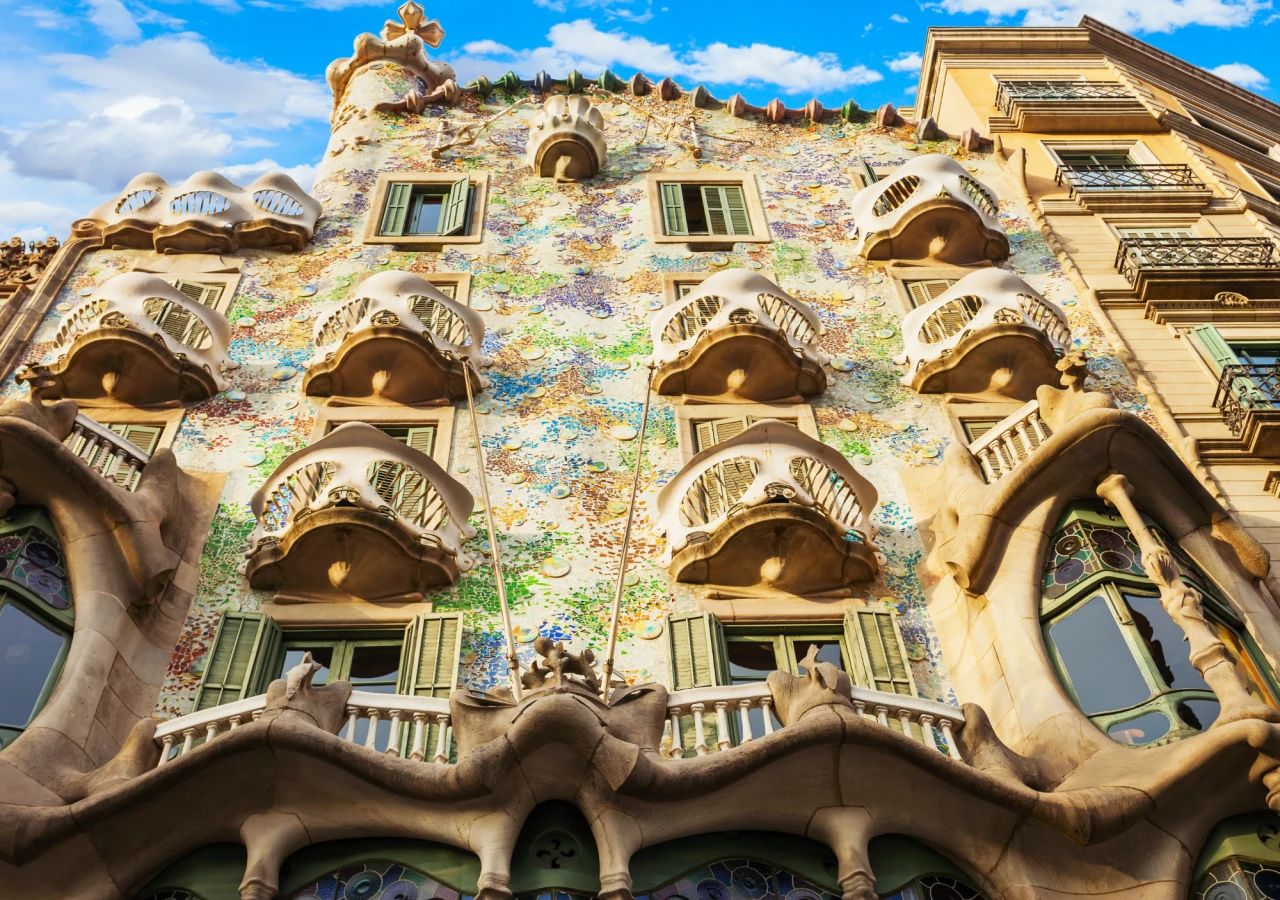
Beyond Gaudí, the work of Lluís Domènech i Montaner (Palau de la Música Catalana, Hospital de Sant Pau) and Josep Puig i Cadafalch (Casa Amatller) rounds out the movement, and all three architects were working in direct competition with each other for prominent commissions along the same few streets. Barcelona also carries a strong 20th-century layer, including Mies van der Rohe’s Barcelona Pavilion, built for the 1929 International Exposition as a temporary structure and later reconstructed permanently in 1986 because of its lasting influence on Modernist architecture.
2. Granada
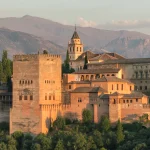
Granada is a surviving example of Islamic architecture in Western Europe. The Alhambra, built primarily under the Nasrid dynasty in the 13th and 14th centuries, combines fortification, palace, and garden architecture into a single complex. Its defining features are intricate muqarnas ceilings, carved stucco inscriptions, geometric tilework, and a controlled use of water and light, all visible in spaces like the Court of the Lions and the Hall of the Ambassadors. The complex was designed so that water, running through channels, fountains, and reflecting pools, functions as a structural and thermal element as much as a decorative one, cooling the interior courtyards during Granada’s hot summers.
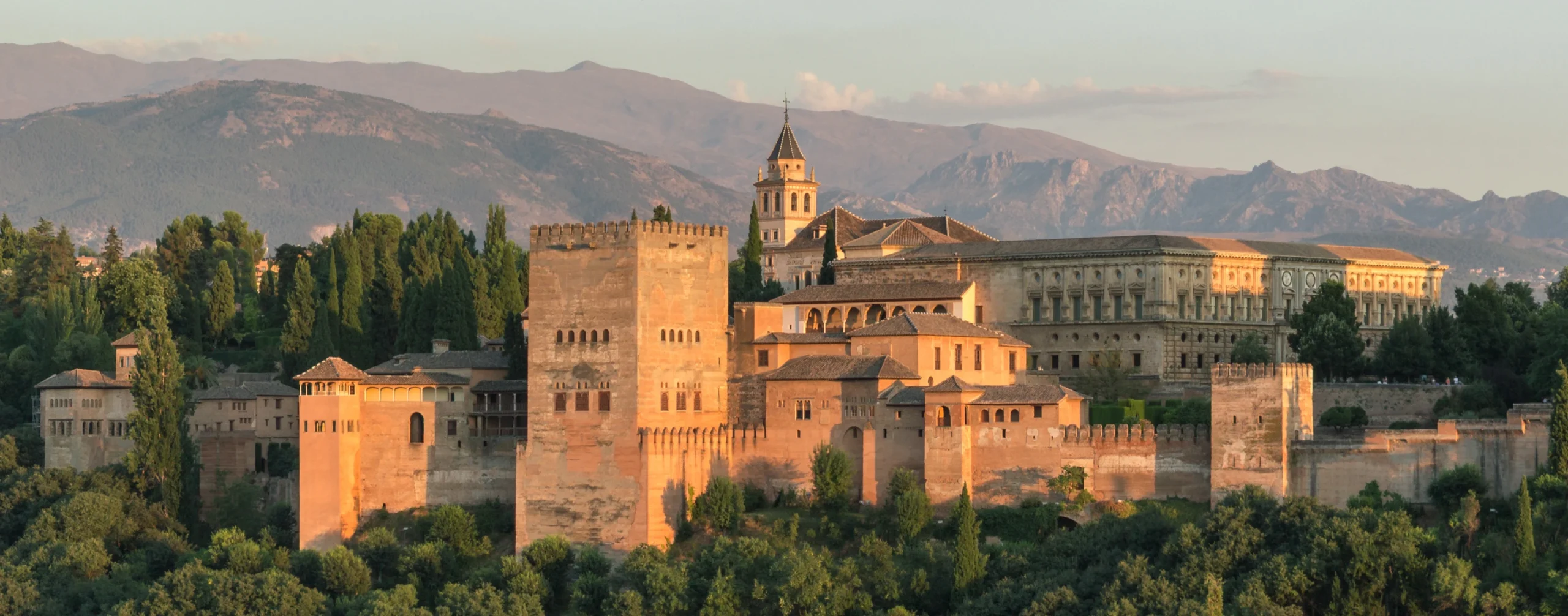
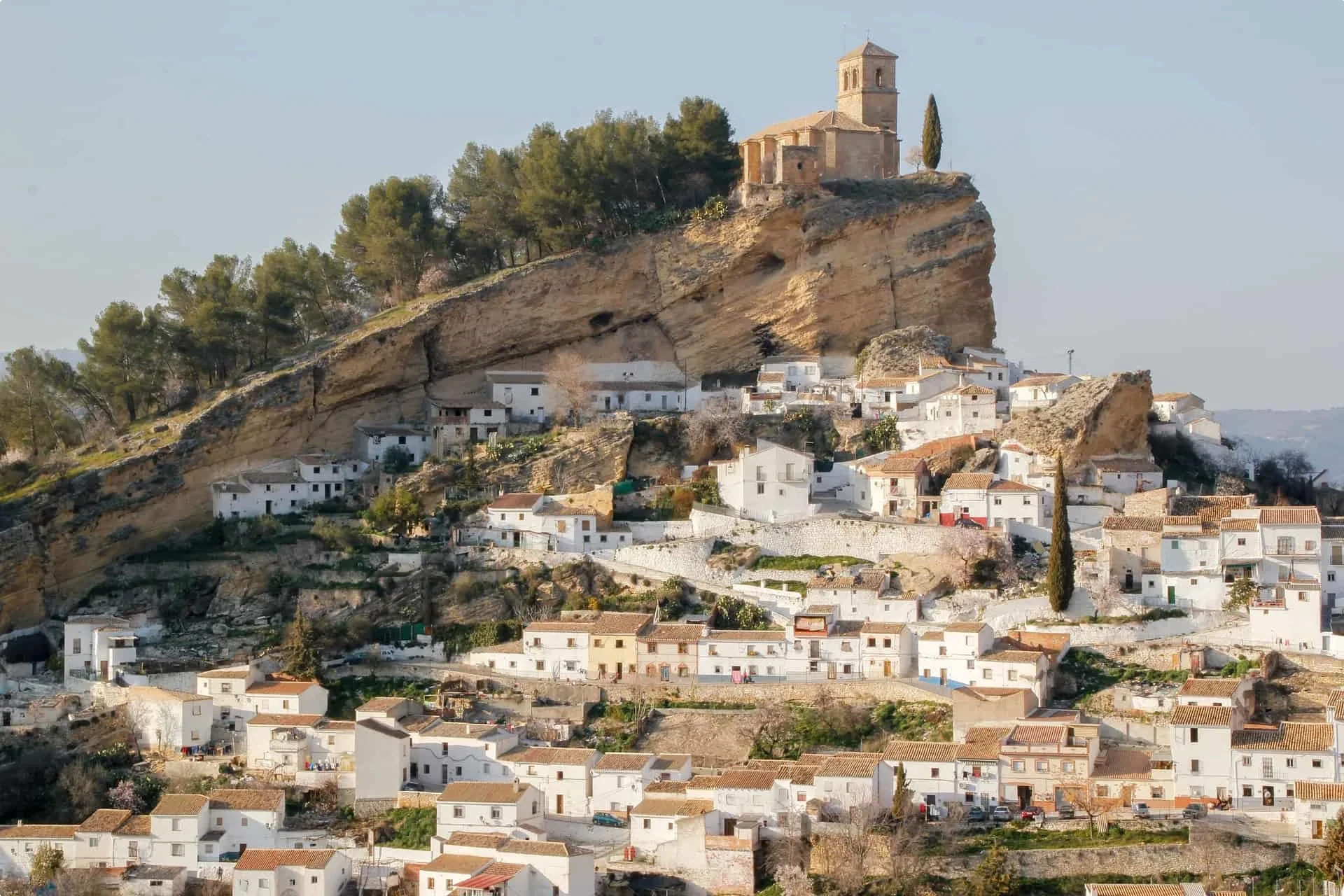
Adjacent to the Alhambra, the Generalife served as the summer palace, and its terraced gardens demonstrate how Islamic design treated landscape as an architectural extension. The Albaicín, Granada’s old Moorish quarter across the Darro River, preserves the narrow street pattern and whitewashed houses typical of Andalusian urbanism, and offers the best surviving view of the Alhambra from its many miradors, particularly the Mirador de San Nicolás. Granada also illustrates architectural layering after the Reconquista, with the Renaissance-era Palace of Charles V inserted directly into the Alhambra complex in the 16th century.
3. Córdoba
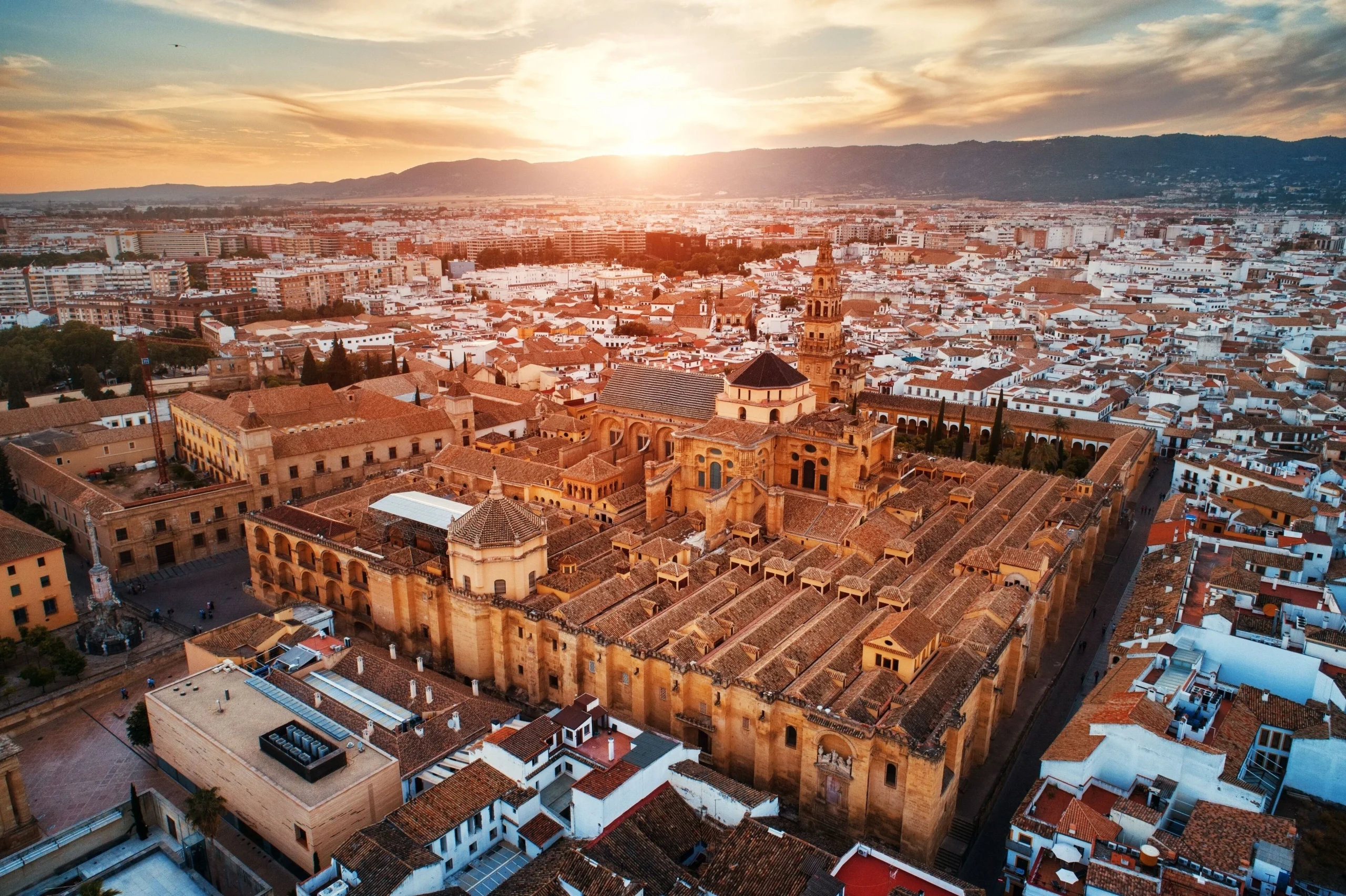
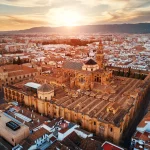
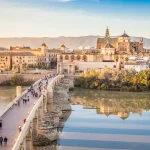
Córdoba’s Mezquita-Cathedral is a significant religious building, both structurally and politically. Construction began in 785 CE under Abd al-Rahman I, and its hypostyle prayer hall uses a forest of more than 850 columns topped with double-tiered horseshoe arches in alternating red and white voussoirs, a design solution that allowed the mosque to expand repeatedly over two centuries without losing structural or visual coherence. Many of the columns were reused from earlier Roman and Visigothic buildings, giving the hall a mix of marble, granite, and jasper that was never meant to be uniform.
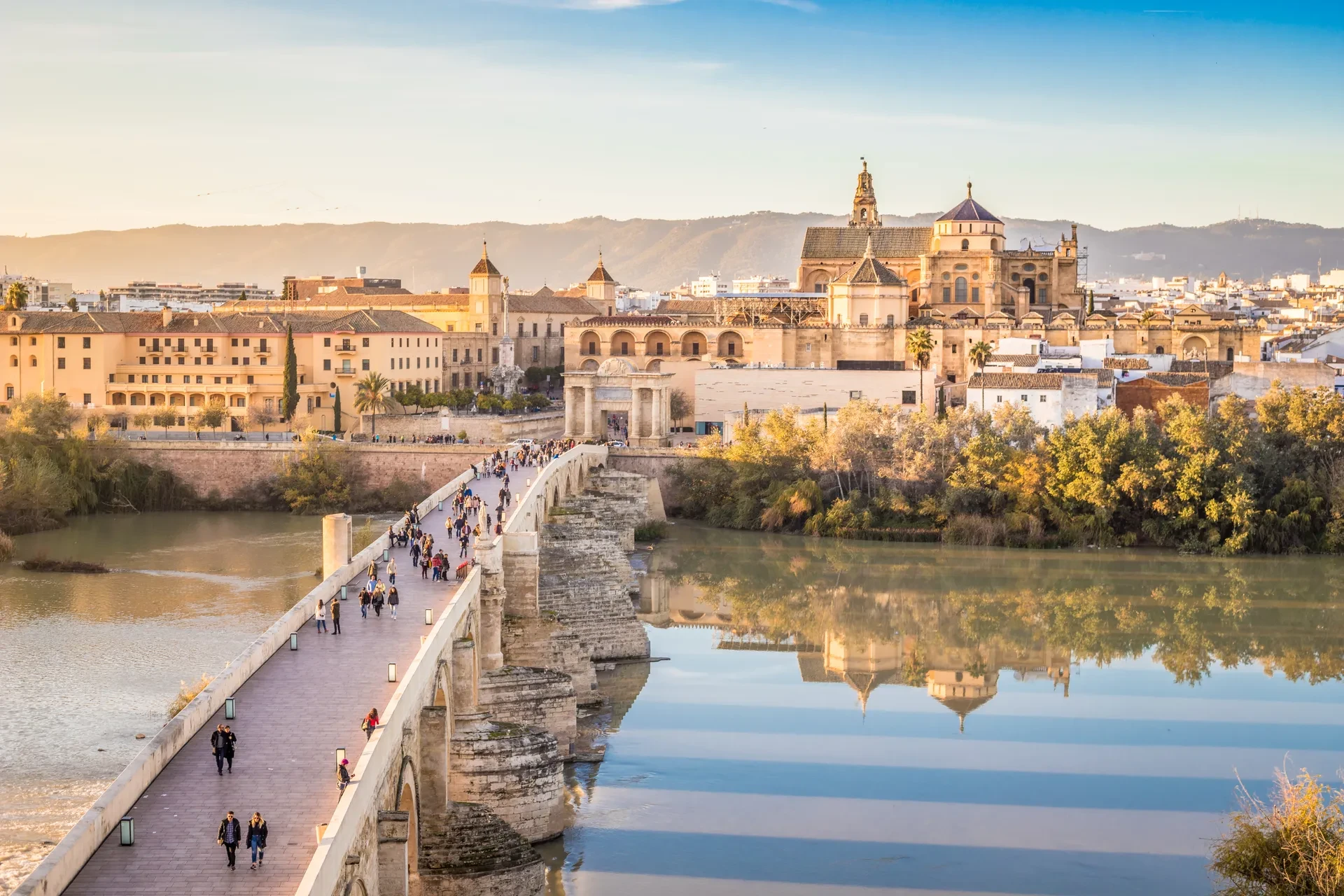
After the Reconquista, a full Renaissance cathedral nave was inserted into the center of the structure in the 16th century, an addition that Charles V reportedly regretted once he saw the result, since it disrupted the uninterrupted arcade he had expected to remain intact. Outside the city, Medina Azahara offers a different kind of evidence: a 10th-century palatial city built by Abd al-Rahman III and destroyed within a century of its completion, now excavated to reveal its original urban layout, audience halls, and administrative quarters. Córdoba’s historic center, a UNESCO World Heritage Site, retains its narrow Andalusian street pattern and courtyard housing, most visible each May during the Patios Festival, when private courtyards across the city open to the public.
4. Seville
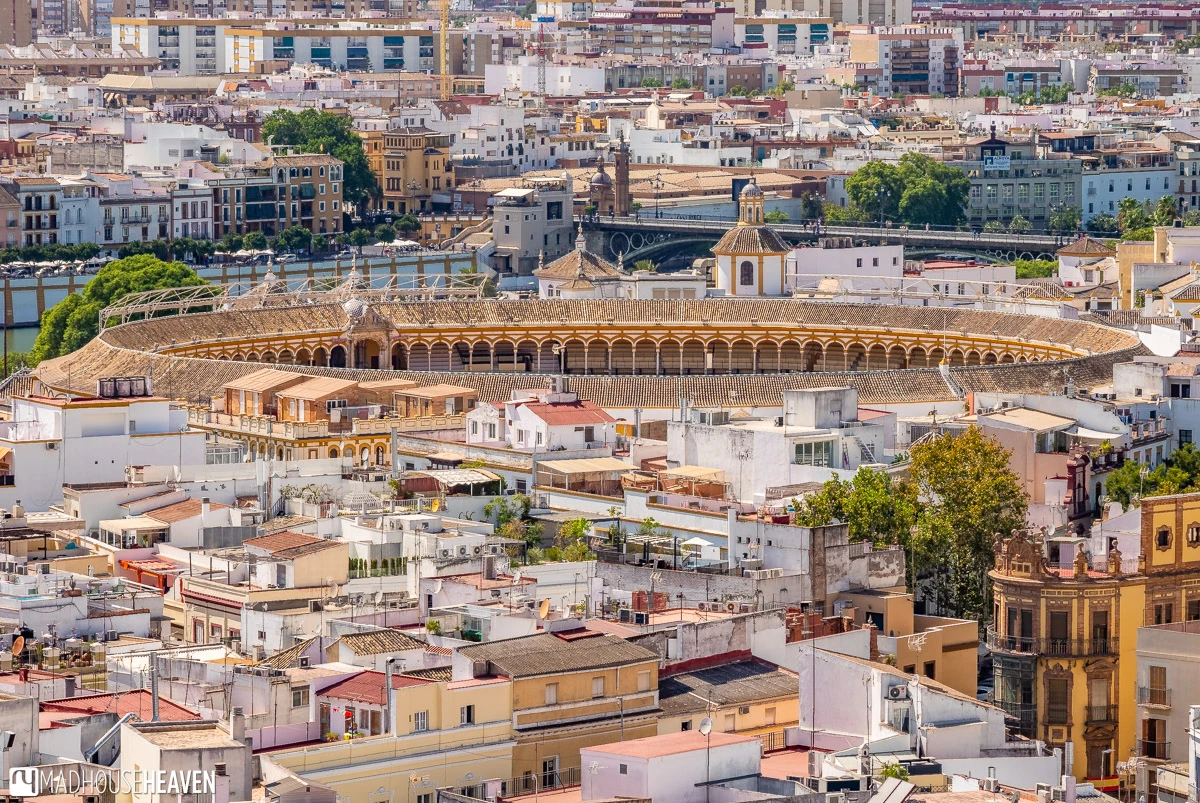
Seville demonstrates architectural layering with Roman, Islamic, Gothic, and contemporary structures within walking distance of each other. The Real Alcázar began as a Moorish fort and was rebuilt under Pedro I in the 14th century in Mudéjar style, using Islamic craftsmen working under a Christian king, which produced some of the finest surviving Mudéjar interiors in Spain, including the Patio de las Doncellas. That collaboration between Muslim artisans and a Catholic monarch is part of what makes the Alcázar architecturally distinct from Granada’s Alhambra, which was built entirely under Islamic rule.
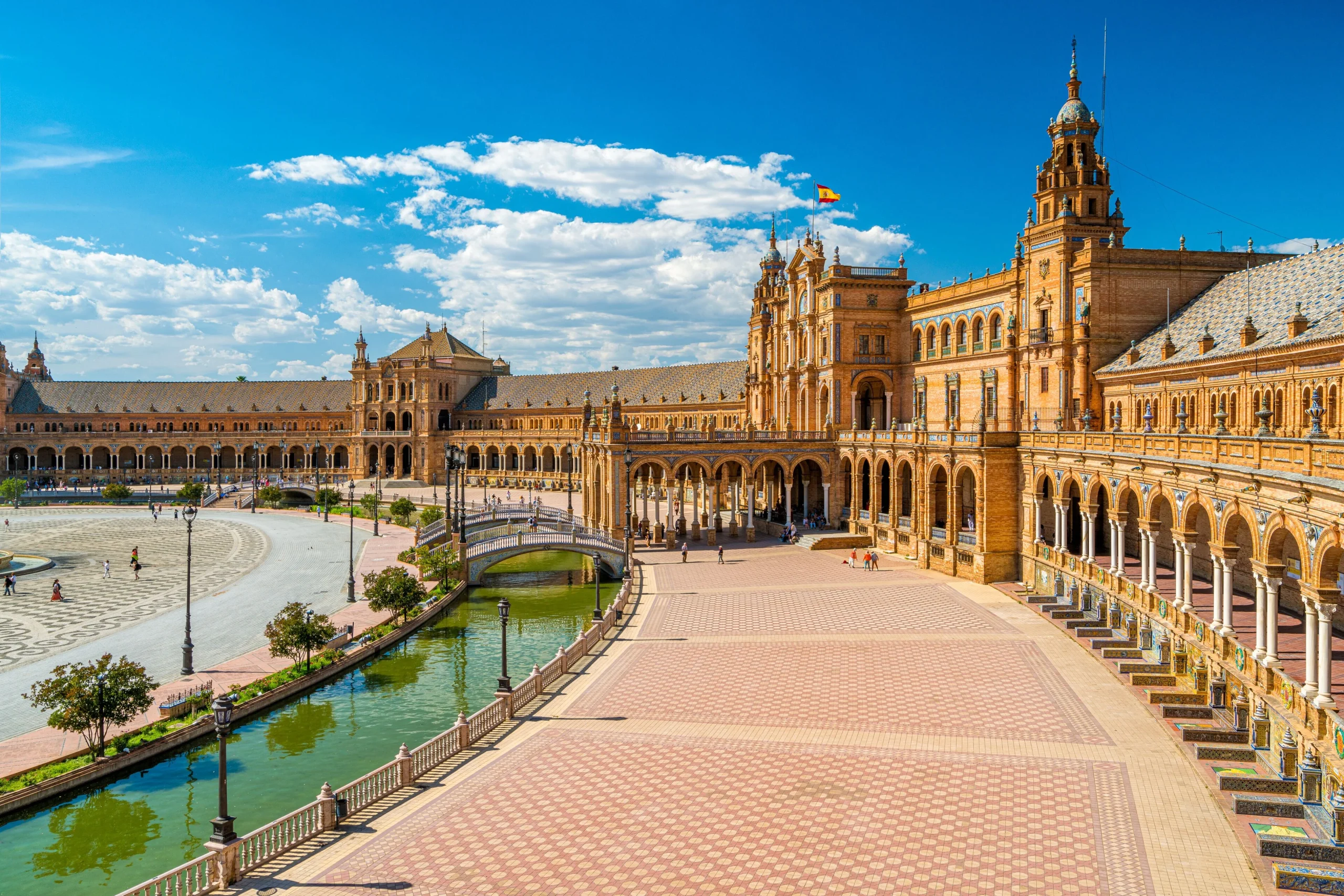
Seville Cathedral, the largest Gothic cathedral in the world by volume, was built directly on the site of the city’s former mosque and retained its minaret, now known as the Giralda, as a bell tower. The result is a building where the base of the tower is still recognizably Almohad while its upper sections are Renaissance additions completed in the 16th century. At the other end of the timeline, the Metropol Parasol, completed in 2011 and designed by Jürgen Mayer H., is currently the largest wooden structure of its kind in the world, built over the remains of Roman and Moorish ruins.
5. Bilbao
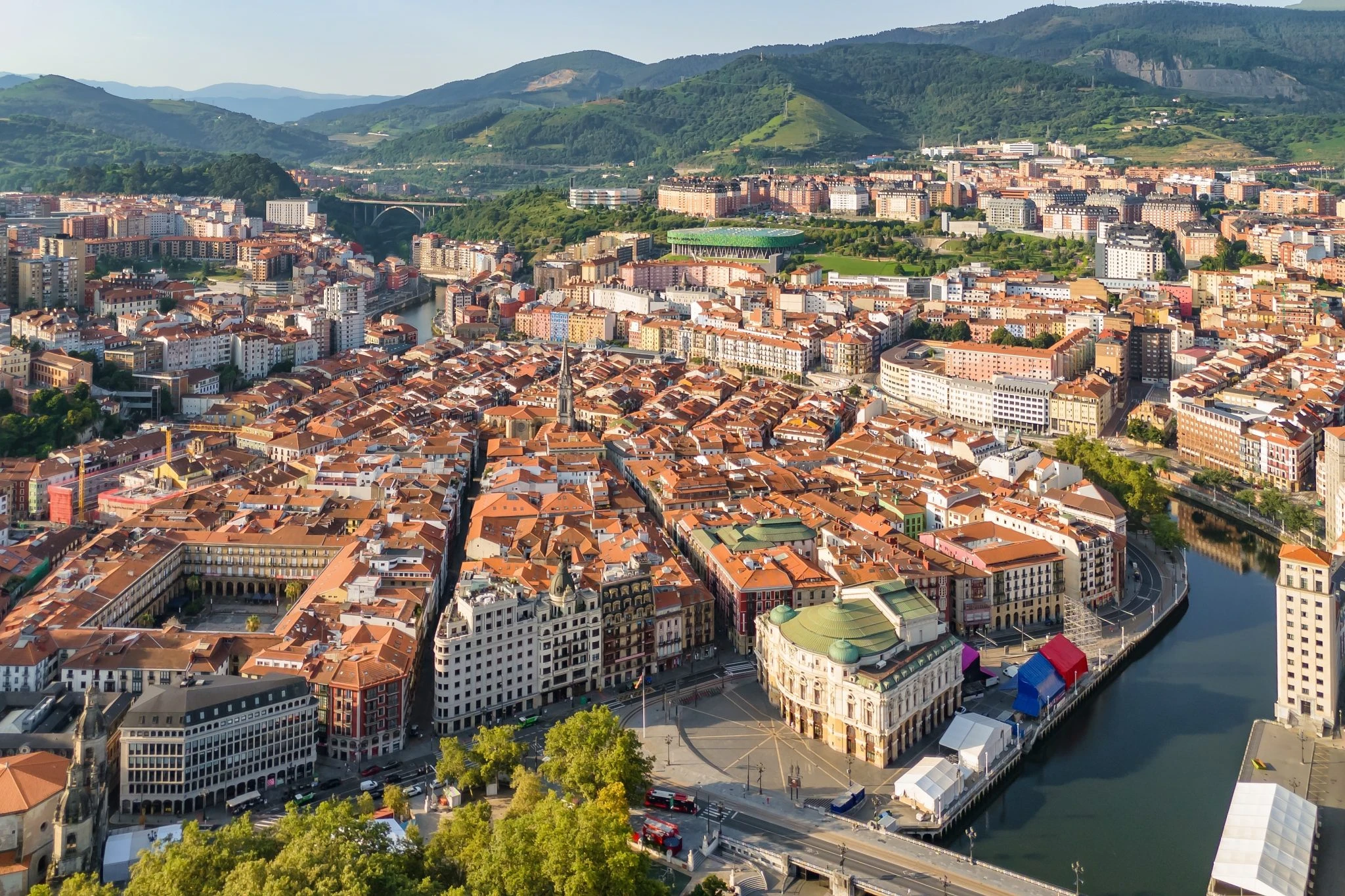
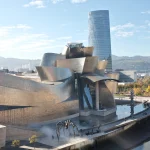
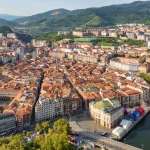
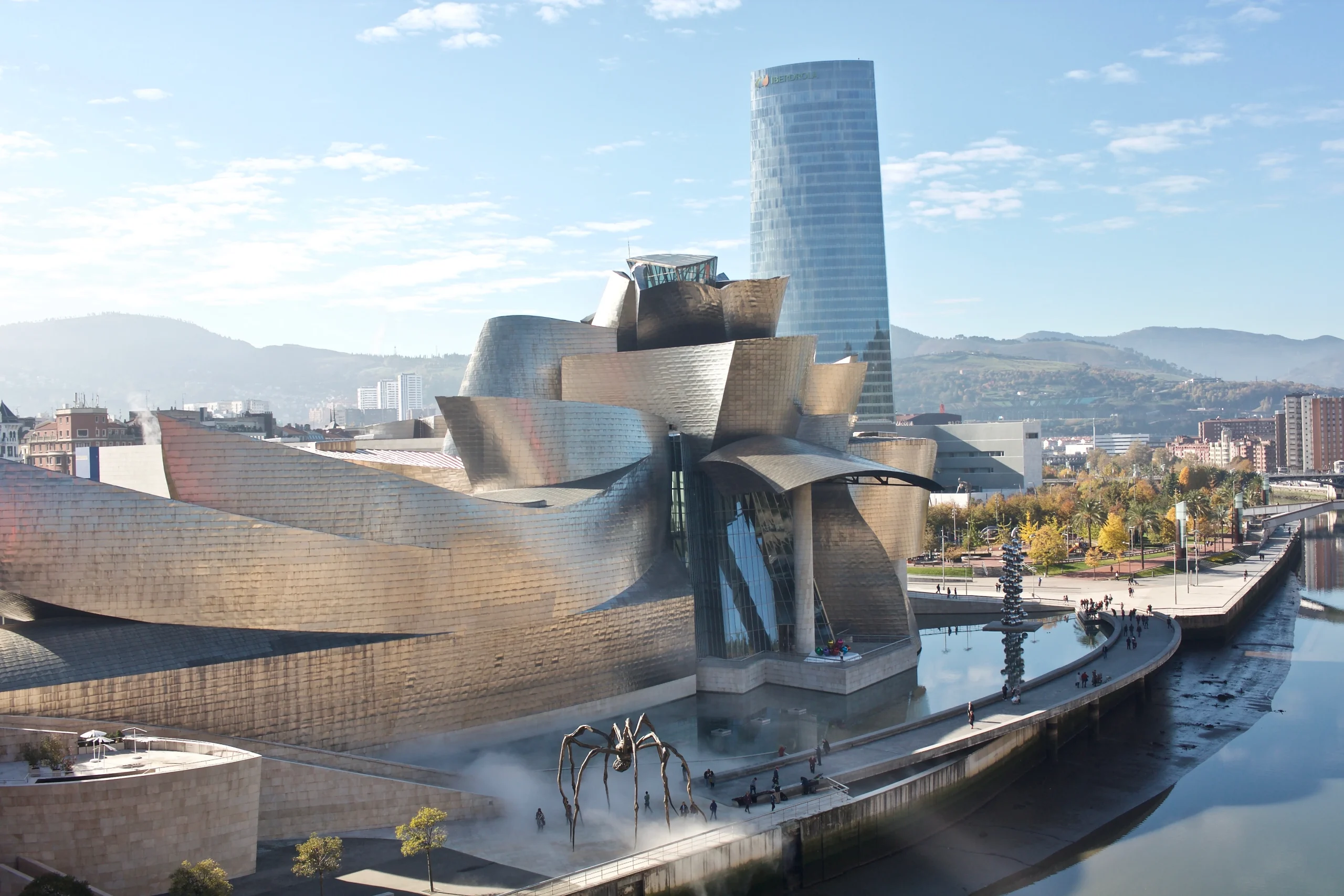
Bilbao is the standard reference point for architecture-led urban regeneration. Before 1997, the city was a declining industrial port; the opening of Frank Gehry’s Guggenheim Museum that year, with its titanium-clad, deconstructivist form along the Nervión River, changed the city’s economy and its international profile so significantly that the term “Bilbao Effect” is now used to describe similar attempts elsewhere. The museum’s curved, fish-scale titanium panels were chosen partly for how they catch light differently throughout the day, a detail that has made the building as much a photographic subject as a functioning museum.
The Guggenheim was one part of a larger regeneration plan that included Santiago Calatrava’s Zubizuri footbridge and the city’s airport terminal, Norman Foster’s metro system, and the redevelopment of former industrial land along the riverfront into public space. What makes Bilbao a useful case study is that the regeneration was planned as an integrated urban strategy, not a single building. The result is a compact city center where 20th-century industrial infrastructure, contemporary landmark architecture, and public space investment all sit close enough together to be seen on foot in a single afternoon.
6. Valencia
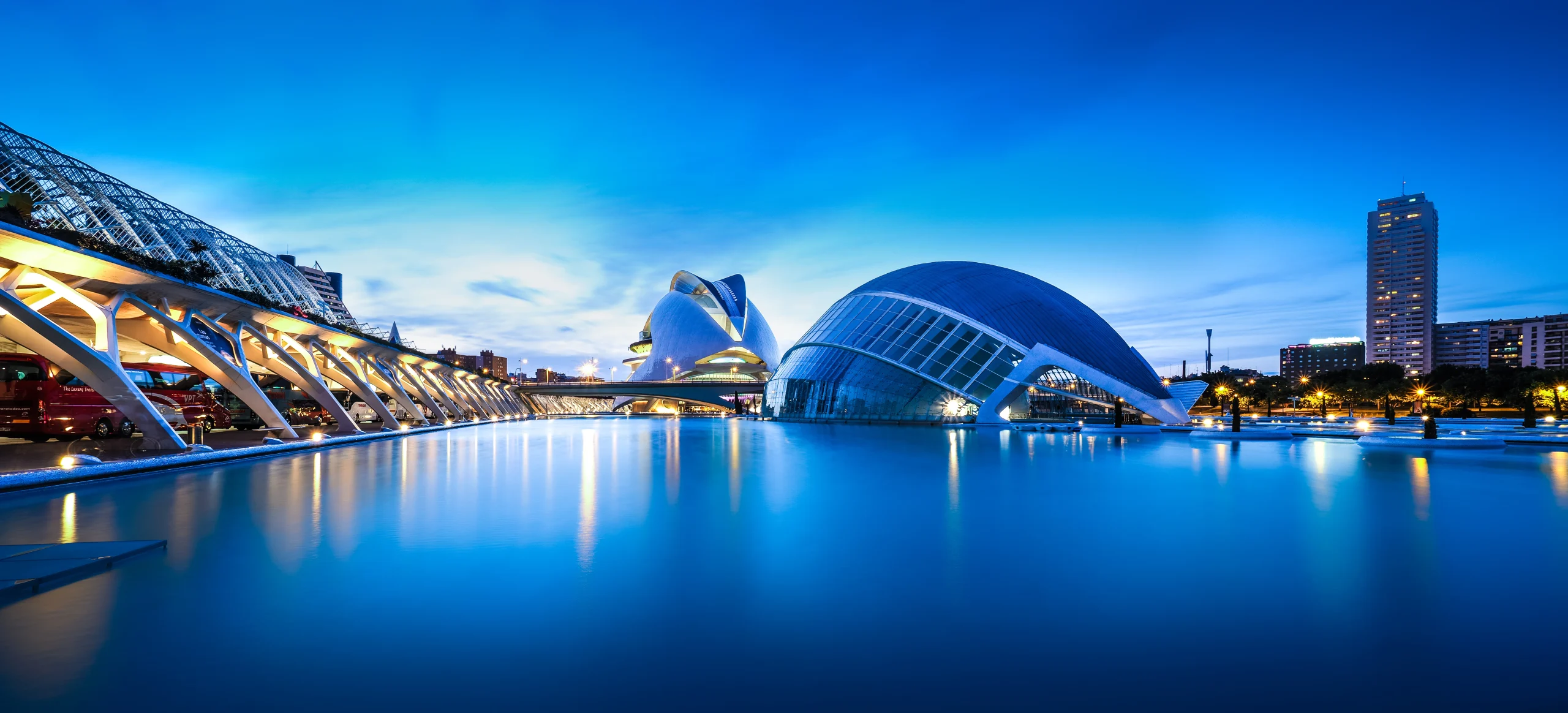
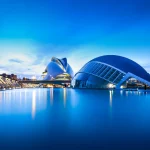
Valencia offers a direct contrast between its historic core and one of Europe’s most ambitious contemporary architectural projects. The City of Arts and Sciences, designed largely by Santiago Calatrava (with Félix Candela contributing to the Hemisfèric), is a complex of science museums, an opera house, and an aquarium built along the dried riverbed of the Turia, using white concrete, steel, and glass in curved, skeletal forms that reference natural structures like eyes and fish skeletons. The complex was built in phases between 1998 and 2005, and its scale, more than 350,000 square meters, makes it one of the largest single architectural developments completed in Spain in the past century.
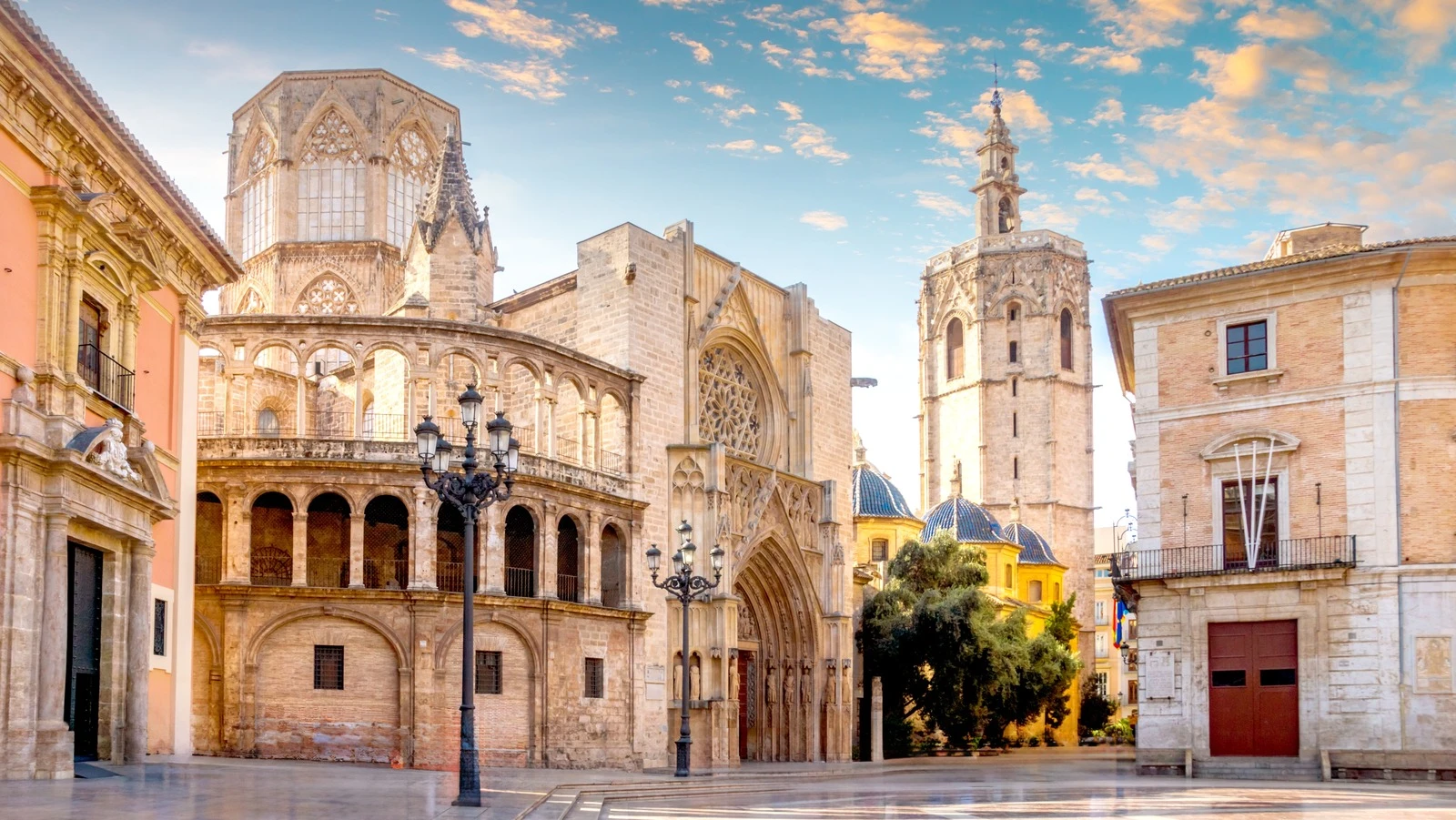
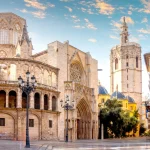
The site itself is part of the story: after the Turia River was diverted following a catastrophic 1957 flood, the former riverbed was converted into the Turia Gardens, a nine-kilometer public park that runs through the city rather than being developed for housing or roads, a decision that shaped Valencia’s urban form for the following decades. Valencia’s historic center, one of the largest in Spain, retains its Gothic Silk Exchange (Llotja de la Seda), a UNESCO-listed building notable for its twisted-column hall, as well as Baroque and Modernist buildings from the city’s 19th-century expansion.
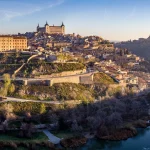
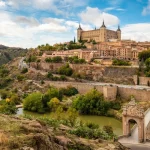
7. Toledo
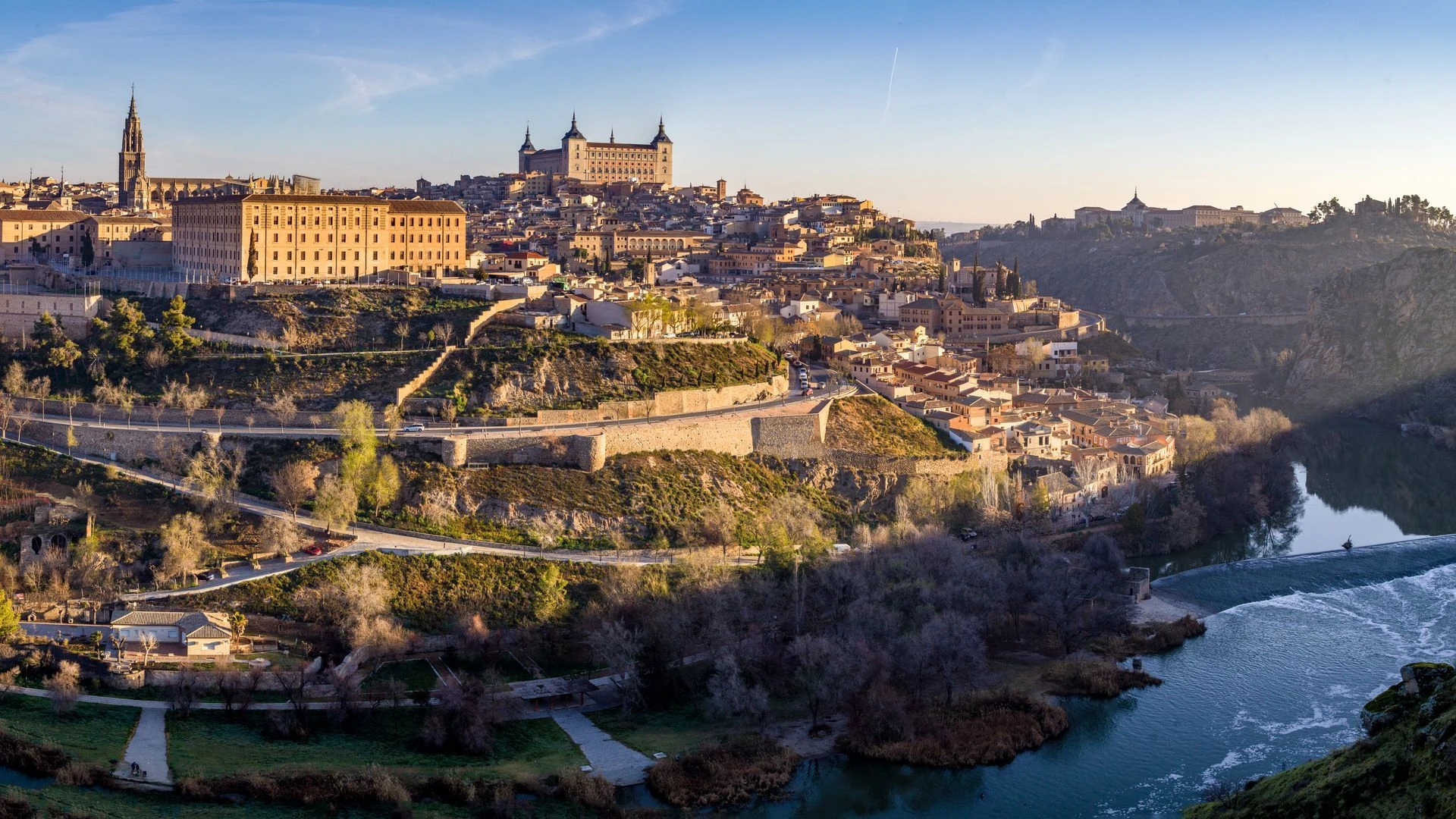
Toledo is a surviving example of Christian, Islamic, and Jewish architecture developing side by side rather than replacing one another. For long stretches of its history, Toledo functioned as a genuine multi-religious city, and its surviving buildings still carry the marks of that coexistence. Toledo’s two synagogues, Santa María la Blanca and El Tránsito, were both built using Mudéjar craftsmanship, meaning Islamic decorative techniques applied by Muslim builders working on non-Islamic religious buildings.
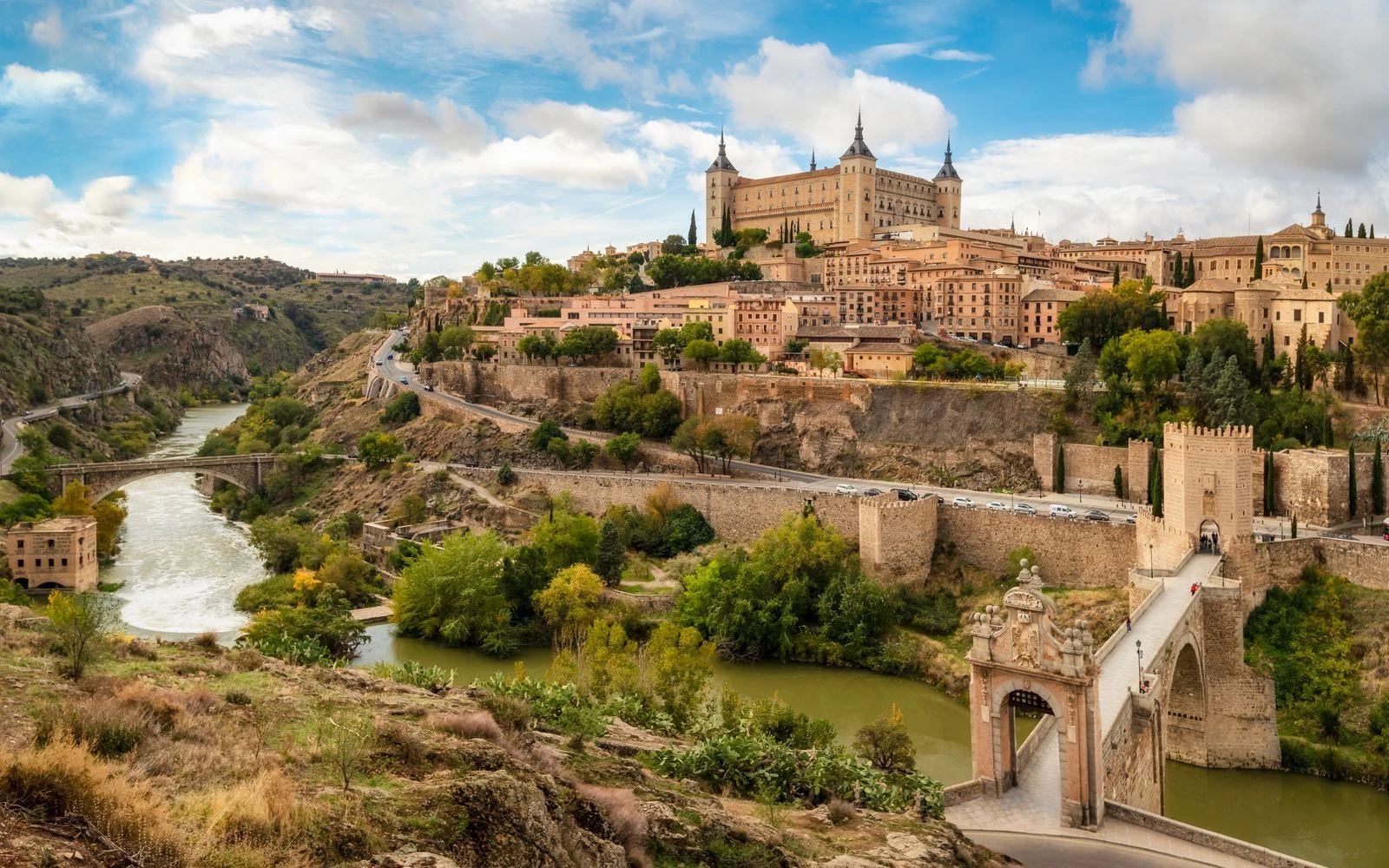
Toledo Cathedral, one of the great High Gothic buildings in Spain, sits close enough to these structures that a single walk through the old town moves among a Gothic cathedral, Mudéjar synagogues, and the Islamic-era Puerta del Sol gate with little distance between them. The city’s hilltop site, wrapped on three sides by the Tagus River, kept its street plan unchanged since the medieval period, since there was little flat ground available for later expansion.
8. Salamanca
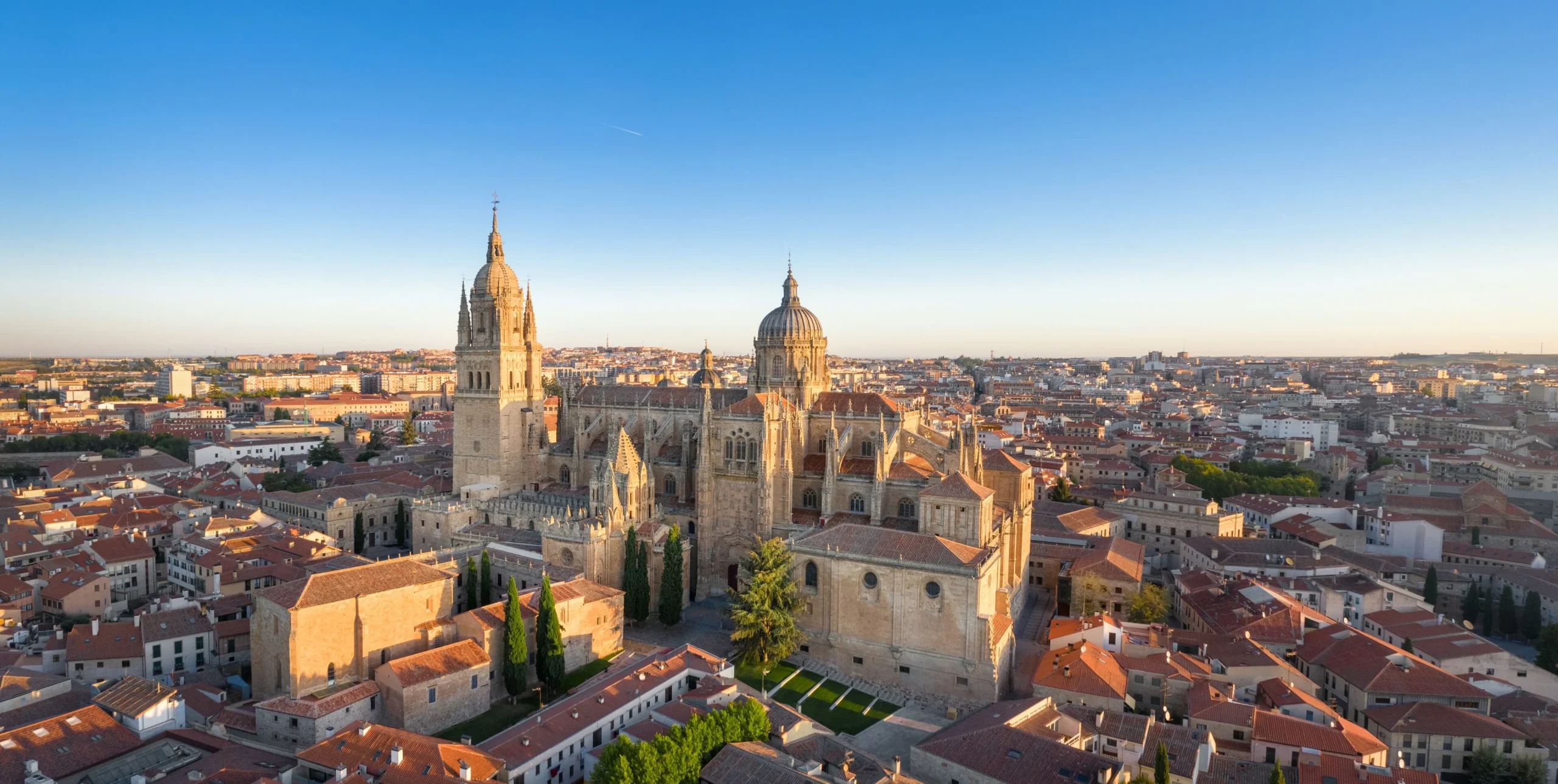
Salamanca is a showcase of Plateresque architecture, a Spanish Renaissance style named for its resemblance to the fine detail of silversmithing (plata means silver). The University of Salamanca, founded in 1218 and one of the oldest universities in Europe, has a main facade covered in dense carved ornament, including a hidden frog on a skull that students traditionally search for as a good luck ritual before exams. The facade’s density of detail was designed to be read up close, which is part of why the building rewards slow viewing more than most Renaissance monuments in Spain.
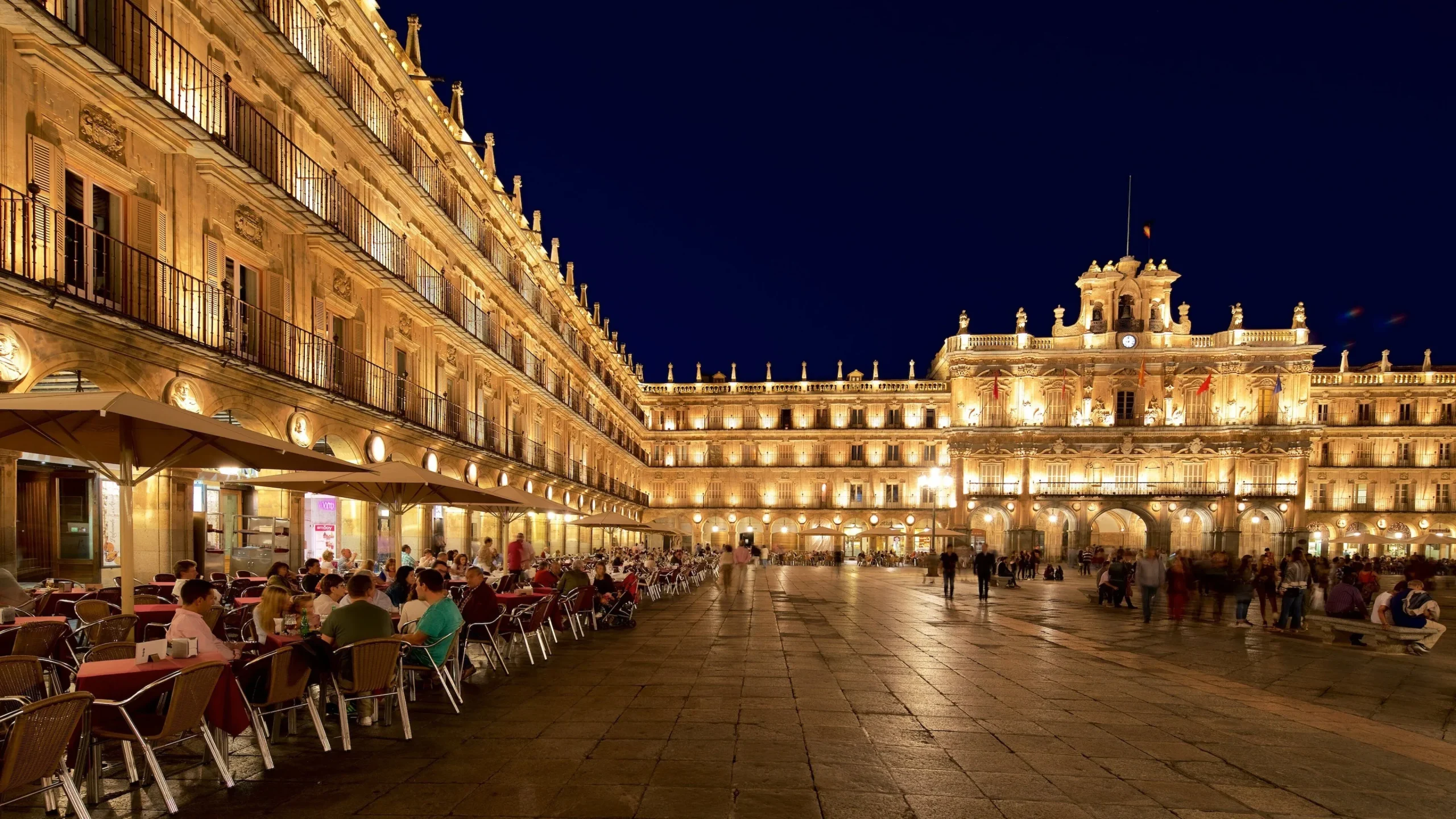
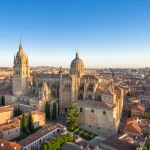
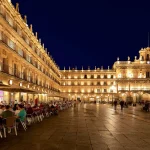
Plaza Mayor, completed in 1755, is considered one of the finest Baroque squares in Spain. Built in a unified style by the Churriguera family of architects, with a continuous arcade and uniform facade around its perimeter that gives it a strong sense of enclosure compared to more irregular Spanish plazas. Salamanca’s building material, a local golden sandstone, unifies the city visually and is responsible for its nickname, “La Dorada” (the golden city), which becomes especially apparent at sunset. The Cathedral complex, technically two cathedrals built adjoining each other across four centuries, allows a direct comparison of Romanesque, Gothic, and Baroque construction within a single visit.
9. Cáceres
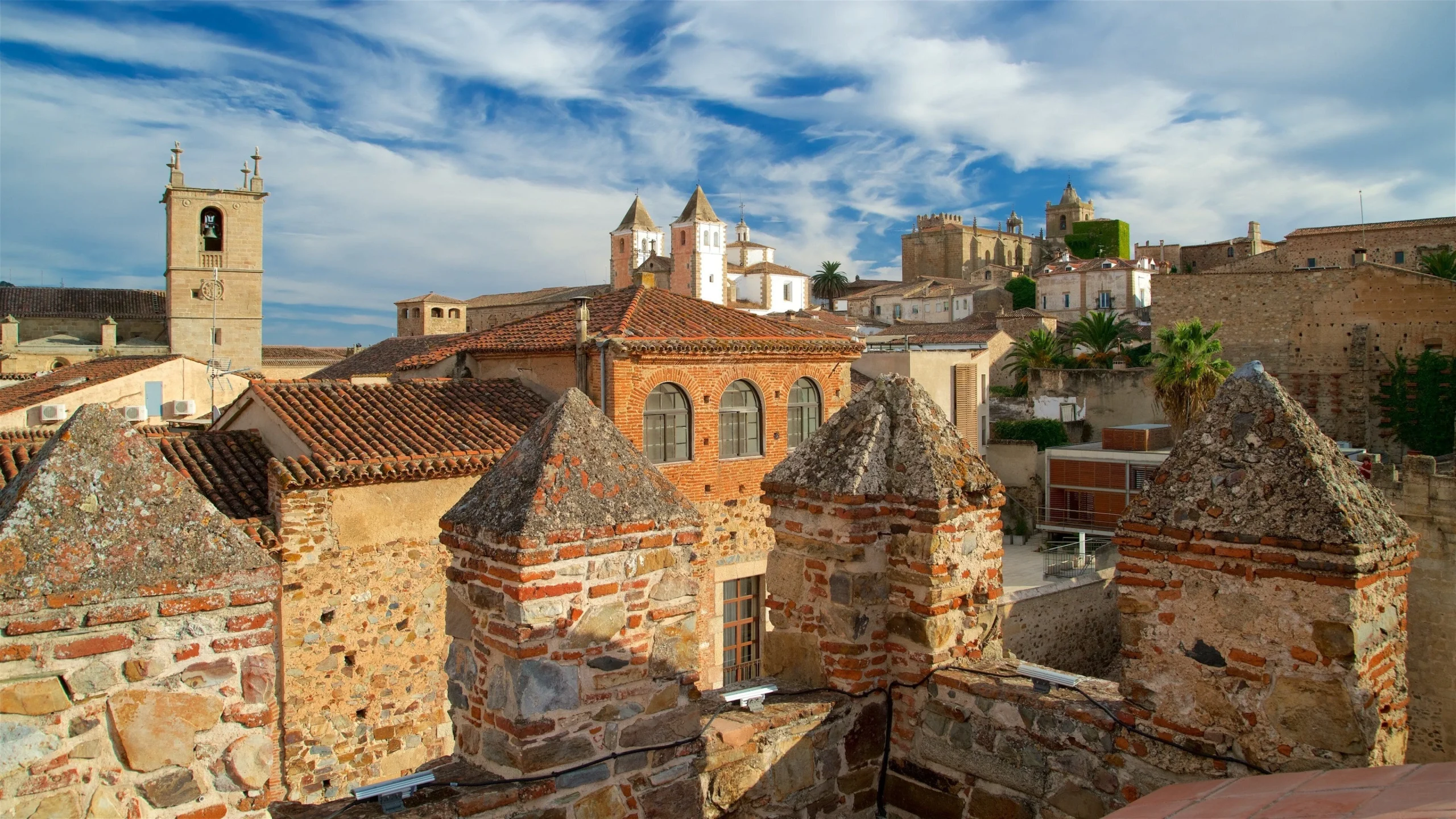
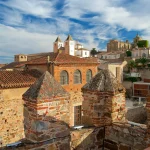
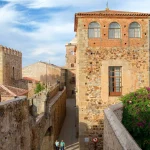
Cáceres preserves intact medieval town centers in Europe, largely because the city lost strategic and economic importance after the Reconquista. Its old town is enclosed by walls originally built by the Almohads in the 12th century over earlier Roman fortifications, and roughly thirty defensive towers still stand along the perimeter. Many of these towers were deliberately shortened in the 15th century by royal order after noble families used them in feuds within the city, which is why most surviving towers today are lower than their original heights.
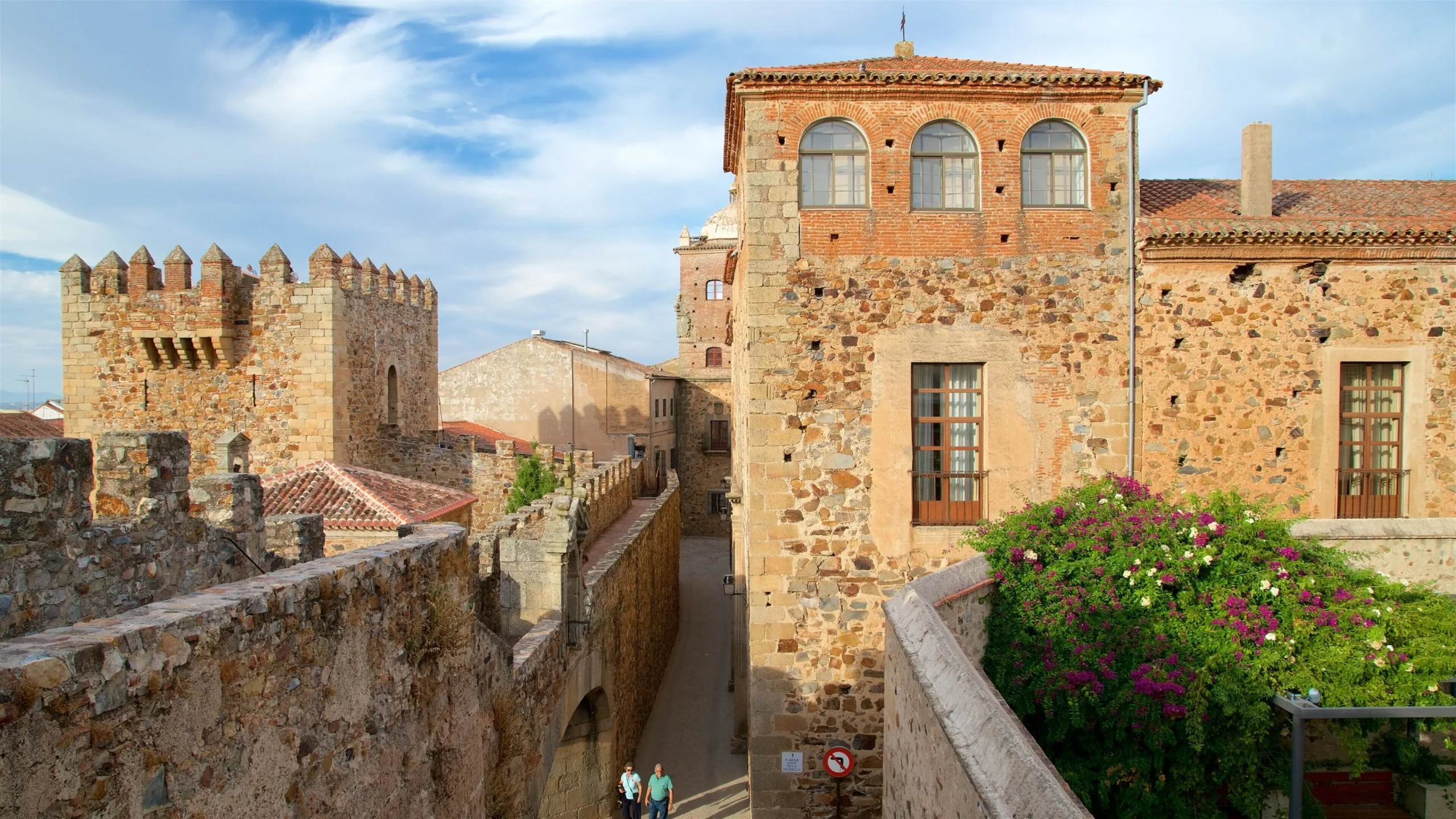
Inside the walls, the old town is dominated by Gothic and Renaissance palaces built by noble families who returned wealthy from the Reconquista and later colonial ventures, resulting in a dense concentration of stone facades, coats of arms, and storks nesting on the towers. Unlike cities where Islamic, Gothic, and Renaissance layers overlap on the same buildings, Cáceres largely kept these eras in separate, adjacent structures, making it easier to read each period distinctly while walking through it. This preservation earned Cáceres UNESCO World Heritage status in 1986, and its unaltered medieval streets have since made it a frequent filming location for productions needing an intact historic backdrop.
10. Cuenca
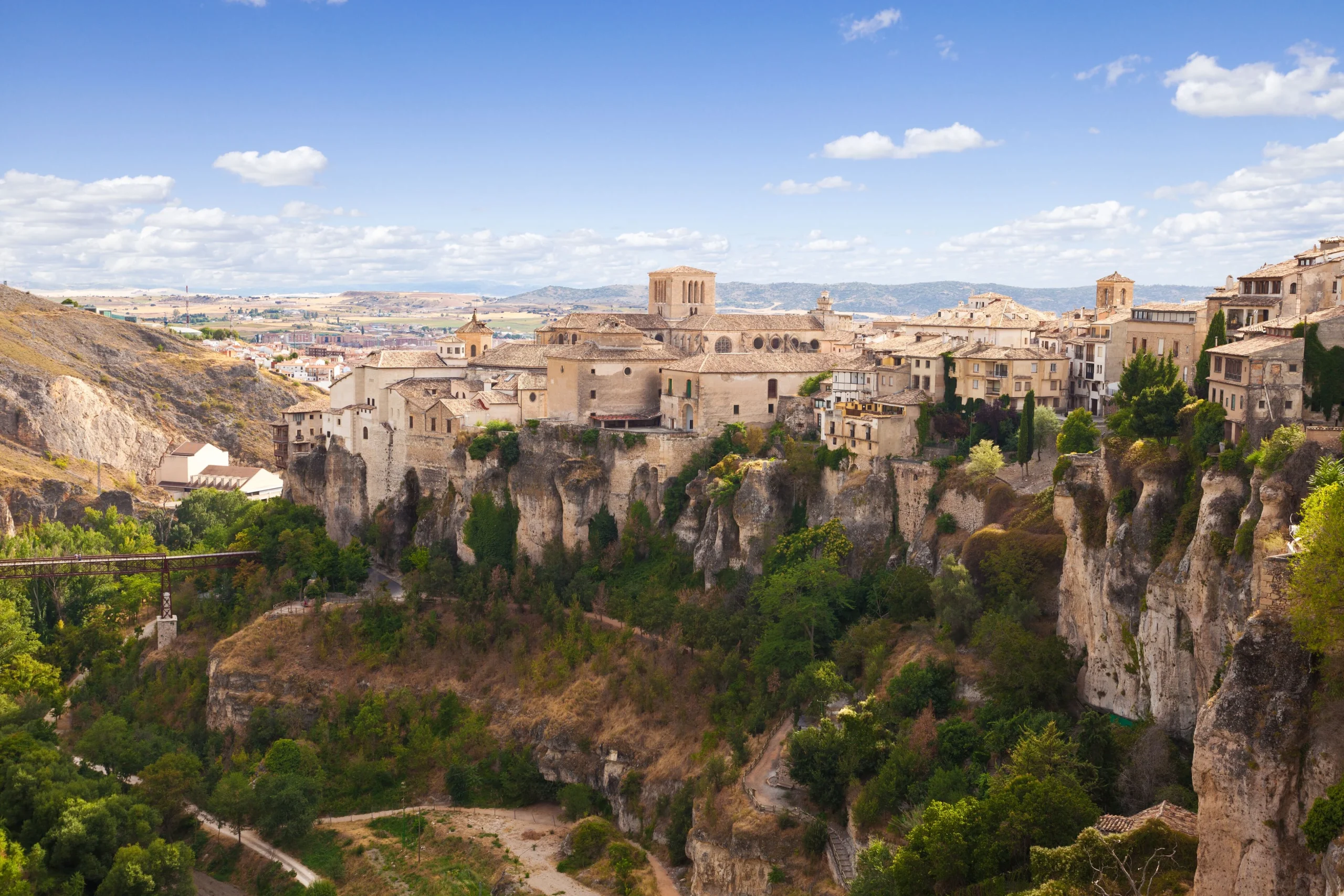
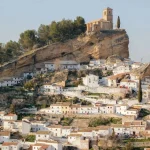
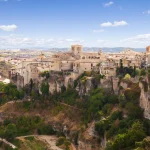
Cuenca city sits on a narrow rock spur between the Júcar and Huécar river gorges. Its urban form is developed directly in response to that terrain, with buildings constructed at the very edge of the cliffs. The Casas Colgadas (Hanging Houses), the city’s best-known structures, cantilever directly over the Huécar gorge, a construction method dating to the medieval period that maximized buildable space on a site with almost no flat land.
One of the Hanging Houses now holds the Museum of Spanish Abstract Art, a use that fits the building’s character well. It displays artists including Fernando Zóbel and Antonio Saura, who worked in the same period the museum was founded. Cuenca’s Gothic cathedral, begun in the 12th century, is notable for its Anglo-Norman influence and for an unfinished main facade that has been reworked several times without ever being fully resolved. The houses, stacked tightly along the gorge edges and connected by steep, narrow streets, were recognized by UNESCO in 1996 as an example of a historic town whose form is inseparable from its natural setting.
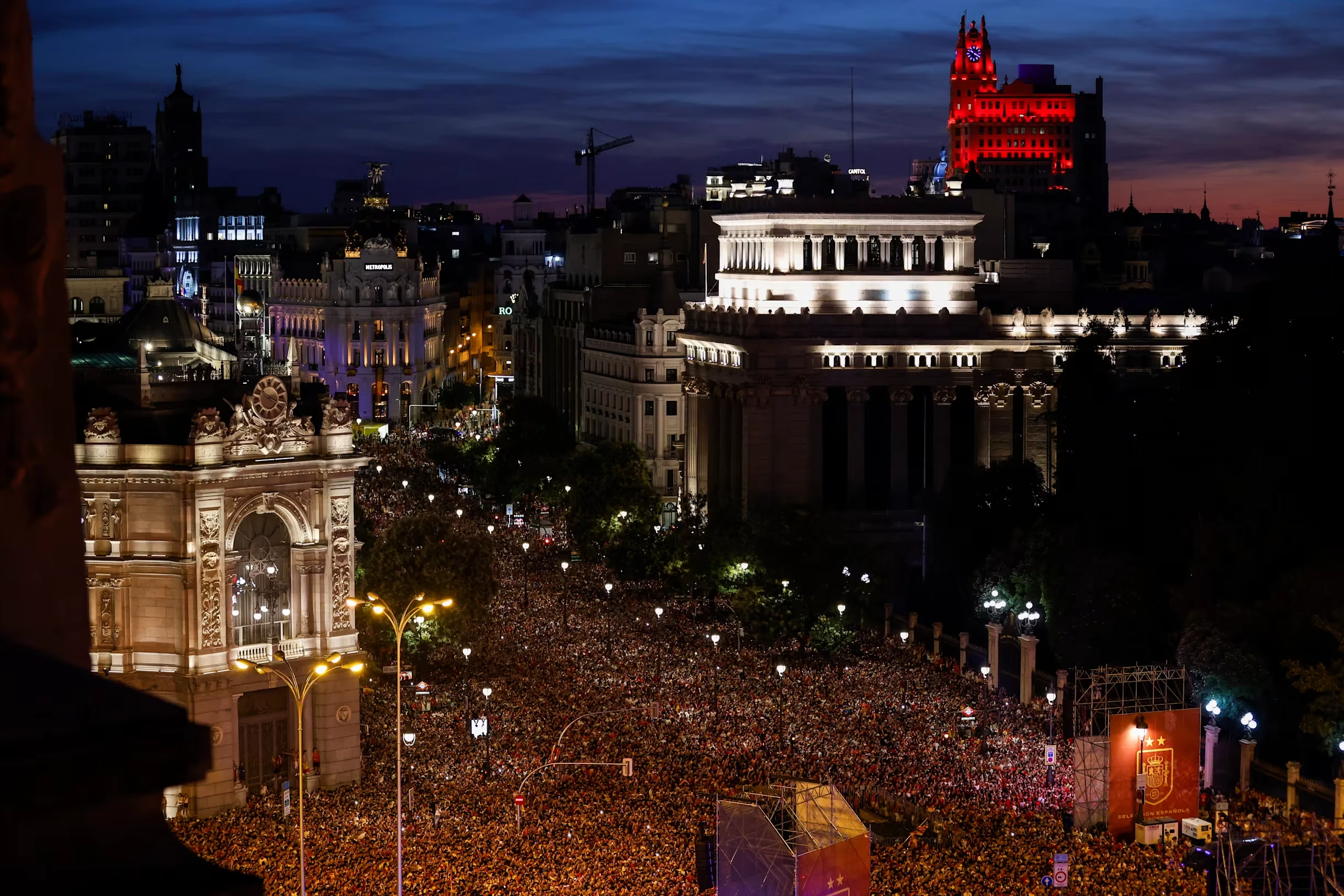
What ties these cities together is that none of this history is preserved behind glass. It’s part of daily life, in the streets people walk to work, and the plazas where they gather. Now, the country actively celebrates a 2026 FIFA World Cup win, taking these historic routes for their parades.