
Administration Announces Preparations for 250-Foot Structure at Memorial Circle
In a significant development for the nation’s capital, the Trump administration has confirmed that excavation work will commence within the next two weeks at Memorial Circle for a towering 250-foot triumphal arch. The announcement, made on September 4, 2026, by Interior Secretary Doug Burgum, marks a major step forward for the long-discussed project intended to stand between the Lincoln Memorial and Arlington National Cemetery.
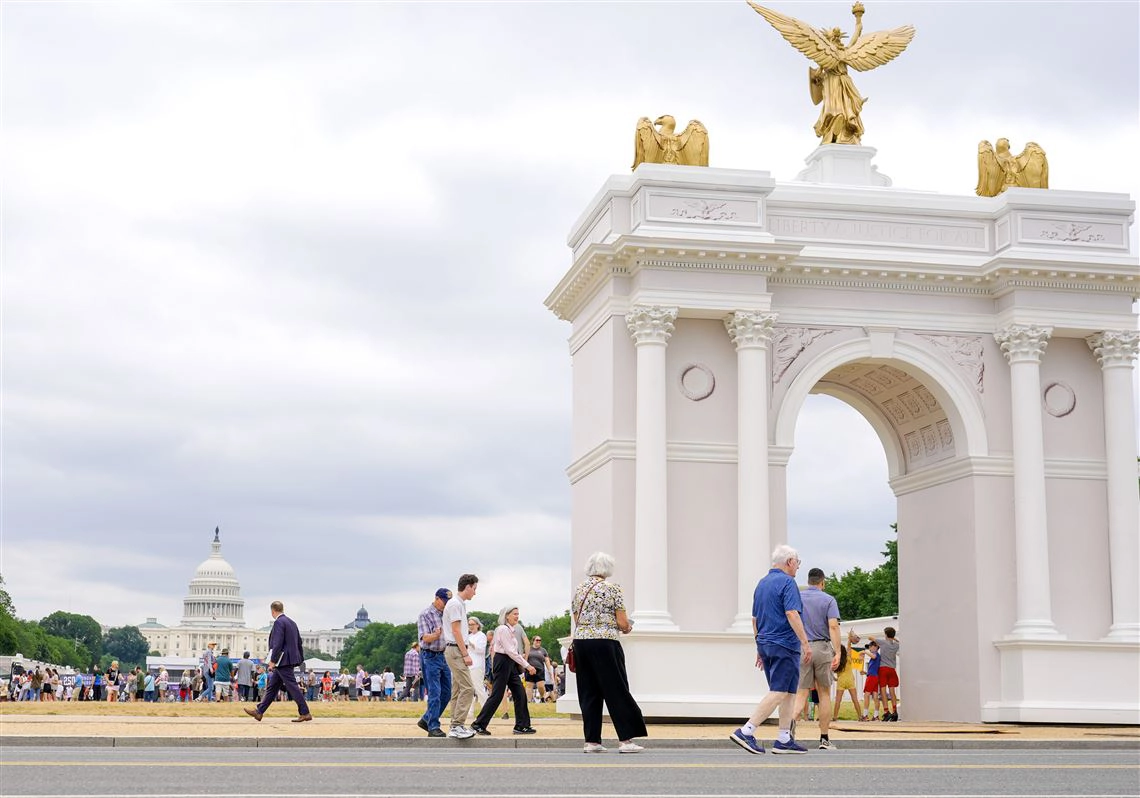
The planned monument, often referred to as the Great Triumphal Arch or Independence Arch, is designed to celebrate the 250th anniversary of American independence. Positioned on Columbia Island within Memorial Circle, a traffic roundabout at the western end of the Arlington Memorial Bridge the structure aims to create a dramatic new landmark along the ceremonial axis connecting Washington, D.C., with Virginia.
Burgum highlighted the historical roots of the idea in his public statement, noting that discussions about placing a monumental feature at the site date back more than 125 years. He described the forthcoming arch as “one of the Great Pieces of American Architecture, honoring the history and significance of Arlington National Cemetery and befitting the most powerful Capital in the World.”
Design Details and Scale of the Proposed Monument
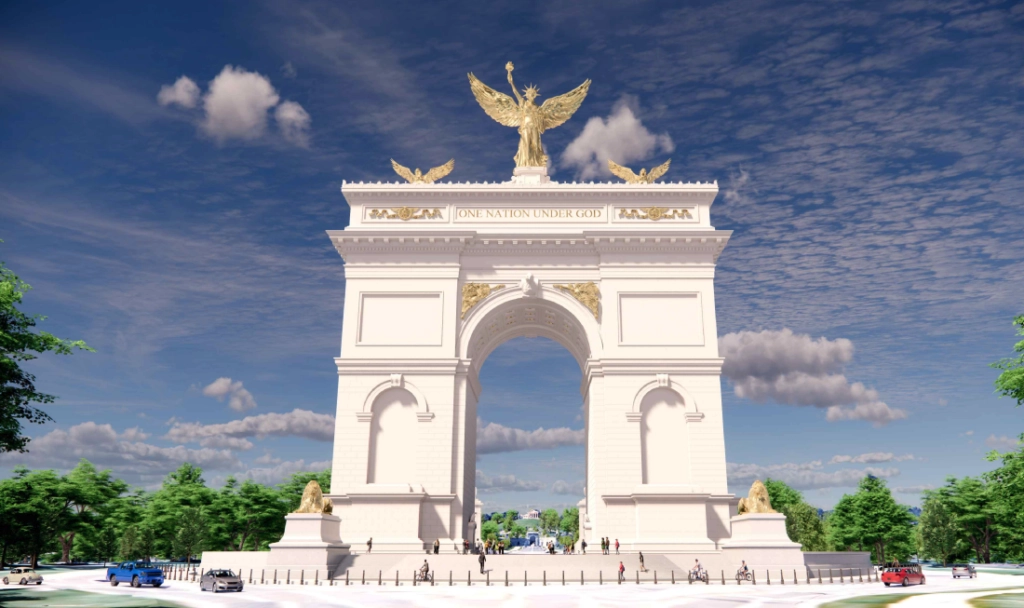
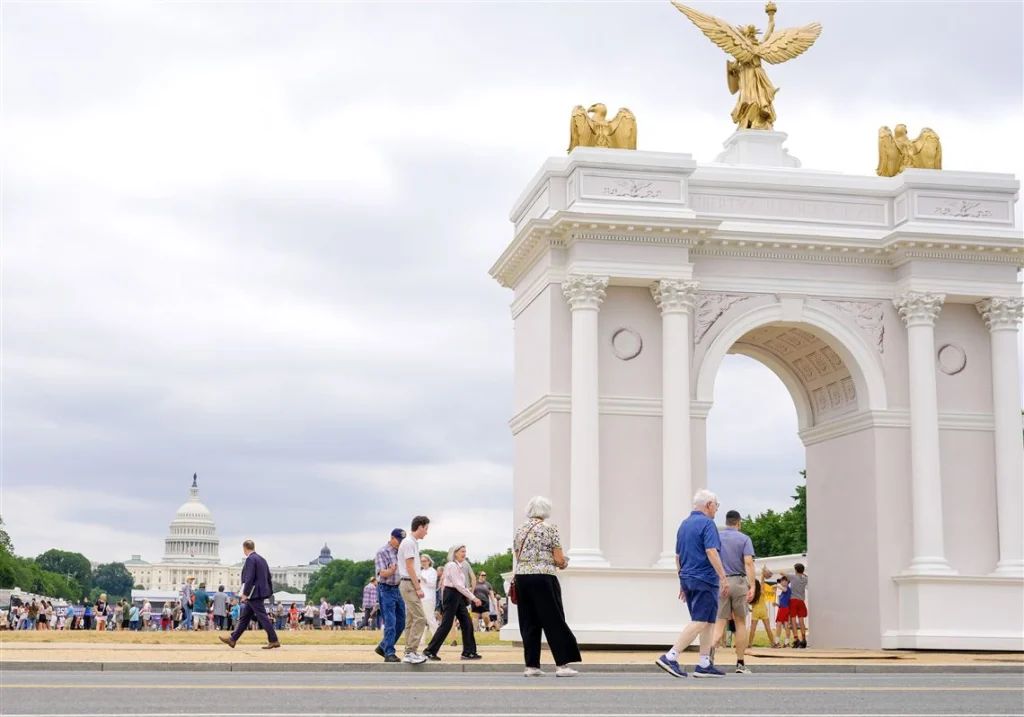
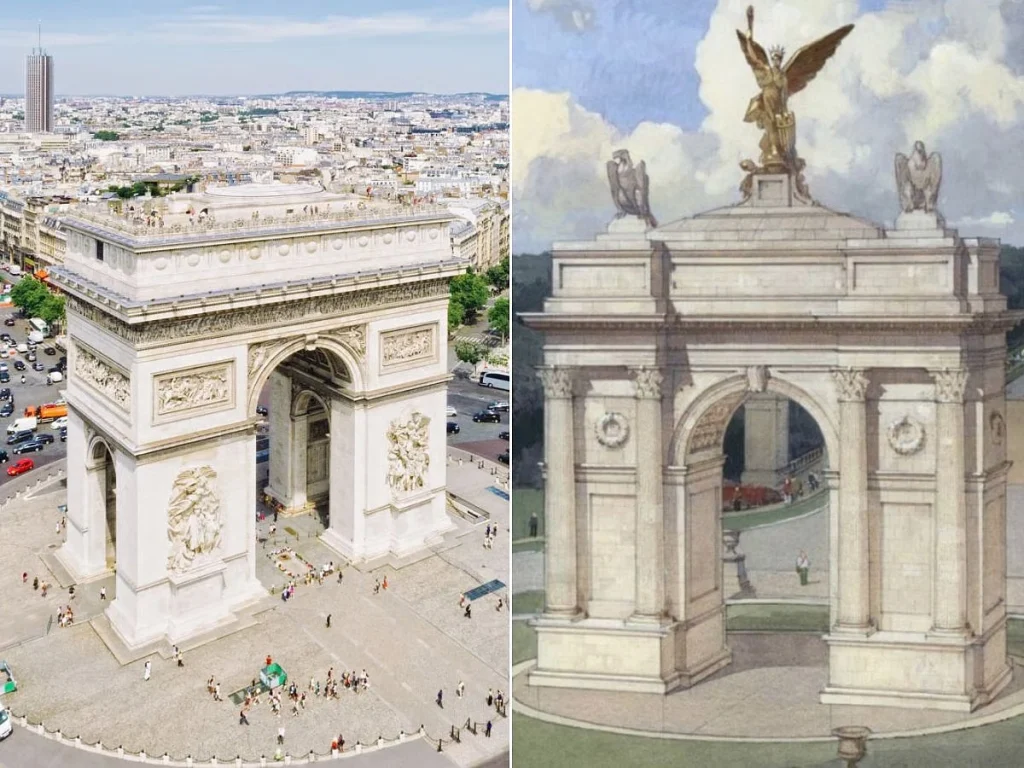
The arch is planned to rise approximately 250 feet tall, making it substantially larger than Paris’s Arc de Triomphe. Renderings released by the administration depict a granite-clad structure with prominent golden elements, including a winged figure resembling Lady Liberty holding a torch at the summit, flanked by eagles with outstretched wings. Inscriptions such as “ONE NATION UNDER GOD” and references to liberty and justice are expected to feature prominently.
Beyond its commemorative role, the design incorporates functional elements. Plans call for an observation deck, exhibit spaces, visitor amenities, elevators, and stairways, transforming the arch into an occupied public building rather than a purely symbolic gateway. The structure would frame views along the Memorial Bridge corridor while introducing a bold new silhouette to the landscape.
Officials have indicated that construction could take two to three years under an intensive schedule involving extended daily work hours and year-round operations. This timeline aims to complete major elements before the end of the current presidential term. Preliminary estimates involve substantial earthmoving, including the removal of roughly 1,400 truckloads of soil and the import of about 400 truckloads of engineered fill to prepare the foundation.
Historical Context and Administrative Rationale
Supporters of the project point to a 1925 congressional authorization related to the Arlington Memorial Bridge and associated features. That earlier vision included monumental columns at the western approach, though they were never constructed. Administration officials argue that the new arch builds upon and fulfills that long-dormant congressional intent, adapting the scale and design for contemporary purposes.
The National Park Service, which oversees the land, has conducted reviews acknowledging that the arch would alter historic sightlines between key landmarks, including the Lincoln Memorial and Arlington National Cemetery. Agency assessments have outlined mitigation measures such as detailed digital documentation of existing views through LiDAR scanning and 3D modeling, vibration monitoring near historic structures, and careful traffic management during construction. The south side of Memorial Circle is expected to face prolonged closures, with lane reductions on the bridge.
Archaeological considerations are also part of the early work. Memorial Circle sits atop fill material placed in the early 20th century, and subsurface investigations are planned to identify any precolonial or historic resources that may lie beneath. The administration has characterized the initial excavation as necessary for these required historic and environmental reviews rather than full construction.
Legal Challenges and Ongoing Reviews
The project has faced opposition from preservation groups, veterans, and architectural historians. A lawsuit filed by three Vietnam War veterans and an architectural historian argues that the administration lacks sufficient congressional authorization and has not completed all required independent reviews. Plaintiffs have expressed concerns about impacts on the solemn character of Arlington National Cemetery and the disruption of carefully planned vistas in the monumental core.
In response to legal filings, the Department of Justice has clarified that the near-term activity consists of archaeological excavation tied to historic preservation requirements, not the start of permanent construction. A federal judge has ordered the government to provide advance notice before moving beyond limited site investigations.
Despite these hurdles, several review bodies have advanced the proposal. The U.S. Commission of Fine Arts approved the design earlier in 2026, and the National Capital Planning Commission granted preliminary site and building approval, with further consideration of height regulations still pending. The Federal Aviation Administration is examining potential effects on nearby flight paths given the structure’s height and proximity to Reagan National Airport and Pentagon facilities.
Broader Implications for the Capital’s Landscape
If completed as envisioned, the arch would represent one of the most substantial additions to Washington’s skyline in decades. It would stand more than twice as tall as the Lincoln Memorial and introduce a vertical accent at a key entry point to the capital from the west. Proponents view it as a fitting centerpiece for the nation’s semiquincentennial celebrations and a statement of American ambition and permanence.
Critics counter that the scale and golden ornamentation risk overpowering the restrained classical character of surrounding monuments and that the traffic circle location will create lasting congestion and visual intrusion. Construction logistics, including heavy equipment, temporary detours for vehicles, pedestrians, and cyclists, and coordination around cemetery ceremonies, are expected to affect daily life in the area for an extended period.

As crews prepare to mobilize for the initial excavation phase, attention will remain focused on both the practical progress of site work and the resolution of outstanding legal and regulatory questions. The coming weeks will clarify the precise nature and extent of the early ground disturbance while the larger debate over the arch’s place in the capital continues.
The administration has framed the project as the fulfillment of a century-old vision finally realized for a new generation. Whether the 250-foot triumphal arch ultimately rises as planned will depend on the interplay of engineering timelines, judicial rulings, and continued federal reviews in the months ahead.