



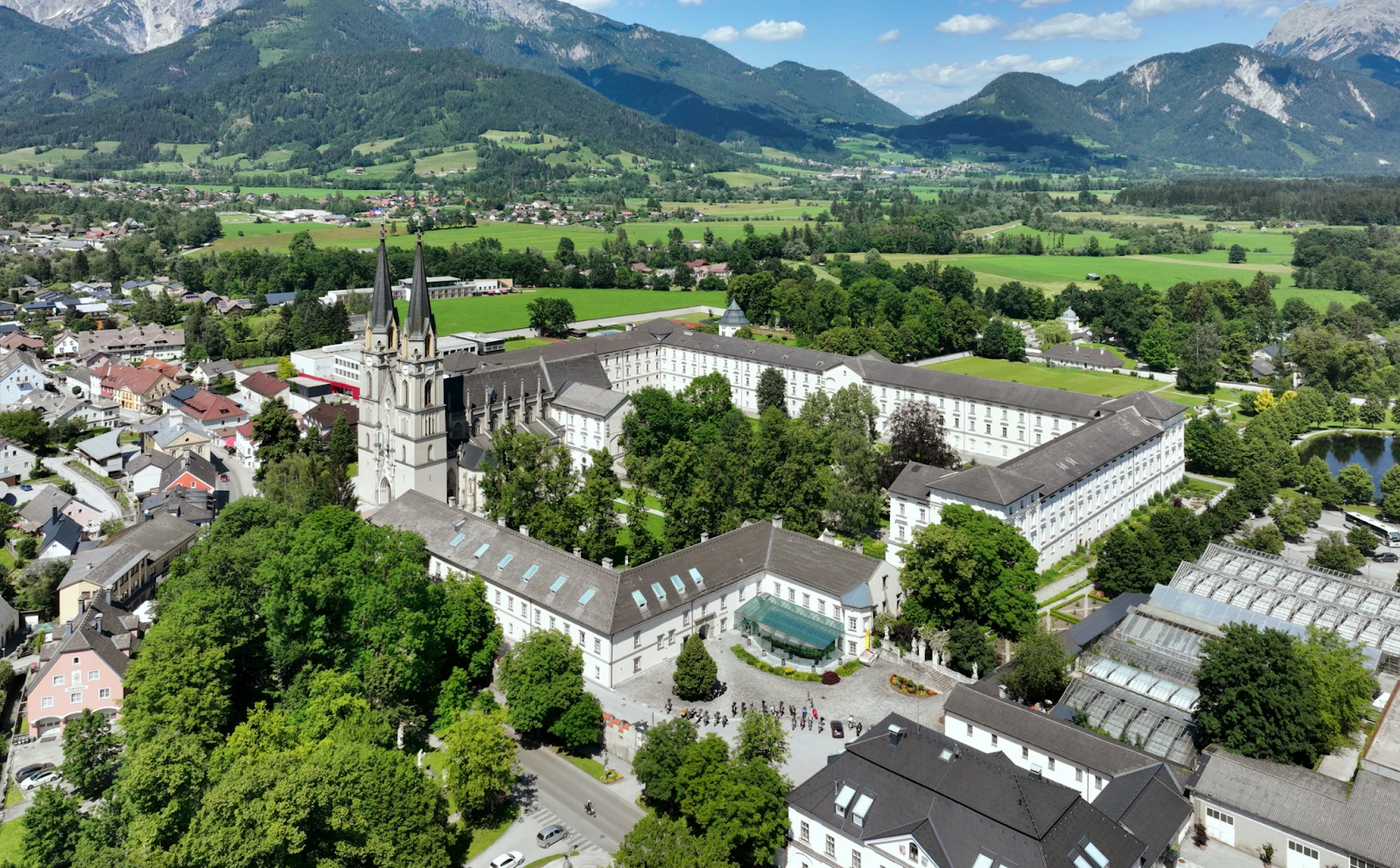
Located in Admont, Austria, the Admont Abbey Library holds the record as the world’s largest monastic library hall. Completed in 1776, its architectural form was shaped to reflect values through clarity, order, and light-filled spatial planning.
Architect Josef Hueber and Design Inspiration
The library was designed by Josef Hueber, a Viennese‑born architect working in Styria. He took inspiration from Vienna’s imperial Court Library but advanced it through Baroque spatial logic combined with the Enlightenment spirit.
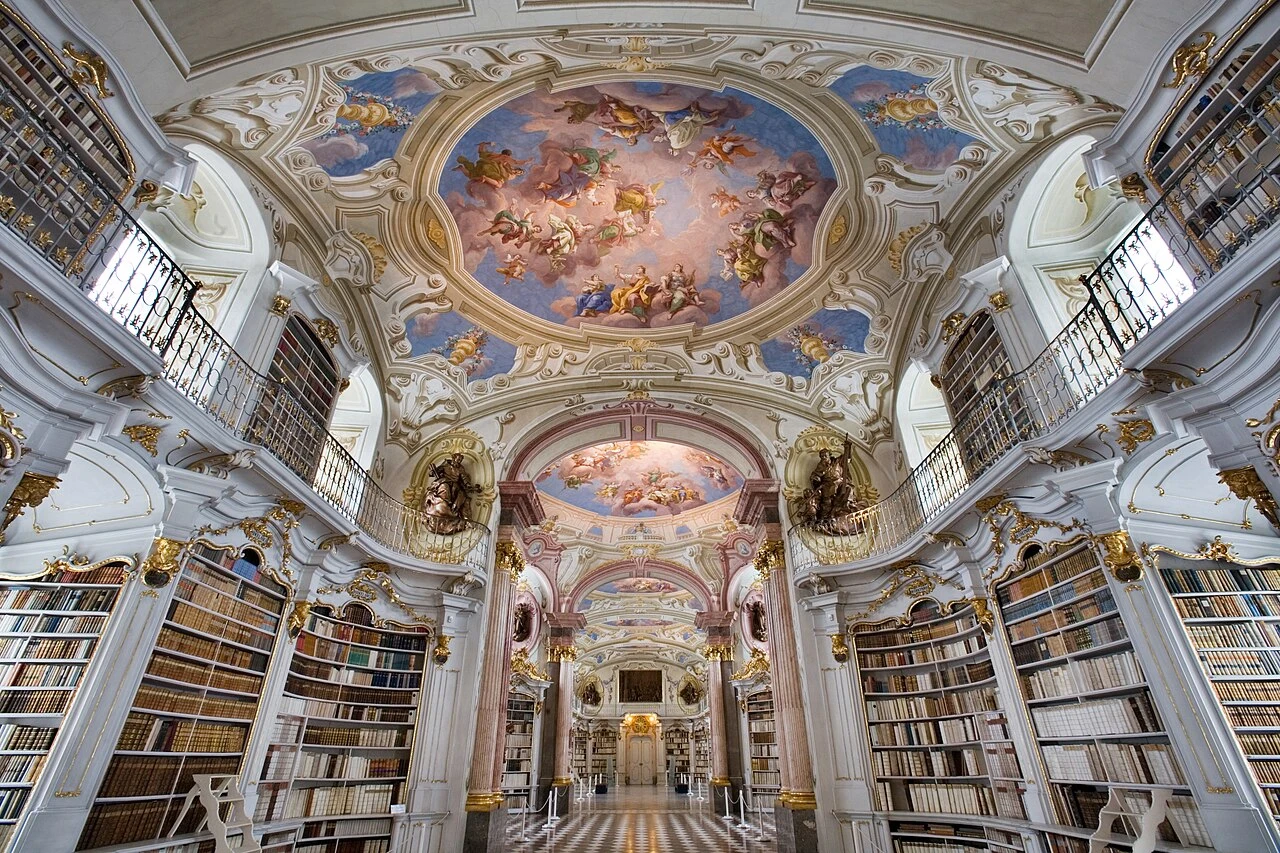
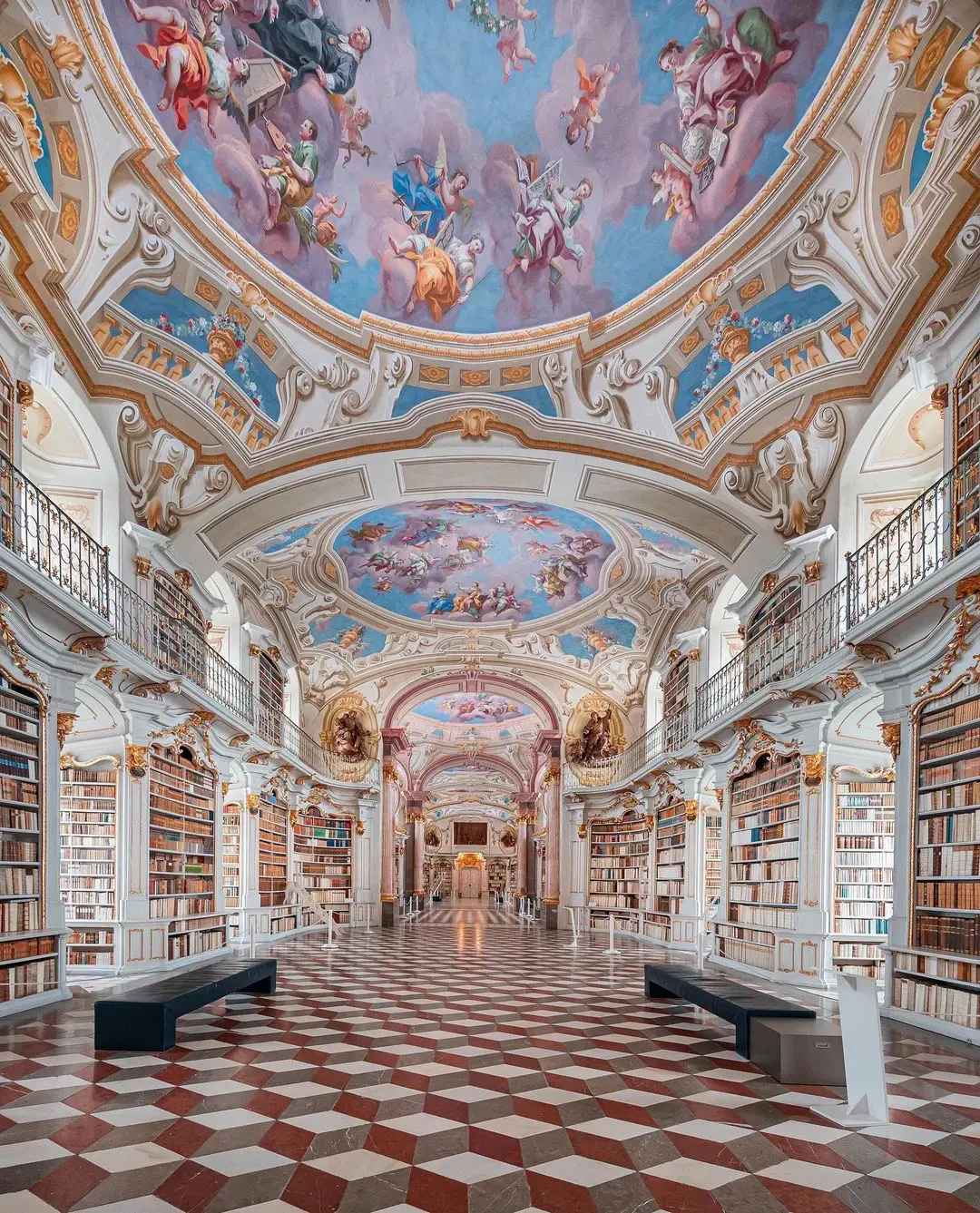
Hueber divided the hall into three longitudinal sectors: a central hall with a large oval dome and two flanking wings. Each wing spans three vault bays, resulting in a total of seven domes, symbolic of completion and the trinity.
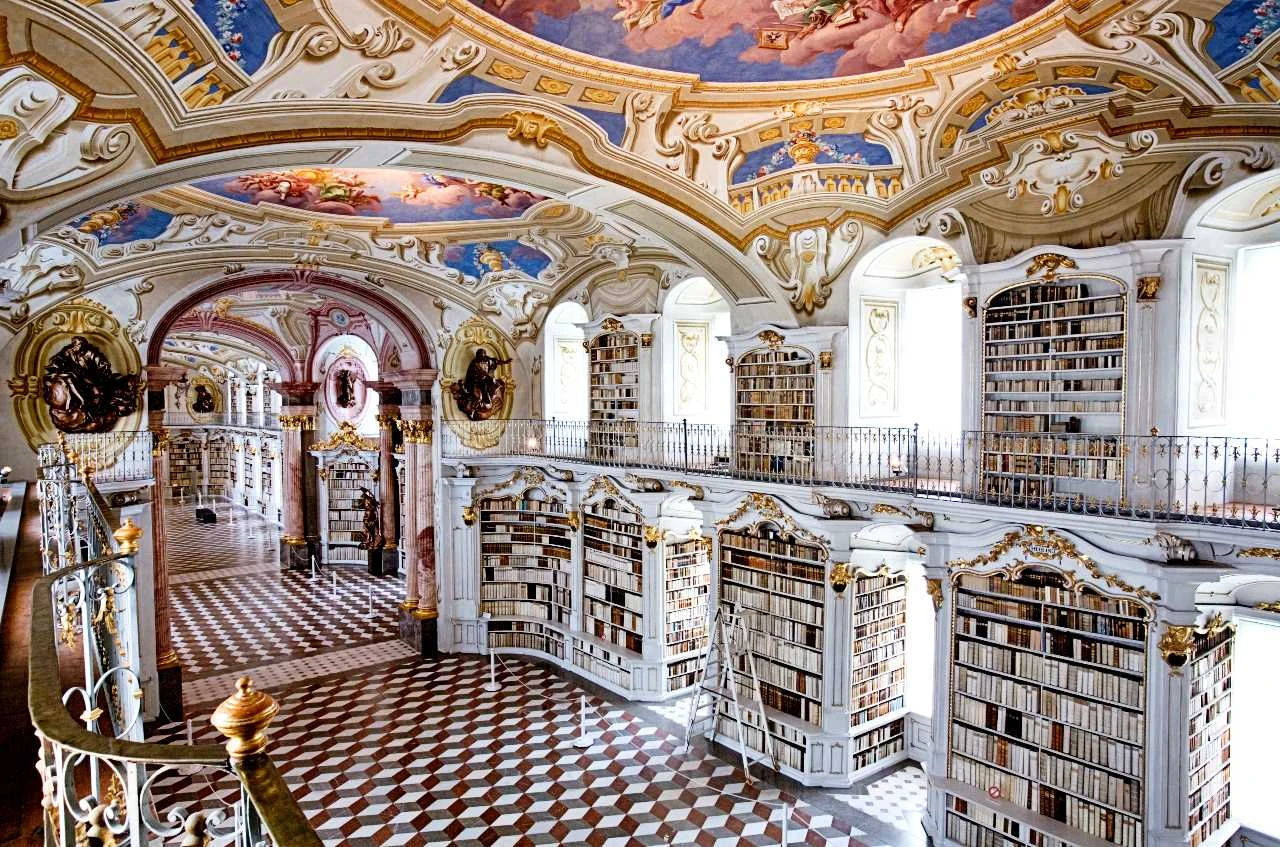
The main hall measures approximately 70 m long, 14 m wide, with a height of around 11–13 m to the dome apex. Illumination is achieved through 48 full windows, with an additional 12 hidden behind shelving, delivering abundant natural light, intended as a metaphor for knowledge.
Baroque Interior Design of Admont Abbey Library: Materials and Finishes
Floor‑to‑ceiling shelving is painted white with gilded filigree, maximizing reflectivity and brightness. This Rococo‑inflected palette was a deliberate alternative to traditional darker wood tones, aligning form with symbolism. The marble mosaic floor uses over 7,000 small diamonds in white, red, and grey, arranged in geometric motifs, zigzagging bands, cubes, or step illusions, supporting the overall sense of spatial dynamism.
Ceiling Frescoes and Sculptural Program: Narrative Art in Admont Abbey Library
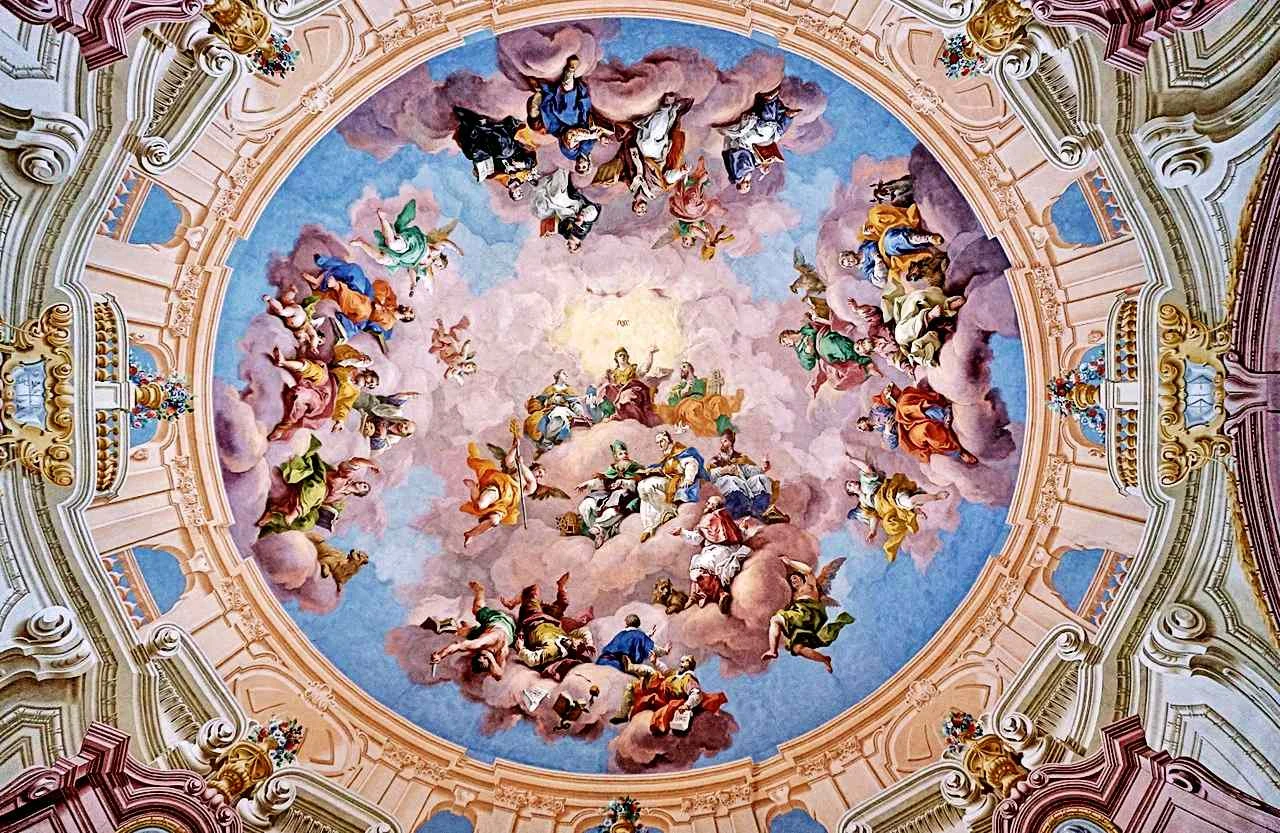
At age eighty, Bartolomeo Altomonte painted the seven dome frescoes during two consecutive summers (1775–76). The central dome celebrates Divine Revelation, while the contiguous domes embody stages of human understanding like language, science, law, and art.
Carved sculptures titled The Four Last Things (death, judgement, heaven, hell) by Josef Stammel stand beneath the central dome. These powerful religious-themed works provide a counterpoint to the fresco cycle.
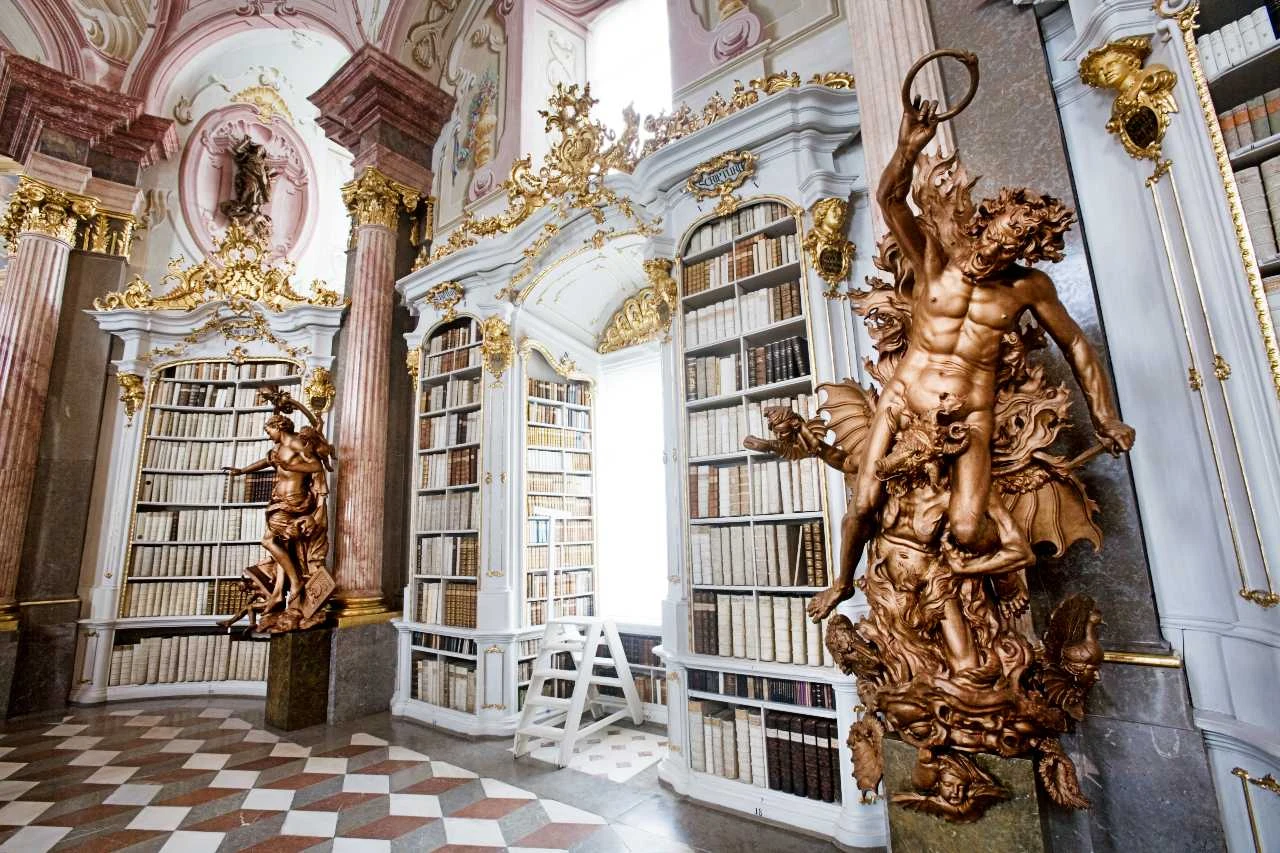
Library Architecture and Layout: Circulation, Structure, and Book Collections
Shelving units in niches conceal secret doors; these lead to spiral staircases ascending to an upper gallery. The two-tiered layout emphasizes vertical movement without disrupting aesthetic continuity.
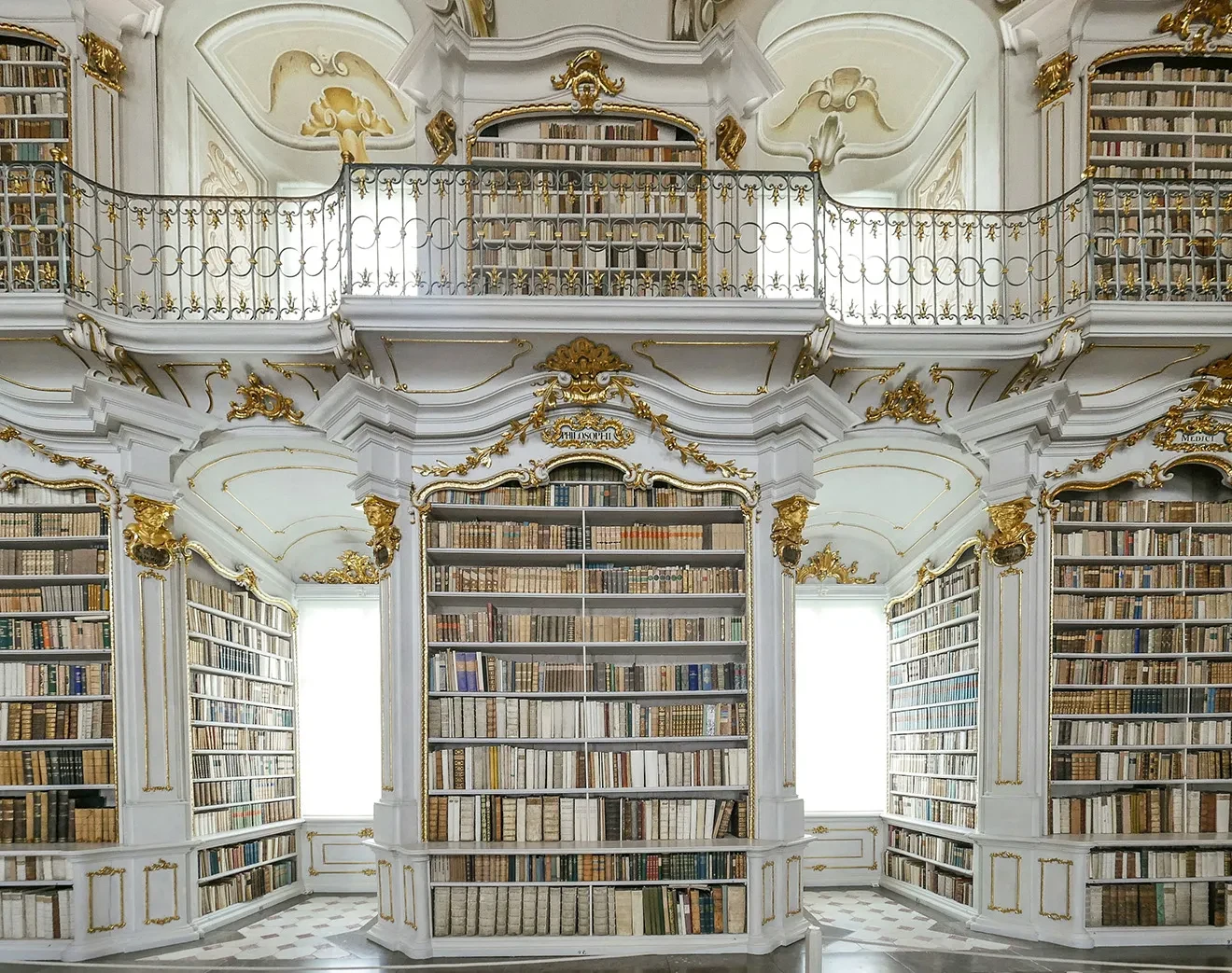
Unlike earlier libraries requiring galleries or platforms, Hueber omitted visible balconies in the central hall. The circulation space remains open, reinforcing the library’s conceptual alignment with openness and intellectual access.
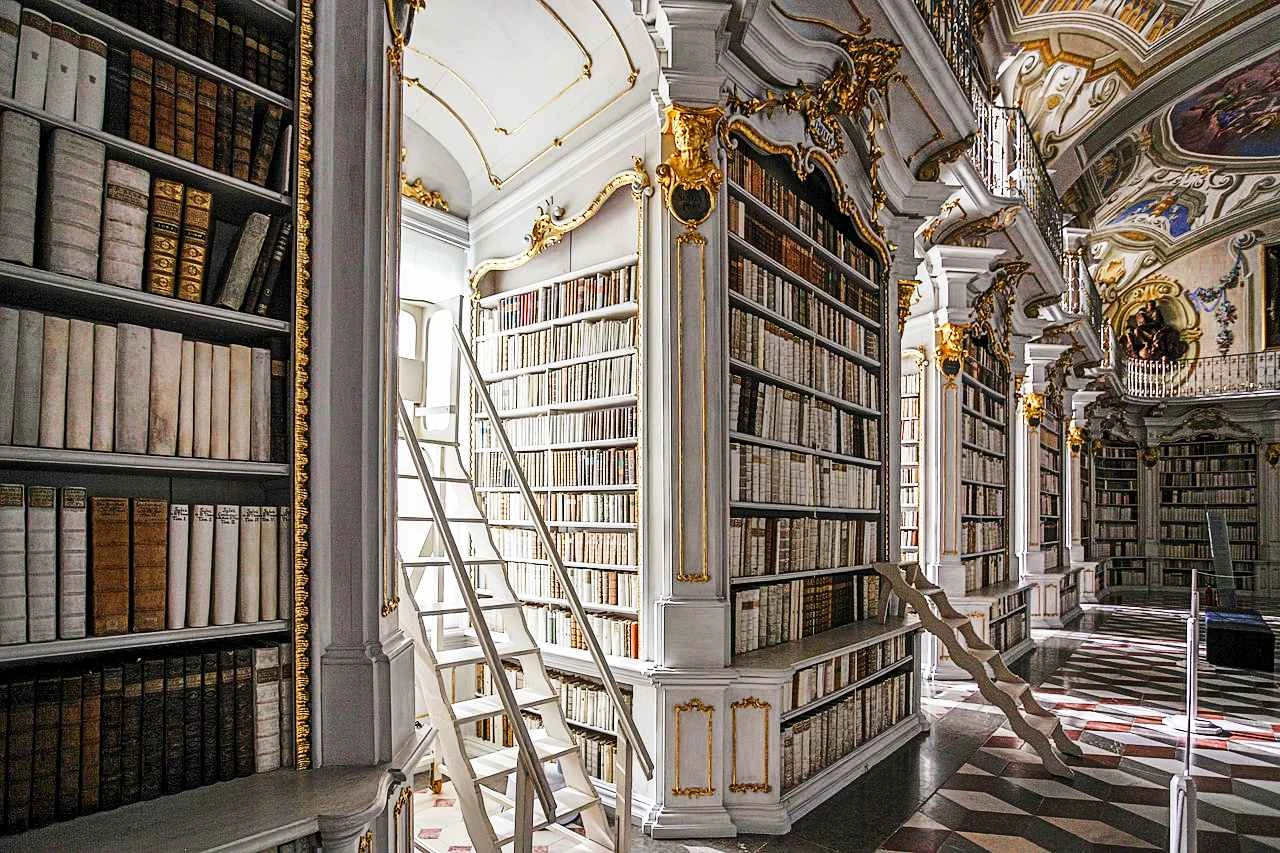
The library’s main hall contains about 70,000 books, and the entire collection has over 200,000. It also includes more than 1,400 medieval manuscripts, some as old as the 8th century, and over 900 early printed books from before the year 1500, known as incunabula.
Shelf contents are thematically arranged, theological works reside under the central dome, while the north wing is theological literature, and the south wing covers secular sciences, a layout that mirrors the domed fresco narrative.
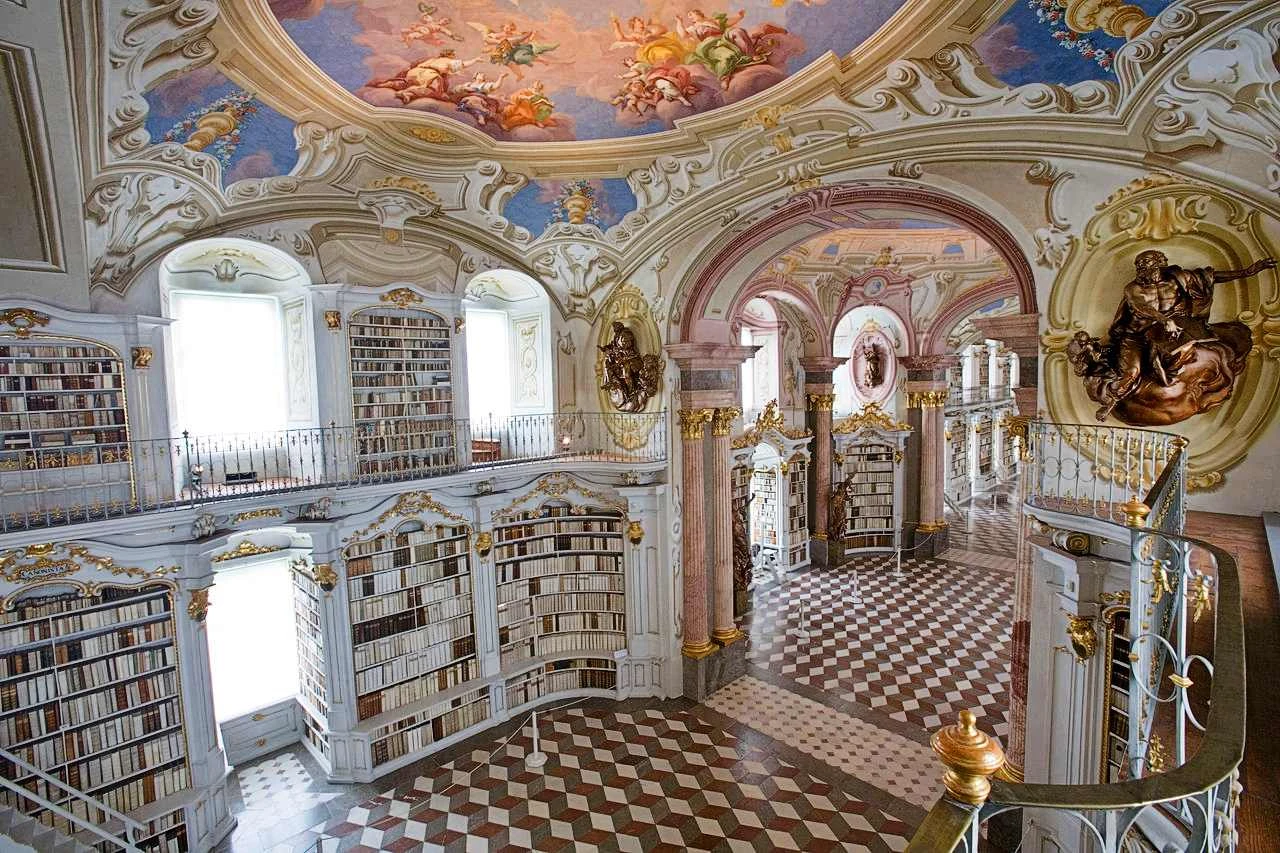
Historically referred to as the “Eighth Wonder of the World”, in part due to its spatial dimensions, structural complexity, and cultural ambition. Hueber’s design is a rare instance of Baroque architecture synthesizing dramatic theatrical form with clarity, rationality, and light as metaphors for human understanding.
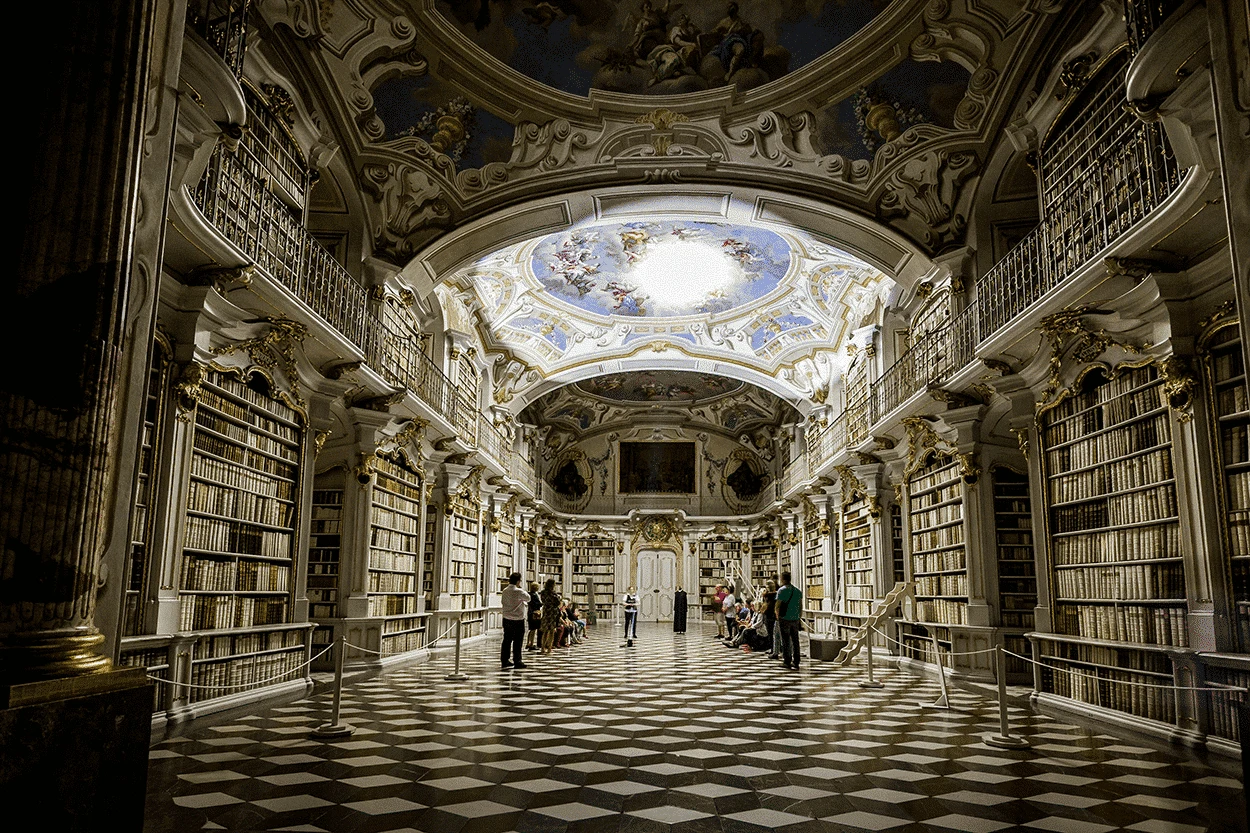
Admont Abbey Library is a technical and conceptual landmark. It integrates large-scale Baroque geometry, a restrained Rococo palette, integrated fresco cycles, sculptural narrative, and symbolic spatial divisions to embody ideals.
Image courtesy Jorge Royan via Wikimedia Commons and Admont Abbey Library
Explore Courses
.jpg "Ondrej Chybik - Rethinking Architecture")