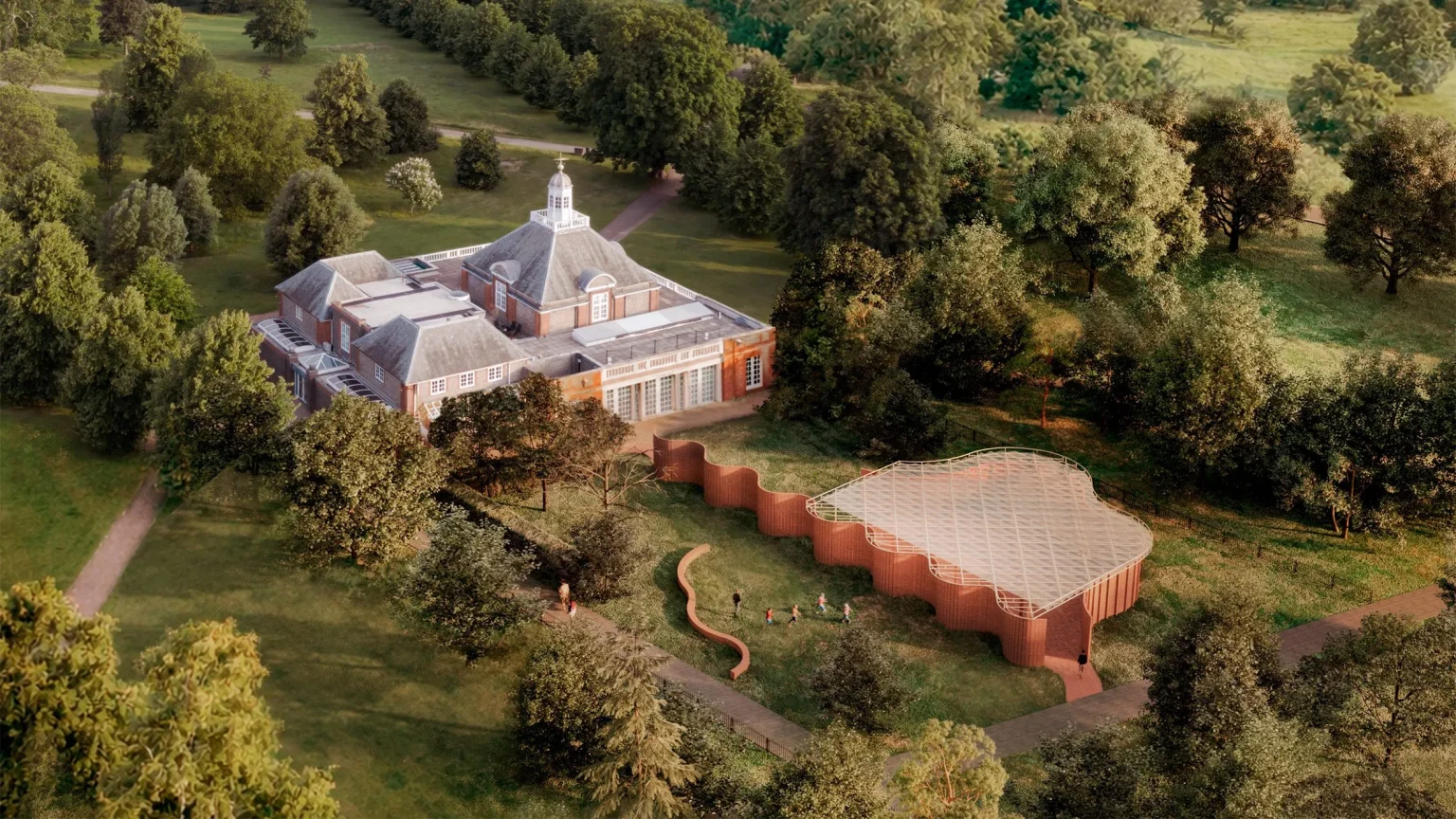


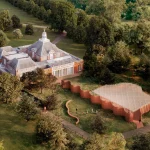
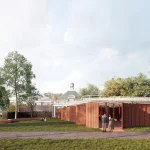

The Serpentine Galleries have announced Lanza Atelier as the architect for the Serpentine Pavilion 2026, marking the 25th edition of the annual commission in Kensington Gardens. The Mexico City–based practice, led by Isabel Abascal and Alessandro Arienzo, will present a brick-built pavilion titled a serpentine, opening on 6 June 2026 and remaining in place until 25 October 2026.
The announcement places Lanza Atelier among a long list of internationally recognized architects who have contributed to the Serpentine Pavilion program, which commissions a new temporary structure each year from a studio yet to complete a permanent building in the UK.
A Pavilion Shaped by the Serpentine Wall
LANZA atelier’s design for the 2026 Pavilion draws its shape and logic from the English serpentine wall, also known as a “crinkle-crankle” wall, a historic brick feature distinguished by a series of gentle curves. These curves provide structural stability through geometry, meaning the wall can be only one brick thick yet remain strong and stable. Such walls were common in English garden traditions and are said to have originated in ancient Egypt before becoming widespread in England.
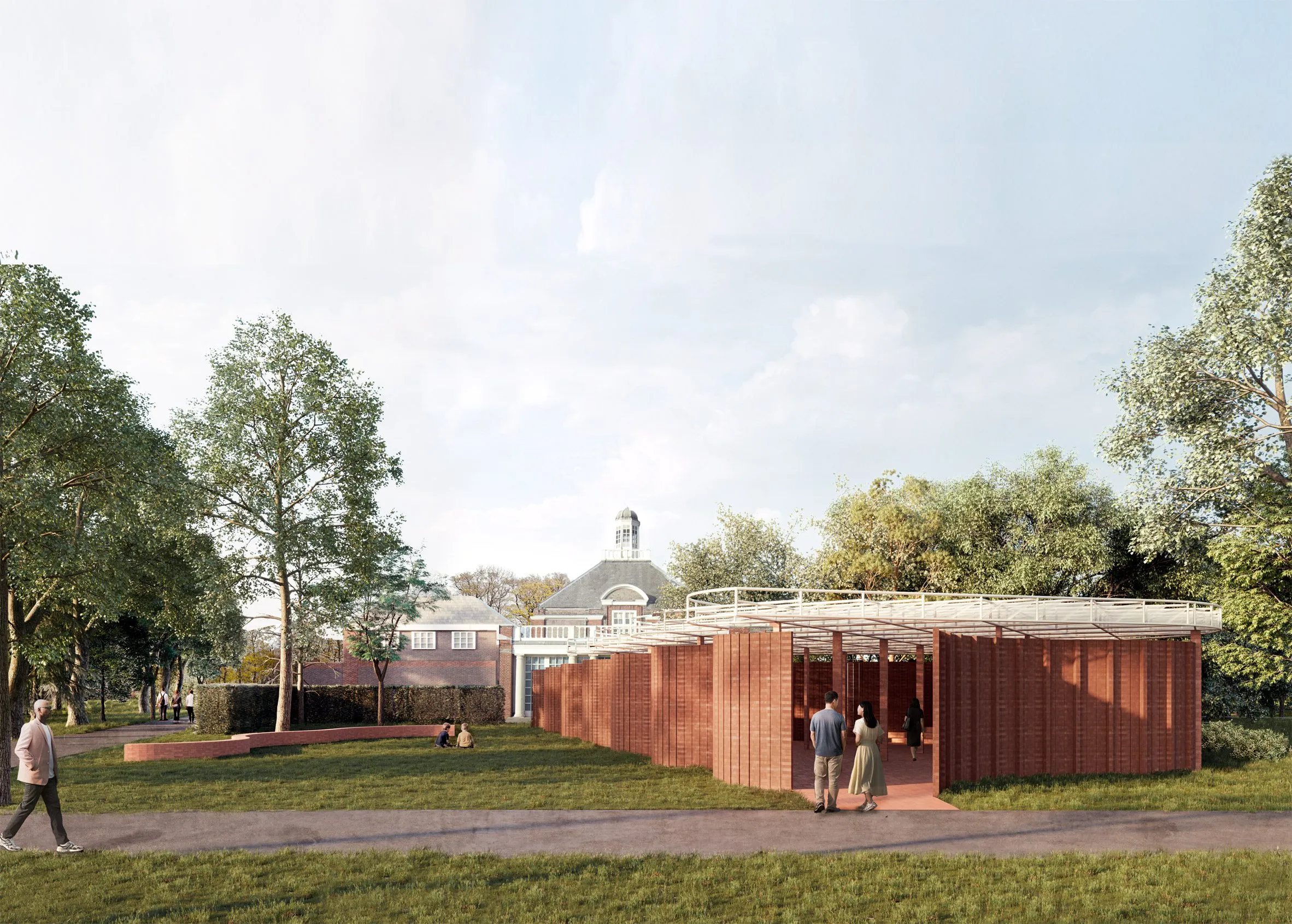
The Pavilion’s name, the Serpentine, reflects this inspiration and also subtly references the nearby Serpentine Lake, whose own sinuous outline complements the project’s form.
Brick Architecture and Landscape Integration
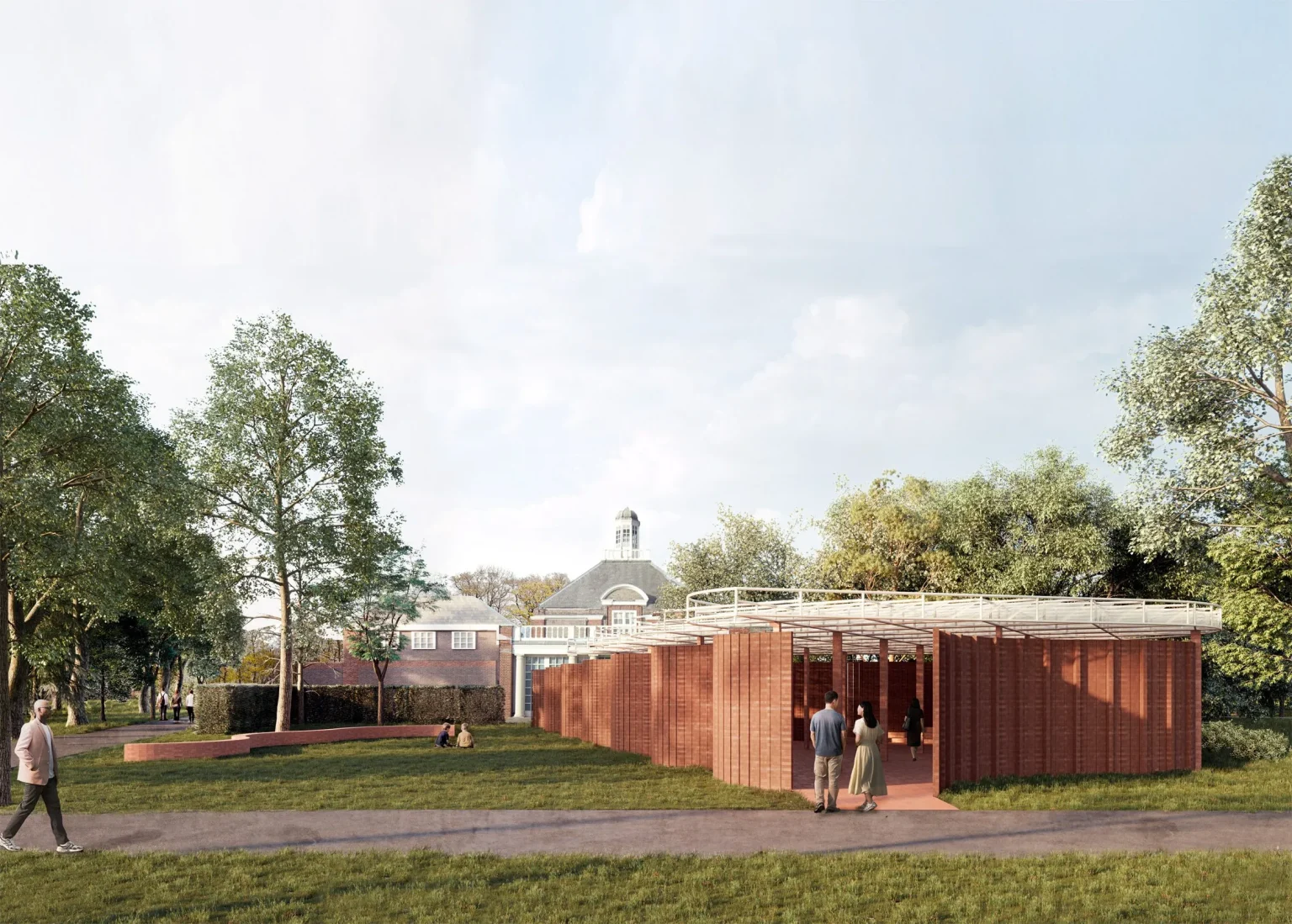
The pavilion is organized around a sequence of curving brick walls that define the main spatial gestures. One wall follows the serpentine curve, while a second wall is designed to weave around the existing tree canopy without disturbing it, creating a dialogue between built form and nature.
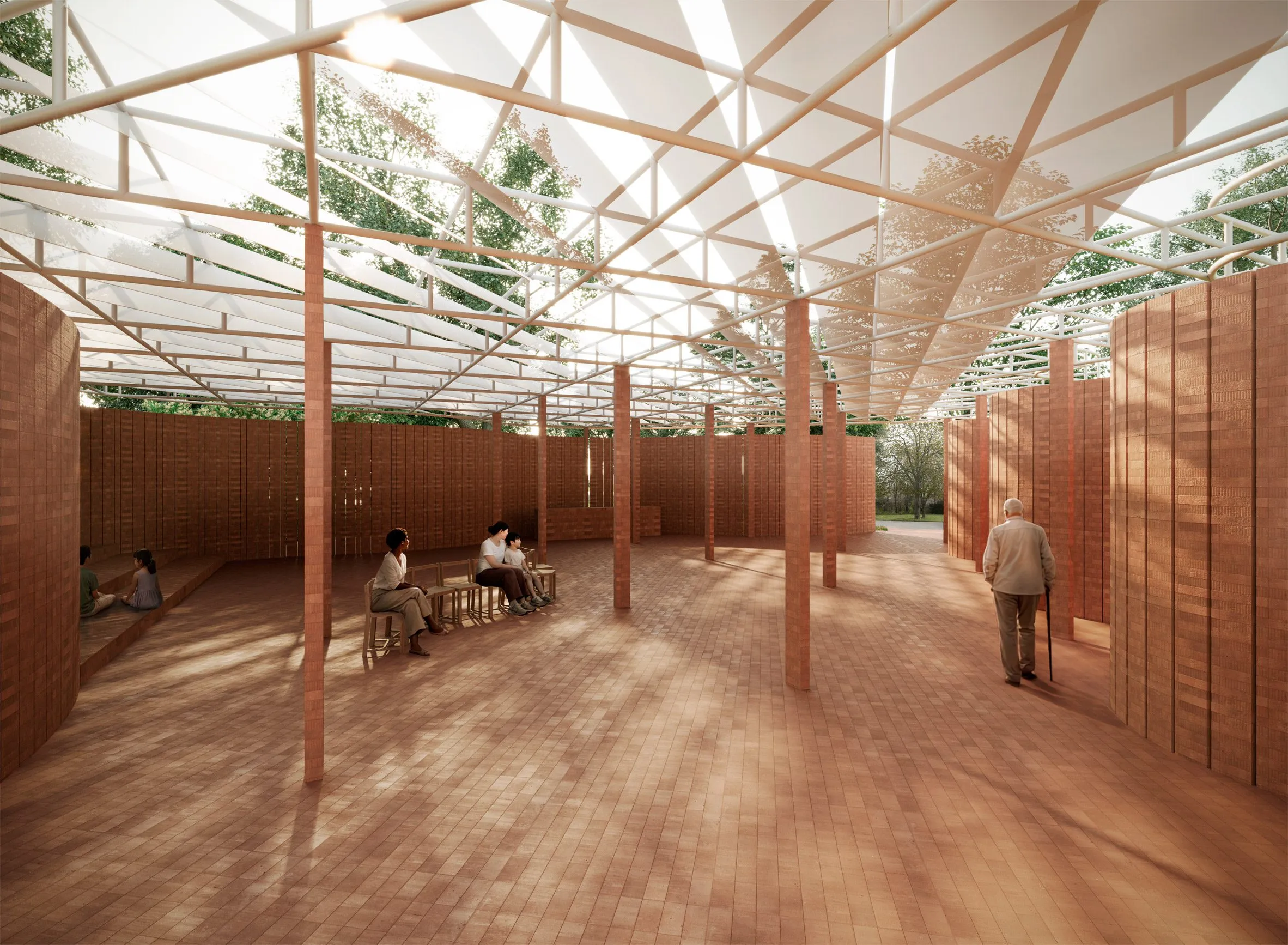
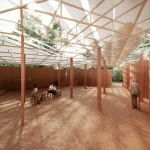
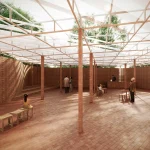
A translucent roof rests lightly on thin brick columns that evoke a grove of trees. The roof and columns allow light and air to penetrate freely through the space, softening boundaries between enclosed and open areas.
Brick was chosen as the primary material both as a nod to the English garden tradition and to create a material continuity with the Serpentine South Gallery’s existing brick façade, which was originally built as a tea pavilion. The structure uses a rhythmic pattern of brickwork that shifts from opaque to permeable, allowing views, breezes, and light to interact with visitors as they move through the pavilion.
The Serpentine Pavilion 2026 is conceived as a walk-through structure with areas for gathering, pause, and informal use. Openings within the brickwork allow shifting views across Kensington Gardens, while permeable sections of wall encourage ventilation and daylight.
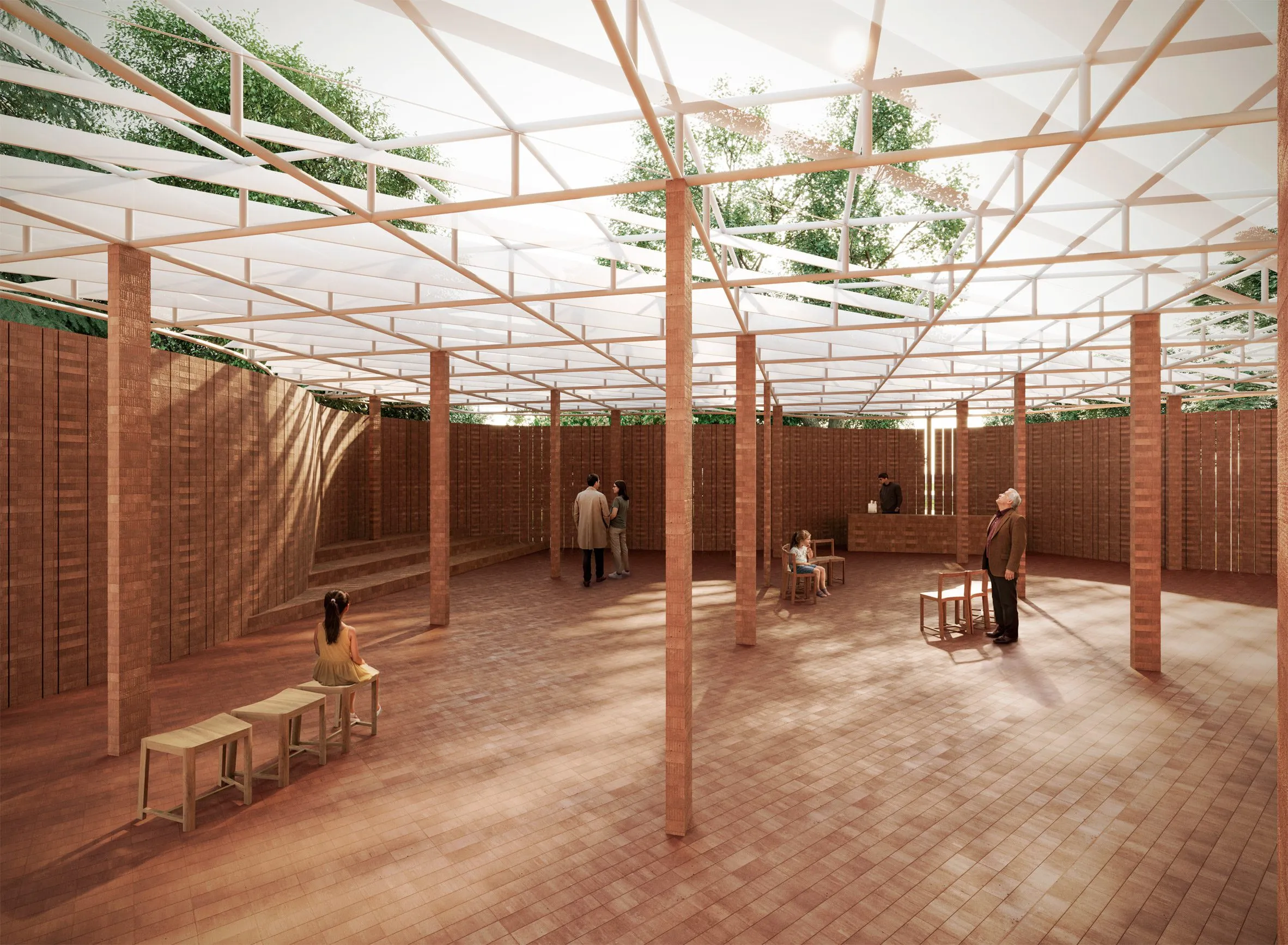
As with previous editions, the pavilion will host a seasonal program of talks, performances, screenings, and public events, continuing its role as a civic space for architecture, art, and discussion throughout the summer.
A Milestone Year for the Serpentine
The 2026 pavilion coincides with the 25th anniversary of the Serpentine Pavilion program. To mark the occasion, the Serpentine is collaborating with the Zaha Hadid Foundation, acknowledging Hadid’s role as the first architect to design the pavilion in 2000.
Goldman Sachs continues its support of the commission, backing the Pavilion for the twelfth consecutive year.
Lanza Atelier on the Global Stage

Founded in 2015, Lanza Atelier has built a reputation for work that focuses on material intelligence, craft, and everyday spatial use. The Serpentine Pavilion 2026 represents a significant international moment for the studio and positions it within a global architectural conversation.
Lanza Atelier becomes only the second Mexican practice to design the Serpentine Pavilion, following Frida Escobedo’s 2018 pavilion.
Image credit: Lanza Atelier/Serpentine