



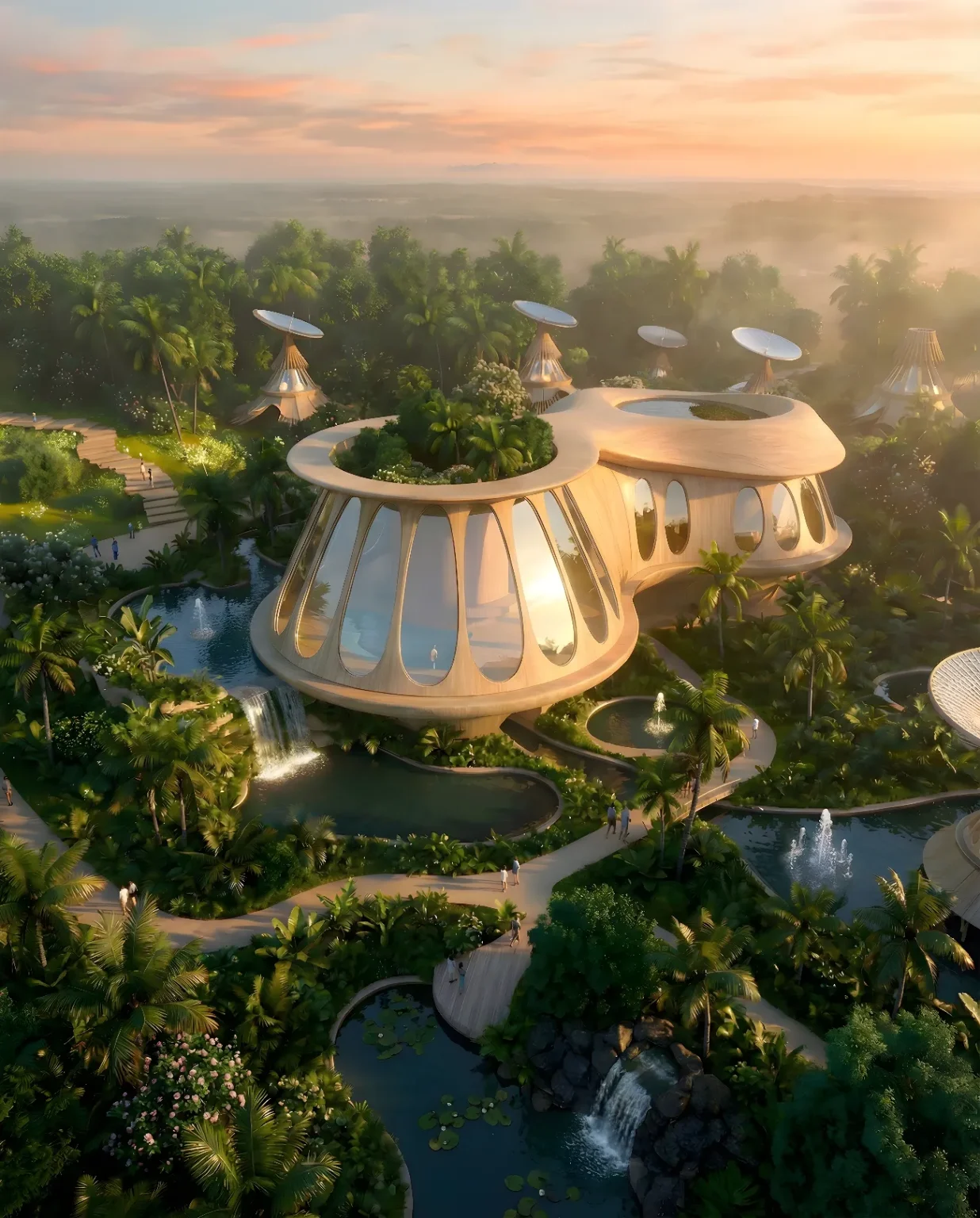
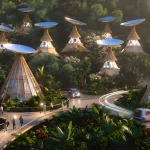


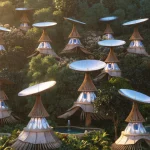
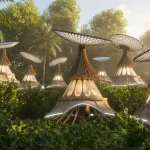
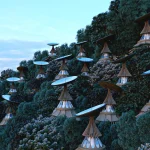

Following the global media recognition of Solaris®, the world’s first self-charging motorcycle invented by an architecture studio, MASK Architects, introduces FIJI SOLAR CROWN®, a new world-first system addressing one of the most critical challenges facing island nations today, long-term climate survival.
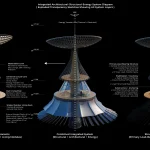
Designed for Fiji, one of the countries most exposed to rising sea levels, saltwater intrusion, energy insecurity, and freshwater scarcity, Fiji Solar Crown shifts architecture from passive shelter to territorial-scale survival infrastructure. The project proposes the world’s first dual-axis concave parabolic solar crown living system, capable of producing renewable energy, freshwater, and climate-resilient living environments within a single architectural organism.
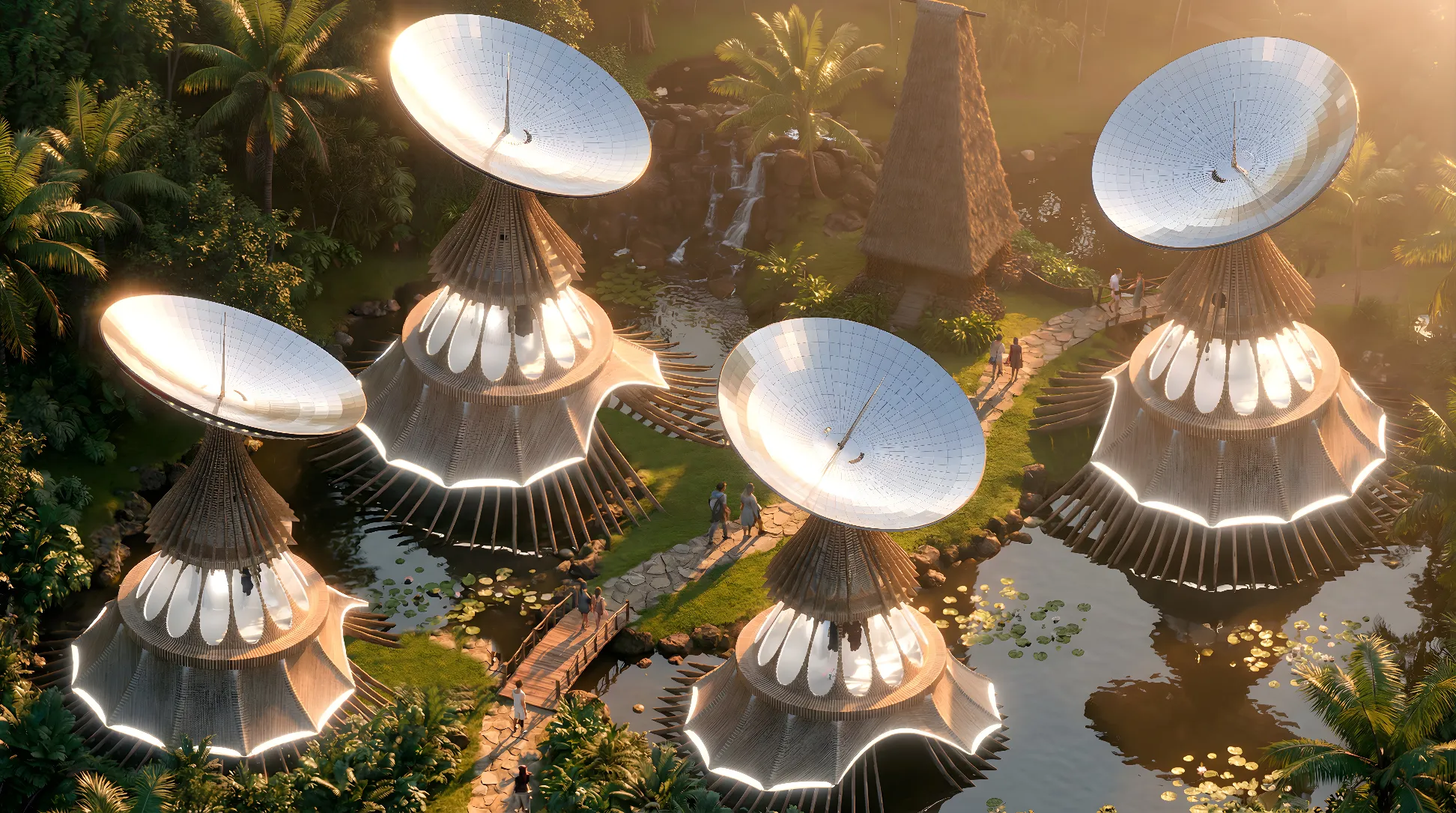
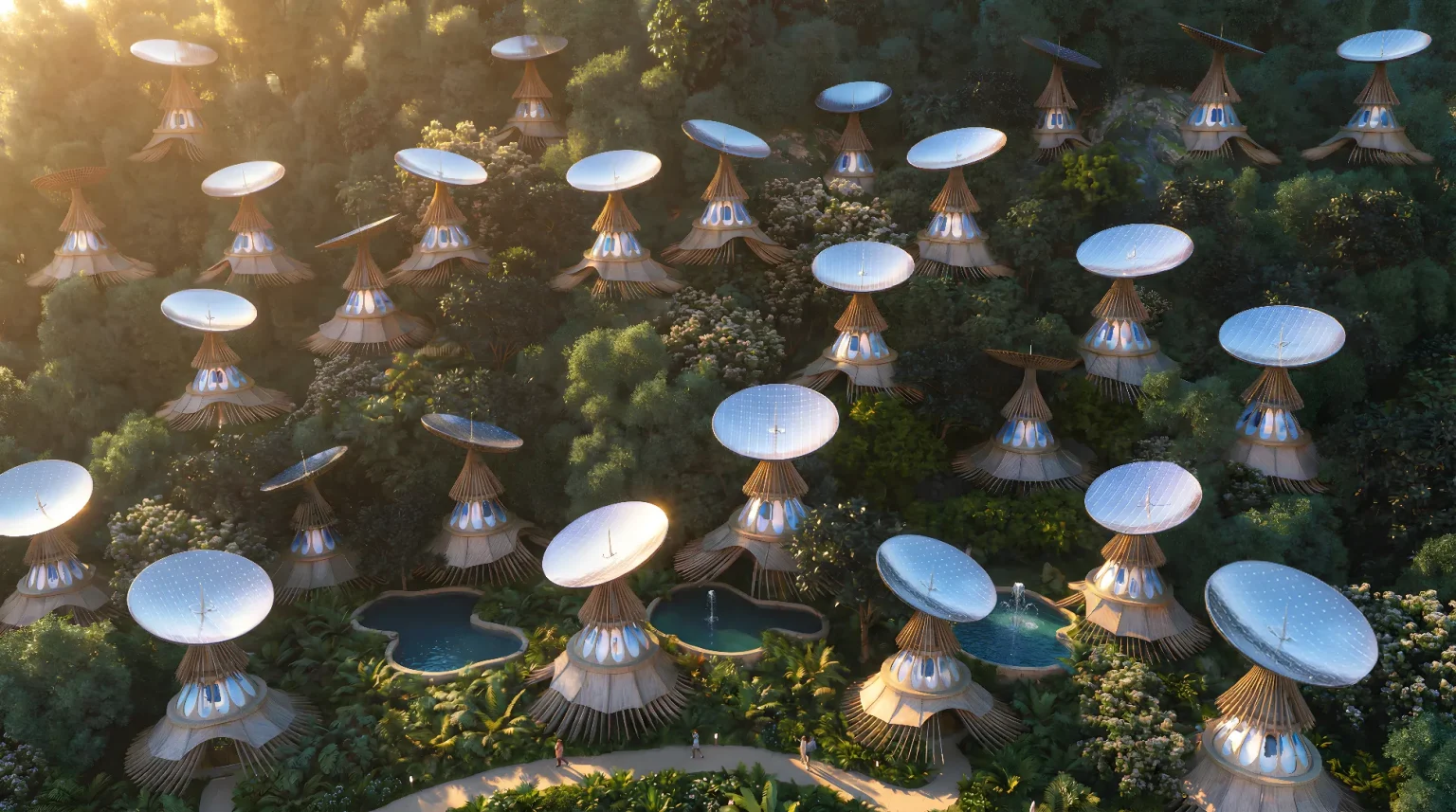
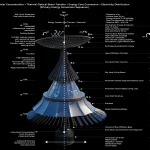
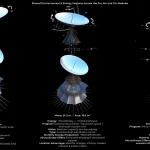
Developed in a technological and engineering partnership with TesserianTech (Italy), the system transforms a kinetic concave solar mirror into an integrated living infrastructure. The crown rotates horizontally and tilts vertically to track the sun from dawn to dusk, concentrating solar radiation to generate electricity while simultaneously shading inhabitable spaces, harvesting rainwater, and moderating the tropical microclimate beneath it.
After demonstrating with Solaris® that architects can invent new energy systems for mobility, MASK Architects now extends that logic from individual transport to collective living, addressing the structural vulnerabilities of island territories dependent on diesel generators, fragile grids, and imported energy.

MASK Architects Reframe Architecture as a Climate Survival System
Fiji Solar Crown is a deployable, scalable architectural-environmental system designed to operate where conventional infrastructure fails on remote islands, over lagoons, along coastlines, on mountain slopes, and within isolated villages across Fiji’s more than three hundred islands.
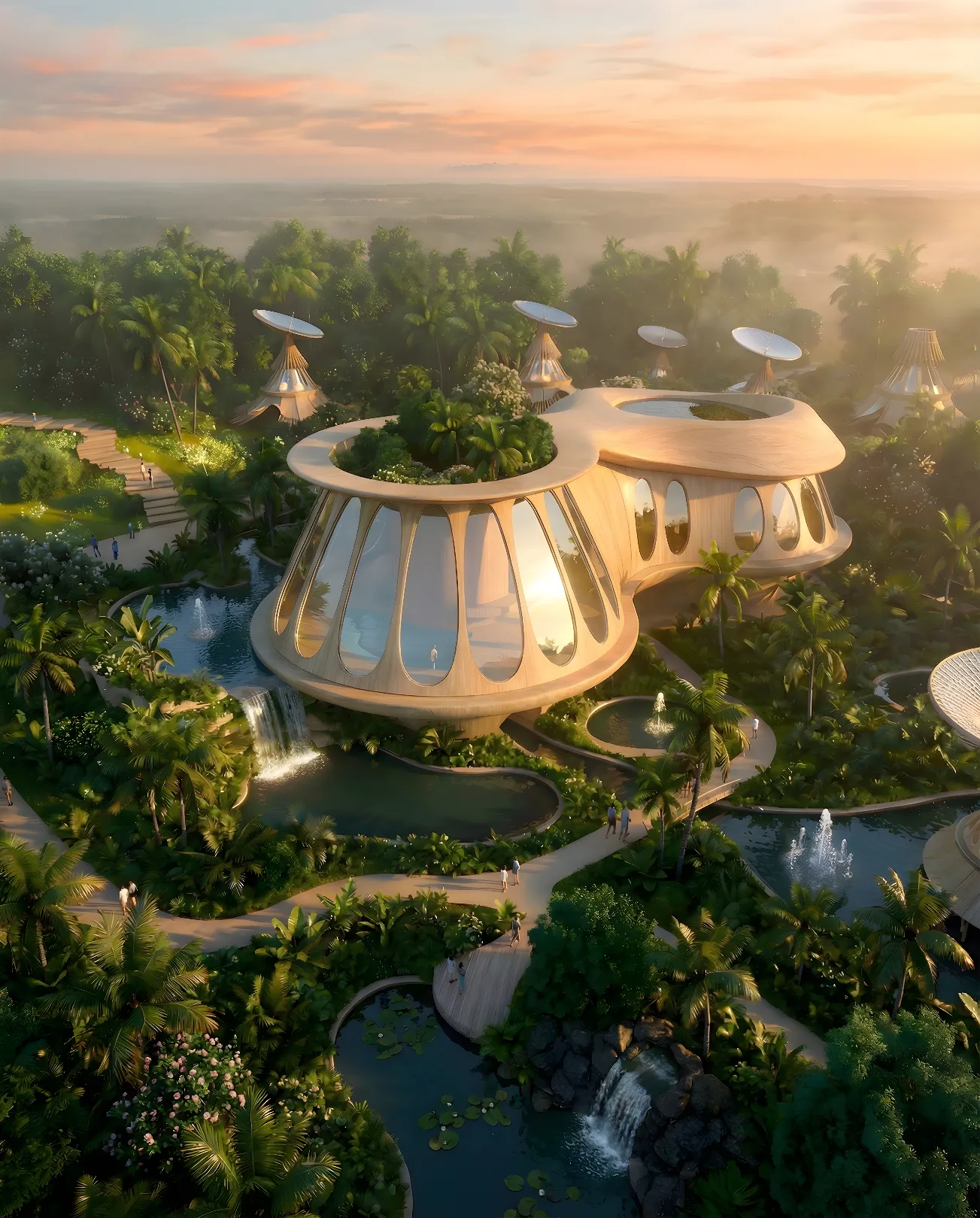
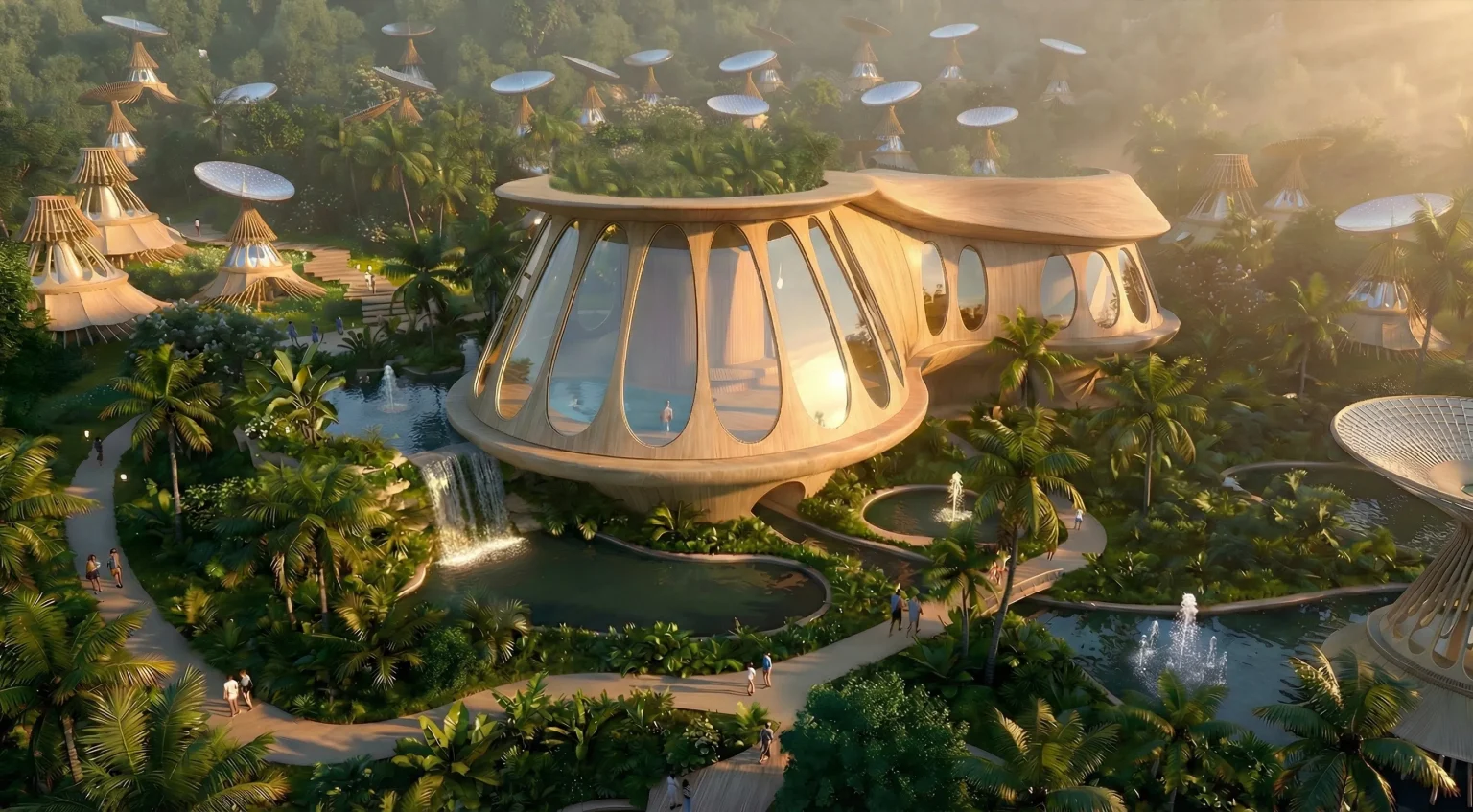
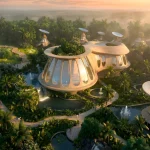
When deployed in numbers, the crowns form distributed energy and water ecologies microgrids, floating settlements, elevated villages, and climate-resilient ecotourism infrastructures capable of sustaining communities under extreme environmental conditions.
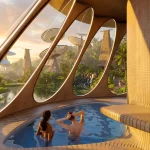
Beyond environmental performance, the system is strategically designed to enhance Fiji’s long-term resilience by supporting local employment, promoting craftsmanship, facilitating new ecotourism economies, and replacing fossil fuel dependency with locally generated renewable resources.
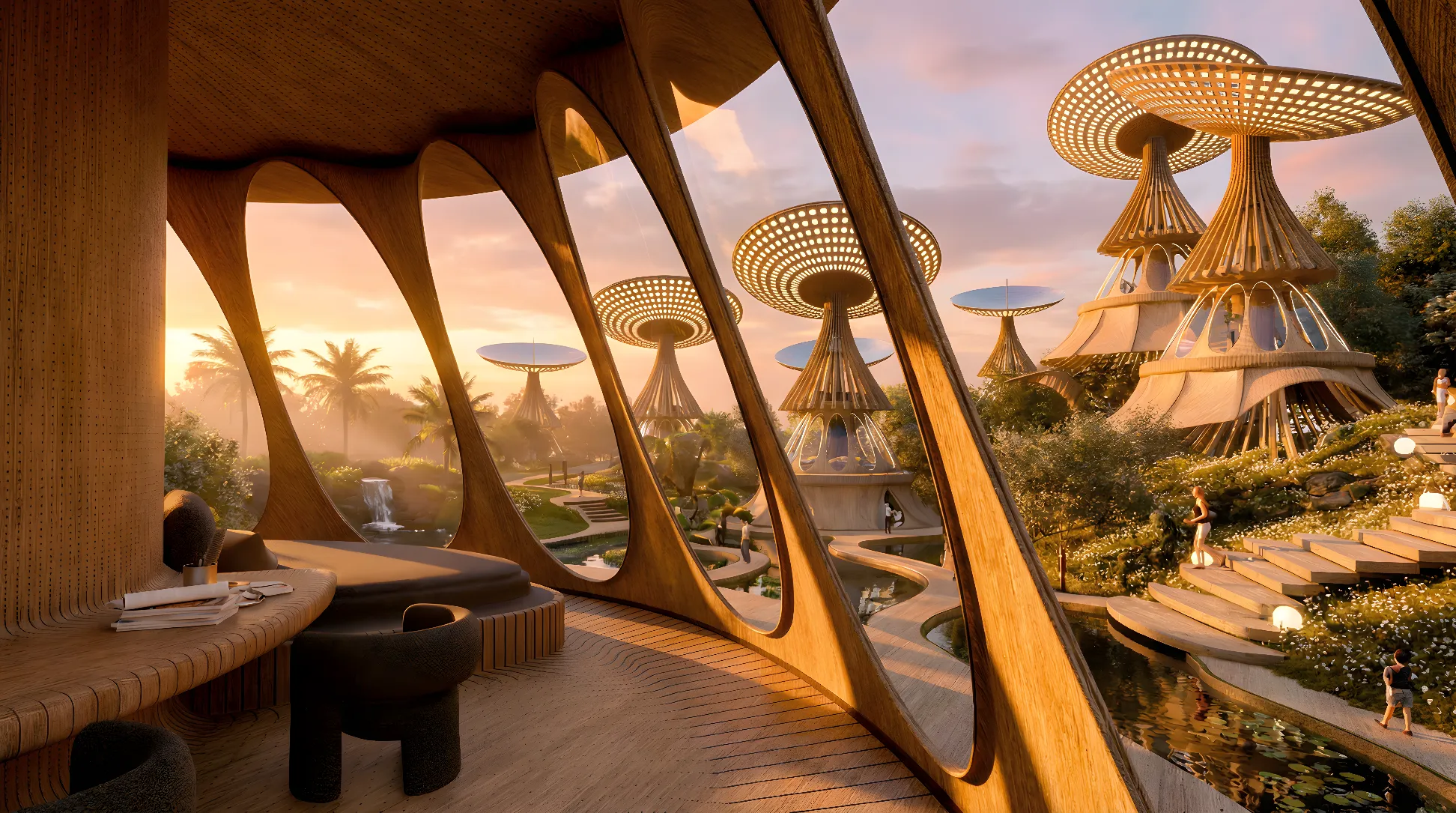
A Modular System Operating Across Three Scales
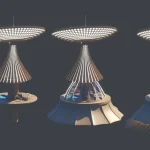
Fiji Solar Crown is organized around three modular concave mirror diameters, all sharing the same technological and architectural logic:
- 3-metre crown
Autonomous micro-units for lighting, agriculture, off-grid stations, rural infrastructure, or family use. - 5-metre crown
Community infrastructure for gathering spaces, outdoor classrooms, tourism platforms, shaded pavilions, and public amenities. - 7-metre crown
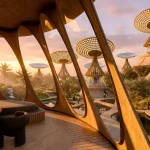
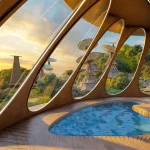
A fully inhabitable, multi-level living system supporting residences, floating villas, eco-resort suites, and elevated dwellings positioned above projected sea-level rise.
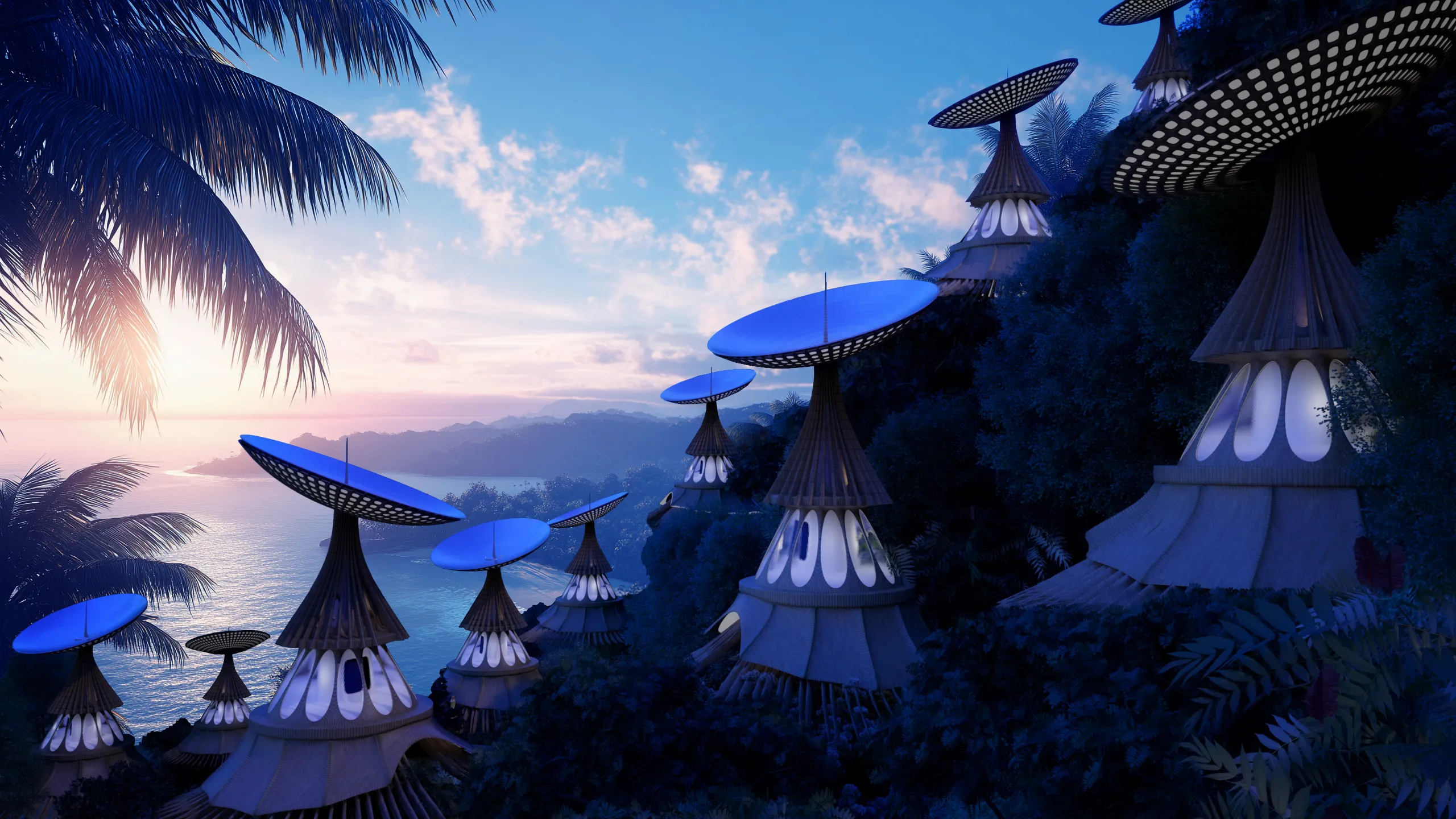
Together, these modules form a flexible territorial network capable of powering homes, schools, clinics, cold storage facilities, water treatment systems, and digital infrastructure entirely without the need for diesel generators.
Scientific and System Backbone
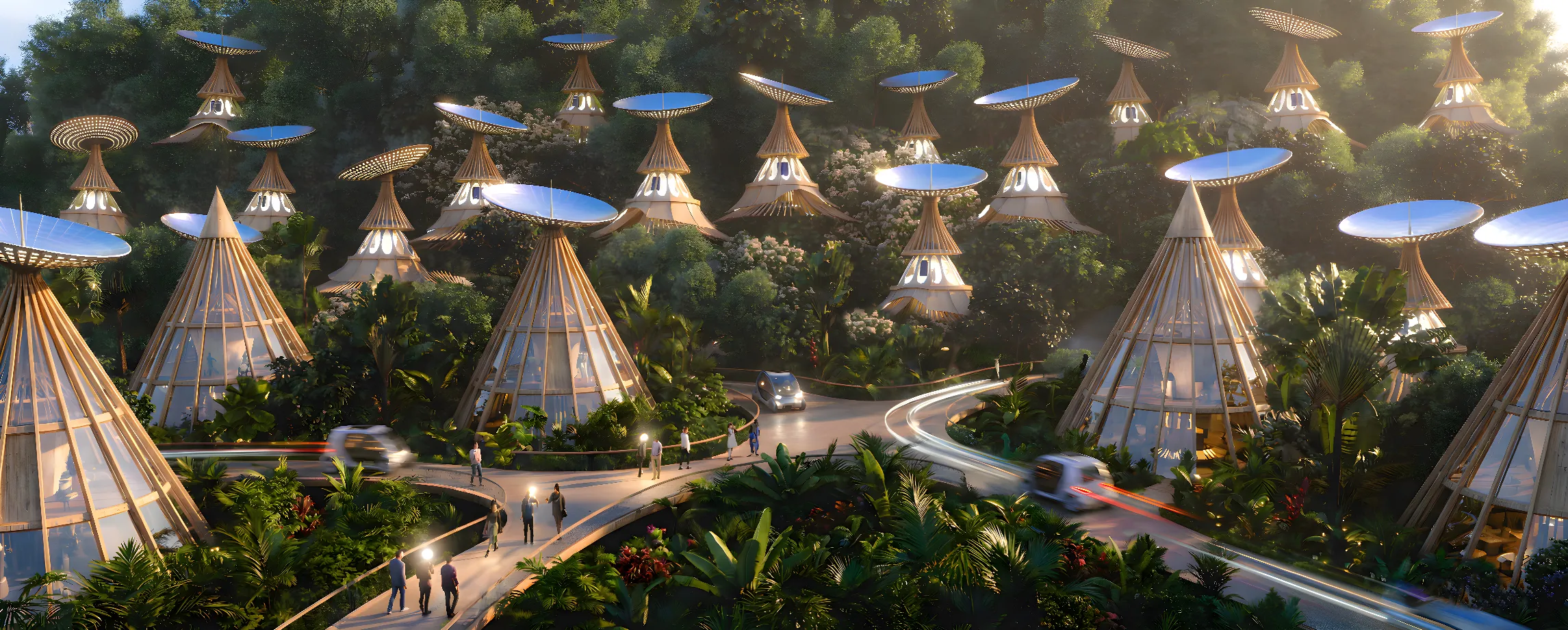
Fiji Solar Crown embeds energy generation directly into architecture, transforming each unit into an active producer rather than an energy-consuming object. Rainwater harvesting and atmospheric water strategies provide decentralized freshwater security without reliance on centralized infrastructure. Energy, water, and habitation are designed as a single operational loop, reducing systemic failure under climate stress.
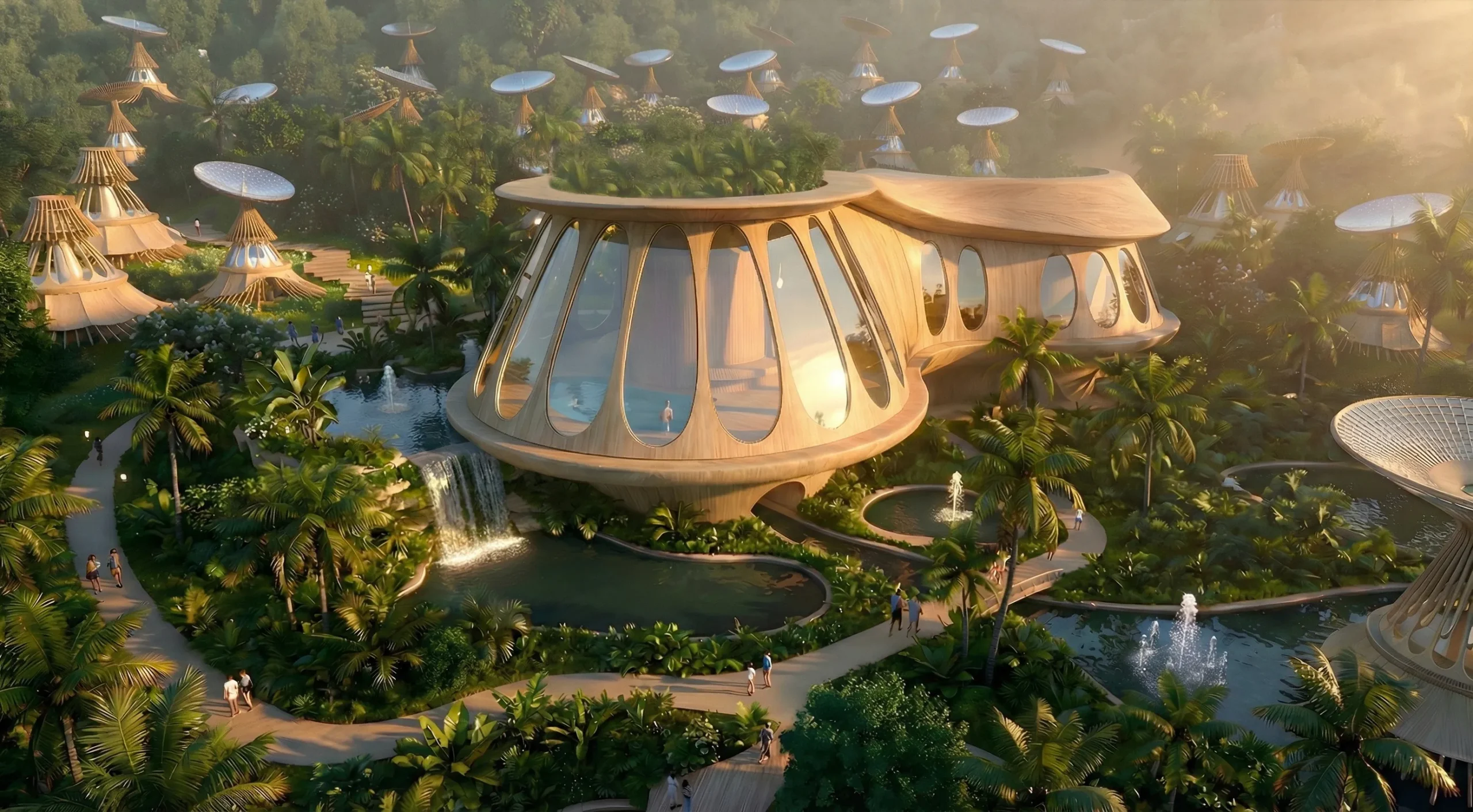
The system’s form and performance respond to temperature, humidity, solar exposure, and wind, prioritizing operational continuity over ideal-condition comfort. Replicable without high-tech central infrastructure, the system is scalable across small island states and climate-vulnerable regions. The design prioritizes resilience and operability during disruption, redefining sustainability through survival.
Culture Integrated with Technology
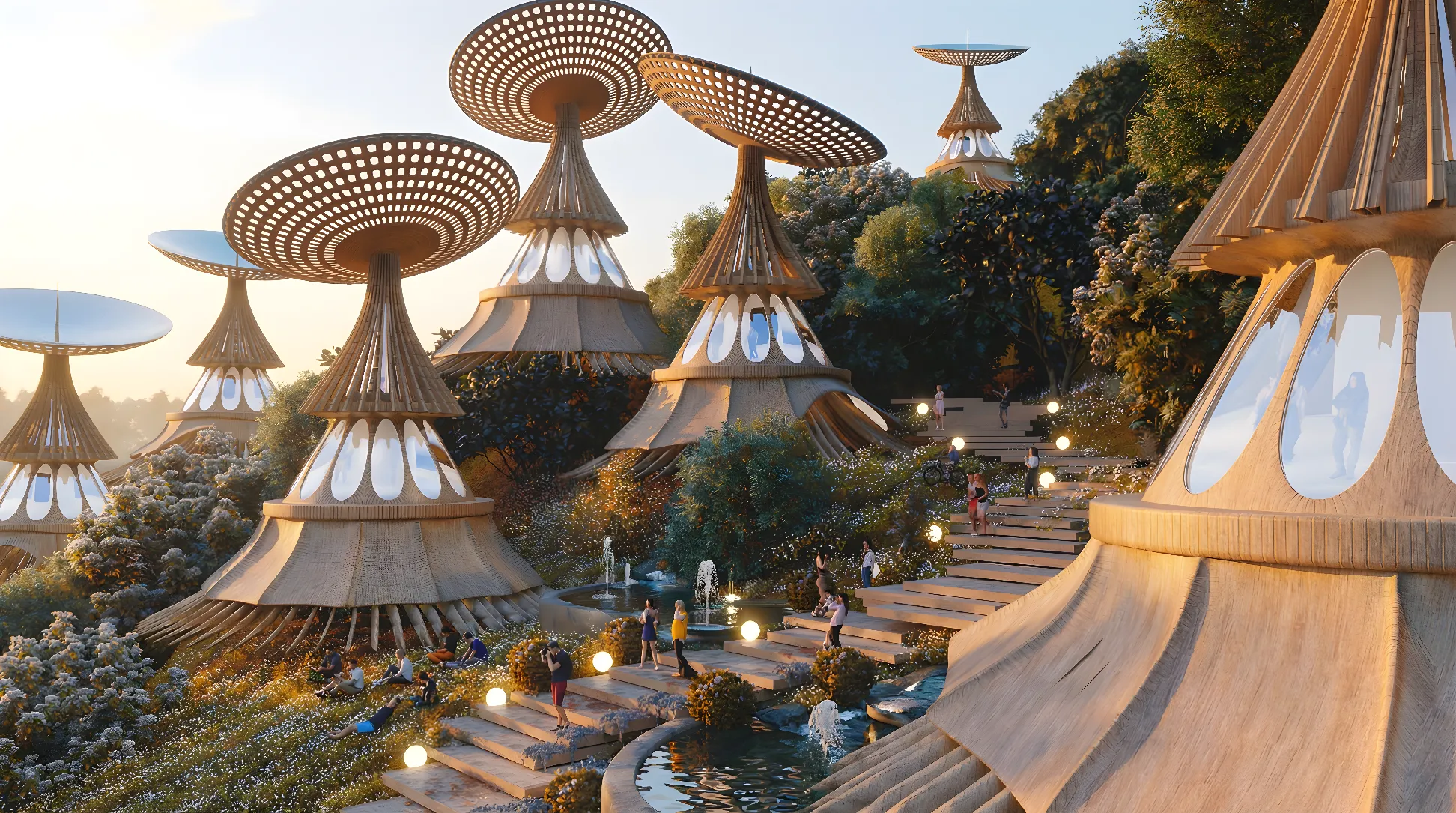
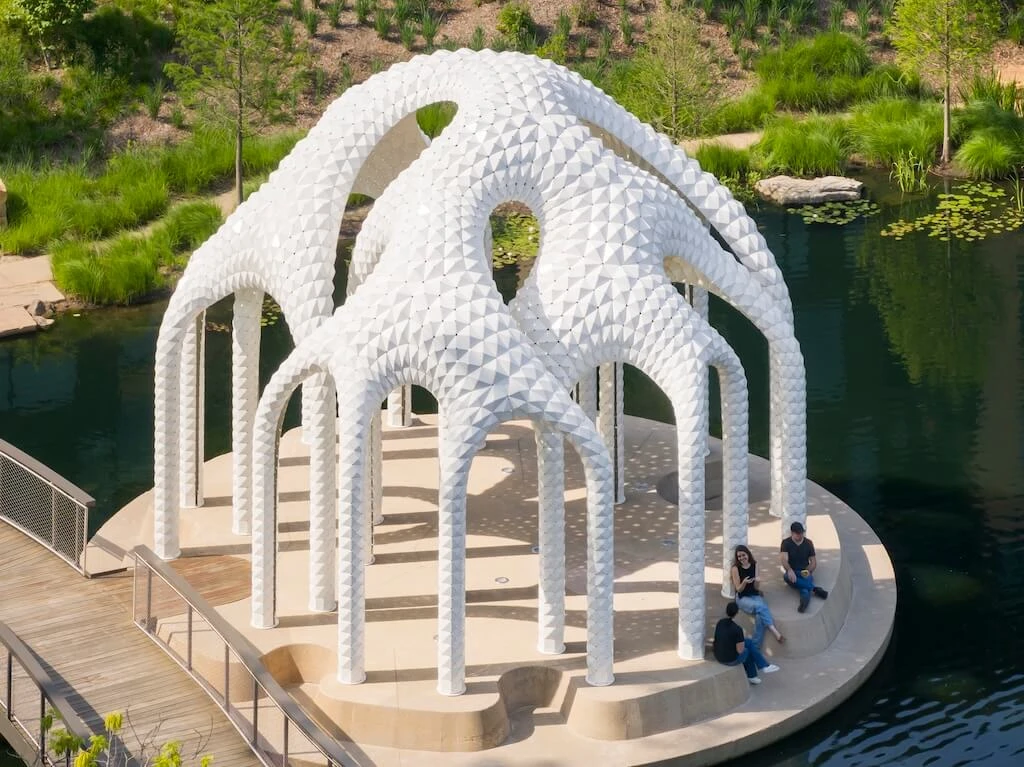
The architectural language reinterprets the traditional Fijian bure, whose elevated structure, passive ventilation sense, and symbolic apex are transformed into a technologically active solar crown. The sacred point linking land and sky becomes a concave parabolic roof that produces energy, captures water, shapes climate, and defines identity.
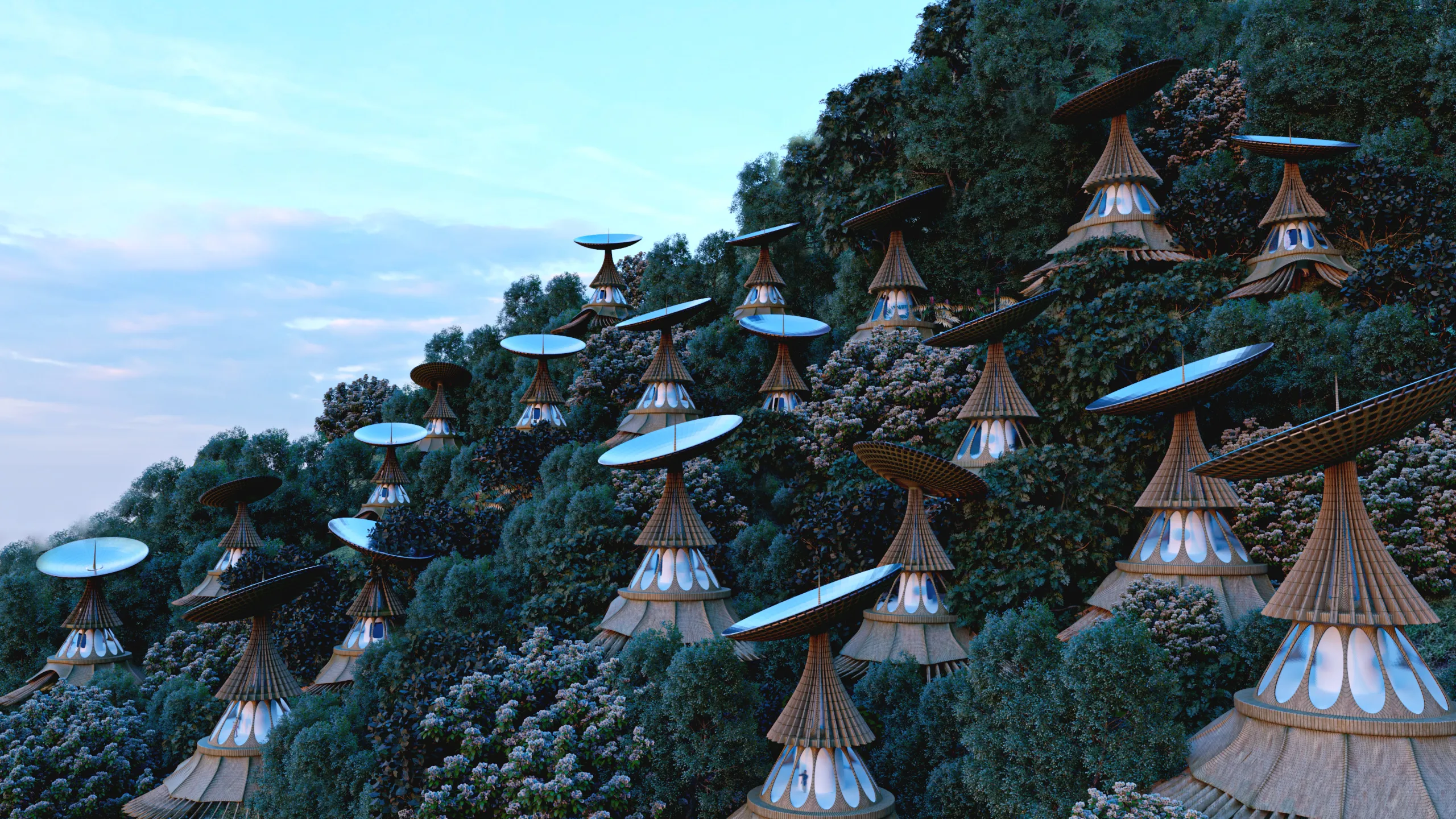
The structure integrates locally sourced materials, laminated bamboo, indigenous hardwoods such as Vesi and Dakua, basalt-fiber composites, and geopolymer eco-concrete, ensuring durability, sustainability, and participation of local craftsmanship while reducing embodied carbon.
Energy, Water, and Climate Performance
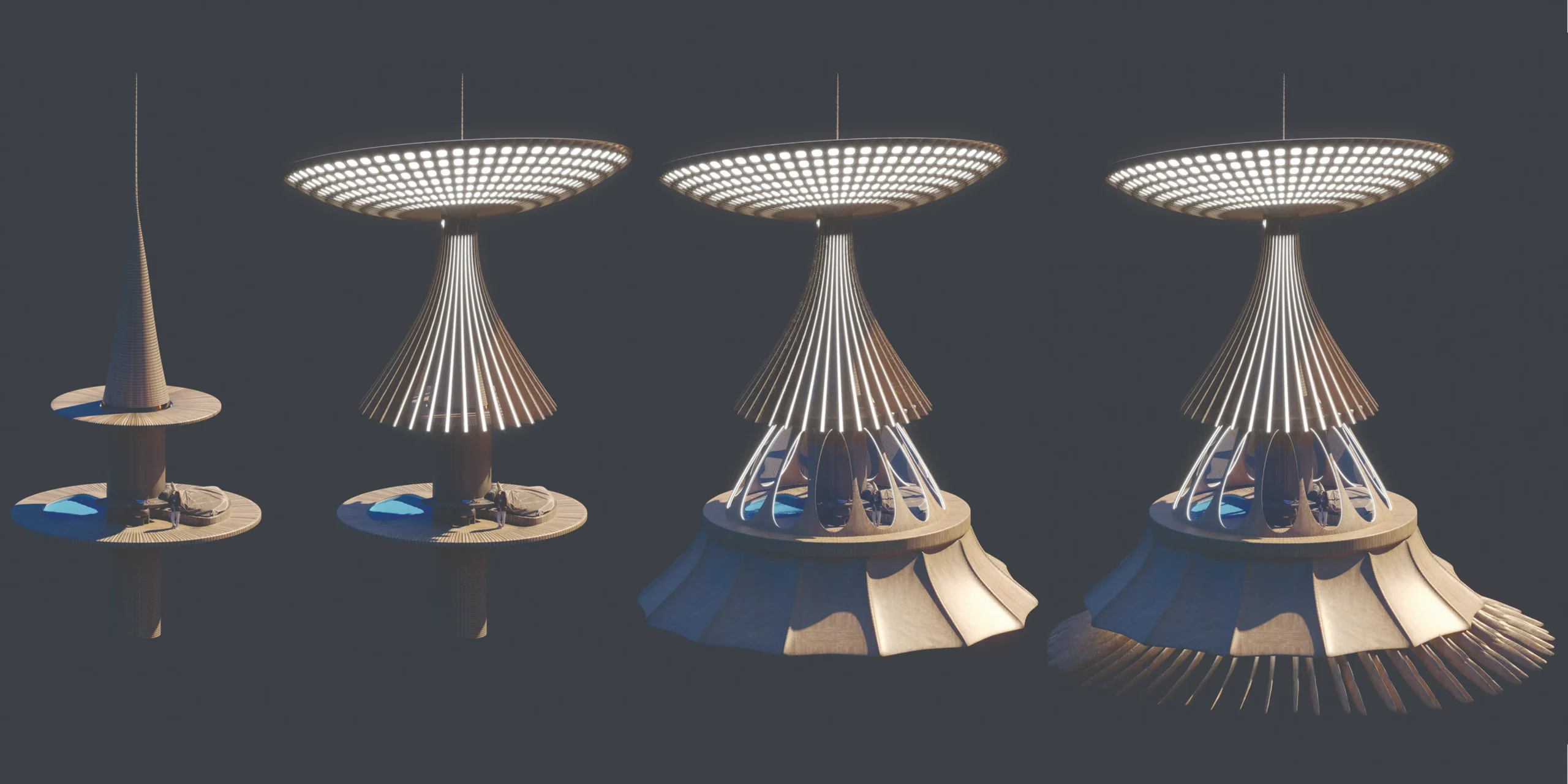
Under Fiji’s solar conditions, Fiji Solar Crown delivers robust off-grid performance across all scales. The 3-meter module generates approximately 12–20 kWh per day, the 5-meter module 30–45 kWh per day, and the 7-meter module 58–80 kWh per day, equivalent to roughly 21,000 kWh annually. When deployed in clusters, groups of ten crowns form village-scale microgrids capable of supplying between 120 and 580 kWh per day, supporting residential life, education, tourism, agriculture, and small-scale industry without reliance on diesel power.
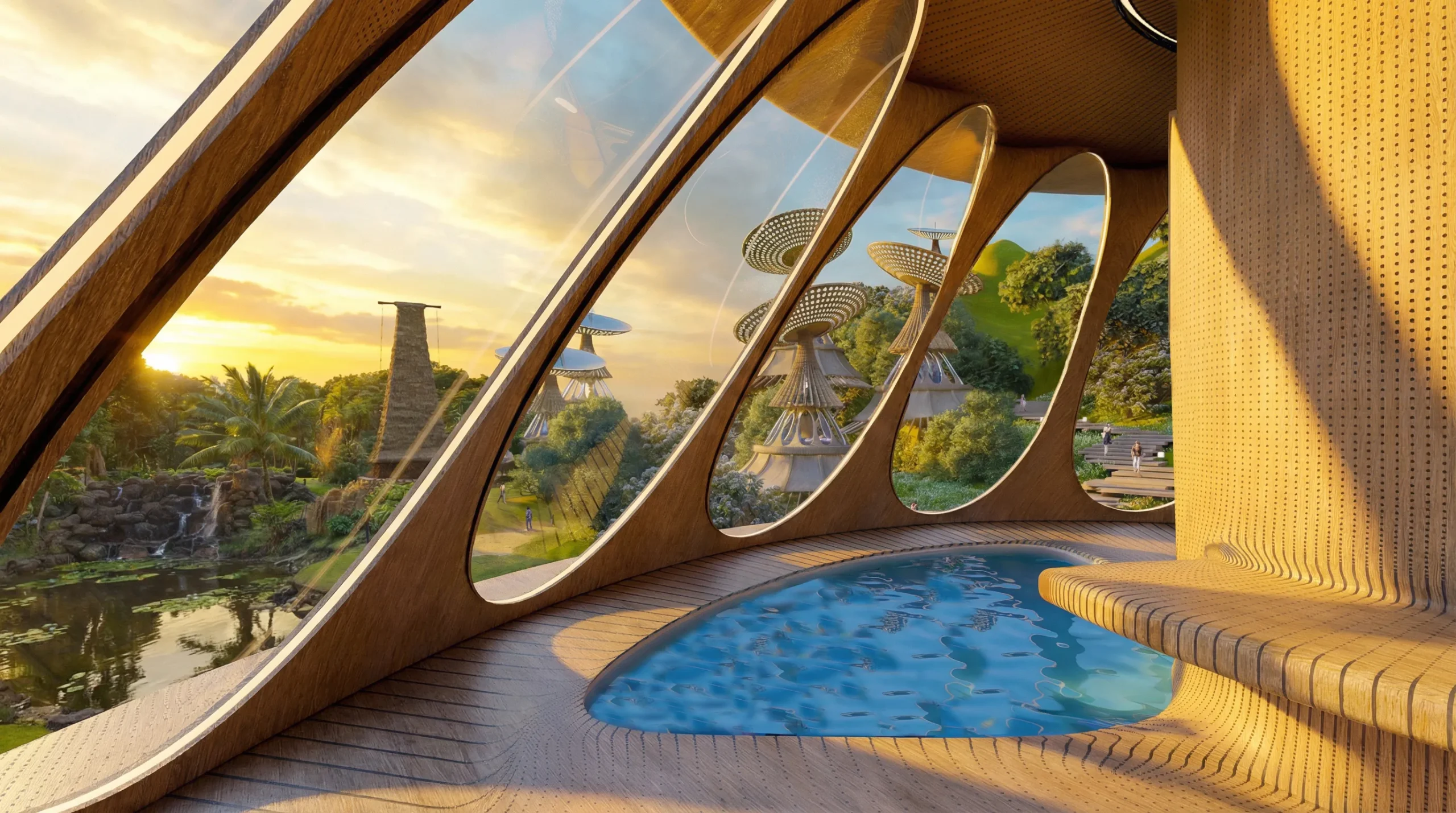
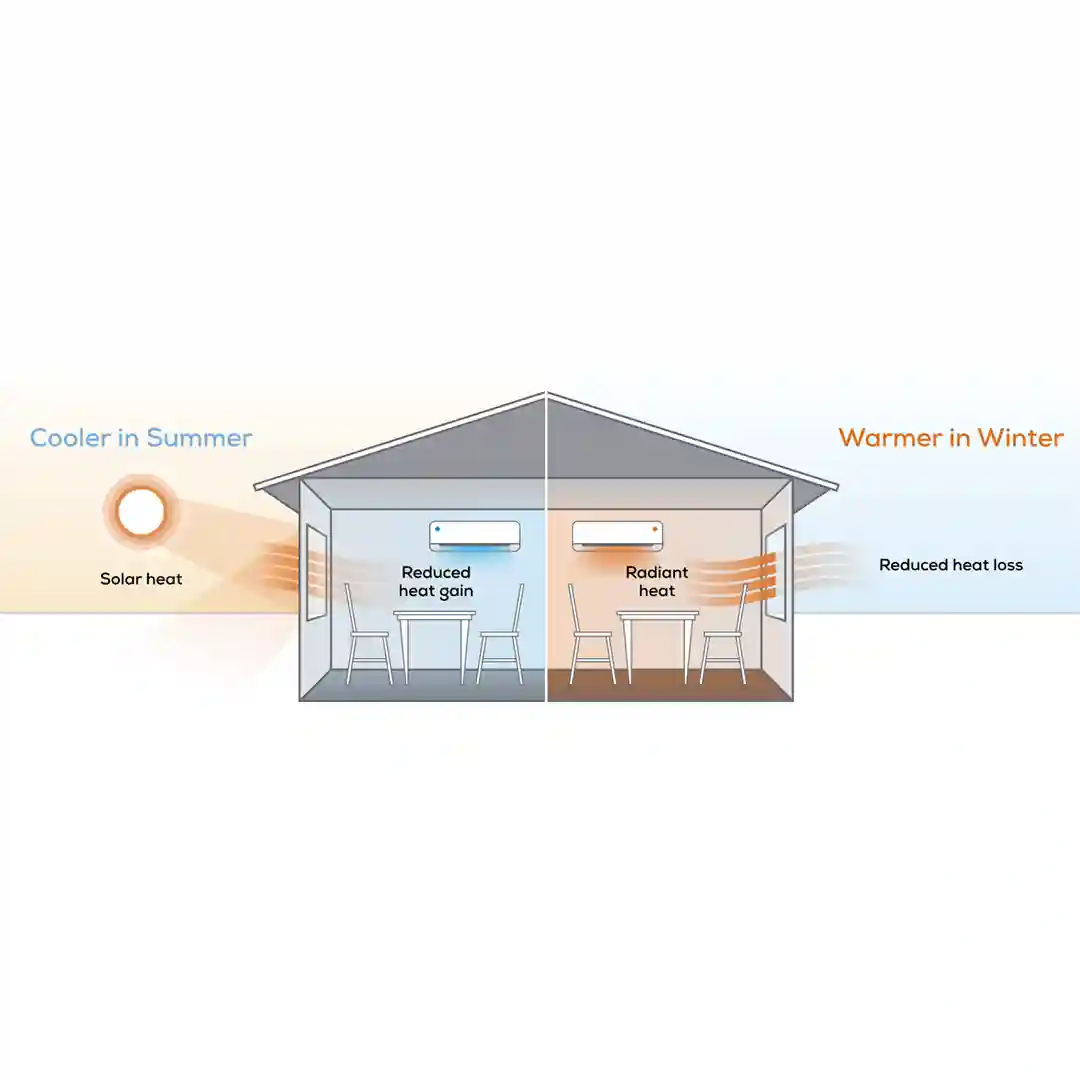
Beyond energy generation, the concave crown geometry creates naturally cooled shaded environments below, significantly reducing the need for mechanical air conditioning in tropical conditions. Rainwater is captured along the crown’s perimeter, filtered through the central core, and stored for drinking water, irrigation, and grey-water reuse. After sunset, an integrated ambient under-glow lighting ring transforms each structure into a luminous landmark, a visible signal of self-sufficiency and energy independence rising above land or water.
MASK Architects positions itself among the first architecture practices globally to embed system-inventing technologies directly into architecture, redefining the role of design in the age of climate emergency.
FIJI SOLAR CROWN Project Details
Project Name: Fiji Solar Crown
Location: Fiji Islands, Oceania
Architecture & Design: MASK Architects
Founders/Lead Architects: Öznur Pınar Çer & Danilo Petta
Technology & Engineering Partner: TesserianTech (Italy)
Founder: Lothian Guidobaldi
Year: 2025
Image credit: MASK Architects