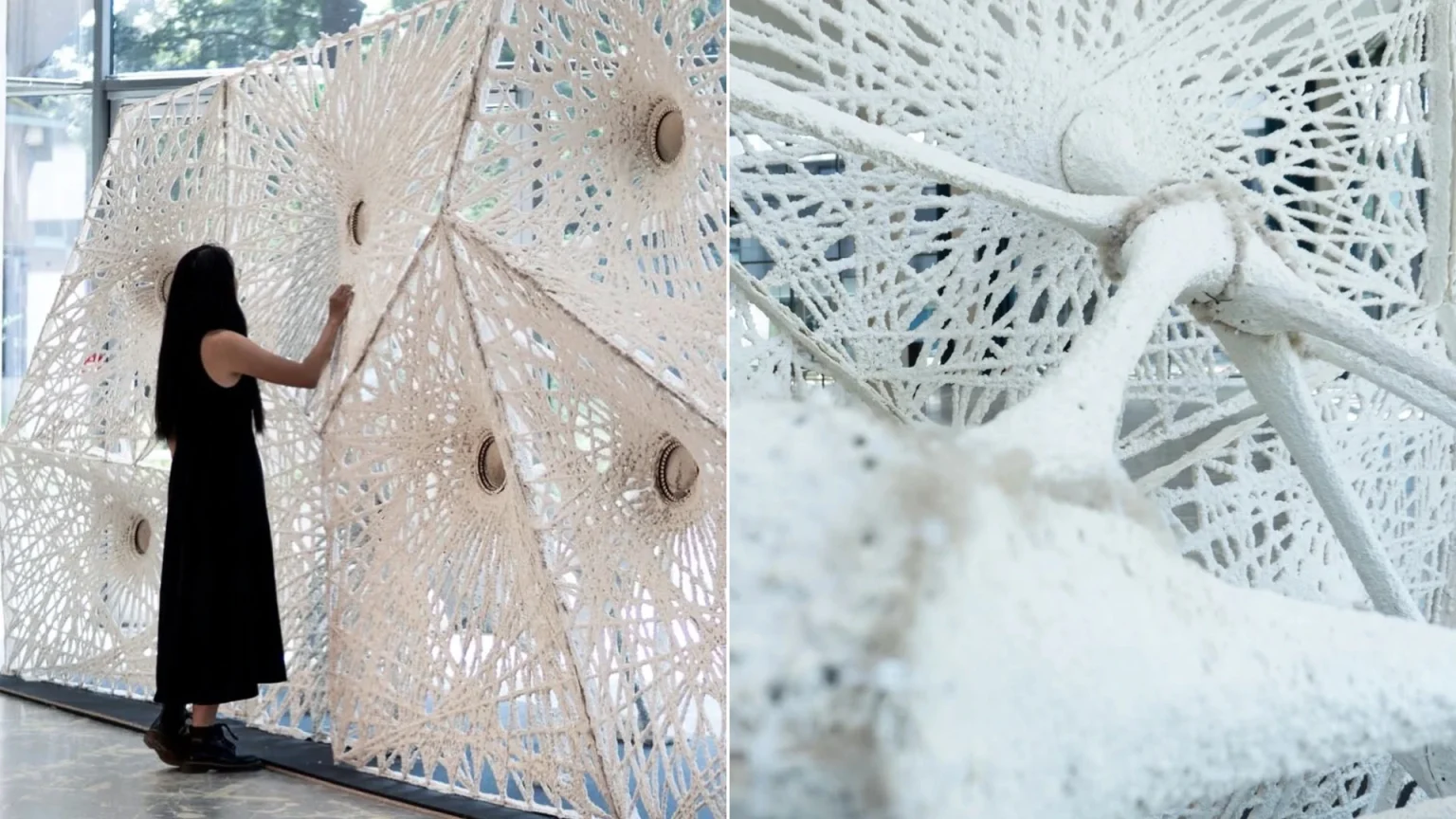


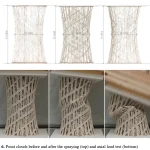
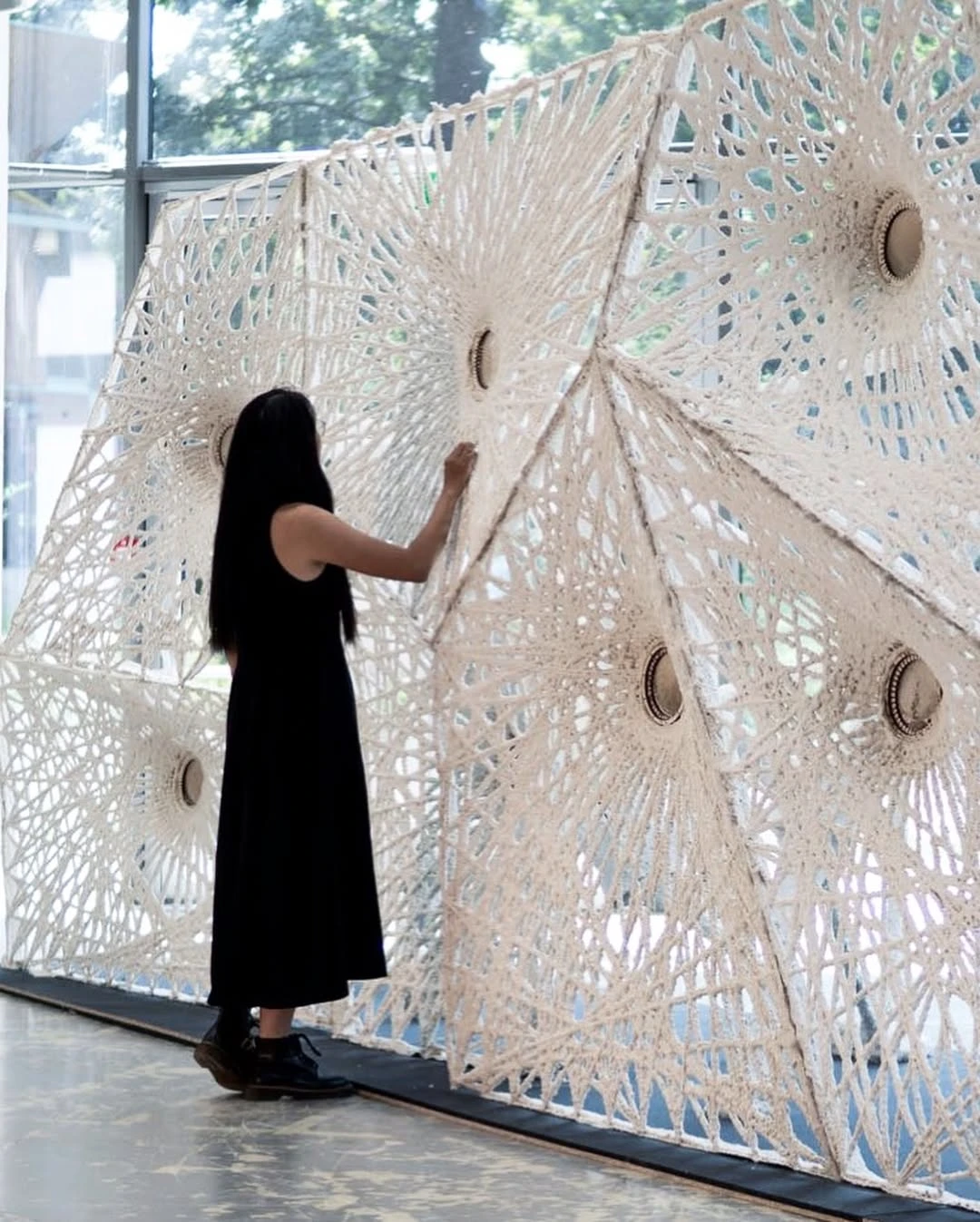
The Structural Cellulose Wall explores how bio-based composite materials can operate as surface finishes & as structurally active architectural systems. Developed at i.sd structure and design at the Faculty of Architecture Innsbruck, the project explores a fabrication method in which a cellulose–casein composite is robotically sprayed onto textile-supported frameworks composed of woven panels and textile-sleeved tubular elements. The research positions robotic spraying as a volumetric construction technique capable of generating differentiated material densities, adaptive geometries, and structurally informed textures through iterative feedback between scanning, simulation, and fabrication.
The sprayed cellulose composite becomes both a construction material and a medium for computational adaptation. Through repeated scanning cycles and robotic recalibration, the system develops an evolving relationship between digital modeling and physical formation.
Adaptive Robotic Spraying Workflow
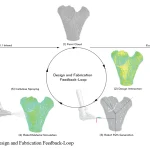
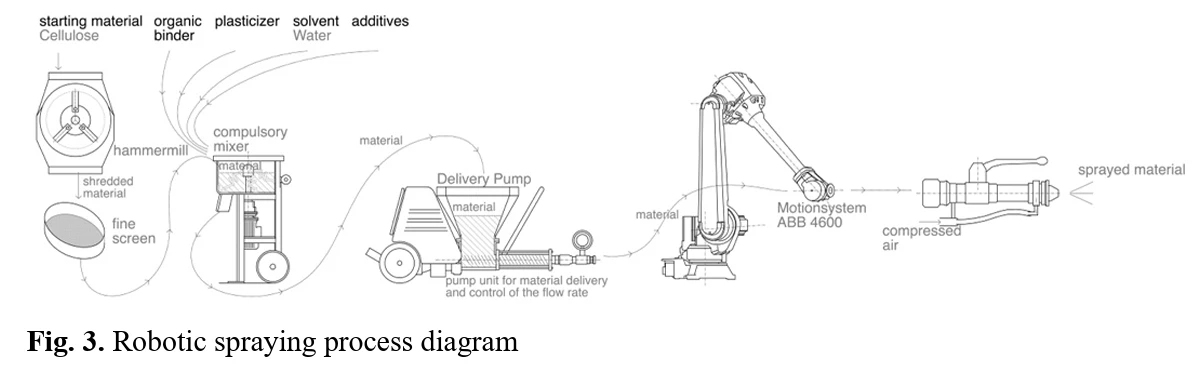
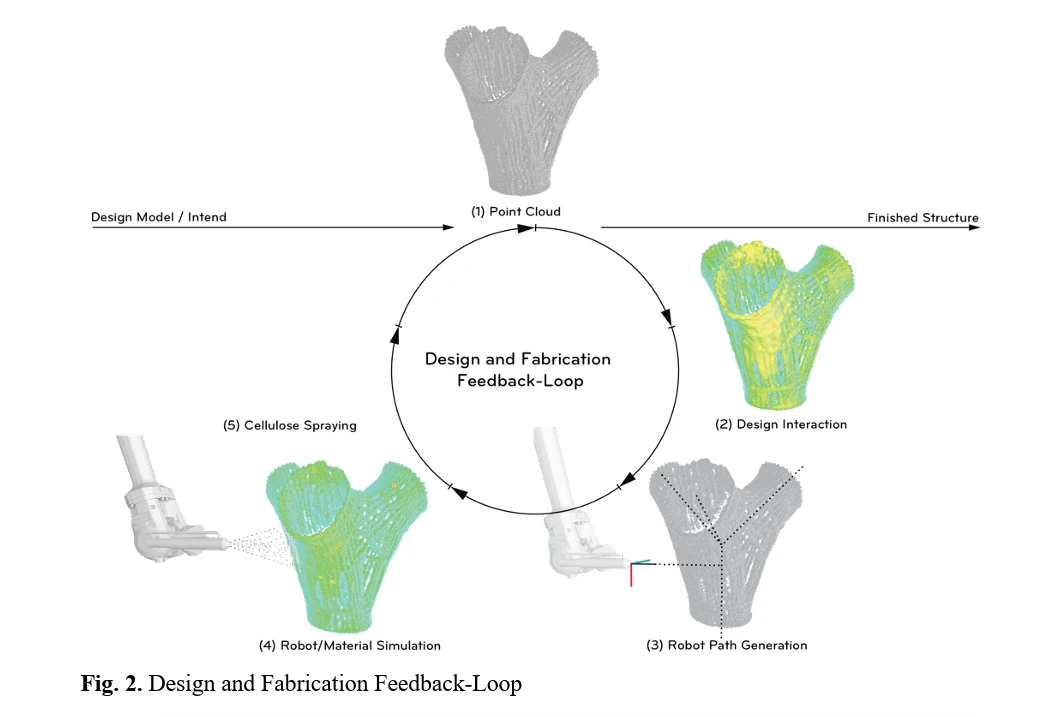
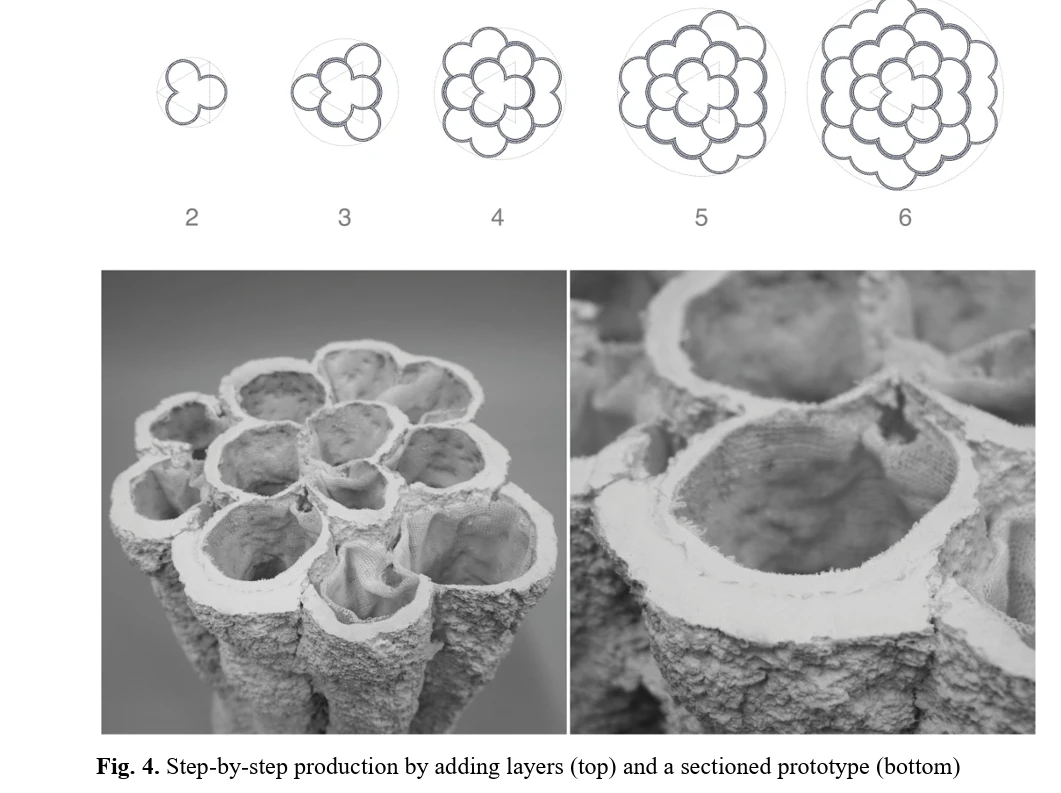
The central innovation of the project lies in its adaptive fabrication pipeline. The cellulose mixture is applied in thin sprayed layers, typically between 2 and 6 mm, because the curing process depends on gradual water evaporation. After each spraying sequence, the prototype is 3D scanned and translated into point cloud data, allowing the next fabrication cycle to respond directly to the current physical condition of the structure.
This iterative feedback loop enables continuous adjustments in geometry, material thickness, and robotic path generation. The scanned point cloud records the visible surface and also the accumulation of previous fabrication layers, producing a detailed digital archive of the construction process. Based on this information, robotic spraying paths can be recalculated to regulate deposition density, compensate for deformation, or intensify structural reinforcement in specific regions.
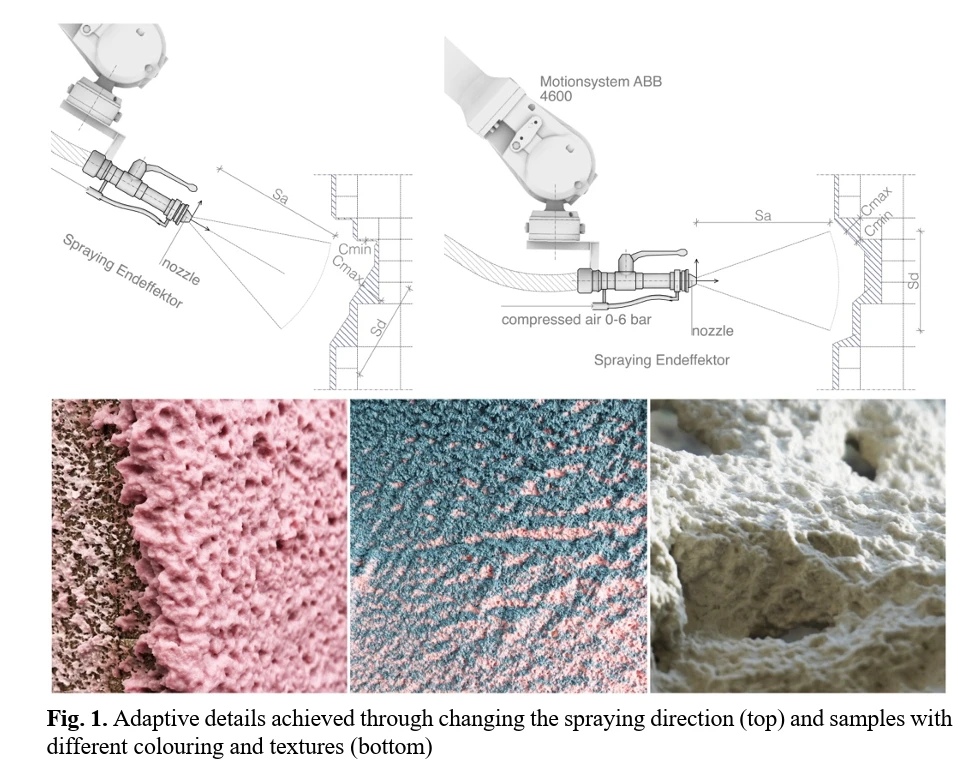
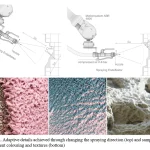
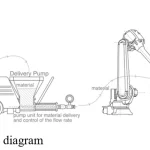
The workflow follows five interconnected stages: digital point cloud acquisition, material distribution mapping, robotic path generation, simulation-based validation, and robotic spraying execution. Skeleton graphs derived from the point cloud geometry guide the robotic arm movement, while robot speed and nozzle orientation regulate local material accumulation. Through simulation and scanning feedback, the fabrication process becomes adaptive rather than linear.
An important consequence of this methodology is the possibility of real-time design intervention during fabrication. Changes in spraying angle, movement direction, or deposition intensity immediately affect surface texture, material behavior, and structural differentiation. The research, therefore, proposes a fabrication environment where design authorship emerges simultaneously with robotic construction.
Bio-Composite Material Development
The material system is based on a biodegradable cellulose–casein composite developed specifically for robotic spraying applications. Long-fiber cellulose pulp was selected as the primary structural component due to its renewable origin and fibrous mechanical characteristics. Casein, derived from milk protein, functions as the binding agent and is activated using marsh lime.
The prototype mixture consisted of approximately 13% long-fiber cellulose, 8% casein binder, 4% marsh lime, 1% sodium, and 74% water by mass. The high water content ensured pumpability and compatibility with the spraying equipment, although it also introduced long curing times and significant material shrinkage during drying.
Material behavior during curing became one of the critical research questions of the project. As water evaporates, the cellulose composite experiences warping, cracking, and shrinkage, all of which directly affect structural stability. Drying cycles typically required up to 24 hours between sprayed layers, and environmental conditions such as humidity and temperature strongly influenced the final geometry. The research, therefore, treats deformation not merely as a defect but as a measurable component of the fabrication logic that can be monitored and compensated for through iterative scanning.
Structural and Mechanical Evaluation
To establish the material as a structurally relevant biocomposite, the research incorporated multiscale micromechanical modeling to predict stiffness and elastic behavior. Instead of relying exclusively on physical testing, the heterogeneous microstructure of cellulose fibers embedded within the casein matrix was computationally analyzed.
The modeling considered cellulose fibers approximately 500 microns in length with random orientation generated through the spraying process. The cured casein matrix was assigned a Young’s modulus of 5 MPa, while porosity introduced during spraying was estimated at 30%. Based on these parameters, the resulting cellulose–casein composite achieved a predicted stiffness modulus of approximately 7.2 GPa with a Poisson ratio of 0.24.
This modeling framework allows structural behavior to be simulated before fabrication while remaining adaptable to future modifications in fiber orientation, binder composition, or material density. The research demonstrates how computational material modeling can become directly integrated into robotic fabrication workflows, enabling structurally informed deposition strategies and adaptive cross-sectional design.
Textile Substructures and Material Deposition
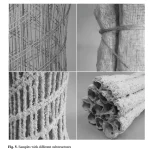
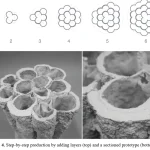
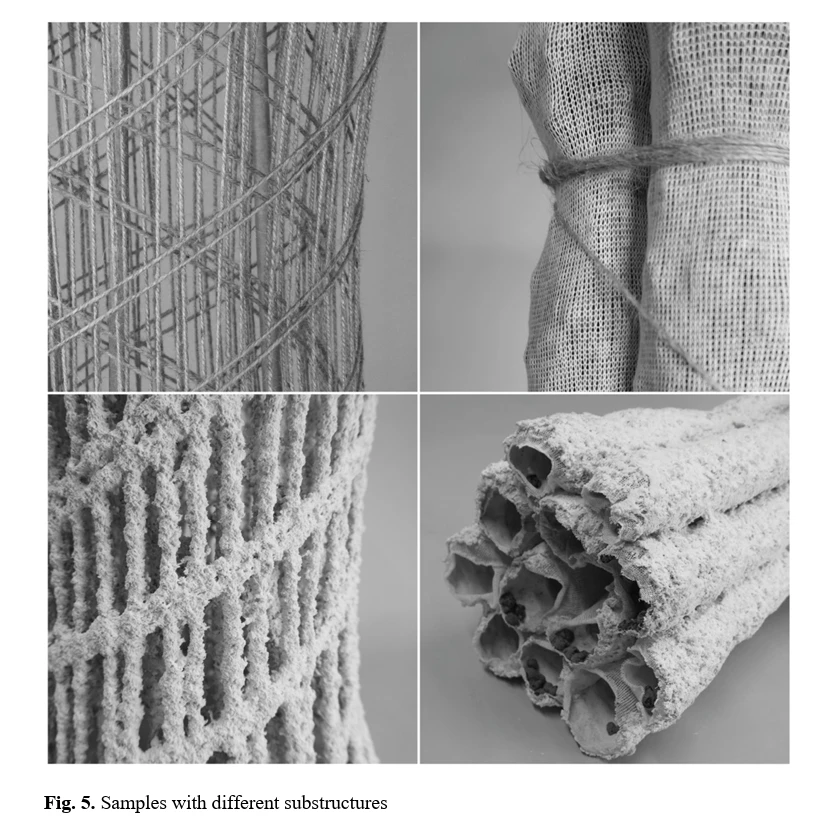
Two distinct textile substructure systems were tested within the project: wound hemp rope frameworks and textile fabric tubes filled with lightweight aggregates. These substructures served as temporary support systems, adhesion surfaces, and structural reinforcement simultaneously.
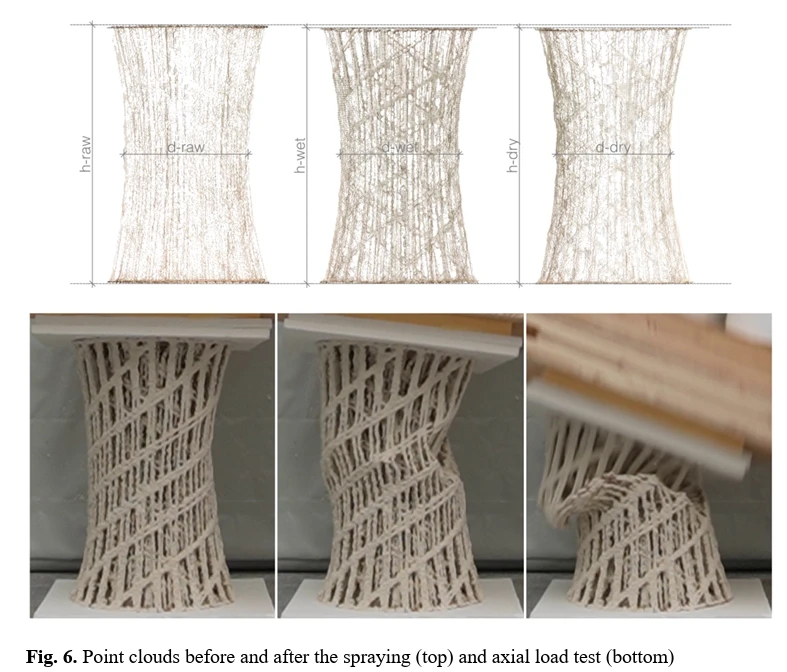
The fiber-wound rope structures provided strong adhesion because of their rough fibrous surfaces, although their limited surface area restricted the achievable material thickness. In contrast, the fabric tube assemblies enabled faster accumulation of sprayed material and greater volumetric build-up but suffered from slower drying due to restricted internal ventilation.
Each substructure underwent repeated cycles of spraying, scanning, drying, and re-scanning. Point cloud comparisons before and after curing enabled researchers to measure deformation, monitor the distribution of layer thickness, and evaluate the coherence between digital simulations and physical outcomes. The integration of computer vision and robotic feedback, therefore, became essential not only for fabrication control but also for long-term monitoring and structural analysis.
Simple axial load tests demonstrated the structural potential of the sprayed bio-composite system. One fiber-based prototype withstood loads up to 151.5 kg before buckling and failure occurred, indicating that lightweight cellulose composites can achieve significant load-bearing capacity when integrated with appropriate textile reinforcement systems.
Architectural Implications
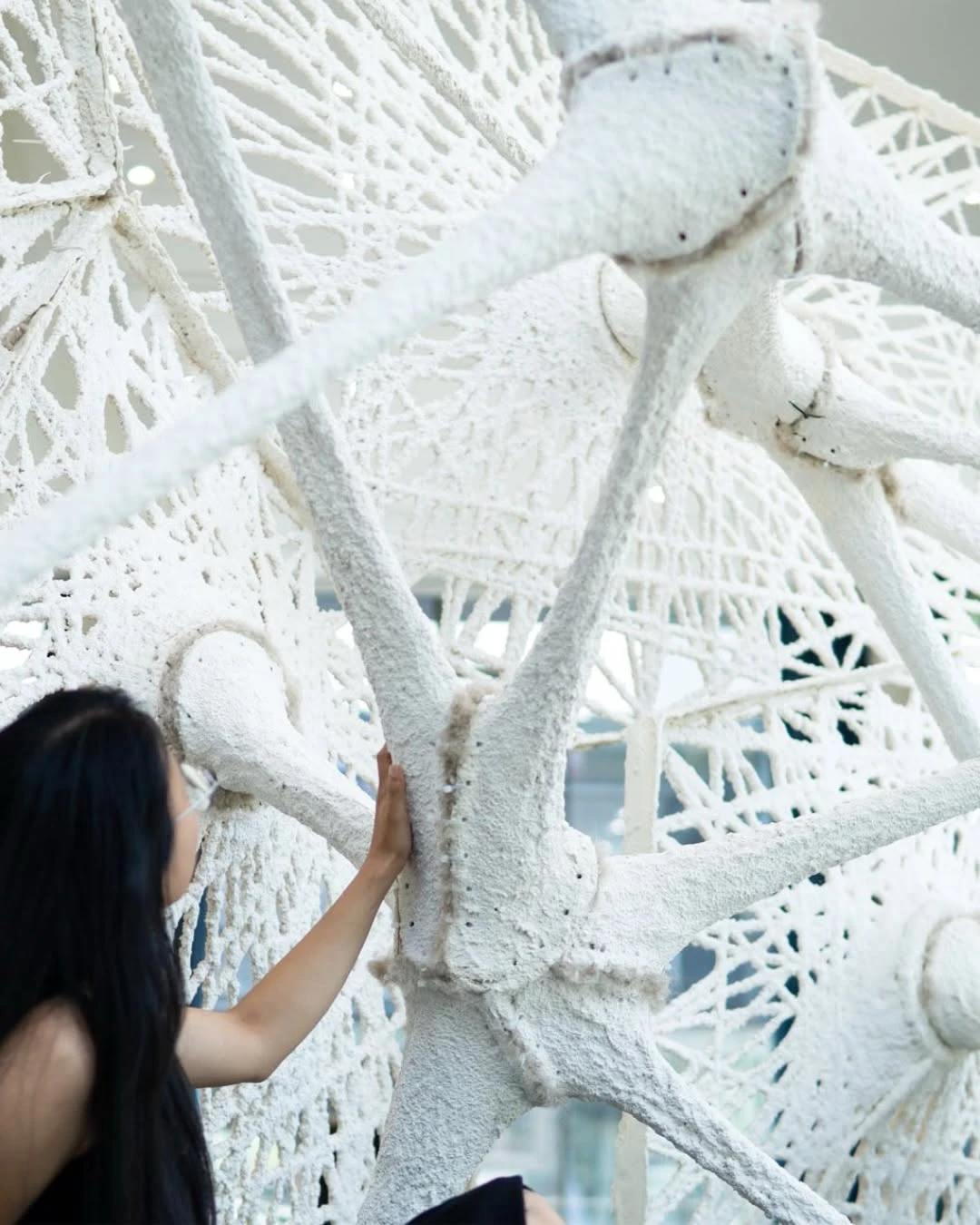
The Structural Cellulose Wall project proposes an alternative direction for digital architecture in which material intelligence, robotic fabrication, and sustainability are treated as interconnected systems. The project investigates how biologically derived composites can participate in adaptive, structurally differentiated construction processes.
The research also challenges conventional distinctions between structure, surface, and fabrication. Through robotic spraying, material thickness, texture, reinforcement, and geometry are generated simultaneously. The wall becomes an accumulated material record of robotic movement, environmental conditions, and structural adaptation.
Structural Cellulose Wall Project Credits
Project: Structural Cellulose Wall
Institution: i.sd structure and design, Faculty of Architecture Innsbruck
Research Team: Johannes Megens, Maximilian Wacker, Fabian Braun, Johannes Schlusche
Project Leads: Univ.-Prof. Stefan Rutzinger, Univ.-Prof. Kristina Schinegger
Laboratory Technician: Fabian Quiring
Student Assistant: Ron Kalbacher
Special Thanks: Moritz Heimrath (Bollinger+Grohmann)
Research Context: UE Methods of Materialisation with BA students
Funding: Austrian Science Fund (FWF), SFB Advanced Computational Design F77
Credit: i.sd structure and design, Faculty of Architecture Innsbruck