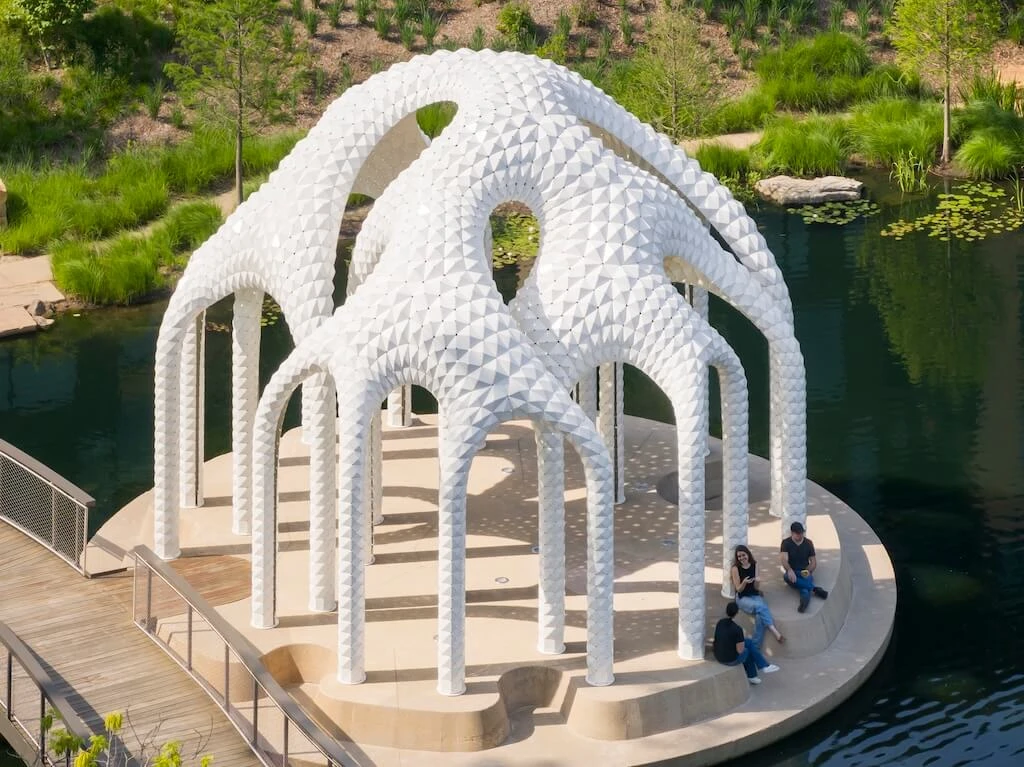



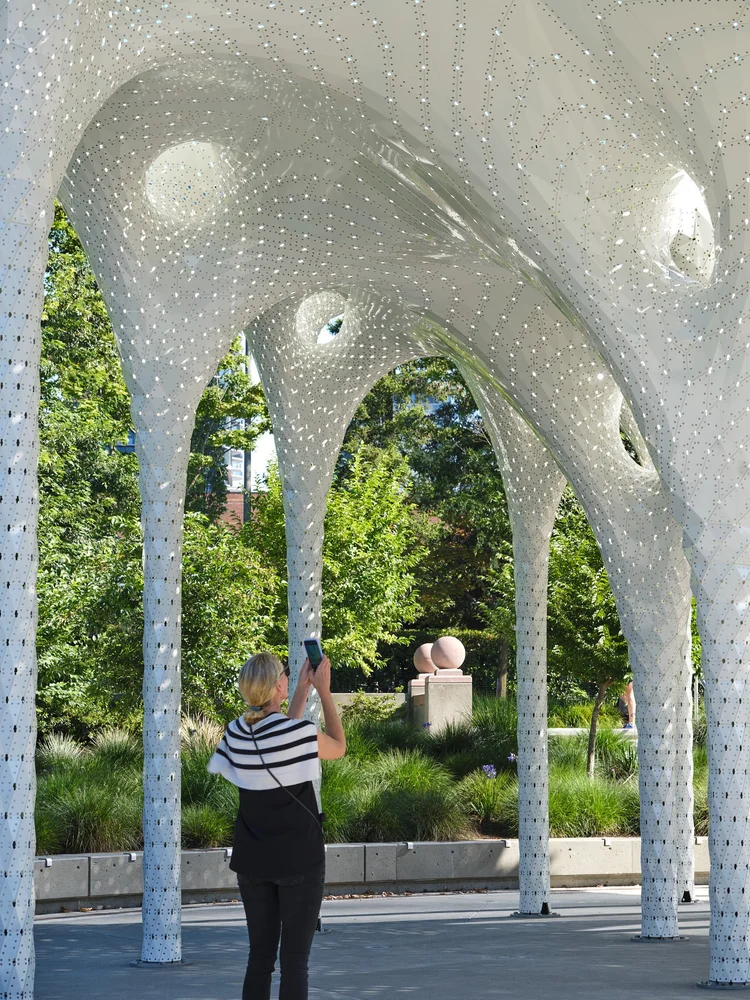
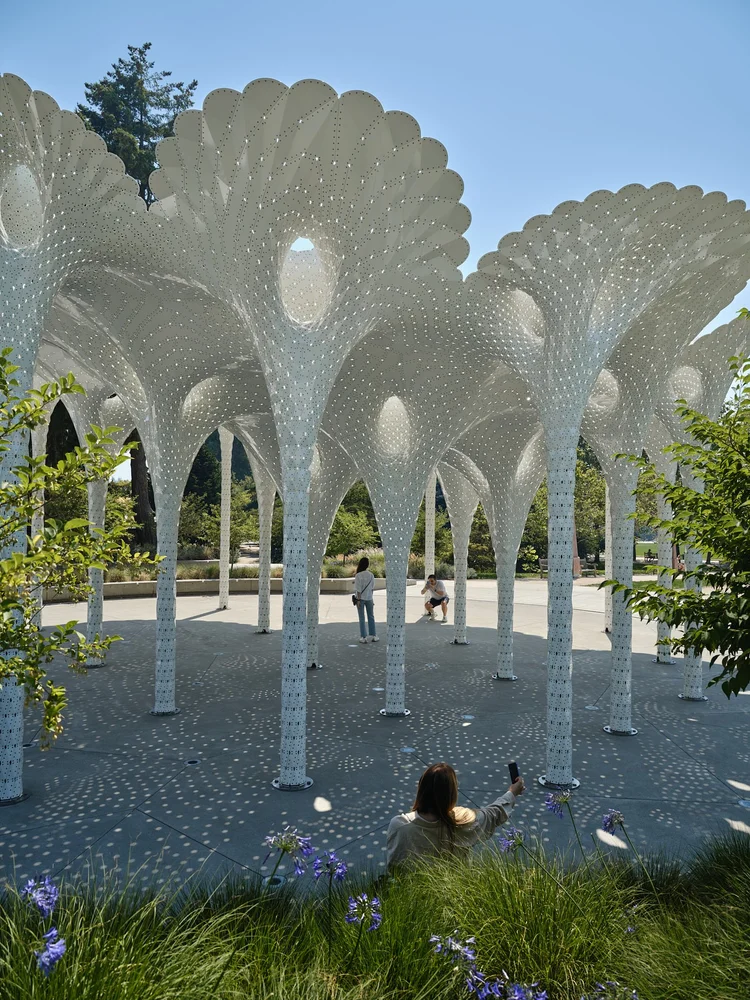
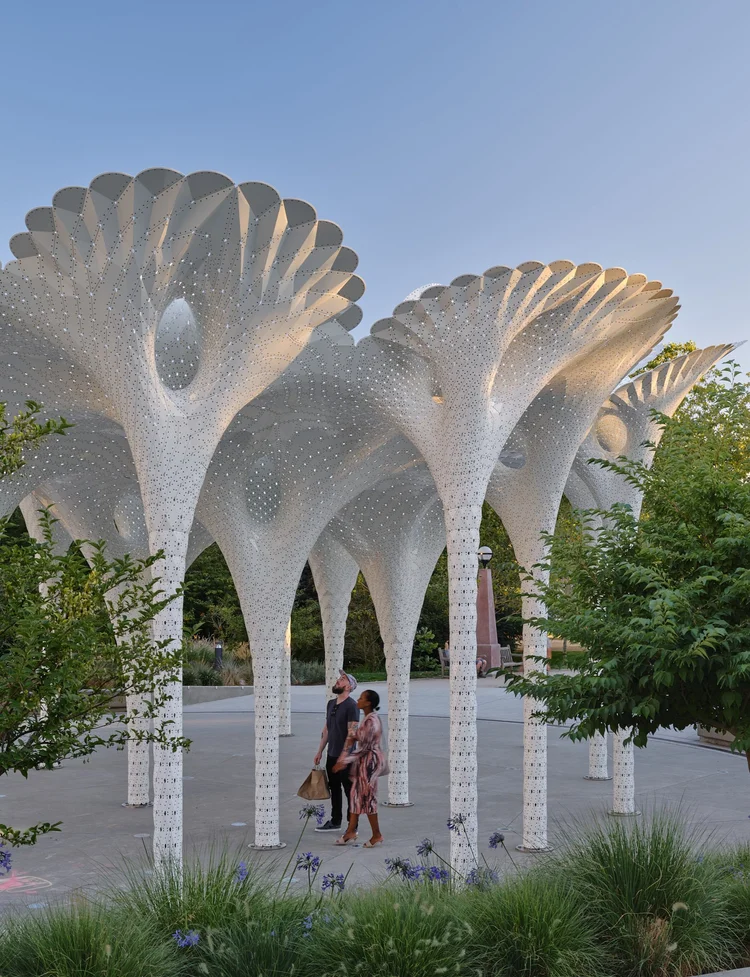
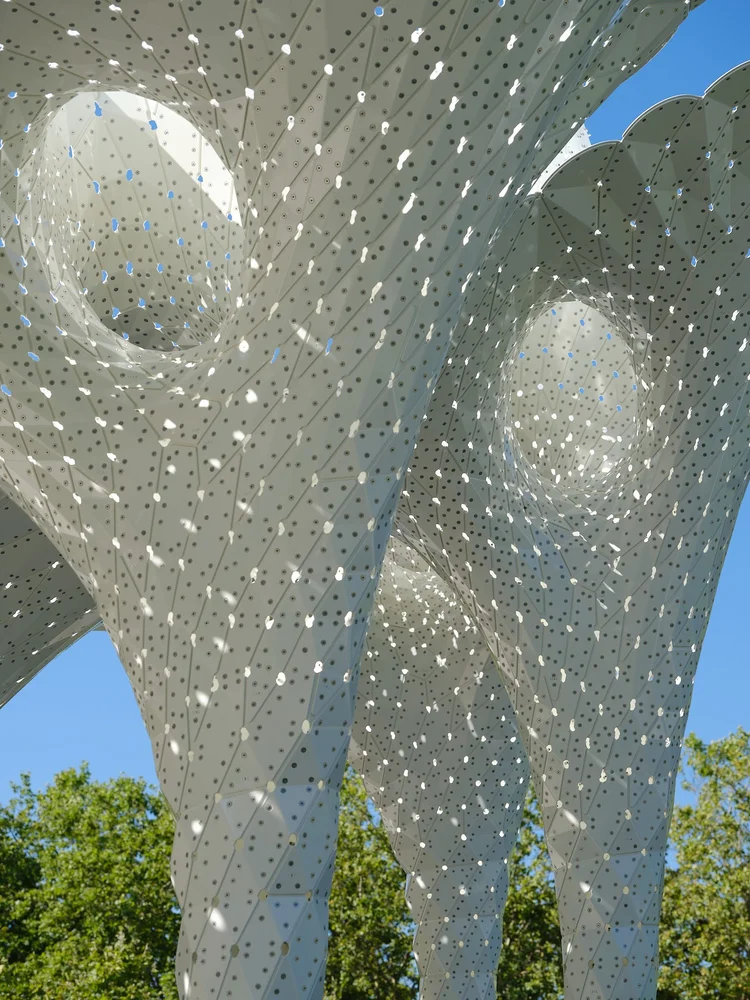
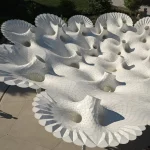
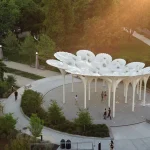
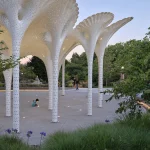
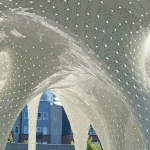
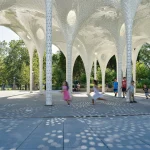
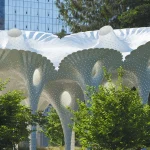

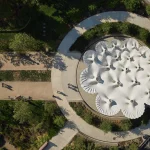
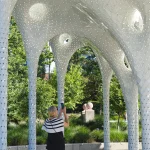
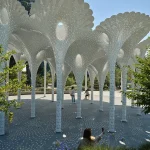
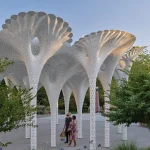
The PILOTI, a delicate, perforated aluminum canopy, floats above the ground in Bellevue’s vibrant Arts and Culture District, blending modern technology, innovative materials, and digital fabrication architecture. Designed by New York-based art-architecture studio MARC FORNES / THEVERYMANY, the sculptural expression of the installation captivates visitors and invites them to interact with the surroundings.
PILOTI: A Light-Infused Pavilion
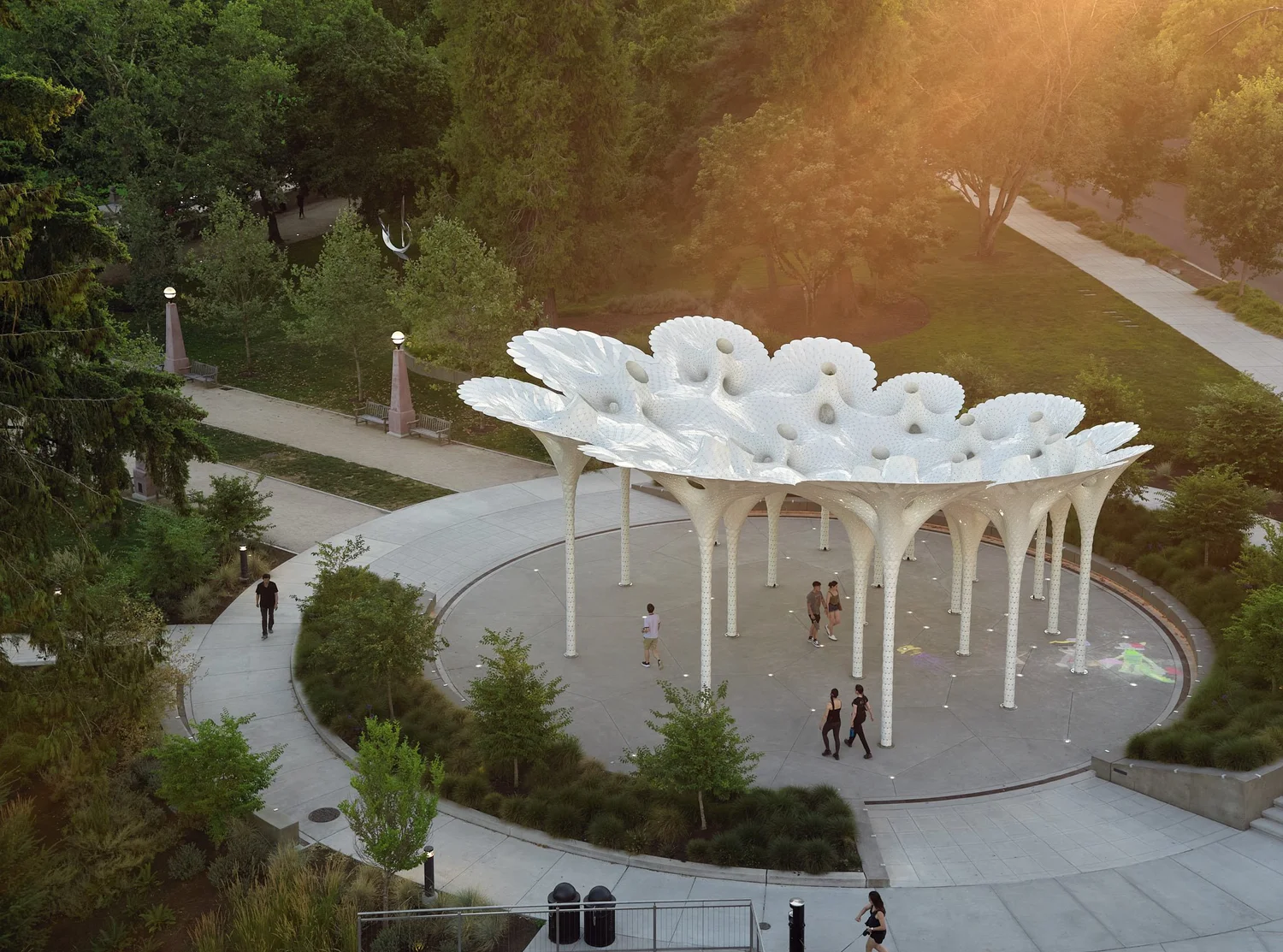
PILOTI, located in Bellevue, Washington, has transformed the key entrance to Downtown Park into a futuristic, light-dappled public pavilion. Evolving from the architectural term for column or support, the name of the pavilion, PILOTI, elevates the form of the structure as both functional and visually appealing. A pioneer in digital architecture, MARC FORNES envisioned the fluidity of the pavilion merging form and function, which invites visitors to pause and interact.
The Tactile Quality of Perforated Aluminum
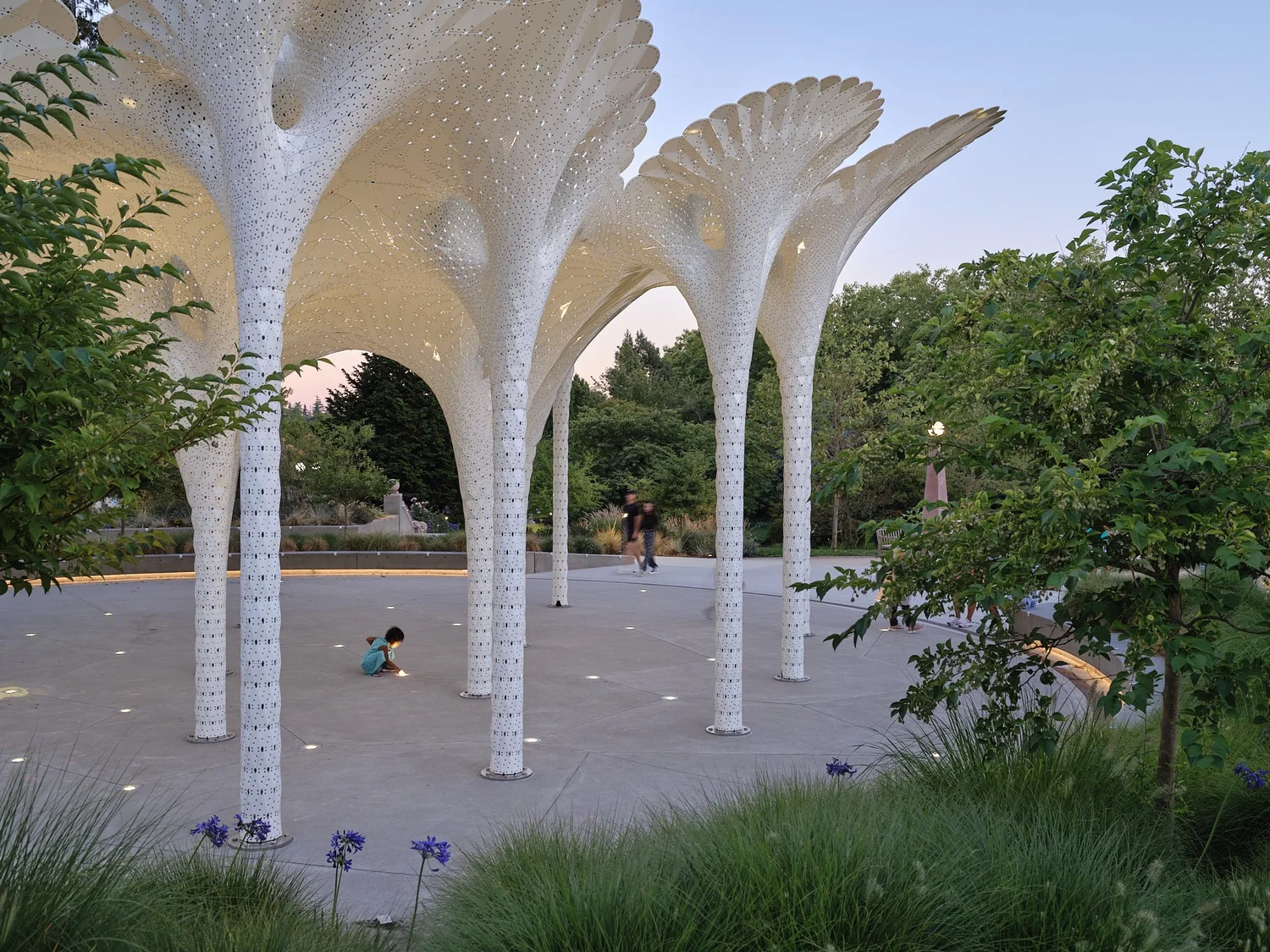
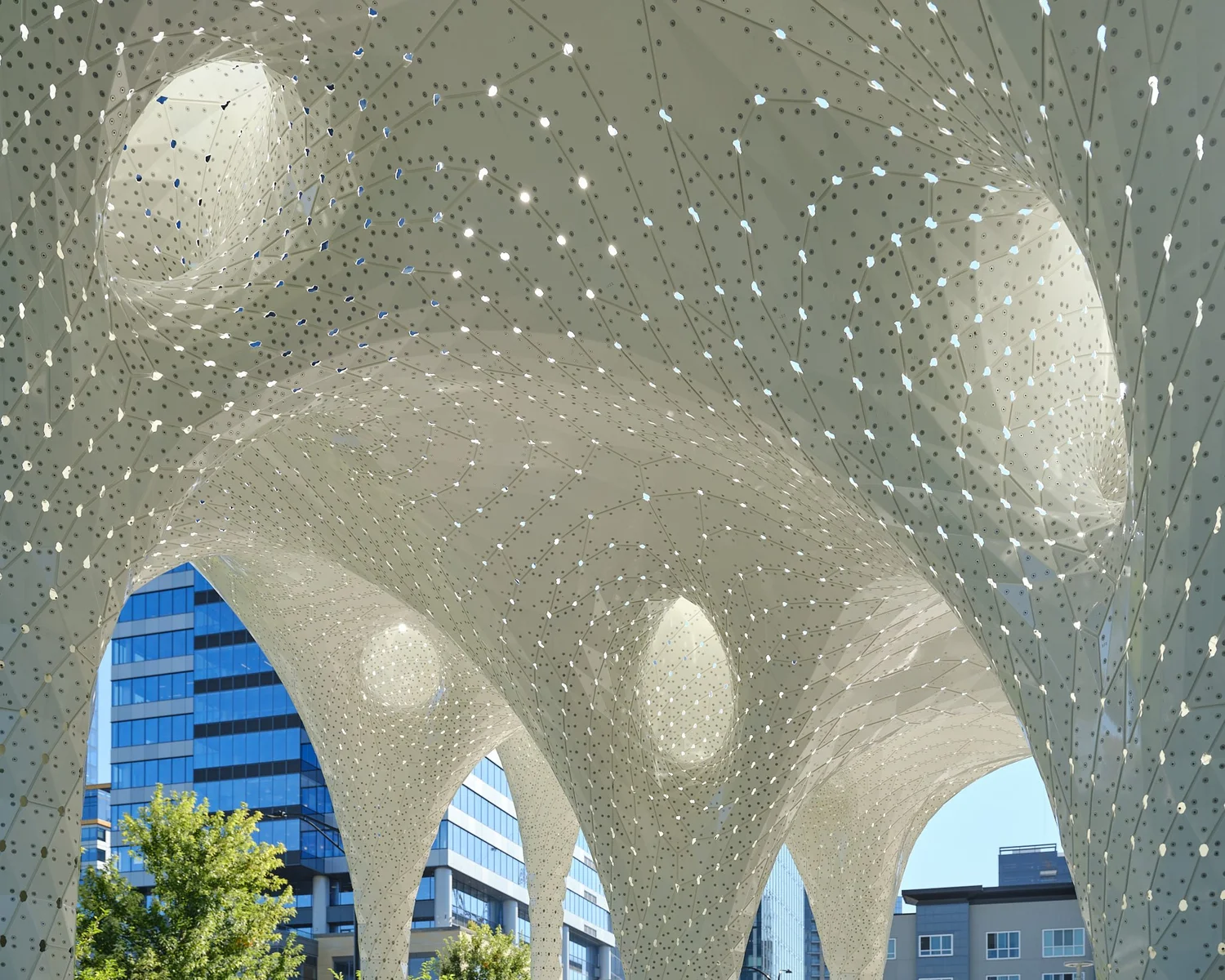
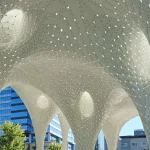
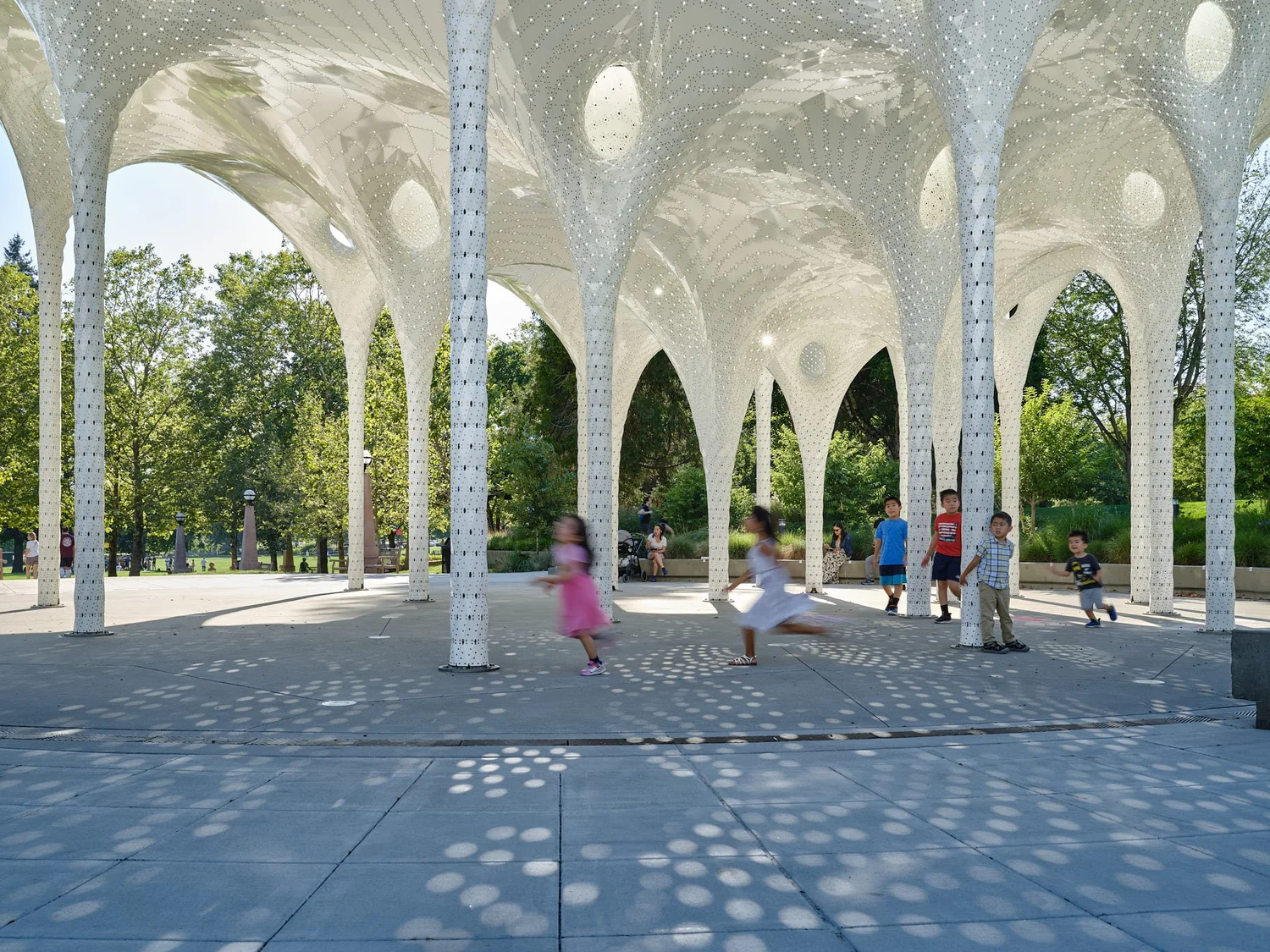
The striking elements of the 23-foot-tall PILOTI installation in Bellevue are its tactile materiality incorporated with computational design and advanced fabrication. With perforated aluminum panels, the intricate lattice-like textured structure reflects light and shadow, creating a visual dance for the visitors throughout the day. Inspired by natural forms, the flowing geometry of the capitals of each column extends out and merges with the canopy.

Aluminum was chosen for its lightweight properties and durable construction by incorporating perforated aluminum mesh into the design. The mesh-like structure softens the structure’s mass, providing an airy feel that creates lightness and transparency. The perforations cause an engaging tactile quality, providing a visual experience for the visitors to touch and explore the delicate form.
PILOTI’s Parametric Form
The self-supported canopy evokes an ultra-thin structure made from 6,665 unique aluminum parts held together by over 180,900 rivets. MARC FORNES referred to the process as the walking assembly, a deliberate and thoughtful method where the structure is built from the inside out, piece by unique piece, without the need for traditional scaffolding. The thin supports from a distance resemble a soothing, continuous rotunda, but up close, it reveals itself to be a smaller, umbrella-like form that blends into a single structure.
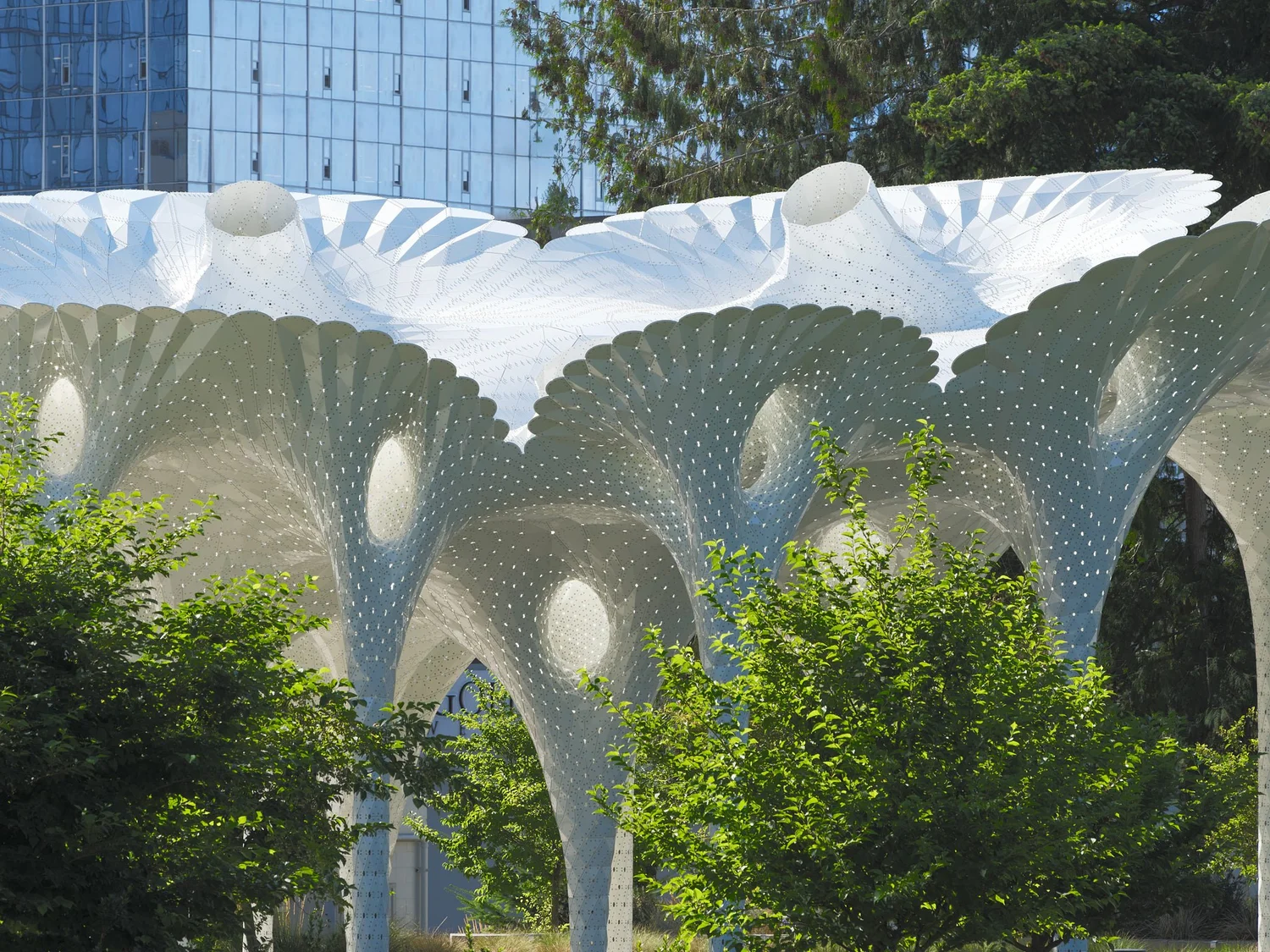
With computational variations, the design was developed using parametric modeling software like Rhinoceros 3D and Grasshopper, allowing the team to comprehend complex geometrical patterns and optimize material load distribution. This approach of design pushed the boundaries of traditional architecture, showcasing the digital creation of PILOTI. Precisely crafted with each curve and fold, the structure was digitally fabricated, and components were assembled on-site to offer its stunning aesthetic complexity.
PILOTI’s Role in the Bellevue Community

At night, the perforations transform the canopy into a glowing lantern that guides visitors into the park. This intricate interplay between light, form, and material is a hallmark of the studio’s work. The installation is intended to serve the community and celebrate functions, weddings, birthdays, gigs, or meetups beneath its canopy in Bellevue, Washington.
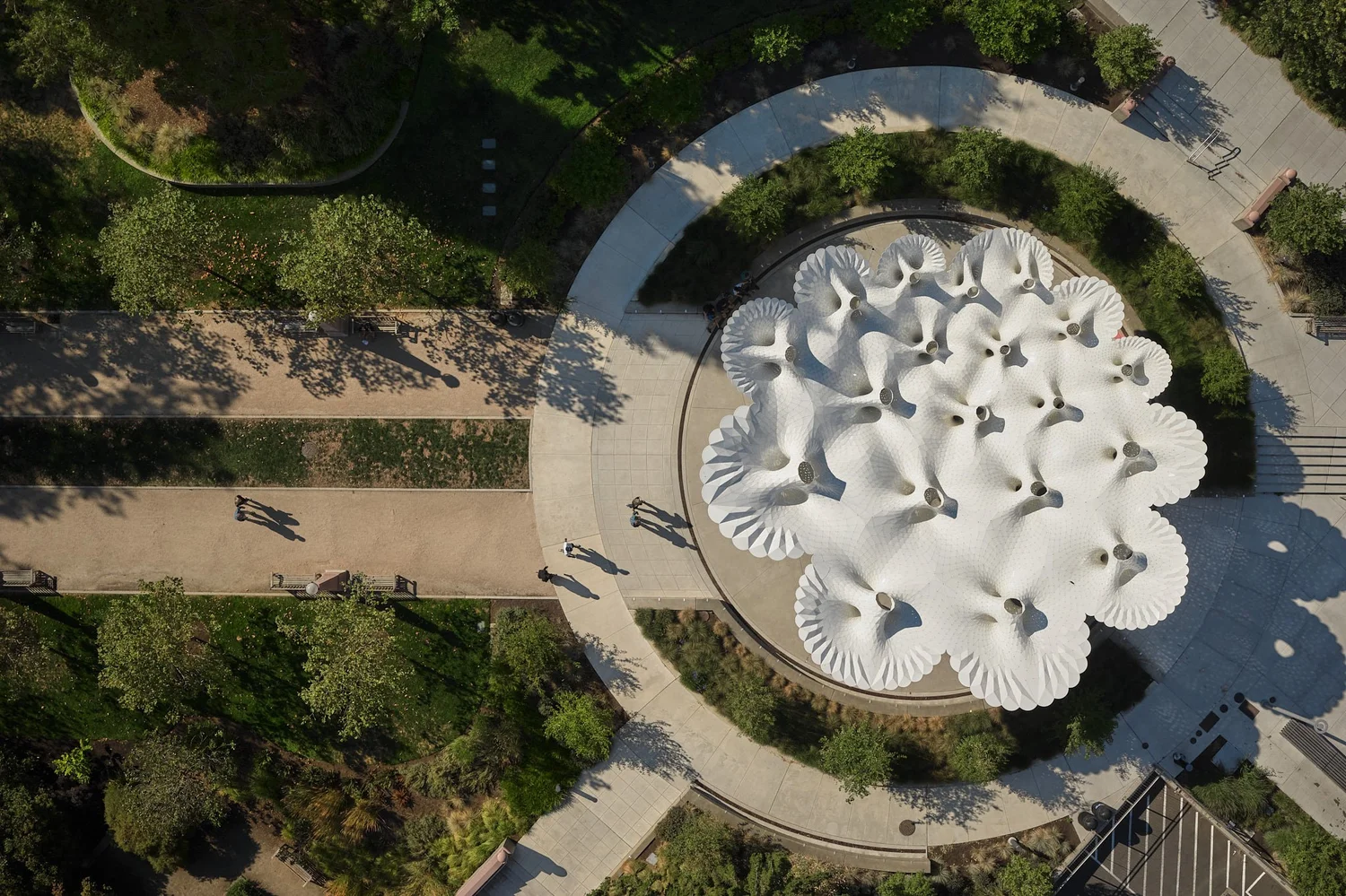
The umbrella-shaped pavilion design encourages visitors to interact, relax, and reflect with the space and surrounding landscape, making it a dynamic public space. MARC FORNES’s PILOTO exemplifies a deep connection between nature, technology, and art with a delicate form and use of digital fabrication, parametric design, and ingenious material that crafted the experiences for the people.
PILOTI Pavilion Project details
Architect: MARC FORNES / THEVERYMANY
Location: Bellevue Downtown Park, Washington, USA
Photo Credits: Younes Bounhar, DoubleSpace