


Discover how contemporary architecture redefines brick through parametric design, crafted geometry, and climate-responsive architectural systems.
Brick is one of the most familiar materials in architecture, yet its story is far from static. We have seen it in historic walls, load-bearing structures, and everyday buildings, often associated with repetition and permanence. But in contemporary practice, brick is being rethought in ways that feel surprisingly fresh and relevant. It is no longer just about stacking units but is about shaping experiences, controlling light, and responding to climate with intention.
Today, architects approach brick with a different mindset, or one that blends tradition with experimentation. Digital tools, parametric thinking, and a renewed respect for craftsmanship are allowing this age-old material to take on new roles. Brick starts to feel less like a rigid element and more like a flexible system that adapts to context and design ambition.
This shift is not about replacing the past but building on it. The warmth, texture, and familiarity of brick remain, but they are now combined with innovation and precision. As a result, contemporary brick architecture feels grounded and forward-looking while connecting human experience with evolving design intelligence.
Brick as System, Not Surface
Brick in contemporary architecture is no longer treated as a static surface or repetitive construction module. It is recast as a performative system that is capable of shaping light, guiding movement, and responding to environmental conditions. We can see brick acting as a mediator between interior and exterior alongside solidity and porosity. Through layered assemblies, articulated skins, and controlled variations, it begins to operate as an intelligent material framework.
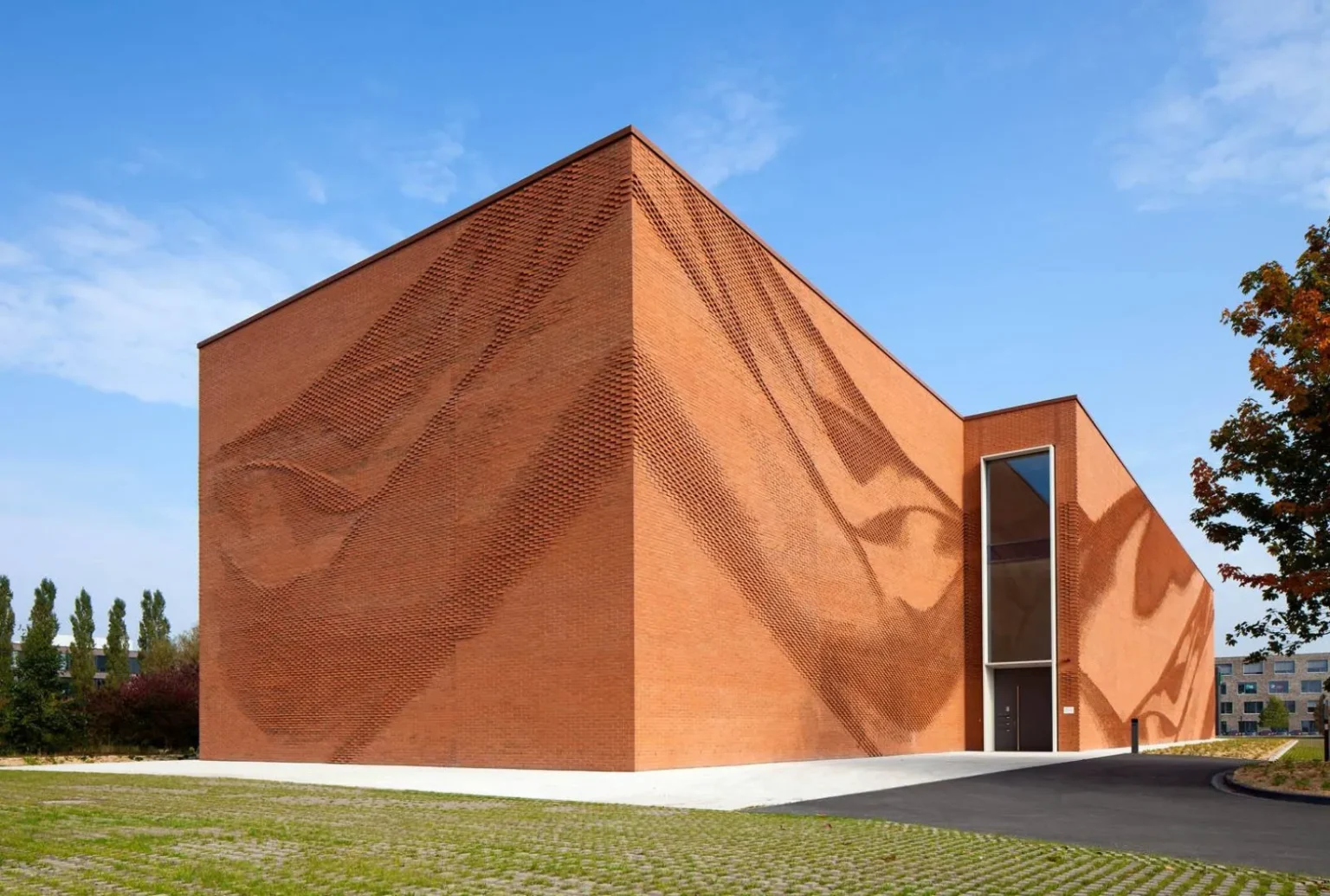
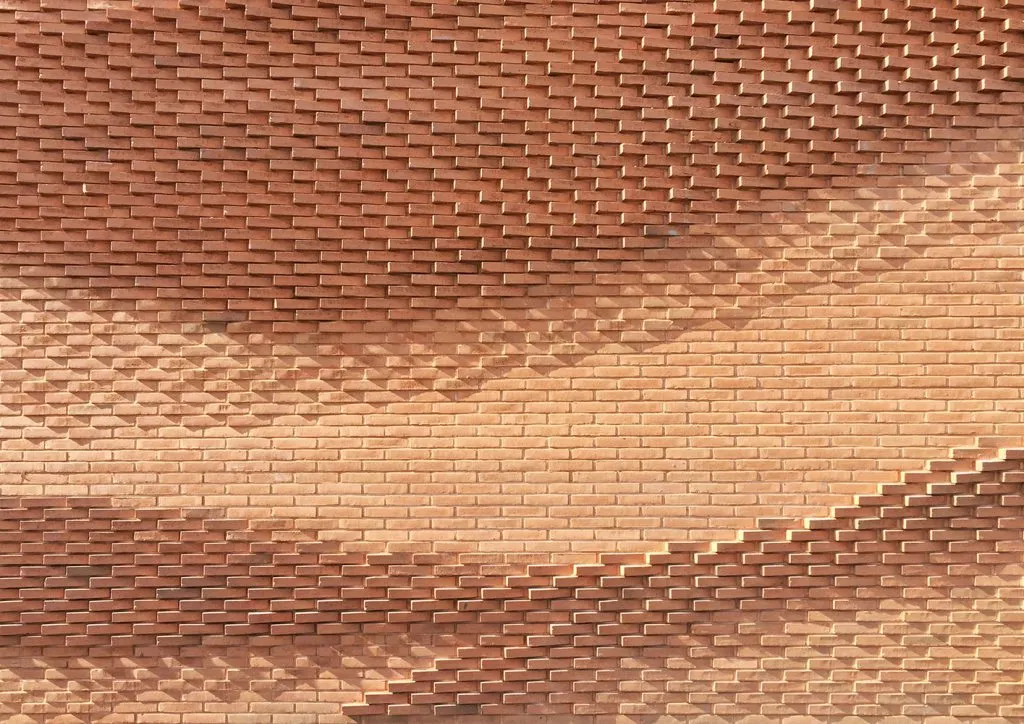
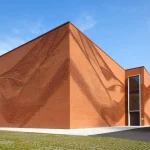
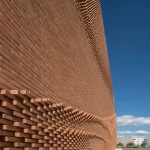
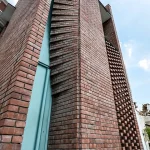
The Administrative Building Textilverband shows this transformation through a parametric brick façade that behaves like a dynamic skin. Inspired by the folds of drapery, the façade uses six variations of brick to create a gradient effect, generating a sense of movement through light and shadow.
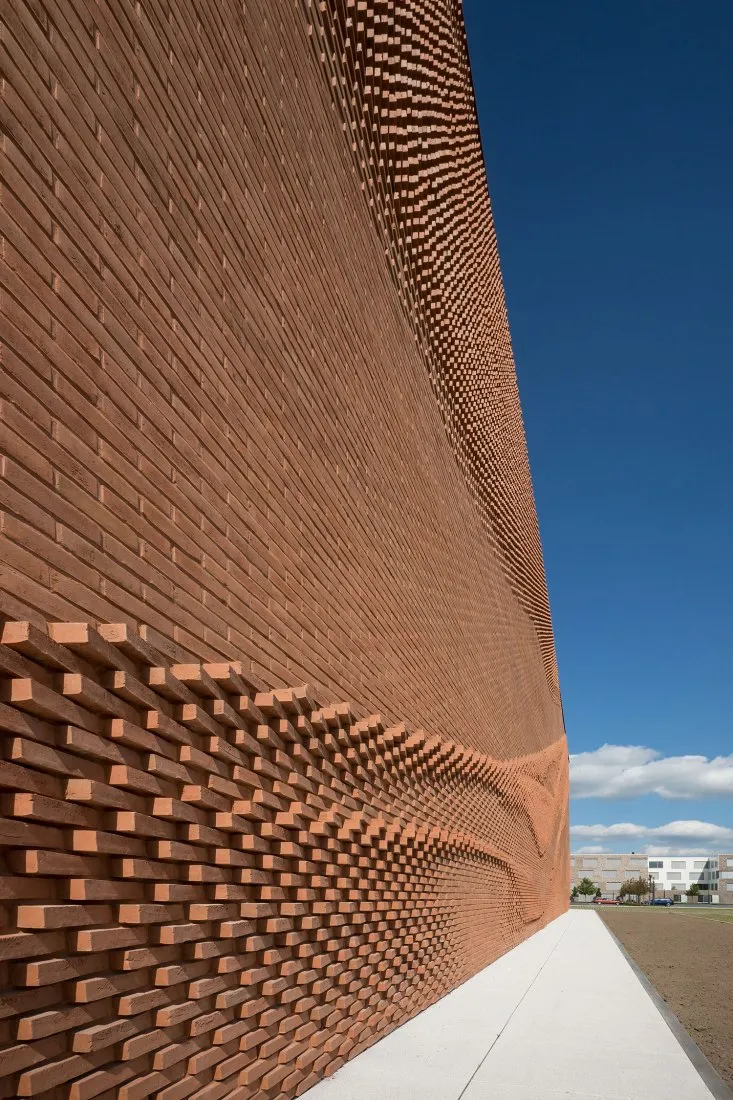
The building opens toward the landscape while maintaining a largely closed brick envelope, balancing environmental performance with visual expression. The façade operates almost like fabric, which is fluid yet constructed showing how brick can transcend its inherent rigidity and become a responsive architectural system.
Geometry, Craft, and Expressive Tectonics
The rewriting of brick is deeply embedded in its geometric manipulation and the continued relevance of craft. Architects today are not abandoning traditional masonry techniques but are extending them through computational logic and precise detailing. Corbelling, rotation, and incremental offsets allow brick to form curves, folds, and textured surfaces that blur the line between structure and ornament.
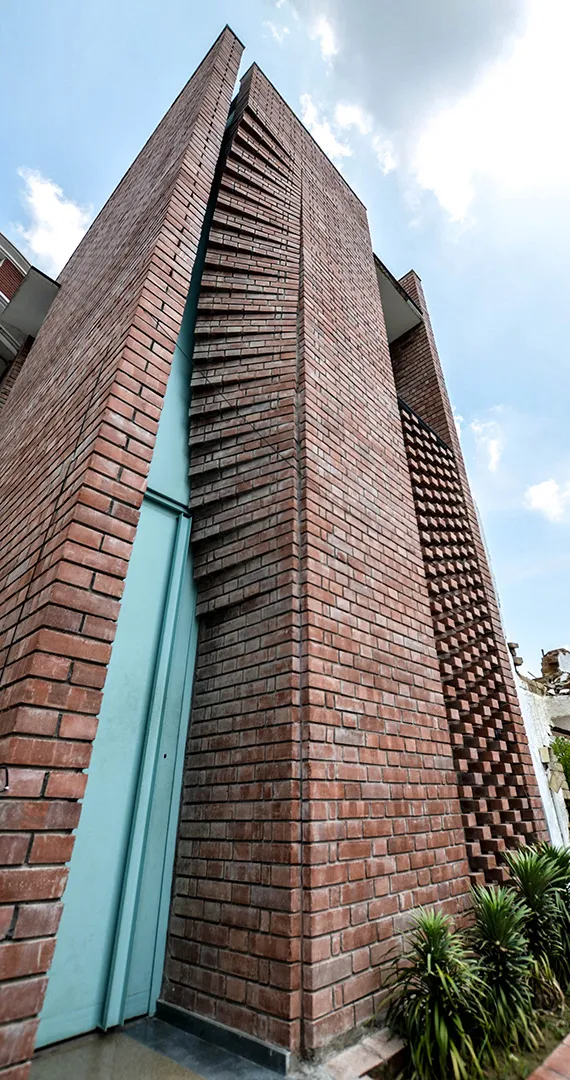
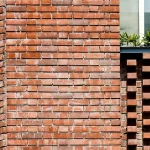
The Brick Curtain Office by Firki Studio illustrates this intersection of craft and geometry at a smaller scale. Designed on a constrained site, the façade transforms into a sculptural element that mimics the act of pulling aside a curtain. The brick surface curls and twists through simple corbelling techniques, creating a dynamic entry experience.
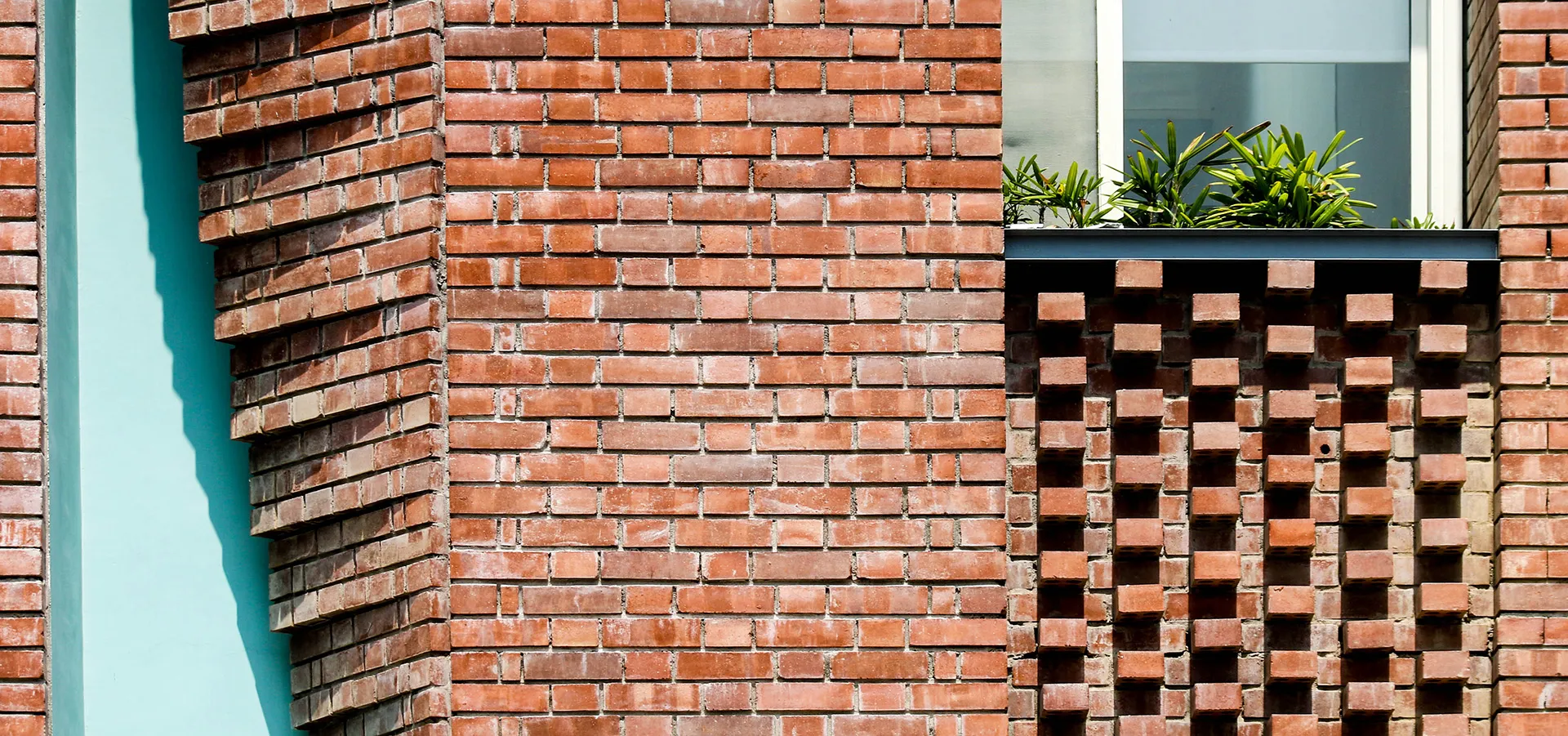
Despite its expressive form, the construction relies on repetitive brick-laying systems that local masons can execute, highlighting how innovation emerges from familiar techniques.
Porosity, Climate, and Spatial Performance
Brick’s renewed relevance also lies in its ability to engage the climate through porosity and passive design strategies. Instead of acting as a barrier, contemporary brick assemblies are designed to breathe allowing light, air, and shadow to filter through. Perforations, void ratios, and layered skins are calibrated to environmental inputs, transforming façades into climate-responsive systems. This approach aligns with a shift toward sustainability, where material intelligence reduces dependence on mechanical systems.
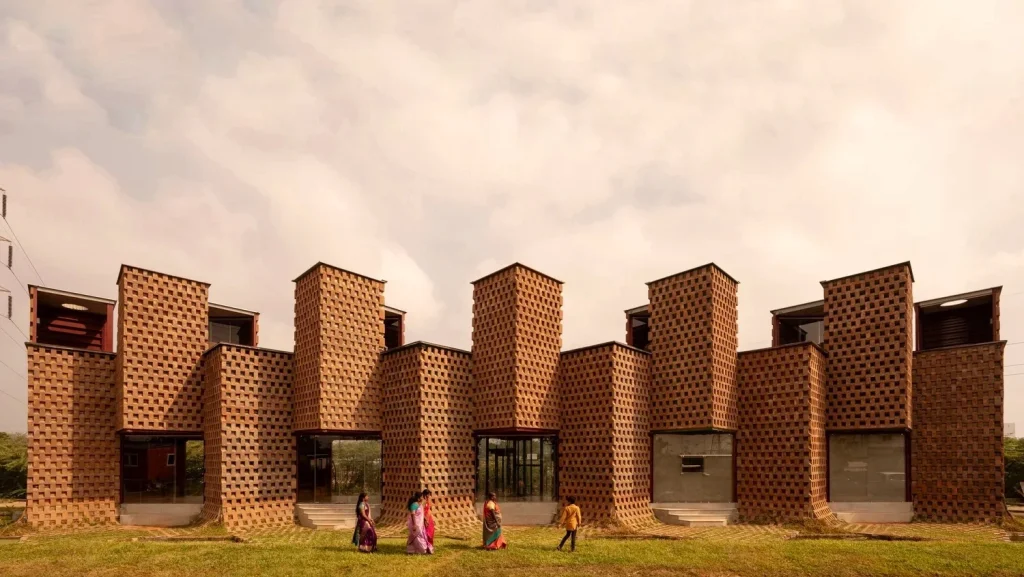
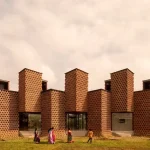
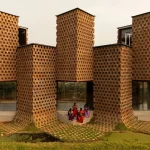
The Petti Restaurant by Wallmakers explores this idea through a porous brick envelope that merges interior and exterior environments. The design uses brick not as a solid boundary but as a permeable layer, enabling ventilation and diffused light while maintaining privacy. The spatial experience becomes atmospheric, defined by filtered light and shifting shadows.
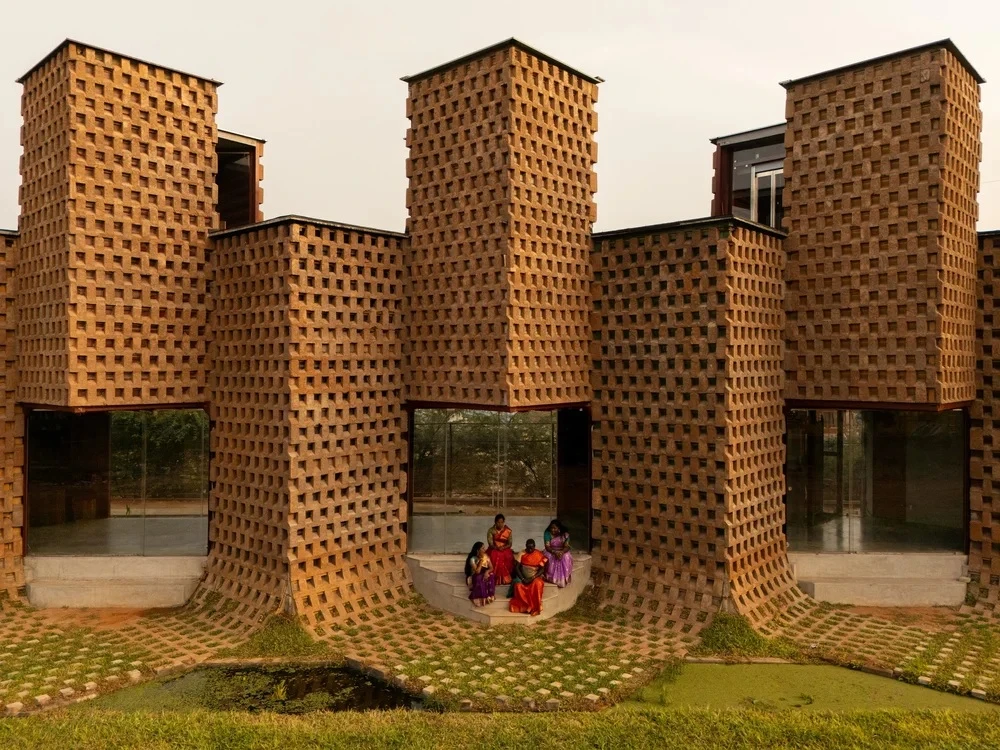
This reflects a broader parametric logic, where brick arrangements are driven by performance criteria such as airflow and daylight rather than purely aesthetic intent. In such projects, brick becomes an environmental tool—shaping comfort, ambiance, and energy efficiency simultaneously.
What emerges is not a rejection of the past, but a continuation where a centuries-old material is reinterpreted through new tools, new logics, and new aspirations. In this evolving narrative, brick remains grounded in its material authenticity while simultaneously shaping the future of architectural form and performance.