






• Submit Project
  • Advertise
  • NewsLetter
PA | Architecture and Technology
Courses
  • Articles
    • Archipreneurs
    • Technology
    • Bim / Aec
    • 3D Printing
    • Architects
    • Artificial Intelligence
    • Robotics
    • Sustainability
    • Tools
    • Case Study
    • City Guide
    • Opinions
    • Interviews
    • Architecture & Design
      • Urbanism
      • Metaverse
      • Space Architecture
      • Geography
  • Projects
    • Architecture
    • Interior
    • Design
      • Fashion
      • Pavilion
      • Installation
      • Digital Art
      • Landscape Design
    • Products
  • News
  • Workshops
  • PA Talks
  • Videos
  • Books
  • More
    • PA+ Membership
    • Competitions
    • Courses
    • Events
    • Jobs
    • About Us
    • Contact Us
Font ResizerAa
PA | Architecture and TechnologyPA | Architecture and Technology
Search
  • Articles
  • Projects
  • News
  • Workshops
  • PA Talks
  • Videos
  • Books
  • Advertise
  • Submit Project
  • NewsLetter
  • Contact Us
Have an existing account? Sign In
Follow US

Home - Projects - Design - Fashion - Adaptive System: A Computational Design Methodology for Responsive Fashion

Fashion

Adaptive System: A Computational Design Methodology for Responsive Fashion

Last updated: May 8, 2026 4:47 am
Isha Chaudhary
Isha Chaudhary
ByIsha Chaudhary
Isha Chaudhary is an architecture writer who follows and writes about current trends and emerging discussions in architecture, with a focus on design, technology, and place-making.
Share
Adaptive System: A Computational Design Methodology for Responsive Clothing
Adaptive System by Laura Civetti © Gabriele Pampanelli
Adaptive System: A Computational Design Methodology for Responsive Clothing
© Gabriele Pampanelli
Adaptive System: A Computational Design Methodology for Responsive Clothing
Adaptive System by Laura Civetti © Gabriele Pampanelli
Adaptive System: A Computational Design Methodology for Responsive Clothing
© Gabriele Pampanelli
Adaptive System: A Computational Design Methodology for Responsive Clothing
© Gabriele Pampanelli
Adaptive System: A Computational Design Methodology for Responsive Clothing
© Laura Civetti
Adaptive System: A Computational Design Methodology for Responsive Clothing
© Laura Civetti
Adaptive System: A Computational Design Methodology for Responsive Clothing
© Laura Civetti
Adaptive System: A Computational Design Methodology for Responsive Clothing
© Laura Civetti
Adaptive System: A Computational Design Methodology for Responsive Clothing
© Laura Civetti
List of Images 1/11
Adaptive System: A Computational Design Methodology for Responsive Clothing
SHARE

Biological tissues in plants and animals adapt to the specific needs of different parts of the body, varying in thickness, density, porosity, and surface structure to respond to environmental conditions and functional demands. However, unlike biological tissue, clothing generally does not exhibit functional differentiation distributed across the body. It is often made of a uniform material, with variations mainly related to the season or garment type, but lacking real modulation to meet the specific functional needs of different body areas.

Contents
  • Three Integrated Design Layers
  • Adaptive System Project Details
- Advertisement -

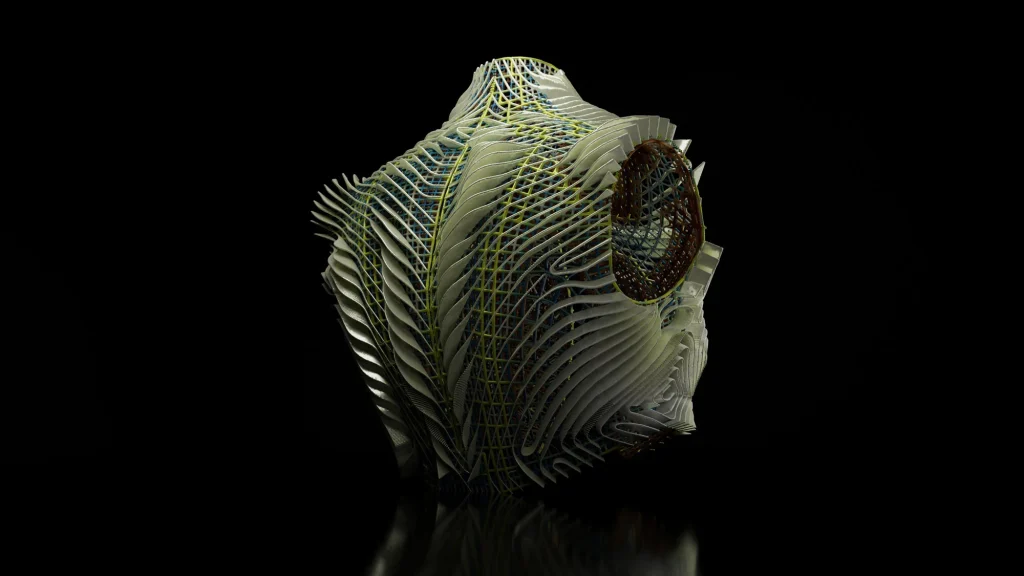
The Adaptive System is a new methodology for adaptive fashion, one that integrates physiological and environmental data directly into the creation of textiles and garments. Through computational design, the project explores how clothing can evolve from passive covering into an adaptive, multifunctional system tailored to the human body.

Adaptive System: A Computational Design Methodology for Responsive Clothing
Adaptive System © Gabriele Pampanelli

Developed by designer Laura Civetti, whose work investigates the relationship between the body, garments, and the environment through computational design, additive manufacturing, and bio-based materials, the research reflects a broader shift toward responsive and future-oriented wearable systems.

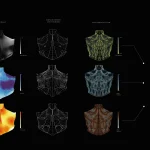
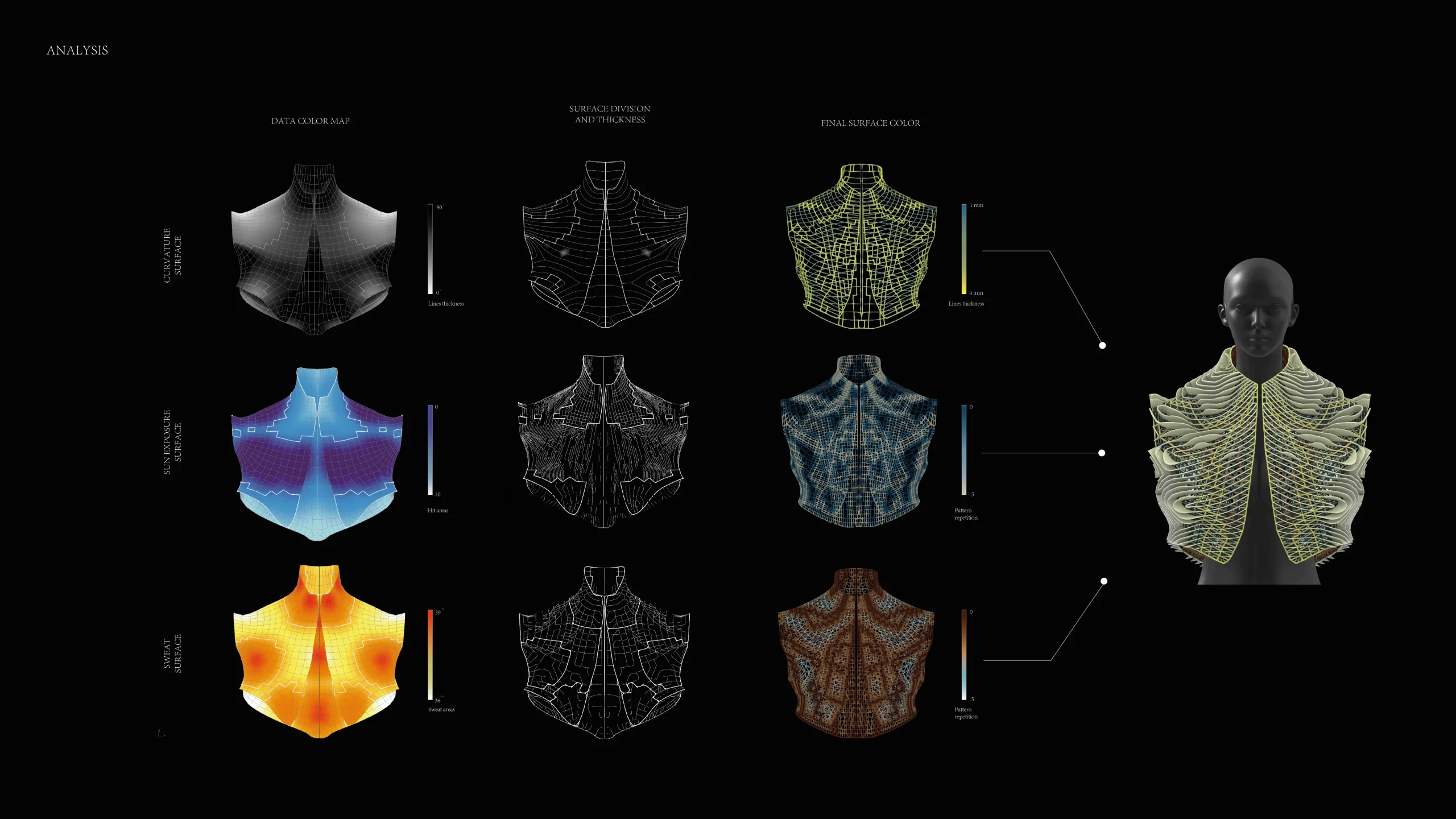
For the development of the project, data related to the human body were analyzed and represented through color maps highlighting aspects such as body curvature, perspiration areas, and solar exposure.

- Advertisement -

Three Integrated Design Layers

Adaptive System: A Computational Design Methodology for Responsive Clothing
© Laura Civetti

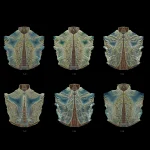
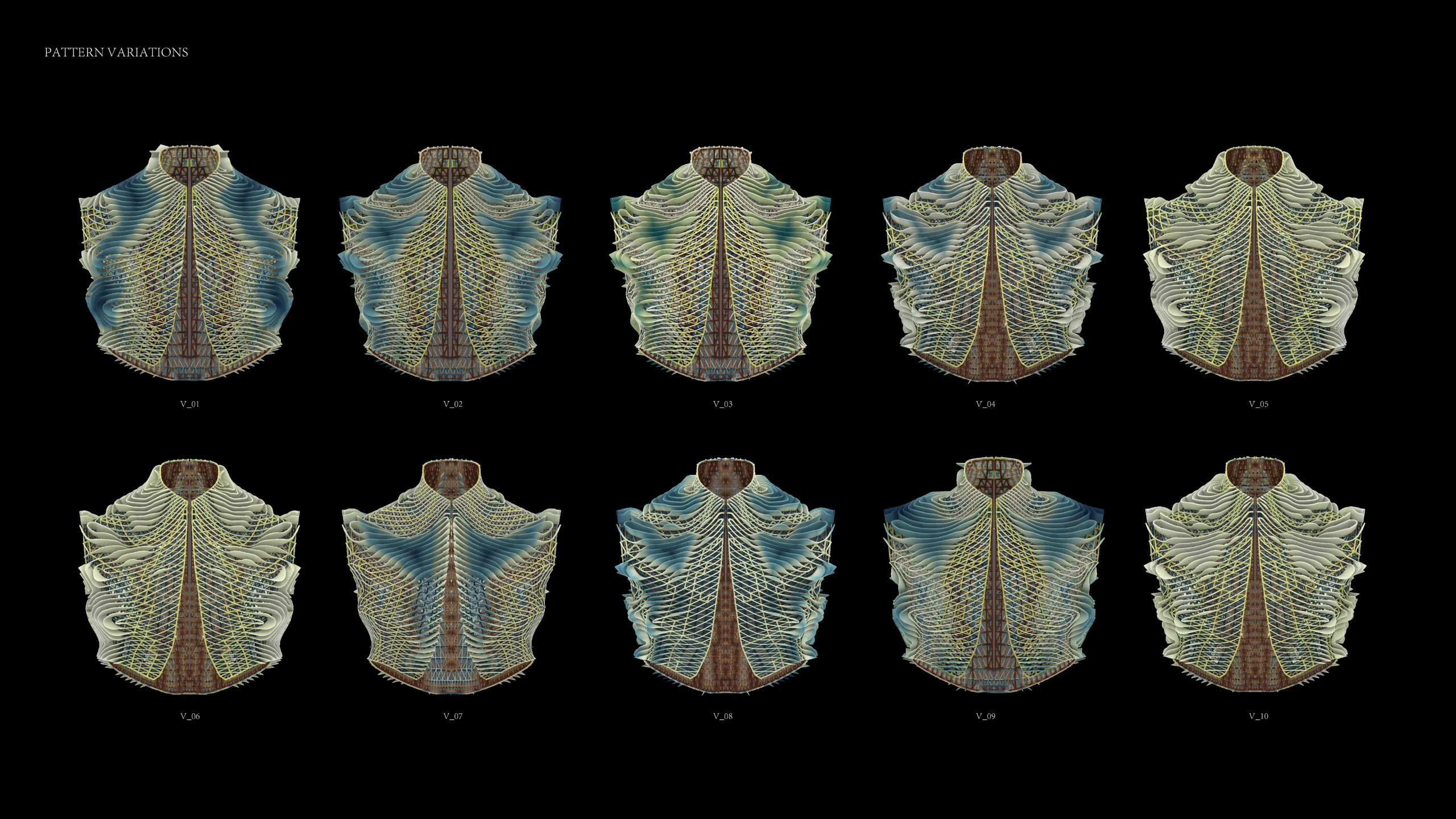
The collected data informed the development of three distinct design layers, each responding to a specific physiological or environmental condition. Together, these layers were integrated into a unified adaptive system that balances movement, breathability, and protection across the body.

  • The first layer originates from an analysis of body curvature. By extracting the body’s principal curvature lines, the system generates structures intended to support and enhance natural movement. Preferably imposing a rigid geometry onto the body, the design responds directly to its anatomical dynamics.
Adaptive System: A Computational Design Methodology for Responsive Clothing
© Laura Civetti
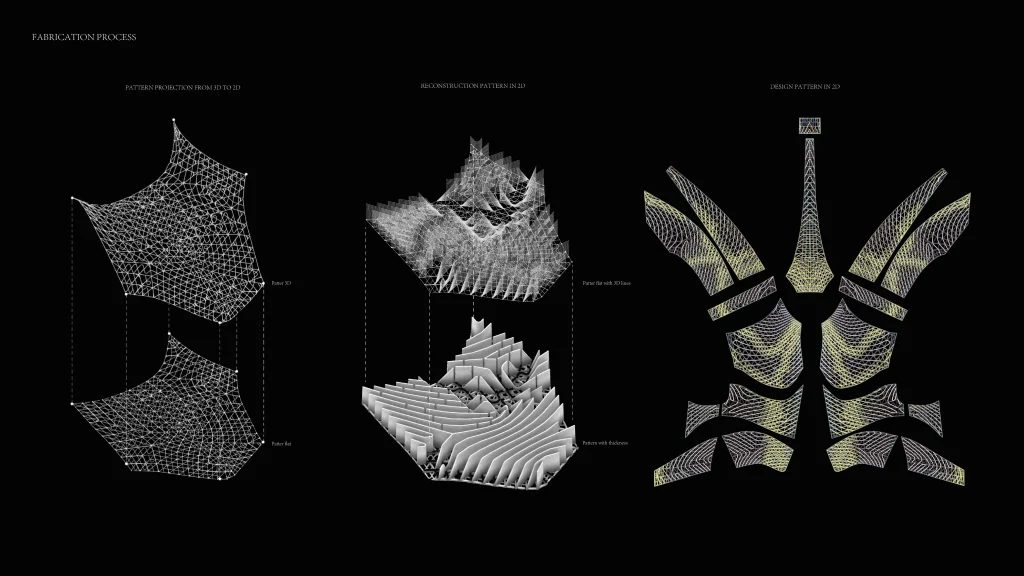
  • The second layer focuses on thermal regulation. Based on body heat maps, a quadrangular mesh system was developed in which the density and intensity of the grid vary locally according to ventilation and breathability requirements. Areas requiring greater airflow become more porous, while other zones maintain structural density.
Adaptive System: A Computational Design Methodology for Responsive Clothing
© Laura Civetti
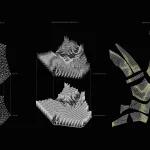
  • The third layer addresses solar exposure. Here, geometric thickness is modulated to increase or reduce shading depending on the level of exposure across different parts of the body. Certain sections extend vertically to provide additional protection in highly exposed areas, creating a wearable surface that actively mediates environmental interaction.
Adaptive System: A Computational Design Methodology for Responsive Clothing
© Laura Civetti

Together, these layers form a unified adaptive system that rethinks the role of clothing. The project demonstrates how increasingly accessible body and environmental data can be integrated into design workflows to create garments that respond to posture, movement, dermatological sensitivity, and surrounding conditions.

Adaptive System: A Computational Design Methodology for Responsive Clothing
© Gabriele Pampanelli

The use of data is now increasingly accessible and can be integrated into design processes, enabling targeted responses to the needs of the human body, from posture to dermatological requirements, and even its interaction with the external environment.

- Advertisement -

Through the analysis and use of this information, Adaptive System positions clothing as an intelligent interface between the human body and its environment, suggesting new possibilities for the future of wearable design.

Adaptive System Project Details

Project Title: Adaptive System
Project research: Laura Civetti, Juan Daniel Cabrera Cobo
Manufacturing partner: Stratasys
Field: Computational Design / Wearable Design / Advanced Textiles
Material Approach: Exploration of bio-based and high-performance materials

TAGGED:Adaptive SystemComputational DesignLaura CivettiResponsive Clothing
Share This Article
Facebook LinkedIn Email Copy Link Print
ByIsha Chaudhary
Isha Chaudhary is an architecture writer who follows and writes about current trends and emerging discussions in architecture, with a focus on design, technology, and place-making.
Previous Article Met Inaugurates ‘Costume Art’ for the Spring 2026 Exhibition Met Inaugurates ‘Costume Art’ for the Spring 2026 Exhibition
Next Article Brandywine Conservancy & Museum of Art Expansion Kengo Kuma Designs Brandywine Conservancy & Museum of Art Expansion in Pennsylvania
Leave a Comment Leave a Comment

Leave a Reply Cancel reply

You must be logged in to post a comment.

Most Popular

10 examples of largest 3D printed houses around the world

3D Printing
Deserta Ecofolie

Deserta Ecofolie: A Modular Biogenic Home for Extreme Desert Environments

Sustainability

10 Most Liked Projects On the Instagram of ParametricArchitecture In 2020

Articles

10 Affordable Housing Trends Shaping Urban Living

Architecture & Design

Miami is Fighting Climate Change with 3D Printed Coral Reefs

3D Printing

Why Developers in Canada Are Choosing Curtain Wall Alternatives Like UnitiWall

Articles

Nagami creates 3D printed products in collaboration with famous designers

Architecture & Design

Best Granite Countertops for Your Kitchen

Articles

Top 10 Tallest Hotels Around The World in 2025

Architecture & Design
© ABB robotics

The Human Factor in High-Tech Construction: Why Safety Still Matters in the Age of Automation

Robotics
Previous Next
L’île Folie Pavilion by Marc Fornes/THEVERYMANY

Subscribe to our newsletter

- Advertisement -
Ad image

You Might Also Like

Architecture & Design

The Two-Act Workflow: A Guide to Bridging ML-Generated Maps and Rule-Based 3D Assembly

November 7, 2025
ProjectsDesignFashion

Dive into the futuristic underwater wonderland: Siyun Huang’s Kinetic Fashion Collection

July 30, 2024
ProjectsDesignFashion

Prosthetic as wearable art by Jewelry Brand YVMIN

July 1, 2024
ArchitectureMetaverseProjects

“Unalome Tower” In Metaverse, Seeking Better Wellness Experiences With Various Types Of Spaces

August 5, 2024
PA | Architecture and Technology

© All rights reserved. Parametric Architecture (2018-2026) – ISSN 3023-7564

Parametric Architecture (PA) is a leading global architecture and design platform connecting millions of architects, designers, and students through innovative projects, industry insights, and educational initiatives.

Instagram Facebook X-twitter Youtube Linkedin Pinterest Tiktok

Get in touch​

  • About Us
  • PA+ Membership
  • Contact Us
  • Submit Project
  • NewsLetter
  • Advertise
  • Cookie Policy
  • Distant Sales Agreement
  • PA+ Membership Agreement
  • Privacy Policy

Explore More

  • Articles
  • Projects
  • Videos
  • Books
  • PA Talks
  • Jobs
  • Subscribe

Subscribe to our newsletter

Subscribe to our newsletter to get our newest articles instantly!

© 2026 ParametricArchitecture. All Rights Reserved. By utilizing this website, you are consenting to our User Agreement, Privacy Policy, and Cookie Statement. In compliance with the privacy laws of Turkey and the United States, we recognize and respect your rights. Please be aware that we may receive commissions for products bought through our affiliate links. Unauthorized reproduction, distribution, or transmission of any material from this site is strictly forbidden without prior written permission from ParametricArchitecture.

Welcome Back!

Sign in to your account

Username or Email Address
Password

Lost your password?

Not a member? Sign Up