


These cutting-edge design ideas show how architecture shapes school design through nature, materials, and adaptive spaces.
School design has moved beyond classrooms and corridors. Architecture is now understood as an active agent shaping how students think, interact, and grow. Across global projects, schools are evolving into spatial ecosystems where environment, material, and movement become integral to the learning process. This shift reflects a deeper understanding that space is not a passive backdrop, but it participates in education.
From fluid classrooms to landscape-integrated campuses, contemporary school architecture merges pedagogy with spatial intelligence. The result is an emerging school design language where courtyards, material systems, and parametric strategies collectively redefine how learning occurs.
School Design includes Fluid Classrooms and Spatial Learning
Traditional classrooms, once conceived as fixed enclosures, are dissolving into adaptive, open-ended environments. Learning is framed as a continuous spatial condition and not a contained activity. This approach is evident in this School in Miami, designed by Leonardo Rico Flórez, where architecture responds directly to children’s behavior, movement, and engagement. Corridors, terraces, and transitional spaces are designed as active learning zones and not just residual circulation areas.
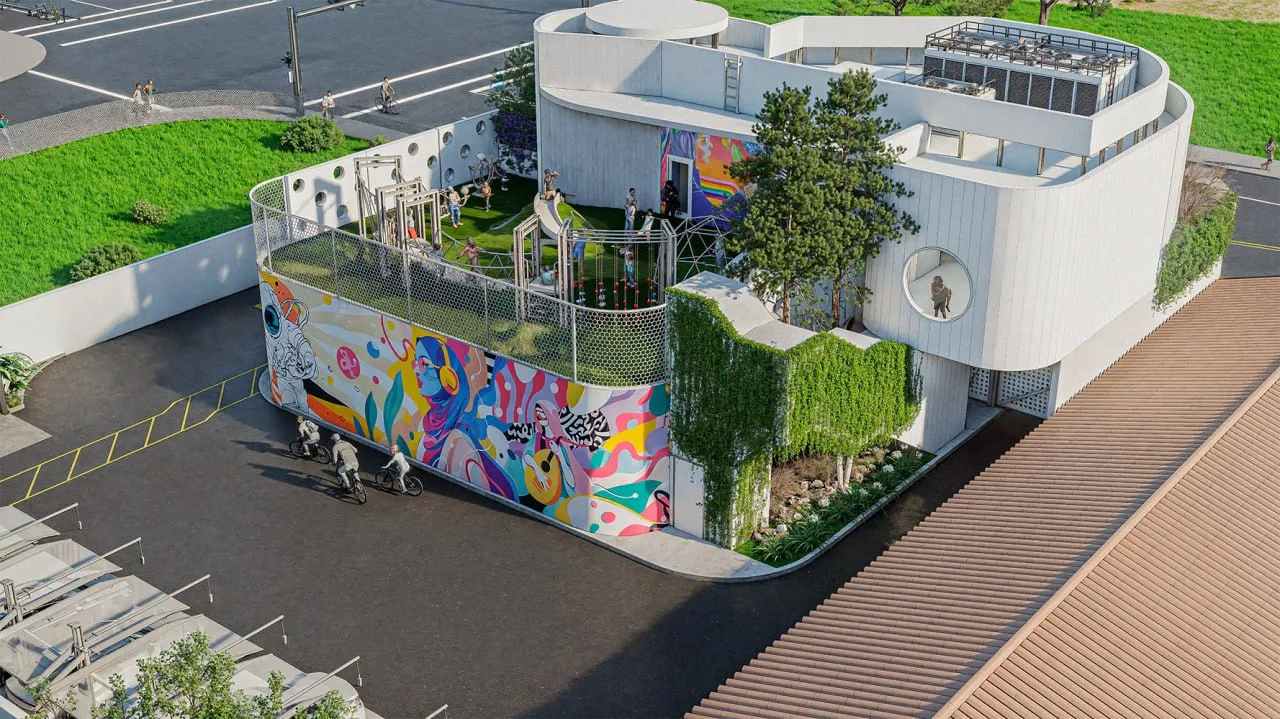
Instead of rigid boundaries, spaces expand and contract based on use. Circulation transforms into interaction, and thresholds become moments of learning. Varied ceiling heights, playful openings, and layered spatial sequences are integrated to encourage curiosity and exploration.
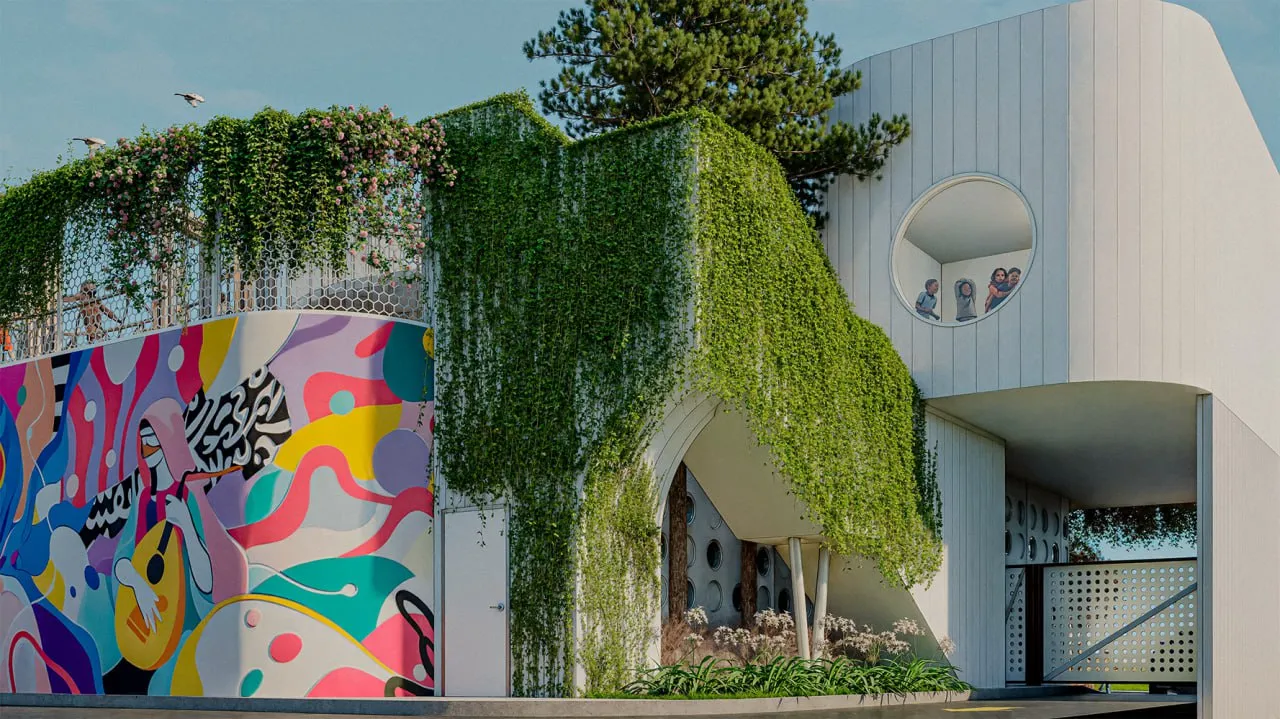
This reflects a broader shift toward viewing learning environments as dynamic systems. Schools operate as “innovation ecologies,” where collaboration, research, and social interaction overlap spatially. In this context, architecture functions as a silent instructor, shaping attention, behavior, and engagement.
School Design with Nature as Core Infrastructure
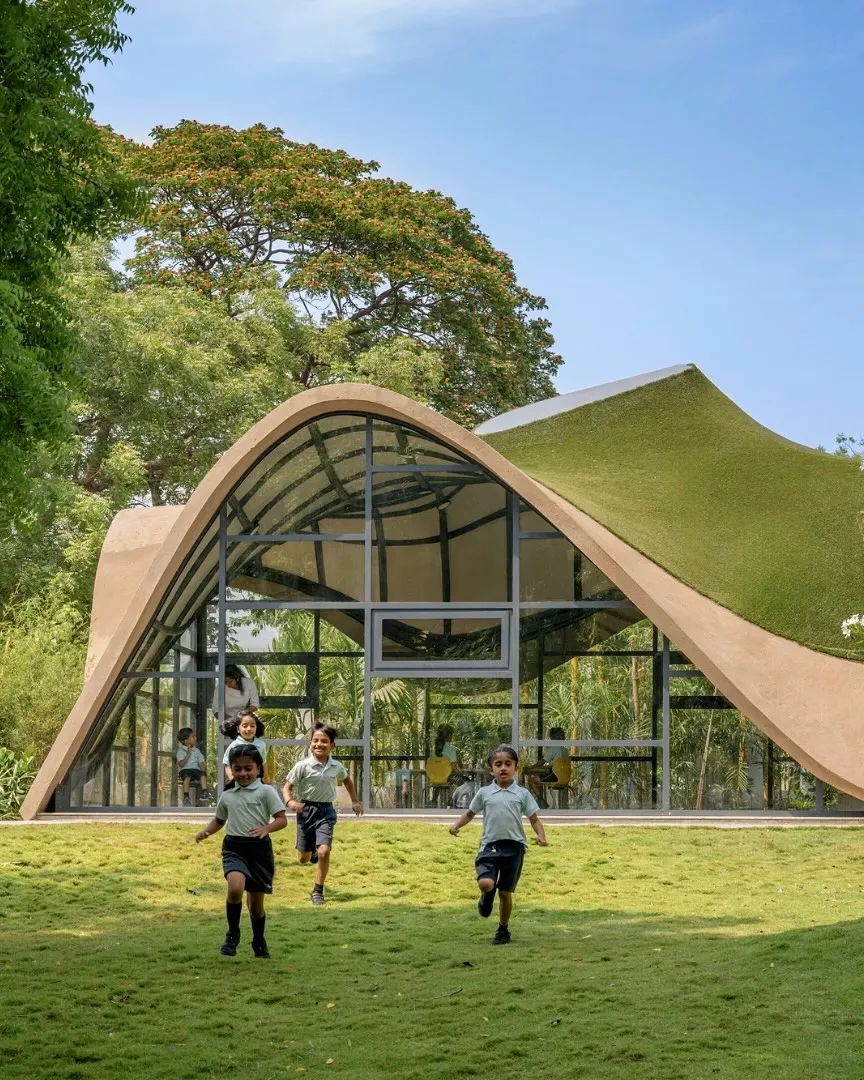
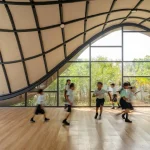
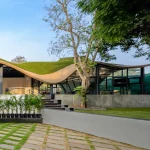
Nature is now an addition to school design, but a foundational learning framework. This is evident in Cocoon, the pre-primary extension at Bloomingdale International School, Vijaywada, India, designed by andblack Design Studio. Here, architecture merges with landscape, positioning nature as an active learning medium.
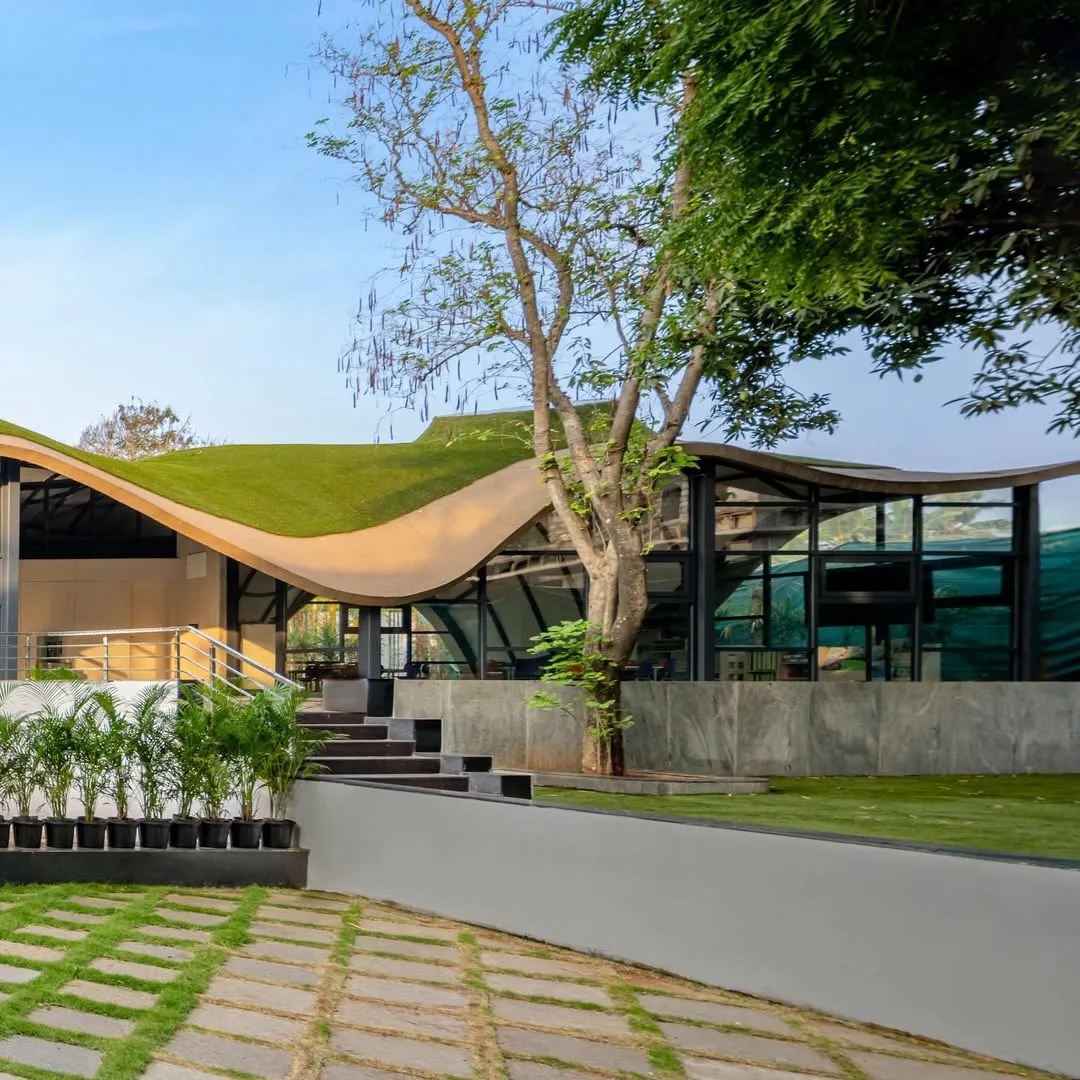
Instead of a rigid block, the design introduces a terrain-like structure connected to the existing campus through a sunken courtyard. This space acts as a climatic and social mediator, enabling fluid movement and interaction. The undulating turf roof extends the ground plane, blurring boundaries between built form and landscape while creating a child-scaled, interactive environment.
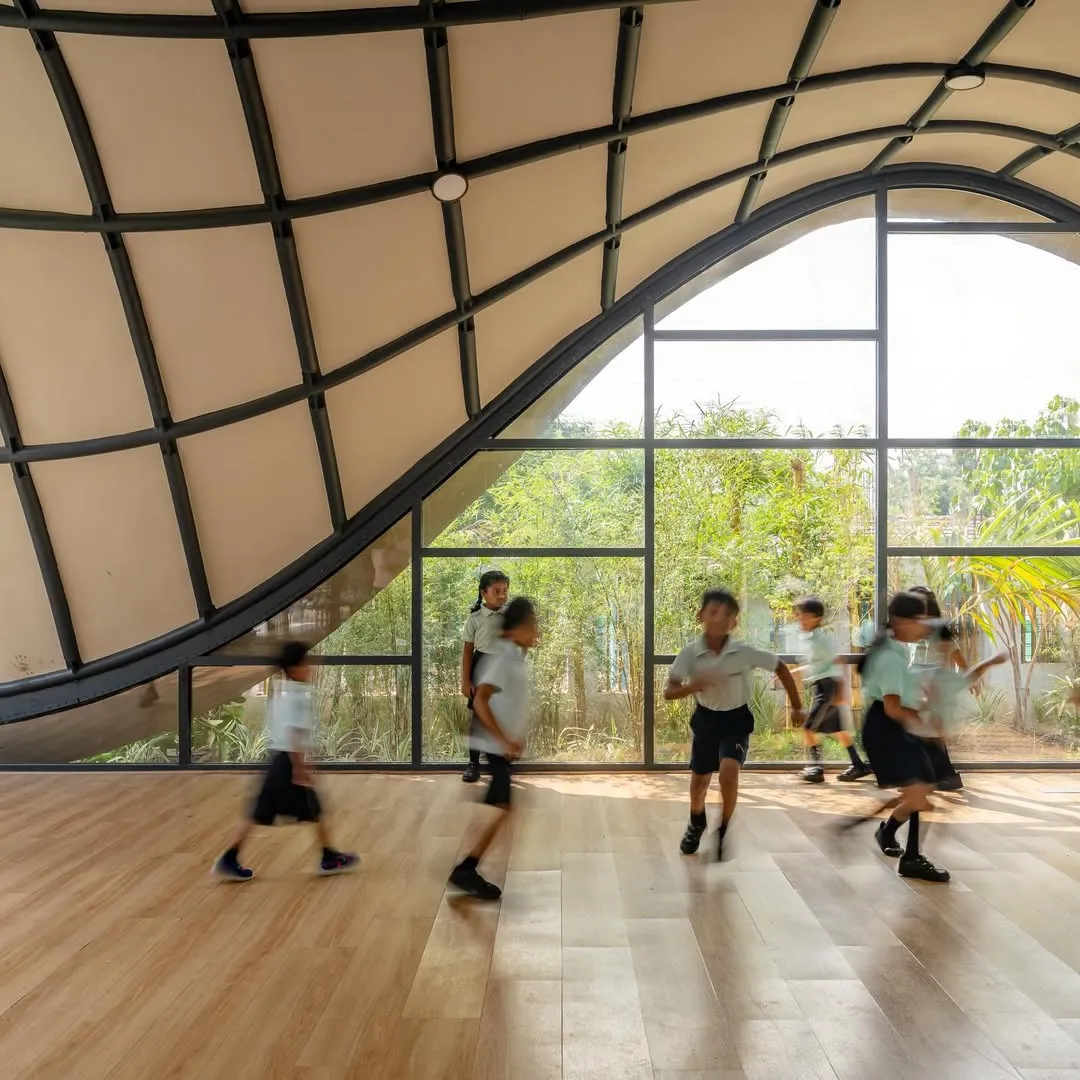
Environmental strategies are spatially embedded. A lowered southern edge, dense plantations, and north-facing skylights regulate heat and light, ensuring comfort without relying on mechanical systems. Full-height glazing dissolves visual barriers, allowing greenery to permeate interiors and maintain constant connection with the outdoors.
Outdoor areas, shaped across multiple levels, support play, movement, and informal learning. Within this framework, landscape functions as pedagogical infrastructure structuring experience, enhancing well-being, and making nature central to how children learn and engage with space.
Material Intelligence and Parametric Thinking for School Design
Materiality in contemporary school design is shifting toward performance-driven, responsive systems. Architecture operates as an intelligent framework where material, form, and environment work together. Natural and recycled materials remain important for their sensory qualities, supporting comfort and well-being.
This evolution aligns with parametric thinking, where design is guided by relationships and not just fixed geometries. Spaces respond to climate, user behavior, and program needs, creating adaptive and interconnected environments.
A key example is the Sami Frashëri School by SOA Architecture. Organized as overlapping volumes, the building integrates courtyards and terraces into a continuous spatial network that supports movement, interaction, and community engagement. Flexible classrooms and large openings enhance adaptability and connect students with greenery.
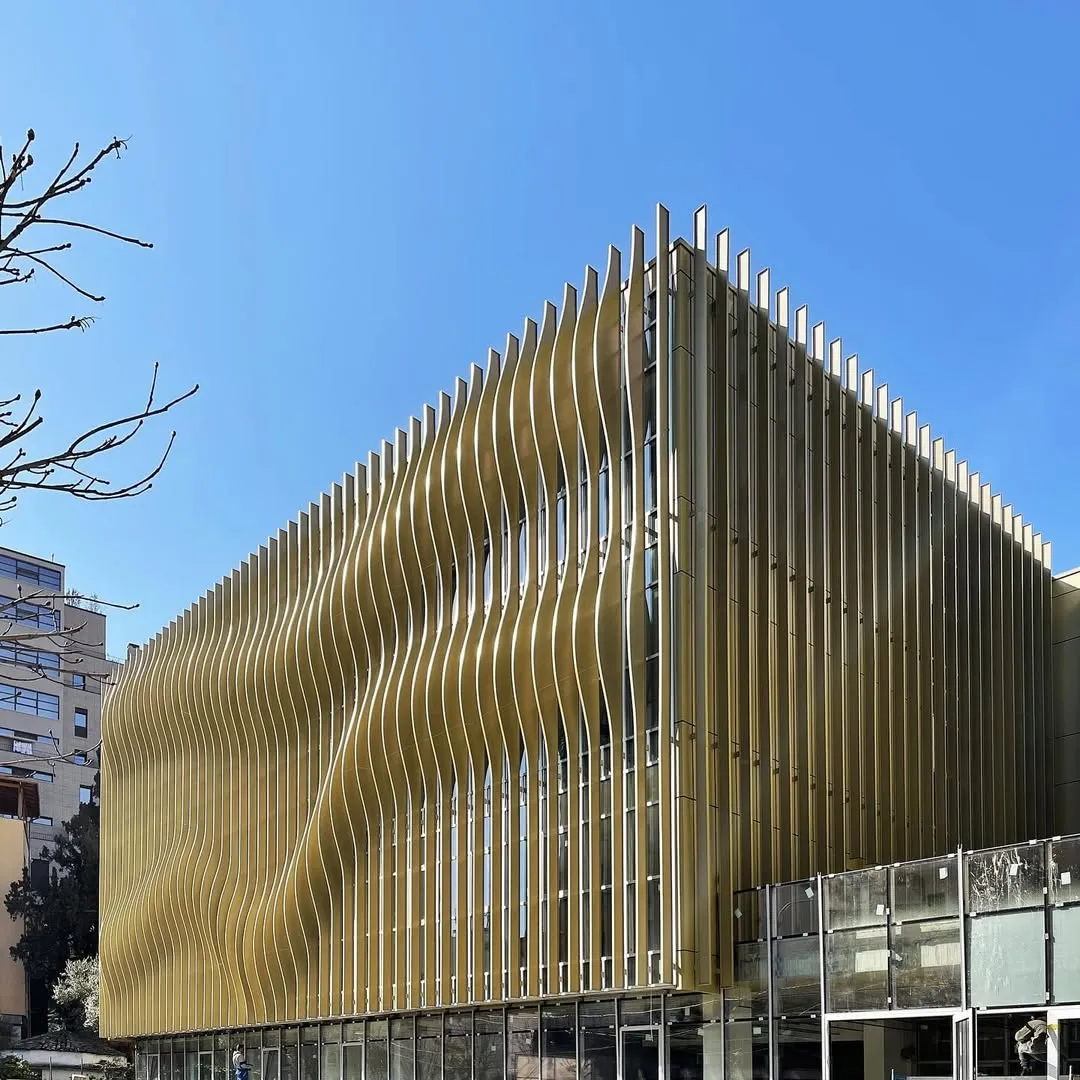
Its climate-responsive façade, developed through environmental analysis and parametric tools, uses vertical slats of varying depth to regulate sunlight while maintaining visibility. This system adapts to seasonal conditions, improving comfort through geometry.

Here, material, structure, and computation converge to shape light, movement, and interaction—demonstrating how parametric logic enhances environmental performance and the learning experience.
School architecture is entering a transformative phase in which design and learning are inseparable. Buildings are no longer conceived merely as containers for education but as environments that actively produce it. The future of school design lies in the integration of landscape, movement, material, and technology. As classrooms dissolve into spatial ecosystems, architecture emerges as a framework that supports curiosity, interaction, and growth.