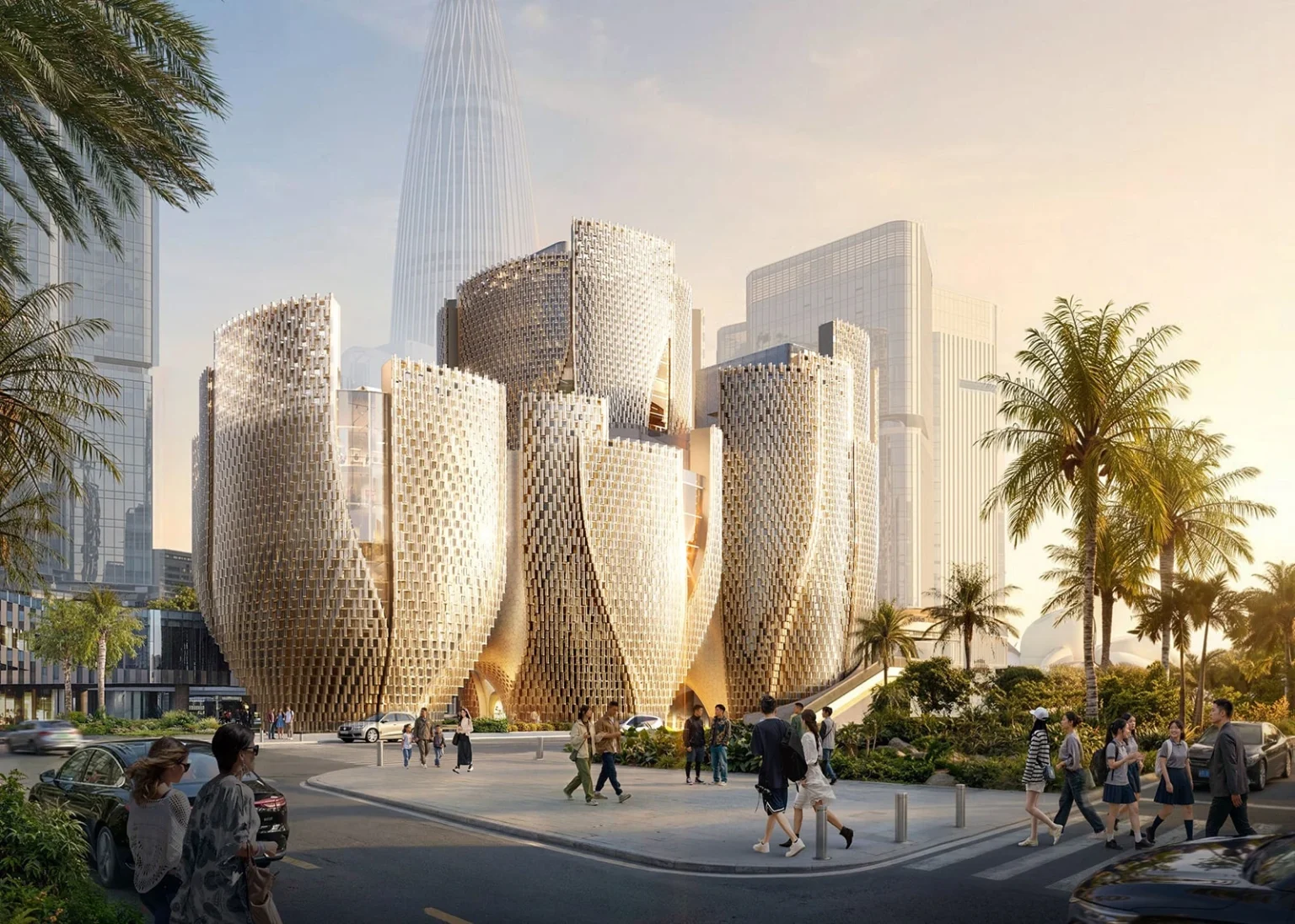


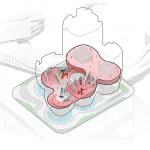
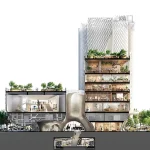
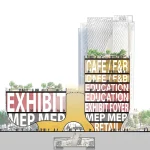
Shenzhen’s Nanshan District, known for its strong association with technology and innovation, is developing the Róng Museum of Art. Designed by Ole Scheeren, the museum moves beyond a traditional exhibition venue that incorporates architecture, urban integration, and public engagement to create a vibrant platform for the visual and digital culture of the 20th and 21st centuries.
The museum will host a wide range of programs, including exhibitions in art, architecture, film, and design, alongside spaces for education, workshops, and public exchange. The museum reflects a growing trend in China, where private tech success is increasingly being reinvested into cultural infrastructure. Backed by Tenova Future, a private initiative founded by Tencent’s founder, the project aims to enrich civic life while responding to Shenzhen’s fast-paced technological growth.
The Róng Museum forms part of the Houhai Hybrid Campus, a mixed-use development also designed by Ole Scheeren. The campus integrates residences, offices, curated retail, and a House Hotel operated by Swire Properties, creating a continuous urban ecosystem that operates 24/7. Within this context, the museum acts as a cultural anchor, introducing rhythm, movement, and public interaction to the fast-paced district.
Elevated Galleries with Open Ground Space
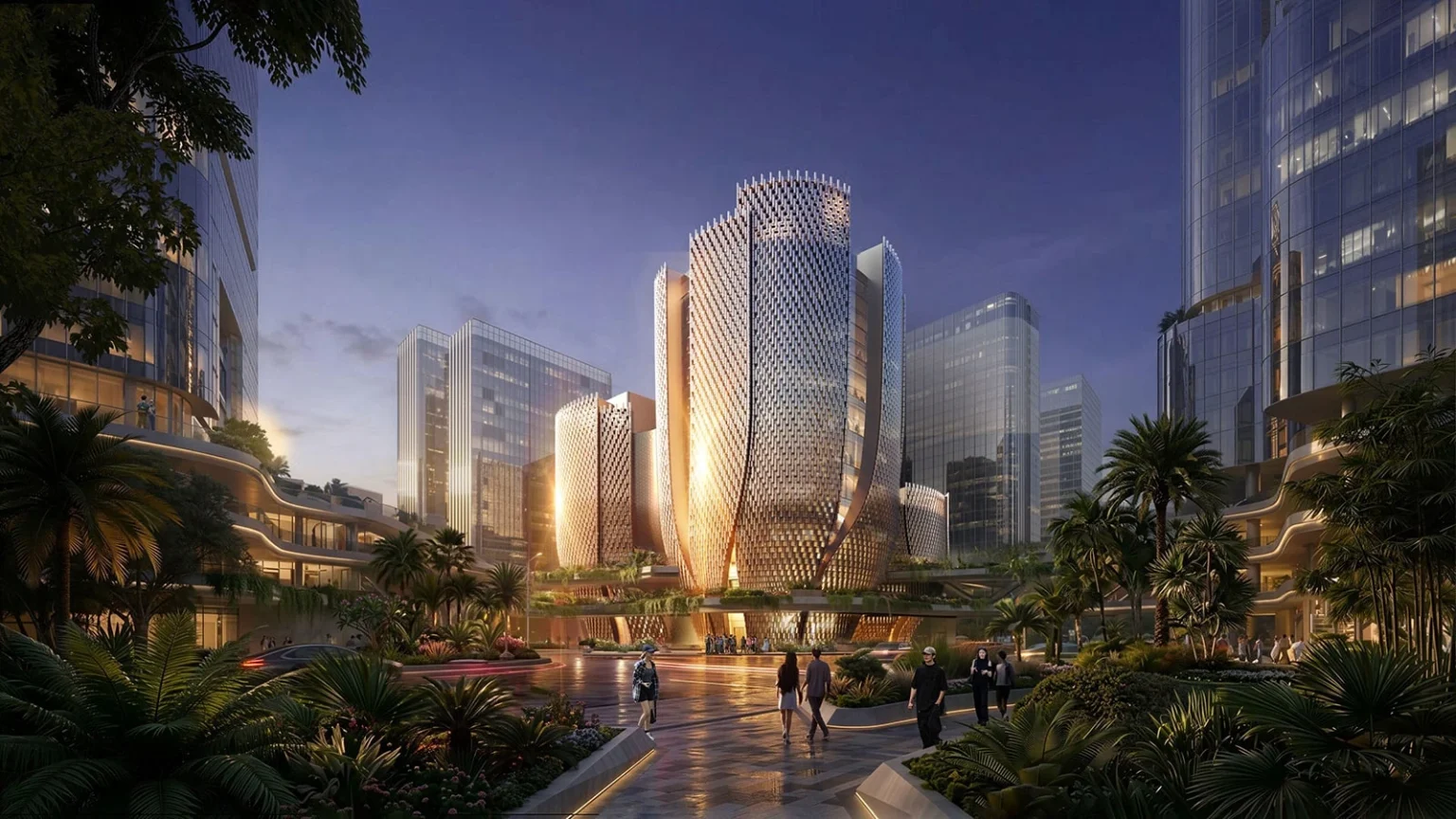
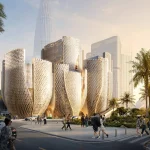
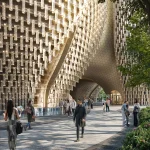
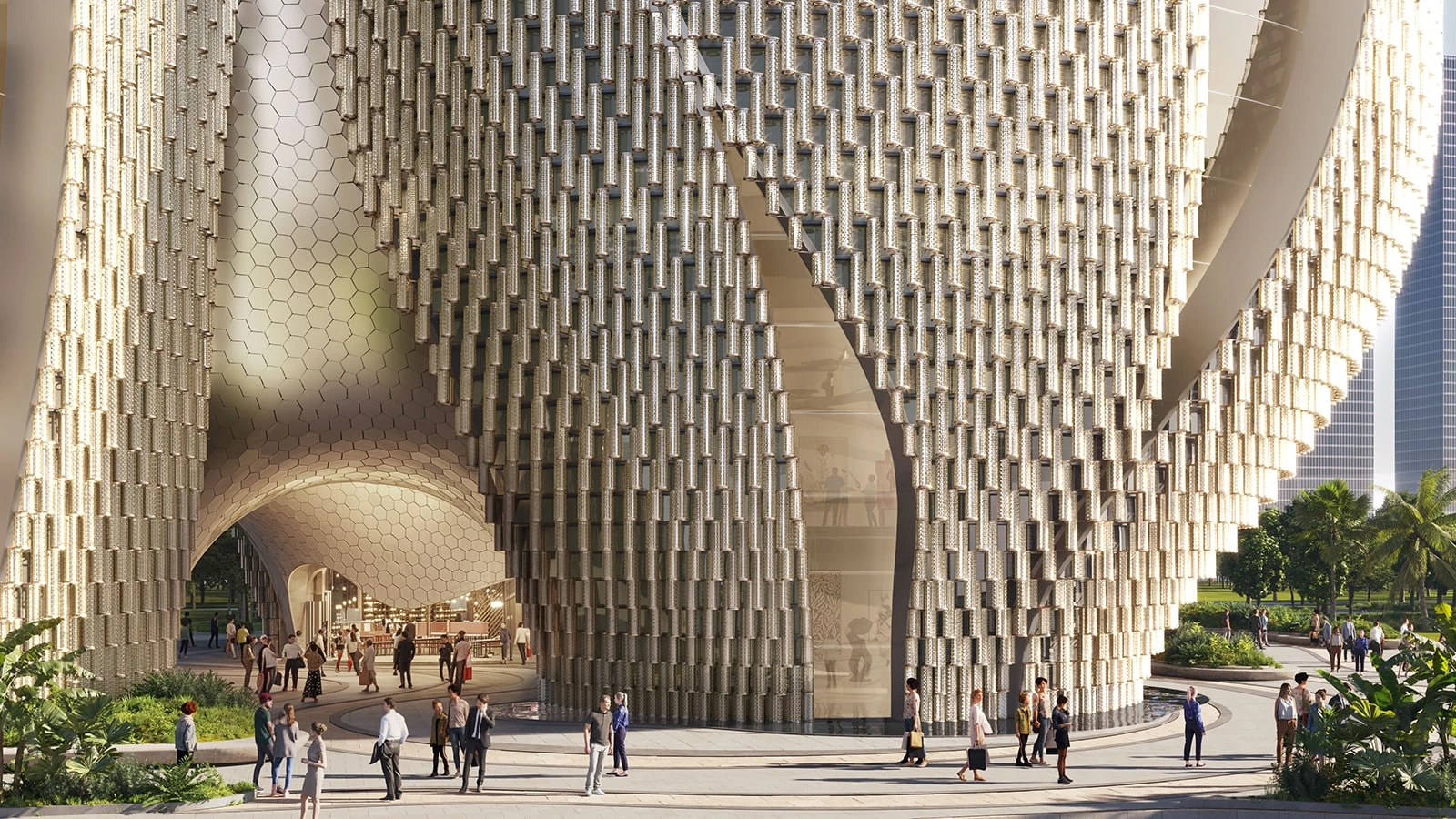
One of the defining moves in the project is the decision to elevate the main building mass. The design focuses on openness and movement. The museum’s design lifts most of its structure above the ground. Five sculptural volumes rise from slender supports, expanding as they go up. creates a sheltered public space beneath the building that functions as an open plaza that remains accessible throughout the day and night. The idea is simple but effective and allows people to pass through, gather, and engage with art even without formally entering the museum.
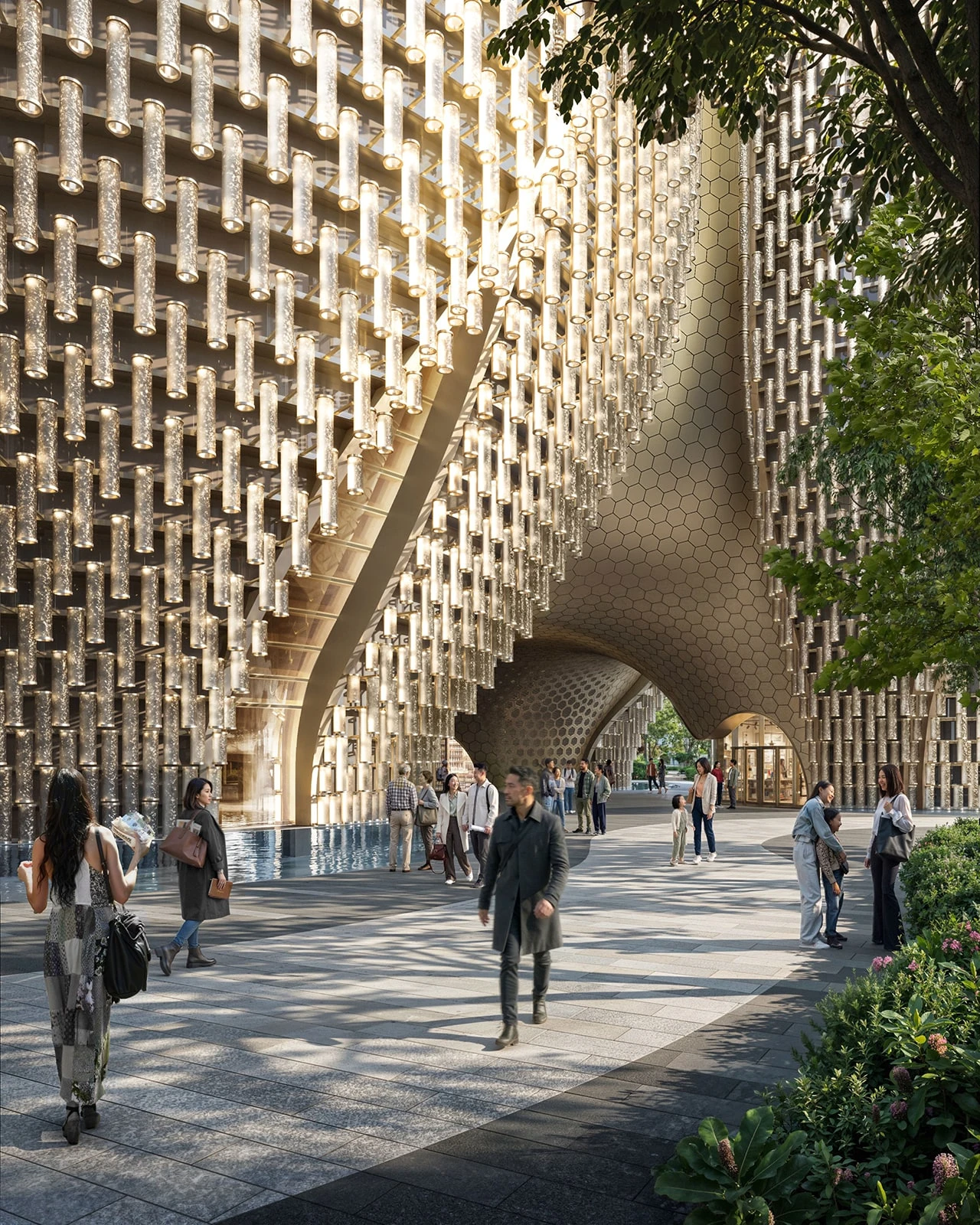
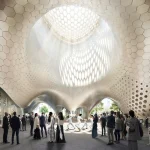
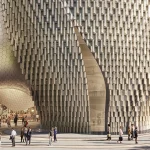
The volumes interconnect to form continuous, flexible gallery spaces, including a double-height hall capable of hosting large-scale installations. From a distance, the museum reads as a constellation of forms; from within, it functions as a coherent spatial system. The stepped horizontal layers of the volumes provide the building with its distinctive cone-like profile that reduces scale, creating depth, and the exterior with shifting shadows.
Róng Museum’s Glass Tube Façade Balances Light and Form
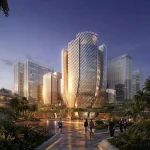
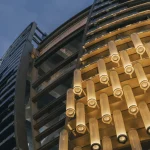
The museum’s visual identity is defined by a parametrically engineered façade of suspended glass tubes. This outer veil does more than make the building look appealing, as it also filters sunlight, keeps the heat from getting in, and improves natural ventilation, which makes the building more energy-efficient while softening the light inside. The glass is intentionally textured, referencing China’s historic use of glass as a medium for filtering light and creating atmospheres of relatively mere transparency.
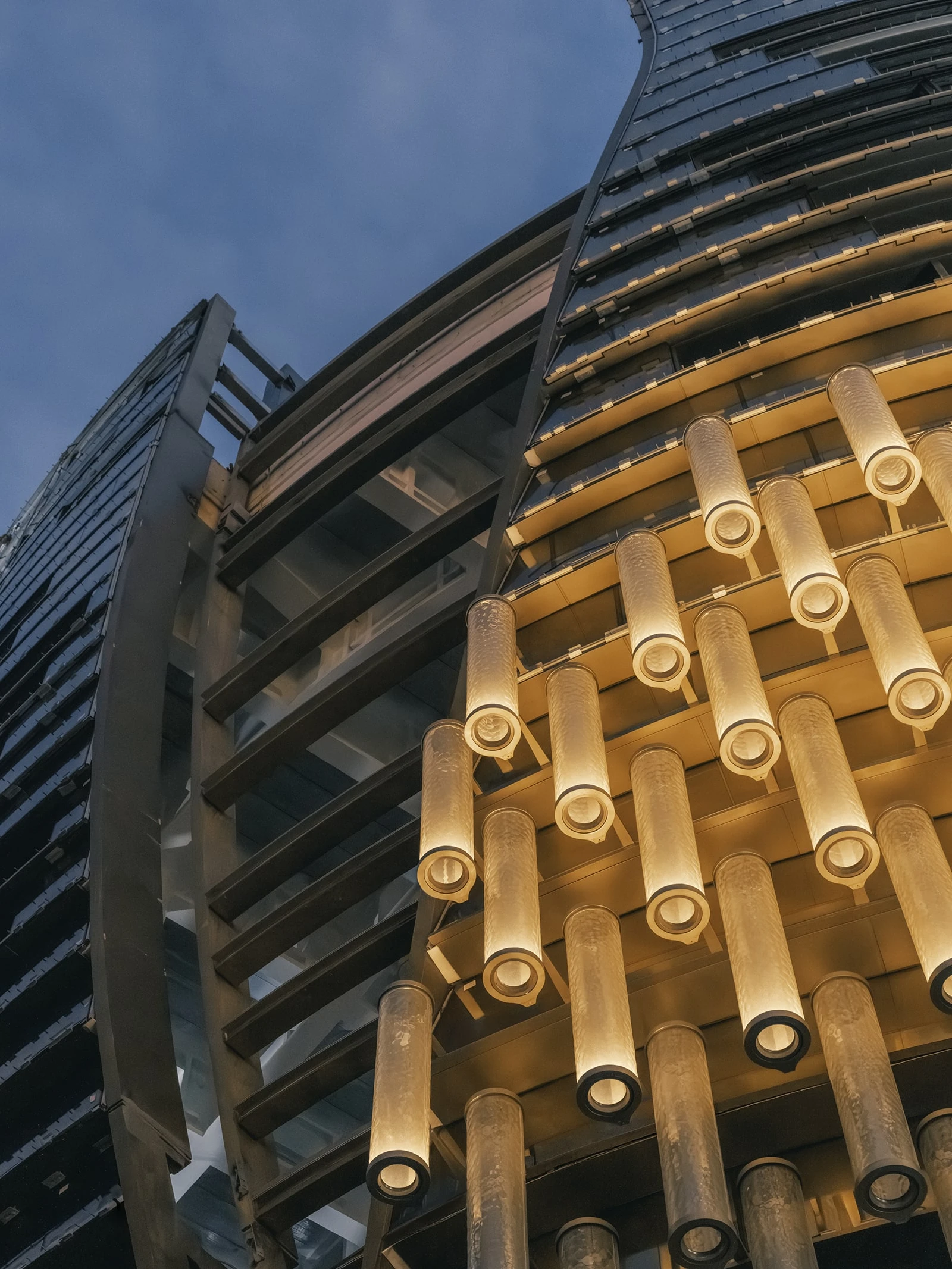
At night, the tubes can be illuminated individually, producing subtle sequences of light that give the museum a glowing, lantern-like presence in Shenzhen’s skyline. This combination of daylight diffusion, energy efficiency, and visual dynamism reinforces the museum’s dual role as a cultural landmark and environmental statement.
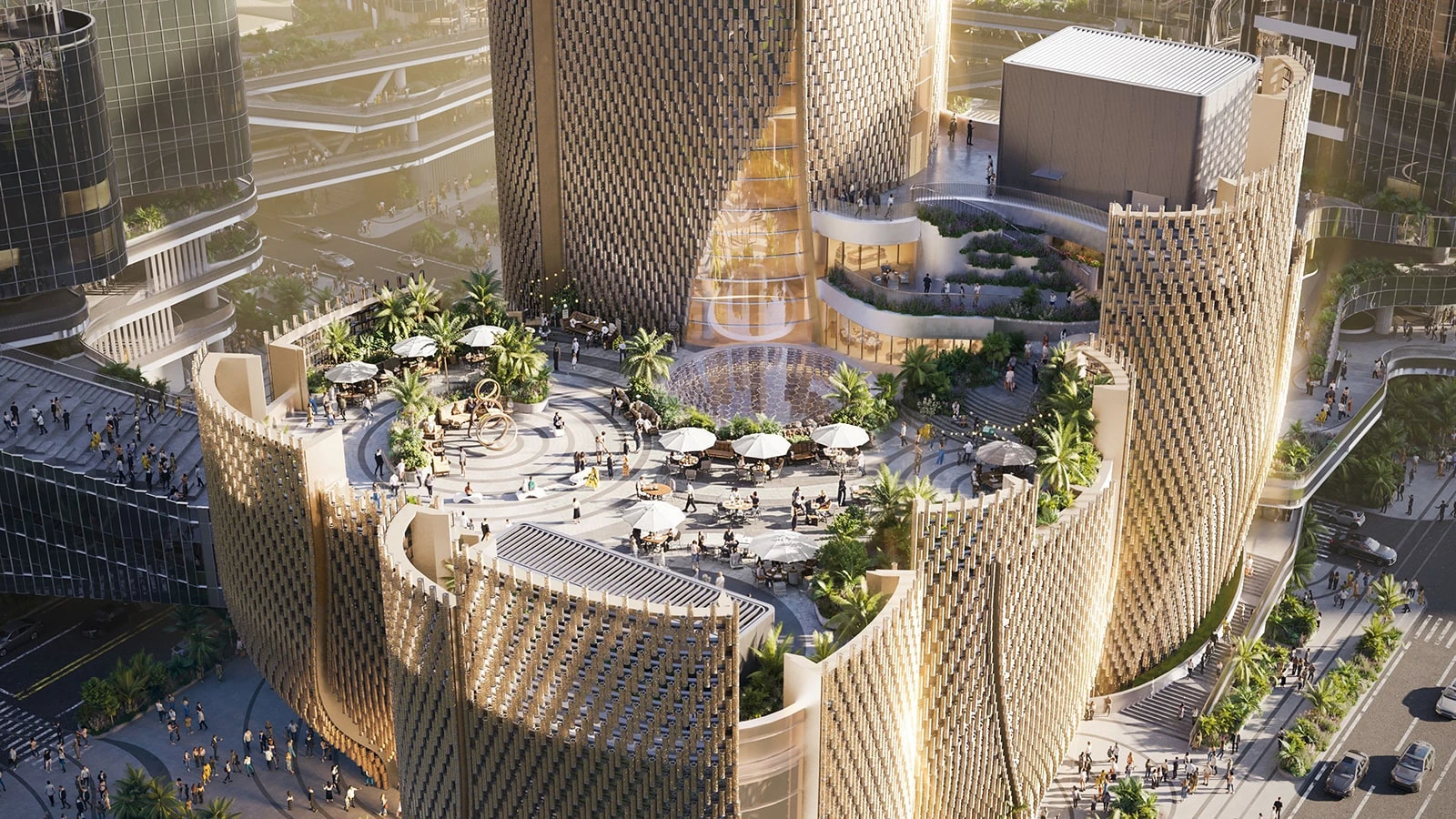
The museum incorporates passive environmental strategies. Cone-shaped volumes collect rainwater for recycling into retention ponds at the base, aligning with Shenzhen’s “sponge city” approach to water management. The layered glass façade and elevated structure allow natural ventilation, reducing dependence on mechanical systems, while natural light reduces energy consumption.
Circulation as Part of the Experience
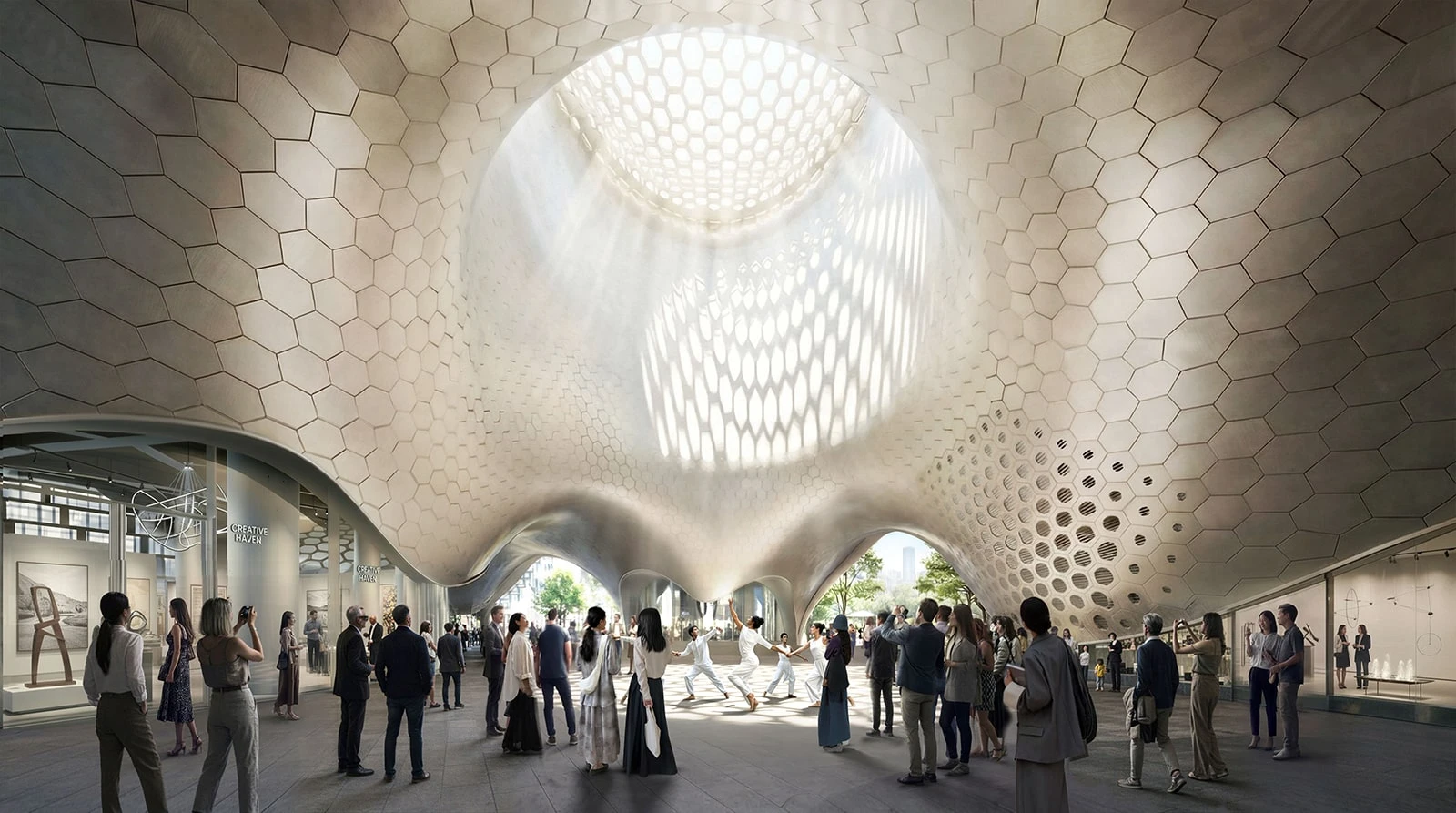
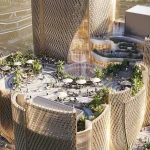
Movement through the museum is integral to the architectural experience. A meandering external stair follows the outer façades, leading visitors upward to a rooftop garden with panoramic views of the waterfront. The stair transforms into a spatial journey, connecting the museum’s interior and exterior while offering shifting perspectives on both art and the city.
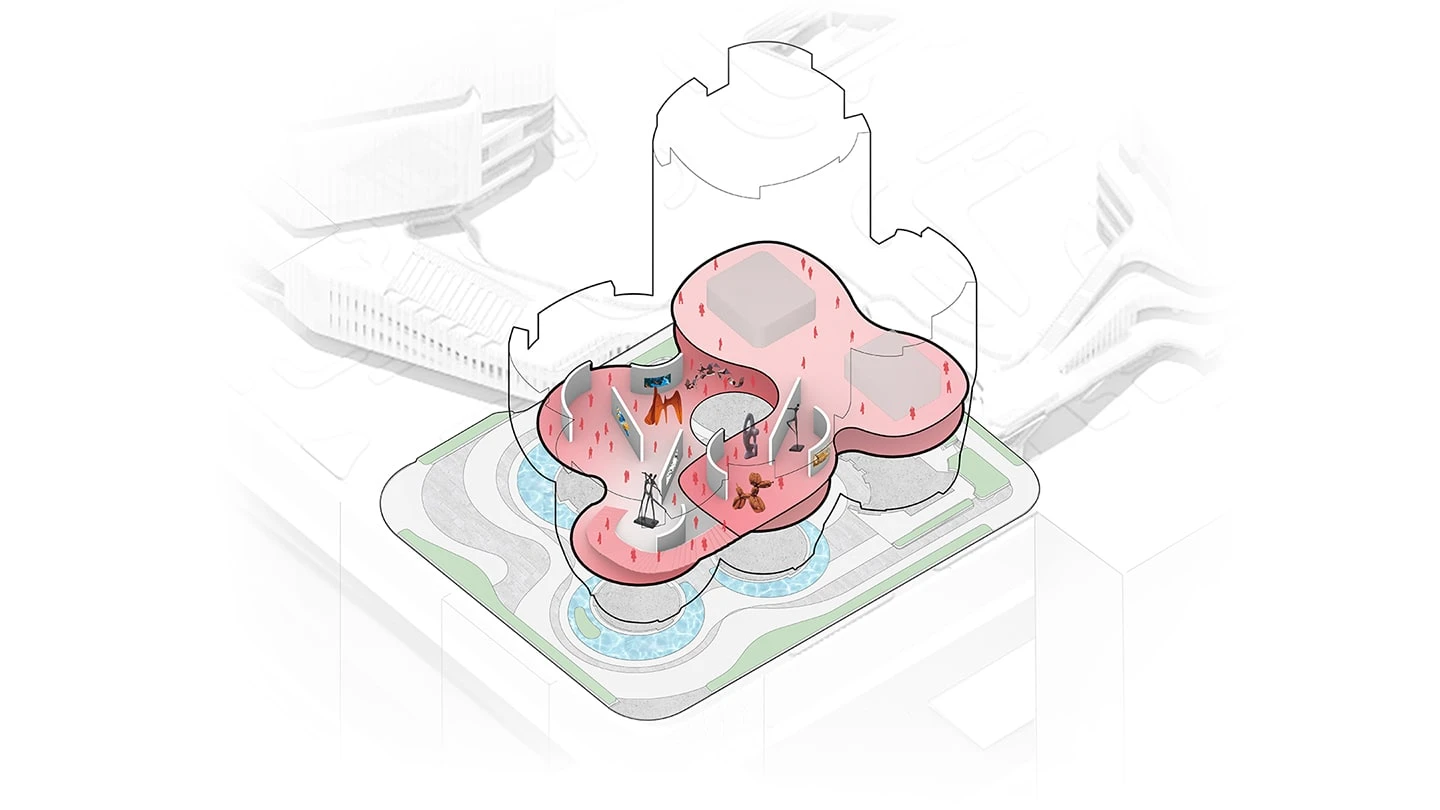
Inside, the galleries are adaptable. Large double-height halls accommodate immersive installations, while smaller, modular spaces support workshops, lectures, and screenings. The design avoids rigid compartmentalization, allowing curators to reconfigure the spaces over time. The rooftop garden doubles as an event platform that extends the public areas vertically while hosting performances, shows, and outdoor programming.
Urban Connectivity
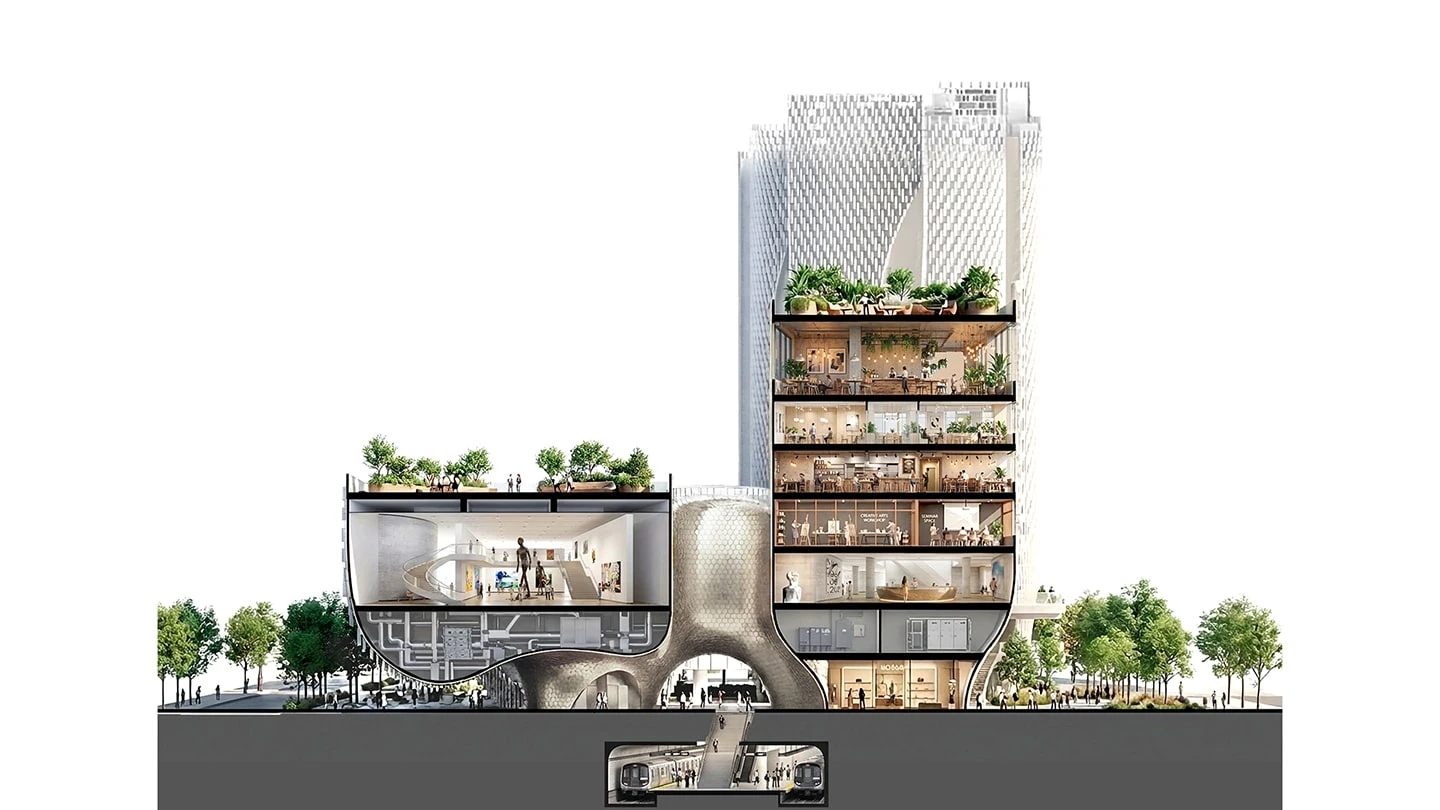
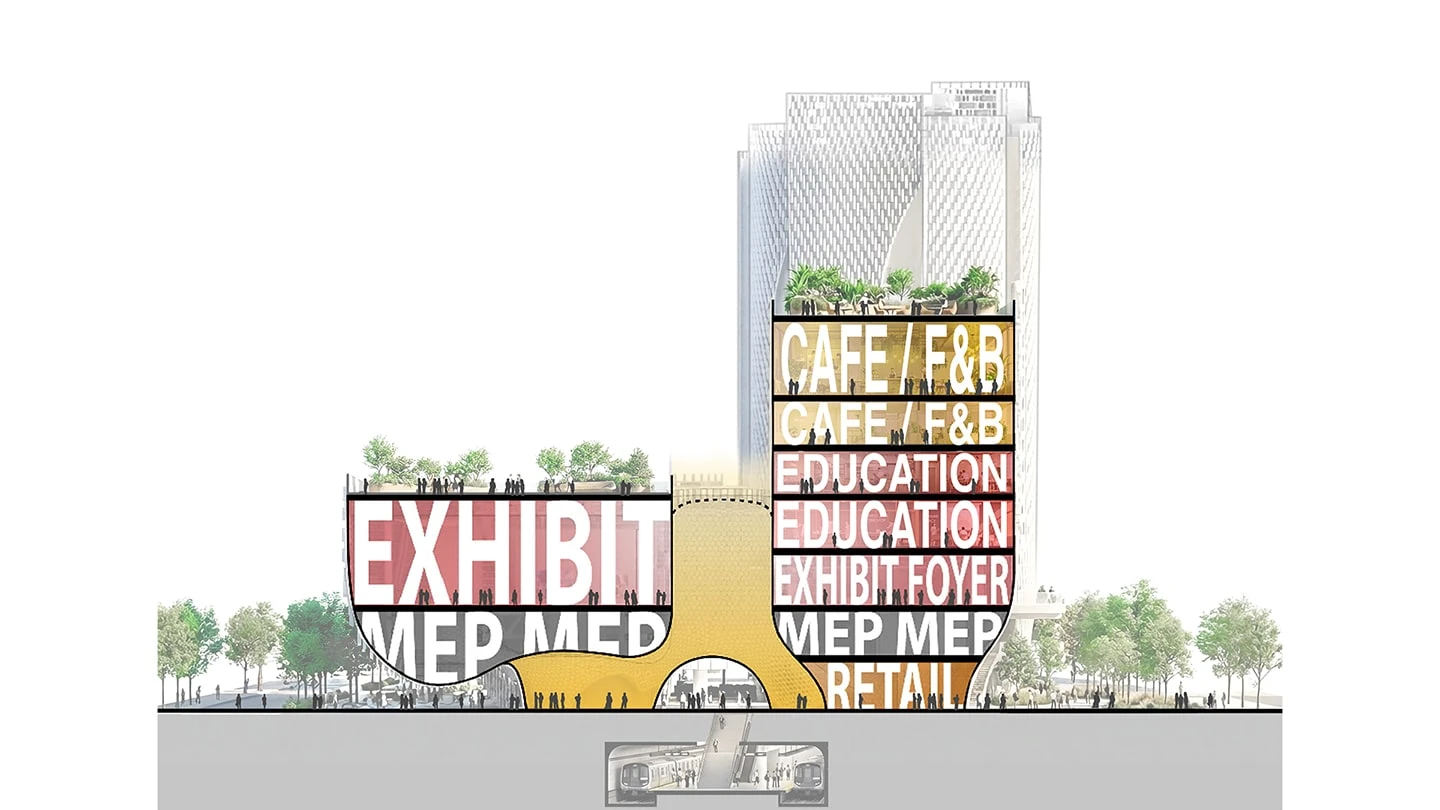
The museum is physically and visually linked to the surrounding city. Pedestrian bridges connect it to neighboring buildings and parks, while a direct connection to the metro station ensures seamless access. The design encourages the museum to be part of daily movement patterns. Elevated circulation paths and public plazas extend the campus’s connectivity, making the museum a natural part of Shenzhen’s social and cultural life.
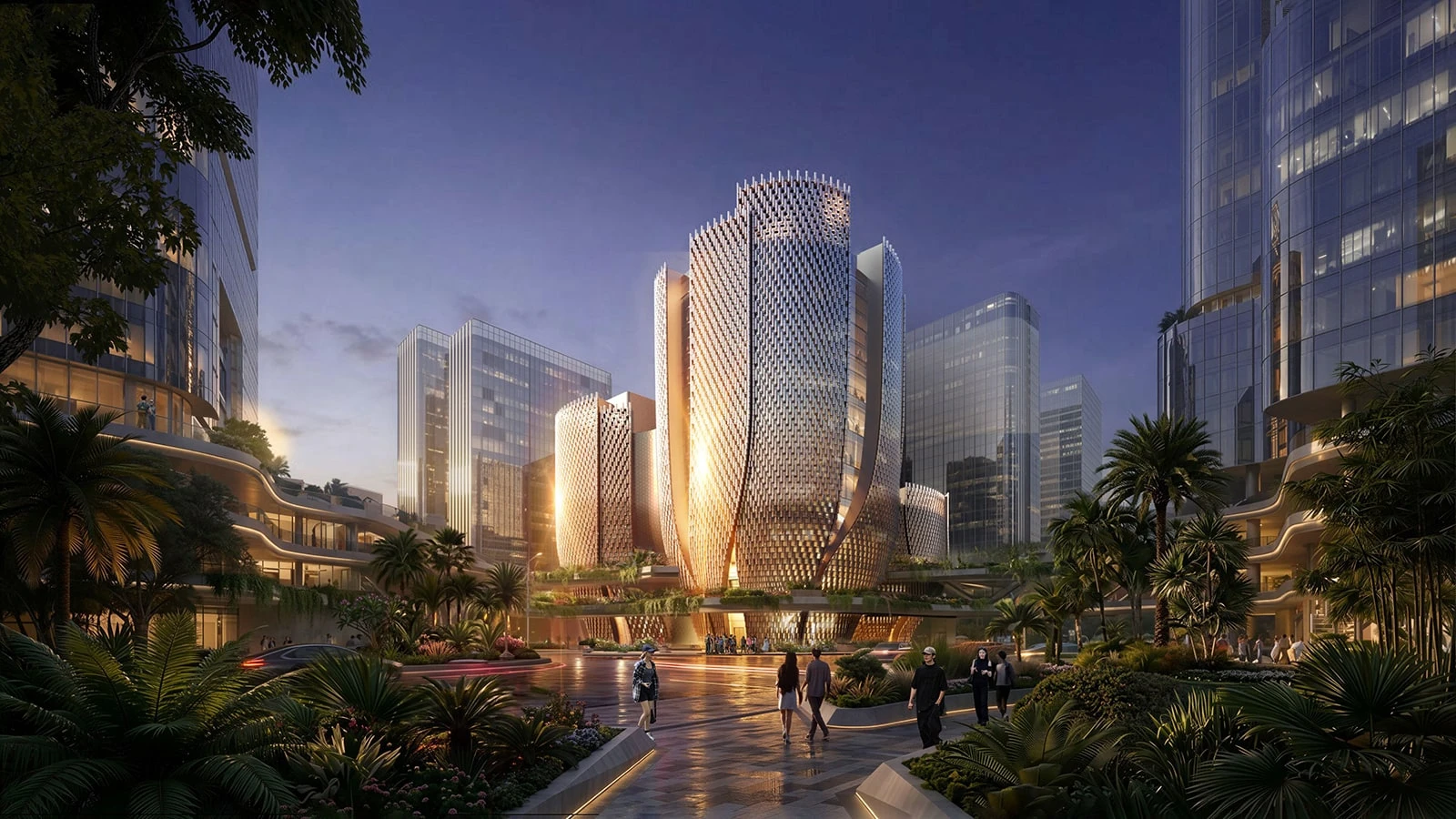
The Róng Museum of Art, set to open in 2027, reflects a broader shift in fast-growing tech cities. It shows that architecture can also create meaningful space for culture, public life, and shared experiences when these priorities are integrated into the design from the start.
Róng Museum of Art Project Details
Location: Houhai, Nanshan District, Shenzhen, China
Architect: Ole Scheeren (Büro Ole Scheeren)
Height: 53 meters
Museum Area: 4,500 m²
Structural Engineer: ECADI, Shenzhen
Façade Consultant: RFR, Shanghai
Sustainability Consultants: Arup & M Moser, Hong Kong
Landscape Consultant: PLA, Bangkok
Opening: 2027
Image Credit: Büro Ole Scheeren