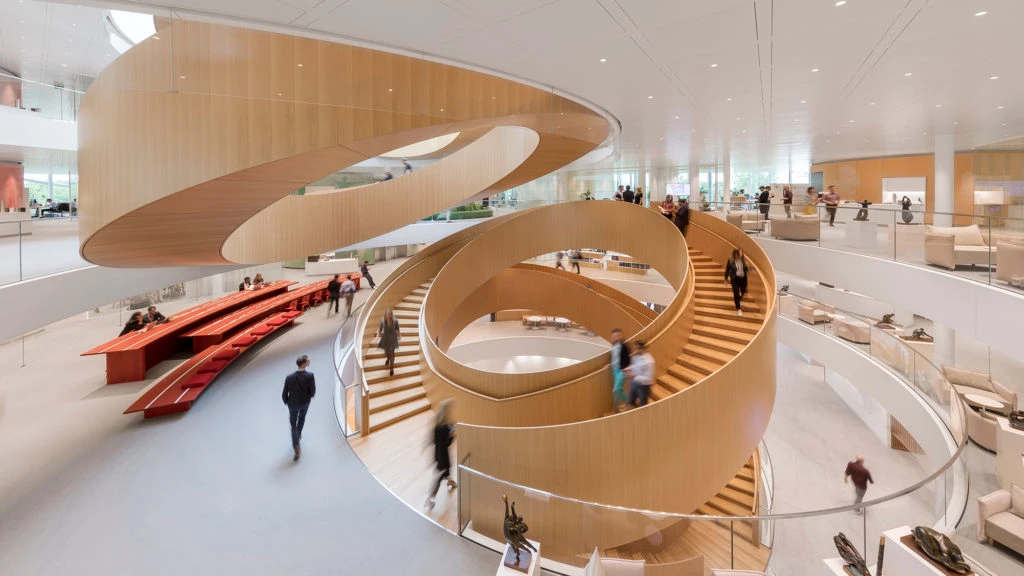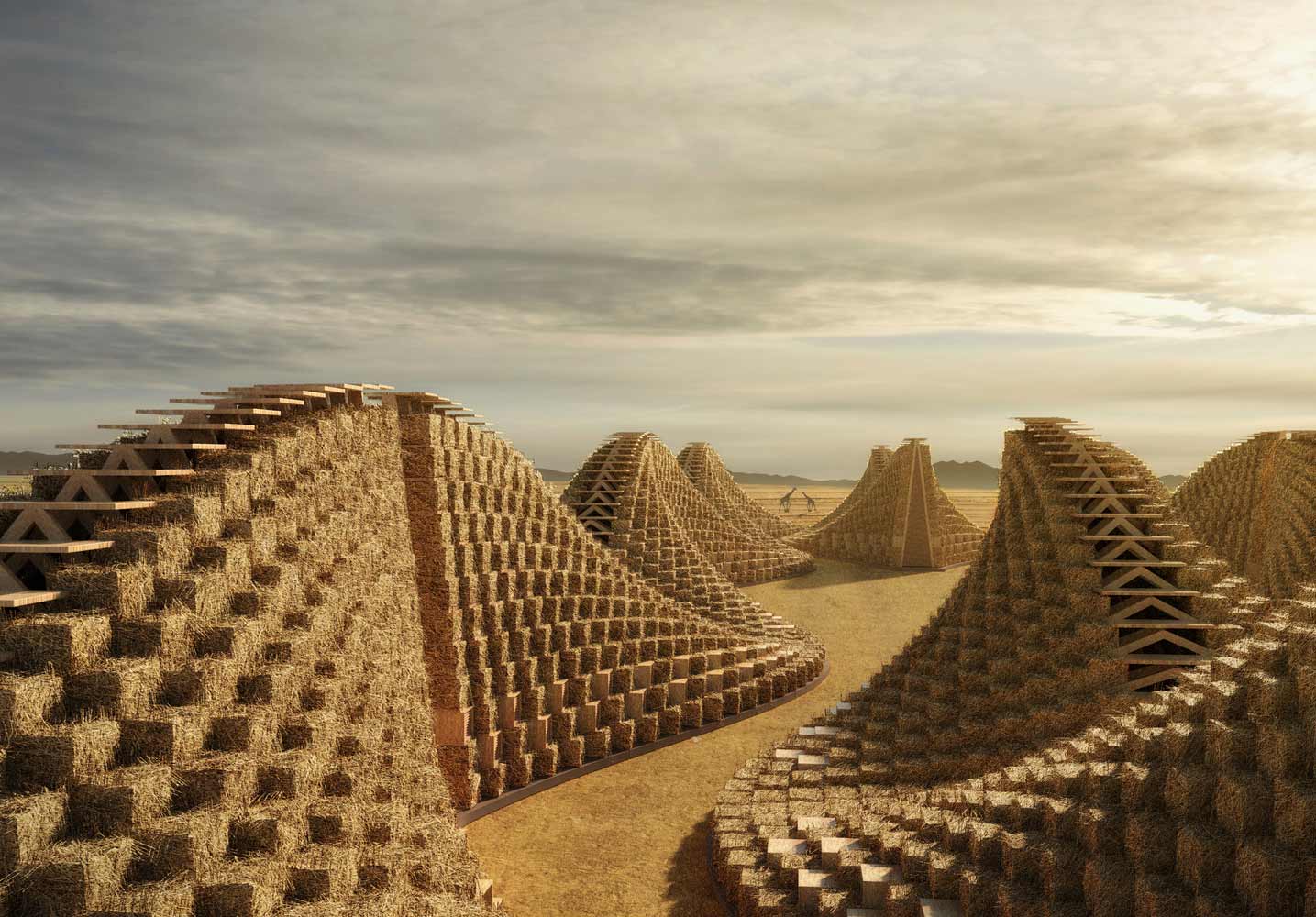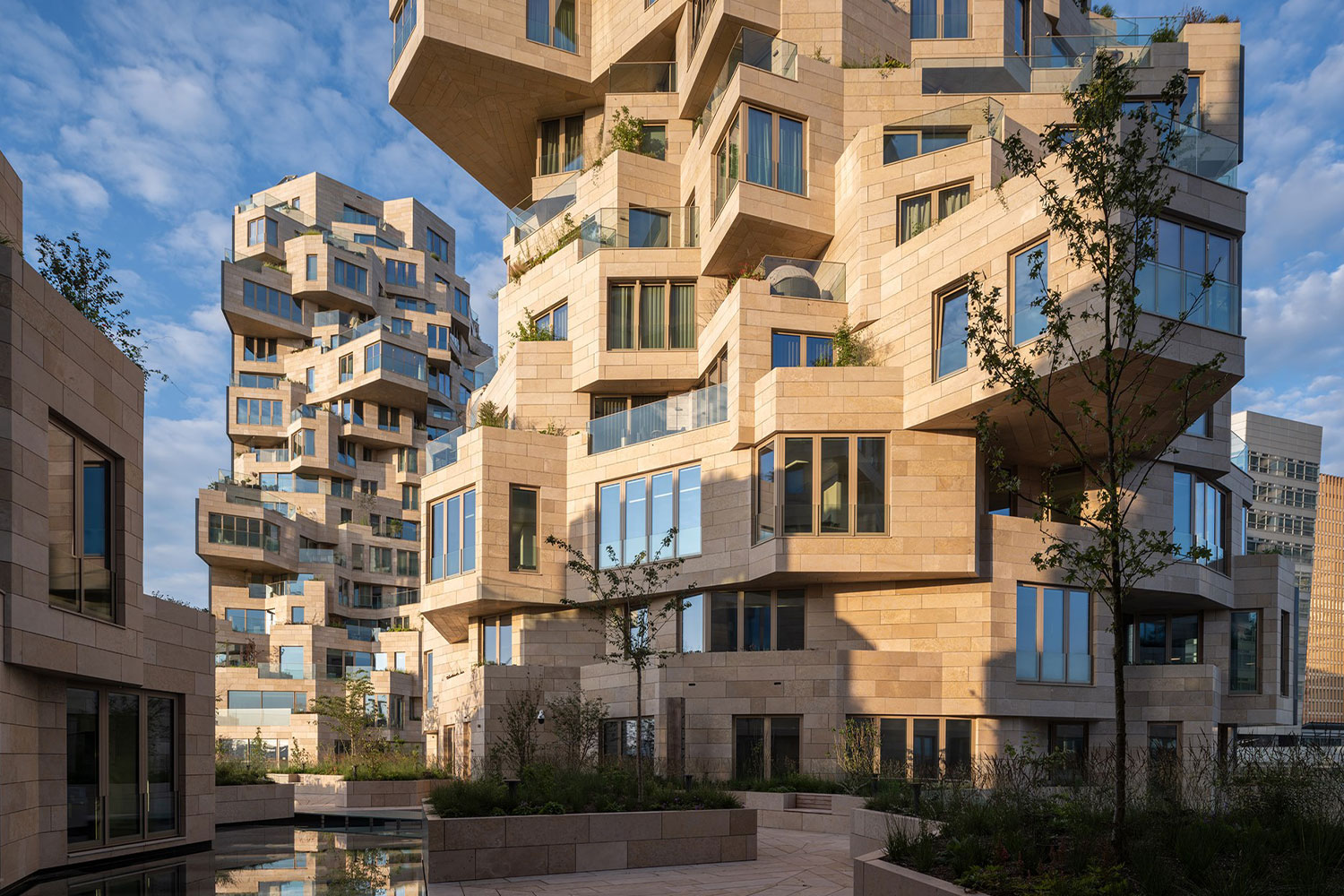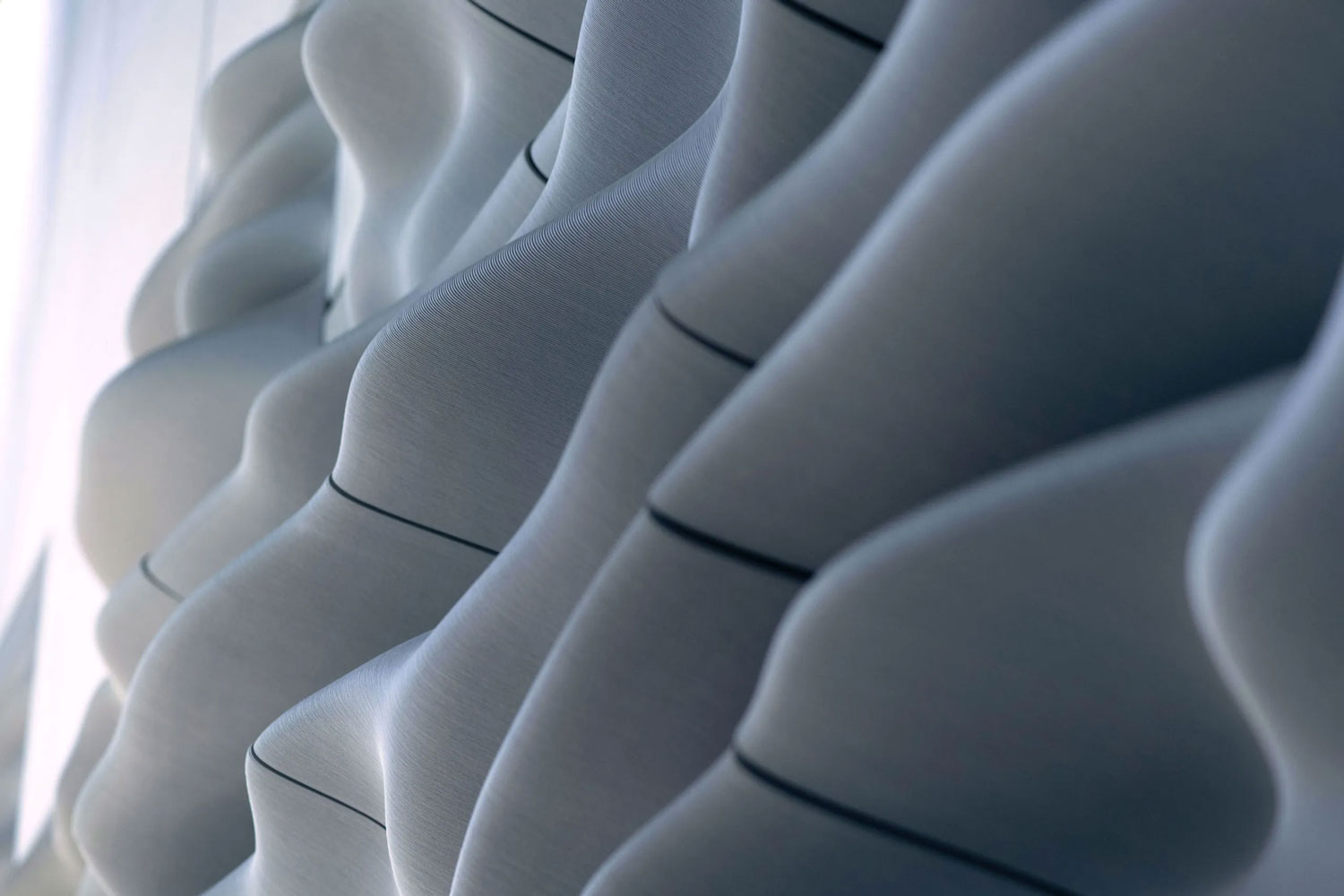


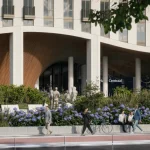
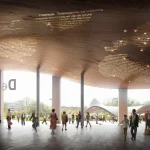



Powerhouse Company’s competition-winning design for KJ Den Haag is emerging as a symbolic gateway to the city. The project combines a new entrance hall for The Hague’s main railway station with a residential tower rising above, creating high-quality living spaces while strengthening the urban context. Created together with clients Amvest and Synchroon, the design features two towers linked by a central ‘valley,’ giving it a strong yet elegant look in an area with mixed architecture.
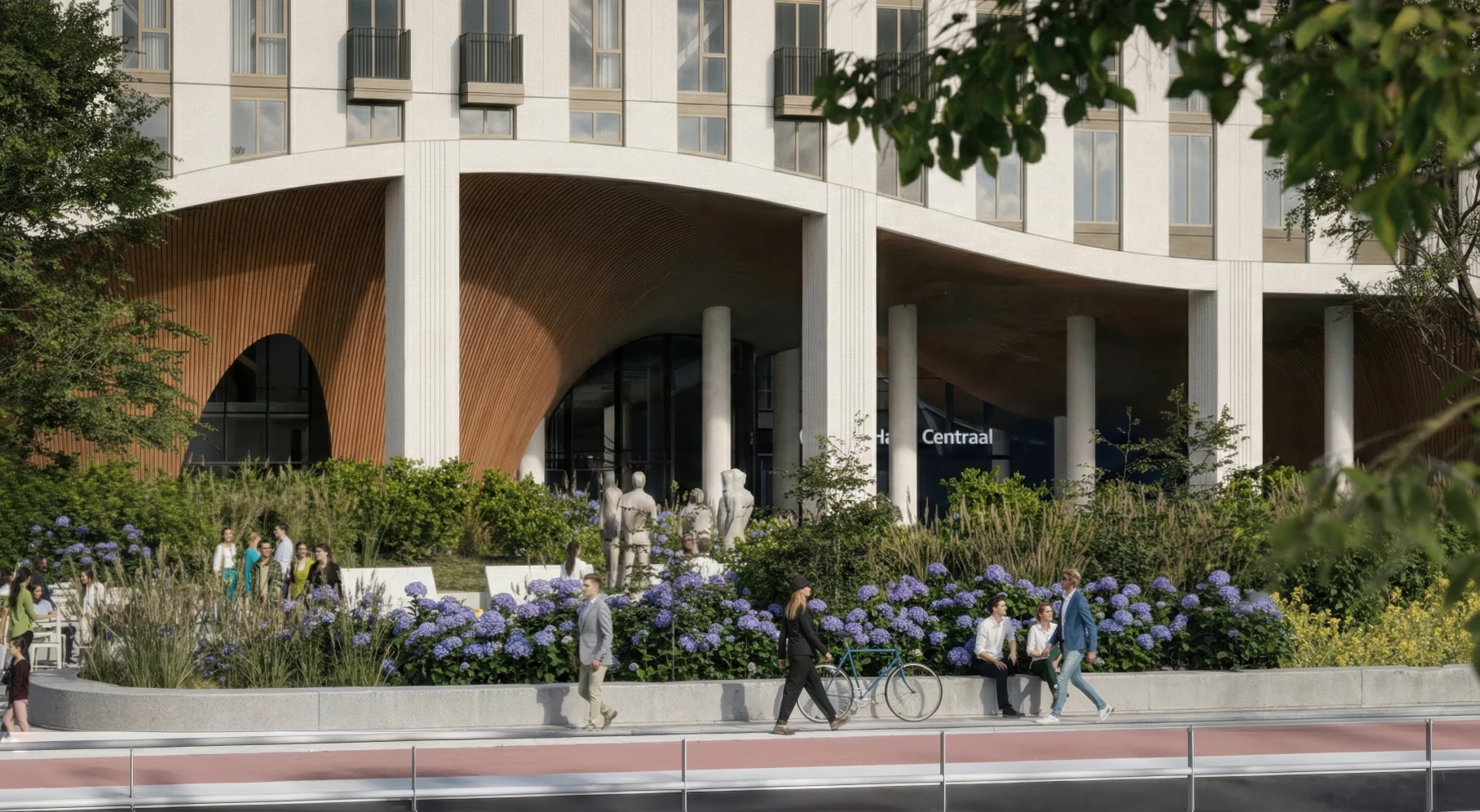
At ground level, organic forms and natural materials enhance the public realm, shaping a welcoming approach to both the station and the city. The adjoining square features greenery, a restaurant pavilion, and a smooth transition to Koekamp Park, establishing a lively and inviting urban environment.
From Classic Order to Contemporary Expression
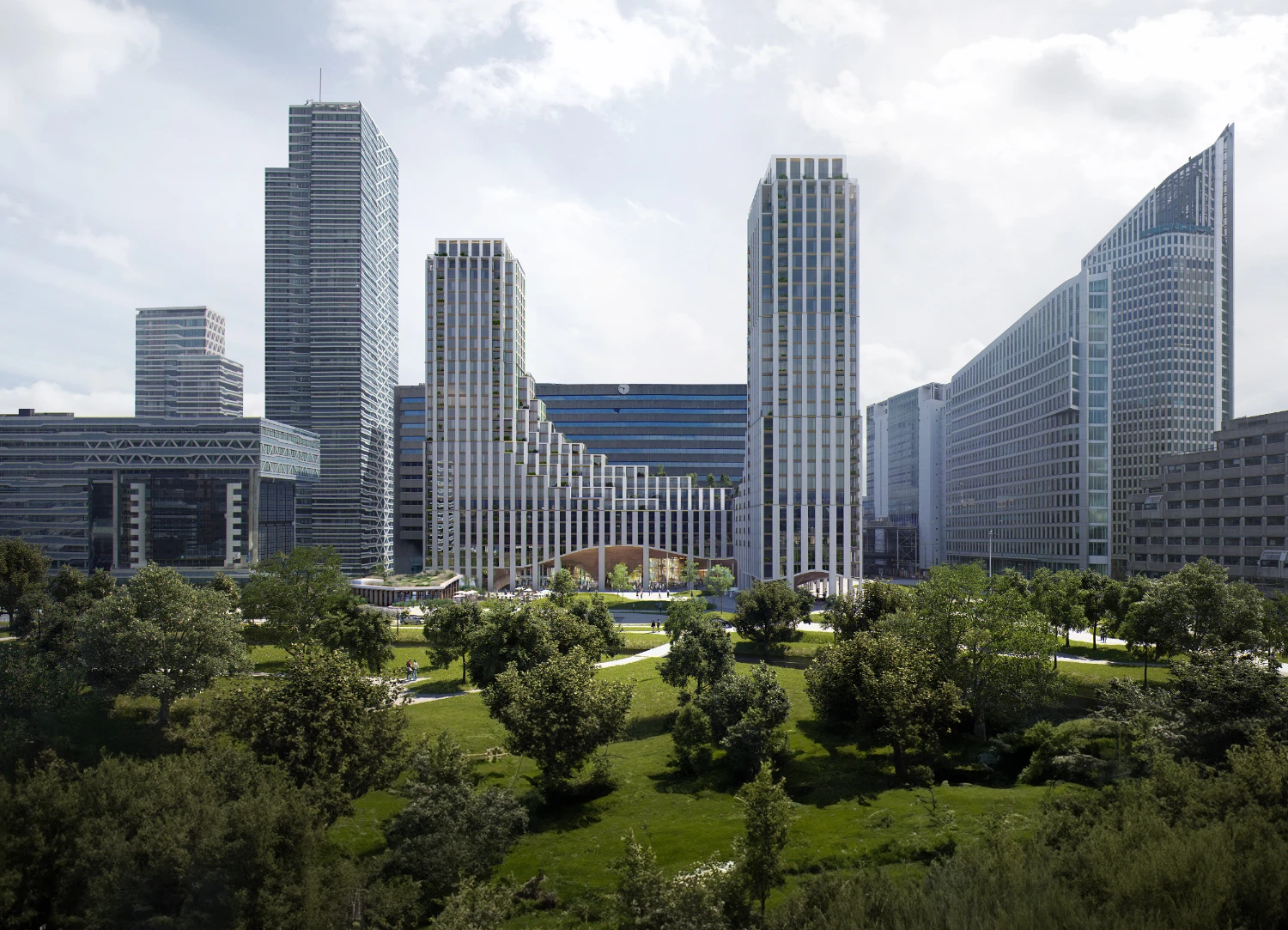
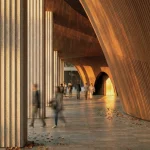
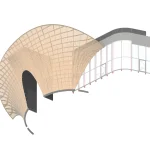
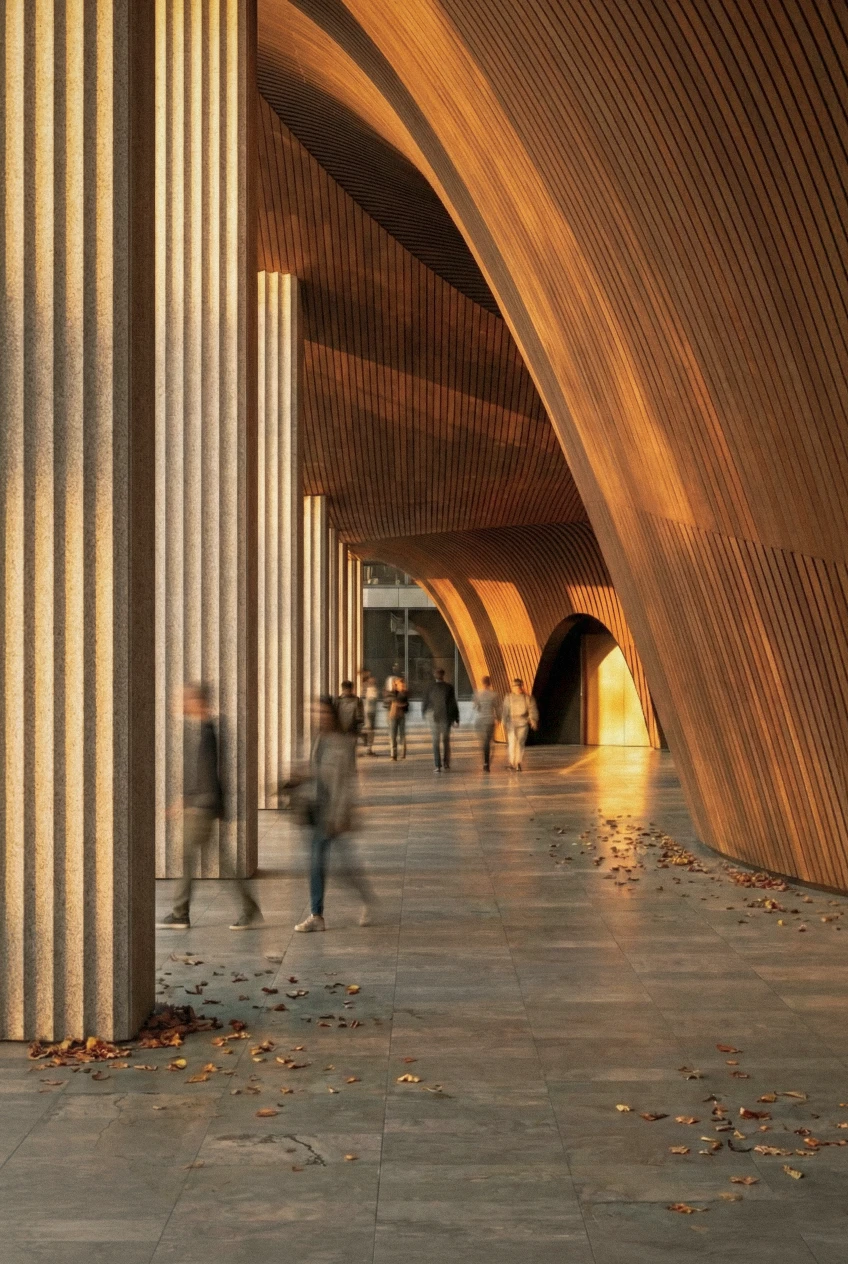
The towers’ facades, articulated by fluted, rectilinear columns in lightweight concrete, draw inspiration from The Hague’s administrative classicism. The station hall contrasts with this formal expression, introducing flowing wooden ceilings and expansive curved glass. Above, the apartments’ glass loggias create a continuous, calm facade, with small projecting balconies adding depth. The hall’s curving forms continue in the staggered, U-shaped central valley, where stepped green spaces cascade between the towers.
“This project challenged us to develop new workflows and tools, enhancing our ability to handle large, complex designs,” expresses Paul Stavert, partner architect at Powerhouse Company, highlighting the team’s growth and expertise.
Parametric Craft and Geometric Control
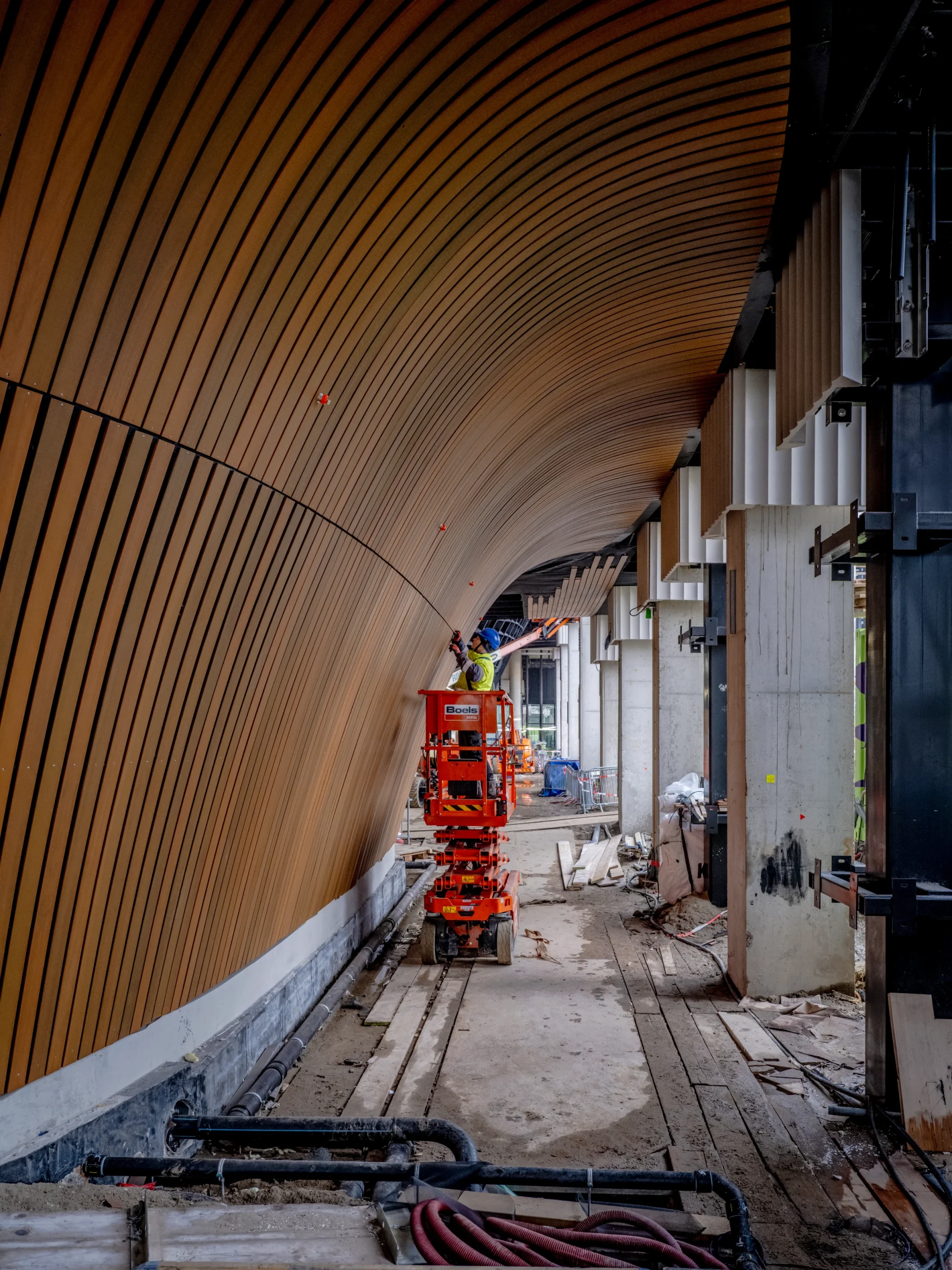
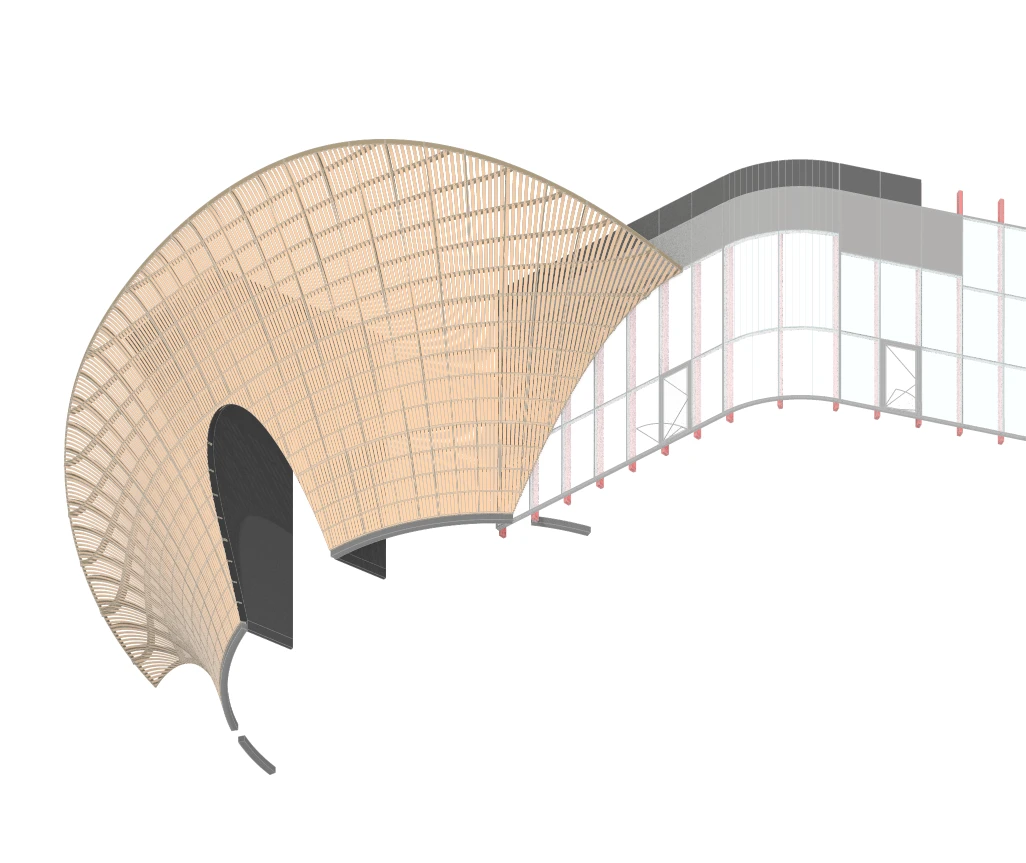
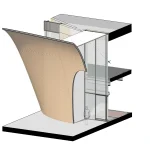
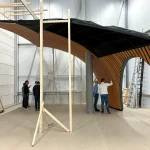
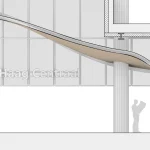
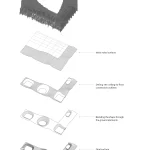
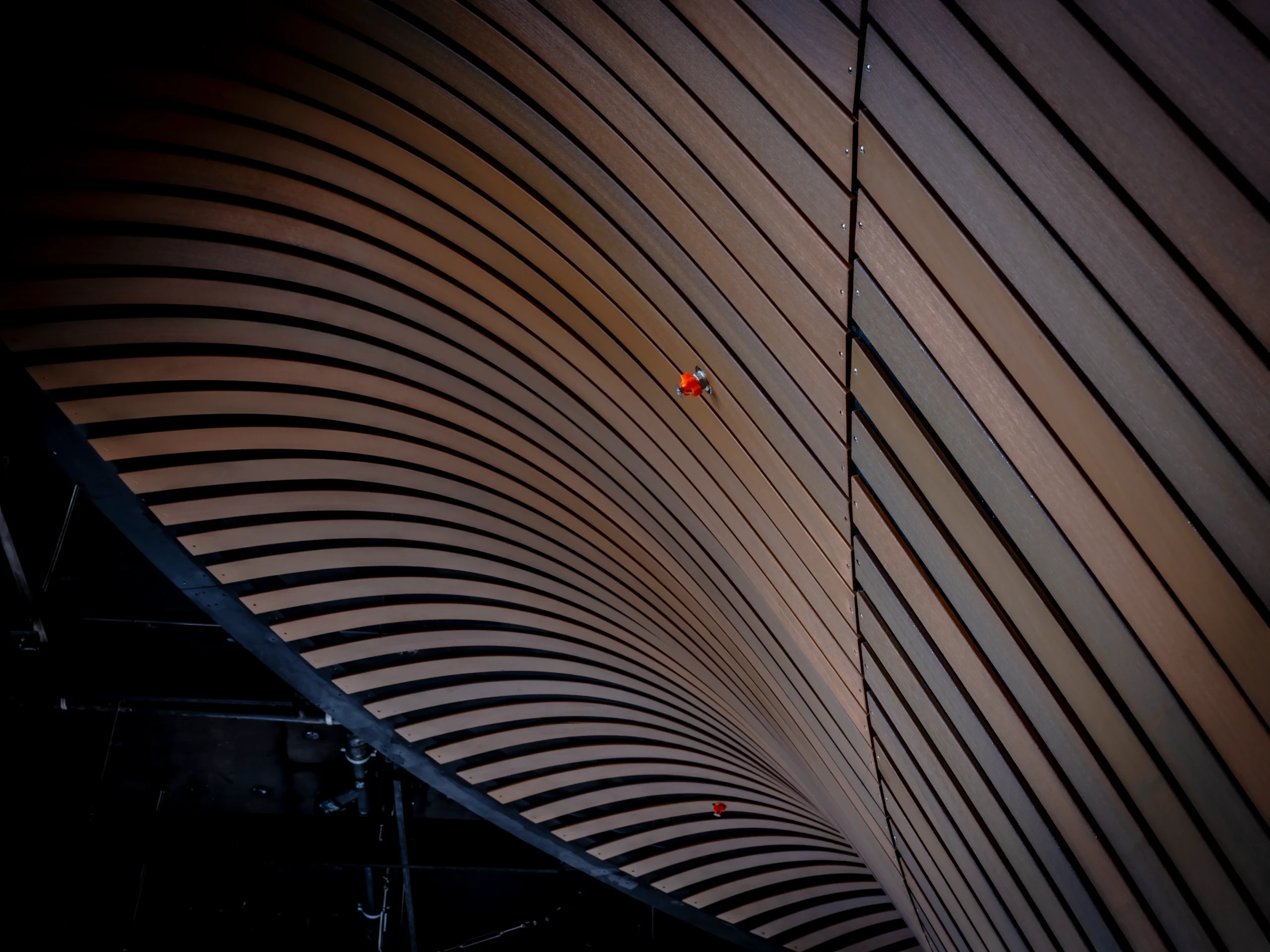
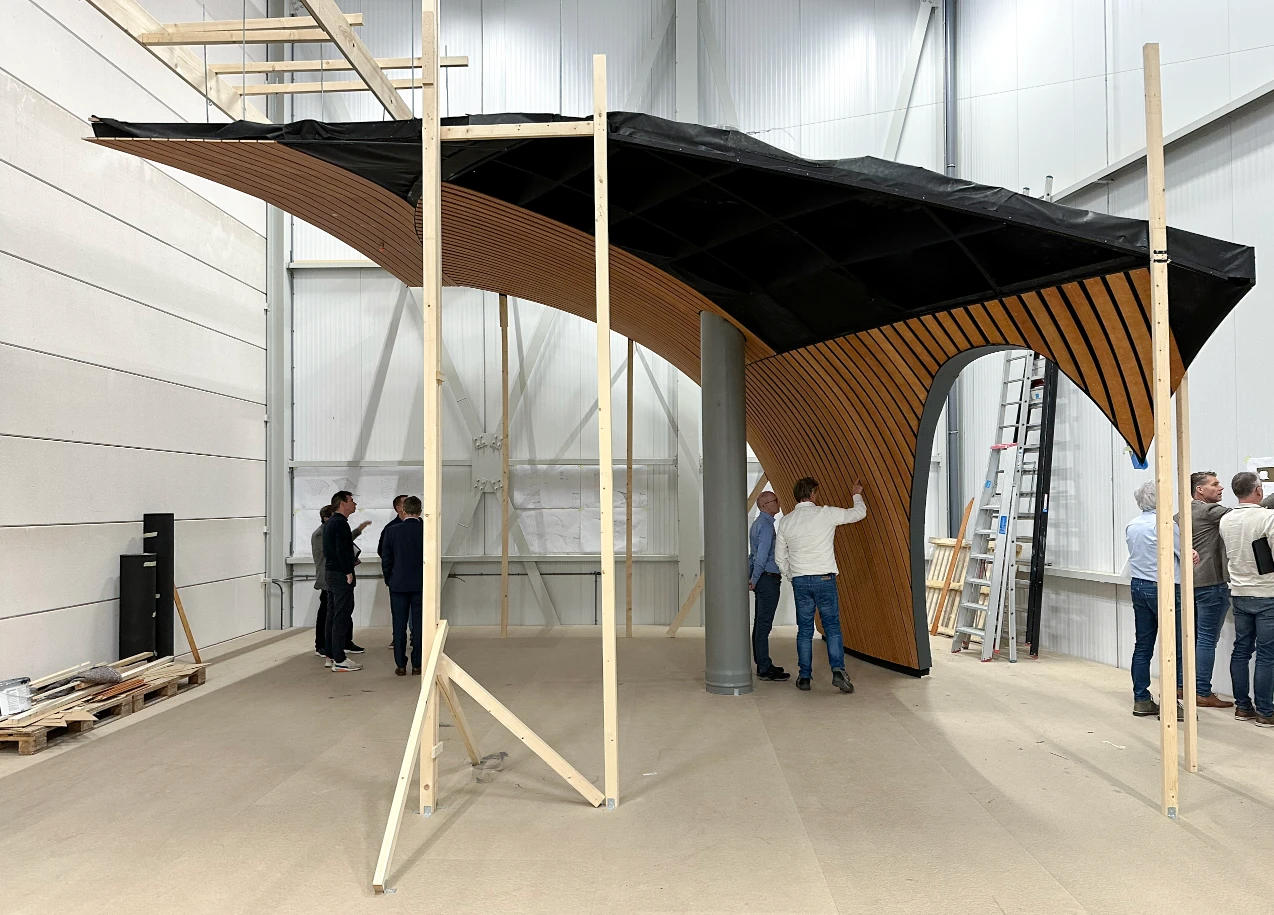
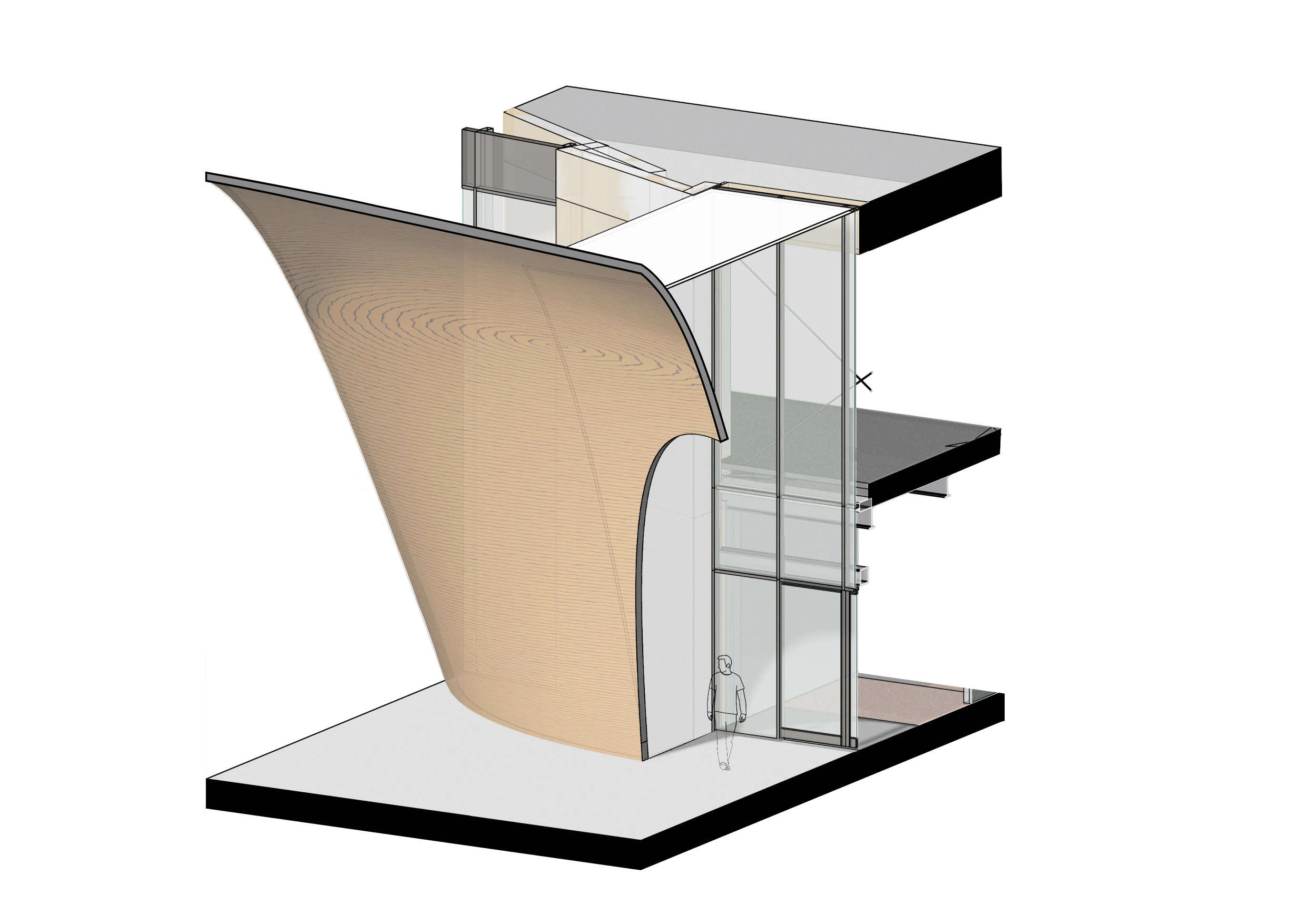
The 9,000 m² double-curved ceiling at ground level is clad in wooden planks inspired by coastal dune landscapes. Its complex curvature demanded parametric workflows using Grasshopper, projecting isolines to detect and correct dents, dips, and discontinuities, ensuring a smooth and reliable construction base. Planks were placed horizontally in the main ceiling sections and vertically in the cone-shaped areas, using a special tool to show how the two directions connect.
The ceiling features the Declaration of Human Rights, with 16,000 gold letters digitally projected in the shape of a world map. This intricate installation was executed in collaboration with INTOS, combining design, fabrication, and cladding expertise.
“Using parametric modeling, we optimized multiple parameters and visualized surface heights to align every plank with precision,” explains Arsenii Bychkov, architect at Powerhouse Company, underlining the technical sophistication behind the design.
Sustainability and Material Innovation
By applying slag-based concrete, the project reduced CO₂ emissions by nearly 450,000 kg. Slag, a byproduct of steel production, offers a high-performance, low-impact alternative to Portland cement. Close collaboration with J.P. van Eesteren and IMd Raadgevende Ingenieurs enabled optimized use of concrete strength classes, balancing structural performance with material efficiency and minimizing waste.
Martijn Ravia, the project architect at Powerhouse Company, states, “The project’s success depended on expertise from many fields, with each team member playing a role in making a difficult design possible and coherent.”
The project reflects the expertise of Powerhouse Company, an international architecture firm founded in 2005 with studios in Rotterdam, Munich, Oslo, and Nairobi. Their multidisciplinary team combines technical precision with timeless design across adaptive reuse, residential, interiors, and public buildings.
KJ Den Haag Project Details:
Project Name: KJ Den Haag
Status: Under Construction
Timeline: 2016 – Ongoing
Size: 48,000 m² GFA
Client: Synchroon, Amvest
Location: The Hague, The Netherlands
Typology: Living, Public Spaces, Towers
Collaborators:
Landscape Architect: DELVA Landscape Architects & Urbanism
Contractor: J.P. van Eesteren
Structural Engineer: IMd Raadgevende Ingenieurs
MEP Consultant: Nelissen Ingenieursbureau, Techniplan
Sustainability Consultant: Metabolic
Project Team:
Nanne de Ru, Paul Stavert (partner in charge), Maarten Diederix, Michael Schuurman, Dik Houben, Martijn Ravia, Niels Baljet, Arsenii Bychkov, Koen van den Dungen, Boris Kozlowski, Michiel Bosch, Gert Ververs, Giovanni Coni, Rick de Lange, Giulia de Mauro, Ertug Ciftci
Visualizations: Zes X Zes, Mir.
Photography: Rick Geenjaar