




Now open and in use, As Safiyyah Museum & Park by X Architects offers a measured response to building in Islam’s second holiest city, where any new intervention must balance profound religious significance with a growing international audience and an increasingly commercial urban fabric.
Medina has long welcomed millions of pilgrims each year, centered on Al Masjid an Nabawi, the Prophet’s Mosque and Islam’s second-holiest site. Under Saudi Arabia’s Vision 2030 agenda and early-2020s tourist visa reforms permitting non-Muslim visitors into parts of the city, Medina is repositioning itself as a global destination with a clearly defined local identity that is accessible and legible to all.
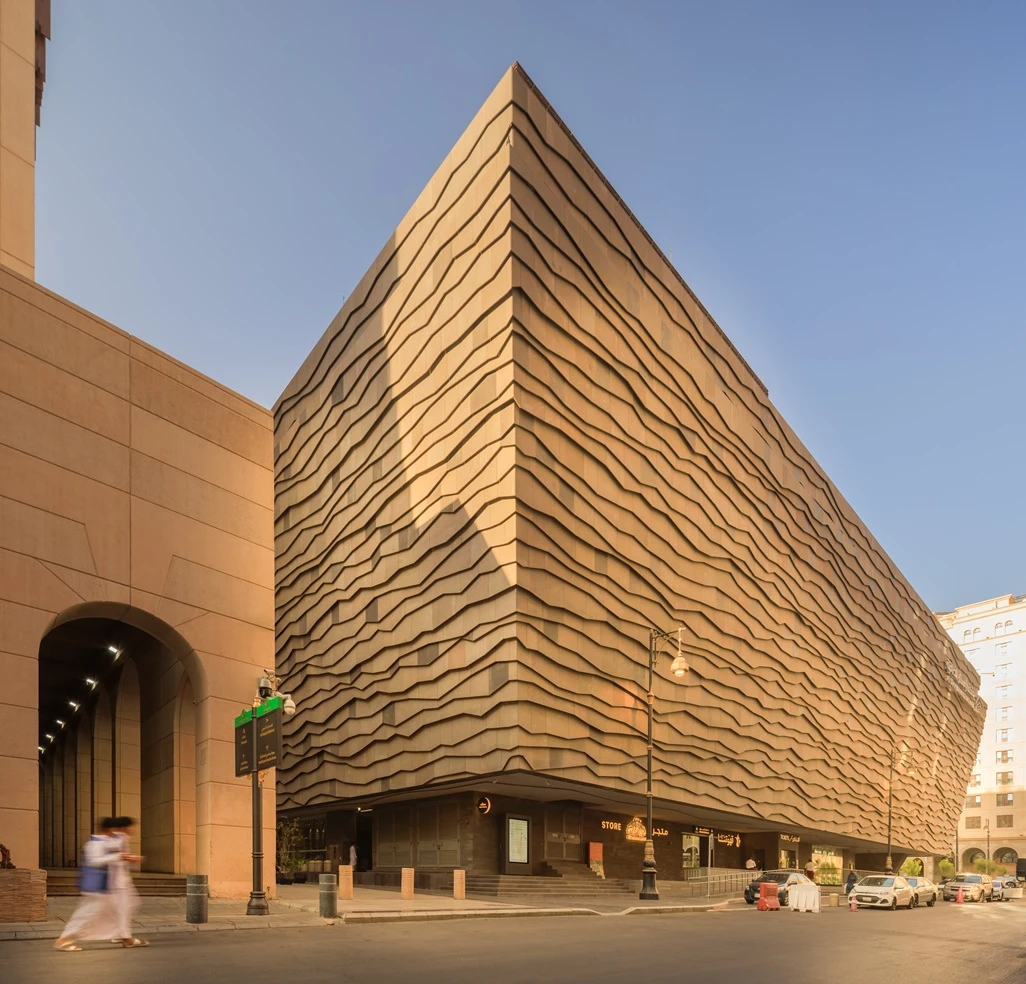
Amid this period of intensified, tourism-led development around the Prophet’s Mosque, As Safiyyah Museum & Park demonstrates how architecture can operate at a sensitive urban threshold, neither competing with the sacred monument nor defaulting to the language of generic retail development.
X Architects Shapes Architecture at the Edge of the Prophet’s Mosque
Located on “the land of Alsafia,” a former palm garden just south of the Prophet’s Mosque and aligned with Bab Al Salam, one of the main historic gates used by pilgrims entering the mosque, the project weaves museum, public park, and commercial programs into an urban topography that mediates between the sacred perimeter and the everyday city. The 20,000 sqm complex is conceived as a sequence of walls, gardens, and rooms that channel and reframe the flows of pilgrims, residents, and tourists.
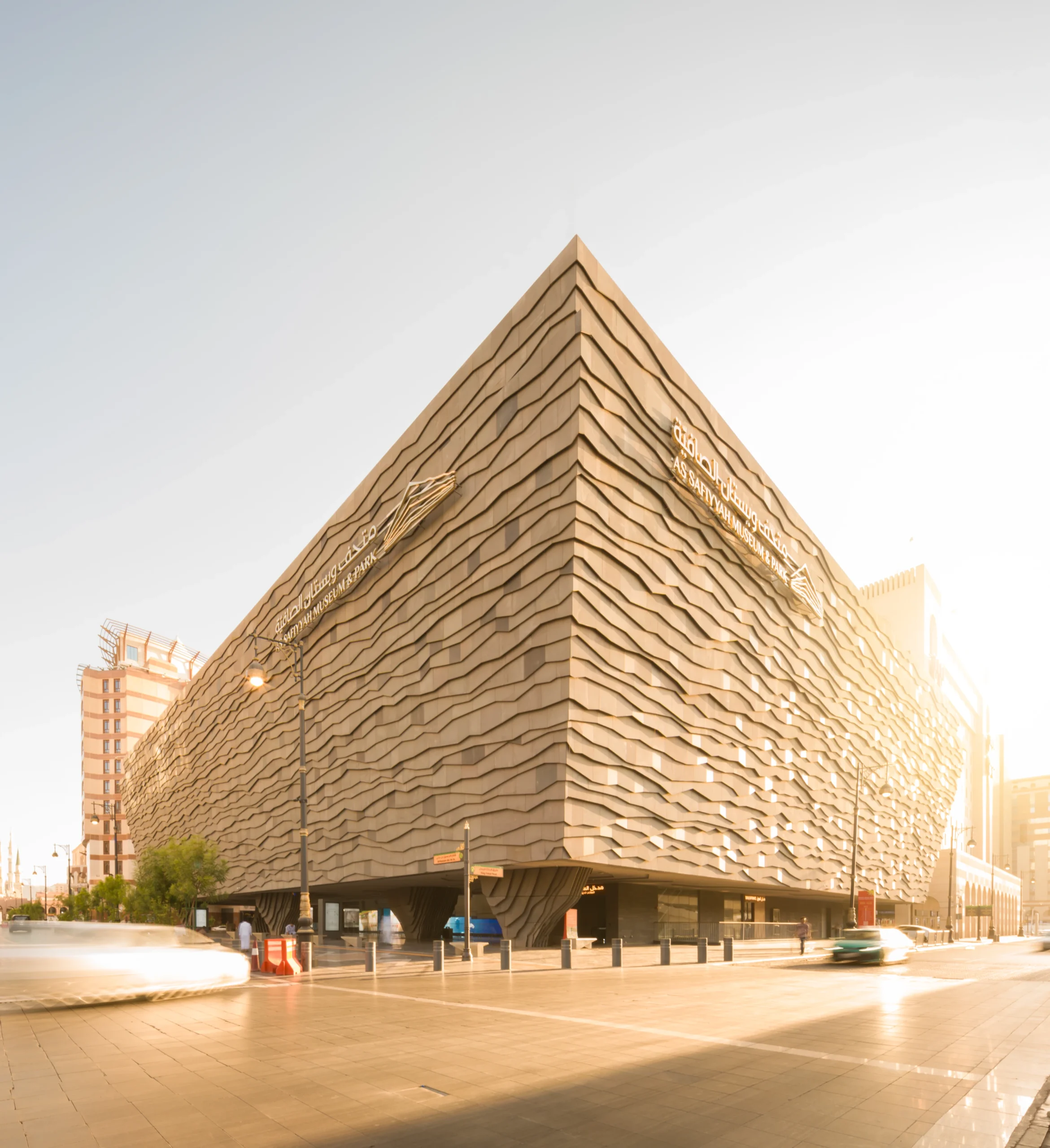
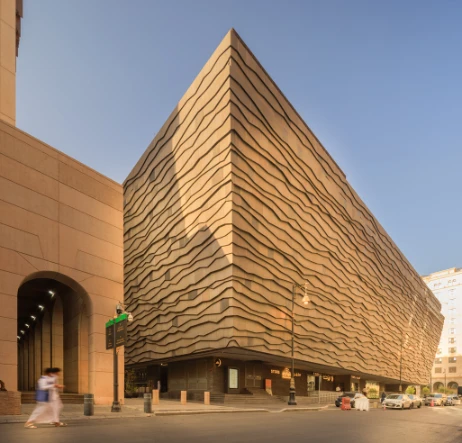
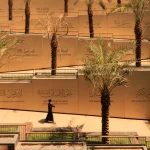
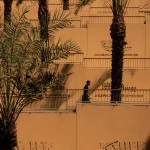
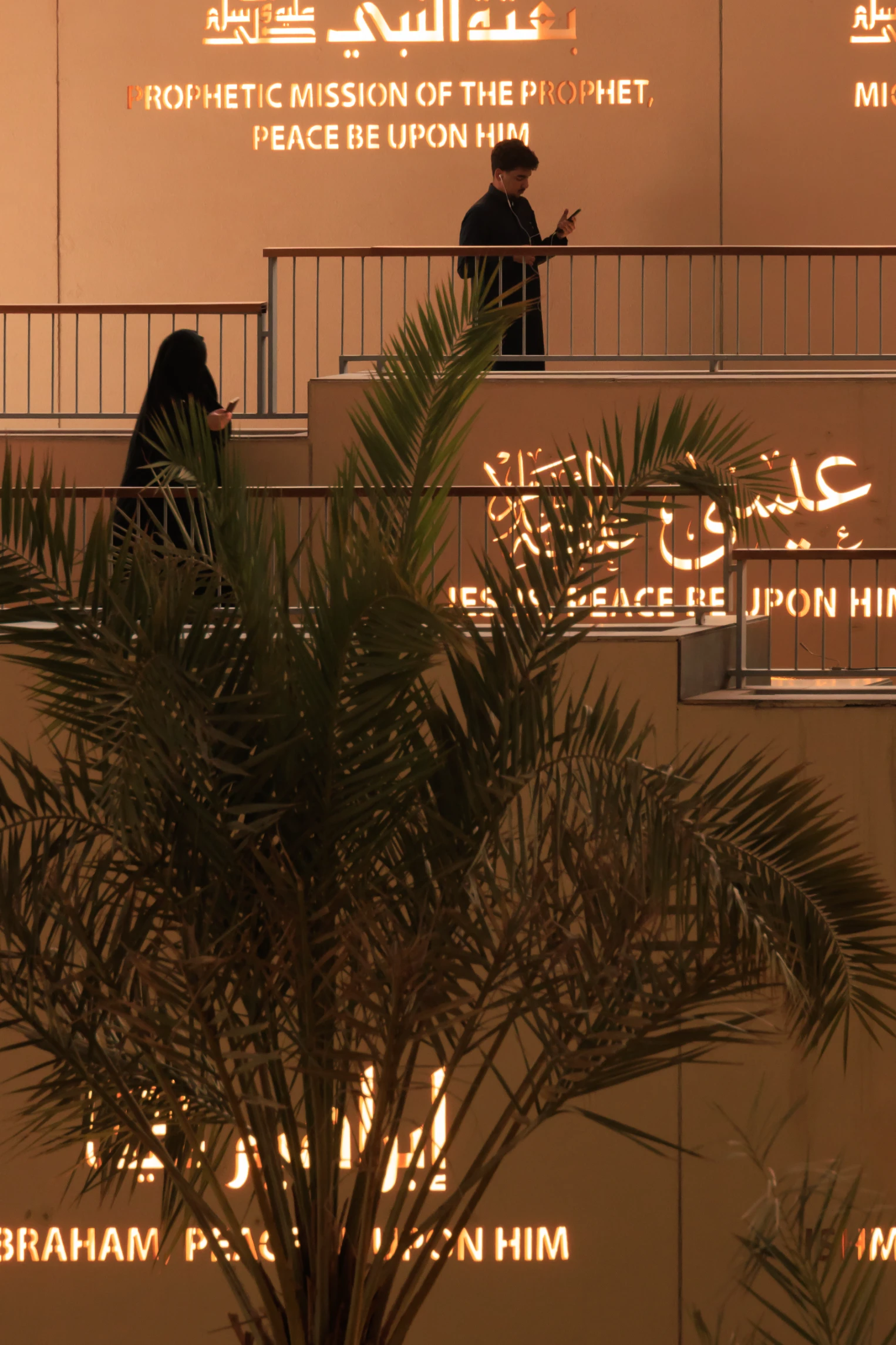
A thick perimeter wall buffers the intensity of traffic and infrastructure, reintroducing the sense of enclosure that historically defined Medina’s walled core and its palm gardens. Behind it, a stepped landscape of planters, courts, and water basins reconstructs the micro-topography of the former grove, offering shaded and contemplative spaces that counter the surrounding congestion.
By crafting a gradual transition through shadow, planting, and stone before visitors reach the cultural and commercial programs, the architecture deliberately resists the logic of instant spectacle and consumption that often defines contemporary religious tourism.
Material, Narrative, and Civic Space
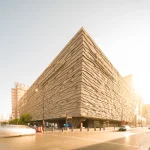
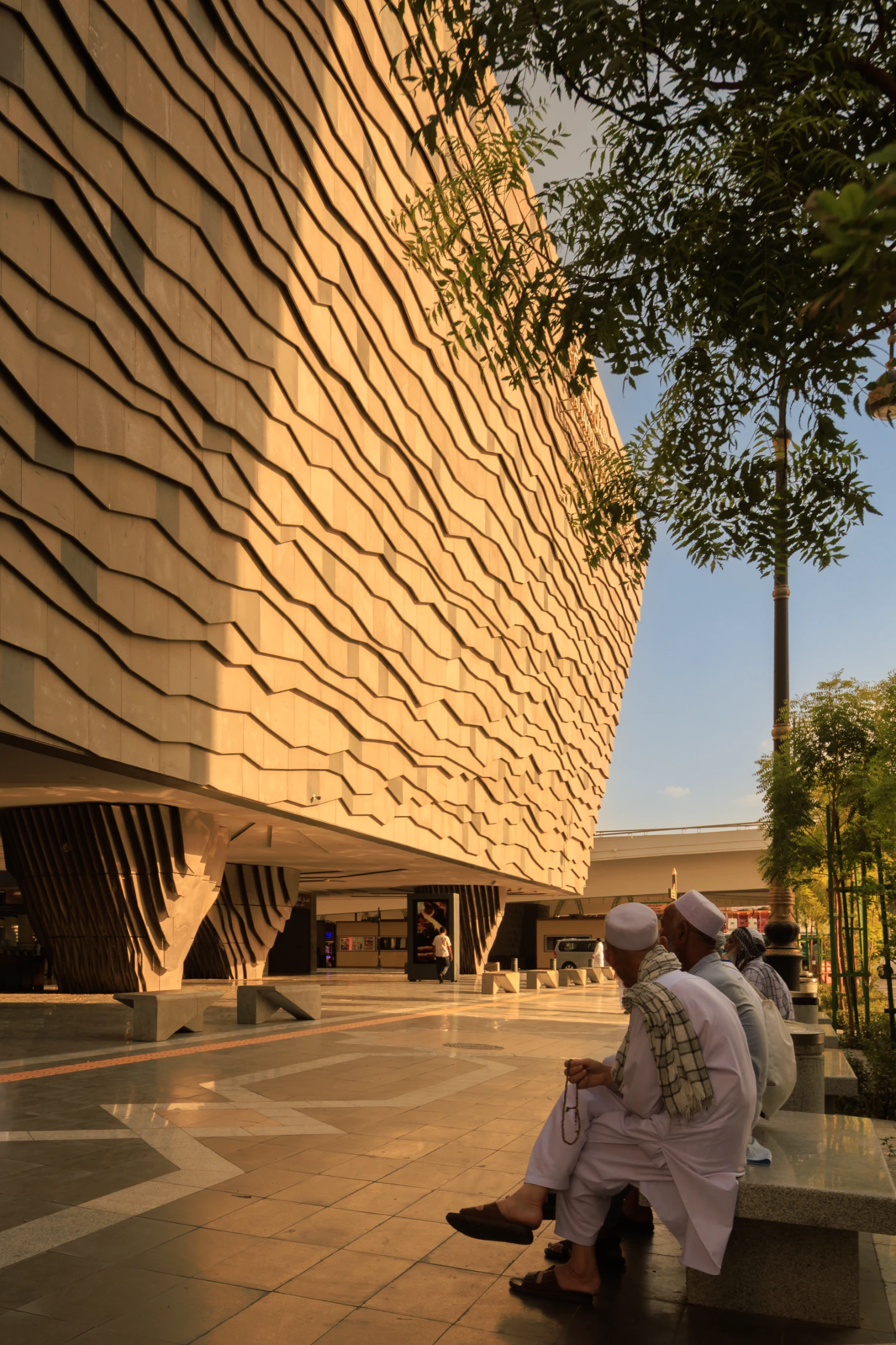
Geologically, Medina sits within the western Arabian Shield and is surrounded by volcanic hills and basaltic lava fields. The project anchors itself in this context through basaltic stone drawn from the surrounding lava fields. The material forms the primary surface of facades, floors, and internal walls. Its thick, irregularly patterned skin creates deep shadow, increases thermal mass, and produces a tactile surface rooted in local geology.
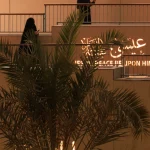
In a city where glazed high-rise development has become common, the dark basalt body asserts a contemporary expression grounded in climate, memory, and place rather than globalized glass and steel. Water, referencing a historic well on the site, and terraces planted with palms and native species reconstruct the idea of the oasis as both climatic and social infrastructure.
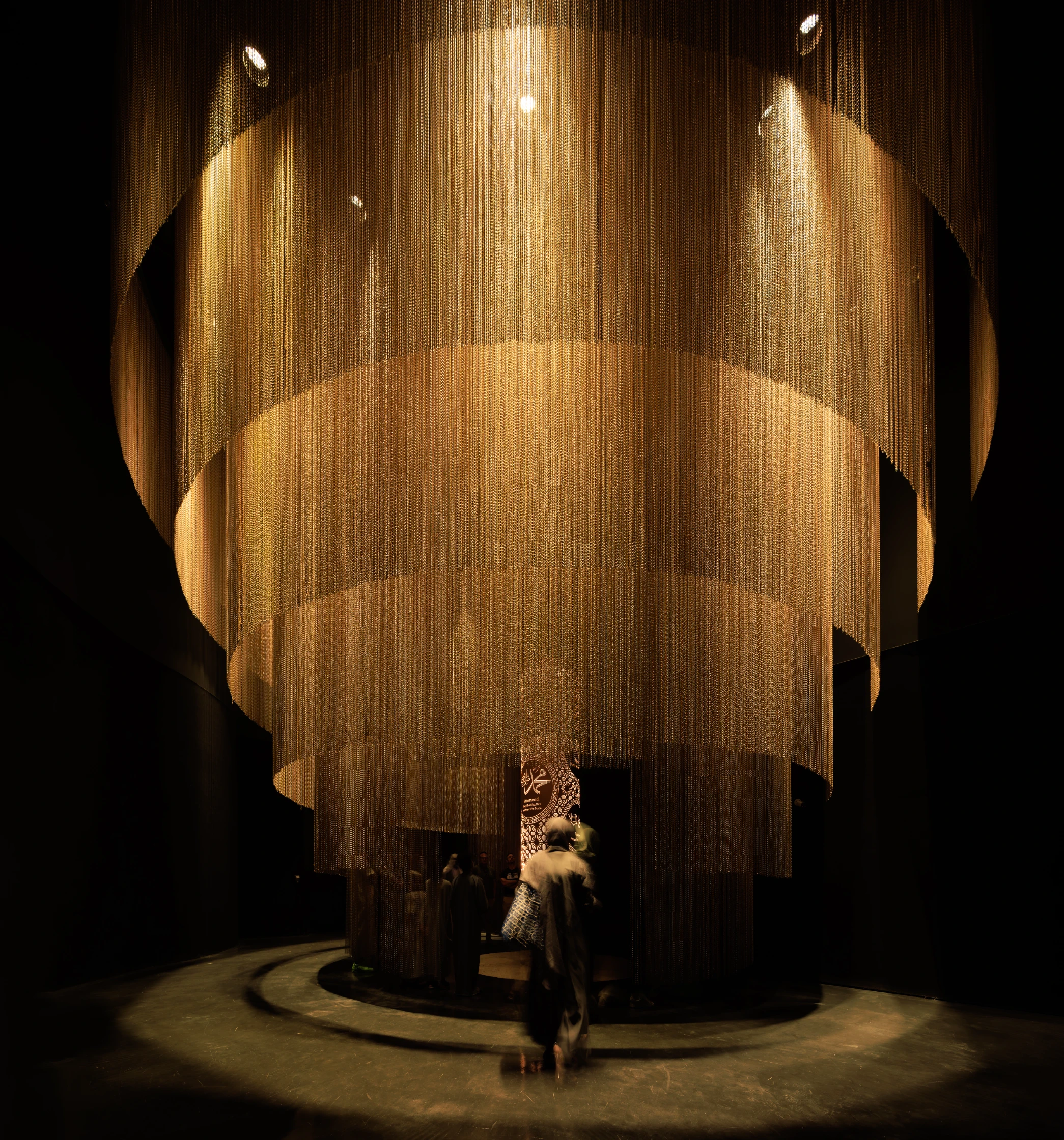
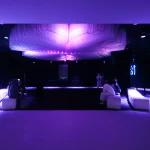
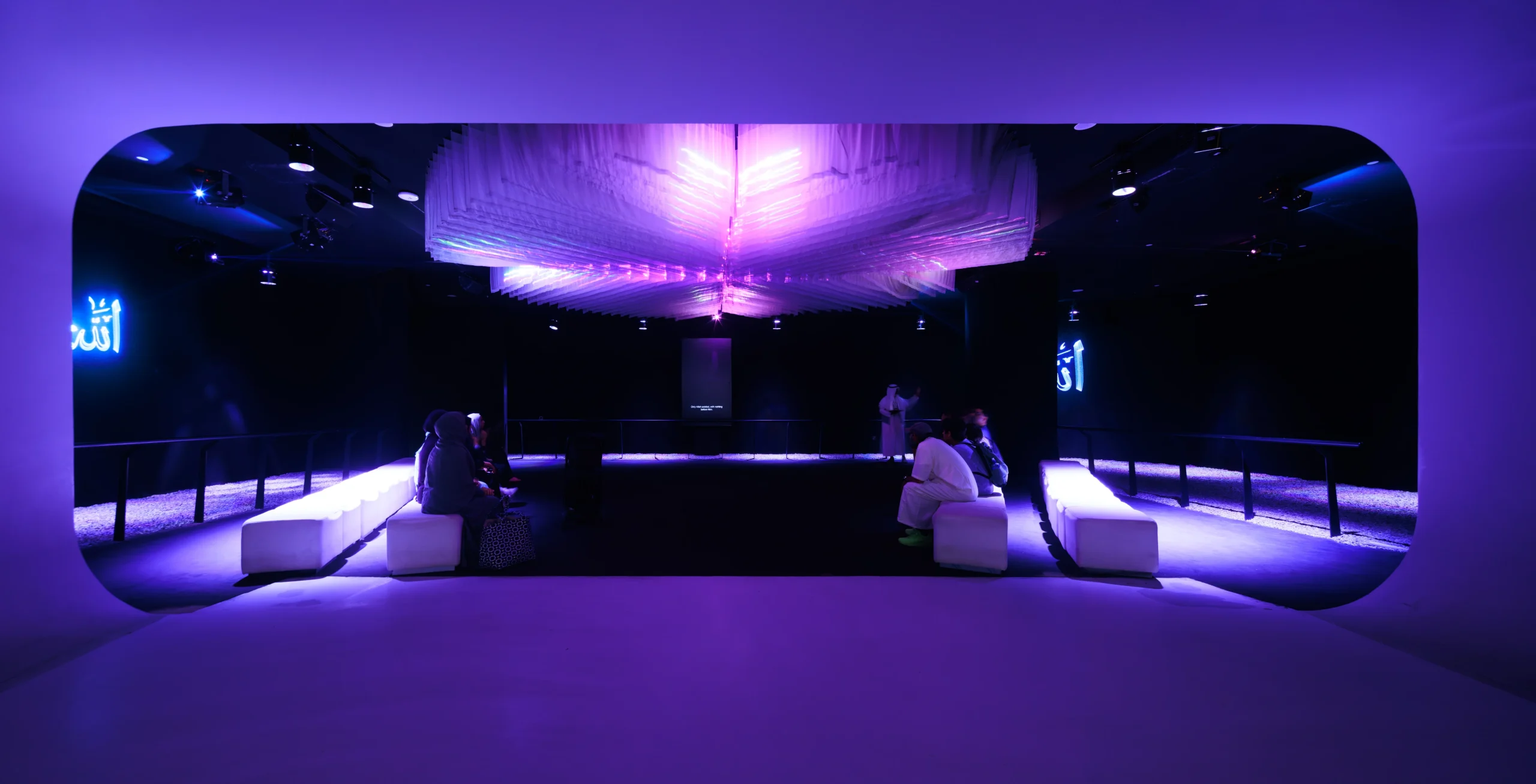
At the core lies the museum, organized around “The Story of Creation” in Islamic culture and divided into five chapters: Pre-creation, The Beginning of Creation, The History of Creation, The End of the Universe, and Absolute Justice & Ultimate Mercy.
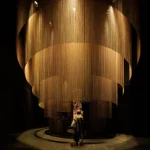
The narrative shapes the architecture itself. Each chapter occupies a distinct spatial condition, with shifts in height, light, acoustics, and enclosure creating a progression from open, luminous spaces to more introspective environments. Movement through the sequence mirrors a journey from undifferentiated potential toward contemplation of justice and mercy, translating theological ideas into spatial experience while avoiding literal scenography.
Programmatically, the development combines four main components: a public garden, a cultural museum, a multipurpose hall, and commercial spaces, including souvenir shops and cafés.
As Safiyyah Museum & Park acknowledges Medina’s evolving role under national tourism reforms while proposing a model in which landscape and narrative take precedence over pure commercial frontage. The project establishes a new civic ground where pilgrims, residents, and visitors can encounter the city’s geology, history, and cosmology in one continuous field, without encroaching on the sanctity of the mosque precinct.
As Safiyyah Museum & Park Project Details
Project Name: As Safiyyah Museum & Park
Location: Medina, Kingdom of Saudi Arabia
Typology: Museum, Retail, F&B, Public Park
Site Area: 4,419 sqm
Built-Up Area: 20,821 sqm
Architect: Ahmed Al Ali, Farid Esmaeil
Client: Al Madinah Region Development Authority, Samaya Holding
Project Manager: X Architects
Image credit: ©Fernando Guerra