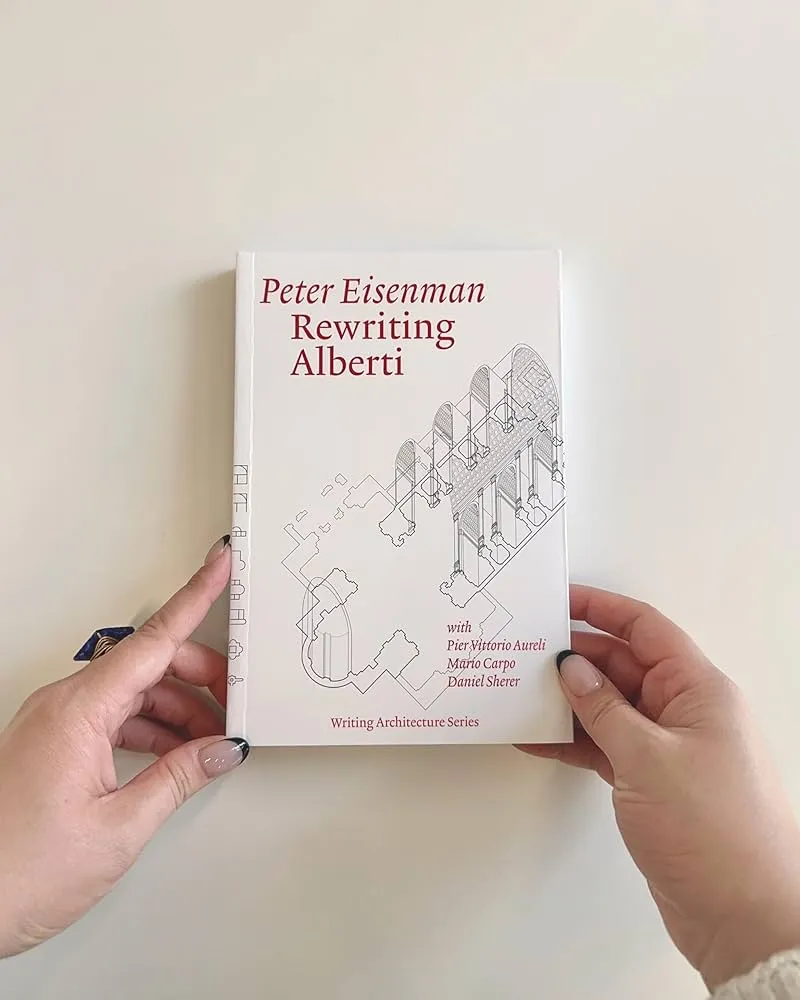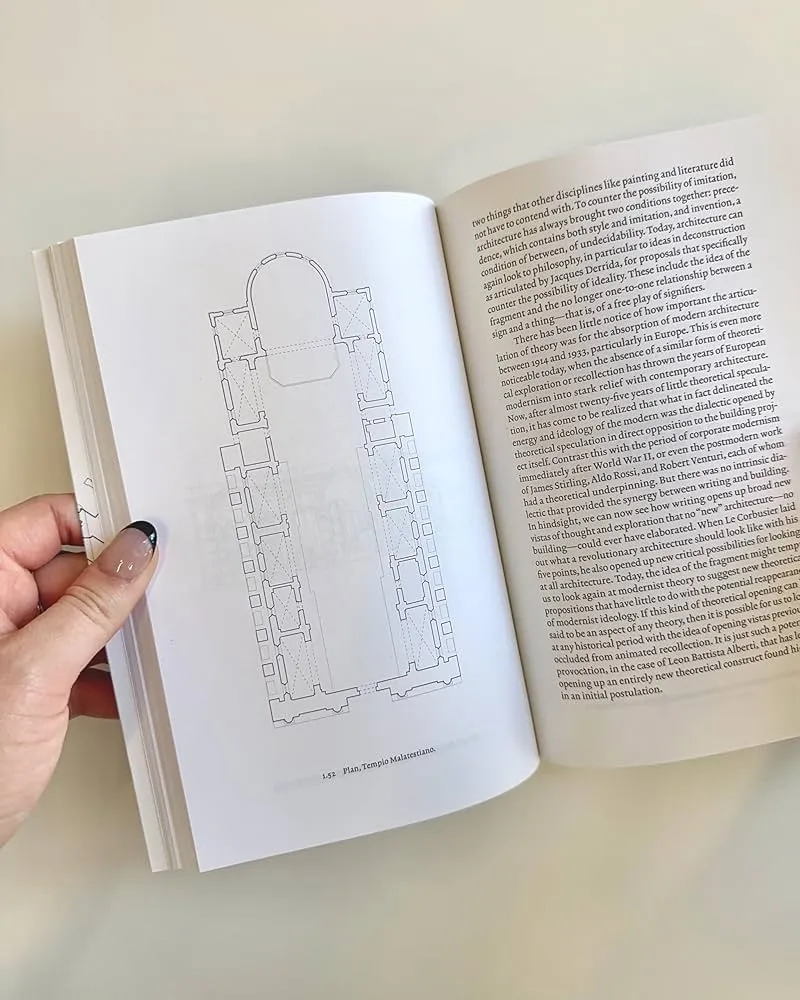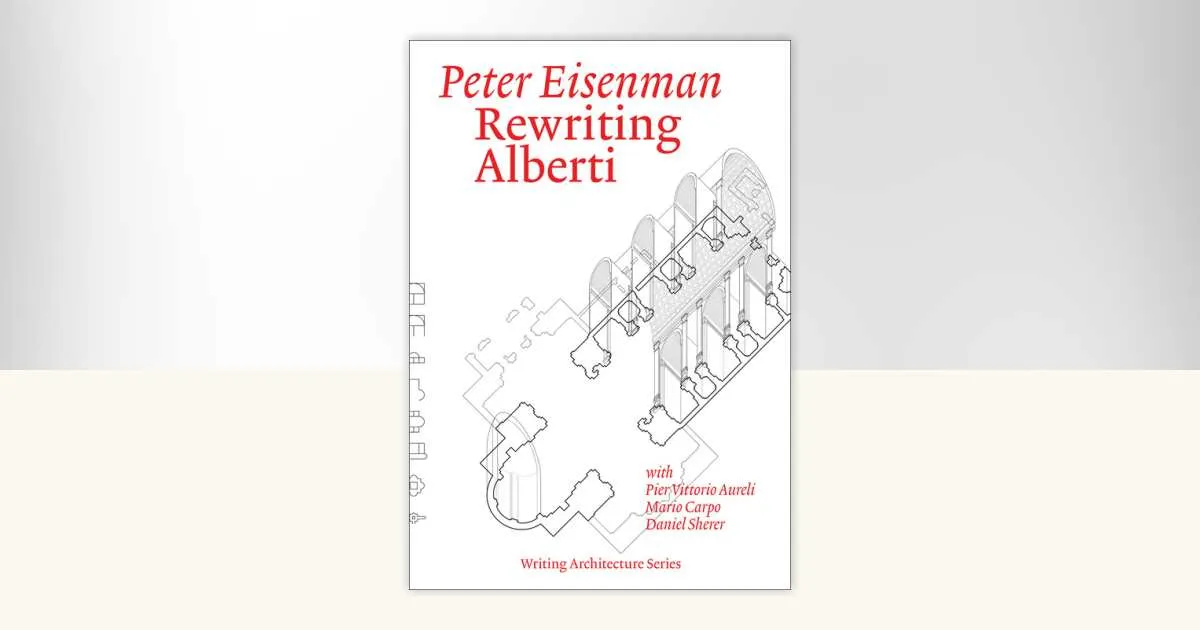

Peter Eisenman’s new book, Rewriting Alberti, offers a close rereading of Leon Battista Alberti’s built work and argues for a sharper split between Alberti’s architectural practice and his canonical theoretical text, Ten Books of Architecture. Rather than repeating the usual “part-to-whole” reading that has long overlooked Alberti scholarship, Eisenman reads five of Alberti’s erected projects against his writings to suggest a different relation of form to meaning, one that emphasizes fragmentation and interruptions in otherwise homogeneous space.
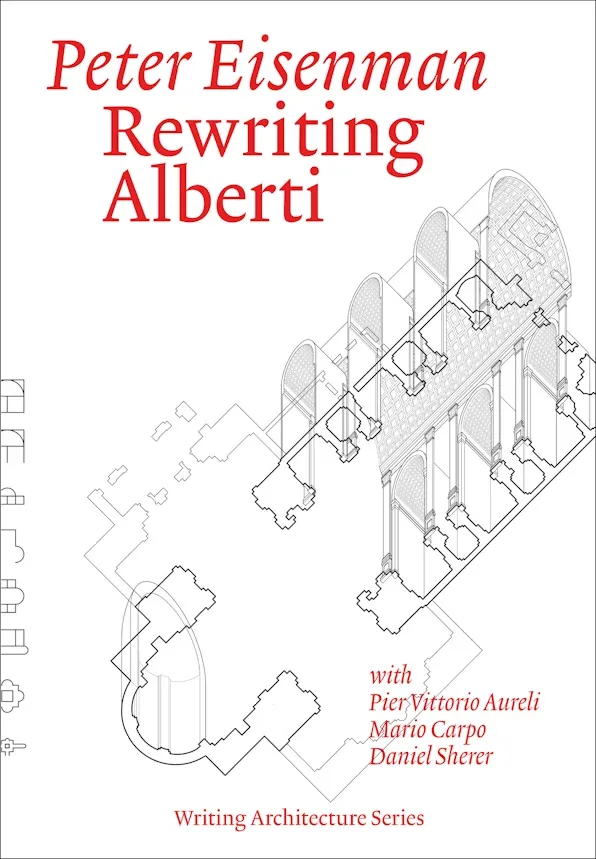
The book is part of MIT Press’s Writing Architecture series and collects four distinct but related essays: Eisenman’s own analysis plus contributions by Pier Vittorio Aureli, Mario Carpo, and Daniel Sherer. Each contributor brings a different lens: Mario Carpo frames Alberti’s practice as an early notational system with affinities to contemporary computational logics; Pier Vittorio Aureli uses Alberti to rethink what an architectural “project” can be; and Daniel Sherer revisits earlier critical readings (including those of Manfredo Tafuri) to reorient how we read Alberti historically. Together, the pieces mix close drawings and theoretical reflection to trace signs, semiology, and historical folding in architecture.
Practical details: Rewriting Alberti was published by The MIT Press in late 2025 in paperback (248 pages, about 60 black-and-white illustrations) and is distributed through the usual trade channels. The book’s modest trim size and abundance of drawings make it something of a compact, evidence-driven booklet rather than a large monograph, which suits its close-reading method.
Eisenman has presented the book in public events (for example, a launch conversation hosted by Cornell AAP in November 2025), where he and the contributors discussed the implications of rethinking Alberti for both architectural history and contemporary practice. That programmatic outreach underscores the book’s aim: it’s less a definitive biography of Alberti and more a provocation inviting architects and historians to reconsider how texts and buildings produce meaning in different registers.
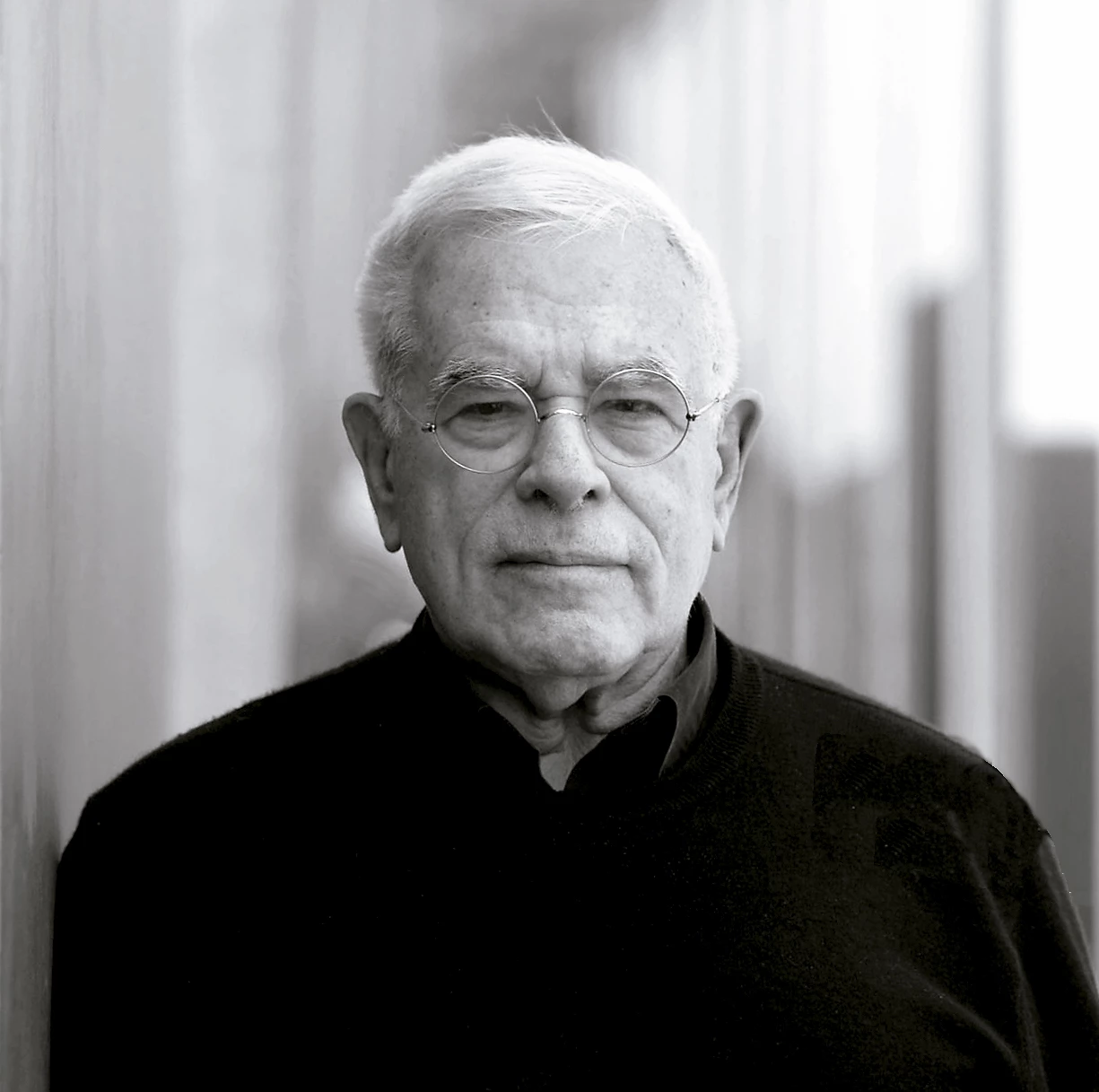
A brief note on Eisenman himself: long known as a theorist-practitioner whose work helped shape late-20th-century debates (from houses and the Wexner Center to the Berlin Holocaust Memorial), he brings to Rewriting Alberti a career’s worth of attention to how form, language, and rupture operate in built work. His published record and academic affiliations frame this book as a continued interrogation of architectural theory through careful readings of form.