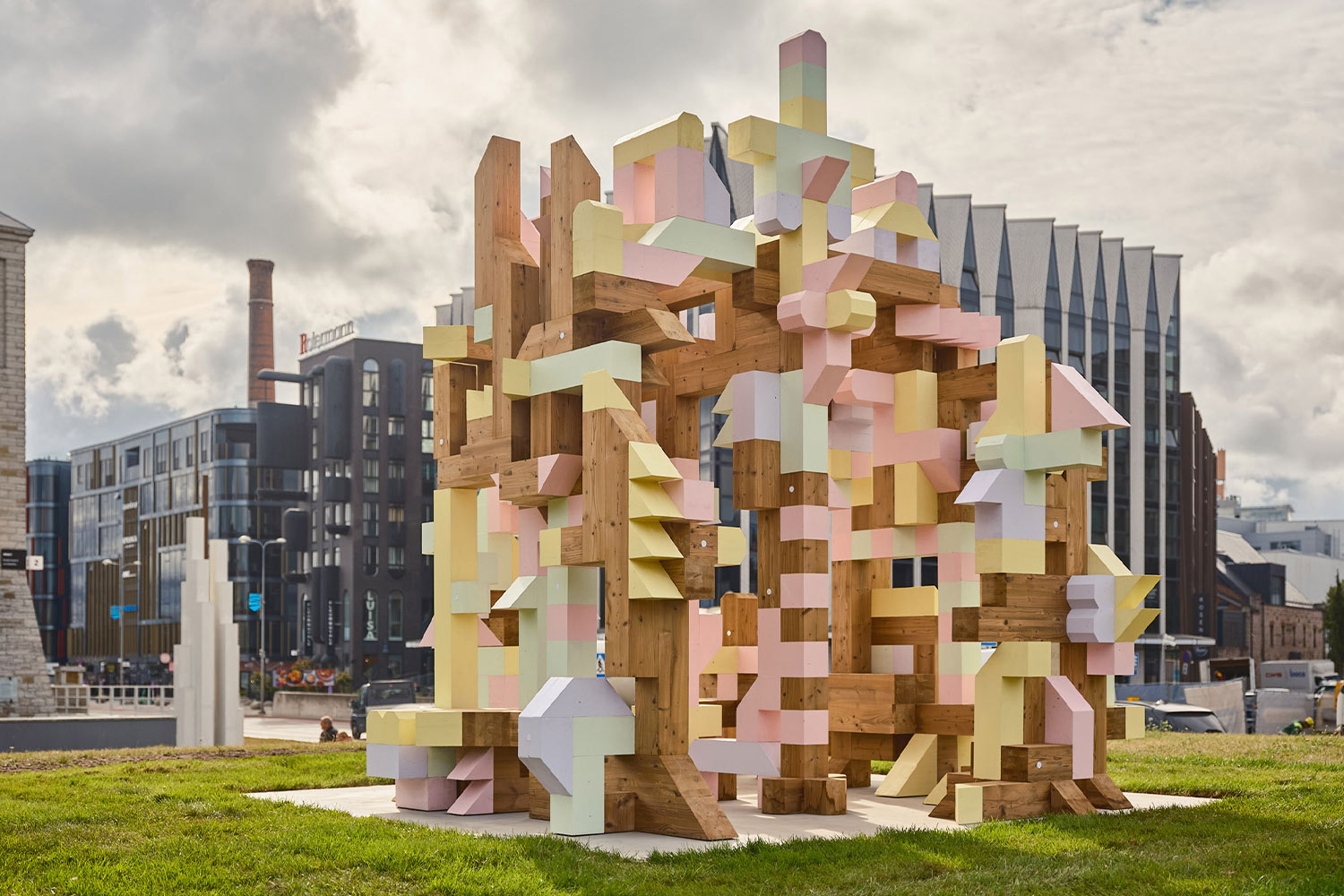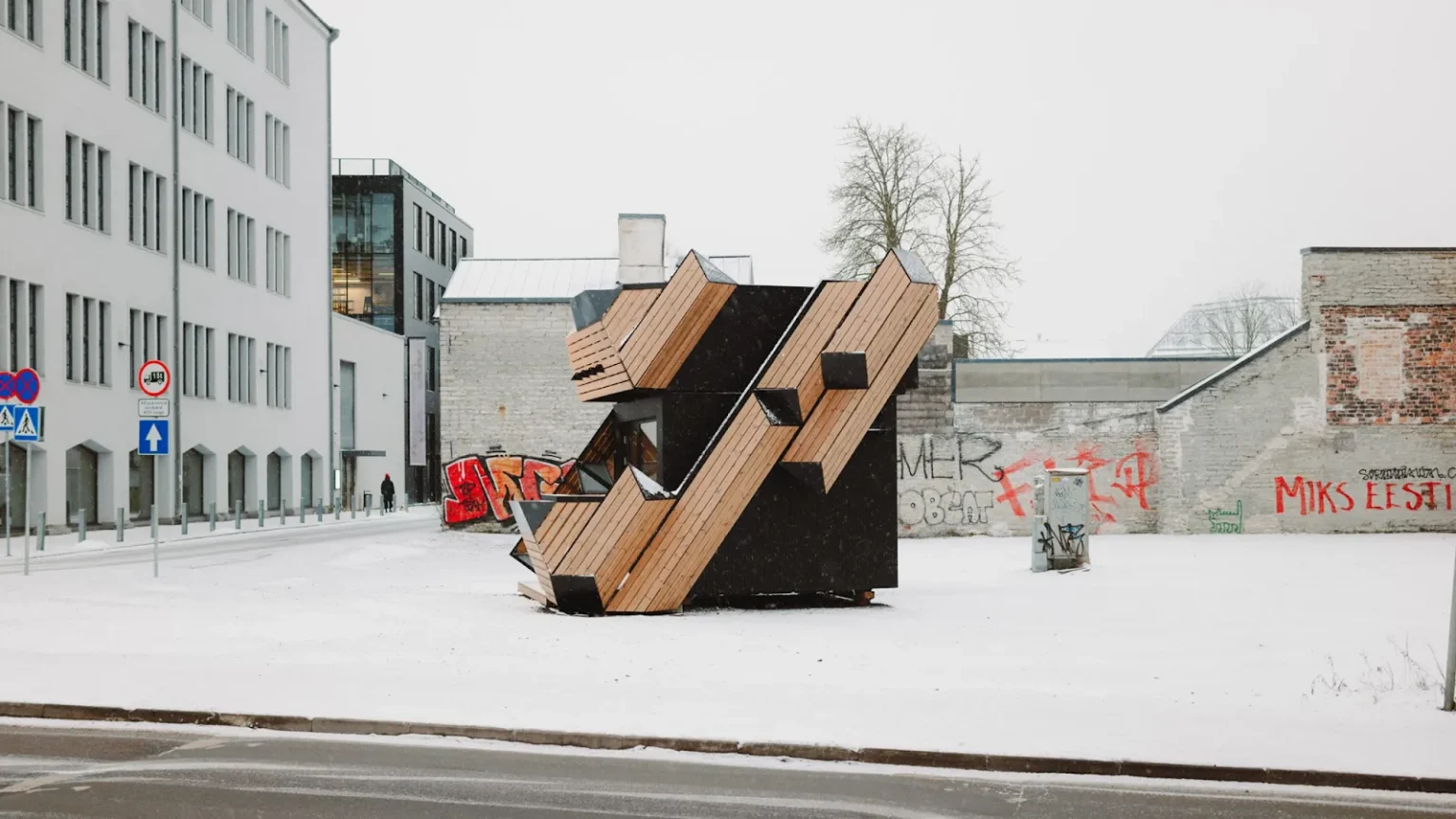




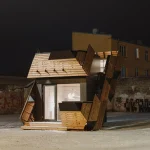
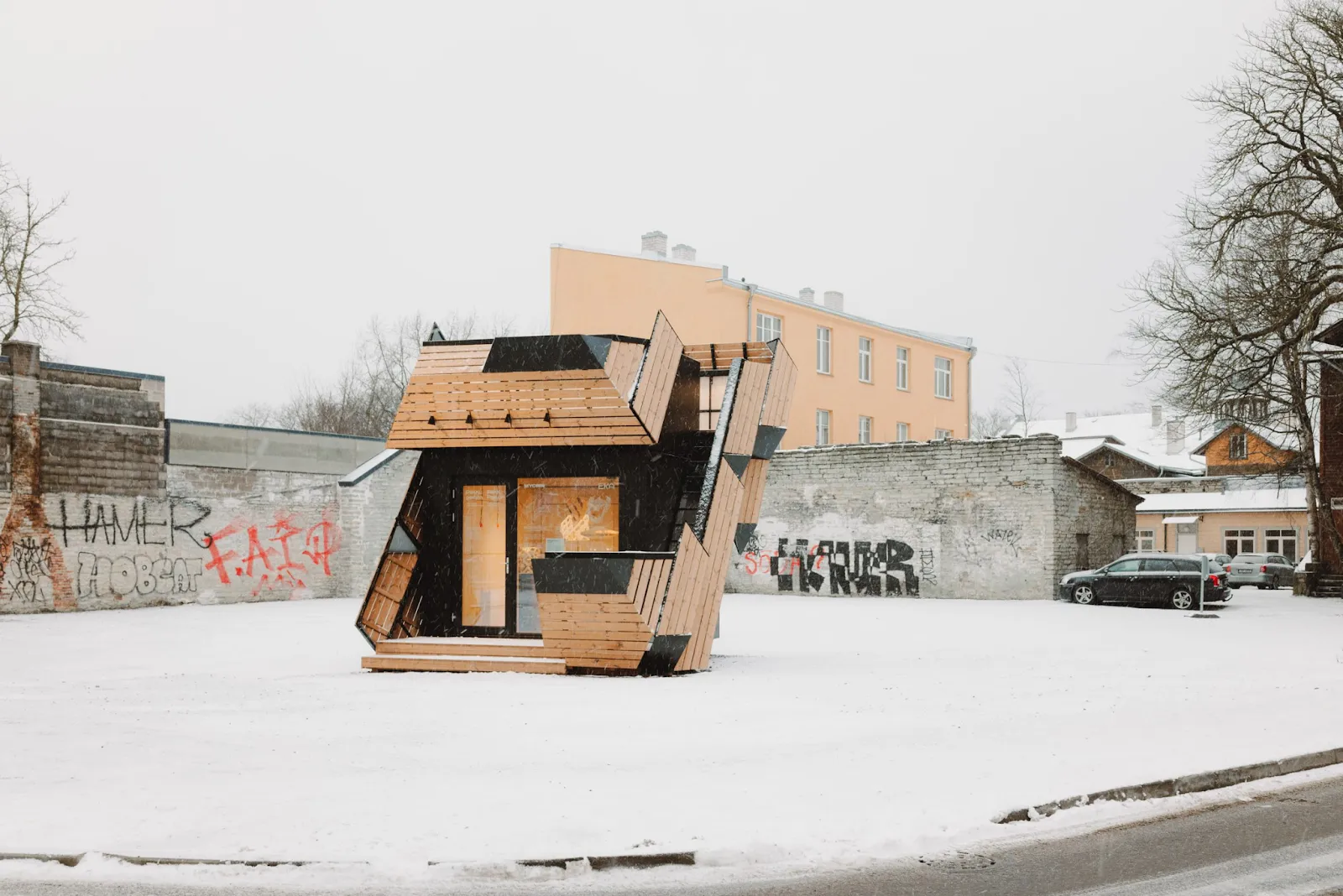
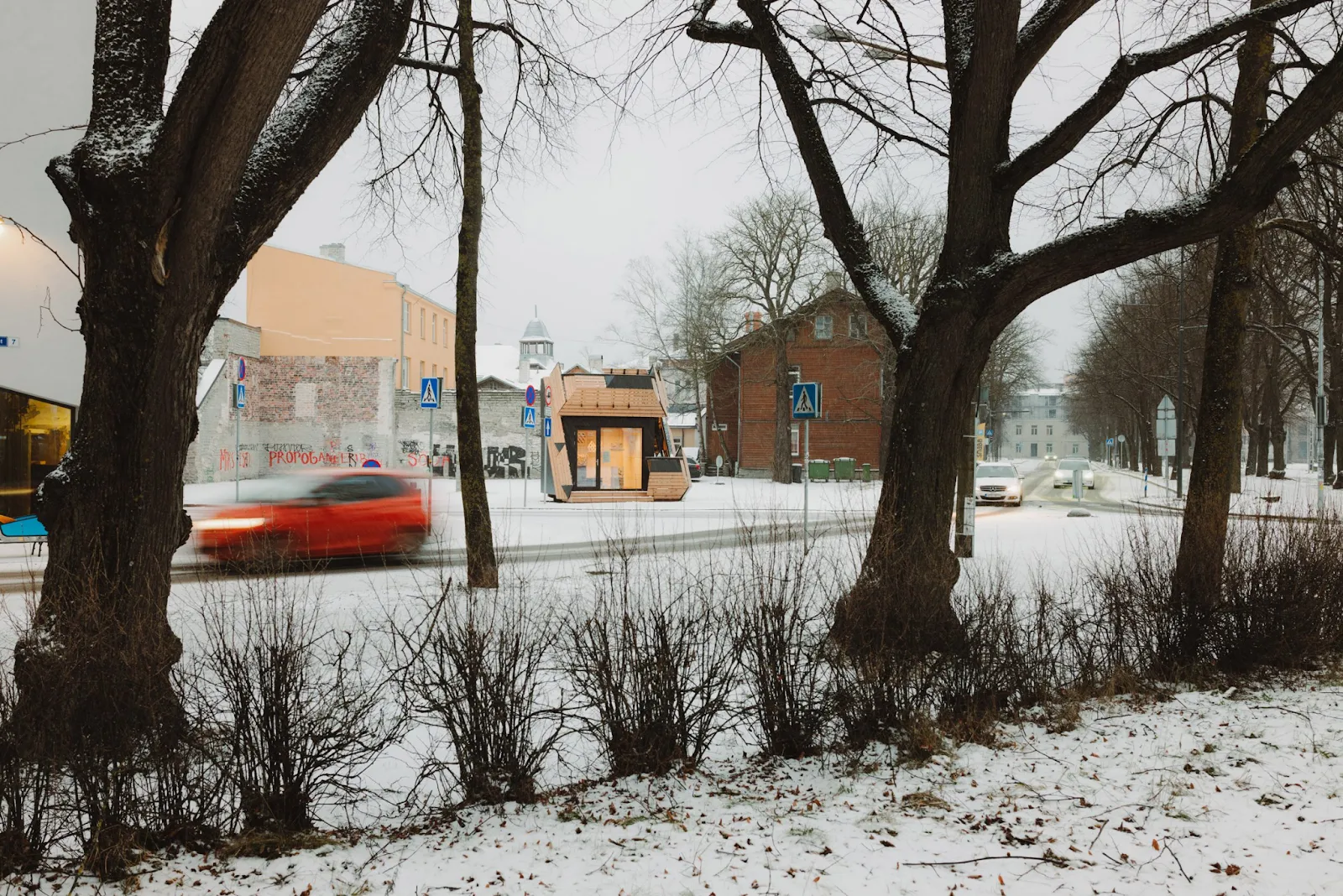
The PAKK Pavilion, an angular timber structure in central Tallinn, is quietly doing two important things at once: it’s a clear example of how modular timber systems can be deployed quickly as built work, and it’s a live laboratory for a new class of bio-based insulation made from mycelium. The project is a collaboration between the materials company Myceen and the Estonian Academy of Arts’ timber research centre (EKA PAKK), bringing material science, circular design thinking, and prototype timber construction together in a compact, testable architecture.
PAKK Pavilion Collaboration: Myceen, EKA PAKK, and Research Partners

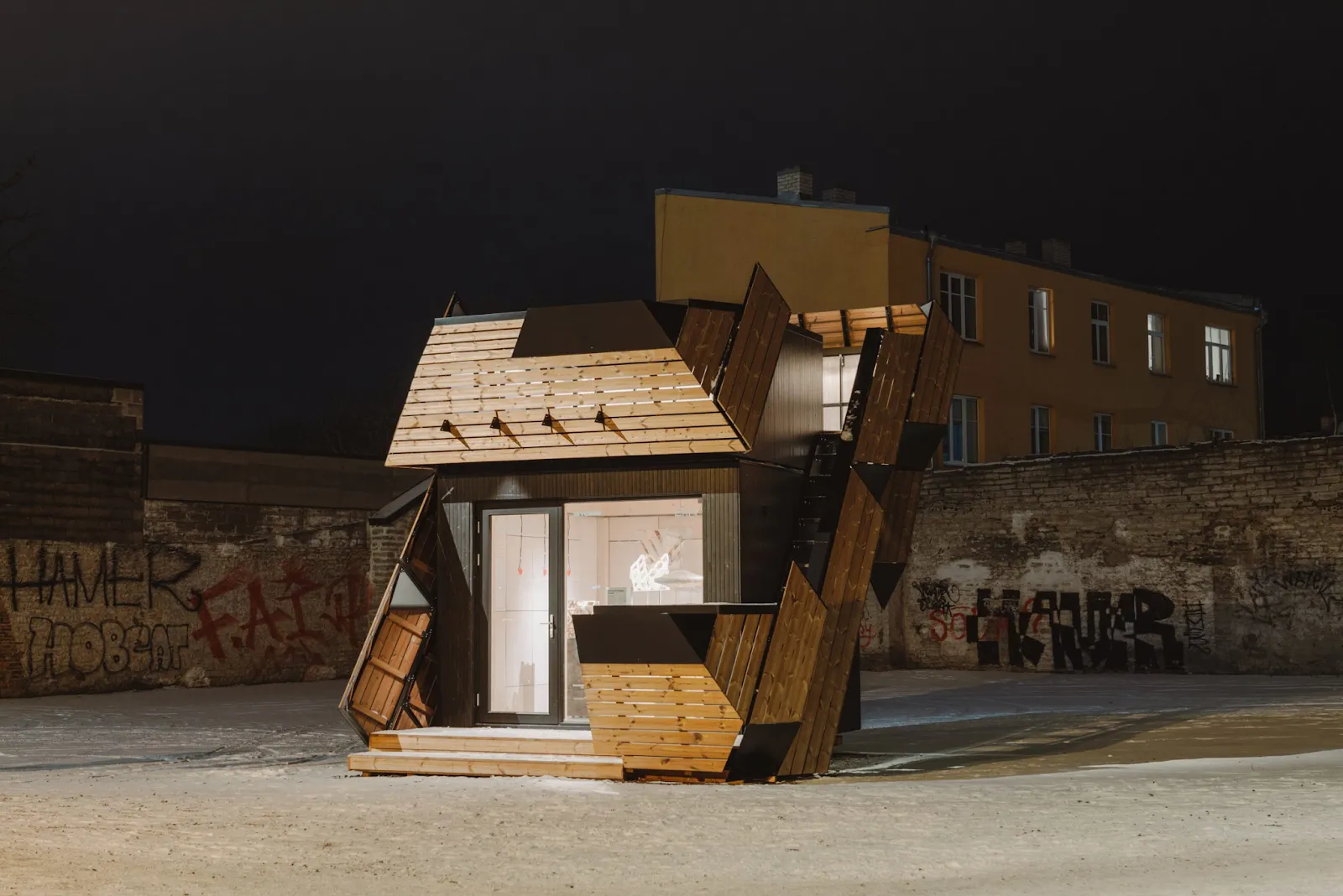
PAKK Pavilion is an experimental research pavilion assembled from modular timber systems developed within EKA PAKK’s ongoing research. Myceen supplied the experimental insulation panels made from mycelium-based composites; EKA PAKK contributed the timber frame and the façade systems, integrating outputs from two of its research strands, Pattern Building and sLender, into a single prototype. The project is positioned as both an exhibition object and a performance-testing installation that will be monitored over time.
The pavilion’s research team includes Dr. Siim Tuksam, Dr. Sille Pihlak, and Dr. Renee Puusepp. The build and research have received funding and support from the EU and national research grants, as well as several timber-industry partners listed on the PAKK site.
What the mycelium panels are and how they’re made
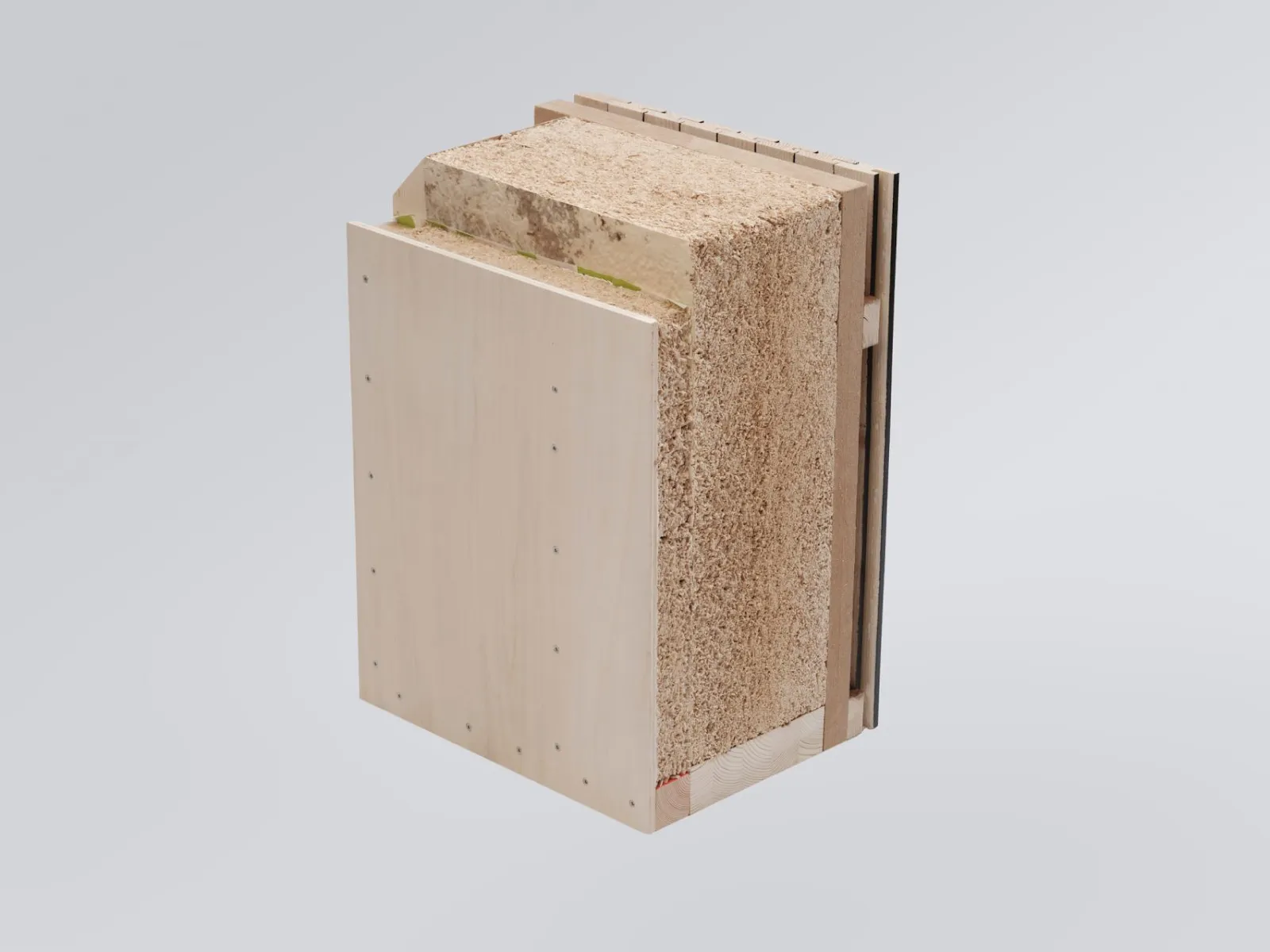
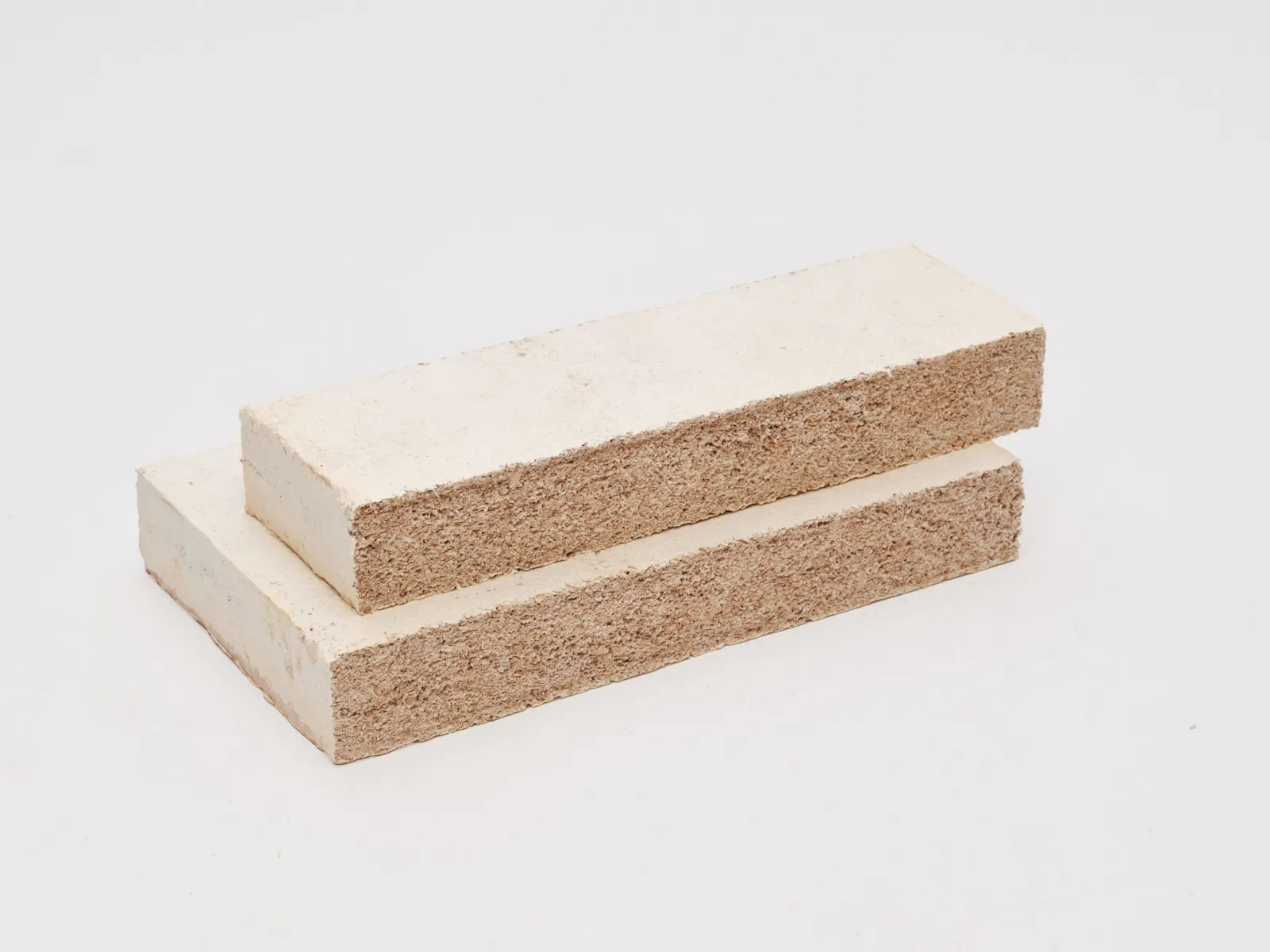
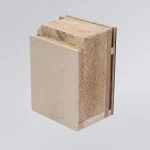
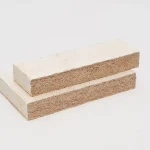
The insulation panels at the heart of the experiment are mycocomposites, a lightweight, bio-based material produced by letting fungal mycelium grow into a mixture of wood-industry residues (sawdust, pulp, and similar feedstocks), where the mycelium acts as a natural binder. Once the desired density and performance are reached, the growth is halted through a controlled drying process, producing a stable, fully biological panel that is biodegradable and avoids petrochemical binders. Myceen had earlier used the same biomaterial at a much smaller scale (for pendant lamps), and the PAKK Pavilion is the company’s first substantial built application of those panels.
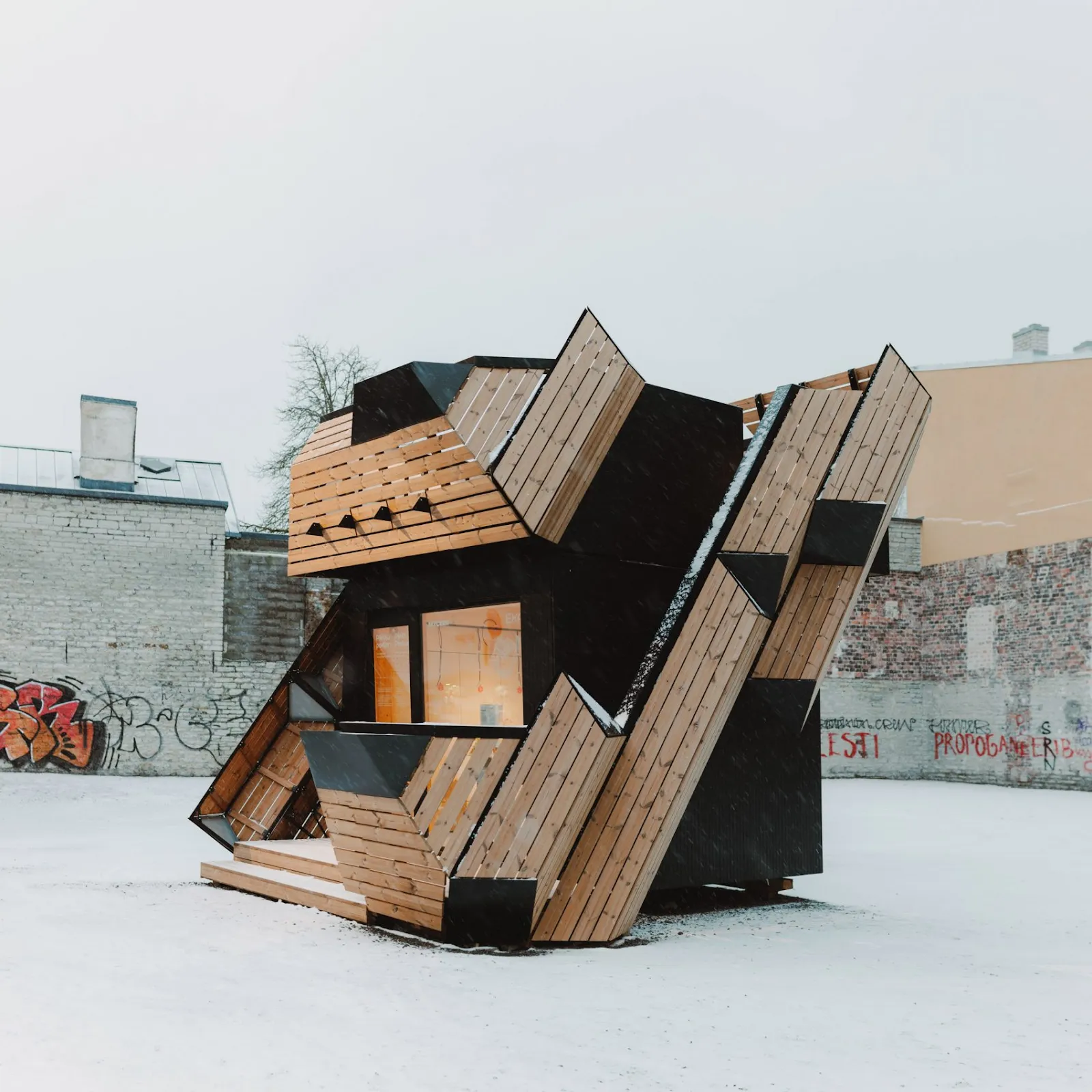
Early results from the pavilion’s monitoring are promising: the panels have shown excellent moisture behavior (no condensation or mold observed in preliminary checks), and according to Myceen’s head of science, Killu Leet, measured U-values indicate better thermal resistance than mineral wool under identical test conditions. These findings are a major reason the installation is being kept in operation as a live test until the end of 2026.
Architecture, systems, and material logic
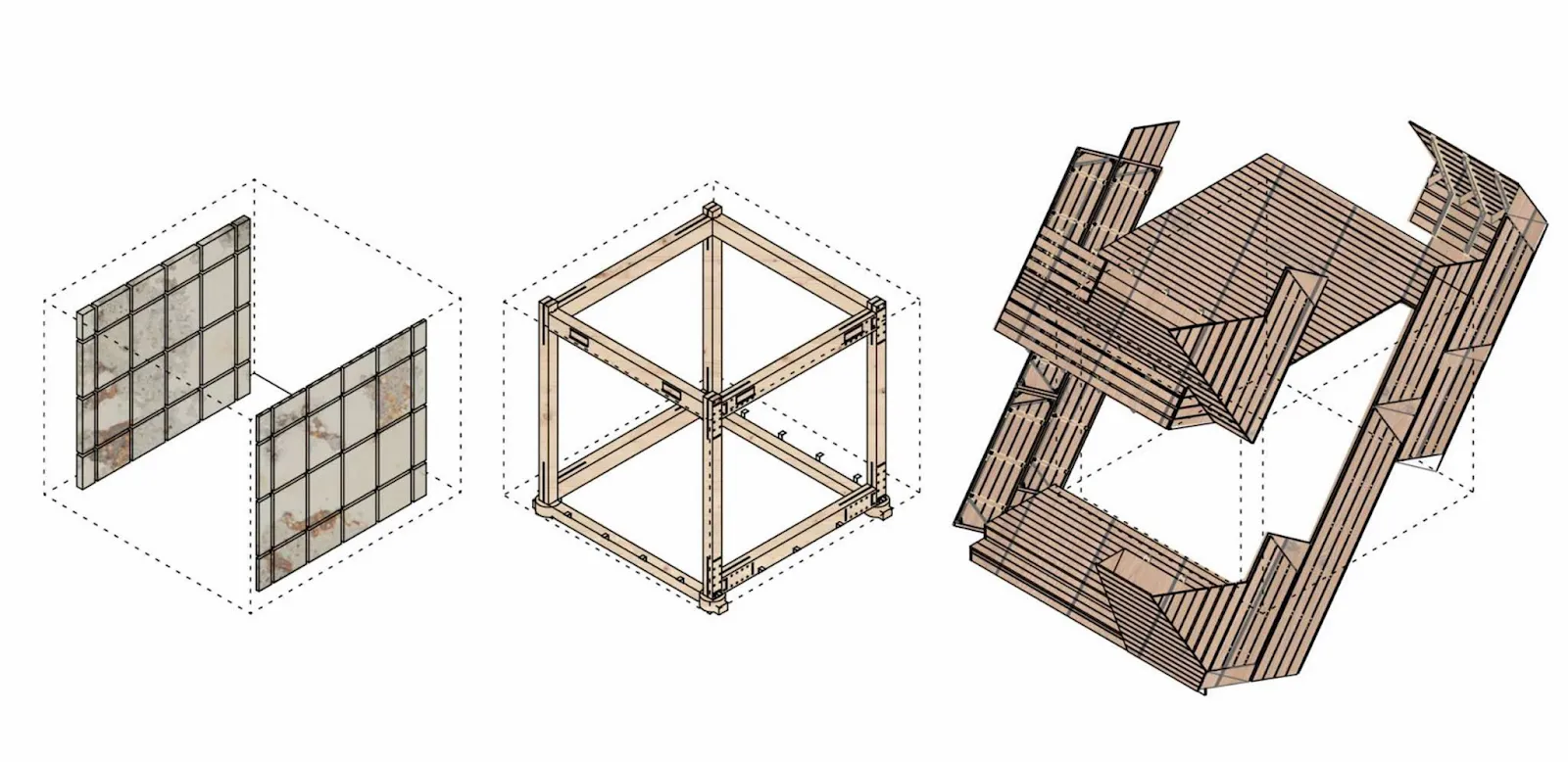
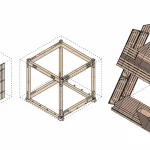
The pavilion reads as an assembly of modular timber elements: a cubic structural frame clad in timber planks with an angular lozenge-like façade derived from EKA PAKK’s sLender system. The façade modules are designed as discrete over-cladding units, modular components developed originally to retrofit and upgrade Estonia’s aging apartment blocks by adding insulation, balconies, or even stair/elevator modules. By applying those same capsule modules to a compact pavilion, the team demonstrates both the formal potential of the system and its capacity for disassembly and reuse.
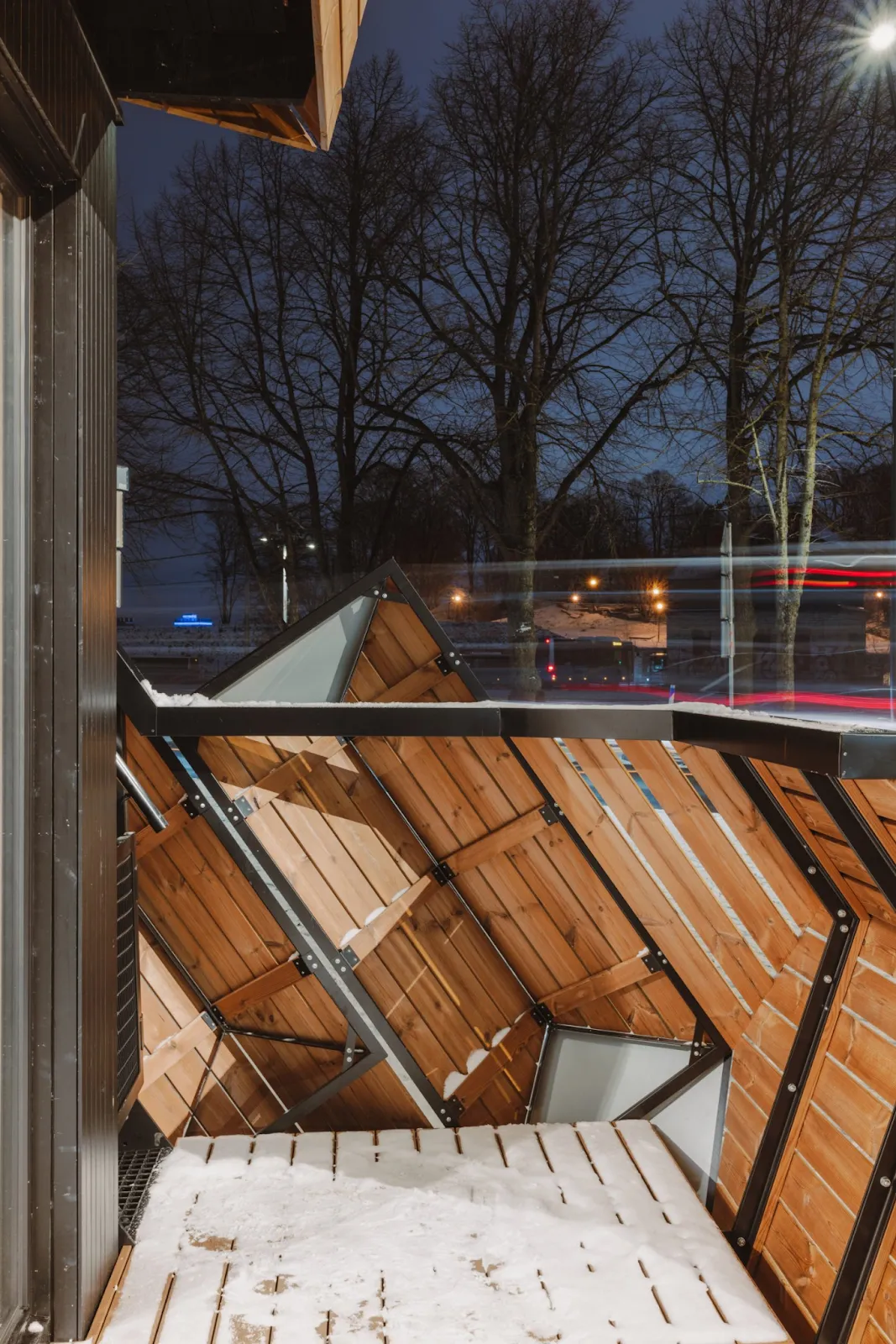
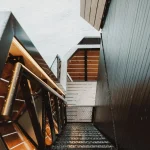
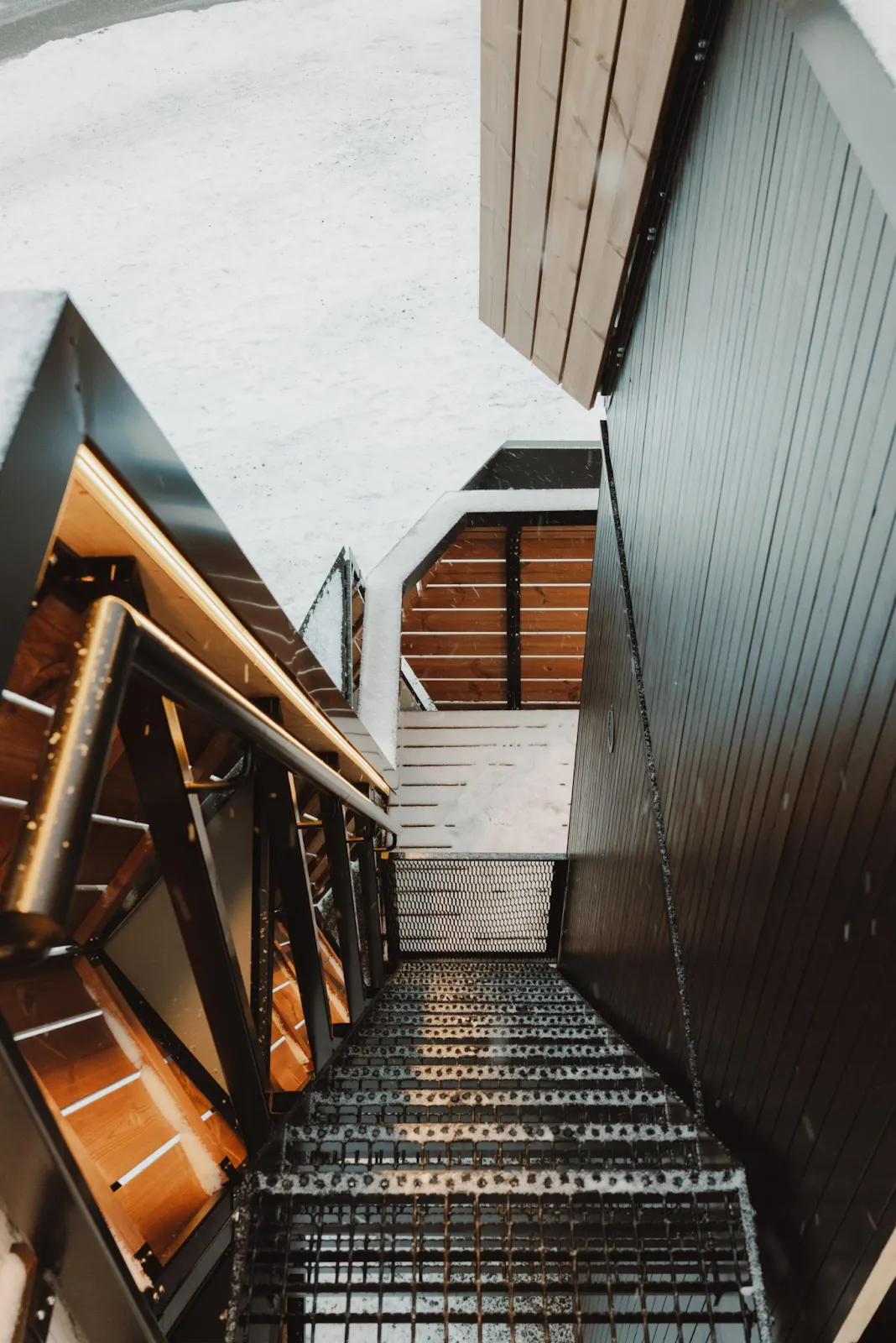
The structural timber used in the frame includes ash dieback wood, which is timber salvaged from trees affected by disease but still structurally useful, which underlines the project’s circular-materials agenda: low-value or damaged wood can be reclaimed and upcycled into building components rather than being discarded. The pavilion also contains a small front terrace, an internal staircase, and a roof terrace, showing how modular components can expand a tiny footprint into a multi-use piece of architecture.
Performance testing and monitoring
PAKK Pavilion is explicitly a research installation. It will remain instrumented and monitored through its research period (listed in project notes as 10 October 2024—9 October 2026), during which the mycelium panels will be evaluated for thermal performance, moisture and mold resistance, durability in real weather cycles, and practicalities of manufacture and assembly. The monitored data will determine whether mycelium panels can realistically scale to European construction markets and replace or supplement existing insulation types.
Implications for practice
Three practical takeaways from the pavilion matter for architects, materials researchers, and policy-makers:
- Material substitution at scale: The pavilion is one of the first built examples pushing mycelium from craft and small-product applications into envelope-scale uses. If the monitoring continues to show robust thermal and moisture performance, mycelium panels could become a low-carbon alternative to mineral wool or expanded polystyrene.
- Circularity through design for disassembly: The Pattern Building and sLender systems used in the pavilion emphasize modular, disassemblable construction. Over-cladding strategies that can be removed, reused, or repurposed align with circular-economy goals and offer pathways to retrofit stock without complete rebuilds.
- Value recovery from low-value timber: Using ash dieback timber demonstrates a model where diseased or low-value forest products are reclaimed and given longer life in buildings, reducing waste and pressure on primary timber resources.
Photo credit: Myceen