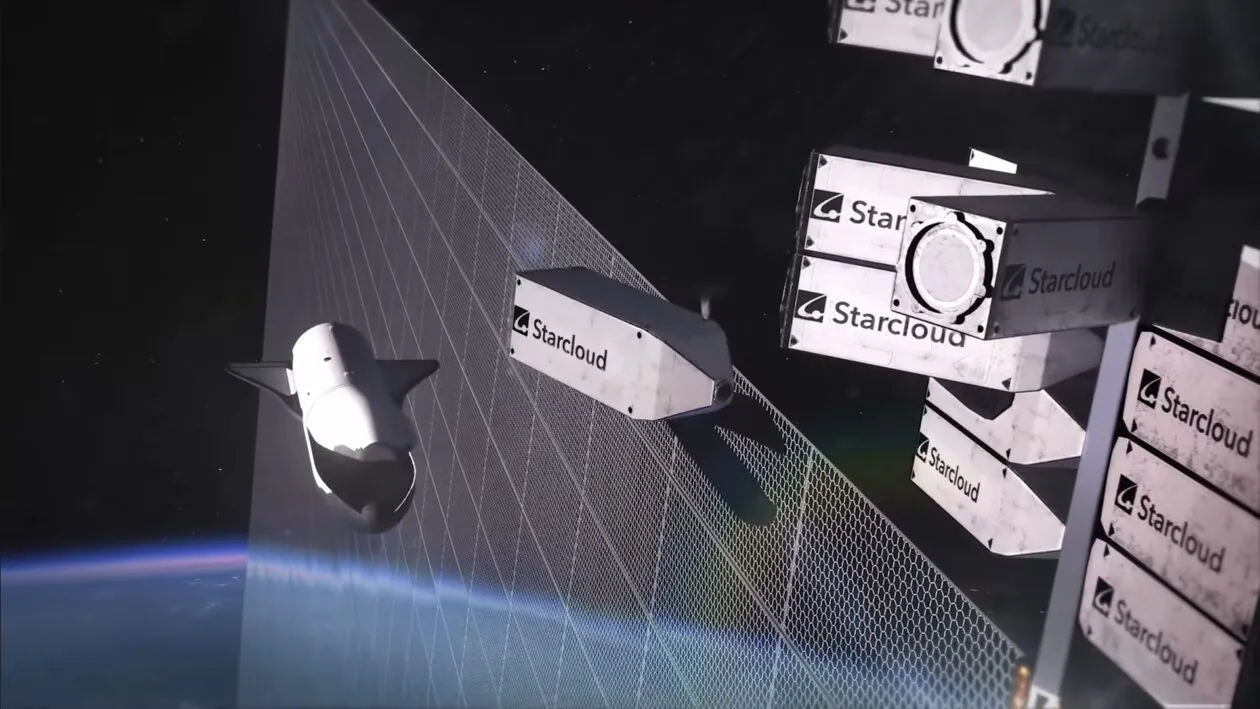

Starcloud, a space infrastructure startup founded in 2024, is working on a plan to shift data centers from the ground to low Earth orbit. The company argues that the energy and cooling limits of terrestrial facilities can be solved more effectively above the planet.
Why Orbit Instead of Earth?
The rationale for orbital computing lies in physics and economics. In a sun-synchronous polar orbit, satellites can harvest uninterrupted solar energy. Without atmospheric interference, photovoltaic panels in orbit generate up to five times the output of equivalent systems on Earth. This energy abundance directly addresses one of the largest constraints facing ground-based facilities: securing reliable, clean, and scalable power.
Cooling is another decisive advantage. The thermal properties of the vacuum allow for highly efficient passive heat dissipation, an engineering challenge that consumes significant resources in conventional data centers. Unlike orbital manufacturing or tourism concepts, data storage and compute workloads rely solely on transmitting digital information. With established satellite internet systems already moving vast amounts of traffic between orbit and ground, Starcloud argues that relocating compute workloads is far more practical than it may appear.
Development Path: From Prototype to Orbital Scale
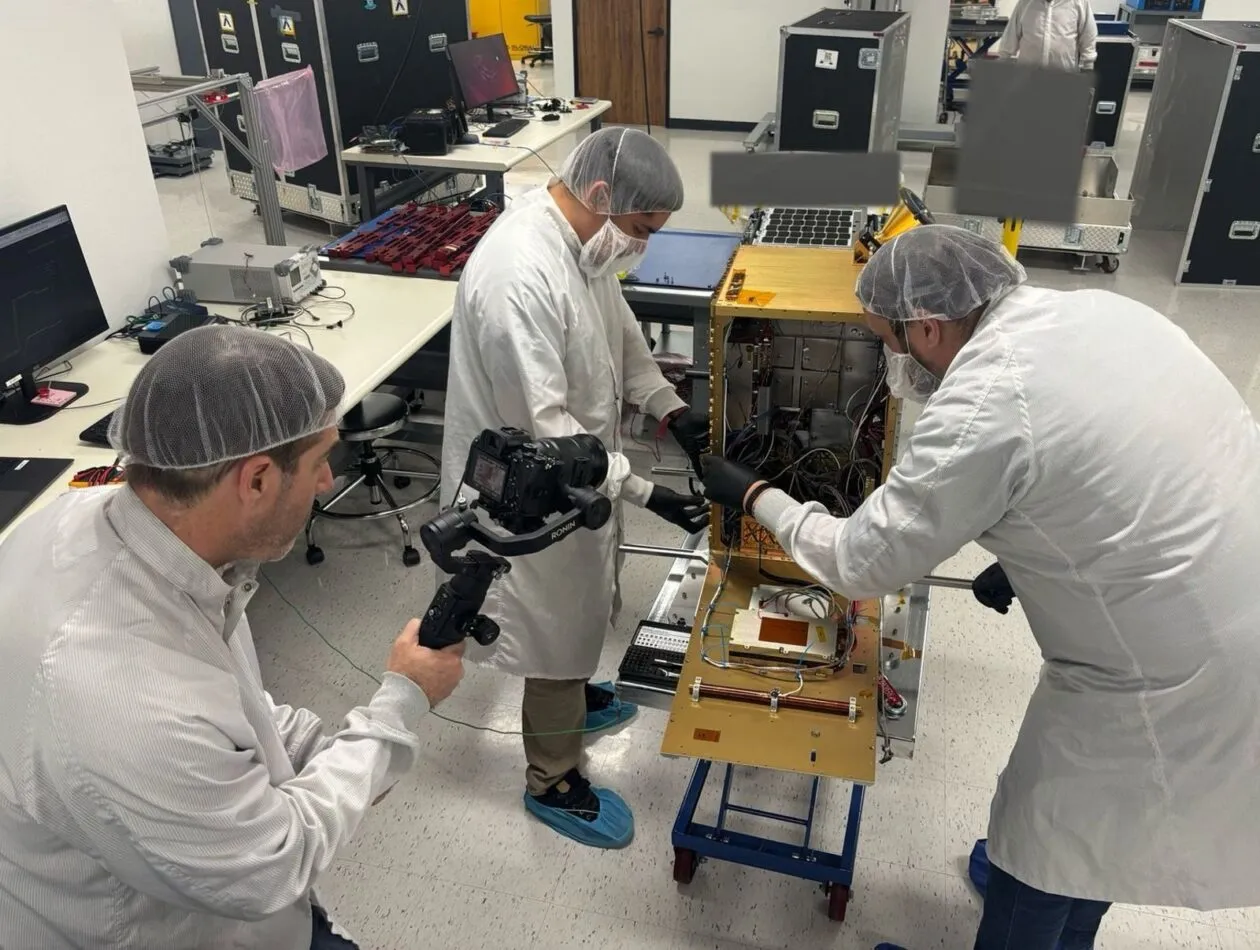
The company’s trajectory is mapped through a phased series of spacecraft. Later this year, Starcloud 1 will launch as a refrigerator-sized prototype fitted with NVIDIA processors and powered by a 1-kilowatt solar array. According to the firm’s engineering team, it will deliver one hundred times the computational throughput of previous spaceborne systems.
In 2026, Starcloud 2 is planned, scaling both power and computing capacity by 100 times. The next phase is a commercial satellite powered by a 1-megawatt solar array. Looking further ahead, Starcloud aims to deploy 40-megawatt orbital data centers by the early 2030s, using solar arrays several kilometers wide and generating up to 5 gigawatts of electricity.
Challenges Facing Starcloud’s Orbital Data Centers
Specialists in orbital dynamics and energy systems caution that shielding against radiation, orbital congestion, and long-term maintenance remain unresolved. Critics also point to uncertainties in power yield calculations and the risks of cascading collisions in low Earth orbit.
Starcloud’s leadership, however, emphasizes recent aerospace studies validating their assumptions on thermal management and orbital stability. They highlight that satellite constellations such as Starlink already operate with lightly shielded, Earth-grade solar panels in comparable orbital zones.
Launch Costs and the Economics of Orbital Data Centers
Central to the feasibility of the plan is the launch cost. The company’s strategy is predicated on the success of heavy-lift, reusable rockets such as SpaceX’s Starship. If cost-to-orbit falls by more than 99 percent, as many in the industry anticipate, then the economics of large-scale orbital data centers become viable.
Unlike other proposed space-based industries, which must ship raw materials and finished goods across Earth’s gravity well, data centers require only the transmission of bits. That fundamental difference could make orbit-based computing the first commercially practical form of large-scale space infrastructure.
What Space-Based Data Centers Mean for the Cloud Industry
Starcloud’s concept arrives at a time of mounting pressure on terrestrial data centers. Growing AI workloads, rising energy costs, water-intensive cooling requirements, and resistance from local communities have all sharpened the search for alternatives. While still speculative, orbital data centers could offer a path to massive energy scalability with minimal terrestrial footprint.
Industry reports suggest that major cloud providers, including Google, are quietly studying similar architectures. For now, Starcloud is the first to commit to real hardware in orbit, with its inaugural mission set for launch within months.