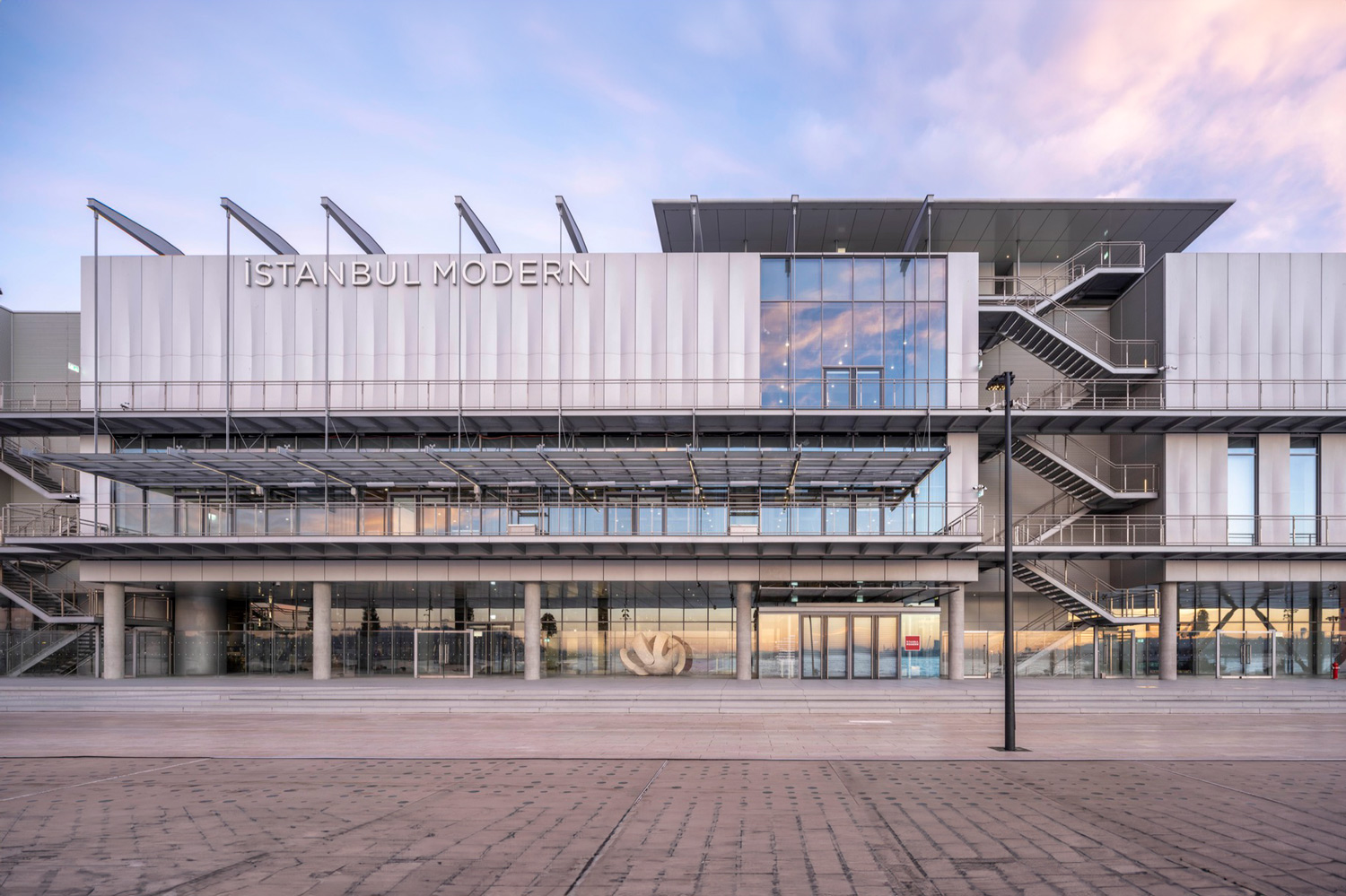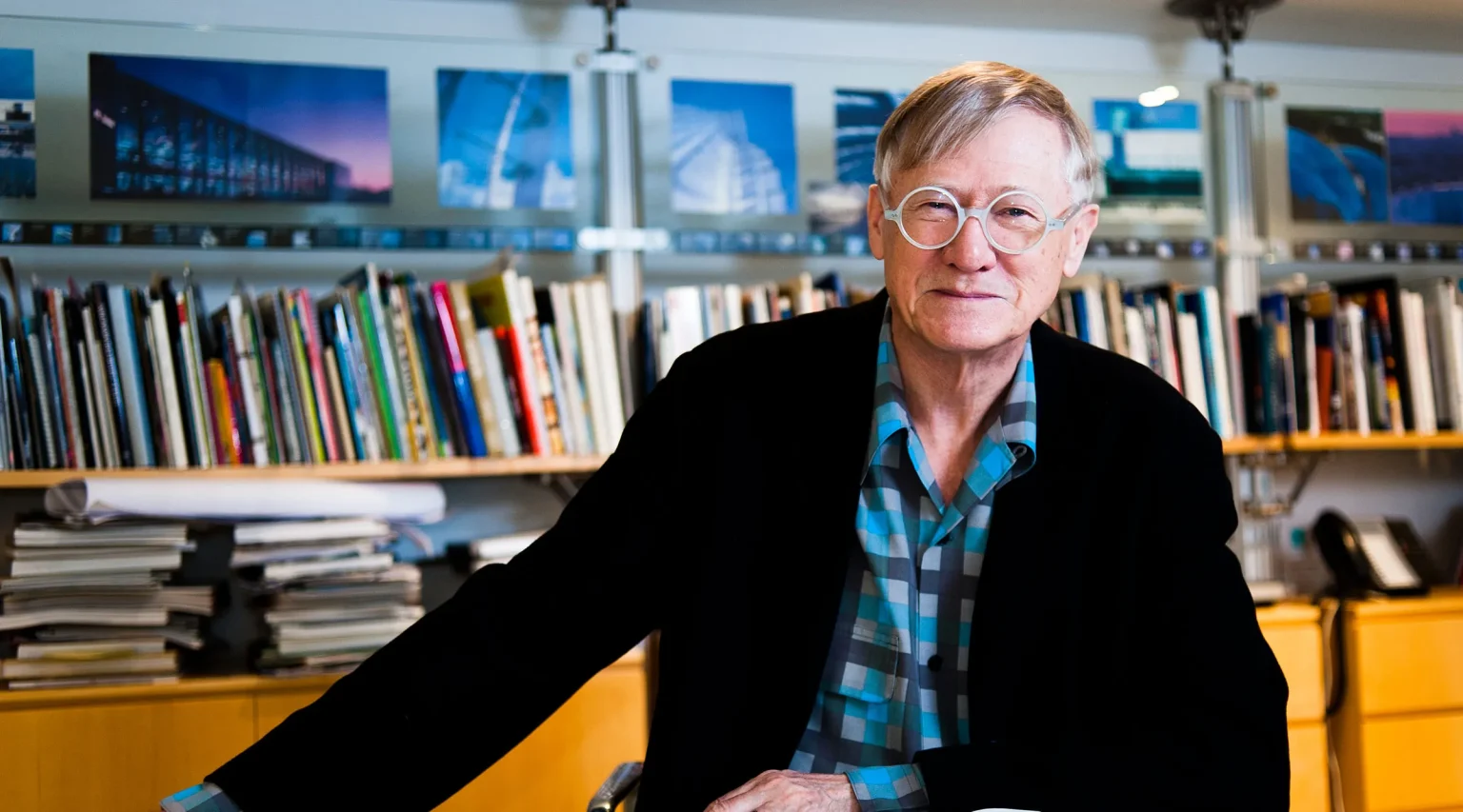

Sir Nicholas Grimshaw, the British architect whose dramatic glass-and-steel structures helped define the high-tech movement and reshaped the relationship between technology, sustainability, and design, died on Sunday at 85. His death was confirmed by Grimshaw Architects, the London-based practice he founded in 1980.
Who is Nicholas Grimshaw?
A central figure in the late 20th-century architectural avant-garde, Grimshaw belonged to a generation of designers, including Norman Foster, Richard Rogers, Renzo Piano, and Patty and Michael Hopkins, who rejected traditional silhouettes in favor of structures that celebrated engineering. Their buildings revealed rather than concealed the mechanics of construction, making infrastructure part of the aesthetic.
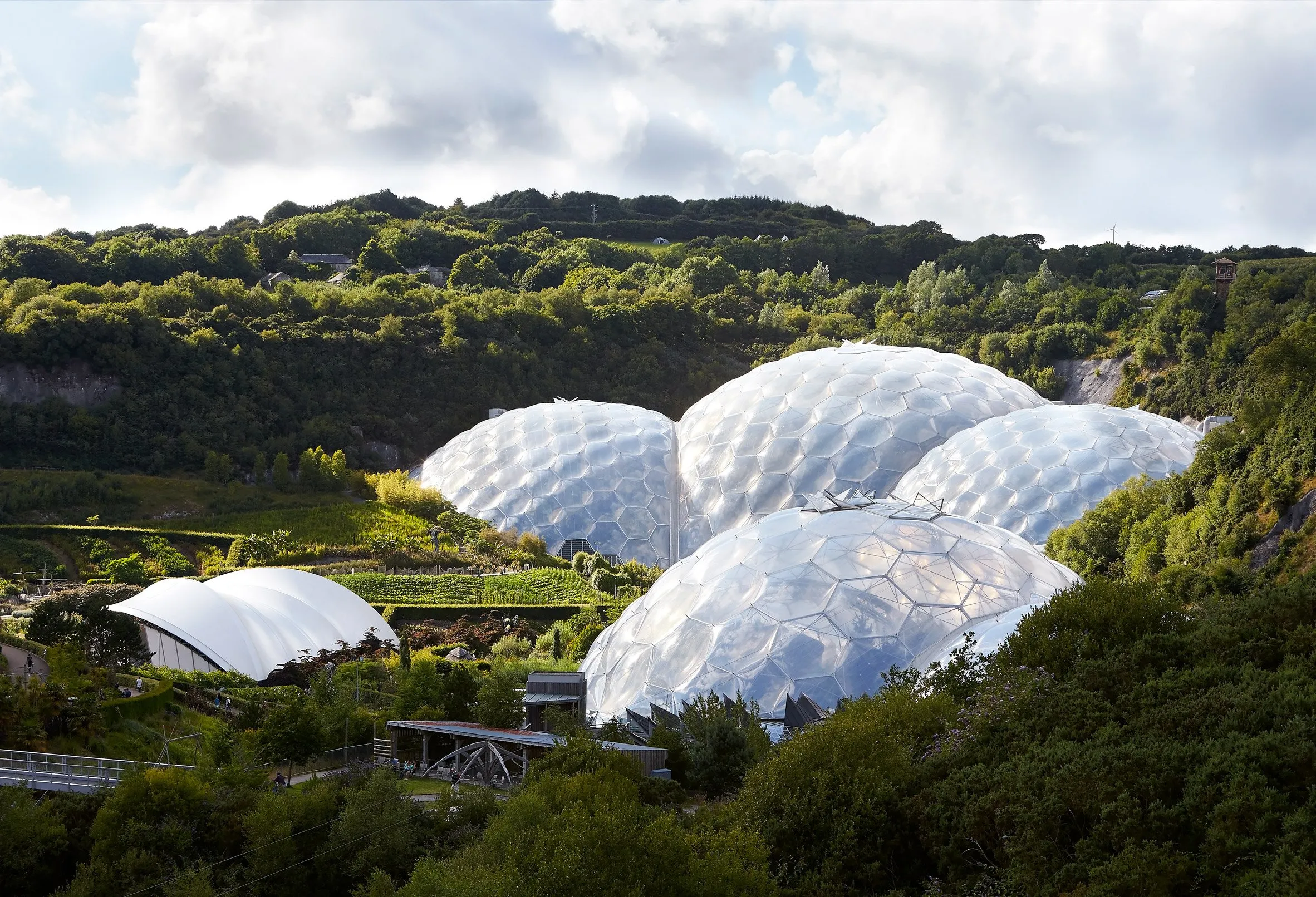
Grimshaw’s work spanned everything from industrial plants to transport hubs, but his name became synonymous with two projects that fused spectacle with utility: the International Terminal at London’s Waterloo Station and the Eden Project in Cornwall, an ecological complex housed in futuristic geodesic domes. The latter, completed in 2001, transformed a former clay pit into a celebrated experiment in environmental design and remains one of Britain’s most visited architectural landmarks.
“His architecture was never about surface or fashion,” Andrew Whalley, the firm’s current chairman, said in a statement. “It was always about structure, craft, and purpose, about buildings that endure because they are useful, uplifting, and, in his words, ‘bring some kind of joy.’”
Born in 1939, Grimshaw took a circuitous path into the profession. He briefly dropped out of school at 17 before pursuing studies at Edinburgh College of Art and later the Architectural Association in London, where he graduated in 1965. His early career was shaped through a partnership with Terry Farrell, producing adaptable projects like the Park Road Apartments and the Herman Miller Factory, a flexible industrial building that became a benchmark for workplace design.
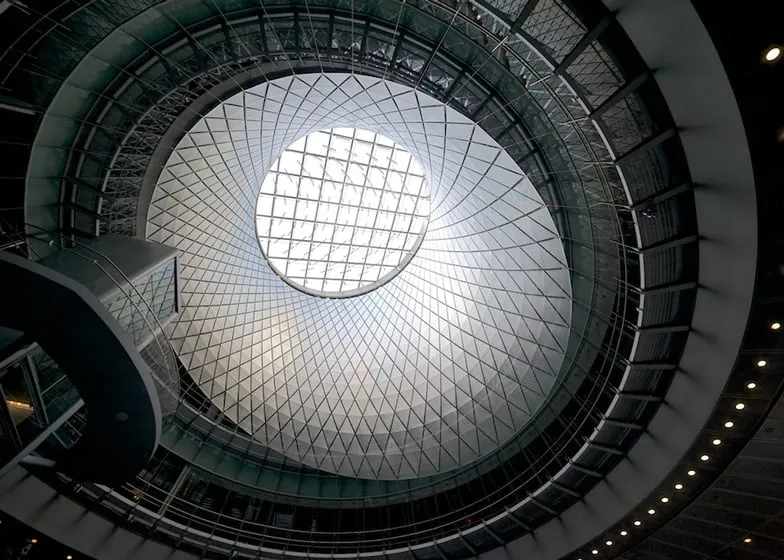
With his own studio, Grimshaw earned acclaim for projects such as the Financial Times Printworks and the Sainsbury’s supermarket in Camden, both in the 1980s, before his trajectory soared with Waterloo’s International Terminal. The soaring glass-and-steel station hall, completed in 1993, won the Royal Institute of British Architects’ Building of the Year award and the prestigious European Union Prize for Contemporary Architecture, better known as the Mies van der Rohe Award.
His knighthood came in 2002, followed by the RIBA Gold Medal in 2019, recognition his peers considered long overdue. By then, Grimshaw’s reputation had extended well beyond individual buildings. His practice became a proving ground for generations of architects, known for its lack of rigid hierarchy and emphasis on experimentation.
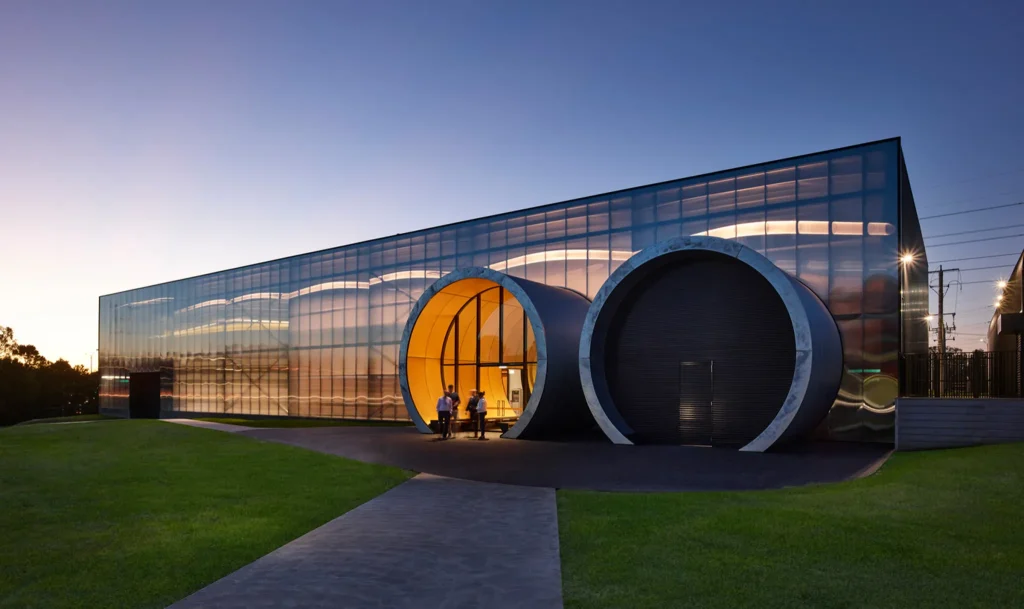
In later years, he turned his focus to education and access. In 2022 he established the Grimshaw Foundation, which has since supported hundreds of underrepresented young people seeking careers in creative fields.
“I have always felt we should use the technology of the age we live in for the improvement of mankind,” Grimshaw reflected upon receiving the Gold Medal. His career made that conviction tangible.
Nicholas Grimshaw is survived by his family and a body of work that continues to shape skylines, public spaces, and the imagination of architects worldwide.