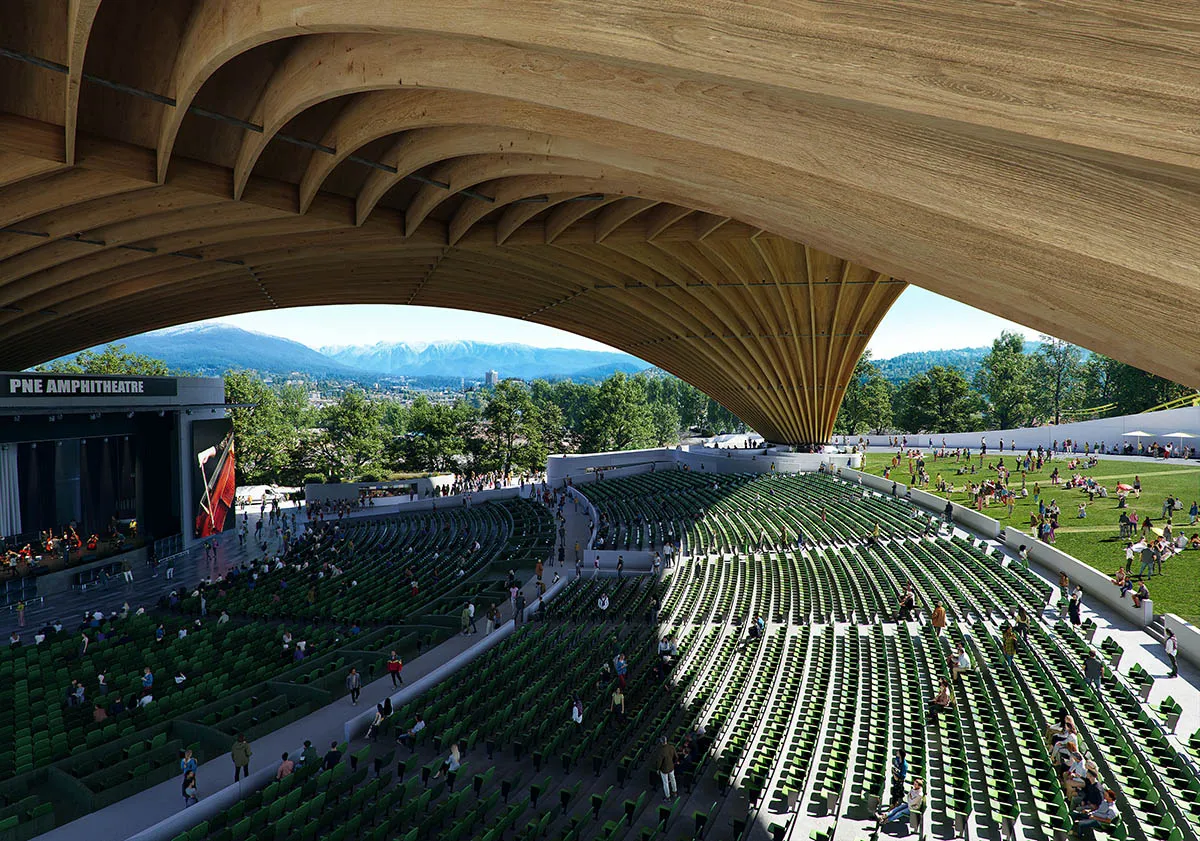
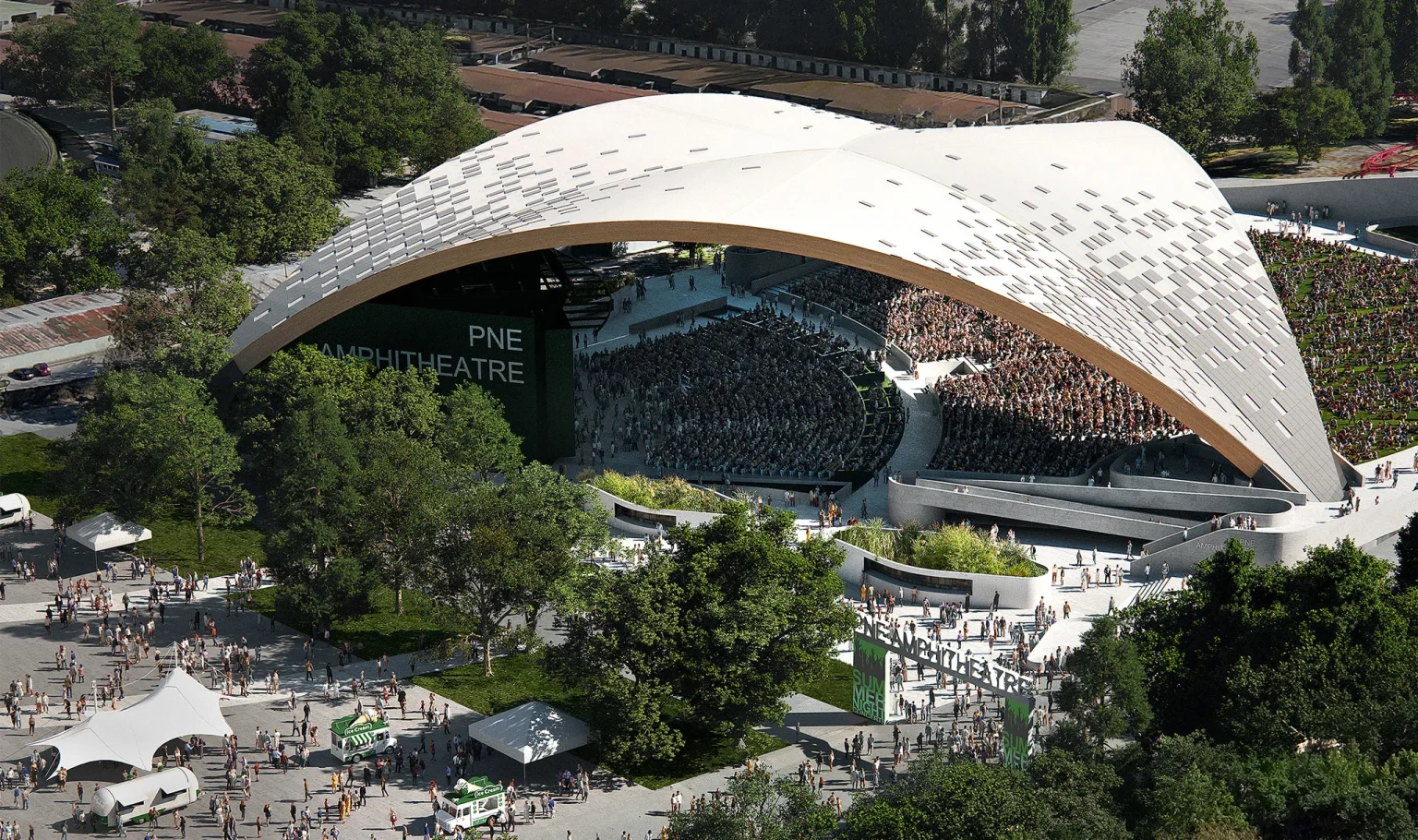
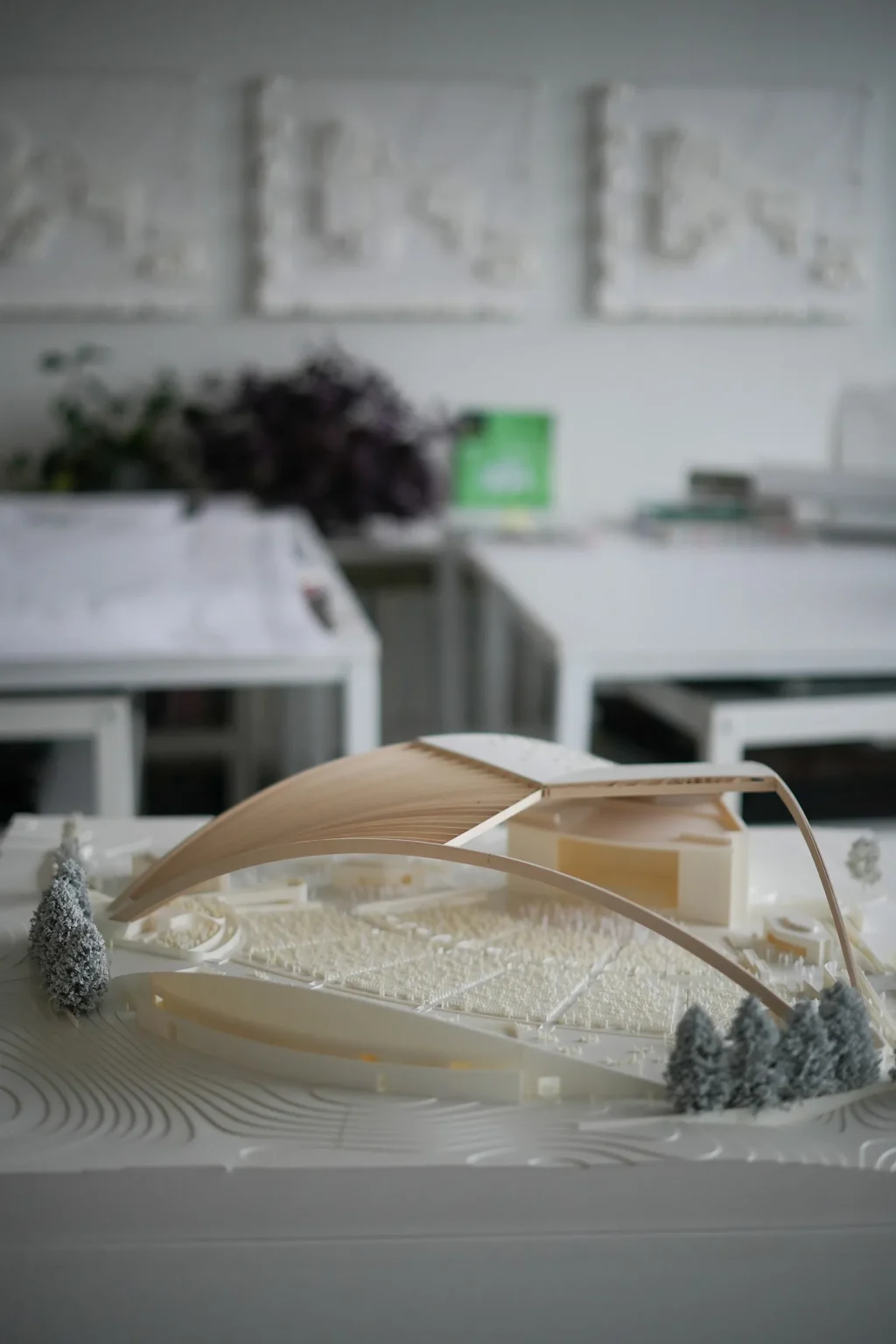
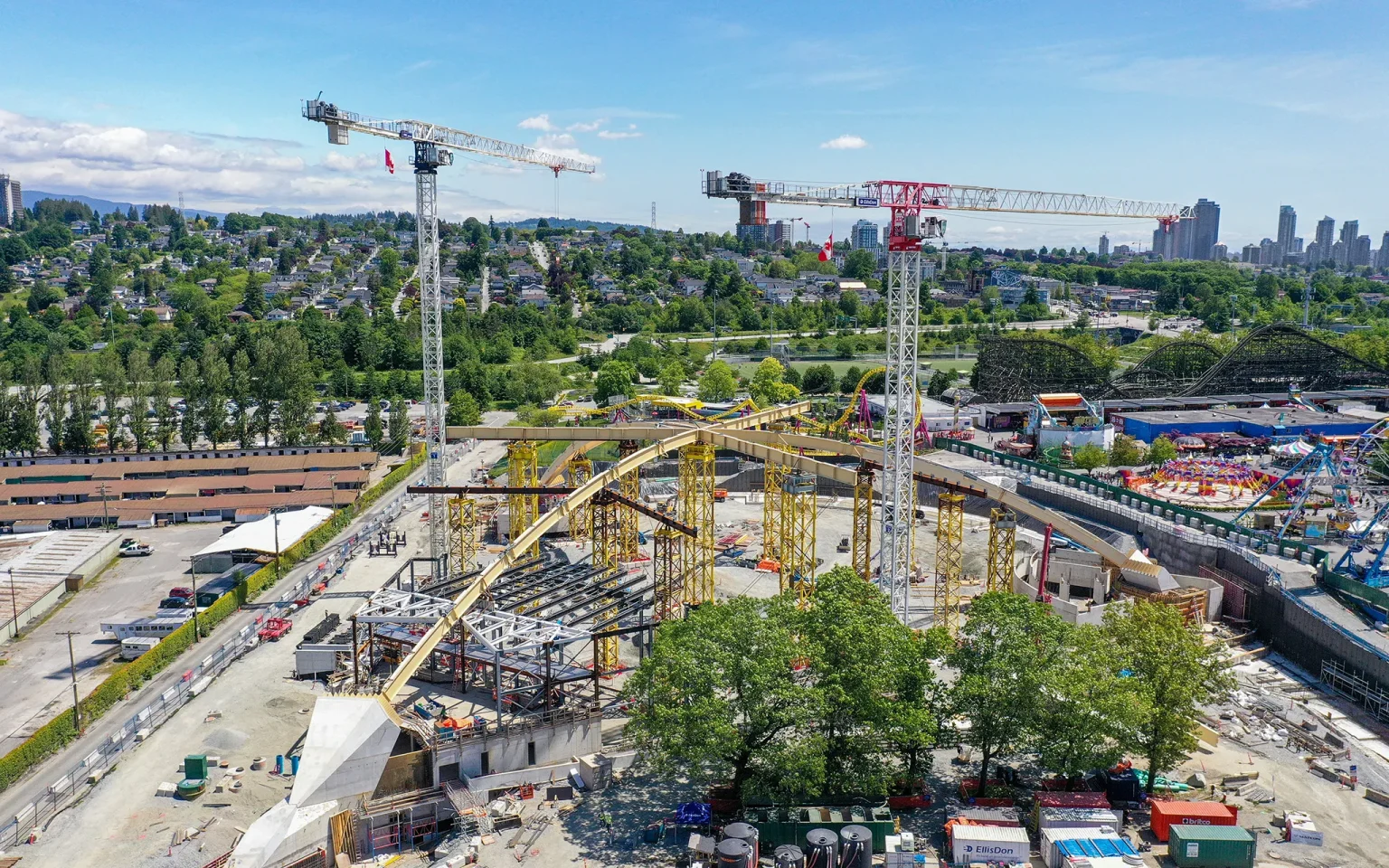
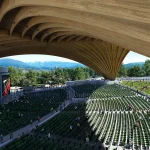
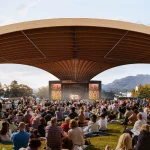
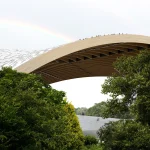
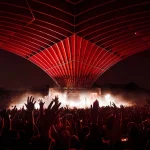
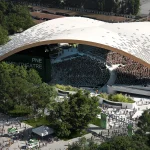
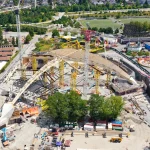
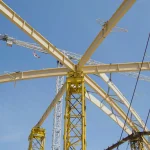
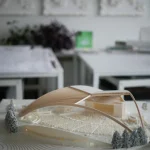
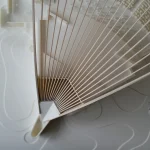
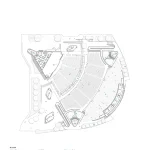
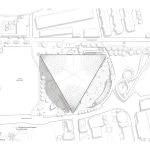
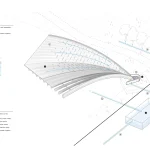
Construction is underway on the world’s largest free-span timber roof in Vancouver, as work begins on the Freedom Mobile Arch, a new PNE amphitheatre located in Hastings Park. Designed by Revery Architecture with structural engineering by Fast + Epp, the project introduces a 105 metre column-free canopy built from prefabricated glulam beams, cross-laminated timber, and a steel-tensioned oculus.
Located near the Hastings corridor with views of the North Shore Mountains, the new structure replaces the temporary stage used by the Pacific National Exhibition since the 1960s. Rather than imitate the past, the design sets a new benchmark for performance architecture by allowing form to follow structure.
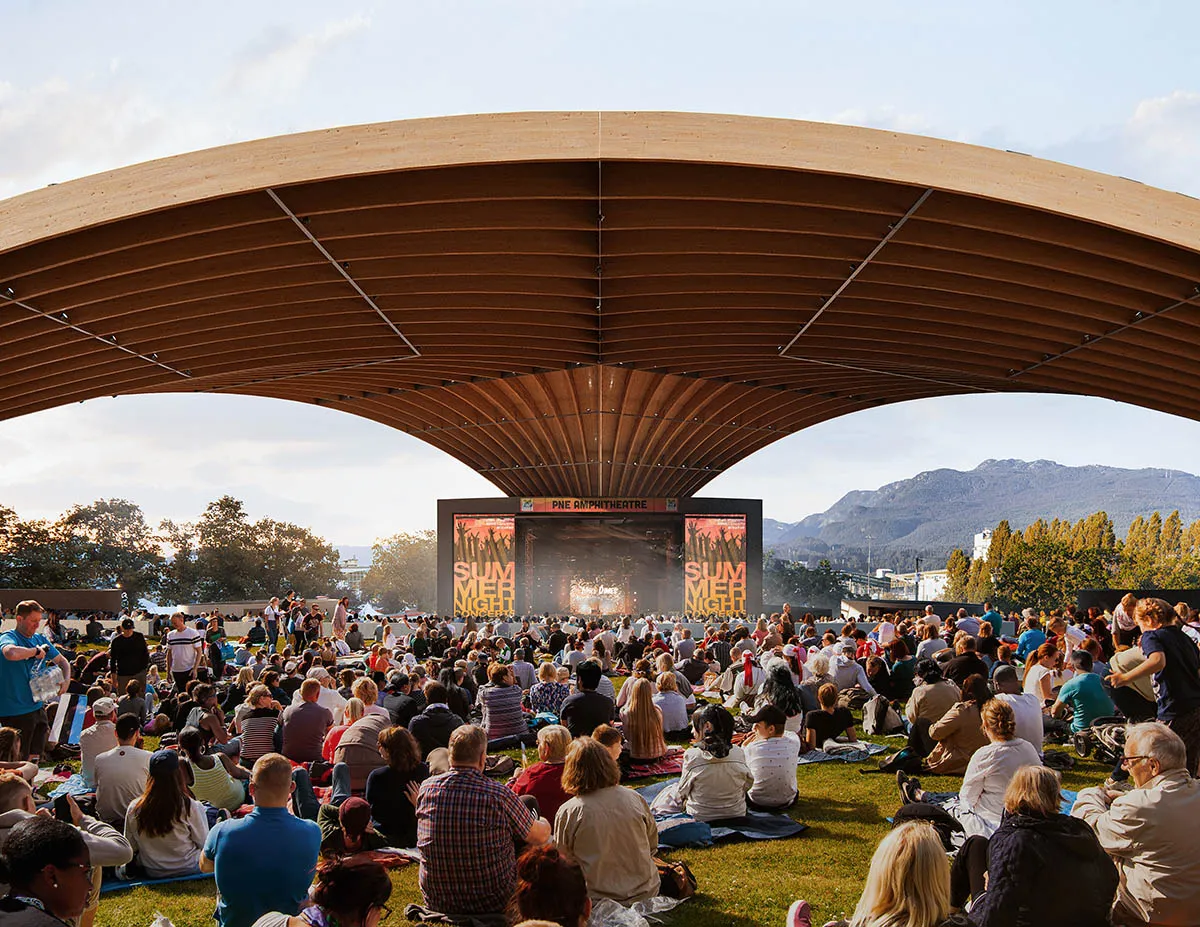
Freedom Mobile Arch introduces a permanent home for performance at the PNE
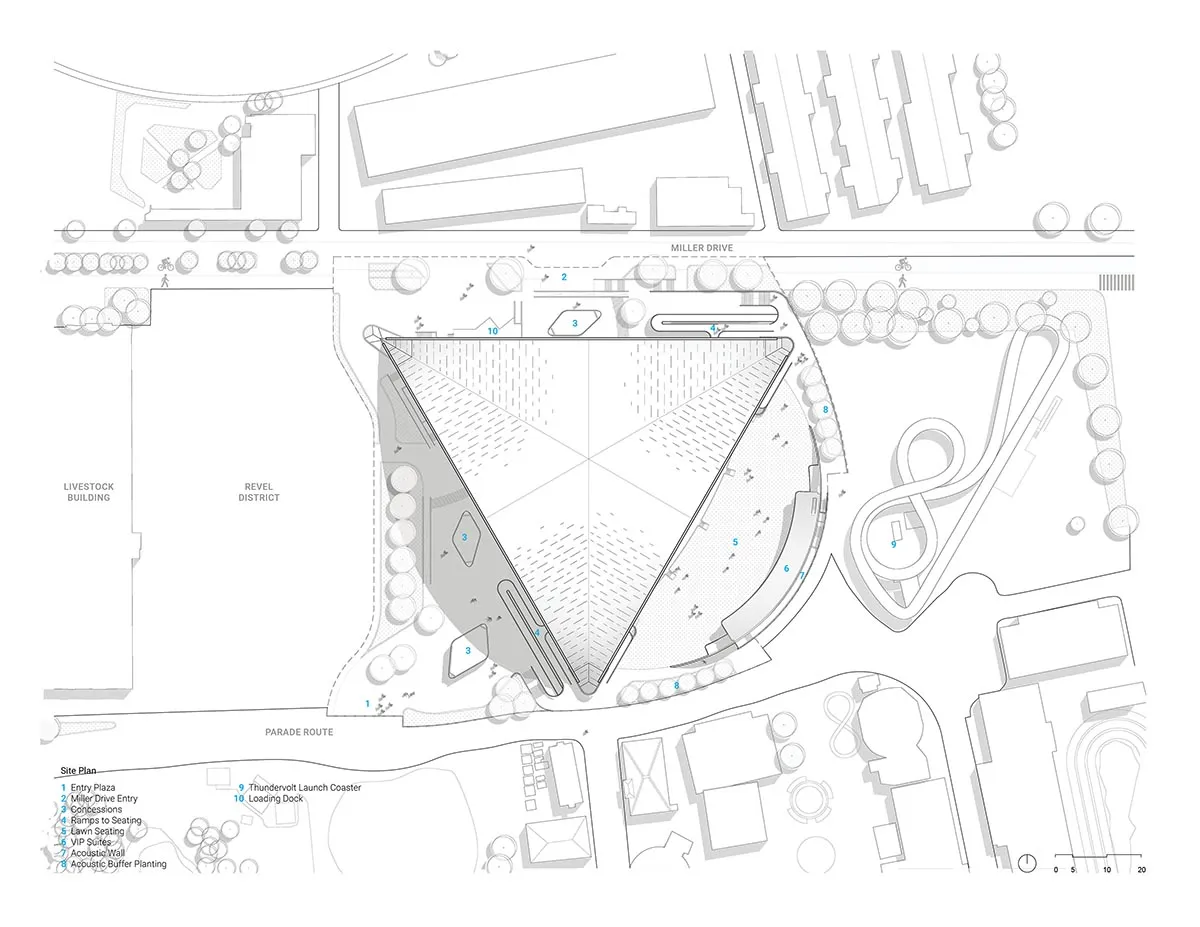
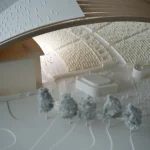
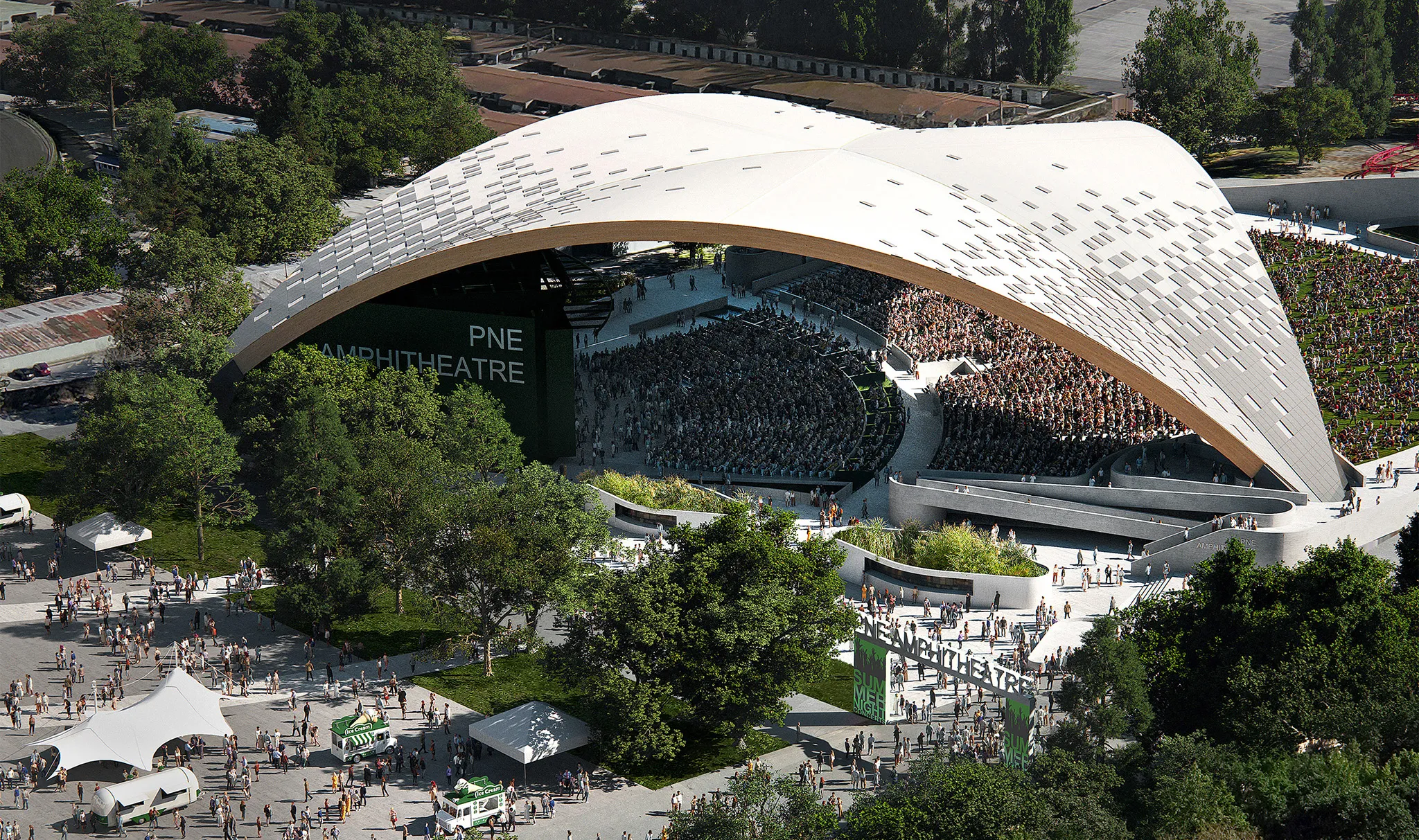
In one of Vancouver’s oldest public parks, the Freedom Mobile Arch stands as a new civic landmark. The amphitheatre eliminates internal columns entirely, creating a continuous span that frames space without enclosure. It anchors a permanent venue for concerts, Indigenous festivals, community events, and the annual PNE Fair.
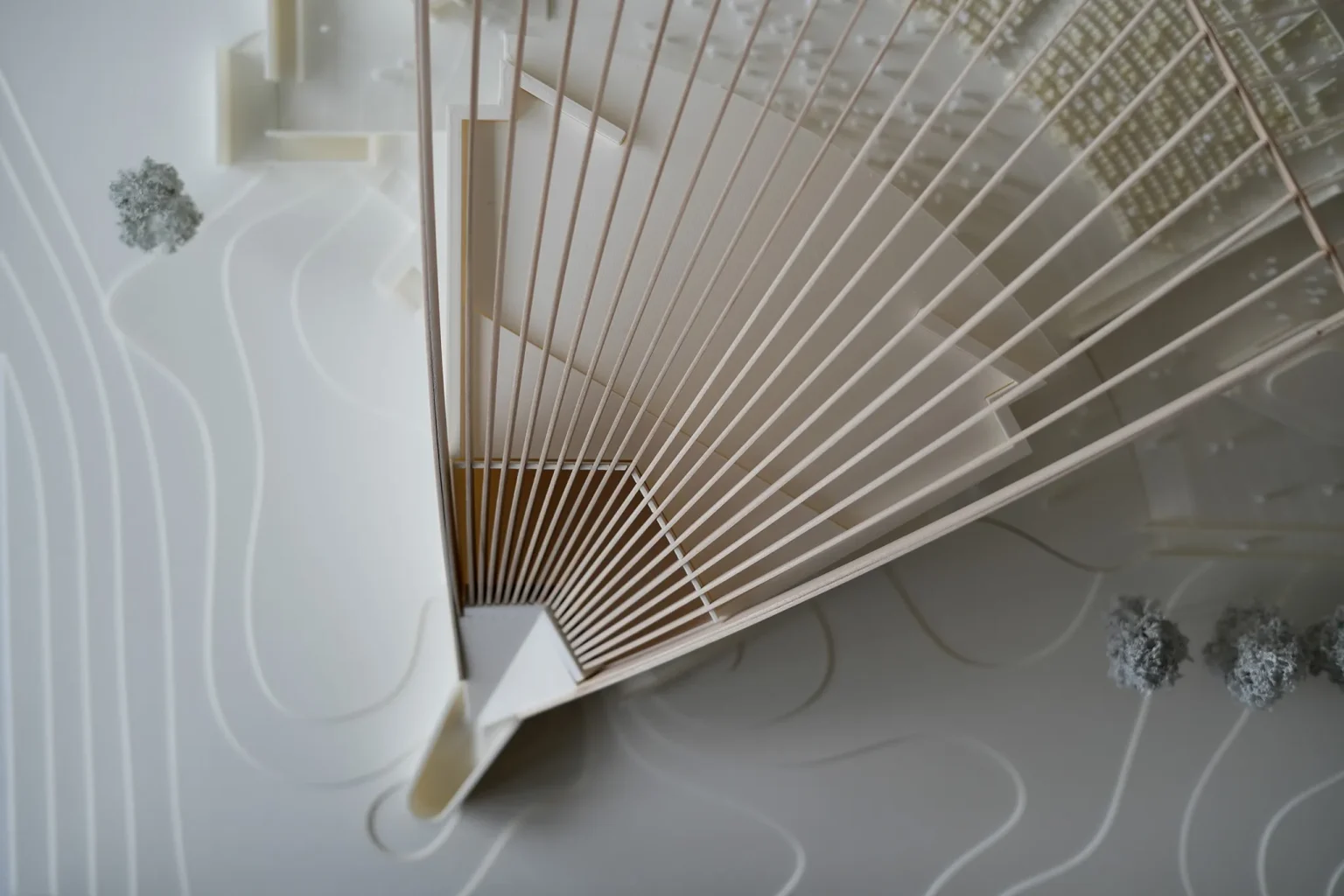
With a $65 million budget and capacity for 10,000 spectators, it replaces decades of temporary stages with a structure designed to endure. Its radial form draws from the PNE’s sunburst logo and echoes the branching canopy structures found in the region’s forest ecologies.
World’s Largest Free-Span Timber Roof Takes Shape
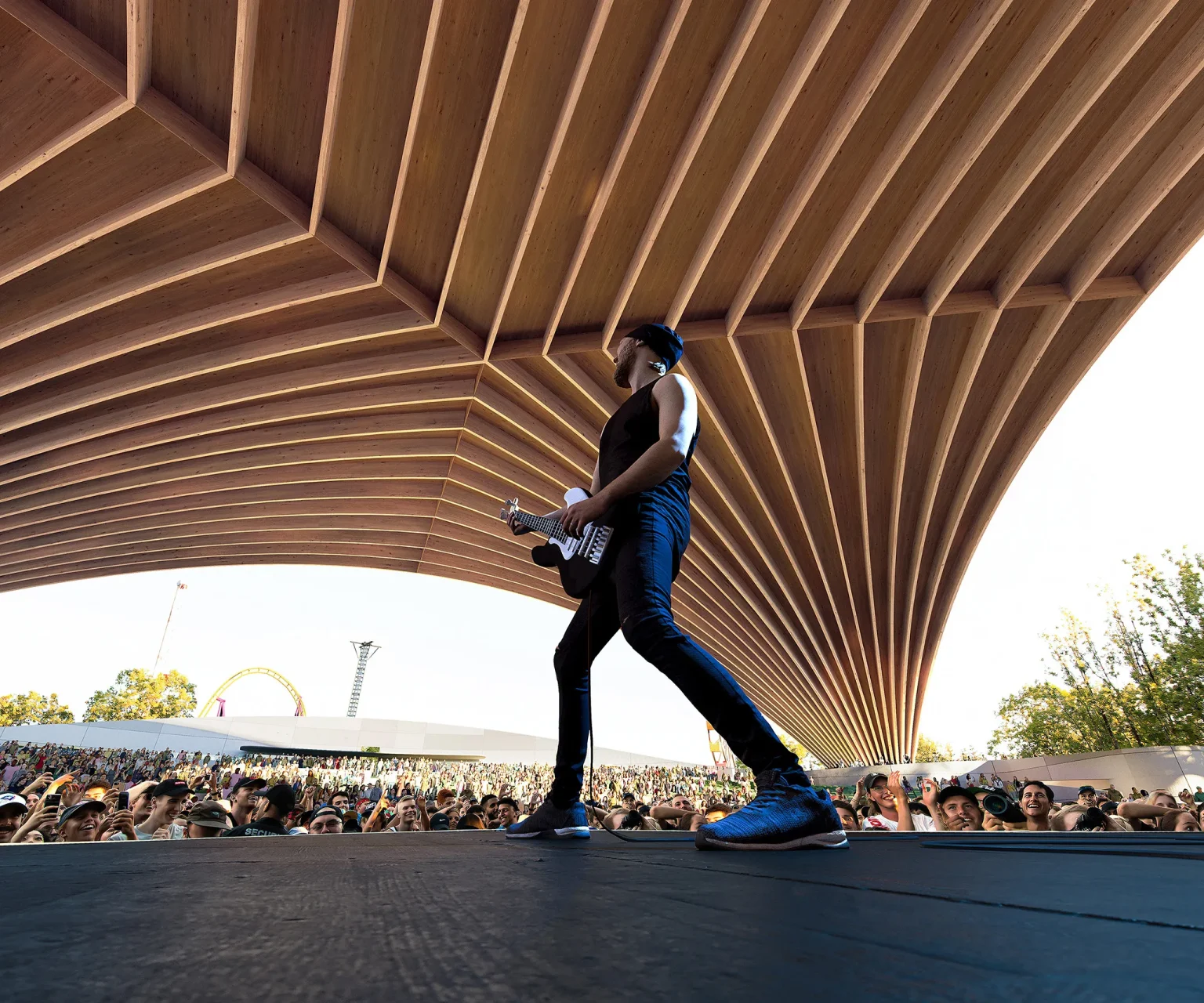
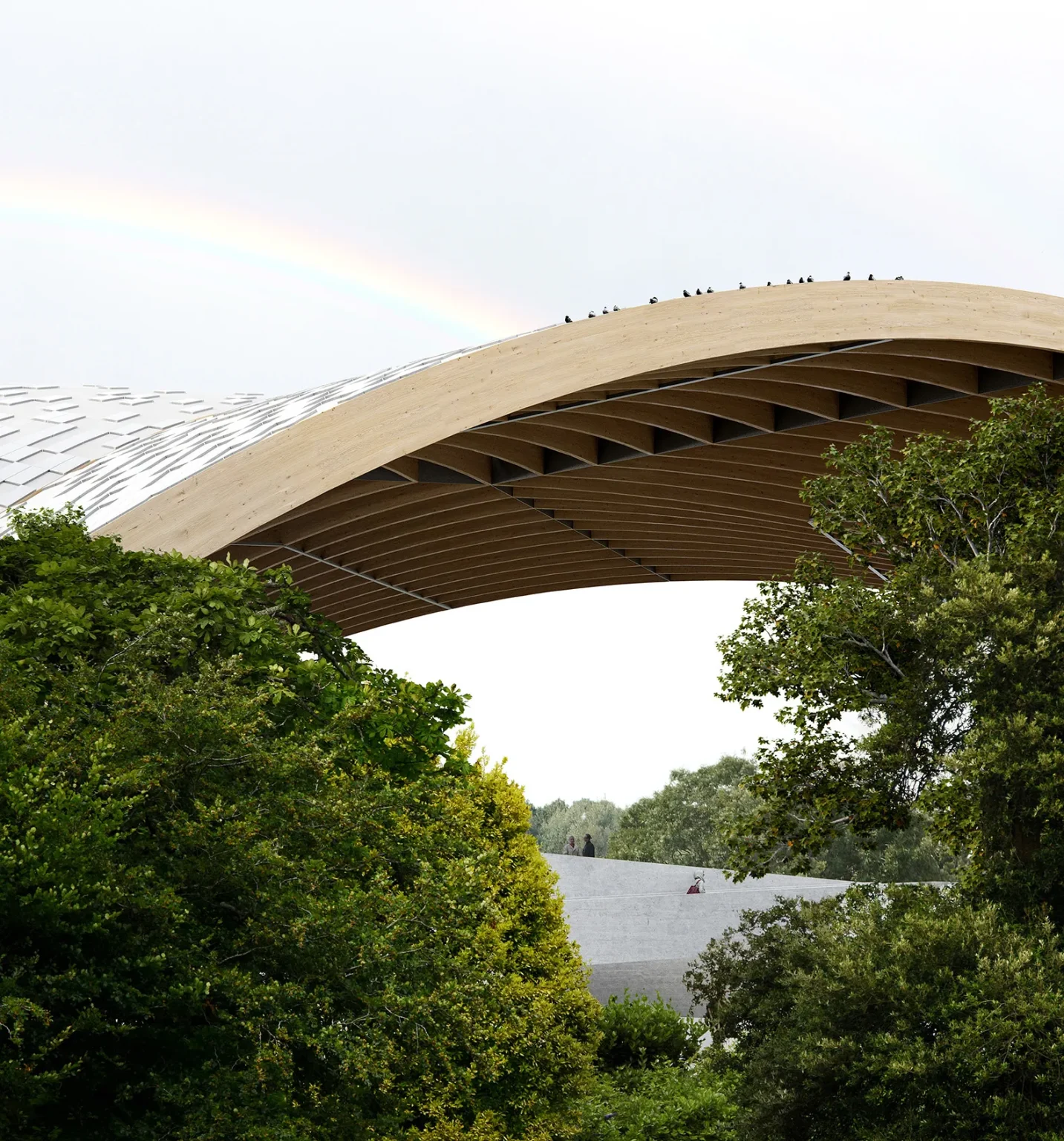
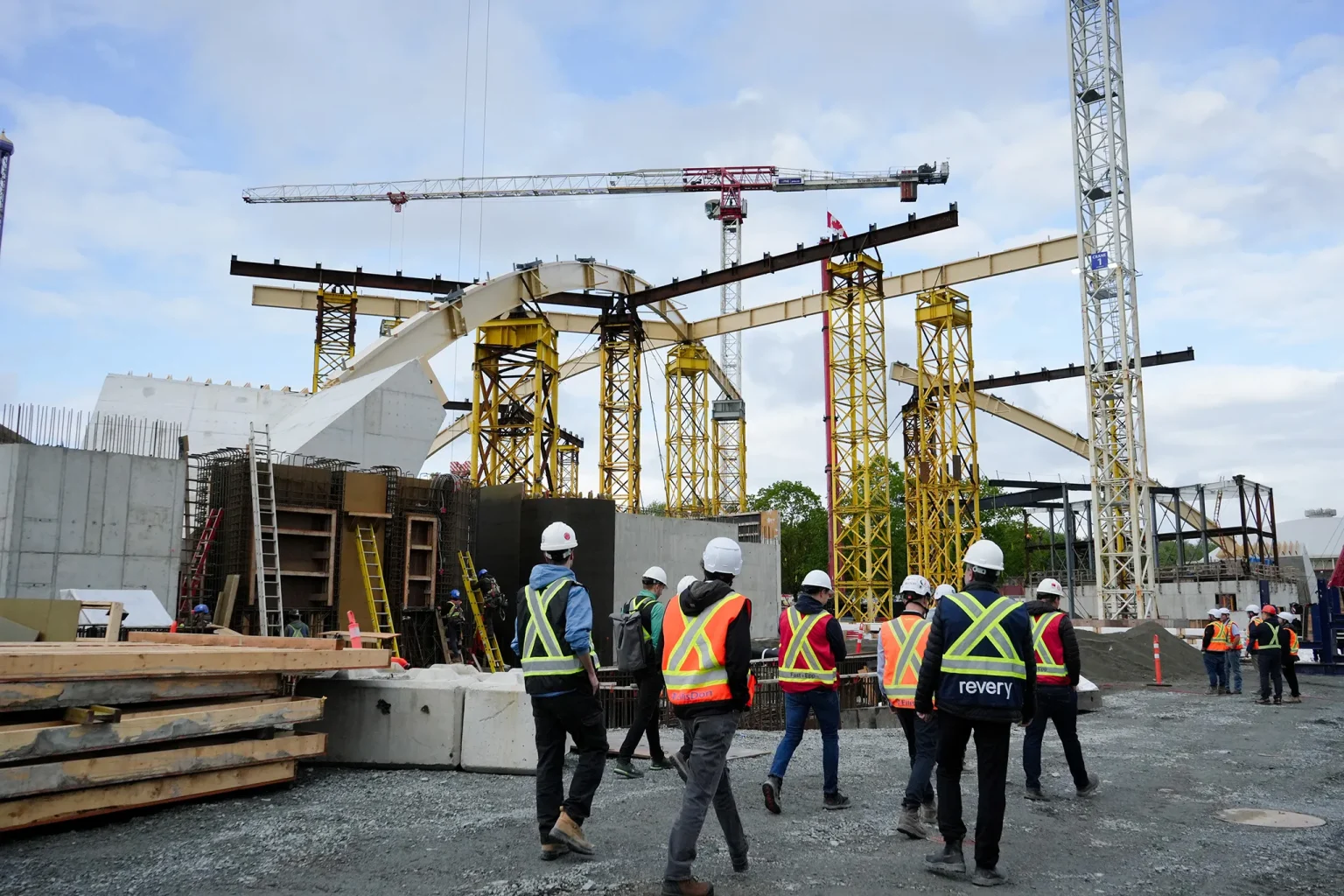
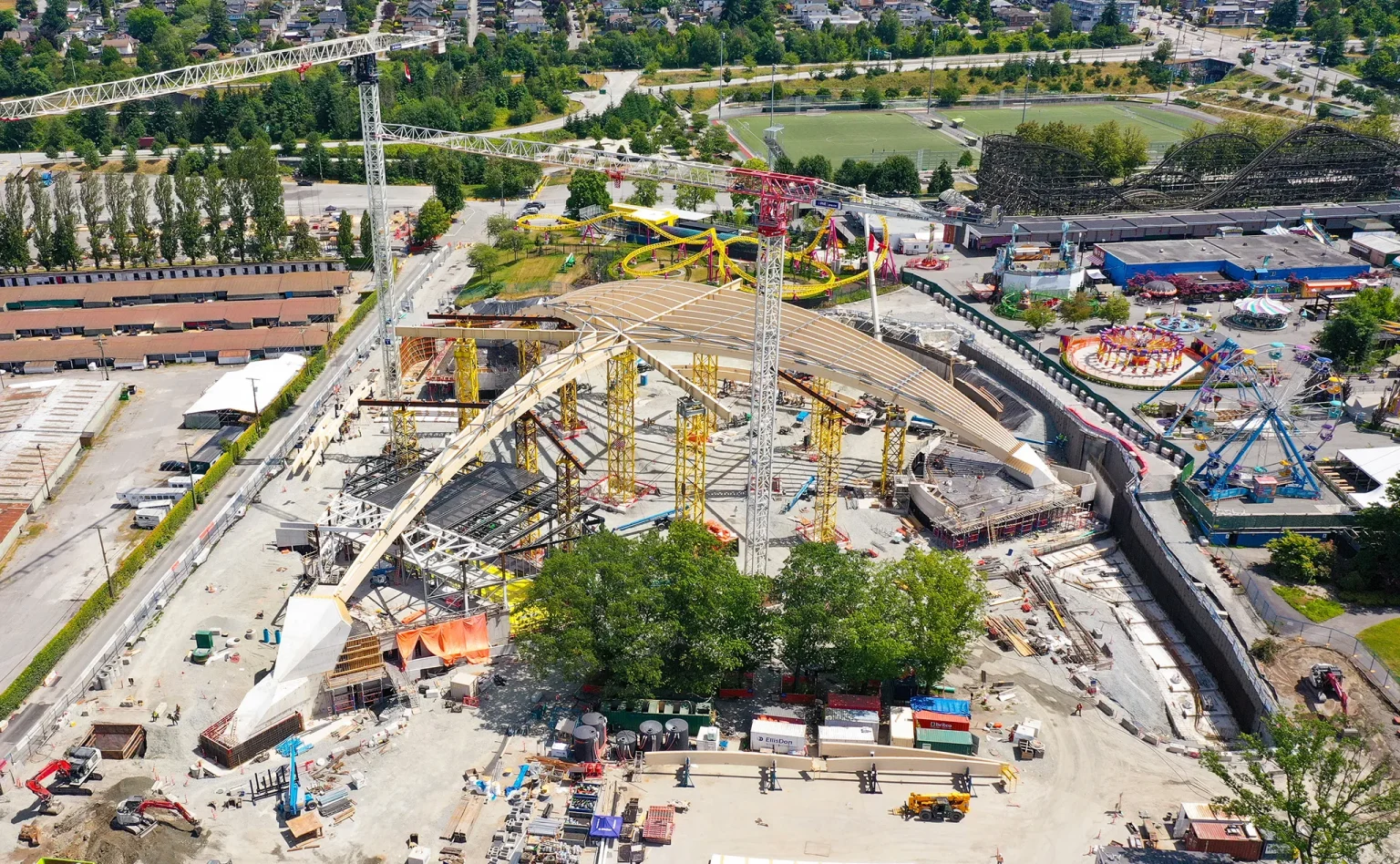
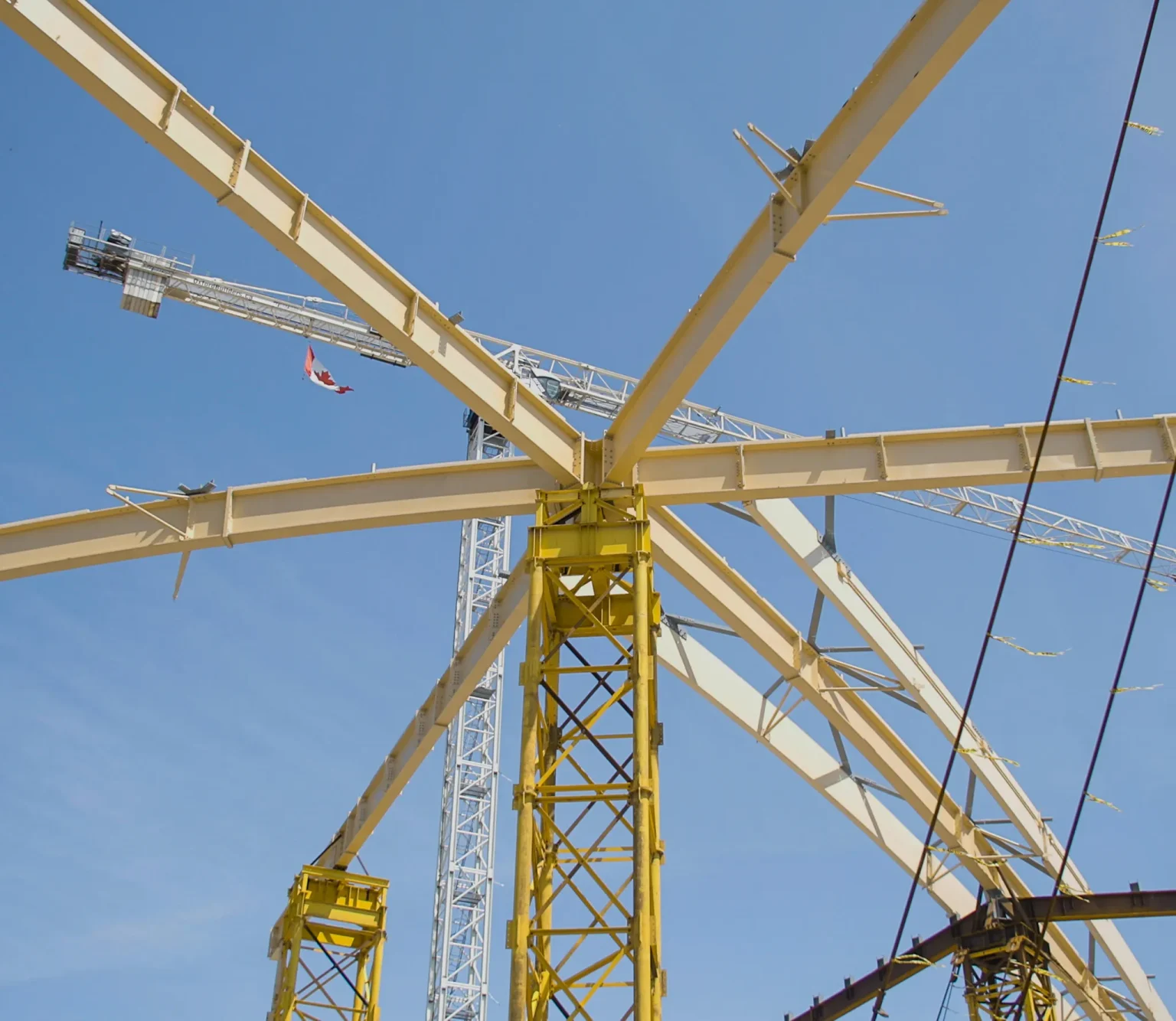
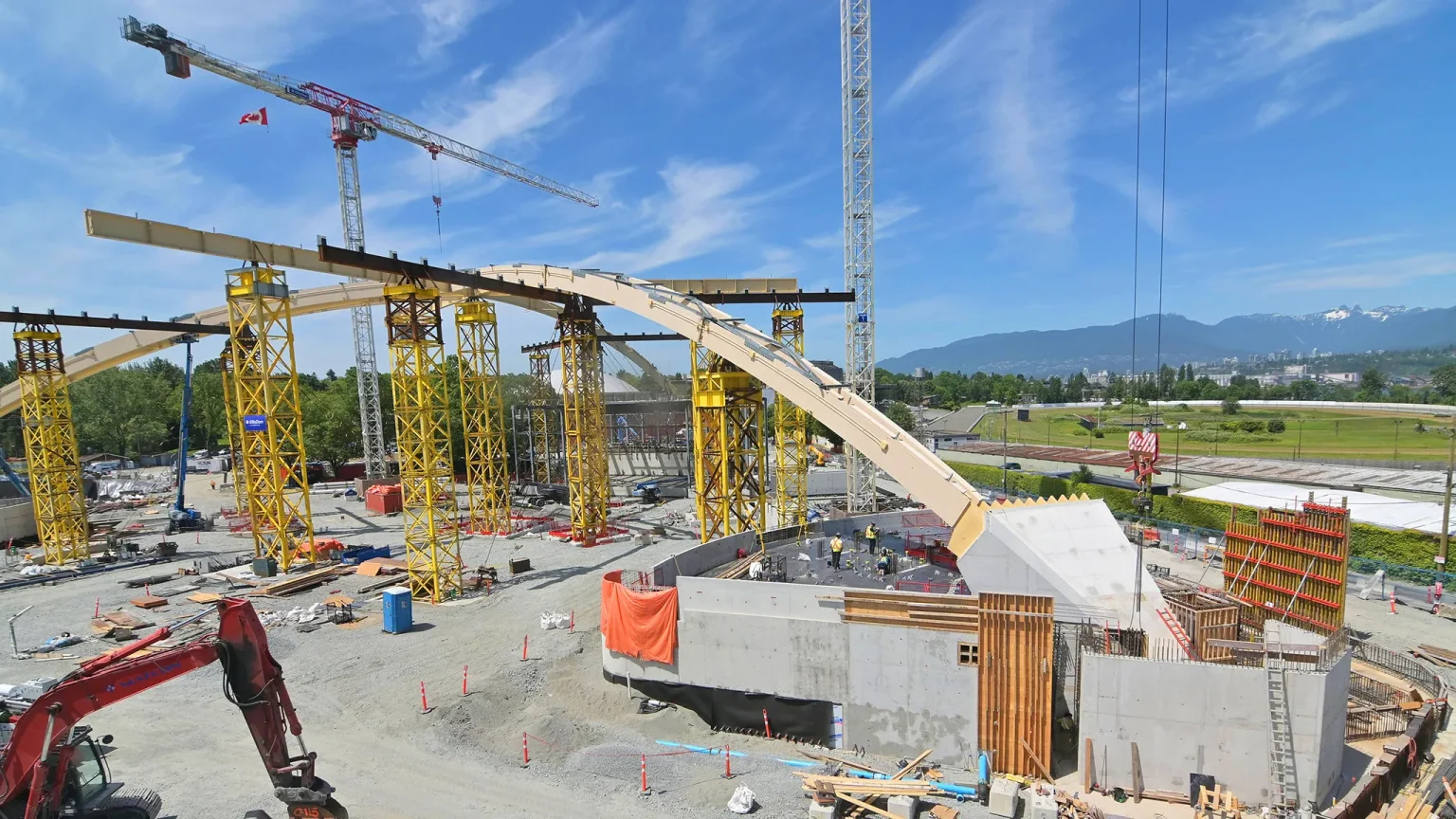
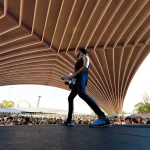
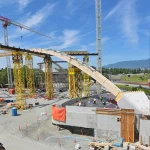
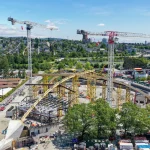
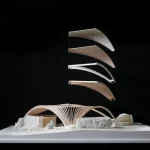
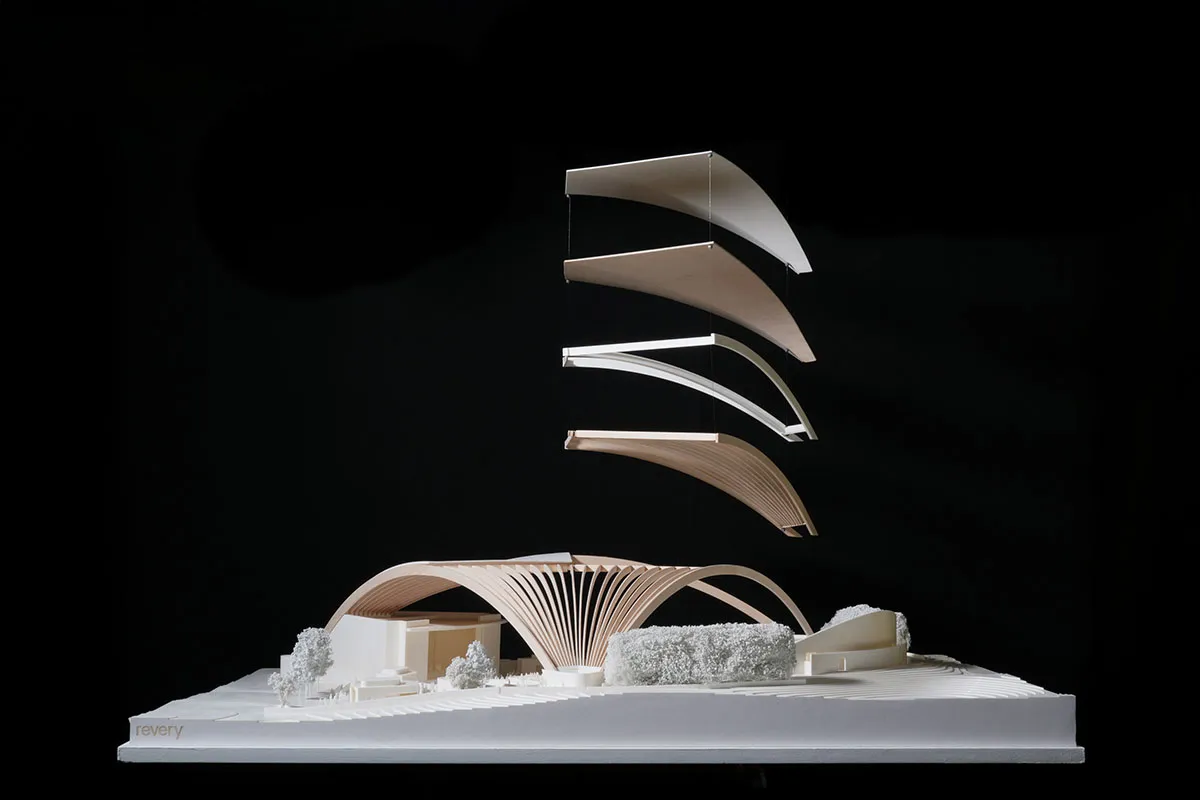
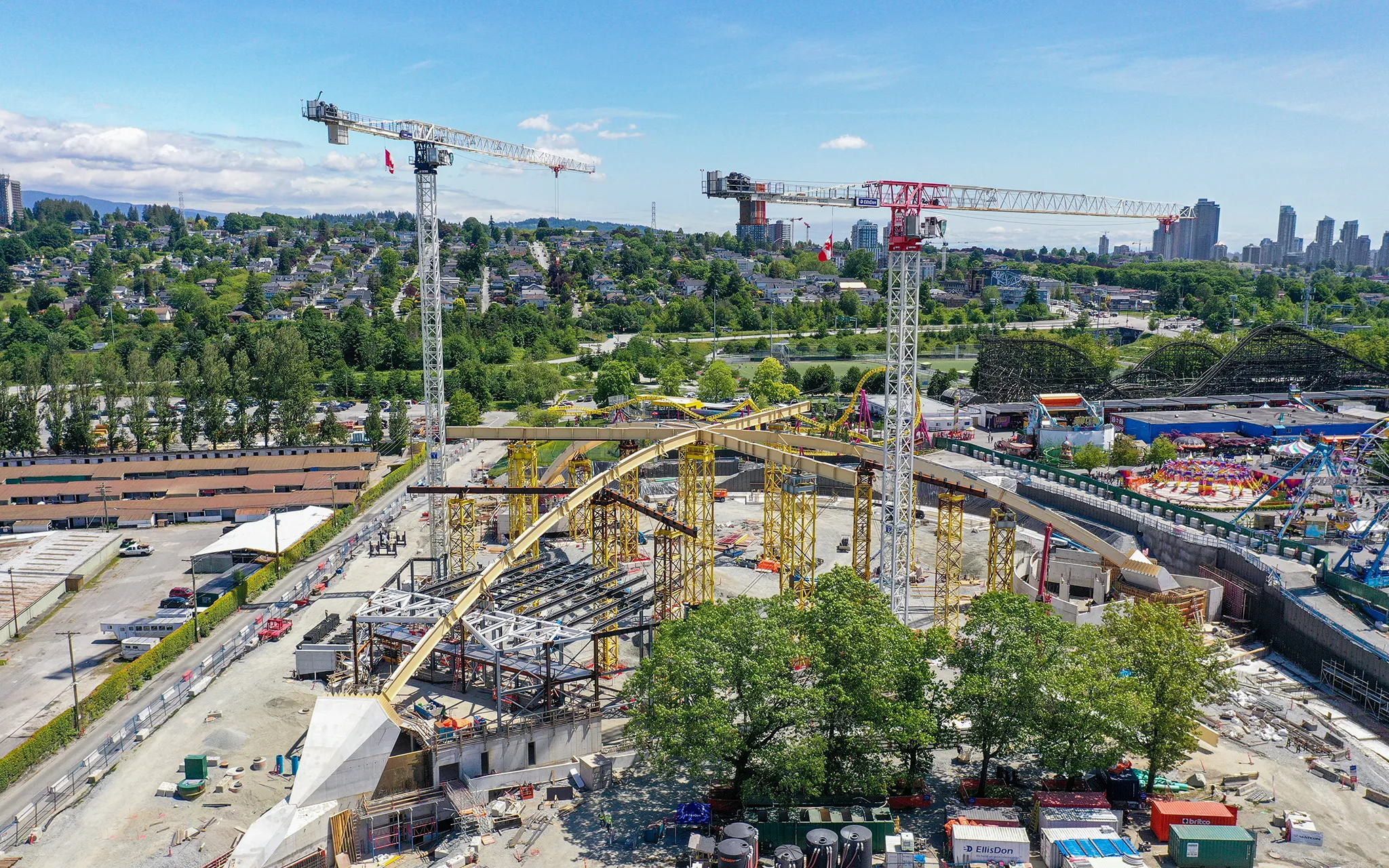
The canopy spans 105 metres without internal supports, formed by eighteen glulam beams that extend from a central steel oculus. Each beam, over 50 metres long, was CNC-milled by Western Archrib using digital fabrication techniques, transported to the site, and then craned into place one by one. Between them, cross-laminated timber panels create a continuous roof deck, locking into a shell that avoids cladding.
The structure rests on a perimeter ring held in tension, allowing the roof to hover above the amphitheatre as a single structural field. It preserves clear sightlines and consistent acoustics while maintaining openness to the surrounding landscape.
A Low-Carbon Canopy Designed for Climate and Community
The roof draws its strength from a system of prefabricated timber ribs and spanning panels, joined by a steel tension ring that holds the circular geometry in place. Assembled on site from modular components, the structure balances scale, lifting a canopy that appears both engineered and elemental.
The timber remains visible throughout, carrying both load and atmosphere. Acoustic cladding is added where necessary, but the palette stays minimal.
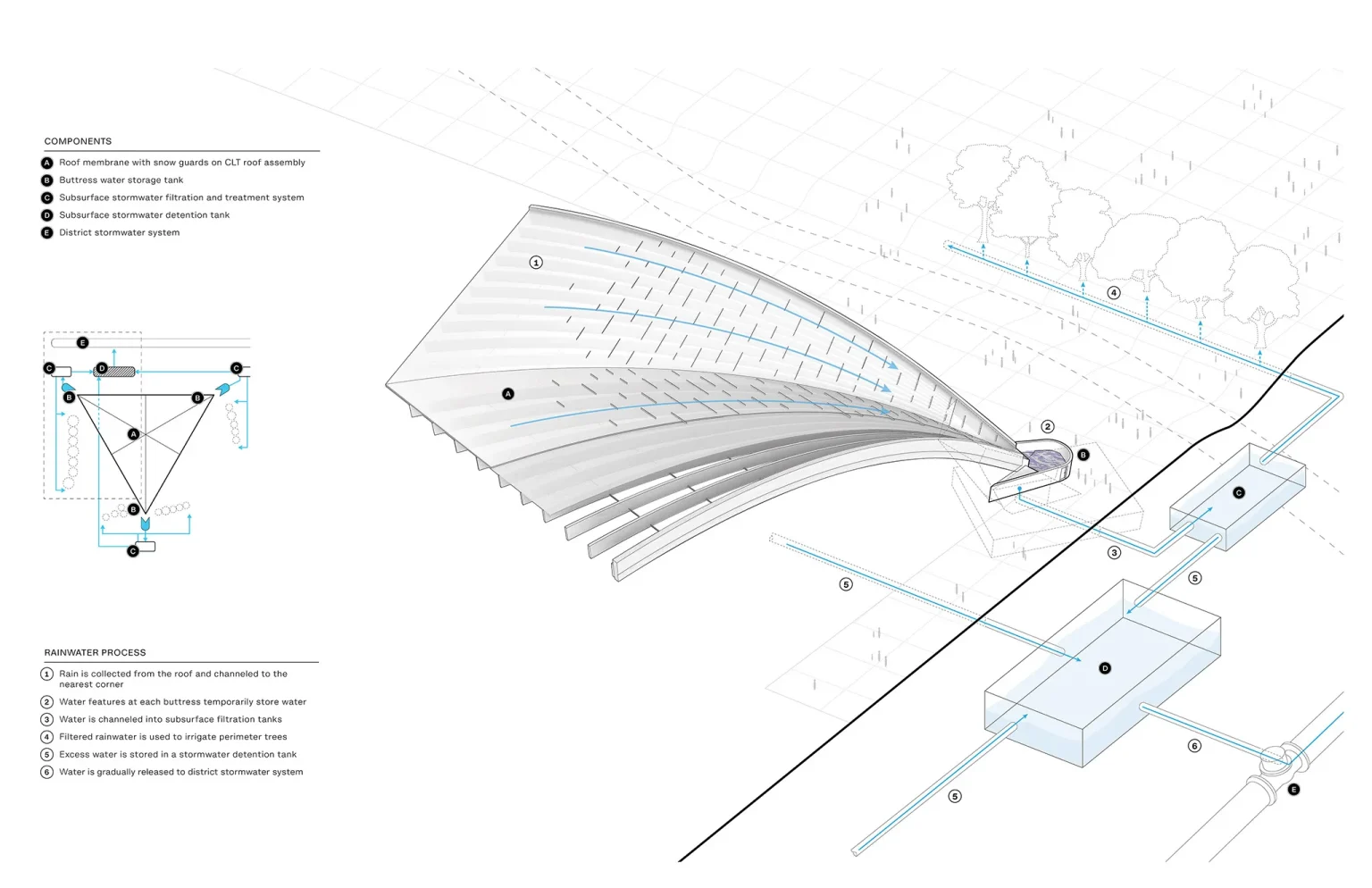
Without mechanical HVAC, the structure relies on deep overhangs and open edges for shade and ventilation, responding to the coastal climate through passive means. By using mass timber instead of more carbon-intensive materials, the design reduces embodied emissions, aligning with Vancouver’s Greenest City Action Plan.
Public Architecture Without Barriers or Boundaries
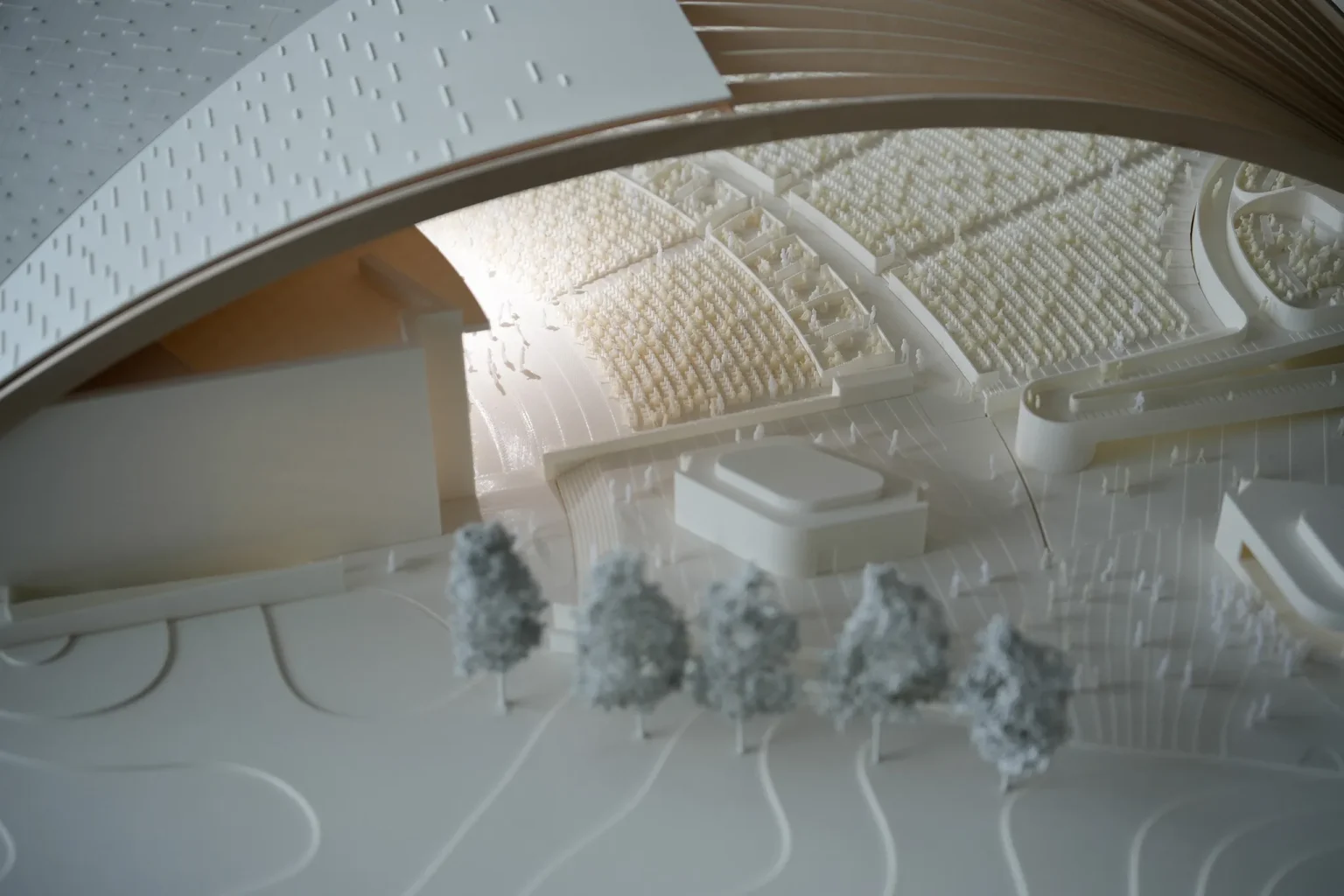
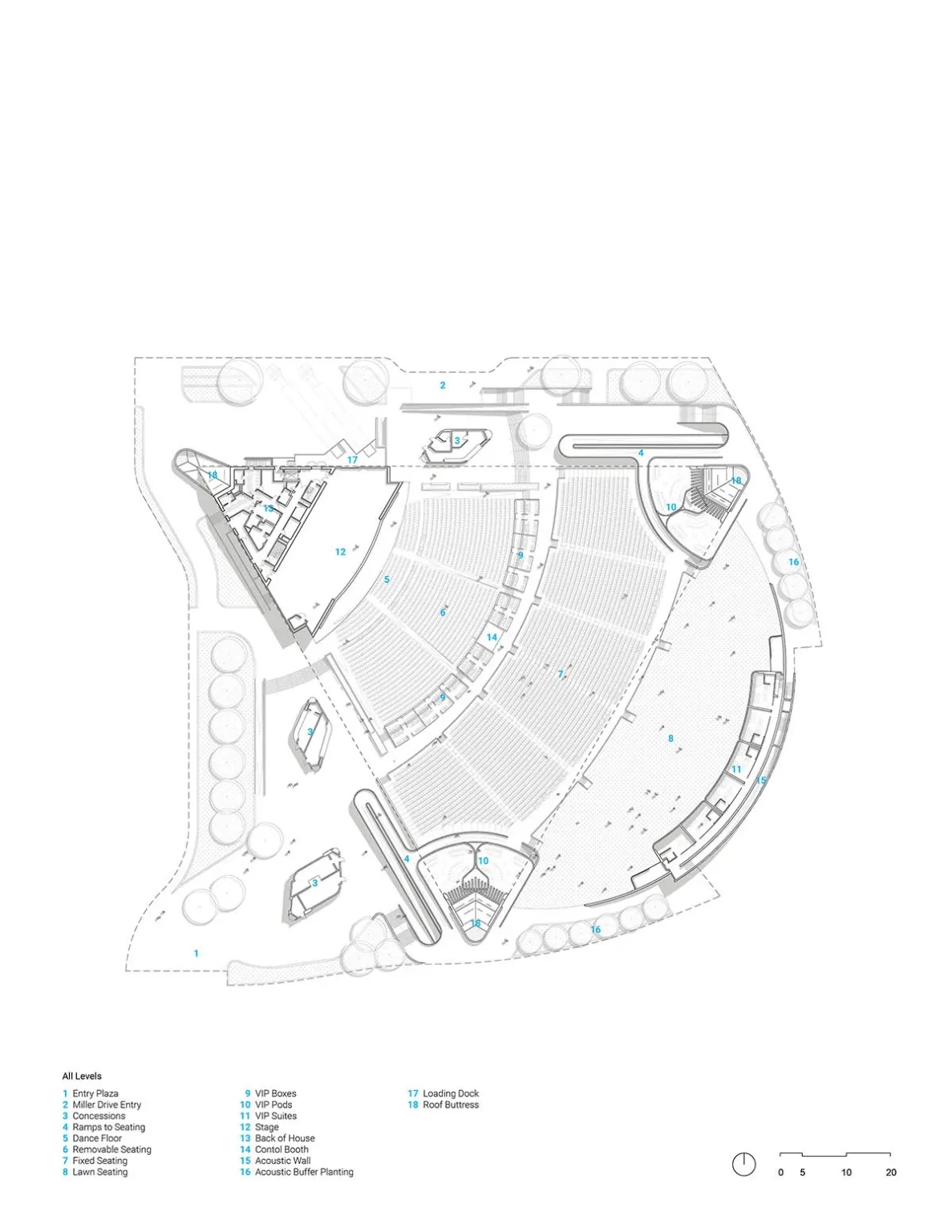
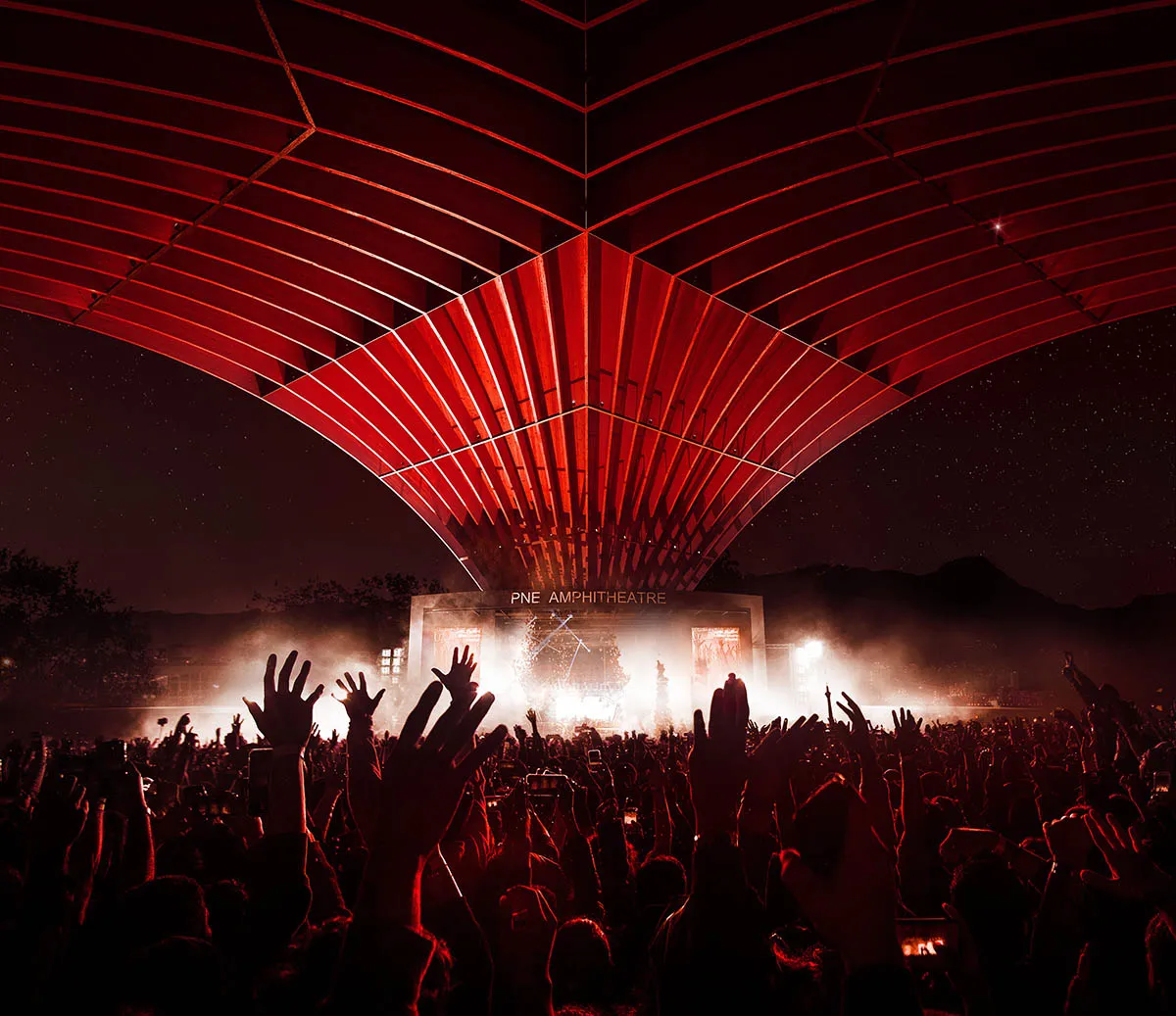
The PNE amphitheatre holds up to 10,000 people, with 4,500 fixed seats and additional room for general admission across a stepped lawn. Seating is organised without rigid hierarchy; VIP terraces are integrated into the broader layout, and circulation follows the park’s natural grade, allowing for universal access and uninterrupted views.
Beneath the shell, a full back-of-house zone supports the demands of touring productions, including artist dressing rooms, loading docks, rigging systems, and technical infrastructure. Designed to host large-scale concerts, Indigenous gatherings, and community performances, the venue adapts seamlessly to a wide range of events.
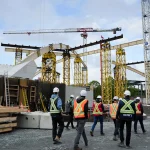
Following its 2024 groundbreaking, construction at Hastings Park has entered a key stage. Glulam beams are now rising into place, forming the radial frame that defines the amphitheatre’s outline. As each rib is set, the canopy becomes more legible across the park. Already visible from nearby streets, the structure marks a new fixed point on the city’s northeastern edge.
Set to be completed in 2026, the Freedom Mobile Arch brings a lasting structure for public performance. As Vancouver continues to change, it offers more than a striking roofline. It suggests how cities can create space for public life through architecture that stands firm without giving up openness.