

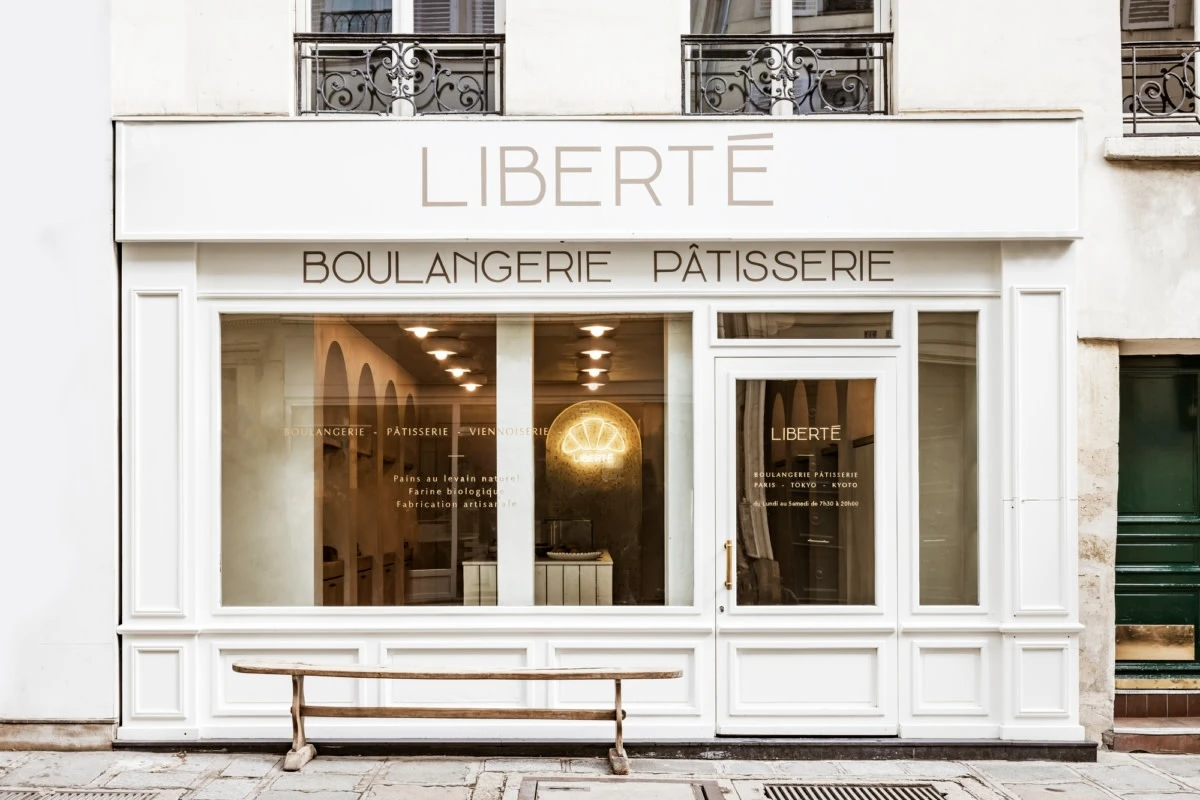
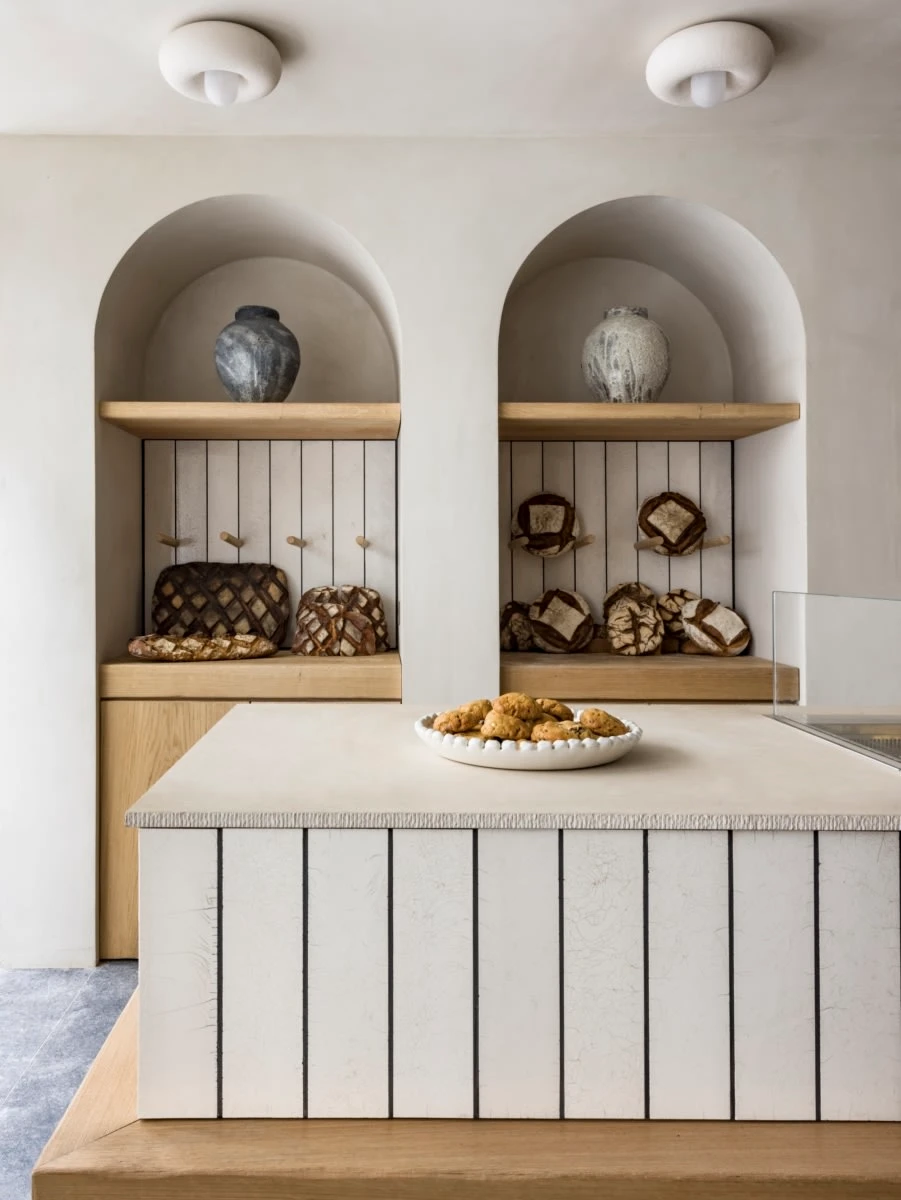
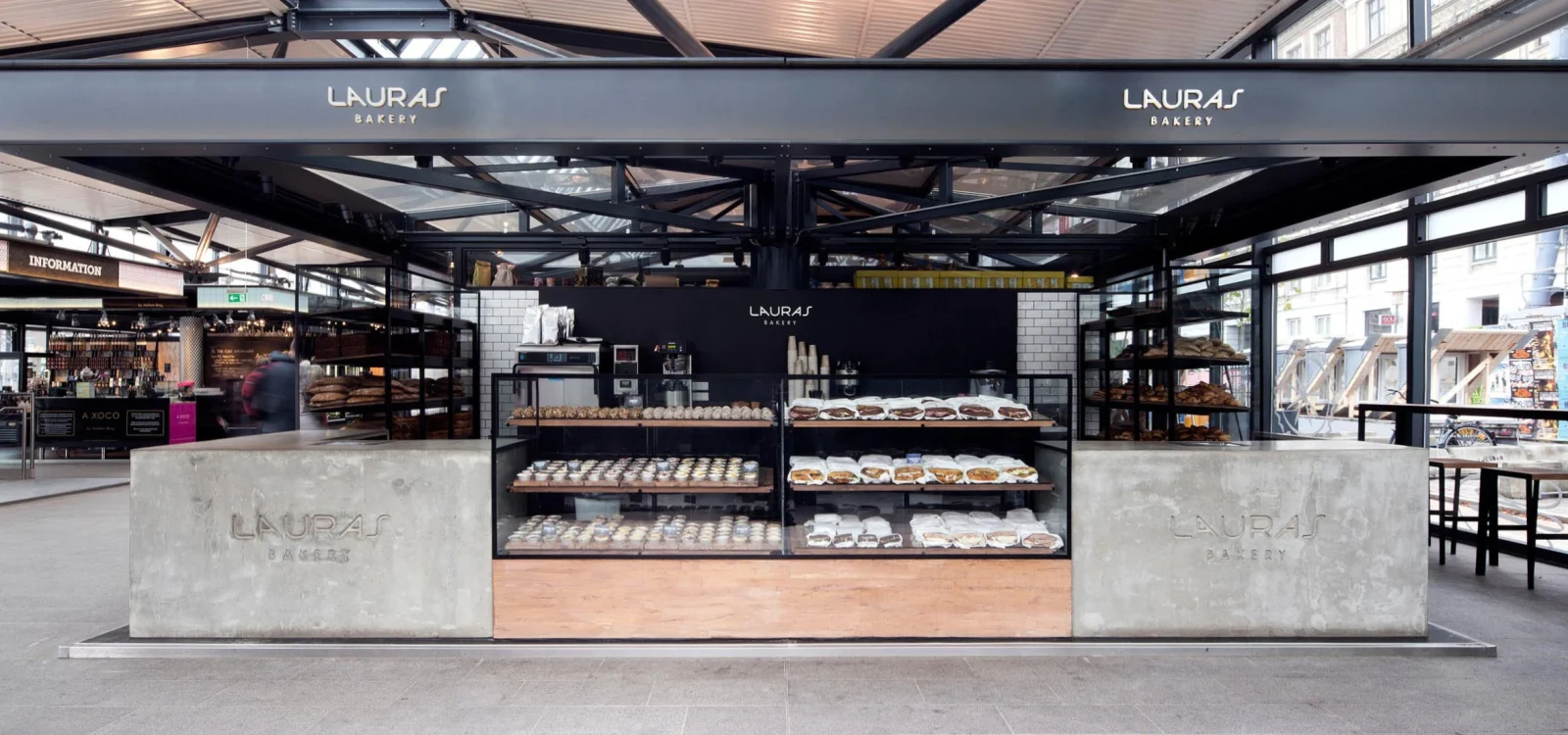
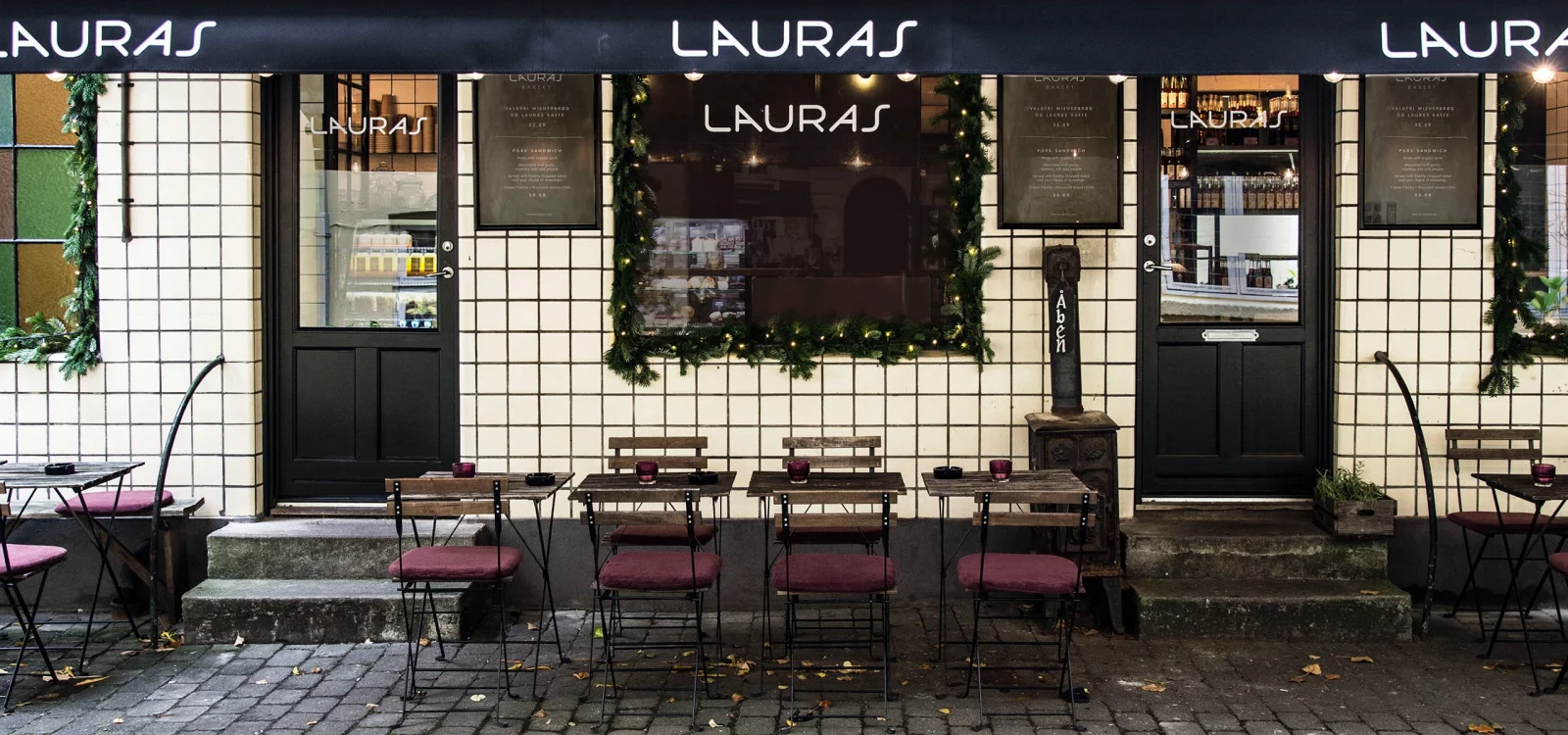
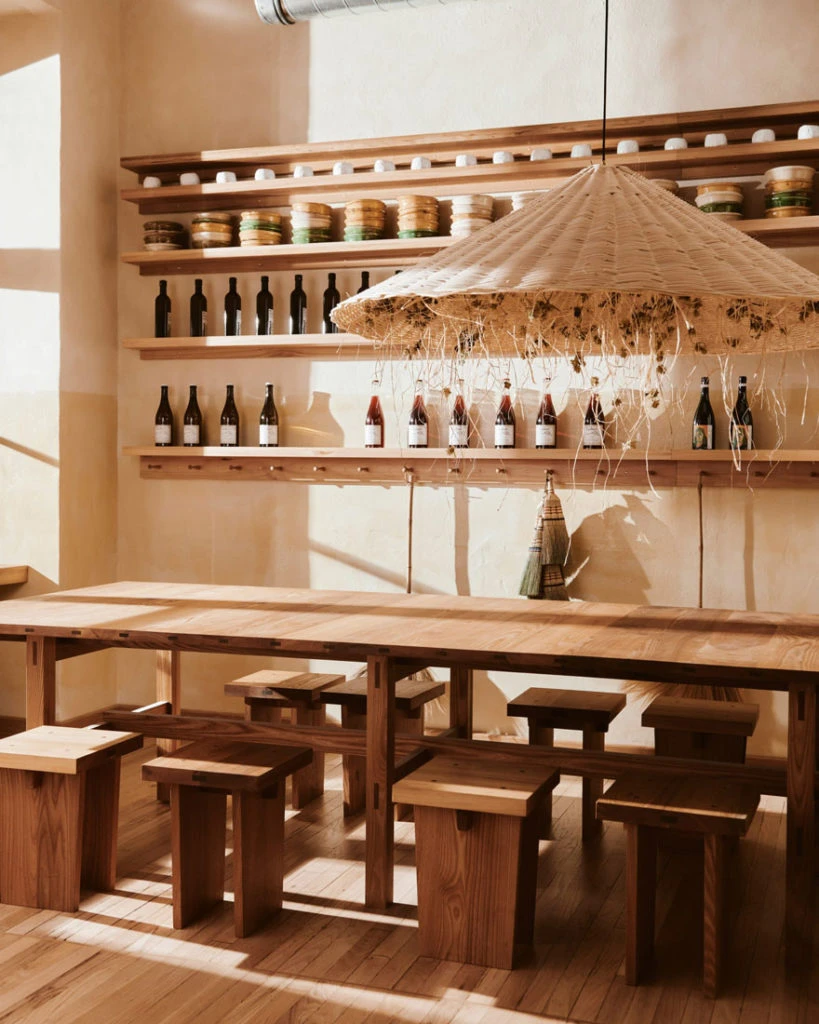
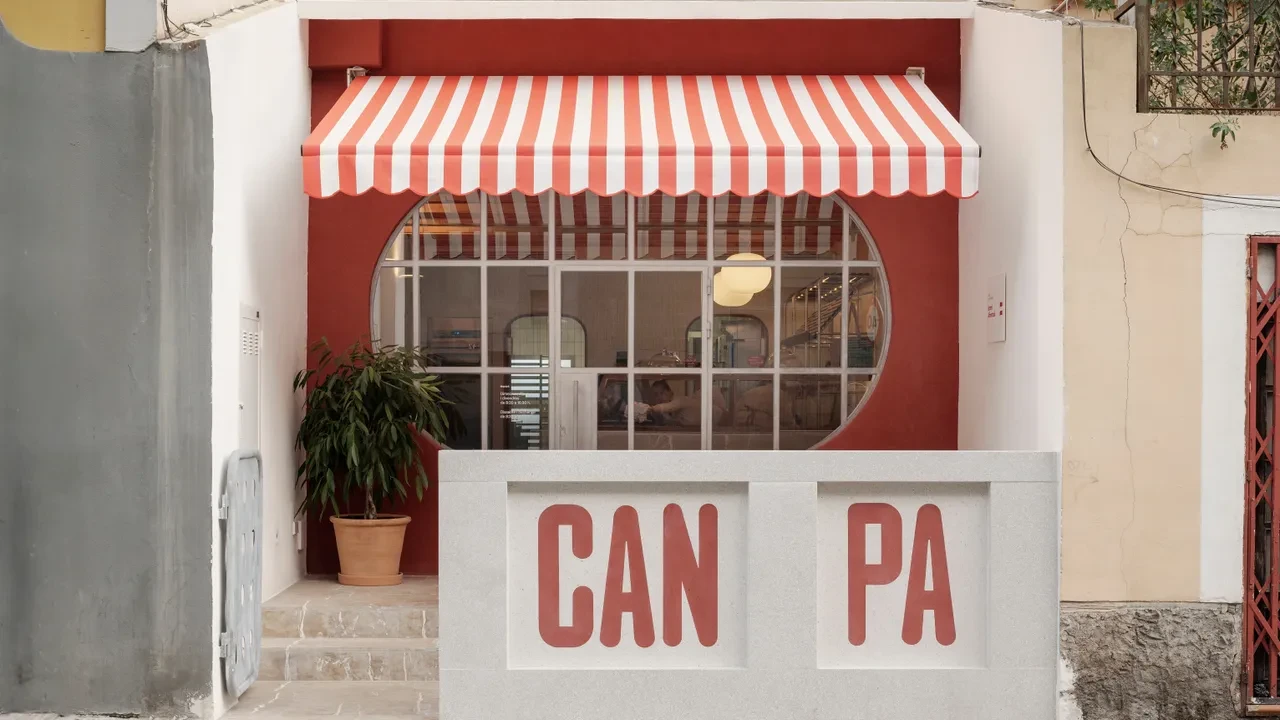
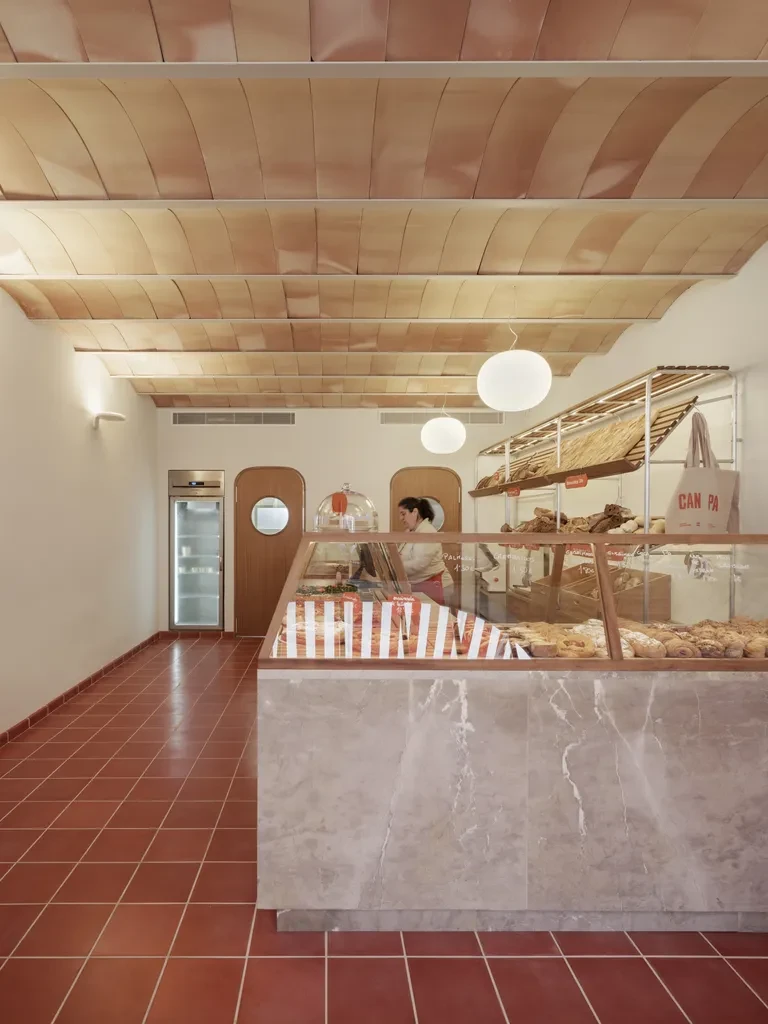
Architecture defines the bakeries’ experience even before the first bite. Light, material choices, and spatial flow transform these spaces into immersive environments for work and gathering, and act as visual backdrops.
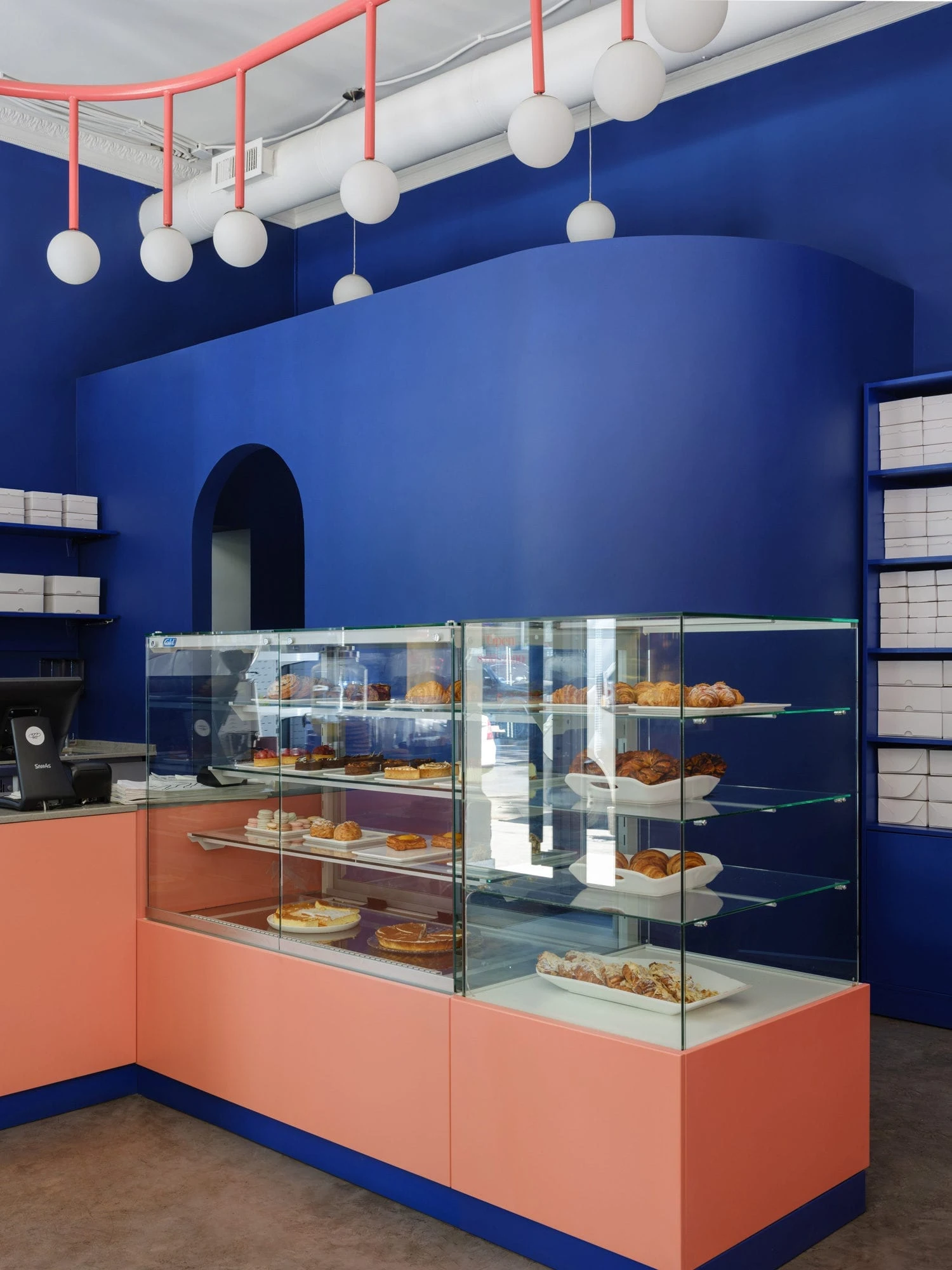
Contemporary bakery design often uses bold architectural gestures such as monolithic counters, suspended shapes, monochrome palettes, and arched entrances to create an immediate visual impression. These decisions not only enhance the experience but also prompt photography for Instagram feeds.
1. Pierre Hermé Paris Flagship Store
Location: Singapore
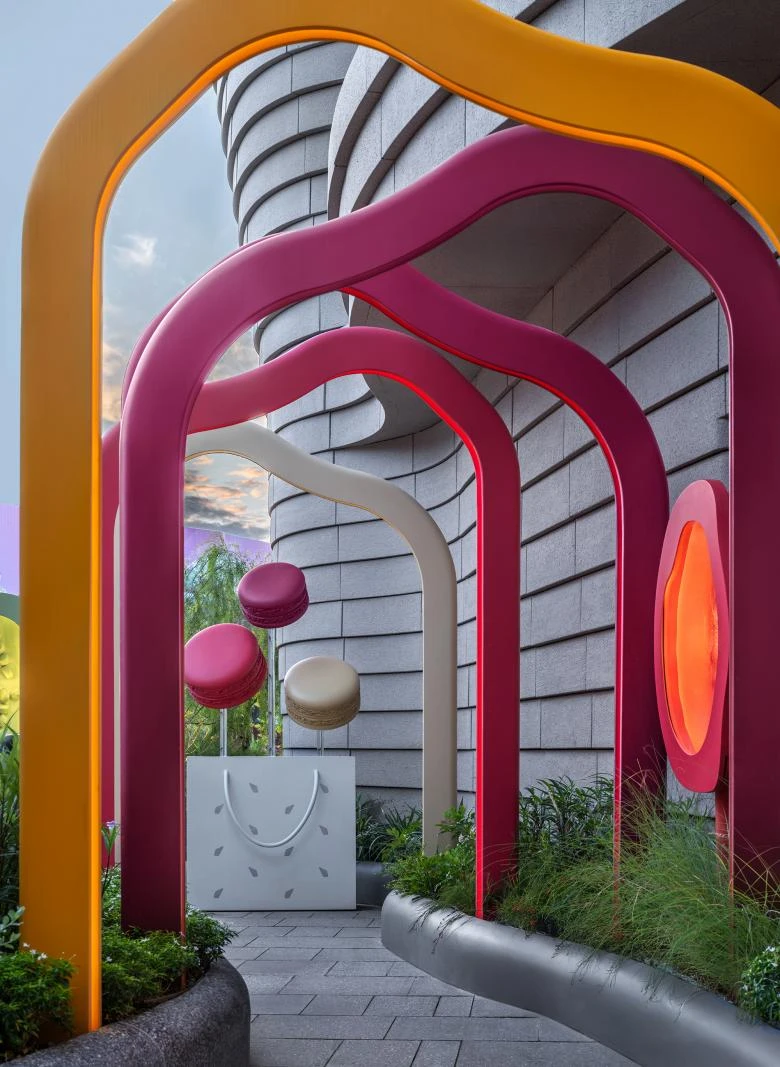
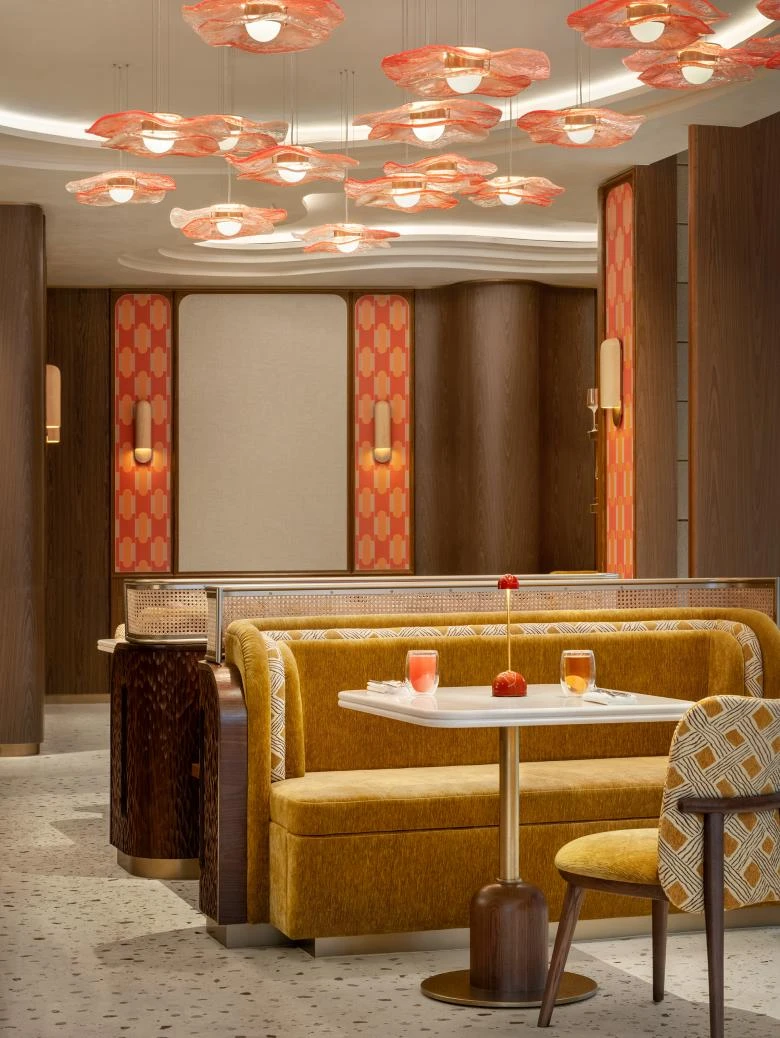
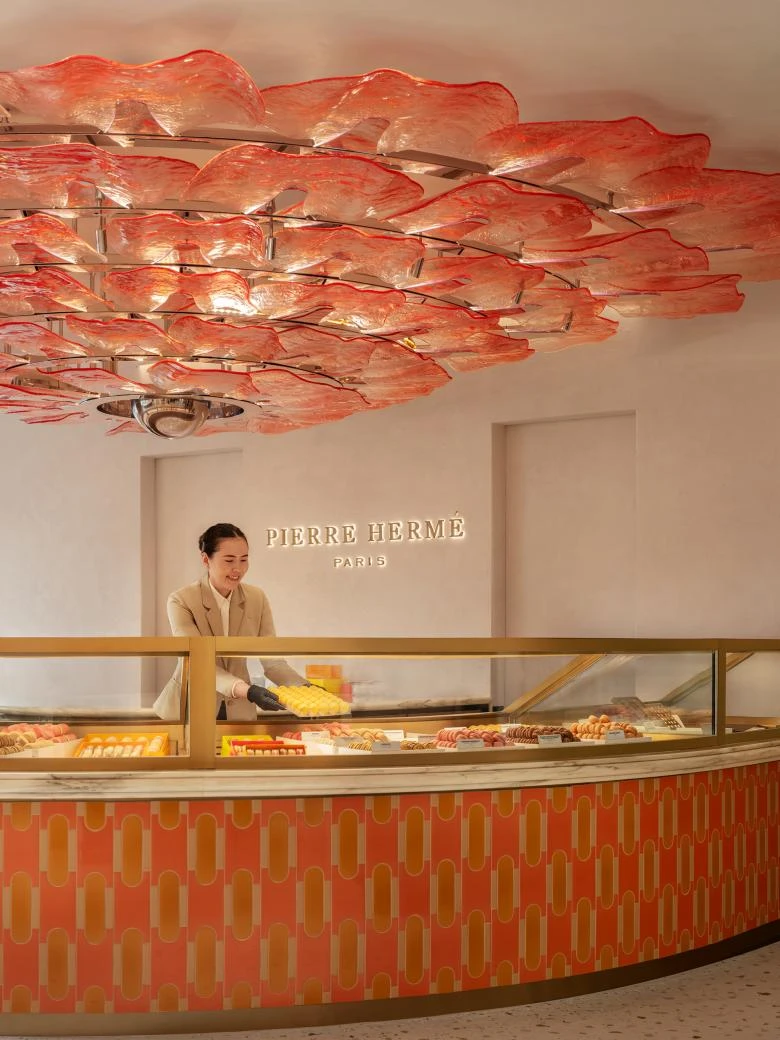
CCD’s Pierre Hermé flagship reimagines patisserie as a spatial system rooted in the local environment rather than replicating its Paris counterpart. The entryway combines references to Parisian cafes with tropical motifs. Inside, curved gold counters manage circulation and structure product display, while macaron-inspired sculptural features nestled among greenery reinforce this connection.
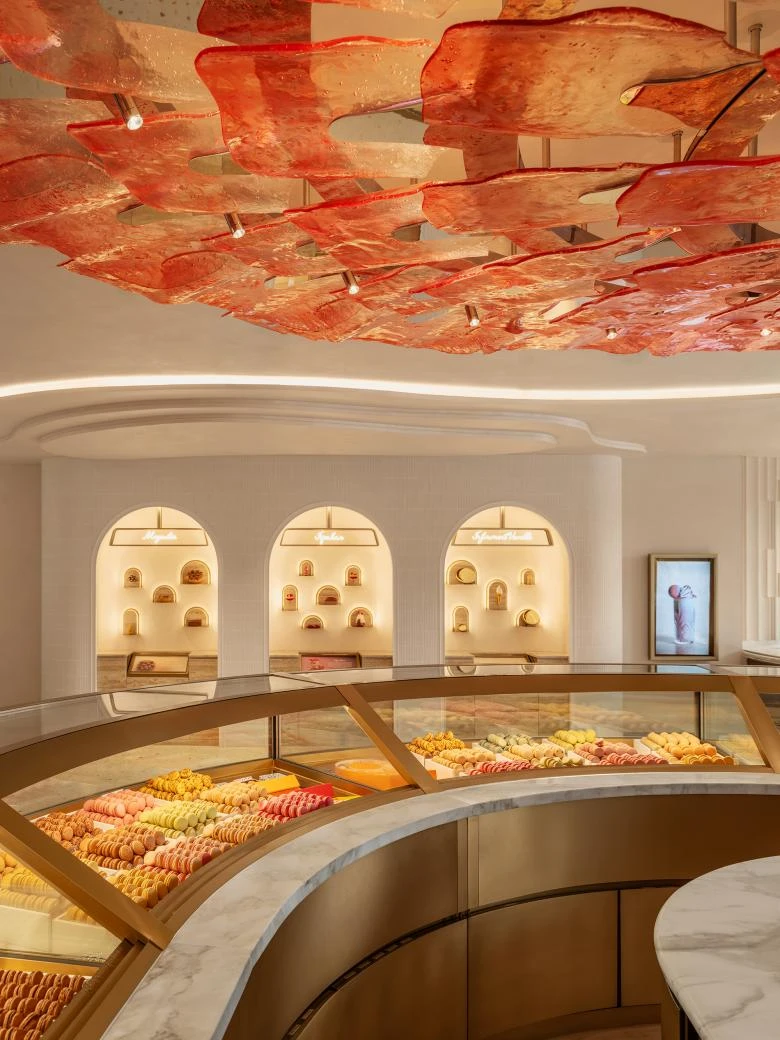
Material contrasts with natural wood, gentle lighting, and muted colors combine to create a relaxing environment. This language continues upstairs, where retail and dining blend in a lighter, more open atmosphere with rattan seating that adapts to the tropical temperature.
2. Marchesi 1824
Location: Milan
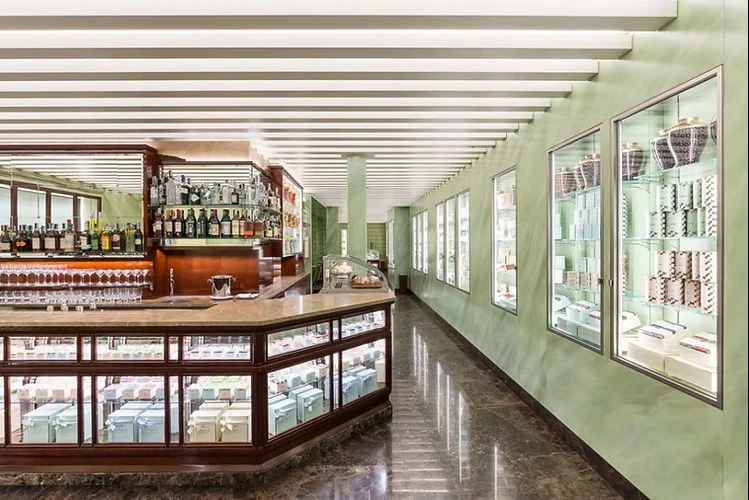
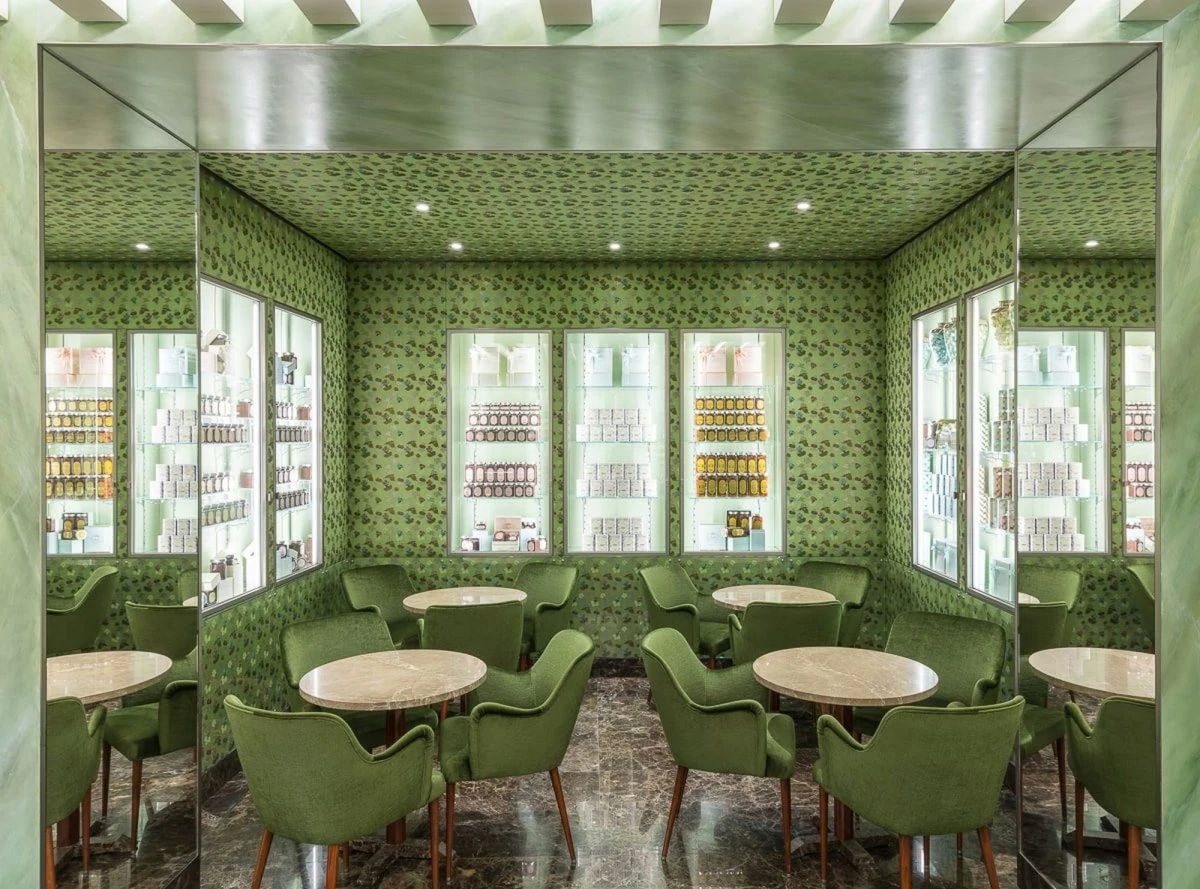
The Marchesi 1824 location on Via Monte Napoleone, rebuilt by Roberto Baciocchi for Prada, presents a controlled dialogue between heritage and modernity. It maintains the bourgeois attractiveness of the original Corso Magenta shop while including contemporary elements such as a stone facade with white awnings and a gold leaf logo. Inside, mint marble surfaces bring attention to the centrally located bar encased in cherry wood.
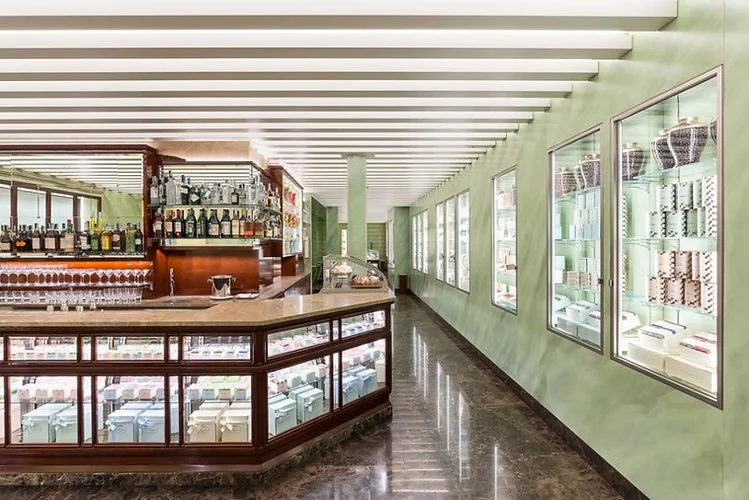
Marble covers the floors and walls, while backlit mirrors and polished brass provide depth with vitrines showcasing pastries as art. Moving on, two intimate seating rooms emerge, furnished with marble tables and green velvet chairs.
3. Dominique Ansel Bakery
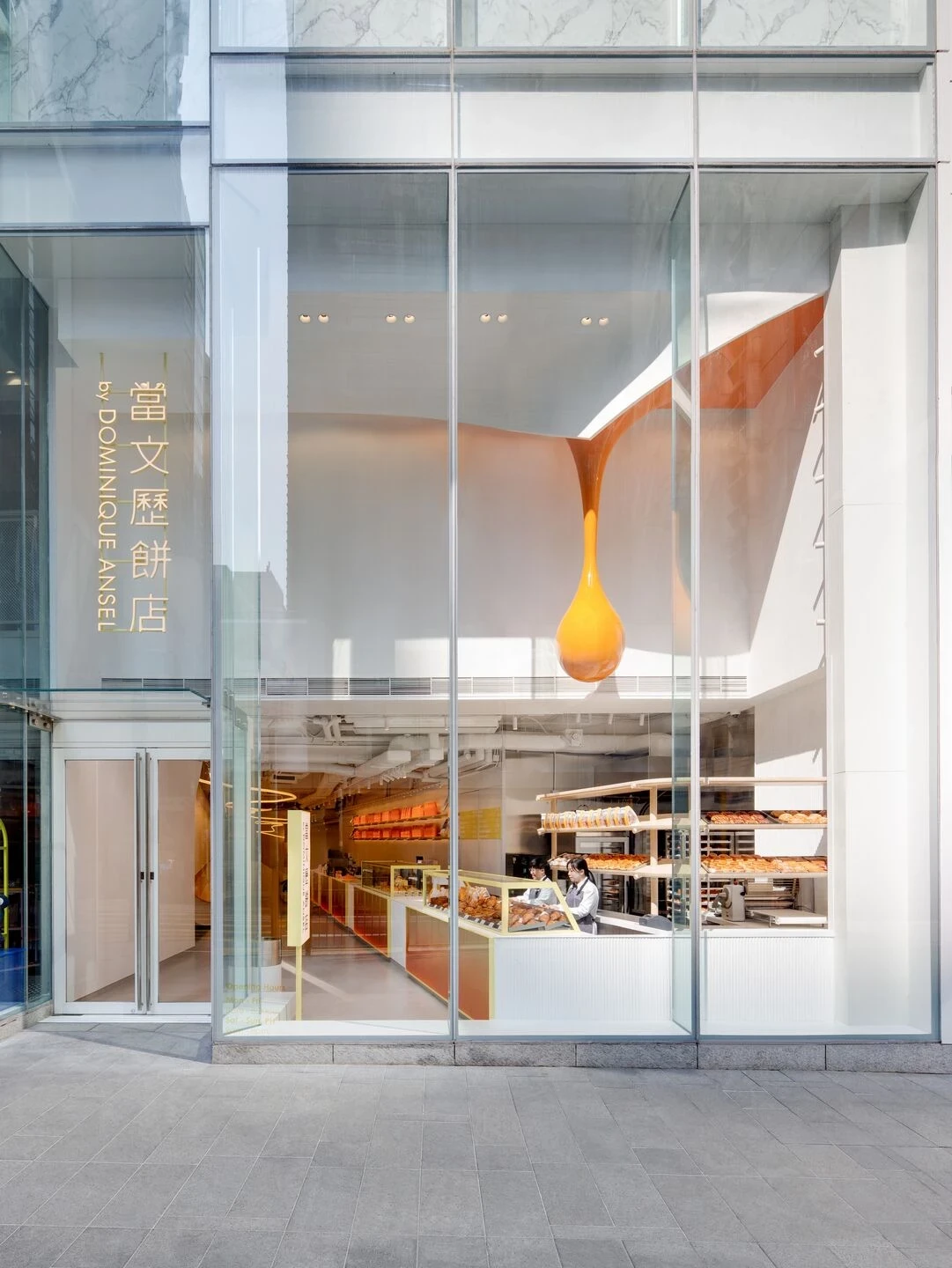
Location: New York City
Designers imagine Dominique Ansel Bakery in SoHo as a gallery-like space, where sliced or peeled walls and ceilings echo the layered and fluid elements of pastry-making. At the double-height shopfront, the modified ceiling displays a hanging egg yolk form while keeping the entryway open. Here, light wood and brushed steel furnishings support a clean and contemporary interior.
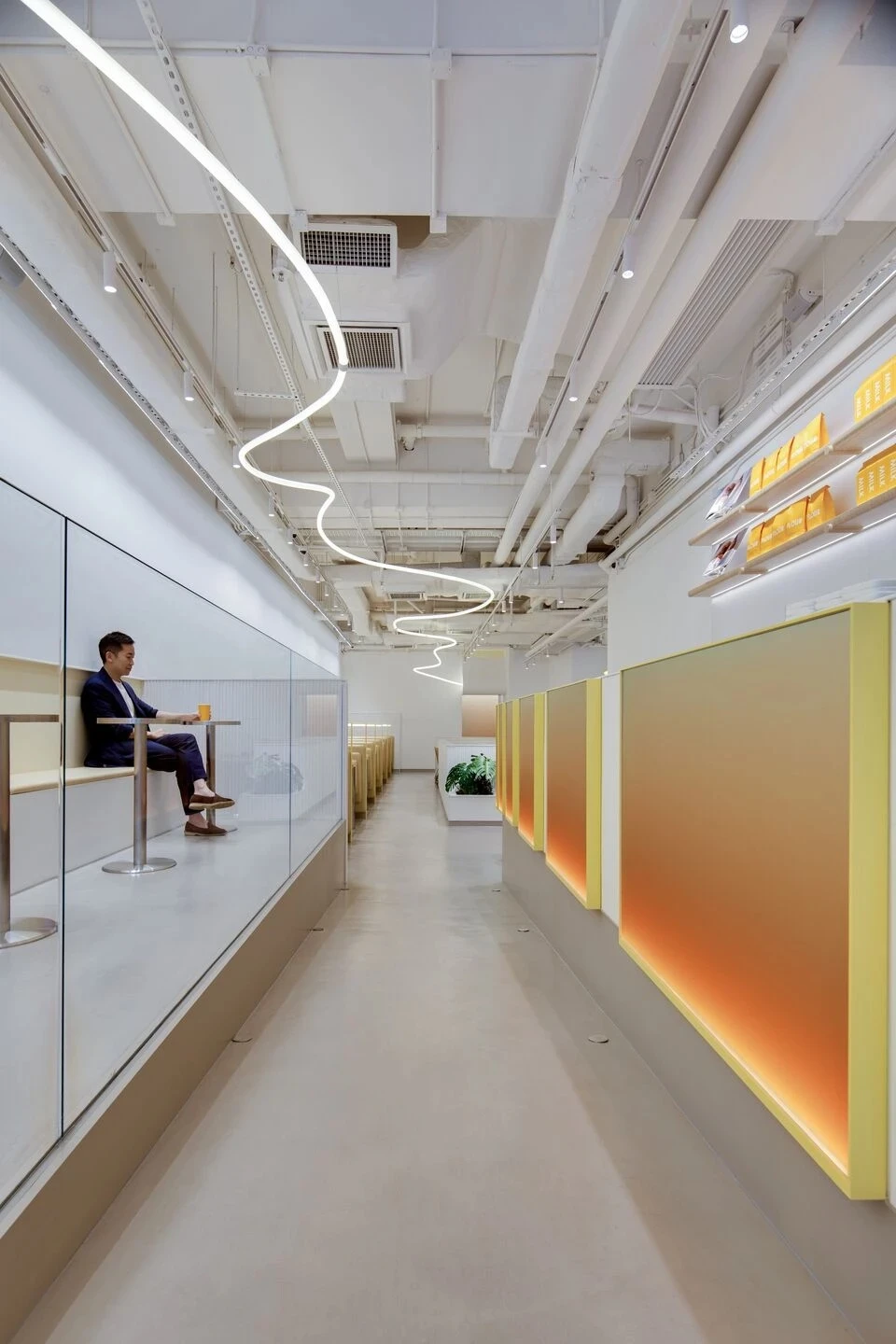
The counter, conceived as an art piece, uses gradient-colored glass blocks that gradually expand towards the storefront, anchoring the retail zone. On the opposite side, the bench appears sliced from the wall, highlighted by a continuous drizzle of light above it.
4. Parconido Bakery
Location: Gyeonggi-do
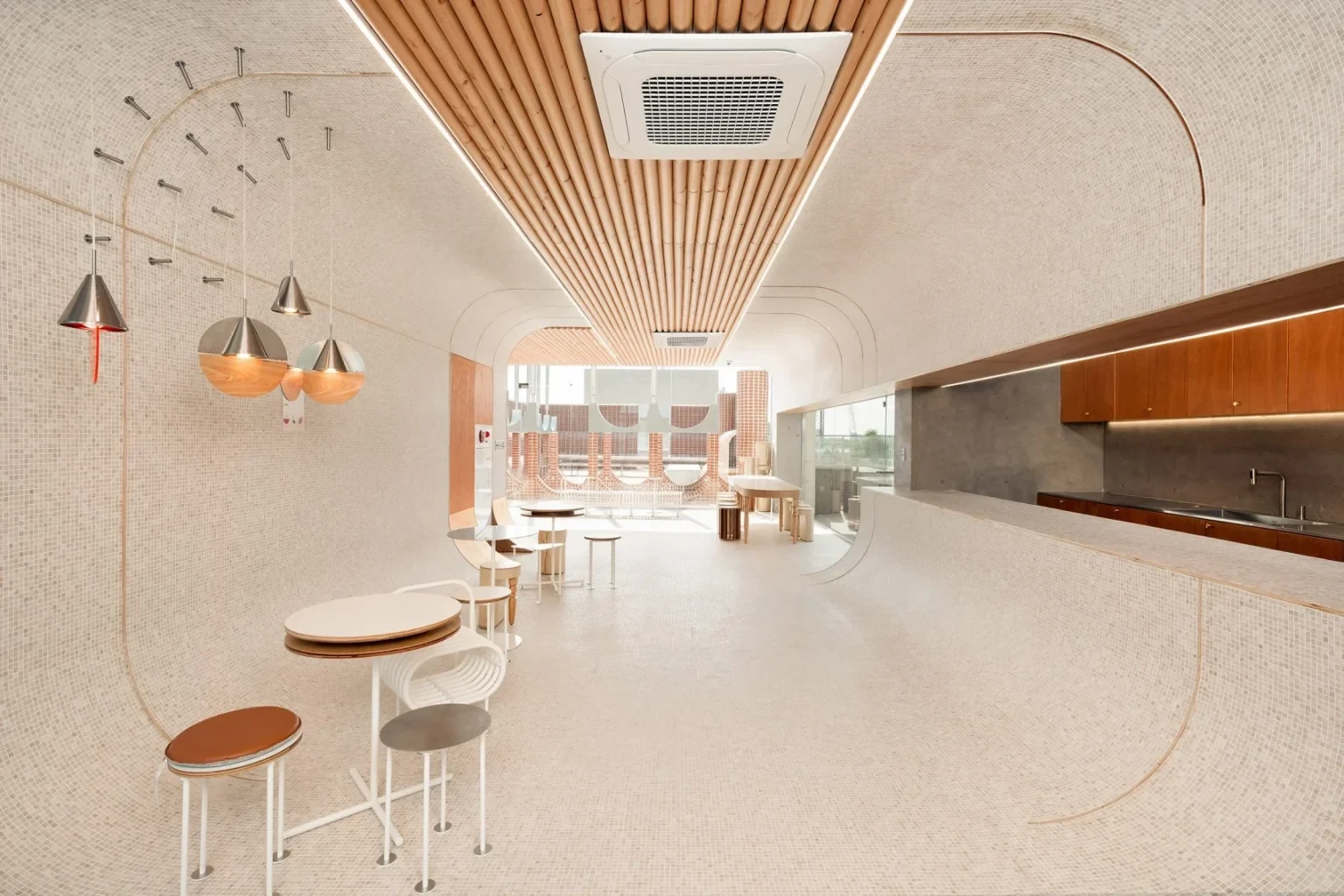
Designers define Parconido Bakery Cafe through a single geometric rule, the consistent use of a 600 mm radius shapes walls, columns, furniture, and circulation. Material selection reinforces this unity by combining red clay bricks, stainless steel, and wood into a layered system with bricks reduced in thickness and laid on top of an iron frame.
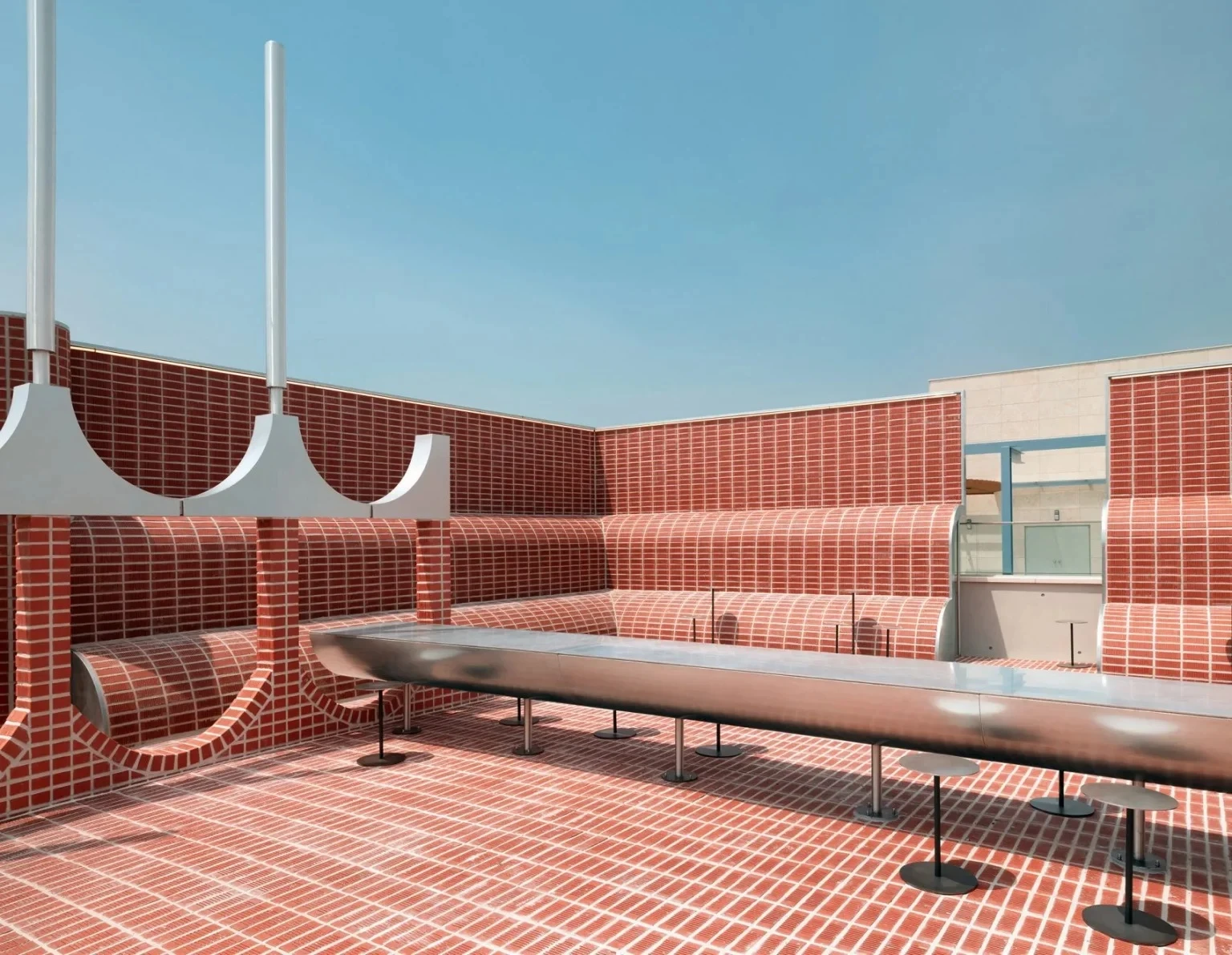
They apply curved features across every element, from benches encased in wooden pipes to circular tables and storage elements. At the same time, the use of travertine on floors, walls, and ceilings reinforces this continuity. This geometry further extends into upper levels and outdoor areas, including the third-floor terrace.
5. Cara Mela
Location: Madrid
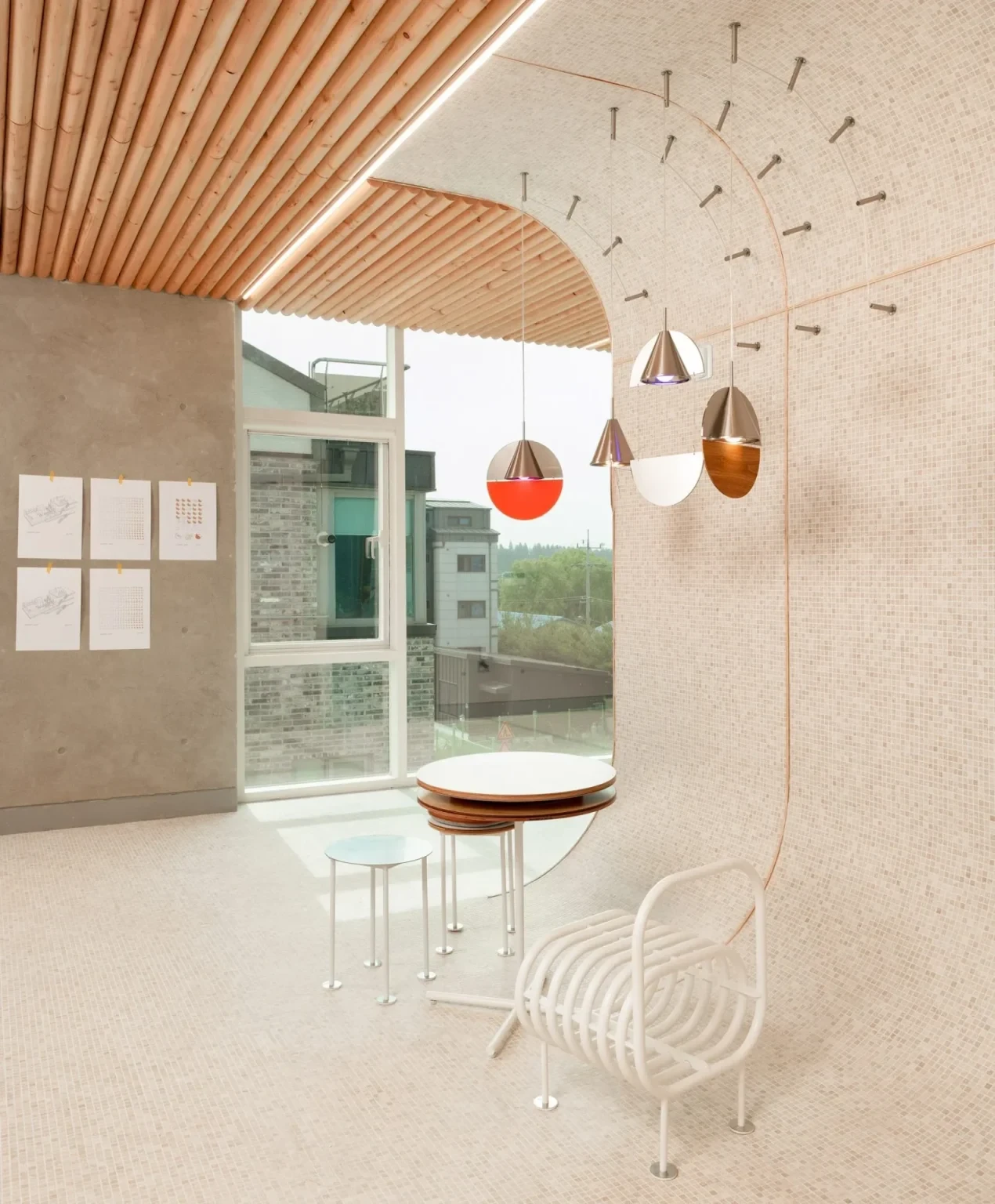
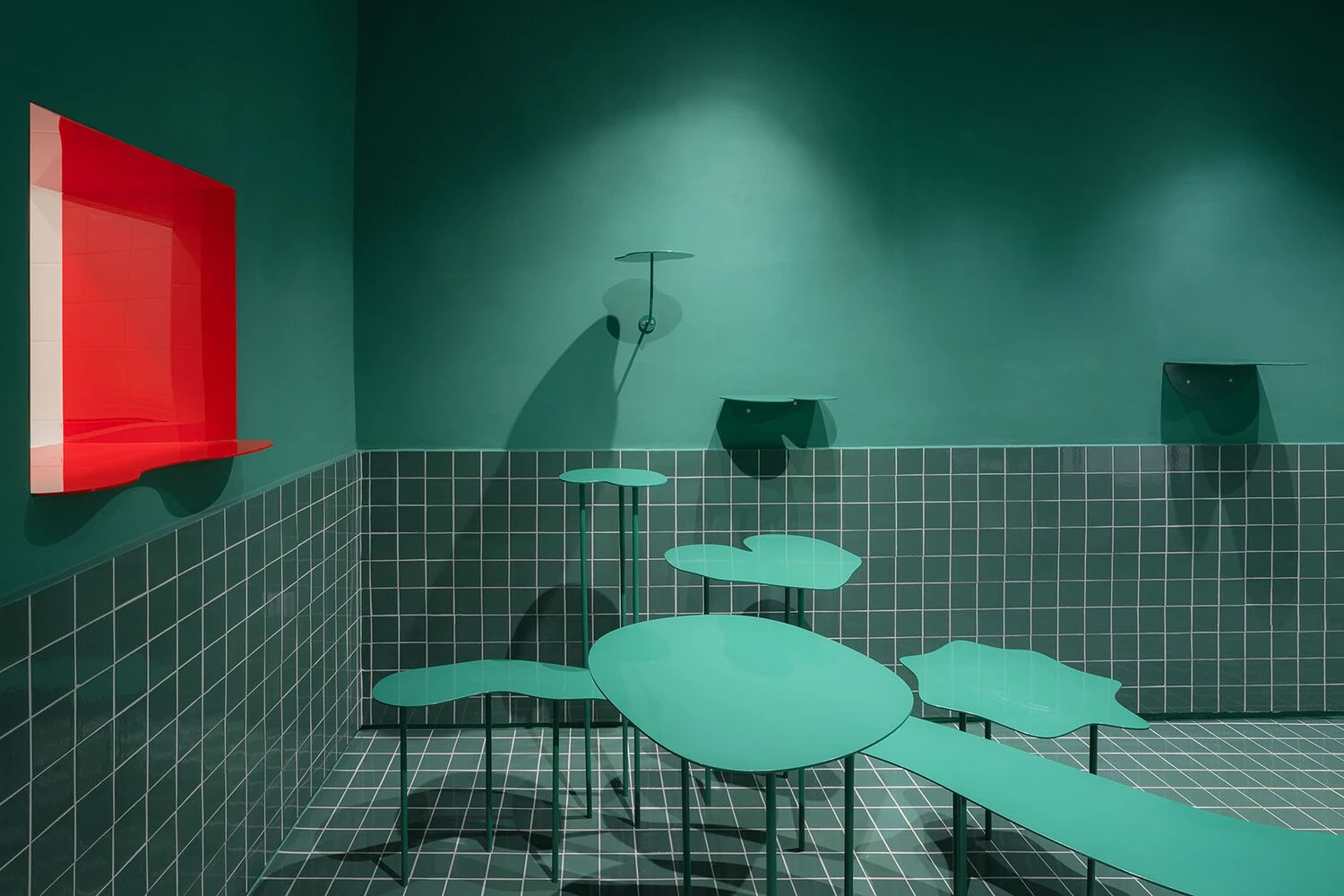
Designers build Cara Mela around a deliberate contrast of compression and expansion. The entrance features a compact white volume with a single multipurpose element that integrates counter, storage, and service functions into a continuous interior facade. Beyond this point, the interior expands, opening into a larger green room defined by relaxed forms and biomorphic furniture.
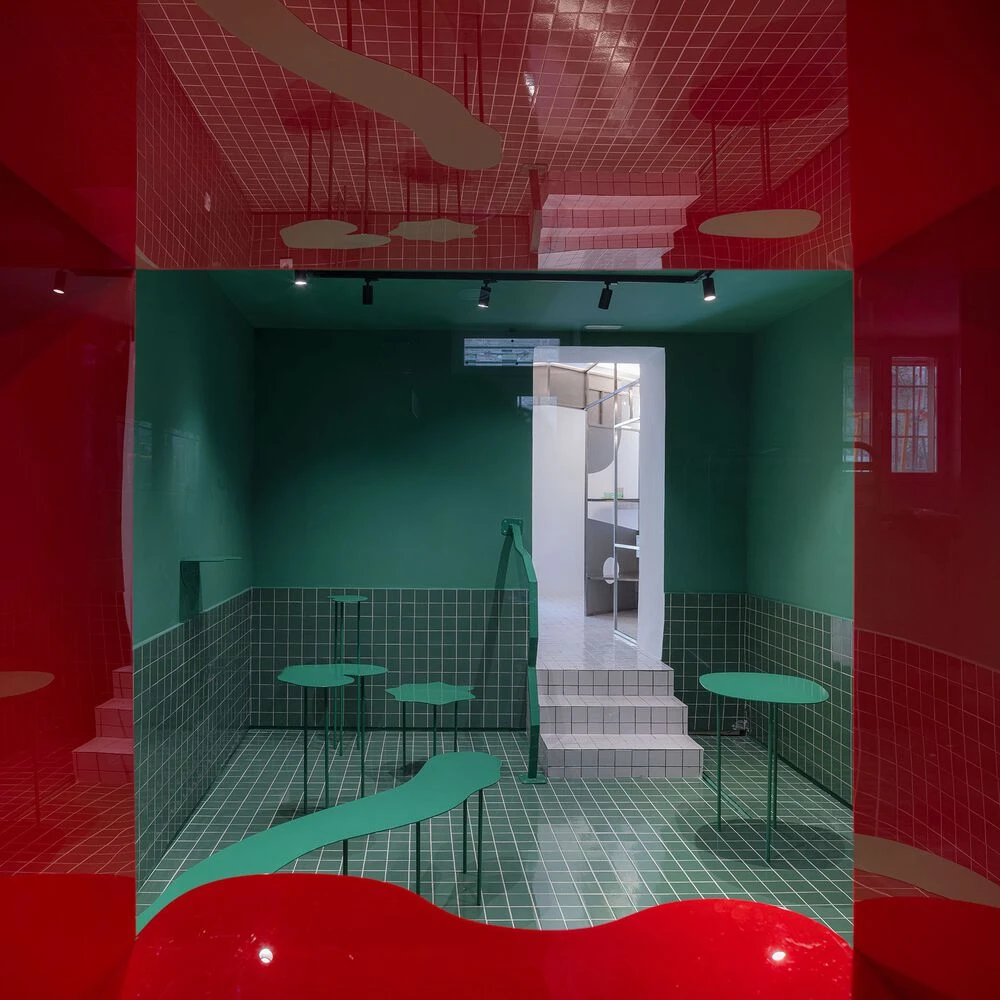
These features serve as seating, display surfaces, and tables while appearing to float in a monochrome sea-green tile field. Here, a red-framed opening connects to the production area for visitors to watch the process. Nonetheless, color and form work together as spatial tools; white compresses, green expands, and red signals the transition.
6. Fu.Ba
Location: Madrid
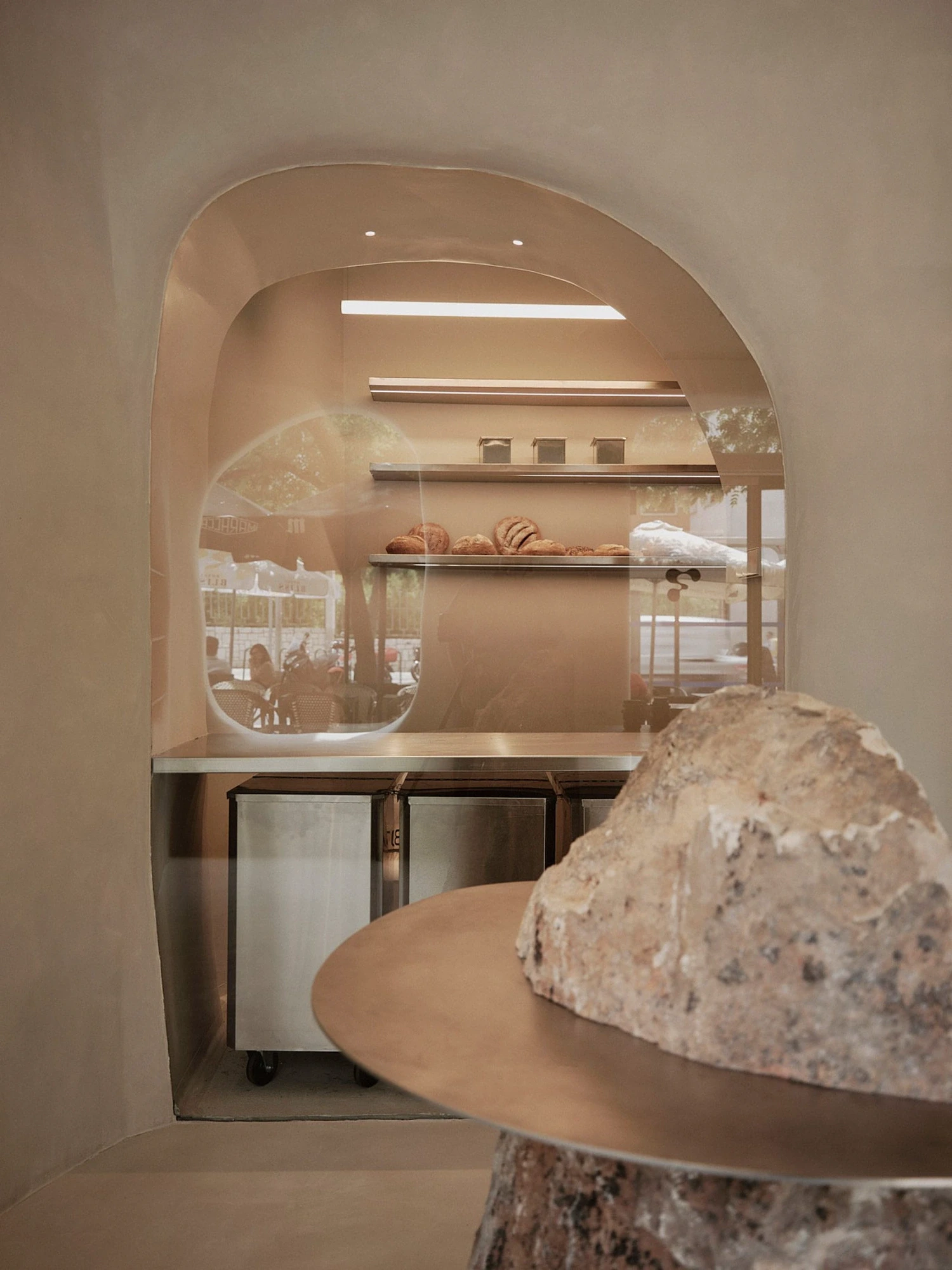
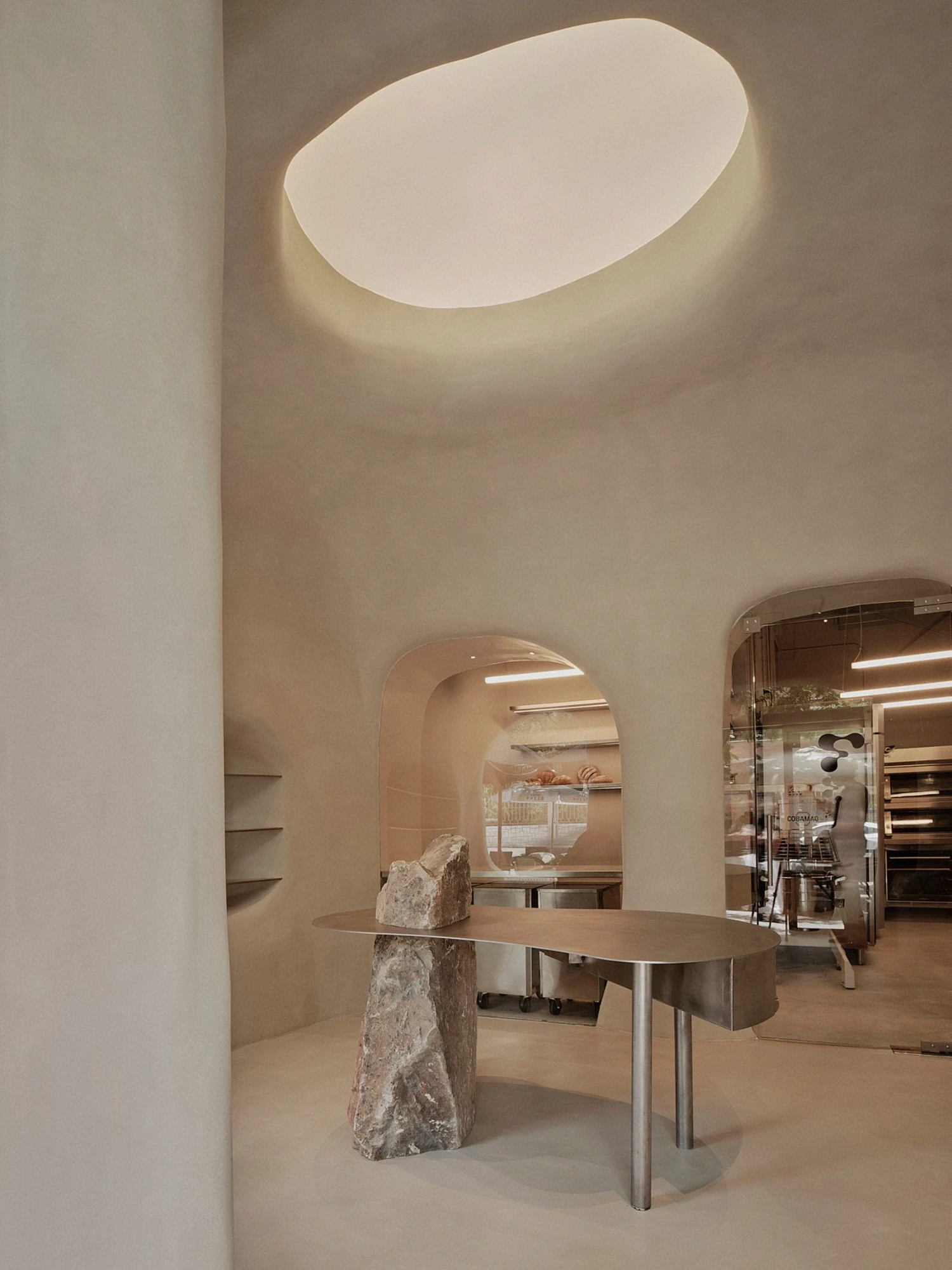
FU.BA unfolds as a monochromatic grotto with sculpted and rounded walls eroded over time. Here, lime-washed surfaces diffuse light while cool stainless steel furnishings create contrast. Designers place a stainless steel table connected to a block of natural rock sourced from a nearby quarry at the center.
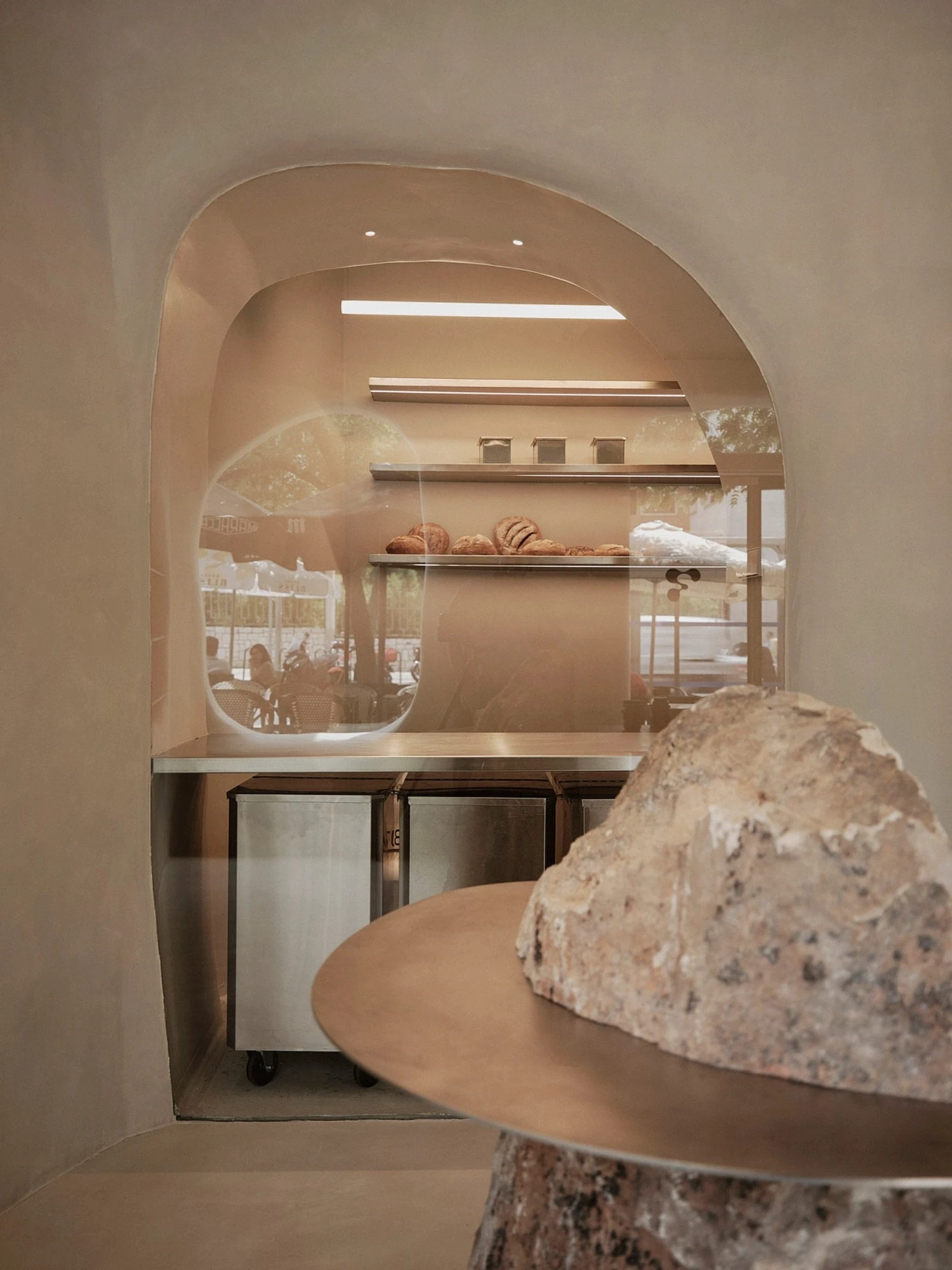
Slender steel shelves fitted into carved wall niches present bread as sculptural elements. A simulated lightwell introduces controlled illumination while glazed openings reveal the kitchen beyond, strengthening the spatial relationship between production and display.
7. Don Cafe House
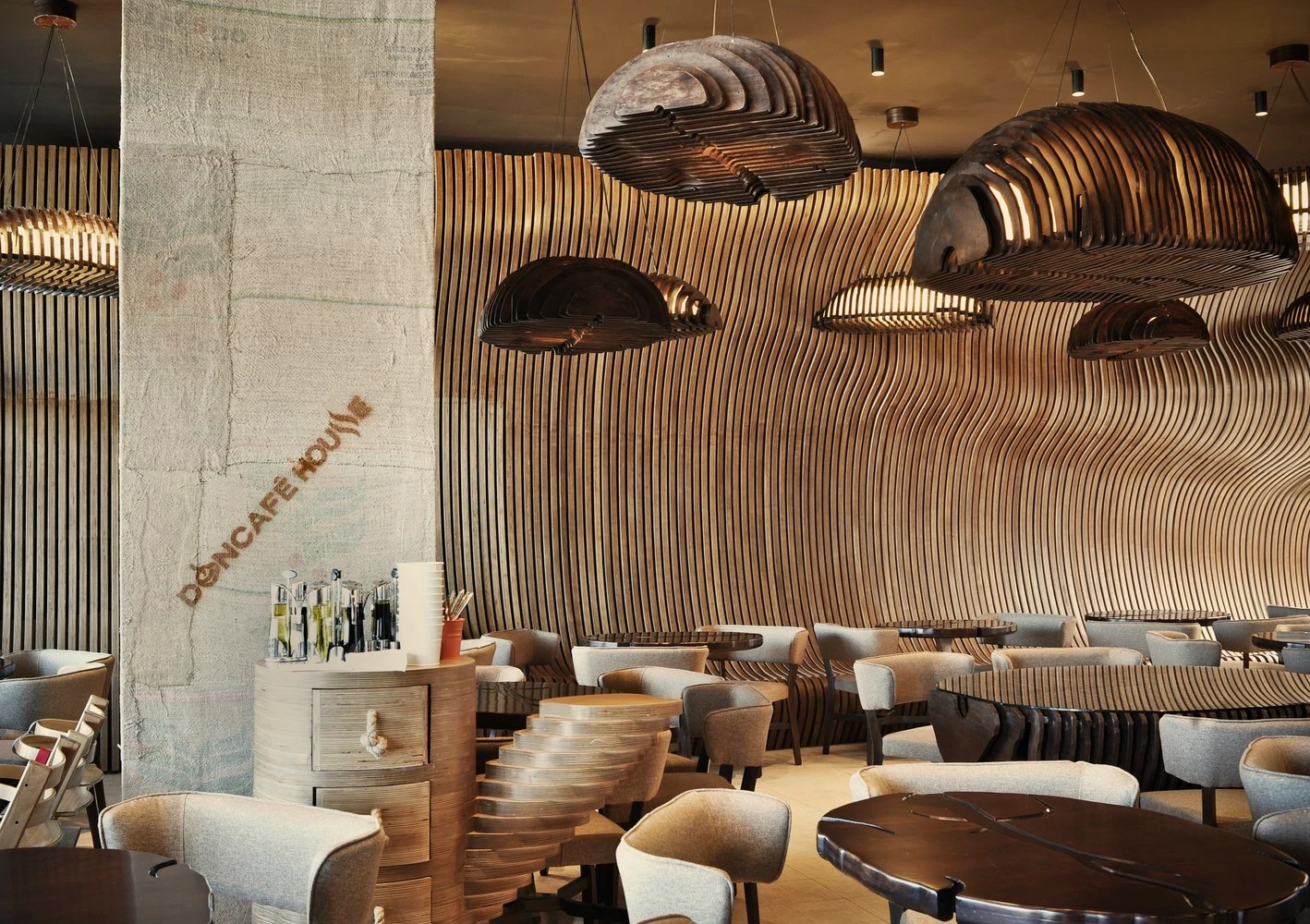
Location: Pristina
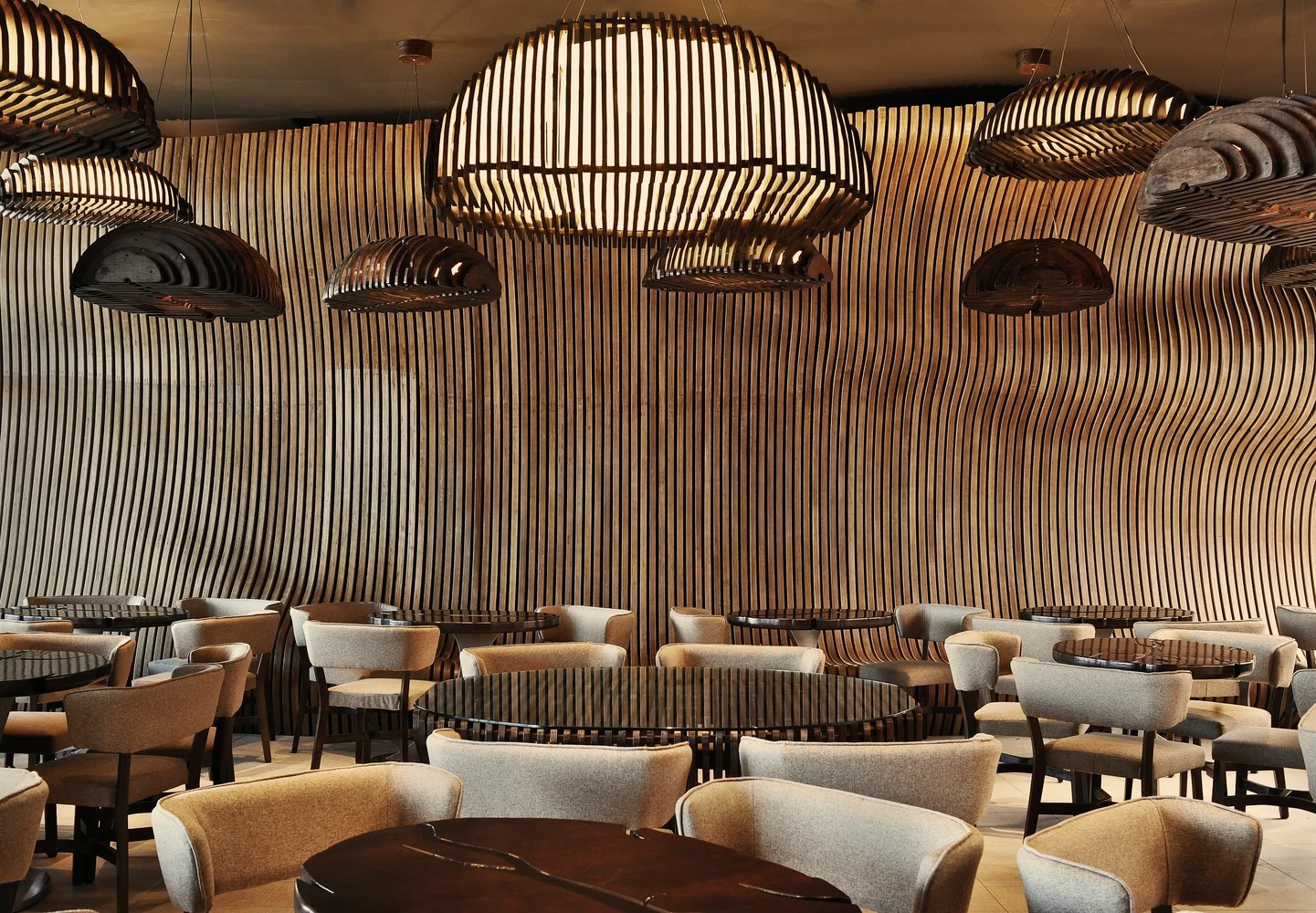
Don Cafe House’s interior design is reminiscent of a coffee sack filled with beans. Designers translate this concept into a continuous enclosure of organically shaped plywood slats and pair it with pillars wrapped in textile coffee sacks. Over 1,300 CNC-cut components join together to produce a smooth and flowing surface that defines both the walls and the bar.
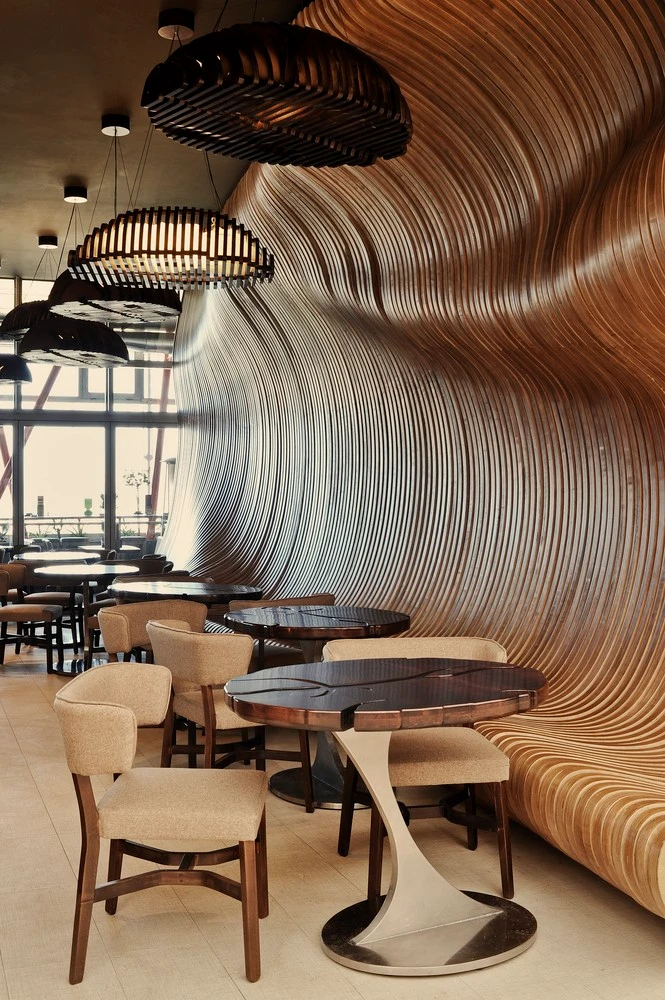
The system covers the entire perimeter, while a central wall combines seating, display, and spatial division. It connects the cafe’s several zones and extends behind the bar to complete the sack shape. Lights, tables, and suspended elements further echo the rounded shape of coffee beans.
8. Cafe Zahorsky
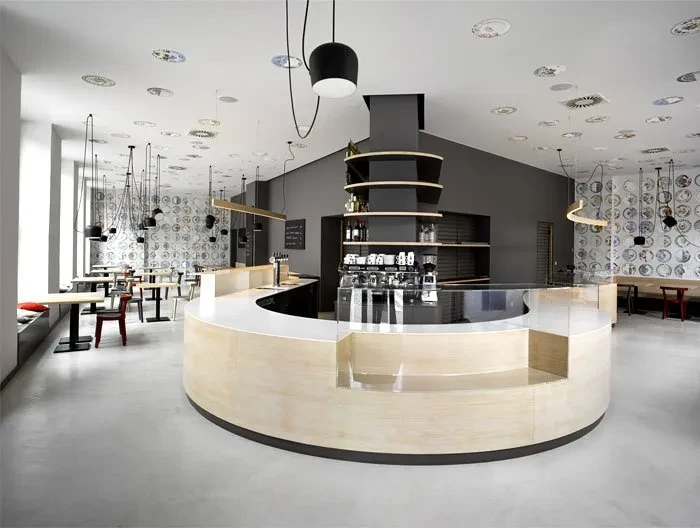
Location: Prague
Cafe Záhorsky is set within an Art Nouveau structure and responds directly to the building’s existing geometry. It echoes curved walls in the design of the central counter and vitrines. The palette remains consistent with white, grey, and black serving as base colors, and red used strategically to articulate surfaces and brighten the environment.
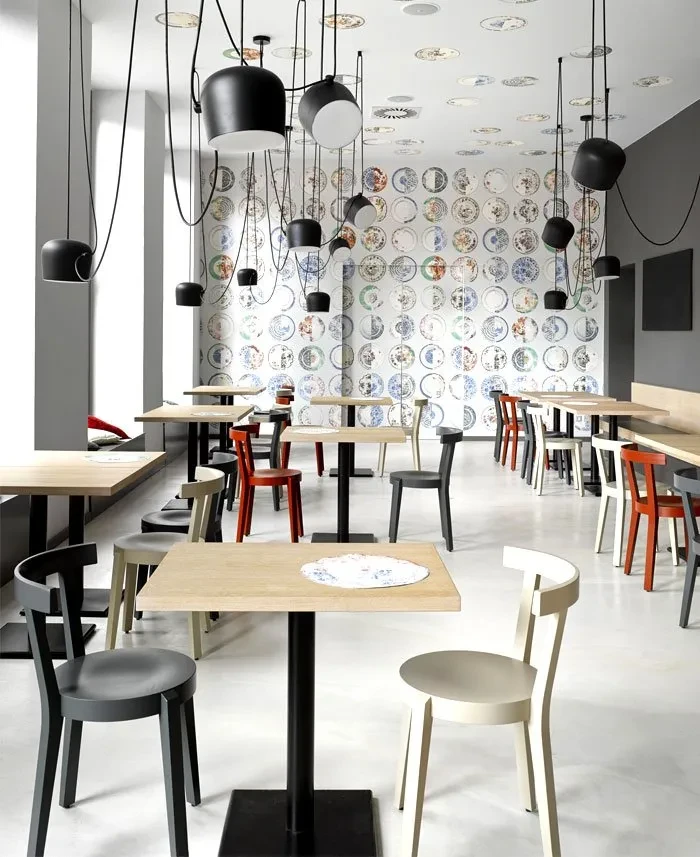
Large sash windows bring in natural light while custom wooden pieces and the designers’ lamps give the space a clean and stylish look. Moreover, the highlighting wallpaper by London Art extends across walls and ceiling, adding a playful contemporary layer.
9. Keit Bakery
Location: Berlin
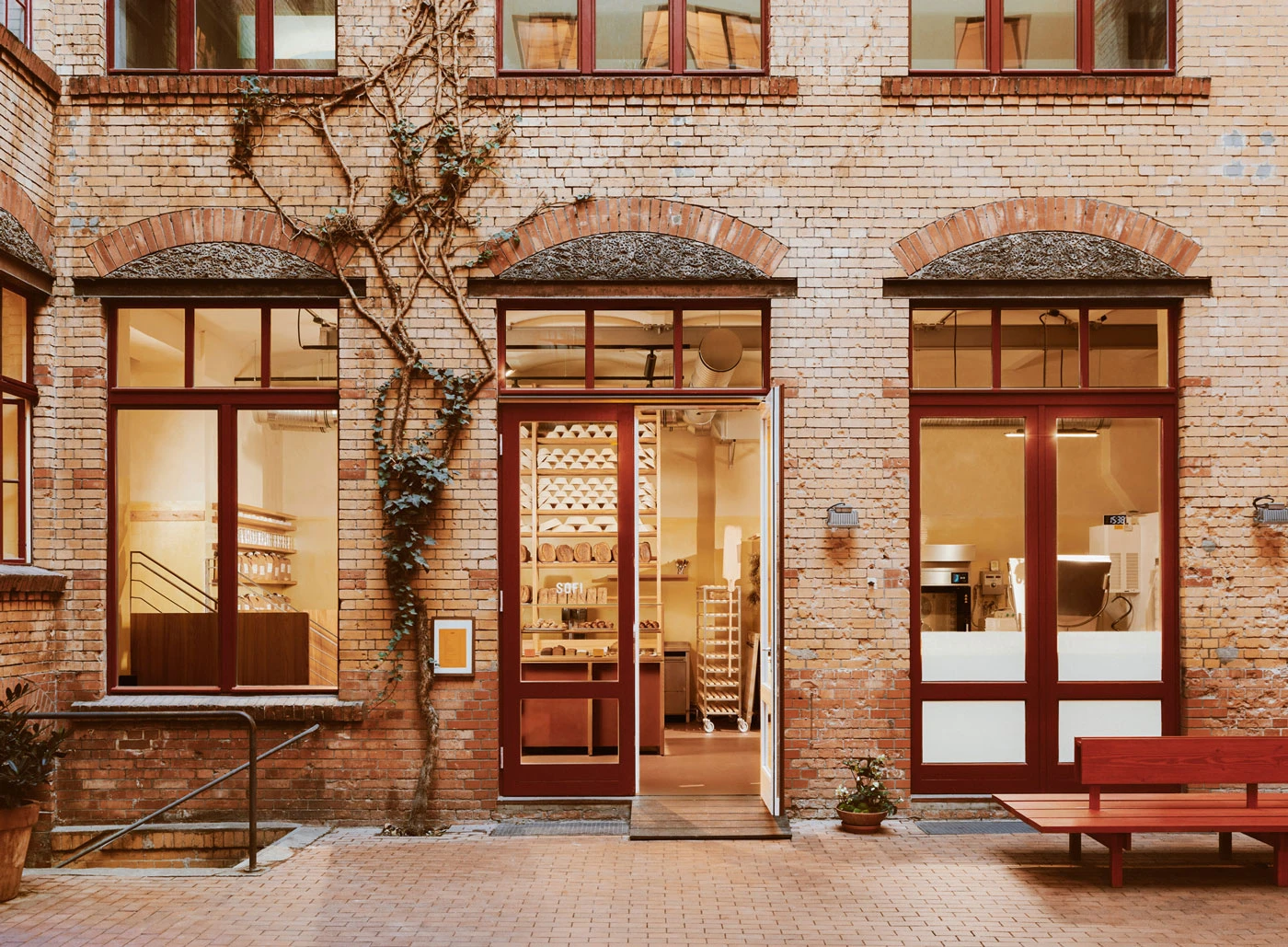
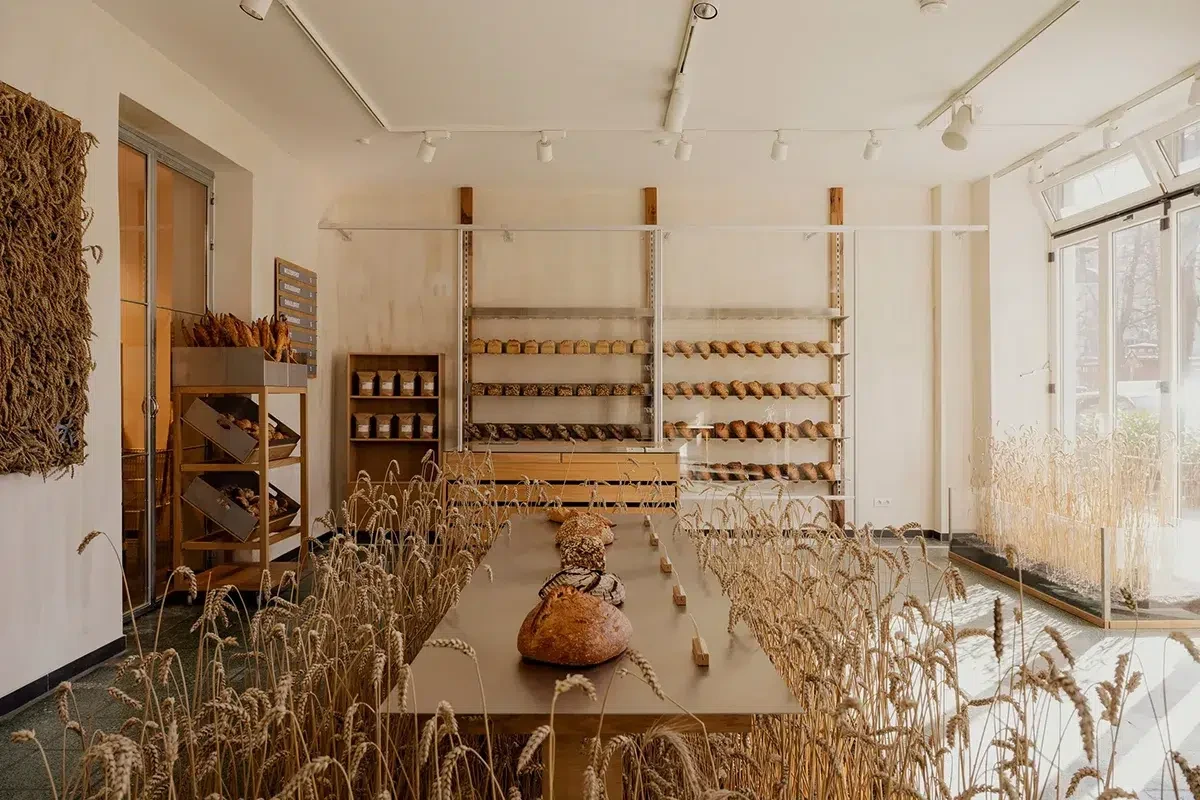
KEIT Bakery by Studio Michael Burman embraces radical minimalism through a compact layout of stone, wood, and steel. At the center, the designers cut and reassemble a reclaimed millstone into a curved and fan-like counter to guide movement through the room. This gesture extends into a stainless steel element that integrates workspace and storage, maintaining continuity of form.
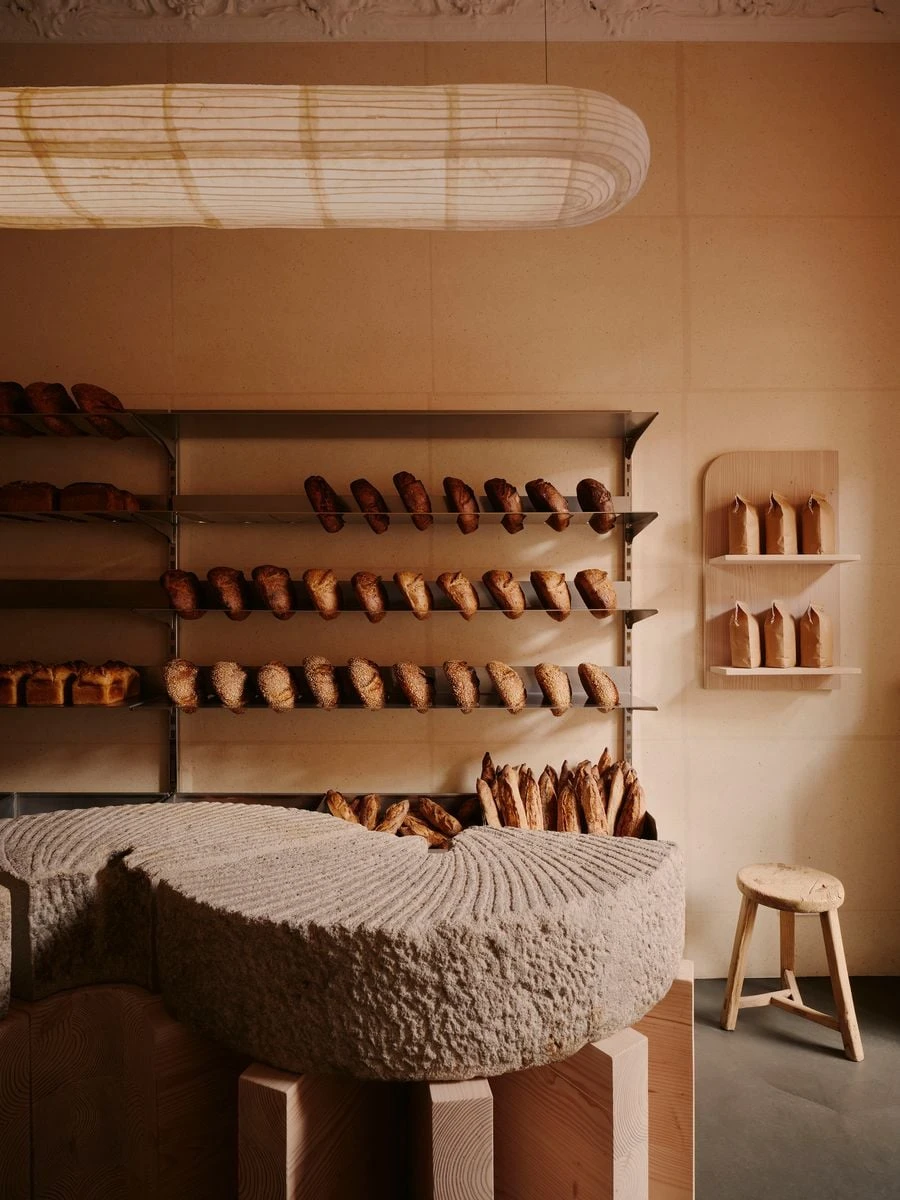
Meanwhile, the designers display bread on slender steel shelves using thin lines to highlight the irregular shape of each loaf. Washi-clad walls introduce a layered surface that diffuses light and softens the harder materials, while an elongated washi pendant reinforces this filtered lighting condition. Finally, a Douglas fir base adds a tactile layer and a deep brown floor grounds the composition.
10. Arcade Bakery
Location: New York City
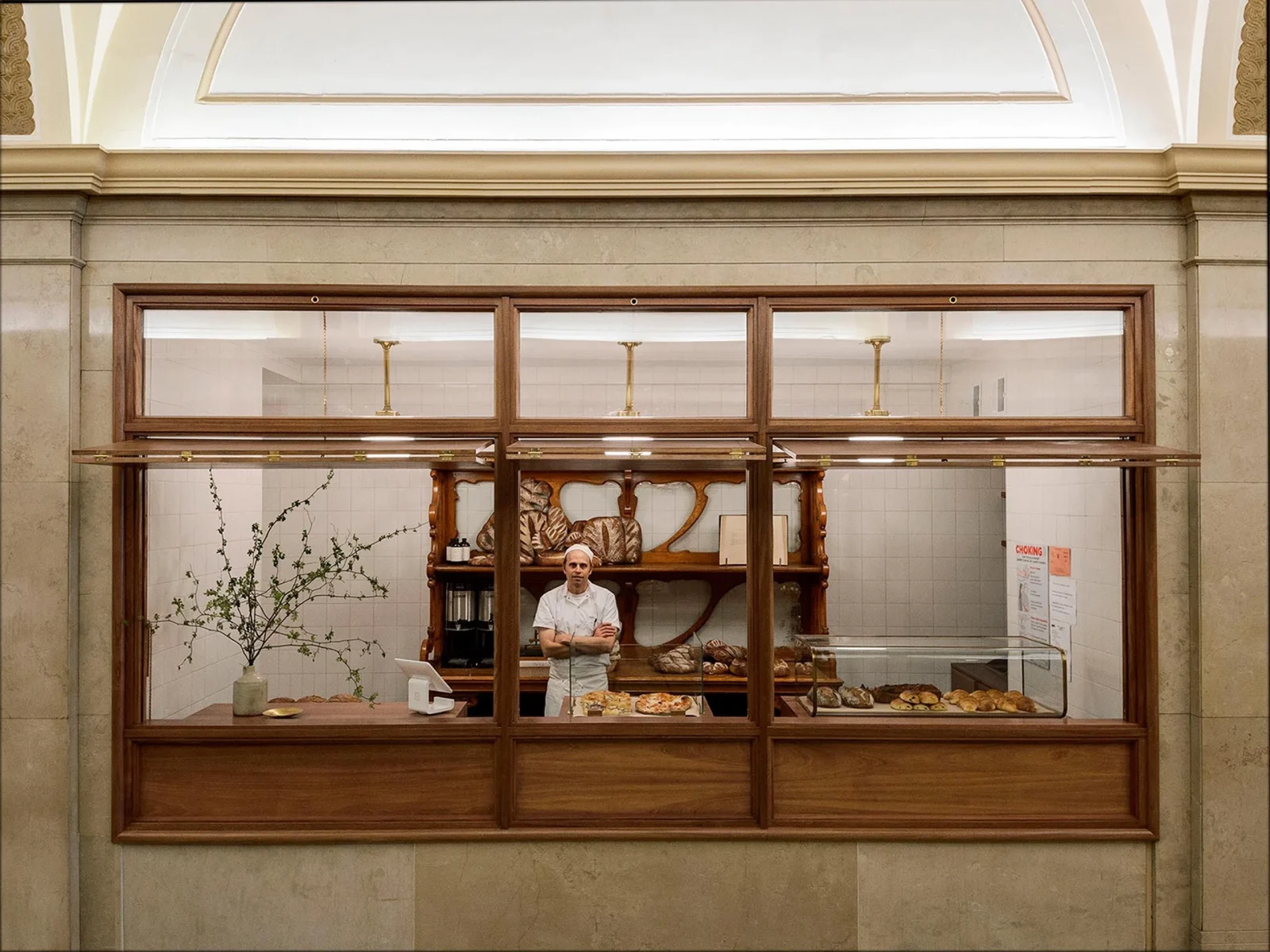
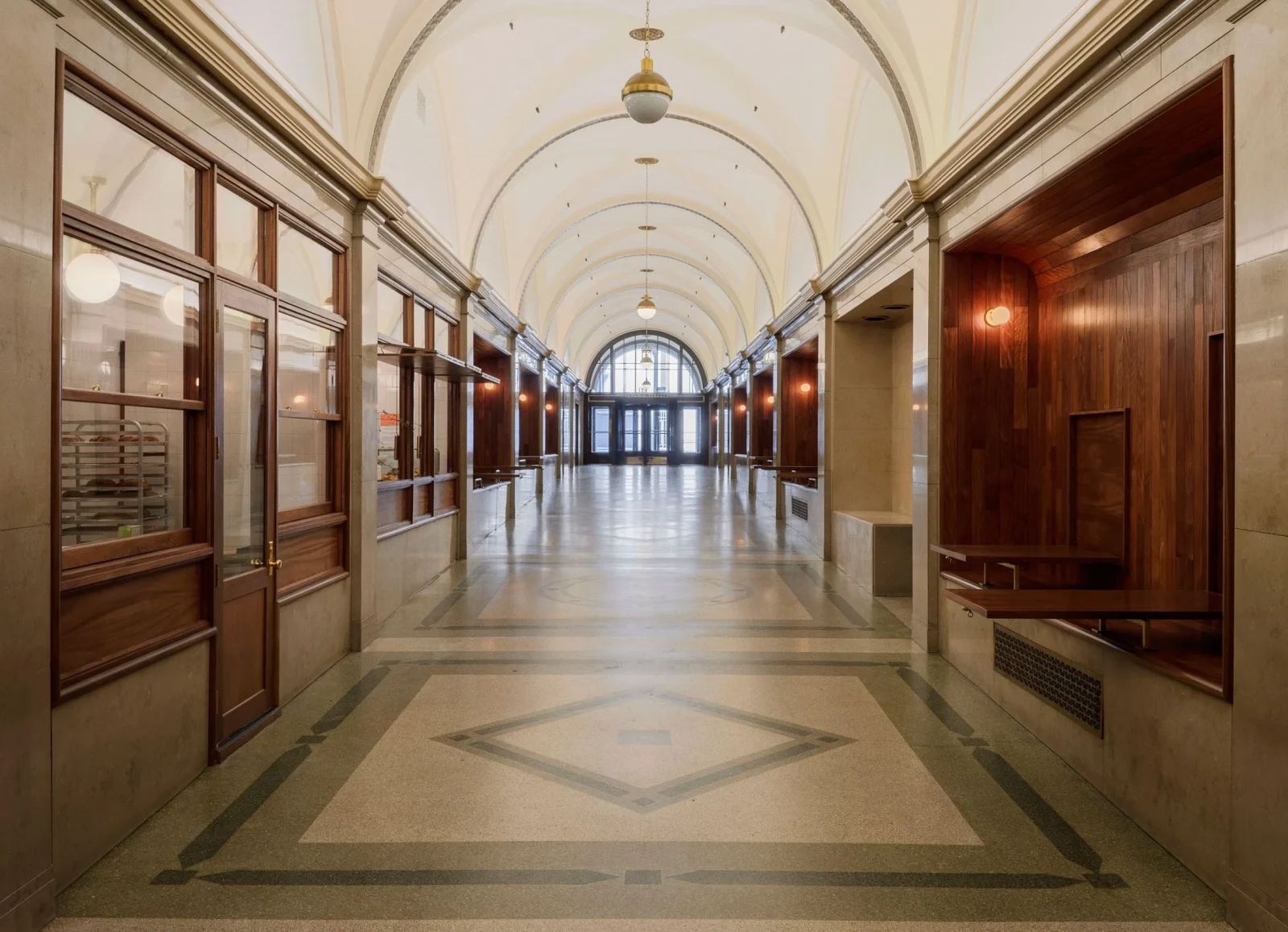
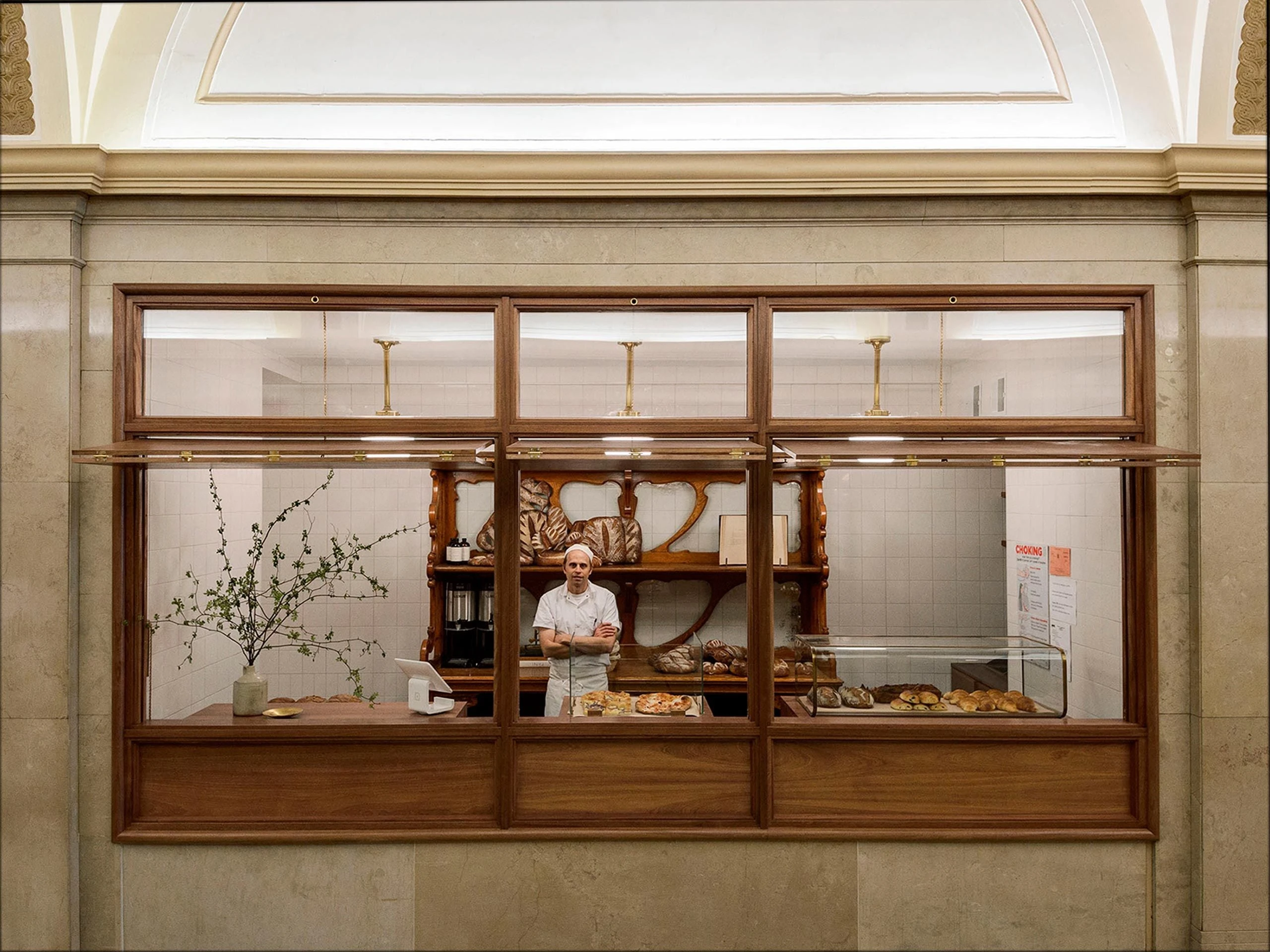
Arcade Bakery occupies a space within Tribeca’s historic Merchants Square Building, set deep inside a 1920s arcade. This condition organizes the plan into a sequence of alcoves accommodating baking, retail, and seating. The design retains original elements like vaulted ceilings, stone-lined walls, and moss green and cream terrazzo flooring while introducing mahogany timber, brass detailing, and white tiles.
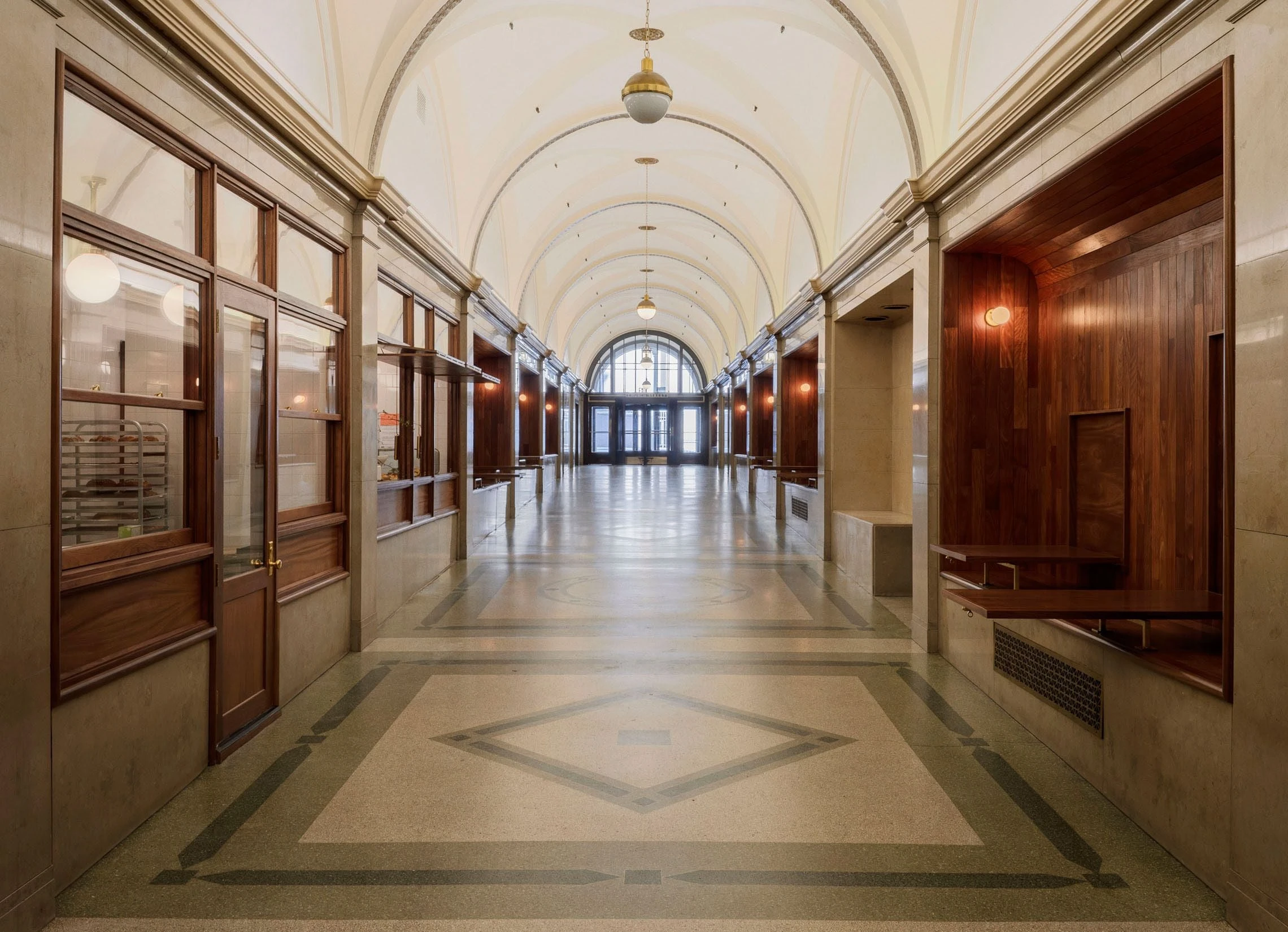
The design addresses spatial constraints, including a sloping floor, by installing fold-out tables on brass rails and display elements that double as seating. This flexibility extends further through hinged mahogany panels that form a canopy when open and sit flush when closed, while rear windows connect to the baking area, allowing aromas to drift into the lobby.
These bakeries elevate everyday indulgence into visual art, blending architecture, interiors, and pastries into immersive, Instagram-worthy spaces that celebrate design, creativity, and global food culture in unforgettable ways.
Explore Courses
.jpg "Ondrej Chybik - Rethinking Architecture")