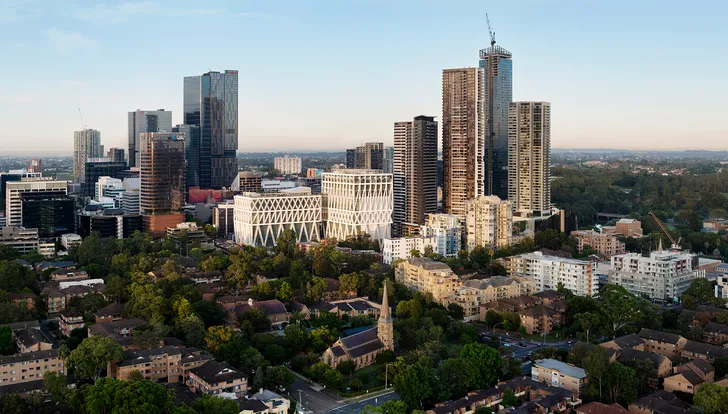
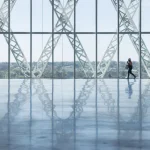
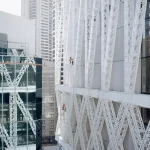
The Powerhouse Parramatta in Sydney, designed by Moreau Kusunoki in collaboration with Genton, positions a structure fundamentally driven by an externalized steel exoskeleton. This load-bearing lattice displaces conventional structural logic outward, allowing the interior to operate as a series of uninterrupted “hyper-platforms.” Inversion of structure, where the envelope carries the primary loads, enables large-span, column-free galleries, redefining the museum typology as a flexible, continuously reprogrammable spatial field.
Exoskeleton as Structure
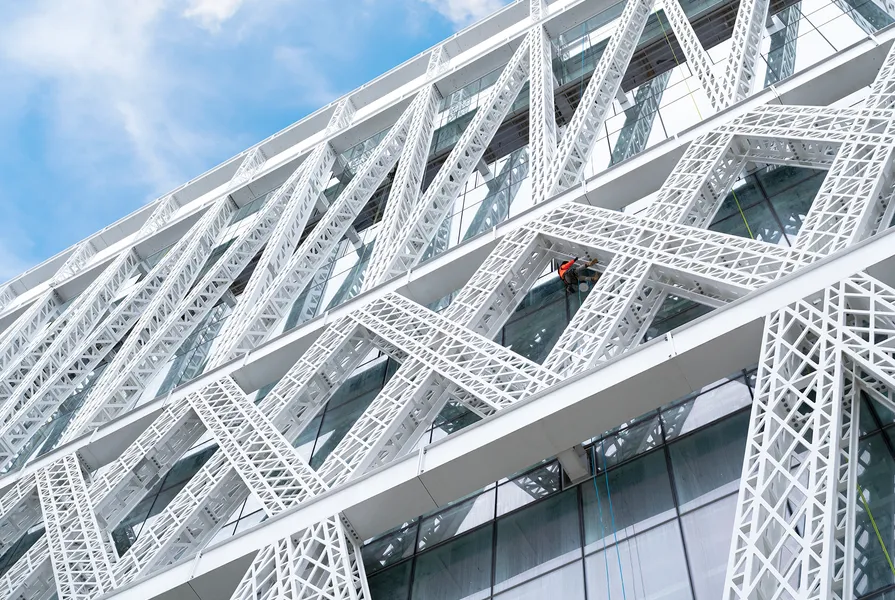
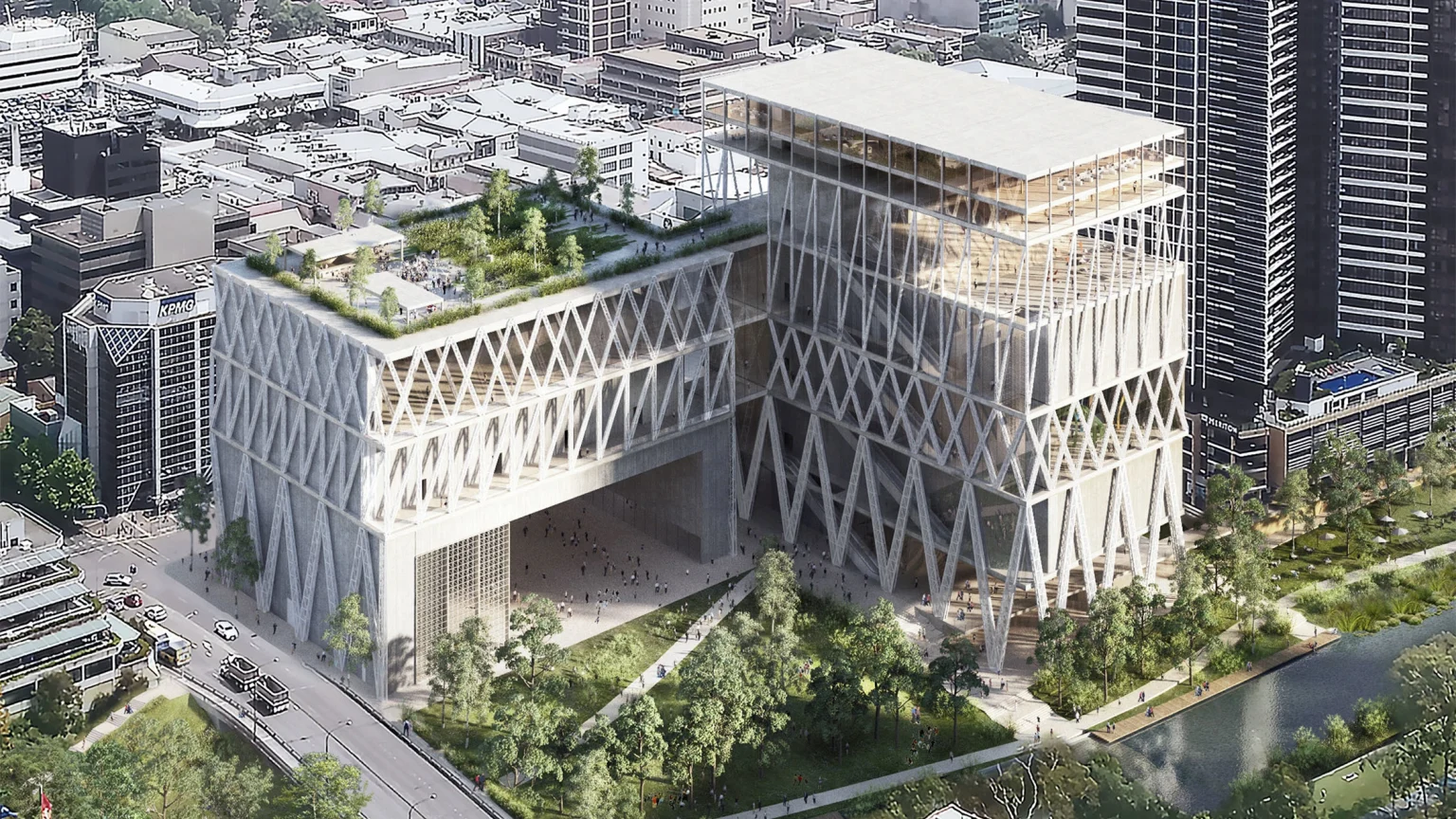
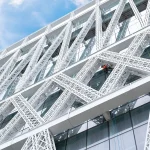
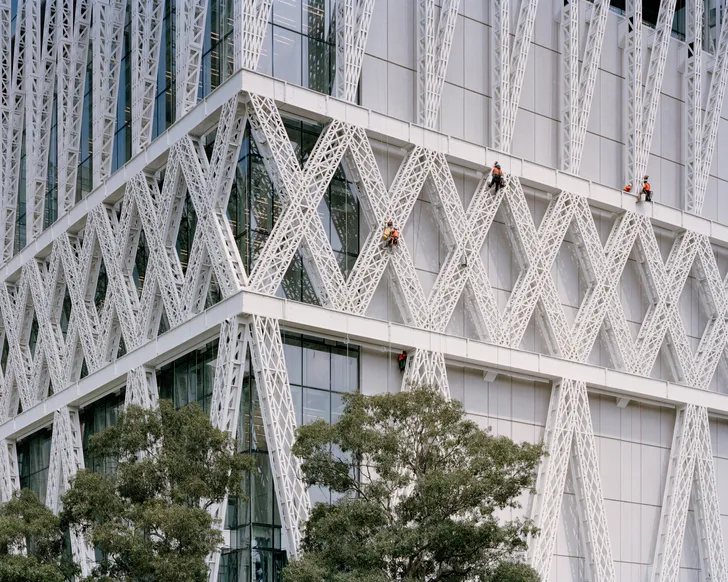
The exoskeleton itself is designed as a multi-scalar lattice system composed of layered steel geometries articulated through X, V, and N configurations that negotiate forces of tension and compression through truss-based logic. It operates across three degrees of density, allowing the building to simultaneously engage the human scale, the urban context, and the monumental skyline. This gradation dissolves the perceived mass of the building, transforming a large institutional volume into a porous, visually permeable structure whose legibility shifts with distance.
By modeling outside the glazed envelope, it performs solar control, reducing heat gain while maintaining visual transparency. Its depth and repetition create a dynamic filtering of light, casting temporal patterns into the interior while preserving the clarity of exhibition spaces. This dual role, load-bearing and climatic, demonstrates an integrated approach where performance and expression are inseparable.
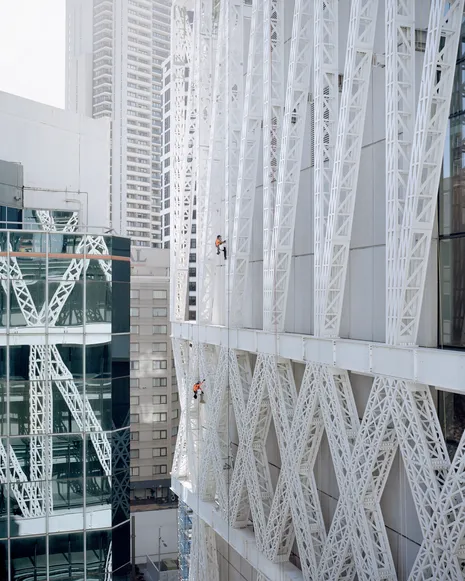
The building mass is organized into two primary volumes derived from the stacking of seven large presentation spaces. These volumes are not independent objects but are bound together by a continuous layer of interstitial “in-between” spaces. These connective zones are structurally liberated by the external frame, allowing them to function as adaptable circulation fields, social condensers, and environmental buffers. The result is a spatial system where boundaries between program, circulation, and structure are deliberately blurred, reinforcing the idea of the museum as an evolving platform.
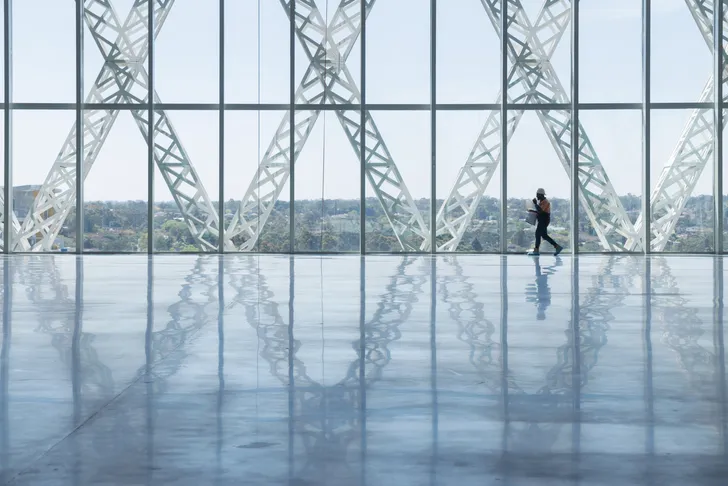
From an engineering standpoint, the project represents a high level of material and fabrication precision. The exoskeleton, comprising thousands of steel elements and complex node connections, was prototyped at full scale to resolve interfaces between steel, concrete, and façade systems. Its design minimizes material use while maximizing structural performance, reflecting a strategy of “refined redundancy” where efficiency is achieved through geometric complexity.
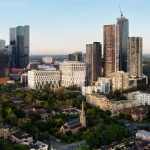
At the urban scale, the decision to externalize structure also allows the building to “touch the ground lightly,” reducing its footprint and opening the ground plane toward the Parramatta River. Powerhouse Parramatta creates a porous interface where landscape, public realm, and architecture interlock, reinforcing the project’s role as both infrastructure and cultural catalyst. The structural system, therefore, is an engineering solution and a spatial and urban device, one that mediates between monumentality and accessibility, enclosure and openness, permanence and adaptability.