



















New York’s Penn Station is set for its most significant transformation in decades after Amtrak selected Penn Transformation Partners as the master developer and appointed the HNTB–HOK Joint Venture, in association with PAU (Practice for Architecture and Urbanism), to lead the station’s design. The announcement marks a major milestone in the long-running effort to reimagine the busiest transportation hub in the Western Hemisphere into a more efficient, accessible, and architecturally significant gateway for New York City.
Penn Station’s New Architectural Identity

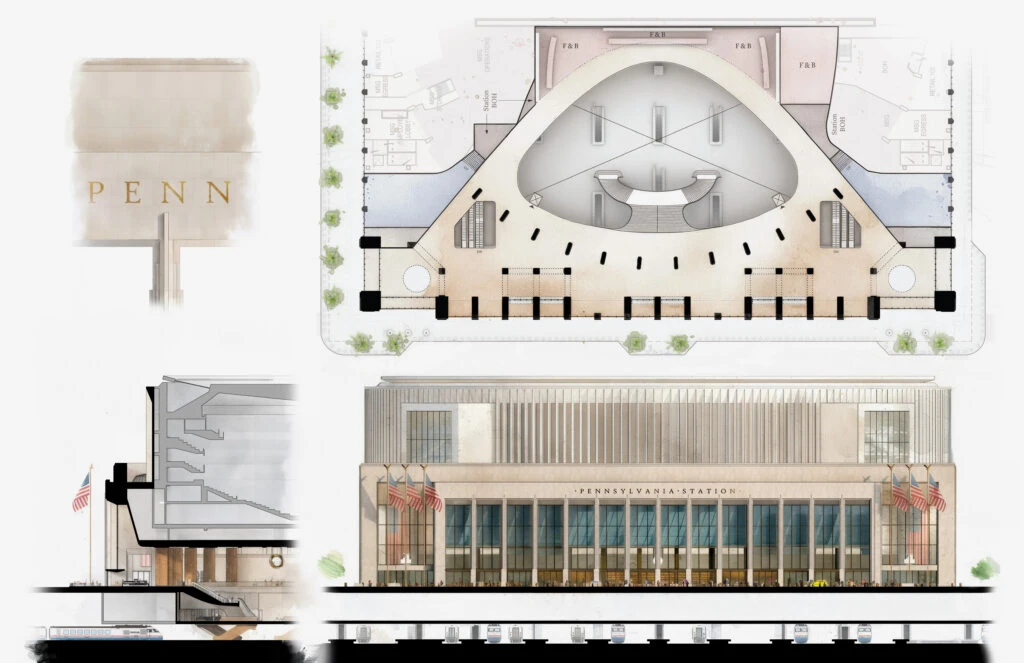
PAU, led by architect Vishaan Chakrabarti, serves as the lead design architect for the project. The firm’s proposal seeks to address decades of operational and spatial shortcomings while reconnecting the station to New York’s architectural legacy. Inspired by the original Pennsylvania Station and the neighboring Farley Building, the design aims to create a welcoming public gateway that reflects both New York’s history and its future.
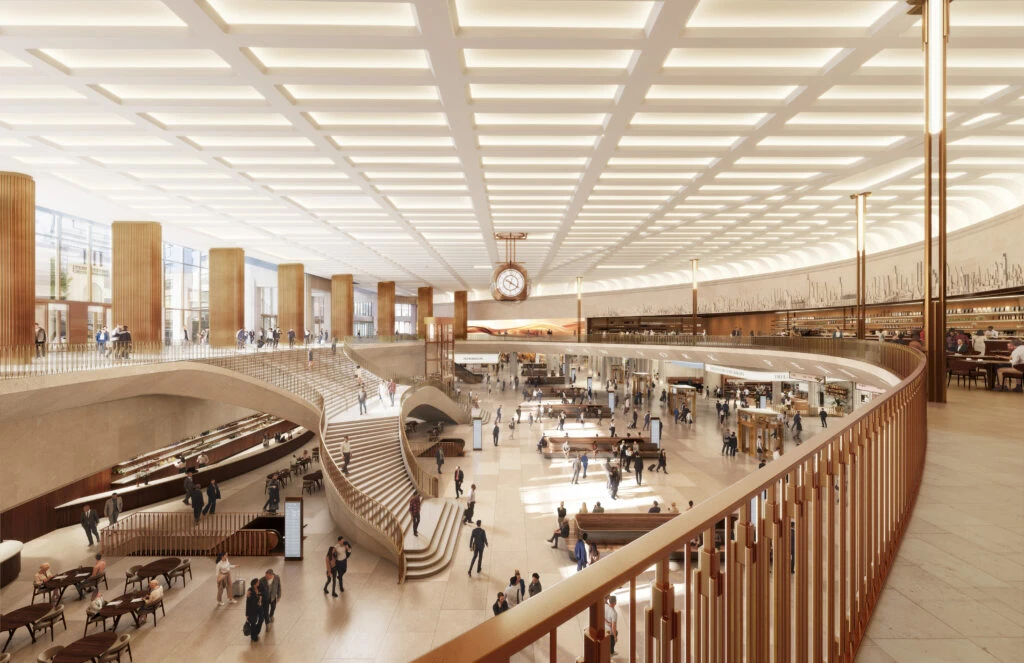
The proposal preserves substantial portions of the existing structure through what the design team calls a process of “surgical reconstruction,” balancing reuse with major architectural interventions. The renewed station aims to replace today’s fragmented and often confusing passenger experience with a coherent public environment that restores dignity to one of the nation’s most important transit facilities.
Light-Filled Halls and Improved Passenger Experience
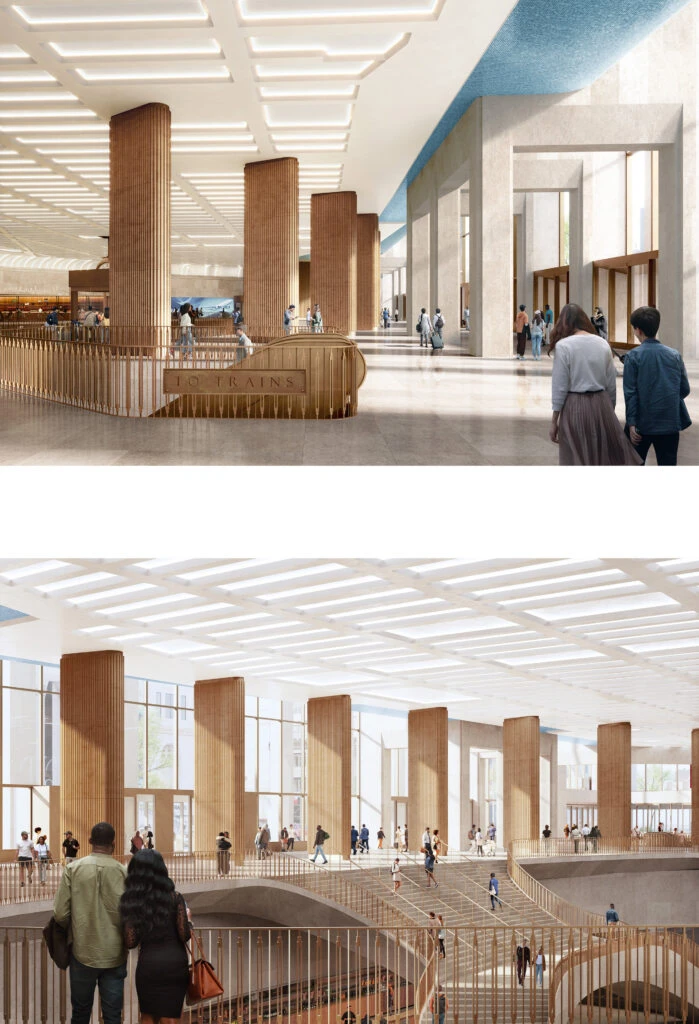
According to HOK and HNTB, the transformation will introduce a grand new entrance along Eighth Avenue leading into a spacious, light-filled train hall. Expanded concourses will replace constrained circulation areas, while upgraded wayfinding systems, retail offerings, and passenger amenities are intended to improve daily travel for hundreds of thousands of commuters.
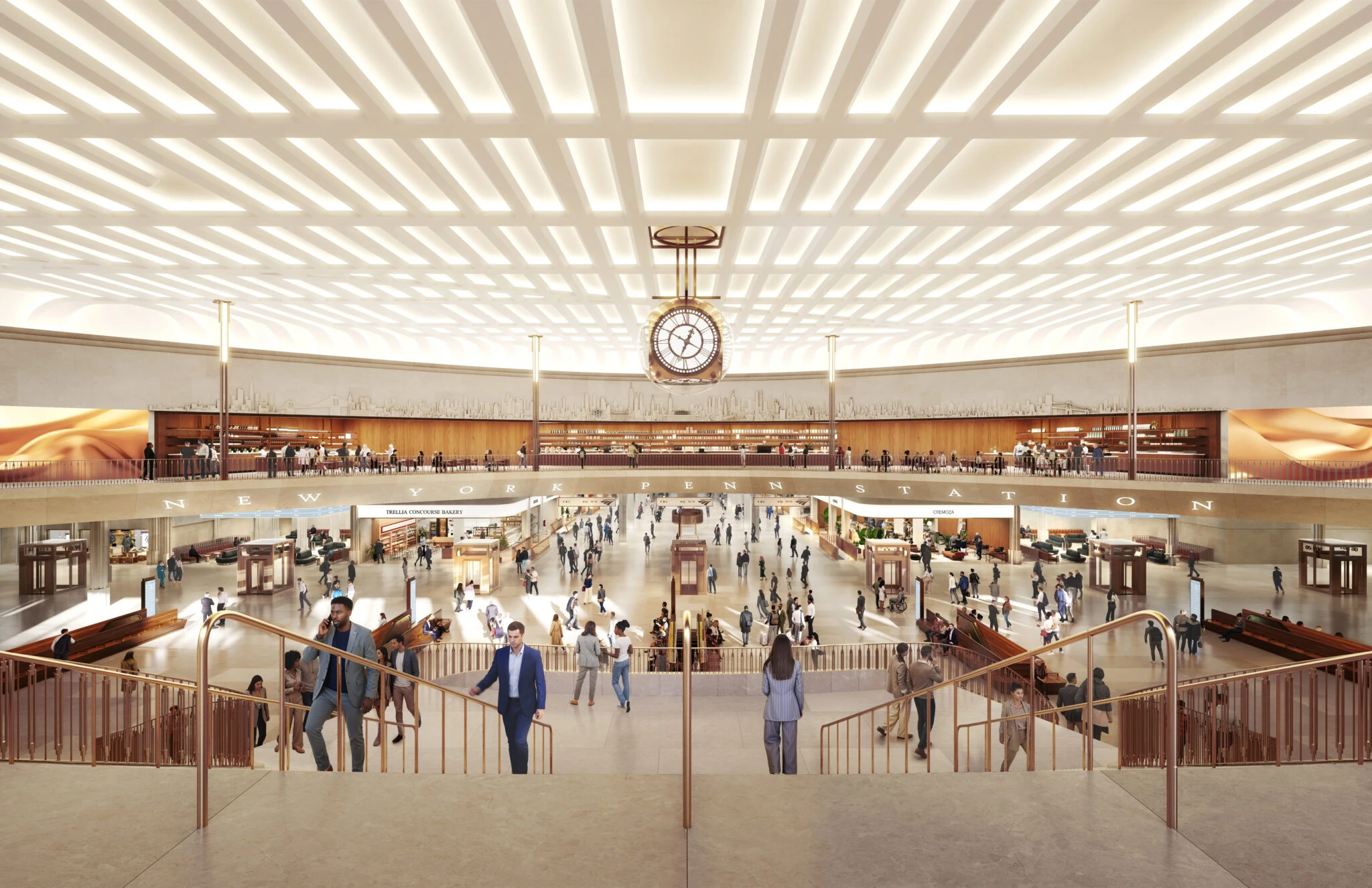
The redesign also includes improvements to track capacity, operational efficiency, and the station’s aging subterranean infrastructure. Integration with Madison Square Garden and the surrounding urban fabric remains a central component of the scheme, allowing the project to move forward without relocating the arena.
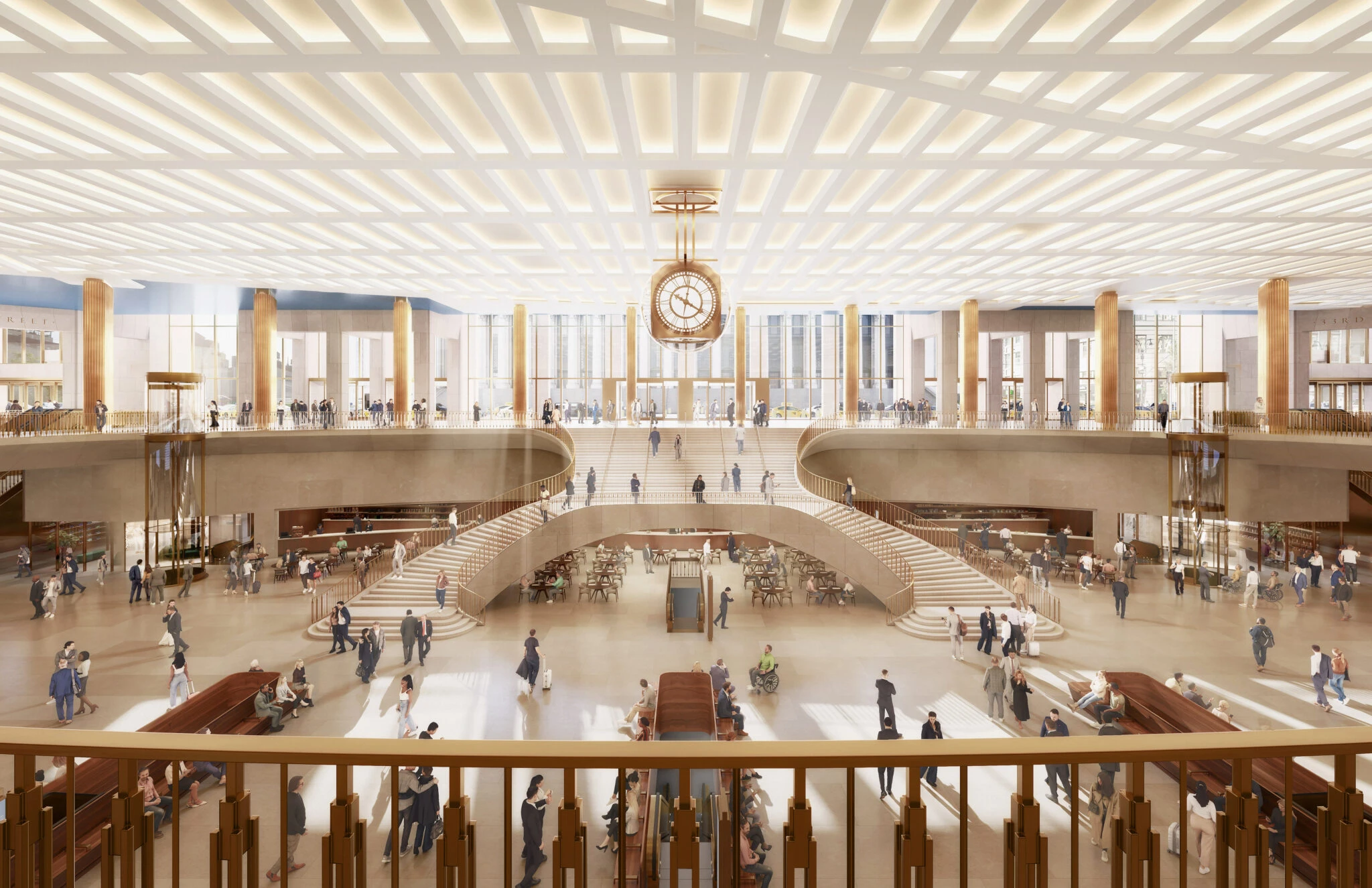
For the design team, the project extends beyond transportation infrastructure. HOK describes the station as a defining civic space whose renewal offers an opportunity to restore clarity, accessibility, and a stronger public identity to one of New York’s most heavily used gateways.
Design Work Begins Ahead of 2027 Construction

The redevelopment is being advanced by Penn Transformation Partners, a joint venture between Halmar and Skanska, working alongside PAU, HOK, and HNTB. Design and development activities are now underway, with construction expected to begin in 2027 following approvals, permitting, and further project coordination.

Spanning approximately 1.3 million square feet, the renewed Penn Station is envisioned as both a transportation upgrade and an urban repair project—one that addresses the legacy of the original station’s demolition while preparing New York’s rail network for future growth. Through a combination of contemporary design, improved functionality, and civic ambition, the project seeks to redefine the experience of arriving in and departing from New York City.