

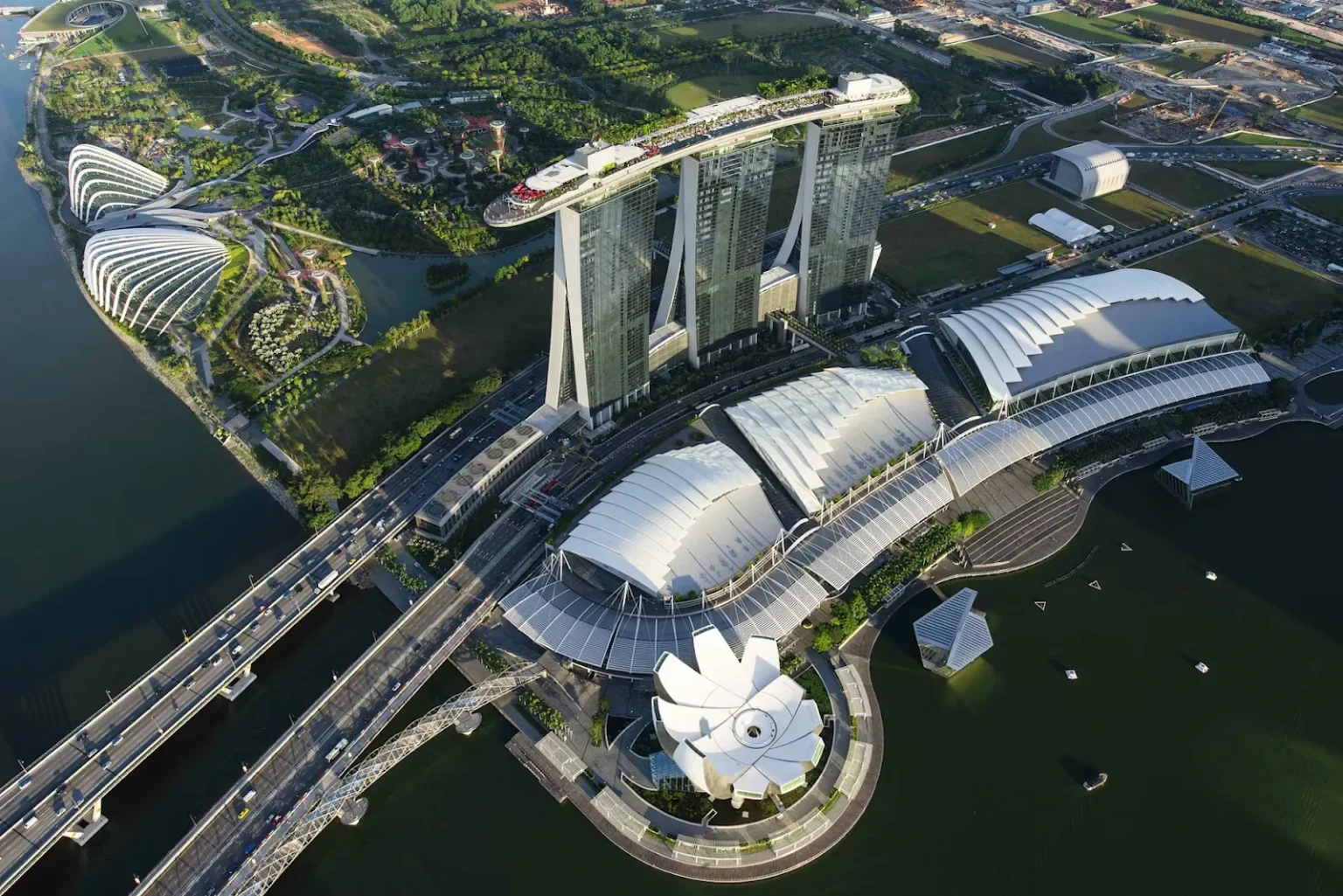

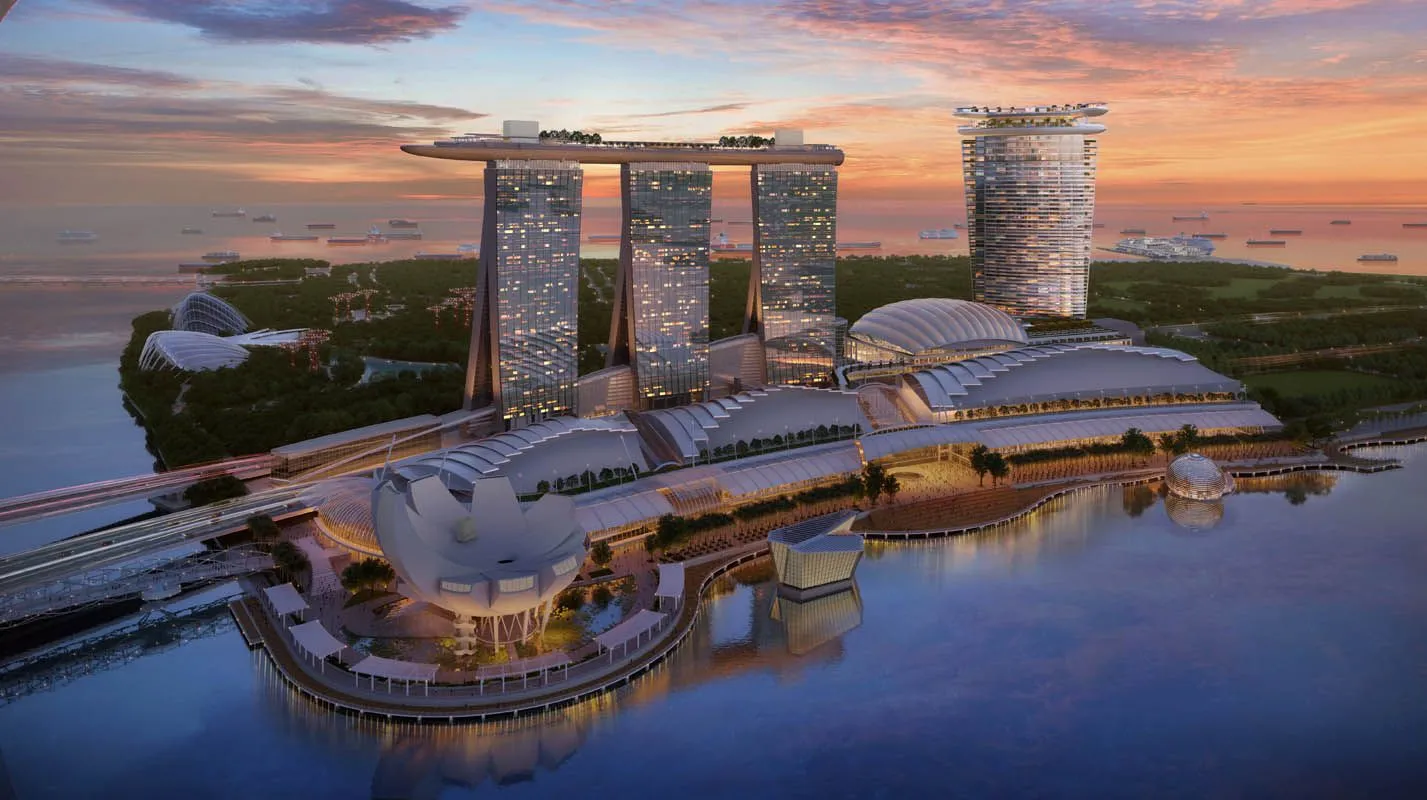



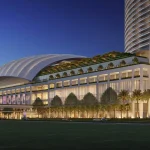
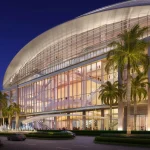
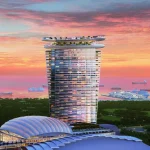
Fifteen years after its launch, Marina Bay Sands is undergoing a major evolution. Las Vegas Sands has broken ground on a US$8 billion expansion that will introduce a new 570-suite hotel tower, a 15,000-seat entertainment arena, and a 76,000-square-foot Skyloop.
Designed by Safdie Architects, the original team behind the resort’s now-iconic profile, the new development is engineered to enhance Marina Bay Sands’ global reputation while responding to the evolving urban, environmental, and programmatic demands of Singapore’s hospitality and tourism infrastructure.
A Strategic Reorientation: Safdie Architects Lead Tower Design
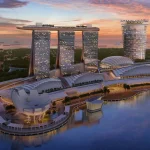
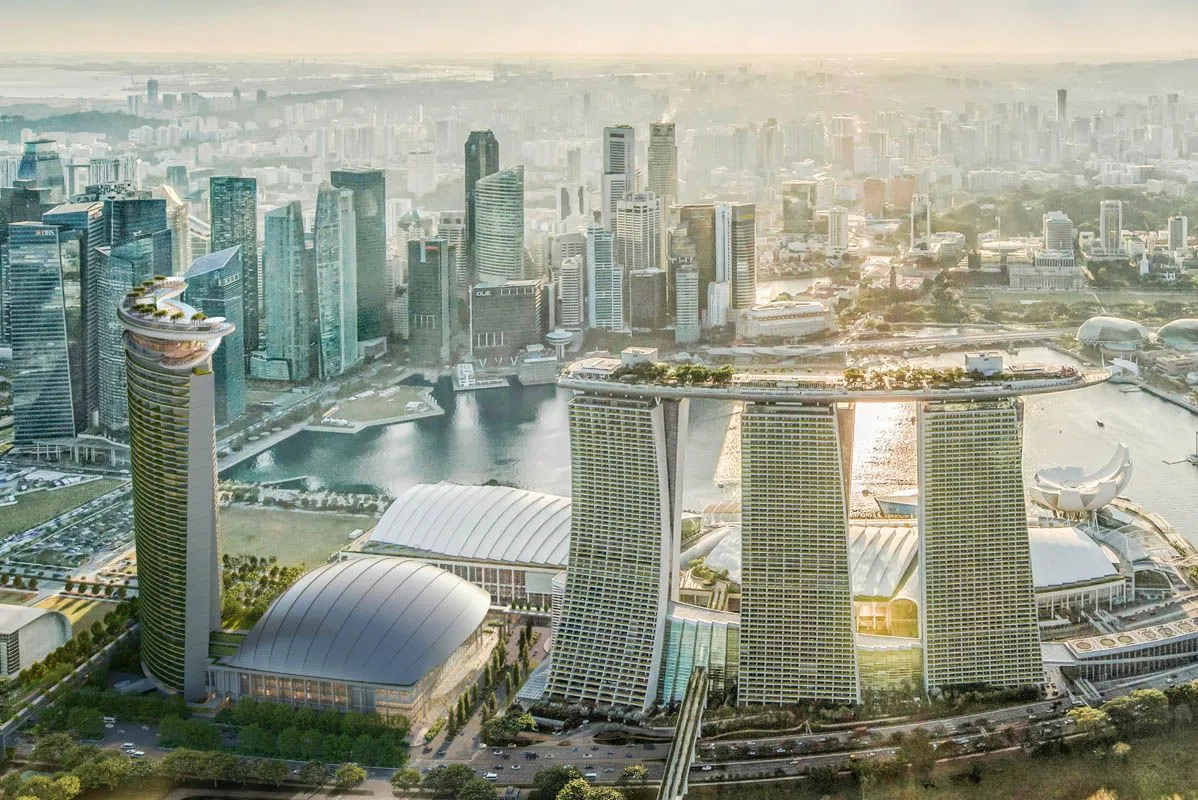
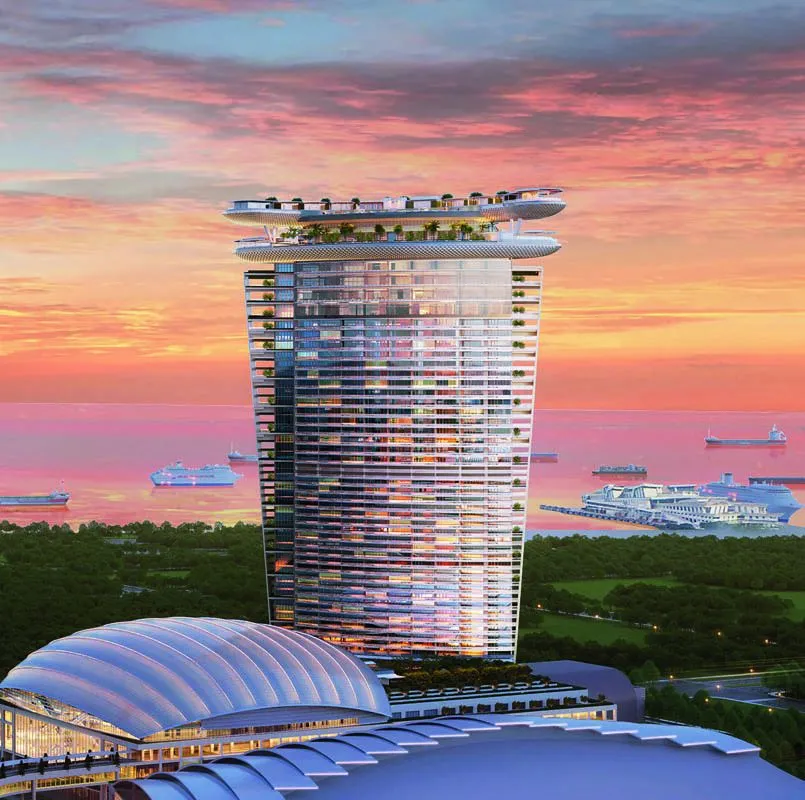
Safdie Architects returns with a proposal that is less about repetition and more about amplification. The new tower is rotated 45 degrees from the original three-hotel configuration. This geometry frames Marina Bay and the Singapore Strait while differentiating the new volume from the original composition. The goal is to maximize views, daylight access, and urban presence without compromising skyline legibility.
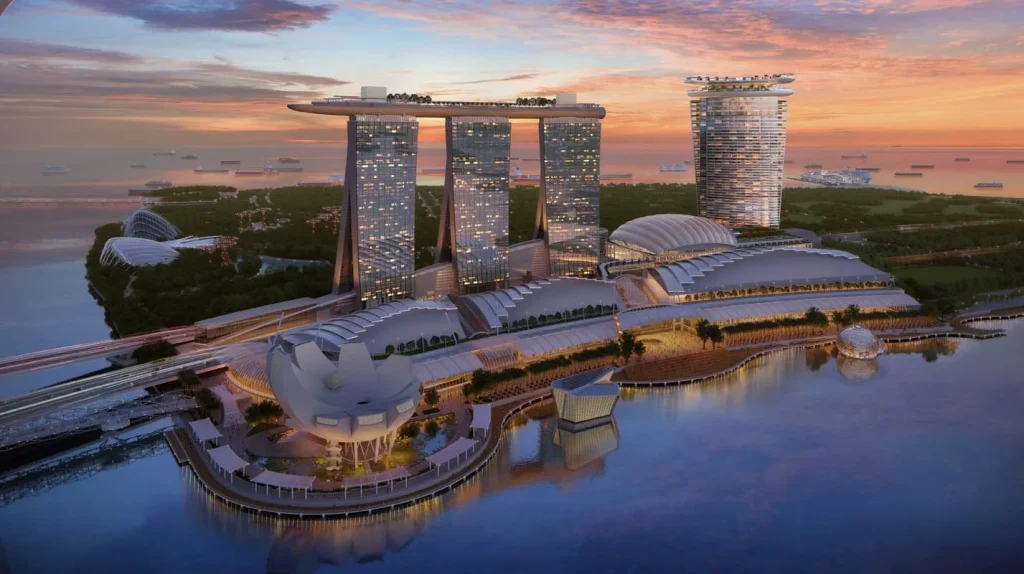
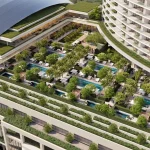
The hotel will feature 570 suites, each with its private terrace and garden. The design language emphasizes transparency and openness, supported by a self-shading façade system and high-performance glazing to reduce solar gain. These elements serve both design and functional goals, providing thermal comfort, light penetration, and energy efficiency, all while retaining a sleek, contemporary envelope.
Skyloop: Structure, Circulation, and Public Interface
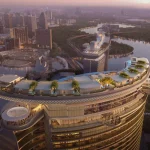
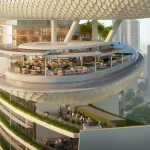
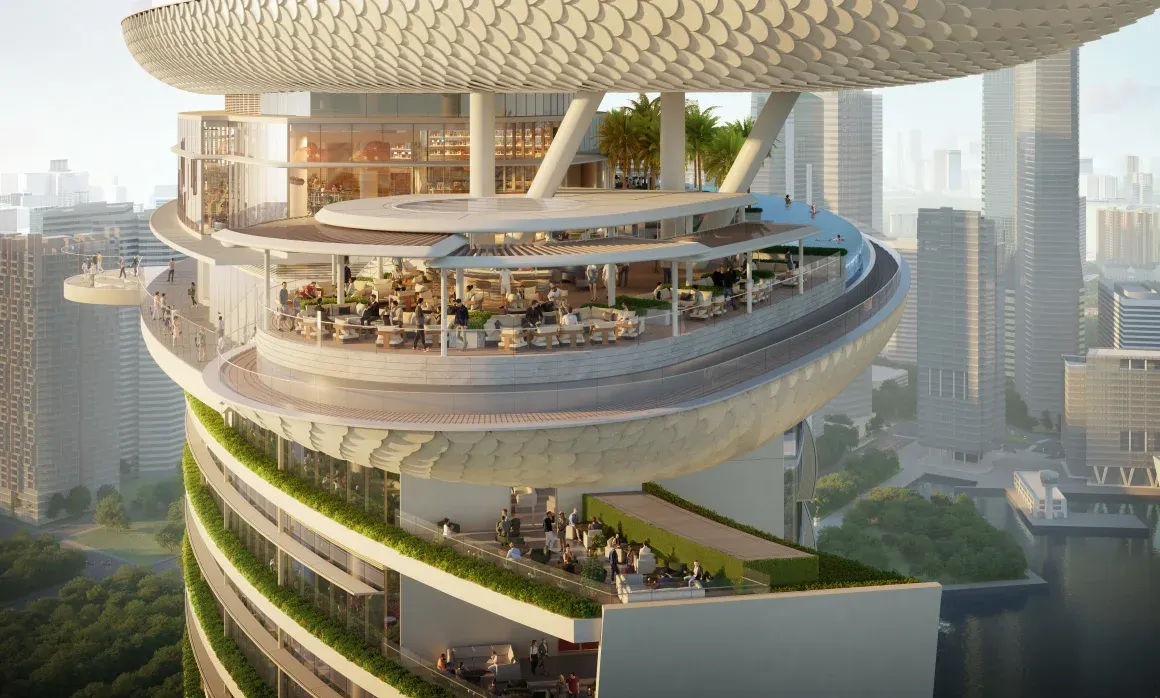
At the summit of the tower, the Skyloop replaces the earlier SkyPark concept. Designed as interlocking elliptical volumes spiraling in opposing directions, it forms both a sculptural capstone and a functional public-private interface.
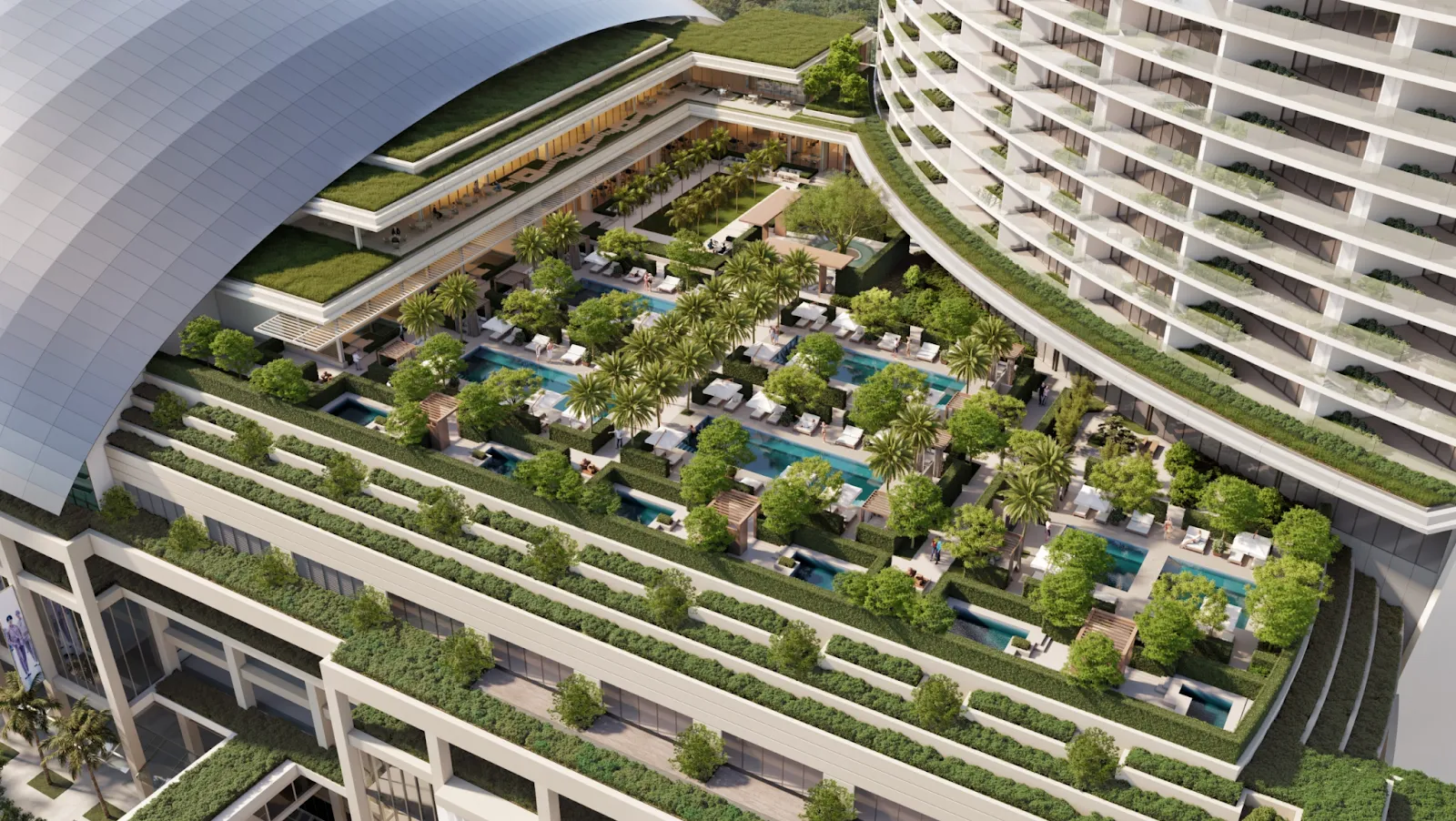
The elliptical Skyloop spirals in opposing directions, creating overlapping zones that support both private and public programming. This includes a public observatory with 360° views, restaurants, rooftop gardens with native Southeast Asian plantings, and event terraces. The cantilevered wellness terrace and infinity pools are sequestered to offer exclusivity to hotel guests, while public access is integrated to reinforce the resort’s open urban strategy.
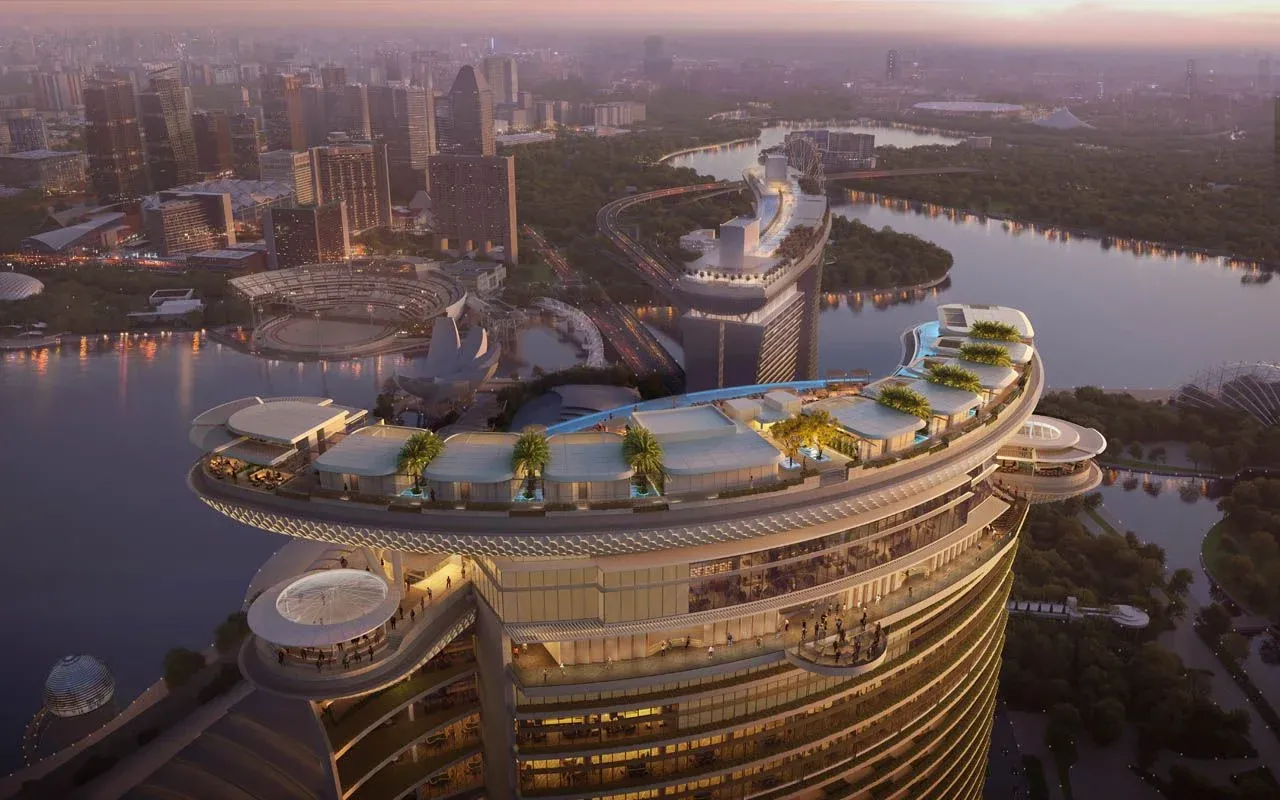
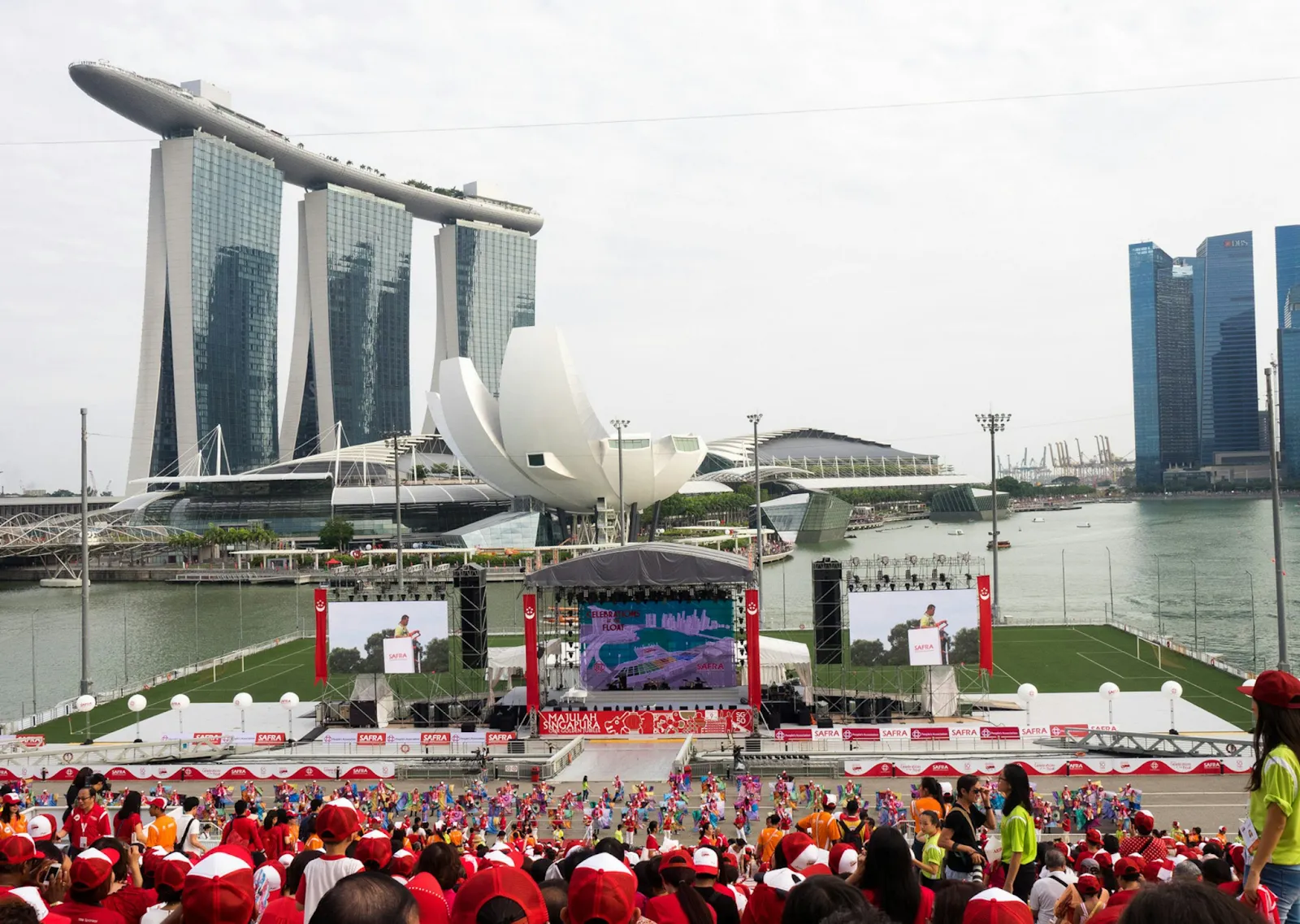
The Skyloop’s form will serve as a new architectural landmark in Singapore’s vertical skyline, a dynamic counterpoint to the linear SkyPark structure of the original towers.
Arena and Urban Integration
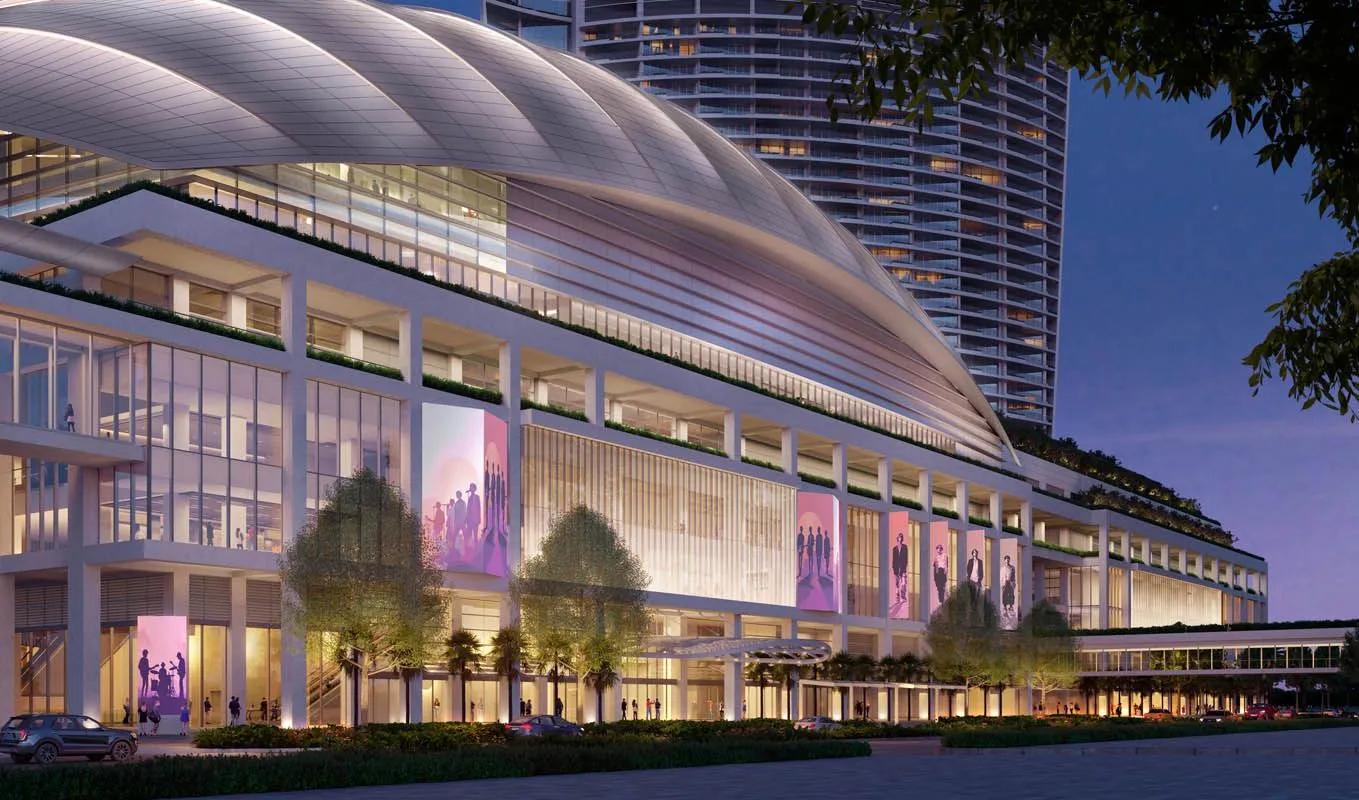
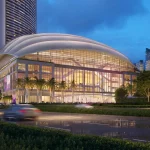
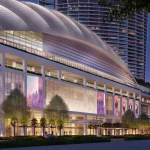
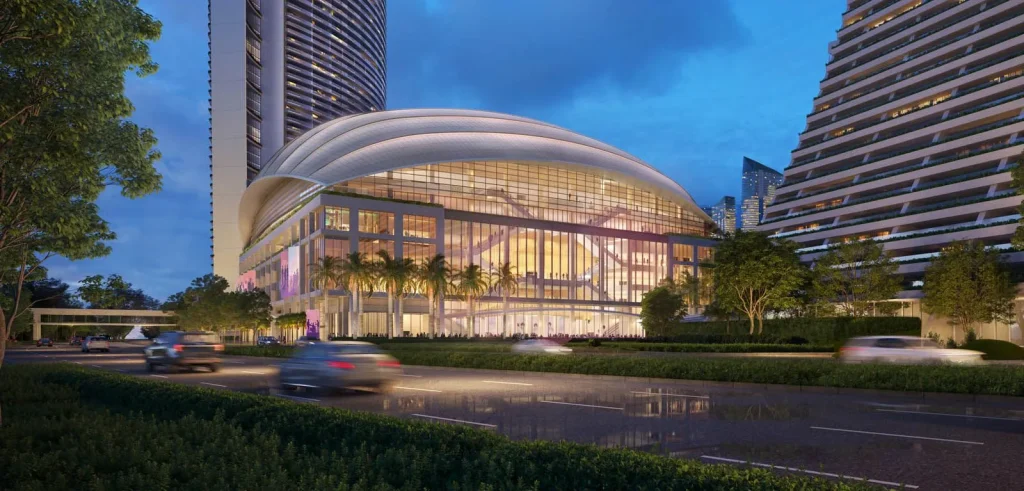
The 15,000-seat arena is a major anchor within the expansion, designed by Populous (the global firm known for The Sphere in Las Vegas and the O2 Arena in London). Positioned against the bayfront, the arena is engineered for acoustics, flexible staging, and optimal sightlines for both intimate and large-scale performances. It will also have seamless integration with Bayfront MRT and direct pedestrian connections to Gardens by the Bay, reinforcing transit-oriented development principles.
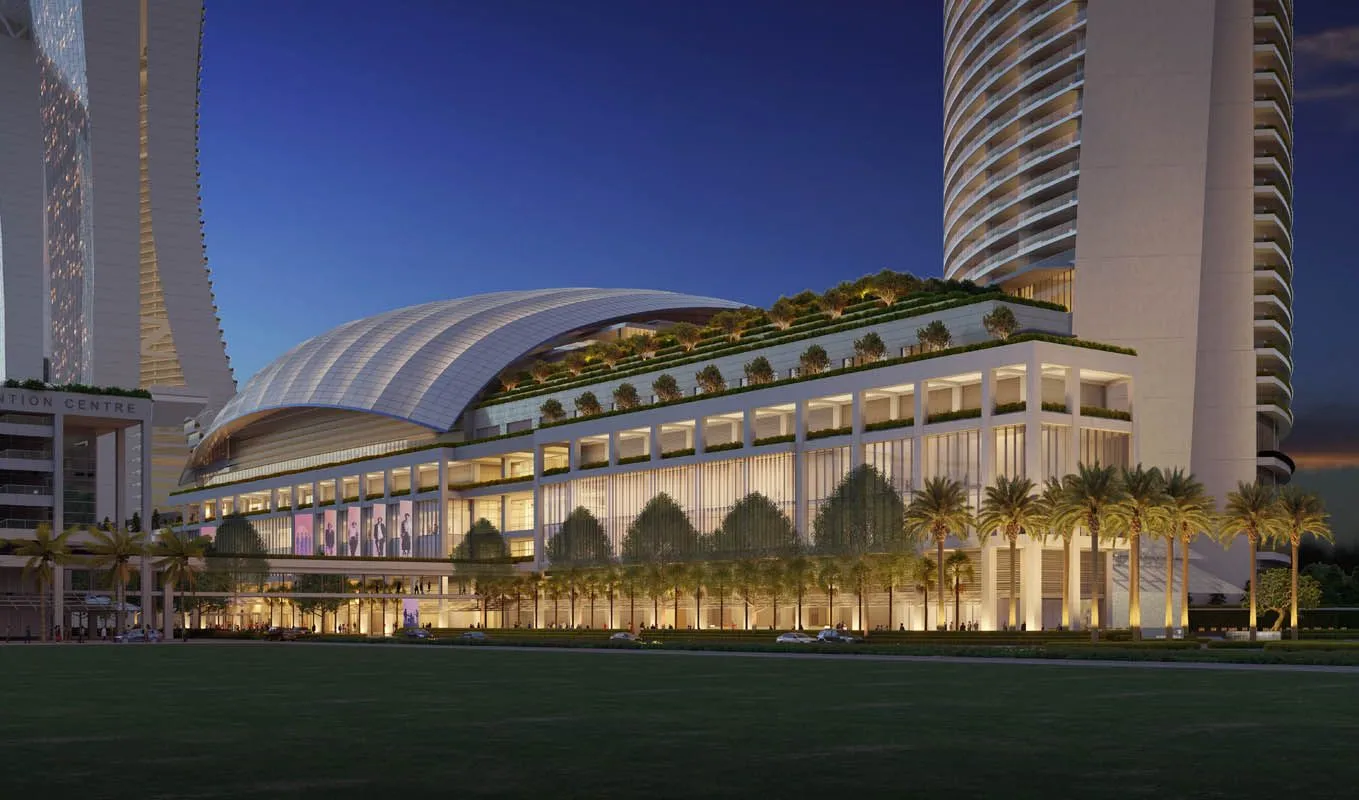
The venue reflects a larger urban strategy, creating programmable, high-density spaces that support both cultural production and tourism while maintaining permeability within the Marina Bay district.
Material Strategy and Sustainability
Sustainability is central to the project’s material palette and construction methodology. The development emphasizes the use of low-carbon concrete, recycled steel, and a waste diversion target of 75% during construction. Landscape planning takes inspiration from Singapore’s biophilic urbanism, incorporating native Southeast Asian species and significant green coverage throughout terraces, gardens, and dining zones.
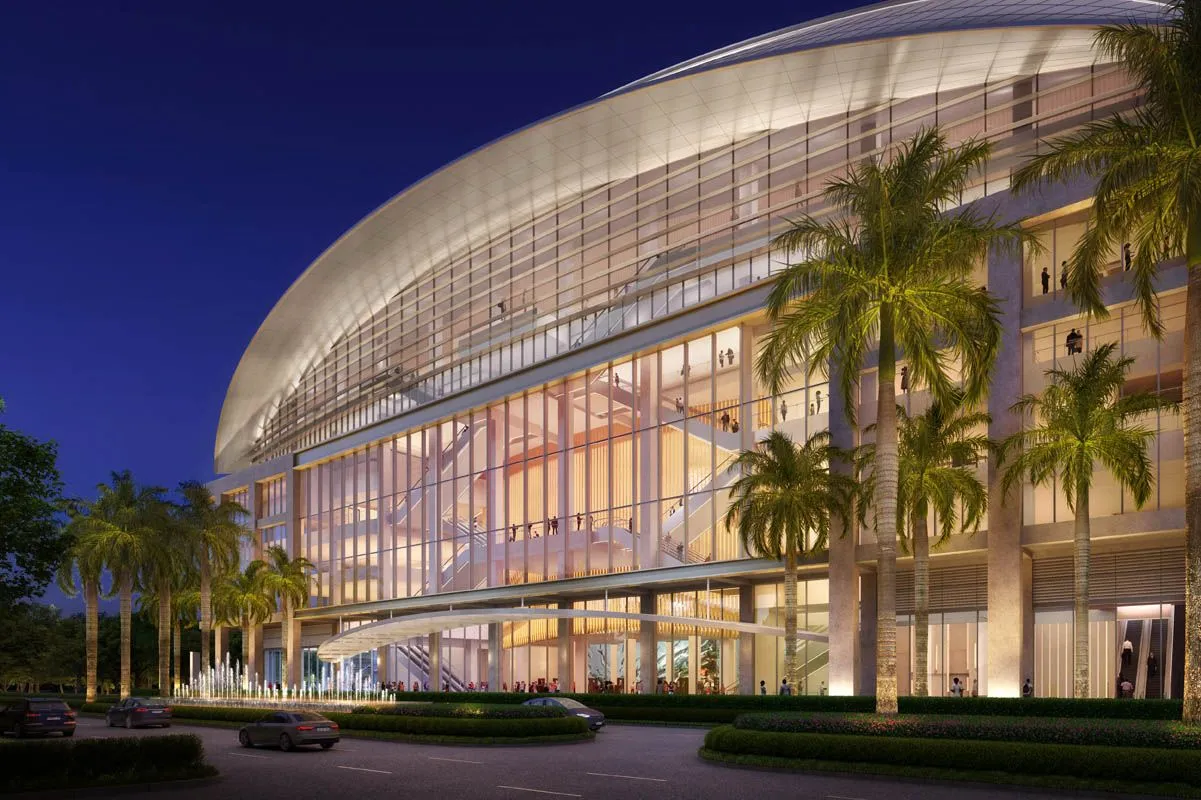
Public dining venues are designed with integrated canopies and shading systems to accommodate Singapore’s equatorial climate. They’re embedded in the architecture, forming part of the design vocabulary that links environmental comfort with architectural coherence. The development aligns with Singapore’s Green Plan 2030, supporting a low-carbon economy and reinforcing the nation’s role as a sustainable city-state model.
Program Integration and Connectivity
In addition to the hotel and arena, the expansion includes:
- 200,000 square feet of meeting and convention space
- High-end retail boutiques
- Integrated spa and wellness facilities
- Gaming spaces, continuing Marina Bay Sands’ integrated resort model
Connectivity is central to the master plan. The development links directly to existing pedestrian routes and MRT infrastructure, increasing accessibility without overloading local transport nodes.
Economic and Programmatic Impact
The expansion will contribute significantly to Singapore’s economy through direct employment and increased tourism spending. Marina Bay Sands already employs over 12,000 people and sources over 90% of its procurement locally, a trend expected to grow as the project scales.
More importantly, the new development provides an architectural and operational framework that positions Singapore as a premier global venue for integrated hospitality, entertainment, and sustainable design.
The Marina Bay Sands expansion is a development that reflects Las Vegas Sands’ long-term commitment to Singapore. With forward-thinking architecture, sustainable systems, and integrated urban design, the project sets a new benchmark for luxury resort infrastructure in Asia.