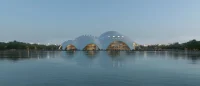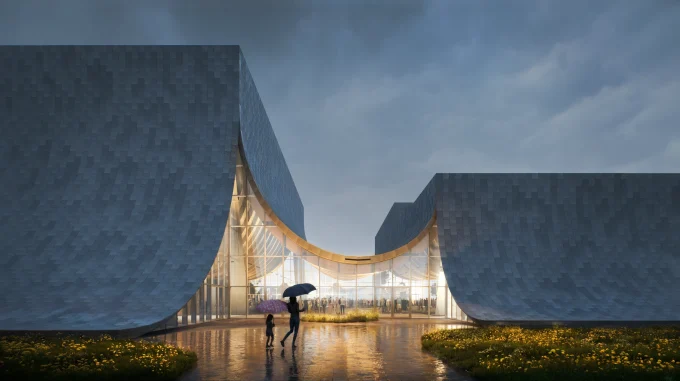


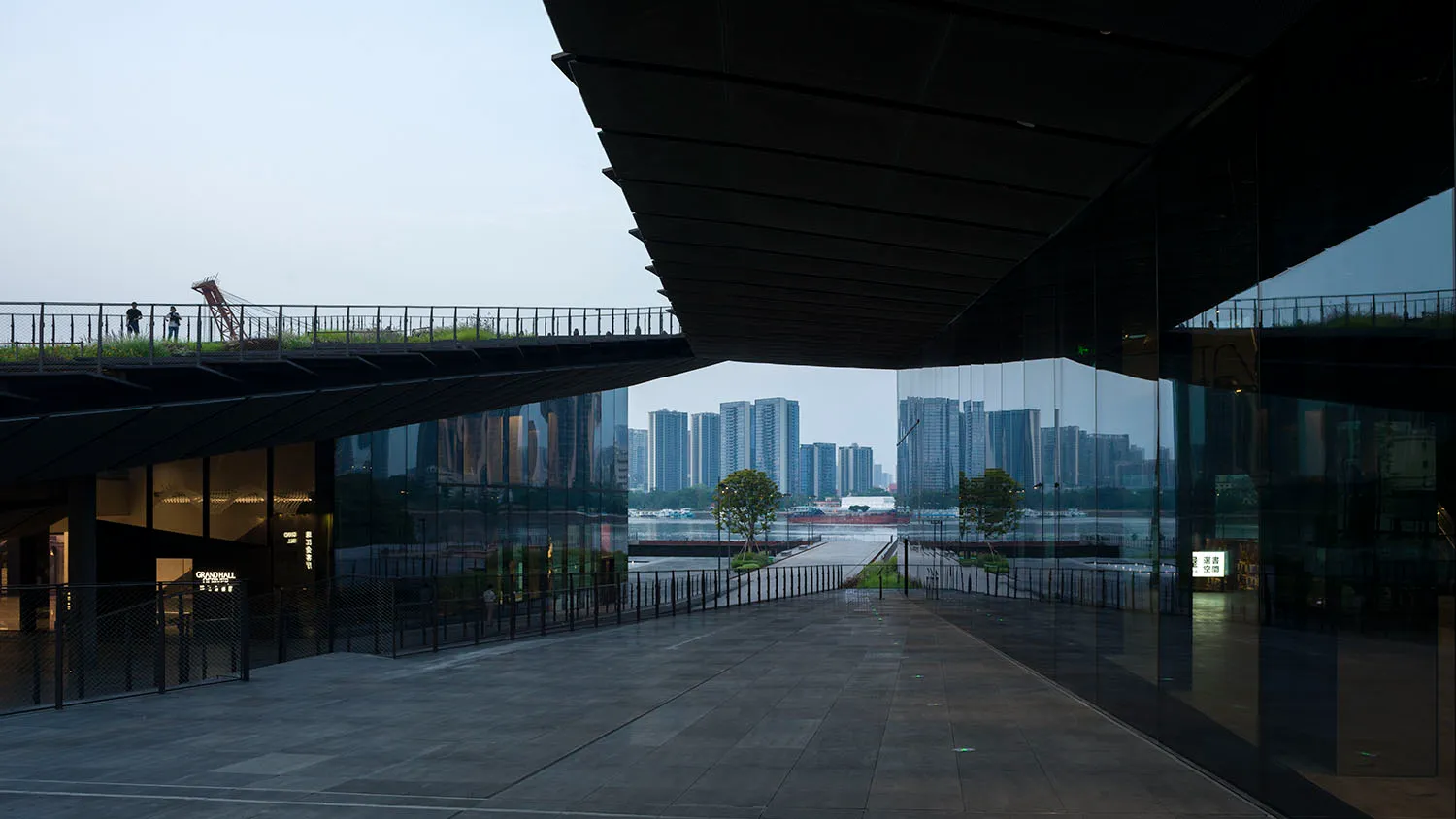
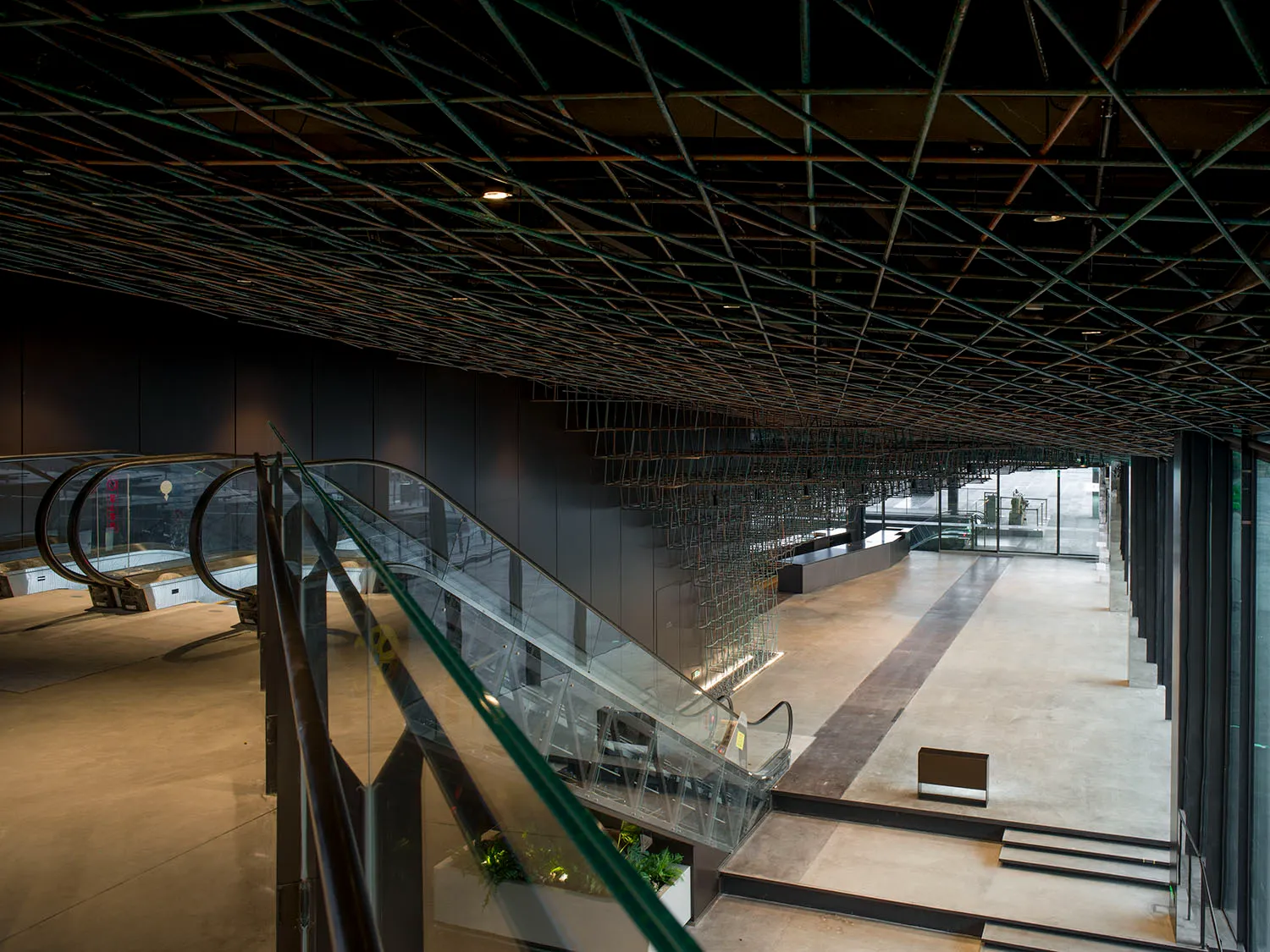
Kengo Kuma’s Shipyard 1914 transforms the former Guangzhou Shipyard into a mixed-use destination for art, culture, and commerce. Built on the historic site where ships were once launched into the Pearl River, the project preserves the memory of the shipyard’s iconic slipway while introducing galleries, commercial spaces, and public gathering areas. By seamlessly blending architecture with landscape, the design creates a contemporary landmark that reconnects visitors with Guangzhou’s industrial heritage.
Reinterpreting the Historic Slipway
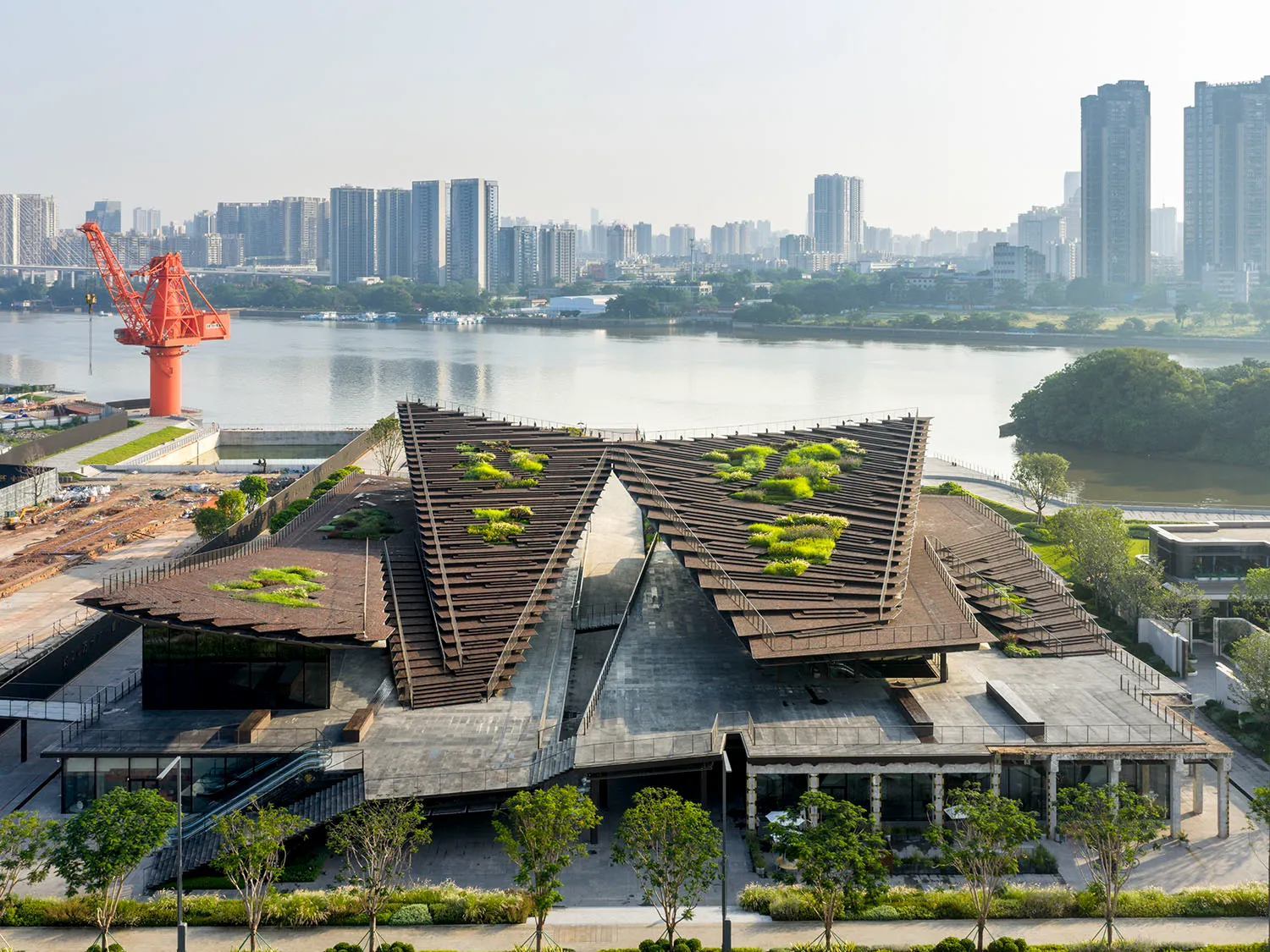
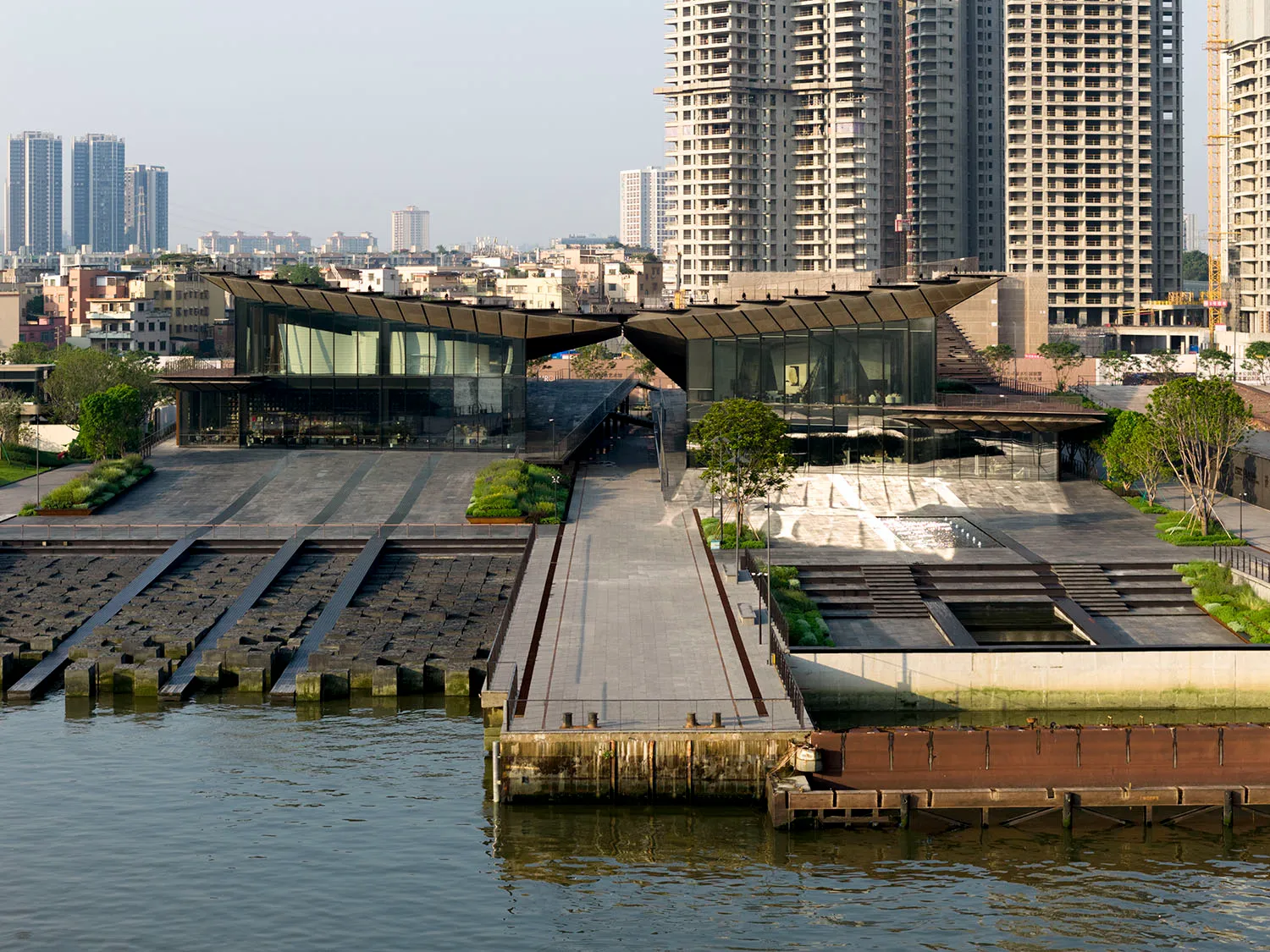
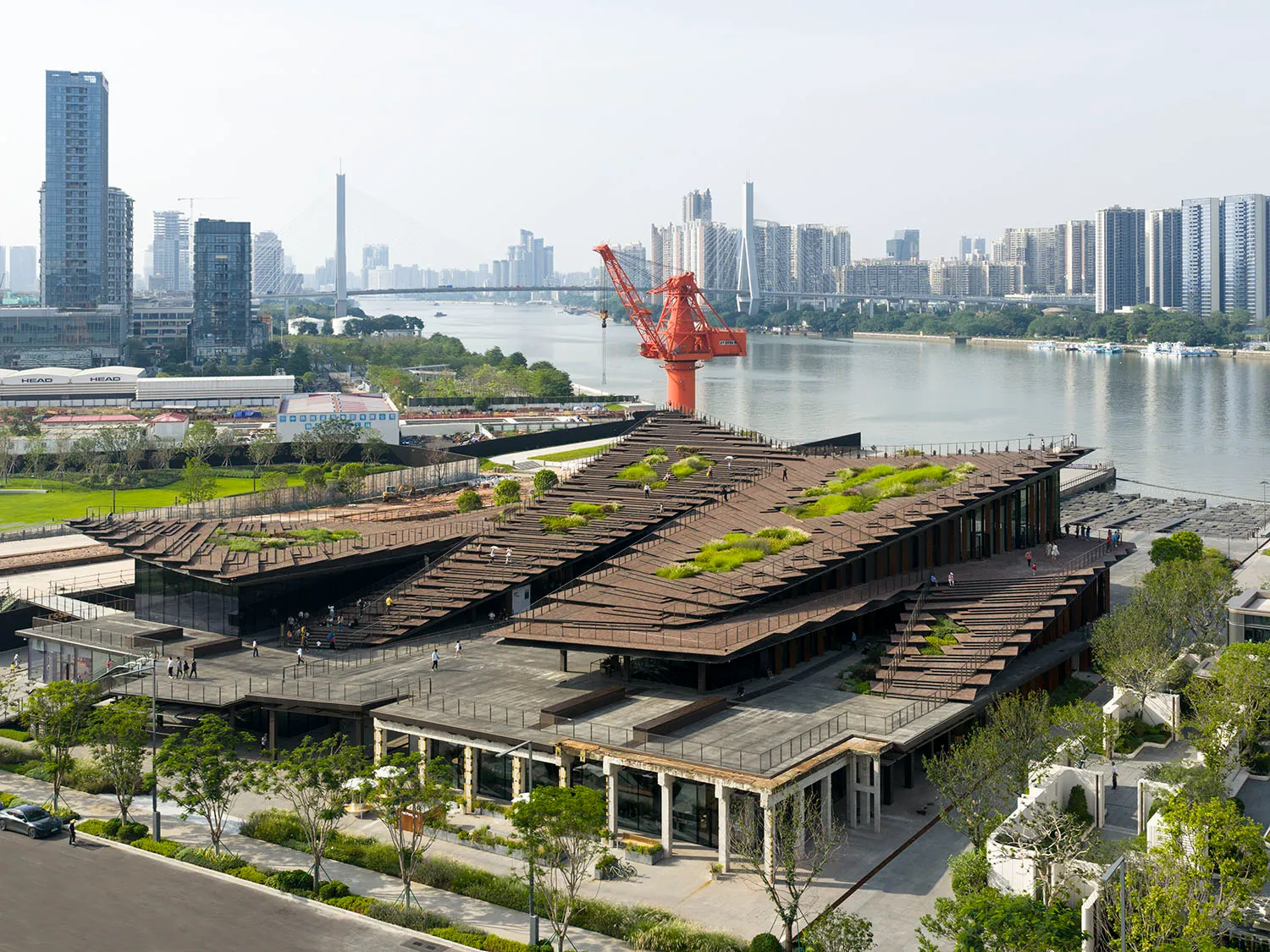
Established in 1914, the Guangzhou Shipyard played a significant role in the city’s industrial development. At the heart of the project is the preservation of the original 1:20 sloped slipway, once used to launch ships into the Pearl River. Instead of treating it as a relic, the design reactivates this historic infrastructure by extending its geometry into a series of layered inclined slabs.
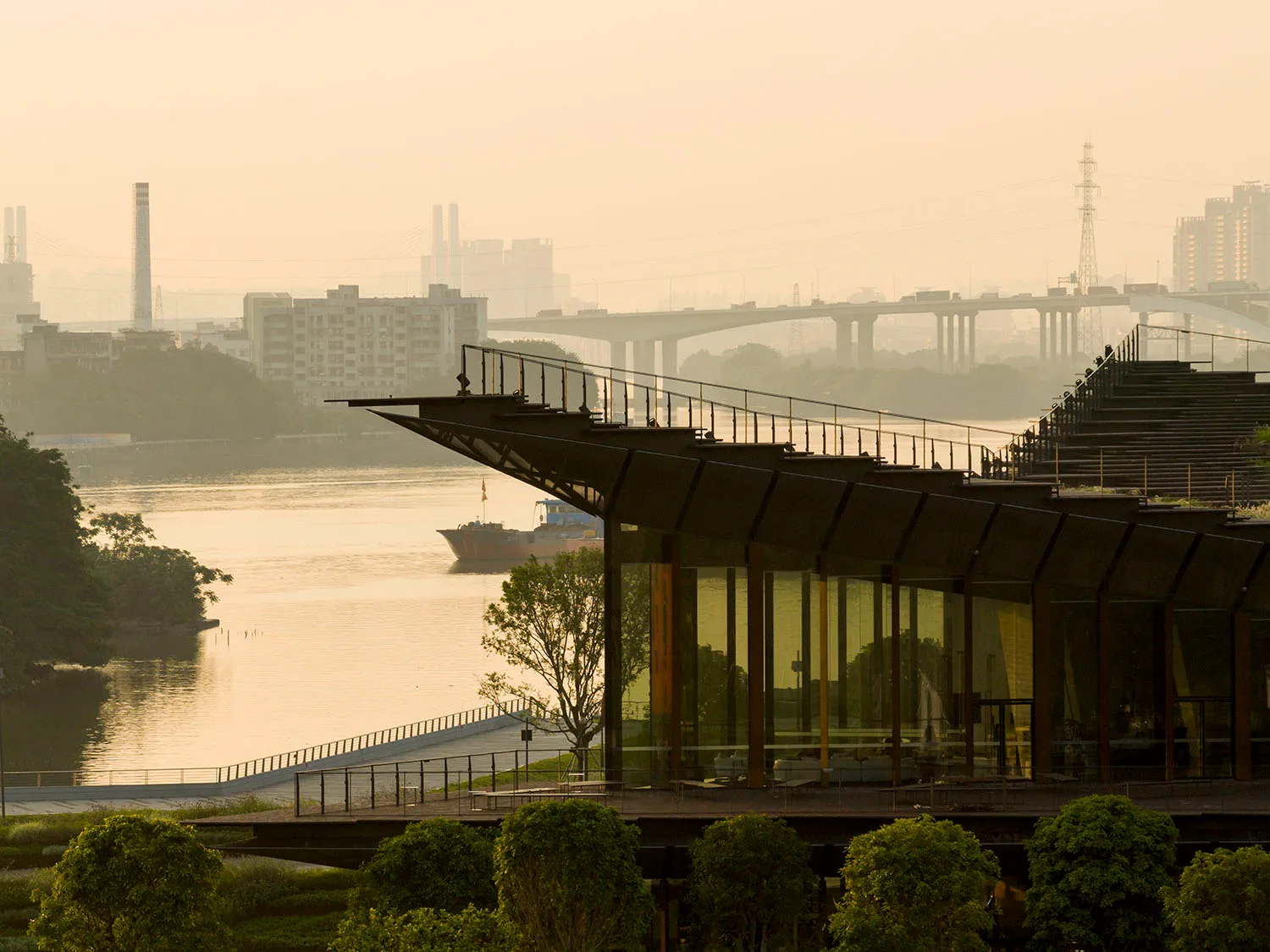
Beneath these elevated planes, halls of varying scales accommodate cultural and commercial functions, while a visual axis framed by glass recalls the path once taken by ships toward the river.
A New Public Landscape Above the City
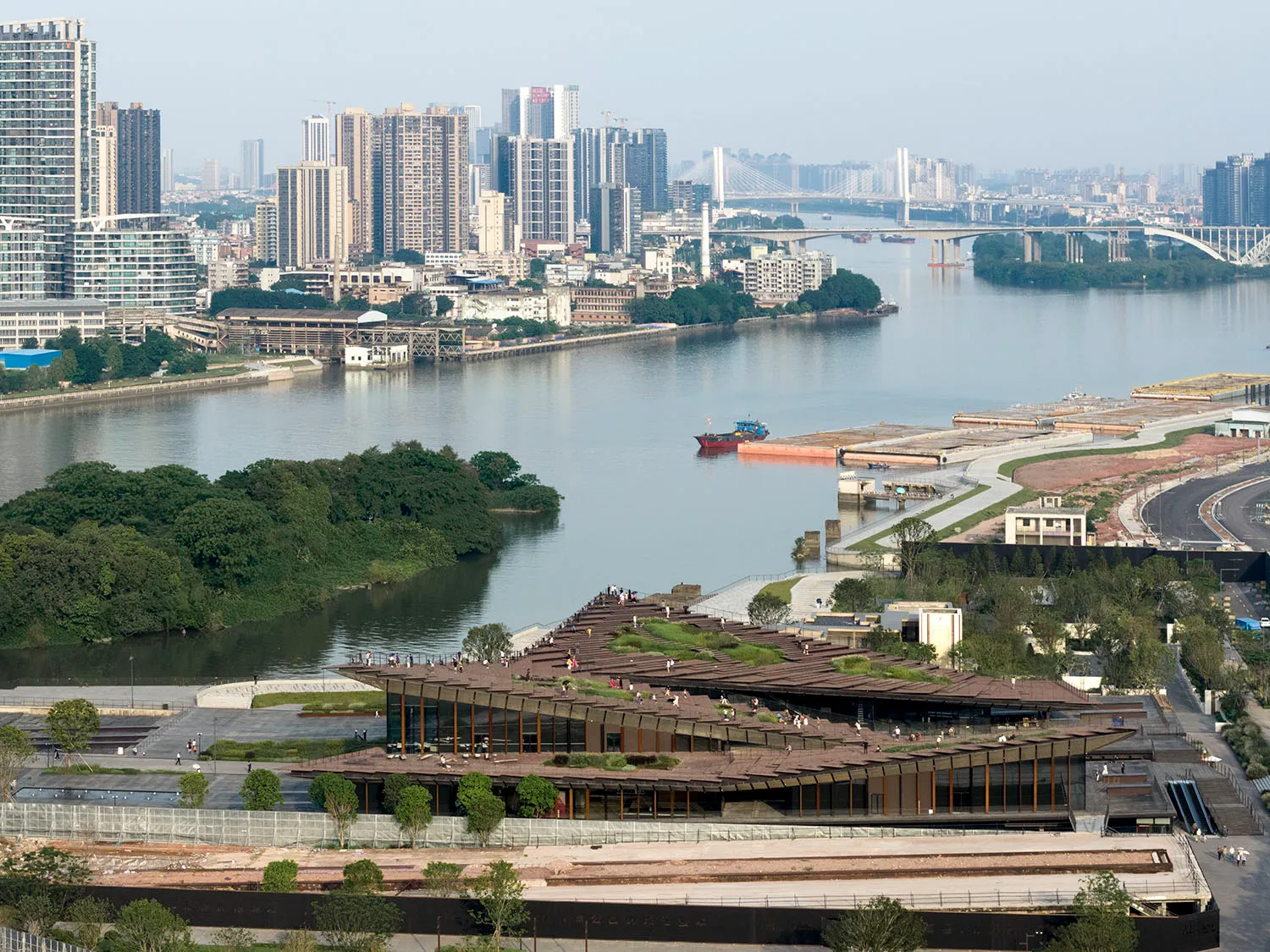
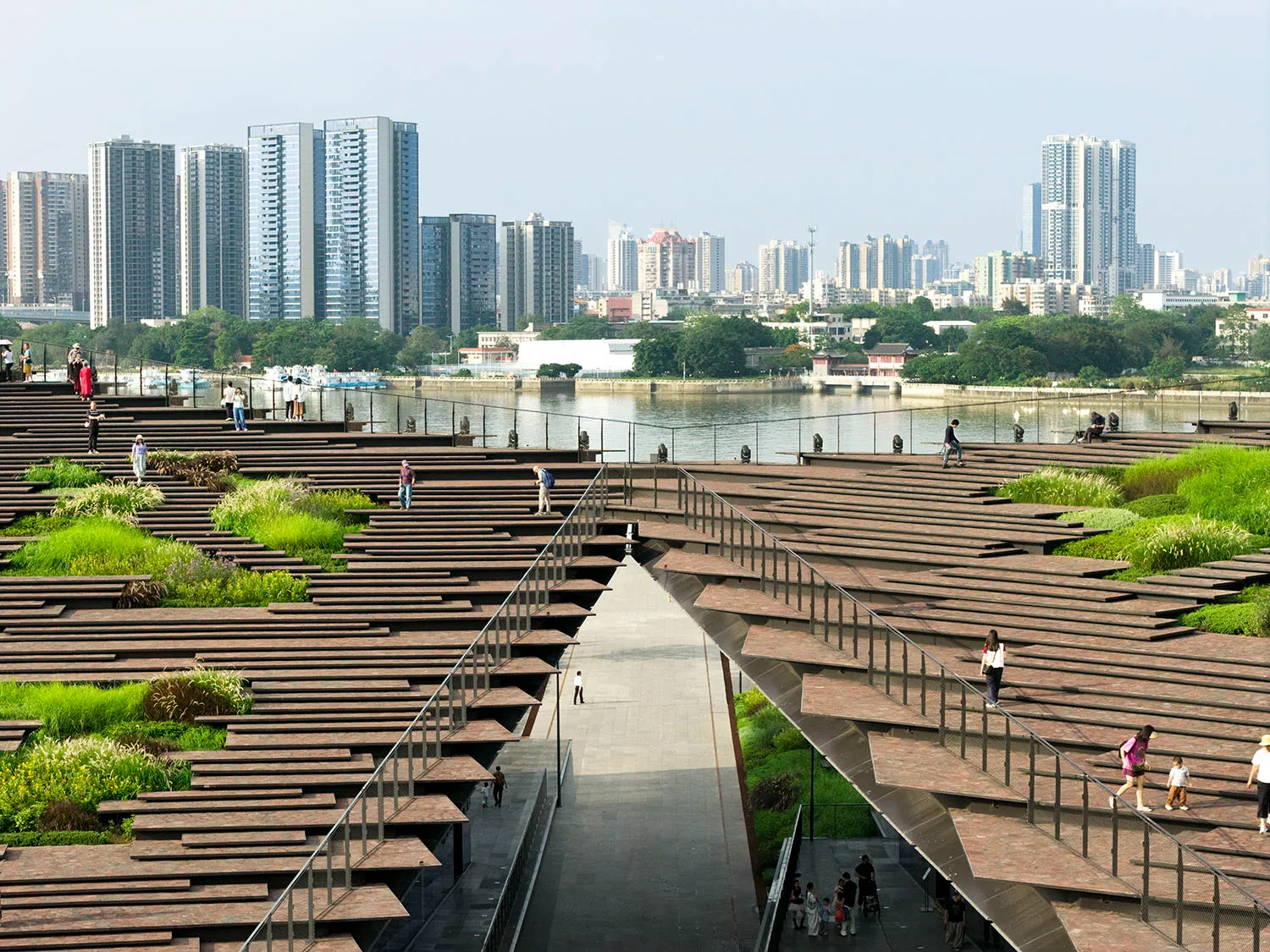
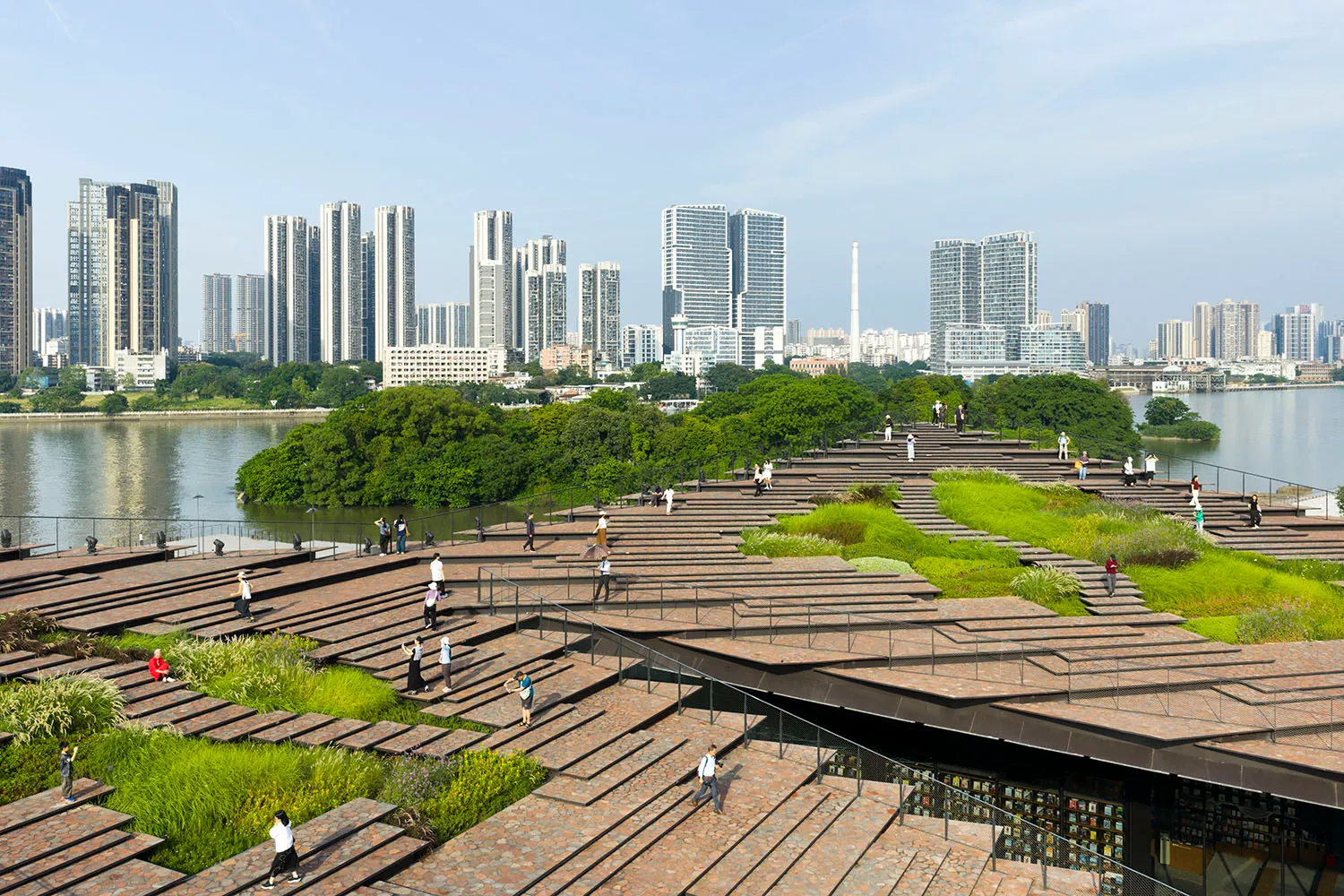
The stepped roofscape functions as an accessible terrain where visitors can walk, gather, and experience the site from different perspectives. As people ascend the gentle slopes, views gradually unfold toward the Pearl River and Guangzhou’s urban skyline, creating a continuous connection between architecture and landscape.
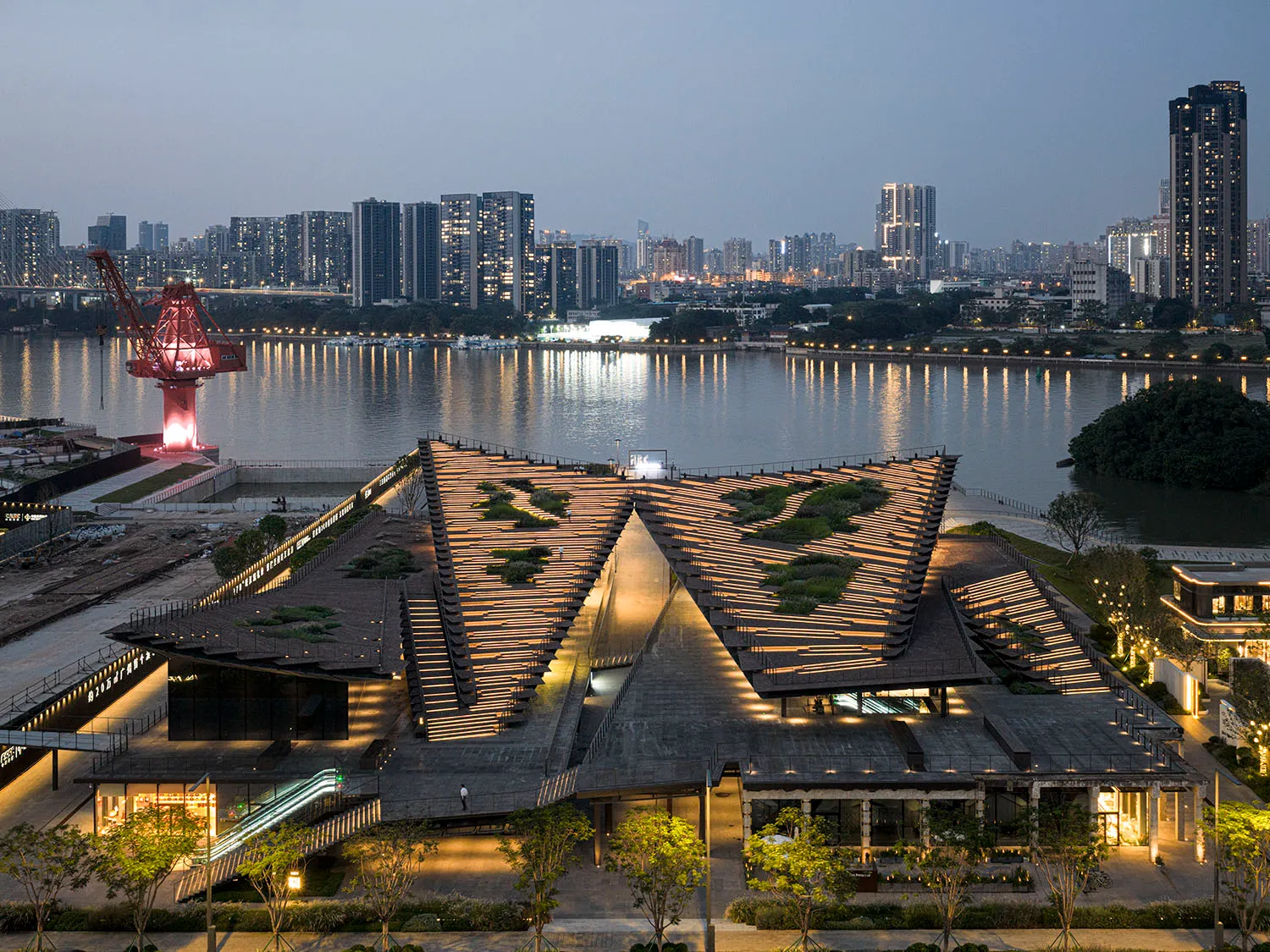
Finished in porous reddish-brown volcanic stone, the roof surface introduces a tactile, earth-like quality that contrasts with the surrounding high-rise environment, fostering a renewed relationship between the built form, the ground, and the city.
Project Credit: Kengo Kuma
Explore Courses
.jpg "Ondrej Chybik - Rethinking Architecture")