Much of the wool that leaves the world’s sheep ends up as waste. Fibers that are too short, too coarse, or the wrong color for textiles are discarded, burned, or buried. Yet those same fibers retain the qualities that make wool useful: insulation, fire resistance and natural antibacterial performance. A research group at Harvard University has been asking what happens if that waste is treated not as a problem but as a building material.
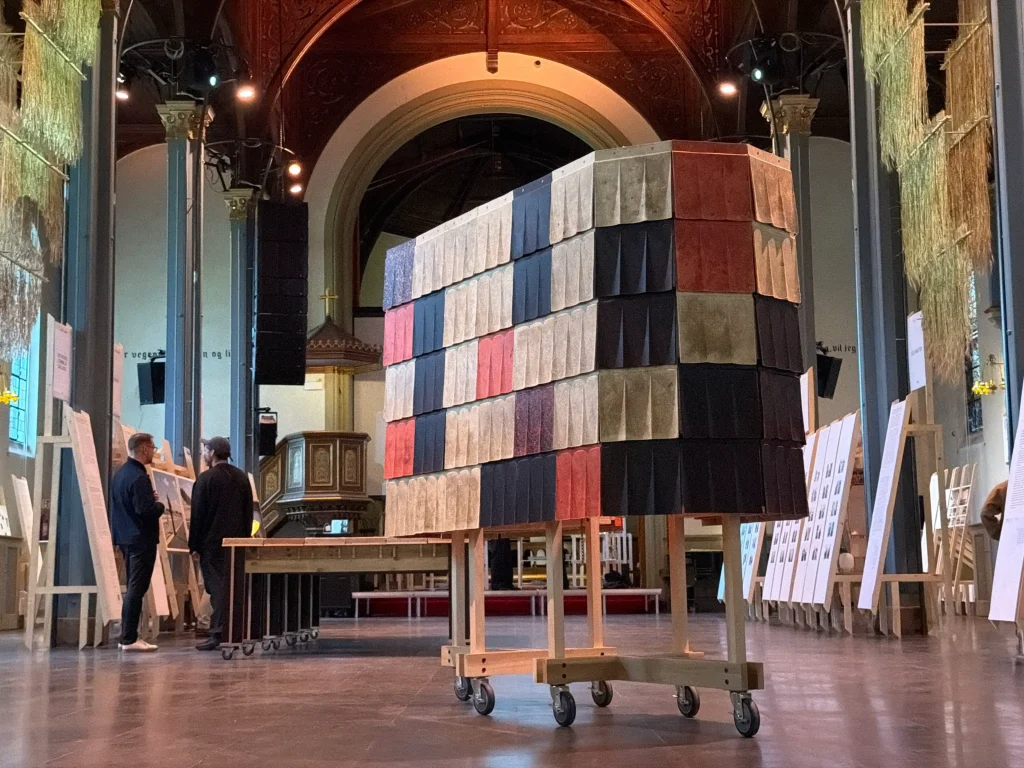
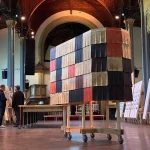
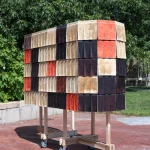
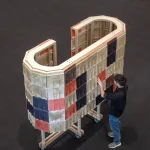
At this year’s Oslo Architecture Triennale, the Grinham Research Group presented its answer. In an installation titled Upcycling Wool Ecologies, the team displayed cladding tiles made from recycled wool, mounted on a timber frame inside Sofienberg Church. The exhibition, which ran from 17 September to 1 October, sits under the triennale’s broader theme of putting nature first.
Why wool, and why waste
Jonathan Grinham, founder of the Grinham Research Group and an assistant professor at the Harvard Graduate School of Design, describes wool as “nature’s plastic.” It is a natural polymer with performance characteristics that synthetic insulation often tries to imitate. The difficulty has been turning irregular, low-value waste into something rigid and weather-resistant enough for the exterior of a building.
Nearly two billion kilograms of wool are produced each year. Estimates suggest that as much as half of it never becomes clothing or fabric. Pre-consumer waste from textile mills and residual fleece from farms form a large, underused stream. The Harvard team set out to convert that stream into a biocomposite suitable for cladding and insulation, particularly for energy retrofits of existing buildings.
How the tiles are made
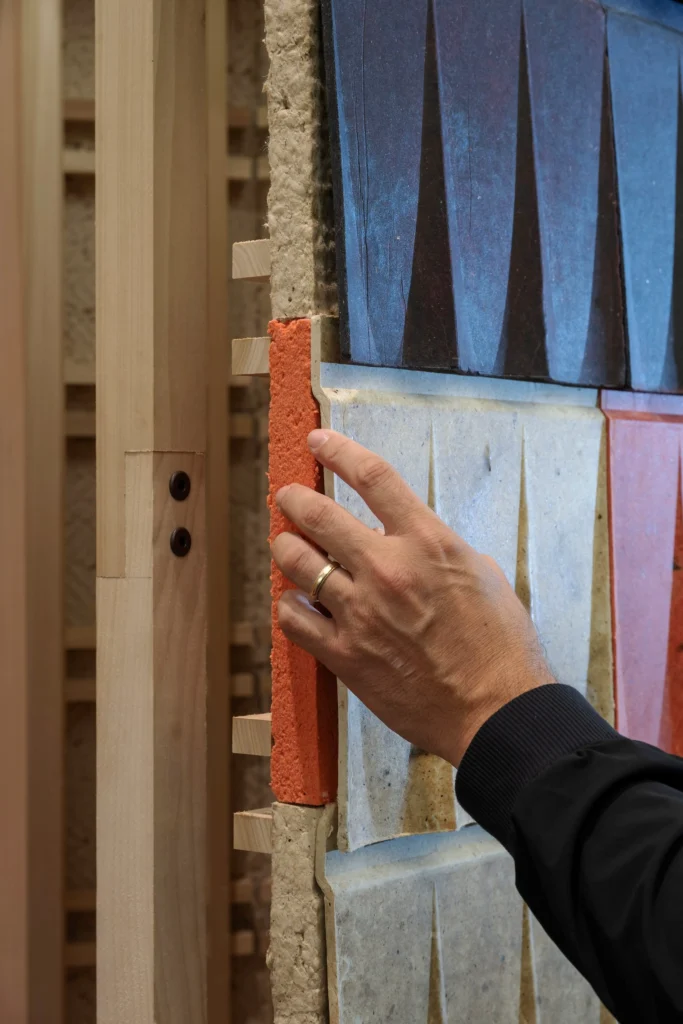
The process begins by treating the wool with an alkaline solution that partially breaks down its keratin proteins. A mechanical step then separates the material further into a liquid state. Citric acid is introduced. When the mixture is heated, the keratin acts as a binder, linking residual and unprocessed wool fibers into a rigid composite. No petrochemical resin is required.
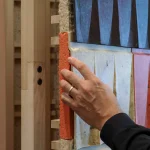
The resulting tiles have a dual structure. A lower-density back panel provides insulation. A denser outer face offers greater durability and resistance to weather. For the Oslo installation the tiles were pressed into a fluted profile, giving them both visual rhythm and increased surface area
Grinham has said the group is developing new chemistries that turn this overlooked natural polymer into a useful bio-composite for building insulation and cladding. Early laboratory results place the stiffness of the panels in the range of medium-density fiberboard. Insulating performance is relevant to building envelopes, and certain formulations show high water resistance.
Designed for retrofits
The material is especially aimed at the vast stock of existing buildings that need better thermal performance. Demolition and new construction carry high embodied-carbon costs. Retrofitting with lower-impact materials can extend the life of structures while reducing operational energy use. Wool’s natural properties align well with that task: it insulates, resists fire, and does not readily support microbial growth.
Because the primary feedstock is waste rather than virgin fleece grown for construction, the carbon profile of the panels improves significantly. Research published by the team indicates that panels made from waste wool carry a far lower embodied-carbon burden than those made from dedicated raw wool.
Oslo Architecture Triennale: From laboratory to public view
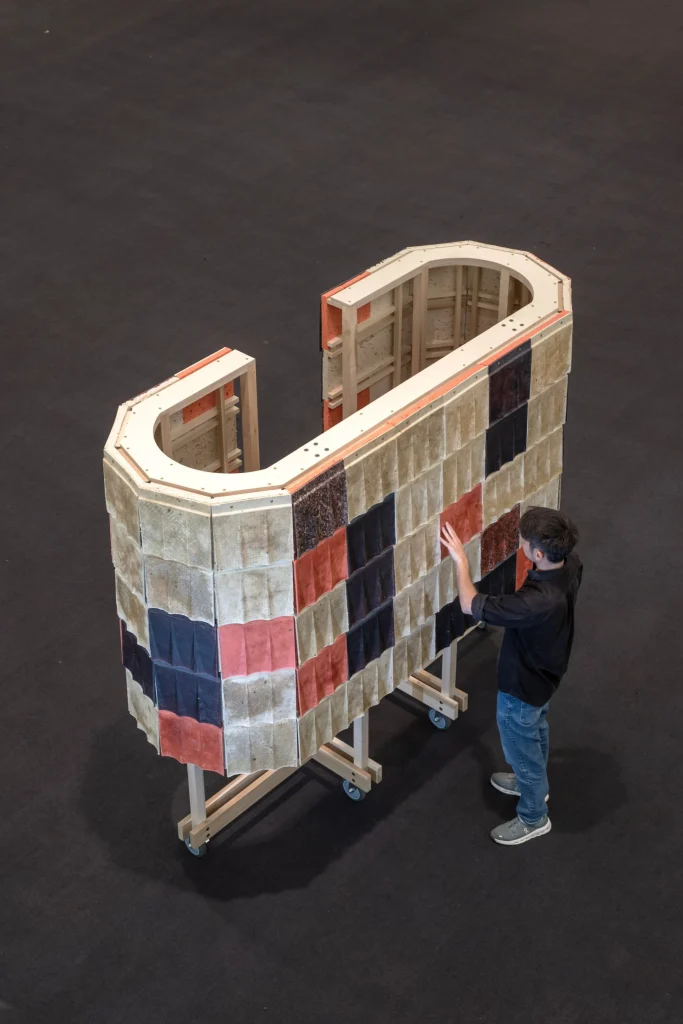
The Oslo installation made the research tangible. Visitors could see the tiles mounted as cladding, understand their scale, and consider how a material usually associated with clothing might perform on a building. The choice of a church interior as the exhibition setting underlined the triennale’s interest in reuse and in materials that sit within longer cultural and ecological cycles.
The wool for the installation came from pre-consumer waste supplied by the American Woolen Company in Connecticut. Sourcing remains an important practical question. Scaling the process will depend on reliable streams of residual wool and on methods that can be industrialized without losing the environmental advantages of the material.
Part of a wider search for alternatives
Building construction continues to rely heavily on materials with high embodied carbon: cement, steel, petrochemical foams and conventional fiberboards. Research groups around the world are exploring plant-based and animal-based alternatives, from mycelium and hemp to various forms of recycled cellulose. Wool occupies a distinctive place in that landscape because it is already produced at large scale for another industry and because its performance properties are well understood.
Grinham has emphasized the need for pluralistic solutions that reflect the complexity of nature. A single miracle material is unlikely to solve the carbon and waste problems of the building sector. A range of regional, lower-impact options, each suited to particular climates and construction cultures, is more realistic. Waste-wool cladding is one such option under development.
Challenges ahead
Turning a laboratory process into a commercially available product involves further work on durability, fire performance under real-world conditions, moisture behaviour over years, cost, and supply-chain logistics. Building codes and certification systems will also need to recognise the material before it can be specified widely. The Oslo presentation is an early public step rather than a finished product launch.
Still, the direction is clear. Agriculture and the textile industry generate large volumes of material that currently have little economic value. Architecture and construction generate large demand for insulation and cladding. Closing that loop, even partially, could reduce waste at one end and reduce the carbon intensity of building upgrades at the other.
A material that remembers its origin
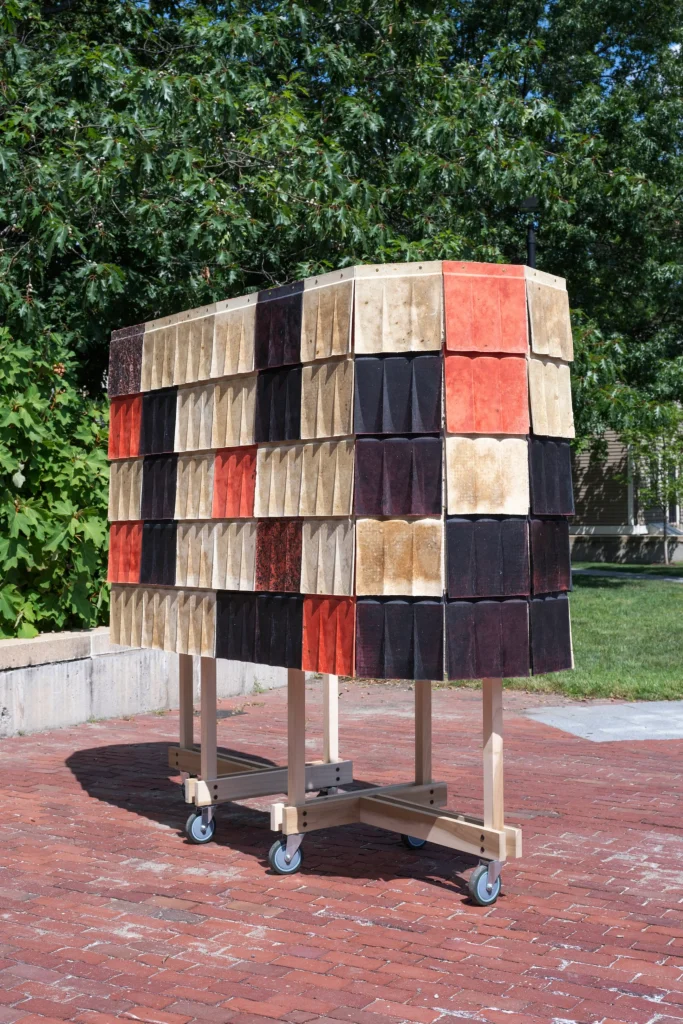
What distinguishes the Harvard tiles is not only their technical performance but the story they carry. They begin as the discarded byproduct of an ancient relationship between humans and animals. Through relatively gentle chemistry and mechanical processing, they become a rigid, insulating surface capable of protecting buildings. In an era when the construction industry is searching for lower-impact materials, that transformation feels both practical and resonant.
The installation in Oslo offered a first public glimpse of the work. Whether waste-wool cladding eventually appears on ordinary buildings will depend on continued research, industrial partnership, and regulatory acceptance. For the moment, it stands as a concrete example of how an overlooked natural polymer can be redirected from the waste stream into the building envelope, one fluted tile at a time.