


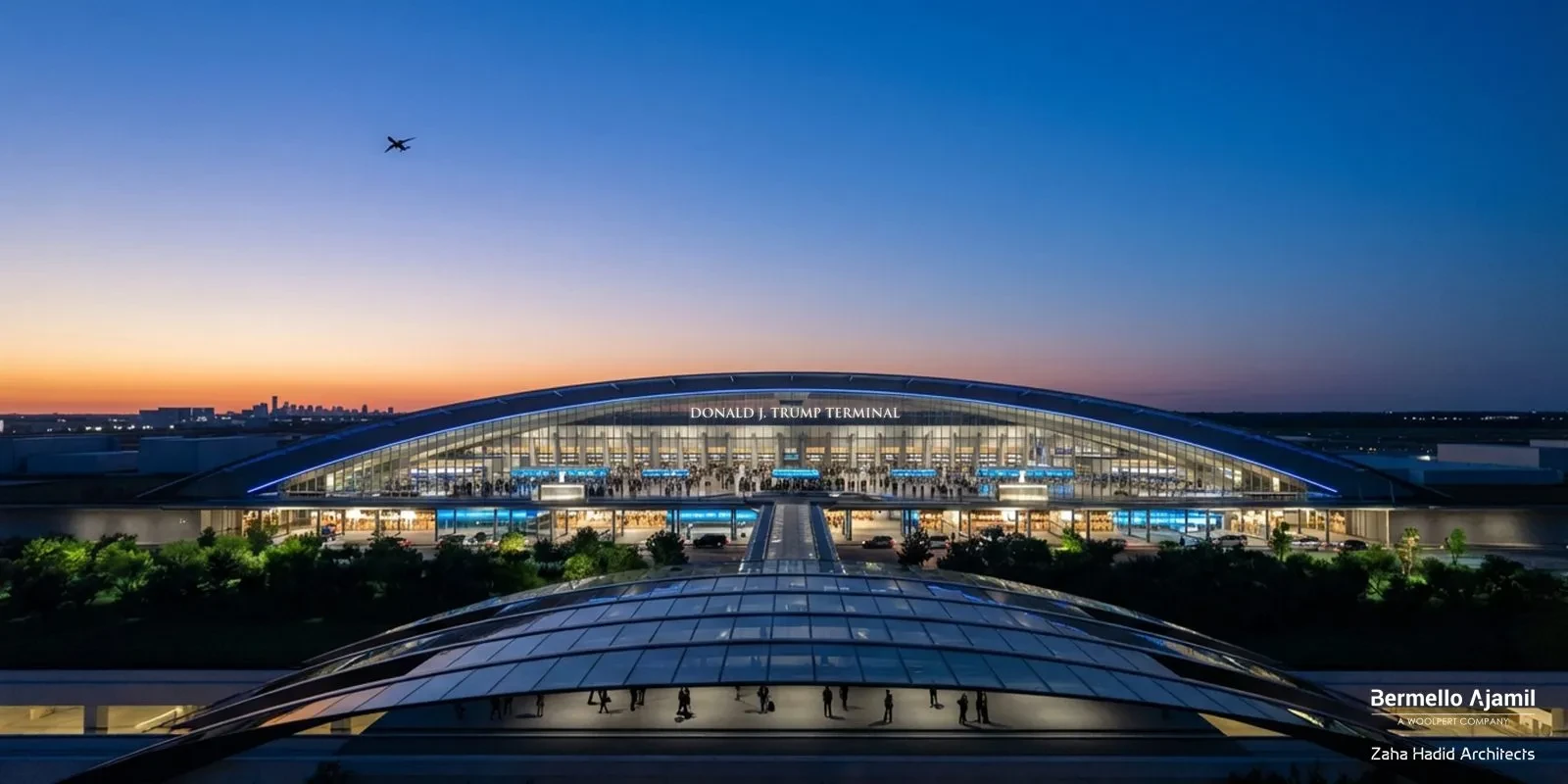
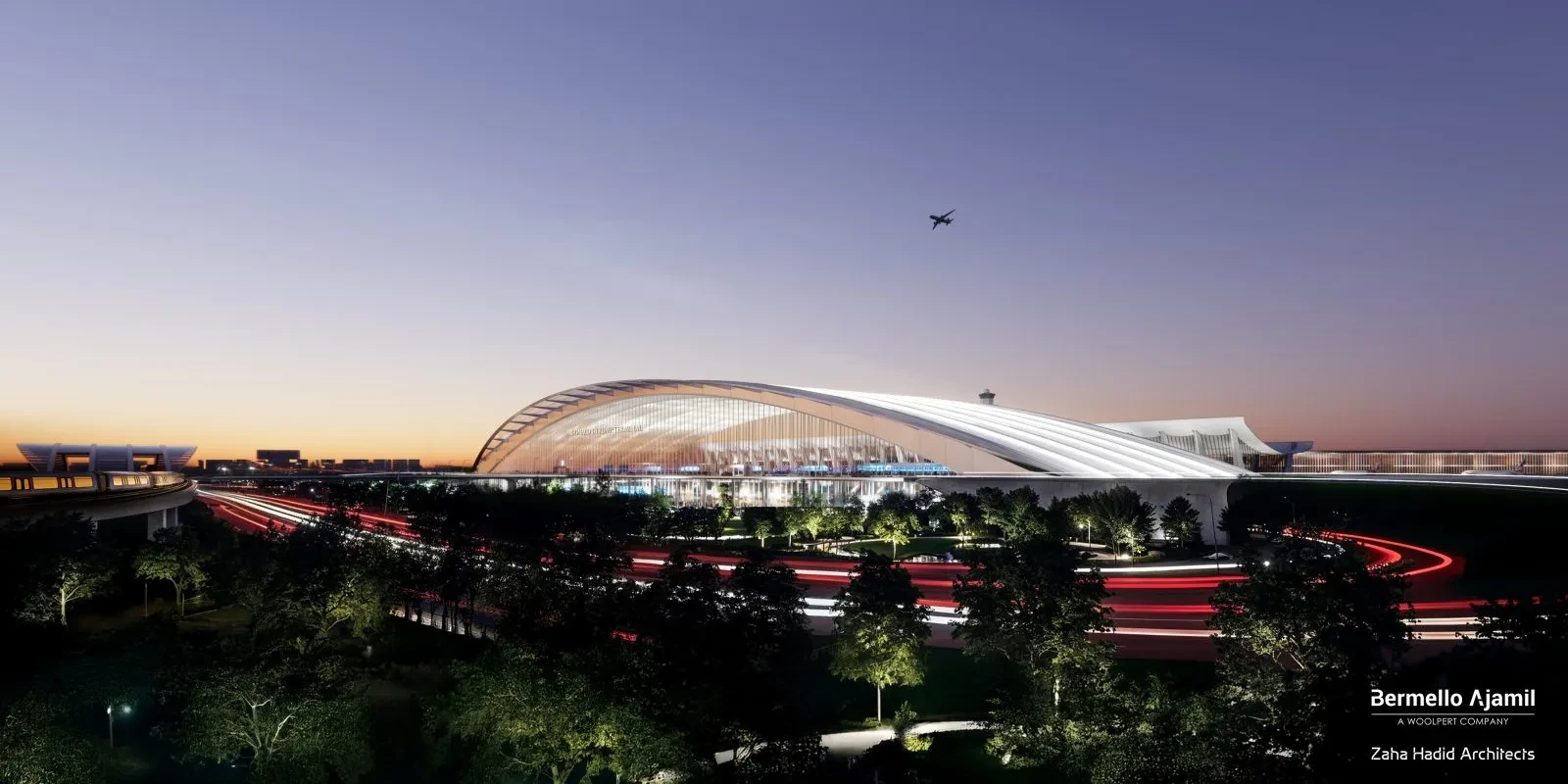
In response to a Request for Information from the U.S. Department of Transportation aimed at revitalizing Washington Dulles International Airport (IAD), a group of global architecture firms has submitted concept proposals that reimagine the airport’s future. The RFI, framed within a broader federal push to re-evaluate the aging Saarinen-designed terminal and adjacent infrastructure, has attracted both visionary plans and more measured contextual strategies from practices including Zaha Hadid Architects (ZHA), Grimshaw with Ferrovial, Adjaye Associates with RCGA+DM, and AECOM.
Global Architecture Firms Respond to Dulles International Airport Redesign
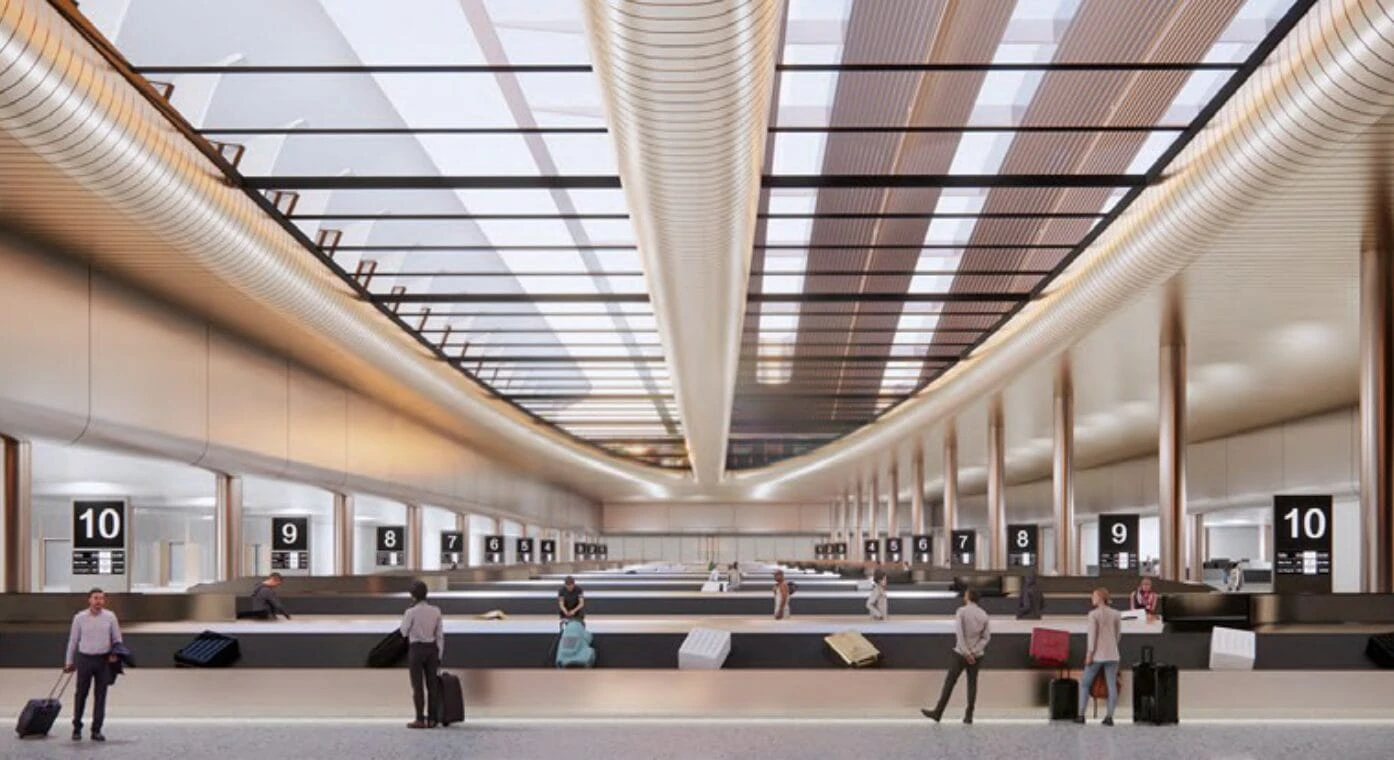
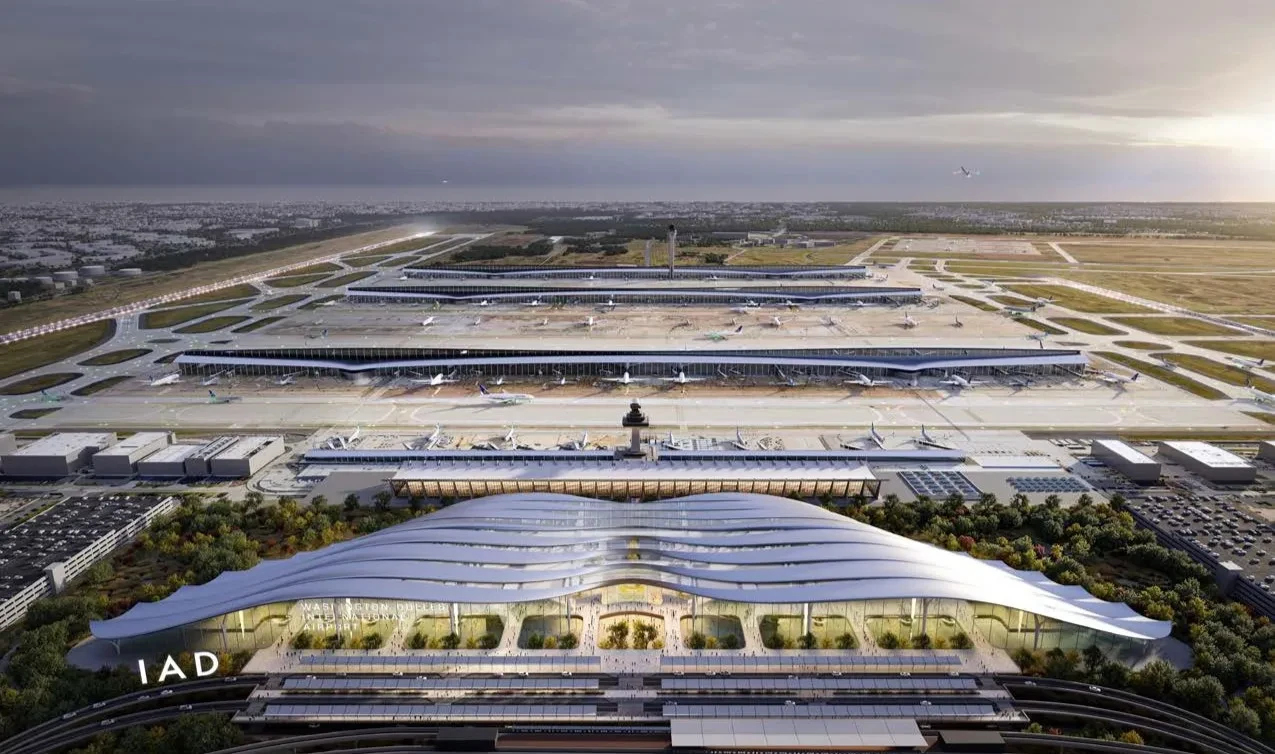
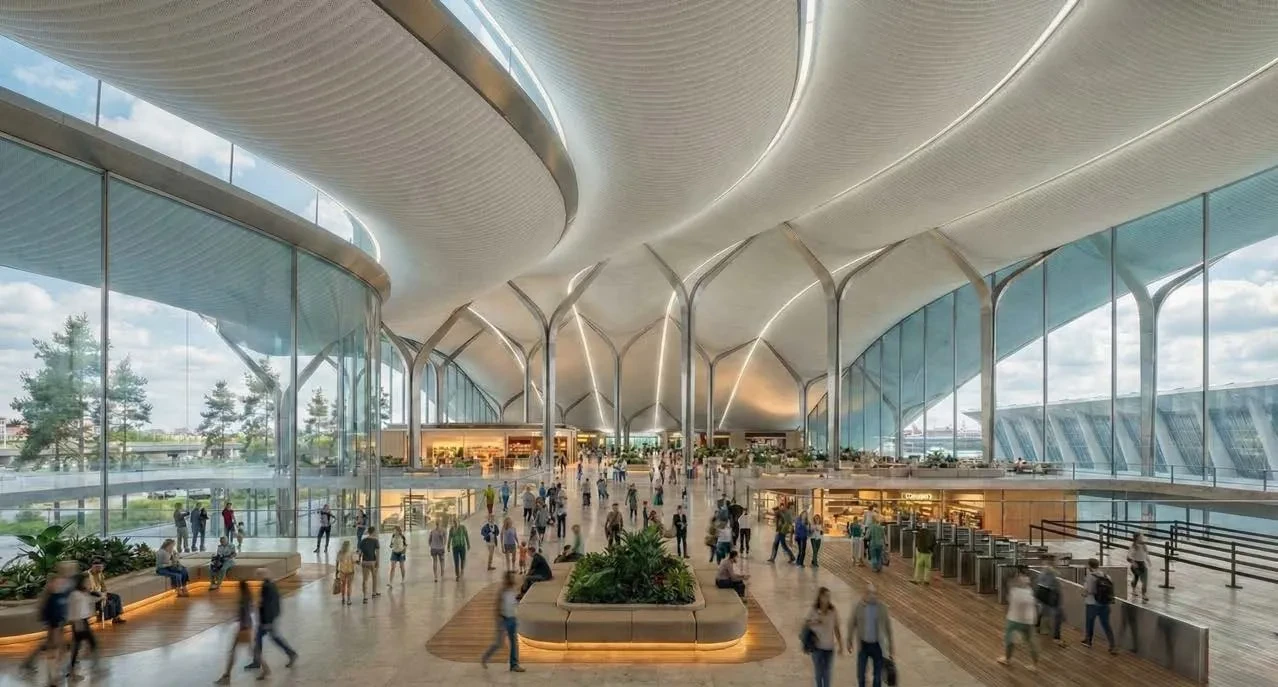
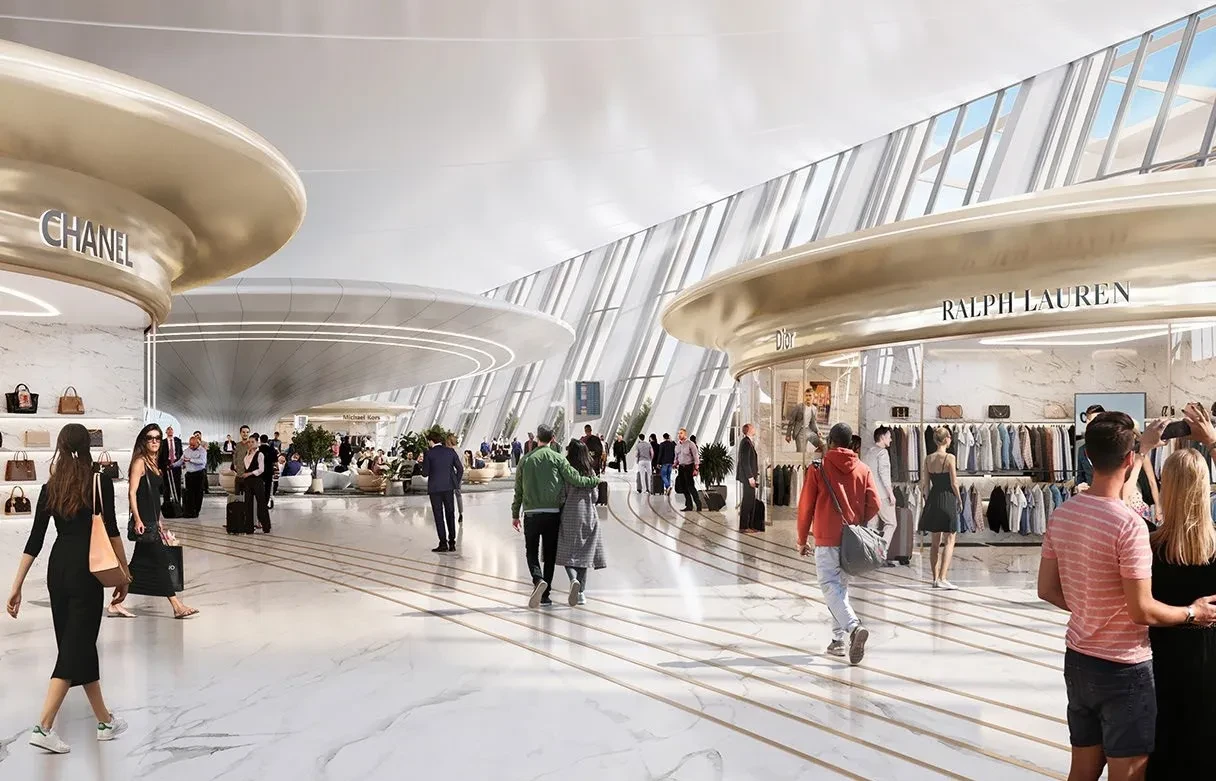
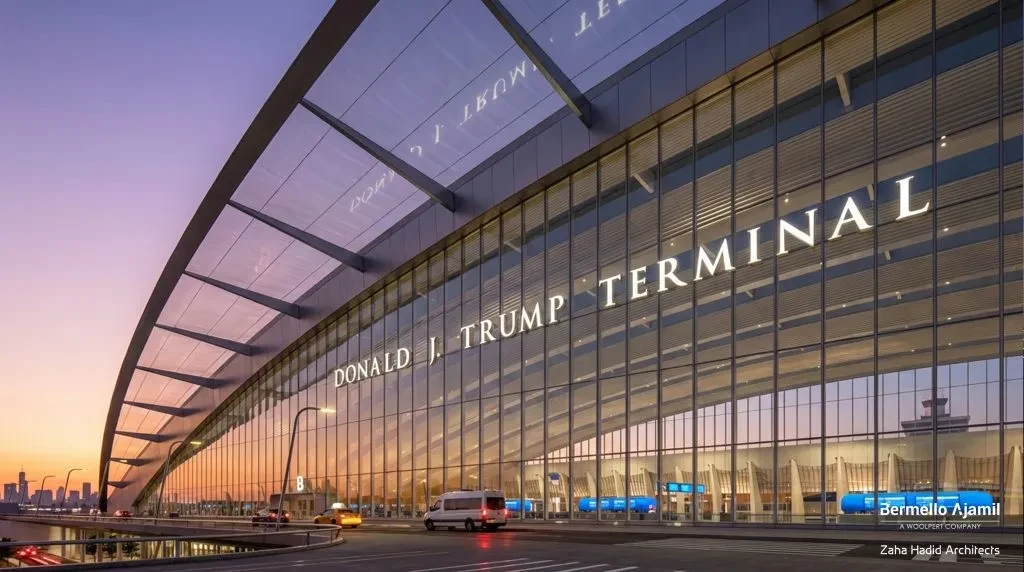
Among the most striking entries is the concept from Zaha Hadid Architects in collaboration with Bermello Ajamil & Partners, which advocates a new terminal articulated as an arched “Donald J. Trump Terminal.” The proposal foregrounds a sculptural new building that frames a clear passenger journey through a new terminal structure, a connector “civic spine,” and a Y-shaped gate pier. It emphasizes abundant natural light and spatial legibility while repurposing the existing Saarinen building within a reconfigured airport sequence. The design leans into an expressive architectural language typical of ZHA’s work, yet places it within the highly charged context of a federally driven national infrastructure project.
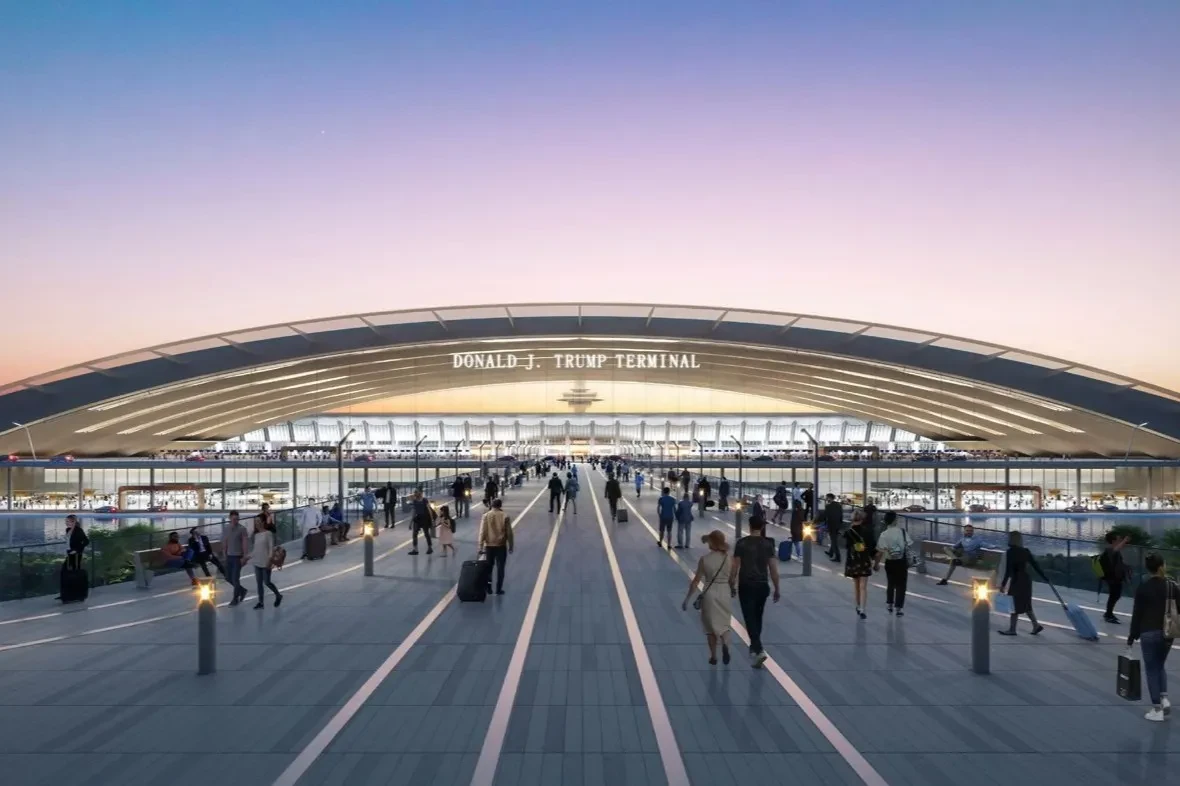
By contrast, Grimshaw’s submission, partnered with infrastructure specialist Ferrovial, adopts a more integrative stance toward Dulles’s architectural heritage. Their vision retains Saarinen’s iconic mid-century modern terminal as an airside concession while introducing a new adjacent building north of the existing complex. This approach treats the historic structure as a valuable spatial and cultural asset, embedding it within a broader masterplan that emphasizes continuity and enhancement rather than replacement.
Adjaye Associates and RCGA+DM submitted a proposal rooted in principles of clarity, proportion, and civic presence. Although their RFI response did not include public renderings, the narrative guiding their concept emphasizes an arrival experience that strikes a balance between functional modernization and dignity and openness. Their framework explicitly suggests supporting the thoughtful integration of portions of Saarinen’s terminal as a “civic anchor,” preserving the structural clarity and generous spatial qualities that made the original building significant.
AECOM’s proposal similarly refrains from visuals. Its narrative focuses on a practical and phased program that conceives of a modern, iconic design while preserving Saarinen’s terminal by repurposing it for revenue-generating use. This approach underscores operational pragmatism, leveraging opportunities for redevelopment that minimize construction risk and cost while aligning with contemporary airport functions.
Underlying these design responses is the larger context of a politically and culturally fraught national dialogue about federal architecture, heritage conservation, and airport infrastructure. Dulles’s Main Terminal, designed by Eero Saarinen and opened in 1962 as a pioneering jet-age hub, has long been celebrated as a benchmark of expressive structural design. The current RFI on revitalization emerges amidst renewed scrutiny over the building’s operational limitations and broader debates about how iconic civic infrastructure should evolve.
Across the submissions, there’s a clear tension between architectural statements and contextual heritage strategies. ZHA’s sculptural proposal embodies a forward-looking statement, while Grimshaw’s and Adjaye’s concepts lean into continuity and sensitivity toward the existing architectural legacy. AECOM’s programmatic focus underscores operational feasibility, suggesting that much of the eventual direction for Dulles will hinge on how stakeholders balance aesthetics, history, passenger experience, and cost.
As the Department of Transportation reviews the responses, it has not yet indicated how or whether these proposals will inform formal design or procurement phases.
Explore Courses
.jpg "Ondrej Chybik - Rethinking Architecture")