

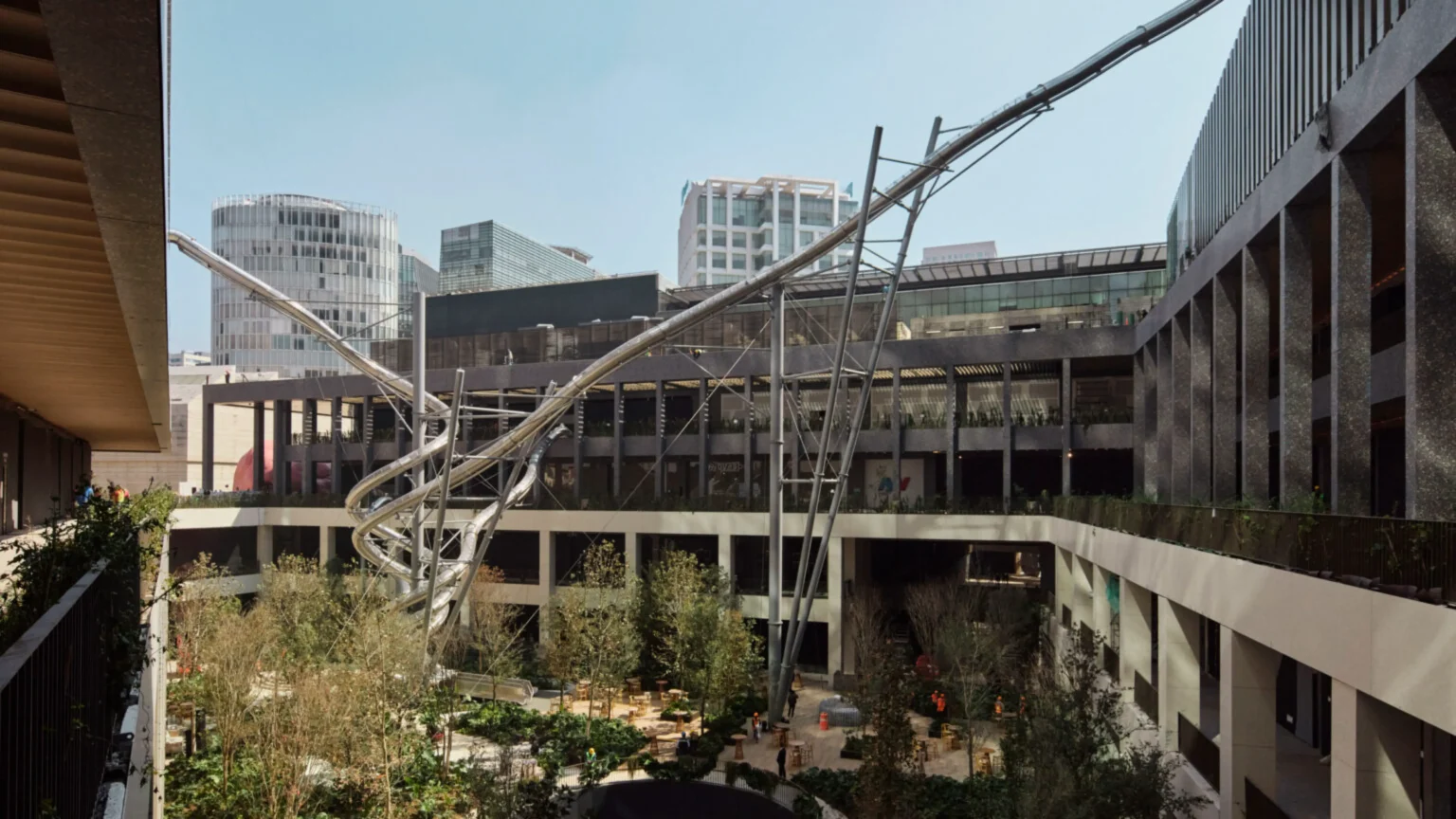


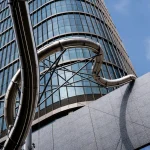
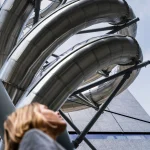

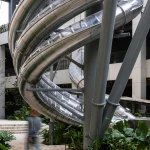

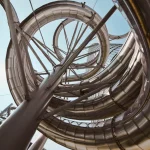
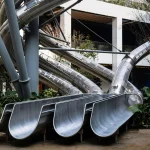
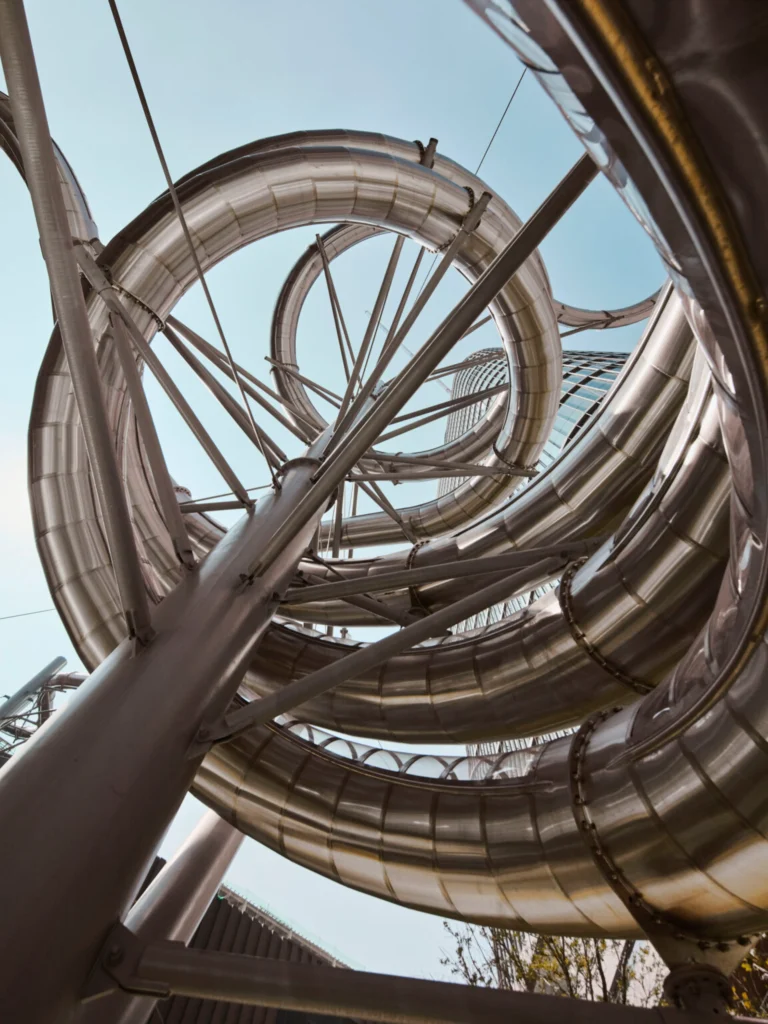
The shortest distance between two points is rarely the most interesting one. In the courtyard of Antara, a mixed-use complex in Mexico City’s Colonia Granada, four stainless-steel spirals twist through the air like equations made visible. They begin at different elevations and programs: restaurants and retail, Google’s offices, the forthcoming Rosewood hotel, and the new Arte Abierto cultural space. They end in the same shared landing. Between start and finish, the body is briefly removed from ordinary circulation and placed inside a controlled fall. Carsten Höller’s Mexico City Slides (2026) is his largest permanent slide project to date, treating gravity itself as a design material.
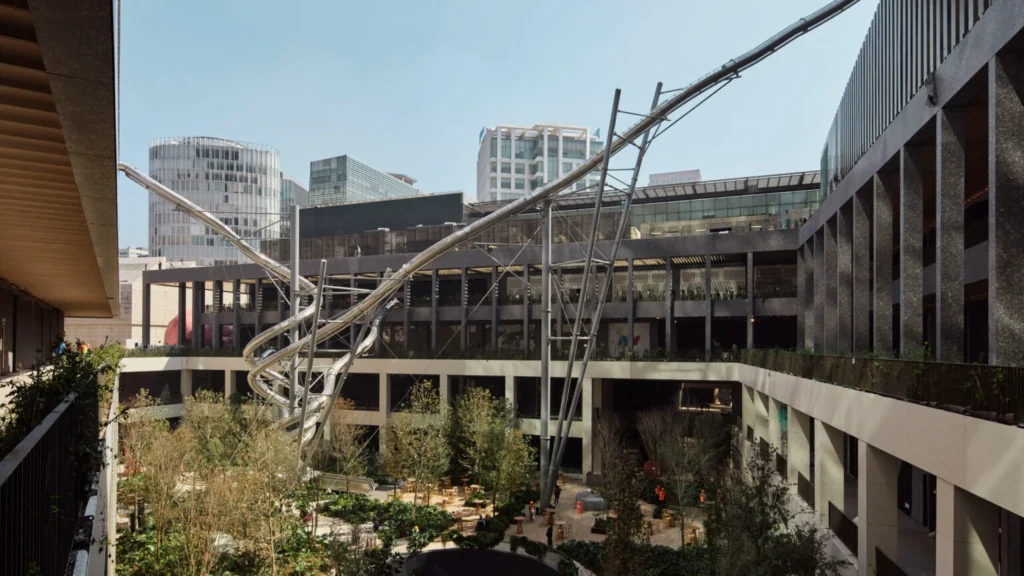
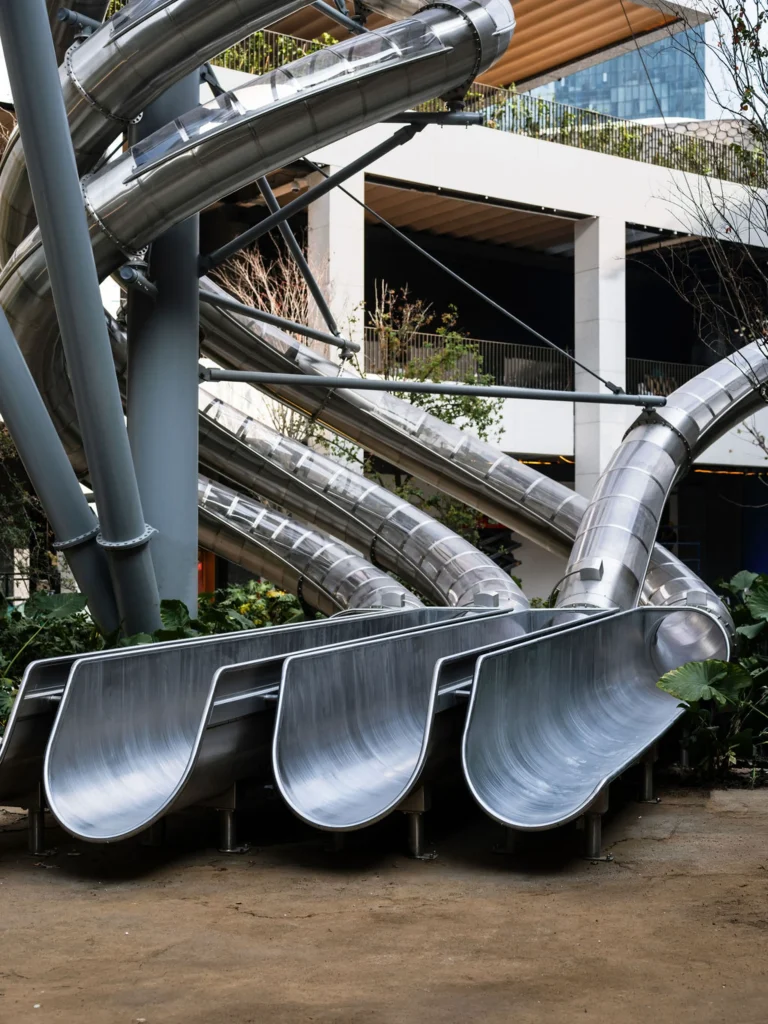
The installation is permanent, free to the public, and fully integrated into the architecture of Sordo Madaleno’s expansion of Antara. Heights range from roughly 39 to 125 feet. Lengths stretch from about 102 to 295 feet. Four riders can descend at once and arrive side by side. The work is less an object placed in a plaza than a system of trajectories that reorganizes how people move through and between buildings.
Carsten Höller’s Parametric Thinking Without Software
What makes the project especially resonant from a parametric design perspective is that the parameters are physical and experiential rather than purely digital. Height, pitch, curvature radius, tube diameter, material friction, and the timing of entry function as variables. Change any one of them and the sensation of the ride, the visual density of the spirals, and the social outcome at the landing all shift.
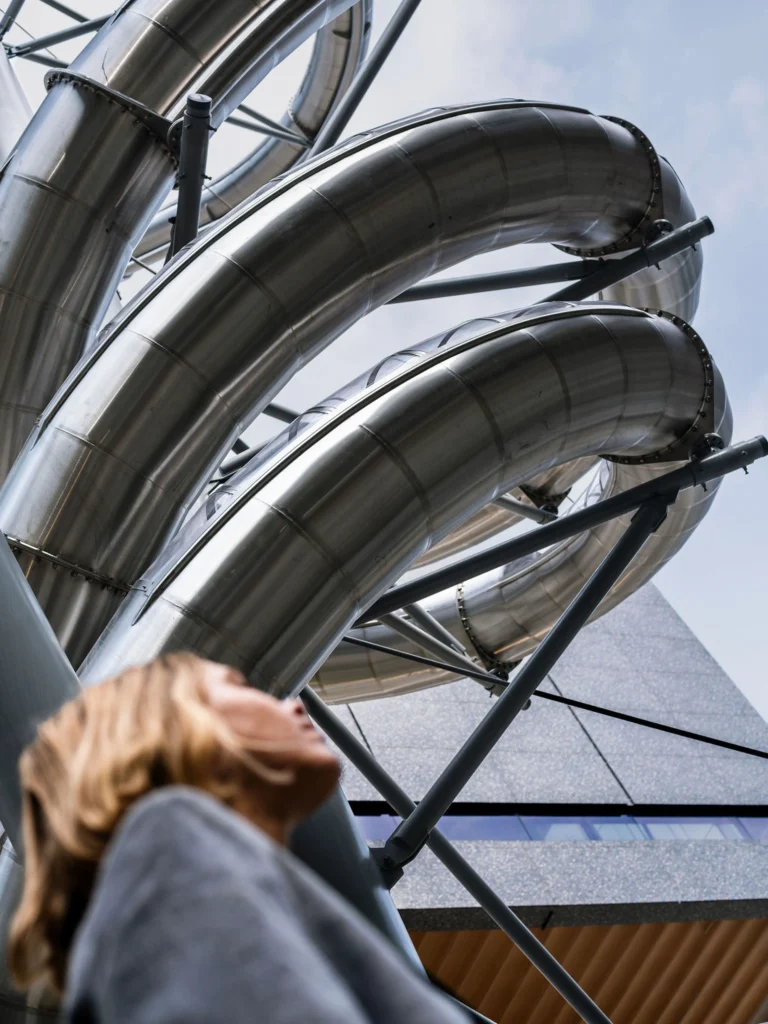
In classical parametric architecture, designers define relationships: if the span increases, the depth of the beam increases; if the solar angle changes, the shading density adjusts. Höller’s slides operate on a similar logic; only the output is not a static form but a temporal and bodily event. The “script” is written in steel and plexiglass. The “solver” is gravity acting on a human body. The result is a family of related experiences that remain recognizably the same system while producing individual variations depending on starting height, speed, and the rider’s own response to velocity and enclosure.
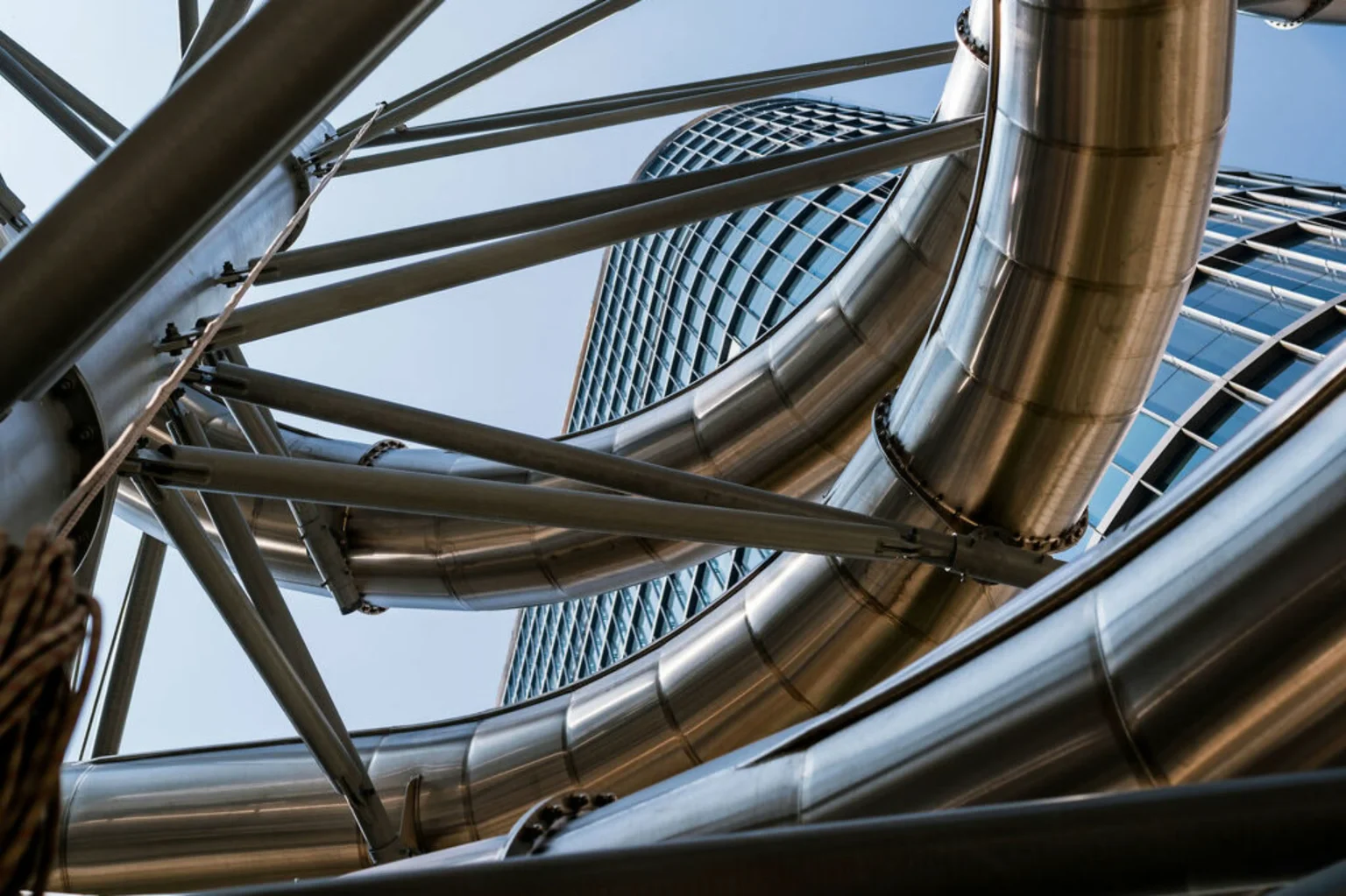
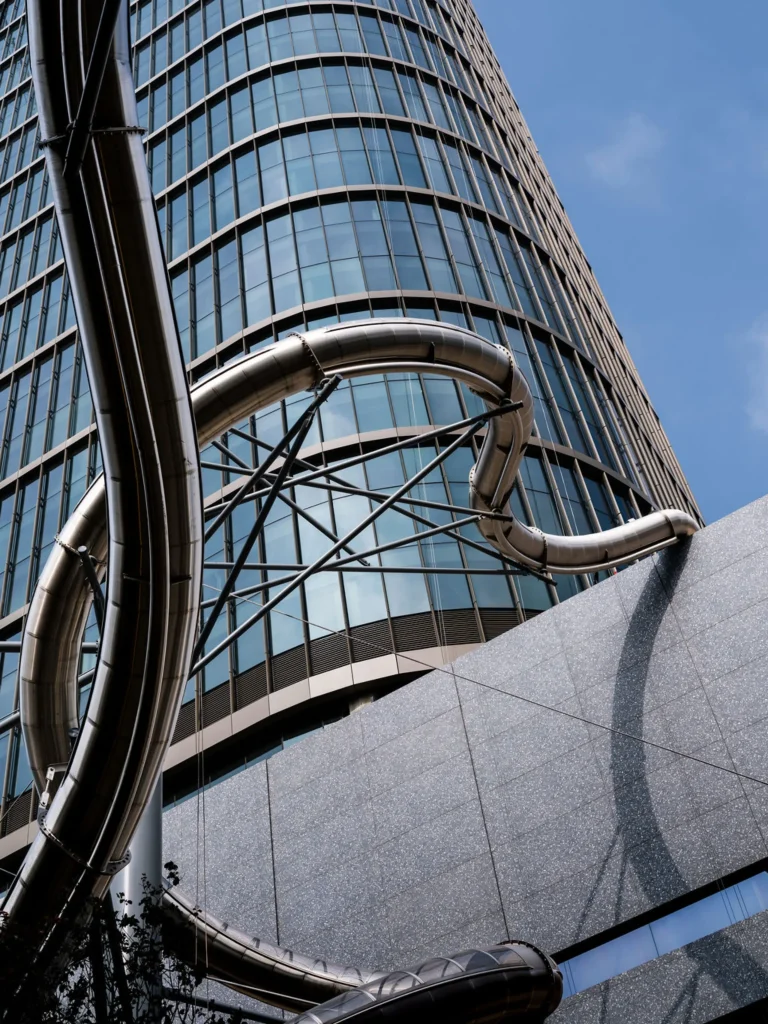
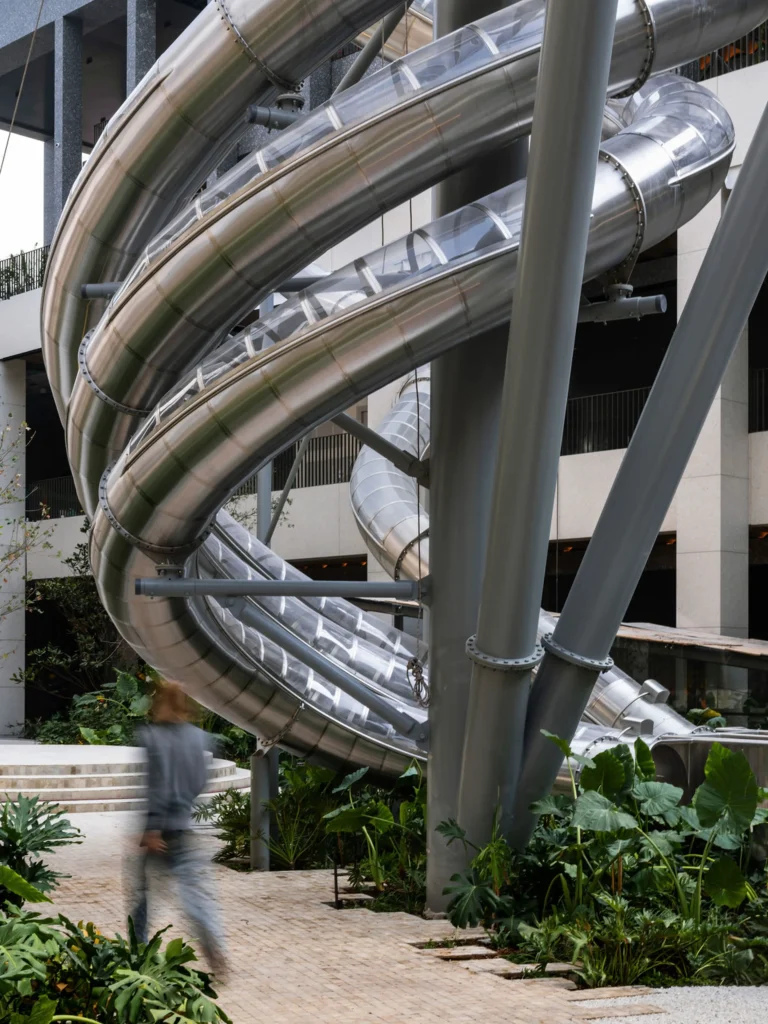
The four spirals interweave without colliding, creating a dense spatial tangle that reads from below as a single complex organism. This interweaving is not decorative. It is the formal expression of a relational rule: multiple origins, one destination. In parametric terms, the system is constrained to converge. That constraint generates both the geometry and the social meaning.
Architecture as Sequence Rather Than Object
Most buildings organize movement as a sequence of thresholds, corridors, and rooms. Höller short-circuits that sequence. The slide is a continuous, non-stop trajectory that collapses distance and time. Once you enter, the architecture decides the path. Agency is temporarily suspended. The mind, as Höller has noted in relation to earlier slide works, enters a territory of simultaneous joy and fear. The body thinks through acceleration.
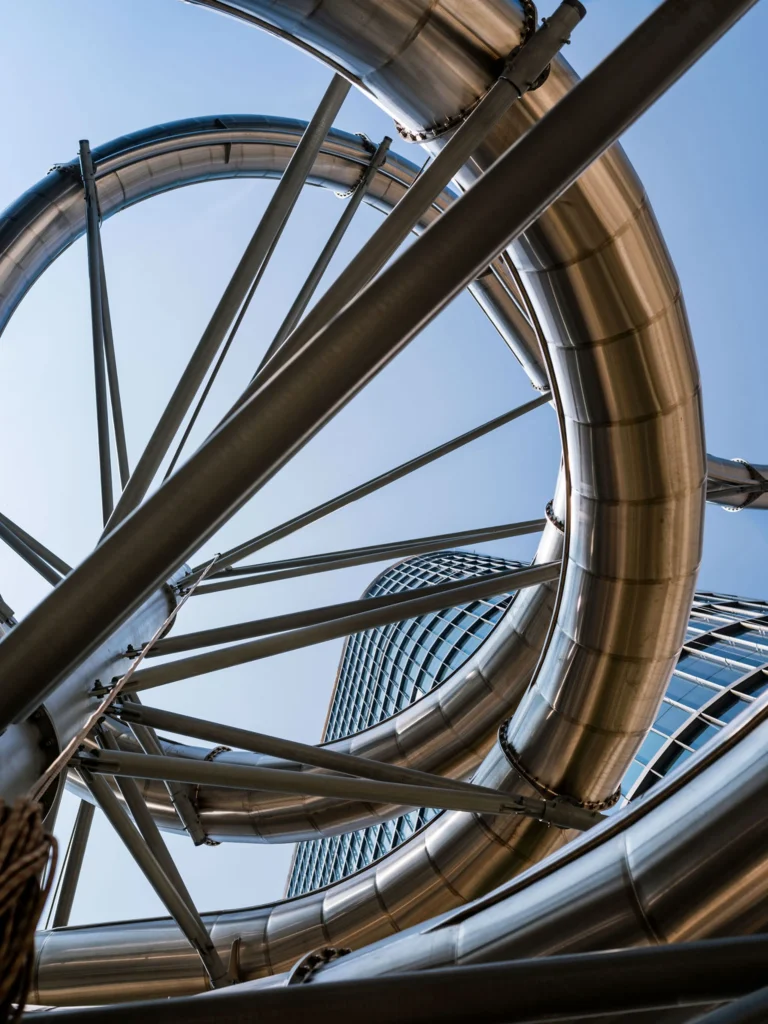
This is where the project becomes interesting for architects working with computational and performance-driven design. Parametric tools are often used to optimize structure, daylight, or energy. Here the performance being optimized is psychological and social. The slides equalize. A person leaving an office tower and a person leaving a restaurant arrive at the same patch of ground having undergone the same brief transformation. Status, schedule, and destination are momentarily erased by the shared physics of the descent.
The integration with Sordo Madaleno’s architecture is precise. The slides do not sit beside the buildings as freestanding sculptures. They emerge from them, using the existing volumes as launch points and the central courtyard as a common terminus. Circulation is no longer only horizontal or vertical. It becomes helical, theatrical, and public. The courtyard itself is redefined as a space of arrival rather than simply a space of lingering.
Material and Perceptual Parameters
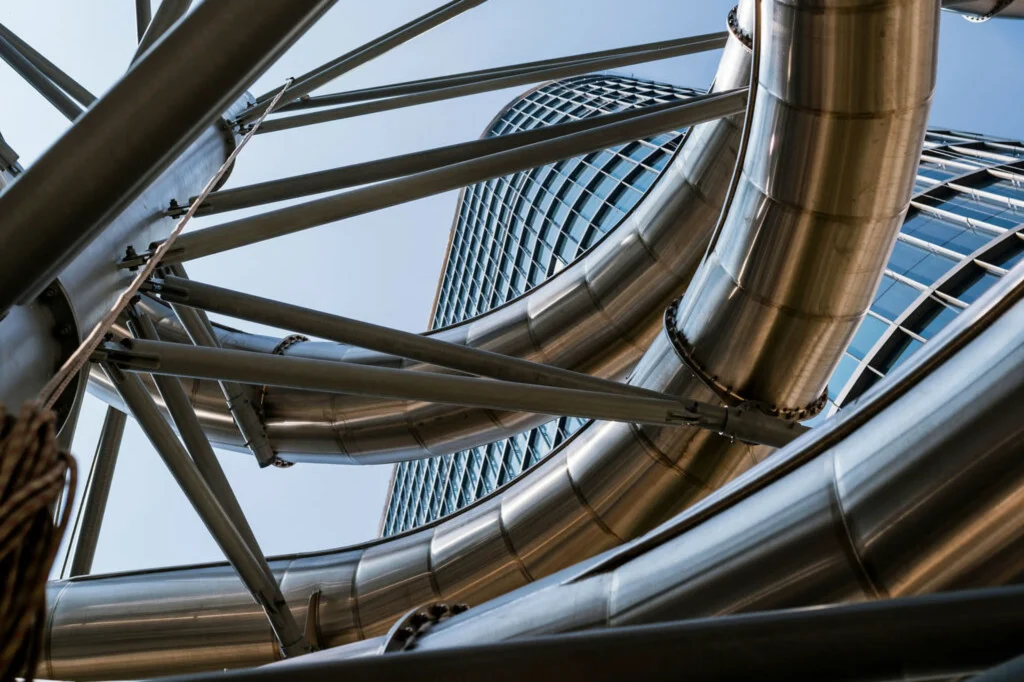
Stainless steel and transparent sections allow the structures to catch light and reveal the bodies moving inside. From the ground, riders appear and disappear as they spiral. The visual effect is kinetic and almost diagrammatic: one can read the path as a continuous line even while the experience for the rider is discontinuous, a rush of surfaces, sound, and shifting orientation.
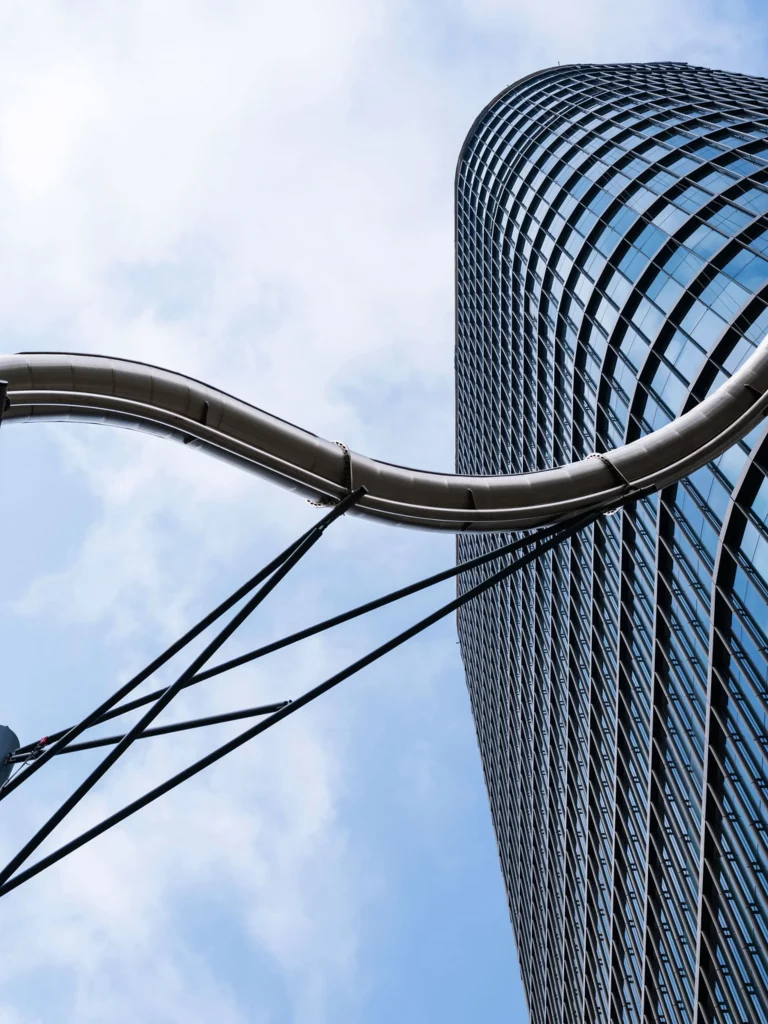
The choice of material is also parametric in character. Steel provides the structural stiffness required for the long spans and tight curves. Transparency modulates the degree of enclosure and exposure, affecting the emotional temperature of the ride. A fully opaque tube would produce a different psychological profile than a partially transparent one. These are design decisions that can be tuned, much as a parametric model might tune aperture size or surface reflectivity.
Public Space as Shared Algorithm
Antara’s expansion already emphasizes the spaces between buildings: a new public garden, landscaped pathways, stepped terraces. The slides intensify that strategy by making movement itself the public event. People who might never share a lobby or an elevator now share a few seconds of uncontrolled descent and a moment of disoriented recovery at the bottom. The algorithm is simple: enter from difference, exit into commonality.
Höller has long explored how art can interrupt ordinary perception. Earlier slide projects at Tate Modern, the New Museum, Vitra, and elsewhere tested the same idea at smaller or temporary scales. Mexico City Slides scales the experiment to the size of a mixed-use urban district and makes it permanent. The work is no longer a temporary disruption inside a museum. It is part of the daily infrastructure of a commercial and cultural destination.
For designers interested in parametric thinking, the lesson is that parameters need not remain inside the computer. They can be embedded in the physical world as rules of movement, constraints of convergence, and calibrated experiences of risk and pleasure. The slides demonstrate that a system defined by a few clear relationships can generate rich, unpredictable human outcomes.
In the end, the Mexico City Slides do what good parametric design aspires to do: they establish a set of relationships that produce form, performance, and meaning simultaneously. The form is the interwoven steel. The performance is the controlled fall. The meaning is the brief, equalizing moment when strangers land next to one another, still slightly breathless, having traveled the same curve under the same sky.