

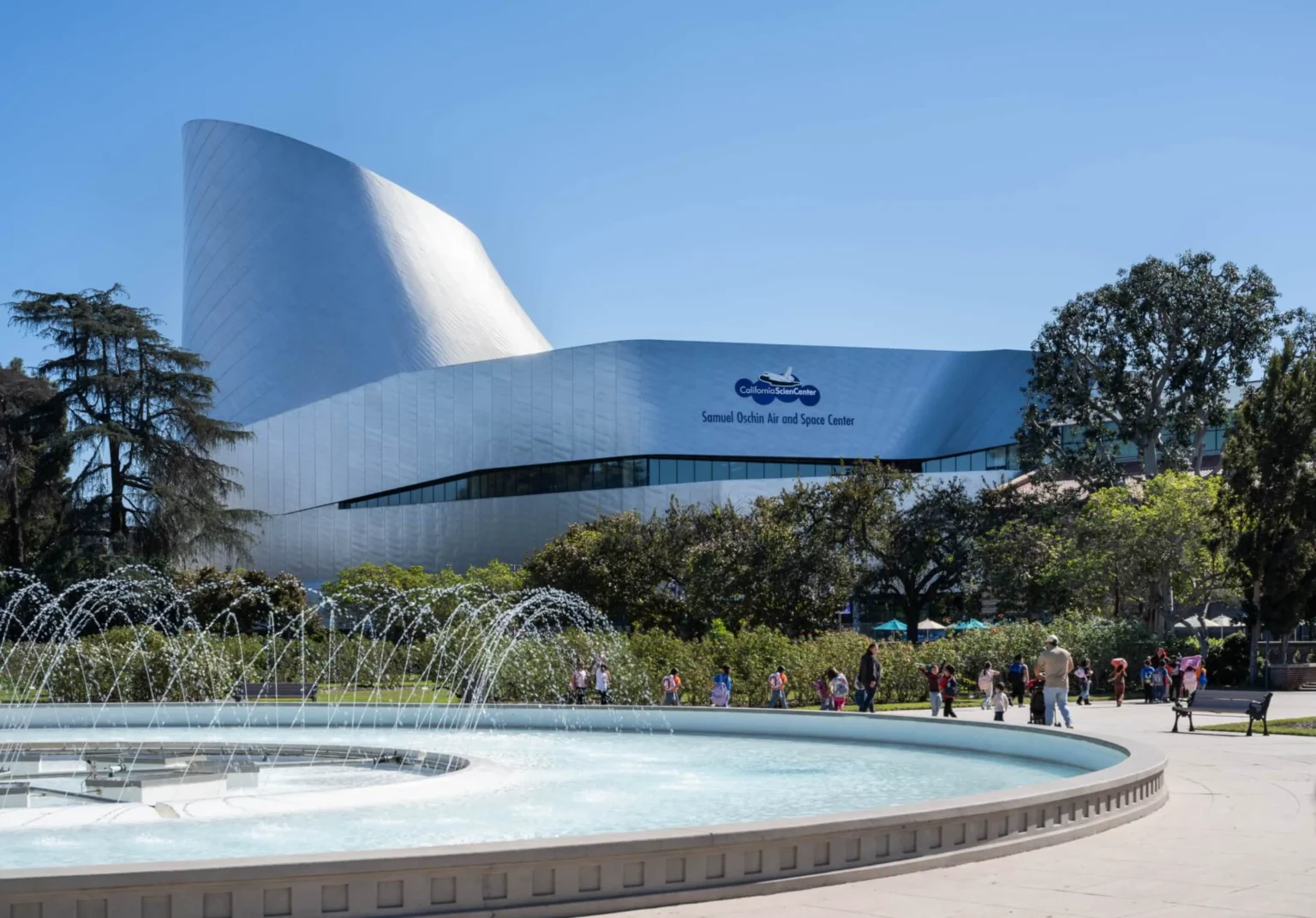


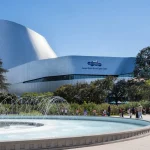
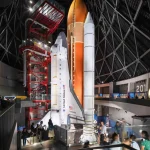
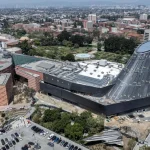
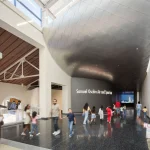
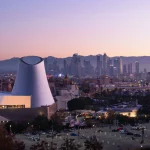
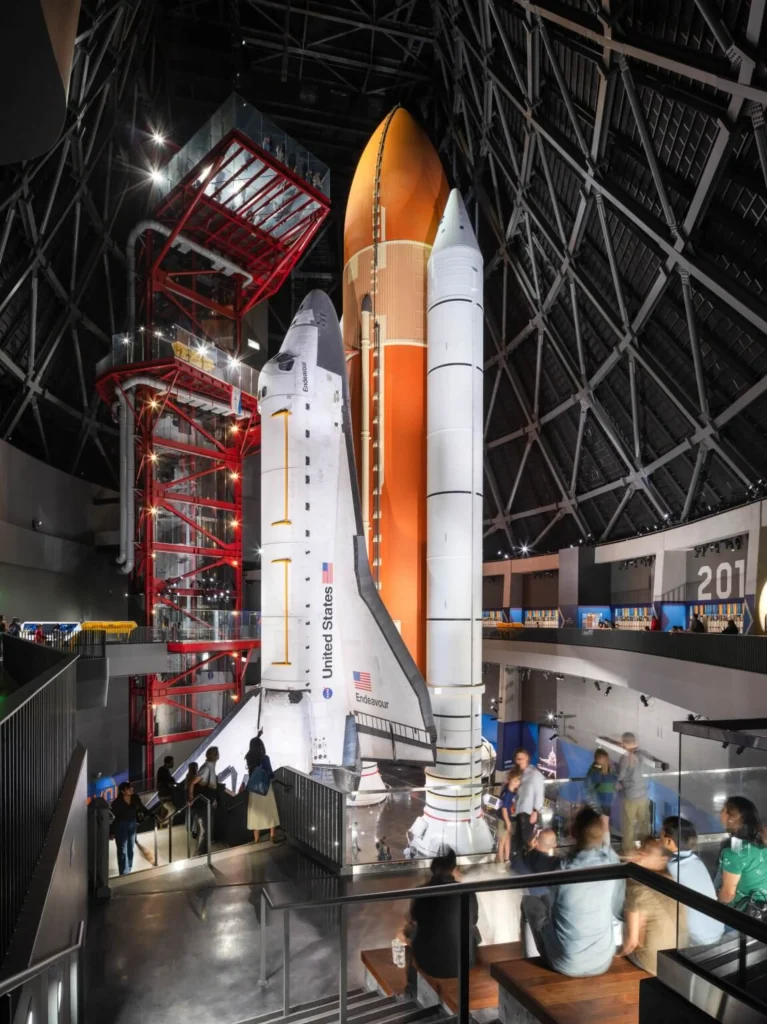
In Los Angeles, that room has finally opened. The Samuel Oschin Air and Space Center, designed by ZGF Architects, now stands as a 200-foot stainless-steel landmark at the California Science Center, permanently housing Space Shuttle Endeavour in vertical launch configuration, the only place on Earth where the public can encounter a complete, authentic shuttle stack standing upright.
Some machines are too large for memory alone.
They demand a room built to their own ambition.
The building does not merely contain the orbiter. It is shaped by it.
A Tower Built Around Flight
Endeavour flew 25 missions between 1992 and 2011. After retirement, it rested horizontally for years. ZGF’s challenge was unprecedented: design the world’s only public venue capable of displaying a full shuttle system, orbiter, external tank, and solid rocket boosters, in the exact posture of launch.
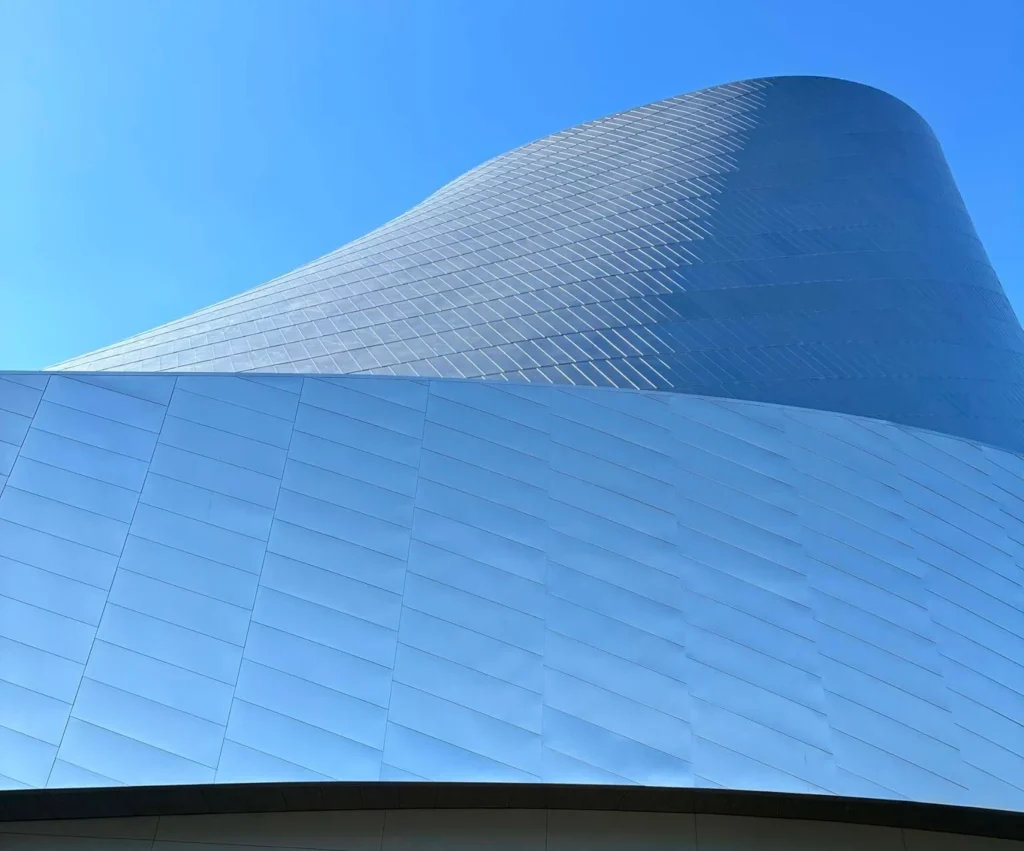
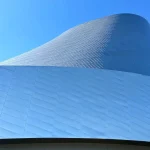
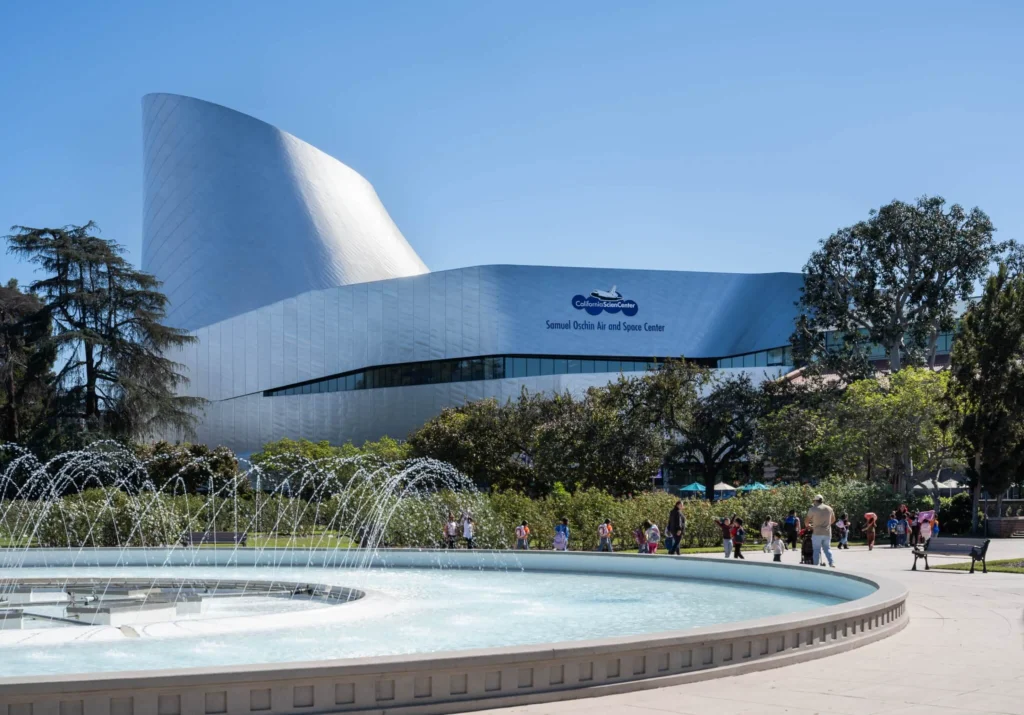
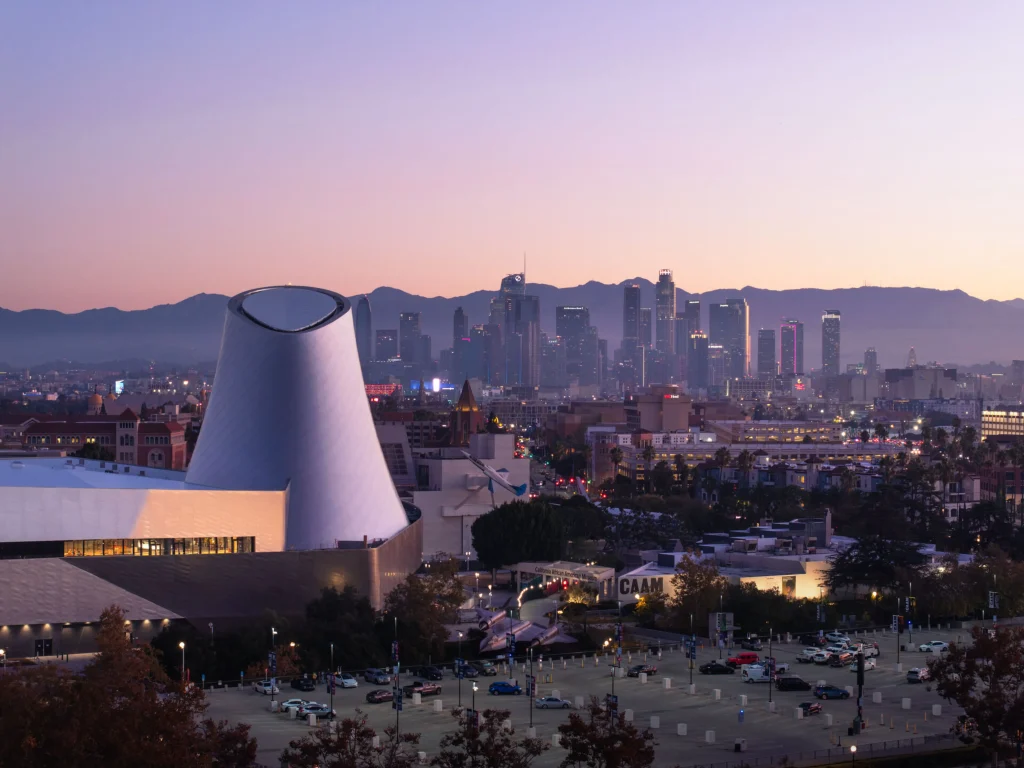
The solution is a 200-foot-tall curvilinear tower clad in stainless steel. Its geometry draws directly from the shuttle’s aerodynamic lines: fuselage curves, wing profiles, and the vertical stabilizer. The result is a structure that feels both protective and celebratory, a metallic envelope that rises with the same quiet force as the machine it holds.
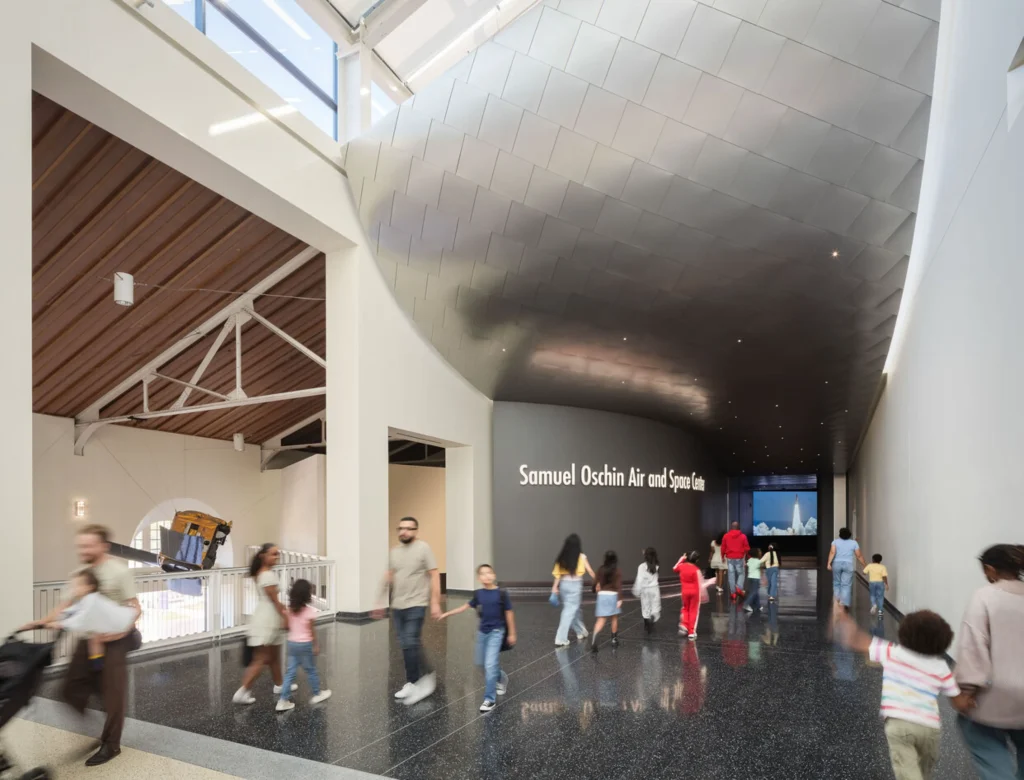
At approximately 200 feet, the tower is the tallest structure in Exposition Park. Inside, visitors move through six levels of galleries that allow progressive encounters with the stack: from the base of the boosters to a glass-floor viewing platform nearly 140 feet above the nose of the orbiter. A 115-foot tubular slide offers a more playful descent, translating the drama of launch into bodily experience.
Engineering the Impossible
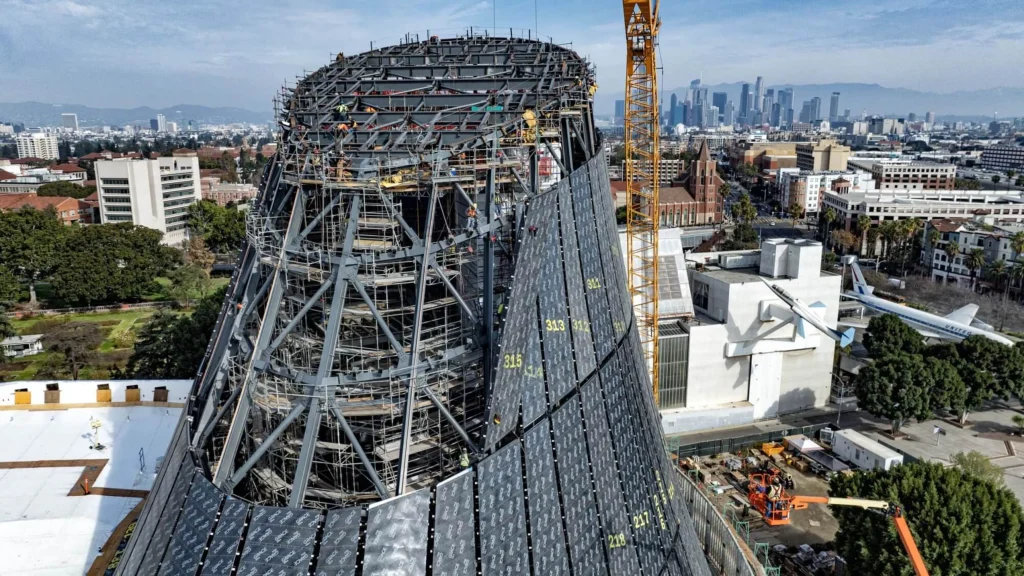
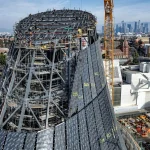
Constructing a building around an already-assembled shuttle stack required extraordinary coordination. The steel diagrid structure was not self-supporting until the final pieces were installed. Fabricators produced 132 unique steel nodes to achieve the precise geometry. Scaffolding systems protected the spacecraft throughout the process, while the entire enclosure (roughly 2,000 tonnes of steel) was erected around the artifact rather than the other way around.
The stainless-steel cladding performs multiple roles. It reflects the Southern California light, changing character throughout the day. It protects the interior environment required for long-term conservation. And it gives the addition a distinct identity from the original sandy-red brick buildings of the Science Center, signaling that this is not an extension of the past but a new chapter.
Lower tiers of textured metal cantilever outward, creating a dynamic entry sequence that suggests forward momentum even before visitors step inside.
Three Galleries, One Ambition
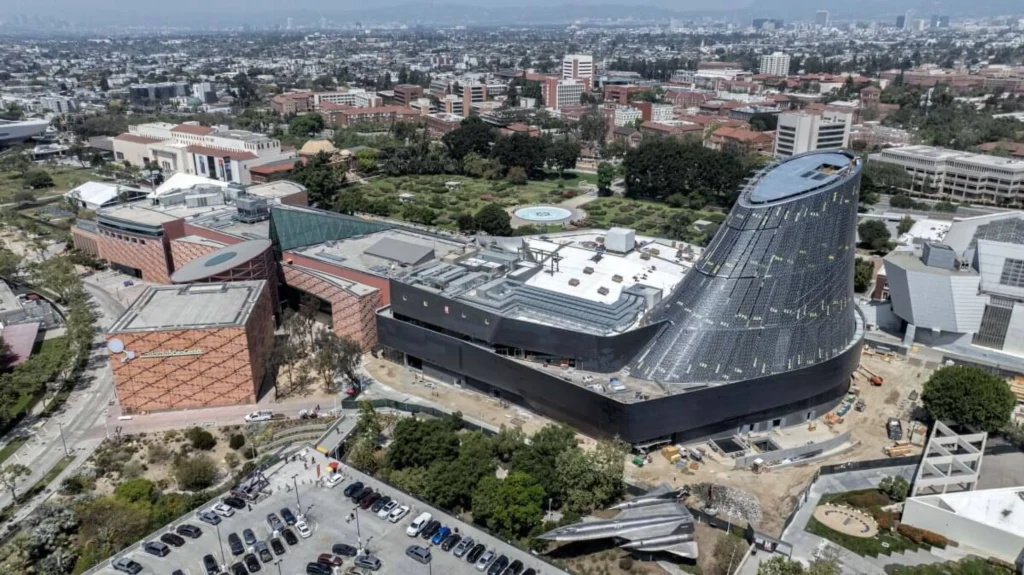
Beyond the shuttle tower, the 200,000-square-foot expansion nearly doubles the Science Center’s exhibition space. Two additional multi-level galleries (the Korean Air Aviation Gallery and the Kent Kresa Space Gallery) house roughly 100 aerospace artifacts and more than 100 new interactive exhibits. The program spans the history of flight, the achievements of the shuttle era, and the emerging technologies of contemporary space exploration.
The architecture supports this breadth without visual competition. While the stainless-steel tower announces the presence of Endeavour, the lower volumes provide flexible, well-lit spaces for denser collections and hands-on learning. The result is a building that can absorb both awe and inquiry.
Architecture as Act of Preservation
Displaying a space shuttle vertically is not only a curatorial decision; it is an act of cultural preservation. Horizontal storage is practical but diminishes the object’s essential character. Launch position restores the machine’s original purpose and scale. Standing beneath the stack, visitors confront the sheer vertical ambition that defined the shuttle program—an ambition that remains rare even in an age of commercial spaceflight.
ZGF partner Ted Hyman has described the project as an attempt “to achieve something that has never been done before.” The claim holds. No other institution offers a complete, flown orbiter in launch configuration with its authentic tank and boosters. The building makes that uniqueness permanent.
A New Landmark for Exposition Park
The Samuel Oschin Air and Space Center changes the skyline of Exposition Park. Its curved stainless-steel form introduces a reflective, almost liquid presence among the older institutional buildings. At dusk, the surface softens into warm gradients; under bright sun, it becomes sharp and precise. The architecture does not compete with the surrounding landscape of gardens and civic structures; it offers a different kind of monument, one calibrated to technology rather than classical language.
For a public institution, the project also represents a significant investment in science education. By placing the shuttle at the center of a dramatically expanded campus, the Science Center positions space exploration as both historical achievement and continuing invitation.
Holding the Impossible
Great architecture sometimes begins with an object that refuses to be ordinary. Endeavour, standing upright once more, demanded a building capable of matching its scale and dignity. ZGF responded with a structure that is at once enclosure, monument, and instrument of public understanding.
The stainless-steel tower does not simply house a retired spacecraft. It returns the machine to the posture in which it was meant to be seen—ready, vertical, and still capable of inspiring the next generation of engineers, scientists, and dreamers. In doing so, the building itself becomes part of the story it was designed to tell.