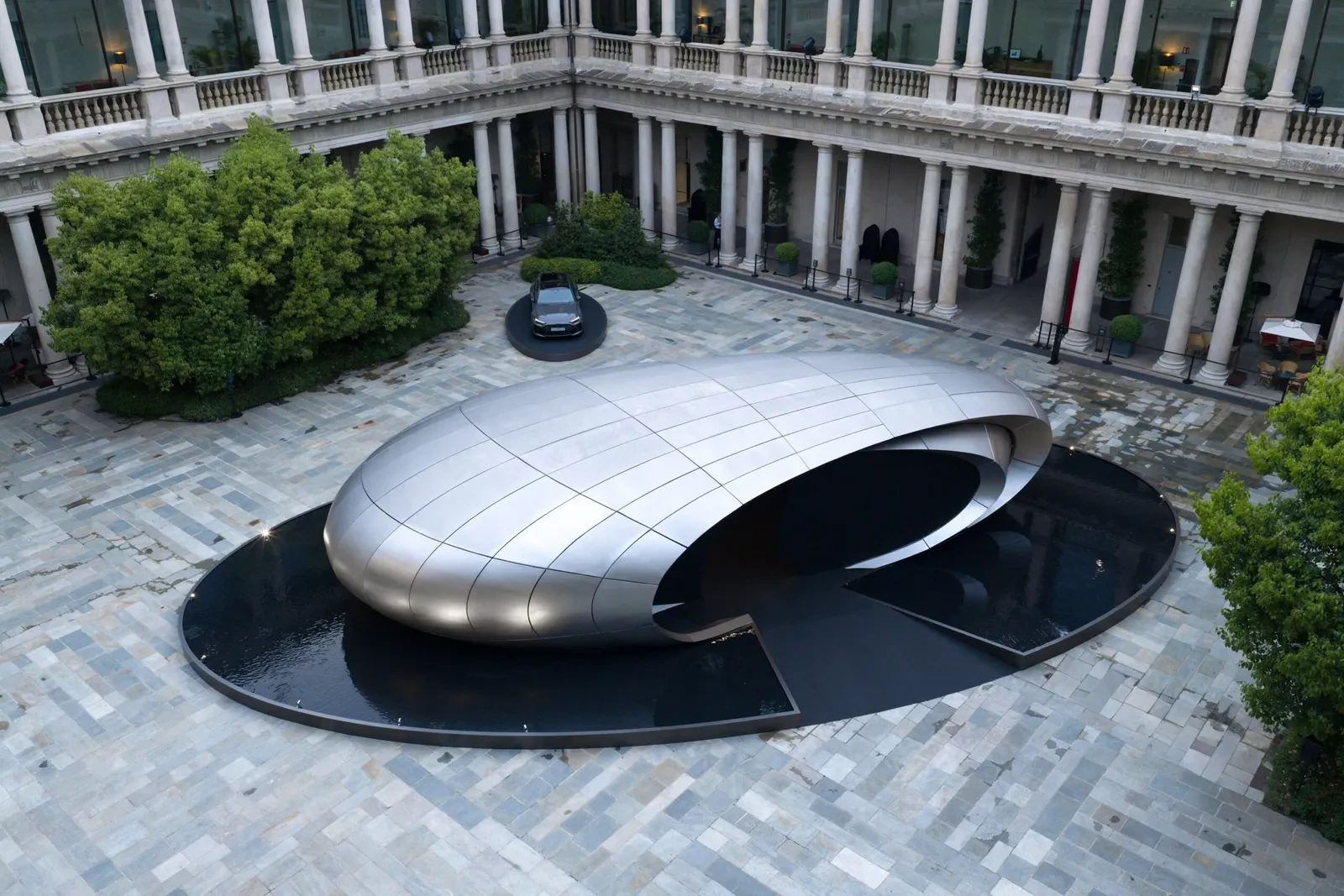

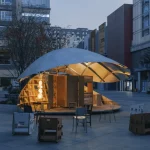
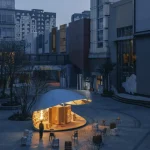


The Shell Book Pavilion by LUO studio is a remarkable example of how small-scale architecture can create a strong public impact. Located in Xiangyun Town, Beijing, China, this 43-square-meter pavilion functions as a compact community library, reading room, and gathering place. What makes the project stand out is its transformable shell-like structure that can physically open and close, allowing the pavilion to adapt throughout the day.
LUO studio Pavilion’s Shell-Like Structure Concept
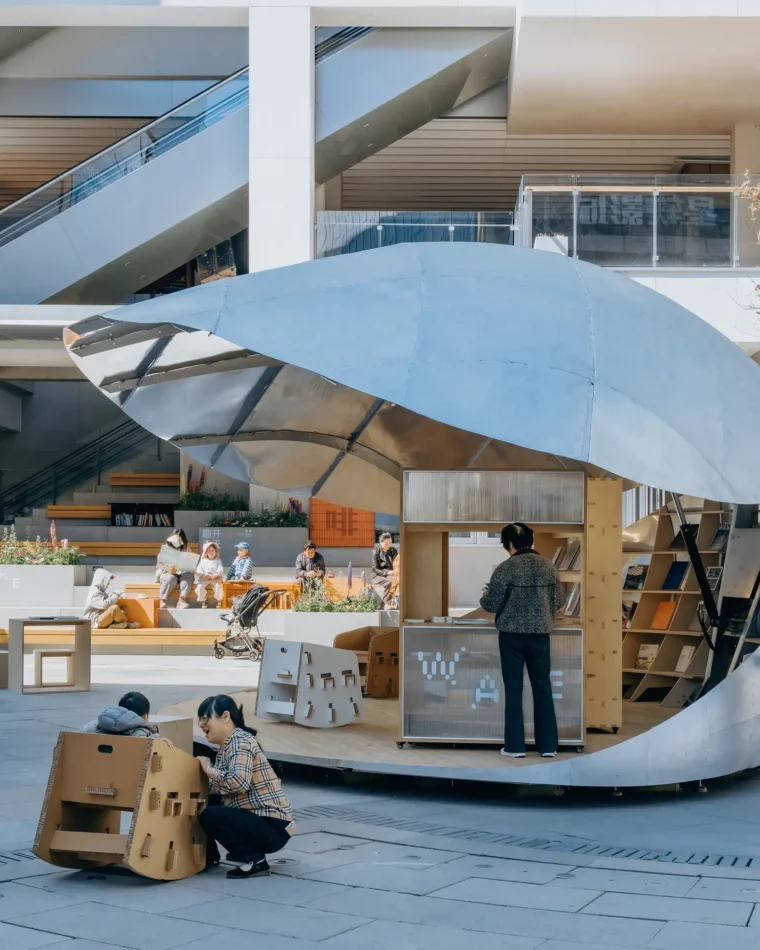
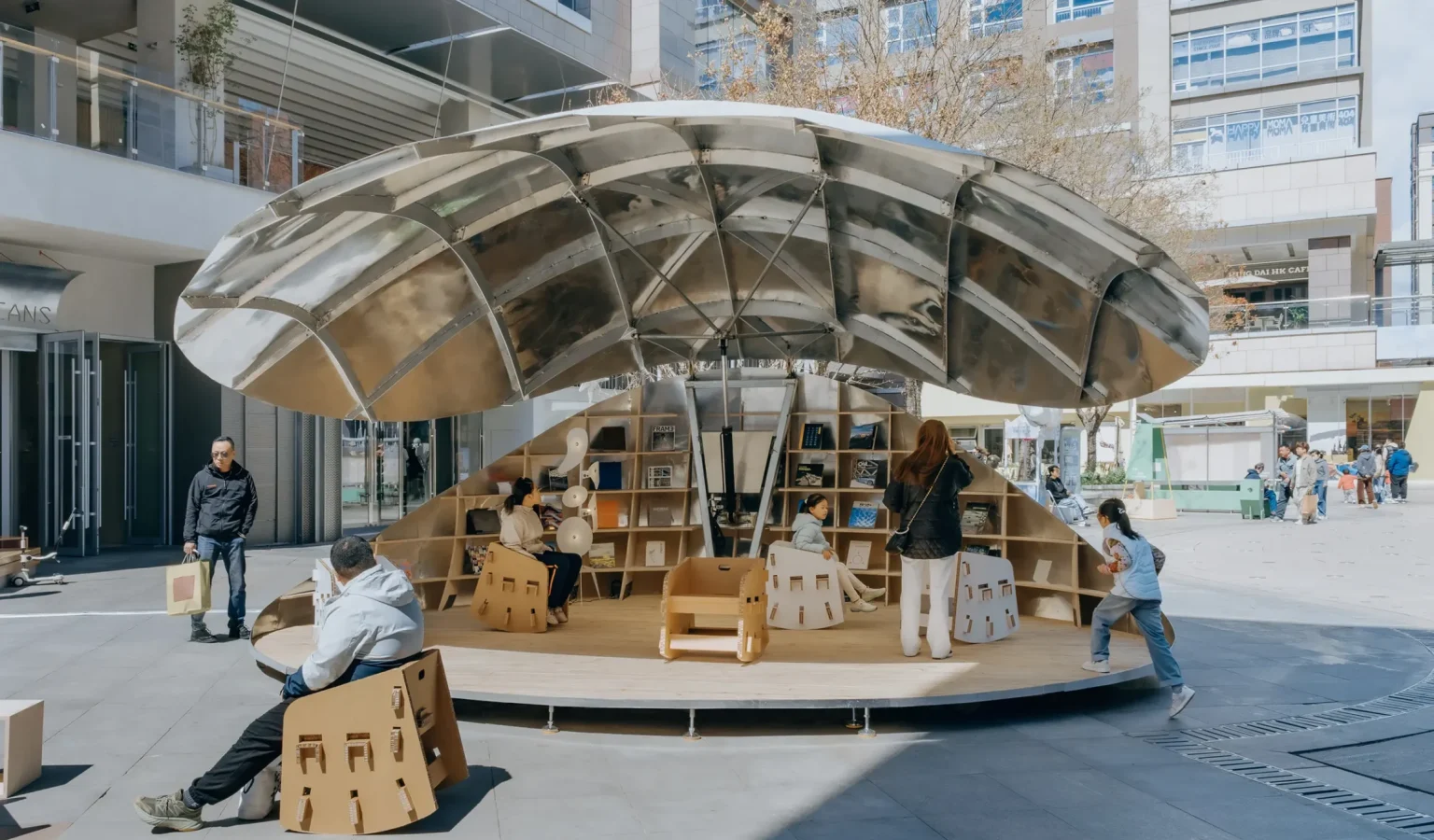
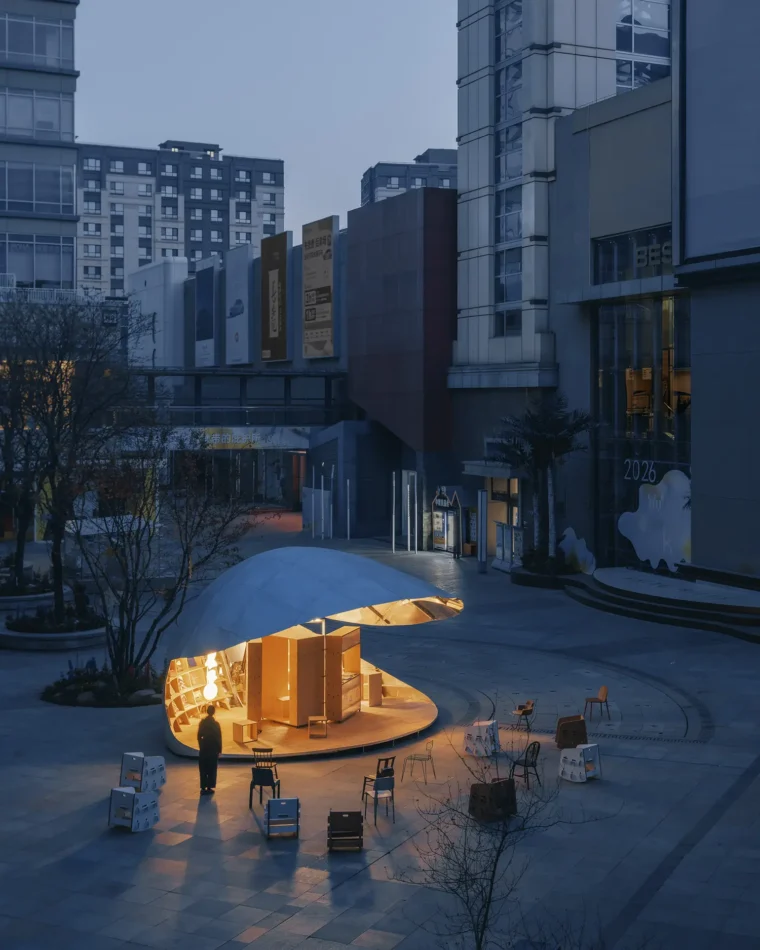
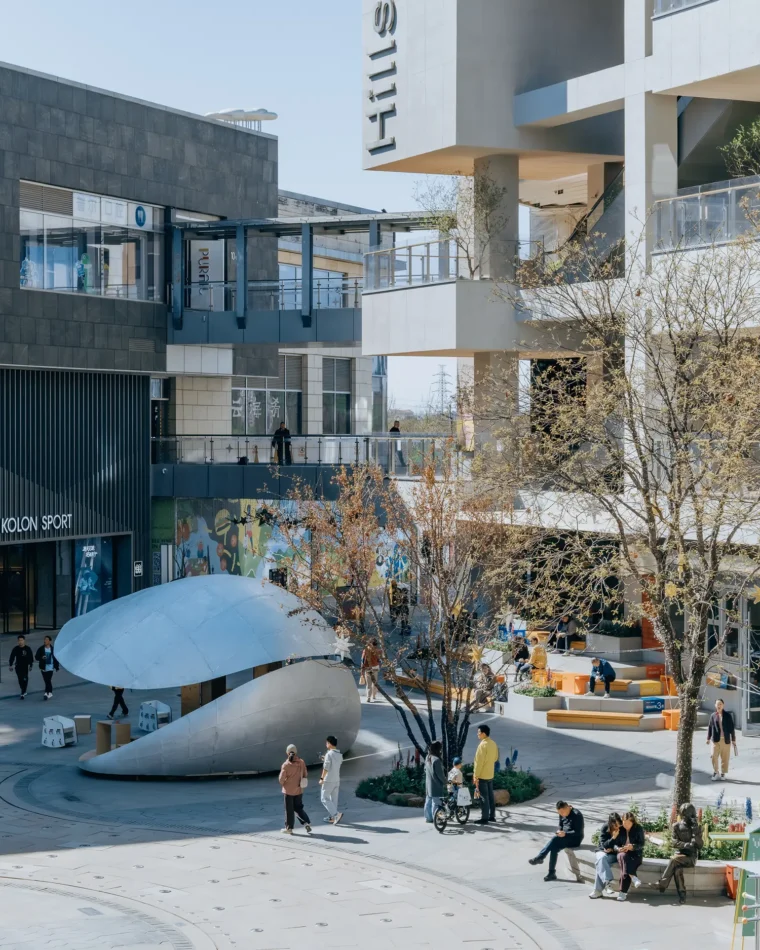
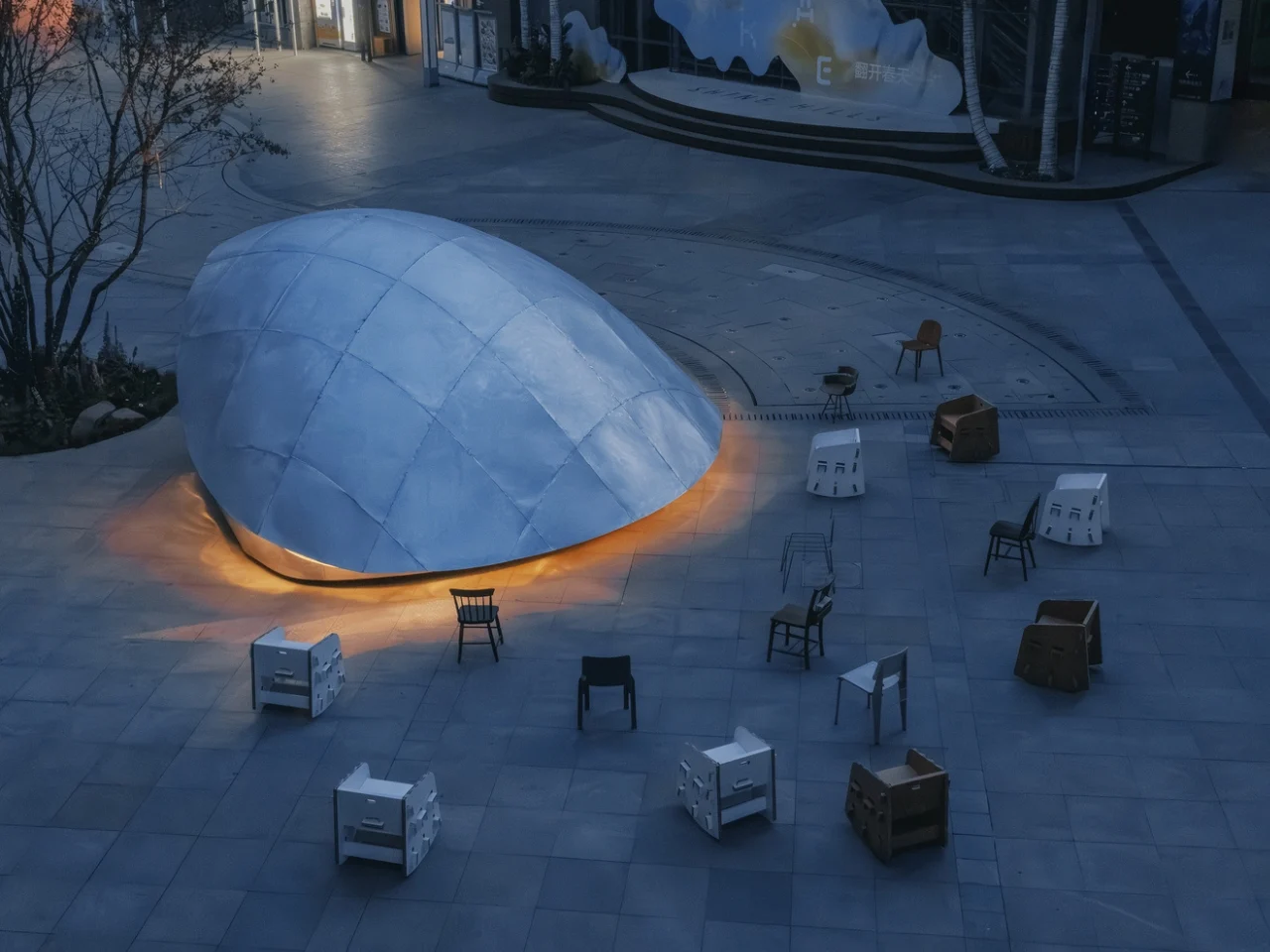
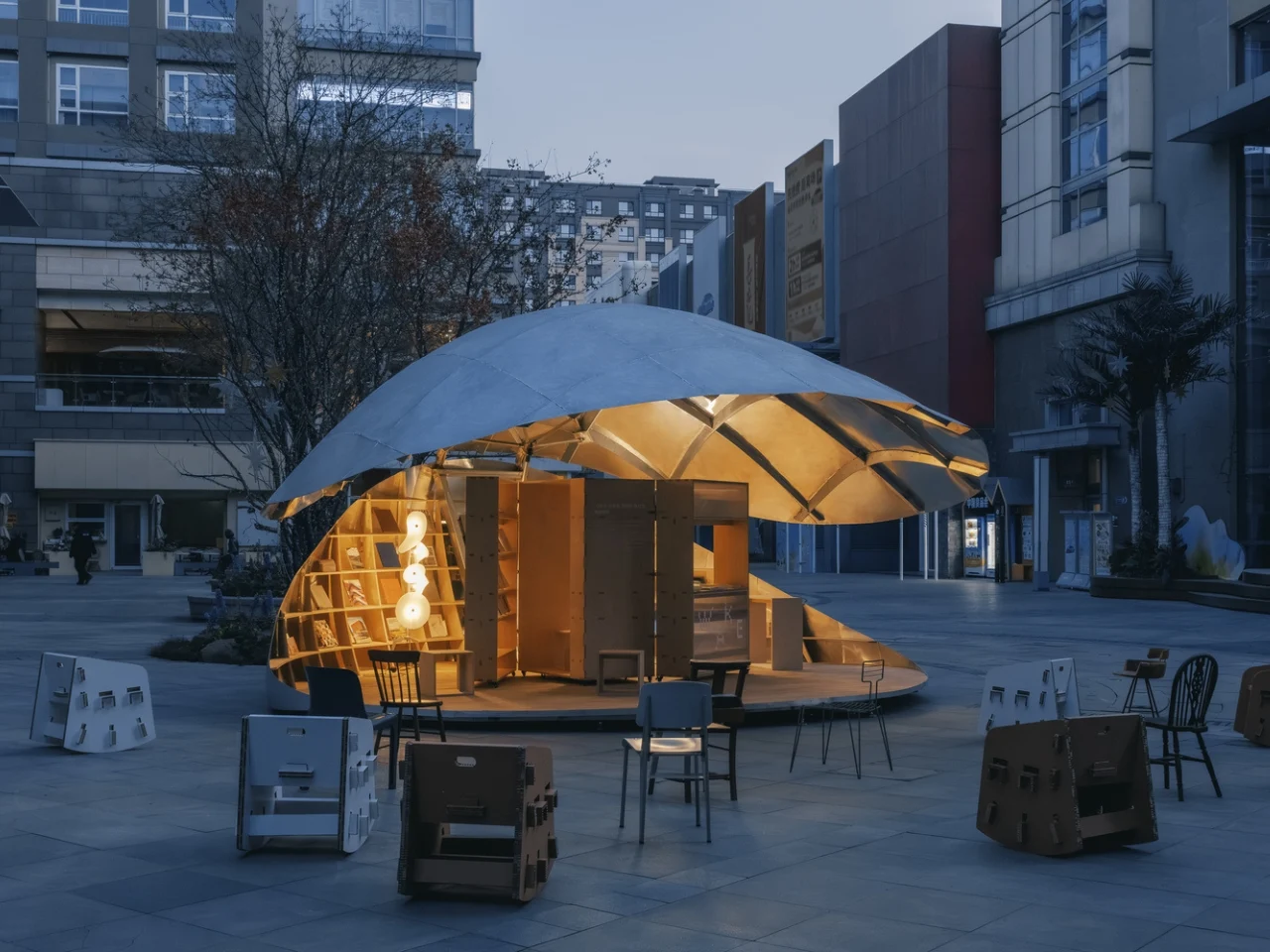
Designed to resemble a clam shell, the Shell Book Pavilion behaves like a living object within the plaza. The pavilion has no fixed front or back, making it approachable from every direction. This 360-degree accessibility helps it feel open, democratic, and welcoming in a busy commercial public space.
The structure sits above a circular timber platform that extends the usable area beyond the enclosed interior. Loose movable seating elements are arranged around the pavilion, allowing visitors to read, rest, or socialize in different ways. This flexible planning turns the surrounding plaza into an active extension of the pavilion itself.
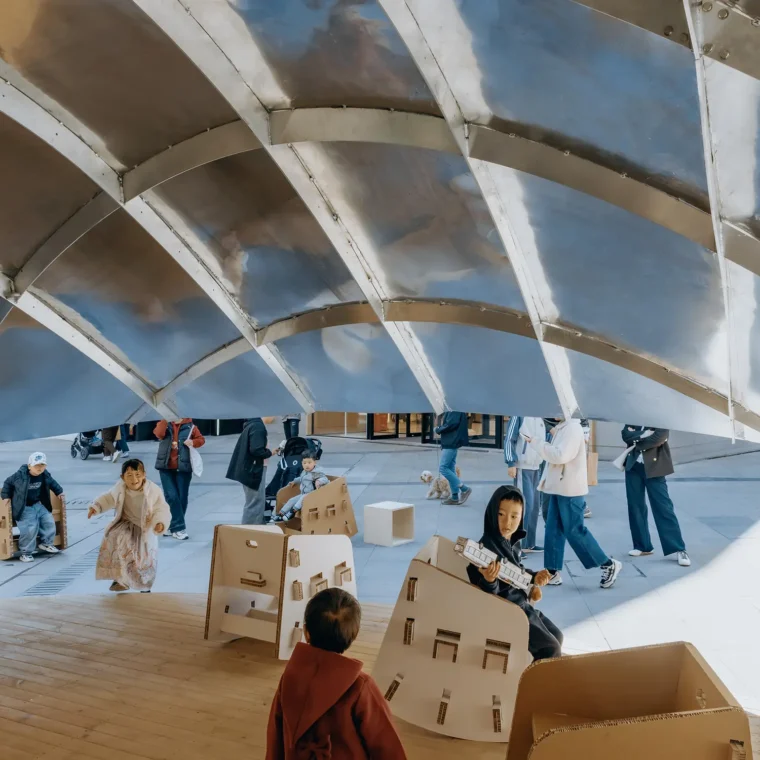
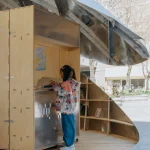
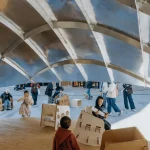
Inside, warm timber shelves and benches contrast with the metallic outer shell, creating a cozy reading environment. The interior balances functionality with comfort, encouraging short visits and longer stays.
Innovative Features of the Shell Book Pavilion
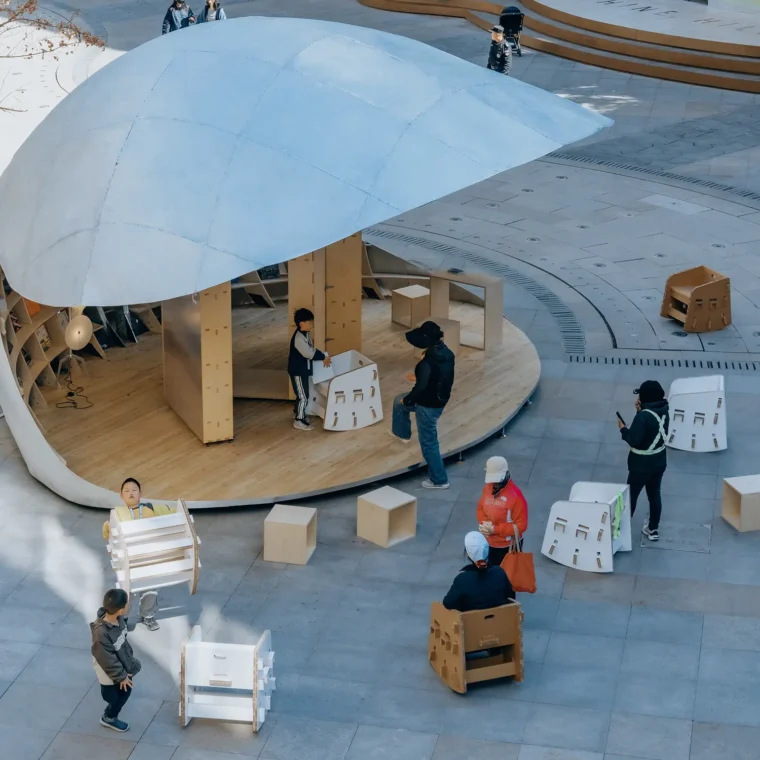
The most innovative aspect of the Shell Book Pavilion is its vertical lifting system. The shell can rise into a canopy position or lower into a more intimate enclosed form. This creates multiple spatial experiences in one compact building.
When fully open, the pavilion acts as a shaded outdoor reading platform. When partially lowered, it becomes a quieter and more private retreat. During events or gatherings, the movement of the shell itself becomes part of the public experience, turning architecture into performance.
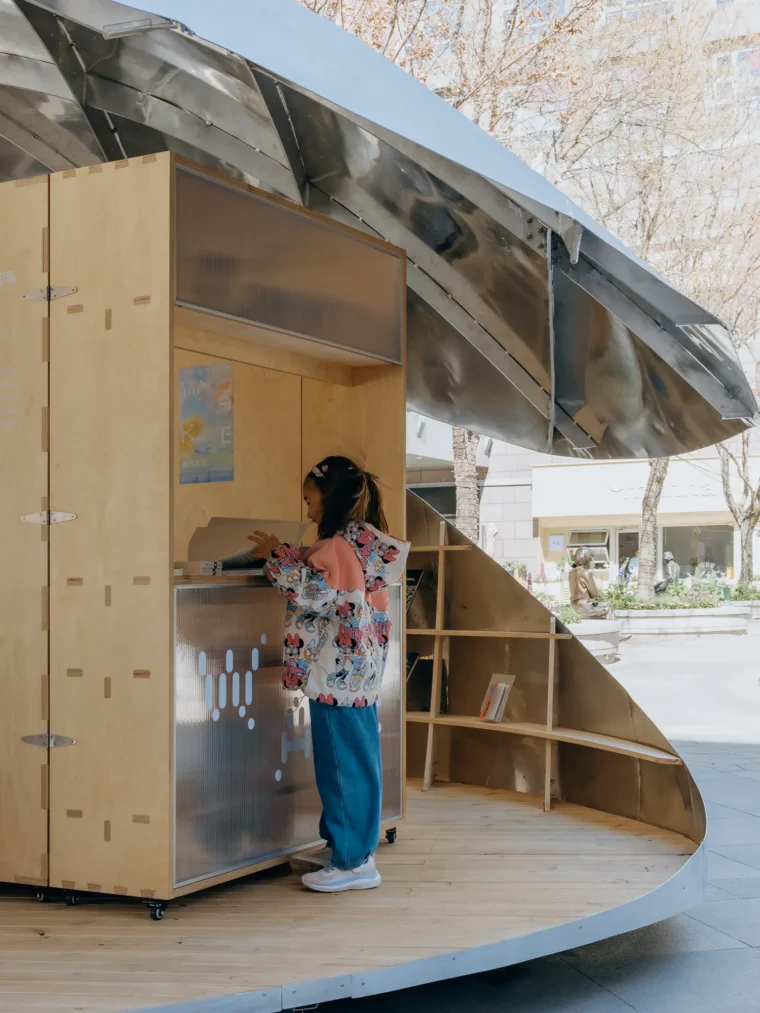
The pavilion’s primary frame is made from aerospace-grade aluminum alloy, chosen for its strength and lightweight properties. This allows the moving shell to function efficiently while maintaining structural durability. Precision fabrication methods such as CNC machining and welding were used to create the kinetic mechanism.
LUO studio is known for thoughtful, human-centered architecture that responds to community needs and everyday life. For the Shell Book Pavilion, the studio approached the project as an urban intervention that encourages pause, reading, and social interaction. The architects had a personal familiarity with Xiangyun Town and wanted to design something meaningful for a place already used by families and children. That connection helped shape the pavilion as a welcoming one.
The Shell Book Pavilion combines design innovation, community use, kinetic engineering, and strong visual identity in 43 square meters. It transforms an ordinary plaza into a destination while offering people a place to read, gather, and pause.
Image credit: Yumeng Zhu / LUO studio